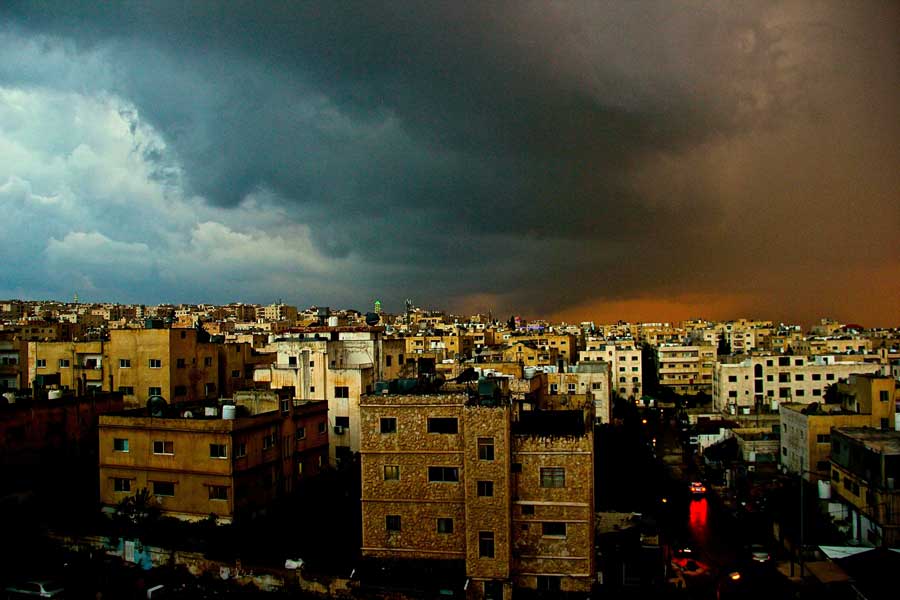
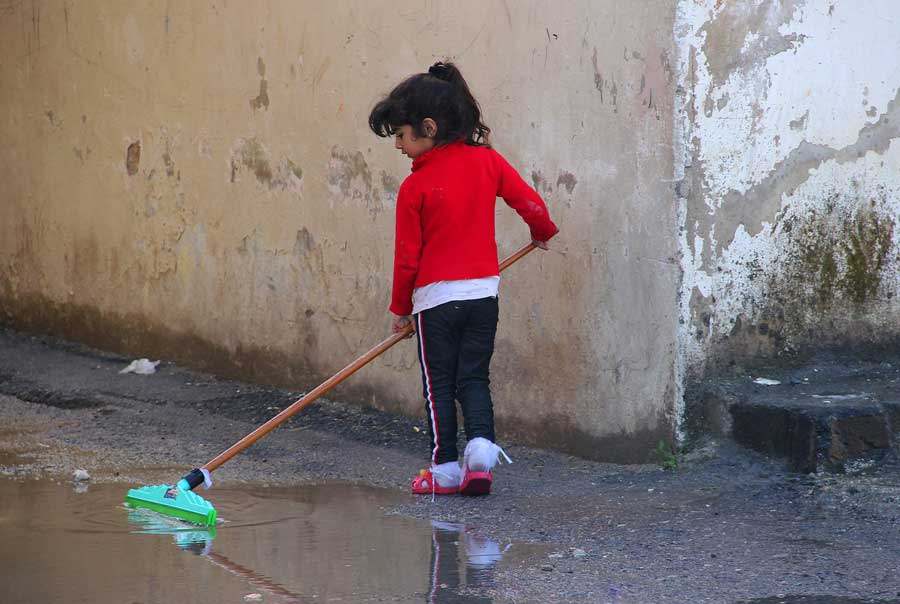
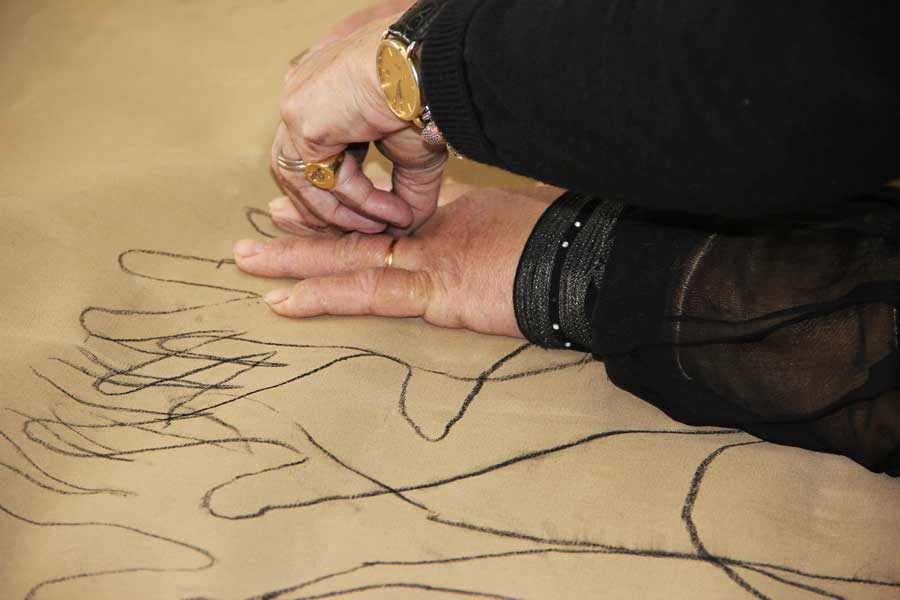
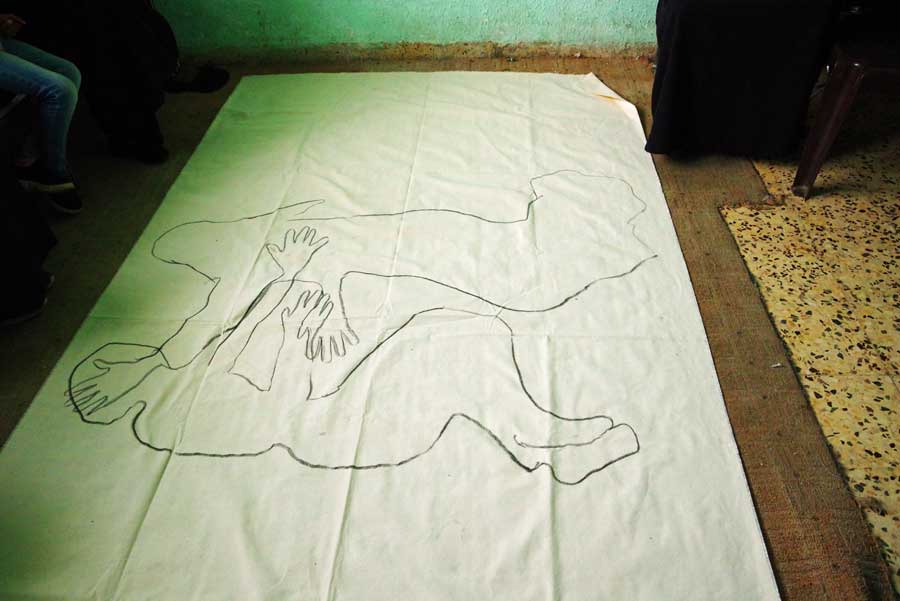
city:homs

  • Elnashra.com (Site d’information indépendant) : Naji N. Boustani, journaliste libanais indépendant
    http://mediaramalb.files.wordpress.com/2013/05/mediarama-337.pdf

    Cinquième étape : Elle se déroule en ce moment. L’aviation syrienne bombarde les positions rebelles dans Qoussair, transformée en champs de ruine, en préparation de l’offensive au sol de toutes les directions.
    Les objectifs de la bataille de Qoussair sont les suivants :
    1-Préparer la bataille de Homs, dont la moitié est encore occupée par les rebelles, et qui était considérée comme le « berceau de la révolution ».
    2-Empêcher le déploiement des rebelles vers la campagne au nord de Damas et éviter qu’ils coupent la route Homs-Damas. Maintenir ouverte la route Tartous-Damas. 3-Mettre un terme au ravitaillement des rebelles du centre de la Syrie à partir du Liban.
    4-Sécuriser une large zone du centre de la Syrie, sous le contrôle du régime, et protégée par le Hezbollah sur son flanc ouest.


  • In Cairo, desperate Egyptian men search in vain for Syrian brides

    http://www.mcclatchydc.com/2013/05/14/191195/in-cairo-desperate-egyptian-men.html

    “They ask us where the office is to buy a Syrian woman, as if they are buying a chicken. They don’t believe us when we tell them it doesn’t exist,” said Khalid, who said he was 26. “Our women are not for sale. We are here because we did not want to be killed.”

    #Syrie #Syria #mariage


  • Syrian refugees ’sold for marriage’ in Jordan

    Before the war began, Kazal was in love with her neighbour in Homs. “He was 20 years old and I dreamed of marrying him one day,” she says. “I never thought I would marry someone I didn’t love, but my family and I have been through some hard times since coming to Amman.”

    http://www.bbc.co.uk/news/world-middle-east-22473573

    #migration #réfugiés #syrie #jordanie #mariages_forcés


  • Les quatre raids qui ont failli provoquer une guerre généralisée | À La Une | L’Orient-Le Jour
    http://www.lorientlejour.com/article/813379/les-quatre-raids-qui-ont-failli-provoquer-une-guerre-generalisee.html

    Scarlett HADDAD | 08/05/2013

    Éclairage

    Tout au long de la journée de dimanche, la région était au bord d’un embrasement généralisé, suite au quadruple bombardement israélien de la Syrie. Il a fallu des contacts intensifs et précipités entre Moscou, Washington, New York, Damas, Le Caire et Jérusalem pour que l’escalade qui semblait inévitable soit plus ou moins contrôlée. Si nul ne peut encore dire de quoi l’avenir sera fait, on peut, en tout cas, comprendre un peu mieux ce qui s’est réellement passé.
    En dépit des armes, de l’argent et des hommes envoyés en Syrie pour combattre aux côtés de l’opposition, celle-ci était en train de perdre du terrain face aux forces du régime. Ce dernier avait en effet réussi à reprendre le contrôle de la route reliant Lattaquié à Damas via Homs, qui est en quelque sorte l’épine dorsale du pays. Des rapports de centres de recherche commençaient à parler d’un effondrement de l’opposition dans six mois, si rien n’est fait pour l’aider. Une délégation arabe conduite par le Premier ministre du Qatar accompagné du secrétaire général de la Ligue arabe s’est donc rendue aux États-Unis pour demander une intervention directe américaine dans le conflit en Syrie. Mais le président américain Barak Obama,selon des experts, n’a pas été convaincu de la nécessité pour son pays d’intervenir directement. Il a donc clairement exprimé son refus tout en étudiant la possibilité d’envoyer des armes plus efficaces à l’opposition. C’est à ce moment, ajoutent-ils, qu’Israël est intervenu, proposant ses services aux Américains. Cet appel du pied israélien est intervenu au moment où la délégation arabe présentait, à partir de New York, un projet de règlement du conflit israélo-palestinien par le biais d’un échange de terres entre les deux parties qui constitue en réalité, selon des observateurs, une grande concession de la part des Palestiniens qui renoncent ainsi au droit au retour et à une bonne partie du territoire de la Palestine.

    Cette proposition a été perçue comme un signal arabe, après le feu vert tacite américain donné à Israël de lancer des raids contre la Syrie. Les avions israéliens, qui ont pris soin de ne pas entrer dans l’espace aérien syrien, préférant, selon certaines sources, violer une fois de plus la souveraineté libanaise, ont ainsi bombardé aux alentours de minuit, dans la nuit de samedi à dimanche, quatre positions syriennes stratégiques autour de Damas : la colline de Qassioun, où, dit-on, sont installées des positions russes et qui fait face au palais présidentiel, le siège de la garde présidentielle, des dépôts d’armes et de munitions et enfin le centre de recherche de Gemraya, le tout dans le secteur de Ghouta qui commande pratiquement l’entrée de Damas.

    Deux heures plus tard, les combattants de l’opposition, ajoutent ces sources, ont mené une quarantaine d’attaques sur plusieurs axes dans la même région, dans le but de prendre d’assaut la capitale, croyant pouvoir profiter de la confusion régnant dans les rangs de l’armée après les bombardements israéliens. Les alliés libanais du régime syrien affirment à cet égard qu’il y a eu bel et bien une coordination entre l’opposition syrienne et les Israéliens et ils en donnent pour preuve l’interview accordée par un des porte-parole de l’opposition Hassan Rastouni à la télévision israélienne dimanche, dans laquelle ce dernier exprime sa joie des bombardements israéliens ajoutant, toujours selon les alliés de Damas, qu’ils interviennent à un moment où l’opposition était proche du désespoir. Lundi, l’opposition s’est empressée de désavouer Hassan Rastouni, mais selon les alliés libanais du régime syrien, ce désaveu est un peu tardif.

    En principe donc, le plan était parfait. Mais les problèmes ont commencé lorsqu’il est apparu que l’armée syrienne était bien préparée et avait déplacé discrètement une grande partie de ses forces et de ses munitions.(...)

    • http://fr.rian.ru/world/20130508/198250527.html

      Selon le chef de la diplomatie russe, la Russie est « dans la même mesure que les Etats-Unis préoccupée par un possible recours aux armes chimiques en Syrie ».

      « Il s’agit d’un sujet très difficile et très sensible, et il faut être absolument sûr qu’on ne se laisse pas emporter par des rumeurs et des provocations délibérées », a ajouté le ministre.

      Y’en a des, qui feraient des provocations délébérées ...


  • L’intervention israélienne affaiblit Damas militairement mais pas politiquement
    http://www.lemonde.fr/proche-orient/article/2013/05/06/l-intervention-israelienne-affaiblit-damas-militairement-mais-pas-politiquem

    Il y a peu de chance, en effet, que l’armée syrienne réplique à Israël, de peur d’une intervention de Tsahal qui serait probablement fatale au régime. Le pouvoir a en effet lancé une offensive d’envergure pour sécuriser son « territoire utile » allant de Damas, la capitale, à Lattaquié, au nord de la côte méditerranéenne, en passant par Homs et Qusair, tout en tentant de contenir la poussée rebelle au sud, dans la région de Deraa. Malgré l’appui de milliers de combattants du Hezbollah, l’armée n’est pas parvenue à reprendre entièrement Qusair, ni à chasser les rebelles de la Ghouta, plaine agricole de la banlieue de Damas.

    Plus inquiétant, des informations font état de l’infiltration de plusieurs milliers de combattants rebelles sunnites dans la région côtière, censée être un fief alaouite, la communauté chiite dont est issu Bachar Al-Assad. Vendredi et samedi, la région de Baniyas a été le théâtre de deux massacres de civils sunnites de grande ampleur. « C’est un nettoyage confessionnel, souligne Ziad Majed, professeur à l’Université américaine de Paris. Le régime a très peur de ne plus disposer de base de repli s’il devait quitter Damas. »

    Dernière mauvaise nouvelle pour le régime, la rébellion s’est emparée, samedi 4 mai, de la plus grande partie de la base aérienne de Menagh, entre Alep et la frontière turque, à l’extrême nord du pays. Le commandant de la base a été tué, apparemment par un soldat déserteur. Le pouvoir ne dispose plus que de deux bases aériennes dans la région d’Alep, en proie à des combats depuis dix mois.


  • Deux articles sur l’usage d’armes chimiques en Syrie.
    Carla Del Ponte, en charge de la Commission des Nations Unies sur la Syrie, indique ne pas détenir de preuve de l’implication du régime d’Assad dans l’usage d’armes chimiques. En revanche, elle fait valoir que de fortes suspicions pèsent sur l’opposition qui pourrait avoir utilisé du gas sarin. Ali Akbar Salehi, Ministre des Affaires étrangères d’Iran, émet la même hypothèse.

    Article 1
    U.N. has testimony that Syrian rebels used sarin gas: investigator
    Sun, May 05 (2013) 18:13 PM EDT

    http://mobile.reuters.com/article/idUSBRE94409Z20130505?irpc=932

    GENEVA (Reuters) - U.N. human rights investigators have gathered testimony from casualties of Syria’s civil war and medical staff indicating that rebel forces have used the nerve agent sarin, one of the lead investigators said on Sunday.

    The United Nations independent commission of inquiry on Syria has not yet seen evidence of government forces having used chemical weapons, which are banned under international law, said commission member Carla Del Ponte.

    “Our investigators have been in neighboring countries interviewing victims, doctors and field hospitals and, according to their report of last week which I have seen, there are strong, concrete suspicions but not yet incontrovertible proof of the use of sarin gas, from the way the victims were treated,” Del Ponte said in an interview with Swiss-Italian television.

    “This was use on the part of the opposition, the rebels, not by the government authorities,” she added, speaking in Italian.

    Del Ponte, a former Swiss attorney-general who also served as prosecutor of the International Criminal Tribunal for the former Yugoslavia, gave no details as to when or where sarin may have been used.

    The Geneva-based inquiry into war crimes and other human rights violations is separate from an investigation of the alleged use of chemical weapons in Syria instigated by U.N. Secretary-General Ban Ki-moon, which has since stalled.

    President Bashar al-Assad’s government and the rebels accuse each another of carrying out three chemical weapon attacks, one near Aleppo and another near Damascus, both in March, and another in Homs in December.

    The civil war began with anti-government protests in March 2011. The conflict has now claimed an estimated 70,000 lives and forced 1.2 million Syrian refugees to flee.

    The United States has said it has “varying degrees of confidence” that sarin has been used by Syria’s government on its people.

    President Barack Obama last year declared that the use or deployment of chemical weapons by Assad would cross a “red line”.

    (Reporting by Stephanie Nebehay; Editing by Tom Pfeiffer)

    Article 2
    Iran’s Salehi says chemical weapons ’red line’ in Syria
    30 avril 2013

    http://tehrantimes.com/politics/107297-irans-salehi-says-chemical-weapons-red-line-in-syria

    TEHRAN – Iranian Foreign Minister Ali Akbar Salehi insisted on Tuesday that use of chemical weapons in Syria would also be a “red line” for Tehran, but suggests rebel forces should be investigated.

    According to ISNA news agency, Salehi said the use of chemical weapons “by anybody is our red line.” But he said opposition groups could have used chemical agents and demanded a UN probe.


  • The Syrian Heartbreak | Middle East Research and Information Project
    by Peter Harling , Sarah Birke

    http://www.merip.org/mero/mero041613

    There was a distinctive sense of national pride in Syria. It flowed from the confidence of a civilization dating back to the times of the earliest alphabets and visible in the country’s wealth of archaeological sites, including some of the oldest continuously inhabited cities in the world. It came from the depth of local culture. It stemmed from the music of Syrian Arabic, the elegance of Syrian manners, the finesse of Syrian cuisine and the sincerity of Syrian hospitality. It proceeded from modern geopolitics, too, as Damascus carved out for itself a role bigger and bolder than its scarce resources should have allowed. In particular, and despite tremendous pressure, Damascus stood firm on the Palestinian cause, which Syrians feel more strongly about than anyone, perhaps, except the Palestinians. The regime may have been a conveniently quiescent foe for Israel, but Syria was, on the map of the Arab world, the only state still “resisting.”


  • Plusieurs articles suggèrent que la situation militaire en Syrie tourne en faveur du régime depuis une dizaine de jours. Ça ne veut pas dire que c’est vrai, mais c’est une information qui circule, et qui influe sur beaucoup de choses :
    – les participations étrangères (Qatar, États-Unis, Europe…) sont certainement influencées par ces considérations (articles concernant la dernière réunion de la Ligue arabe et les critiques fuitées à l’encontre du Qatar ; soudain attentisme des Français ; récente campagne médiatique étatsunienne contre les rebelles « extrémistes »…) ;
    – au Liban, la situation politique fluctue certainement en fonction de ce que chaque parti pense savoir du terrain syrien (après la démission de Mikati, le 14 pensait avoir la haute main ; désormais des articles suggèrent que Joumblatt est moins « radical » que prévu, et que le Hezbollah se sent plus en situation de force),
    – possibles tensions au Liban, le recul sur le terrain ramenant potentiellement des combattants vers la frontière, et risque de provoquer encore plus l’exaspération et la radicalisation (actuellement, bombardements revendiqués de villages libanais par les rebelles, ce qui est nouveau),
    – si l’armée libanaise accentue son contrôle autour d’Ersal, elle risque d’être encore plus la cible d’attaques et de manœuvres de délégitimation par les partis soutenant les rebelles syriens.

    Exemple aujourd’hui dans le Akhbar : Assad says Qusayr main battleground : Lebanese official
    http://english.al-akhbar.com/content/assad-says-quseir-main-battleground-lebanese-official

    Syria’s “main battle” at present is raging in the Qusayr area, touching Lebanon’s northeastern border, President Bashar al-Assad reportedly told Lebanese politicians this weekend.

    Speaking to a delegation of Lebanese backers of his government, Assad said the army was determined to succeed in the area “at any cost,” according to Abdel Rahim Mrad, former Lebanese defense minister who spoke to AFP after the meeting in Damascus.

    “The main battle is taking place in Qusayr,” he quoted Assad as saying.

    “We want to finish it at any cost and we want to do the same in Idlib,” a province on the Turkish border in the northwest which is a major rebel stronghold.

    Ainsi qu’un second article : Syrian Army Surrounds Strategic Town of Qusayr
    http://english.al-akhbar.com/content/syrian-army-surrounds-strategic-town-qusayr

    In the course of two days, the Syrian army took over most of the territory surrounding the strategic town of Qusayr, cutting off the opposition’s supply lines from nearby Lebanon.

    The Syrian army continued to make advances against opposition forces, this time in the strategic area of Rif Qusayr along both banks of the Assi River near the border with Lebanon.

    Qusayr has played a key role in the conflict due to its proximity to the Lebanese border, where weapons, supplies, and fighters are smuggled through the rugged hills near the Lebanese town of Ersal.


  • The Syrian Heartbreak | Middle East Research and Information Project
    http://www.merip.org/mero/mero041613

    ...

    Despite belated realization of the conflict’s horrendous costs — by the end of the year, aid agencies predict, there will be 3.6 million refugees and 6 million in need inside the country, out of a population of 23 million — outside players show no sign of willingness to agree among themselves to help Syrians find a solution. Much mooted Russian-American negotiations have led nowhere, as Moscow stubbornly continues to back Asad and Washington is unwilling to offer incentives to alter that calculus. Meanwhile, countries united only by their rejection of Asad give priority to their own differing interests and rivalries as they vie to lift their clients above others within the opposition, exacerbating its fissiparous nature.

    ...

    Syria’s all-out civil war, if it comes to that, will no doubt go down in conventional wisdom as an outburst of communal hatred inevitable within a mixed society. Nothing could be further from the truth. It is the product of an international standoff and cannot be rolled back without an international tradeoff. However much Syrians suffer, the war in their country is not in their hands. It is a conflict that disfigures Syrian society more than reflects it. And that is the Syrian heartbreak.


  • Dans l’article de Jean Aziz, cette mention des attaques contres les commerces des alaouites de Tripoli (événement passé inaperçu ici) :
    http://www.al-monitor.com/pulse/originals/2013/04/syria-conflict-possible-partition.html

    On April 10, Sunni jihadists burned large number of Lebanese Alawite shops and businesses in Tripoli. Alawites in the city number some 30,000, or 12% of the population. Most of them live in an area that has become a kind of ghetto. Their businesses throughout the city are now under threat. An Alawite political leader said in an interview, “We are now living in the city between the jaws of pliers. Some deem us traitors and infidels who should be killed and whose property should be destroyed just because we are Alawites.”


  • Lire absolument: Is Syria Moving Toward Partition? - Jean Aziz
    http://www.al-monitor.com/pulse/originals/2013/04/syria-conflict-possible-partition.html

    There are signs and warnings from Syrian President Bashar al-Assad as well as the Syrian opposition that Syria may be moving toward partition.

    Talk of partition had begun a few months after the outbreak of the war in Syria, as many analysts tried to rewrite Levantine history. They argued that the independent states in the region had been created a hundred years ago by the West during and after World War I, and that a century later, the West is trying to take the region in the opposite direction. Along these lines, they said that between 1915 and 1916, the West had wanted to break up the anti-Western Ottoman Empire and create modern states within its boundaries. After 2013, however, the trend will be to deliver those “failed states” to neo-Ottoman dominance, since Turkey is now allied with the West and will protect its interests.


  • Les raisons de l’intervention du Hezbollah en Syrie
    The Reasons Behind Hezbollah’s Decision to Fight in Syria - Al-Monitor : the Pulse of the Middle East
    http://www.al-monitor.com/pulse/originals/2013/04/reasons-hezbollah-decision-fight-syria-lebanon.html

    En écho @nidal : http://seenthis.net/messages/124601
    Article intéressant même s’il y a une sorte de contradiction entre le début du texte où il est question d’un débat et d’incertitude sur la stratégie du #Hezbollah au sein de ses partisans, et la fin du texte où cette question est évacuée.

    Initially, Hezbollah gave members not belonging to its military wing the freedom to go to Syria without benefiting from party support. And so, Shiite fighters volunteered to go fight in Syria for three main reasons: The first was due to a fatwa (religious edict) issued by Hezbollah proclaiming that fighting in Syria was a form of Jihad (holy war). The second reason to fight resulted from the inflamed sectarian Shiite feeling of having to protect their religious shrines in Syria (the Sayyidah Zainab Shrine in Damascus and the Sayyidah Rouqayya Shrine in Douma, among others) from supposed Sunni usurpers. And the third emanated from financial need and Hezbollah’s ability to invest in the conflict as a result of its considerable and wide-ranging ability to mobilize people.

    Lately, however, the party’s involvement in the fight in Syria has turned strategic, and has transcended offering the usual limited aid. Hezbollah’s leadership thus decided to enter the internal Syrian conflict for three main strategic considerations. First, the party believes that if it did not go to defend its Syrian regime ally, it would have to fight the common enemy it has with the regime, namely the Sunni Salafists. They believe the latter won’t stop at toppling the Syrian regime, but will move on to Lebanon to accomplish their mission of striking at Iran’s influence in the country, as well as that of its main ally there, Hezbollah. The second consideration has to do with the party’s belief that improving its internal political position requires that the situation in the region be in its favor; and it views the Syrian battlefield as the proper current venue to gauge the region’s pulse. Thirdly, there exists within the party an effective movement pressuring its leadership and demanding that Hezbollah not stand idly by while the so called Sunni Gulf aggression continues against Syria and its regime, characterized as having close ties to Iran and the Shiites.

    #Syrie
    #Liban


  • The Alawite Dilemma in Homs
    http://www.jadaliyya.com/pages/index/11122/the-alawite-dilemma-in-homs

    This study is based on observations and interviews conducted with members of the Alawite community in the Homs area during the summer of 2012. The interviewees range from army officers to paramilitaries and civilians, including students, academics, businessmen and individuals from diverse backgrounds. While some identified themselves explicitly as religiously observant Alawites, others consider themselves trapped in the »Alawite box« as a result of the current crisis. Some interviewees were aware of the research, whereas others were not aware of the aims of our discussions. This was particularly true of the Shabiha with whom I spent time as a »participant observer«. Some of the interviews and observations gathered in outlying villages were provided by intermediaries. The interviewed sample is not representative in that it does not reflect a broad cross sectional range of views by Alawites, although it nevertheless provides some insight into the Alawite community in Homs. The objective is neither to censure nor to defend but to shed light on the multifaceted and often complex political and social realities of the Alawite community in Homs today.


  • Islamists, secular rebels battle in Syria over Nusra Front’s call for Islamic state | McClatchy
    http://www.mcclatchydc.com/2013/03/26/186970/islamists-secular-rebels-battle.html

    Des combats meurtriers entre rebelles syriens à la frontière turque.

    TAL ABYAD, Syria — Two Syrian rebel groups – one seeking an elected civil government, the other favoring the establishment of a religious state – are battling each other in the city of Tal Abyad, on the border with Turkey, in a sign of the tensions that are likely to rule this country if the government of President Bashar Assad falls.

    Four people were killed Sunday in fighting here between the Farouq Battalions, which favors elections, and Jabhat al Nusra, or the Nusra Front, which the United States has declared an al Qaida-affiliated terrorist group. Since then, Farouq has been massing men here in an example of the growing friction that’s emerged in recent months as Nusra has captured strategic infrastructure across Syria’s north and east, including oil and gas installations, grain silos and a hydroelectric dam.

    Raqqa province, where Tal Abyad is, and Hasaka province, to the east, are poverty-stricken but vital to Syria’s agriculture. Hasaka and Deir el Zour province to the south are the center of the country’s oil industry.

    “They want to control the border crossing here,” said Abu Mansour, a member of Farouq in Tal Abyad. Like other rebels, he uses a nom de guerre to hide his identity from the government.

    The rivalry between the groups is a reminder of how divided Syria’s rebel factions are and how inaccurate it is to refer to the anti-Assad forces as if they were a single group, with a single goal. Indeed, while news stories for months often referred to rebels as the Free Syrian Army, that term is more an idea than an organization. Instead, the rebel movement comprises dozens of groups whose ideologies have only one common goal: the toppling of the Assad regime.


  • Syria’s refugee brides: “My daughter is willing to sacrifice herself for her family”
    http://www.thestar.com/news/world/2013/03/22/young_brides_displaced_by_syria_conflict_sought_by_older_grooms.html

    Her daughter Aya is their best hope.

    “My daughter is willing to sacrifice herself for her family,” Nezar says. “If the war had not happened I would not marry my daughter to a Saudi. But the Syrians here are poor and have no money.”

    Nezar’s daughter is 17. The Saudi groom is 70.

    […]

    Grasping for the security of a husband and home, hundreds of girls are being sold into early marriage. […]

    “If you see how Syrians here live you will see why they marry their daughters to whoever will take them,” Um Majed says. “People are poor and they will do anything to pay the rent.”

    The surplus of desperate Syrian refugees means marriage has become a buyer’s market with some grooms offering as little as $100 cash for a bride.

    The legal age of marriage in Jordan is 18 but some religious clerics will marry underage girls for a small fee. This puts the girls at even greater risk for exploitation because some of Um Majed’s clients want a temporary union lasting a few weeks or months after which the girl is returned to her parents.

    In other words, it is religiously sanctioned prostitution.

    “One of my brides has been married three, four times,” Um Majed says. “She is 15.”

    […]

    She admits the marriage market is hazardous. Most of the potential grooms offer a few dollars to leer at her daughter.

    “You are already selling your daughter, you might as well sell her to someone decent,” she says.

    Nezar cuts the meeting short. Aya is having belly-dancing lessons to increase her appeal to the elderly groom.


  • Tripoli-Ersal-Aïn el-Héloué, le triangle de la déstabilisation | À La Une | L’Orient-Le Jour
    http://www.lorientlejour.com/category/À+La+Une/article/803309/Tripoli-Ersal-Ain__el-Heloue,_le_triangle__de_la_destabilisation.html

    Il a fallu les déclarations alarmistes du ministre de l’Intérieur pour que les Libanais prennent soudain conscience de la gravité de la situation interne. La guerre en Syrie n’est plus une nouvelle dans les médias et une question humanitaire qui peut être traitée avec un peu de générosité, elle se rapproche de plus en plus de nos frontières et commence même à enflammer certaines régions au Nord et dans la Békaa. À cet égard, des sources proches du Hezbollah estiment que la soudaine et féroce campagne contre cette formation dans les médias acquis à l’opposition syrienne est due au fait que le projet mis au point par les différents groupes de cette opposition et ses alliés internes de relier la région de Ersal à celle de Homs puis de Tripoli a échoué. Il s’agissait en effet, affirme-t-on de même source hezbollahie, d’assurer un passage sûr entre ces différentes régions sunnites après avoir « pacifié » les villages chrétiens, chiites et alaouites qui les séparent dans la profondeur syrienne face au Hermel.


  • How to Start a Battalion (in Five Easy Lessons)
    http://www.lrb.co.uk/v35/n04/ghaith-abdul-ahad/how-to-start-a-battalion-in-five-easy-lessons

    Alors que les « djihadistes » étrangers reçoivent fonds et armes des pays du Golfe, les rebelles syriens, désunis, en sont sevrés.

    ...

    After giving up on the Turks and their Armament Room, Abu Abdullah and his friends turned to the Libyans. Libya is both a fervent revolutionary power and a huge weapons market. ‘In Iraq we buy a certain number of bullets but in Libya they sell them by the weight, by the ton, and it’s dirt cheap. But we can’t ship them by sea. Thirteen countries control the waters in the Mediterranean and we need permission from all of them or from the Americans. So the Qataris fly the weapons to Doha and then they ship them down from Turkey.’

    ...

    (...) foreign jihadis [are] the only people, as Abu Abdullah complained, (...) getting money and equipment these days. Hakim al-Mutairi, a Kuwaiti Salafi preacher, was sending them millions of dollars. ‘I confronted him at a meeting a few weeks ago,’ Abu Abdullah said. ‘I told him you are hijacking our revolution. The jihadis are buying weapons and ammunition from the other units. They have no problem with money.’

    At the end of January, I met a friend of Abu Abdullah; he’d once been a wealthy man, a merchant, but he’d seen his wealth dwindle as all his businesses came to a halt. His lips were quivering with anger and he kept thumping the table with his fist.

    ‘Why are the Americans doing this to us? They told us they wouldn’t send us weapons until we united. So we united in Doha. Now what’s their excuse? They say it’s because of the jihadis but it’s the jihadis who are gaining ground. Abu Abdullah is $400,000 in debt and no one is sending him money anymore. It’s all going to the jihadis. They have just bought a former military camp from a battalion that was fighting the government. They went to them, gave them I don’t know how many millions and bought the camp. Maybe we should all become jihadis. Maybe then we’ll get money and support.’


  • Le CDI préserve-t-il des bombes ? | On the road | par Xavier Malafosse
    http://xaviermalafosse.wordpress.com/2013/02/06/le-cdi-preserve-t-il-des-bombes

    Cela faisait plus de quinze jours que je n’avais pas poussé de gueulante.
    Mais c’était sans compter sur le Sunday Times, qui maintenant refuse de publier les photos d’indépendants prises en Syrie. À Rick Findler, qui avait déjà publié dans ledit journal et rentrait d’un troisième voyage en Syrie, le chef du service international a expliqué : « Depuis la mort de Marie Colvin [et Rémi Ochlik, le 22 février 2012, à Homs], nous n’envoyons plus de journalistes en Syrie. Cette politique s’applique aussi aux pigistes qui nous proposent des textes ou images. Et ce même s’ils sont rentrés sains et saufs, car cela pourrait être perçu comme un encouragement à prendre des risques inconsidérés. »
    Un encouragement à prendre des risques inconsidérés, donc ? Voilà comment, dans un formidable mélange de bienveillance et de paternalisme, on explique à un photographe qu’il ne lui sert à rien de continuer à travailler dans un pays en guerre, qui plus est s’il n’est pas en commande, donc salarié, pour espérer diffuser ses photos, même si c’est un « très bon travail ».

    /.../
    #photo #reporter #risque #censure


  • L’Orient Le Jour diffuse une « autre version » de l’accrochage d’Ersal. Le quotidien n’est jamais crédible pour quoi que ce soit, donc je référence uniquement pour indiquer que ce genre de thèse circule.
    http://www.lorientlejour.com/category/Liban/article/799378/Encercles_par_l'armee,_les_habitants_de_Ersal_accusent_le_Hezbollah.h

    Il existe deux versions concernant l’incident de vendredi : celle de la troupe qui avait souligné dans un communiqué que les deux soldats étaient tombés dans une embuscade alors qu’ils arrêtaient Khaled Ahmad Hmayed, recherché par la justice. Selon le texte, ce dernier a été tué dans un échange de coups de feu et des dizaines d’individus avaient tiré en direction de la troupe.

    Et il y a l’autre version, celle des habitants de Ersal, qui rapportent tous comme un seul homme les événements qui se sont déroulés, tout au long de trois heures, dans la localité et son jurd, ce vendredi-là, montrant des photos et présentant à la presse des témoins oculaires qui préfèrent cependant conserver l’anonymat.

    • Al Akhbar dénonce cette falsification relayée par L’Orient Le Jour et les usual suspects sectaires du 14 Mars (les mêmes qui couvrent systématiquement les dérives islamistes autour de Tripoli).

      Selon le Akhbar, l’armée libanaise n’a pas l’intention de se laisser promener par les politiciens.
      http://english.al-akhbar.com/content/lebanese-army-refuses-sweep-ersal-ambush-under-rug

      Before leaving Paris, Kahwaji was informed of the details of the operation, which involved scandalous acts by the attackers, such as mutilating the corpses of the fallen soldiers.

      This was backed up by pictures broadcast on local media showing the dead and injured after they were taken to Ersal’s municipal building.

      Contrary to the town mayor’s account, who claimed that the townspeople did not know that the victims were army soldiers, the images clearly show several blood-covered men in military uniforms.

      The mayor’s story – that what happened was a spontaneous reaction to an armed attack on the town – does not hold up in light of the fact that the army convoy was attacked 30 minutes outside of Ersal by a well-organized and heavily armed group.

      Nevertheless, Houjeiri persisted in relaying his version of events to the media on Sunday, February 3, as he received a delegation of Salafi sheikhs, who, along with Future Movement media and MPs, expressed their support for the mayor and his “besieged” town.

      Future MP Khaled Daher decided to spin the ambush anew by accusing Hezbollah of “planning the operation” with the support of sympathetic army officers.


  • Au #Liban, les camps de #réfugiés syriens sont payants - LIBAN - FRANCE 24
    http://www.france24.com/fr/20130120-liban-camps-refugies-syrie-payants-proprietaires

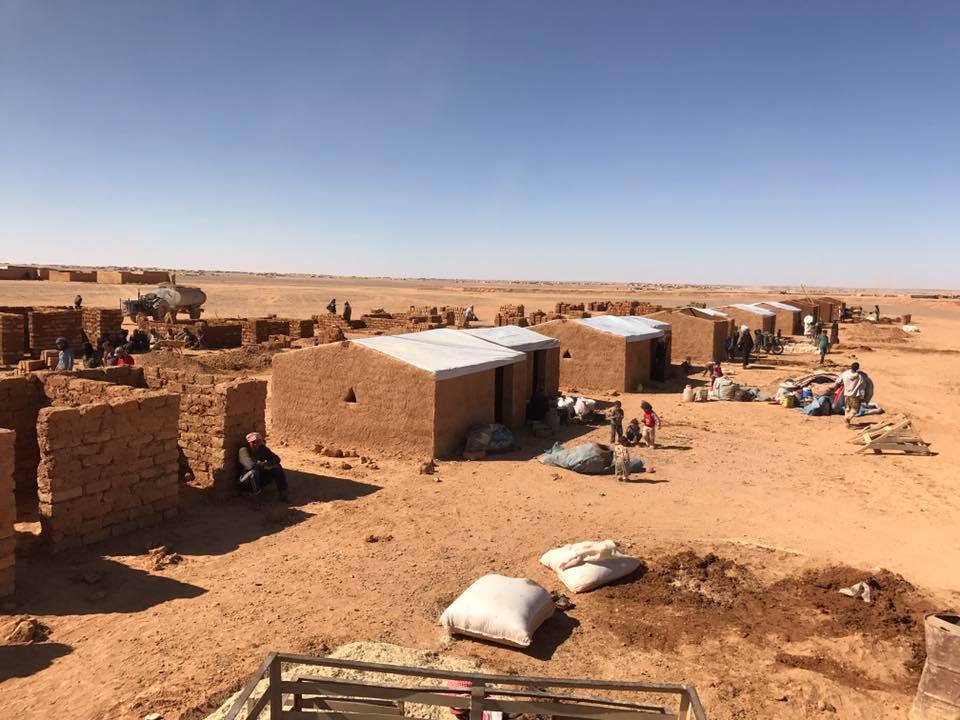
    Depuis un an et demi, certains ont divisé leurs champs en parcelles de cinq mètres carrés qu’ils louent désormais. À Dar Hamieh, l’emplacement coûte 75 euros tous les six mois. Le propriétaire affirme avoir 500 abris de fortune sur son terrain, que les réfugiés doivent en plus construire et financer eux-mêmes. Considérable pour un réfugié, cette somme peut atteindre 150 euros dans d’autres camps.

    Unique au monde selon l’ONG Caritas, la situation concerne au moins 6 700 Syriens dans la plaine de la Bekaa. À Dar Hamieh, ils sont au moins 3 000. Ces « campings » payants ne décrocheraient aucune étoile : sous les bâches, un simple tapis recouvre la terre battue et les réfugiés dorment à même le sol.

    #Syrie #guerre