Fuck the CD, Vinyl is the futur !
plus #obsolete_media #counter-tech tu meurs !
et en plus celui-ci est un hommage à #Snow-Crash et môssieur Neal Stephenson et ses livreurs-de-pizza-poneurs-de-voiture...
Fuck the CD, Vinyl is the futur !
plus #obsolete_media #counter-tech tu meurs !
et en plus celui-ci est un hommage à #Snow-Crash et môssieur Neal Stephenson et ses livreurs-de-pizza-poneurs-de-voiture...
Vers une stagnation de l’innovation | Rémi Sussan
http://www.internetactu.net/2013/01/09/vers-une-stagnation-de-linnovation
Et si, loin de vivre une explosion d’innovations, nous nous trouvions plutôt dans une phase de blocage ? Car s’il est vrai que nous assistons aujourd’hui à une multiplication des usages, ainsi qu’à un raffinement et une simplification de technologies déjà existantes (smartphones, web 2, etc.) les véritables innovations de rupture tardent finalement à se manifester. Nous avons déjà abordé…
#économie #créativité #open_innovation #politiques_publiques
Tubes : A journey to the center of the Internet, par Andrew Blum (chez Harper Collins), ISBN 978-0-06-199493-7
Contrairement à ce qu’on pourrait croire en prêtant attention aux niaiseries comme le discours sur le « virtuel » ou sur le « cloud », l’Internet n’est pas un concept évaporé. Il s’appuie sur de grosses et lourdes machines, qui sucent beaucoup d’électricité, et qui sont hébergées dans de grands bâtiments industriels. Ceux-ci sont connectés par des liens bien physiques, les ondes radio étant marginales. C’est cet enracinement physique de l’Internet que décrit Andrew Blum. L’auteur vivait autrefois dans l’ignorance de l’endroit où passait son trafic Internet. Il a compris la #physicalité du réseau lorsqu’un écureuil insolent a eu l’audace de ronger son accès Internet. Blum est alors parti visiter la planète pour trouver les lieux physiques d’Internet.
http://www.bortzmeyer.org/tubes.html
#câbles_sous-marins #datacenters #points_d'échange
Voir aussi http://seenthis.net/messages/100385 ►http://seenthis.net/messages/100279 http://seenthis.net/messages/44394 ►http://seenthis.net/messages/27102 http://seenthis.net/messages/103312
Mother Earth Mother Board
http://www.wired.com/wired/archive/4.12/ffglass_pr.html
The hacker tourist ventures forth across the wide and wondrous meatspace of three continents, chronicling the laying of the longest wire on Earth.
By Neal Stephenson - Issue 4.12 | Dec 1996
[cet article fleuve sur la route des #câbles et #câbles_sous-marins manquait à ce lieu, merci @liotier]
In which the hacker tourist ventures forth across the wide and wondrous meatspace of three continents, acquainting himself with the customs and dialects of the exotic Manhole Villagers of Thailand, the U-Turn Tunnelers of the Nile Delta, the Cable Nomads of Lan tao Island, the Slack Control Wizards of Chelmsford, the Subterranean Ex-Telegraphers of Cornwall, and other previously unknown and unchronicled folk; also, biographical sketches of the two long-dead Supreme Ninja Hacker Mage Lords of global telecommunications, and other material pertaining to the business and technology of Undersea Fiber-Optic Cables, as well as an account of the laying of the longest wire on Earth, which should not be without interest to the readers of Wired.
Quand les auteurs de SF passent à la pratique | Rémi Sussan (InternetActu)
►http://www.internetactu.net/2012/09/13/quand-les-auteurs-de-sf-passent-a-la-pratique
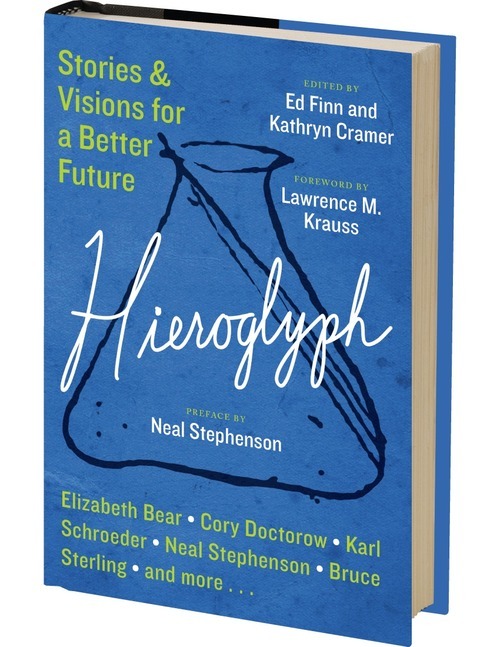
L’auteur de science-fiction Neal Stephenson s’est trouvé une nouvelle croisade. Créer une science-fiction optimiste, dégagée de la fascination pour la dystopie qui est aujourd’hui la norme. L’enjeu dépasse la littérature. Source : InternetActu
et #sf aussi éventuellement ; je pense désormais qu’il faudrait fusionner les tags #science_fiction et #science-fiction
ok mais alors _ ou - ?! cruciale interrogation
– évidemment, vu que « science fiction » n’existe pas (ou c’est de l’anglais)…
Bien joué les gars, vous avez gagné un badge :
http://www.laboutike.fr/WebRoot/netissime/Shops/159b799c/4E56/3B16/EF44/CA8C/BE18/C0A8/0001/2444/BA0010.jpg
« O ligne droite : sentier des chrétiens ! disent nos théologiens.—
—Symbole de la rectitude morale ! dit Cicéron .—
—La meilleure ligne ! disent les planteurs de choux.—
—La plus courte, dit Archimède , qu’on puisse tracer d’un point à un autre.— »
Tristram Shandy , livre 6, dernier chapitre #spirale
Quand les auteurs de SF passent à la pratique | Rémi Sussan
►http://www.internetactu.net/2012/09/13/quand-les-auteurs-de-sf-passent-a-la-pratique
De tous les auteurs de SF contemporains Neal Stephenson (Wikipedia, @nealstephenson) est peut-être le plus apprécié des geeks. S’il n’a pas, comme William Gibson, inventé le concept de cyberspace, il a popularisé celui de metavers, un univers virtuel où les visiteurs, dotés d’un avatar, peuvent vivre les aventures les plus folles. En fait, tandis que le “cyberespace” de Gibson reste…
Neal Stephenson interview: Kickstarter, swordfighting, and the big novel’s staying power
http://www.theverge.com/2012/8/21/3244362/neal-stephenson-interview-some-remarks-clang-kickstarter
Two recent projects exemplify these qualities. Some Remarks, a remarkable collection of essays, interviews, a brief work of fiction, and a single new piece, finds Stephenson delving into his archives – something he rarely does – to highlight older pieces that tackle the topics of today: the coolness of geeks, the relevance of science fiction, the ambition of politicians. One of his other current endeavors is CLANG, a video game that hopes to reinvent a longtime Stephenson obsession, swordfighting interfaces. In a sprawling interview with The Verge, the author offered up some of his many plans and thoughts, including a new “research-heavy” novel, his trouble with Twitter, and why Kickstarter might be superior to venture capital.
CLANG
http://www.kickstarter.com/projects/260688528/clang
Hi, Neal Stephenson here. My career as an author of science and historical fiction has turned me into a swordsmanship geek. As such, I’m dissatisfied with how swordfighting is portrayed in existing video games. These could be so much more fun than they are. Time for a revolution.
REAMDE, Neal Stephenson - Fifokaswiti
http://www.fifokaswiti.info/blog/index.php?post/2011/11/12/REAMDE%2C-Neal-Stephenson
http://nealstephenson.com/reamde/reamde.png
Stephenson, qui est pourtant l’un des écrivains les plus fascinants du moment (...), a produit un techno-thriller épileptique. Ça tire de partout, ça ne s’arrête jamais, ça ressemble à un appel du pied à Michael Bay (ou l’un de ses clones) pour faire une adaptation. Certes. Le problème, c’est qu’un film de Michael Bay, ça ne dure pas beaucoup plus de deux heures. Un bouquin de plus de mille pages, c’est bien plus long.
Et c’est chiant.
Je n’en suis pas à la moitié, et j’envisage de laisser tomber. Grosse déception, donc.
je n’en suis pas autant déçu, vu que je suis au tiers et ne vais pas abandonner, mais je partage un peu ce sentiment : c’est efficace et facile, plein de jargon geek même pas marrant, et au fond sans grand intérêt. si on n’a pas déjà tout lu, lire Quicksilver (non traduit) ou Cryptonomicon
Moi j’y trouve encore une galerie de personnages hétéroclites dont des filles pas nunuches, le jargon geek m’amuse (peut-être parce que je ne suis pas un geek) et étant presque à la fin je ne me suis pas fait chier, comme dit Fifokaswiti.
Tiens, ça me donne l’occasion d’aller voir la fiche wikipedia de Michael Bay
http://fr.wikipedia.org/wiki/Michael_Bay
où l’on trouve cette phrase mystérieuse :
Il est surtout connu pour avoir réalisé des films d’action et catastrophe avec un gros budget, caractérisés pour leur utilisation des modifications substantielles des effets pratiques.
Les livres de Stephenson, en V.O. ou en V.F., finissent toujours par me tomber des mains, malgré les bonnes idées, l’originalité des sujets et des structures romanesques... En résumé, ses livres sont toujours une grosse déception pour moi... De Zodiac à Cryptonomicon ou Quicksilver...
Le problème de Stephenson c’est qu’il aime bien se lire, donc souvent ça traîne — heureusement il se rattrape avec une bonne plume et de bonnes idées. Celui-ci est efficace, mais inintéressant. Je suis d’accord : il vaut mieux lire Anathem.
un peu (mais un peu seulement) le même sujet que FOR THE WIN https://seenthis.net/messages/97938
Tout le monde sait déjà qu’#Emacs est le meilleur éditeur de texte mais, dans cet artile, c’est bien expliqué pourquoi :
Je suis bien d’accord (pour Emacs), par contre la citation de Neal Stephenson en ouverture tombe un peu à plat quand on sait que ce dernier l’a remplacé par Scrivener :
http://www.forbes.com/sites/davidewalt/2011/09/19/neal-stephenson-reamde-video-games/2
Innovation & management, par Neal Stephenson | World Policy Institute
►http://www.worldpolicy.org/journal/fall2011/innovation-starvation
Today’s belief in ineluctable certainty is the true innovation-killer of our age. In this environment, the best an audacious manager can do is to develop small improvements to existing systems—climbing the hill, as it were, toward a local maximum, trimming fat, eking out the occasional tiny innovation—like city planners painting bicycle lanes on the streets as a gesture toward solving our energy problems. Any strategy that involves crossing a valley—accepting short-term losses to reach a higher hill in the distance—will soon be brought to a halt by the demands of a system that celebrates short-term gains and tolerates stagnation, but condemns anything else as failure. In short, a world where big stuff can never get done.
Innovation Starvation | World Policy Institute
►http://www.worldpolicy.org/journal/fall2011/innovation-starvation
Neal Stephenson sur le rôle de la SF dans l’innovation.
Most people who work in corporations or academia have witnessed something like the following: A number of engineers are sitting together in a room, bouncing ideas off each other. Out of the discussion emerges a new concept that seems promising. Then some laptop-wielding person in the corner, having performed a quick Google search, announces that this “new” idea is, in fact, an old one—or at least vaguely similar—and has already been tried. Either it failed, or it succeeded. If it failed, then no manager who wants to keep his or her job will approve spending money trying to revive it. If it succeeded, then it’s patented and entry to the market is presumed to be unattainable, since the first people who thought of it will have “first-mover advantage” and will have created “barriers to entry.” The number of seemingly promising ideas that have been crushed in this way must number in the millions.
Recherche sérendipité désespérement [1/3] | Ethan Zuckerman
http://owni.fr/2011/08/13/recherche-serendipite-desesperement-villes-reseaux-sociaux
Trouver ce qu’on ne cherchait pas : un émerveillement permanent sur le web au doux nom de sérendipité. Retour au source du concept dans un feuilleton de trois parties : début du voyage dans les recoins de la ville.
#Science #Traduction #Cyberpunk #foursquare #population_mondiale #réseaux_sociaux #sérendipité #technologie_de_la_communication #urbanisation #villes
Tatara Project by Jesus Hernandez
http://www.arscives.com/bladesign/tamahagane/main.htm
comment fabriquer son propre sabre en partant de minerai de métal
#diy
http://www.arscives.com/bladesign/tamahagane/image013.jpg
Je pense que ça plairait à l’équipe de Mongoliad.
http://mongoliad.com
Ne pas oublier de se replonger parfois dans #Snow_Crash (le samouraï virtuel) de #Neal_Stephenson.
Le problème de la distribution de papier toilette aux employés présente à tout système de gestion du personnel un défi inhérent dû au caractère fondamentalement imprévisible des entrées et des sorties. De plus, chaque utilisation des locaux n’entraîne pas nécessairement l’usage du papier toilette. Et, en cas d’usage, la quantité prélevée (exprimée en nombre de feuilles) peut varier considérablement d’une personne à l’autre et même d’une transaction à l’autre. Ces considérations ne tiennent pas compte de l’utilisation occasionnelle du papier toilette pour des usages imprévisibles ou créatifs tels que l’application ou la suppression de produits cosmétiques, la gestion des boissons renversées, etc.
(Traduction Guy Abadia)
L’avenir de la programmation (1/6) : programmer, une activité culturelle ?
http://feedproxy.google.com/~r/internetactu/bcmJ/~3/bYeYUSev5Tw
The Baroque Cycle (2003-2004) - #Neal_Stephenson
http://en.wikipedia.org/wiki/The_Baroque_Cycle
Si j’ai une recommandation à faire en matière de #sf (ou pas... c’est écrit comme de la sf, mais c’est du roman historique) anglophone, c’est vraiment cette trilogie :
The Baroque Cycle is a series of novels by American writer Neal Stephenson. It was published in three volumes containing 8 books in 2003 and 2004.The story follows the adventures of a sizeable cast of characters living amidst some of the central events of the late 17th and early 18th centuries in Europe. Despite featuring a literary treatment consistent with historical fiction, Stephenson has characterized the work as science fiction, due to the presence of some anomalous occurrences and the work’s particular emphasis on themes relating to science and technology. The sciences of cryptology and numismatics feature heavily in the series.
Aux dernières nouvelles l’éditeur français de Stephenson a reculé devant la tâche de #traduction ; dommage, car en plus d’être drôle et très bien écrit (attention, c’est d’un niveau soutenu), ce #livre parle de la naissance de tout notre monde moderne : la #science, la #banque, la #finance, et même l’#Etat ...
(voir aussi ►http://seenthis.net/messages/4866)
http://upload.wikimedia.org/wikipedia/en/c/c2/The_System_of_the_World.jpg
Bury the Chains : Prophets and Rebels in the Fight to Free an Empire’s Slaves: Books: Adam Hochschild
http://www.amazon.com/gp/product/0618104690/104-7342584-2633545?v=glance&n=283155&n=507846&s=books&v=glance
(voir aussi http://seenthis.net/messages/8951)
http://images.amazon.com/images/P/0618104690.01.LZZZZZZZ.jpg
An Interview with Adam Hochschild | Mother Jones
http://www.motherjones.com/politics/2005/01/bury-chains-interview-adam-hochschild
In the late 18th century, a small group of Englishmen went out on a limb and put forward the radical notion that slavery was wrong. At first, their proposal that Enlightenment ideals of equality and liberty should be extended to the millions of African slaves held in Britain’s colonies looked like a non-starter. “The idea of ending slavery seemed totally utopian, crackpot, wildly too idealistic,” says journalist and writer Adam Hochschild. Yet, as Hochschild recounts in his new book, Bury The Chains: Prophets and Rebels in the Fight to Free an Empire’s Slaves, these abolitionists proved themselves right in far less time than anyone might have imagined. Slightly more than 50 years after its humble birth in a London print shop in 1787, the British antislavery movement overturned the atrocity that had formed the economic backbone of the world’s most powerful empire.