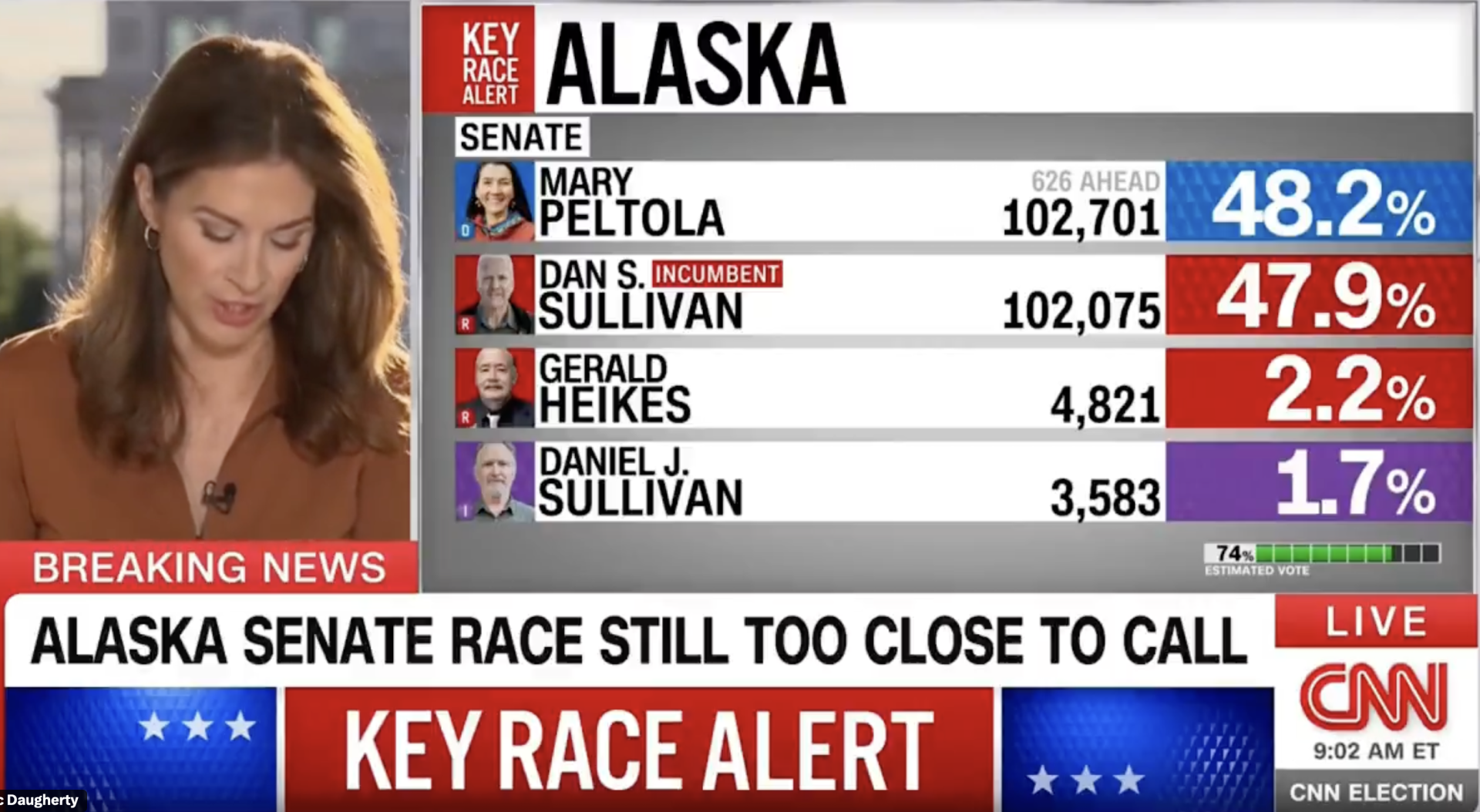
Élection au Sénat états-unien en Alaska : on n’est pas à l’abri d’un feuilleton électoral comme les États-Unis savent nous en concocter (cf. Bush-Gore en 2000 – version longue – ou Biden-Trump en 2020 – version plus brève, mais musclée)
What Is Ranked-Choice Voting ? What It Could Mean for Alaska’s Election
▻https://www.wsj.com/livecoverage/midterm-election-results-2026-latest-updates/card/what-ranked-choice-voting-could-mean-for-alaska-s-election-myfZ7KC5frWKHQQS8vLF
▻https://images.wsj.net/im-65845843/social
The final results of Alaska’s close Senate race might not be known for weeks, because of the state’s use of ranked-choice voting. This could add to the drama already unfolding in the state.
In Alaska’s ranked-choice voting system, voters rank the four finalists on their ballots in order of preference. If no one gets more than 50% of the vote, the weakest candidate is eliminated and the second-choice votes on those ballots are redistributed to remaining candidates. The process continues until someone has a majority. But the ranked-choice tally won’t happen before Nov. 18, the deadline for absentee ballots, so the winner in Alaska might not be known for weeks.