More than a mask – Mashallah News
▻http://www.mashallahnews.com/mask
Pour enrichir un peu le discours sur le voile ! Le site d’où est tiré l’article est souvent très intéressant.
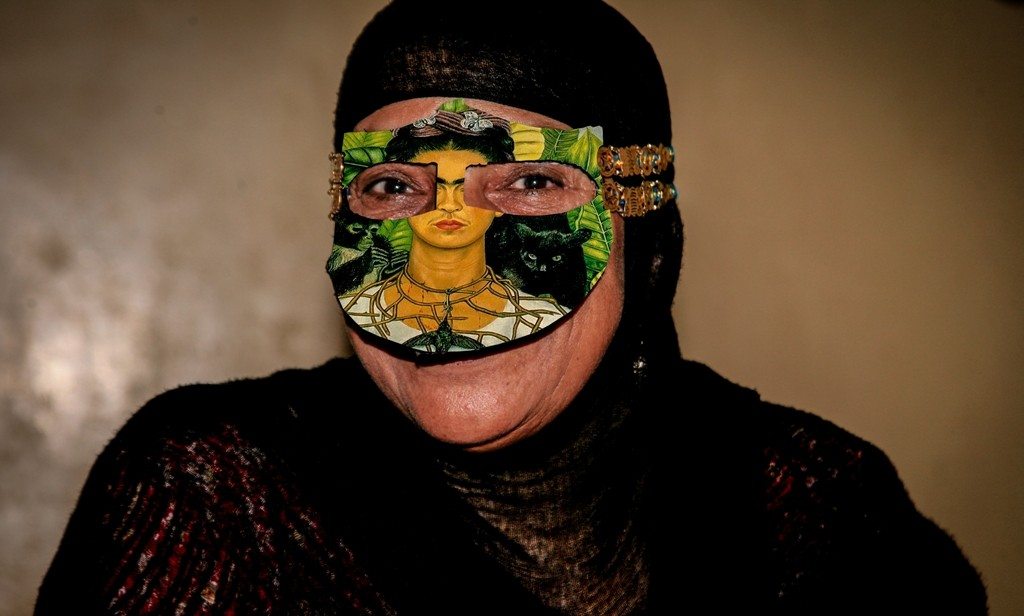
While the hijab is associated with religious beliefs and has the purpose of secluding parts of the body, the use of the burqe is broader: first of all, it codifies a woman’s identity through different motifs, colours and forms. The burqe also serves as protection against harsh sunlight and gives vendors and other people of traditional low class occupations the choice to stay undiscovered by others. Then, as with pieces of clothes and ornaments everywhere, the burqe is a means of beautification.
The region of Hormozgan is located near the Arabic countries in the Gulf, which means there are some shared traditions and a similar culture. The Hormozgan burqe is of three kinds: schiele, fabric and textile, while in the Arab world only the schiele kind is used. The schiele is sewn with a special sewing machine, and is thicker and more durable than the sort worn in Hormozgan, which is handmade.
The form and use of the burqe in Iran has evolved over time. With an increase in population, including in the rural areas, women have changed the way they make the burqe: forms, colours and motifs have altered alongside climatic and cultural shifts. In the past, the burqe was made of wood, whereas today material like plastic or plexiglas are used as well.
In the past, the burqe was seen as a handicraft rather than a form of art, but for us, when researching the use and form of the burqe, we considered its artistic qualities as well.
When working on this book, we travelled to around 40 Hormozgan villages to learn about the history and contemporary use of the burqe in this region. We learned that climate and culture affects how it is worn. In Hormozgan, women wear the burqe to protect their skin against the sun, and in the eastern parts, against the harsh sand winds. Different colours and patterns indicate what role the burqe plays in women’s lives: location-specific details and variations mean that a person wearing a burqe can be identified according to where she lives, how old she is, and whether she is married, single, divorced or widowed.
Burqe
A woman from Hormozgan wearing a burqe portraying the Mexican icon/artist Frida Kahlo.