• Il sushi è la morte sua. L’industria del salmone devasta l’arcipelago di Chiloé, nel Sud del Cile

    La salmonicoltura intensiva si è sviluppata in questo punto della Patagonia cilena negli anni della dittatura di Pinochet, snaturando economia, tradizioni, habitat locali. E ingrossandosi grazie ai sussidi pubblici. Con 1.200 concessioni per allevamenti, il Paese è oggi tra i primi al mondo per produzione, con una popolazione di esemplari non autoctoni che surclassa la capacità di carico dell’ecosistema. Il settore esplode ma le comunità (silenziate) restano povere, a fronte di impatti ambientali enormi.

    Per qualche oscura ragione il piatto tipico dei quartieri gentrificati del mondo globalizzato è l’”avocado toast” al salmone: un cibo veloce, apparentemente semplicissimo, i cui ingredienti principali provengono da due filiere alimentari completamente insostenibili. Ma se negli ultimi anni si è diffusa la coscienza dell’impatto ambientale delle coltivazioni di avocado, di quello dell’allevamento intensivo dei salmoni si parla molto meno. Nella Patagonia cilena, e in particolare a Chiloé, gli effetti di questa colonizzazione industriale sono però evidenti.

    Chiloé è un arcipelago del Cile meridionale nella Regione di Los Lagos: la sua isola principale è attraversata dalla Ruta panamericana e abitata da 150mila persone. In passato gli abitanti di Chiloé (i chilotes), di etnia mapuche o di ascendenza europea, emigravano verso la terraferma per lavorare nei grandi latifondi patagonici, anche come sostituti dei lavoratori in sciopero durante le lotte operaie di inizio Novecento. Chi rimaneva sull’isola sopravviveva di un’economia di sussistenza, pre-capitalistica e cooperativa. Quando nel 1960 un terremoto e il conseguente tsunami hanno devastato il territorio, la società e l’economia di Chiloé sono cambiate per sempre.

    Per provare a risollevare l’isola dalla crisi la Fundación Chile ha cominciato a studiare la fattibilità della salmonicoltura. Dopo 15 anni l’azienda statunitense Domsea farms ha installato il primo allevamento di salmoni a Curaco de Vélez, un paese di qualche centinaio di abitanti. Hanno scelto Chiloé per varie ragioni: i canali e le baie incontaminate sono perfetti per proteggere gli impianti mentre i pescatori locali sotto-occupati rappresentano la manodopera ideale. Inoltre, produrre salmone nell’emisfero australe permette di poterlo fare in un’altra stagione rispetto all’emisfero boreale e di rispondere così a una richiesta che dura tutto l’anno e che continua a crescere di pari passo alla diffusione mondiale della cultura del sushi a basso prezzo che, secondo Business research insights, alimenta un mercato dal valore di 30 miliardi di dollari e che raddoppierà nei prossimi dieci anni.

    “L’industria salmoniera ha interrotto una tradizione millenaria di nomadismo di sopravvivenza e ha trasformato il chilote nomade in chilote salariato”, racconta ad Altreconomia Marcela Ramos, attivista ambientale di Chiloé e già presidente di Slow Food Cile. Lo sviluppo rapidissimo di questa industria ha portato all’abbandono dei campi e della pesca artigianale e ha trasformato l’isola da luogo di emigrazione a luogo di immigrazione.

    Il processo estrattivo è cominciato non a caso negli anni della dittatura militare di Augusto Pinochet che prevedeva la liberalizzazione selvaggia dell’economia e un ruolo preciso per il Cile nel mercato globale: quello di esportatore di materie prime. E tra queste c’era proprio il salmone. Così negli anni Ottanta vennero fondate le prime aziende e nel 1994 il Cile era già il secondo produttore mondiale di salmone dopo la Norvegia: un posto sul podio che mantiene tuttora. Secondo i dati del sottosegretariato alla Pesca e dell’acquacoltura, oggi in Cile ci sono oltre 1.200 concessioni (delle quali un terzo in area marina protetta) e, negli ultimi 30 anni, il settore ha sostenuto un tasso di crescita medio annuo del 117%.

    Attraversando Chiloé la presenza della salmonicoltura è capillare. Sulla Ruta panamericana si incolonnano i camion delle industrie che portano gli avannotti dagli allevamenti di acqua dolce dove sono nati alle grandi gabbie in mare dove verranno ingrassati; dall’alto si vedono gli allevamenti che coprono una superficie pari a svariate migliaia di ettari; l’aria stessa odora di mercato del pesce più che di salsedine.

    Bisogna immaginarsi delle gabbie sottomarine dove nuotano stipati milioni di salmoni alimentati con mangimi e coloranti, riempiti di antibiotici e così ammassati da distruggere completamente la vita del fondale marino sottostante. L’uso di coloranti è necessario per dare alla carne il tipico colore rosa che, in natura, è prodotto dall’alimentazione a base di crostacei; per quanto riguarda gli antibiotici invece, stando a Greenpeace, la somministrazione in Cile può superare di 60 volte il limite imposto agli allevamenti europei.

    Inoltre negli ultimi 10 anni, denuncia Ramos, dagli allevamenti cileni sono scappati 10 milioni di esemplari: la presenza in mare aperto di una specie non autoctona, insieme alle feci e ai resti metallici e plastici delle gabbie, devasta l’ecosistema al punto che il Relatore speciale delle Nazioni Unite sulle questioni ambientali David R. Boyd ha suggerito già nel 2023 di “stabilire una moratoria sull’espansione dell’acquacoltura del salmone in attesa di un’analisi scientifica indipendente degli impatti ambientali negativi”.

    Da anni ormai a Chiloé la popolazione di salmoni eccede la capacità di carico dell’ecosistema: di tanto in tanto questo comporta una crisi sanitaria, come quella da anemia infettiva del salmone nel 2008.

    Nel 2016 invece i mari dell’arcipelago sono stati invasi dalla cosiddetta “marea roja”, la proliferazione tossica di una microalga: in quell’occasione ai pescatori artigianali è stata improvvisamente vietata la pesca a causa dei rischi sanitari.

    I lavoratori e gli attivisti hanno collegato subito l’evento allo sversamento di quasi cinquemila tonnellate di salmone avariato, chiamando alla mobilitazione di piazza. Ne è seguito un periodo di proteste e barricate che ha preso il nome di “mayo chilote”: l’arcipelago è restato isolato dalla terraferma a causa dei blocchi portuali. “La risposta è stata fortissima e inedita -ricordano gli attivisti di Defendamos Patagonia-, 250 chilometri di Ruta 5 bloccati, picchetti nei dieci Comuni, 18 giorni di mobilitazione ininterrotta. Pescatori artigianali, raccoglitori di crostacei, studenti e comunità williche scesero in strada in una protesta che segnò un prima e un dopo nella storia ambientale del Cile meridionale”.

    A dieci anni da quel maggio la Corte suprema cilena ha decretato che lo sversamento era stato illegale ma a questo non ha fatto seguito la condanna di nessun funzionario pubblico né di nessuna azienda. Oggi di quel movimento, dice Ramos, “non resta praticamente nulla se non ricordi tristi delle divisioni e della manipolazione politica, agli eventi per il decennale c’è stata pochissima partecipazione. Ci sono poche organizzazioni ambientaliste che denunciano gli effetti della salmonicoltura nell’arcipelago, anche perché c’è molta gente che lavora nel settore”.

    Il tema del lavoro è alla base della legittimazione delle aziende salmoniere e induce una parte dell’opinione pubblica a soprassedere sulle conseguenze ambientali della pratica intensiva. Scavando sotto la propaganda, tuttavia, non ci sono dati precisi sul numero di persone occupate nel settore a Chiloé: un’elaborazione di Fundación Terram sui dati governativi stima una media annuale 3.500 lavoratori diretti, a cui vanno aggiunti quelli dell’indotto, numero che ha subito variazioni in seguito alle crisi sanitarie degli anni passati e alla crescente automazione del settore.

    A questo si somma il tema dei sussidi statali: nelle cosiddette zone estreme come Chiloé le imprese salmoniere hanno ricevuto una quantità di sussidi statali che ha permesso loro di pagare quasi il 20% del salario dei lavoratori. Questo sarebbe avvenuto anche per le società che avevano ricevuto sanzioni amministrative per non aver rispettato i diritti dei lavoratori in un settore ad alto rischio che, dal 2013 a oggi, ha causato almeno 90 morti in tutto il Cile.

    C’è poi un ultimo aspetto: nonostante la presenza della salmonicoltura sussidiata dallo Stato, la popolazione di Chiloé continua a essere paradossalmente povera rispetto alla ricchezza del suo mare. Il tasso di povertà qui è nella media nazionale ma supera di 10 punti la media per quanto riguarda la povertà multidimensionale, quella cioè che considera vari indicatori, tra cui lavoro, salute, istruzione, come si legge nel Rapporto Casen del 2022. Secondo Marcela Ramos, Chiloé “ha tassi molto alti di alcolismo, violenza familiare, abuso sui minori ma è difficile parlarne pubblicamente”.

    Dopo il 2016 la fiducia nella politica da queste parti è limitata e Santiago viene percepita come molto lontana. La normativa Ley Lafkenche dal 2008 regola la creazione di Spazi marini costieri dei popoli originari che dovrebbero tutelare l’ambiente dallo sfruttamento intensivo, ma di fatto non viene rispettata. Il governo di centrosinistra di Gabriel Boric ha rappresentato un’occasione mancata per gli attivisti ambientali della Patagonia e alle ultime elezioni l’estrema destra di José Antonio Kast ha vinto in tutti i Comuni dell’arcipelago.

    Nella periferia meridionale di un Paese che ha vissuto nel Novecento una delle più selvagge sperimentazioni neoliberiste alcune grandi imprese multinazionali, in connivenza con lo Stato, hanno dichiarato un intero arcipelago “zona di sacrificio”. E questo sacrificio inquina le acque e devasta l’ecosistema senza portare benessere alla popolazione locale ma solo per mettere salmone a basso costo negli onigiri globali.

    ▻https://altreconomia.it/il-sushi-e-la-morte-sua-lindustria-del-salmone-devasta-larcipelago-di-c
    #saumons #élevage #élevage_intensif #industrie_agro-industrielle #Chili #Chiloé #pêche #salmoniculture #Patagonie #environnement #avocat #colonisation_industrielle #Los_Lagos #mapuche #Fundación_Chile #tremblement_de_terre #Domsea_farms #Curaco_de_Vélez #main-d'oeuvre #travail #sushi #alimentation #extractivisme #économie #libéralisation_de_l'économie #Augusto_Pinochet #Pinochet #exportation #colorants #antibiotiques #marea_roja #mayo_chilote #résistance #subsides #pauvreté

  • En Algérie de 2027, la hausse des salaires ne sauvera pas le pouvoir d’achat
    ▻http://www.argotheme.com/organecyberpresse/spip.php?article5036

    Le contexte du pays montre que la faiblesse du dinar algérien rend vaine la hausse des salaires. Le leurre se conjugue aux valeurs comme le dollar à 136 dinars au taux officiel, plus de 240 au marché noir, cet écart qui dépasse 80 % ne peut être jugulé par magie. Entre déficit public, création monétaire et #économie_parallèle, les augmentations promises pour 2027 risquent d’être rongées par encore plus de perte de puissance du dinar. Décryptage d’un paradoxe qui touche le ménage livré à une grotesque régulation. #nationale,_fait_politique,_une_et_première_page,_médias,_actualité,_pays,_france,_afrique,_maghreb

    / Maghreb, Algérie, Tunisie, Maroc, Libye, Africa, population, société , économie , #chômeurs,_emploi,_social,_syndicat,_revendication,_jeunesse,_travailleurs,_chômage, crise, (…)

    #Maghreb,Algérie,_Tunisie,_Maroc,_Libye,_Africa,_population,_société #crise,_capitalisme,_économie,_justice,_Bourse
    ▻http://www.argotheme.com/organecyberpresse/IMG/mp3/en_algerie_de_2027_la_hausse_des_salaires_ne_sauvera_pas_le_pouvoir_d_ach

  • Les travailleurs invisibles de l’#économie_circulaire

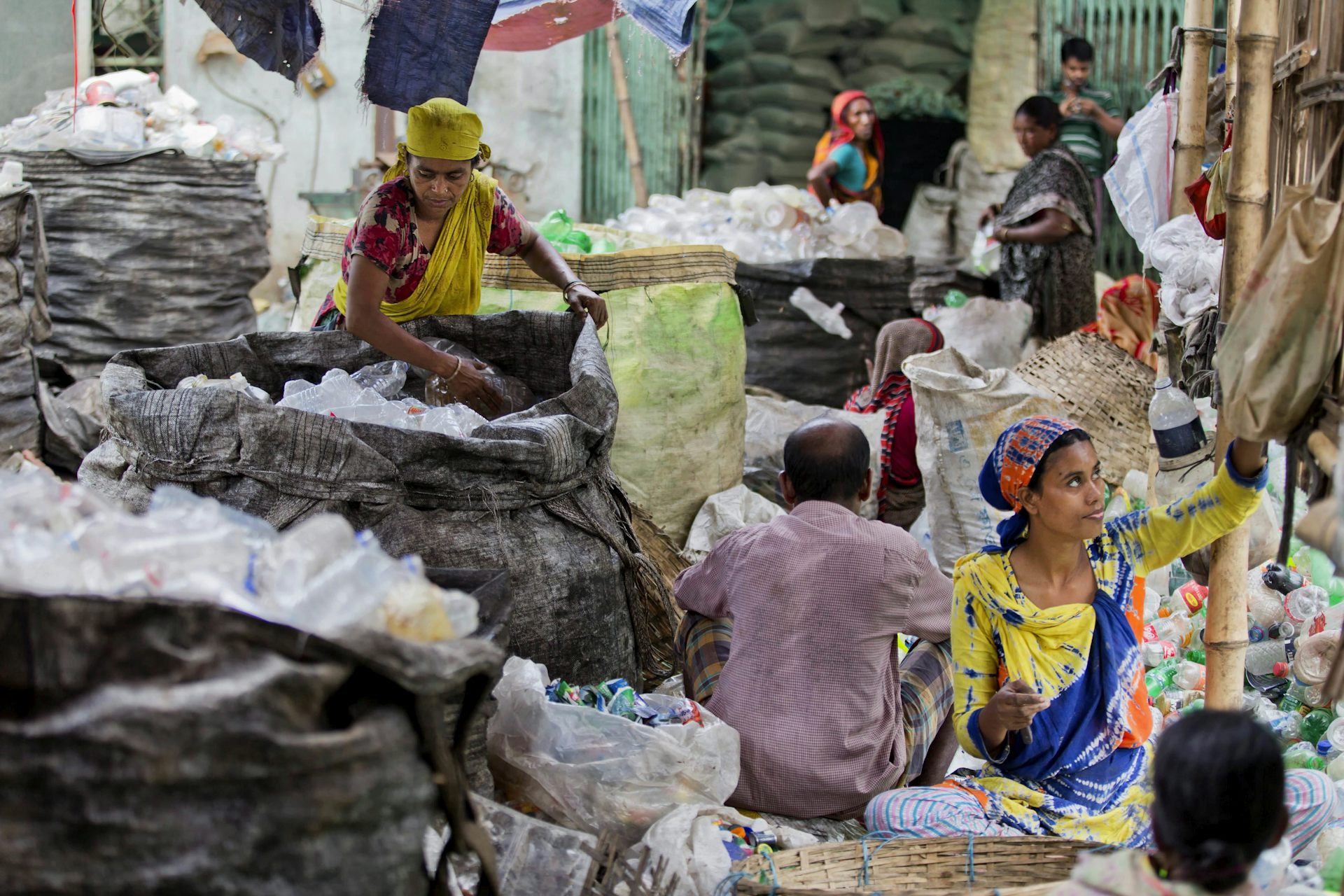
    À #Bogotà, en #Colombie, des milliers de #recycleurs parcourent chaque jour les rues pour récupérer cartons, plastiques, métaux et papiers. Sans eux, une partie importante des #matières_recyclables finirait dans les sites d’enfouissement. Pourtant, leur contribution demeure largement méconnue.

    Ils font partie de ce que plusieurs travaux décrivent comme les « #infrastructures_humaines » de l’économie circulaire, c’est-à-dire les acteurs qui rendent possible la #collecte, le #tri, la #réparation et la #remise_en_circulation des #ressources. Leur contribution demeure pourtant largement sous-estimée dans les politiques publiques et les récits de #transition_écologique.

    Cette situation n’est pas propre à la Colombie. Des récupérateurs de Madagascar aux femmes recycleuses de Niamey, en passant par les coopératives de collecte au Brésil ou les réseaux de consigne au Québec, l’économie circulaire repose déjà sur des millions de personnes dont le travail est rarement reconnu à sa juste valeur.

    Derrière chaque matière récupérée, il y a du travail

    Les débats sur l’économie circulaire mettent généralement l’accent sur les flux de matières, les technologies de recyclage ou les innovations industrielles. Pourtant, la géographe britannique Nicky Gregson et le géographe britannique Mike Crang, tous deux professeurs à l’Université de Durham (Royaume-Uni) et spécialistes de la géographie économique, des déchets et des chaînes mondiales de valorisation des ressources, rappellent dans un article publié en 2015 que les matières ne circulent pas seules. Leur récupération, leur tri, leur réparation et leur remise en circulation reposent sur une multitude d’acteurs souvent absents des représentations dominantes de la transition écologique.

    Ce #paradoxe est d’autant plus frappant que plusieurs millions de personnes dans le monde tirent directement leurs revenus d’activités liées à la #récupération, au #réemploi ou au #recyclage, selon l’Organisation internationale du travail. Dans de nombreux pays du Sud global, ces travailleurs constituent même le principal maillon des systèmes de #valorisation des matières.

    Les recherches récentes sur les transitions circulaires montrent que, dans de nombreux contextes, les #performances_environnementales des systèmes de récupération reposent à la fois sur les infrastructures techniques et sur les infrastructures humaines qui les rendent possibles.

    Les récupérateurs de Bogotà : une expertise méconnue

    À Bogotà, les recycleurs ne se contentent pas de collecter des matières. Ils développent une connaissance fine des flux de #déchets, des marchés de revente, des matériaux valorisables et des besoins des entreprises de recyclage. Leur #expertise est le résultat de plusieurs décennies d’expériences, d’organisation collective et de #professionnalisation.

    Cette reconnaissance n’a toutefois pas été acquise facilement. Comme l’ont montré la géographe et urbaniste canado-brésilienne Jutta Gutberlet, professeure à l’Université de Victoria (Canada) et spécialiste des déchets et de l’économie circulaire inclusive, ainsi que l’anthropologue mexicain Martin Medina, chercheur spécialisé dans les récupérateurs informels, la gestion des déchets et les politiques publiques en Amérique latine, les récupérateurs latino-américains ont longtemps été considérés comme un problème social plutôt que comme des acteurs environnementaux. Ce n’est qu’à la suite de mobilisations et de décisions juridiques qu’ils ont progressivement obtenu une reconnaissance institutionnelle.

    Les systèmes informels de récupération

    Dans plusieurs villes africaines, les récupérateurs informels jouent un rôle essentiel dans la collecte, le tri et la valorisation des déchets, surtout lorsque les systèmes municipaux demeurent insuffisamment structurés. Par exemple, À Niamey, au Niger, les recherches sur la gestion des #déchets_ménagers souligne l’existence d’un système informel de récupération et de #précollecte, qui compense en partie les limites des dispositifs formels de gestion des déchets urbains.

    Cette réalité dépasse largement le cas de Niamey. Une synthèse récente sur les récupérateurs informels en Afrique souligne que ces travailleurs contribuent à des fonctions urbaines essentielles (ex. assainissement, récupération de matières, réduction des volumes destinés aux dépotoirs) tout en demeurant exposés à la marginalisation et à une faible reconnaissance institutionnelle.

    Quand l’#invisibilité devient une #stratégie_de_survie

    Les #femmes occupent une place particulièrement importante dans cet écosystème. Les travaux sur la participation genrée dans l’#économie_informelle des déchets mettent en lumière le fait que cette activité constitue souvent une source de revenus pour des groupes urbains vulnérables, tout en reproduisant des #inégalités_de_genre dans l’accès limité aux équipements de protection, les faibles revenus, l’exposition aux #violences et l’#exclusion des espaces de décision.

    Dans ce contexte, l’invisibilité n’est pas uniquement une injustice subie. Elle peut aussi devenir une tactique d’adaptation. Pour des travailleurs exposés aux expulsions, à la #stigmatisation ou au #contrôle_administratif, rester partiellement en dehors des dispositifs officiels peut permettre de préserver l’accès aux matières, aux lieux de collecte et aux revenus quotidiens.

    Cette observation nuance une idée souvent présente dans les politiques publiques, à savoir que rendre visibles et formaliser les travailleurs informels serait toujours souhaitable. Le rapport des Nations unies en lien avec la gestion des déchets solides urbains, intitulé Ne laisser personne pour compte et basé notamment sur les travaux du chercheur Costas Vélis, ingénieur britannique d’origine grecque, professeur à l’Université de Leeds (Royaume-Uni) et spécialiste de la gestion durable des déchets, montre plutôt que la formalisation peut produire des effets ambivalents lorsqu’elle ne protège pas l’#accès_au_travail, aux espaces de collecte et aux revenus aux récupérateurs. L’enjeu consiste alors à reconnaître les conditions réelles d’exercice de ces activités et à préserver les savoirs et réseaux qui les rendent possibles.

    Reconnaître les travailleurs de la circularité

    Ainsi, les récupérateurs sont souvent intégrés aux chaînes de valeur lorsqu’il s’agit de collecter, trier ou valoriser les matières. Ils le sont beaucoup moins lorsqu’il s’agit de participer aux décisions, à la gouvernance ou au partage des retombées économiques.

    Pourtant, plusieurs organisations internationales soulignent aujourd’hui que les objectifs environnementaux et sociaux de l’économie circulaire sont indissociables. En Afrique comme ailleurs, les récupérateurs contribuent déjà à réduire les volumes de déchets, à alimenter les filières de recyclages et à diminuer les coûts de gestion pour les municipalités.

    Comme le précise l’Institut de la Francophonie pour le développement durable (IFDD) dans son rapport de 2024, sans ce travail, une partie importante des matières récupérées n’atteindrait jamais les centres de valorisation. Ainsi, la question d’équité ne constitue qu’une partie du problème.

    La reconnaissance des #travailleurs_de_la_circularité renvoie également à la capacité même des systèmes de récupération et de valorisation à fonctionner. Sans leur contribution, une part importante des matières que l’économie circulaire cherche à maintenir en circulation ne serait ni récupérée ni réintroduite dans les chaînes de valeur. Les héros oubliés de l’économie circulaire sont aussi ceux qui nous rappellent que la valeur d’une ressource dépend autant de la matière elle-même que du travail nécessaire pour la remettre en circulation.

    ▻https://theconversation.com/les-travailleurs-invisibles-de-leconomie-circulaire-284389
    #travail #recyclage

  • The EU Fears China’s Power Over Private Capital
    ▻https://jacobin.com/2026/11/eu-china-capital-state-investment

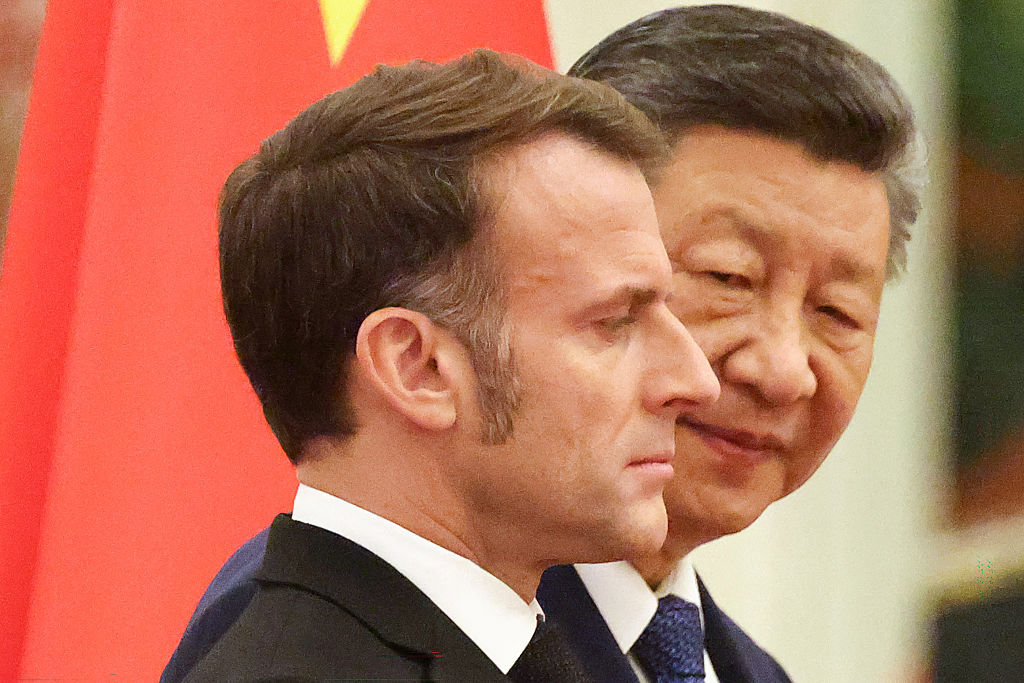
    European leaders routinely accuse Chinese industrial policy of distorting competition and interfering with private capital. They could instead consider if China’s record of strategic planning has lessons that the EU could adapt to its own economies. (Ludovic Marin / Pool / AFP via Getty Images)

    La Chine dompte ses acteurs capitalistes alors que la politique européenne est la victime des siens.

    2.11.2026 by Alexandra Gerasimcikova - Emmanuel Macron celebrated a new EU deal to reduce Chinese car imports as a blow against “unfair competition.” What really troubles European leaders is that China has successfully disciplined its capitalists — something Europe is unwilling to attempt.

    To the joy of French and German leaders, the European Union has reached an agreement with Beijing to help alleviate the bloc’s €360 billion trade deficit in goods with China. French President Emmanuel Macron celebrated the deal reached in October, which aims to reduce Chinese hybrid car imports and improve market access for some European products, as a way of protecting Europe from “unfair competition.” Further measures to rebalance EU-China trade are being discussed.

    To be sure, China’s exports are a challenge for Europe’s struggling industries in more ways than one. Its industrial giants are increasingly struggling to sustain exorbitant profits and dominate in its traditional markets, including China, where consumers are now increasingly turning to cheaper Chinese products.

    Volkswagen’s historical restructuring is a case in point. Rather than increasing investment in research and development to produce smaller, cheaper electric cars, Volkswagen continued milking its old business model, distributing €20 billion to shareholders over the past three years. Now, with profit falling by 9.5 percent to €3.5 billion in the second quarter of 2026, the carmaker has abandoned its collective agreements with unions and announced plans for four factory closures in Germany along with one hundred thousand job cuts globally. All the while, Volkswagen aims to increase its operating profit margin from around 4 percent to whopping 8–10 percent by 2030, citing investors’ return expectations.

    But fearmongering over China’s trade surplus with the EU and its supposedly “unfair” subsidies tends to obscure Europe’s discomfort with China’s political economy.

    Take German Chancellor Friedrich Merz, for example, who says China “deliberately combines its market-driven dynamism with state intervention, overcapacity, aggressive pricing, an undervalued currency, and heavily subsidized exports.” Amid Merz’s accusations of unfair competition lies the real problem: China’s system entails a level of political intervention in the economy that European leaders are unwilling to enforce on capital at home.

    The first place to look when trying to understand China’s system is the foundational role of state-owned enterprises (SOEs) in its economy. Since opening up its economy to private capital and global markets from 1978 onward, China has maintained a strong network of SOEs. While their share in industrial production decreased over the past decades, they comprise 62 percent of total SOE assets worldwide. Europe follows with a mere 14 percent, after decades of privatization substantially reduced public ownership.

    The strength of SOEs lies in their ability to operate beyond profitability as the central objective. That does not mean they are unprofitable, but they can prioritize long-term and capital-intensive investments where returns are low and uncertain.

    With leadership appointed by the Communist Party of China (CPC), SOEs are central to China’s industrial strategy and form what is called the “lifeblood of the national economy” in sectors like energy, transportation, and finance. They also support employment stability by maintaining jobs during economic downturns instead of carrying out mass layoffs, which has an anchoring effect on employment in associated industries. In addition, SOEs train a large number of engineers who later move into private manufacturing and technology firms. According to China’s State-owned Assets Supervision and Administration Commission of the State Council (SASAC), SOEs account for more than 70 percent of assets in strategically important sectors.

    This makes SOEs a powerful industrial policy tool — especially when they include giants such as China’s State Grid Corporation, the world’s third-largest company by revenue, which delivers an essential economic input: electricity. Thanks to robust public investments into transmission and generation guided by political objectives rather than just profitability, China has achieved the world’s highest electrification rate. In parallel, it has established global leadership in clean technologies, producing renewable energy that increasingly powers its industrial development. After focusing on coal-intensive growth of manufacturing and heavy industry, China now has a major advantage in scaling up electricity-hungry sectors such as AI and robotics, the next realms of global “competitiveness.”

    The Asian electrostate stands in a stark contrast to Europe’s reliance on private investment and market profitability to drive the rollout of renewable power. Europe has the capacity to expand its lending to a public renewable electricity system, for example through its European Investment Bank and the European Central Bank. But conservative interpretations of these institutions’ mandates, coupled with fears of “crowding out” private capital, have denied the public sector a more active role in decarbonization. Meanwhile, fossil fuel companies’ interests continue to shape the European energy market.

    The problem is that the EU’s green transition plan, the Green Deal, was designed from the outset to make the transition profitable for private capital rather than to plan long-term, strategic investment. When that failed to materialize at the desired scale, green policies have been increasingly rolled back across the bloc. This is evident from the EU’s current deregulation agenda aimed at “cutting red tape” for businesses — which in practice means dismantling workers’ rights and environmental protections.

    As a result, European industrial electricity prices are twice as high as those in the United States — and 50 percent higher than in China. Its electrification rate has been rather stagnant over the past decade, matched unsurprisingly by a slow progress in electric mobility and the decarbonization of industries such as steel. Worse, some European industries are even rejecting subsidies for green investments for lack of profitability.

    The second major difference is the relationship between the public and private sectors in China and the EU.

    In China, public and private companies don’t simply operate in parallel. Deeply connected through industrial clusters, they can share the benefits of SOEs’ political mandates and their access to cheap financing from public banks. Private companies are part and parcel of the country’s socialist market economy. According to figures cited by Xi Jinping in 2018, the private economy accounted for 60 percent of GDP and provided over 80 percent of urban employment.

    At the same time, the state maintains a considerable degree of control over private capital. Market access remains restricted in some sectors, such as finance, telecommunications, or health care. Recently, China has also launched a historic tax recovery campaign on its companies. One of its largest agricultural conglomerates, for example, should reportedly repay a sum amounting to 120 percent of its 2025 profits.

    Unthinkable in today’s Western economies, many Chinese private companies, especially large ones, have CPC units within their structures that help align business with party priorities and national objectives. They date back to 1994, when company law introduced the ambition to establish the CPC units to serve as a “fighting fortress in the non-public economy.” They appear to be concentrated in sectors where SOEs are more present, ranging from manufacturing and finance to real estate and high tech.

    Private companies are linked to SOEs through industrial clusters and special economic zones, created in 1980 as test sites for markets with private and foreign capital. With significant state support, these zones bring together public and private resources to reap the benefits of integrated supply chains, joint research institutions, and skilled workers. SOEs also build supporting infrastructure — electricity networks or high-speed rail interconnections — which increases their chances to grow economies of scale and lower production costs. Today the government continues to embrace this model as a way to develop strategic clusters beyond manufacturing of the 2000s toward high-tech development zones.

    One example is the Greater Bay Area, a city cluster that includes Shenzhen, China’s first special economic zone launched in 1980 and now home to companies such as consumer electronics giant Huawei and carmaker BYD. In 2017, national and provincial governments of Guangdong, Macao, and Hong Kong launched a development plan to transform the region from a traditional export-oriented and low-cost manufacturing area into a global innovation and technology hub, including ambitions to provide good living standards and ecological conservation. While still in development, the Greater Bay Area has become a key site for electric vehicles, artificial intelligence, and humanoid robotics. According to Professor Cai Huajie of Fujian Normal University, the area’s total economic output reached 14.79 trillion yuan (around $2.21 trillion) in 2024, placing it close to that of the New York area, the world’s largest metropolitan economy.

    When CATL — now one of the world’s leading battery manufacturers — opened in Ningde in 2011, provincial and local authorities helped develop a supply chain of component manufacturers to support its business, which now includes over ninety companies. In turn, CATL helped create one of the world’s leading battery manufacturing hubs that has shaped the city’s economy.

    State subsidies and protectionist measures shielding domestic battery production from foreign competition surely played a role in CATL’s rise. But unlike Western governments that are reluctant to use subsidies as a strategic and time-bound tool within a long-term industrial plan, China adjusts them as industries mature. In 2018, China lifted its foreign equity cap on manufacturers of new energy vehicles, and those produced by foreign enterprises gradually became eligible for the same consumer subsidies as domestic models. Subsidies were scaled back, and national purchase subsidies for consumers were phased out at the end of 2022. CATL invested further into research and development to adapt to the less protective environment. When demand for electric vehicles slowed in 2023, CATL cut battery prices to help automakers boost sales and secure its market share.

    Naturally, the state has a much bigger stake in this mixed economy. This also means that the private sector’s production and sales are in effect included in a form of public planning that goes beyond “market signals” — particularly in sectors where China competes with foreign companies.

    For instance, following the slow rise of companies such as BYD, the government launched the “Ten Cities, Thousand Vehicles” pilot project in 2009 to introduce at least one thousand electric vehicles annually into the public transport system of ten cities. BYD, now the world’s largest electric vehicle manufacturer by sales, was one of the electric bus suppliers for the project. In Shenzhen, this project helped the city achieve 100 percent fleet electrification by 2017.

    This approach is now extended to robotics. The Robot+ application plan, developed by sixteen governmental agencies and the Ministry of Industry and Information in 2023, promotes the innovative use of robots in manufacturing, health care, eldercare, and other sectors. China’s 2025 AI+ plan similarly supports adoption of artificial intelligence by SOEs for aviation fatigue detection, health monitoring, operations of the State Grid’s power lines, and other uses.

    The benefits of China’s public-private ecosystem are also evident when it comes to financing. China’s robust public banking system and its cheap loans are one part of the story. The other is equity: in China, companies in which the public sector holds over a quarter of the shares make up almost half of market capitalization. Across the Organisation for Economic Co-operation and Development (OECD), this level is just 2 percent.

    But both public and private capital are actively used for equity investment. China has created thousands of government guidance funds to pool finance from governments, public banks, and public and private companies. These funds provide long-term, patient capital but also an avenue to generate returns while sharing high investment risks. One of the largest such funds is the National Integrated Circuit Industry Investment Fund to help China achieve self-sufficiency in semiconductors.

    Compared to Europe’s de-risking model, consisting mostly of loans and guarantees, the scale of public sector equity ownership is striking. According to OECD data, China’s public sector held around $3.5 trillion in listed equities in 2023, 79 percent of which was owned by national and local governments. Europe’s public sector held $1.3 trillion, with around half of it owned by governments. In the United States, the figure was $1.6 trillion, and most of the listed equity belonged to public pension funds and foreign-owned sovereign wealth funds.

    Far from increasing joint and strategic public spending, the EU is heading in the opposite direction. As negotiations are underway on its next multiyear budget for 2028–34, several countries, including Germany, demand radical cuts in the spirit of austerity. These could reduce the budget’s real value by 10 percent compared with the current one. Yet as the Green Deal retreats, military spending — not investment in a productive economy — is growing dangerously.

    Learning from the successes of China’s “socialism with market characteristics” doesn’t mean that Europe should imitate China’s industrial policies and try to win the race for global market dominance. The massive scale of production and resource use that such competition would require is bound to have a range of destructive consequences for workers and the planet.

    Europe’s current leaders are already showing what this race would look like. After returning from China, Merz advised that, instead of work-life balance, “we simply have to do a little more now.” Workers are increasingly squeezed as working hours are pushed up across Europe, along with austerity cuts to pensions, unemployment, and public services. But as Mariana Mazzucato has demonstrated in her study of Europe’s three hundred largest publicly listed nonfinancial corporations: labor costs aren’t the problem in the European economy. It’s the failure to reinvest corporate profits, an electricity system not fit for decarbonization, and a lack of public ownership.

    The wave of mass strikes and protests across Europe over collapsing school systems, housing shortages, and the intolerable cost of living is a predictable consequence of the EU’s misguided approach. Workers, young and old, demand socially necessary investments that the pursuit of “competitiveness” simply can’t deliver.

    Instead of sacrificing collective bargaining achievements for which the working class struggled for centuries, Europe should think beyond “Made in Europe” protectionism and start nurturing its industries — above all by reining in big capital and directing it into productive investments. With this strategic approach, it can also tap into opportunities for mutually beneficial cooperation with China on technologies necessary for a low-carbon economy.

    Cracks are emerging in the current obsession with competitiveness amid collapsing public investment. The Left can take this moment to campaign for a socialized economy based on public ownership, workers’ decision-making, and people’s real needs — not dividends, export markets, or the production of utterly unnecessary products such as AI-powered kettles or flying cars. Here, China’s political economy can provide some useful lessons, though Europe must create its own path.

    #Chine #Europe #économie #compétition

  • Trump et la corruption : briser les garde-fous US et s’enrichir avec son clan
    ▻http://www.argotheme.com/organecyberpresse/spip.php?article5030

    Pendant cinquante ans, démocrates et républicains s’accordaient sur un principe : poursuivre les corrupteurs et rendre visible l’argent sale. Depuis janvier 2025, ce consensus a volé en éclats. Loi FCPA mise en pause, USAID démantelée, registre des sociétés-écrans abandonné : les garde-fous tombent un à un, tandis que la famille Trump engrange plus d’un milliard de dollars grâce aux cryptomonnaies. Décryptage. USA

    / #edito, fait divers, société, fléau, délinquance, religion , économie , #USA,_Maison_Blanche,_CIA

    #USA_ #fait_divers,société,_fléau,_délinquance,_religion #économie_

  • Autoritarisme, post-Hirak en Algérie, écrase les opinions indociles à la succession systémique
    ▻http://www.argotheme.com/organecyberpresse/spip.php?article5029

    Journalistes condamnés, universitaires incarcérés, militants et opposants pacifiques poursuivis : depuis 2019, la répression par l’emprisonnement s’est installée en Algérie. Derrière la façade électorale, où les placés au pouvoir choisissent qui a droit d’user de la libre expression. Notre enquête décrypte un pouvoir qui transforme sa légitimité historique, héritée de de ses prédécesseurs, en verrou contre toute critique. Se justifiant faussement de Libye, Syrie et autres malheurs incomparables au cas du pays à la prestigieuse mémoire émancipatrice. Politique, France, francophonie, Algérie, Maroc, Tunisie, Afrique, monde arabe, vie politique, nation, nationale,

    / économie , Afrique, Monde Arabe, islam, Maghreb, Proche-Orient,, fait divers, société, fléau, délinquance, religion , (…)

    #Politique,France,_francophonie,_Algérie,_Maroc,_Tunisie,_Afrique,_monde_arabe,_vie_politique,_nation,_nationale, #économie_ #Afrique,_Monde_Arabe,_islam,_Maghreb,_Proche-Orient, #fait_divers,_société,_fléau,_délinquance,_religion #Maghreb,Algérie,_Tunisie,_Maroc,_Libye,_Africa,_population,_société #Internet,_Web,_cyber-démocratie,_communication,_société,_médias
    ▻http://www.argotheme.com/organecyberpresse/IMG/mp3/autoritarisme_post-hirak_en_algerie.mp3

  • Budget 2027 La confortable niche fiscale de CMA CGM fait des vagues
    ▻https://www.off-investigation.fr/budget-2027-la-confortable-niche-fiscale-de-cma-cgm-fait-des-vague

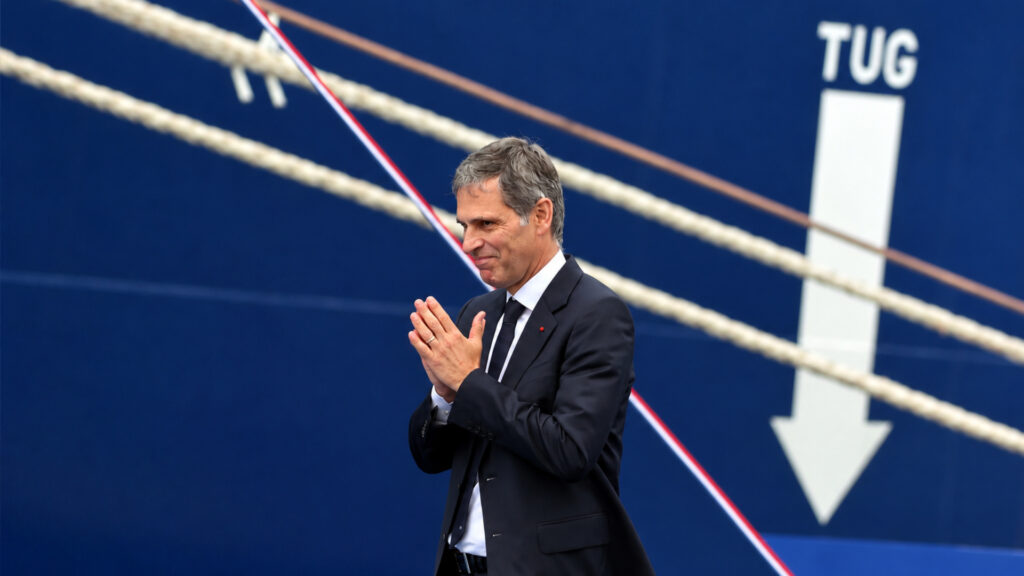
    Rodolphe Saade, PDG du groupe CMA CGM, lors de l’inauguration du porte-conteneurs « Notre-Dame » le 2 juillet 2026. | Photographie ALAIN JOCARD / AFP Actuellement examiné à l’Assemblée nationale, le budget 2027 prévoyait de rétablir une contribution exceptionnelle des grandes entreprises, notamment dans le transport maritime. Une surtaxe supprimée par les députés ce mardi 27 octobre, comme le réclamait CMA CGM, attaché à son très avantageux régime fiscal. Lequel est remis au cœur du débat, tandis que l’Etat doit serrer la ceinture. Du haut de sa tour surplombant Marseille, le patron du troisième armateur mondial, Rodolphe Saadé, attend que le […]Lire la suite : Budget 2027 La confortable niche fiscale de CMA CGM fait des vagues

    #Économie #A

  • Christine Lagarde quittera la présidence de la BCE le 7 février 2027
    ▻https://www.lesoir.be/779722/article/2026-10-29/christine-lagarde-quittera-la-presidence-de-la-bce-le-7-fevrier-2027

    (...)

    En quittant son poste dès février prochain, Christine Lagarde ouvre la possibilité au président français sortant Emmanuel Macron de participer à la désignation de son successeur avant l’élection présidentielle française du printemps, tandis que les sondages donnent actuellement Marine Le Pen parmi les favorites pour le scrutin.

    (...)

  • Des #économistes confirment que la colère des lycéens est tout à fait justifiée | Mediapart
    ▻https://www.mediapart.fr/journal/france/071026/des-economistes-confirment-que-la-colere-des-lyceens-est-tout-fait-justifi

    Pour comprendre le problème, il suffit aussi de pousser la porte des salles de classe. Elles accueillent en moyenne 22 élèves dans le #primaire, contre 19 chez nos voisins européens, et 26 au #collège, contre 21. Au #lycée général et technologique, les effectifs sont souvent bien plus élevés. « On est très souvent au-dessus des 30 élèves et c’est trop », a insisté Élise Huillery en présentant la note.

    Encore faut-il que les professeur·es soient là. Selon la Cour des comptes, 10 % des heures d’enseignement sont perdues, faute notamment de remplacements, avec un phénomène plus marqué dans les établissements défavorisés.

    Un phénomène révélateur de la profonde crise d’attractivité que traverse le métier d’enseignant·e. Les rémunérations en début de carrière restent faibles et progressent peu durant la première moitié de la vie professionnelle. Pour les économistes, le problème n’est pas seulement social : plusieurs travaux, dont une étude de 2020, établissent que mal rémunérer les enseignant·es finit aussi par peser sur les élèves.

    Pour remédier à cette impasse, leur proposition est massive : 300 euros brut supplémentaires par mois pour les professeur·es des écoles et les certifié·es, afin d’atteindre la moyenne de dix pays européens, avec une progression salariale repensée qui porterait la hausse jusqu’à 490 euros à certains moments de la carrière. Coût de la mesure : 3,5 milliards d’euros.

    À cela s’ajoute un autre retard moins visible : la formation. Les enseignant·es français·es bénéficient de seulement 3,5 jours effectifs de formation continue par an au collège, contre huit en moyenne dans l’OCDE. Et les formations existantes sont jugées trop théoriques et trop éloignées de la pratique quotidienne. La note propose cinq journées supplémentaires par an, rémunérées et davantage consacrées aux méthodes pédagogiques dont l’efficacité est documentée.

    Une école à deux vitesses
    Mais réduire la crise du système éducatif français à une pénurie générale de moyens masquerait une partie du problème. Car la France ne sous-investit pas seulement, elle distribue aussi très inégalement les conditions de réussite.

    À première vue pourtant, rien d’alarmant. Sur la période étudiée, la France consacre 5,4 % de son PIB à l’éducation, contre 5,3 % chez ses voisins européens. Mais la comparaison change lorsque l’on rapporte cette dépense au nombre d’élèves, plus élevé en France en raison d’une part de jeunes plus importante dans la population : du primaire au supérieur, la dépense par élève est inférieure de 15 à 20 % à celle de ses voisins, à l’exception du lycée. Ce sous-financement tient principalement, selon la note du PFL, à deux facteurs : des enseignant·es moins rémunéré·es et des taux d’encadrement plus faibles.

    L’école peine aussi à corriger les inégalités sociales qui précèdent l’entrée en classe, tandis que la ségrégation sociale progresse, particulièrement entre enseignement public et privé, au risque, alertent les autrices, de fragiliser jusqu’à la « cohésion nationale ». Autrement dit, les inégalités ne se jouent pas seulement face à l’école : les élèves fréquentent de plus en plus des écoles socialement différentes.

    5,5 milliards pour reconstruire le supérieur

    La reconstruction proposée par les économistes ne s’arrête pas au bac. La note réserve 5,5 milliards d’euros à l’enseignement supérieur, où le budget public par étudiant·e a chuté de 20 % depuis 2017. Avec une première urgence : réduire les inégalités d’accès. Seulement 35 % des jeunes issu·es des 10 % des familles les plus modestes poursuivent des études supérieures, contre 90 % parmi les 10 % les plus aisées. Les économistes proposent donc d’élargir et de revaloriser les bourses, de les verser sur douze mois et de doubler le parc de logements étudiants du Crous, qui n’accueille aujourd’hui que 175 000 des 3 millions d’étudiant·es.

    Autre chantier : les conditions d’études. Au-delà des places supplémentaires, la note veut surtout réinvestir dans les licences générales : seuls 40 % des étudiant·es y décrochent leur diplôme en trois ou quatre ans, dans des formations financées à hauteur de 3 700 euros par étudiant·e, contre 9 700 euros en IUT et 12 200 euros en STS. Les autrices proposent de réduire les groupes et de faire passer l’enseignement de dix-sept à vingt-cinq heures par semaine.

    C’est sur cette géographie des inégalités que les économistes proposent d’agir. Elles suggèrent, parmi d’autres mesures pour renforcer la mixité résidentielle, d’abandonner progressivement la logique binaire des labels REP et REP+, ces classements devenant trop souvent des stigmates, estiment-elles. À leur place, les moyens seraient attribués graduellement selon l’indice de position sociale (IPS) de chaque établissement : plus celui-ci accueille des élèves défavorisé·es, plus les moyens qui lui sont alloués seraient importants.

    Surtout, le mécanisme ne s’arrêterait pas aux portes du public. L’enseignement privé sous contrat, financé à « 75 % par des fonds publics », accueille une population de plus en plus favorisée et contribuerait à « 35 à 50 % de la ségrégation scolaire ».

    Les autrices proposent donc de moduler également les financements publics du privé en fonction de son IPS. Au passage, elles rappellent que, contrairement à une idée solidement installée chez certains parents, à origine sociale et niveau scolaire comparables à l’entrée, les élèves ne réussissent pas mieux dans le privé.

    Parcoursup, la plateforme qui accentue les inégalités
    Parcoursup, régulièrement au cœur de la colère lycéenne, est souvent attaqué pour son fonctionnement. Mais derrière la plateforme se cache aussi une pénurie de places. Droit, médecine, Staps, psychologie, mathématiques, économie-gestion, mais aussi IUT et STS : certaines formations reçoivent bien davantage de candidatures qu’elles ne peuvent en accueillir.

    Des bacheliers et bachelières technologiques ou professionnel·les refusé·es dans des filières courtes peuvent ainsi être orienté·es vers des licences générales, où leurs chances de réussite sont plus faibles. D’où ce paradoxe particulièrement difficile à comprendre pour les candidat·es : être refusé·e dans une formation pourtant officiellement « non sélective ».

    La réponse proposée est donc d’abord matérielle : « Ouvrir 120 000 places supplémentaires » en licence, IUT et STS. Le rapport propose aussi de modifier Parcoursup lui-même : raccourcir l’attente, renforcer l’accompagnement pour limiter l’autocensure, publier les algorithmes utilisés par les formations, afficher des données comparables sur leurs conditions réelles d’enseignement et supprimer la lettre de motivation, jugée « opaque, arbitraire et socialement discriminante ».

    Élise #Huillery et Romane #Paris vont même plus loin. Elles proposent d’ajouter #11,8_milliards d’euros par an au budget consacré à l’éducation. Et elles refusent de considérer ces milliards comme une dépense sèche, puisque les travaux économiques qu’elles mobilisent envisagent l’#éducation comme un #investissement.

    Le mécanisme est simple : davantage de qualifications doivent produire davantage d’emplois, de productivité et de revenus, donc davantage de recettes fiscales, mais aussi réduire certaines dépenses futures, notamment en matière de santé ou de justice. Les deux économistes l’assurent : à moyen et long terme, le bilan économique deviendra positif.

    #Camille_Labbé

  • Aide au développement : quelle part sert vraiment au climat ?
    ▻http://www.argotheme.com/organecyberpresse/spip.php?article5026

    Environ un cinquième de l’aide au développement serait destinée au climat, soit en la dépendsant par le pays financier ou celui de destination. Mais les réparations concernent plus ce dernier. Avec ce chiffre, des étiquettes déclaratives très discutées, des budgets en baisse et une question qui fâche : le climat se finance-t-il au détriment de la santé et de l’éducation ? Monde, actualité internationale, politique, relations, diplomatie, affaires étrangères,

    / économie , #Data_-_Données, #crise,_capitalisme,_économie,_justice,_Bourse, #Ecologie,_environnement,_nature,_animaux, #Réchauffement_climatique

    #Monde,_actualité_internationale,_politique,_relations,_diplomatie,_affaires_étrangères, #économie_

  • Carburants : l’Europe voit rouge
    ▻https://www.taurillon.org/carburants-l-europe-voit-rouge

    Danemark, Estonie, Finlande … Aucun pays européen n’échappe à la crise énergétique.. Les prix du carburant flambent et les politiques font face à de nombreuses difficultés pour limiter cette hausse. Pourtant, l’Espagne semble mieux résister que ses voisins. Fiscalité, aides publiques : qu’est-ce qui explique cet écart avec la #France ? Économie & Société

    / #France, France, #Allemagne, #Allemagne, #Belgique, #Espagne, #Union_européenne, #Energie, #Economie

    #Économie_&_Société
    ▻https://www.france24.com/fr/europe/20260922-flambée-des-prix-des-carburants-comment-les-autres-pays-européens
    ▻https://www.lemonde.fr/economie/article/2026/09/16/les-prix-a-la-pompe-s-envolent-la-consommation-s-effondre_6774923_3234.html
    ▻https://www.franceinfo.fr/economie/automobile/essence/carburants-la-consommation-en-france-en-baisse-de-30-du-11-au-20-septembr
    ▻https://www.vie-publique.fr/discours/304708-david-amiel-18092026-lci-politique-economique
    ▻https://carbu.com/belgique/meilleurs-prix/Belgique/BE/0
    ▻https://www.lemonde.fr/international/article/2026/09/20/elections-regionales-en-allemagne-le-parti-d-extreme-droite-afd-en-forte-pro
    ▻https://www.courrierinternational.com/article/ici-et-ailleurs-pourquoi-le-prix-du-carburant-est-plus-bas-en
    ▻https://www.elcorreo.com/economia/espana-convierte-gasolinera-barata-francia-portugal-20260914000721-ntrc.ht
    ▻https://www.theglobaleconomy.com/Spain/diesel_fuel_consumption

  • Canal + fait saisir 174 215 euros sur les comptes bancaires du fondateur de Off Investigation
    ▻https://www.off-investigation.fr/canal-fait-saisir-174-215-euros-sur-les-comptes-bancaires-du-fonda

    Le 7 octobre dernier, la chaîne cryptée contrôlée depuis 2015 par Vincent Bolloré a fait saisir, sans avertissement et sans proposer d’échéancier, 174 215 euros sur les comptes bancaires de Jean-Baptiste Rivoire, fondateur et directeur de la publication de Off Investigation. Au risque de fragiliser notre média financé à 100 % par les citoyens. Après cinq ans sans affectation depuis la suppression de l’émission Spécial Investigation, dont il était rédacteur en chef adjoint, Jean-Baptiste Rivoire n’avait pu quitter Canal + en 2021 qu’à une seule condition, fixée par la direction nommée par Vincent Bolloré : celle de signer un protocole transactionnel, […]Lire la suite : Canal + fait saisir 174 215 euros sur les comptes bancaires du fondateur de Off Investigation

    #Économie #Médias

  • Im Vergleich : Deutsche Bahn und China Rail
    ▻https://www.nachdenkseiten.de/?p=157941

    Cet article conduit à deux conclusions.

    L’économie de marché socialiste chinoise ressemble beaucoup au modèle économique allemand avant sa domination par les ultra ou néolibéraux à partir de la fin des années 1970. Néanmoins c’est le primat de la politique et son exercice par le parti communiste qui empêchent en Chine le même changement de cap ultralibéral comme en Allemagne. Ce fut d’ailleurs la question essentielle du conflit de 1989. Le parti et la société chinoise ont opté pour la libéralisation du pays en maintenant le pouvoir de la société sur ses acteurs économiques.

    Puis les nationalisations ou « socialisations » des parties essentielles de l’économie etl la libération de ces secteurs de l’obligation de rentabilité á court terme sont la condition essentielle pour arrêter le déclin et la déstruction de l’économie et de la société allemande.

    24. 0.2026 von Hua Bin - Die DB und China Rail repräsentieren zwei Systeme, die nach völlig gegensätzlichen Philosophien arbeiten. Dies führt zu radikal unterschiedlichen Ergebnissen hinsichtlich der Leistungsfähigkeit des Schienenverkehrs und der ökonomischen Effekte. Von Hua BIN

    Ein Freund von mir war kürzlich in Deutschland und erzählte mir, wie er seinen Heimflug verpasste, weil sein Zug Verspätung hatte. Ich war schockiert, denn als ich 1997 in Deutschland lebte, konnte man seine Uhr nach der Deutschen Bahn (DB) stellen.

    Zu dieser Zeit machte ich ein Praktikum bei Mercedes-Benz in Stuttgart. Ich konnte den Fußweg von der Wohnung zur Bushaltestelle zeitlich genau planen und hatte dann mit weniger als fünf Minuten Gesamtwartezeit einen Anschluss an den Zug zum Büro. Die Bus- und Zugfahrpläne waren so perfekt aufeinander abgestimmt, dass man sich auf einen zweiminütigen Fußweg und genau zwei Minuten Wartezeit dazwischen verlassen konnte. Sowohl Busse als auch Züge waren äußerst pünktlich.

    Ich hatte eine besondere Vorliebe für die DB, da ich fast jedes Wochenende mit ihrem „Schönes-Wochenende“-Ticket für 35 Mark durch Deutschland reiste. Leider wurde dieses Serviceangebot im Jahr 2019 eingestellt.

    Im Winter 1997 verirrte ich mich bei einer Wanderung mit mehreren Freunden im Schwarzwald in der Nähe von Baden-Baden. Erst als wir zufällig auf ein Gleis stießen, das uns zu einem kleinen ländlichen Bahnhof führte, konnten wir der kalten Nacht entrinnen. Ich kann mich bis heute an das warme Licht auf dem Bahnsteig erinnern.

    Seitdem habe ich die DB immer sehr geschätzt. Sie können sich also vorstellen, wie überrascht ich war, als mein Freund sich über die Verspätung und den schlechten Service beschwerte.

    Das brachte mich dazu, nachzulesen, was mit der DB in den letzten 30 Jahren passiert ist. Kurz gesagt: Die Dinge haben sich eindeutig zum Schlechten gewendet.

    Heute gilt ein Zug laut Definition der DB als pünktlich, wenn er weniger als sechs Minuten verspätet ankommt. Das ist weit entfernt von der sprichwörtlichen Pünktlichkeit der späten 90er-Jahre. Selbst bei dieser niedrigen Messlatte liegt die Pünktlichkeit nur bei etwa 50 bis 60 Prozent und damit deutlich unter dem selbst gesetzten Ziel von 70 Prozent.

    Als offizielle Gründe werden veraltete Infrastruktur, umfangreiche Baumaßnahmen und überlastete Gleise genannt.

    Doch wenn ich etwas tiefer grabe, scheint der Rückgang der Effizienz der Deutschen Bahn auf eine völlig missratene Privatisierung im Jahr 1994 zurückzuführen zu sein, die zu jahrzehntelanger extremer Unterinvestition in die Infrastruktur führte.

    Die Bahnreform von 1994 führte die ehemaligen staatlichen Eisenbahnen Ost und West mit einem klaren Auftrag zusammen: Die DB sollte als gewinnorientiertes Privatunternehmen arbeiten, um sich auf einen späteren Börsengang vorzubereiten.

    Um Investoren anzuziehen, gab die DB extremen Kostensenkungen den Vorzug vor der öffentlichen Daseinsvorsorge. Sie baute aggressiv Personal ab, lagerte die Instandhaltung aus und begann, in globale Logistikunternehmen (wie DB Schenker) zu investieren, statt sich auf den inländischen Schienenverkehr zu fokussieren.

    Unter dem Deckmantel der Effizienzsteigerung hat die DB ihr Streckennetz drastisch verkleinert, um Geld zu sparen. Fast 8.000 Kilometer Nebenstrecken wurden komplett abgebaut. Tausende Weichen, Ausweichgleise und Reservegleise wurden entfernt.

    Wenn 1997 ein Zug liegen blieb oder Verspätung hatte, konnte ein Fahrdienstleiter ihn mithilfe dieser Reservegleise leicht um das Problem herumleiten. Heute hat das Bahnnetz solche Puffer nicht mehr. Bleibt ein Nahverkehrszug in der Nähe von Frankfurt am Main stehen, wirkt sich das ähnlich aus wie ein liegengebliebenes Auto auf einer einspurigen Autobahn. Es entstehen sofortige, landesweite Folgeverzögerungen.

    Das Problem wird durch ein gemischtes Schienennetz noch verschärft, in dem schnelle Intercity-Expresszüge die Gleise mit langsamen Regionalzügen und schwerem Güterverkehr teilen.

    Im Vergleich dazu nutzen die chinesischen Hochgeschwindigkeitsbahnen oder das französische TGV-Netz größtenteils eigens dafür vorgesehene Hochgeschwindigkeitsstrecken.

    Während das physische Schienennetz der DB drastisch ausgedünnt wurde, stieg die Zahl der Fahrgäste pro Jahr von 1,5 Milliarden im Jahr 1994 auf heute 2,4 Milliarden.

    In den 1990er-Jahren war es in Deutschland noch üblich, in der Nähe seines Arbeitsplatzes zu wohnen. In den letzten 30 Jahren zwangen jedoch explodierende Wohnkosten in wichtigen Ballungszentren wie Frankfurt am Main, München, Berlin und Hamburg einen großen Teil der Erwerbsbevölkerung dazu, weiter hinaus in die umliegenden Vororte und kleineren Städte zu ziehen.

    Dies führte zu einem rasanten Anstieg der Pendlerzahl in Deutschland, mit Millionen von Menschen, die jeden Tag deutlich längere Strecken hin und zurück zurücklegen mussten. Das Netz der Deutschen Bahn ist mittlerweile fast ständig zu 100 Prozent ausgelastet.

    Um noch einen draufzusetzen, haben Deutschlands strenge Schuldenobergrenzen staatliche Ausgaben eingeschränkt.

    Seit Jahren gibt Deutschland nur einen Bruchteil dessen aus, was seine Nachbarländer für den Bahnverkehr ausgeben. So investiert die Schweiz beispielsweise jährlich über 400 Euro pro Einwohner in die Bahninfrastruktur. Deutschland gibt dagegen regelmäßig nur etwa 100 Euro aus.

    Die katastrophale Erfahrung der DB mit der Privatisierung spiegelt wider, was bei anderen ähnlichen Projekten wie [dem größten privaten Wasser- und Abwasserversorgungsunternehmen] Thames Water in Großbritannien geschah.

    Als die Regierung unter Margaret Thatcher im Jahr 1989 den britischen Wassersektor privatisierte, wurde Thames Water mit einer sauberen Bilanz und ohne Schulden an private Investoren übergeben. Die nachfolgenden privaten Eigentümer behandelten das Versorgungsunternehmen, das 16 Millionen Kunden in London und Südengland bedient, jedoch wie eine unternehmerische Melkkuh.

    Private Investoren – Wall-Street-Banken und Hedgefonds – belasteten das Versorgungsunternehmen mit einem Schuldenberg und entnahmen Hunderte Millionen an Verwaltungsgebühren und Dividenden.

    Anstatt die Einnahmen zu nutzen, um die aus der viktorianischen Zeit stammenden Rohrleitungen und Kläranlagen zu verbessern, floss das Geld an die Aktionäre und in Bonuszahlungen für Führungskräfte. Bis 2026 stieg diese Verschuldung auf rund 20 Milliarden Pfund.

    Während der gezielte Einsatz von Finanzinstrumenten und strukturierten Finanzierungen kurzfristige Renditen für privates Beteiligungskapital generierte, verrottete die physische Infrastruktur.

    Thames Water ist zu einem landesweiten Skandal geworden, nachdem das Unternehmen Milliarden Liter ungeklärtes Abwasser direkt in die Themse und in lokale Gewässer geleitet hat.

    Aufgrund der veralteten Infrastruktur treten 25 Prozent des gesamten aufbereiteten Wassers direkt aus den Leitungen aus, bevor es die Haushalte der Kunden überhaupt erreicht.

    Angesichts schwerer Dürreperioden und Rekordtemperaturen verhängt Thames Water wiederholt längere Bewässerungsverbote, da dem System die strukturelle Widerstandsfähigkeit fehlt, um die Wasserversorgungssicherheit der Region zu gewährleisten.

    Die meisten Privatisierungsprojekte öffentlicher Versorgungsunternehmen weisen ein ähnliches Muster auf: chronische Unterinvestition, extreme Kürzungen der Betriebskosten und untragbare Verschuldung, während sich Finanzinvestoren bereichern.

    Die DB und Thames Water sind Symbole für die Zerstörung öffentlicher Güter zugunsten privater Investorengewinne in rentenkapitalistischen Ökonomien.

    Im krassen Gegensatz dazu bleibt die chinesische Infrastruktur fest in öffentlicher Hand.

    Während Europa und die USA bei der Verwaltung ihrer nationalen Infrastruktur eine Politik des reaktiven, von Austerität geprägten und auf Renteneinnahmen ausgerichtetes Managements verfolgen, hat China eine Strategie des vorausschauenden, angebotsorientierten Bauens eingeschlagen – oft Jahre dem Bedarf voraus.

    In den 1990er-Jahren war China noch stark von jahrzehntealten, technisch veralteten Schienennetzen abhängig, die immer wieder Ausfälle verzeichneten.

    Ich erinnere mich noch daran, wie ich mitten im Sommer stundenlang in Waggons ohne Klimaanlage saß, als der Zug von Peking nach Chongqing auf meiner Heimreise vom College wegen eines Motorschadens liegen blieb. Früher dauerte die Fahrt nach Fahrplan 40 Stunden. Heute benötigt der Hochgeschwindigkeitszug weniger als sieben Stunden.

    Als China im Jahr 2004 mit dem Bau seines nationalen Hochgeschwindigkeitsbahnnetzes begann, gab es eine Welle negativer Presse aus dem Westen. Westliche „Experten“ äußerten sich eifrig darüber, wie verschwenderisch das Projekt sei und dass sich die Bahn niemals rentieren würde.

    Den Schwarzsehern zum Trotz hat China in den letzten 20 Jahren über 50.000 Kilometer Hochgeschwindigkeitsstrecken gebaut und damit mehr als 70 Prozent der weltweiten Gesamtkapazität geschaffen.

    Am 28. September 2026 gab China die Fertigstellung von vier neuen Hochgeschwindigkeitsstrecken in vier Provinzen bekannt. Diese erweitern das Netz um weitere 1.142 Kilometer.

    Eine dieser Strecken ist die 318 Kilometer lange Verbindung Harbin–Yichun. Sie ist mittlerweile Chinas nördlichste Hochgeschwindigkeitsbahnstrecke und führt durch alpinen Permafrost.

    Das Netz deckt nun 97 Prozent aller Städte mit mehr als 500.000 Einwohnern ab. Es wird auf dafür vorgesehenen Bahnstrecken betrieben und erreicht eine Abfahrtspünktlichkeit von 98 Prozent sowie eine Ankunftspünktlichkeit von 95 Prozent.

    Anstatt bei jeder einzelnen Strecke auf Profitabilität und hohe Renditen abzuzielen, dient das chinesische Hochgeschwindigkeitsbahnsystem als öffentliches Gut und generiert systemischen Nutzen für die gesamte Wirtschaft und die Allgemeinheit.

    Die DB und China Rail repräsentieren zwei Systeme, die nach völlig gegensätzlichen Philosophien arbeiten. Dies führt zu radikal unterschiedlichen Ergebnissen hinsichtlich der Leistungsfähigkeit des Schienenverkehrs und der ökonomischen Effekte.

    Vorausschauend Bauen vs. rückläufige Vermögenswerte managen

    Chinas Infrastrukturstrategie basiert auf der Philosophie, dass der Aufbau groß angelegter Hochleistungsverkehrsnetze Wirtschaftswachstum und zukünftige Nachfrage schafft, statt auf den Bedarf nur zu reagieren.

    Indem China das weltweit größte Hochgeschwindigkeitsbahnnetz aufbaute, noch bevor die Nachfrage vollständig gesättigt war, konnte das Land die Engpassphase vollständig umgehen.

    Demgegenüber betreibt Deutschland ein streng bedarfssynchrones (Just-in-Time) und gewinnorientiertes Unternehmensmodell.

    Investitionen werden nur gebilligt, wenn mathematisch nachgewiesen ist, dass die vorhandenen Kapazitäten vollständig ausgeschöpft sind.

    Das bedeutet, dass zum Zeitpunkt der Planung, Finanzierung und des Baus eines Projekts die Nachfrage den Ausbau bereits bei Weitem überholt hat, was dazu führt, dass das Netzwerk permanent hinterherhinkt.

    China hat früh erkannt, dass die Mischung aus langsamen Güterzügen und schnellen Personenzügen die Gesamtkapazität eines Netzes einschränkt. Beijing hat ein völlig separates, eigens dafür vorgesehenes Netz für die Hochgeschwindigkeitszüge Fuxing und Hexie aufgebaut.

    Deutschland zwang hingegen schnelle Nahverkehrszüge dazu, dieselben Gleise mit schweren Güterzügen zu teilen, um Geld zu sparen und den Bau völlig neuer Strecken zu vermeiden.

    Wenn ein langsamer Güterzug liegen bleibt, kommt auch das gesamte nationale Expressnetz zum Stillstand.

    Wirtschaftlicher Multiplikator vs. direkter Profit

    Der chinesische Staat betrachtet Hochgeschwindigkeitszüge als öffentliches Versorgungsgut und als wirtschaftlichen Multiplikator.

    Selbst wenn einzelne Eisenbahnlinien mit finanziellen Verlusten arbeiten oder hohe Schulden machen, sind die Investitionen aufgrund der enormen wirtschaftlichen Produktivität, der regionalen Integration und der Stadtentwicklung, die sie ermöglichen, gerechtfertigt.

    Im Rahmen der Privatisierung im Jahr 1994 behandelte die deutsche Regierung die DB wie ein gewöhnliches Handelsunternehmen. Der Erfolg wurde daran gemessen, ob die Betriebskosten gesenkt und ein direkter finanzieller Gewinn erzielt wurde. Dies führte unmittelbar dazu, dass die präventive Instandhaltung der Schienenwege vernachlässigt wurde.

    Man würde vielleicht denken, dass das deutsche Modell zumindest eine höhere Kapitalrendite für Investoren erzielen konnte, auch wenn China einen höheren gesamtgesellschaftlichen Nutzen erzielt.

    Doch die Realität zeigt eine ironische Wendung: Das deutsche Modell hat letztendlich auch die Investoren enttäuscht.

    In einem klassischen kapitalistischen System führt die Vernachlässigung der Instandhaltung von Vermögenswerten in der Regel zu hohen Dividenden für Investoren oder treibt die Aktienkurse in die Höhe.

    Doch weil die Privatisierung der DB unausgegoren war, erreichte sie keines von beiden. Der einzige Investor der DB ist nach wie vor die Bundesregierung, denn der Plan für einen Börsengang wurde vor zwei Jahrzehnten aufgegeben.

    Da das Bahnnetz zugunsten kurzfristiger Kosteneinsparungen des Unternehmens ruiniert wurde, holten die langfristigen Verbindlichkeiten das Unternehmen schließlich ein.

    Anstatt üppige Dividenden zu zahlen, hat die DB die Steuerzahler durch Rettungspakete Milliarden gekostet. Kürzlich meldete das Unternehmen einen Nettoverlust von 2,3 Milliarden Euro.

    Um ihre gewaltigen Schulden in den Griff zu bekommen, war die DB gezwungen, ihr hochprofitables globales Logistiktochterunternehmen DB Schenker zu verkaufen. Damit stabilisierte sie ihre Bilanz künstlich.

    Indem Deutschland ein öffentliches Kernmonopol wie ein Privatunternehmen behandelte, schuf es kein hochprofitables Unternehmen, sondern einen „Engpass“, der die deutsche Wirtschaft jedes Jahr Milliarden an entgangener Unternehmensproduktivität kostet.

    In einer sozialistischen Marktwirtschaft wird kritische Infrastruktur über staatliche Unternehmen gesteuert.

    Während China Rail aufgrund des Ausbaus seines umfangreichen Hochgeschwindigkeitsnetzes eine massive Schuldenlast trägt, werden die Verluste direkt vom Staat aufgefangen.

    Aus der Perspektive Beijings ist die direkte finanzielle Kapitalrendite von Investitionen in die Eisenbahninfrastruktur selbst zweitrangig. Der eigentliche Gewinn liegt in der gesellschaftlichen und makroökonomischen Rendite.

    Durch die Verbindung weit verstreuter Städte senkt der Staat Transportkosten, steigert den Immobilienwert, erschließt regionale Arbeitsmärkte und fördert die wirtschaftliche Mobilität.

    Tatsächlich subventioniert der Staat die Zugfahrkarten, um in der gesamten Gesellschaft enormen Gewinn in Form von Steuereinnahmen und Wirtschaftswachstum einzufahren.

    Ein herausragendes Beispiel ist die Greater Bay Area in Guangdong: Sieben Metropolen – darunter Guangzhou, Shenzhen und Hongkong – sind über Hochgeschwindigkeitszüge, U-Bahnen und ein Autobahnnetz zu einem integrierten Netzwerk verbunden.

    Die Region, die sich einer beispiellosen Lieferketten-Dichte erfreut, wird von der Weltorganisation für geistiges Eigentum der Vereinten Nationen als innovativster Städteverbund der Welt eingestuft, noch vor dem Silicon Valley.

    Die gleiche Vorgehensweise wiederholt sich in nahezu jedem Bereich mit natürlichen Monopolen – Telekommunikation, Strom- und Wasserversorgung, nationales Autobahnnetz und Bankwesen.

    Anstatt privatem Kapital zu erlauben, aus solchen Vermögenswerten Rentiers-Einkünfte zu erzielen, wie es in kapitalistischen Gesellschaften geschieht, hält Beijing diese Schlüsselbereiche der Wirtschaft fest in öffentlicher Hand.

    Das deutsche kapitalistische Modell versucht, die DB in eine ordentliche Schublade zu stecken und verlangt, dass die Schublade selbst profitabel sein muss.

    Chinas staatlich geführtes Modell betrachtet die Eisenbahn hingegen lediglich als ein Rädchen in einem größeren nationalen Getriebe.

    Das 30-jährige Experiment der DB hat letztlich belegt, dass man bei kritischen öffentlichen Monopolen wie der Eisenbahn, wenn man versucht, auch noch den letzten Cent an unternehmerischen Mikrogewinnen herauszupressen, in der Regel das gesamte System zum Zusammenbruch bringt.

    Der Beitrag erschien im Original bei Strategic Culture Foundation.
    ▻https://strategic-culture.su/news/2026/10/11/deutsche-bahn-and-china-rail
    Übersetzt aus dem Englischen von Marta Andujo.

    Über den Autor: Hua BIN aus China ist ein ehemaliger Unternehmensleiter und Autor geopolitischer und wirtschaftlicher Analysen.

    #Allemagne #Chine #économie #trains #réseau_ferroviaire #privatisation #capitalisme #économie_de_marché_socialiste

  • Un savon grenoblois qui fait mousser l’Isère

    Du miel isérois, des plantes de Belledonne et beaucoup de patience : à Grenoble, Nous Le Savons (▻https://nouslesavons.fr) fabrique des cosmétiques bio en misant sur le local. L’entreprise fait partie des lauréats de l’édition 2026 de « Succès d’artisans en Isère ».

    « Succès d’artisans en Isère » est une initiative portée par Isère Attractivité, le Département de l’Isère et la Chambre de Métiers et de l’Artisanat qui vise à valoriser les savoir-faire locaux. L’entreprise Nous Le Savons a été récompensée par le coup de cœur du jury dans la catégorie « Engagement responsable »

    Des « savons de Noël » devenus une aventure entrepreneuriale

    L’histoire de Nous Le Savons commence dans une cuisine, loin de toute ambition industrielle. Originaire des Balcons de Belledonne et formé à la biologie, Valentin Michel souhaite fabriquer lui-même des savons pour les offrir à ses proches à Noël. Il ressort sa blouse de travaux pratiques, regarde quelques tutoriels et réalise ses premiers essais.

    Les savons plaisent et lui permettent également de résoudre certains problèmes de peau. Les demandes de son entourage se multiplient. Ce qui devait rester une expérience personnelle devient progressivement un projet entrepreneurial.

    Dix ans plus tard, Nous Le Savons est installé au cœur de Grenoble et emploie désormais trois personnes, bientôt quatre. L’entreprise conçoit et fabrique des cosmétiques 100 % naturels et biologiques avec la volonté de maintenir des prix « abordables et justes ».

    Une cinquantaine de produits fabriqués à Grenoble

    Savons pour le corps, shampoings solides, déodorants en crème, baumes, huiles, soins pour le visage, les cheveux ou les lèvres, liniment… La marque propose désormais une cinquantaine de références destinées aux femmes, aux hommes et aux bébés.

    Une offre large, mais développée sans précipitation. Chez Nous Le Savons, pas question de multiplier les nouveautés pour suivre les tendances. « On essaie de faire les choses vraiment bien pour ne pas avoir à revenir en arrière. On prend notre temps et, une fois que l’on est sûr, le produit sort », explique Valentin Michel.

    Les savons sont fabriqués en fonction de la demande, puis découpés à l’aide d’un outil artisanal équipé de cordes de guitare. Ils rejoignent ensuite le séchoir pour une période pouvant aller de deux à dix mois selon les produits.
    L’Isère au cœur des recettes

    Depuis sa création, Nous Le Savons s’est fixé une ligne directrice : intégrer le plus possible de matières premières locales dans ses formulations. Miel, cire d’abeille, huile de tournesol, calendula, arnica ou encore ortie proviennent notamment de producteurs et de partenaires isérois. Certaines fleurs sont cultivées sur les Balcons de Belledonne, là même où Valentin Michel a grandi.

    Cet approvisionnement de proximité permet à l’entreprise de mieux connaître l’origine de ses ingrédients, de limiter les transports et de faire travailler l’économie locale. « Utiliser un maximum de matières premières locales permet de participer à l’économie circulaire de notre territoire », souligne le fondateur.

    Produire mieux plutôt que plus

    L’engagement environnemental de Nous Le Savons dépasse la composition des produits. Gestion de l’eau et du chauffage, réduction des emballages, réemploi des contenants, optimisation des procédés ou encore livraison à vélo de certains magasins partenaires : chaque étape de la production est interrogée.

    Valentin Michel aime notamment repenser les méthodes de fabrication pour les rendre moins gourmandes en énergie. « Il y a plein de défis à relever lorsque l’on développe un produit. C’est justement ce qui rend le travail très motivant », confie-t-il.

    Cette démarche a permis à l’entreprise d’obtenir le label Nature & Progrès, reconnu pour son cahier des charges particulièrement exigeant dans le domaine des cosmétiques biologiques.

    Plus de 50 000 clients convaincus

    En dix ans, les savons fabriqués à Grenoble ont largement dépassé les frontières de l’Isère. Nous Le Savons revendique aujourd’hui plus de 50 000 clients. La savonnerie travaille aussi en marque blanche : Valentin Michel et son équipe conçoivent et fabriquent ainsi certains produits commercialisés sous le nom d’autres enseignes.

    Le développement se poursuit avec de nouvelles pistes, parmi lesquelles des savons liquides, des laits corporels ou encore des baumes destinés aux sportifs. Toujours avec la même règle : prendre le temps de tester et de perfectionner chaque formule avant sa commercialisation.

    De Belledonne à Grenoble, Nous Le Savons démontre ainsi qu’il est possible de faire grandir une marque sans renoncer à ses racines.

    ▻https://tgplus.fr/article/un-savon-grenoblois-qui-fait-mousser-lisere

    #nous_le_savons #savonnerie #Grenoble #savons #artisanat #écologie #économie_locale #savon_artisanal

  • Wall Street Is Getting Very Nervous About AI
    ▻https://jacobin.com/2026/10/artificial-intelligence-investors-finance-bubble

    The math behind both AI firms’ business model and their future fiscal projections don’t add up. We know this because the people who have actual money on the line — investors, bond traders, insurers — are acting like it. Photo by Annabelle Gordon

    Il est bizarre comment la déscription économique précise et la conclusion erronnée cohabitent dans cet article. Bref en matière purement économique la question du caractère plus ou moins démocratique, va savoir ce que c’est, d’une société ne joue qu’un rôle secondaire. À la différence avec les États Unis la Chine a accumulé d’énormes richesses et saura mieux digérer la facture pour l’investissement dans l’#IA que son concurrent occidental.

    Voici donc un exemple pour du « western marxism » ou du trotzkisme pur et simple, en tous les cas c’est l’expression de la pensée idéaliste et petite bourgeoise de l’auteur .

    23.10.2026 von Branko Marcetic - If you want to know whether artificial intelligence is a gigantic economic bubble, don’t just take pundits’ word for it. Major investors are now moving their money to try to protect themselves from the AI bubble popping.

    For an industry that we’re told is central to our collective future, the artificial intelligence (AI) industry increasingly seems to be built on a combination of artificially inflated hopes and bad accounting.

    The industry’s critics have been raising concerns about its finances for a while: the fact that most of its flagship firms are grossly unprofitable, that they’ve had to jack up their prices to try break even (leading their business customers to pump the brakes on using their products), or that many of the eye-popping investment announcements that are meant to show demand for AI is strong have actually been circular financing — meaning different AI firms cycling money to and from each other.

    But none of it has seemed to slow the industry’s boom or the relentless hype machine behind it. Until now, anyway. It used to be that you mostly heard concerns about the industry’s underlying economics in newspapers, blogs, social media posts, and podcasts, and that those concerns went completely unreflected in the markets. But these concerns seem now to have finally bled over into investors’ thinking.

    The price of bonds issued for the borrowing that undergirds the build-out of data centers has sharply dropped in recent months, as has the bond price for “neocloud companies,” middleman firms that provide the computing power for AI firms who may not have their own data centers. The largest of these neoclouds, CoreWeave, recently saw its bonds enter distressed territory.

    What does that mean? In short, that investors are suddenly abandoning the AI-related debt they’d happily financed until just a few months ago when it seemed like a great investment, because they’re starting to suspect these firms are not actually going to end up being able to pay it off. Nearly half of the bonds raised this year to finance data center projects by some of the biggest tech firms are now rated “junk.”

    At the same time, the market for credit default swaps (CDSs) for AI is booming, with the value traded of CDSs linked to major AI firms having more than quadrupled between July and September. Made famous by their role in the 2008 financial crisis, CDSs are basically insurance against future debt defaults, another sign of investor doubt that AI industry firms are actually good for the money they’ve borrowed to fund their build-out.

    To put it plainly: the people who move money around for a living are starting to have serious doubts about how sustainable the AI boom actually is, and we know they are not because they’re just saying so, but because they’re making financial decisions as if they are.

    What’s changed to bring this shift about? A number of things, including the fact that, some voices in the financial world now are saying so.

    The AI industry’s current unprofitability was acceptable as long as it seemed plausible that, at some unspecified future date, this technology would actually start making money. But a spate of recent news and analysis has underscored the fantastical math behind AI firms’ accounting.

    According to one highly cited Brookings Institution paper, the colossal amounts of money already being plowed into the AI build-out mean that US consumers and businessses will need to spend enough on the technology by 2032 to generate $3.5 trillion worth of revenue, or just shy of 9 percent of the country’s GDP, to make good on it. There is quite literally no precedent for this in American history — the railroad boom involved capital spending more than an entire percentage point of US GDP smaller than the AI build-out. According to the Wall Street Journal, that would mean the nation spending around the same amount every year on AI as it currently does for food, or seven times the amount it spends on the internet, phones, and other communications combined.

    Needless to say, this looks unlikely.

    Last month, the chief economist of asset management firm Apollo pointed out the wide gulf between the huge future operating cash flow that analysts are expecting for the tech sector specifically, and the much smaller future operating cash flow analysts are expecting for companies in other sectors. In other words, the businesses that are in theory meant to be the tech world’s customers are not even seriously expected to have the money on hand that tech firms are boasting they will extract from them.

    Someone’s math here is off, and it’s reasonable to assume that it’s the AI firms’. Years of overoptimistic revenue projections and consistent money-losing from the sector were dramatically illustrated earlier this month when one prominent firm, Character.ai, filed for bankruptcy. In its filing, the company revealed that it had been losing around $8–9 million per month over the course of this year — which it said was an improvement from previous years — and that its subscription revenue had only ever been a fraction of the amount it was spending on the computing needed to run its AI.

    These fears were heightened by some bad news around several high-profile AI firm initial public offerings (IPOs), when a privately held company starts selling its shares to the general public for the first time.

    First, OpenAI, the company behind ChatGPT, delayed its IPO over internal worries that it might end up a flop, because retail investors — basically, you and I if we got into the stock market — may not actually end up as eager to buy its shares as they hoped. Among the reasons why were general market uncertainty caused by the Iran war, growing skepticism toward AI, a spate of damaging headlines about the technology’s safety issues, and a stagnated user base for ChatGPT. The company has now had to pare back its valuation for its latest round of funding due to a palpable drop in enthusiasm from investors.

    Meanwhile, Claude’s maker Anthropic has made headlines for a prospectus — the document put out by a firm going public that explains the business and lays out its financial reality for possible investors — that has seemed to prove true every worry just laid out about AI’s business model. The latest version of the document, obtained by the Wall Street Journal this week, showed the firm posted a more than $80 billion loss this year, while its spending on computing and infrastructure is exponentially ballooning, its demand for computing capacity outstrips what is available, and its list of possible risk factors are longer than the company description.

    One of those risk factors has become a major general concern for AI investors: the growing public hatred of data centers and the push to restrict or even outright stop their continuing construction. Popular distaste for data centers cuts across party and ideological lines and has become a central issue in the upcoming midterm elections, making it more likely a government clampdown on them intensifies.

    Just in the first half of this year, environmental activists and local residents have blocked more than a hundred data centers worth roughly $198 billion in capital. That included a major project of Oracle’s in New Mexico that pushed the company into declaring force majeure — meaning, tear up a contract because of an unforeseen act of God — after having already spent millions.

    This is yet another, and an especially big, reason for investors in AI to worry they’re not going to get their money back. For AI companies to have any hope of meeting their already unrealistic revenue goals, data centers have to be built somewhere; but voters across the country are vehemently opposed to having them built in their neighborhoods, because they find them noisy, intrusive, harmful to the environment, and have a habit of driving up their electricity bills. So they’re organizing to have them restricted or outright banned, which is what they have done in more than five hundred counties and municipalities. Something will have to give here.

    That’s not to mention investor fears that they could be left holding the bag on data center debt. The Brookings study mentioned earlier estimates the AI data center build-out will cost a total of $10.3 trillion by 2032; market research firm Gartner estimates that AI data center owners will have to generate a staggering $8.5 trillion in revenue through 2030 to cover the build-out while making a decent return. These are enormous sums behind something that is being financed largely by massive and rapidly growing levels of borrowing.

    On top of this is the fact that the chips AI firms rely on, and which they spend billions of dollars on, are becoming obsolete quicker and quicker — much more rapidly than the lifespan many of these companies initially budgeted for. It’s another case of wishful accounting by the industry, and another reason to worry for investors, since borrowing by AI firms is often secured on the back of chips that will lose their value before the lifetime of the loan is up.

    So it’s no wonder that investors are now souring on AI and hedging their bets in anticipation of a bubble bursting. That could come sooner than we think: Oracle, considered a “bellwether” for the wider AI credit market, has seen its bonds downgraded to just above junk status. One economist believes that if its bonds ever do hit that nadir, it would be a “sign of contagion” for the sector more widely.

    The stakes here are high. By some estimates, AI is now a leading pillar of the economy, making a bigger contribution to GDP growth than the dot-com bubble did in 2000 before it burst, according to the Federal Reserve Bank of St Louis. So any AI slowdown would likely affect the wider economy, particularly the construction industry, where it’s driving a blue-collar job boom.

    But maybe more important are the ripple effects it could have on the financial system. The Bank of England and the International Monetary Fund have both singled out the shoddy economics behind the AI boom as a potential threat to global financial stability.

    Jason Thomas, the head of investment firm Carlyle Group’s global research and investment strategy, has warned repeatedly that he sees similarities between AI project financing and the subprime mortgage crisis. Lenders right now are not giving out money based on the economics of a project itself, he said, but on the ability of the firm sponsoring the project to swallow the liabilities if need be — similar to what they were doing in the years leading up to the 2008 crash. He warned that, given this, investors have far too much exposure to the industry than they should to breathe easy.

    What’s notable about this is that Thomas isn’t just an analyst, but has skin in the game: the firm he works for, Carlyle, is heavily invested in the AI sector.

    Tied up in this risk is the fact that many AI firms are building data centers without adequate insurance, since the projects are simply too expensive, complex, and risky for many insurers to take on, leaving the companies building data centers on the hook for what could be billions of dollars of losses if something derails their construction. Also tied up in it is the $3 trillion private credit industry, or what used to be called “shadow banking”: the private equity firms, asset managers, and other nonbank entities whose systemic risks have long worried financial analysts, since they act like banks but without any of the accompanying regulation, oversight, and government backstops.

    This doesn’t mean that a 2008-style crisis is necessarily in the cards. There is an ongoing debate about the level of risk AI poses to wider financial stability, and there are some experts who believe AI’s contribution to the US economy is overstated. We won’t know exactly what the end of the AI boom will look like or how badly it will affect the rest of us until such a thing happens.

    But it does seem implausible at this point to believe it won’t mean at least some significant amount of pain for US workers and households more generally.

    What we can safely say is that the math behind both AI firms’ business model and their future fiscal projections simply don’t add up, and that we can be sure of this because the people who have actual money on the line — investors, bond traders, insurers — are acting like it. Despite the supposed rationality of markets and the private sector, the AI boom is looking more and more like yet another historical episode where herd thinking and hype is driving the high-risk decisions of private capital.

    Beyond everything else, it’s a colossal waste of money. The gargantuan sums we’re talking about are comparable to what we should have started spending years ago on the renewable energy transition in order to prevent a climate catastrophe — a catastrophe that the AI build-out, perversely, is making worse.

    Instead, because this money is concentrated in private hands, these resources are being plowed into an industry that doesn’t actually make money and seems to be built on wishful thinking. We see a similar thing happening in China, where, because these decisions are made similarly undemocratically, vast sums are also thrown into one big bet on AI while the rest of the economy stagnates.

    If this all does fall apart and the ripple effects of that collapse are as bad as some predict, it’s more than likely that taxpayers will be asked to foot the bill for another bailout. If and when that time comes, remember that there were umpteen warning signs and that it all could have been avoided.

    #capitalisme #bulle #crise #cycle_économique #économie

  • Scoring partout… justice nulle part
    ▻https://archives.internetactu.net/a-lire-ailleurs/scoring-partout-justice-nulle-part

    « Si vous n’avez pas accès à votre score ou si vous ne savez pas qu’un score est calculé, quelle possibilité d’action vous reste-t-il ? » Aucune, explique une excellente vidéo du Data Justice Lab (@DataJusticeLab) – et on pourrait d’ailleurs ajouter, que savoir qu’on est calculé ou comment ne vous donne pas (...)

    #A_lire_ailleurs #algorithmes #big_data #confiance #économie #politiques_publiques #surveillance #travail #Usages

  • We Can Beat the Right With a Left-Wing Affordability Agenda
    ▻https://jacobin.com/2026/10/weber-economics-inflation-affordability-policy

    Quelques conseils pour un giuvernement de gauche sous le capitalisme

    22.10.2026 by Niko Block - In her new book, economist Isabella Weber explains how inflation has helped drive the far right’s ascendance around the developed world — and how effective price regulation can promote affordability and boost the Left.

    In the past decade, much ink has been spilled over the question of whether we are witnessing a resurgence of fascism. Those debates have calmed since last November, when Donald Trump casually identified himself as a fascist amid a disorientingly effusive meeting with New York City’s Mayor-elect Zohran Mamdani.

    Part of the problem with the debate is that fascism can be difficult to define and identify — a point economist Isabella Weber makes at the outset of her new book, Anti-Fascist Economics. Unlike other major political ideologies, fascism has few defining texts, social theories, or economic platforms. However, she adds, there are “unifying themes — and an obsession with restoring the dominance of the chosen group by authoritarian and violent means is key.”

    To my mind, fascist ideology is captured well enough by its original symbol, the fasces: a hatchet made of tightly bound rods and an axe head, representing the fierce unity of the nation on the one hand and its outward-facing aggression on the other. As Matt Christman once described it, “The cultural expression of fascism is a Janus face of performative sentimentality and performative cruelty.” To take the point a little further, fascism’s programmatic vagueness means that we may in fact be on better footing if we regard it as a cultural phenomenon with political aspirations. That is more or less the approach offered by Weber and by Naomi Klein and Astra Taylor in their equally insightful new book, End Times Fascism.

    Both books make a persuasive case that the contemporary swell of revanchism has resulted from rising levels of economic stress and valid anxieties across vast swathes of Global North society. When a sense of scarcity takes hold, the Right can make a compelling argument for the abandonment of solidaristic values in favor of bunkerism. That we are confronting this crisis in a moment of unprecedented levels of automation and global integration points to a profound failure of the neoliberal doctrines that have shaped the global system.

    Weber’s work offers one of the most systematic critiques of those doctrines, as well as a plausible set of alternative policies. At the heart of her argument is a basic refutation of the neoliberal position that there is no viable middle ground between a totalitarian command economy and the free market. Indeed, as she notes repeatedly, neoliberals have consistently shown a preference for free-market authoritarianism over social democracy. Today, she argues, we must recognize that the latter is more viable than mainstream thought has led us to believe.

    The intellectual leaders of neoliberalism — notably Friedrich Hayek and Milton Friedman — are best known for their attacks on the modern welfare state. But an equally central neoliberal dogma is that price controls are necessarily doomed to fail in private markets, so that governments must choose between comprehensive price-setting or complete laissez-faire. The standard price mechanism suggests that if prices are set too low, there will be a shortage of goods; too high, and there will be a surfeit of unsold product. One of the essential premises of modern economic thought is that the ideal market-clearing price can only be determined in fully private markets.

    This second argument has conquered Northern minds almost completely for the past half-century, making it one of the most sacred cows in modern economic thought. Weber reveals that this faith is unwarranted. Simply put, it does not follow from the standard price mechanism that commodity markets should be fully private or unregulated.

    The problem is not merely that private markets fall prey to monopolistic power; it is that they are prone to crises that exacerbate poverty and inequality. Supply shocks can emerge from environmental disasters, wars, and pandemics — and when this occurs, prices will spike in the affected industries, with potentially dangerous political effects. As Weber puts it, “Commodity markets are inherently volatile, and the human cost of leaving them entirely to private participants falls hardest on those least able to absorb it, while carrying the potential to destabilize whole economies and societies.”

    This argument, drawing from neglected histories of successful price control policies, amounts to a significant departure from the prevailing wisdom. The option of price controls is especially vital because, she argues, mainstream economists have gravely mischaracterized the drivers of inflation: far from an excess of demand, the main problem is a form of “sellers’ inflation,” which occurs when price shocks facilitate corporate price gouging at the expense of the general public.

    Her work thus points in a clear direction for anyone seeking practical strategies for economic stabilization in an era of overlapping crises. For those seeking a theoretical doctrine, the conclusions are less clear, but a search for doctrine would miss the point. Weber begins with real-world observation, rather than abstract behavioral models. Likewise, the mixed-market approach she proposes would require continuous fine-tuning and is therefore intrinsically resistant to oversimplification.

    In reality, there is no one-size-fits-all policy prescription across all industries in all countries. Rather, policy must be designed through a process of careful experimentation, observation, and revision. That Weber leaves some questions open, rather than giving pat answers from outmoded theories, is precisely what makes her work so exciting. Indeed, a central challenge for contemporary socialists is to consider how her vital insights on industrial policy can fit into a broader left-wing agenda.

    For Weber, many of the Left’s twentieth-century darlings should be understood as the founders of anti-fascist economics: from the world of theory, Karl Polanyi, John Maynard Keynes, Michał Kalecki; from the world of policy, Franklin Delano Roosevelt and his pricing czar, John Kenneth Galbraith.

    As she reflects on the 1930s and ’40s, the contemporary relevance of their perspective becomes clear. The Great Depression was instigated by a frenzy of speculation that ended in financial calamity; from there it spread to the international system as a result of misguided adherence to the gold standard. In Germany, the centrist chancellor, Heinrich Brüning, adopted a textbook policy of austerity, exacerbating the crises of unaffordability and unemployment while “business elites and orthodox economists cheered him on,” writes Weber.

    Several important lessons emerge from this episode. For Polanyi, observing the crisis unfold from nearby Vienna, “The victory of fascism was made practically unavoidable by the liberals’ obstruction of any reform involving planning, regulation, or control.”

    Second, countercyclical expansionary policies may boost employment as well as profits, but many capitalists nonetheless oppose such interventions because these threaten their political power. On this point, Weber draws from Kalecki’s incisive argument that business elites typically oppose government programs that would generate full employment and thus strengthen workers’ bargaining power. The business community therefore seeks to retain its control over “the state of confidence” in the economy and accepts the cyclical volatility this entails. Often their cause is championed in the public sphere by “prominent so-called ‘economic experts’ closely connected with banking and industry.” In this light, authoritarianism can be especially appealing to elites, as the state actively stokes industry — especially in weapons production — yet at the same time keeps wages down by force.

    Third, the Left can also contribute to crisis when it puts doctrine ahead of observation. On this point, Weber observes that the German Social Democrats sustained an ideological commitment to the gold standard because their dominant in-house economist, Rudolf Hilferding, believed it vindicated the Marxian labor theory of value.

    Fourth, economists’ promises that short-term suffering is necessary for long-run stabilization should be dismissed as millenarian superstition. As Keynes put it, “In the long run we are all dead.” Indeed, he added, “Economists set themselves too easy, too useless a task if in tempestuous seasons they can only tell us that when the storm is long past the ocean is flat again.” Short-term crises — such as Germany’s 1923 hyperinflation or its 1931 fiscal and banking crisis — can have irreversible consequences when we account for human behavior in the real world. Even brief periods of deprivation can give rise to a political logic of sadistic authoritarianism that soon takes on a life of its own.

    The present moment is more of a rhyme with, rather than a repetition of, the 1930s. But it is hard to ignore the parallel behaviors of a political establishment that lacks courage, ignores evidence, and disingenuously takes advice from business elites.

    In some ways, the waves of crises have been slower moving, but there are more of them, and they will persist for a long while. The 2008 financial crisis spread from Wall Street throughout the global economy, and this time was approached with some degree of countercyclical stabilization — but that was followed by austerity. Consequently, inequality surged across many Northern economies, affordability declined in many areas, and a new wave of political bigotry arose to critique the Brüning-esque centrists who claimed there was no other option.

    The pandemic and subsequent war in Ukraine brought a whole new round of crisis: a wave of inflation that hit several economies at once. In response, economists working from textbook theories of inflation called for a new round of austerity. Those theories, the Phillips curve and the “non-accelerating inflation rate of unemployment” (or NAIRU), insist that when employment rates are too high, spendthrift workers will push prices up to a self-defeating extent. Hence the appropriate solution, they claim, is to raise unemployment through fiscal austerity and monetary tightening (i.e., high interest rates).

    As Weber notes, the evidence for these ideas is weak. Despite multiple attempts, economists have never actually identified the NAIRU; it is something “like a unicorn, a recurring reference in the literature but never observed in real life.”

    The underlying problem, she wrote in a series of papers and op-eds during the inflationary episode, was not excess demand but sellers’ inflation. Her central argument is that when supply shocks occur in “systemically significant” sectors like oil, they can cause uneven ripple effects across the rest of the market. Because oil is an input in countless other goods, many producers passed on the price shock by raising their sale prices — an echo of the 1970s inflation wave that followed from the Organization of the Petroleum Exporting Countries (OPEC) oil embargo. In these moments when businesses concurrently boost prices, a secondary logic can take hold. In concentrated markets, the price signal allows sellers to effectively collude by hiking prices in tandem, “without anything so direct as a ‘conversation.’” This allows them to overcompensate for their losses and secure windfall profits at the expense of the broader public. (That this is a real and deliberate phenomenon is clear; one of Weber’s many papers surveys transcripts from 138,962 corporate earnings calls and finds that top managers tend to speak positively about inflation because it enables profit-enhancing price hikes.)

    The distributional effects of sellers’ inflation have been especially pernicious, because it hit essential goods harder than luxury goods. This occurred partly because the market is highly concentrated in certain essential sectors — especially food but also household staples like diapers — and partly because of the inelastic nature of essentials; you can’t do without them.

    In this context, monetary tightening does more harm than good, by elevating unemployment as well as debt servicing costs. It also disrespects precarious individuals in ways that stoke a politics of resentment. Consider, writes Weber, what it must be like to be laid off in this context and then see someone like Larry Summers on TV “saying that people like you should lose their jobs so that prices would come back down. The natural response is rage.” The far right, she adds, has cannily exploited that rage: “They have tapped into it, fueled it, and abused it with false promises.”

    For many reasons, then, sellers’ inflation calls for a completely different set of policy responses. The first is a steep tax on windfall profits to disincentivize collusive price gouging. (Something like this, Weber notes, was vaguely floated by Kamala Harris early in her campaign and then meekly buried.)

    Second, because fossil fuels are the most systemically significant commodities, the transition to renewable energy is easily among the most important stabilization strategies. Here she cites Brett Christophers’s important point that a green transition cannot be expected to occur just because the price of renewable energy has declined below that of fossil fuels. Renewables are fundamentally different in that they are “a stock of capital goods” and “not a flow of inputs.” They do not yield short-term profits, and indeed they are financially riskier, especially in moments of monetary tightening. Private capital therefore cannot be expected to build the renewable infrastructure we need. In this context, even carbon pricing policies (like cap-and-trade or carbon taxes) are bound to fail. Absent renewable infrastructure, these costs are simply passed on to frustrated consumers.

    Third, Weber calls for active government policies that would “steer, manage or provision essentials.” On the provisioning side, she defends a revitalization of public education, transportation, and health care under a framework of “universal basic services.” However, it is on the steering and management side that Weber makes her central intervention.

    Her flagship policy proposal is the use of buffer stocks to smooth out supply shocks when they occur. Contrary to the neoliberal story, Weber’s work reveals that the state can in fact regulate prices by creating substantial reserves of nonperishable goods — especially food and fossil fuels — by buying en masse when they are cheap and selling when prices rise. While the production of these goods can fluctuate, demand for them remains relatively stable and predictable because of their essential nature. Price controls can therefore be entirely viable if they are implemented through supply management, rather than mere fiat. In the present book, an exemplary case study is the FDR-Galbraith administration during World War II, which sustained effective price controls despite limited institutional experience with them.

    Weber also highlights China’s much deeper history of price management, which was the central focus of her dissertation and first book, How China Escaped Shock Therapy. She shows that Chinese governments have been engaged in price controls for centuries, and a major factor in the Communist Party’s victory in the 1940s was its success in taming inflation through supply management in the areas that it captured.

    In the post–Mao Zedong era, China maintained economic sovereignty in ways that many other countries did not and invited policy proposals from a community of economists who were practically minded, empirically informed, and arguably more intellectually diverse than their counterparts in the West. The resulting compromises delivered a policy approach of “crossing the river by feeling for stones.” For instance, the state experimented with price liberalization in areas where the party wanted fast growth and reined it in when inflation started to surge — a policy machinery that would respond proactively to volatility.

    Returning to the present decade, Weber discusses the pandemic response in Mexico, which “offers perhaps the most impressive recent example of a creative and ambitious inflation policy.” Under Andrés Manuel López Obrador (AMLO), the government constrained prices on an essential basket of goods (including corn, beans, and rice) with partnering grocers, who in turn were rewarded with reduced transport fees and relaxed regulatory requirements. At the same time, AMLO’s government stoked domestic production through a program that allowed small farmers to sell to the government reserves at a guaranteed minimum price.

    The success of these policies carries an important lesson: It is better to be prepared, because buffer stocks cannot be magically conjured when a crisis strikes; yet at the same time, active management of price and supply can be achieved on relatively short notice. In either case, the implementation of these progressive policies can offer major gains for politicians who are courageous enough to put government capacity to work in defiance of corporate elites.

    Over many decades, mainstream economists have constructed an edifice in which progressive ideas can hardly be uttered. Yet the arguments behind this stifling decorum are weak, as many hard-nosed progressives have demonstrated. Keynes and his followers have disproven the assumption that the savings of the rich are a precondition for growth-inducing investment. Similarly, contemporary economists like Joseph Stiglitz have shown that redistribution does not stymie growth, as neoliberals claim. Weber’s demonstration that price controls are not only viable but wise should be regarded as yet another embarrassment for the masters of the house. These and other failures of mainstream economics should signal to those of us who believe in economic justice that it is time to exit the castle, to a place where we can speak more freely.

    But where exactly would we go? That question is not fully answered by Weber, but she gives a sense of direction; readers of Anti-Fascist Economics who seek either an overarching theoretical critique of capitalism or a detailed policy agenda will not find everything they’re looking for. Weber is explicit that what she offers “are not blueprints but starting points.” There is no detailed master plan for a revitalization of the welfare state, or concrete engagement with broader issues of taxes and transfers. Thorough analyses and ambitious reforms on this topic have, in any case, already been advanced by Thomas Piketty and his colleagues, and these proposals — especially the effective income ceiling — are complementary to Weber’s vision.

    Still, Anti-Fascist Economics could have benefited from broader engagement with the core topic of inflation. It gives a strong analysis of commodity inflation, but it misses two other types of inflation: hyperinflation and housing inflation.

    Hyperinflation is relevant to Weber’s argument mostly because mainstream economists like to cite a few catastrophic episodes when the rate of inflation reached millions of percent — Germany in 1923, Hungary in 1946, or Zimbabwe in 2008 — as evidence of the necessity of monetary discipline. In fact, hyperinflation is qualitatively different from the more frequent dynamic of sellers’ inflation and usually occurs when an industrially fragile, import-dependent country runs out of foreign currency and cannot meet its foreign-denominated obligations. Governments facing such a crisis have occasionally chosen to break the rules of central banking by issuing new monetary assets without any expectation of repayment — and this is where true money printing can occur. When inflation sets in, residents are prone to sell their domestic currency in favor of a more stable foreign currency. This in turn devalues the domestic currency on foreign markets, so that imports become more expensive. At this point, the economy can easily slide into an “inflation-depreciation spiral” that is difficult to escape.

    Weber gestures to this distinct dynamic by noting that the German hyperinflation was “not triggered by sectoral cost shocks but by the inability of the government to pay back [its] enormous debts.” If she had extended the point a little further, she could have demonstrated that hyperinflation is a rare event, and one that does not threaten countries in the Global North that borrow in their own currency and can safely finance their imports. The issue, then, is that Weber misses an opportunity to discredit conservative arguments that use the threat of hyperinflation as a cudgel to defend fiscal and monetary austerity.

    The bigger lacuna is Weber’s light treatment of housing, which sits uncomfortably in her basket of essentials. It does not fit into her agenda of public provisioning quite as snugly as health care and education. At the same time, it is not the sort of good that lends itself to buffer stocks, like food and fuel.

    In the Global North, housing now follows an asset logic rather than a commodity logic, which means that the standard price mechanism at the heart of Weber’s analysis does not really apply. This is evident in studies showing that in the United States, Britain, and Canada, the stock of housing has in fact risen relative to population at the same time as it has become more unaffordable. Moreover, episodes of housing inflation become especially intense when interest rates are low — a scenario that complicates the critique of monetary tightening.

    We therefore require housing-specific policies that are qualitatively distinct from the buffer stock idea. To be clear, this does not represent a fatal flaw in Weber’s argument, and she does briefly address the problem by acknowledging the financialization of housing and calling for rent controls. My point, rather, is that we have yet to work out a holistic approach to inflation that covers both commodities and assets.

    Though Weber does not address every aspect of affordability, these gaps also have an inviting character, because it is clear that she wants Anti-Fascist Economics to contribute to a broader movement for economic justice. She and the many researchers with whom she collaborates have been uniquely effective in presenting their work to general audiences, promoting a broader understanding of macroeconomics while exposing neoliberal shibboleths. Certainly, her work helps to build the lines of communication between economics and the other social sciences — something that is sorely needed. Progressive political scientists have a habit of concluding their papers by blaming economic dynamics for the ills of the world, while progressive economists do the same but blame the government. Weber is one of very few left-wing economists who engages with the system as a whole and refuses to shrug off the work.

    #économie

  • Canal + Bolloré lorgne sur le réseau de cinémas CGR
    ▻https://www.off-investigation.fr/canal-plus-bollore-lorgne-sur-le-reseau-de-cinemas-cgr

    Bolloré lorgne sur le réseau de cinémas CGR | crédits : AFP (ALAIN JOCARD) ; Pixabay (wernerredlich) Entré au capital d’UGC il y #A un an, Canal + poursuit sa conquête des salles obscures. Le groupe de Vincent Bolloré convoiterait désormais le groupe familial CGR. Et pourrait, ainsi, contrôler le plus grand réseau de salles de cinéma de France. L’engrenage anticipé et craint par le monde de la culture continue de prendre corps. Plus que jamais, Vincent Bolloré semble déterminé à poursuivre son assaut sur les salles de cinéma. Selon plusieurs sources consultées par Off Investigation, après UGC l’an dernier, le groupe […]Lire la suite : Canal + Bolloré lorgne sur le réseau de cinémas CGR

    #Économie

  • Oui, les caisses de l’Etat sont vides, parce qu’on les a vidées !
    ▻https://offline.roularta.be

    Depuis 2014, les gouvernements ont été particulièrement inventifs pour creuser le déficit budgétaire et transformer la #belgique en enfer fiscal pour les faibles revenus, mais en paradis pour les plus hauts, estiment Paul De Grauwe (London School of Economics) et Michel Gevers (UCLouvain), membres de Carta Academica. "Le résultat de la #politique fiscale et des multiples mécanismes d’évasion mis en place au cours des 20 dernières années est qu’aujourd’hui, les personnes dont les revenus sont dans le Top 1% paient 23% d’impôts (directs et indirects), alors que la moyenne nationale s’élève à 43%. Ce qui n’empêche pas certains hommes politiques et représentants du patronat de s’opposer à toute réforme visant à faire contribuer les épaules les plus larges, en clamant que la Belgique est (…)

    #économie