• Reclaim your attention through creative action

    Andrew Zitcer and Shannon Litzenberger share the belief that our attention is being diminished, and it is not accidental – it is political. They argue that creative practice done with others, like the examples they share here, can cultivate resources for collective action, mutual aid, and the pursuit of social justice.

    Reader – stand up!
    Find a window and look out of it.
    Imagine you are seeing through the eyes of the building you are standing within.
    Gaze from inside to outside.
    Visualize the scene as it might change hour to hour, day to day, season to season, year to year, generation to generation.
    Savour the role of witness.

    Do these instructions strike you as strange? Maybe you read them and thought I’d never do that! The first time I was given a prompt like this, I reacted with cynicism and disbelief – at first.

    But sitting in that stuffy conference room, suddenly I (Andrew) realized I was intrigued. What was outside these windows? What direction does this building face?

    I’m a professor of city planning and cultural policy who studies the relationship between arts and democracy. Lately, I have been in lots of urgent meetings on the fate of democracy that are full of smart people. And usually, I’m just sitting at a long grey conference table or staring at little Zoom boxes while a headache brews. But as Shannon spoke, I became curious about the world outside the window, about my forsaken body, about my own creative desires. As she led us through these exercises, the other participants and I forged a bond with each other, to the here and the now.

    Since then, my teaching and my research increasingly revolve around the methods we share later in this article. Every day, I see the power of this approach teaching emerging arts and planning leaders in the United States. To me, democracy is more than an abstract idea; it’s a practice created by people together in real time. To rebuild democracy in today’s perilous times, we need to get back in touch with our attention, our bodily needs and desires, our strengths, and our limitations.

    *

    Let me jump in (this is Shannon): as an artist working at the intersection of embodied relational practice and systems change, I design practices like the one Andrew experienced because I need them – just as urgently as he does. When I am overwhelmed by the events of the world, I lose the capacity for contemplation. I don’t have the presence needed to ask questions germane to my own thriving and to the health of the communities I serve. Instead, I am swept into a current of nervous-system activation, captured by a chaotic world and suspended in a state of constant reactivity: productive, but not fully alive. Like so many of you, I can feel how easily our attention is pulled into the churn of addictive technologies, relentless media cycles, and an economy that profits from keeping our minds constantly interrupted.

    Why would an artist and an urban planner come together? Andrew and I have joined forces as collaborators because we are concerned about the future of democracy in North America.

    We share the belief that our attention is being diminished, and it is not accidental – it is political. Democracy is both a premise and a practice. It depends on the ability to deliberate collectively, which requires that we remain active participants in a system increasingly designed to remove our agency. As our capacity to connect erodes, we lose our voice, our power, and our ability to discern our own desires. And when that happens, democracy quietly snuffs itself out.

    How can we recover our attention so we don’t lose our freedom?

    Creative practice offers a new opening for non-profits and philanthropy: one centred on collective, embodied experiences. What inspires the creation of works of art is the act of noticing – attuning to a more expansive perceptual field of possibility. Artists have long understood this. Some have even developed tools, like composer Pauline Oliveros’s Deep Listening and Brian Eno’s Oblique Strategies, dedicated to recovering attention. Cultivating poetic and embodied forms of attention can help restore the perceptual capacities that healthy organizations and democratic societies depend upon.

    Our institutions, our organizations, and our civic life depend on leaders like you, reader! – to perceive clearly, sense relational dynamics, and respond thoughtfully to the complex challenges we face together. If we build up our capacity to pay attention, it will change our agency and our well-being as individual people, and as a sector. But in this moment of ongoing crises, how do we actually put these practices to work?

    *

    So, reader – has your mind begun to drift over the course of the last few paragraphs? How about a quick pause to reset the attention?

    Listen closely and identify an ambient sound around you.
    Try to hum the exact tone you hear.
    Now, try to harmonize with it.

    The environment shifts its presence, from backdrop to inspiration.

    This prompt is part of Activating Poetic Attention, a series of daily practices Shannon designed to disrupt default, self-in-the-world relationships by stimulating novel discoveries within familiar encounters. Through short prompts, you are invited to foreground embodied and sensory perception in order to reclaim a sense of interdependence with the world around you.

    In my classroom, I turn to poetry for similar reasons. I invite students – many of whom are training to become urban planners – to write short poems about the places and communities they are studying, and then to read them aloud together. The goal isn’t polished poetry; it’s a shift in attention. Writing and sharing poems slows the room down and helps students ignite imagination, self-awareness, and communal connection. In a field oriented toward plans, policies, and outcomes, poetry reminds us that meaningful civic work begins with perception, empathy, and presence.

    These practices do not require elaborate facilitation. They require a willingness to sense before solving. They can be done while you’re alone. But when practised collectively, they can transform how groups relate to one another and to the work they are trying to accomplish.

    The small examples you’ve encountered so far are designed as individual practices. They are simple ways of recalibrating your own field of attention. What follows are two practices intended to be done with others. What if you took these to work and proposed them as small experiments with radical intent?

    When shared within teams, organizations, or even among friends and family, practices like these can reshape how people listen, relate, and act together. They create the conditions for attention to expand beyond the individual, reshaping relationships and the potential for collective action.

    The Silent Walk

    I (Shannon) once opened a daylong dialogue on a complex civic challenge hosted by a prominent philanthropic foundation in Toronto with a simple facilitation practice called The Silent Walk.

    You might try this at the start of a one-hour meeting you are leading.

    You are invited to pair up with someone you don’t already know well.

    Take a silent walk outside together for 15 minutes.
    One of you will be the timekeeper.
    You must negotiate your route without speaking and you must return on time.

    Once you and your partner cross the threshold out of the building, the silence begins. Once you cross the same threshold back inside, the exercise is complete.

    Without speaking, participants have to sense one another – adjusting pace, negotiating direction, and noticing the environment they move through together. By the time they return, something has shifted. Strangers become collaborators in a small act of navigation. The conversations that follow unfold from a softer, more attentive place.

    Priming a meeting with presence and shared awareness transforms how the rest of the hour unfolds. When people arrive differently, the work moves differently.

    I get it – it seems far-fetched; maybe it may feel impossible. The agenda is full, and it can seem indulgent – even irresponsible – to spend a quarter of the meeting “doing nothing.” But what many teams discover is that attention is not separate from productivity. The quality of attention at the beginning of a conversation often determines the clarity of everything that follows – a small but powerful reminder that democracy begins with how we listen to one another.

    I have experienced this many times in my work with colleagues in the Wild Soma Collective, a group of artists researching embodied world-making practices. To support our shared work, we gather for quarterly retreats to plan, reflect, and process our projects together.

    We often arrive with long lists of tasks: reporting, planning, designing, decision-making. Yet during these retreats, nearly 80% of our time is spent doing things that might appear unrelated to the work itself: walking on the land, cooking together, moving, listening, and talking without an agenda.

    At first it can feel as though nothing is getting done.

    But from a place of deeper resonance, the rest of the work often happens in the final 20% of our time together. What is not essential falls away. What needs to happen becomes clearer. Decisions emerge with surprising ease.

    The clarity does not come from forcing productivity. It arises in the liminal spaces – over preparing dinner together, walking through the forest, or sitting quietly with a question that matters. These moments of shared attention do not delay the work. They prepare the ground in which meaningful work can actually occur.

    Ready to try another one?
    The Shape of the Collaboration

    One way to make visible patterns of proximity, hierarchy, and isolation is to invite a team to stand and reposition themselves physically into a shape that represents “the organization today.” Here, you’ll employ the tools of theatrical improvisation to surface unspoken organizational dynamics.

    No analysis is required at first; the group simply observes. Meaning emerges from noticing and naming what is. Often there is an extraordinary amount of information available in this moment – information that might otherwise take days of conversation to uncover.

    Using an open space, you are invited to arrange yourselves physically in a way that represents the current state of your collaboration. Enter the space one at a time, allowing a collective tableau to emerge.

    Once the shape has formed, the group pauses.

    You and the other participants are invited simply to notice.

    Notice the space between bodies.
    Notice where everyone stands – close together or far apart.
    Notice how they face one another, their posture, their energetic tone.

    I used a version of this exercise during an embodied leadership workshop with a team of C-suite executives at a major Canadian financial institution. As the tableau slowly formed, the dynamics of the team became visible almost immediately.

    Here is what I saw: two senior leaders crossed their arms and turned their backs to one another. An HR director stretched her body across the space in an attempt to create connection within the group. One high-ranking executive repeatedly disrupted the activity, preventing the team from achieving its shared aim.

    In that moment, the group could see – quite literally – the patterns shaping their collaboration. The body often reveals what conversation alone struggles to surface.

    Organizational democracy is a precursor to civic democracy. When we practise democracy at the level of the workplace, we strengthen the muscles we need to scale up and out. Otherwise, democracy remains an abstraction, a hoped-for thing.

    When shared embodied experiences are followed by shared interpretation, narrative sovereignty strengthens. Generating shared stories that grow from meaningful collective experiences is one of the most powerful ways attention can be reclaimed. Teams learn to sense together before they solve together, widening perception and allowing decisions to emerge from a richer field of awareness.

    For organizations working to sustain civic life – advancing affordable housing, food security, social and mental health, climate transition, cultural vitality, and the health of democratic participation – the capacities cultivated through attentional and embodied practice are not luxuries. They are prerequisites.

    This goes beyond simply reducing screen time. Voice, power, and agency are the tools organizations and individuals need to reclaim. We are at risk of losing access to a fundamental human capacity: the ability to consciously choose what we attend to and how we make meaning together. This moment in history demands more of us than distraction.

    Let’s be clear: creative practice alone will not alleviate the wider societal conditions that threaten democracy. But it cultivates a space inside each of us that we need to become powerful actors in a world on fire. When we do this work in community with others, it opens a collective space that gives us the resources for collective action, mutual aid, and the pursuit of social justice.

    From that expanded perception, discernment grows, decisions deepen, and relationships strengthen. Organizations seeking to shape a more just and thriving society must begin there.

    So, dear reader, I invite you to look out the window and see the world anew.
    Take the time, take a deep breath, and notice what you hadn’t noticed before.

    https://thephilanthropist.ca/2026/04/reclaim-your-attention-through-creative-action
    #démocratie #créativité #justice_sociale #action_collective #art #aménagement_du_territoire #urbanisme #capacité_de_concentration #pratiques_créatives #écoute #perception #agency #agentivité #poésie #sens #attention #enseignement #silent_walk

    ping @reka @fil

    • Why We’re Teaching Urban Planning Students To Write Poetry

      Op-ed: To prepare students for the complexities of community work, two educators turn to creative writing to help ignite imagination, self-awareness and communal connection.

      Civic engagement is central to the mission and moral legitimacy of higher education. While it is challenging to foster authentic relationships between campus and community, we have found a way to make it happen: We’re teaching urban planning students to write poetry.

      In the basement of an off-campus building with unreliable heat, our students pulled their chairs into a circle and pulled out their writer’s notebooks. The class consisted of Drexel students, West Philly community leaders, and two faculty members who had gone way out on a limb – us.

      Few in the class had ever written a poem, let alone read their work out loud in front of an audience. We each took turns reading the poems we’d written, while the others snapped and nodded in affirmation. This was not a humanities course. This was the final “exam” in a required class on civic engagement and participatory planning.

      Our class, Civic Engagement and Participatory Methods — a required course in Drexel University’s Department of Architecture, Design & Urbanism — helps students hone the skills necessary to engage in community work, whether as an architect, a community organizer, the leader of a local nonprofit or an urban planner. We have co-taught this Side by Side class for the last nine years; half of the participants are students at Drexel University and the other half are community students who reside in surrounding West Philadelphia neighborhoods.

      Over the course of 10 weeks, students explore and refine their approach to leadership, how they show up in a group setting, cross-cultural communication skills, public meeting facilitation, media engagement and other essential competencies. The class blends practical training with a critical look at the historical and present-day factors that influence life in the city of Philadelphia.

      This raises two questions: What does poetry have to do with civic engagement? And why center the humanities in a class designed for urban planners and architects?

      We see civic engagement as a creative practice. Planners, architects, organizers and block captains need to strengthen their creative muscle so they can respond to the demands of a dynamic, uncertain world.

      Writing and reading poetry does this by surprising us, drawing our attention to a particular moment in time and space, and making space to process difficult emotions. Poetry allows students to draw upon their humanity and meet each other (and themselves) across vast differences in expertise and experience. These tools help us understand the stories of people who are different from us.

      Poetry cultivates our capacity for attention to people and places. This sensitivity allows us to imagine together, turning the dream language of the poem into the steel cables of Hart Crane’s Brooklyn Bridge or the rust and gold of J.P. Clark’s Ibadan. Civic awareness makes poetry stronger, not just planning.

      Access to poetry’s dream language enables us to be more flexible. To successfully run a community meeting, facilitators need to be able to “dance in the moment” (a favorite phrase in the coaching world). “Dancing in the moment” refers to being fully present for the person you are listening to while tuning in to your own reactions. It requires curiosity about what the other person brings with them, even if it doesn’t fit the story about them that you came in with.

      The poetry we write and read in class helps our students learn to dance in the moment, and it helps build the bonds of trust that allow Drexel and community students to reckon with each other’s stories and viewpoints. From our own years of experience in community work, we know these are essential skills for any community leader and any aspiring urbanist.

      These days, there is a lot of handwringing about the future of the humanities in higher education. After all, the humanities, including creative writing, have been considered essential to a well-rounded education for many hundreds of years. We believe students stay away from humanities courses not out of a lack of interest, but because they are worried about the return on investment.

      So why are some of us simply wishing for students to come to their senses and prioritize humanities and arts classes, when we can integrate these tools into every discipline and allow creative practice to permeate our pedagogy?

      In spite of reports of diminished student resilience when it comes to difficult texts, we do not feel the need to water down the rigor of our class. We have been consistently inspired by our students’ excitement, and their bravery, when writing poems with pen and paper so that they may add more tools to their urbanist toolkit.

      Early on in the term, we studied Ross Gay’s “To the Fig Tree on 9th and Christian,” a poem set in our beloved city of Philadelphia. Gay describes a moment when strangers unexpectedly come together around a neighbor’s overflowing fig tree. Students wrote poems trying to capture this feeling of unexpected togetherness. For one undergraduate, this inspired her to write an ode to public libraries in Philadelphia, which she sees as “an underappreciated staple,” “a gathering place,” “a shelter,” “a mental escape,” even “a home office.” For her, the social infrastructure of the public library provides a space with “the possibility of conversing with a stranger.” In a time of disappearing funding and the ongoing privatization of public space, public libraries just found their newest advocate.

      In the fifth week of class, we introduced the describe-interpret-evaluate model, an intercultural communication tool we have adapted to teach students how to communicate across differences of race and class. This tool forces students to withhold their impulse to jump to conclusions, pausing long enough to take in the whole situation from a variety of points of view. Only at the end of the exercise are they invited to engage their faculty of judgment.

      The pause is what matters, and it is precisely where students frequently struggle. This year, we assigned a poem about forgiveness — “Phase One” by Dilruba Ahmed — to help students accustomed to the hot takes of the social media era to learn how to pause to offer grace and understanding, to others and to themselves.

      After crafting her response poem on forgiveness, an architecture student reflected, “A crucial part of both forgiveness and being a leader is accountability. Leaders make mistakes and they deserve grace. As a leader it’s important that I learn to forgive myself, but also important that I take accountability for my mistakes.”

      We have taught this content many times before, but only this year, when engaging her creative muscle, could a student come to this insight so quickly. We wish all experts in planning and design would be open to making mistakes, taking responsibility for them, and using that insight to grow and change.

      Like every city, Philly has its struggles to overcome. Our students, from Drexel and the neighborhood, are working to mend this broken place. In response to Alice Walker’s poem “I Will Keep Broken Things,” a graduate student reflected that “brokenness does not equate to worthlessness. In fact, there is an inherent beauty in things that carry the marks of time, history and experience.”

      Recognizing this beauty allows designers, planners and other leaders to work with the strengths and assets that exist in every community and neighborhood in Philadelphia. It gifts the power of poetry to the practice of planning and offers the insights of the attentive urbanist to the poet’s gaze. Too often, experts notice only what’s missing, deficient or broken, and we lose the power of possibility to reimagine and build anew.

      Just as we did in our class, poetry can ignite our creative capacity to reimagine together what possibilities exist for cities and communities that stand together, recognize each other’s worth and dignity, and build collective power.

      Around 9 p.m., the classroom’s heater sputtered. The security guard rapped on the window, telling us it was time to close up for the night. The students signed each other’s poetry zines, like you would a high school yearbook. We emerged, lingering for a few more minutes under the streetlights of the West Philadelphia neighborhood we call home.

      https://nextcity.org/urbanist-news/why-were-teaching-urban-planning-students-to-write-poetry

    • About Deep Listening

      Deep Listening, as developed by Pauline Oliveros, explores the difference between the involuntary nature of hearing and the conscious nature of listening. The practice includes bodywork, sonic meditations, and interactive performance, as well as listening to the sounds of daily life, nature, one’s own thoughts, imagination, and dreams. It cultivates a heightened awareness of the sonic environment, both external and internal, and promotes experimentation, improvisation, collaboration, playfulness, and other creative skills vital to personal and community growth.

      Inherently collaborative, the first published Deep Listening scores and activities (Sonic Meditations, 1971) were workshopped in the context of a female-identified collective, the fem-ensemble, over a period of many months. From the 1980s onwards, Deep Listening workshops, retreats, and the Deep Listening Certification Program were developed and facilitated in close partnership with playwright IONE (also Oliveors’ life partner) and movement artist Heloise Gold. Today, the philosophy and practice of Deep Listening continues to evolve through a growing international community of listeners.

      https://www.deeplistening.rpi.edu/deep-listening
      #deep_listening

    • How the Arts Can Create the Foundation for a Multiracial US Democracy

      A few Mondays ago, the emails started to roll in. One after another, my colleagues announced their departure from leadership roles at the National Endowment for the Arts (NEA). These advocates helped culture thrive in every corner of the United States—on an annual budget that was less than 10 percent of the cost of the Trump Organization’s latest $3 billion condo project in Miami. Their farewell letters came on the heels of grim updates about cuts in the National Endowment for the Humanities, the Kennedy Center, and the Smithsonian Institution.

      Let me be clear: President Donald Trump and his administration have taken a chainsaw to programs that affect actual life and death. By contrast, the arts may seem a matter of small importance. Still, for me, these were the cuts that broke my heart.

      For instance, I help run one of the leading university-based arts administration departments in the country. For more than 50 years, our program at Drexel University in Philadelphia has helped train thousands of students for careers in arts management, fundraising, community engagement, and cultural planning.

      And yet, I have a confession to make. To paraphrase Shakespeare, there is something rotten in the way arts and culture work in the United States. The Trump administration’s actions, harmful though they are, are a wake-up call. For too long, the arts have been an elitist, exclusive space. The chance now is for arts workers and creatives to heed that call—and do better.
      Arts and Democracy

      The current upheaval of our sector gives those of us in the arts and creative fields an opportunity to rethink everything. Instead of seeking a return to the status quo, we have the chance to place culture and creativity at the center of US political life.

      Artists explore complicated questions. They help to open new ways of understanding and acting in the world. They take us on a collective journey that can be joyful and exhilarating.

      For me, nothing compares to a live jazz drummer pushing the beat on the ride cymbal, while a trumpeter dances up and down the scales. No laughter is more genuine than an improv theater group that takes an audience suggestion somewhere very, very silly.

      These tools of group process, improvisation, and deep listening are vital tools for building a democratic culture. Arts leader and former NEA Chair Maria Rosario Jackson linked the domains of democracy and creative practice, when she said during a 2024 commencement speech that “creating and experiencing art is one of the most powerful ways to develop the skills and habits needed to be curious, to ask questions, and to fulfill the duties of citizenship in a participatory democracy.”
      Legitimation Crisis

      Of course, many people have lost faith in the US political system. Even before the 2024 elections, 68 percent of people surveyed by the Pew Research Center said they were dissatisfied with the way America’s democracy works.

      Discourse on democracy may sound appealing, but try asking poor people, Black people, queer people, youth, people with disabilities—the list is long—how much influence they feel they have on how the system functions. The answer you’ll get in most cases, simply put, will be little or none.

      And this popular perception is not wrong. Back in 2014, political scientists Martin Gilens and Benjamin Page published a study that found that “business interests have substantial independent impacts on US government policy, while average citizens and mass-based interest groups have little or no independent influence.”

      In reality, what the media likes to call “democracy” feels out of reach to most Americans, especially if by “democracy” we mean popular control over governance. As it happens, a similar malady affects the thing that many people like to call “the arts.”

      In fact, both politics and the arts are widely considered the province of elites, removed from everyday life. Too many political leaders are “sorry, not sorry” about this. Political scientist Nicholas Tampio wrote back in 2017: “In recent years, numerous political theorists and philosophers have argued that experts ought to be in charge of public policy and should manipulate, or contain, the policy preferences of the ignorant masses.” And philosopher Olúf ẹ́mi O. Táíwò noted in 2020 that “when elites run the show, the group’s interests get whittled down to what they have in common with those at the top.”

      My own field of arts and culture has also been content to reward experts who embody “excellence” with funding and institutional support. Notwithstanding recent efforts to support equity, diversity, and inclusion, the arts field remains mostly dominated by large, typically Eurocentric institutions, like ballet companies and symphony orchestras that receive the lion’s share of funding from private philanthropy.

      Sixty percent of arts philanthropy goes to just 2 percent of cultural institutions, according to research by Holly Sidford and Alexis Frasz of the Helicon Collaborative. These institutions generally do a poor job of speaking to the hopes, fears, and questions of everyday people, steeped in symbols and behaviors that are utterly incomprehensible to the uninitiated.

      For example, I may be a university professor, but even I have only a foggy idea of how the Electoral College works. Nor can I figure out the appropriate time to applaud during a classical music concert. Yet somehow these systems claim to represent us.

      Instead of leaving our fate to the elites, there is an opportunity, particularly in this moment of crisis, to use the arts to build a true multiracial democracy through participatory, collective, creative action.
      Building Democratic Culture Through the Arts

      Over the last year, I have seen firsthand the power of the arts breathing life into democratic practices. I’ve been gathering artists, urban planners, policymakers, and students to explore the ideas raised in Democracy as Creative Practice, a book I coedited with cultural planner Tom Borrup.

      Instead of talking about democracy, we’re trying to improvise it together. We’ve pretended our bodies were trees in Nashville, generated performance poetry in Denver, and devised theater skits in Spain. After the artist-facilitators help us create something together in real time, only then do we sit and talk about democracy and “the issues,” and have noticed the conversation flows much more easily. There is even video evidence of the fun we had in West Philadelphia, when we used art to reclaim democracy.

      One moment stands out. At a pro-democracy conference held this past April in Toronto, I led workshop participants in a surrealist writing game. Vocalist Roula Said helped us transform these poems into a set of improvised songs. Choreographer Shannon Litzenberger turned the whole glorious mess into a folk dance.

      The participants, including policymakers, funders, scholars—not the typical arts crowd—laughed, sang, and danced together. We moved beyond rational argumentation into embodied cocreation. The rest of our conversations about the US-Canada relationship and the future of democracy proceeded from a place of intimacy and camaraderie that no group of strangers could ever attain at a different sort of political meeting.
      Envisioning a New Role for the Arts

      When I describe participatory arts practices, I often get arched eyebrows and am regularly asked: “If everyone is an artist, does that mean that anything is art? Don’t good artists have to spend 10,000 hours practicing first?”

      I respond with a smile. Art has the capacity to be many different things; there is room for experts, hobbyists, and dabblers alike.

      I am a mediocre piano player, so I pose no threat to Thelonious Monk. In fact, I spend more time and money than most people I know so I can see professional artists practice their craft, since I know firsthand how hard it is to play music well.

      Creative practice is everyone’s birthright. When it’s done as a collective activity by amateurs and experts alike, we can hold each other in community and bolster our brave explorations.
      The Path to Rebuilding Culture

      In short, to rebuild democracy using creative practice, the arts and culture sectors need to make their own structural changes and clean our own house.

      We need to start with a narrative shift. Arts and culture are not just about excellence. Creativity is also a vital tool to make sense of our individual and collective experience. The arts are a radical act that enables sovereignty over our own narratives and our own attention in a time when attention has been coopted as a for-profit commodity and narrative sovereignty is a battleground—politically, technologically, and economically.

      Artists should be embedded in government agencies to make them function better. Theater should be part of the curriculum in every K-12 classroom, not just an elective where funding permits. Participatory art is key to reimagining our cities.

      Certainly, it is important to join the fight to save the NEA and the Smithsonian, but let’s not leave it at that. Let’s remake society around our collective artistry. I commit to being part of building a creative democracy, and I am not alone.

      Now that US democratic practices and the arts are in free fall, this is an opportunity to assert that their fates are inextricably linked. Let’s not greet Trump’s takeover of culture with a shrug just because other vital systems are under threat.

      Resisting the enclosure of our own minds, and our bodies—that is what democratic, revolutionary praxis is all about. This is especially the case when done collectively and made visible so that we may bolster each of our efforts and exploration.

      https://nonprofitquarterly.org/how-the-arts-can-create-the-foundation-for-a-multiracial-us-demo

    • Democracy as Creative Practice. Weaving a Culture of Civic Life

      Democracy as Creative Practice: Weaving a Culture of Civic Life offers arts-based solutions to the threats to democracies around the world, practices that can foster more just and equitable societies. Chapter authors are artists, activists, curators, and teachers applying creative and cultural practices in deliberate efforts to build democratic ways of working and interacting in their communities in a range of countries including the United States, Australia, Portugal, Nepal, the United Kingdom, and Canada. The book demonstrates how creativity is integrated in place-based actions, aesthetic strategies, learning environments, and civic processes. As long-time champions and observers of community-based creative and cultural practices, editors Tom Borrup and Andrew Zitcer elucidate work that not only responds to sociopolitical conditions but advances practice. They call on artists, funders, cultural organizations, community groups, educational institutions, government, and others to engage in and support this work that fosters a culture of democracy.

      https://www.routledge.com/Democracy-as-Creative-Practice-Weaving-a-Culture-of-Civic-Life/Borrup-Zitcer/p/book/9781032758725
      #livre

  • #algorithms are breaking how we think
    https://www.youtube.com/watch?v=QEJpZjg8GuA

    Ce podcast explore le concept de la "complaisance algorithmique", défini par l’orateur comme une tendance croissante à laisser les algorithmes des plateformes numériques, en particulier les réseaux sociaux et les moteurs de recherche, déterminer ce que les utilisateurs voient et consomment en ligne, au détriment de leur propre curiosité, de leur pensée critique et de leur capacité à rechercher activement l’information. L’orateur introduit le sujet en démontrant la facilité avec laquelle on peut trouver des informations détaillées sur un objet ancien (une radio vintage) en utilisant des techniques de recherche en ligne basiques et l’observation attentive. Il utilise cet exemple pour contraster avec ce qu’il perçoit comme une perte de cette capacité et de cette volonté chez de nombreux (...)

    #decisionmaking #choice #attention #focus #intention #cognition #algorithmiccomplacency #automation #agency #delegation #rant #control #recommendation #curation #curiosity #imagination #relationship #socialmedia #contextcollapse #context #conversation #respect #polarization #introspection #thinking #criticalthinking #ACS #influence #artificialintelligence #bestof

  • Le Business du bonheur
    De la légendaire Lise Bourbeau à la reine du rangement Marie Kondo, en passant par la star du développement personnel Tony Robbins, le bonheur est une industrie qui fait des millionnaires. C’est aussi une idéologie : le culte de l’optimisme, de la résilience et de la performance individuelle. Mais alors que la consommation d’antidépresseurs ne cesse d’augmenter et que les burn-out se multiplient dans nos sociétés, que cache cette obsession contemporaine pour le bonheur ?

    https://www.film-documentaire.fr/4DACTION/w_fiche_film/66144
    #film #documentaire #film_documentaire
    #développement_personnel #management #positivité #bonheur #psychologie_positive #choix #marché #coaching #individualisme #science_du_bonheur #Martin_Seligman #psychanalyse #Freud #thérapie_comportementale #optimisme #pessimisme #espoir #forces_Clifton #Don_Clifton #leadership #volontarisme #self-help #protestantisme #la_recherche_du_bonheur #recherche_du_bonheur #self-made_man #méritocratie #responsabilité_individuelle #inégalités #agency (#pouvoir_d'agir) #USA #Etats-Unis #libéralisme #éducation_positive #émotions #psychologie_sociale #team-building #cache-misère #travail #chief_happiness_officer #volonté #convivialité #docilité #happiness_economics #Richard_Layard #center_of_economic_performance (#CED) #bien-être_individuel #David_Cameron #programmes_d'activation_comportementale #chômage #rapport_Stiglitz #Gallup #adaptation #privatisation_de_la_souffrance

  • Les migrants sont-ils acteurs de leur trajectoire ?

    L’exil est souvent perçu comme un temps arrêté dans le cours de la vie car ceux qui migrent doivent faire face à de nombreux #obstacles et à de longues situations d’#attente. En s’appuyant sur le cas des migrants afghans, #Alessandro_Monsutti, grand spécialiste de l’Afghanistan et des pays limitrophes, nous explique que partir de chez soi pour rejoindre un autre pays implique d’être pleinement (et souvent durement) acteur de sa propre trajectoire.

    https://www.youtube.com/watch?time_continue=1&v=4xWCrcpE7ik&feature=emb_logo


    https://www.icmigrations.cnrs.fr/2021/11/29/defacto-029-02

    #autonomie #migrations #asile #réfugiés #autonomie_des_migrations #Afghanistan #réfugiés_afghans #approche_transnationale #appartenances_multiples #itinéraires_migratoires #complexité #stratégie #circulations #échelles #agentivité #capacité_d'action #famille #agency #structuralisme #structure #aspirations #immobilisation

    #vidéo

    ping @isskein @karine4

  • FRA and Frontex to work together on developing fundamental rights monitors

    Today, the EU Agency for Fundamental Rights (FRA) and the European Border and Coast Guard Agency (Frontex) signed an agreement on developing Frontex’s fundamental rights monitors. Under this agreement, FRA will provide advice and expertise to help set up effective fundamental rights monitoring during Frontex’s operations at EU borders.

    “It is essential that the EU, its Member States and agencies do their utmost to protect people’s fundamental rights. Fundamental rights monitoring of operations at the land and sea borders can help ensure that rights violations do not occur. The fundamental rights monitors are an important preventive tool and FRA will provide its fundamental rights expertise to help establish them. The vacancy notices should be published as soon as possible so the monitors can be deployed”, said FRA’s director Michael O’Flaherty.

    Under this agreement, the Fundamental Rights Agency will help develop a comprehensive manual for the future Fundamental Rights Monitors.

    To guarantee independence, the monitors should work under the overall supervision of the Frontex #Fundamental_Rights_Officer (#FRO) and be able to monitor all Frontex activities.

    FRA and Frontex have already developed the terms of reference of the future monitors, after thoroughly assessing the qualifications needed for their profile. Frontex should publish the vacancy notices as soon as possible.

    https://fra.europa.eu/en/news/2020/fra-and-frontex-work-together-developing-fundamental-rights-monitors
    #Frontex #FRA #droits_humains #collaboration #frontières #asile #migrations #Agency_for_Fundamental_Rights #accord

    ping @isskein @karine4 @reka

    • Frontex and FRA agree to establish fundamental rights monitors

      Today, Frontex, the European Border and Coast Guard Agency and the European Union Agency for Fundamental Rights (FRA) have agreed to work together to establish fundamental rights monitors, design their training programme and integrate them into Frontex activities.

      “The establishment of the new monitors is another step to make our activities even more transparent and promote fundamental rights throughout all our activities. We are committed to ensuring the highest standards in all that we do. And Fundamental rights are an essential component of effective border management.” said Frontex Executive Director Fabrice Leggeri. “The Fundamental Rights Agency is a key partner for us in this task,” he added.

      “It is essential that the EU, its Member States and agencies do their utmost to protect people’s fundamental rights. Fundamental rights monitoring of operations at the land and sea borders can help ensure that rights violations do not occur. The fundamental rights monitors are an important preventive tool and FRA will provide its fundamental rights expertise to help establish them. The vacancy notices should be published as soon as possible so the monitors can be deployed,” said FRA’s director Michael O’Flaherty.

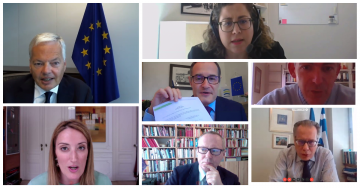
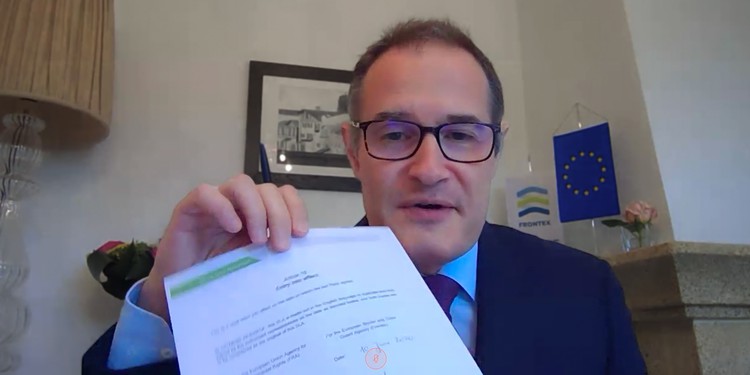
      In a ceremony that took place online, the two directors signed a Service Level Agreement in the virtual presence of Didier Reynders, Commissioner for Justice, Juan Fernando López Aguilar, the Chair of LIBE Committee in the European Parliament and Georgios Koumoutsakos, Alternate Minister, Greek Ministry for Migration. Other participants included high-level representatives from Germany and the European Parliament, as well as the Chair of Frontex Consultative Forum on fundamental rights.

      The main tasks of the Frontex fundamental rights monitors will be to make sure all operational activities are in line with fundamental rights framework, monitor all types of operations and contribute to Frontex training activities.

      The monitors will be integrated with the agency’s Fundamental Rights Office. The Frontex Fundamental Rights Officer will oversee their work and assign them to particular operations.

      By the end of the year, Frontex and FRA plan to establish a team of as many as 40 fundamental rights monitors. They will undergo enhanced fundamental rights training before they take up their duties next year, when Frontex will deploy the first members of the European Border and Coast Guard standing corps.

      https://frontex.europa.eu/media-centre/news-release/frontex-and-fra-agree-to-establish-fundamental-rights-monitors-OBabL6
      #monitoring

    • Cet essai propose d’analyser sous un angle féministe quelques-unes des caractéristiques de la « culture populaire féminine », un terme qui regroupe les genres, formes, phénomènes, pratiques et supports culturels et médiatiques qui sont associés aux femmes et au féminin – ces deux termes sont ici envisagés comme des catégories sociales et discursives façonnées par les rapports de genre, mais aussi de classe, de sexualité et ethnoraciaux. S’ils ont jusqu’ici suscité relativement peu de travaux au sein des universités françaises (dont la culture dite populaire a déjà mis bien longtemps à pousser les portes), il existe en revanche dans les universités anglo-américaines un très riche champ de recherche autour de ces objets et pratiques, né dans le sillage des Cultural Studies (une école de pensée apparue en Grande-Bretagne à la fin des années 1950 et tournée vers l’étude des cultures et des modes de vie populaires) ainsi que des mouvements féministes des années 1970. En portant à la connaissance du public certains des débats qui ont structuré ce champ particulier de la théorie féministe, cet essai entend aussi contribuer aux discussions en cours au sein du féminisme politique. Alors que la « 4e vague » féministe apparue sur les réseaux sociaux aux alentours des années 2010 bouscule l’ensemble du corps social, il semble en effet plus que jamais nécessaire de comprendre les ressorts du succès persistant de cette culture massivement (mais non exclusivement) consommée par les femmes et généralement perçue comme conservatrice, productrice de normes oppressives, voire comme un redoutable véhicule pour la « culture du viol ».

  • How to Build a #design System
    https://hackernoon.com/how-to-build-a-design-system-8574fbe93734?source=rss----3a8144eabfe3---4

    Semantics, syntax, accessibility, tone, and context that provide a base for a shared design language — benefits, drawbacks, and examples.When do you start building a design system, where should you start? It can be difficult to know when the best time to start implementing a new process into your current workflow.Plus, there are a lot of areas to consider when starting from scratch and what should be built first — in terms of style guides, pattern and component libraries, and design systems. With each floating around it can be hard to where to start. While there are benefits to building a design system there are also downsides, however, we will discuss both the good and the bad — since they each depend on what you are looking to solve with a design system.The Difference Between Style Guides, (...)

    #web-design #design-systems #development #agency

  • Top #growth Hacking #agency (s) in the USA and Worldwide — 2018
    https://hackernoon.com/top-10-growth-hacking-agency-in-the-usa-and-worldwide-bdaa6fc7b30f?sourc

    The biggest reason of choosing a growth hacking agency over a digital #marketing agency is that you get talent from digital marketing, product development, core technology, user experience designers, user interface designer and project managers.If you are tired of working with typical digital marketing companies, then here is the list of growth hacking agencies that will help you find your way to business success.The list below is compiled based on the following factors:Core TeamExperienceClientsCostServicesCase StudiesHere is the list of top 10 Growth Hacking Agencies:VoxturrVoxturr comprises growth team and advisors that have more than 100 years of combined experience in growth strategy building, digital marketing, digital product development, user experience designing and core (...)

    #growth-hacking #digital-marketing

  • Landscape and Agency

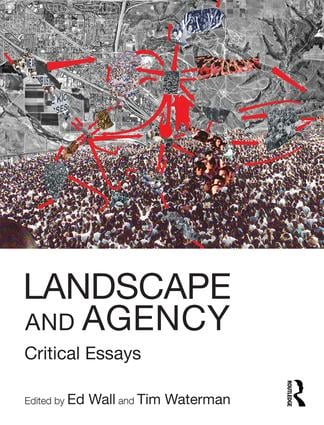
    Landscape and Agency explores how landscape, as an idea, a visual medium and a design practice, is organized, appropriated and framed in the transformation of places, from the local to the global. It highlights how the development of the idea of agency in landscape theory and practice can fundamentally change our engagement with future landscapes. Including a wide range of international contributions, each illustrated chapter investigates the many ways in which the relationship between the ideas and practices of landscape, and social and subjective formations and material processes, are invested with agency. They critically examine the role of landscape in processes of contemporary urban development, environmental debate and political agendas and explore how these relations can be analysed and rethought through a dialogue between theory and practice.


    https://www.routledge.com/Landscape-and-Agency-Critical-Essays/Wall-Waterman/p/book/9781138125575
    #paysage #agency #livre #urban_matter #environnement #villes

  • How Uber Uses Psychological Tricks to Push Its Drivers’ Buttons - by Noam Scheiber; graphics by Jon Huang -
    The New York Times
    https://www.nytimes.com/interactive/2017/04/02/technology/uber-drivers-psychological-tricks.html

    Employing hundreds of social scientists and data scientists, Uber has experimented with video game techniques, graphics and noncash rewards of little value that can prod drivers into working longer and harder — and sometimes at hours and locations that are less lucrative for them.

    (…) To keep drivers on the road, the company has exploited some people’s tendency to set earnings goals — alerting them that they are ever so close to hitting a precious target when they try to log off. It has even concocted an algorithm similar to a Netflix feature that automatically loads the next program, which many experts believe encourages binge-watching. In Uber’s case, this means sending drivers their next fare opportunity before their current ride is even over.

    (…) pulling psychological levers may eventually become the reigning approach to managing the American worker [Nota: pourquoi American, on sait pas]

    (…) other “gig economy” platforms are also involved. Uber’s main competitor, Lyft, and popular delivery services like Postmates rely on similar approaches. So do companies and individuals posting assignments on crowdsourcing sites like Amazon Mechanical Turk (…)

    Of course, many companies try to nudge consumers into buying their products and services using psychological tricks. But extending these efforts to the work force is potentially transformative.

    (…) Some local managers who were men went so far as to adopt a female persona for texting drivers, having found that the uptake was higher when they did.

    (…) whether they enjoy it is separate from the question of #agency — whether they have it, or whether the company does.

    (…) Kelly Peters, chief executive of BEworks, a management consulting firm specializing in behavioral science, argued that the same data that makes it easier for Uber to nudge drivers into working an additional 30 or 60 minutes also makes it hard to escape the obligation to look after them.

    (…) It is … not too hard to imagine a future in which massive digital platforms like Uber have an appetite for tens of millions of workers

    #gamification #manipulation #psychologie #disruption #travail #exploitation @taxi
    l’article est aussi intéressant pour sa #simulation #visualisation