• Calabria, un #manifesto per «normalizzare #San_Luca»: esperti e cittadini immaginano insieme un presente diverso

    Su San Luca (Reggio Calabria), dalle cronache spesso associata alla ’ndrangheta, pesano gravi pregiudizi che emarginano i suoi cittadini e aumentano la sfiducia nello Stato. Anna Sergi e Francesco Donnici raccontano l’iniziativa del «Manifesto con San Luca», nata per coinvolgere abitanti, esperti e rappresentati della società civile in una riflessione collettiva che possa eliminare lo stigma e portare a un cambiamento

    San Luca (Reggio Calabria), cittadina di circa tremila abitanti ai piedi dell’Aspromonte, è nota ai più per le cronache che la associano alla storia di “mamma” ‘ndrangheta. Nei giorni scorsi, una delle voci autorevoli del paese, commentando l’ennesimo blitz di alcune emittenti televisive, scriveva: «Per anni San Luca è stata descritta come il luogo delle tenebre. Oggi gli stessi ambienti che hanno contribuito a costruire quell’immagine spiegano che bisogna superarla». Tale atteggiamento, in questa visione critica, viene descritto dalla stessa autorevole voce come sintomo di una «perfetta economia circolare della narrazione». Un’espressione che sintetizza il sentimento di una popolazione spesso illusa e delusa, quando non usata, dalle tante voci avvicendatesi, nel bene e nel male, in iniziative finalizzate a sconfiggere “mostri” alimentati per essere utilizzati a favor di telecamera.

    A San Luca è sorta un’iniziativa che mette al centro il dialogo con le persone; con i suoi cittadini: non per narrarli, ma per provare a essere cassa di risonanza di voci concepite come parte di un tutto più ampio. Ne è nato un documento politico intitolato “Manifesto con San Luca”. Il Manifesto non vuole dare risposte univoche, ma linee guida, spunti di riflessione e pratiche sociali per interpretare e reimmaginare il presente di queste realtà. Si vuole rivolgere principalmente ai cittadini di San Luca e della Locride, poi ai calabresi tutti. La classe politica e amministrativa locale e della regione Calabria è il target diretto, giornalisti, analisti e forze dell’ordine altrettanto.

    L’iniziativa, ancora in divenire, è presentata con la formula del “Manifesto” perché è una sintesi delle riflessioni raccolte tra cittadini, esperte, ricercatrici, docenti, ingegneri e quante più persone vivono e conoscono il territorio calabrese e si siano sentite di offrire con gratuità il proprio contributo alla costruzione di un testo che potesse essere preludio a una riflessione collettiva e condivisa. Il percorso del Manifesto è iniziato nei primi mesi del 2026 e si è servito dei metodi della ricerca sociale in ambito criminologico per iniziare a mettere su una massa critica di opinioni: individuati gli esperti (calabresi), si sono fatte delle brevi interviste con loro; visite al paese, spesso preannunciate sui social, e coadiuvate anche dalla Caritas locale, hanno permesso di interfacciarsi con la popolazione su alcuni punti di primario interesse.

    In altre parole, il “Manifesto con San Luca” aspira a incarnare un soggetto collettivo che apre a una riflessione più ampia sulle sorti delle “aree interne montane” e della Calabria, riconoscendo e non smentendo l’esistenza di taluni problemi, come può essere la presenza e operatività di storici clan di ‘ndrangheta originari del territorio. L’obiettivo, anche in questo caso, non è però quello di prestarsi a strumentali apologie di mafia, né di ridurre la ‘ndrangheta a semplice questione criminale da risolvere, bensì, è scritto, «di prendere coscienza di quali fattori, all’interno delle stesse comunità e delle istituzioni, facilitino il riprodursi e ripresentarsi della ‘ndrangheta»: l’assenza di uno Stato affidabile, la mancanza di opportunità, la marginalità geografica, la frammentazione sociale, la rassegnazione, il silenzio, l’ambiguità delle posizioni individuali, le narrazioni appiattite su certi stereotipi, sono solo alcuni esempi. San Luca viene chiamato in causa come “laboratorio” dell’esistente, non come oggetto di un esperimento, ma perché è una rappresentazione in piccolo di problemi riscontrabili anche altrove, spesso nemmeno reali, ma frutto di percezioni esterne, anche distorte.

    «Normalizzare San Luca»

    A settembre 2023, proprio in un’intervista pubblicata sulle pagine de lavialibera, Bruno Bartolo, ultimo sindaco eletto della cittadina prima del più recente commissariamento del Comune avvenuto circa un anno dopo, dichiarò che il suo obiettivo era quello di «normalizzare San Luca». Il paese, secondo il primo cittadino insediatosi il 27 maggio 2019 dopo una lunga stagione di scioglimenti e commissariamenti, veniva raccontato come un’anomalia e tale racconto rischiava di distrarre dai “normali” problemi che San Luca condivide con tante aree simili. Su tutti, mancanza di lavoro, di luoghi di incontro e confronto permanenti, di iniziative dello Stato che non siano solo un “mordi e fuggi” spesso tradotto in tanti progetti “non finiti” che affollano il panorama e gli archivi del municipio. «I sanluchesi sono in credito con lo Stato fin dall’alluvione che devastò il territorio nel 1973», diceva ancora Bartolo riassumendo un lunghissimo periodo di mancanze che hanno finito per scoraggiare anche i più volenterosi dall’assumersi il compito di rappresentare la “cosa pubblica” sul territorio.

    Cosa pubblica che nel frangente è diventata “cosa di nessuno”, tra l’incuria e l’assenza di progettazione. Di fatti, «la ‘normalizzazione’ del paese passa dai suoi servizi», come poteva essere la strada che porta al Santuario di Polsi, tanto impraticabile da inibire la celebrazione dello storico pellegrinaggio verso la Madonna della Montagna nel 2025, o l’istruzione, come l’ex sindaco aveva scritto (insieme agli omologhi di Platì, Africo e Careri) nella lettera inviata al ministro Giuseppe Valditara, per chiedere un intervento strutturale su scuola e lavoro, tale da togliere i giovani dalla strada incentivando un «comune percorso di antimafia legato a specifici progetti che fanno perno su una scuola qualificata e realmente formativa». Se fosse riuscito in quest’opera di “normalizzazione”, l’ex sindaco avrebbe valutato di ricandidarsi. Così non è stato e all’esito di una tornata elettorale senza liste e candidati, le sorti del Comune sono state affidate a una commissione straordinaria.

    Missioni e Fondazioni

    Nel mentre, a carico di Bartolo e altri è stata aperta un’indagine legata alla concessione dello stadio comunale e all’assegnazione degli spazi nell’area mercatale del Santuario di Polsi, che ha gettato nello sconforto una popolazione sentitasi accerchiata dagli organi inquirenti. Ma non è tutto. Nel giugno del 2024, la Commissione parlamentare antimafia guidata da Chiara Colosimo si era recata in missione a San Luca. Una visita che ha lasciato in dote soltanto una foto di dubbio gusto scattata dai parlamentari sotto il vecchio cartello d’ingresso al paese – non più esposto sulla pubblica via – forato dai colpi delle lupare e una relazione di 32 pagine «non esenti da retorica» come scritto da Pablo Petrasso su LaC news.

    Nel documento, al classico racconto sulla ‘ndrangheta e sulla cultura mafiosa che influenza i giovani, venivano accostate considerazioni sulle risorse di un territorio, solo per fare un esempio, dal grande potenziale turistico «limitato dal degrado ambientale dell’intera Locride e dalla mancanza di una cultura imprenditoriale adeguata». Sulla scorta di un tale complesso di riflessioni – per certi versi un po’ stantie, per altri un po’ distratte dalle reali dinamiche territoriali incarnate dalle diverse realtà sociali positive che operano in quella porzione della provincia di Reggio Calabria – l’organo concludeva dichiarandosi «disponibile a fornire spinta e testimonianza concreta a quelle comunità, con la candidatura diretta di propri membri» alle elezioni amministrative.

    Il terremoto si completa con la scossa data dallo scioglimento, disposto dalla prefettura di Reggio Calabria il 21 marzo 2025, del CdA della Fondazione culturale “Corrado Alvaro”, giornalista, antifascista, vincitore del premio Strega e autore del capolavoro “Gente in Aspromonte” oltre che figlio nobile di San Luca. Il provvedimento evidenziava criticità come la ridotta operatività della Fondazione o «un progressivo depauperamento del patrimonio e contestazioni relative alla composizione degli organi di governo, anche per la presenza di soggetti con parentele a famiglie riconducibili a contesti di criminalità organizzata». Una lettura che fin da subito ha destato perplessità, ma soprattutto polarizzato l’opinione pubblica tra coloro i quali sostengono la necessità di questo commissariamento, il primo per un soggetto culturale, e chi ritiene che questa sia l’ennesima – forse la più grave – cicatrice inferta all’identità del popolo sanluchese che vede infangato anche il nome dell’intellettuale a 130 anni dalla sua nascita.

    Dopo alcune proteste social, flashmob, la nomina di un Comitato scientifico, il rinnovo del CdA, lo scorso mese di giugno il Tribunale amministrativo regionale – accogliendo il ricorso presentato da Aldo Maria Morace, presidente del CdA sciolto, e dal vice Tonino Perna – ha ribaltato il provvedimento della prefettura. Tuttavia, la decisione del tribunale amministrativo di primo grado viene congelata a inizio luglio dal Consiglio di Stato. Al di là di quelli che saranno gli esiti del processo amministrativo, è evidente il grave disagio forse non considerato ma certamente arrecato alla popolazione di San Luca. Dinamiche che è impossibile disgiungere da quel pregiudizio di fondo derivato dall’abuso di una certa narrazione fatta nei confronti di un paese dove tutti, indistintamente, rischiano di cadere nel calderone della criminalizzazione, che diventa criminalizzazione della fragilità oltre che della devianza mafiosa.
    Sentenze e movimenti sociali

    Il referendum sulla giustizia del 22-23 marzo 2026 ha rappresentato un altro momento di frattura e incomprensione. L’82,39 per cento degli elettori di San Luca ha votato “Sì”. Percentuale simile a quella di altri comuni dell’area aspromontana e ionica. Tale risultato, complici alcuni spunti derivati dalla campagna referendaria, hanno fatto gridare all’endorsement mafioso. Una lettura superficiale e offensiva per chi, in quei territori, ha creduto – ingenuamente o disperatamente secondo chi scrive – che quella riforma potesse rappresentare una giustizia più equa, dove non si viene marchiati a vita per un cognome o per il luogo di nascita. Quel voto, per chi lo osserva conoscendo il territorio, non è stato un allineamento alla ’ndrangheta, ma un grido contro una magistratura percepita come unica presenza dello Stato: non quella che costruisce scuole o strade, ma quella che arriva con le manette e i titoli di giornale. Un voto di protesta che si è inserito perfettamente in quel solco di risentimento e frustrazione alimentato da decenni di abbandono istituzionale, trasformandosi in un messaggio politico urlato: quello di comunità stanche di sentirsi sospette per nascita e residenza, prima ancora che cittadini.

    A completare il quadro di sfiducia è arrivata, nel mese di giugno, la sentenza di appello del processo Gotha, con l’assoluzione, tra gli altri, del sacerdote di San Luca don Pino Strangio, accusato e condannato in primo grado di concorso esterno in associazione mafiosa. Il provvedimento è arrivato dopo dieci anni di processo, di ambiguità relazionali imposte all’intera comunità, di erosione ulteriore della fiducia nelle istituzioni. Come sempre, gli arresti e le prime condanne hanno riempito le prime pagine; le assoluzioni, quando arrivano, vengono relegate in trafiletti che non restituiscono dignità né riparano il danno. Dopo l’assoluzione si è formato un piccolo movimento sui social che chiede, pretende quasi, il ritorno a Polsi di don Pino Strangio come rettore del Santuario della Madonna della Montagna nel frangente riaperto ai fedeli – con accesso per ora solo a piedi – per l’estate 2026. A prescindere dalle considerazioni tecniche sulle nomine ecclesiastiche e a prescindere anche dalle valutazioni nel merito dell’assoluzione – come della precedente condanna – è necessario notare come questo coro social dimostri ancora una volta che la comunità sanluchese non solo c’è, ma quando si muove lo fa in maniera compatta. Se questa dinamica si osserva dalla prospettiva dei movimenti sociali diventa un’opportunità enorme per aprire a un possibile cambiamento. Tuttavia, se da un lato questa coesione è una risorsa potenziale per il cambiamento, dall’altro rischia di tradursi in vittimismo collettivo quando non si accompagna a un’assunzione di responsabilità e a un senso civico che vada oltre la difesa identitaria.

    Parole chiave

    https://www.youtube.com/watch?v=XPIbAULzTvo&t=187s

    Questa breve ricostruzione aiuta a comprendere il contesto all’interno del quale si è fatta strada l’idea del “Manifesto”. Il documento continua ad essere arricchito di spunti, alcuni dei quali arrivati dopo il primo lancio pubblico avvenuto lo scorso 18 giugno al festival “Trame” di Lamezia Terme. La riflessione emersa a quel tavolo è stata sintetizzata in un elenco di parole chiave suddivise in cinque macrocategorie:

    crisi del territorio, marginalità e abbandono;
    crisi della sfera pubblica e del bene comune:
    crisi morale e culturale;
    crisi della fiducia e delle relazioni;
    prospettive di cambiamento.

    Tra queste, si vogliono evidenziare due concetti che fin dall’inizio, dall’osservazione profonda del territorio di San Luca attraverso il metodo scientifico, hanno fatto da traino all’iniziativa: da un lato si parla di “isolamento e marginalità”, intesa «la condizione geografica e sociale che relega aree come San Luca ai margini delle politiche pubbliche e dell’attenzione collettiva»; dall’altro di “vittimismo come interiorizzazione dello stigma”, ovvero «il rischio che le comunità interiorizzino lo sguardo esterno stigmatizzante (in senso lato, criminalizzante), trasformandolo in rassegnazione e risentimento».

    Sullo sfondo, le aree interne

    Questa riflessione non deve essere concentrata esclusivamente su San Luca, ma da San Luca può trasporsi anche su altri livelli territoriali. Basti pensare al dibattito innescato dal Piano strategico nazionale per le aree interne (Psnai) 2021-2027 letto da alcuni come una condanna a morte nella parte in cui parla di accompagnamento dei territori in un «percorso di spopolamento irreversibile». Alcuni studiosi, tra cui l’antropologo Vito Teti, hanno definito il documento come parte di un lungo percorso di “eutanasia territoriale” che coinvolgerebbe diversi paesi, su più livelli, e non solo contesti come San Luca.

    Come hanno evidenziato i docenti Domenico Cersosimo e Rocco Sciarrone in un più recente contributo sulla rivista Dissonanze, «tutta la Calabria è ormai un’unica grande area interna». Secondo la struttura del “Manifesto con San Luca”, l’inciso potrebbe valere addirittura per l’intera Italia dove i dati Istat raccontano di un processo di spopolamento che coinvolge anche i grandi centri urbani. Per questo motivo, se non maneggiato con cautela, il dibattito sulla sorte delle aree interne rischia anch’esso di diventare fuorviante e scoraggiare le forze buone della popolazione. Servono politiche, servono «forme di resistenza» per dirla sempre con Cersosimo e Sciarrone, che incentivino le persone a restare superando l’idea romantica ma vuota di una “restanza” fine a se stessa, che, come tale, diventa solo un modo elegante per selezionare chi può restare e chi non può andarsene.

    L’incentivo è quello di produrre una forte spinta oltre le retoriche della “resilienza” che in questi anni pur si è vista, ma si è tradotta in un tirare a campare spesso disgiunto dai progetti a lungo termine. Viceversa, il dibattito va traslato sul campo dei servizi, dell’economia sociale legata a doppio filo alla valorizzazione dei territori, della loro storia, risorse e identità. Da poco, il commissariamento del Comune è stato prorogato di sei mesi, ma il prossimo anno le elezioni amministrative torneranno a bussare. Si voterà per dare a San Luca una nuova amministrazione. L’auspicio è che le campagne elettorali tengano conto dei reali bisogni dei cittadini e non siano solo spot. Che siano costruite “con”. In tal senso, questo disegno collettivo e condiviso, è a disposizione di chi saprà farne buon uso, per offrire spunti utili alla costruzione di una visione d’insieme.

    https://lavialibera.it/it-schede-2761-un_manifesto_per_normalizzare_san_luca
    #normalisation #Calabre #ndrangheta #mafia #manifeste #préjugés #stigmatisation #aree_interne #imaginaire #changement #criminalité_organisée #Locride #montagne #aree_interne #marginalité #marges #Bruno_Bartolo #éboulement #services #école #travail #anti-mafia #Etat #abandon #territoire #crise #isolement #démographie #Psnai #dépeuplement #eutanasie_territoriale #restanza #résilience #économie_sociale

    • La Calabria non è un altro mondo

      La Calabria non è «un altro mondo», ma una versione estrema di problemi che attraversano l’Italia: povertà, disuguaglianze, debolezza dei servizi pubblici, frammentazione sociale. La regione vive una forte dipendenza dalla spesa pubblica e una modernizzazione guidata dall’alto, con scarso protagonismo collettivo. La politica occupa un ruolo centrale, mentre la ’ndrangheta prospera nelle connessioni tra economia e potere. Accanto a rassegnazione ed emigrazione, esistono esperienze di resistenza e innovazione, ma ancora incapaci di produrre un cambiamento strutturale.

      «È certo la più strana tra le nostre regioni. [...] Si direbbe che qui siano franati insieme i detriti di diversi mondi; che una divinità arbitraria, dopo aver creato i continenti e le stagioni, si sia divertita a romperli per mescolarne i lucenti frantumi. Si deve a questo se i viaggiatori stranieri, in Calabria, rimangono disorientati. Non riescono a definirla. La trovano diversa, non solo dalle altre regioni italiane, ma da qualsiasi parte del mondo, e stentano a valutarne la civiltà». [Guido Piovene, Viaggio in Italia]

      La Calabria è una terra simbolo al negativo. Area estrema del nostro mondo, non un altro mondo. Una regione pervicacemente fuori squadra. Tra le ultime in Europa per reddito; la più povera tra le venti regioni italiane. Ma anche quella con la disuguaglianza economica interna più elevata tra tutte le regioni dell’Unione europea: il reddito del quinto dei calabresi più ricchi è 8,5 volte quello del quinto dei più poveri (attorno a 5 nell’Unione europea e in Italia), a testimonianza del fatto che i calabresi più ricchi sono relativamente meno ricchi degli italiani che abitano nelle regioni del Nord mentre i calabresi poveri sono molto più poveri dei poveri del Nord.

      Già questi pochi dati di sintesi mostrano l’utilità di guardare alla Calabria come a un’area in grado di rappresentare alcuni tra i più rilevanti problemi di cui si discute attualmente, e che in vario modo riguardano altre regioni, l’Italia e l’Europa. Un’utilità amplificata dal fatto che in Calabria questi problemi sembrano essere concentrati alla massima potenza. Lo stesso può dirsi degli interventi rivolti ad affrontarli.

      D’altra parte, il tessuto sociale e istituzionale della regione risulta frammentato e segmentato, strutturato secondo rigide logiche autoreferenziali, per silos verticali; mancano disegni intenzionali di connessioni funzionali; latitano infrastrutture di collegamento, raccordo, interazione. Di nuovo, una situazione ravvisabile anche in altri contesti, che segnala il progressivo sfilacciamento dei legami sociali, che ha però raggiunto qui livelli estremi.

      Da tempo la Calabria si colloca nelle retrovie delle graduatorie nazionali delle dotazioni e della qualità dell’offerta di servizi pubblici essenziali (sanità, scuola, servizi sociali e culturali, servizi per l’infanzia e gli anziani). I calabresi, di conseguenza, sono cittadini a bassa cittadinanza. L’intera regione, comprese le poche città, è assimilabile ad un’unica grande area interna, un’area lontana dai centri di servizi essenziali: spesso distanti fisicamente, inesistenti, di difficile accessibilità o mediamente scadenti.

      Un calabrese su due è a rischio di povertà o di esclusione sociale. Un picco scandalosamente alto, il più alto (e di molto) di tutta Europa. Un calabrese benestante convive con un calabrese povero/vulnerabile. Due società slegate.

      I benestanti godono di risorse adeguate per smarcarsi dal malconcio settore pubblico, mentre i poveri/vulnerabili si trovano in condizioni di gravi deprivazioni materiali quotidiane, di lavori poveri, di salari all’osso, di disconoscimento. I benestanti abitano una certa orizzontalità relazionale, potendo contare su reti di sostegno reciproco, di scambio, di potere, di affari. Reticoli che, seppure limitati alla cerchia sociale di riferimento, alimentano comunanze e vantaggi esclusivi, capitale sociale di club.

      I poveri/vulnerabili abitano invece un tessuto sociale disperso e atomizzato: senza adeguate infrastrutture politico-sindacali, spesso persino senza parrocchie di prossimità.

      Le classi alte trovano convenienze nello status quo; i poveri si rassegnano allo status quo perché senza risorse e «capitali» per immaginare un’altra vita, senza rappresentanza collettiva. Sta in ciò la spiegazione dell’enigma calabrese: una situazione estrema che non implica – non può implicare – un conflitto sociale altrettanto estremo, perché ne mancano i presupposti soggettivi e collettivi.

      Lo Stato, con la sua spesa pubblica, è il soggetto pressoché esclusivo della trasformazione post-bellica della Calabria. Una «modernizzazione passiva», eterodiretta, con una mobilitazione dal basso debole e discontinua. I grandi cambiamenti che hanno trasformato più intensamente la società tradizionale del passato sono tutti ideati e promossi dal centro: finanziamenti di opere pubbliche e riforme che, in un quadro di costante incompiutezza, hanno modificato nel profondo le condizioni di vita e dei comportamenti dei calabresi, caratterizzandoli progressivamente come italiani a tutto tondo per consumi e stili di vita.

      Il film diacronico mostra, dunque, una regione in movimento, disposta all’inseguimento, in tendenziale convergenza con il resto della Penisola, tutt’altro che ferma e ossificata nei suoi assetti sociali e civili. A contrario, l’osservazione sincronica palesa una distanza persistente con il resto del Paese, gravato da disparità diffuse non sanate.

      È la politica il «grande tutto» dei processi di mutamento economico e sociale, il fattore dei successi e degli insuccessi, la calamita attrattiva unica per benestanti e poveri, la determinante di allineamenti e scarti infra e inter-regionali.

      Oggi, la vita nuda della grande maggioranza dei calabresi è in larga parte dipendente, nel bene e nel male, dalla spesa pubblica: per i singoli cittadini e per le imprese, per gli agricoltori e per i costruttori, per le università e per le scuole, per la sanità pubblica e privata, per i sindaci e per le associazioni culturali.

      Massimizzare l’accesso ai contributi pubblici è l’assillo di una regione e di una parte consistente del terziario privato della mediazione (padronati, caf, associazioni varie, commercialisti, avvocati), specializzato nel drenaggio e nell’allocazione minuta di questi flussi di spesa. Ancor più ossessiva è l’intercettazione di risorse collettive e della loro torsione a proprio vantaggio da parte di ampi segmenti delle classi dirigenti (politici, imprenditori, agenzie), anche attraverso l’uso strumentale delle relazioni associative professionali e interprofessionali, legali e occulte.

      In filigrana si intravede una società ruminante, impegnata nella captazione e manipolazione di risorse pubbliche, con una speciale abilità a scovare e massimizzare l’accesso a contributi, incentivi, sostegni e sgravi di ogni tipo e a sfruttare le opportunità legate alla spesa pubblica in direzione di interessi particolaristici.

      La ’ndrangheta è tra gli attori economici più attrezzati nella conquista di questi flussi di risorse, spesso con un ruolo da protagonista negli appalti di opere infrastrutturali, nel campo sanitario, nel settore della raccolta e smaltimento dei rifiuti, configurandosi come uno dei soggetti rilevanti della Calabria espansiva.

      Da pericolosa realtà criminale, a lungo sottovalutata, la ’ndrangheta è diventata anche uno stigma culturale e sociale utilizzato per indicare l’intero territorio regionale e la sua popolazione. Prevalgono al riguardo letture riduttive, da quelle che incredibilmente insistono ancora sulle caratteristiche arcaiche di un popolo e della sua mentalità agro-pastorale a quelle che invece riducono il fenomeno a mero problema di ordine pubblico. Di conseguenza, diventa vago e sfumato il problema delle contiguità e delle collusioni che investono il funzionamento dell’economia e soprattutto il raccordo tra economia e politica, che da sempre costituiscono il vero punto di forza della ’ndrangheta.

      Più in generale, la Calabria può essere considerata un laboratorio per osservare le dinamiche di trasformazione della politica contemporanea, stretta nella morsa di spinte contrapposte tra de-politicizzazione e iper-politicizzazione. Una regione in cui la politica resta al centro della scena, anzi la occupa in modo preponderante. Anche se spesso è una politica senza politiche, che rifugge dalle responsabilità, che opera in via emergenziale attraverso deleghe e commissariamenti, condizionando in modo peculiare la configurazione e il funzionamento delle istituzioni e dei processi democratici.

      Nel quadro di netta prevalenza della regolazione politica, non si sono create le condizioni per favorire relazioni di mercato dotate di sufficiente autonomia ed efficacia, anche se sono emerse nel tempo diverse iniziative imprenditoriali «eccellenti» per innovazione e ampiezza dei circuiti economici ma che, tuttavia, non riescono a contaminare i contesti di insediamento.

      La manifattura è ormai un’attività marginale, tanto in termini di contributo al reddito regionale che di occupazione; l’agricoltura più dinamica e le attività complementari si sono sempre più concentrate nelle poche aree di «polpa»; il ciclo dell’edilizia tende a sovrapporsi a quello della congiuntura politica settoriale; le stesse strutture di ricerca sono sempre più orientate a incrociare flussi di spesa pubblica in modo indifferenziato, attraverso alleanze di scopo di breve periodo con imprese e soggetti privati che tuttavia non sortiscono effetti di lunga durata nell’economia e nella società locale.

      Il turismo, a dispetto dell’enfasi retorica corrente, soffre di congenite improvvisazioni, di despecializzazione e di un’infrastruttura organizzativa ancora rudimentale, nonostante l’emersione di un limitato numero di iniziative imprenditoriali di buona qualità, per lo più puntiformi ed esclusive, e talvolta inquinate da contaminazioni mafiose.

      In questo scenario prevalgono logiche di adattamento, da un lato i calabresi che difendono le posizioni di privilegio acquisite, dall’altro i calabresi che cercano di fronteggiare le diffuse condizioni di precarietà e vulnerabilità della loro vita quotidiana. Ancora oggi, come in passato, un’alternativa è quella della fuga, dell’exit: per scelta, quando possibile, o, spesso, per necessità.

      Tra chi resta non mancano i soggetti, in molti casi giovani, che praticano forme di resistenza, soprattutto tra coloro che cercano di percorrere vie di innovazione, faticando non poco a trovare spazi di visibilità e voice. Ci sono dunque i calabresi non rassegnati, che non si arrendono e pensano a un altro mondo possibile. Quelli che, ad esempio, testardamente avviano attività di impresa, sfidando a viso aperto un contesto ostile, ribellandosi persino alla ’ndrangheta. Come stanno facendo diverse donne che, per tutelare sé stesse e soprattutto i propri figli, hanno deciso di recidere i legami familiari per rinnegare ogni forma di appartenenza mafiosa.

      O ancora coloro che praticano azioni di solidarietà a sostegno delle fasce più povere e marginali della popolazione. Pensiamo anche all’esperienza di Mimmo Lucano, che ha contribuito a fare di Riace un luogo iconico globale per ospitalità e inclusione di migranti e rifugiati. Si tratta però di casi esemplari, delimitati, che non hanno la forza di innescare processi di cambiamento sistemici.

      Lo scenario delineato ha un significato che travalica la regione, rendendo evidenti, in modo radicale e amplificato, processi di più ampia portata. Da questo punto di vista, la Calabria può essere dunque considerata un benchmark negativo: una realtà sempre più sfilacciata, senza collante sociale, permeata da crescente sfiducia e incertezza, che non riesce a immaginare un futuro.

      Decifrare la sua patologia aiuta a spiegare la fisiologia. E, forse, come nel paradosso di Hirschman: nascondere un po’ di «negativo» può aiutare a non abbandonare la speranza, a fuggire la trappola della rassegnazione, lasciando spazio alla «passione per il possibile».

      https://rivistadissonanze.it/calabria/la-calabria-non-e-un-altro-mondo

  • #Terre_di Musica | viaggio tra i beni confiscati alla mafia

    TERRE di MUSICA è un progetto musicale e culturale, ideato da Salvatore De Siena, leader del Parto delle Nuvole Pesanti, e realizzato dalla band in giro per l’Italia nell’arco di due anni, con la collaborazione di Arci e Libera.
    Un viaggio a tappe da Corleone a Trapani, dalla Piana di Gioia Tauro ad Isola Capo Rizzuto, da Mesagne a Cerignola, da Casal di Principe a Castel Volturno, fino a Roma, Bologna, Torino e Milano, per documentare l’esperienza dei beni confiscati, raccontare le storie delle tante persone, spesso giovani, che ci lavorano tra mille difficoltà, intimidazioni e vandalismi, e far comprendere che i beni confiscati non rappresentano solo un valore simbolico, ma anche una risorsa, un modello di sviluppo economico e sociale alternativo.

    Di questo viaggio sono stati realizzati un libro e un film documentario che raccolgono le note storiche, sociali e culturali dei beni confiscati alla mafia nonché l’esperienza umana dei suoi protagonisti. Un viaggio emozionante e umanamente arricchente, fatto con la convinzione che la legalità possa svilupparsi a partire dalle piccole azioni e che la musica, il cinema, la letteratura siano linguaggi capaci di arrivare alla gente con maggiore facilità e immediatezza.

    https://www.partonuvolepesanti.com/progetti/terre-di-musica-viaggio-tra-i-beni-confiscati-alla-mafia
    #biens_confisqués #mafia #antimafia #anti-mafia #Italie #Il_parto_delle_nuvole_pesanti #livre #film #documentaire #film_documentaire

    • #Casa_Chiaravalle à #Milan
      https://www.youtube.com/watch?v=q2O0pJNJs5Y

      La casa confiscata alla criminalità organizzata e affidata alla comunità organizzata.

      https://www.youtube.com/watch?v=17T_BS3S_Qk


      https://www.youtube.com/watch?v=VGjMz4LEY5E

      https://www.retepassepartout.it/casa-chiaravalle

      –-
      Comment la mafia « redonne » à Milan

      Le vert l’emporte sur le gris dans le GPS du taxi. Nous sommes aux limites sud de Milan, là où la campagne reprend ses droits.

      Nous passons devant l’abbaye de Chiaravalle, construite il y a 891 ans, seule raison pour laquelle ce bled est connu.

      Voici la Casa Chiaravalle. Cette jolie ferme, avec villa et écuries, était la propriété de Pasquale Molluso, un boss de la ’Ndrangheta, la mafia calabraise. Mais la justice l’a saisie, et conformément au Code antimafia italien, l’immeuble a été cédé à la ville.

      Au dernier décompte – car le 20 mars, comme chaque année, le plus récent sera publié –, la Ville de Milan est propriétaire de 267 immeubles confisqués au crime organisé.

      Au moment de la saisie, la Casa était le bien mafieux le plus important jamais saisi par la justice en Lombardie. Comme tous les autres, il doit être destiné à un usage social, après un appel de projets.

      C’est ainsi qu’involontairement le crime organisé « redonne » ce qu’il a volé à la communauté, selon la logique du Code antimafia.

      Après avoir été un refuge pour migrants, la Casa Chiaravalle est maintenant un centre pour femmes en difficulté géré par un organisme communautaire qui offre toutes sortes de formations.

      Au bar du village, Christian sirote un Campari soda. Il approuve le projet. Le barman est moins enthousiaste face à cette aide aux « clochards ». Il trouve que le village a changé, qu’il y a beaucoup d’étrangers. Des clochards. Mais bon, ça reste assez tranquille.

      Le fils Molluso est encore au village, au fait. « Un type bien, très discret », dit le barman. Bon, c’est vrai, le cousin s’est fait saisir huit gymnases de padel, version plus sportive du pickleball, pour les mêmes raisons que le patriarche : blanchiment d’argent au profit du crime organisé.

      Je demande à Christian ce qu’il fait. « Des ménages. Je suis en réinsertion sociale, je paie ma dette pour une affaire », dit-il vaguement. Quand je lui dis que je m’en vais en marchant à la gare de Rogoredo, il me dit qu’il n’en est pas question. « Trop dangereux, c’est le parc de la drogue. »

      Il me fait asseoir dans sa Fiat 500, après avoir tassé les petits cœurs de la Saint-Valentin achetés pour sa femme. « J’ai pris de l’avance cette année », dit-il.

      Ai-je parlé d’un boss de la mafia calabraise à Milan ?

      Dans l’imaginaire collectif, y compris à Milan, tout le crime organisé vient du Sud. Le problème mafieux est circonscrit géographiquement et culturellement : la Cosa Nostra en Sicile, la Camorra en Campanie – autour de Naples –, la ’Ndrangheta en Calabre.

      Oui, sans doute, certains membres de ces mafias s’aventurent dans le Nord industriel pour vendre de la cocaïne, faire du prêt usuraire ou infiltrer l’économie légale de diverses manières. Mais ce sont des cas isolés, n’est-ce pas ?

      Pas vraiment, vient tout juste de répondre la justice milanaise.

      Le 12 janvier, 62 personnes ont été condamnées à Milan dans un de ces mégaprocès antimafia dont l’Italie a l’habitude. L’Italie, oui, mais Milan, pas vraiment. L’opération « Hydre », du nom de la créature mythologique à plusieurs têtes, promet d’épingler d’autres mafieux. Entre-temps, c’est déjà un des plus gros coups de filet du genre, sinon le plus gros, dans le Nord de l’Italie.

      Ce qui est inédit, c’est la reconnaissance par la justice d’un « système mafieux lombard ». Une sorte de cartel unissant les trois grandes mafias du Sud, chacun obtenant des approbations de son organisation.

      « Je sais que mes propos risquent de déranger », a dit la procureure Alessandra Cerreti dans son réquisitoire, le mois dernier. Mais Milan est un environnement gangrené par la mafia, au même titre que la Calabre. Tant que nous n’en prendrons pas conscience, nous ne pourrons pas progresser dans la lutte contre ce fléau. »

      Et d’ajouter : « Les mafieux n’ont pas changé de visage pour devenir des entrepreneurs : ils restent des mafieux, simplement ils jouent sur les deux tableaux. Ils font ce qu’ils font traditionnellement parce qu’ils savent comment – drogue, extorsion, recouvrement de créances –, mais ils sont aussi passés maîtres dans l’art de s’adapter à la réalité milanaise, étouffant ainsi le libre marché. »

      Pour la criminologue de l’Université de Bologne et invitée à celle d’Essex, Anna Sergi, spécialiste des mafias italiennes, cette vaste opération ne fait que confirmer ce que les analystes disent depuis 30 ans : Milan n’est pas immunisé contre les systèmes mafieux.

      Le piège consiste à voir cela comme un phénomène extérieur, comme une espèce envahissante venue de loin.

      « Bien que la ’Ndrangheta, la Cosa Nostra et la Camorra aient émergé au XIXe siècle dans des régions particulières du Sud et se soient développées selon leur contexte particulier, elles n’ont jamais représenté les seules formes de crime organisé en Italie ni les seules organisations dans leur région respective », écrit-elle sur Substack.

      « La question pour moi n’est pas pourquoi ces mafias se joignent, mais pourquoi pas ! Elles maximisent les gains et minimisent les risques », m’écrit-elle dans un courriel.

      Dire que « Milan est comme la Calabre » est aussi insignifiant que de dire que « les rues sont comme à Beyrouth » pour décrire leur mauvais état, ajoute-t-elle sur Substack. Parler en ces termes, c’est une autre manière de suggérer que tout le mal vient du Sud, et donc de ne pas examiner la criminalité « autochtone » milanaise.

      Au lieu de perpétuer le stéréotype du crime organisé « traditionnel » du Sud, il faut plutôt observer la capacité des entreprises criminelles de s’adapter continuellement, partout, et en modifiant ses façons de faire.

      Rappelons que 54 entreprises ont été exclues des contrats publics pour les Jeux olympiques à cause de liens mafieux présumés. Tout cela dans ce Nord industrieux, si fier de sa différence…

      https://www.lapresse.ca/international/chroniques/2026-02-12/comment-la-mafia-redonne-a-milan.php

  • Il racconto delle stragi nei quadri di #Gaetano_Porcasi

    In #via_d'Amelio la prima mostra di un progetto che può essere itinerante

    Sessantuno opere. Sessantuno opere per raccontare un pezzo di storia d’Italia, quello delle stragi che hanno segnato il Paese, condizionato democrazie e segnato profondamente le vite di tante famiglie. La pittura è quella di Gaetano Porcasi, da sempre impegnato in questo percorso artistico informativo nel mondo dell’antimafia.

    In occasione del trentatreesimo anniversario della strage di via d’Amelio ha risposto positivamente alla proposta di Salvatore Borsellino di realizzare quello che è stato un vero e proprio percorso visivo che va oltre la fotografia e che è stato esposto in via d’Amelio dal 17 al 20 luglio.
    «Per controbattere ai depistaggi istituzionali della Commissione parlamentare antimafia e di questo governo, che vorrebbe riscrivere la storia, ho voluto mettere insieme tutte le stragi che hanno insanguinato il Paese - ha detto nei giorni scorsi Salvatore Borsellino - Stragi che fanno parte di un unico percorso eversivo che ha attraversato la storia fino ad arrivare all’attuale sistema di potere che ci governa. Da Portella della Ginestra in poi, ognuna viene rappresentata attraverso un quadro con i nomi e l’eta delle vittime».

    Porcasi, con uno stile inconfondibile, ha da sempre realizzato dipinti di impegno civile.

    Borsellino lo descrive come «il pittore della memoria e della resistenza civile».

    Ed ha ragione. In questi giorni i tanti che si sono recati in via d’Amelio non hanno potuto non attraversare la mostra.

    Un pannello dopo l’altro non si può essere indifferenti di fronte a quanto avvenuto nel corso della nostra storia e la spinta non è solo ad interrogarsi, ma a divenire parte attiva verso una nuova coscienza.

    Ora che la prima mostra è stata ultimata l’obiettivo è quello di farla divenire itinerante e magari diffonderla nelle scuole, accompagnata dalla nuova pubblicazione «#Paolo_Borsellino e l’Agenda Rossa - La scia di sangue delle stragi in Italia. Mafia, eversione nera, servizi deviati e poteri infedeli», curata da Salvatore Borsellino e che ha anche la postfazione di Saverio Lodato.

    Parlando del pittore Porcasi, Borsellino scrive: «La sua arte non è solo bellezza: è denuncia, è memoria viva, è un atto d’amore verso chi ha sacrificato la propria vita per la giustizia e la verità. Con ogni tela Porcasi racconta la nostra storia più dolorosa: stragi, depistaggi, silenzi. Ma lo fa con dignità e coraggio, restituendo volto e voce a chi non c’è più. Le sue opere non decorano: parlano. Educano. Resistono. Grazie, Gaetano, per questa preziosa testimonianza».

    https://www.antimafiaduemila.com/home/mafie-news/254-focus/105783-il-racconto-delle-stragi-nei-quadri-di-gaetano-porcasi.html
    #art #mafia #anti-mafia #peinture #exposition #mémoire #histoire

  • Friends of the Traffickers Italy’s Anti-Mafia Directorate and the “Dirty Campaign” to Criminalize Migration

    Afana Dieudonne often says that he is not a superhero. That’s Dieudonne’s way of saying he’s done things he’s not proud of — just like anyone in his situation would, he says, in order to survive. From his home in Cameroon to Tunisia by air, then by car and foot into the desert, across the border into Libya, and onto a rubber boat in the middle of the Mediterranean Sea, Dieudonne has done a lot of surviving.

    In Libya, Dieudonne remembers when the smugglers managing the safe house would ask him for favors. Dieudonne spoke a little English and didn’t want trouble. He said the smugglers were often high and always armed. Sometimes, when asked, Dieudonne would distribute food and water among the other migrants. Other times, he would inform on those who didn’t follow orders. He remembers the traffickers forcing him to inflict violence on his peers. It was either them or him, he reasoned.

    On September 30, 2014, the smugglers pushed Dieudonne and 91 others out to sea aboard a rubber boat. Buzzing through the pitch-black night, the group watched lights on the Libyan coast fade into darkness. After a day at sea, the overcrowded dinghy began taking on water. Its passengers were rescued by an NGO vessel and transferred to an Italian coast guard ship, where officers picked Dieudonne out of a crowd and led him into a room for questioning.

    At first, Dieudonne remembers the questioning to be quick, almost routine. His name, his age, his nationality. And then the questions turned: The officers said they wanted to know how the trafficking worked in Libya so they could arrest the people involved. They wanted to know who had driven the rubber boat and who had held the navigation compass.

    “So I explained everything to them, and I also showed who the ‘captain’ was — captain in quotes, because there is no captain,” said Dieudonne. The real traffickers stay in Libya, he added. “Even those who find themselves to be captains, they don’t do it by choice.”

    For the smugglers, Dieudonne explained, “we are the customers, and we are the goods.”

    For years, efforts by the Italian government and the European Union to address migration in the central Mediterranean have focused on the people in Libya — interchangeably called facilitators, smugglers, traffickers, or militia members, depending on which agency you’re speaking to — whose livelihoods come from helping others cross irregularly into Europe. People pay them a fare to organize a journey so dangerous it has taken tens of thousands of lives.

    The European effort to dismantle these smuggling networks has been driven by an unlikely actor: the Italian anti-mafia and anti-terrorism directorate, a niche police office in Rome that gained respect in the 1990s and early 2000s for dismantling large parts of the Mafia in Sicily and elsewhere in Italy. According to previously unpublished internal documents, the office — called the Direzione nazionale antimafia e antiterrorismo, or DNAA, in Italian — took a front-and-center role in the management of Europe’s southern sea borders, in direct coordination with the EU border agency Frontex and European military missions operating off the Libyan coast.

    In 2013, under the leadership of a longtime anti-mafia prosecutor named Franco Roberti, the directorate pioneered a strategy that was unique — or at least new for the border officers involved. They would start handling irregular migration to Europe like they had handled the mob. The approach would allow Italian and European police, coast guard agencies, and navies, obliged by international law to rescue stranded refugees at sea, to at least get some arrests and convictions along the way.

    The idea was to arrest low-level operators and use coercion and plea deals to get them to flip on their superiors. That way, the reasoning went, police investigators could work their way up the food chain and eventually dismantle the smuggling rings in Libya. With every boat that disembarked in Italy, police would make a handful of arrests. Anybody found to have played an active role during the crossing, from piloting to holding a compass to distributing water or bailing out a leak, could be arrested under a new legal directive written by Roberti’s anti-mafia directorate. Charges ranged from simple smuggling to transnational criminal conspiracy and — if people asphyxiated below deck or drowned when a boat capsized — even murder. Judicial sources estimate the number of people arrested since 2013 to be in the thousands.

    For the police, prosecutors, and politicians involved, the arrests were an important domestic political win. At the time, public opinion in Italy was turning against migration, and the mugshots of alleged smugglers regularly held space on front pages throughout the country.

    But according to the minutes of closed-door conversations among some of the very same actors directing these cases, which were obtained by The Intercept under Italy’s freedom of information law, most anti-mafia prosecutions only focused on low-level boat drivers, often migrants who had themselves paid for the trip across. Few, if any, smuggling bosses were ever convicted. Documents of over a dozen trials reviewed by The Intercept show prosecutions built on hasty investigations and coercive interrogations.

    In the years that followed, the anti-mafia directorate went to great lengths to keep the arrests coming. According to the internal documents, the office coordinated a series of criminal investigations into the civilian rescue NGOs working to save lives in the Mediterranean, accusing them of hampering police work. It also oversaw efforts to create and train a new coast guard in Libya, with full knowledge that some coast guard officers were colluding with the same smuggling networks that Italian and European leaders were supposed to be fighting.

    Since its inception, the anti-mafia directorate has wielded unparalleled investigative tools and served as a bridge between politicians and the courts. The documents reveal in meticulous detail how the agency, alongside Italian and European officials, capitalized on those powers to crack down on alleged smugglers, most of whom they knew to be desperate people fleeing poverty and violence with limited resources to defend themselves in court.

    Tragedy and Opportunity

    The anti-mafia directorate was born in the early 1990s after a decade of escalating Mafia violence. By then, hundreds of prosecutors, politicians, journalists, and police officers had been shot, blown up, or kidnapped, and many more extorted by organized crime families operating in Italy and beyond.

    In Palermo, the Sicilian capital, prosecutor Giovanni Falcone was a rising star in the Italian judiciary. Falcone had won unprecedented success with an approach to organized crime based on tracking financial flows, seizing assets, and centralizing evidence gathered by prosecutor’s offices across the island.

    But as the Mafia expanded its reach into the rest of Europe, Falcone’s work proved insufficient.

    In September 1990, a Mafia commando drove from Germany to Sicily to gun down a 37-year-old judge. Weeks later, at a police checkpoint in Naples, the Sicilian driver of a truck loaded with weapons, explosives, and drugs was found to be a resident of Germany. A month after the arrests, Falcone traveled to Germany to establish an information-sharing mechanism with authorities there. He brought along a younger colleague from Naples, Franco Roberti.

    “We faced a stone wall,” recalled Roberti, still bitter three decades later. He spoke to us outside a cafe in a plum neighborhood in Naples. Seventy-three years old and speaking with the rasp of a lifelong smoker, Roberti described Italy’s Mafia problem in blunt language. He bemoaned a lack of international cooperation that, he said, continues to this day. “They claimed that there was no need to investigate there,” Roberti said, “that it was up to us to investigate Italians in Germany who were occasional mafiosi.”

    As the prosecutors traveled back to Italy empty-handed, Roberti remembers Falcone telling him that they needed “a centralized national organ able to speak directly to foreign judicial authorities and coordinate investigations in Italy.”

    “That is how the idea of the anti-mafia directorate was born,” Roberti said. The two began building what would become Italy’s first national anti-mafia force.

    At the time, there was tough resistance to the project. Critics argued that Falcone and Roberti were creating “super-prosecutors” who would wield outsize powers over the courts, while also being subject to political pressures from the government in Rome. It was, they argued, a marriage of police and the judiciary, political interests and supposedly apolitical courts — convenient for getting Mafia convictions but dangerous for Italian democracy.

    Still, in January 1992, the project was approved in Parliament. But Falcone would never get to lead it: Months later, a bomb set by the Mafia killed him, his wife, and the three agents escorting them. The attack put to rest any remaining criticism of Falcone’s plan.

    The anti-mafia directorate went on to become one of Italy’s most important institutions, the national authority over all matters concerning organized crime and the agency responsible for partially freeing the country from its century-old crucible. In the decades after Falcone’s death, the directorate did what many in Italy thought impossible, dismantling large parts of the five main Italian crime families and almost halving the Mafia-related murder rate.

    And yet, by the time Roberti took control in 2013, it had been years since the last high-profile Mafia prosecution, and the organization’s influence was waning. At the same time, Italy was facing unprecedented numbers of migrants arriving by boat. Roberti had an idea: The anti-mafia directorate would start working on what he saw as a different kind of mafia. The organization set its sights on Libya.

    “We thought we had to do something more coordinated to combat this trafficking,” Roberti remembered, “so I put everyone around a table.”

    “The main objective was to save lives, seize ships, and capture smugglers,” Roberti said. “Which we did.”

    Our Sea

    Dieudonne made it to the Libyan port city of Zuwara in August 2014. One more step across the Mediterranean, and he’d be in Europe. The smugglers he paid to get him across the sea took all of his possessions and put him in an abandoned building that served as a safe house to wait for his turn.

    Dieudonne told his story from a small office in Bari, Italy, where he runs a cooperative that helps recent arrivals access local education. Dieudonne is fiery and charismatic. He is constantly moving: speaking, texting, calling, gesticulating. Every time he makes a point, he raps his knuckles on the table in a one-two pattern. Dieudonne insisted that we publish his real name. Others who made the journey more recently — still pending decisions on their residence permits or refugee status — were less willing to speak openly.

    Dieudonne remembers the safe house in Zuwara as a string of constant violence. The smugglers would come once a day to leave food. Every day, they would ask who hadn’t followed their orders. Those inside the abandoned building knew they were less likely to be discovered by police or rival smugglers, but at the same time, they were not free to leave.

    “They’ve put a guy in the refrigerator in front of all of us, to show how the next one who misbehaves will be treated,” Dieudonne remembered, indignant. He witnessed torture, shootings, rape. “The first time you see it, it hurts you. The second time it hurts you less. The third time,” he said with a shrug, “it becomes normal. Because that’s the only way to survive.”

    “That’s why arresting the person who pilots a boat and treating them like a trafficker makes me laugh,” Dieudonne said. Others who have made the journey to Italy report having been forced to drive at gunpoint. “You only do it to be sure you don’t die there,” he said.

    Two years after the fall of Muammar Gaddafi’s government, much of Libya’s northwest coast had become a staging ground for smugglers who organized sea crossings to Europe in large wooden fishing boats. When those ships — overcrowded, underpowered, and piloted by amateurs — inevitably capsized, the deaths were counted by the hundreds.

    In October 2013, two shipwrecks off the coast of the Italian island of Lampedusa took over 400 lives, sparking public outcry across Europe. In response, the Italian state mobilized two plans, one public and the other private.

    “There was a big shock when the Lampedusa tragedy happened,” remembered Italian Sen. Emma Bonino, then the country’s foreign minister. The prime minister “called an emergency meeting, and we decided to immediately launch this rescue program,” Bonino said. “Someone wanted to call the program ‘safe seas.’ I said no, not safe, because it’s sure we’ll have other tragedies. So let’s call it Mare Nostrum.”

    Mare Nostrum — “our sea” in Latin — was a rescue mission in international waters off the coast of Libya that ran for one year and rescued more than 150,000 people. The operation also brought Italian ships, airplanes, and submarines closer than ever to Libyan shores. Roberti, just two months into his job as head of the anti-mafia directorate, saw an opportunity to extend the country’s judicial reach and inflict a lethal blow to smuggling rings in Libya.

    Five days after the start of Mare Nostrum, Roberti launched the private plan: a series of coordination meetings among the highest echelons of the Italian police, navy, coast guard, and judiciary. Under Roberti, these meetings would run for four years and eventually involve representatives from Frontex, Europol, an EU military operation, and even Libya.

    The minutes of five of these meetings, which were presented by Roberti in a committee of the Italian Parliament and obtained by The Intercept, give an unprecedented behind-the-scenes look at the events on Europe’s southern borders since the Lampedusa shipwrecks.

    In the first meeting, held in October 2013, Roberti told participants that the anti-mafia offices in the Sicilian city of Catania had developed an innovative way to deal with migrant smuggling. By treating Libyan smugglers like they had treated the Italian Mafia, prosecutors could claim jurisdiction over international waters far beyond Italy’s borders. That, Roberti said, meant they could lawfully board and seize vessels on the high seas, conduct investigations there, and use the evidence in court.

    The Italian authorities have long recognized that, per international maritime law, they are obligated to rescue people fleeing Libya on overcrowded boats and transport them to a place of safety. As the number of people attempting the crossing increased, many Italian prosecutors and coast guard officials came to believe that smugglers were relying on these rescues to make their business model work; therefore, the anti-mafia reasoning went, anyone who acted as crew or made a distress call on a boat carrying migrants could be considered complicit in Libyan trafficking and subject to Italian jurisdiction. This new approach drew heavily from legal doctrines developed in the United States during the 1980s aimed at stopping drug smuggling.

    European leaders were scrambling to find a solution to what they saw as a looming migration crisis. Italian officials thought they had the answer and publicly justified their decisions as a way to prevent future drownings.

    But according to the minutes of the 2013 anti-mafia meeting, the new strategy predated the Lampedusa shipwrecks by at least a week. Sicilian prosecutors had already written the plan to crack down on migration across the Mediterranean but lacked both the tools and public will to put it into action. Following the Lampedusa tragedy and the creation of Mare Nostrum, they suddenly had both.

    State of Necessity

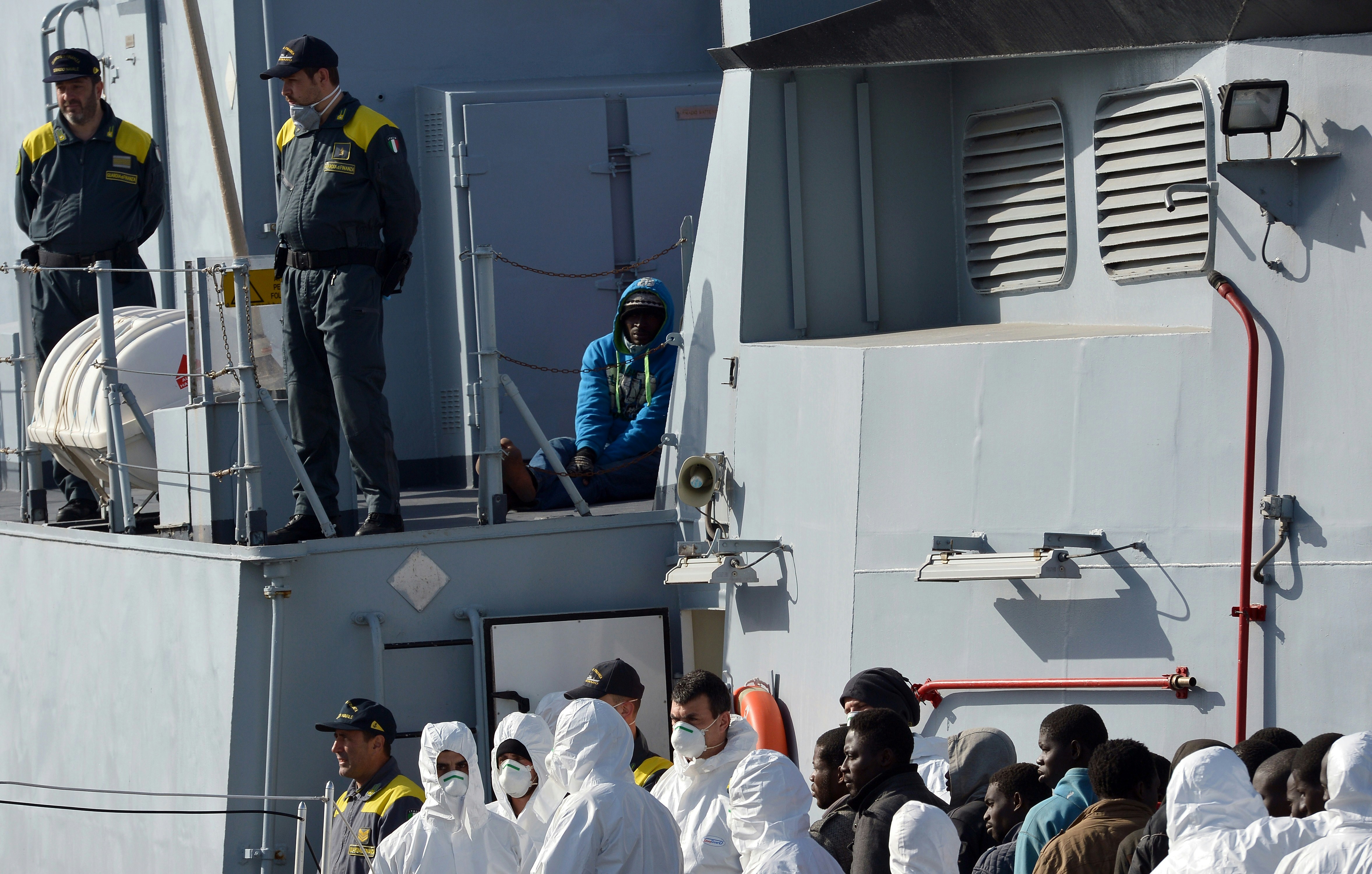
    In the international waters off the coast of Libya, Dieudonne and 91 others were rescued by a European NGO called Migrant Offshore Aid Station. They spent two days aboard MOAS’s ship before being transferred to an Italian coast guard ship, Nave Dattilo, to be taken to Europe.

    Aboard the Dattilo, coast guard officers asked Dieudonne why he had left his home in Cameroon. He remembers them showing him a photograph of the rubber boat taken from the air. “They asked me who was driving, the roles and everything,” he remembered. “Then they asked me if I could tell him how the trafficking in Libya works, and then, they said, they would give me residence documents.”

    Dieudonne said that he was reluctant to cooperate at first. He didn’t want to accuse any of his peers, but he was also concerned that he could become a suspect. After all, he had helped the driver at points throughout the voyage.

    “I thought that if I didn’t cooperate, they might hurt me,” Dieudonne said. “Not physically hurt, but they could consider me dishonest, like someone who was part of the trafficking.”

    To this day, Dieudonne says he can’t understand why Italy would punish people for fleeing poverty and political violence in West Africa. He rattled off a list of events from the last year alone: draught, famine, corruption, armed gunmen, attacks on schools. “And you try to convict someone for managing to escape that situation?”

    The coast guard ship disembarked in Vibo Valentia, a city in the Italian region of Calabria. During disembarkation, a local police officer explained to a journalist that they had arrested five people. The journalist asked how the police had identified the accused.

    “A lot has been done by the coast guard, who picked [the migrants] up two days ago and managed to spot [the alleged smugglers],” the officer explained. “Then we have witness statements and videos.”

    Cases like these, where arrests are made on the basis of photo or video evidence and statements by witnesses like Dieudonne, are common, said Gigi Modica, a judge in Sicily who has heard many immigration and asylum cases. “It’s usually the same story. They take three or four people, no more. They ask them two questions: who was driving the boat, and who was holding the compass,” Modica explained. “That’s it — they get the names and don’t care about the rest.”

    Modica was one of the first judges in Italy to acquit people charged for driving rubber boats — known as “scafisti,” or boat drivers, in Italian — on the grounds that they had been forced to do so. These “state of necessity” rulings have since become increasingly common. Modica rattled off a list of irregularities he’s seen in such cases: systemic racism, witness statements that migrants later say they didn’t make, interrogations with no translator or lawyer, and in some cases, people who report being encouraged by police to sign documents renouncing their right to apply for asylum.

    “So often these alleged smugglers — scafisti — are normal people who were compelled to pilot a boat by smugglers in Libya,” Modica said.

    Documents of over a dozen trials reviewed by The Intercept show prosecutions largely built on testimony from migrants who are promised a residence permit in exchange for their collaboration. At sea, witnesses are interviewed by the police hours after their rescue, often still in a state of shock after surviving a shipwreck.

    In many cases, identical statements, typos included, are attributed to several witnesses and copied and pasted across different police reports. Sometimes, these reports have been enough to secure decadeslong sentences. Other times, under cross-examination in court, witnesses have contradicted the statements recorded by police or denied giving any testimony at all.

    As early as 2015, attendees of the anti-mafia meetings were discussing problems with these prosecutions. In a meeting that February, Giovanni Salvi, then the prosecutor of Catania, acknowledged that smugglers often abandoned migrant boats in international waters. Still, Italian police were steaming ahead with the prosecutions of those left on board.

    These prosecutions were so important that in some cases, the Italian coast guard decided to delay rescue when boats were in distress in order to “allow for the arrival of institutional ships that can conduct arrests,” a coast guard commander explained at the meeting.

    When asked about the commander’s comments, the Italian coast guard said that “on no occasion” has the agency ever delayed a rescue operation. Delaying rescue for any reason goes against international and Italian law, and according to various human rights lawyers in Europe, could give rise to criminal liability.

    NGOs in the Crosshairs

    Italy canceled Mare Nostrum after one year, citing budget constraints and a lack of European collaboration. In its wake, the EU set up two new operations, one via Frontex and the other a military effort called Operation Sophia. These operations focused not on humanitarian rescue but on border security and people smuggling from Libya. Beginning in 2015, representatives from Frontex and Operation Sophia were included in the anti-mafia directorate meetings, where Italian prosecutors ensured that both abided by the new investigative strategy.

    Key to these investigations were photos from the rescues, like the aerial image that Dieudonne remembers the Italian coast guard showing him, which gave police another way to identify who piloted the boats and helped navigate.

    In the absence of government rescue ships, a fleet of civilian NGO vessels began taking on a large number of rescues in the international waters off the coast of Libya. These ships, while coordinated by the Italian coast guard rescue center in Rome, made evidence-gathering difficult for prosecutors and judicial police. According to the anti-mafia meeting minutes, some NGOs, including MOAS, routinely gave photos to Italian police and Frontex. Others refused, arguing that providing evidence for investigations into the people they saved would undermine their efficacy and neutrality.

    In the years following Mare Nostrum, the NGO fleet would come to account for more than one-third of all rescues in the central Mediterranean, according to estimates by Operation Sophia. A leaked status report from the operation noted that because NGOs did not collect information from rescued migrants for police, “information essential to enhance the understanding of the smuggling business model is not acquired.”

    In a subsequent anti-mafia meeting, six prosecutors echoed this concern. NGO rescues meant that police couldn’t interview migrants at sea, they said, and cases were getting thrown out for lack of evidence. A coast guard admiral explained the importance of conducting interviews just after a rescue, when “a moment of empathy has been established.”

    “It is not possible to carry out this task if the rescue intervention is carried out by ships of the NGOs,” the admiral told the group.

    The NGOs were causing problems for the DNAA strategy. At the meetings, Italian prosecutors and representatives from the coast guard, navy, and Interior Ministry discussed what they could do to rein in the humanitarian organizations. At the same time, various prosecutors were separately fixing their investigative sights on the NGOs themselves.

    In late 2016, an internal report from Frontex — later published in full by The Intercept — accused an NGO vessel of directly receiving migrants from Libyan smugglers, attributing the information to “Italian authorities.” The claim was contradicted by video evidence and the ship’s crew.

    Months later, Carmelo Zuccaro, the prosecutor of Catania, made public that he was investigating rescue NGOs. “Together with Frontex and the navy, we are trying to monitor all these NGOs that have shown that they have great financial resources,” Zuccaro told an Italian newspaper. The claim went viral in Italian and European media. “Friends of the traffickers” and “migrant taxi service” became common slurs used toward humanitarian NGOs by anti-immigration politicians and the Italian far right.

    Zuccaro would eventually walk back his claims, telling a parliamentary committee that he was working off a hypothesis at the time and had no evidence to back it up.

    In an interview with a German newspaper in February 2017, the director of Frontex, Fabrice Leggeri, refrained from explicitly criticizing the work of rescue NGOs but did say they were hampering police investigations in the Mediterranean. As aid organizations assumed a larger percentage of rescues, Leggeri said, “it is becoming more difficult for the European security authorities to find out more about the smuggling networks through interviews with migrants.”

    “That smear campaign was very, very deep,” remembered Bonino, the former foreign minister. Referring to Marco Minniti, Italy’s interior minister at the time, she added, “I was trying to push Minniti not to be so obsessed with people coming, but to make a policy of integration in Italy. But he only focused on Libya and smuggling and criminalizing NGOs with the help of prosecutors.”

    Bonino explained that the action against NGOs was part of a larger plan to change European policy in the central Mediterranean. The first step was the shift away from humanitarian rescue and toward border security and smuggling. The second step “was blaming the NGOs or arresting them, a sort of dirty campaign against them,” she said. “The results of which after so many years have been no convictions, no penalties, no trials.”

    Finally, the third step was to build a new coast guard in Libya to do what the Europeans couldn’t, per international law: intercept people at sea and bring them back to Libya, the country from which they had just fled.

    At first, leaders at Frontex were cautious. “From Frontex’s point of view, we look at Libya with concern; there is no stable state there,” Leggeri said in the 2017 interview. “We are now helping to train 60 officers for a possible future Libyan coast guard. But this is at best a beginning.”

    Bonino saw this effort differently. “They started providing support for their so-called coast guard,” she said, “which were the same traffickers changing coats.”
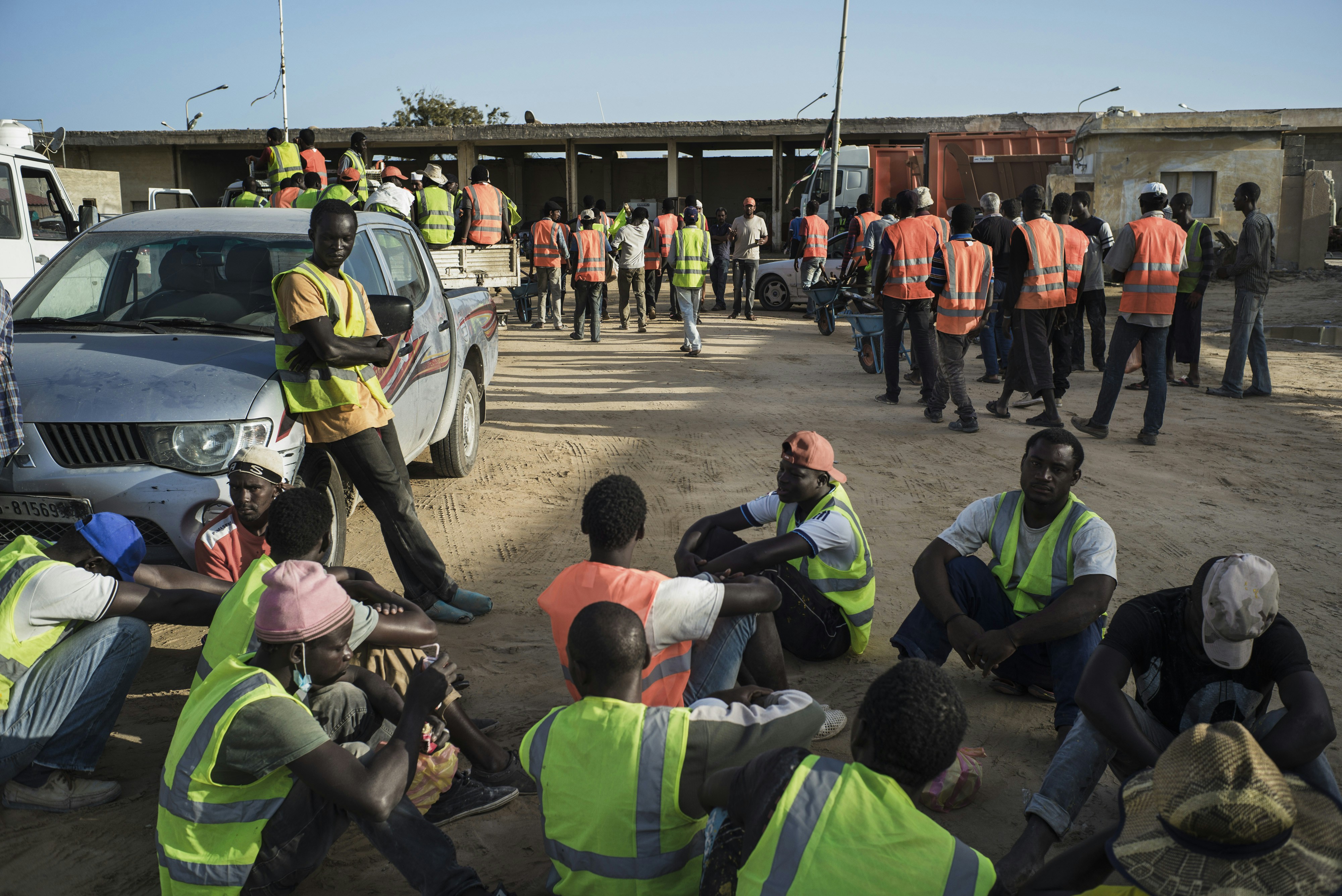
    Rescued migrants disembarking from a Libyan coast guard ship in the town of Khoms, a town 120 kilometres (75 miles) east of the capital on October 1, 2019.

    Same Uniforms, Same Ships

    Safe on land in Italy, Dieudonne was never called to testify in court. He hopes that none of his peers ended up in prison but said he would gladly testify against the traffickers if called. Aboard the coast guard ship, he remembers, “I gave the police contact information for the traffickers, I gave them names.”

    The smuggling operations in Libya happened out in the open, but Italian police could only go as far as international waters. Leaked documents from Operation Sophia describe years of efforts by European officials to get Libyan police to arrest smugglers. Behind closed doors, top Italian and EU officials admitted that these same smugglers were intertwined with the new Libyan coast guard that Europe was creating and that working with them would likely go against international law.

    As early as 2015, multiple officials at the anti-mafia meetings noted that some smugglers were uncomfortably close to members of the Libyan government. “Militias use the same uniforms and the same ships as the Libyan coast guard that the Italian navy itself is training,” Rear Adm. Enrico Credendino, then in charge of Operation Sophia, said in 2017. The head of the Libyan coast guard and the Libyan minister of defense, both allies of the Italian government, Credendino added, “have close relationships with some militia bosses.”

    One of the Libyan coast guard officers playing both sides was Abd al-Rahman Milad, also known as Bija. In 2019, the Italian newspaper Avvenire revealed that Bija participated in a May 2017 meeting in Sicily, alongside Italian border police and intelligence officials, that was aimed at stemming migration from Libya. A month later, he was condemned by the U.N. Security Council for his role as a top member of a powerful trafficking militia in the coastal town of Zawiya, and for, as the U.N. put it, “sinking migrant boats using firearms.”

    According to leaked documents from Operation Sophia, coast guard officers under Bija’s command were trained by the EU between 2016 and 2018.

    While the Italian government was prosecuting supposed smugglers in Italy, they were also working with people they knew to be smugglers in Libya. Minniti, Italy’s then-interior minister, justified the deals his government was making in Libya by saying that the prospect of mass migration from Africa made him “fear for the well-being of Italian democracy.”

    In one of the 2017 anti-mafia meetings, a representative of the Interior Ministry, Vittorio Pisani, outlined in clear terms a plan that provided for the direct coordination of the new Libyan coast guard. They would create “an operation room in Libya for the exchange of information with the Interior Ministry,” Pisani explained, “mainly on the position of NGO ships and their rescue operations, in order to employ the Libyan coast guard in its national waters.”

    And with that, the third step of the plan was set in motion. At the end of the meeting, Roberti suggested that the group invite representatives from the Libyan police to their next meeting. In an interview with The Intercept, Roberti confirmed that Libyan representatives attended at least two anti-mafia meetings and that he himself met Bija at a meeting in Libya, one month after the U.N. Security Council report was published. The following year, the Security Council committee on Libya sanctioned Bija, freezing his assets and banning him from international travel.

    “We needed to have the participation of Libyan institutions. But they did nothing, because they were taking money from the traffickers,” Roberti told us from the cafe in Naples. “They themselves were the traffickers.”
    A Place of Safety

    Roberti retired from the anti-mafia directorate in 2017. He said that under his leadership, the organization was able to create a basis for handling migration throughout Europe. Still, Roberti admits that his expansion of the DNAA into migration issues has had mixed results. Like his trip to Germany in the ’90s with Giovanni Falcone, Roberti said the anti-mafia strategy faltered because of a lack of collaboration: with the NGOs, with other European governments, and with Libya.

    “On a European level, the cooperation does not work,” Roberti said. Regarding Libya, he added, “We tried — I believe it was right, the agreements [the government] made. But it turned out to be a failure in the end.”

    The DNAA has since expanded its operations. Between 2017 and 2019, the Italian government passed two bills that put the anti-mafia directorate in charge of virtually all illegal immigration matters. Since 2017, five Sicilian prosecutors, all of whom attended at least one anti-mafia coordination meeting, have initiated 15 separate legal proceedings against humanitarian NGO workers. So far there have been no convictions: Three cases have been thrown out in court, and the rest are ongoing.

    Earlier this month, news broke that Sicilian prosecutors had wiretapped journalists and human rights lawyers as part of one of these investigations, listening in on legally protected conversations with sources and clients. The Italian justice ministry has opened an investigation into the incident, which could amount to criminal behavior, according to Italian legal experts. The prosecutor who approved the wiretaps attended at least one DNAA coordination meeting, where investigations against NGOs were discussed at length.

    As the DNAA has extended its reach, key actors from the anti-mafia coordination meetings have risen through the ranks of Italian and European institutions. One prosecutor, Federico Cafiero de Raho, now runs the anti-mafia directorate. Salvi, the former prosecutor of Catania, is the equivalent of Italy’s attorney general. Pisani, the former Interior Ministry representative, is deputy head of the Italian intelligence services. And Roberti is a member of the European Parliament.

    Cafiero de Raho stands by the investigations and arrests that the anti-mafia directorate has made over the years. He said the coordination meetings were an essential tool for prosecutors and police during difficult times.

    When asked about his specific comments during the meetings — particularly statements that humanitarian NGOs needed to be regulated and multiple admissions that members of the new Libyan coast guard were involved in smuggling activities — Cafiero de Raho said that his remarks should be placed in context, a time when Italy and the EU were working to build a coast guard in a part of Libya that was largely ruled by local militias. He said his ultimate goal was what, in the DNAA coordination meetings, he called the “extrajudicial solution”: attempts to prove the existence of crimes against humanity in Libya so that “the United Nation sends troops to Libya to dismantle migrants camps set up by traffickers … and retake control of that territory.”

    A spokesperson for the EU’s foreign policy arm, which ran Operation Sophia, refused to directly address evidence that leaders of the European military operation knew that parts of the new Libyan coast guard were also involved in smuggling activities, only noting that Bija himself wasn’t trained by the EU. A Frontex spokesperson stated that the agency “was not involved in the selection of officers to be trained.”

    In 2019, the European migration strategy changed again. Now, the vast majority of departures are intercepted by the Libyan coast guard and brought back to Libya. In March of that year, Operation Sophia removed all of its ships from the rescue area and has since focused on using aerial patrols to direct and coordinate the Libyan coast guard. Human rights lawyers in Europe have filed six legal actions against Italy and the EU as a result, calling the practice refoulement by proxy: facilitating the return of migrants to dangerous circumstances in violation of international law.

    Indeed, throughout four years of coordination meetings, Italy and the EU were admitting privately that returning people to Libya would be illegal. “Fundamental human rights violations in Libya make it impossible to push migrants back to the Libyan coast,” Pisani explained in 2015. Two years later, he outlined the beginnings of a plan that would do exactly that.

    The Result of Mere Chance

    Dieudonne knows he was lucky. The line that separates suspect and victim can be entirely up to police officers’ first impressions in the minutes or hours following a rescue. According to police reports used in prosecutions, physical attributes like having “a clearer skin tone” or behavior aboard the ship, including scrutinizing police movements “with strange interest,” were enough to rouse suspicion.

    In a 2019 ruling that acquitted seven alleged smugglers after three years of pretrial detention, judges wrote that “the selection of the suspects on one side, and the witnesses on the other, with the only exception of the driver, has almost been the result of mere chance.”

    Carrying out work for their Libyan captors has cost other migrants in Italy lengthy prison sentences. In September 2019, a 22-year-old Guinean nicknamed Suarez was arrested upon his arrival to Italy. Four witnesses told police he had collaborated with prison guards in Zawiya, at the immigrant detention center managed by the infamous Bija.

    “Suarez was also a prisoner, who then took on a job,” one of the witnesses told the court. Handing out meals or taking care of security is what those who can’t afford to pay their ransom often do in order to get out, explained another. “Unfortunately, you would have to be there to understand the situation,” the first witness said. Suarez was sentenced to 20 years in prison, recently reduced to 12 years on appeal.

    Dieudonne remembered his journey at sea vividly, but with surprising cool. When the boat began taking on water, he tried to help. “One must give help where it is needed.” At his office in Bari, Dieudonne bent over and moved his arms in a low scooping motion, like he was bailing water out of a boat.

    “Should they condemn me too?” he asked. He finds it ironic that it was the Libyans who eventually arrested Bija on human trafficking charges this past October. The Italians and Europeans, he said with a laugh, were too busy working with the corrupt coast guard commander. (In April, Bija was released from prison after a Libyan court absolved him of all charges. He was promoted within the coast guard and put back on the job.)

    Dieudonne thinks often about the people he identified aboard the coast guard ship in the middle of the sea. “I told the police the truth. But if that collaboration ends with the conviction of an innocent person, it’s not good,” he said. “Because I know that person did nothing. On the contrary, he saved our lives by driving that raft.”
    https://theintercept.com/2021/04/30/italy-anti-mafia-migrant-rescue-smuggling

    #Méditerranée #Italie #Libye #ONG #criminalisation_de_la_solidarité #solidarité #secours #mer_Méditerranée #asile #migrations #réfugiés #violence #passeurs #Méditerranée_centrale #anti-mafia #anti-terrorisme #Direzione_nazionale_antimafia_e_antiterrorismo #DNAA #Frontex #Franco_Roberti #justice #politique #Zuwara #torture #viol #Mare_Nostrum #Europol #eaux_internationales #droit_de_la_mer #droit_maritime #juridiction_italienne #arrestations #Gigi_Modica #scafista #scafisti #état_de_nécessité #Giovanni_Salvi #NGO #Operation_Sophia #MOAS #DNA #Carmelo_Zuccaro #Zuccaro #Fabrice_Leggeri #Leggeri #Marco_Minniti #Minniti #campagne #gardes-côtes_libyens #milices #Enrico_Credendino #Abd_al-Rahman_Milad #Bija ##Abdurhaman_al-Milad #Al_Bija #Zawiya #Vittorio_Pisani #Federico_Cafiero_de_Raho #solution_extrajudiciaire #pull-back #refoulement_by_proxy #refoulement #push-back #Suarez

    ping @karine4 @isskein @rhoumour