• Lost in Securitization: Migration, Race, and Death at Europe’s Eastern Border

    This year marks the fifth anniversary of the start of the ‘border crisis’ in Poland’s eastern borderlands and, consequently, the eastern border of the European Union. Kasia Narkowicz examines this crisis within the broader context of the political economy of migration and traces its roots to various forms of intersecting racialized violence.

    *

    It is still cold in the early morning hours when we leave our accommodations in #Gruszki, a village in eastern Poland, to search for bison. We are in the #Białowieża Forest, about ten kilometers from the border wall that Poland’s government built in 2021 at a cost of over 350 million euros. The wall was constructed to prevent people from traveling into the EU from Belarus via Europe’s last primeval forest along the border. I am here as part of an international academic seminar with colleagues and comrades who work on borders globally. No bison or migrants were spotted in the borderlands this time.

    Until recently, people crossing into Poland from Belarus would send location pins daily to #Grupa_Granica (Border Group), a conglomerate of organizations and activists supporting migrants. In the forest, they would be met by activists who would provide them with hot soup, a change of clothes, a power bank, and a shared sense of despair over the ever-growing securitization of the border.

    The forest seems deserted right now, which may be because it’s still too cold. People who are on the move often get stuck here, sometimes for months. In the winter, the temperatures plummet to double-digits below zero making conditions for survival challenging. This is worsened by the frequency and scale of pushbacks taking place at the borders and the fact that a year ago Poland’s government suspended the right for asylum.

    It is more likely, however, that the absence of people on the move today is a consequence of the deadly border wall. They have most likely rerouted their journeys. Once a much safer route into Europe than crossing the Mediterranean by boat, the Belarus-Poland border has become a poster child for border imperialism.

    According to Researchers on the Border, most people on the move could have been assisted into Poland through asylum integration with the money spent on building the border wall. Instead, the number of pushbacks is much higher than anticipated. Many people are literally thrown back and forth between Poland and Belarus as if they were beach balls.

    The 5.5-meter-high steel wall is topped with concertina wire, which is responsible for the most common injuries to people on the move. The borderland is made up of difficult terrain with swamps, rivers, and fallen-down trees. One wrong step, and someone unfamiliar with the area could get stuck in a swamp.

    Some people die in this way, with their bodies being pulled out of swamps and rivers months or years later. They are often unrecognizable and sometimes unidentifiable. Of the more than 100 documented migrants who have died en route in the forest while attempting to reach Poland, some died from injuries caused directly by the border wall. One of them was Mohammad from Syria.
    April 2023, Poland-Belarus border

    One night in April 2023, Mohammad fell from a wall along the border between Poland and Belarus, which stands five and a half meters tall. He had traveled from Lebanon, where he had been displaced by the Syrian war. Mohammad was a 58-year-old Syrian from Daraa, a key location for the civil uprising that preceded the war, as well as an area devastated by drought.

    He most likely flew to Minsk and was then subjected to what is consistently referred to as the ‘hybrid war’ waged by Alexander Lukashenko’s regime against Europe. Mohammed climbed up the wall while attempting to cross the border between Poland and Belarus, but he got stuck in the barbed wire. He then fell off very close to the village of Stare Masiewo. He had internal injuries from the fall, a broken leg, and a shredded leg from the concertina.

    His case is not extraordinary. Like many millions before him, he left his region in search of a more bearable life and perhaps to reunite with his daughter, who was studying abroad. They reunited when she came to the hospital in Poland where he was already in a coma, dying shortly after. He became the 43rd victim of the border, joining the sad ranks of over 100 known migrants who have died trying to cross into Poland. Several hundred more are still missing.

    Few migrants die like Mohammed, in a hospital while receiving care. Most die alone in the forest. This was the case for 28-year-old Ethiopian woman Mahlet Kassa, whose body was found by Piotr Czaban, a journalist who relentlessly documents the violence on the Poland-Belarus border. Mahlet’s body was found in the forest in February 2023. While she was still alive, her travel companions shared her exact GPS location with the border guards in hopes that they would come to her aid. Instead of receiving help, the group got pushed back into Belarus.

    Many, like Mahlet, are young people. There are also children crossing the border, several hundred every year, most of them unaccompanied. The youngest victim of the Poland-Belarus border was Halikari Dhaker, a 24-week-old Kurdish baby who died stillborn alongside his mother. Halikari is buried in the Muslim cemetery in the nearby village of Bohoniki.

    Mikołaj Grynberg’s book titled “Jezus umarł w Polsce” (“Jesus died in Poland”) captures the early days of the most recent and, for Poland, unprecedented inflow of migrants traveling from outside Europe seeking entry into the EU through the Poland-Belarus border. Similar to Agnieszka Holland’s black-and-white film “Green Border,” Grynberg reads the current ‘migrant crisis’ on the eastern border through the lens of history.

    More specifically, he references the anti-Semitic violence that occurred in these very borderlands some eight decades earlier, when Jewish communities made up the majority of the inhabitants in several villages. Grynberg and Holland, alongside numerous scholars, connect the violence of today’s migration politics on the Poland-Belarus border to its dark history.
    Shifting migration routes in Central and Eastern Europe

    Over the past two decades, Central and Eastern Europe has become a region of emigration, with its citizens predominantly filling low-paying and insecure positions across Western Europe, e.g. as care workers in Germany or fruit pickers in the UK. These mobile workers kept Europe running, even during the global pandemic when their work posed additional risks alongside already fragile working conditions.

    Many work in exploitative conditions that, as scholar Polina Manolova argues, make a “dignified life impossible” in a neoliberal system that feeds on their degradation. This deepens the East-West divide rather than collapsing it, as the entrenched idea persists that “someone has to pick German strawberries” – and that someone is Eastern European. This lays bare the continuity of Eastern European Othering.

    Alongside these outward migration processes, Central and Eastern Europe is now receiving migrants from outside Europe on an unprecedented scale. Thus, the region is becoming one of both emigration and immigration, and in both contexts, migration is racialized. This shift has unfolded amid a growing nod towards authoritarian populist politics. After losing the 2023 elections, the far-right Law and Justice Party (PiS), which ran on an anti-immigrant agenda, was replaced by a new center-right government led by Donald Tusk. This new government has ramped up racist anti-immigrant rhetoric, openly warning of a ‘Muslim invasion’ through the Belarus border.

    From 2021 until recently, the EU’s eastern land border experienced unprecedented movement, with an increase in irregular border crossings exceeding tenfold compared to 2020. This is the same border that people fleeing Russia’s full-scale invasion of Ukraine used. Yet, their refugee status was not questioned, and their journeys were not criminalized when they were perceived as ‘white Eastern Europeans.’

    The idea that Central and Eastern Europe is somehow exempt from scrutiny regarding its role in global racial regimes because it never colonized other regions has long been challenged. The region’s involvement in colonialism and global racial hierarchies has been a key topic in postcolonial and decolonial Eastern European scholarship.

    This year marks the fifth anniversary of the beginning of the ‘border crisis’ in Poland’s eastern borderlands, and, by extension, the eastern border of the European Union. Although people have stopped crossing the Poland-Belarus border for now, the border wall and drones continue to hover loudly through the Białowieża Forest.

    This is indeed a crisis, but not one of people on the move. Rather, it is a crisis of overlapping and intersecting issues – white supremacy, border imperialism, and climate change – that entangle all species, human and nonhuman alike, in a web that makes it difficult to understand how to be human.

    https://berlinergazette.de/lost-in-securitization-migration-race-and-death-at-europes-eastern-b
    #migrations #réfugiés #frontières #border_deaths #mourir_aux_frontières #morts_aux_frontières #forêts #Pologne #Biélorussie #solidarité #push-backs #refoulements #violence #murs #barrière_frontalière #borderland #guerre_hybride #Europe_de_l'Est #Bialowieza

    ping @reka

    • Jezus umarł w Polsce

      Tu była cisza spokój, ptaszki śpiewały, aż któregoś dnia zamiast ptaszków usłyszeliśmy dźwięki helikopterów. Potem zaczęło się znajdować buty i ubrania. Potem ludzi.

      Nikt z bohaterek i bohaterów tej książki nie wiedział, co ich czeka, kiedy pierwszy raz zdecydowali się pomóc uchodźcom. Nie wiedzieli, że będą musieli ukrywać się, nie tylko przed służbami państwa, ale również przed swoimi sąsiadami. Że pomaganie nada ich życiu największy sens, ale też odbierze spokój, życie rodzinne, czasami pracę, wypali w nich nieusuwalne emocjonalne piętno. Tymczasem państwo polskie wciąż nie umie zapobiec kryzysowi humanitarnemu na granicy białoruskiej, bo wybiera rozwiązania siłowe zamiast sięgać po systemowe. Konsekwencją tego są dziesiątki ofiar, o których już dzisiaj wiemy i setki, o których dowiemy się w przyszłości.

      Ludzie, których głosy wybrzmiewają w tej książce, wzięli odpowiedzialność za tę sferę, która została porzucona przez państwo. Dzisiaj są obiektami prześladowań, kiedyś będą kolejnym w historii Polski listkiem figowym. Wyznawcy boga, honoru i ojczyzny ich właśnie będą niedługo nosić na sztandarach. By zapomnieć o hańbie polskich służb, im właśnie będą budować pomniki, ale znowu będzie za późno.

      https://wydawnictwoagora.pl/jezus-umarl-w-polsce

      #livre

  • The EU donated equipment to the BiH Border Police to combat migrant smuggling, here’s what it includes

    The European Union, Germany, Italy and the Netherlands delivered specialized equipment to the Border Police of Bosnia and Herzegovina with the aim of strengthening the operational readiness of officers and improving border management capacity.

    The handover included a package of equipment with specialized magnifiers for viewing documents, heartbeat detectors for finding people in hidden compartments of trucks and other vehicles, in situations that often involve inhumane conditions and life-threatening risks, and a patrol boat for responding to river incidents, including search and rescue operations.

    This handover is part of a wider package of assistance for capacity building that combines specialized equipment and training, with a total investment of around 200,000 euros, under the EU4FAST project.

    “Efficient border management today requires modern technology, skilled personnel and strong institutions, and this support is designed to support all three aspects. This handover is an example of the practical and concrete support that the European Union, together with its member states, acting as ‘Team Europe’, provides in Bosnia and Herzegovina in facing the challenges of migrant smuggling, human trafficking and border management as a whole. Strengthening the capacity of the Border Police also directly helps Bosnia and Herzegovina in harmonizing with EU standards, especially within the framework of the chapter 23 and 24 of the EU accession process,” said Ambassador Luigi Soreca, Head of the EU Delegation and EU Special Representative in Bosnia and Herzegovina.

    He added that the EU remains committed to supporting Bosnia and Herzegovina on its European path, through reforms that strengthen security, the rule of law and regional cooperation.

    He also pointed out that it is important for Bosnia and Herzegovina to update its plans for unforeseen situations and be prepared in case of an increased influx of irregular migrants.

    Director of the BiH Border Police, Mirko Kuprešaković, emphasized the importance of the donated boat for the work of officers in the field.

    “Modern equipment enables a faster, more efficient and safer reaction of our officers to all the challenges they continuously face in their daily work. This support comes at the right moment, when security challenges are more and more complex, and the need for modernization and strengthening of institutions’ capacities is more and more pronounced. I want to express my sincere gratitude to the European Union, the embassies of the Slovak Republic of Germany, Italy, France and the Netherlands, as well as to all the partners who participated in the implementation of the EU4FAST project,” said Kuprešaković.

    He particularly emphasized Frontex’s significant support to the BiH Border Police, which contributes to strengthening operational capacities and work efficiency.

    German Ambassador to BiH Alfred Grannas said that Germany is proud to contribute to this joint effort, combining national expertise with European resources to achieve concrete and sustainable results within the Team Europe approach.

    “The engagement of GIZ and the German Federal Police particularly reflects Germany’s commitment to sharing practical experience and operational knowledge with partner countries from the Western Balkans region, especially Bosnia and Herzegovina. Last week we had a good example of what this means in practice: experts from the German Federal Police conducted specialized training for Border Police officers in BiH. The main focus was on document review and the use of heart rate detectors, directly linking the equipment to operational skills. Next week, the second training will be repeated for group of interns and I am delighted that we have established this practical and successful collaboration”, said Grannas.

    Oliver Janser, project manager of EU4FAST, said that today’s handover is not just a delivery of equipment.

    “It reflects a sustainable partnership built over years of cooperation, trust and shared responsibility. What we are witnessing today is the result of continuous joint efforts to strengthen capacity and respond to changing challenges at the border. Our cooperation is strategic and forward-looking. We build on what works, learn from experience and invest where it makes a real difference. Each contribution is designed to strengthen previous efforts, ensuring continuity, coherence and measurable results,” said Janser.

    Support is provided within the framework of the EU4FAST project, a regional initiative that supports the fight against human trafficking and migrant smuggling across the Western Balkans worth more than 50 million euros.

    The project is financed by the European Union, the Federal Ministry for Economic Cooperation and Development (BMZ) of Germany, the Ministry of the Interior of Italy and the Ministry of Foreign Affairs of the Netherlands. It is implemented by a consortium of implementation partners, led by GIZ, he writes Klix.

    https://bosniatoday.ba/the-eu-donated-equipment-to-the-bih-border-police-to-combat-migrant-smug
    #externalisation #migrations #réfugiés #frontières #contrôles_frontaliers #Bosnie-Herzégovine #EU #Allemagne #Italie #Pays-Bas #équipement #militarisation_des_frontières #EU4FAST #border_management #technologie #Team_Europe #France #Slovaquie #Frontex #GIZ #développement #GTZ #Balkans #route_des_Balkans #Oliver_Janser

  • People dead and missing along migration routes to Europe from 2014 to 2024

    The map shows the locations (latitude and longitude) where 2880 incidents caused the death and disappearance of 36693 people from January 2014 to December 2024.
    The size of the circle indicates how many people died and are missing in each incident. By clicking on the icons you can see the date of the incident, the exact number of people involved and cause of death.
    The four different colours identify the four main migration routes to Europe:

    - Western African Atlantic Route (red);
    - Western Mediterranean Route (green)
    - Central Mediterranean Route (orange);
    - Eastern Mediterranean Route (blue).

    https://medium.com/peopleonthemove/people-dead-and-missing-along-migration-routes-to-europe-from-2014-to-2024-d
    #visualisation #cartographie #cartes #frontières #migrations #morts_aux_frontières #border_deaths #Silvia_Costantini #infographie
    ping @reka @fil

  • How ‘stopping the boats’ kills: A digital counter-forensic investigation of the human cost of the UK’s externalised border in the Channel

    The report demonstrates how these border policing practices, which authorities claim ‘save lives’ by preventing crossing attempts, have amplified the risks facing people compelled to make illegalised journeys to reach the UK. It also shows that British and French officials knew, or ought to have known, the deadly consequences of their policies.

    Decades of increased security and policing at the UK’s externalised border have not ended illegalised journeys and, despite being a political priority since 2019, small boat journeys have not stopped. As this report shows, greater enforcement has not only failed to achieve its stated objective, but led to more deaths in the Channel. Whether this reality can be recognised by policy-makers and prompt a fundamental reassessment of UK border externalisation remains an open question. For now, as the next phase of bilateral cooperation for 2026-29 is set to begin, the UK government appears determined to continue using large payments to leverage the French to adopt ever riskier tactics to police its border, regardless of the human costs.

    The entangled effects of three border policing practices behind these mechanisms are examined in detail in the report:

    1. ‘Upstream’ anti-smuggling measures and supply-chain disruption: International cooperation has reduced the availability of dinghies and other materials needed for small boat journeys, leading facilitators to source larger and lower quality inflatables which are increasingly overcrowded. Anti-smuggling measures have also reduced the opportunities for under-resourced groups to organise their own journeys—strengthening the hold of professionalised smugglers on the market—and fuelled competition for places onboard.
    2. Expanded aerial surveillance: Although framed primarily in terms of supporting search and rescue operations, analysis of flight tracks and state documentation showed most aerial surveillance of the Channel is focused on coordinating police patrols on the ground, and gathering data and intelligence for prosecutions. By enabling faster detection and police intervention, surveillance has contributed to overcrowding and the advent of new dangerous tactics for small boat departures.
    3. Increased police activity on the French coast: The ever larger numbers of police on the French coast, funded by the UK, has altered the geography of small boat departures, and driven the adoption of the ‘taxi boats’ which present greater risks for travellers who must board dinghies already afloat. Police’s violent tactics, especially the use of riot control weapons such as tear-gas, stun grenades, and rubber bullets, have also directly endangered travellers and led to panics, crushes, and people drowning in shallow waters.

    https://www.borderforensics.org/investigations/channel
    #Manche #UK #Angleterre #France #migrations #réfugiés #décès #mourir_aux_frontières #Border_Forensics #stop_the_boat

    • Le renforcement des contrôles policiers rend la traversée de la Manche plus mortelle, selon des chercheurs

      Dans une étude publiée la semaine dernière, des chercheurs britanniques et l’organisation Border Forensics ont disséqué la politique migratoire menée à la frontière entre le Royaume-Uni et la France ces dernières années. Selon eux, l’augmentation des décès est directement liée au renforcement des contrôles.

      Pendant un an, des chercheurs britanniques du Centre for Sociodigital Futures et de Border Forensics – une organisation qui enquête sur les frontières à l’aide de cartographes – ont étudié les différents moyens de surveillance à la frontière franco-britannique déployé ces dernières années. Et le constat est sans appel : l’augmentation des décès est directement liée au renforcement des contrôles.

      Pour arriver à ce constat, les enquêteurs ont mis en relation les données géographiques des incidents dans la Manche, les données de vol des avions de surveillance, des témoignages recueillis sur le terrain ou encore les données compilées par les associations du littoral.

      Ainsi, entre 1999 et 2026, au moins 525 décès de migrants ont été recensés à la frontière britannique avec l’Europe. Parmi ces décès, 197 personnes sont mortes ou ont disparu dans la Manche, dont 129 – près d’un quart de tous les décès enregistrés à la frontière extérieure du Royaume-Uni – entre 2023 et fin 2025.

      Selon cette « contre-expertise », l’augmentation des morts dans la Manche est directement liée aux accords franco-britanniques conclus pour « stopper les bateaux » de migrants.

      Les chercheurs notent que depuis 2020, au fur et à mesure des accords, les financements alloués au gouvernement français pour endiguer les traversées en petites embarcations ont explosé, dépassant les 620,3 millions de livres sterling. Mais « les centaines de millions de livres sterling investies dans le renforcement des frontières françaises n’ont pas enrayé l’immigration clandestine vers le Royaume-Uni ».

      Et d’ajouter : « Au contraire, elles l’ont déplacée des ’routes canalisées’ utilisées ces dernières décennies – camions, trains et ferries – vers la haute mer, où les dangers encourus par les voyageurs se sont accrus à chaque accord conclu ».

      Un phénomène déjà largement documenté par des ONG et médias mais il s’agit ici de la première enquête de chercheurs reliant « de manière exhaustive » les données géospatiales relatives aux traversées de « small boats », aux décès et aux pratiques de surveillance des frontières dans le nord de la France, estime l’un des auteurs à Mediapart et The Independant, qui révèlent ce rapport.

      De nombreux témoignages recueillis par InfoMigrants ces dernières années démontrent aussi que la militarisation de la frontière entre la France et le Royaume-Uni pousse les exilés a emprunté des itinéraires toujours plus dangereux.
      « Un changement de mentalité au sein des forces de l’ordre françaises »

      Les chercheurs signalent même que 2023, année de la « déclaration conjointe des dirigeants » - un accord migratoire conclut entre les deux pays actuellement en cours de renégociation - , a connu « une augmentation spectaculaire du nombre de décès dans la Manche », notamment car « un changement de mentalité au sein des forces de l’ordre françaises » s’est engendrée.

      Ce changement s’explique donc pas le renforcement des contrôles, selon les chercheurs, qui distinguent trois domaines : les interventions concernant le commerce de matériel nautique, la surveillance terrestre et la surveillance maritime. Ainsi, le rapport précise que « prises ensemble, toutes ces pratiques de surveillance des frontières (…) ont démontré que les politiques étatiques visant à empêcher les traversées en petites embarcations étaient un facteur déterminant de l’augmentation du nombre de décès parmi les migrants dans la Manche ».

      Selon le rapport, les opérations contre les chaines d’approvisionnement ont un impact sur le nombre de canots pneumatiques et pousse les migrants à recourir à du matériel de « qualité inférieure » car « les matériaux habituels sont indisponibles ». Et comme la diminution du nombre d’embarcations « ne réduit pas la demande globale de traversées mais accroît la demande par rapport à l’offre », le « nombre de personnes par canot a augmenté ». Un phénomène qui n’a « cessé d’augmenter d’année en année ».

      Ensuite, les chercheurs pointent l’augmentation des effectifs de police sur le littoral. De 45 officiers en 2019 réparti dans la zone de Calais, ce chiffre est passé à 1 200 aujourd’hui et couvre toute la côte de Dunkerque à la baie de Somme.

      Et les policiers ont des méthodes de plus en plus offensives. Des opérations durant lesquelles des policiers ont lacéré des embarcations ont été recensées. Et depuis peu, les autorités françaises ont expérimenté un nouveau dispositif pour empêcher les départs de canots de migrants dans la Manche : l’interception des « taxi-boats » en mer.
      L’embarquement, « moment le plus mortel du voyage »

      Ainsi, cette surveillance policière accrue « contribue directement à réduire le nombre total d’embarcations disponibles les jours de traversée » et conduit les passeurs « à adopter de nouvelles tactiques » toujours plus dangereuses comme les « taxi-boats », note le document.

      Par exemple, de plus en plus de départs depuis la Belgique ont été recensés ces dernières semaines, augmentant la durée en mer et ainsi les risques encourus.

      Tous ces contrôles ont fait de la traversée de la Manche « un itinéraire de plus en plus dangereux » commente le rapport qui, dans une cartographie recensant les incidents en mer, démontre que les décès ont de plus en plus lieu au niveau des côtes françaises.

      L’embarquement « est devenu le moment le plus mortel du voyage ». C’est même à ce moment précis, par écrasement dû à la violence et la précipitation de la montée dans le bateau, que sont décédés certains migrants.
      Les autorités françaises rappellent la responsabilité des passeurs dans les décès enregistrés

      La surpopulation des embarcations entraînent aussi des incidents au bout de seulement quelques heures de navigation, averti le rapport, citant l’exemple du 12 juillet 2024, lorsqu’un canot pneumatique a fait naufrage près du Cap Gris-Nez « une heure seulement après son départ ». « Le nombre important de personnes à bord a fait que, malgré le fait que le navire de sauvetage français ait constaté le dégonflement du flotteur et la chute de personnes à l’eau, quatre personnes se sont noyées et quatre autres ont disparu avant que 56 personnes ne puissent être secourues », rappelle l’enquête.

      En conclusion, les experts estiment que les autorités ne tiennent pas compte de la détermination des exilés et « des raisons qui poussent tant de personnes à tenter de monter de force à bord de canots pneumatiques ». Et, ce faisant, « occultent les effets des politiques anti-trafic, certes ’efficaces’, mais malavisées ».

      Du côté des autorités françaises, on rappelle que les trafiquants d’êtres humains ont aussi une grande part de responsabilité dans le bilan des décès. Ce sont les passeurs qui surchargent les canots - dont l’approvisionnement est compliqué par les démantèlements des filières. Les risques d’affaissement des embarcations sont donc démultipliés. « Ils jouent avec les limites », dénonçait en 2024 à InfoMigrants un porte-parole de la préfecture maritime de la Manche et de la mer du Nord (Premar). « Je rappelle qu’on peut couler en quelques secondes si on ne sait pas nager ». Même près du rivage.

      Interrogés par InfoMigrants fin 2025 suite à la signature de l’accord « one in one out », de nombreux migrants avaient eux fait part de leur détermination à rejoindre l’Angleterre, malgré les accords et durcissements de la politique de chaque côte de la frontière. « En France, je n’ai nulle part où aller alors je n’ai pas d’autre choix que de tenter ma chance au Royaume-Uni », racontait à notre rédaction Ahmed, un Soudanais de 26 ans dont la demande d’asile a été refusée en France. « Peu importe, je vais quand même continuer mon chemin. Je suis venu d’Afrique, j’ai traversé le désert, la mer Méditerranée… J’ai fait trop de route pour arrêter maintenant et avoir peur d’un accord », témoignait de son côté Khaled, un Soudanais de 18 ans.

      https://www.infomigrants.net/fr/post/70616/le-renforcement-des-controles-policiers-rend-la-traversee-de-la-manche

  • #Lausanne : #violences_policières, « #discrimination structurelle » et question d’un examen indépendant

    La révélation de l’existence de groupes de discussion racistes au sein de la police municipale de Lausanne a relancé un débat que les personnes concernées et la société civile mènent depuis des années à la suite de plusieurs décès lors d’interventions policières, contre le profilage racial, la violence policière et la discrimination structurelle. Alors que les autorités municipales de Lausanne parlent désormais elles-mêmes d’un « problème structurel », une question fondamentale se pose pour les droits humains : les procédures juridiques existantes sont-elles réellement adaptées pour détecter et sanctionner efficacement la discrimination structurelle ?

    En août 2025 une procédure pénale révèle que des membres de la police municipale de Lausanne ont partagé pendant des années des contenus racistes, sexistes et antisémites dans des groupes WhatsApp. Le syndic de Lausanne, Grégoire Junod (PS), a réagi en parlant d’un « problème de discrimination systémique » au sein de la police. La ville a alors commandé une enquête externe. Le rapport publié en février 2026 a diagnostiqué des déficits structurels dans la direction, le contrôle interne et la culture organisationnelle de la police municipale de Lausanne (PML) et a qualifié la situation de « crise majeure ».

    Ces révélations ne constituent toutefois pas un événement isolé. Elles s’inscrivent dans le contexte d’une critique menée publiquement depuis des années contre les violences policières à caractère raciste dans le canton de Vaud. Les personnes concernées, leurs proches, la société civile ainsi que des chercheur·euse·x·s soulignent depuis longtemps que des préjugés racistes influencent l’action policière et que la violence grave et parfois mortelle exercée par la police ne doit pas être considérée comme la manifestation de simples cas isolés.

    Lorsque les autorités parlent aujourd’hui d’un problème structurel, une question fondamentale se pose : qu’entend-on exactement par « structurel » ? S’agit-il principalement de lacunes dans la direction, la culture et l’organisation interne ? Ou le problème concerne-t-il également les normes juridiques et les procédures mises en oeuvre pour examiner les actions de la police ?

    Le présent article part des événements qui se sont produits à Lausanne pour examiner les aspects juridiques et les lacunes de la protection contre la discrimination en droit suisse face au profilage racial et à la violence policière. Les procédures juridiques et les critères du droit en vigueur sont-ils appropriés pour rendre la discrimination structurelle visible, la sanctionner efficacement et la prévenir sur le long terme ? Si la discrimination est de plus en plus reconnue comme un phénomène structurel dans le discours politique, elle est en pratique souvent traitée par les juges comme une question de motivation individuelle et de cas isolés.

    Les affaires Wa Baile, Mike Ben Peter ou Roger « Nzoy » Wilhelm montrent que l’interdiction matérielle de la discrimination n’est pas le seul élément déterminant ; l’accès des personnes concernées à des procédures indépendantes, efficaces et conformes aux droits humains est tout aussi important. C’est précisément dans ce domaine que la Suisse continue de présenter des lacunes considérables.
    Le racisme sous-tend la violence policière

    Entre 2016 et 2025, le canton de Vaud a connu une recrudescence des interventions policières mortelles. Des personnes sont décédées dans le cadre de contrôles de police, de poursuites ou d’interventions exceptionnelles de la police dans des situations de problèmes psychiques. Parmi les cas connus, on peut citer Lamin Fatty, Hervé Mandundu, Mike Ben Peter, Roger « Nzoy » Wilhelm, Michael Kenechukwu Ekemezie et Marvin, 17 ans, récemment décédé, dont la mort a provoqué un grand choc parmi la population et a conduit à des manifestations.

    La plateforme de recherche Border Forensics recense au total 83 décès liés à des interventions policières en Suisse entre 1992 et 2025. Ce chiffre comprend les cas de violence physique exercée par la police elle-même, les décès dus à une aide d’urgence insuffisante ou non fournie, les décès lors de poursuites par la police, les décès en détention et les décès lors d’une intervention policière pour lesquels aucune information n’a été fournie sur les circonstances. Le canton de Vaud se distingue particulièrement dans ces statistiques. En même temps, une tendance claire se dessine : les personnes racisées, en particulier les hommes Noirs, sont touchées de manière disproportionnée. De nombreuses personnes victimes de violences policières sont également victimes d’inégalités de traitement non seulement en raison de leur appartenance ethnique, mais aussi en raison d’autres caractéristiques, comme un statut de séjour précaire, un statut social peu reconnu ou des problèmes psychologiques ou de consommation de drogues.

    Cette surreprésentation des personnes victimes du racisme et d’autres formes d’altérisation soulève des questions fondamentales : ce phénomène ne concerne pas seulement les interventions policières et leur proportionnalité, mais aussi les processus décisionnels qui les précèdent : qui est défini comme « suspect » ou considéré comme « dangereux » ? L’escalade policière commence souvent dès le moment où le choix des personnes à contrôler intervient, avec l’évaluation du danger qu’elles représentent ; c’est sur cette base que la police effectue des contrôles, planifie et intervient. Le degré d’« altérité » et de « dangerosité » qui leur sont attribués ont varié au fil du temps et continuent d’influencer toutes les institutions étatiques et leurs pratiques.
    Profilage racial, la problématique juridique

    Selon la perspective des sciences sociales et des droits humains, le « profilage racial » intervient lorsque la police choisit d’effectuer des contrôles ou d’intervenir sur la base des caractéristiques partagées par un groupe de population sans qu’un soupçon ne le justifie dans le cas particulier. Si un comportement identique est évalué différemment comme donnant lieu à des soupçons en fonction de l’apparence d’une personne, alors une inégalité de traitement pourra être juridiquement constatée.

    De telles pratiques touchent à des garanties constitutionnelles et aux droits fondamentaux. La Constitution fédérale interdit la discrimination fondée, entre autres, sur « l’origine » et la « race » (art. 8, al. 2 Cst.). La CEDH interdit également toute inégalité de traitement discriminatoire dans le cadre d’interventions étatiques (art. 14 en relation avec l’art. 8 CEDH). Si ces normes établissent des critères juridiques clairs, elles ne précisent pas manière d’identifier et de prouver des actes discriminatoires dans un cas concret.
    La discrimination, entre la norme et la pratique judiciaire

    La légalité des contrôles ou des interventions de la police n’est que rarement examinée par les tribunaux. Pour de très nombreuses personnes victimes de racisme, le « profilage racial » fait tout simplement partie du quotidien, tout comme d’autres formes d’inégalité de traitement et de microagressions. Souvent, les cas de discrimination par la police ne sont portés devant les tribunaux que lorsque les personnes concernées s’opposent à un contrôle ou à une mesure, par exemple parce qu’elles les jugent injustifiés et refusent d’obéir aux ordres, ce qui conduit souvent les fonctionnaires de police à porter plainte contre elles. Ces plaintes fréquentes sont souvent utilisées à mauvais escient comme moyen de pression contre les personnes concernées. Lorsque les interventions de la police font l’objet d’un jugement, les griefs concernant l’illégalité et la discrimination sont généralement traités séparément. Un contrôle peut être considéré comme disproportionné ou insuffisamment justifié sur le plan juridique sans pour autant être qualifié de discriminatoire. Le choix des cibles des contrôles policiers est considéré comme relevant du pouvoir discrétionnaire de la police et son examen se fait donc avec retenue ; il s’agit davantage demander si la police peut invoquer un motif compréhensible pour justifier l’intervention en question.
    Sur le plan juridique, la discrimination découle avant tout de la motivation individuelle des fonctionnaires concerné·e·x·s. Un contrôle est considéré comme discriminatoire s’il résulte d’une attitude raciste ou dénigrante, même si elle est due à des préjugés inconscients. Dans la pratique, cette preuve est toutefois difficile à apporter. Si un motif de suspicion plausible est reconnu, toute motivation discriminatoire est rejetée, et la question de savoir si un comportement identique chez d’autres personnes aurait également été considéré comme justifiant un contrôle n’est donc pas examinée de manière approfondie. Le cas de Mo Wa Baile en est un exemple frappant. À l’époque, la police avait déclaré que le contrôle avait eu lieu parce que Mo Wa Baile avait détourné le regard. Les tribunaux suisses n’ont jamais cherché à savoir si ce comportement aurait également conduit à un contrôle d’identité s’il s’était agi d’un homme blanc.

    Cette jurisprudence crée une asymétrie structurelle en matière de fardeau de la preuve : les personnes concernées doivent démontrer que des facteurs discriminatoires ont joué un rôle, tandis que la version de la police constitue souvent une base pour l’évaluation juridique. Les conséquences pénales ou disciplinaires sont donc rares ; à ce jour, aucune condamnation pénale pour motivation raciste d’une intervention policière n’a été prononcée en Suisse.

    De plus, même si un contrôle est jugé illégal a posteriori, les personnes contrôlées doivent s’y soumettre au moment de l’intervention (voir BGE 6B_393/2008, 6B 395/2008/sst E.2.1 / BGE 132 II 342 E. 2.1). Tout refus peut avoir des conséquences pénales, malgré la constatation ultérieure de l’illégalité du contrôle.

    L’affaire Wa Baile montre les conséquences concrètes de ce problème structurel. En 2020, le tribunal administratif de Zurich a certes constaté l’illégalité du contrôle d’identité, mais n’a pas retenu de motif discriminatoire. La décision d’effectuer un contrôle policier a été jugée insuffisamment motivée, mais n’a pas été considérée comme une inégalité de traitement au motifs racistes.

    En 2024, la Cour européenne des droits de l’homme (CrEDH) est parvenue à une conclusion différente. D’une part, elle a constaté que les instances suisses n’avaient pas examiné efficacement l’allégation de discrimination et a confirmé une violation de l’article 14 de la CEDH en lien avec l’article 8 de la CEDH. La question déterminante n’était pas celle de savoir si certain·e·x·s fonctionnaires de police avait une intention raciste, mais si la procédure était appropriée pour examiner efficacement une allégation de discrimination. D’autre part, la CrEDH a également renvoyé à une jurisprudence antérieure qui stipule clairement que lorsqu’une inégalité de traitement est rendue plausible (sufficient prima facie evidence), le fardeau de la preuve visant à déterminer si un contrôle ou une intervention était légal et non discriminatoire incombe à l’État.

    Le jugement déplace ainsi l’accent : le droit à un examen efficace et indépendant est tout aussi pertinent que l’interdiction de la discrimination au regard des droits humains. La Cour a ainsi reconnu que l’interdiction de la discrimination n’est applicable en pratique que si les procédures judiciaires sont capables d’appréhender les contextes structurels.

    Le cas Wilson A. à Zurich montre que ce problème ne se limite pas à la violence policière entraînant des décès. En 2009, Wilson A. et son ami ont survécu à une escalade de violence lors d’un contrôle de police à caractère raciste. Wilson A., qui avait subi auparavant une opération cardiaque, a été étranglé et gravement blessé par les coups de matraque et de genoux que leur ont donné plusieurs fonctionnaires de police ainsi que . Malgré ces atteintes et une longue procédure judiciaire, les instances suisses ont nié toute motivation raciste de ce contrôle policier et les accusations de violence sont désormais prescrites. Wilson A. conteste la décision du Tribunal fédéral et porte l’affaire devant la CrEDH.

    Les préjugés racistes ont non seulement une incidence sur la décision de procéder à un contrôle, mais aussi sur son déroulement. Les personnes perçues comme particulièrement dangereuses sur la base de stéréotypes peuvent être exposées à des violences plus précoces ou plus intenses, sans que cette dynamique soit systématiquement prise en compte dans l’évaluation juridique a posteriori. La recherche a par ailleurs démontré que la douleur ressentie par les personnes racisées est souvent moins prise au sérieux. Lors d’interventions policières, cela peut également conduire à une reconnaissance moins rapide du danger pour la santé et à une intervention plus lente des secours.
    Enquêtes contre la police : la question de l’indépendance et du fardeau de la preuve

    La question d’un examen effectif se pose non seulement lors des contrôles de personnes, mais aussi et de manière plus aiguë dans les cas décès ou de blessures graves résultant de l’usage excessif de la force par la police. Dans ces cas, il ne s’agit pas seulement de savoir si la violence était justifiée sur le plan juridique, mais aussi de savoir comment l’État enquête sur l’incident. Selon la jurisprudence de la CrEDH, la CEDH exige d’une part une enquête indépendante et efficace en cas de décès ou de blessures graves relevant de la responsabilité de l’État. D’autre part, en cas de présomption d’inégalité de traitement, l’État doit prouver la licéité de l’acte. L’enquête doit par ailleurs avoir lieu sans délai et, dans certaines circonstances, être rendue publique et préserver les intérêts légitimes des victimes présumées.
    Indépendance de l’enquête

    L’indépendance de l’enquête ne se limite pas à garantir l’intégrité personnelle des procureur·e·x·s. Selon la CrEDH, l’indépendance doit être garantir tant sur le plan hiérarchique qu’institutionnel, et tant sur le plan juridique que factuel. En Suisse, ce sont généralement les ministères publics ordinaires qui mènent les enquêtes contre les fonctionnaires de police. Or ces autorités travaillent quotidiennement en étroite collaboration avec la police. Si cette structure s’explique d’un point de vue fonctionnel, elle est problématique lorsque les actions de la police font elles-mêmes l’objet d’une procédure pénale.

    La manière dont l’enquête est menée détermine très tôt quelle interprétation d’un événement est considérée comme plausible. Si la version de la police est reprise dès le début, cela réduit le champ des reconstructions alternatives ; certaines questions ne sont pas posées et des hypothèses alternatives ne sont pas approfondies. Ce manque d’indépendance dans les enquêtes menées par le ministère public suisse à l’encontre de policier·ère·x·s est régulièrement critiqué par des organisations internationales.
    L’efficacité de l’enquête

    Outre les critères d’indépendance, la CEDH mesure l’efficacité d’une enquête à l’aune de son caractère approprié et sérieux. Le ministère public est tenu de faire tous les efforts raisonnables pour établir les faits. Cette obligation d’enquête plus poussée s’applique d’autant plus lorsqu’une inégalité de traitement a pu avoir lieu dans le comportement des acteurs étatiques.

    En principe, la partie invoquant une violation de la CEDH doit prouver l’existence de cette violation à l’exception des personnes détenues ou soumises à un autre contrôle policier. En effet, lorsque les événements en question ne sont connus que de l’État (par exemple, en cas d’actes de violence dans les établissements pénitentiaires) ou doivent effectivement faire l’objet d’une enquête par l’État, la personne concernée doit seulement prouver la violation alléguée prima facie (à première vue). Il appartient ensuite à l’État d’expliquer la plausibilité de la violation qui s’est produite sous son contrôle.

    Si l’État n’a pas garanti une enquête indépendante et efficace et a ignoré les preuves éventuelles de discrimination, le fardeau de la preuve peut également être transféré aux autorités.

    La violation de ces obligations d’enquête efficace et sérieuse a été particulièrement évidente dans le cas de Mike Ben Peter. Lors d’un contrôle, plusieurs policiers l’ont immobilisé en position couchée sur le ventre et se sont agenouillés sur lui pendant plusieurs minutes, causant un arrêt cardiaque et entraînant son décès le lendemain matin. La procédure pénale contre les policiers impliqués s’est soldée par des acquittements. Ce n’est que des années plus tard, dans le cadre d’une procédure pénale distincte contre un fonctionnaire de police impliqué, que l’affaire a de nouveau fait polémique : sur une photo échangée dans des groupes WhatsApp, ce dernier posait le pouce en l’air devant un graffiti « RIP Mike ». L’analyse de téléphones portables de plusieurs policiers a permis de découvrir de nombreux groupes de discussion dans lesquels des contenus racistes, sexistes et antisémites avaient été partagés pendant une longue période. Ces échanges n’étaient pas encore connus lors de l’enquête initiale et montre rétrospectivement l’étroitesse du cadre de l’enquête à l’époque.

    Le cas de Roger « Nzoy » Wilhelm illustre encore plus clairement ce problème : sa mort en 2021 à la gare de Morges a d’abord été qualifiée de conséquence d’un acte de légitime défense, hypothèse qui a structuré le cadre de l’enquête dès le début. Une analyse médico-légale publiée en 2025 par Border Forensics est toutefois parvenue à des conclusions différentes, remettant en question les hypothèses principales. Le tribunal cantonal vaudois a alors ordonné la réouverture de la procédure. Cela montre à quel point les premières interprétations ont influencé la suite de la procédure pénale contre les policiers impliqués dans cette intervention ayant causé la mort d’une personne.

    Dans ce contexte, les groupes de discussion rendus publics ont pris une importance supplémentaire. Lorsque de tels échanges méprisants sont récurrents au sein d’un corps de police, il ne s’agit pas seulement d’un problème de préjugés d’un ou de quelques individus. Il est donc légitime de questionner l’aptitude des procédures d’enquête et judiciaires étatiques pour reconnaître de tels contextes et examiner de manière critique leur impact potentiel sur la perception, l’évaluation des risques et le recours à la force dans le travail quotidien de la police.
    Les préjugés structurels, un problème procédural

    C’est précisément ce problème que dénonce la commission Nzoy : dans un communiqué de presse publié début 2026 , elle souligne que toute personne concernée par une procédure pénale a le droit à ce que sa cause soit traitée par des fonctionnaires ne présentant pas une apparence d’hostilité à son égard. L’impression objective d’un manque de distance ou d’un préjugé structurel peut à elle seule miner la confiance dans l’impartialité des enquêtes effectuées par les autorités. La commission a donc demandé que les procédures pénales auxquelles ont participé les fonctionnaires de police ayant tenu des propos racistes ou discriminatoires dans les discussions WhatsApp soient systématiquement examinées. En cas de participation à ces discussions, les actes d’enquête doivent faire l’objet d’un réexamen par des autorités indépendantes et donner lieu, le cas échéant, à de nouvelles décisions.

    Une procédure pénale en cours à Bâle montre que ces questions ne se limitent pas à Lausanne : un policier en service doit répondre de mauvais traitements brutaux et de lésions corporelles graves présumés à l’encontre de demandeur·euse·x·s d’asile dans le cadre de contrôles de police. La question de savoir si une éventuelle motivation raciste fera expressément l’objet d’un examen juridique reste ouverte. Parallèlement, début mars 2026, il a été révélé qu’il existait apparemment, au sein d’une unité spéciale de la police cantonale jurassienne, un groupe de discussion dans lequel des contenus racistes étaient partagés .

    Les poursuites contre des fonctionnaires de police restent rares en Suisse. À ce jour, aucune condamnation pénale établissant une motivation discriminatoire lors d’une intervention policière n’a été prononcée. Dans pratiquement tous les cas, les progrès, qu’il s’agisse de la réouverture de procédures individuelles ou de l’examen des contextes institutionnels, ne sont dus qu’à la persévérance de proches, de journalistes et de la société civile et ne sont jamais initiés par les autorités. C’est le cas du projet « Archive of Absence », qui documente les décès survenus dans le contexte de la violence et du contrôle étatiques et met ainsi en évidence les lacunes de l’analyse menée par l’État. Les proches, les militant·e·x·s, les avocat·e·x·s et les journalistes contribuent à ce que ces décès ne tombent pas dans l’oubli, mais fassent l’objet d’un suivi public et juridique.
    Efforts de réforme actuels à Lausanne et au-delà

    La ville de Lausanne a réagi aux révélations sur les discussions discriminatoires par des rapports externes et des réformes annoncées. Celles-ci sont manifestement le résultat de la pression exercée par l’opinion publique et la société civile. Dans le même temps, on constate une ambivalence politique : alors que la nécessité de réformes est mise en avant, on invoque la confiance dans la « grande majorité » des fonctionnaires de police, et ce processus entamé est présenté comme un changement de culture à long terme qui s’étendra jusqu’en 2030.

    Les mesures prévues, à savoir la définition de lignes directrices, la création de groupes de travail internes et les ajustements dans la direction et le recrutement, restent largement internes à l’organisation. Les rapports identifient certes des lacunes structurelles, notamment dans la reconnaissance et le traitement de la discrimination, mais la réponse en matière de réforme se concentre principalement sur la culture, la direction et les processus internes, et les questions de distance institutionnelle et de contrôle indépendant passent au second plan.

    L’exemple de Zurich montre que les réformes portent souvent sur les obligations de documenter les cas. Depuis 2018, les contrôles d’identité doivent être enregistrés et classés numériquement. Si cette collecte de données permet d’effectuer des analyses statistiques sur l’étendue et la répartition des contrôles, elle ne précise toutefois pas la manière de vérifier si le choix d’effectuer un contrôle est discriminatoire et si les personnes concernées disposent de moyens efficaces pour faire valoir leurs droits devant les tribunaux.

    À Bâle également, un rapport externe a révélé des problèmes structurels au sein de la police, notamment une culture de la peur, des lacunes en matière de gestion et des indices d’incidents sexistes et racistes. La conseillère d’État en charge de la sécurité a pris des mesures en matière de personnel, licencié le commandant de police et lancé un processus de réforme au sein du corps de police.

    Les procédures d’examen pénales des actions policières n’ont toutefois pas changé fondamentalement. Le schéma est récurrent : des réformes organisationnelles et des changements de personnel sont mis en place, tandis que le cadre institutionnel reste largement inchangé. À ce jour, aucune analyse approfondie des causes structurelles n’a été menée. Les cas qui sont rendus publics sont considérés comme des incidents isolés tragiques et les problèmes sont traités de manière plus superficielle que fondamentale. Or, en tant que détentrice du monopole étatique de la violence, la police dispose de pouvoirs étatiques étendus et donc d’un pouvoir considérable : elle peut intercepter, contrôler et fouiller des personnes, recourir à des moyens de contrainte et, dans des cas extrêmes, utiliser des armes à feu. C’est précisément la raison pour laquelle les obligations en matière de droits humains doivent être strictement respectée, et que les allégations de contrainte injustifiée ou de motifs discriminatoires doivent faire l’objet d’enquêtes indépendantes et efficaces.
    Si les procédures judiciaires actuelles ne permettent pas de saisir la question de la discrimination structurelle, désigner cette dernière comme un « problème structurel » n’apporte pas d’effets juridiques concrets.

    https://www.humanrights.ch/fr/nouvelles/lausanne-violences-policieres-discrimination-structurelle-question-dun-e
    #Suisse #profilage_racial #racisme #Nzoy #justice #enquête_judiciaire #indépendance #fardeau_de_la_preuve #procédure_pénale

  • EU-ropean Funded Border Regimes: Linchpin (and Achilles’ heel) of the Neocolonial Order

    The UK’s notorious “Rwanda Plan”; Italian funded detention centers in Albania; the EU-Turkey deal; equipment supply for the so-called Libyan Coast Guards; the introduction of biometric passports in Gambia and elsewhere; EU-support for the adoption of anti-trafficking and asylum laws in Egypt and Algeria; the deployment of second line immigration officers at Pakistani airports; corporate-run visa processing centers across Africa and Asia; highly selective labor recruitment programs in India and Tunisia; and enforced deportations of third-country nationals by US authorities to South Sudan, Eswatini, or El Salvador—are all organized to filter migration toward the needs of Western economies.

    This seemingly long list is only a small part of the migration-related policy initiatives pushed forward by the EU, its member states, other Western governments, and supranational organizations over the past decades. Nonetheless, it provides a snapshot of what is largely known today as “border externalization” or “border management.” Both terms have, since the early 2000s, progressively evolved into major policy frameworks and outright dogmas, providing their advocates and the border-regime industry with a powerful leitmotif to rally political and corporate support in sustaining this order.

    The main pretext for the omnipresent and, often, hegemonic enforcement of these frameworks by Western states is their objectives to make migration “safe, orderly and regular,” and “aid development”―a notion that cleverly masks its actual purpose: control of migration and populations.
    Migration and Population Management

    The ever-present use of both terms by government officials as well as the staff of private contractors and UN agencies is a rather obvious attempt to distract populations from what they actually seek to address: a migration and emigration crisis in the “underdeveloped” and indebted Global South— crises the North is exempted of responsibility for—and the attempt in turn for Western states and corporate enterprises to maintain a neocolonial global order based on a classist and racist division of peoples.

    This order, while enforcing geographical separations, still facilitates wealth and capital accumulation in Europe, North America, and the Gulf, as well as the distribution of wealth among elites in the South. It maintain the steady provision of northern economies with fossil resources and a hyperexploited labor force. The large-scale extractivism of resources and people from Asia and Africa during the colonial era has not ended—rather, it has transformed.
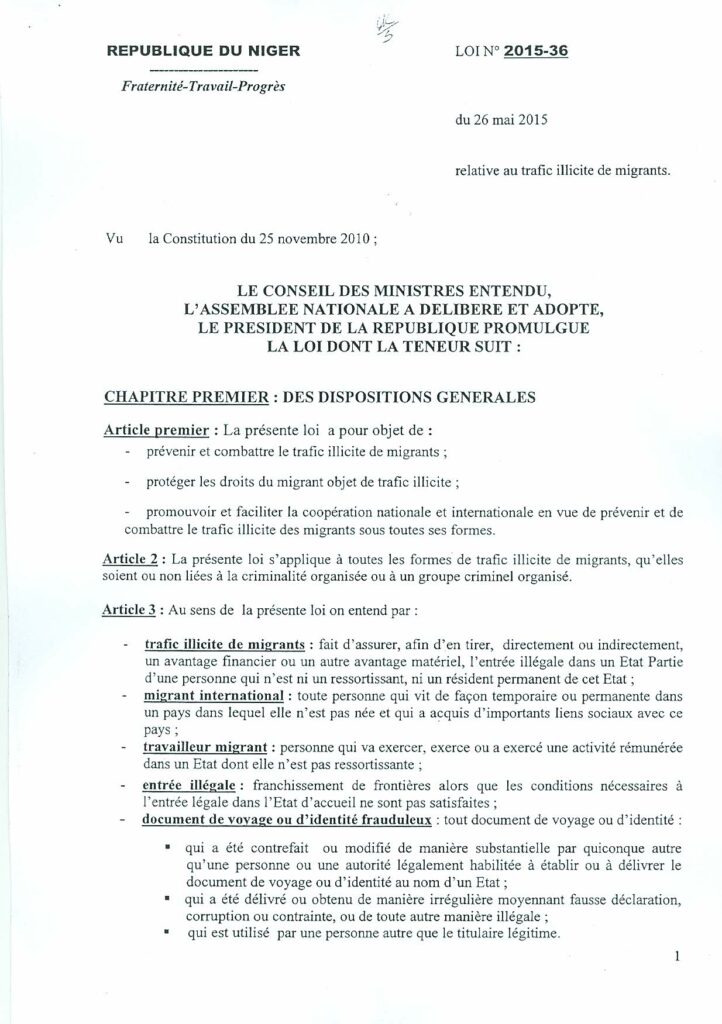
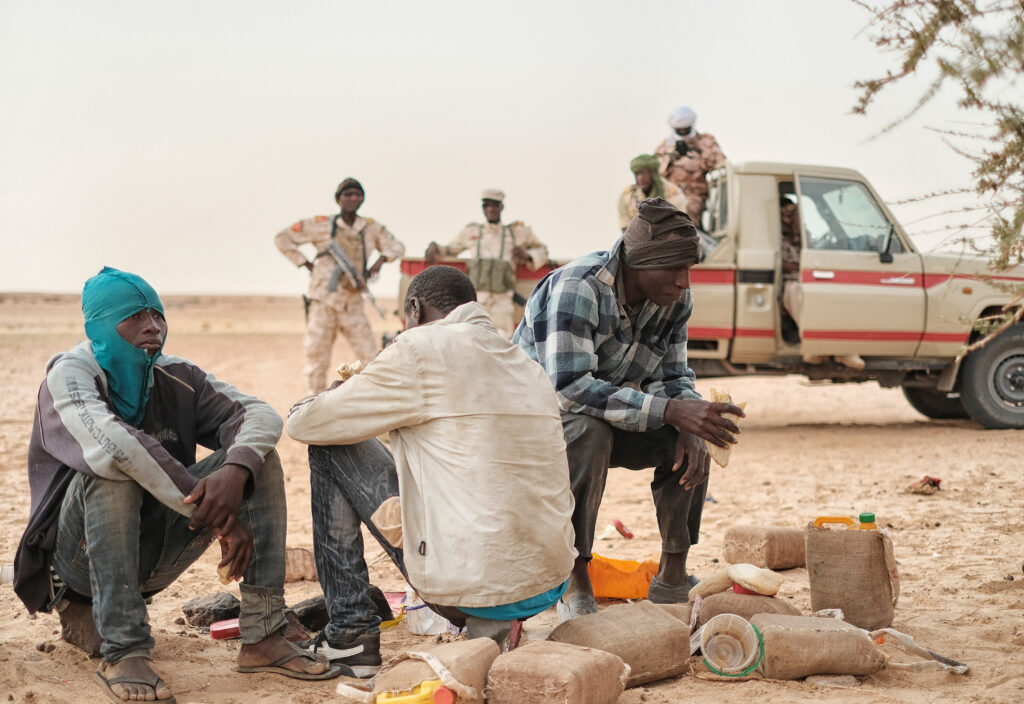
    In today’s mobility regime, Western governments, UN bodies, charities, and self-styled “development agencies” such as the German state-owned GIZ (Gesellschaft für internationale Zusammenarbeit) continuously claim to be genuinely engaged in combat against the so-called “root causes of migration.” They consistently invoke terms such as “underdevelopment” in their verbal and written rhetoric. Yet, their actual origins are nothing less than rampant “wealth disparities, historical injustices, and the legacies of colonialism,” as summed up in this publication’s January editorial.

    Border externalization is often misleadingly framed as a straightforward export of migration control from Western Europe to the Balkans, Turkey, and countless African or Asian countries—or, for instance, from Australia to Nauru or Papua New Guinea—but, in fact, it contains additional layers of imperial subjugation. Ultimately, its key feature―police cooperation―not only aims at surveilling, preventing, or containing migration movements, but also keeping southern regimes and their elites aligned.

    After World War II, national liberation movements in Africa and Asia sought to overturn these historical injustices. Still, the relations between the newly emerging postcolonial state elites and the former colonizers were only transformed, not ruptured: national liberation often only provided what is dubbed today as “flag independence.” The collapse of Europe’s colonial empires gradually morphed into a neocolonial arrangement, in which population control, public order, and resource extraction were to be maintained through the policing of former masters.

    Since the late 1940s, and in particular the 1950s, the key disguise for Western governments to maintain police and military support for the regimes of Shah Reza Pahlavi in Iran, Augusto Pinochet in Chile, or Joseph-Désiré Mobuto in the Congo was their staunch opposition to Soviet alignments. For decades to come, anti-communism and the alleged threat of eastward alignment remained the main smokescreen for Western governments and their proxies to provide their allies in recently decolonized countries with policing equipment to sustain their new orders.

    In the 1980s, the US government’s “war on drugs” in Latin America successively replaced “anti-communism” as a ruse to channel policing equipment toward allied regimes. After the 9/11 attacks in New York, however, the “war on drugs” was swiftly supplanted by the “war on terror”―deemed even more effective in militarizing policing in politically fragile states and imposing a more repressive variation of control over their populations.
    Morocco and Migration: Control’s Colonial Continuity

    Since the 2015 “migration crisis” in Europe, the new smokescreen for supplying allied elites in the Global South with policing equipment, surveillance technology, or training is “combating irregular migration”—i.e. smugglers, and document fraud—through what is mostly dubbed today as “border management.”

    Against this background, the most effective playbook followed by Southern regimes and elites―from Rabat to Amman and from Dhaka to Baku―in order to supply their security forces with modern equipment and training and, thereby, maintain their uncontested grip on power; is to tap into the ever-rising “border management” funds set up by the EU, its member states or UN bodies such as the United Nation’s Office on Drugs and Crime (UNODC). Through these tactics they fuel racial divisions, distracting local populations and fostering oligarchic rule. Accordingly, as the following examples illustrate, EU-ropean funded border externalization policies follow a colonial logic and do not only aim to manage migration but also to target populations deemed potentially threatening for today’s neocolonial order.

    Following the erection of border fortifications in Spain’s North African enclaves of Ceuta and Melilla and the deployment of the paramilitary Guardia Civil to patrol border-fences, the EU and the Spanish government externalized policing to the Moroccan state. For more than two decades, Moroccan police have received training and equipment assistance under the umbrella of large-scale migration-related police cooperation schemes set up and financed by the EU Commission, Spain, the US government, and agencies such as UNODC.

    Moroccan police have since regularly raided informal migrant camps in the forests nearby Ceuta and Melilla; conducted pushbacks or deportations at their neighboring border with Algeria and intercepted Spain-bound Moroccan and non-Moroccan harraga (the Maghrebi Arabic term for those who cross borders irregularly by “burning” them, commonly referred to in Morocco, Algeria and Tunisia as the harga) at sea.

    The Moroccan example, vividly illustrates that contemporary migration control is a continuity of a centuries-old colonial logic. As Yazid Benhadda reveals in his 2025 academic research paper, the French colonial administration had already systematically criminalized Moroccan migration to France, “either through banning or regulating Moroccan mobility.”

    Since the first legislative act in this matter was adopted in 1925, France imposed strict regulations on the migration of Moroccan workers’ to the metropole by: tightening passport issuance, limiting family reunification, conducting “repatriations,” and establishing police units in France itself charged with surveilling immigrants from Northern Africa. Moroccans, however, circumvented these restrictions through irregular means of travel to France via Algeria or Spain. At the same time, Spanish authorities cracked down on those who facilitated the irregular travel routes of Moroccans.

    This policy strongly resembles today’s targeting of smugglers by European governments and UN agencies across Northern Africa and beyond. Benhadda highlights the striking fact that “this logic still governs today’s European migration policies and legislations towards North Africa, as we can observe the persistence of this regularity-irregularity nexus.”

    Policing Cooperation across Northern Africa

    Concerning today’s migration control regime, police cooperation schemes similar to those commissioned for Morocco have been implemented in Tunisia, Egypt, and Libya; providing the respective police forces with vessels, vehicles, thermal imaging cameras, surveillance software, and training. After all the aforementioned states had already been allocated equipment deliveries for migration control from EU governments in the 2000s, the 2011 uprisings across the region enforced temporary halts to those programs.

    Since 2015, the EU has resumed such projects. In war-torn Libya, the Italian government with the support of the EU, supplied the so-called Libyan Coast Guards—a militia-run naval force affiliated with the regime in Tripoli—with substantial equipment and training aid to enable it to intercept harraga in the Mediterranean. The militia’s well-documented involvement in human trafficking, torture for ransom, sexual abuse, forced labor or arbitrary detention did not stop the EU nor organizations such as the border regime service provider International Centre for Migration Policy Development (ICMPD) to take sides in the Libyan tug-of-war for power, support the Coast Guards and their allies with equipment and thereby further externalize the EU border regime to African shores.

    In Tunisia, Europe-funded police training and equipment aid continued after the 2011 revolt. During the political transition in the 2010s, police cooperation continued under the pretext of democratizing the security forces of the ousted regime. After 2015, however, migration control became its main purpose, with Germany and Italy being the frontrunners in supplying border technology to Tunisia.

    Two large-scale police cooperation schemes, funded by EU states and coordinated by the ICMPD, facilitated the set-up of control rooms, the development of maritime surveillance tools, and the construction of two inter-agency police training facilities near the Algerian border.

    Since 2021, the EU, Italy, and Germany expanded their police cooperation in Tunisia even further: increasing budgets for ongoing projects and setting up new programs specifically targeting the maritime branch of the National Guard—the main recipient of training and equipment aid from imperial Europe.

    The National Guard is a key unit in Tunisia’s security apparatus, charged with a vast array of responsibilities, which include the patrolling of the country’s land and sea borders, as well as civilian crowd control. Human rights groups have, however, meticulously documented the unit’s involvement in widespread human rights abuses and deportations of harraga to Libya and Algeria, and their culpability in crackdowns against anti-government protests that challenged the country’s authoritarian rollback under President Kaïs Saïed.

    In Egypt, the EU’s involvement in directly equipping and training Egyptian security forces dates back only to 2022, when the European Commission allocated an initial 23 million euros for a “border management” project, aimed at supplying the So’s regime coast guards with vessels, thermal imaging cameras, and more. An additional 87 million euros were allocated by the EU in 2023, while 200 million euros were earmarked for migration control under the umbrella of a 7.4 billion euro package announced in 2024.

    Prior to the EU involvement, however, it was the governments of Germany, France, and Italy who supplied the Egyptian police with a vast array of equipment and training. After Italy had signed a police agreement with Egypt in 2000, Rome delivered patrol vessels to the regime in 2007 and supplied the notorious riot police unit Central Security Forces (CSF) with vehicles and firearms―equipment that was widely used against protesters during the 2011 revolution and the 2013 coup that brought President Abdel Fattah el-Sisi to power. France supplied the CSF with sophisticated crowd control vehicles since 2012, and thereby was directly complicit in massacres that the CSF and other police units committed shortly after the 2013 coup.

    Under the guise of security concerns in the region and migration control, Germany and Italy expanded their police cooperation with Egypt in 2014 and 2017, respectively. In both cases, they supplied el-Sis’s regime with the policing and surveillance capabilities, used for systematic reprisals against all forms of dissent. German authorities, in particular the Federal Police, which are focused on airport security and certificate and document fraud, provided the Egyptian border police with document scanners, fingerprint devices, and other forensic equipment. The Federal Office for Criminal Investigations, a German police unit with intelligence capabilities, conducted training for Egypt’s political police, the National Security Agency (NSA), and awarded scholarships to its officers for training programs in Germany.

    The Italian government, for its part, continues to support the Ministry of Interior and, in 2017, set up a police training center in the Police Academy in Cairo, where EU member states-funded workshops and seminars on migration-related subjects are conducted for police officials from Egypt and other African states.

    Managing Borders for the Benefit of European States

    Border externalization, as we have seen, does not only entail police cooperation and the supply of equipment and training. It involves a multitude of additional measures and tools to fortify borders more broadly. They stretch from data collection and the introduction of biometric passports to the adoption of anti-trafficking and asylum legislation, to the securitization of airports and ports, to the imposition of visa regimes. Even more, it refers to deportation and “repatriation” agreements, to “development aid” schemes, supposedly aimed at tackling the “root causes of migration” by improving access to potable water and health services or facilitating employment promotion in regions and countries considered prone to irregular migration.

    This alleged “combat against the root causes of migration,” effectively aimed at containing uncontrolled migration, meanwhile, goes hand in hand with what the border regime industry often calls “skilled labour migration.” Intergovernmental programs claim to support the expansion of “legal pathways” for migrant workers through “talent partnerships” under which highly-educated job seekers can apply for labor migration to the EU, the UK, or the US, as well as to Gulf states such as Saudi Arabia or Kuwait.

    While the development aid industry often merely provides charity schemes to alleviate poverty and contain people in the proximity of their residence, talent partnerships and other labor recruitment programs are, meanwhile, a backbone of what we largely call today “migration management.”

    This notion, as prominently promoted by organizations such as ICMPD, consists of a holistic approach towards migration which entails two main pillars: 1.) The staunch combat against “irregular” migration including resolute deportation and repatriation practices, the criminalization of the harga, border externalization and the construction of walls, fences and other forms of border fortification; 2.) the targeted recruitment of migrant laborers to counter demographic trends and meet shortages in certain areas of the labor market. These seemingly contradictory objectives therefore provides for the state-imposed categorization and hierarchization of people, a precondition for capitalist wealth accumulation in the Global North and among elites in the South, as well as for maintaining Western Europe’s and North America’s advantageous positioning in a neocolonial, extractivist global order by promoting an increase of “immigration [to Western Europe] for economic and rational reasons, but always for the benefit of European states,” as summarized by Fabian Georgi.

    Prominent anti-colonial figures such as Frantz Fanon had already unambiguously pointed out decades ago that “the wealth and progress of Europe” stems from the organized looting of the Global South. He warned that this resource theft would continue if decolonization in Africa and Asia fails to enforce real independence for Europe’s former colonies.

    Today’s political and economic order, however, facilitates not only the continuous large-scale extraction of resources from the South, but also a kind of extraction of people, stretching from state-recruited migrant workers to harraga, who have often no other choice but to compete for low-paid jobs in sectors such as construction or agriculture across Europe, North America, the Gulf or other oil and gas-producing countries such as Libya and Algeria.

    We are not witnessing a “migration crisis” in Europe today, but rather a decades-old migration and emigration crisis in the underdeveloped and indebted South, stemming from restructured power dynamics and postcolonial dependencies that were never fully overturned. While the ongoing genocide in Sudan and the West’s indirect involvement in the never-ending carnage in the Congo are today’s most prominent examples of resource-extraction-related conflicts, migration movements from the Indian subcontinent to Europe and the Gulf remain a primary mode of labor extraction for the benefit of former colonial states and their societies.

    https://turningpointmag.org/2025/12/17/eu-ropean-funded-border-regimes-linchpin-and-achilles-heel-of-the-n
    #ordre_néocolonial #néocolonialisme #frontières #migrations #externalisation #migrations #réfugiés #colonialité #border_management #contrôle #contrôle_démographique #racisme #root_causes_of_migration #causes_profondes #Maroc #Europe #Ceuta #Melilla #Afrique_du_nord #formation #technologie #ICMPD

    ping @cede @karine4 @6donie

  • La mia #Arca, 300 parole di pace : l’installazione di #Ivan_Tresoldi per Emergency

    Il 14 dicembre l’inaugurazione nella sede della Ong fondata da Gino Strada. Poesia e resti di un barcone naufragato: «Questi legni intrisi delle speranze di chi li ha stretti»

    Trecento parole di resistenza, di futuro, di pace e di cura. Che galleggiano nel mare della speranza — della rabbia — che ci attraversa. La prima a essere tracciata davanti alle telecamere del «Corriere», che ha seguito i lavori in una fredda mattina di dicembre, è «poesia». L’artista e poeta di strada Ivan Tresoldi — in arte ivan — ha dato vita all’opera di poesia e arte pubblica L’Arca , realizzata all’interno del giardino di Casa Emergency, ex scuola che dal 2017 è la sede milanese della Ong, dietro piazza Sant’Eustorgio.

    L’installazione di #street_art, che sarà inaugurata dopodomani, resterà permanente nel giardino aperto ai cittadini. Si tratta di un’opera partecipata, che mette al centro desideri e paure del nostro presente, a partire dalle parole di Gino Strada, fondatore di Emergency scomparso nel 2021, a cui s’ispira: «Non è mai troppo tardi per andare nella direzione giusta». Una spinta a non rimanere spettatori di fronte a una «rotta» che ci è stata imposta dall’alto; a far sentire la propria voce.

    «L’Arca è un’opera che ci contiene tutti — spiega l’artista al “Corriere” —, è una materia d’invisibile, uno spazio e un luogo determinato dalle parole di tutta Emergency, che a volte hanno bisogno di rendersi laicamente sacre. L’idea è quella di creare un’opera di muralismo, o di neomuralismo, e di poesia di strada». L’Arca è un «quadrittico ligneo formato da trecento listelli, come a richiamare un galeone», realizzato anche con il legno che ivan ha recuperato in Calabria: sono i resti del caicco partito dalla Turchia e naufragato a Steccato di Cutro (Crotone) la notte tra 25 e 26 febbraio 2023, nella strage in cui persero la vita 94 persone (si stimano 11 dispersi).

    Un recupero possibile anche grazie all’aiuto di Vincenzo Luciano, fa sapere l’artista, pescatore tra i primi soccorritori del naufragio (che domenica sarà presente all’inaugurazione). «Non si può lavorare sul tema della migrazione e non rendere sacro qualcosa di laico senza la materia di questa sacralità. Per questo abbiamo chiesto a Vincenzo di donarci alcuni pezzi di quel poco che è rimasto di quella mattina di febbraio sulla spiaggia, e li abbiamo introdotti nell’opera. Perché rappresentano l’esperienza di quelle persone che su questi legni hanno stretto le loro mani, le loro speranze, li hanno intrisi di un futuro migliore possibile». E, aggiunge, «noi dimentichiamo quanto le storie delle migrazioni, delle tragedie, siano storie che appartengono profondamente alle nostre radici e ai popoli tutti».

    Giubbotti salvagenti, resti di gommoni, coperte isotermiche (Ai Weiwei), vestiti dismessi (Corrado Levi), gli scafi abbandonati a Lampedusa (Massimo Sansavini), o un vecchio peschereccio affondato nelle coste libiche (Christoph Büchel): sono alcuni dei materiali provenienti dalla rotta migratoria del Mediterraneo che numerosi artisti hanno modellato per dare forma alla disperazione silenziosa di chi muore in mare. Perché quelle voci spezzate potessero arrivare a tutti. «Da qualche tempo stiamo ragionando su fare progetti di arte pubblica — spiega Simonetta Gola, direttrice della comunicazione di Emergency — perché l’arte possa essere anche uno strumento per sensibilizzare ai nostri temi, che crei un dialogo. Nel suo lavoro, ivan unisce la parte figurativa con la parola, per questo gli abbiamo chiesto di lavorare su una frase di Gino Strada. E poi abbiamo chiesto a persone di Emergency di identificare delle parole chiave che rappresentassero quello che vogliamo fare, di cui c’è bisogno».

    Parole che prendono la forma di una preghiera civile, di un poema che rifiuta la guerra: «Ogni listello, tagliato a mano, rappresenta anche la pratica del passarsi e starsi accanto — prosegue ivan — in un lavoro che è un corpo coeso. Ogni parola lavora accanto all’altra perché di base c’è l’idea che l’unione del tutto sia molto più della somma dei suoi elementi. E le parole di Gino Strada saranno accanto a quelle di tutti e di tutte. Non c’è un livello di scrittura predominante: ci confrontiamo sullo stesso livello».

    L’opera rientra nella campagna di Emergency — che oggi si trova in dieci Paesi del mondo con progetti di lungo periodo, e ora è presente in tre luoghi di conflitto: Gaza, Ucraina, Sudan — intitolata R1pud1a. «È dedicata all’Articolo 11 della Costituzione (“L’Italia ripudia la guerra come strumento di offesa alla libertà degli altri popoli e come mezzo di risoluzione delle controversie internazionali”, ndr) — conclude Gola —, che è nato dall’esperienza diretta di chi la guerra l’aveva fatta e che ha trovato una sola parola per descriverne il rifiuto: “ripudia”. In questo momento storico, in cui la guerra torna a essere normalizzata, questa campagna è fondamentale. Con R1pud1a abbiamo coinvolto 700 Comuni, 1.500 scuole e 300 istituzioni culturali perché vogliamo tornare a dire che la guerra è una scelta e non è inevitabile. E L’Arca rientra nella campagna perché qui ci sono persone che si mettono insieme per chiedere un cambiamento».

    «Credo in una poesia e in un’arte che sia espressione, e a servizio, delle moltitudini e dei suoi bisogni — conclude ivan —. E che sia partigiana. Credo sia nata una nuova generazione autoriale che è popolare, che quando parla di pace si occupa di pace, che fa pratica nei luoghi sociali, negli spazi di marginalità, con le reti di ogni partigianeria. Non credo in un’arte privilegiata che si celebra da sé. Oggi, la cosa importante, è farla la pace». E porre fine al naufragio di un’umanità che fugge incessantemente dal dolore.

    L’inaugurazione domenica 14 dicembre

    Domenica 14 inaugura a Casa Emergency a Milano (via Santa Croce 19, ore 15) «L’Arca», l’opera di poesia di strada e arte pubblica di Ivan Tresoldi (Milano, 1981), che leggerà una poesia e presenterà il progetto. Con lui: Rossella Miccio, presidente di Emergency, Vincenzo Luciano, pescatore testimone della strage di Cutro e Alberto Lolli, rettore del Collegio Borromeo di Pavia. L’opera si inserisce nel 2° anno della campagna «R1pud1a» di Emergency. Dalla sua fondazione nel 1994, Emergency è intervenuta in 21 Paesi curando oltre 13 milioni di pazienti. Oggi è presente in 10 Paesi del mondo, tre dei quali con un conflitto in corso: il Sudan, l’Ucraina e la Striscia di Gaza in Palestina.

    https://www.corriere.it/cultura/25_dicembre_12/mia-arca-300-parole-pace-l-installazione-ivan-tresoldi-emergency-ab166a44-d
    #art #frontières #migrations #mémoire #border_art #poésie #résistance #installation #Cutro #naufrage #mourir_en_mer #décès #morts_aux_frontières #mourir_aux_frontières #mots #résistance #rage #l'arca

    • Dalle spiagge di Cutro ai giardini di Milano: la geografia della memoria nell’opera “L’Arca”

      C’è una geografia fisica, fatta di coste, correnti marine e distanze chilometriche, e c’è una geografia umana, fatta di rotte, speranze e confini invisibili. Queste due dimensioni si incontrano nel giardino di Casa Emergency, dove il Mediterraneo è approdato sotto forma di legno, sale e memoria.

      Domenica 14 dicembre 2025 si inaugura l’installazione “L’Arca“, un’opera di street art e poesia pubblica firmata da Ivan Tresoldi (in arte ivan). Non è un monumento statico, ma il punto di arrivo di un viaggio tragico e simbolico: il materiale utilizzato per l’opera proviene infatti dai resti del caicco naufragato a Steccato di Cutro (Calabria) nella notte tra il 25 e il 26 febbraio 2023, una tragedia costata la vita a 94 persone.

      La materia che si fa mappa

      Per chi fa geografia, la materia racconta sempre la storia del luogo da cui proviene. I listelli di legno che compongono “L’Arca” portano incisi i segni del viaggio e del naufragio. Recuperati grazie all’aiuto di Vincenzo Luciano, pescatore testimone della strage, questi frammenti di imbarcazione hanno risalito la penisola, tracciando una linea immaginaria che collega la frontiera sud d’Europa con il cuore pulsante della metropoli lombarda.

      Ivan Tresoldi, artista ma anche ex studente di sociologia e di geografia, ha trasformato questi “legni intrisi delle speranze di chi li ha stretti” in un quadrittico ligneo composto da 300 listelli. Ognuno di essi ospita una parola: termini di resistenza, di futuro, di pace e di cura. È una mappatura emotiva che cerca di dare una direzione, una “rotta” etica, come suggeriva Gino Strada, fondatore di Emergency.

      Ridefinire i luoghi: da relitto a riparo

      L’installazione si inserisce nella campagna R1pud1a, legata all’Articolo 11 della Costituzione italiana (“L’Italia ripudia la guerra”). In un contesto globale segnato da conflitti (Gaza, Ucraina, Sudan), l’opera trasforma il concetto di “relitto”. Se sulle coste calabresi quel legno rappresentava il fallimento dell’accoglienza e la tragedia del confine, a Milano diventa un’arca, un rifugio semantico che accoglie le parole di tutti.

      “L’Arca è un’opera che ci contiene tutti,” spiega l’artista. È una “materia d’invisibile” che diventa spazio pubblico. L’arte qui svolge una funzione prettamente geografica: rende visibile ciò che spesso è relegato ai margini delle carte nautiche e dei telegiornali, portando la frontiera nel centro della città.

      Dove vederla

      L’opera sarà visibile permanentemente nel giardino della sede milanese della Ong, in via Santa Croce 19 (zona Darsena/Sant’Eustorgio). Un luogo che ora, grazie a quei legni venuti dal mare, diventa un nuovo punto cardinale per chi cerca di orientarsi tra le complesse rotte dei diritti umani.

      https://www.ageiweb.it/geografi-e-geografe-nei-media/dalle-spiagge-di-cutro-ai-giardini-di-milano-la-geografia-della-memoria-nell

  • The Everywhere Border. Digital Migration Control Infrastructure in the Americas

    The US is building a digital border infrastructure in neighbouring countries that expands and deepens surveillance, while hiding state violence. The implications of this new infrastructure will be long-lasting and need to be integrated into strategies of resistance of migrant justice movements worldwide.

    In 2021, José Eusebio Asegurado, a farmer in El Salvador, was arrested by the Salvadoran National Civil Police for ‘promoting human trafficking’. The basis for the arrest was a WhatsApp group chat (external link)
    that Asegurado and other migrants1 were using to coordinate a caravan, which had been infiltrated by a police agent. According to the screenshots used to incriminate him, Asegurado’s only participation in the chat was responding ‘OK’ to a migrant’s message that he would be at a meeting point at around 5 o’clock. Police arrested Asegurado at the meeting point, telling him he was ‘profiled’ as a caravan organiser.

    The same day, the Salvadoran police also charged Fátima Pérez, a cook, and Juan Rufino Ramírez, a private security guard, with promoting ‘human trafficking’ based on messages on a WhatsApp group they had created to coordinate a caravan. Screenshots in Ramírez’s case show him giving instructions to the 55-member group to meet at the bus station, and the prices of tickets to Guatemala. The police arrested Ramírez and Pérez the morning they were planning to leave.

    These three arrests took place in the span of four hours. The then-US ambassador in El Salvador, Katherine Dueholm, promptly congratulated (external link)
    the General Prosecutor’s office, stating: ‘I applaud the Salvadoran authorities who are taking action against those who want to deceive citizens with caravans and false promises. They promote only #UnViajeEnVano (external link)
    ’ – ’a journey in vain’.

    The arrests and Ambassador Dueholm’s praise reflect the critical role of covert surveillance and data-driven ‘smart’ technologies in US migration-control practices operating deep within countries outside the US. Over the past twenty years, the US (and other wealthy countries) have made strides to externalise border-control regimes well beyond their actual territory. This often involves effectively enrolling agencies in other countries in migrant surveillance, policing, and exclusion.

    The new digital infrastructure that enables border externalisation, however, is little understood. This digital infrastructure relies on both military-grade technology built by major weapons manufacturers and Silicon Valley innovation: inter-operable databases that share fingerprints seamlessly between police agencies across borders; biometric collection devices used by Mexican detention authorities to track migrants for US Customs and Border Protection (CBP); social media apps that serve as critical communications networks for migrants and surveillance tools for police; digital ID systems that enable access to essential services, but double as tracking devices.

    Infrastructure – digital or material – has real sticking power; that’s the point. Once a highway splits a community in half, a new permanence stifles the din of protest, and people move on. We use the term digital infrastructure to describe the establishment of a foundation that will be fundamental to how world powers will practise migration control; and, as it embeds itself, increasingly beyond challenge – a unified strategic intervention by powerful countries, with the US coveting the vanguard. While it may look like technological experimentation (like AI-powered robot dogs on the border) or one-off opportunistic data-grabs (like networks of international data-sharing agreements), the growth of digital border infrastructure is by design. This is enabled through joined-up digital technologies that settle into the kind of rigid, ‘motiveless’ permanence granted to other infrastructures, like submarine communications cables, protocols and servers that run the internet, an electrical grid or a superhighway.2

    The profound implications of new infrastructures persist long after their creation, as is the case for the digital infrastructure deployed to police migrants in the so-called US ‘backyard’. Its impacts are frequently rendered invisible. Governments promote border policing technologies as fundamentally safe, humane and non-violent (external link)
    while migrant advocates struggle to make visible the violence on the other side of this unseen ‘borderland circuitry’.3

    The implications range from digitally triggered violence and killings by local police in Central America to actions by the US, its allies and competitors in geopolitical contests over the control of global security. The US government and private industry have worked themselves into a largely covert entrepreneurial frenzy to own and control the migration policing interface of the future. Monitoring and control capabilities – a longstanding and routine part of US aid packages to fight organised crime – both expand domestic spying by partner governments for their own ends and serve US border externalization interests in controlling the movement of people and diverting them away from the US territorial border.

    This essay will focus primarily on how digital infrastructure serves US interests . What do we know about this strategy and how it is already affecting mobility and human rights in the region? What are its historical foundations? What challenges lie ahead? It is impossible to answer these questions simply by dissecting the cruelty or provenance of any single technology, system or actor. We first need to understand the transnational motivations driving these incremental, more observable, facts on the ground. We need, in other words, to make visible the invisible digital infrastructure.
    Digital infrastructure is key to border externalisation and a rise in unaccountable violence

    Understanding border externalisation through the lens of digital infrastructure captures the true scale of border practices envisaged by the US (and its competitors and allies) as well as their envisaged permanence within the future world order. Digital border infrastructure feeds on histories of domination, control and atrocities in the name of transnational ‘crime-fighting’ projects, setting the stage for tremendous social costs.

    First, as to scale, we are witnessing an escalation of US border imperialism and borderland violence4 – both in terms of geographical reach far into national territories and the further extension of ‘policeability’5 to an increasing number of individuals and groups through this digital infrastructure. This includes anyone an algorithm decides might be ‘dangerous’, those who might migrate, as well as humanitarian actors, migrant advocacy groups, and aid organisations. Scaling and the rapid growth it engenders is a quintessential property of digital technologies, regardless of their origin or application. The shifts to new targets under digital infrastructure are frictionless compared to earlier analogue-based border policing tactics. Asegurado, the farmer assisting migrants in El Salvador, was swept up in the US border externalisation dragnet with a simple ‘OK’ on a WhatsApp chat.

    Second, as to permanence, advocates of digital borders in national capitals, industry and development agencies embrace the term ‘digital public infrastructure’ as a brand, to bestow (unearned) trust, normalisation and the inevitability of contested digital tools such as biometric IDs and payment systems.6 Ceding the privilege of defining ‘digital infrastructure’ to actors with vested interests in current migration-control practices is reckless. Without a counternarrative that articulates their violent disposition, digital border externalisation tools – including widespread biometrics collection, real-time transaction data-collection in payment systems, and the confiscation of smartphones at the border – can easily be normalised as ‘digital public infrastructure’, rather than resisted.

    The scale and enduring impact of the rapidly hardening digital infrastructure that fuels border externalisation calls for urgent transnational organising. As writers and activists, we have come together to resist the use of digital infrastructure in US migration-control policy in Mexico, Central and South America, and the Caribbean. We have only traces and not the whole picture. Building on the work of others, we weave all this together to show how the fusion of state and digital power to construct digital border infrastructure is neither humane nor safe: rather, it is increasing unaccountable forms of violence.

    Convergence: Drugs war, border externalisation, digital infrastructure and the militarisation of US’ neighbouring regions

    Economic and political initiatives since the 1970s have driven relentlessly towards US investments in more militarised, criminalising, and digitised migration-control practices. Since 9/11, the US convergence of ‘national security’ with unauthorised migration has fueled an ever expanding border externalisation regime—currently there are 23 CBP offices and 48 ICE offices worldwide—and consequently has provided an especially lucrative market for digital surveillance corporations.7 Through programmes such as the Mérida Initiative and the Central American Regional Security Initiative, the US has tied aid to countries such as Mexico, El Salvador, Guatemala and Honduras to increased militarisation, policing, incarceration, and migration control.

    Yet migration patterns to the US from Mexico, Central America and the Caribbean cannot be divorced from the practices and policies that the US employed for over a century to dominate countries in these regions. Decades of US practices and policies have fuelled economic, political, and environmental instability – key factors that drive migration to the US. Over the past 20 years the number of people migrating from Central America has more than doubled (external link)
    , the largest increases coming from Guatemala, Honduras and Mexico. The US-backed ‘war on drugs’ in Mexico and Central America has dramatically increased violence and instability.8 In Mexico, the fight against organised crime has resulted in 350,000 deaths and more than 72,000 disappearances (external link)
    between 2006 and 2021. According to the World Bank, 60% of rural Central Americans live in poverty (external link)
    . While the largest contributors to the climate crisis are wealthy countries, these already impoverished populations suffer the most acute impacts of climate change. For decades, prolonged droughts together with natural catastrophic events such as hurricanes (external link)
    and floods (external link)
    have deeply affected Central America. The number of people facing food insecurity tripled between 2019 and 2021, affecting 6.4 million people (external link)
    . Asegurado, Pérez and Ramírez – like many others – are grasping for alternatives to this intolerable situation.

    Rather than acknowledge these underlying causes, the US response has been to extend its border ever further. General John Kelly, former Secretary of the US Department of Homeland Security (DHS), stated (external link)
    , ‘I believe the defense of the Southwest border starts 1,500 miles to the south’. Mexico has long been central to the US border-externalisation regime, and digital infrastructure plays an increasingly critical role. Tony Crowder, former director of CBP’s Air and Marine Operations, shared Kelly’s sentiment ‘We have taught the Mexicans how to fish…[but] even though we have all this surveillance capability, we don’t have enough, we need more’.9

    While part of a continuum of US efforts to enlist Mexico in support of its regional objectives, this ‘security and rule-of-law partnership (external link)
    ’ accelerated following 9/11. In 2007, the US shifted the focus of its drug war (external link)
    from Colombia to Mexico, Central America, and the Caribbean. Under this frame of securitisation, the drug war merged with the migrant-control regime. In 2008, the Mérida Initiative was launched – a bilateral partnership between the US and Mexico in the name of the US war on drugs. It initially provided financing for Mexico to purchase equipment for its military and police forces and for intelligence gathering. In 2013, Mérida was revamped to include four pillars (external link)
    , incorporating the creation of a ‘21st century US-Mexican border, while improving immigrant enforcement in Mexico and security along Mexico’s southern borders’. Effectively an extension of US policy, some $3.5 billion (external link)
    has helped shape Mexico’s migration-control agenda since 2008.

    In 2014, Programa Frontera Sur further securitised Mexico’s southern border by increasing the migration policing and deportation apparatus. Consequently, Mexico now has one of the world’s largest (external link)
    immigration detention systems. Between 2014 and 2017, Mexico deported more Central Americans (external link)
    than the US Border Patrol. Doris Meissner, the former commissioner of the Immigration and Naturalization Service (INS, the predecessor to ICE and CBP), underscored the importance of Mexican migration control, explaining in 2017 the need to look at both US and Mexican data to assess the effectiveness of US border enforcement (external link)
    .10

    Under these agreements, the US Department of Defense has provided training and sold millions in military equipment to Mexico, including an array of ‘smart border’ technologies provided by corporations (external link)
    such as Dev Technology, General Dynamics, Amazon Web Services, and NEC. The CBP and ICE have provided training on intelligence-gathering, info-sharing, and migration policing. A key element of US support to Mexico has been to develop an infrastructure to collect and share data – such as biometric and biographical information, and criminal history – in a manner that interfaces seamlessly with US databases.

    The digital infrastructure that tracks and catalogues migrants is central to US migration policy in Mexico. The US-backed Instituto Nacional de Migración (INM) strategy relies on this infrastructure (external link)
    as the primary means to control migration rather than sealing Mexico’s southern border with Guatemala. Biometric collection is essential to making migrants more legible to the state. In 2011, the US provided four biometric kiosks (external link)
    to Mexico’s southern border, and 117 additional biometric scanners (external link)
    the following year. Between 2018 and the first half of 2022, the Mexican government gathered and shared information on over 360,000 migrants in detention facilities.11 Information from CBP reveals that Mexican authorities shared information from 10,000 humanitarian visa (external link)
    applications with DHS. The release of approximately 1,800 unregistered migrants from a shelter in Piedras Negras was conditional on the registration of their data.12

    An ‘Information Sharing Environment’ that includes inter-operable data-sharing systems (external link)
    is central to achieving the objectives of the homeland security state. ‘Inter-operability’ enables seamless connectivity between police, immigration agencies, foreign governments, and more.13 Key forms of US-initiated digital infrastructure rely on widespread information-gathering and seamless sharing of data for surveillance across borders.

    This vast amount of data-collection and sharing has been fuelled by unleashing the power of the carceral state – including the centrality of the ‘criminal alien’, ‘gang member’ and ‘drug trafficker’ as threats to national security – at all geographic levels of the US migrant-control regime. For example, the Biometric Identification Transnational Migration Alert Program (BITMAP) allows DHS and its partner countries to know where and when an individual arrives in the Western Hemisphere (external link)
    and their travel patterns before they reach the southwest US border. BITMAP is currently deployed to 18 countries (external link)
    , including Mexico. DHS also has a Criminal History Information Sharing (CHIS) programme that allows for the global sharing of biographic, biometric, and descriptive information on individuals deported from the US (e.g. alleged immigration, employment, family, and criminal histories).

    The structural criminalisation of poverty in both countries is amplified with CHIS. According to the National Survey of Imprisoned Population in Mexico, conducted by the National Institute of Geography and Statistics (INEGI) in 2021, nearly 44% of the respondents declared having been imprisoned on the basis of false accusations or incriminations (external link)
    . Forty-two percent claimed they had been forced to plead guilty or to incriminate someone else. Nearly half of those who are jailed have not been convicted (external link)
    , and nearly half of all convictions are for theft of under US$100 (external link)
    . This is the kind of data that feeds CHIS.

    In another example, DHS is developing the Homeland Advanced Recognition Technology System (HART) (external link)
    to replace its current centralised biometric database, IDENT, through a contract with Peraton (external link)
    (a subsidiary of Veritas Capital, a private equity firm). Hosted by Amazon Web Services, HART will enable DHS to aggregate and compare biographical and biometric data on hundreds of millions of people across the globe. This includes so-called encounter data from police stops, facial recognition, DNA, iris scans, and voice prints – usually gathered without the individual’s knowledge or consent. The massive HART database draws from widespread biometrics collection in all realms – for example, the US DOS INL’s development of integrated DNA databases in Mexico and Central America in the name of combating trafficking or the proposed national biometric digital ID in Mexico (external link)
    . In this way, multiple state initiatives merge, and the power of the state to police, track and control migrants and all people under their watch grows exponentially.

    While the Mérida Initiative formally ended in 2019, its approach has been sustained by the Mexican government. In 2021, the Mexican government increased (external link)
    the military by 46% and the National Guard dedicated to stopping migrants by 300%. In July 2022, President López Obrador committed $1.5 billion in smart border infrastructure (external link)
    over the next two years.

    For US partner states, any technological and data-sharing channels that are financed and exported to them become assets – not just for monitoring migrants, but to advance multiple agendas of coercive power-building. This infrastructure can therefore end up fuelling violence and criminalisation, undermining the right to asylum, exacerbating inequality, and expanding the power of paramilitaries and the police (external link)
    , while privileging securitised neoliberal and corporate prerogatives.
    The geopolitical nature of digital infrastructure

    In their research on digital payment systems, Marieke de Goede and Carola Westermeier use the term ‘infrastructural geopolitics’ to stress the growing centrality of infrastructure to geopolitics and the ways in which US economic power is rooted in financial infrastructures (which, like migration control, are rapidly digitising).14

    The global financial messaging network SWIFT is an example of infrastructure that is invisible to most people and yet plays a major role, as the writers describe, in reinforcing power relations of the post-war global order in which it emerged. Seventy years after the Second World War and fifty years since SWIFT’s establishment, bank messaging routes flow through former colonial capitals and map onto a ‘core’ of Western countries, leaving large swaths of Latin America, Africa, and the Middle East in a permanent, but effectively invisible, economic periphery. Similarly, digital IDs, social media monitoring and infiltration, and data-sharing platforms are essentially component parts, nodes, or partially visible layers of deeper, longer-term geo-strategic digital infrastructure projects.

    Extension of borders through digital infrastructure serves US political and economic goals well beyond the policing of human mobility. Geopolitical contests for control over infrastructures play out across several domains. Military establishments covet ‘identity dominance (external link)
    ’, an objective that drove US forces to gather massive stores of biometric data in Afghanistan and Iraq as a weapon of war. US digital services giants like Amazon and Google mastered ‘platformisation’ by building e-commerce (digital advertising, search, social media, etc.) infrastructure to dominate the digital economy. Often, public and private-sector interests converge, including in the form of public–private partnerships (PPPs) to build infrastructure. In each case, the true contest among states and corporate giants centres on control over the interface, or the most essential, invisible, infrastructural methods of digital communication and control. As Michael Kwet explains (external link)
    , ‘Transnational “Big Tech” corporations based in the United States have amassed trillions of dollars and gained excessive powers to control everything, from business and labor to social media and entertainment in the Global South. Digital colonialism is now engulfing the world’. The US quest for domination through externalised migration policing infrastructure goes hand in hand with its geopolitical and corporate designs for economic power.

    These forms of infrastructural digital power pose unique challenges for documentation and ultimately for any form of systemic change. Challenges include blurred lines of responsibility, mission, and function; governments and corporate actors are seen or presented as passive conduits or intermediaries in digital public infrastructure; and infrastructures can easily appear to be ‘ahistorical’ and motiveless. In Mexico and Central America, migration control converges with ongoing US foreign policing operations (such as the war on drugs, and gang wars). We explore the several simultaneous effects of this complex merger: the turn to digital infrastructure; its relationship to violence and human suffering; and its foreclosure of accountability for these harms.
    Digital border infrastructure in your phone: Information and Communications Technology (ICT) policing techniques along migration routes

    Surveillance infrastructure is tangible in physical migration detention centres and in police arrests: mugshots, cheek swabs, confiscation of the detainee’s mobile phone. The deepening integration of daily life, telecommunications and computers open extensive avenues for more covert, opportunistic surveillance of private communications and activity by users who rely on social media, mobile communication and messaging apps. The surveillance of mobile phones and social media ranges from overt disclosure requirements for visa and benefits applications to government listing and tracking of protesters and other ‘undesirable’ actors. Migrant surveillance is immersed in these control schemes where surveillance technology serves as a silent tool for government violence and repression.

    This has had an impact on how migrants travel and keep safe, such as through safety in numbers. Travelling in caravans has therefore become both a survival and a protest strategy: sources of both physical and economic security (external link)
    and opposition (external link)
    to the economic policies that contributed to their displacement. Social media and messaging apps are key tools for the coordination of caravans and for migrants more broadly. Migrants use these tools to identify routes, look for shelter and food, communicate with their support networks, warn each other about risks (external link)
    , and coordinate travel. Governments as well as organised crime understand these dynamics and use these same tools to monitor and extort migrants.

    On 5 June 2019, Irineo Mujica, from Sin Fronteras – a civil society organisation (CSO) dedicated to the protection of human rights of migrants in Mexico and the US, and which has supported multiple migrant caravans – was arrested in Mexico, falsely charged with human trafficking (external link)
    . Mujica appeared in the CBP’s watchlist database published in 2019 (external link)
    that contained photos, names, professions, and other details of journalists, activists, and social media influencers both from Mexico and the US with links to the migrant caravan.

    A DHS Office of Inspector General (OIG) report (external link)
    on the database and other surveillance practices found that CBP established electronic alerts (lookouts) on journalists, attorneys, and advocates who were connected by social media to the migrant caravans. Those tagged by the lookouts were constantly flagged for secondary screening (external link)
    when entering the US, and interrogated about their work, organisation, family, education, and political leanings.

    The weaponisation of such information had grim effects on the Mexican side of the border. According to Sin Fronteras activist Alex Mensing (external link)
    , after the CBP shared information gathered through lookouts with the Mexican government, other members from his organisation who assisted migrant caravans in the same period saw an increase in border scrutiny and death threats (external link)
    . Organising and supporting migrants threatens lucrative operations that depend on the criminalisation of migration across the region. Civil society assistance makes migrants less prone to kidnapping and extortion, which therefore reduces the income for organised crime linked to these activities, and, as a domino effect, bribes to authorities also drop, pitting the collective interests of such groups against activists and those providing humanitarian assistance.

    Surveilling anyone who might pose a threat to the system has long been a generalised and systematic form of government control in Mexico. A leaked document from the NSO Group, the Israeli company that created Pegasus, revealed that 50,000 people were possible surveillance targets (external link)
    in Mexico. The list included opposition politicians, journalists investigating government corruption and extrajudicial killings, activists advocating the taxing of sugary drinks, judges, academics, and international experts who investigated the case of the enforced disappearance and extrajudicial killing of the 43 students, among others.

    In 2022, mobile phones from two journalists and an activist who investigated abuses committed by the Mexican army were found to be infected with the malware Pegasus (external link)
    . In 2020, the Mexican government sought to create a SIM card registry that would link to the card owner’s biometrics and other personal data. This would have intensified government digital surveillance via ICT infrastructure, and was opposed by civil society (external link)
    .

    CBP internal documents show (external link)
    that government agencies across the border continually share information about the location of migrants, their origin, and the number of people in each group, even before they start to migrate. In 2018, US DHS agents infiltrated a WhatsApp group (external link)
    of Honduran migrants travelling in a caravan of about 4,000. These policing practices are also being reproduced by the Mexican government.15

    Impact: Infrastructural violence and accountability deficits in globalised migration policing

    Roberto M., a young man in El Salvador, was shot and taken away by police shortly after being deported from the US. The rural police officers who shot Roberto also threatened an eyewitness at gunpoint, telling him that Roberto was a gang member and if he revealed what he’d seen, the same would happen to him. Police in El Salvador receive data on gang-member affiliation from the US, and share these lists (external link)
    with neighbourhood-level police where deportees plan to live. These databases have been found to be problematic and unreliable (external link)
    . Police departments confirmed (external link)
    that this information is used to target people (external link)
    : ‘We think that if a person wasn’t wanted in the United States, it must be because the deported person is bad’.

    Violence can increasingly be tied to digital border technologies, particularly in combination with one another and with physical and environmental realities that envelop them. Studies show the effects of integrated fixed-tower surveillance on migrant mortality rates in Arizona’s Altar Valley. Here, digital infrastructure merges with the ineffective yet longstanding US deterrence policy that purposefully makes migration routes more dangerous, on the theory that migrants would not risk the journey. The fusion of technology and policies that inflict deliberate harm produces these predictable results of increased migrant deaths (external link)
    .

    The story of Roberto M. and the witness to his post-deportation shooting and disappearance in El Salvador reflects another pattern of violence tied to information-sharing through digital infrastructures. The criminologist Ana Muñiz documents a ‘cycle of violent policing, migration, more violent policing, detention, deportation, violent policing, migration, and so on’, in which the labels themselves (‘criminal alien’ or ‘gang member’) become inescapable vectors of precarity.16 Such labels channel individuals into a ‘sort of statelessness’ as constant, quantifiable scapegoats that provide an easy diversion for state security forces and corporations that produce and perpetuate the ‘structural causes of violence’.17

    Digital infrastructure merges not with a physical terrain, but with pre-existing social and political factors that make violence a foregone conclusion. Today’s multipurpose digital infrastructure also permits the efficient incorporation of new undesirable criminalised categories, including ‘caravan organisers’ or ‘migration promoters’ – as in El Salvador’s attempt (external link)
    to reform its penal code, criminalising the ‘promotion of migration’ on social media.
    Challenges and way forward

    We are interested in developing deeper knowledge about the political origins of these infrastructures to challenge the violence of global migration control systems. This essay only sets out the field of engagement. Far more collective work is required to document and design models of resistance to meet such challenges.

    The diffuse and structural nature of power behind the seemingly ahistorical, and motiveless characteristics of digital infrastructures undermine classic approaches to accountability. Furthermore, the familiar national and international judicial avenues to hold perpetrators of these forms of indirect violence responsible – however imperfect or ineffective they may already be – are exceptionally ill-suited to the conditions at play in the migration policing context specifically, for several reasons.

    First, the technologies in use such as biometric databases, and the means of using civilian technologies like social media and other ICTs, are simply not designed to respect or be held to democratic scrutiny; they are military-grade and converted for use in quasi-militarised spaces, by institutions permeated with military ideology. Nearly a third of CBP personnel previously served in the US military. Biometric surveillance technologies advanced by leaps and bounds within US military operations before being integrated with ‘civilian’ border policing. Private-sector military contractors play an integral role in this transition.

    As journalist Annie Jacobsen documents, as part of the US military biometric data-collection in Afghanistan, Palantir Technologies served as a critical link between US intelligence operations to track and kill military targets and quasi-civilian policing operations like the piloting of rapid DNA samples from migrant families at the US border in 2019.18 Today, the biometric kits used in Afghanistan, some still storing biometric data collected on the battlefield, are for sale on eBay (external link)
    .

    Second, justice and oversight bodies are ill-equipped to serve their intended function in this ecosystem. Within criminal proceedings and investigations, the use of technologies that capture and record evidence of allegedly criminal activity or purport to biometrically match records are extremely difficult to challenge because of their scientific veneer and opaque data-collection and analysis methods, which leaves no practical room (external link)
    to impeach or exclude such evidence. The design of technologies that predetermine risk factors keyed to criminalised behaviour, including migration, contravenes the presumption of innocence. In the civil context, national-level justice mechanisms deny standing to non-nationals located outside the US who are victims of violations linked to digital surveillance.

    Finally, there are huge incentives for both state and corporate power to hide violence. The political positioning of ‘smart borders’ as more ‘humane’ conceals the state’s role in violence and insulates corporations from negative PR or constraints by participating in repugnant markets. Their task is made easy by rendering physical pain abstract rather than affecting real human beings,19 and features of the data economy like the way corporates have helped the movement towards running government functions like private digital platforms.

    Mitigation ‘risk assessment’ tools like data protection or human rights impact assessments provide cover (external link)
    , favouring the continuation of these business practices because firms undertake them voluntarily and face little or no consequences for a poor risk assessment. Unsurprisingly, these industry-led tools often fail to provide (external link)
    a means for real accountability; they reveal scant information that would be actionable if and when products do cause harm; and the burden of proving rights violations and finding an effective remedy (external link)
    after the fact is shouldered entirely by victims. The interests of powerful actors converge around a web of financial stakes in the system, leading to the aggressive harassment and potential silencing of activists as the case of Irineo Mujica and Sin Fronteras illustrates.

    We need tools and methods for transnational cooperation to document, gather and share information safely, and organise. Fusing new understandings about how digital power functions within existing resistance movements transnationally, holds potential for challenges to the digital infrastructure of border externalisation.

    We are in the initial stages of our collective effort to understand and expose this digital infrastructure. Through this analysis, we can begin to identify the interventions to start to tear it apart and break it down. Transnational organising against tech corporations offers opportunities for shared understanding and meaningful solidarity. This year, organisations in France and Kenya, with support from actors in other countries, sued biometrics giant IDEMIA (external link)
    for its failure to meet even minimum human rights standards of due diligence as it reaps billions in secret border security tech sales to low- and middle-income countries. This emerged from collaborative evidence-gathering and organising across borders.

    As the US military establishment recognised decades ago: whoever dominates the field of externalised borders defines ‘friend and foe’ everywhere.20 The faster the US establishes economic and political dominance over digital migration-control infrastructure, the greater its security in maintaining global digital power. Digital infrastructure serves multiple purposes at once, but the ultimate geopolitical function is raw, generalised power over global affairs. The tools examined here will ‘contain’ human life within spaces of catastrophic violence, by design. This specific effect betrays the most fundamental commitments of international human rights and humanitarian law in the face of unprecedented challenges to human survival across most of the world. But this pernicious effect is also ruthlessly beside the point.

    In reality, as facets of infrastructural power, the technologies that fix the ‘calculation of who must live and who must die’22 do not do so as an end in itself, but in the service of power and its reproduction in this digital age.23 In this way the complicity of state and corporate actors in the production of violence is cast in the starkest relief. This geopolitical analysis is our starting point for building resistance towards transformation.

    https://www.tni.org/en/article/the-everywhere-border
    #externalisation #migrations #frontières #réfugiés #USA #Etats-Unis #infrastructure #infrastructure_numérique #violence #violence_d'Etat #surveillance #caravane #whatsapp #criminalisation_de_la_migration #arrestation #technologie #technologie_intelligente #externalisation_des_contrôles_frontaliers #bases_de_données #interopérabilité #empreintes_digitales #coopération_policière #impérialisme #biométrie #Mérida_Initiative #Central_American_Regional_Security_Initiative #war_on_drugs #Amérique_centrale #Mexique #Programa_Frontera_Sur #rétention #détention_administrative #ICE #smart_borders #frontières_intelligentes #Dev_Technology #General_Dynamics #Amazon_Web_Services #complexe_militaro-industriel #NEC #Instituto_Nacional_de_Migración (#INM) #Guatemala #Biometric_Identification_Transnational_Migration_Alert_Program (#BITMAP) #Criminal_History_Information_Sharing (#CHIS) #criminalité #Homeland_Advanced_Recognition_Technology_System (#HART) #IDENT #Peraton #Veritas_Capital #reconnaissance_faciale #ADN #DOS_INL #infrastructural_geopolitics #géopolitique #SWIFT #multinationales #colonialisme_numérique #téléphones_portables #smartphones #criminalisation_de_la_solidarité #NSO_Group #border_deaths #décès #morts_aux_frontières #mourir_aux_frontières

  • The Death of Roger #Nzoy Wilhelm

    On 30 August 2021, Roger Nzoy Wilhelm, a 37-year-old Black Swiss and South African man, was killed by the police at Morges railway station, Switzerland. Four years after the event, and following two failed attempts by the public prosecutor to close the case, neither truth nor accountability have been established. At the request of Nzoy’s family, Border Forensics, in collaboration with the Independent Commission of Inquiry on the Death of Roger Nzoy Wilhelm, has conducted a counter-investigation. While Border Forensics has to date focused on the continuum of border violence that affects the trajectories of migrants, this investigation focuses on the violent policing of the boundary of race and the way it materialises within societies. Our analysis of the circumstances of Nzoy’s death demonstrates that while he was in psychological distress, the police officers’ inaccurate and biased perception of him as a threat led them to prioritise the use of lethal force over assistance and care. We further locate Nzoy’s killing in relation to other cases of police-related deaths in Switzerland and analyse the structural conditions that have enabled them. We conclude that the othering of Nzoy, including his racialisation as a “man of colour” read in combination with his masculinity and psychological distress, shaped the police response that led to his death.

    This report addresses incidents of violence that may be distressing. We invite readers to approach the content with care.

    https://www.borderforensics.org/investigations/nzoy
    https://vimeo.com/1112795275/2da52b141e?fl=pl&fe=vl


    #architecture_forensique #border_forensics
    #violences_policières #Suisse #décès #Nzoy #racisme #contre-enquête #non-assistance #Morges #othering

    –---

    voir aussi :
    17 Uhr 59 und 10 Sekunden
    https://seenthis.net/messages/1100443

    Rebondissement dans l’affaire Nzoy. Le Ministère public va devoir rouvrir l’enquête
    https://seenthis.net/messages/1117690

  • Erased in life and death: intersecting injustices faced by people on the move in Serbia: Report summary 1/7

    A knowledge-mapping report
    Release 1: Summary of findings and death realities
    Introduction

    Our full report ‘Erased in life and death: intersecting injustices faced by people on the move in Serbia’ explores the systemic neglect, institutional silence, and structural violence surrounding the deaths of people on the move in Serbia. It is not a new intervention, nor a pioneering effort. Rather, it builds on the longstanding work of civil society organisations, cemetery workers, communities of faith, journalists, researchers, and families who have long documented, buried, and remembered the dead. Our aim is to contribute capacity, coordination, visibility, and documentation to efforts already underway.

    Below, to coincide with the start of Refugee Week 2025, the first of six sections to be released ahead of publication of the full report in July offers an overview of our initial findings and the realities of death on the move in Serbia.
    Summary of findings

    - #Border_deaths in Serbia are underreported, many people’s deaths have and will go off any official or unofficial record

    - People attempting to seek sanctuary by transiting through or seeking asylum in Serbia have died and continue to die for a range of reasons. All deaths are either directly or indirectly products of a violent border regime

    – Burial sites for people on the move are found across Serbia, with most concentrated near exit points of EU-bound migration routes

    - There is no publicly accessible official/centralised data on burial sites for people on the move in Serbia

    Purpose and scope of report

    This report attempts to map existing knowledge and identify gaps on the topic of border deaths and related procedures in Serbia. It also seeks to shed light upon the roles various stakeholders play in relation to this topic. A key objective is to map and centralise data on the known locations of named and unnamed burial sites.

    Context and urgency

    Despite hosting large public facing projects that engage with dead and missing people on the move, intergovernmental organisations generally do not engage with the topic in a meaningful way in Serbia - in some cases, their limited involvement may perpetuate procedural gaps. In the absence of meaningful engagement from intergovernmental organisations and state authorities, and amid ongoing procedural shortcomings, gaps are often filled by grassroots actors; motivated individuals or activist groups. In other instances,responsibilities may fall to municipal workers in border areas - whose only connection to the border regime is their geographic proximity.
    Gaps in data and procedures

    The Serbian commissariat for refugees and migration is reportedly in possession of centralised data on border deaths in Serbia (inside and outside of camps) although this data is withheld, and their procedures surrounding the handling of deaths are hidden. Ostensibly, official handling procedures from death to burial are identical in Serbia whether the person is documented or undocumented. Yet in reality, for people on the move, procedural steps are often missed or not adhered to. This can be for a multitude of reasons, many of which are systemic, including lack of resources, capacity, or prioritisation. Each known case differs significantly, with little consistency in procedures or outcomes. Outcomes are often shaped by who is involved at the time in each case, which results in myriad procedural challenges. These may be bureaucratic (identification, documentation ), cultural (e.g. religious traditions .)or material ( procuring, headstone maintenance). All of these issues, in various ways, contribute to a reduced sense of dignity for the deceased and their family.

    Death realities

    In practice, the management of death for persons on the move in Serbia diverges significantly from the formal procedures laid out in law:
    Identification challenges

    Most people on the move who die in Serbia lack verifiable identity documents. Individuals often either do not carry identification, carry false identification, or provide incorrect names upon registration at camps (to avoid being deported back to their home countries, for example), complicating post-mortem identification processes. As a result, morgue personnel are frequently left without reliable data to link the deceased to any formal record.Even if an individual is identified, in practice, many embassies - especially of countries experiencing political instability, conflict, or weak institutions - may be difficult to reach or be slow to respond. This may significantly delay the process.
    Storage periods and embassy involvement

    Because morgues are required to keep bodies for no longer than thirty days, the burial may proceed without embassy involvement if no response is received. However, whether morgues actually adhere to the legally mandated thirty-day storage period remains unclear. We are aware of at least one case whereby a person was buried without formal identification having taken place and before the 30-day threshold period was observed. Additionally, anecdotal evidence suggests that, in some cases, families abroad have resorted to paying bribes to morgue officials in order to facilitate the identification of deceased relatives. This raises serious concerns about both transparency and access to due process in death management systems.

    Certification and misidentification

    The issuance of death certificates is handled by the matičar (civil registrar). However, there have been repeated accounts of misidentification, including instances in which the wrong name is entered onto a death certificate. These errors may perhaps arise from inadequate identification mechanisms but are also attributed to negligence and administrative carelessness.
    Burial procedures and religious needs

    In cases where a body remains unidentified and no external individuals - such as family members or international organisations - come forward to fund a burial, the state assumes responsibility. These state-managed burials are typically carried out in the cheapest manner, involving the generic Christian wooden cross to mark the grave, despite most individuals probably having a Muslim origin. The use of the designation ‘N.N.’ (nomen nescio, or “no name”) is standard across all unidentified persons, regardless of origin or cause of death. This means that ‘N.N.’ of migrants are indistinguishable from the ‘N.N.’ graves of unidentified Serbian bodies. Unless there are many graves filling a particular burial plot, the year or date inscribed on the cross may be the only indicator by which to later locate or identify the individual.While the cost of burial is typically handled by local authorities who report a lack of state support, in practice, this responsibility is often distributed across a loose network of actors, including municipal governments, NGOs, religious charities, and at times sympathetic individuals or activists.
    Grave maintenance and access

    Serbian authorities are under no legal obligation to maintain graves unless the deceased is deemed to be of special historical or social significance. This has resulted in instances where ‘N.N.’ graves have deteriorated over time, with identifying information fading or disappearing altogether - adding additional complexity to the issue of unnamed graves. Furthermore, until today there is no publicly-available database which provides the locations of burial sites of migrants who have died within Serbia’s borders. On the other hand, it must be recognised that in most cases, border areas are in rural and isolated locations, not only geographically, but also in terms of socio-economic support from the central government. This results in a lack of adequate resources to actually comply with certain procedures.There is an additional layer of complexity introduced by religious and cultural considerations. Serbia’s ‘PUK’ state utility companies have their own funeral companies that carry out the majority of burials of people on the move, meaning that not only can they gain profit from these burials, but they effectively hold a monopoly on death procedures involving migrants. Serbia’s state funeral companies declined to respond to our request for clarification on these matters. As we understand, state-led burial procedures do not appropriately account for the correct cultural considerations for those who have died of Islamic faith - the majority of people on the move in Serbia. These considerations include burial sites oriented perpendicular to Mecca, the presence of an Imam during the burial, performance of the salat al janazah.

    The Commissariat for Refugees and Migration in Serbia declined to provide information on death and burial procedures.

    Local responses

    In some areas, particularly in southern Serbia, Muslim communities and imams have stepped in to conduct religiously appropriate funerals for people on the move. These grassroots efforts underscore both the inadequacies of the official system and the solidarity shown by the local community in addressing this humanitarian issue.

    The second summary section of this report, which details our efforts to map the deaths of people on the move across Serbia, will be published on Thursday 19 June.

    https://www.collectiveaidngo.org/blog/2025/6/8/erased-in-life-and-death-intersecting-injustices-faced-by-people-o
    #rapport #Serbie #route_des_Balkans #migrations #réfugiés #frontières #mourir_aux_frontières #morts_aux_frontières #tombes #cimetières
    ping @6donie

  • Exporting Borders. #Frontex and the Expansion of Fortress Europe in West Africa

    The EU is pushing its migration control far beyond Europe’s borders. This report exposes how Frontex operates in West Africa under the cover of cooperation, entrenching neo-colonial influence, undermining rights, and reshaping the Sahel into a securitised #buffer_zone.

    Summary and Key findings

    The EU and its member states are shifting migration control outside the EU’s borders. This report shows how this externalisation strategy plays out in the Sahel region of West Africa under the guise of partnership and development cooperation. West Africa is the main priority region for EU security-migration-development cooperation. This report critically examines the evolving role of Frontex, the EU Border and Coast Guard Agency, as a central part of the EU’s broader strategy of border externalisation. The study, including extensive fieldwork, traces Frontex’s expanding operations in Mali, Niger, Senegal, and Mauritania, highlighting how these activities predate its formal mandate and have intensified alongside the agency’s growing powers and budget, taking more explicit and direct forms, evolving from behind-the-scenes involvement to increasingly overt and direct forms of intervention. The report situates these developments within the context of a rapidly shifting geopolitical reality in the Sahel, marked by political instability, armed conflict, and a rising resistance to European influence. As West African states express a growing anti-Western sentiment and sever ties with former colonial powers, this historical moment allows us to speak of an emerging fourth wave of decolonisation.

    The report exposes the absence of effective accountability mechanisms, democratic oversight, and enforceable human rights safeguards in Frontex’s external actions. It argues that current practices not only infringe on migrants’ rights but also perpetuate colonial power asymmetries under the guise of cooperation. Far from fostering equitable cooperation, the EU’s approach reinforces a securitised and Eurocentric vision of migration control that undermines human rights and externalises legal responsibility. The cooperation between Frontex and West African states reflects a clear power imbalance, where EU funding and diplomatic pressure are used as leverage to push through migration control policies that primarily serve European interests. This dynamic often sidelines local priorities and reinforces neo-colonial patterns of influence, where African states are treated less as equal partners and more as buffers against mobility. In effect, Frontex is reinforcing a new ‘hard border’ regime across the Sahel, traditionally a free movement zone, one that prioritises containment over protection, and surveillance over accountability. It risks entrenching neo-colonial patterns of control while weakening democratic and other accountability safeguards and the rule of law.

    This report finds that:

    - The EU’s border policies rely on a racialised construction of the African migrant as a security threat, conflating migration with terrorism, crime, and instability. This narrative legitimises exclusionary and repressive practices, with dramatic consequences for human rights.
    - Migrants in West Africa face routine violations including arbitrary arrest, detention, refoulement, and extortion. In Niger, many speak of the Sahara as an “open sky cemetery” due to the deadly risks faced along migration routes.
    – People who are not migrants are also affected, as increased surveillance and border restrictions disrupt trade, livelihoods, and everyday cross-border movement. Local communities face shrinking civil liberties and economic hardship under a system geared toward controlling mobility.
    – Despite talk of equal partnerships, EU actions often reflect coercive dynamics rooted in colonial histories: instrumentalising aid, imposing visa sanctions, and prioritising EU geopolitical interests over local needs and agency.
    – Frontex has been operational in West Africa since before its formal mandate allowed external action. Its involvement has grown significantly in tandem with the EU’s expanding externalisation strategy.
    – Frontex’s growing presence in Mali, Niger, Mauritania, and Senegal, the focus countries of this report, focuses on capacity building, information exchange, and potential direct engagement with border surveillance operations on the ground. The agency’s activities have received little legal, political, or journalistic scrutiny, despite posing serious risks to human rights and local sovereignty.
    – Frontex has built up extensive informal networks through the Africa-Frontex Intelligence Community (AFIC), a platform involving 31 African states. Through AFIC, Frontex coordinates surveillance, risk analysis, and operational planning with national authorities.
    - Risk Analysis Cells (RACs), funded and equipped by Frontex, have been embedded in national border agencies in eight West African countries. These RACs collect, analyse data, which is shared with Frontex, enabling real-time monitoring and analysis of migration routes.
    - In Mali, EU-funded infrastructure and training programmes are often unused. Local authorities are reluctant to fully cooperate on migration enforcement because migration supports livelihoods in border areas.
    – The EU has attempted to negotiate status agreements with Mauritania and Senegal to allow Frontex to operate on their territory with full executive powers. These agreements would permit agents to carry weapons and grant them immunity from prosecution. However, due to among other factors, democratic and civil society pressure in both countries and in the EU, the negotiations are currently frozen.
    – Across the region, Frontex’s presence is often informal and opaque, operating beyond the democratic and judicial radar. Working arrangements and AFIC cooperation are informal in nature, and therefore bypass judicial, democratic, and public scrutiny.
    - EU support has also included funding for biometric ID systems, surveillance drones, wiretapping infrastructure, and phone-tracking technology. These tools have reportedly been used to target journalists, activists, and opposition groups.
    - These developments directly undermine the ECOWAS free movement framework, which was built to support regional integration and economic mobility. The imposition of hard borders risks destabilising local economies and deepening inequality.

    https://www.tni.org/en/publication/exporting-borders-West-Africa
    #tni #rapport #Afrique_de_l'Ouest #migrations #réfugiés #frontières #Afrique_de_l'Ouest #externalisation #contrôles_migratoires #Mali #Niger #Sénégal #Mauritanie #Sahel #décolonisation #droits_humains #coopération #colonialisme #colonialité #néo-colonialisme #eurocentrisme #pouvoir #néo-colonialisme #hard_border #sécurité #terrorisme #open_sky_cemetery #mourir_aux_frontières #border_deaths #morts_aux_frontières #décès #Africa-Frontex_Intelligence_Community (#AFIC) #Risk_Analysis_Cells (#RAC) #livelihoods #biométrie #économie_locale

    ping @reka @6donie @karine4

  • The EU donates high-tech equipment worth 1.4 million BAM to strengthen operational capacities of the BiH Border Police

    The European Union donated specialised equipment worth 1.4 million BAM to the Border Police of Bosnia and Herzegovina today, with the aim of enhancing their operational capabilities. The equipment includes 25 short and medium-range drones, 30 handheld thermal imaging cameras, and 5 heartbeat detectors, along with specialised training for drone operators. In addition to advanced surveillance technologies, the donation provides four trailers designed for transporting service dogs which will be delivered next week. Together, these resources will significantly enhance surveillance and inspection capabilities at border crossing points and along the border.

    On behalf of the Delegation of the EU to Bosnia and Herzegovina, the equipment was handed over by Karel Lizerot, Head of the Section for Justice and Home Affairs, Migration, and Public Administration Reform to Border Police Director Mirko Kuprešaković, in the presence of Michael J.F. O’Mahony, Deputy Chief of Mission of the International Organization for Migration (IOM) in Bosnia and Herzegovina, who represented IOM BiH, the organization responsible for implementing the procurement and monitoring process.

    “Border security and migration management are shared priorities for Bosnia and Herzegovina and the European Union. The modern surveillance tools the Border Police officers received today will help strengthen the fight against irregular migration and smuggling. Improvements to the coordination, efficiency and the overall effectiveness of border control not only make Bosnia and Herzegovina’s borders safer but enhance our collective security. The EU is committed to supporting Bosnia and Herzegovina on its path to the EU, including strengthening border security and migration management in line with EU standards.”, said Lizerot.

    Director Kuprešaković expressed his gratitude for the long-standing and continuous cooperation with EU: “We especially appreciate that, through various projects - including donations of specialized equipment, vehicles, facilities, communication tools, and officer training, you have helped that Border police agency respond more effectively to numerous security challenges. Thanks to your support and the donated equipment, we are now able to manage the state border more efficiently and strengthen our own capacities, thereby jointly contributing to a safer environment for all citizens in Bosnia and Herzegovina and the wider region," said director Kuprešaković.

    Migration management requires a comprehensive approach to addressing complex humanitarian and security challenges. Therefore, the EU continuously supports the Ministry of Security and Bosnia and Herzegovina in building a sustainable migration management system. Recognising that this task requires significant resources, the EU funded a seven-month training programme in 2025 for 142 new Border Police cadets (the XII generation), worth one million BAM, building on last year’s training of 150 cadets from the XI generation.

    Over the past seven years, the EU has provided more than 9 million euros to strengthen the capacities of the Border Police of Bosnia and Herzegovina, including supplying specialised equipment, vehicles, communication systems, and IT infrastructure. This investment has directly enhanced the operational readiness and professionalism of border management institutions across the country.

    Cooperation between Bosnia and Herzegovina and the EU on border security and migration management will be further strengthened following the signature of the Frontex Status Agreement in Brussels on 11 June 2025, allowing the European Border and Coast Guard Agency (Frontex) to carry out joint operations with Bosnia and Herzegovina and deploy its standing corps anywhere along the country’s borders.

    The European Union, in cooperation with the International Organization for Migration (IOM), will continue to support the strengthening of Bosnia and Herzegovina’s migration and border management systems through the procurement of equipment, capacity building, and the provision of professional assistance to the Ministry of Security, the Service for Foreigners’ Affairs, Border Police and Sector for Asylum, the Directorate for Coordination of Police Bodies in Bosnia and Herzegovina, and other institutions and agencies responsible for this sector.

    The Border Police of Bosnia and Herzegovina will continue to pursue opportunities to modernise its resources and strengthen the expertise of its staff, reaffirming its commitment to building a secure, reliable, and E-standard border management system.

    https://bih.iom.int/news/eu-donates-high-tech-equipment-worth-14-million-bam-strengthen-operational-
    #Bosnia #Bosnia-Herzégovine #Balkans #route_des_Balkans #frontières #migrations #réfugiés #militarisation_des_frontières #IOM #OIM #équipement #don #UE #EU #union_européenne #drones #police #caméras #training #formations #surveillance_des_frontières #Karel_Lizerot #Mirko_Kuprešaković #coopération #border_management #Frontex_Status_Agreement #Frontex

  • #Bloody_borders

    The Bloody Borders project is an initiative aimed at shedding light on the illegal pushbacks and violence that people on the move experience at Europe’s borders, with the ultimate goal of demanding accountability, and transforming the current border regime into one that prioritizes humane policies, safe pathways, and legal protections.

    Over the last period, migration patterns have changed significantly due to various factors, including armed conflicts, economic injustice, and the alarming level of securitization to prevent any informal move. As people move in search of safety and better opportunities, they often encounter racism, discrimination, cruelty, and violence.

    While many governments adopt a deterrence approach of implementing aggressive measures to prevent entry, countless human rights activists monitor and report these abuses, which are particularly evident in the practice of pushbacks.

    https://bloodyborders.org
    #données #témoignage #violence #migrations #réfugiés # #base_de_données #push-backs #refoulements #border_violence #No_Name_Kitchen

    ping @reka

  • Et si ce n’était pas la #rivière qui avait tué #Blessing_Matthew ? Récit d’une #recherche-action à la #frontière_franco-italienne

    La frontière tue deux fois. La première par le durcissement des contrôles qui augmentent les risques de son franchissement, la seconde quand la #justice est niée face aux violences et aux décès que ces politiques et ces pratiques à la frontière induisent. La reconstitution des circonstances de la noyade d’une jeune femme nigériane de 21 ans dans la Durance en 2018, par une équipe composée de chercheures, d’une association de soutien aux migrants et d’un témoin, révèle non seulement l’enchaînement des événements à l’issue fatale, mais également les causes systémiques de ce #décès. La mort de Blessing Matthew n’est pas attribuable à un accident ou aux dangers de la montagne, comme l’invoquent les autorités françaises, mais aux conséquences de la gestion sécuritaire à l’œuvre à la frontière franco-italienne.

    https://journals.openedition.org/mondesmigrations/351
    #shameless_autopromotion #frontière_sud-alpine #migrations #réfugiés #border_violence #border_death #morts_aux_frontières #mourir_aux_frontières #Hautes-Alpes #Alpes #montagne #danger #risques #risques_naturels #France #impunité #border_forensics #architecture_forensique #frontières #La_Vachette #contre-enquête #violence #violences_frontalières #Durance

    ping @isskein @reka

    • Ainsi, dans le cas de Blessing, comme dans celui des autres 189 personnes décédées en tentant de traverser une des frontières alpines depuis 199317, la dangerosité du parcours est le résultat d’une stratégie politique et non d’un environnement « naturel » supposé hostile18. À partir de 2015, la réintroduction des contrôles aux frontières internes à l’espace Schengen et la mise en place d’une infrastructure de plus en plus sophistiquée de surveillance et de contrôles frontaliers ont déclenché un processus de « frontiérisation » de l’espace alpin19.

      (dommage que les images d’illustration soient si petites...)

  • #Border_memory

    This website was created to remember, document, and research the people on the move who got missing or died along the migratory routes through the Balkans.

    We do not intend to merely collect statistics, but to transform personal grief into collective action for truth and justice for our missing loved ones and for the end of the European border regime.

    This is not meant to be simply a site, but a common and open space to build solidarity alliances across and against borders, to unite sorrow and resistance, to struggle together.

    https://www.bordermemory.org
    #cartographie #visualisation #mémoire #mourir_aux_frontières #morts_aux_frontières #frontières #migrations #réfugiés #Balkans #route_des_Balkans #mémorial #mémorial_virtuel #cartographie_narrative

    ping @reka

  • 17 Uhr 59 und 10 Sekunden

    Ein Polizist tötet einen schwarzen Mann mit drei Schüssen. Aber der Staatsanwalt will den Fall unter den Tisch fallen lassen. Wer war Roger «Nzoy» Wilhelm? Und was geschah wirklich in #Morges?

    30. August 2021, Bahnhof Morges

    «Calme-toi!»

    Nzoy hob die Hände, legte die Ellbogen in die Hüfte und streckte die Arme vom Körper. Für eine Sekunde liess er den Kopf hängen, täuschte an, in die eine Richtung zu gehen und ging dann in die andere. Wie beim Basketball.

    «Get outta here», sagte er. «Get outta here!»

    Vor ihm stand ein Mann in Warn­kleidung. Orange Hose. Oranges Shirt. Orange Weste. Oranger Helm. Der Mechaniker musste eigentlich einen defekten Waggon wegfahren, und jetzt spazierte dieser Typ über die Gleise. Ein Kollege des Mechanikers sagte jeweils, man solle diese Aufschneider direkt der Polizei melden. Doch der Bahn­arbeiter zögerte.

    Er hatte Nzoy vorhin beim Beten beobachtet. Ein komischer Vogel, aber offensichtlich ungefährlich: Er pöbelte niemanden an und schrie auch nicht rum.

    Doch als Nzoy auf die Gleise trat, fürchtete der Bahnarbeiter, er könnte sich etwas antun.

    «Ne fais pas le fou!», warnte der Mechaniker. «Spiel nicht den Verrückten!»

    Gemeinsam mit einem Kollegen versuchte er, Nzoy aufzuhalten. Er zog das Handy aus der Tasche und wählte den Notruf. Der Anruf wurde aufgezeichnet. Es war genau 17 Uhr und 55 Minuten.

    «Police d’urgence?»

    «Ja, guten Tag, ich bin in Morges, am Bahnhof Morges. Hier ist eine Person, die spaziert auf den Gleisen rum.»

    «Bleiben Sie bitte kurz dran, Monsieur.»

    Der Mechaniker steckte das Handy ein und blieb in der Leitung. Gleichzeitig versuchte er, die Lage zu beruhigen.

    «Hör auf», sagte er zu Nzoy. «Sprichst du Französisch?»

    «Get outta here! Get outta here!»

    «Tranquille, pas de problème», sagte der Mechaniker. Er versuchte es auf Deutsch: «Kein Problem.» Und auf Englisch: «Speak French?»

    17 Uhr 56 und 7 Sekunden.

    «Monsieur, allô?»

    «Fais pas le con!»

    «Entschuldigen Sie, Monsieur, welches Gleis?»

    «Im Moment ist er hier bei mir auf Perron 5.»

    «Perron 5?»

    «Perron 4, Gleis 5», präzisierte der Mechaniker.

    «An die Patrouille: Perron 4, Gleis 5!»

    Der Mechaniker beschrieb der Notruf­zentrale, wie Nzoy aussah. Senf­farbener Pullover. Jeans. Weisse Sneakers. Verkehrt aufgesetztes Cap. Gelockte Haare, schwarz.

    «Er war vorhin auf dem Perron am Beten», sagte der Mechaniker ins Telefon.

    «Offenbar betete die Person auf den Gleisen», funkte die Zentrale fälschlicher­weise weiter.

    17 Uhr 57 und 44 Sekunden.

    «Calme-toi!»

    «Nein, beruhige du dich!», sagte Nzoy jetzt auf Französisch. Endlich reagierte er.

    «Du sprichst Französisch?», fragte der Mechaniker. «Was willst du tun? Ich bin ruhig. Sag mir, was du tun willst. Beruhige dich, beruhige dich, beruhige dich. Das ist alles, was ich von dir verlange.»

    Der Mechaniker sprach jetzt mit ruhiger Stimme, entspannter, fast als würde er zu sich selbst reden: «Du bleibst ruhig. Du machst keine Dummheit. Nein, nein, du machst keine Dummheit. Bitte. Keine Dummheit. Du bleibst ganz ruhig. Setz dich hin bitte, setz dich hin.»

    Nzoy, 37 Jahre alt, war am Mittag von Zürich nach Genf gefahren und in Genf wieder in den Zug nach Zürich gestiegen. Er hatte neun T-Shirts in einen schwarzen Turn­beutel gepackt, zwei Unter­hosen, zwei Paar Socken, eine Zahnbürste. In seiner Jeans steckten ein Pass, 60 Franken und Kleingeld, ein Feuerzeug und zwei Bussen, ausgestellt um 13.12 Uhr im Zug von Zürich nach Genf und um 16.24 Uhr von Genf nach Zürich. Um seinen Hals hing ein weisser Rosenkranz.

    Die Züge am Bahnhof waren zum Stehen gekommen. Die Leute warteten darauf, nach Hause zu fahren. Die Bahn­arbeiter hatten Nzoy beruhigt.

    17 Uhr 58 und 2 Sekunden.

    Für einen Moment schien es, als ginge die Sache noch einmal gut.

    «Monsieur», meldet sich eine Stimme am Telefon, «sind Sie im Kontakt mit meinen Kollegen? Monsieur?»

    17 Uhr 59 und 10 Sekunden.

    «Schussabgabe! Schussabgabe!», ruft ein Polizist über Funk. «Schnell, eine Ambulanz!»

    Kindheit in Südafrika

    Manchmal kamen Polizisten in ihre Gegend. Männer in Uniform, mit Waffen und dem Instinkt von Jagd­hunden. Nur suchten sie nicht nach Wild­tieren, sondern nach Menschen.

    Sie gingen von Tür zu Tür und prüften, wer da war und wer da sein durfte. Ob sie die richtigen Papiere hatten und die richtige Haut­farbe. Die Regeln im Südafrika der 1970er-Jahre waren so streng wie die Strafen. Wer dagegen verstiess, landete schnell im Gefängnis.

    Wenn die Polizisten in die Township kamen, eilte die Grossmutter zu den Kindern und scheuchte sie ins Haus. Vor allem ein Kind musste so schnell wie möglich verschwinden.

    Evelyn, ihre Enkelin.

    Evelyn ging dann ins Haus, setzte sich in einen braunen Holz­schrank neben der Küche und schloss die Tür von innen. Das Feuer in der Küche hielt den Schrank schön warm. Selbst im Winter.

    Evelyn war ein kleines Kind, das noch nichts anderes zu tun hatte, als den ganzen Tag zu spielen. Sie strich der Gross­mutter um die Beine, rannte auf den staubigen Strassen der Township herum. Sie liebte es, in der Küche zu stehen und so zu tun, als würde sie kochen. Das Haus der Gross­mutter war klein, aber gross genug für alle: Bruder, Cousinen, Cousins, Nachbarn. Abends versammelten sie sich jeweils in einer der zwei Schlaf­kammern und legten sich hin. Sie schliefen dicht gedrängt wie Schuhe in einer Schachtel.

    Wenn Evelyn am Morgen aufstand und ihr Gesicht ans Fenster drückte, sah sie auf einen Verschlag, der als Toilette diente. Vor der Haus­tür gackerten die Hühner auf einem Flecken roter Erde, den Evelyn rückblickend nur zögerlich einen «Garten» nennt. Der Geruch von Feuer biss in ihrer Nase. Evelyn ging nach draussen und spielte, bis die nächste Nacht über die Township hereinbrach. Oder bis wieder Polizisten in ihre Gegend kamen und von Tür zu Tür gingen.

    Versteckte die Grossmutter Evelyn im Schrank, sass sie ganz still. Sie wartete. Sie lauschte. Sie achtete auf jedes Geräusch und gab keinen Mucks von sich.

    Erst wenn die Polizisten weg waren, rief die Gross­mutter Evelyn nach draussen. Sie solle so oft wie möglich in der Sonne spielen, sagte die Gross­mutter. Das war gut für ihre Haut­farbe.

    Denn Evelyn war etwas heller als die anderen Kinder. Das fiel auf. Und das war gefährlich.

    In der Gegend wussten zwar alle Bescheid und niemand sagte etwas. Aber sicher sein konnte man nie. Das Regime war Polizei­staat, Überwachungs­system und Gesetzes­werk zugleich. Jemand bezeichnete es einmal als «apart hate» – Aparthass.

    Evelyns Mutter hiess Queen Cynthia, sie war Zulu und Sängerin. Evelyns Vater war weiss und kam aus der Schweiz. Ein Mechaniker, der in Süd­afrika Arbeit gefunden hatte und sich verliebte. Aber die sogenannte Rassen­vermischung war in der Apartheid schlimmer als Verrat. Das schlimmste Verbrechen überhaupt.

    Als Evelyns Mutter schwanger wurde, reisten die Eltern in die Schweiz, nach Grüsch im Bündner Prättigau. Sie heirateten. Die Mutter brachte Evelyn zur Welt. Und der Vater war weg, bevor er für sie hätte da sein können.

    Das Einzige, was er der Familie hinterliess, war der Nach­name: Wilhelm.

    Queen Cynthia Wilhelm zog mit ihrer Tochter Evelyn nach Zürich, aber sie war allein. Sie sah keinen Weg, Geld zu verdienen und für das Kind zu sorgen. Also brachte sie Evelyn zur Gross­mutter nach Südafrika, in die Township Duduza in der Nähe von Johannes­burg. Hier wuchs Evelyn Wilhelm auf. Man bezeichnete sie als coloured, das Kind einer sogenannten Mischehe.

    Heute ist Evelyn Wilhelm eine frei­schaffende Künstlerin in Zürich. Sie trägt manchmal T-Shirt und rote Trainer­hosen von Adidas. Aber unter der coolen Leichtigkeit trägt sie einen dicken Panzer. Sie hat ihn sich zugelegt, als sie in der Dunkelheit wartete.

    «Wenn die Polizei in unsere Gegend kam, war das immer brutal», sagt Evelyn Wilhelm über ihre Kindheit. «Aber für mich war es noch mal anders: Ich war ein verbotenes Kind.»

    Sie hat nie vergessen, was es bedeutet, als Verbrechen geboren zu sein. Nicht aufzufallen. Nicht zu laut zu sein. Stets auf der Hut, damit sie bloss niemand entdeckt. Vor allem nicht die Polizei.

    «Ich rufe die Polizei!», drohte die Mutter, wenn sie frech war.

    «Ich rufe die Polizei», drohte die Mutter, wenn sie stänkerte.

    Evelyn Wilhelm ist heute eine erwachsene Frau in der Mitte des Lebens. Aber die Angst vor der Polizei hat sie nie ganz abgelegt.
    Mehr als nur eine Schwester

    Als sie aus Südafrika in die Schweiz zurückkam, musste sich Evelyn Wilhelm nicht mehr verstecken. Aber manchmal hätte sie es am liebsten getan.

    In der Schule plagten sie die anderen Kinder. Sie passten sie auf dem Schulweg ab, sie stahlen ihr Taschen­geld, sie zogen an ihren krausen Haaren. Im Geroldswil der 1980er-Jahre war Evelyn Wilhelm das einzige schwarze Kind.

    Als Evelyn neun Jahre alt war, kam ihr Bruder Roger zur Welt, am 10. März 1984. Sie erinnert sich an den warmen Frühling und wie sie sich freute, endlich ein Geschwister zu erhalten.

    Rogers Geburt war schwer. Die Nabel­schnur hatte sich um seinen Hals gewickelt. Die Ärzte machten notfall­mässig einen Kaiser­schnitt. Es gab Komplikationen. Seine Mutter starb fast, als sie ihn gebar.

    Den Vornamen bekam Roger vom Vater. Den Nachnamen vom ersten Ehemann der Mutter. Den Mittel­namen gab ihm Evelyn, die grosse Schwester. Sie nannte ihn Michael, englisch ausgesprochen. Wie der King of Pop.

    Roger Michael Wilhelm – so lautete sein voller amtlicher Name.

    Ein Name aber fehlte. Der Name, den Roger im Herzen trug, aber nicht im Pass, der Mädchen­name seiner Mutter. Später bat er seine Freundinnen und Bekannten, ihn so zu nennen wie die Mutter Queen Cynthia Wilhelm vor der Hochzeit hiess: Nzoy.

    Seine Eltern stritten oft. Sie trennten sich nach wenigen Jahren. Seine Schwester Evelyn sagt, die Beziehung sei «toxisch» gewesen. Nzoy pflegte kein gutes Verhältnis zu seinem Vater, einem weissen Schweizer. Der zog weg, noch bevor Nzoy in die Schule kam.

    Die Mutter musste arbeiten, also verbrachte Nzoy sehr viel Zeit mit Evelyn. Sie passte ständig auf ihn auf. So blieb es ein Leben lang: Evelyn war für Nzoy viel mehr als nur die grosse Schwester.

    Als Nzoy eingeschult wurde, bekam die Mutter ein erstes Mal Krebs. Nzoy musste in ein Heim. Bald darauf in ein Internat. Am Wochen­ende kehrte er jeweils zurück zu Mutter und Schwester.

    Das ging gut, bis er in die Oberstufe kam.

    Realschule in Schwamendingen, Zürich. Der Schul­stoff interessierte ihn jetzt wenig. Lieber hing er mit Freunden rum. Er liebte den Hip-Hop. Westcoast. Tupac. «I see no changes», schepperten die Verse aus den Discmans, «all I see is racist faces …»

    Tupac Shakur, der aus einer Familie von bekannten Black-Panther-Aktivistinnen stammte, rappte: «Cops give a damn about a negro. Pull the trigga, kill a nigga, he’s a hero.»

    Nzoy sog die Texte auf.

    «‹It’s time to fight back!›, that’s what Huey said. Two shots in the dark, now Huey’s dead.»

    Seine Schwester Evelyn sagt heute, Nzoy sei im Internat nie diskriminiert worden. In der Oberstufe aber kam er oft heim und war wütend, weil die Lehrer ihn ungerecht behandelt hätten.

    «Und dann», sagt die Schwester, «begann es auch mit den Polizei­kontrollen.»

    30. August 2021, Bahnhof Morges

    «Wir sind im Kontakt», funkt der Polizist der Patrouille 696, der ersten von zwei Patrouillen, die am Bahnhof Morges eintreffen. Ein Polizist und eine Polizistin. Sie gehen zügig zum Ende des Perrons 4. Dort befinden sich zwei Mitarbeiter der Bahn. Und Nzoy.

    17 Uhr 58 und 2 Sekunden. Eine Minute bevor die Schüsse fallen.

    Bis hierher geht alles gut.

    Zwei weitere Polizisten sind unterwegs zum Bahnhof. Patrouille 803. Ein Unter­offizier und der Gefreite K. Sie steuern ihren Wagen gerade in eine Unter­führung nördlich des Bahnhofs, als der Mechaniker den Notruf wählt.

    Die zwei Polizisten der Patrouille 803 haben einen ruhigen Tag hinter sich. Der einzig nennenswerte Einsatz war, als sie am Morgen einen verwirrten Mann anhalten mussten und ihn auf den Posten brachten. Nach dem Mittagessen sind sie für den Rest des Tages Streife gefahren, der Unter­offizier am Steuer, K. auf dem Beifahrer­sitz. Er ist noch keine 30 Jahre alt, seit vier Jahren arbeitet er bei der Regional­polizei Morges. Es ist seine erste Stelle als Polizist.

    Als die beiden Polizisten hinter dem Bahnhof vorbeifahren, erfahren sie über Funk, dass sich ein Mann auf den Gleisen befindet. Mehr wissen sie nicht, gibt Polizist K. später in einer Einvernahme an.

    Es herrscht viel Funkverkehr. Die beiden Polizisten können sich nicht zum Einsatz melden, weil ständig jemand dazwischen­funkt. Sie hören, dass sich bereits eine Patrouille auf den Weg gemacht hat. Sie beschliessen trotzdem, auf eigene Faust hinzufahren.

    Sie schalten das Blaulicht an und die Sirene.
    Festnahme am See

    Es geschah am letzten Wochenende im Juni 1997. Nzoy war 13 Jahre alt.

    Er traf sich im Zürcher Seefeld mit Freunden, um Fussball zu spielen und Musik zu hören. Zufällig begegnete Nzoy dabei einem Schul­freund.

    Plötzlich kam die Polizei dazu. Die Beamten beschuldigten Nzoys Schul­freund, er habe mit anderen Jugendlichen Leute ausgenommen. Sie nahmen ihn mit auf den Posten. Nzoy musste auch mit. Denn die Polizisten vermuteten, er sei für die Gruppe Schmiere gestanden.

    Sie führten Nzoy ab und sperrten ihn im Posten auf dem Kasernen­areal in eine Zelle. Erst am nächsten Tag riefen sie seine Schwester an.

    «Ein Polizist sagte mir, sie hätten meinen Bruder fest­genommen.»

    Es war der 29. Juni 1997, ein Sonntag. Evelyn Wilhelm erinnert sich gut daran. «Er war noch ein Kind», sagt sie.

    Die Polizei nahm Nzoy Abdrücke von allen Fingern, erstellte eine sogenannte Daktyloskopie­karte und speicherte die Daten im System.

    Roger Michael Wilhelm, 10.3.1984. Referenz­nummer PCN 36 507027 29.

    «Sie fanden nichts gegen ihn», sagt Evelyn Wilhelm. «Er hatte ja auch nichts getan.» Trotzdem behielten die Polizisten Nzoy eine weitere Nacht im Gefängnis. 48 Stunden Polizei­haft für einen 13-Jährigen. Ein Verfahren in der Sache gab es nicht. Aber die Daten des minder­jährigen Nzoy wurden nie gelöscht.

    «Der Polizist, mit dem ich sprach, sagte: ‹Das ist grad gut zur Abschreckung. Dann landet er in Zukunft nicht mehr bei uns›», erinnert sich Evelyn Wilhelm.

    Als die Schwester Nzoy abholte, war er ein Häufchen Elend. Er weinte, hatte fürchterliche Angst. Erst später habe er mit ihr über das Erlebte sprechen wollen, sagt die Schwester. Er war schockiert, dass man ihm im Gefängnis die Schuh­bändel abgenommen hatte, um einen Suizid zu verhindern.

    Sie habe schon mit ihm geredet, sagt die Schwester. Sie habe ihn aber eher abgeblockt. «Ich machte ihm auch Vorwürfe: ‹Du musst dir deine Freunde besser aussuchen. Du kannst nicht so sein, wie du willst.› Das klang hart, aber es stimmt. Ich sagte ihm: ‹Als schwarzer Junge kannst du dir das einfach nicht leisten.›»

    Einmal wartete sie mit ihrem Bruder am Bahnhof Stadel­hofen in Zürich, als die Polizei sie überraschte. Sie war eine erwachsene Frau, ihr kleiner Bruder ein Kind an der Schwelle zum Teenager.

    Evelyn Wilhelm ist eine Frau, der fast nie die Worte fehlen. Aber wenn sie von der Polizei erzählt, kommt sie manchmal ins Stottern. Dann wirkt es fast, als wäre sie wieder das kleine Mädchen, das sich damals in Duduza im Schrank versteckte.

    Die Polizisten gingen direkt auf ihren Bruder zu. Sie konnte nichts dagegen tun.

    «Ich sagte den Polizisten: ‹Lasst ihn in Ruhe! Er hat nichts gemacht.› Aber das war denen egal. Sie zogen ihn weg und nahmen ihn auseinander: Ausweis zeigen, an die Wand stehen, Taschen leeren.»

    Evelyn raste vor Wut auf die Polizisten. Aber ohnmächtig, wie sie sich fühlte, fuhr sie stattdessen ihren kleinen Bruder an: Das hast du nun davon, dass du die Hosen so tief trägst!

    Nzoy wurde ständig kontrolliert. Deshalb trug er immer einen Ausweis mit sich. Gewisse Gegenden in der Stadt mied er. Musste er zum Haupt­bahnhof, nahm er manchmal eine Reise­tasche mit. Er glaubte, wenn er aussehe wie ein Tourist, würde ihn die Polizei in Ruhe lassen.

    Aber Racial Profiling folgt keiner Logik. Und vor der Willkür des Rassismus schützt keine Reise­tasche.

    Obwohl Nzoy ständig von der Polizei kontrolliert wurde, habe er immer versucht, den Polizisten mit Wohl­wollen zu begegnen, sagt Aliya, eine von Nzoys besten Freundinnen.

    Er habe versucht, mit ihnen zu reden und ihnen zu sagen: Leute, ihr müsst das nicht tun.

    «Ich erinnere mich, wie er einem Polizisten sogar einmal sagte: ‹Ich liebe dich, Mann! Tu mir das nicht an. Du bist mein Bruder. Wir sind alle Brüder.› So redete er mit Polizisten. Er sagte: ‹Warum glaubst du, du müsstest Angst vor mir haben? Warum ziehst du ausgerechnet mich raus? Ich tue nichts. Ich bin nur hier.›»

    Aber die Festnahme am See, die vergass Nzoy nie. «Das hat ihn fürs Leben gebrannt», sagt seine Schwester.

    Ein paar Monate bevor er nach Morges fuhr, rief er seine Schwester an. Er war völlig verängstigt und sagte, er könne nicht aus dem Haus.

    Sie verstand nicht.

    Der Junge von damals, sagte er. Der Schul­kollege, der im Seefeld Leute ausgenommen hatte.

    Jetzt erinnerte sie sich.

    Er verfolgt mich, sagte Nzoy. Er ist hinter mir her.
    30. August 2021, Bahnhof Morges

    17 Uhr 58 und 12 Sekunden. Ein Polizist der ersten Patrouille, die bereits auf dem Perron steht, funkt: «Das scheint ein Messer zu sein in der Hand.»

    Er zieht seine Pistole und fordert Nzoy auf, das Messer fallen zu lassen.

    Der Polizist steht am Kopf des Perrons Richtung Lausanne. Nzoy bewegt sich weg, in Richtung Genf, wo die zweite Patrouille gerade die Treppen zum Perron hochrennt. In der Einvernahme wird der Polizist später sagen, Nzoy habe das Messer in der Hand gehalten, eng am Körper, und sei den Perron entlang­gegangen. Er habe nicht mit dem Messer herum­gefuchtelt oder es gegen jemanden gerichtet.

    Auch die Polizistin der ersten Patrouille gibt zu Protokoll, Nzoy habe zwar «verloren» gewirkt und «desorientiert», aber «nicht aggressiv»: «Obwohl er ein Messer in der Hand hielt, empfand ich ihn nicht als bedrohlich.»

    Die Situation ändert sich schlagartig, als die zweite Patrouille eintrifft.

    Die beiden Polizisten eilen die Treppen hoch zum Perron. Polizist K. wird später sagen: «Ich habe mich nicht vorbereitet. Ich bin einfach losgerannt.»

    Von weitem sieht er Nzoy und hinter ihm die andere Patrouille. Ein Polizist soll ihn gewarnt haben: «Il a un couteau.»

    Die Polizisten umzingeln Nzoy. Die erste Patrouille hinter ihm, Richtung Lausanne. Die zweite Patrouille vor ihm, Richtung Genf. Mindestens ein Polizist hält in diesem Moment die Waffe auf ihn gerichtet.

    Nzoy habe «panisch» reagiert, wird der anwesende Mechaniker später in der Einvernahme sagen. Nzoy habe einen Ausweg gesucht. Ein anderer Zeuge sagt, Nzoy sei zunächst auf die Gleise runter, um vor der Polizei zu flüchten. Dann sei er wieder auf den Perron gesprungen und auf die herbei­eilende zweite Patrouille zugegangen.

    Über Funk sagt ein Beamter: «Wir riskieren nichts auf den Gleisen.» Es klingt, als wolle er deeskalieren. Dann geht es sehr schnell.

    17 Uhr 58 und 34 Sekunden.

    Die Polizisten verlieren rasch die Kontrolle. Das sieht man auf einem Video, das aus einem wartenden Zug gemacht wurde. Polizist K. ist nur etwa eine halbe Minute auf dem Perron, dann zieht er die Waffe aus dem Halfter.

    War Nzoy eben noch ganz ruhig bei den Bahn­arbeitern, geht er jetzt auf dem Gleisbett mit schnellen Schritten auf den Polizisten K. zu. Der schaut kurz über die Schulter. Nzoy springt vom Gleis­bett auf den Perron. Polizist K. sieht wieder zu Nzoy, geht unsicher rückwärts, nimmt Nzoy ins Visier und streckt die Arme vom Körper, die halb­automatische Pistole im Anschlag. Glock 19, Gen 4, Kaliber 9 mm.

    Er hat 15 Patronen im Magazin, Ruag, Typ Action 4, eine Munition, die so schwere Verletzungen verursacht, dass sie im Krieg verboten ist.

    Polizist K. feuert zweimal auf Nzoy.

    Die erste Kugel streift seine Hand, die zweite trifft die Hüfte, er fällt zu Boden. Der Polizist steckt seine Waffe ein. Nzoy steht langsam wieder auf.

    Neun Sekunden dauert es, dann zieht Polizist K. erneut. Er schiesst ein drittes Mal.

    17 Uhr 59 und 2 Sekunden.

    Nzoy fällt in sich zusammen. Er bleibt liegen.
    Tod durch tausend Schnitte

    Es gibt ein Video, auf dem man eine Person in flauschigem Bären­kostüm im Zürcher Niederdorf sieht. Der Teddybär steht ganz allein mitten auf dem Platz. Die Passanten beobachten den Riesen­teddy, aber niemand weiss, was sie mit einem Bären anfangen sollen, der die Arme ausstreckt.

    Dann kommt plötzlich ein junger Mann daher, orange Arbeiter­hose, schwarzes Durag auf dem Kopf, dicke Jacke in der Hand, breites Lächeln im Gesicht.

    Nzoy.

    Als er den Bären sieht, freut er sich wie ein Kind, wirft seine Jacke aus der Hand und fällt dem Bären in die Arme.

    So beschreiben ihn seine Freunde und Bekannten: als einen von Grund auf fröhlichen Menschen, der immer für eine Umarmung gut war. Jemand, der da war, wenn sie ihn brauchten. Der das Falsche vom Richtigen trennen konnte. Ein hilfs­bereiter, empathischer Freund.

    Elle ist eine Begegnung mit Nzoy in besonderer Erinnerung geblieben. Als Teenagerin passte sie auf das Kind einer Freundin auf, die notfall­mässig für einige Tage ins Spital musste. Als Nzoy davon hörte, stand er tags darauf mit vollen Einkaufs­taschen in der Wohnung: Essen, Süssigkeiten, Geschenke für das Kind.

    Er kam auch in den folgenden Tagen vorbei, um das Kind zu hüten, zu putzen oder zu kochen. Die beiden sprachen viel über Afrika und die unter­schiedlichen Kulturen in den jeweiligen Herkunfts­ländern ihrer Familie. Sie redeten über ihr Leben dort und hier. Über die fehlende Akzeptanz in der Schweiz. Über den Wunsch, an einem Ort zu leben, wo die Menschen aussehen wie man selbst. Und die Enttäuschung darüber, dort doch nicht in der Masse verschwinden zu können.

    Sie sagt: «Weisse Leute glauben, es sei nicht schlimm, wenn sie ‹Schwarze Maa› spielen. Ist ja nur ein einziges Mal. Aber sie verstehen nicht, dass uns das die ganze Zeit widerfährt – von Kindes­beinen an bis ins Erwachsenen­alter. Es sind ganz feine Schnitte, wie mit einem Blatt Papier.»

    Über diese Wunden sprach Elle oft mit Nzoy. Elle heisst in Wirklichkeit anders. Sie will als schwarze Frau aber lieber nicht in der Öffentlichkeit stehen.

    «Rassismus», sagt Elle, «ist wie der Tod durch tausend Schnitte.»

    Nzoy ging neun obligatorische Jahre zur Schule. Danach schlug er sich mit Gelegenheits­jobs durch. Verkäufer, Hilfs­arbeiter, Gerüst­bauer. Was gerade anstand. Was gerade möglich war. So viel, wie gerade nötig war, um den Lebens­unterhalt zu bestreiten. Wichtiger als der Job waren ihm Freundschaft und Gemeinschaft. «Er war schon als Kind furchtlos», sagt Evelyn Wilhelm über ihren Bruder. «Er sagte immer, er sei ein free man.»

    Seine Schwester besuchte die Rudolf-Steiner-Schule. Sie ging in die Atelier­klasse und studierte an der Zürcher Hoch­schule der Künste. Als Künstlerin hat sie sich darauf fokussiert, vor allem grosse Bilder auf schweren Materialien zu malen. Nzoy war viel in ihrem Atelier. Er half ihr jeweils, die Lein­wände zu spannen und die Gemälde zu transportieren.

    Nach dem Tod ihres Bruders hat Evelyn Wilhelm zwar weiter ihre Bilder ausgestellt. Aber gemalt hat sie nie wieder etwas. Seit mehr als dreieinhalb Jahren.

    Sie sagt: «Seit mein Bruder tot ist, finde ich einfach den Zugang nicht mehr.»
    Verfolgt und verängstigt

    Evelyn Wilhelm ging früh zu Bett an dem Abend, als die Polizei auf ihren Bruder schoss. Sie träumte von ihrer verstorbenen Mutter. Ein Alb­traum. Die Mutter lag im Sterben und schrie und schrie und schrie – bis Evelyn aufwachte.

    Aber natürlich ahnte sie nichts. Wer rechnet schon damit, dass der Bruder erschossen wird? In den USA vielleicht, hatte Evelyn immer gedacht. Oder in Südafrika.

    Aber in der Schweiz?

    Evelyn und Nzoy hatten einen älteren Bruder. Er war im Südafrika der Apartheid geboren und aufgewachsen. Als er dort irgendwann nicht mehr sicher war, nahm ihn die Mutter zu sich nach Zürich.

    «Unser älterer Bruder wäre dort erschossen worden. Oder im Gefängnis gelandet», sagt Evelyn Wilhelm. Darum kam er in die Schweiz.

    Nzoy hingegen wollte weg, am liebsten in die USA. Aber seine Schwester sagte ihrem kleinen Bruder: auf keinen Fall.

    «Ich hatte Angst um ihn», gesteht sie.

    Sie sagte ihrem Bruder: Du bleibst in der Schweiz, hier kann dir nichts passieren.

    Im Frühling 2021 verlor Nzoy seinen besten Freund, er starb nach kurzer Krankheit. Das stürzte ihn in eine schwere Krise.

    Manchmal fürchtete er sich. Er sah Dinge, die ihm Angst machten.

    Der Junge von damals im Seefeld. Oder zehn schwarze Mercedes, die ihm auflauerten.

    In guten Momenten merkte er selbst, dass ihm die Realität entglitt. Dass er nicht wirklich verfolgt wurde. Dass es keinen Sinn ergab, dass ein Jugend­freund über zwanzig Jahre später hinter ihm her sein würde.

    Evelyn Wilhelm richtete in ihrem Dachstock ein Zimmer für ihren Bruder ein. Er nahm eine Auszeit, ging zu einem Psychiater, nahm Medikamente. Zwei, drei Monate ging es aufwärts. Aber irgendwann wurde das Zusammen­leben wieder schwierig.

    Nzoy ging nachts besoffen schwimmen, verlor den Schlüssel, kletterte aufs Haus­dach und kam nicht mehr runter.

    Manchmal schlief er mit einem Messer unter dem Kissen.

    Einmal rief er seine Schwester an und sagte, er traue sich nicht aus dem Haus. Wegen des Jungen von damals im Seefeld.

    Sie beschwichtigte ihn: Das kann gar nicht sein. Der weiss gar nicht, wo du wohnst. Der erinnert sich nicht an dich. Du siehst heute anders aus.

    Evelyn wollte helfen, suchte eine Lösung. Eine Woche bevor Nzoy nach Morges fuhr, rief sie den Notfall­psychiater. Nzoy musste in eine Klinik. Aber er wollte nichts davon wissen. Er riss sich zusammen und spielte dem Psychiater etwas vor. Evelyn war stink­sauer. Sie stritt sich mit ihrem Bruder.

    Es war das letzte Mal, dass sich die beiden sprachen.
    30. August 2021, Bahnhof Morges

    «Schussabgabe! Schussabgabe!», funkt ein Polizist. «Schnell, eine Ambulanz!»

    17 Uhr 59 und 10 Sekunden.

    Der Polizist steht direkt neben dem Schützen K. Auch er hat jetzt seine Waffe gezogen und zielt auf Nzoy, der am Boden liegt.

    «Gleis 4, Gleis 4!», sagt der Polizist über Funk.

    «Verstanden.»

    Der Schütze K. steckt seine Pistole ein und geht auf den verletzten Nzoy zu. Er schaut kurz hin, dann entfernt er sich vom Tatort und fasst sich an den Kopf. Zwei Kollegen halten die Waffe im Anschlag. Einzig die Kollegin beobachtet die Lage ohne Pistole in der Hand.

    17 Uhr 59 und 32 Sekunden. Die Zentrale informiert den medizinischen Notfall­dienst.

    «Der Mann hat noch immer das Messer», meldet ein Polizist der Zentrale. «Ich wiederhole: Der Mann hat noch immer das Messer. Er ist am Boden. Bei Bewusstsein.»

    «Ist die Lage noch gefährlich? Bitte antworten.»

    «Nein, ich glaube nicht», sagt der Polizist.

    «An die Kollegen in Morges», funkt die Zentrale. «Die Ambulanz und der Notfall­dienst sind unterwegs, können wir ein paar Informationen haben?»

    «Ich habe nicht mehr Infos», sagt der Polizist.

    Er funkt das Einzige, was ihm offenbar auffällt: «Un homme de couleur.» Ein schwarzer Mann. «Er liegt am Boden.»

    18 Uhr und 8 Sekunden.

    Der Polizist nähert sich Nzoy. Er spricht in das Funk­gerät. Das ist auf Video­aufnahmen deutlich zu sehen. Aber in den Akten fehlt vom Funk­spruch jede Spur. Mit dem Fuss zieht er den linken Arm von Nzoy nach vorne und tritt auf dessen Hand. Die Polizisten der Patrouille 696 nähern sich. Sie fesseln dem regungslosen Nzoy mit Hand­schellen die Arme hinter den Rücken.

    Der Polizist funkt: «Die Person ist am Boden. Sie ist gefesselt. Ich wiederhole: Sie ist gefesselt.»

    18 Uhr 01 und 11 Sekunden.

    Dann tun die Polizisten – nichts. Zumindest nichts, was wichtig scheint. Sie sammeln Gegen­stände ein. Sie ziehen Hand­schuhe aus und wieder an. Sie telefonieren. Aber niemand spricht mit dem Opfer. Niemand nimmt seinen Puls. Niemand prüft, ob man ihm irgendwie helfen könnte.

    Die Polizisten drehen Nzoy auf die Seite. Dabei kommt ein Gegen­stand zum Vorschein. Ein Steak­messer, schwarzer Griff, Klingenlänge 12,5 Zentimeter. Ein Polizist zieht es mit den Füssen weg.

    18 Uhr 03 und 40 Sekunden.

    Ein Passant bietet Hilfe an. Er ist von Beruf Notfall­sanitäter und hat die Szene vom Zug aus beobachtet. Seine Schicht ist gerade zu Ende gegangen, er wollte nach Hause fahren, als er über das Notruf­system einen Alarm sah. In einer Einvernahme sagt er später, er habe sofort gesehen, dass Nzoy einen Herz-Kreislauf-Stillstand erlitten hatte.

    Die Polizisten legen Nzoy auf die Seite. Der Sanitäter zieht Hand­schuhe an und kniet sich neben ihn.

    18 Uhr 05 und 30 Sekunden.

    Erst jetzt erhält Nzoy Hilfe. Nicht von der Polizei, sondern von einem zufällig anwesenden Passanten. Sechseinhalb Minuten sind vergangen, seit Polizist K. den dritten Schuss auf Nzoy abgegeben hat.

    In einer Dokumentation des Recherche­büros Border Forensics vom November 2023 ist sichtbar, dass sich Nzoy in dieser Zeit fünf Mal bewegt, während die Polizisten tatenlos um ihn herumstehen.

    Nzoy hebt den Brustkorb.

    Nzoy bewegt die Schulter.

    Nzoy bewegt den Arm.

    Das fällt auch den Polizisten auf. Einer wird später in einer Einvernahme sagen, er habe gesehen, dass sich der Ober­körper von Nzoy bewegte. Ein anderer hörte Nzoy stöhnen, aber, so sagt er, er habe keine Zeit gehabt, den Gesundheits­zustand des Opfers zu prüfen. «Alles ging sehr schnell.»

    18 Uhr 05 und 48 Sekunden.

    Der Sanitäter presst beide Hände auf den Ober­körper von Nzoy. Er kämpft um sein Leben. Erst jetzt löst ein Polizist die Hand­schellen.
    Der Tag danach

    Es dauerte fast einen Tag, bis Evelyn Wilhelm erfuhr, was geschehen war. Am Dienstag­mittag klingelte ihr Handy. Der Vater von Nzoy.

    Sie haben ihn gefunden, sagte er.

    Super!, antwortete Evelyn.

    Genau wie es der Psychiater prophezeit hatte, dachte sie. Frau Wilhelm, hatte er gesagt, im schlimmsten Fall wird ihr Bruder von der Polizei aufgegriffen und in eine Klinik gebracht.

    Das hatte sie beruhigt. Klinik. Medikamente. Und nach ein paar Wochen wäre ihr Bruder wieder der Alte: ein fröhlicher Mensch, der andere mit seiner Lebens­freude ansteckte.

    Nichts ist super, sagte der Vater am Telefon. Sie haben ihn erschossen.

    Erschossen?

    Es ist schon überall in den Medien, sagte Nzoys Vater. Er gab ihr die Nummer eines Polizisten. Der sagte, die Polizisten hätten sofort versucht, ihren Bruder zu retten, aber er habe es leider nicht geschafft.

    Evelyn Wilhelm glaubte nicht, was sie hörte. Sie musste raus, sofort raus an die frische Luft.

    Draussen nahm sie irgendwann das Smart­phone in die Hand und öffnete ein Newsportal. Zuerst stach ihr ein Bild ins Auge, auf dem sie die Beine ihres Bruders zu sehen glaubte. Dann entdeckte sie die Videos.

    Sie klickte drauf.

    Sie sah, wie ihr Bruder erschossen wurde. Sie sah, wie er am Boden lag. Sie sah, wie die Polizisten mit ihren Füssen die Arme und Beine ihres Bruders herumschoben.

    Sie sah, dass niemand ihm half. Minutenlang.

    Sie rief den Polizisten an und schrie ins Telefon.

    Sie haben mich angelogen! Niemand hat Erste Hilfe geleistet. Niemand hat meinem Bruder geholfen. Keiner der vier Polizisten.
    30. August 2021, Bahnhof Morges

    Um 18 Uhr und 9 Minuten trifft der medizinische Notfall­dienst am Bahnhof ein, die Ambulanz eine Minute später. Sieben Ermittler machen sich auf den Weg nach Morges. Sie hören Zeugen an, sichern den Tatort.

    Der Tod von Nzoy wird jetzt zum Akten­zeichen: PE21.0151554.

    Den Fall übernimmt kein Geringerer als Laurent Maye, stellvertretender General­staatsanwalt des Kantons Waadt. Er leitet die Abteilung für Sonder­fälle, die jeweils gegen eigene Polizisten ermittelt. Ein Job, der ein stabiles Rückgrat verlangt.

    Allen ist klar, wie heikel die Angelegenheit ist. Nzoy ist das vierte Opfer tödlicher Polizei­gewalt in der Waadt innerhalb von viereinhalb Jahren. Alle Opfer waren schwarze Männer: Hervé Mandundu, Lamin Fatty, Mike Ben Peter. Und nun: Nzoy.

    Maye führte schon die Untersuchung gegen sechs Lausanner Polizisten, die im Winter 2018 den 40-jährigen Nigerianer Mike Ben Peter festgenommen hatten. Die Verhaftung eskalierte. Die Polizisten schlugen Ben Peter und hielten ihn in Bauchlage fest, bis er sich nicht mehr rührte. Er starb noch in derselben Nacht.

    Der Staatsanwalt erhob Anklage. Aber im Gericht argumentierte er so seltsam, dass sich alle fragten, ob er gegen die Polizisten oder das Opfer klagte. Am Ende schlug er sich gar auf die Seite der Verteidigung und forderte Frei­sprüche für die Polizisten. Das Gericht folgte ihm: Die sechs Polizisten hätten verhältnis­mässig gehandelt. Nach dem Urteil kam es im Gerichts­gebäude zu Tumulten und Hand­greiflichkeiten.

    Perron 4 am Bahnhof Morges wird jetzt abgesperrt. Polizisten stellen ein Zelt auf als Sicht­schutz. Sie lichten den Tatort mit einer 360-Grad-Kamera ab. Sie suchen nach Spuren, nach Patronen­hülsen, nach Kleidern und persönlichen Gegen­ständen von Nzoy. Sie fotografieren alles.

    Am Abend werden schweizweit die Polizei­korps nach Informationen zu Nzoy befragt. Die Zürcher Kantons­polizei meldet tags darauf, dass ihr Nzoy bekannt sei.

    Als diese Information öffentlich wird, klingt es, als wäre Nzoy ein polizei­bekannter Krimineller. Aber die Zürcher kennen Nzoy, weil sie ihn 24 Jahre zuvor als 13-jährigen Teenager einsperrten und Finger­abdrücke nahmen. Zur Abschreckung.
    In schlechtem Zustand

    Der Vater staunte, als Nzoy plötzlich vor der Tür stand. Die beiden hatten nie ein gutes Verhältnis gehabt. Und trotzdem war sein Sohn zu ihm gekommen. Das war eine Woche vor seinem Tod.

    Nzoy erzählte dem Vater, er habe sich mit der Schwester gestritten. Nzoy wollte nicht in eine Klinik, stattdessen kreuzte er jetzt beim Vater auf, in einem kleinen Dorf im Kanton Zürich. Nzoy machte einen schlechten Eindruck.

    Bei sich zu Hause wollte der Vater seinen Junior nicht unterbringen. Er buchte ein günstiges Zimmer in einem Hotel, Zum Löwen, gleich hinter der deutschen Grenze. Er zahlte 400 Euro im Voraus für einen Monat und hinterliess 400 Euro Kaution. Dann drückte er seinem Sohn ein Handy in die Hand – Nzoy hatte seins liegen gelassen, er war wirklich von der Rolle. Der Vater gab ihm Geld für eine SIM-Karte und ein Tablet.

    Dann hörte er für den Moment nichts mehr von seinem Sohn.

    Ein paar Tage vor seinem Tod sass Nzoy auf einer Wiese auf einem Privat­grundstück und sprach mit Jesus. Daraufhin muss jemand die Rettung verständigt haben. Denn ein Kranken­wagen kam und brachte Nzoy ins Spital. Ein Arzt diagnostizierte bei ihm eine paranoide Schizophrenie, eine psychotische Episode.

    Auf der Anordnung für eine fürsorgerische Unter­bringung steht: «Zusammen­fassend besteht eine Selbst­gefährdung und möglicher­weise eine Fremd­gefährdung.» Nzoy blieb über Nacht.

    Am nächsten Tag ging es Nzoy offenbar besser, der Arzt entliess ihn «im stabilisierten Zustand». Er verschrieb ihm das Anti­psychotikum Zyprexa, Schmelz­tabletten, 20 Milligramm, zur Einnahme abends vor dem Zubett­gehen.

    Am Samstag, zwei Tage vor den tödlichen Schüssen in Morges, besuchte der Vater Nzoy im Hotel. Sein Sohn, sagte der Vater später der Polizei, sei nervös gewesen und konnte nicht still sitzen. Er sei «in einem sehr schlechten psychischen Zustand» gewesen. In eine Klinik aber wollte er nicht. Und der Vater wollte ihn nicht dazu zwingen.

    Am Sonntagabend klingelte das Handy des Vaters. «Nzoy Wilhelm» stand auf dem Display. Nzoy sagte, er wolle nun doch in die Klinik.

    Am Montagmorgen, dem 30. August 2021, steht der Vater im «Löwen» und wartet auf Nzoy. Aber vom Sohn fehlt jede Spur.
    30. August 2021, Bahnhof Morges

    Es ist 21.30 Uhr, als die Rechtsmediziner beginnen, den Leichnam von Nzoy zu untersuchen. Anwesend ist neben dem medizinischen Personal und einigen Polizisten auch der fall­führende Staats­anwalt Maye.

    Die Rechtsmedizin untersucht den Hergang des Todes. Sie stellt in den folgenden Tagen fest: Zwei von drei Patronen stecken im Körper, eine davon im rechten Bauchmuskel. Sie hatte die linke Becken­arterie und die Hohlvene durchlöchert.

    Laut Rechtsmedizin führte das «in sehr kurzer Zeit» zu tödlichen inneren Blutungen. Von aussen war das nicht sichtbar. Ob die Polizisten sich strafbar machten, indem sie es unterliessen, Nzoy rasch zu helfen, wäre von einem Gericht zu klären.

    Der toxikologische Bericht hält fest, dass Nzoy keinen Alkohol im Blut hatte. Eine Urin­probe zeigt, dass er keine Drogen nahm.

    Am Körper finden die Medizinerinnen einen Patch eines EKG-Geräts. Tatsächlich hatte Nzoy am frühen Montag­morgen die Notaufnahme des Unispitals Zürich aufgesucht. Er klagte über Schwindel und hörte «kommentierende Stimmen». Die Ärzte vermuteten eine akute Psychose und empfahlen deshalb die Betreuung durch einen Psychiater. Doch Nzoy verliess den Notfall kurz vor 9 Uhr – ohne EKG oder psychiatrische Untersuchung. Möglicher­weise suchte er bis zum Mittag noch ein weiteres Spital auf, ehe er in den Zug Richtung Westschweiz stieg. Das Zürcher Unispital sah keine Hinweise auf selbst- oder fremd­gefährdendes Verhalten.

    18 Uhr und 31 Minuten.

    Die Ambulanz stellt offiziell den Tod von Roger Michael «Nzoy» Wilhelm fest. Er war 37 Jahre alt.
    Letzte Reise

    Vor dem Krematorium Sihlfeld flimmern Fotos von Nzoy über den Bild­schirm: Nzoy als Baby im Arm seiner Mutter, Nzoy mit Freunden auf einer Wiese, Nzoy bei einem Video­shooting. Man sieht einen hoch­gewachsenen, gut aussehenden Mann mit feinem Schnauz und langen schwarzen Locken. Auf den Videos lächelt er glücklich, die Augen zu einem Strich gezogen, grinst er in die Kamera und sagt mit warmer Stimme: «I appreciate you all. Peace!»

    Der Pfarrer stellt die Urne neben ein Porträt von Nzoy. Zu seiner Rechten sitzen Evelyn Wilhelm, ihr älterer Bruder und enge Freunde von Nzoy. Zu seiner Linken der Vater von Nzoy mit Frau und Kindern.

    Der Pfarrer war einer von Nzoys engsten Vertrauten, seit er ihn vor 15 Jahren in einem Fluss getauft hatte. In einer seiner letzten Nachrichten schrieb Nzoy dem Pfarrer, er habe gerade nicht viel zu lachen. Er schickte ihm ein Bild von Jesus, umringt von Engeln. «I’m not alone», schrieb Nzoy.

    «Wenn», sagt der Pfarrer jetzt zur Trauer­gemeinde, «wenn Roger auf dem Bahnhof einen Polizisten mit einem Messer bedroht hat, dann war das Ausdruck einer tragischen Verwirrtheit.»

    Wenn – das Wort wiegt schwer in diesen Tagen.

    Die Trauernden haben alle die News-Berichte gelesen mit den Darstellungen der Polizei. Da war vom «Messer-Droher» die Rede, von Erinnerungen an ein islamistisches Attentat, das sich ein Jahr zuvor in Morges ereignet hatte.

    Aber die Angehörigen bestreiten, dass Nzoy gefährlich gewesen sei. Wenn überhaupt, war er eine Gefahr für sich selbst. Die Polizisten, sagen die Angehörigen, hätten die Lage völlig falsch eingeschätzt.

    «Ein dunkel­häutiger Mann am Beten, da dachten die wohl: Das muss ein Terrorist sein», sagt Evelyn Wilhelm. Dabei hätte ihr Bruder nur etwas gebraucht: Hilfe.

    Auch Experten wie der Psycho­therapeut und Psychologie-Professor Udo Rauch­fleisch sagen nach Studium von Videos, Funk­sprüchen und Zeugen­aussagen in den Untersuchungs­akten, dass Nzoy nicht aggressiv oder gefährlich gewesen sei, sondern ängstlich und zurück­gezogen. Bis die Polizei ihn umzingelte. «Das Messer zog er erst, als er sich bedroht fühlte.»

    Die Polizei habe falsch reagiert. «Wenn man mit vier Leuten auf einen psychotischen Menschen aufrückt, ist vorprogrammiert, dass die Lage eskaliert.»

    Dass Nzoy bedrohlich gewirkt habe, ist denn auch die Darstellung von Polizisten, die fürchten mussten, wegen eines Tötungs­delikts zur Rechenschaft gezogen zu werden. In anderen Fällen würde man ihre Aussagen als Schutz­behauptung abqualifizieren.

    Der Polizist, der Nzoy tötete, äusserte sich in den Einvernahmen widersprüchlich.

    Anfangs wollte er noch gesehen haben, wie sich «die Sonne in der Klinge spiegelte», nachdem er zweimal auf Nzoy geschossen hatte. In einer späteren Einvernahme korrigierte sich der Polizist, er erinnere sich doch nicht daran. «Ich erinnere mich auch nicht, das Messer gesehen zu haben, als er davor auf mich zurannte», sagte er dem Staats­anwalt.

    Kann seine Aussage, er habe gefürchtet, tödlich verletzt zu werden, stimmen? Ist es korrekt, von legitimer Notwehr zu sprechen, wenn der Polizist gar keine Waffe sah?

    Der Polizist will auf Anfrage keinen Kommentar zur Sache abgeben.

    Die andere Frage, die die trauernden Angehörigen umtreibt, ist, warum die Polizisten Nzoy nicht sofort Erste Hilfe leisteten. Warum erst ein Passant ihm half.

    Und natürlich, ob das alles, also die Angst vor Nzoy, der schnelle Griff zur Pistole, die Untätigkeit nach den Schüssen – ob das alles anders gelaufen wäre, wäre Nzoy nicht schwarz gewesen.

    Der Pfarrer berichtet der Trauer­gemeinde, wie Evelyn Wilhelm nach dem Tod ihres Bruders die aufgeschlagene Bibel auf seinem Bett fand, Altes Testament, Buch der Sprüche.

    Dort heisst es: «Greif ein, wenn das Leben eines Menschen in Gefahr ist. Tu, was du kannst, um ihn vor dem Tod zu retten.»

    «Tragischerweise», sagt der Pfarrer, «sind das vielleicht die letzten Worte, die Roger mitnahm auf seine letzte Reise.»

    Hätte Nzoy überlebt, wäre er nicht schwarz gewesen?

    Vielleicht hat der Anwalt der Angehörigen einmal die treffendste Antwort dazu gegeben: «Nzoy wurde nicht getötet, weil er schwarz war. Aber er ist tot, weil er nicht weiss war.»
    Keine Gerechtigkeit, kein Frieden

    Evelyn Wilhelm steht vor dem Justiz­palast in Renens, einem mächtigen, kalten Büro­gebäude aus Stahl und Glas. Die Sonne brennt auf ein paar Dutzend Aktivistinnen, die mit Plakaten und Transparenten um sie herum stehen. Sie trägt ihre Locken offen, die Tasche über der Schulter. Flip-Flops, weisse Hose, weisses Shirt. Auf ihrem Rücken prangt schwarz auf weiss das Konterfei ihres Bruders, wie es mittlerweile auf zahllosen Plakaten und Aufklebern in der ganzen Schweiz zu sehen ist.

    Darüber steht: «Justice 4 Nzoy».

    Es ist der 8. Juli 2024, drei Jahre sind seit dem Tod ihres Bruders vergangen. Noch immer dauert die Straf­untersuchung an, aber es sieht ganz danach aus, als würde der Staats­anwalt die Sache fallen lassen wollen. Evelyn Wilhelm und weitere Angehörige haben sich einen Anwalt genommen. Sie zählen darauf, dass die Erschiessung von Nzoy dereinst vor Gericht kommt.

    Der heutige Tag ist eine Art Haupt­probe.

    Evelyn Wilhelm will wissen, wie sich das anfühlen wird, wenn sie als Angehörige und Privat­klägerin im gleichen Saal sitzt wie der Mann, der ihren Bruder tötete. Vorne der Richter, links der angeklagte Polizist, rechts der Staatsanwalt, hinten zwei Dutzend Journalistinnen und nochmals so viele Zuschauer.

    Im Justizpalast von Renens beginnt an diesem Tag der zweit­instanzliche Prozess gegen sechs Polizisten, die 2018 am Einsatz beteiligt waren, bei dem der 39-jährige Familien­vater Mike Ben Peter starb.

    Das juristische Personal würde im Fall Nzoy ähnlich sein: derselbe Staatsanwalt, dieselbe Verteidigerin.

    Odile Pelet, die Anwältin, auf die die Polizisten zählen, vertrat in drei der vier Fälle tödlicher Polizei­gewalt in der Waadt jeweils einen beschuldigten Polizisten. Immer mit Erfolg.

    Evelyn Wilhelm zögert. «Soll ich wirklich rein?»

    Drei Stunden ist sie hergefahren, aber jetzt, wo es vor dem Gericht und im Gericht von Polizisten wimmelt, würde sie am liebsten umkehren.

    Die Zuschauerzahl ist beschränkt und der Saal eigentlich schon voll, aber ein Aktivist erkennt sie, die Schwester des getöteten Nzoy. Er drückt ihr einen weissen Zettel in die Hand, Nummer 32, steht darauf. Der Zettel gewährt ihr Eintritt in den Gerichtssaal.

    Drei Jahre sind seit dem Tod von Nzoy vergangen. Und während Evelyn Wilhelm vorher an Vernissagen oder in Galerien anzutreffen war, sass sie in den letzten drei Jahren häufig in muffigen Kellern, besetzten Häusern und selbst­verwalteten Ateliers. Sie verteilte Aufkleber und Flyer. Sie verkaufte T-Shirts und Pullover. «Justice 4 Nzoy» ist nicht nur eine Forderung, ein Slogan, er steht mittlerweile auch für ein politisches Bündnis und für eine Kommission zur Aufklärung der Wahrheit mit hochkarätigen Anwältinnen, Juristen, Wissenschaftlerinnen. Rechercheure durchforsten in ihrem Auftrag die Untersuchungs­akten und tun die Arbeit, die eigentlich der Staatsanwalt erledigen sollte. Evelyn Wilhelm trat auf in Lausanne, in Morges, in Zürich, in Basel, in Genf, in Paris. Sie war Gästin an Informations­anlässen wie an Fussball­turnieren. Sie sprach in Podcasts und in Fernseh­dokumentationen. Selbst ein UN-Gremium hörte sie an. Evelyn Wilhelm ist die zentrale Figur geworden, die das Andenken an ihren Bruder bewahrt.

    Aber ein Gedanke plagt sie seit dem Tod ihres Bruders: dass es kein faires Verfahren gibt, dass sie keine Gerechtigkeit findet.

    «Der Staatsanwalt hat uns von Anfang an schikaniert», sagt Evelyn Wilhelm.

    Er habe versucht, sie auf dem Rechtsweg vom Verfahren fernzuhalten, ihr den Zugang zu den Akten zu verwehren. Er wollte sie nicht als Privat­klägerin zulassen. Die ersten Tage nach dem Tod ihres Bruders verbrachte sie tatsächlich damit, dem Staats­anwalt zu beweisen, dass sie Nzoys Schwester war, dass die beiden eine enge Beziehung pflegten. Sie reichte Briefe ein, Chat­nachrichten, Anruflisten …

    «Schande über euch!», rufen die Aktivisten jetzt vor dem Gericht. «Justice raciste, police raciste!»

    Das Gericht hat soeben die Polizisten im Fall Mike Ben Peter freigesprochen. Der Polizei­kommandant spricht in eine Fernseh­kamera: «Ich bin hoch­zufrieden.»

    Evelyn Wilhelm setzt sich in ein von der Sonne überhitztes Auto und macht sich auf den Heimweg. Die Freisprüche haben sie aus der Fassung gebracht. Es ist, als wäre eine Welt zusammen­gefallen.

    Oder war es vielleicht schon immer nur ein Kartenhaus?

    «Alles ist den Polizisten erlaubt», sagt sie. «Sie machen immer alles richtig. Immer.» Sie schüttelt den Kopf.

    «Kein Rassismus, sagte der Richter! Hast du das gehört? Egal was die Polizisten tun, sie machen alles richtig. Es ist immer das Opfer, das aggressiv ist. Unglaublich.»

    Evelyn Wilhelm wusste, dass es schwierig ist vor Gericht. Sie wusste, dass Polizisten in der Schweiz so gut wie nie verurteilt werden. Aber vor Augen geführt zu bekommen, wie gnadenlos das Gericht die Anklage im Fall Mike Ben Peter versenkt – das löscht den kleinsten Funken Hoffnung in ihr.

    Wenige Monate später tritt ein, was Evelyn Wilhelm schon befürchtet hatte: Ende November 2024 stellt der Staatsanwalt Laurent Maye das Verfahren im Fall Nzoy eigenmächtig ein. Entgegen dem Anklage­prinzip in dubio pro duriore bringt er die Angelegenheit nicht einmal vor ein Gericht. Der beschuldigte Polizist sei einem so schweren Angriff ausgesetzt gewesen, dass er weder Zeit noch Mittel gehabt hätte, anders zu reagieren als mit der Schuss­waffe. Er habe gesetzes­konform gehandelt und die Verhältnis­mässigkeit gewahrt.

    Was jetzt?

    «Sie haben meinen Bruder tot­geschossen», sagt Evelyn Wilhelm. Was bleibt ihr anderes übrig, als weiter­zumachen. Ihr Anwalt hat die Einstellung angefochten. Er wird notfalls bis nach Strassburg gehen, um für einen Prozess zu kämpfen.

    Evelyn Wilhelm möchte bald nach Süd­afrika reisen. Sie will dort die Urne ihres Bruders beisetzen. «Ich habe ihm nach seinem Tod versprochen, dass er Frieden finden könne.»

    Sie will sich auch nach einem neuen Zuhause umsehen. «Ich kann nicht in einem Land alt werden, wo einfach nichts geschieht, wenn man jemanden tötet. Wie soll ich so je damit abschliessen können?», sagt sie. «Ich finde hier keine Ruhe und keine Gerechtigkeit.»

    https://www.republik.ch/2025/02/22/17-uhr-59-und-10-sekunden
    #violences_policières #Suisse #décès #Nzoy #justice #impunité #justice

    • #Homicide à la gare de Morges : le Ministère public retient la #légitime_défense et écarte l’#omission_de_porter_secours

      Lors du décès de #Roger_Michael_Wilhelm intervenu en 2021 à la gare de Morges, le policier auteur du tir mortel a agi en état de légitime défense ; l’omission de prêter secours ne peut être retenue ni contre cet agent, ni contre ses trois collègues : telles sont les conclusions de l’instruction menée par le Ministère public, qui a rendu une ordonnance de classement et de non-entrée en matière le 25 novembre 2024.

      Au terme d’une instruction débutée le jour du décès de M. Roger Michael Wilhelm, le lundi 30 août 2021 vers 18h sur un quai de la gare de Morges, le Ministère public vient de rendre une ordonnance de classement et de non-entrée en matière.

      Cette décision se base sur les différents éléments mis à jour par les actes d’instruction ordonnés par le procureur ou requis par les parties (auditions, vidéos, autopsie, rapports techniques, notamment), ainsi que la jurisprudence fédérale. À noter que le rapport de Border Forensics, fourni par la partie plaignante dans le cadre de l’avis de prochaine clôture du Ministère public du 10 octobre 2023, a été examiné et en partie exploité dans le cadre de l’enquête.
      Usage de l’arme proportionné

      Le Ministère public considère ainsi, compte tenu des circonstances, que le policier s’est trouvé confronté à une attaque grave et ne disposait ni du temps ni d’autres moyens raisonnablement exigibles de parer cette attaque au couteau autrement qu’en engageant son arme à feu.

      Le Ministère public retient en outre que l’agent a agi conformément à la pratique professionnelle enseignée et au principe de proportionnalité imposé par la jurisprudence ; la légitime défense, au sens de l’art. 15 du Code pénal, doit ainsi être retenue.
      Soins prodigués une fois la sécurité des lieux et des personnes assurée

      Immédiatement après les tirs, les agents se sont réparti les tâches visant notamment à assurer la sécurité des lieux et des personnes, ainsi qu’à prendre en charge le blessé, lequel ne présentait aucune trace d’hémorragie visible avant le massage cardiaque prodigué par un infirmier. Le rapport d’autopsie relève que les blessures causées par le troisième tir étaient « nécessairement mortelles à très brève échéance », expliquant ainsi les raisons du décès. Pour ces motifs, le Ministère public considère que l’omission de prêter secours n’est pas réalisée.

      Cette décision a été notifiée ce jour aux parties à la procédure et peut faire l’objet d’un recours auprès de la Chambre des recours pénale du Tribunal cantonal dans un délai de 10 jours.

      https://www.vd.ch/actualites/communiques-de-presse-de-letat-de-vaud/detail/communique/homicide-a-la-gare-de-morges-le-ministere-public-retient-la-legitime-defense-et-e

    • Morges : un homme mortellement blessé par la #police

      Lundi vers 18h, deux patrouilles de police sont intervenues en gare de Morges afin de prendre en charge une personne annoncée comme perturbée. Menacé par l’individu armé d’un couteau, un agent de Police Région Morges a fait usage de son arme. Malgré les soins prodigués par les policiers puis les secouristes appelés en renfort, la personne est décédée sur place. Le Ministère public a ouvert une instruction pénale.

      Vers 18h00, la centrale d’engagement et de transmissions (CET) de la Police cantonale vaudoise était avisée de la présence d’un homme annoncé comme agité sur l’un des quais de la gare de Morges. Deux patrouilles se sont rendues sur place afin d’entrer en contact avec l’individu et de le prendre en charge. D’après les premiers éléments de l’enquête, malgré la sommation d’usage d’un des agents, l’individu aurait exhibé un couteau se montrant menaçant.

      Un agent de la Police Région Morges a fait usage de son arme de service à plusieurs reprises. Blessé, l’homme a été immédiatement pris en charge par les policiers qui ont fait appel aux services sanitaires. Les policiers ont commencé un massage cardiaque qui a été poursuivi par les ambulanciers et le médecin du Service mobile d’urgence et de réanimation (SMUR). Il est décédé sur place des suites de ses blessures. Il s’agit d’un Suisse âgé de 37 ans, domicilié dans le canton de Zürich.

      Le Procureur de permanence de la Division des affaires spéciales du Ministère public central s’est rendu sur les lieux et a ouvert une instruction pénale afin d’établir les circonstances du décès. Les intervenants ont été entendus. Les investigations sont confiées au Détachement d’investigations spéciales policières (DISPO), et menées par les inspecteurs de la police de sûreté, avec l’appui des médecins légistes du CURML et des spécialistes de la police scientifique. Plusieurs patrouilles de la gendarmerie sont également intervenues sur les lieux pour prendre les premières mesures d’enquête.

      http://web.archive.org/web/20220516131031/https:/www.vd.ch/toutes-les-autorites/departements/departement-de-lenvironnement-et-de-la-securite-des/police-cantonale-vaudoise-polcant/medias/communiques-de-presse/news/14888i-morges-un-homme-mortellement-blesse-par-la-police

    • Joint statement and release of a preliminary analysis on the death of Roger ‘Nzoy’ Wilhelm

      For several months, Border Forensics has been investigating the death of Roger ‘Nzoy’ Wilhelm, a Swiss man of South-African descent, who was killed by the police in Morges Station (Switzerland) on August 30th, 2021. More than two years after his death, and whereas the exact unfolding of events remains unclear, the Public prosecutor’s office recently announced its will to close the case.

      While our investigation on Roger ‘Nzoy’ Wilhelm’s death is still ongoing, and in contribution to the demand for truth and justice of the Independent Commission of Inquiry on the Death of Roger Nzoy Wilhelm, today the preliminary analysis Border Forensics has produced of a sequence of the events has been submitted the Public prosecutor’s office. It will be made public in time.

      Press release: Independent Commission and Border Forensics criticize prosecution in Roger Nzoy Wilhelm homicide case and release overlooked evidence.

      Zuricher Roger Wilhelm, aged 37, was shot dead by a police officer on August 30th 2021, at Morges train station. Wilhelm was left on his stomach for six and a half minutes, without the other police officers involved providing him with first aid. Despite this, on October 10th, 2023, the Public Prosecutor’s Office of the canton of Vaud announced that it would not prosecute either the homicide or the failure to render aid.

      Switzerland does not have an independent institution to investigate incidents of police violence, so an independent civil society review and investigation into this death case is urgent. An independent commission made up of scientists from the fields of medicine, psychology, law and social sciences as well as the scientific research organization Border Forensics are now examining the case themselves. The provisional results of this research were presented today in Lausanne in the presence of Evelyn Wilhelm and lawyer Ludovic Tirelli, in charge of the case. This work shows that the decision of the Public Prosecutor’s Office must be urgently questioned.

      Elio Panese, member of the Border Forensics research team, reconstructed down to the second the course of the homicide in Morges using a film. This film shows that Roger Wilhelm remained on the ground handcuffed for six and a half minutes while he had a gunshot wound to the back and made no movement other than breathing. This proves that the police officers involved neglected to take vital rescue and resuscitation measures. Dr. Martin Herrmann, who is one of the medical experts of the commission (FMH specialist in general surgery and traumatology), confirmed in his analysis that the necessary first aid measures had not been taken, although Roger Wilhelm, lying on his stomach, represented no threat to the police officers and that he was still making respiratory movements. The question to be clarified in court is: Could Roger Wilhelm’s life have been saved by immediate first-aid measures taken by the police?

      Udo Rauchfleisch, professor emeritus of clinical psychology and member of the commission, wrote a report based on psychiatric records, interviews with relatives, witness statements and video footage of the homicide of Roger Wilhelm. According to this report, the Vaud police were called to help a Black man who showed symptoms of psychosis. According to the expertise of Prof. Rauchfleisch, Roger Wilhelm was not in any way or at any time aggressive, but he was stressed and would have needed psychological help. Instead of helping, the four police officers increased Roger Wilhelm’s psychological stress. He was considered a threat and was eventually shot dead. This is why another decisive question arises, which must be clarified in court: was the behaviour of the police officers adequate and was the use of firearms necessary and by the law?

      The death of Roger Wilhelm must be placed in the context of other homicides of Black people by the police in Switzerland. In the case of Mike Ben Peter, who died on February 28, 2018 following a police intervention, the prosecutor in charge of the investigation, who is also handling the case of Roger Nzoy Wilhelm, surprisingly requested the acquittal of the police officers involved during the trial. Me Brigitte Lembwadio Kanyama, member of the

      Commission’s legal group, severely criticized the treatment of deaths occurring following police interventions in the canton of Vaud. In all cases, the people killed were Black people. Lawyer Philipp Stolkin, a member of the Commission’s legal group, stressed that the public prosecutor’s office should be able to carry out its investigation regardless of the skin colour of the victim and the fact that a person suspected of having committed an offence is used by a public law entity.

      According to another member of the commission group, lawyer David Mühlemann, from a human rights perspective, the public prosecutor’s office is obliged to investigate such exceptional deaths independently, effectively, and comprehensively: “What is at stake is nothing less than public confidence in the state’s monopoly on violence.” By wanting to close the case, the public prosecutor is preventing the possibility of an investigation that complies with human rights. This is why the Commission urges the Vaud Public Prosecutor’s Office to open an investigation into the Roger Nzoy Wilhelm affair and bring the matter to court.

      https://www.borderforensics.org/news/20231110-pr-roger-nzoy-wilhelm

      #border_forensics

    • Wieder stirbt ein Schwarzer Mann in den Händen der Schweizer Polizei

      Am 30. August 2021 fährt der 37-jährige Zürcher Roger Nzoy in die Westschweiz. Am Bahnhof Morges steigt er aus. Er betet. Er spaziert über die Gleise. Ein Bahnarbeiter beobachtet Nzoy und versucht ihn davon abzuhalten, zur Rush Hour über die Gleise zu gehen. Er ruft die Polizei um Hilfe. Doch als die Polizei eintrifft, eskaliert die Situation. Nzoy zieht laut Polizei ein Messer. Ein Polizist feuert drei Mal auf Nzoy, der zusammenbricht und liegen bleibt. Rund vier Minuten stehen die Polizisten tatenlos da, ehe ein Passant Erste Hilfe leistet. Zu spät. Roger Nzoy ist die vierte Schwarze Person, die innerhalb von viereinhalb Jahren im Kanton Waadt in den Händen der Polizei stirbt. Seine Schwester Evelyn Wilhelm spricht mit Carlos Hanimann über Leben und Tod ihres Bruders, über dessen Erfahrungen mit Rassismus – und wie sie ihren Bruder gerne in Erinnerung behalten will. Text & Interview: Carlos Hanimann. Sound-Design: Christina Baron.

      Die Familie von Roger Nzoy stellt sich auf eine lange juristische Auseinandersetzung ein. Wer Evelyn Wilhelm und weitere Angehörige in ihrem Kampf für Gerechtigkeit für Nzoy unterstützen will, kann sie auch finanziell unterstützen. Spendenkonto: Justice4Nzoy Raiffeisenbank 8001 Zürich IBAN: CH30 8080 8007 4333 9949 7 🙏🏽

      https://diasboah.podigee.io/2-leben-und-tod-des-roger-nzoy

    • 30 août 2021

      Sur la voie 14 de la gare centrale de Zurich, Roger Nzoy monte à bord du train à destination de Genève à 13h04. Le même jour – sur le chemin du retour vers Zurich – il descend du train à 16h42 en gare de Morges. Il ne va pas bien. Il est en état de crise.

      Nzoy s’accroupit entre des trains immobilisés, cherche des forces dans une prière. Un employé de la voie ferrée lui demande de quitter les rails. Il appelle ensuite la police et signale la présence d’un homme désorienté près des voies.

      A leur arrivée, deux policiers s’approchent de Nzoy. Nzoy reste calme et attend. Soudain, deux autres policiers se précipitent vers lui – l’un d’eux brandit une arme. Nzoy se sent menacé, veut se défendre et se dirige vers le policier.

      Le policier tire deux coups de feu – Nzoy est à terre.

      Mais Nzoy se redresse et tente à nouveau de se défendre contre la supériorité des policiers armés. Il se réfugie derrière son sac de gym.

      Le policier tire à nouveau – Roger Nzoy reste couché.

      Pour toujours !

      Pendant plus de quatre minutes, les policiers laissent Nzoy allongé.

      Ils examinent Nzoy, qui est à terre, blessé par balle, avec leurs pieds. Ils l’attachent pendant une minute avec des menottes. Ils courent dans tous les sens. Enlèvent et remettent leurs gants. Ils tournent en rond.

      Les policiers appellent une ambulance. Aucune information n’est transmise sur l’état de santé de Nzoy. Pas un mot sur la question de savoir s’il respire encore ou où il est blessé. Le message envoyé aux ambulanciers est qu’il s’agit d’un « homme de couleur ».

      Roger Nzoy ne reçoit donc pas les premiers soins médicaux de la part des policiers présents. Après qu’il soit resté allongé sur le sol pendant quatre minutes, un infirmier qui passait par là lui a prodigué les premiers soins et a commencé à lui faire un massage cardiaque. Ce n’est qu’à ce moment-là que les policiers peuvent se résoudre à toucher Nzoy avec leurs mains et à participer à la réanimation. Il est trop tard.

  • Evros/Meriç river : a century of #border_design

    The border that separates Greece from Turkey along the Evros/Meriç river was first drawn a century ago. The 1923 Lausanne Peace Treaty defined it as the median line between the river banks, and a multilateral demarcation committee set out to plot its precise course. By January 1926, the committee had drawn the border line, and explained its process in a document that became known as the ‘Athens Protocol’. According to the committee, the border should not follow the changes of the river’s route, but instead be forever fixed to its 1926 course.

    A century later, the river is a hotspot for illegal crossings of refugees and migrants into Europe, as well as a laboratory for border defence technologies at the continent’s frontier. Meanwhile, the course of the river has changed over the century. Islands have disappeared and formed, and riverbanks have shifted. Parcels of Turkish land now sit on the river’s western bank, and Greek land on the east: for people wishing to cross into Europe, there are two borders at the Evros/Meriç today. The space between the 1926 border line and the watery border formed by the river’s course today is a space of exception. In those 9404 hectares, both states weaponise territorial ambiguity to violate the rights of asylum seekers with impunity.

    Within that space, migrants and refugees are hunted, detained, tortured, ‘pushed back’ across the river by border guards, or abandoned on islets for days, even weeks. A military buffer zone, dotted with guard stations, watchtowers and fences, runs along both banks of the river, excluding monitors, researchers, and medical professionals. Survivors of ‘pushbacks’ describe having their phones, documents, and possessions confiscated and often thrown into the river, ensuring that little documentation of this lethal border zone escapes to the outside world.

    The platform works across these two distinct but overlapping time-scales to map the gradual construction of the Evros/Meriç as a zone of border death.

    https://forensic-architecture.org/investigation/the-evros-meric-river-a-century-of-border-design

    La plateforme :


    https://evros.counter-investigations.org

    #Evros #frontières #Grèce #Turquie #histoire #architecture_forensique #migrations #frontières_terrestres #cartographie #visualisation #infrastructure #frontières_mobiles #refoulements #push-backs #violence #mourir_aux_frontières #morts_aux_frontières #décès

  • Le piège de la frontiere de Nador-Melilla
    Résumé

    https://vimeo.com/954056937/358dd8498d

    Le #24_juin_2022, près de deux-mille personnes migrantes ont tenté de traverser la barrière-frontalière séparant la ville de #Nador – au nord-est du Maroc – de Melilla – enclave sous contrôle espagnol. La #répression violente qui leur a été infligée par les forces de l’ordre marocaines et espagnoles a transformé le poste-frontière de #Barrio_Chino en #piège mortel, et a abouti à un véritable #charnier. Les autorités marocaines ont reconnu 23 décès, mais l’Association Marocaine des Droits Humains à Nador (AMDH) a dénombré au moins 27 personnes tuées lors de cette journée, et plus de 70 personnes demeurent disparues jusqu’à aujourd’hui. Que s’est-il passé le 24 juin 2022 ? Comment et par qui le poste-frontière de Barrio Chino a-t-il été transformé en piège mortel ?

    Pour répondre à ces questions, Border Forensics a enquêté pendant plus d’un an avec Irídia-Centre pour la Défense des Droits Humains, l’Association Marocaine des Droits Humains et d’autres acteurs de la société civile des deux côtés de la frontière. Par ailleurs, nous avons bénéficié des conseils complémentaires du Centre Européen pour les Droits Constitutionnels et Humains (ECCHR). En articulant notre analyse du massacre à travers différentes échelles spatiales et temporelles, nous avons tenté de comprendre non seulement l’enchaînement des évènements et les pratiques des acteurs présents sur place le 24 juin 2022, mais également les conditions structurelles qui ont rendu ce massacre possible, ainsi que la conjoncture politique qui a influé sur l’intensité extrême de la violence. Nous analysons également la violence qui a continué après le 24 juin à travers l’absence d’identification des morts et des disparus, l’impunité pour le massacre et l’acharnement judiciaire contre les personnes migrantes elles-mêmes.

    Bien que des zones d’ombre subsistent, les faits que nous avons reconstitués en croisant de nombreux éléments de preuve sont accablants, tant pour les autorités marocaines et espagnoles que pour l’Union européenne (UE) qui les soutient politiquement et financièrement. Les autorités des deux côtés de la frontière doivent faire toute la lumière sur ce massacre, et enfin répondre aux demandes de vérité et de justice des victimes et de leurs familles.


    https://www.borderforensics.org/fr/enquetes/nadormelilla
    #Melilla #Espagne #Maroc #frontières #massacre #mourir_aux_frontières #morts_aux_frontières #border_forensics #architecture_forensique #violence #violences_policières #contre-enquête #apartheid_frontalier #barrières_frontalières #murs #domination_raciale #impunité #préméditation #militarisation_des_frontières #identification #externalisation

  • The automated Fortress Europe : No place for human rights

    29,000 people have died in the Mediterranean over the past ten years while trying to reach the EU. You would think that the EU wanted this tragedy to stop and scientists across Europe were working feverishly on making this happen with the latest technology. The opposite is the case: With the help of so-called Artificial Intelligence, digital border walls are being raised, financed with taxpayers’ money.

    Drones, satellites, and other digital monitoring systems: For decades, the EU’s external borders have been upgraded with state-of-the-art surveillance technology to create so-called smart borders. Now, algorithms and Artificial Intelligence are increasingly adding to the wall.

    Their development is funded with millions of euros by EU research programs with names like Horizon 2020 or Horizon Europe. The funded projects read like a catalog of surveillance technologies. Instead of trying to save people from losing their lives, they put all of us in danger.

    It doesn’t come as a surprise that most initiatives are kept secret. The public learns next to nothing about them. Law enforcement and border authorities prefer not to be bothered with giving insights into their work. They try to avoid a democratic debate about the research and development of this sort of AI-driven surveillance technology.
    WE FOUND OUT ABOUT WHAT THE EU PREFERS TO KEEP OUT OF THE PUBLIC’S EYE

    When we asked for information on research projects in which such systems are being developed, we received many responses that wouldn’t give us any substantial information.

    The European Research Executive Agency (REA) is mandated by the EU Commission to fund and manage innovative projects in virtually all areas of research, including Horizon 2020. Still, the REA isn’t particularly outspoken about their research projects.

    We had tried, for example, to obtain details about the ROBORDER project‘s “methodology applied for the evaluation of the system performance” through access to information requests. At first, we were denied it in reference to the “protection of the public interest as regards public security.” The identity and affiliation of individuals involved in the ethics review process would also not be shared, to protect their “privacy and integrity.” REA also cited “commercial interests” and the protection of intellectual property as lawful grounds to refuse disclosure: “releasing this information into public domain would give the competitors of the consortium an unfair advantage, as the competitors would be able to use this sensitive commercial information in their favour.” These reasons given to us to avoid disclosure were common reactions to all the requests we sent out. But in the end, REA did provide us with information on the methodology.

    More transparency is urgently needed. ROBORDER aims at developing unmanned vehicles to patrol EU borders, capable of operating in swarms. Such capabilities would most likely be of interest to the military as well. In fact, research by AlgorithmWatch and ZDF Magazin Royale shows that in a market analysis conducted within the ROBORDER project, “military units” have been identified as potential users of the system. Documents we obtained show that members of the research team met with prospective officers of the Greek Navy to introduce the ROBORDER system.

    Military applications would exclude ROBORDER from Horizon 2020 funding, which is reserved for civilian applications. However, an EU Commission’s spokesperson said that the mere fact that a “military audience” was also chosen to disseminate the project does not “per se call into question the exclusively civilian application of the activities carried out within the framework of this project.”

    The ROBORDER project was executed as planned until its scheduled end in 2021. Its output contributed to later projects. At a national level, one is REACTION, which is funded by the EU’s Border Management and Visa Instrument and coordinated by the Greek Ministry of Immigration and Asylum. AlgorithmWatch and ZDF Magazin Royale tried to ask the Greek research center CERTH – which coordinated ROBORDER and is now working on REACTION – what results or components exactly were adopted, but we didn’t get an answer.

    Due to our persistence, we managed to obtain documents for various EU-funded projects. Some of them we received were so heavily redacted that it was impossible to get an idea what they were about. The grant agreement and the annexes to the NESTOR project contained 169 consecutive redacted pages.
    JUST ANOTHER BRICK IN THE AUTOMATED WALL

    An automated Fortress Europe would also impact everyone’s rights, since the technology it facilitates allows governments to find out everything about us.

    How do they do it, you ask? By using face recognition, for example, and by reducing your identity to your face and other measurable biometric features. Faces can be captured and analyzed by increasingly sophisticated biometric recognition systems. In the D4FLY project, they combine “2D+thermal facial, 3D facial, iris and somatotype biometrics.” In projects such as iBorderCtrl, they examine emotions and “micro-expressions,” fleeting facial expressions that last only fractions of a second, to assess whether travelers are lying to (virtual) border officials. That way, risk assessments are automatically created, which could lead to stricter security checks at EU borders.

    Such EU-funded projects are designed to digitalize, computerize, and automate human mobility. The EU envisions a future where law-abiding travelers enjoy uninterrupted freedom, while “risky” people are automatically flagged for further checks.

    As Frontex’ deputy executive director, Uku Särekanno, put it in a recent interview: „What comes next is a very serious discussion on automation. We are looking into how, in the next five to ten years, we can have more automated border crossings and a more seamless travel experience.”

    According to various scientists, this is the result of over two decades’ work, ultimately leading to total remote surveillance and thus to a perfect panoptic society, in which we are utterly dominated by such digital technologies and the underlying logic of security policy.

    WHAT IS IT GOOD FOR? SKIMMING THROUGH THE SURVEILLANCE CATALOGUE

    Checking people requires time and resources. Therefore, some projects aim to automatically “relieve” border officials, which means make them auxiliaries for automated systems that are falsely assumed to be more objective or reliable.

    Automated systems are supposed to detect “abnormal behavior,” increase “situation awareness,” and derive real-time information and predictions ("nowcasts") from multiple sensors attached to individuals, groups, but also freighters or other vehicles. Migration movements are to be predicted algorithmically, by analyzing Google Trends data, content on social media platforms such as Facebook and X (formerly Twitter), and “quantitative (geo-located) indicators of telephone conversations.” But such automated systems can’t replace political decisions by taking available data and leaving the decision to algorithms. The decisions have to be justified. Political decisions are also not only a byproduct of technological solutions and have to be put first.

    Risks become apparent by looking at the ITFLOWS project’s EuMigraTool. It includes “monthly predictions of asylum applications in the EU” and is supposed to “identify the potential risks of tensions between migrants and EU citizens” by providing “intuitions” on the “attitudes towards migration” in the EU using “Twitter Sentiment Analysis model data as input”. The very project’s Users Board, in which organizations such as the Red Cross and Oxfam are represented, warned in a statement against misuse, “misuse could entail closing of borders, instigating violence, and misuse for political purposes to gain support and consensus for an anti-migration policy.” The tool was developed nonetheless.

    In these EU-funded projects, people on the move are constantly portrayed as a threat to security. The FOLDOUT project explicates this core premise in all frankness: “in the last years irregular migration has dramatically increased,” therefore it was “no longer manageable with existing systems.” Law enforcement and border agencies now assume that in order to “stay one step ahead” of criminals and terrorists, automation needs to become the norm, especially in migration-related contexts.

    FRONTEX: IT’S EVERYWHERE

    A driving force in border security is also one of the main customers: Frontex. Founded in 2004, the European Border and Coast Guard Agency has played an increasingly important role in the EU’s research and innovation projects in recent years. The agency’s budget has increased by 194 percent compared to the previous budget, and by an incredible 13,200 percent in the last 20 years. But Frontex’ influence goes far beyond the money at its disposal. The agency intervened to “help,” "actively participate in," and “push forward” several Horizon 2020 projects, addressing “a wide spectrum of technological capabilities critical for border security,” including Artificial Intelligence, augmented reality, or virtual reality.

    In 2020, the agency formalized their collaboration with the EU Commission’s Directorate-General for Migration and Home Affairs (DG-HOME). It allowed Frontex to provide assistance to DG-HOME “in the areas of programming, monitoring and the uptake of projects results.” The agency is now responsible for “identifying research activities,” evaluating research proposals, and the supervision of the Horizon Europe research projects’ “operational relevance.”

    The agency therefore joined EU-funded projects trials, demonstrations, and workshops, held events involving EU-funded projects, and even created a laboratory (the Border Management Innovation Centre, BoMIC) to help implement EU-funded projects in border security. This is complemented with Frontex’s own “Research Grants Programme”, whose first call for proposals was announced in November 2022, to “bring promising ideas from the lab to real applications in border security.”
    HOW IS THIS SUPPOSED TO BECOME REALITY?

    The NESTOR project promises “an entirely functional, next-generation, comprehensive border surveillance system offering pre-frontier situational awareness beyond sea and land borders.” The system is based on optical, thermal imaging, and radio frequency spectrum analysis technologies. Such data will be “fed by an interoperable sensors network” comprised of both stationary installations and mobile manned or unmanned vehicles (that can operate underwater, on water surfaces, on the ground, or in the air). The vehicles are also capable of functioning in swarms. This allows for detecting, recognizing, classifying, and tracking “moving targets” such as persons, vessels, vehicles, or drones. A “Border Command, Control, and Coordination intelligence system” would adopt “cutting-edge Artificial Intelligence and Risk Assessment technologies”, fusing “in real-time the surveillance data in combination with analysis of web and social media data.”

    The key term here is “pre-frontier awareness.” According to the EU, “pre-frontier” refers to “the geographical area beyond the external borders which is relevant for managing the external borders through risk analysis and situational awareness.” Or, to put it bluntly: the very notion of “border” ultimately dissolves into whatever the authorities want it to mean.
    CONCLUSION: ONLY FEW BENEFIT FROM THE AUTOMATED EU FORTRESS AND YOU ARE DEFINITELY NOT ONE OF THEM.

    The list of projects could go on and on (see the box below), but you get the EU’s gist: They perceive migrants as a threat and want to better protect their borders from them by constantly improving automation and ever-increasing surveillance − far beyond existing borders. The EU conjures up the image of a migration “crisis” that we can only hope to end through technological solutions.

    This belief is extensively and increasingly affirmed and shaped by the border and coast guard community in lockstep with the surveillance and security industries, as has been well documented. But it threatens social justice, non-discrimination, fairness, and a basic respect of fundamental rights. “Ethics assessments” only scratch at the surface of the complexity of automating migration. The systems will be developed anyway, even if the assessments fundamentally question whether the systems’ use can be justified at all. Many of these projects should not have been funded in the first place, so they should not be pursued.

    https://algorithmwatch.org/en/automated-fortress-europe
    #AI #IA #intelligence_artificielle #migrations #réfugiés #contrôles_frontaliers #mur_digital #frontières_digitales #technologie #drones #satellites #frontières_intelligentes #smart_borders #Horizon_2020 #Horizon_Europe #surveillance #complexe_militaro-industriel #European_Research_Executive_Agency (#REA) #recherche #ROBORDER #REACTION #Border_Management_and_Visa_Instrument #CERTH #Grèce #NESTOR #biométrie #D4FLY #iBorderCtrl #Frontex #ITFLOWS #risques #EuMigraTool #FOLDOUT #pré-frontière

    ping @reka

  • Bulgaria : Road to Schengen. Part One : the EU’s external border.

    On the 31st of March, Bulgaria - alongside Romania - joined Schengen as a partial member by air & sea. The inclusion of land crossings for full accession of these countries was blocked by an Austrian veto over concerns(1) that it would lead to an increase in people wanting to claim asylum in the EU.

    What is significant about Bulgaria becoming a Schengen member is that, what has been seen in the lead up, and what we will see following accession, is a new precedent of aggressively fortified borders set for the EU’s external Schengen borders. Which in turn may shape EU wide standards for border management.

    The EU’s external border between Bulgaria and Turkey has become infamous for a myriad of human rights violations and violence towards people who are forced to cross this border ‘illegally’. People continually face the violence of these crossings due to the lack of safe and legal routes allowing people to fulfill their right to seek asylum in Europe.

    In 2022 it was along this border that live ammunition(2) was first used against people seeking asylum in the EU. Shot by the Bulgarian authorities. In the same year it was reported(3) that people were illegally detained for up to 3 days in a cage-like structure attached to the police station in the border town of Sredets. It was also known that vehicles belonging to the European border force Frontex - who are responsible for border management and supposedly upholding fundamental rights - were present in the vicinity of the cages holding detained people.

    The EU’s illegal border management strategy of pushbacks are also well documented and commonplace along this border. Testimonies of pushbacks in this region are frequent and often violent. Within the past year Collective Aid has collected numerous testimonies from survivors of these actions of the state who describe(4) being stripped down to their underwear, beaten with batons and the butts of guns, robbed, and set on by dogs. Violence is clearly the systematic deterrence strategy of the EU.

    Similar violence occurs and is documented along Bulgaria’s northern border with Serbia. During an assessment of the camps in Sofia in March, outside of the Voenna Rampa facility, our team spoke to an Afghan man who, 6 months prior, was beaten so badly during a pushback that his leg was broken. Half a year later he was still using a crutch and was supported by his friends. Due to the ordeal, he had decided to try and claim asylum in Bulgaria instead of risking another border crossing.

    Despite the widespread and well documented violations of European and international law by an EU member state, at the beginning of March Bulgaria was rewarded(5) with its share of an 85 million Euro fund within a ‘cooperation framework on border and migration management’. The money within this framework specifically comes under the Border Management and Visa Instrument (BMVI) 2021 – 2027, designed to ‘enhance national capabilities at the EU external borders’. Within the instrument Bulgaria is able to apply for additional funding to extend or upgrade technology along its borders. This includes purchasing, developing, or upgrading equipment such as movement detection and thermo-vision cameras and vehicles with thermo-vision capabilities. It is the use of this border tech which enables and facilitates the illegal and violent practices which are well documented in Bulgaria.

    Close to the town of Dragoman along the northern border with Serbia, we came across an example of the kind of technology which used a controlled mounted camera that tracked the movement of our team. This piece of equipment was also purchased by the EU, and is used to track movement at the internal border.

    The cooperation framework also outlines(6) a roadmap where Frontex will increase its support of policing at Bulgaria’s border with Turkey. In late February, in the run up to Bulgaria becoming a Schengen member, on a visit to the border with Turkey, Hans Leijtens - Frontex’s executive director - announced(7) an additional 500 - 600 additional Frontex personnel would be sent to the border. Tripling the numbers already operational there.

    Meanwhile Frontex - who have been known(8) to conceal evidence of human rights violations - are again under scrutiny(9) for their lack of accountability in regards to the upholding of fundamental rights. Two days prior to the announcement of additional Frontex staff an investigation(10) by BIRN produced a report from a Frontex whistleblower further highlighting the common kinds of violence and rights violations which occur during pushbacks at this border. As well as the fact that Frontex officers were intentionally kept away from ‘hot spots’ where pushbacks are most frequent. The investigation underlines Frontex’s inability to address, or be held accountable for, human rights violations that occur on the EU’s external borders.

    The awarded money is the next step following a ‘successful’ pilot project for fast-track asylum and returns procedures which was started in March of the previous year. The project was implemented in the Pastrogor camp some 13km from the Turkish border which mostly houses people from the Maghreb region of northwest Africa. A 6 month project report(11) boasts a 60% rejection rate from around 2000 applicants. In line with the EU’s new migration pact, the project has a focus on returns whereby an amendment to national legislation has been prepared to allow a return decision to be made and delivered at the same time as an asylum rejection. As well as the launch of a voluntary return programme supported by the 2021-2027 Asylum, Migration and Integration Fund (AMIF). Through which cash incentives for voluntary returns will be increased across the board. These cash incentives are essentially an EU funded gaslighting project, questioning the decisions of people to leave their home countries based on their own survival and safety.

    Our team visited the former prison of the Pastrogor camp in March. Which at the time held only 16 people - some 5% of its 320 capacity.

    The implementation of this pilot project and the fortification of the border with Turkey have been deemed a success by the EU commision(12) who have praised both as indicators of Bulgaria’s readiness to join the Schengen area.

    Unsurprisingly, what we learn from Bulgaria’s accession to becoming a Schengen member is that the EU is not only deliberately ignoring Bulgaria’s dire human rights history in migration and border management. But, alongside the political and economic strengthening brought with Schengen accession, they are actively rewarding the results of such rights violations with exceptional funding that can sustain the state’s human rights infringements. All while the presence of Frontex validates the impunity enjoyed by Bulgaria’s violent border forces who show no respect for human rights law. In early April the European Commision gave a positive report(13) on the results from EU funding which support this border rife with fundamental rights abuses. In a hollow statement Bulgaria’s chief of border police stated: “we are showing zero tolerance to the violation of fundamental rights”.

    What the changes in border management strategies at the EU’s external border to Turkey- in light of Bulgaria’s entry to the Schengen - mean in reality is that people who are still forced to make the crossing do so at greater risk to themselves as they are forced deeper into both the hands of smuggling networks and into the dangerous Strandzha national park.

    The Strandzha national park straddles the Bulgarian-Turkish border. It is in this densely forested and mountainous area of land where people are known to often make the border crossing by foot. A treacherous journey often taking many days, and also known to have taken many lives - lighthouse reports identified 82 bodies of people on the move that have passed through three morgues in Bulgaria. Many of whom will have died on the Strandzha crossing.

    It is reported(14) that morgues in the towns of Burgas and Yambol - on the outskirts of the Strandzha national park - are having difficulty finding space due to the amount of deaths occurring in this area. So much so that a public prosecutor from Yambol explained this as the reason why people are being buried without identification in nameless graves, sometimes after only 4 days of storage. It is also reported that families who tried to find and identify the bodies of their deceased loved ones were forced to pay cash bribes to the Burgas morgue in order to do so.

    Through networks with families in home countries, NGOs based nearby make efforts to alert authorities and to respond to distress calls from people in danger within the Strandzha national park. However, the Bulgarian state makes these attempts nearly impossible through heavy militarisation and the associated criminalisation of being active in the area. It is the same militarisation that is supported with money from the EU’s ‘cooperation framework’. Due to these limitations even the bodies that make it to morgues in Bulgaria are likely to be only a percentage of the total death toll that is effectively sponsored by the EU.

    Local NGO Mission Wings stated(15) that in 2022 they received at most 12 distress calls, whereas in 2023 the NGO stopped counting at 70. This gives a clear correlation between increased funding to the fortification of the EU’s external border and the amount of lives put in danger.

    People are also forced to rely more on smuggling networks. Thus making the cost of seeking asylum greater, and the routes more hidden. When routes become more hidden and reliant on smuggling networks, it limits the interaction between people on the move and NGOs. In turn, testimonies of state violence and illegal practices cannot be collected and violations occur unchallenged. Smuggling networks rely on the use of vehicles, often driving packed cars, vans, and lorries at high speed through the country. Injuries and fatalities of people on the move from car crashes and suffocating are not infrequent in Bulgaria. Sadly, tragic incidents(16) like the deaths of 18 innocent people from Afghanistan in the back of an abandoned truck in February last year are likely only to increase.

    https://www.collectiveaidngo.org/blog/2024/5/3/bulgaria-road-to-schengen-part-one-the-eus-external-border
    #Bulgarie #frontières #Schengen #migrations #frontières_extérieures #asile #réfugiés #Balkans #route_des_Balkans #violence #Turquie #Sredets #encampement #Frontex #droits_humains #Serbie #Sofia #Voenna_Rampa #Border_Management_and_Visa_Instrument (#BMVI) #aide_financière #technologie #Dragoman #Pastrogor #camps_de_réfugiés #renvois #expulsions #retour_volontaire #Asylum_Migration_and_Integration_Fund (#AMIF) #Strandzha #Strandzha_national_park #forêt #montagne #Burgas #Yambol #mourir_aux_frontières #décès #morts_aux_frontières #identification #tombes #criminalisation_de_la_solidarité #morgue

    –-

    ajouté à ce fil de discussion :
    Europe’s Nameless Dead
    https://seenthis.net/messages/1029609

  • Eight #AFIC risk analysis cells set a benchmark in Africa

    This week, Frontex together with the European Commission and representatives from eight African countries forming part of the #Africa-Frontex_Intelligence_Community (AFIC) met in Dakar, Senegal, to wrap up the European Union-funded project on “Strengthening of AFIC as an instrument to fight serious cross-border crimes affecting Africa and the EU”.

    Launched in 2017 and funded by the European Commission, the project aimed to enhance the capacity and capability of AFIC countries to work jointly on identifying key threats impacting border management in Africa.

    After years of hard work and despite the challenges caused by the COVID-19 pandemic, Frontex has completed its latest project and is proud to announce the handover of equipment to trained border police analysts who are carrying out their tasks in the risk analysis cells of eight AFIC countries: Côte d’Ivoire, The Gambia, Ghana, Mauritania, Niger, Nigeria, Senegal and Togo.

    The role of the cells, which are run by local analysts trained by Frontex, is to collect and analyse data on cross-border crime and support authorities involved in border management.

    Frontex delivered a comprehensive risk analysis solution that meets the needs of the eight African border management authorities and enhances the safety and security of borders.

    The handover of the equipment marks the end of the project and the beginning of an intensive cooperation between the AFIC countries. Frontex stays committed and ready to continue to support the RACs by organising joint activities - such as workshops, trainings, plenary meetings – together with the AFIC partner countries, aiming at further developing AFIC risk analysis capacities.

    The AFIC project in numbers:

    – Establishment of eight risk analysis cells in Niger, Ghana, Gambia, Senegal, Nigeria, Ivory Coast, Togo and Mauritania;
    - 14 training sessions for analysts from African countries;
    - 10 regional workshops in Gambia, Ghana, Italy, Niger, Senegal, Nigeria, Kenya, Poland and Ivory Coast;
    - 17 joint analytical field visits in the EU and Africa.

    About AFIC

    The Africa-Frontex Intelligence Community was launched in 2010 to promote regular exchanges on migrant smuggling and other border security threats affecting African countries and the EU. It brings together Frontex analysts with those of partner African border authorities. A central element of the network are risk analysis cells, run by local analysts trained by Frontex. There are currently eight cells operating in Côte d’Ivoire, The Gambia, Ghana, Mauritania, Niger, Nigeria, Senegal and Togo.

    https://www.frontex.europa.eu/media-centre/news/news-release/eight-afic-risk-analysis-cells-set-a-benchmark-in-africa-uwxHJU

    #Frontex #Afrique #externalisation #migrations #réfugiés #frontières #EU #UE #Union_européenne #coopération #équipement #risk_analysis #Côte_d'Ivoire #Gambie #Ghana #Mauritanie #Niger #Nigeria #Sénégal #Togo #données #border_management #contrôles_frontaliers #RACs #training #risk_analysis_cells #formation #gardes-côtes

  • Greece is planning a €40m automated surveillance system at borders with North Macedonia and Albania

    The European Commission wants Greece to build an automated wall to prevent some people from leaving the country. Locals are not enthusiastic, but their opinion counts for little.
    Many people holding Syrian, Afghan, Somalian, Bangladeshi or Pakistani passports seeking asylum in the European Union move out of Greece when they have the feeling that their administrative situation will not improve there. The route to other EU countries through the Balkans starts in northern Greece, onward to either North Macedonia or Albania. Greek police, it is said, are quite relaxed about people leaving the country.

    “We have many people who pass our area who want to go to Europe,” says Konstantinos Sionidis, the mayor of Paionia, a working-class municipality of 30,000 at Greece’s northern border. “It’s not a pleasant situation for us,” he adds.

    But leaving via Paionia is getting more difficult. In May 2023, Frontex guards started patrolling at North Macedonia’s border. Near the highway, one young woman from Sierra Leone said she and her friend tried to leave four times in the past month. Once, they got as far as the Serbian border. The other times, they were arrested immediately in North Macedonia at night, coming out of the forest, by Frontex officers asking “Do you want to go to Germany?” (No.) “They don’t want us here [in Greece],” she says. “Let us go!”

    However, the European Commission has plans to make it harder for people to travel through North Macedonia (and other parts of the Western Balkan route). According to a national programming document for the 2021 - 2027 EU “border management” funding for Greek authorities, €47m are budgeted to build an “automated border surveillance system” at Greece’s borders with North Macedonia and Albania. The new system shall explicitly be modeled on the one already deployed at the land border with Türkiye, along the Evros river.
    The virtual border wall

    Evros is described as a surveillance “testing ground.” (https://www.dw.com/en/is-greece-failing-to-deploy-eu-funded-surveillance-system-at-turkish-border-as-intended/a-63055306) In the early 2000s, police used thermal cameras and binoculars to spot people attempting to cross the border. As Greece and other Member-States increased their efforts to keep people out of the EU, more funding came in for drones, heartbeat detectors, more border guards – and for an “automated border surveillance system.”

    In 2021, the Greek government unveiled dozens of surveillance towers, equipped with cameras, radars and heat sensors. Officials claimed these would be able to alert regional police stations when detecting people approaching the border. At the time, media outlets raved about this 24-hour “electronic shield” (https://www.kathimerini.gr/society/561551092/ilektroniki-aspida-ston-evro-se-leitoyrgia-kameres-kai-rantar) that would “seal” (https://www.staratalogia.gr/2021/10/blog-post_79.html#google_vignette) Evros with cameras that can see “up to 15 km” into Türkiye (https://meaculpa.gr/stithikan-oi-pylones-ston-evro-oi-kamer).

    Greece is not the first country to buy into the vision of automated, omnipotent border surveillance. The German Democratic Republic installed automated rifles near the border with West-Germany, for instance. But the origin of the current trend towards automated borders lies in the United States. In the 1970s, sensors originally built for deployment in Vietnam were installed at the Mexican border. Since then, “the relationship between surveillance and law enforcement has been one between salespeople and officers who are not experts,” says Dave Maas, an investigator at the Electronic Frontier Foundation. “Somebody buys surveillance towers, leaves office and three administrations later, people are like: ‘Hey, this did not deliver as promised’, and then the new person is like: ‘Well I wasn’t the one who paid for it, so here is my next idea’.”

    At the US-Mexico border, the towers are “like a scarecrow,” says Geoff Boyce, who used to direct the Earlham College Border Studies Program in Arizona. His research showed that, in cases where migrants could see the towers, they took longer, more dangerous routes to avoid detection. “People are dying outside the visual range of the towers.”

    No data is available that would hint that the Greek system is different. While the Greek government shares little information about the system in Evros, former minister for citizen protection Takis Theodorikakos mentioned it earlier this year in a parliamentary session. He claimed that the border surveillance system in Evros had been used to produce the official statistics for people deterred at the Evros border in 2022 (https://www.astynomia.gr/2023/01/03/03-01-2022-koino-deltio-typou-ypourgeiou-prostasias-tou-politi-kai-ellinik). But thermal cameras, for example, cannot show an exact number of people, or even differentiate people from animals.

    In Evros, the automated border surveillance system was also intended to be used for search-and-rescue missions. Last year, a group of asylum-seekers were stranded on an islet on the Evros river for nearly a month. Deutsche Welle reported that a nearby pylon with heat sensors and cameras should have been able to immediately locate the group. Since then, authorities have continued to be accused of delaying rescue missions.

    “At the border, it is sometimes possible to see people stranded with your own eyes,” says Lena Karamanidou, who has been researching border violence in Evros for decades. “And [they] are saying the cameras that can see up to 15 kilometers into Türkiye can’t see them.”
    Keeping people in

    In contrast to the system in Evros, the aim of the newly planned automated border surveillance systems appears to be to stop people from leaving Greece. Current policing practices there are very different from those at Evros.

    At Greece’s border with North Macedonia, “we’ve heard reports that the police were actively encouraging people to leave the country,” says Manon Louis of the watchdog organization Border Violence Monitoring Network. “In testimonies collected by BVMN, people have reported that the Greek police dropped them off at the Macedonian border.”

    “It’s an open secret,” says Alexander Gkatsis from Open Cultural Center, a nonprofit in the center of Paionia, “everybody in this area knows.”

    Thirty years ago, lots of people came from Albania to Paionia, when there were more jobs in clothing factories and agriculture, many of which are now done by machines. These days, the region is struggling with unemployment and low wages. In 2015, it drew international media attention for hosting the infamous Idomeni camp. Sionidis, the Paionia mayor, says he didn’t know anything about plans for an automated border system until we asked him.

    “The migration policy is decided by the minister of migration in Athens,” says Sionidis. He was also not consulted on Frontex coming to Paionia a few years ago. But he readily admits that his municipality is but one small pawn in a Europe-wide negotiation. “[Brussels and Athens] have to make one decision for the whole European border,” says Sionidis, “If we don’t have the electronic wall here, then we won’t have it at Evros.”

    https://algorithmwatch.org/en/greece-is-planning-a-e40m-automated-surveillance-system-at-borders-w

    #Albanie #Macédoine_du_Nord #frontières #migrations #réfugiés #barrières #fermeture_des_frontières #Grèce #frontières_terrestres #surveillance #contrôles_frontaliers #technologie #complexe_militaro-industriel #Paionia #militarisation_des_frontières #Frontex #border_management #automated_border_surveillance_system #Evros #efficacité #inefficacité #caméra_thermiques #sortie #murs_anti-sortie (comme aux temps de la #guerre_froide)

  • FROM LIBYA TO TUNISIA : HOW THE EU IS EXTENDING THE PUSH-BACK REGIME BY PROXY IN THE CENTRAL MEDITERRANEAN

    On August 21, 2023, the rescue ship Aurora from Sea Watch was detained by the Italian authorities after refusing to disembark survivors in Tunisia as ordered by the Rome MRCC (Maritime Rescue Coordination Center), a country which by no means can be considered a place of safety.

    This episode is just one example of the efforts of European states to avoid arrivals on their shores at all costs, and to evade their responsibility for reception and #Search_and_Rescue (#SAR). Already in 2018, the European Commission, with its disembarkation platform project, attempted to force sea rescue NGOs to disembark survivors in North Africa. While this project was ultimately unsuccessful as it stood, European states have endeavored to increase the number of measures aimed at reducing crossings in the central Mediterranean.

    One of the strategies employed was to set up a “push-back by proxy regime”, outsourcing interceptions at sea to the Libyan Coast guards, enabling the sending back of people on the move to a territory in which their lives are at risk, undertaken by Libyan border forces under the control of the EU authorities, in contravention of principle of non-refoulement, one of the cornerstones of international refugee law. Since 2016, the EU and its member states have equipped, financed, and trained the Libyan coastguard and supported the creation of a MRCC in Tripoli and the declaration of a Libyan SRR (search and rescue region).

    This analysis details how the European Union and its member states are attempting to replicate in Tunisia the regime of refoulement by proxy set up in Libya just a few years earlier. Four elements are considered: strengthening the capacities of the Tunisian coastguard (equipment and training), setting up a coastal surveillance system, creating a functional MRCC and declaring a Tunisian SRR.
    A. Building capacity of the Garde Nationale Maritime
    Providing equipment

    For several decades now, Tunisia has been receiving equipment to strengthen its coast guard capabilities. After the Jasmine Revolution in 2011, Italy-Tunisia cooperation deepened. Under the informal agreement of April 5, 2011, 12 boats were delivered to the Tunisian authorities. In 2017, in a joint statement by the IItalian Ministry of Foreign Affairs and its Tunisian counterpart, the two parties committed to “closer cooperation in the fight against irregular migration and border management,” with a particular focus on the maritime border. In this context, the Italian Minister declared Italy’s support for the modernization and maintenance of the patrol vessels supplied to Tunisia (worth around 12 million euros) and the supply of new equipment for maritime border control. On March 13, 2019, Italy also supplied Tunisia with vehicles for maritime border surveillance, sending 50 4-wheelers designed to monitor the coasts.

    Recently, Germany also started to support the coast guard more actively in Tunisia, providing it with equipment for a boat workshop designed to repair coast guard vessels in 2019. As revealed in an answer to a parliamentary question, in the last two years, the Federal Police also donated 12 inflatable boats and 27 boat motors. On the French side, after a visit in Tunis in June 2023, the Interior Minister Gérard Darmanin announced 25 million euros in aid enabling Tunisia to buy border policing equipment and train border guards. In August 2023, the Italian authorities also promised hastening the provision of patrol boats and other vehicles aimed at preventing sea departures.

    Apart from EU member states, Tunisia has also received equipment from the USA. Between 2012 and 2019, the Tunisian Navy was equipped with 26 US-made patrol boats. In 2019, the Tunisian national guard was also reinforced with 3 American helicopters. Primarily designed to fight against terrorism, the US equipment is also used to monitor the Tunisian coast and to track “smugglers.”

    Above all, the supply of equipment to the Tunisian coastguard is gaining more and more support by the European Union. Following the EU-Tunisia memorandum signed on July 16, 2023, for which €150 million was pledged towards the “fight against illegal migration”, in September 2023, Tunisia received a first transfer under the agreement of €67 million “to finance a coast guard vessel, spare parts and marine fuel for other vessels as well as vehicles for the Tunisian coast guard and navy, and training to operate the equipment.”

    In a letter to the European Council, leaked by Statewatch in October 2023, the European Commission president Ursula von der Leyen highlighted the provision of vessels and support to the Tunisian coast guards: “Under the Memorandum of Understanding with Tunisia, we have delivered spare parts for Tunisian coast guards that are keeping 6 boats operation and others will be repaired by the end of the year.”
    Trainings the authorities

    In addition to supplying equipment, the European countries are also organizing training courses to enhance the skills of the Tunisian coastguard. In 2019, Italy’s Interior Ministry released €11 million to Tunisia’s government for use in efforts to stem the crossing of people on the move from Tunisia, and to provide training to local security forces involved in maritime border control.

    Under the framework of Phase III of the EU-supported IBM project (Integrated Border Management), Germany is also organizing training for the Tunisian coast guards. As revealed in the answer to a parliamentary question mentioned before, the German Ministry of Interior admitted that 3.395 members of the Tunisian National Guard and border police had been trained, including within Germany. In addition, 14 training and advanced training measures were carried out for the National Guard, the border police, and the coast guard. These training sessions were also aimed at learning how to use “control boats.”

    In a document presenting the “EU Support to Border Management Institutions in Libya and Tunisia” for the year 2021, the European Commission announced the creation of a “coast guard training academy.” In Tunisia, the project consists of implementing a training plan, rehabilitating the physical training environment of the Garde Nationale Maritime, and enhancing the cooperation between Tunisian authorities and all stakeholders, including EU agencies and neighboring countries. Implemented by the German Federal Police and the International Centre for Migration Policy Development (ICMPD), the project started in January 2023 and is supposed to run until June 2026, to the sum of 13,5 million EUR.

    Although the European Commission underlines the objective that “the Training Academy Staff is fully aware and acting on the basis of human rights standards” the increase in dangerous maneuvers and attacks perpetrated by the Tunisian coast guard since the increase in European support leaves little doubt that respect for human rights is far from top priority.

    On November 17, 2023, the ICMPD announced on its Linkedin account the inauguration of the Nefta inter-agency border management training center, as a benefit to the three agencies responsible for border management in Tunisia (Directorate General Directorate of Borders and Foreigners of the Ministry of the Interior, the General Directorate of Border Guard of the National Guard and the General Directorate of Customs).
    B. Setting up a coastal surveillance system

    In addition to supplying equipment, European countries also organize training courses to enhance the skills of European coastguards in the pursuit of an “early detection” strategy, which involves spotting boats as soon as they leave the Tunisian coast in order to outsource their interception to the Tunisian coastguard. As early as 2019, Italy expressed its willingness to install radar equipment in Tunisia and to establish “a shared information system that will promptly alert the Tunisian gendarmerie and Italian coast guard when migrant boats are at sea, in order to block them while they still are in Tunisian waters.” This ambition seems to have been achieved through the implementation of the system ISMaris in Tunisia.
    An Integrated System for Maritime Surveillance (ISMaris)

    The system ISMaris, or “Integrated System for Maritime Surveillance”, was first mentioned in the “Support Programme to Integrated Border Management in Tunisia” (IBM Tunisia, launched in 2015. Funded by the EU and Switzerland and implemented by the International Centre for Migration Policy Development (ICMPD), the first phase of the program (2015-2018) supported the equipment of the Garde Nationale Maritime with this system, defined as “a maritime surveillance system that centralizes information coming from naval assets at sea and from coastal radars […] [aiming] to connect the sensors (radar, VHF, GPS position, surveillance cameras) on board of selected Tunisian Coast Guard vessels, control posts, and command centers within the Gulf of Tunis zone in order for them to better communicate between each other.”

    The implementation of this data centralization system was then taken over by the “Border Management Programme for the Maghreb Region” (BMP-Maghreb), launched in 2018 and funded by the EU Emergency Trust Fund for Africa. The Tunisia component, funded with €24,5 million is implemented by ICMPD together with the Italian Ministry of Interior and designed to “strengthen the capacity of competent Tunisian authorities in the areas of maritime surveillance and migration management, including tackling migrant smuggling, search and rescue at sea, as well as in the coast guard sphere of competence.” With the BMP programme, the Tunisian Garde Maritime Nationale was equipped with navigational radars, thermal cameras, AIS and other IT equipment related to maritime surveillance.
    Data exchange with the EU

    The action document of the BMP program clearly states that one of the purposes of ISMaris is the reinforcement of “operational cooperation in the maritime domain between Tunisia and Italy (and other EU Member States, and possibly through EUROSUR and FRONTEX).” Established in 2013, the European Border Surveillance system (EUROSUR) is a framework for information exchange and cooperation between Member States and Frontex, to prevent the so-called irregular migration at external borders. Thanks to this system, Frontex already monitors the coast regions off Tunisia using aerial service and satellites.

    What remains dubious is the connection between IS-Maris and the EU surveillance-database. In 2020, the European Commission claimed that ISMariS was still in development and not connected to any non-Tunisian entity such as Frontex, the European Border Surveillance System (EUROSUR) or the Italian border control authorities. But it is likely that in the meantime information exchange between the different entities was systematized.

    In the absence of an official agreement, the cooperation between Frontex and Tunisia is unclear. As already mentioned in Echoes#3, “so far, it has not been possible to verify if Frontex has direct contact with the Tunisian Coast Guard as it is the case with the Libyan Coast Guard. Even if most of the interceptions happen close to Tunisian shores, some are carried out by the Tunisian Navy outside of territorial waters. […] Since May 2021 Frontex has been flying a drone, in addition to its different assets, monitoring the corridor between Tunisia and Lampedusa on a daily basis. While it is clear that Frontex is sharing data with the Italian authorities and that Italian authorities are sharing info on boats which are on the way from Tunisia to Italy with the Tunisian side, the communication and data exchanges between Frontex and Tunisian authorities remain uncertain.”

    While in 2021, Frontex reported that “no direct border related activities have been carried out in Tunisia due to Tunisian authorities’ reluctance to cooperate with Frontex”, formalizing the cooperation between Tunisia and Frontex seems to remain one of the EU’s priorities. In September 2023, a delegation from Tunisia visited Frontex headquarters in Poland, with the participation of the Ministries of Interior, Foreign Affairs and Defence. During this visit, briefings were held on the cross-border surveillance system EUROSUR and where all threads from surveillance from ships, aircraft, drones and satellites come together.

    However, as emphasized by Mathias Monroy, an independent researcher working on border externalization and the expansion of surveillance systems, “Tunisia still does not want to negotiate such a deployment of Frontex personnel to its territory, so a status agreement necessary for this is a long way off. The government in Tunis is also not currently seeking a working agreement to facilitate the exchange of information with Frontex.”

    This does not prevent the EU from continuing its efforts. In September 2023, in the wake of the thousands of arrivals on the island of Lampedusa, the head of the European Commission, Ursula von der Leyen, reaffirmed, in a 10-point action plan, the need to have a “working arrangement between Tunisia and Frontex” and to “step up border surveillance at sea and aerial surveillance including through Frontex.” In a letter written by the European Commission in reply to the LIBE letter about the Tunisia deal sent on the Greens Party initiative in July 2023, the EU also openly admits that IT equipment for operations rooms, mobile radar systems and thermal imaging cameras, navigation radars and sonars have been given to Tunisia so far and that more surveillance equipment is to come.

    To be noted as well is that the EU4BorderSecurity program, which includes support to “inter-regional information sharing, utilizing tools provided by Frontex” has been extended for Tunisia until April 2025.
    C. Supporting the creation of a Tunisian MRCC and the declaration of a Search and rescue region (SRR)
    Building a MRCC in Tunisia, a top priority for the EU

    In 2021, the European Commission stated the creation of a functioning MRCC in Tunisia as a priority: “Currently there is no MRCC in Tunisia but the coordination of SAR events is conducted by Tunisian Navy Maritime Operations Centre. The official establishment of a MRCC is a necessary next step, together with the completion of the radar installations along the coast, and will contribute to implementing a Search and rescue region in Tunisia. The establishment of an MRCC would bring Tunisia’s institutional set-up in line with the requirements set in the International Convention on Maritime Search and Rescue (SAR) of 1979 (as required by the Maritime Safety Committee of the International Maritime Organisation IMO).”

    The objective of creating a functioning Tunisian MRCC is also mentioned in a European Commission document presenting the “strategy for the regional, multi-country cooperation on migration with partner countries in North Africa” for the period 2021-2027. The related project is detailed in the “Action Document for EU Support to Border Management Institutions in Libya and Tunisia (2021),” whose overall objective is to “contribute to the improvement of respective state services through the institutional development of the Maritime Rescue Coordination Centres” in the North Africa region. The EU also promotes a “regional approach to a Maritime Rescue Coordination Center,” that “would improve the coordination in the Central Mediterranean in conducting SAR operations and support the fight against migrant smuggling and trafficking in human beings networks in Libya and Tunisia.”

    The Tunisia component of the programs announces the objective to “support the establishment of a Maritime Rescue Coordination Centre, [… ] operational 24/7 in a physical structure with functional equipment and trained staff,” establishing “cooperation of the Tunisian authorities with all national stakeholders, EU agencies and neighbouring countries on SAR.”

    This project seems to be gradually taking shape. On the website of Civipol, the French Ministry of the Interior’s service and consultancy company, a new project entitled “Support for Search and Rescue Operations at Sea in Tunisia” is mentioned in a job advertisement. It states that this project, funded by the European Union, implemented together with the GIZ and starting in September 2023, aims to “support the Tunisian authorities in strengthening their operational capacities (fleet and other)” and “provide support to the Tunisian authorities in strengthening the Marine Nationale and the MRCC via functional equipment and staff training.”

    In October 2023, the German development agency GIZ also published a job offer for a project manager in Tunisia, to implement the EU-funded project “Support to border management institution (MRCC)” in Tunisia (the job offer was deleted from the website in the meantime but screenshots can be shared on demand). The objective of the project is described as such: “improvement of the Tunisia’s Search and Rescue (SAR) capacity through reinforced border management institutions to conduct SAR operations at sea and the fight against migrant smuggling and human being trafficking by supporting increased collaboration between Tunisian actors via a Maritime RescueCoordination Centre (MRCC).”

    According to Mathias Monroy, other steps have been taken in this direction: “[the Tunisian MRCC] has already received an EU-funded vessel tracking system and is to be connected to the “Seahorse Mediterranean” network. Through this, the EU states exchange information about incidents off their coasts. This year Tunisia has also sent members of its coast guards to Italy as liaison officers – apparently a first step towards the EU’s goal of “linking” MRCC’s in Libya and Tunisia with their “counterparts” in Italy and Malta.”

    The establishment of a functional MRCC represents a major challenge for the EU, with the aim to allow Tunisia to engage actively in coordination of interceptions. Another step in the recognition of the Tunisian part as a valid SAR actor by the IMO is the declaration of a search and rescue region (SRR).
    The unclear status of the current Tunisian area of responsibility

    Adopted in 1979 in Hamburg, the International Convention on Maritime Search and Rescue (SAR – Search & Rescue Convention) aimed to establish an international search and rescue plan to encourage cooperation and coordination between neighboring states in order to ensure better assistance to persons in distress at sea. The main idea of the convention is to divide seas and oceans into search and rescue zones in which states are responsible for providing adequate SAR services, by establishing rescue coordination centers and setting operating procedures to be followed in case of SAR operations.

    Whereas Tunisia acceded to the treaty in 1998, this was not followed by the delimitation of the Tunisian SAR zone of responsibilities nor by regional agreements with neighboring states. It is only in 2013 that Tunisia declared the limits of its SRR, following the approval of the Maghreb Convention in the Field of Search and Rescue in 2013 and by virtue of Decree No. 2009-3333 of November 2, 2009, setting out the intervention plans and means to assist aircraft in distress. In application of this norm, Tunisian authorities are required to intervene immediately, following the first signal of help or emergency, in the limits of the Tunisia sovereign borders (12 nautical miles). This means that under national legislation, Tunisian authorities are obliged to intervene only in territorial waters. Outside this domain, the limits of SAR interventions are not clearly defined.

    A point to underline is that the Tunisian territorial waters overlap with the Maltese SRR. The Tunisian Exclusive Economic Zone – which does not entail any specific duty connected to SAR – also overlaps with the Maltese SRR and this circumstance led in the past to attempts by the Maltese authorities to drop their SAR responsibilities claiming that distress cases were happening in this vast area. Another complex topic regards the presence, in international waters which is part of the Maltese SRR, of Tunisian oil platforms. Also, in these cases the coordination of SAR operations have been contested and were often subject to a “ping-pong” responsibility from the involved state authorities.
    Towards the declaration of a huge Tunisian SRR?

    In a research document published by the IMO Institute (International Maritime Organization), Akram Boubakri (Lieutenant Commander, Head, Maritime Affairs, Tunisian Coast Guard according to IMO Institute website) wrote that at the beginning of 2020, Tunisia officially submitted the coordinates of the Tunisian SRR to the IMO. According to this document, these new coordinates, still pending the notification of consideration by the IMO, would cover a large area, creating two overlapping areas with neighboring SAR zones – the first one with Libya, the second one with Malta* (see map below):

    *This delimitation has to be confirmed (tbc). Nothing proves that the coordinates mentioned in the article were actually submitted to the IMO

    As several media outlets have reported, the declaration of an official Tunisian SRR is a project supported by the European Union, which was notably put back on the table on the occasion of the signing of the Memorandum of Understanding signed in July 2023 between the EU and Tunisia.

    During the summer 2023, the Civil MRCC legal team initiated a freedom of information access request to the Tunisian authorities to clarify the current status of the Tunisian SRR. The Tunisian Ministry of Transport/the Office of the Merchant Navy and Ports replied that”[n]o legal text has yet been published defining the geographical marine limits of the search and rescue zone stipulated in the 1979 International Convention for Search and Rescue […]. We would like to inform you that the National Committee for the Law of the Sea, chaired by the Ministry of National Defence, has submitted a draft on this subject, which has been sent in 2019 to the International Maritime Organisation through the Ministry of Transport.” A recourse to the Ministry of Foreign Affairs and the Interior was sent but no reply was received yet.

    Replying in December 2023 to a freedom of information access request initiated by the Civil MRCC, the IMO stated that “Tunisia has not communicated their established search and rescue region to the IMO Secretariat.” However, on November 3, 2023, the Tunisian Ministerial Council adopted a “draft law on the regulation of search and rescue at sea in Tunisia’s area of responsibility.” A text which, according to FTDES, provides for the creation of a Tunisian SAR zone, although it has not yet been published. While the text still has to be ratified by the parliament, it is quite clear that the Tunisian authorities are currently making concrete steps to align on the IMO standards and, by doing so, on the EU agenda.
    Conclusion: A EU strategy to escape from its SAR responsibilities

    While some analysts have seen the drop in arrivals in Italy from Tunisia in recent months as a sign of the “success” of the European Union’s strategy to close its borders (in November, a drop of over 80% compared to the summer months), in reality, the evolution of these policies proves that reinforcing a border only shifts migratory routes. From autumn onwards, the Libyan route has seen an increase in traffic, with many departing from the east of the country. These analyses fail to consider the agency of people on the move, and the constant reinvention of strategies for transgressing borders.

    While condemning the generalization of a regime of refoulement by proxy in the central Mediterranean and the continued brutalization of the border regime, the Civil MRCC aims to give visibility to the autonomy of migration and non-stop solidarity struggles for freedom of movement!

    https://civilmrcc.eu/from-libya-to-tunisia-how-the-eu-is-extending-the-push-back-regime-by-prox

    #push-backs #refoulements #asile #migrations #réfugiés #frontières #externalisation #Tunisie #Libye #EU #UE #Union_européenne #gardes-côtes_libyens #push-back_by_proxy_regime #financement #training #formation #gardes-côtes #MRCC #Méditerranée #Mer_Méditerranée #Libyan_SRR #technologie #matériel #Integrated_Border_Management #surveillance #Integrated_System_for_Maritime_Surveillance (#ISMaris) #International_Centre_for_Migration_Policy_Development (#ICMPD) #Border_Management_Programme_for_the_Maghreb_Region #Trust_Fund #Trust_Fund_for_Africa #EUROSUR #Frontex #ISMariS #Search_and_rescue_region (#SRR)

    ping @_kg_