• Je cherchais des références pour une #chanson, dont j’ai écouté une version contemporaine et « hybride » par un chanteur-artiste dans un concert à #Riace, en #Calabre, organisé par l’association #Radicare...

    Le concert de #Fabrizio_Piepoli s’intitule #Trabtella (une #fusion entre #tarantelle et #trap) :

    Tarabtella è un sound che fonde i beat elettronici contemporanei, il groove della tarantella pugliese, e una vocalità evocativa e melismatica, che vuole indurre al tarab, lo stato di commozione estatica associato tradizionalmente al canto arabo.

    E’ il sound di una nuova scrittura d’autore, un inno all’incontro tra Oriente e Occidente, fra tradizione e contemporaneità, ribadito da una scrittura dei testi che si muove tra il suono “percussivo” del dialetto barese, l’italiano e il potere evocativo della lingua araba.

    Tarabtella è un concerto che affianca a brani originali alcuni brani di tradizione – tra Sud Italia e Medioriente – rivisitati in chiave contemporanea, elettronica, ambient, urbana.
    Tarabtella esplora il senso delle radici, dell’appartenenza, della libertà, seguendo una visione umana e sonora di fusione tra culture, inclusività, convivenza orizzontale.


    ▻https://www.fabriziopiepolimusic.com/?page_id=275

    Je cherchais notamment des informations sur une #chanson qu’il a chantée à la fin et qu’il avait présentée ainsi :

    « #chants d’#amour chantés par des femmes à des hommes sous les #prisons, c’était en réalité un #code_secret, sous le couvert de chansons d’amour il y avait des messages politiques. Ces chansons sont nées sous le mandat anglais et puis la tradition a continué pour résister contre les Israéliens »

    Je cherchais aussi la référence aux #montagnes, car j’avais noté un lien avec la #montagne :
    « À vous qui allumaient le feu, à vous qui arrivez des montagnes j’espère que vous soyez en sécurité là-dedans » (là-dedans = en prison).

    En commentaire, ce que j’ai trouvé, mais si quelqu’un·e a plus d’informations, elles sont bienvenues (surtout en lien avec la question des montagnes, car j’avais pensé peut-être écrire un petit texte pour une rubrique du Journal of Alpine Research | Revue de géographie alpine : ▻https://journals.openedition.org/rga.

    #tarantella

    • Women - Led Resistance Movements in #Palestine

      The melody is like a gentle breeze or lullaby that instantly evokes goosebumps. The lyrics are phonemically Arabic, yet strangely indiscernible. The song is a #tarweedeh, an encoded art form developed by Palestinian women while under British colonialism (1923-1948) to deliver encrypted messages of resistance.

      During the Great Palestinian Revolt of 1936-1939, the British imprisoned an overwhelming number of Palestinian men just for speaking up against their rule. The incarcerations severed communication between revolutionaries and their village-dwelling families, leaving behind many women whose brothers, fathers, husbands, and sons were wrongfully imprisoned. In response, Palestinian women developed and deployed tarweed to secretly transmit instructions for their loved ones’ liberation.

      The encryption in tarweed involves inverting the last letters of words, repeatedly inserting the letter L (“lam” in Arabic), or using poetry, symbol, and analogy with embedded meanings. This process transformed the original message into a gibberish that neither the occupiers nor their translators could comprehend. Women walked along the outside walls of the prisons, delivering messages in serenades that wafted through the barred prison windows. To the occupiers, the sight of Palestinian women strolling and singing folk songs was innocuous, yet it proved instrumental to the prisoner’s escape.

      Tarweed survived the Nakba (“catastrophe”), the 1948 ethnic cleansing of Palestine when at least 700,000 indigenous Palestinians were violently expelled from their homes and homeland by Zionist terrorist militias and Israeli military forces to establish the state of Israel. Today, these folk songs continue—along with traditional food, clothing, storytelling, poetry, and folk dance—as markers of Palestinian identity and preservers of a scattered folk heritage ever-threatened by a system of apartheid and genocide. Palestinians within the occupied territories and in the shatat (“diaspora”) continue to pass on these traditions in the ongoing fight against their erasure.

      Tarweed embodies an aspect of Palestinian history too often belied by Western mainstream narratives: the vital role of women in the struggle. While these narratives depict Palestinian women as voiceless entities in an “inherently patriarchal” society, in reality women-led resistance movements have been an essential part of the more than century-long fight against colonization and oppression in Palestine. The artfulness of tarweed further highlights women’s resourcefulness and ingenuity in this ongoing resistance.

      Although there are multitudinous examples of Palestinian women’s resistance, Fatima Bernawi and Shadia Abu Ghazala are two women who made critical contributions to the struggle for Palestinian liberation. Bernawi, who was born in 1939 and survived the Nakba with her Palestinian mother, reunited with her Nigerian father, who had fought in the 1936 revolt, shortly thereafter. She became an active participant and leader in the struggle for freedom. She is the first woman prisoner listed in the records of the Palestinian women prisoners’ movement. Shadia Abu Gazala was one of the early members of the Popular Front for the Liberation of Palestine, founded in 1967. She led women’s military units and was deeply dedicated to the education of the people, though she died in late 1968. A school named after her in the Gaza strip was the site of an Israeli massacre in December of 2023.

      Women’s Leadership in the First Intifada

      Palestinian women were a cornerstone of the First Intifada (“uprising”) that erupted in December of 1987. After decades of Israeli military occupation and settlement expansion, an Israeli truck collided with a civilian car in Gaza; killing four Palestinians in Gaza proved to be the last straw. Palestinians in Gaza and the West Bank mobilized as a united front, catching Israel off guard. Israel responded with a swift and brutal crackdown. Countless Palestinian men were arrested and imprisoned, deported, or killed. Palestinian women quickly stepped in to fill the void and formed the backbone of the uprising.

      Women from urban cities and traditional villages mobilized as part of the First Intifada, uniting across generations, political factions, and class lines. They organized at the grassroots level, rallying hundreds of thousands of Palestinians in a series of coordinated efforts against the Israeli occupation. Every major Palestinian faction formed a women’s committee disguised as a homemaking group because it was illegal to be a member of any political party or student union. Publicly, they called for knitting, cooking, and sewing meetups, but they were secretly planning the intifada.

      During the First Intifada Palestinian women initiated mass political strikes and spearheaded the first mass boycott against Israel. In defiance of Israel’s restrictive laws, they found innovative ways to provide home-grown alternatives to Israeli goods, setting up backyard gardens and farming cooperatives where women learned to grow their own food. When Israel shut down Palestinian schools and universities to prevent students from mobilizing politically, Palestinian women organized teach-ins in basements and abandoned buildings. They taught themselves medicine and set up teams to provide emergency care to protesters injured by Israeli violence. The civil strikes and coordinated boycotts across Palestine caused such a hit to the economy that Shimon Peres, who was the Foreign Minister at the time, warned the economy was “in danger.”

      Not surprisingly, the Israeli government doubled-down with intimidation and aggression, imposing daily curfews, ordering mass arrests, and giving Israeli soldiers the infamous orders to ‘break the bones’ of Palestinians. They cut phone-lines in Palestinian towns and villages and placed huge swaths of organizers under house arrest. Palestinian women, and the resistance as a whole, found ways around every barrier that Israel put in their way. When Israel outlawed the Palestinian flag, women formed knitting circles and made their own flags to fly at demonstrations. When Palestinian women leaders were placed under house arrest, they baked bread and placed communiques in each loaf, which they distributed across villages, towns, and refugee camps undetected by Israeli forces.

      Women’s efforts throughout the First Intifada captured global attention, forcing Israel’s staunchest ally, the United States, to withhold its financial support in response to Israel’s unwillingness to negotiate. For the first time since 1948, Palestinians brought Israel to its knees and women were front and center in the movement.

      The nonviolent groundswell of resistance we know as the First Intifada was cut off at the knees in 1991 by the secretive signing, at the White House, of the Oslo Accords, an agreement that has worsened the lives of Palestinians to this day. Beyond significantly increasing the number of illegal settlements, the Accords created a corrupt political class known today as the ‘Palestinian Authority’ that actively collaborates with the Israeli occupation to crush resistance.

      Sumud as a Political Practice

      To truly understand Palestinian women’s tireless fight for thawabit (their “inviolable rights”), it helps to invoke the cultural value of sumud, or steadfastness. Sumud emerged in full force following the June 1967 war, or Naksa (“setback” or “defeat”), when Israel annexed and occupied the West Bank, East Jerusalem, and Gaza, more than tripling its size. Since then, sumud has persisted as an ideological theme and political strategy for surviving Israel’s colonization, military occupation, and hegemony.

      All of the active and organized resistance efforts enacted by Palestinians over the years are built upon the foundation of sumud. It is resistance at the psychological level, akin to revolutionary optimism inasmuch as it offers an antidote to nihilism at the hands of an oppressive government and ignites faith in the power of the people to usher in the society they deserve. Sumud has sustained Palestinians in the face of the severe policies and tactics that Israel has relentlessly employed in an effort to “break” them.

      From massacres, expulsion, dispossession, and genocidal wars, to the surveillance and control tactics of occupation—checkpoints, barriers, curfews, closed military zones, settlements, “settler-only” roads, watchtowers, gates, nightly raids, and mass arrests; from denying Palestinians access to water, healthcare, and education; to burning olive trees and bulldozing homes, Israel’s goal has been to make the daily lives of Palestinians unbearable, and ultimately, to force them to leave their homes in search of a better life elsewhere. Sumud declares to the occupier: You may break our bones, but you cannot break our spirit!

      Sumud encompasses a range of everyday acts by which Palestinians fight for their right to exist in their homeland, stay rooted in their culture, and maintain some semblance of normal life under conditions that are anything but normal.

      The spirit of sumud is on stark display in the enduring commitment of women in the Palestinian territories to creating and nurturing life, even as they are forced to live like prisoners under deplorable conditions. For a society that has faced the threat of extinction for over 75 years, the choice to have and care for children is deeply entwined with survival and solidarity. Performing domestic roles and caring for children in the Palestinian territories, which have been occupied piece by piece since 1948, requires unthinkable levels of willpower, determination, and fortitude. As one journalist Meryem Ilayda Atlas put it, the woman who bathes her two children in the rubble of a building in Gaza is serving a public role.

      Unfortunately, this women’s struggle has been weaponized by Israel and maligned by narrow, decontextualized notions of “first world” bourgeois feminism that are the handmaid of capitalism. For example, in an article titled “Why are so many of the victims in Gaza Children?” the Economist attributed the high death toll of children in Gaza since October 7th to the high fertility rate. The article went on to link high fertility rates to poverty and low levels of education (while Gaza does have a high poverty rate, it also has a high rate of literacy among women) while never mentioning the actions of Israel or the Israeli Occupying Forces. This narrative turns a blind eye to the Gazan women doctors caring for babies who could not survive on life support after the hospital’s electricity was cut off, or the Gazan women journalists calmly broadcasting to the world in English amid terrorized shrieks, or the Gazan women trying their best to go on in the ruins because they have no other choice.

      In the village of Nabi Saleh in the central occupied West Bank, red-tiled roofs of illegal Israeli settlement houses dot the adjacent hilltop. The vast majority of the land in this Area C village is under Israeli military control. Between 2009 and 2016, the villagers organized demonstrations against Israeli settler expropriation of village land and water that were met with fierce and sometimes deadly repression by the Israeli Army.

      “Zania” a young Palestinian mother from Nabi Saleh recounts the time she had to throw her two-year-old daughter out a second-floor window and into the safety of a neighbor’s arms when the Israeli army fired a tear gas canister into her home. For Zania and other Palestinian women, sumud is embodied in the determination to maintain a physical presence on the land—knowing that if they leave, they may never be able to return by their jailers, the Israelis—and the ability to adapt to adverse and ever-worsening conditions:

      “The important thing is to stay in our house, in front of the Israeli soldiers and the occupation,” Zania says. “If we stay in our house it says ‘we are not afraid of your guns.’ We stay in our house, we live a normal life, and ah, this is our fortitude under occupation, this is the important thing.”

      At its core, sumud is existence as resistance. More than a mindset, it is a duty to fulfill the commitment to liberation. It is not blind hope that change will one day come, but an active awareness that only through struggle and solidarity can Palestinian lives be transformed. And Palestinian women have been its torch-bearers. As the intense U.S.-backed Israeli brutality wages on in Gaza, killing tens of thousands of people and displacing millions from their homes, sumud and tarweed remind us that the Palestinian resistance has a long history. Palestinians have resisted imperialist genocide in countless and creative ways and will continue to do so.

      ▻https://breakingthechainsmag.org/women-led-resistance-movements-in-palestine
      #résistance #femmes

    • Reviving Palestinian Tarweedeh in Modern Music

      Preserving Heritage through Tarweedeh in Palestinian Resistance Songs

      Imagine hearing “perlalalafct” and trying to determine its meaning. You might guess “Pearls,” “Pre-effect,” “Blanket,” or “Perfect.” This illustrates the confusion caused by mispronunciation. If you’re learning English and struggle with “perfect,” hearing “perlalalafct” makes understanding impossible. This is similar to the Palestinian Tarweedeh, or “Mwalalala,” where Palestinian women in the late 19th century inserted “lalalala” into Arabic words to confuse British colonizers, despite their knowledge of Arabic.

      Palestinian Tarweedeh, or “Mwalalala,” was developed by Palestinian women in the late nineteenth century. It involves pronouncing Arabic in the Palestinian dialect and inserting “lalalala” in the middle of words, making it harder for British colonizers to comprehend conversations, despite their potential knowledge of Arabic.

      Today, Tarweedeh persists in Palestinian culture, particularly in traditional songs performed at weddings and gatherings, often by female artists. Influenced by the current situation of Israeli settlements and ongoing conflicts, many Arab artists have revived Tarweedeh in their music as a symbol of resistance against occupation. This resurgence has gained popularity, making Tarweedeh a notable trend once again.

      One recent example is Dana Salah’s song “Ya Talie’en,” which combines Arabic poetry with two traditional Palestinian Tarweedeh songs—one originally by Reem Albanna and a traditional song from the late nineteenth century named “Shamali,” meaning “the north.” This blend of languages and musical styles distinguishes Dana’s song, making it both trendy and culturally significant, enhanced by a richly symbolic music video.

      Dana Salah, a Jordanian-Palestinian youth artist born and raised in Amman, continued her education at Duke University and began producing her music in New York City. She embodies hope and solidarity through her music, bringing attention to the enduring cultural heritage of Tarweedeh.X$
      Palestinian Tarweedeh in Modern Resistance Music: A Cultural Revival

      The integration of Tarweedeh into modern resistance music represents both a cultural resurgence and a potent form of political expression. As demonstrated in Asalah Nasri’s latest video clip for “The Natives,” this ancient Palestinian musical style serves as a powerful medium for conveying messages of resistance, pride, and solidarity. This revival has gained popularity because it has touched on some emotional points that were rarely touched before.

      The use of traditional music forms like Tarweedeh in resistance art also attracts international attention, educating global audiences about Palestinian culture and struggles, thereby fostering empathy and support worldwide. Artists like Dana Salah bridge local traditions with global platforms, amplifying the Palestinian voice on the world stage.

      The role of Palestinian Tarweedeh in modern resistance music underscores the enduring power of cultural heritage. By blending ancient art forms with contemporary issues, artists create a layered narrative that resonates deeply with local and global audiences alike. This cultural revival honors the past while empowering present and future generations in their ongoing pursuit of justice and peace.
      “Ya Talaeen”: A Poetic Journey of Nostalgia and Hope

      The song “Ya Talaeen” by Dana Salah blends touching Arabic verses with a heartfelt English chorus, telling a story full of hope, strength, and longing. It came out during a time of regional turmoil and political unrest, capturing the desire of a community for freedom and to go back to their homeland. and draws upon vivid poetic imagery deeply entrenched in Middle Eastern culture. References to mountains, fire, and gazelles evoke themes of strength and passion, resonating with historical narratives of endurance and struggle. These symbolic motifs not only affirm a cultural identity but also foster a sense of unity among listeners through shared heritage.
      Themes of Longing and Resistance

      The lyrics of the song poignantly articulate a profound longing for liberation and justice. Lines such as “From the river to the sea, my people tasted freedom” vividly paint a collective desire to overcome oppression and reclaim sovereignty. The refrain “Hold on, just a little longer, we’re going home” underscores a message of resilience and optimism amidst adversity, striking a chord with those who empathize with struggles for self-determination and dignity.

      During a period marked by heightened political tensions and social movements advocating for human rights, “Ya Talaeen” serves as both a reflection of current realities and a call for change. It embodies the aspirations of a community determined to carve out a better future, urging listeners to envision and actively pursue progress. The song’s release against the backdrop of global movements for justice amplifies its relevance and impact.

      Musically, “Ya Talaeen” seamlessly blends traditional Arabic elements with contemporary influences, creating a melodic tapestry that enhances its lyrical poignancy. The interplay of Arabic verses with an English chorus not only broadens its accessibility but also bridges cultural divides, allowing the song to resonate globally while preserving authenticity. This musical fusion amplifies its emotional resonance, reinforcing themes of unity and solidarity across borders. and that also reflected on the artist herself as an Arab American.
      Cultural Revival through Tarweedeh and its significance

      The incorporation of the Palestinian Tarweedeh style into “Ya Talaeen” signifies a profound cultural revival within modern resistance music. Its adaptation in contemporary music by artists like Dana Salah not only preserves Palestinian heritage but also connects today’s war with a legacy of resilience against oppression. Tarweedeh’s adaptation of “Ya Talaeen” serves multiple purposes, including the coding communication of Tarweedeh and the emotional resonance through The traditional melodies and rhythms of Tarweedeh evoke nostalgia and strengthen emotional bonds within the community, fostering solidarity and unity among listeners. including the symbolic imagery Dana Salah’s accompanying visuals in the song’s video further amplify its message, featuring poignant scenes such as olive trees, Al-Aqsa mosque, and children with rocks against the armor of occupiers, reinforcing its historical and cultural significance. and historical references that resonate with the enduring struggle for justice.
      Contemporary Relevance and Global Impact

      In current resistance movements, music serves as a powerful medium for raising awareness and mobilizing support. The incorporation of Tarweedeh into “Ya Talaeen” educates global audiences about Palestinian culture and its ongoing struggles, fostering international empathy and support. Artists like Dana Salah bridge local traditions with global platforms, amplifying Palestinian voices on the world stage.
      Tarweedeh as a Tool of Resistance

      “Ya Talaeen” outperforms its role as a song; it represents a history of hope, resilience, and cultural pride. Through its lyrics, mixing melodies, and the integration of Tarweedeh, the song encapsulates the aspirations and struggles of a people striving for freedom and justice. Dana Salah’s artistic expression through “Ya Talaeen” not only honors Palestinian heritage but also empowers present and future generations in their quest for justice and peace. It stands as a testament to music’s transformative power to inspire change and unite communities in pursuit of a shared future.

      The integration of Tarweedeh into modern resistance music not only preserves Palestinian cultural heritage but also serves as a potent form of political expression. Artists like Dana Salah and Asalah Nasri continue to bridge local traditions with global platforms, amplifying the Palestinian voice and garnering international support for the Palestinian cause.

      This cultural revival through Tarweedeh underscores the enduring power of heritage in the ongoing struggle for justice and peace in Palestine.

      ▻https://www.youtube.com/watch?v=cmHm8zju41E&t=1s

      ▻https://www.arabamerica.com/reviving-palestinian-tarweedeh-in-modern-music

      –-> References to mountains, fire, and gazelles evoke themes of strength and passion, resonating with historical narratives of endurance and struggle. These symbolic motifs not only affirm a cultural identity but also foster a sense of unity among listeners through shared heritage.

      #montagne #feu #gazelles

  • VitaNova — Chants du Bourbonnais
    ▻https://vitanova.ledibbouk.net/spip.php?article43

    Chaque chant doit à la fois situer le lieu et laisser affleurer, sans le nommer, ce que ce lieu a produit dans le rapport à l’écriture. Le biographique reste enfoui dans le paysage, dans un détail, une opposition, un contraste que le lecteur peut ressentir sans qu’on le lui explique.

    #chants

  • Canti Briganteschi di Calabria

    “Quando nescisti tu, spinguola d’uoro Quattro tuorci al lu cielu s’addumaru” Alla scrivente è bastato leggere il testo di Salvatore Bressi «Il Brigantaggio nel Catanzarese. Realtà, leggenda, memoria e testi di tradizione orale», Ursini Edizioni 2011, per rendersi conto che la famosa canzone #Brigante_se_more del maestro Bennato non può essere considerata veritiera. Effettivamente lo stesso cantautore mi riferisce che è un suo lavoro scritto con Carlo D’ Angiò negli anni ’80 e che il mondo meridionalista l’ha fatta propria come simbolo. Nulla a che vedere con la storia pura e veritiera in cui la scrivente vuole far luce per ripristinare la verità! Per acquietare la ribellione meridionale, furono necessari massicci rinforzi militari e promulgazioni di norme speciali (come la legge Pica), dando origine uno scontro che porterà migliaia di morti. La repressione del brigantaggio postunitario fu molto cruenta e fu condotta da militari come Enrico Cialdini, Alfonso La Marmora, Pietro Fumel, Raffaele Cadorna e Ferdinando Pinelli, che destarono polemiche per i metodi impiegati. Tra i politici europei che espressero critiche nei confronti dei provvedimenti contro il brigantaggio vi furono lo scozzese McGuire, il francese Gemeau e lo spagnolo Nocedal. I briganti del periodo post-unitario erano principalmente persone di umile estrazione sociale, ex soldati dell’esercito delle Due Sicilie ed ex garibaldini, tra cui vi erano anche banditi comuni. La loro rivolta fu incoraggiata e sostenuta dal governo borbonico in esilio, dal clero e da movimenti esteri come i carlisti spagnoli. Numerosi furono i briganti del periodo che passarono alla storia nelle Calabrie dove Pietro Fumel era stato inviato a sedare il fenomeno. La maggior parte di queste strofe giungono a noi dalla provincia di Catanzaro, tramandati comunque oralmente di padre in figlio. Non è possibile affermare se queste canzoni popolari fossero state prodotte dai briganti, è probabile, però, che alcune di queste siano state estratte dai giuramenti dei briganti di cui si hanno versioni letterarie, ma di incerto valore storico. Sicuramente, questi canti erano conosciuti dal popolo e fino alla seconda metà del XX secolo venivano ancora recitati dagli anziani custodi di questo folclore antico e prezioso. Una delle strofe più belle era tramandata a Carlopoli e dipinge lo stato d’animo di un brigante che decide di vivere nei boschi come un lupo perchè è questa la sua sorte:” A vita de lu lupu vuogliu fare giacchì de ccussì bbò lla sorte mia! ‘U jornu mi nde vaju a mme mbòscare, lla notte mi nde vaju ppe lla via: fazzu la guardia duv’è u pecuraru mu me scarta n’aniglia a boglia mia e ssi ppe casu abbajanu li cani jettu ’nu sautu e mme truovu a la via”. (Carlopoli) Per quanto nutrita possa risultare la letteratura brigantesca in Calabria, i canti popolari che si tramandano non sono molti e buona parte di essi sopravvive perché pubblicati. Risulta difficile per alcuni individuarne il caposaldo preciso. Certo è che, rispetto ad altre poesie popolari, quelle brigantesche non risentono di alcuna contaminazione. Scorro i canti tratti dal testo di Salvatore Bressi , le legende, le novelle, tratti dalla rivista “La Calabria” (1888 – 1902) di Luigi Bruzzano, e ancora una volta resto colpita, ammirata, dalla bellezza, vastità, importanza della nostra cultura popolare, dallo zelo, dalla tenacia di quei pochi che si preoccuparono di registrarla e non di falsificarla. Questa di Santa Maria di Catanzaro invece affronta il dolore la mancanza per la partenza dell’amata Caterina :” Mi partu de la beddha Catanzaru, ma vaju mbicarìa ccu a catina. Non ciangiu ca perdivi a Catanzaru ma ciangiu ca perdivi a Catarina!” (S. Maria di Catanzaro). E’ chiaro e desidero scriverlo per sfatare molti miti che l’Italia dell’800 era ancora tutta intessuta di parlate, dialetti, culture diverse, che distinguevano da una provincia all’altra, da un villaggio all’altro. Si sarebbe dovuto incrementare la pubblica istruzione, lo sviluppo sociale e culturale del paese, per accedere ad una nuova consapevolezza veramente unitaria. Invece, fin dall’inizio, questo patrimonio è stato ignorato, disprezzato dalla cultura “nazionale”. Inoltre attraverso alcuni canti esce fuori la vera situazione in cui versava la Calabria:” O schettuliddhi ciangiti ciangiti, ca Garibardi chiàmau li sordati ca si chiàmau li giuvani arditi e ni dassàu li vecchi abbabbati! A sant’Antoni mo ricurriti: Scanza Ninnuzzu meu de li sordati. E si sta grazzia non mi faciti Patrenostri de mia non v’aspettati”.(S. Maria di Catanzaro). E’ ancora chiaro che i Briganti Calabresi che si davano alla macchia “si guardavano” a vista d’occhio dai carabinieri i quali secondo il Codice Statale dovevano stare sulle orme dei “filibustieri” ecco cosa canticchiavano i nostri legittimisti:” O sbirri cchi serviti stu Governu, ccu i strisci russi e i rrobbi de pannu, si ncunu jornu a libertà ritornu, li rrobbi vi li sciancu a parmu a parmu…” A Carlopoli sempre nel Catanzarese si è riuscito a reperire un canto completo su come si svolgeva la vita nei boschi delle Serre Catanzaresi.

    –-

    A mia la morti nun mi fa spaventu ca ntra li vuoschi ci sugnu mparatu cumu tu juochi ccu li fhjuri e l’erbi bucava iu sempre ccu li scupettati. I palli chi venianu a cientu a cientu Eranu ppè mia cunfietti nzuccarati: Aju distruttu mienzu riggimentu e sempri a faccia a faccia aju sparatu. Su carceratu e la notta mi sonnu ca nesciu a libertà e poi mi ngannu. Carceru cchi ssi fattu cruci cruci cu ti fici a tia bonu non fici ti fici attorniatu de banderi ‘e dintru nc’è lu mpernu naturali. De lu bena cchi t’haiu volutu rumpivi li catini e ssu scappatu, si non mi cridi quantu aiu patutu guardami comu sugnu stracangiatu. Nun sacciu chi vo’ dire tradimentu e cu nu tradimenti m’au pigliatu! Cu la mia forza nun ci potte niente e cullu vinu m’hannu ammuppiatu! M’addurmiscivi sdignusu e valente Mi risvegliavi tuttu ncatinatu! Fui carcerato a mille porte carceri dure e tribbunale forte. Curru valli, timpuni, terra e rina; sècutu Stagliurande e Marchisatu, sautu alla Povarella llà vicina e pigliu pue de Pusiniellu l’atu; de Mesuraca curru a la marina, passu fhjumare e mminu ppè l’Amatu, Panettieru e Garruopoli a ppendinu Vaju fujendu cuomu disperatu.

    –-

    Sempre a Carlopoli si tramanda un canto molto particolare che elogia i pini come parenti del brigante intensa e struggente melodia :”Ssi pini su’ ppe mie parienti e frati ssa nive janca è llu tisuoru mio, adduru s’acquicelle ‘mbasamate, sse funtanielle cuonu grande Dio. Chistu vuoscu de arvuli arramati è la casella e lu pagliaru mio, nun ce veniti ppemmu me tentati nullu, ca la pagati ppe lu Dio”. La conclusione è chiara sia alla scrivente che ai lettori attenti e rigorosi potrei ancora allietarvi con altri canti particolari ma a mio modesto avviso basta questo per capire. Solo riappropriandoci della nostra identità, di quella “pasta” che di tanta civiltà ha illuminato il mondo, potremo evitare di “non eternare -come scriveva Vito Capialbi al suo amico Paolo Orsi- il cattivo nome, che di Noi corre per il mondo”

    ▻https://viviamolacalabria.blogspot.com/2017/09/canti-briganteschi-di-calabria.html
    #brigands #Calabre #Italie #résistance #montagne #chants #chanson #musique

  • Chants de lutte et révolution

    Les chansons présentées sur ce site sont replacées dans leur contexte historique et social. La plupart ont, à des degrés divers, participé ou accompagné les luttes historiques d’une classe sociale qui souffre, qui lutte… et qui le chante. D’autres apportent un éclairage contre le système inhumain que supporte l’humanité depuis trop longtemps.

    Quand les gueux, les sans-noms, les crève-misères, etc., se mettent à reconnaître leur ennemi social, bourgeois, riches, profiteurs, curés, patrons, militaires, politiciens, etc., qui vivent de leur sueur… alors le vieux monde vacille sur ses bases et notre chant de libération clame, en mille langues, en mille lieux, que les prolétaires n’ont rien à perdre que leurs chaînes, qu’ils ont un monde à gagner.

    Mais les nantis et les exploiteurs se défendent. Ils ont intérêt, de façon antagonique à la nôtre, à entretenir notre amnésie sociale, à occulter nos incessantes résistances, à réécrire sans cesse l’histoire réelle de notre vie. Ce qu’ils appellent « culture » est une puissante arme de distraction massive !

    Il n’y a pas de logique thématique, et nous passerons d’une époque à l’autre et d’un endroit du monde à l’autre.

    Le texte des chansons suit sa présentation.

    Si la plupart des chansons retenues viennent du répertoire francophone, c’est parce que c’est celui que nous connaissons le mieux.

    Souvent, les chansons qui retracent nos luttes sociales sont anonymes, leurs auteurs se protégeant de la répression. La tradition d’oralité n’a fait traverser les siècles qu’à trop peu d’entre elles, qui ont échappé aux nombreuses vagues de censure, dont il reste à écrire l’histoire. Une rubrique est consacrée à cette recherche.

    Ce site participe, très modestement, au vrai devoir de mémoire qui met en lumière notre histoire de résistance et de libération.

    Vive la révolution !

    ►https://www.chants-de-lutte.com
    #chanson #répertoire #chants_de_lutte #lutte #révolution #résistance #musique #musique_et_politique #archive

  • Jamei jo non veirèi
    ▻https://www.youtube.com/watch?v=YsBUOlLmK7M

    Jamei jo non veirèi, tan gentilha bruneta
    Com la qui’n rencontrèi l’aute dia soleta
    Era que n’ei tan bèra, que jo que’n volerí
    Per aquera bergèra, si èra besonh, morir !
    Sons uelhs tan clarejants, semblan duas estellas
    O meilèu dus diamants, au miei de cent candelas!
    Era que n’ei tan bèra, que jo que’n volerí
    Per aquera bergèra, si èra besonh, morir!
    Quan la caló quitar, hélas quina tristessa!
    Quan la ví se’n tornar, jo cadói en feblessa
    Era que n’ei tan bèra, que jo que’n volerí
    Per aquera bergèra, si èra besonh, morir!

    #chants_populaires #chanson #occitan #musique_populaire #Cocanha #Béarn #bergers

  • #O_Maria_Bela_Maria
    ▻https://www.youtube.com/watch?v=whIiJU1Cht0

    O Maria, bèla Maria pièrmi mi
    Cume mai völi ch’a fasa cun dui marì cun dui mari

    O Maria, bèla Maria fèlu murì
    Cume mai völi ch’a fasa fèlu murì fèlu murì

    Ëndè ’nti l’ort dël voster padar a j è ’n serpentin
    o pijèlu (e) ciapisèlu fè dël bun vin fè dël bun vin

    A j anirà ca vost marì d’an campagna cun tanta sèi
    O Maria, bèla Maria j o tanta sèi j o tanta sèi

    Ëndè di la ’nti la credensa a j é l’amulin bèli pin ed vin

    O Maria, bèla Maria acsì turbulà
    Al é ’l vin de l’autra sèira ch’j uma vansà ch’j uma vansà

    Fantulin dint üna cüna al à bèn parlà
    O padre, del mio padre bivilu nèn ch’a mürirèi

    O madre, ’d la mia madre bivilu vui
    Come mai völi ch’a fasa mi j o nèn sèi mi j o nèn sèi

    Cun la punta della mia spadina lu bivirèi
    Al à cumincià bèivni ’na gusa cambia culur
    al à buini ün’altra gusa m’arcumand a vui m’arcumand a vui

    ITALIANO

    O Maria, bella Maria scegli/prendi me
    Come mai vuoi che faccia con due mariti, con due mariti

    O Maria, bella Maria fatelo morire
    Come mai vuoi che faccia a farlo morire, a farlo morire

    Andate nell’orto di vostro padre, c’è un serpentino
    Prendetelo, calpestatelo e fate del buon vino, fate del buon vino

    Verrà a casa vostro marito dalla campagna con tante sete
    O Maria, bella Maria ho tanta sete, ho tanta sete

    Andate di là nella credenza c’é l’amulin pieno di vino

    O Maria, bella Maria così turbulà (rovinato-guasto)
    E’ il vino dell’altra sera che abbiamo avanzato, che abbiamo avanzato

    Fanciullino dentro alla culla al à bèn parlà
    O padre, del mio padre non bevetelo che morirete

    O madre, ’d la mia madre bevetelo voi
    Come mai vuoi che faccia, io non ho sete, io non ho sete

    Con la punta della mia spadina lo berrete
    Inizia a berne una goccia cambia colore
    Ne beve un’altra goccia mi raccomando a voi, mi raccomando a voi

    #Italie #chanson #chants_populaires #musique_populaire #Lombard

    • verse
      Le-re-le-le-le-le-re-le
      El fandanguillo manchego
      Lo bailaba una serrana
      A la una y a las dos
      Y a las tres de la mañana
      El fandanguillo manchego
      verse
      Le-re-le-le-le-le-re-le
      Si me quieres, dímelo
      Y si no, di que me vaya
      No me tengas al sereno
      Que no soy cántaro de agua
      Si me quieres, dímelo
      chorus
      Tío, tío, tío, toque usted el fandango
      Sobrinito mío, ya lo estoy tocando
      Tío, tío, tío, tóquelo usted bien
      Sobrinito mío, yo lo tocaré
      verse
      Le-re-le-le-le-le-re-le
      Para pasar por tu calle
      No necesito navaja
      Que ese novio que tú tienes
      Me lo meto entre la faja
      Para pasar por tu calle
      verse
      Le-re-le-le-le-le-re-le
      Amor con amor se paga
      Y cariño con cariño
      Y una mala partidilla
      Se paga con el olvido
      Amor con amor se paga
      chorus
      Tío, tío, tío, toque usted el fandango
      Sobrinito mío, ya lo estoy tocando
      Tío, tío, tío, tóquelo usted bien
      Sobrinito mío, yo lo tocaré
      outro
      Le-re-le-le-le-le-re-le
      Allá va la despedida
      Y con esta ya van cinco
      Más bonita que el sol eres
      Ni te pongo ni te quito
      Allá va la despedida
      Writer(s): Dominio Publico, Carlos Miguel Garcia Rodriguez, Daniel Toboso Berruga, Francisco Belmonte Martinez, Antonio Martinez Mendieta

    • hi hi hi...
      les paroles que tu as mis ici @sombre ne sont pas les mêmes de celle chantée par le groupe Zagala ;-)

      Et dans la version de notre chorale, les paroles sont différentes. Elles sont comme celles de l’enregistrement, sauf pour le deuxième couplet, qui est différent, car nous on chante :

      Chiquillo no te enamores
      de moza que esté sirviendo
      que tiene un quita quita
      quita que me voy corriendo
      chiquillo no te enamores

  • #Maragato_Pato
    ▻https://www.youtube.com/watch?v=raI0mKlo_Q8


    Texte d’une des versions de ce chant populaire, pas celle chantée par Eliseo Parra :

    Maragato pato, rabo de cuchar
    Cuantos años tienes para irte a casar
    Tengo veinticinco y un maragatín
    Con las bragas anchas y el culo piquiñín

    Por aquella cuesta arriba subía una labradora
    Delgadita de cintura que a todo el mundo
    enamora

    Maragato…

    Todas las mañanas voy a la orillita del río
    A preguntarle a las olas si han visto al cariño
    mío

    Maragato…

    Todos los atardeceres salgo por ver si te veo
    Porque tu solita eres el jardín de mi recreo

    Maragato…

    Ayer te fuiste con Roque a merendar al vivero
    Y despues la peinadora te encontró hierba en el
    pelo

    Maragato…

    Despedida ya les doy, despedida les daré
    Pero para siempre no que otro día volveré

    #chant_populaire #chanson #musique #musique_populaire #chants_populaires #Espagne #Castilla-Léon #corrido

  • #Blanca_flor

    Allá va la blanca flor
    Con sus blancos algodones
    Dicen que tienes la fama
    De robar los corazones
    Y al pasar el río tropieza en la rama

    Se me ha caido el pañuelo
    Y se lo ha llevado el agua
    Y ahora ya no tengo pañuelo ni nada

    Dicen que tienes que tienes
    Que tienes más de mil reales
    Sí los tienes guardalos
    Tus ojos solos lo valen
    Y al pasar el río tropieza en la rama

    Se me ha caido…

    Dice tu madre que tiene
    Una reina para mí
    Anda e dile a tu madre
    Que la reina está en Madrid
    Y al pasar el río tropieza en la rama

    Se me ha caido…

    Y aqui va la despedida
    La despedida voy dando
    Que bonita despedida
    Que me despido cantando
    Y al pasar el río tropieza en la rama

    ▻https://www.youtube.com/watch?v=cYEbMGjD-uc

    #chant_populaire #chanson #musique #musique_populaire #chants_populaires #Espagne

  • #Aremu_rindineddha

    Aremu rindineddha
    Plea talassa se guaddhi
    Ce a put ’e ste ’ce ftazzi
    Mu to kalo cerro
    Vasta to petton aspro
    Mavre vasta tes ale
    Stavri kulor de mare
    Ce I kuta en’ diu nifti
    Kaimmeno ’mbro sti talassa
    Evo se kanono
    Lio ’ngherni lio kalei
    Lio ’nghizzi to nero
    Ma su tipo mu lei
    Ja possa sse roto
    Lio ᾽ngherni lio kalei
    Lio ’nghizzi to nero
    Lio ᾽ngherni lio kalei
    Lio ’nghizzi to nero

    ▻https://www.youtube.com/watch?v=P7AeiG-ogpU


    #chant_populaire #chanson #musique #musique_populaire #chants_populaires #Italie #Grecìa_Salentina #Salento #Pouilles #hirondelle

    Cette chanson est chantée en #grico (#griko) :


    ►https://fr.wikipedia.org/wiki/Griko

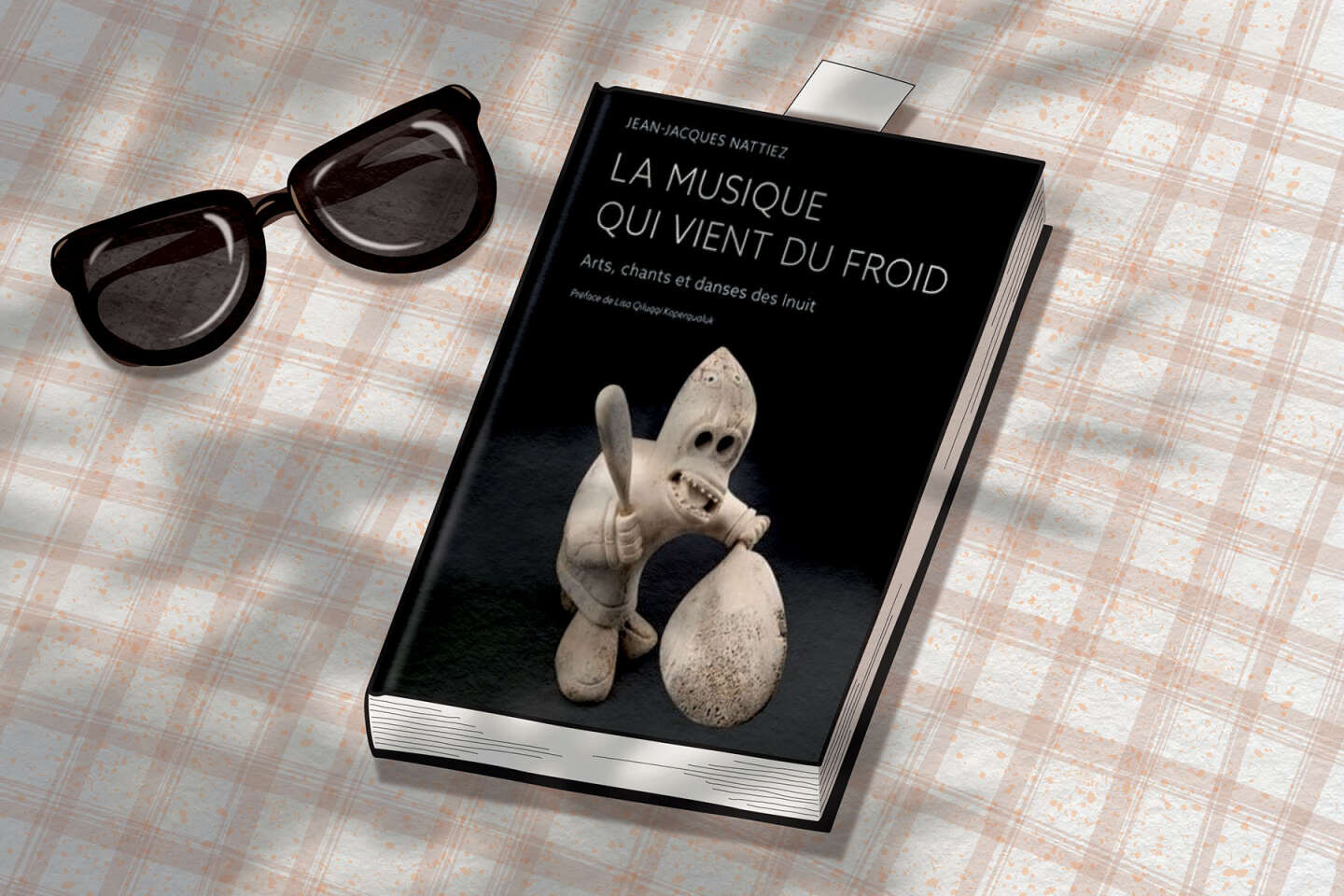
  • « Après la lecture de cet ouvrage sur les chants inuits, on ne pourra qu’admirer l’incroyable sens de l’à-propos du prince Charles et de Camilla »
    ▻https://www.lemonde.fr/series-d-ete/article/2023/08/04/apres-la-lecture-de-cet-ouvrage-sur-les-chants-inuits-on-ne-pourra-qu-admire


    « La Musique qui vient du froid », de Jean-Jacques Nattiez (Presses universitaires de Montréal, 2022).
    LEA GIRARDOT

    « La bibliothèque insolite de Mara Goyet » (5/23). Surprise par le rire, en 2017, du futur couple royal britannique face au chant de deux femmes inuites, l’autrice s’intéresse à cette pratique traditionnelle et à ses modalités dans «  La Musique qui vient du froid  ».

    Depuis toute petite, j’apprécie le prince Charles, aujourd’hui Charles III. Rien de ce qui le concerne ne m’échappe. Evidemment, je connais les fragilités qui m’ont menée à ce choix quand Diana aurait été un parti raisonnable : il était le mal-aimé, le ridicule, l’éternel dauphin, etc. J’ai voulu compenser.

    J’ai néanmoins été surprise par quelques fautes de goût de sa part, notamment ce fou rire au Canada, en 2017, lancé par Camilla, à l’écoute de deux femmes inuites exécutant un chant sans doute exotique à leurs oreilles. Comment quelqu’un qui se fait repasser ses lacets, se promène dans le Commonwealth comme dans un jardin depuis sa naissance et demande que l’on applique le dentifrice sur sa brosse à dents peut-il s’abaisser à un tel manque de tact, à un tel impair ? A une telle beauferie, en somme. Quand on est un prince anglais, on ne rigole pas devant une musique parce qu’elle ne ressemble pas à du Purcell, on bouffe des sauterelles en silence et l’on revêt quantité de coiffes avec le sourire. C’est son travail et son devoir.

    Evidemment, une forme de complaisance nous conduirait à voir dans ce fou rire un soupçon d’humanité. Mais je m’y refuse. J’ai d’ailleurs bien fait car, en lisant La Musique qui vient du froid. Arts, chants et danses des Inuits (Presses universitaires de Montréal, 2022), de Jean-Jacques Nattiez, j’ai pu en apprendre davantage sur ces chants que l’on décrit comme « haletés ». On les retrouve principalement au Canada, ils sont « caractérisés par l’alternance de l’expiration et de l’inspiration ». Ce qui peut les rendre un peu obscènes, du moins si l’on vit dans l’univers lubrique de Camilla et Charles. Ils sont par ailleurs « essentiellement réservés aux femmes ».

    Joutes vocales
    Ces chants permettent aux partenaires de démontrer leur capacité d’endurance au moyen de jeux narratifs que l’on fait durer, combine, juxtapose, enchaîne et répète. Parfois s’ajoutent des sons voisés (ou non) et des intonations diverses qui s’organisent autour d’un pattern rythmique constant.

    Ces joutes vocales doivent divertir mais aussi offrir la possibilité de surmonter les conflits : elles ne doivent pas entrer en opposition avec celles de l’adversaire. On parle à ce titre de chant ordalique. La gagnante sera celle qui utilisera les motifs les plus difficiles et les plus beaux. Quant à la perdante, elle se retrouvera souvent ridiculisée au cours de l’échange. L’humour n’est donc pas étranger à ces jeux de gorge, qui se terminent souvent par des éclats de rire. Dans un esprit similaire, au Groenland, on utilise des « bâtons de taquinerie ».

    reste 20% derrière le #paywall …

  • #No_voy_solo_no
    ▻https://www.youtube.com/watch?v=HXkOeBoL86w

    Cuando la zorra viene llena de arena x2
    Es señal que ha andado el zorro con ella x2

    Rondadora, rondadora de mi corazon
    No voy sola, no voy sola, que voy con mi amor

    Cuando la zorra viene llena de polvo x2
    Es señal que ha andado con ella el lobo x2

    Rondadora, rondadora de mi corazon
    No voy sola, no voy sola, que voy con mi amor

    Los primeros amores no sé que tienen x2
    Se meten en el alma y salir no pueden x2

    Rondadora, rondadora de mi corazon
    No voy sola, no voy sola, que voy con mi amor

    El bailar quiere gracia y el cantar brío x2
    El tocar el pandero mucho sentido x2

    Rondadora, rondadora de mi corazon
    No voy sola, no voy sola, que voy con mi amor

    #amour #musique #musique_populaire #péninsule_ibérique #folk #chants_populaires #Peñaparda #Ajechao #pandero_cuadrado #Espagne #coetus