• Crise USA-Venezuela : le pétrole, au cœur du bras de fer entre Trump et Maduro
    ▻https://www.connaissancedesenergies.org/afp/crise-usa-venezuela-le-petrole-au-coeur-du-bras-de-fer-entr

    Des années 1920 jusqu’à la nationalisation en 1976, les États-Unis ont exploité le pétrole du Venezuela.

    Maduro est né en 1962. A l’âge de 14 ans, il nationalise avec ses petits poings le Pétrole qui appartenait à Trump. Et depuis, Trump tente de récupérer ce qui lui appartient. Seulement Poutine agit en loucedé pour empêcher que les américains puissent continuer d’avoir du chauffage l’hiver. Alors, il faut faire la guerre aux russes. Et aux iraniens. Et au Hezbollah.

    La géopolitique racontée par les américains, c’est comme les histoires Carambar. C’est consternant, mais on continue de les lire. Et le plus amusant, c’est qu’en Europe, on en est les premiers bons clients.

    Tu auras noté que les USA ont décidé d’un embargo illégal contre le Venezuela, qualifiable d’actes de piraterie, mais que chez nous, on fait comme si c’était légitime. (en fait, chez nous, on se demande pourquoi on ne fait pas pareil avec les ressources qui nous appartiennent depuis le siècle dernier et qu’on nous a volé dans le cadre de nationalisations spoliatrices inadmissibles).

  • Big oil firms knew of dire effects of fossil fuels as early as #1950s, memos show

    Newly unearthed documents contain warning from head of #Air_Pollution_Foundation, founded in #1953 by oil interests.

    Major oil companies, including #Shell and precursors to energy giants #Chevron, #ExxonMobil and #BP, were alerted about the planet-warming effects of fossil fuels as early as 1954, newly unearthed documents show.

    The warning, from the head of an industry-created group known as the Air Pollution Foundation, was revealed by Climate Investigations Center and published Tuesday by the climate website #DeSmog. It represents what may be the earliest instance of big oil being informed of the potentially dire consequences of its products.

    “Every time there’s a push for climate action, [we see] fossil fuel companies downplay and deny the harms of burning fossil fuels,” said Rebecca John, a researcher at the Climate Investigations Center who uncovered the historic memos. “Now we have evidence they were doing this way back in the 50s during these really early attempts to crack down on sources of pollution.”

    The Air Pollution Foundation was founded in 1953 by oil interests in response to public outcry over smog that was blanketing Los Angeles county.

    Researchers had identified hydrocarbon pollution from fossil fuel sources such as cars and refineries as a primary culprit and Los Angeles officials had begun to proposal pollution controls.

    The Air Pollution Foundation, which was primarily funded by the lobbying organization Western States Petroleum Association, publicly claimed to want to help solve the smog crisis, but was set up in large part to counter efforts at regulation, the new memos indicate.

    It’s a commonly used tactic today, said Geoffrey Supran, an expert in climate disinformation at the University of Miami.

    “The Air Pollution Foundation appears to be one of the earliest and most brazen efforts by the oil industry to prop up a … front group to exaggerate scientific uncertainty to defend business as usual,” Supran said. “It helped lay the strategic and organizational groundwork for big oil’s decades of climate denial and delay.”

    Then called the Western Oil and Gas Association, the lobbying group provided $1.3m to the group in the 1950s – the equivalent of $14m today – to the Air Pollution Foundation. That funding came from member companies including Shell and firms later bought by or merged with ExxonMobil, BP, Chevron, Sunoco and ConocoPhillips, as well as southern California utility SoCalGas.

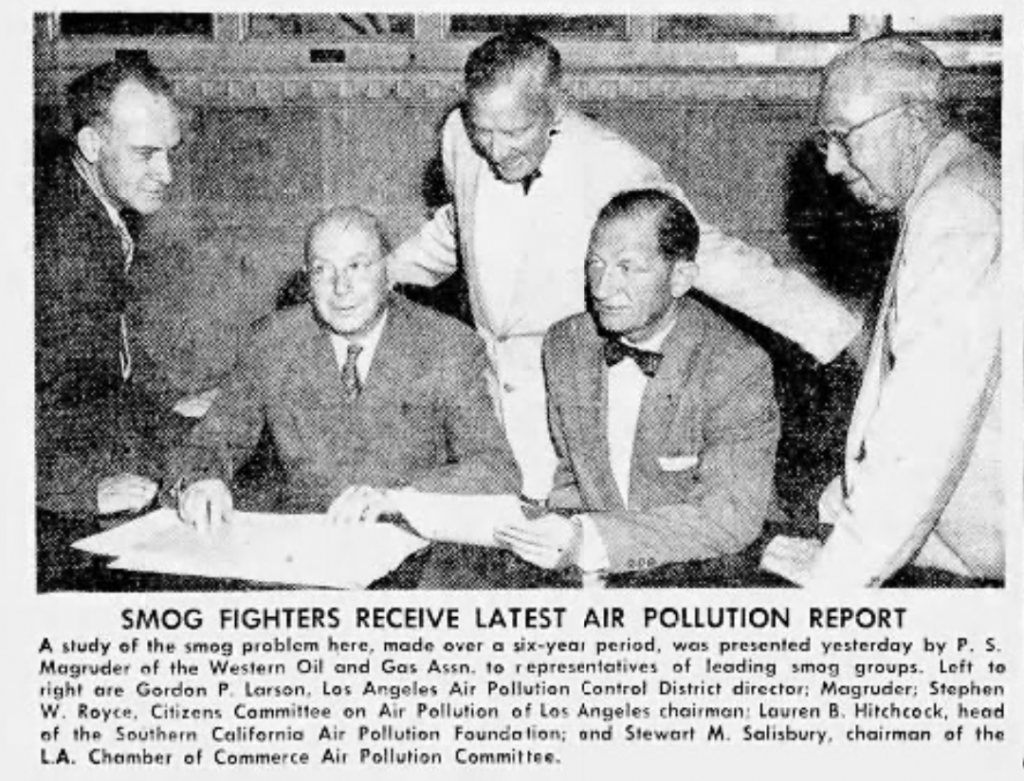
    The Air Pollution Foundation recruited the respected chemical engineer Lauren B Hitchcock to serve as its president. And in 1954, the organization – which until then was arguing that households incinerating waste in backyards was to blame – asked Caltech to submit a proposal to determine the main source of smog.

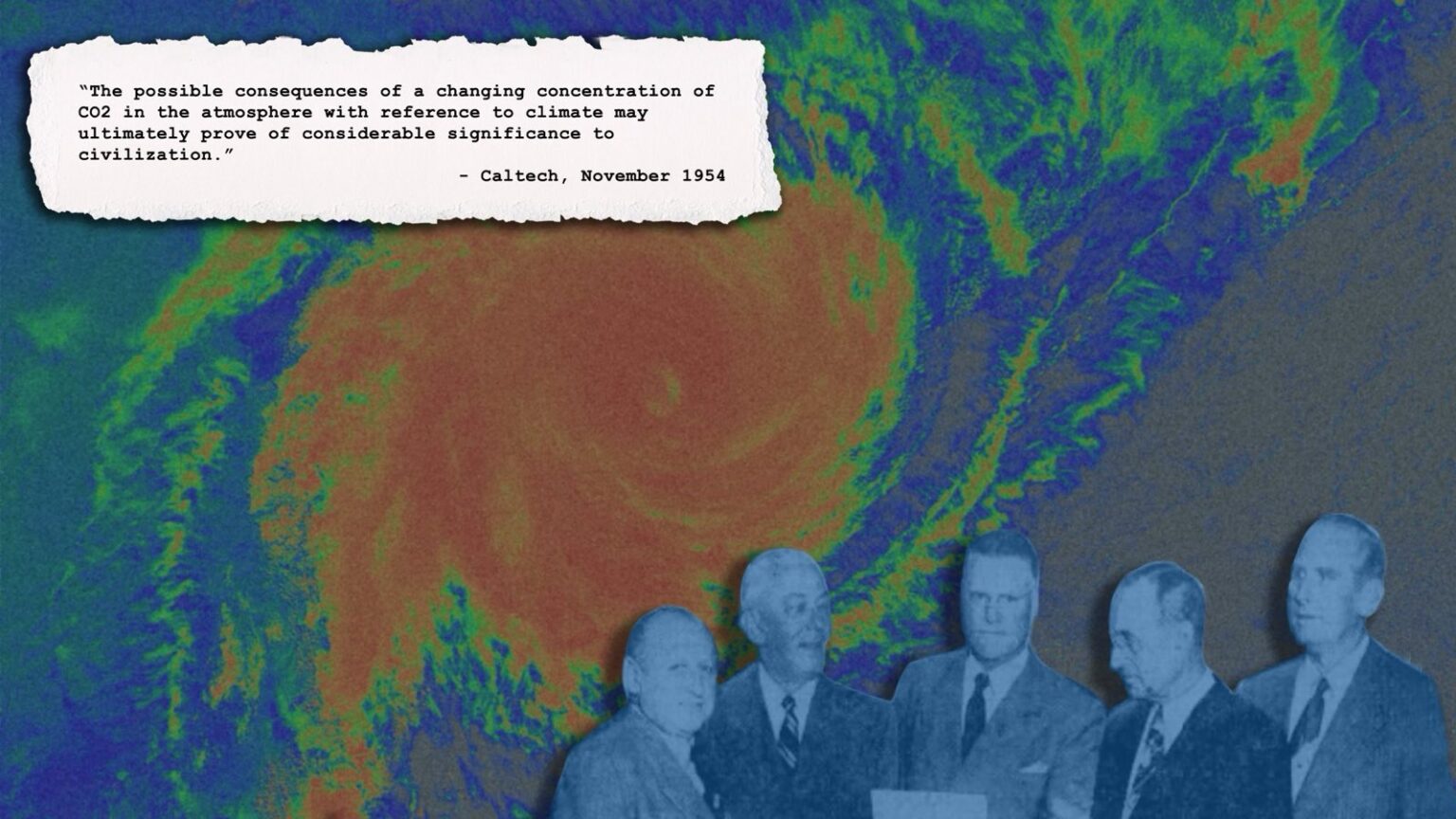
    In November 1954, Caltech submitted its proposal, which included crucial warnings about the coal, oil, and gas and said that “a changing concentration of CO2 in the atmosphere with reference to climate” may “ultimately prove of considerable significance to civilization”, a memo previously uncovered by John shows. The newly uncovered documents show the Air Pollution Foundation shared the warning with the Western Oil and Gas Association’s members in March 1955.

    In the mid-1950s, climate researchers were beginning to understand the planet-heating impact of fossil fuels, and to discuss their emergent research in the media. But the newly uncovered Air Pollution Foundation memo represents the earliest known cautionary message to the oil industry about the greenhouse effect.

    The Air Pollution Foundation’s board of trustees, including representatives from SoCalGas and Union Oil, which was later acquired by Chevron, approved funding for the Caltech project. In the following months, foundation president Hitchcock advocated for pollution controls on oil refineries and then testified in favor of state-funded pollution research in the California Senate.

    Hitchcock was reprimanded by industry leaders for these efforts. In an April 1955 meeting, the Western Oil and Gas Association told him he was drawing too much “attention” to refinery pollution and conducting “too broad a program” of research. The Air Pollution Foundation was meant to be “protective” of the industry and should publish “findings which would be accepted as unbiased”, meeting minutes uncovered by John show.

    After this meeting, the foundation made no further reference to the potential climate impact of fossil fuels, publications reviewed by DeSmog suggest.

    “The fossil fuel industry is often seen as having followed in the footsteps of the tobacco industry’s playbook for denying science and blocking regulation,” said Supran. “But these documents suggest that big oil has been running public affairs campaigns to downplay the dangers of its products just as long as big tobacco, starting with air pollution in the early-to-mid-1950s.”

    In the following months, many of the foundation’s research projects were scaled back or designed to be conducted in direct partnerships with lobbying groups. Hitchcock resigned as president in 1956.

    Last year, the largest county in Oregon sued the Western States Petroleum Association for allegedly sowing doubt about the climate crisis despite longstanding knowledge of it.

    DeSmog and the Climate Investigations Center previously found that the Air Pollution Foundation underwrote the earliest studies on CO2 conducted in 1955 and 1956 by renowned climate scientist Charles David Keeling, paving the way for his groundbreaking “Keeling Curve,” which charts how fossil fuels cause an increase in atmospheric carbon dioxide.

    Other earlier investigations have found that major fossil companies spent decades conducting their own research into the consequences of burning coal, oil and gas. One 2023 study found that Exxon scientists made “breathtakingly” accurate predictions of global heating in the 1970s and 1980s, only to then spend decades sowing doubt about climate science.

    The newly unearthed documents come from the Caltech archives, the US National Archives, the University of California at San Diego, the State University of New York Buffalo archives and Los Angeles newspapers from the 1950s.

    The Western States Petroleum Association and the American Petroleum Institute, the top US fossil fuels lobby group, did not respond to requests for comment.

    ▻https://www.theguardian.com/us-news/2024/nov/12/big-oil-fossil-fuel-warning

    #effets #énergie_fossile #lobby #CO2 #changement_climatique #climat #alerte

    • Revealed: Big Oil Told 70 Years Ago That Fossil Fuel Emissions Could Impact ‘Civilization’

      New documents show how a deceptive PR strategy pioneered in 1950s California first exposed the risk of climate change and then helped the industry deny it.

      April 6, 1955, was a perfect spring day in Los Angeles. Downtown, the skies were unusually smog-free as Lauren B. Hitchcock, president of the Air Pollution Foundation, made his way up the marble steps of the city’s exclusive California Club for a meeting with some of the West Coast’s most powerful businessmen. Waiting inside the club’s oak-paneled rooms were top executives from California’s major oil companies. They were the Air Pollution Foundation’s largest funders, and they were not happy.

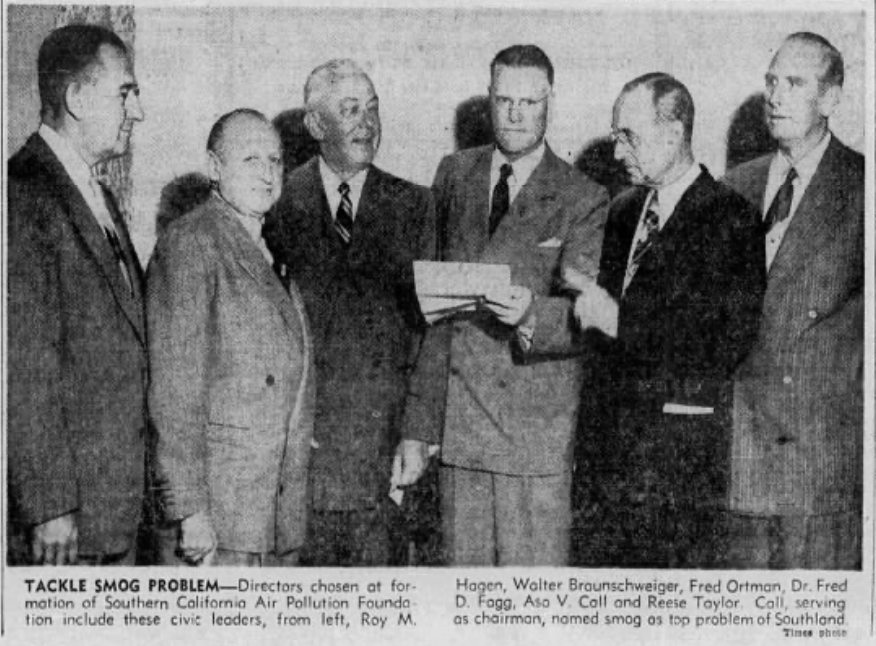
      As the foundation’s president, it was Hitchcock’s job to oversee a research program aimed at solving Southern California’s escalating smog crisis – a crisis that had provoked mass protests throughout Los Angeles County only a few months before. Determined to tackle every possible source of smog, Hitchcock was investigating the region’s numerous oil and gas refineries. On top of this, he was publicly demanding action to curtail air pollution across the state, angering the members of the industry’s oldest lobby group, the Western States Petroleum Association (WSPA), then known as the Western Oil and Gas Association (WOGA). Several weeks earlier, the foundation had also published a report containing the bombshell warning that carbon dioxide (CO2) emissions from fossil fuels could have considerable long-term consequences for “civilization.” Displeased, WSPA’s senior leaders summoned Hitchcock to the California Club where they reprimanded him, spelling out in no uncertain terms exactly what they expected in return for their hefty financial contributions.

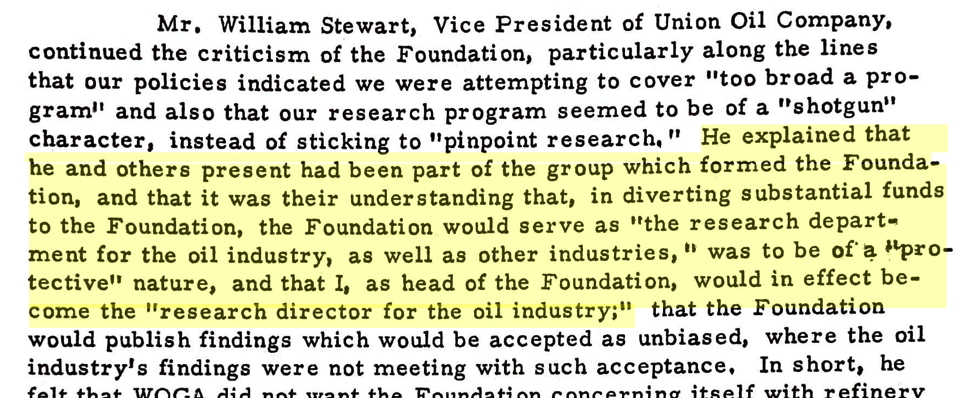
      Over lunch, WSPA’s oilmen criticized Hitchcock for supporting pollution controls across California, for drawing “attention” to refinery pollution, and for conducting “too broad a program” of research. Instead, they told him they had formed the Air Pollution Foundation to be “protective,” that Hitchcock should serve as “the research director for the oil industry” and the foundation should publish “findings which would be accepted as unbiased” where the oil industry’s findings were not seen as trustworthy.

      This frank exchange, reported in detail by Hitchcock in a never-before-seen memo, unmasks the strategic motivations behind Big Oil’s sponsorship of air pollution research. Alongside dozens of other newly obtained documents, the memo shows that 1950s L.A. was ground zero for a tactic that has since become a key element of the oil industry’s PR playbook: funding a third-party community front group to sponsor and publicize research aimed at downplaying or denying the harmful impacts of burning fossil fuels.

      Following Big Oil’s intervention, the Air Pollution Foundation’s reports referred to CO2 as “innocuous.”

      Since the 1950s, oil and gas companies have repeatedly used front groups to influence public opinion, block clean air regulation, and stall climate action.

      This deceptive tactic, rooted in California history, is a major focus of climate litigation currently progressing through the state’s courts.

      Ironically, this strategy, designed to protect oil and gas producers from local air pollution controls, led to WSPA members being informed in 1954 of a far greater potential danger resulting from their operations: global climate change.

      This month, the 70th anniversary of researchers warning Big Oil about the risks of climate change, atmospheric carbon dioxide is 50 percent higher than before the Industrial Revolution. Record-breaking heat waves, violently destructive storms, wildfires, drought, and flooding are all increasing due to the effects of greenhouse-gas-induced climate change. Yet, in meetings held behind closed doors over multiple decades, oil and gas executives have consistently decided to deny, dismiss, or downplay the risk of burning fossil fuels to protect their business – just like WSPA’s oilmen of the 1950s. Compelling new evidence shows this pattern of behavior was already hardwired into the industry’s DNA by 1955 and persists today.
      An ‘Air Pollution Siege’

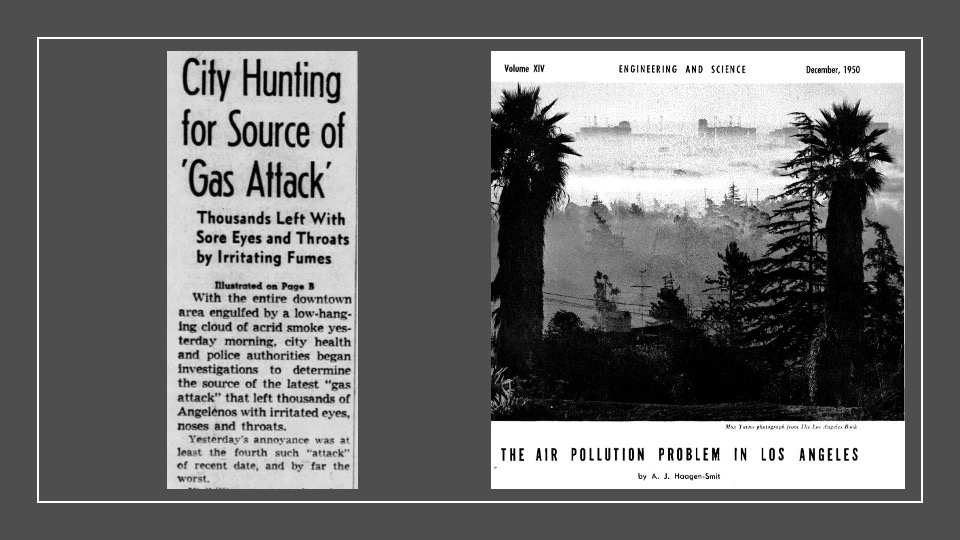
      “Outraged L.A. Citizens Still Suffer from Smog,” a Los Angeles Times headline in December 1952 cried out. That fall had seen Southern California experience its “most prolonged air pollution siege,” suffering five straight weeks of smog that pushed public anger to the “boiling point.” Thick, acrid, and irritating to the eyes and lungs, smog had plagued Los Angeles’ once idyllic corner of the southwestern U.S. since 1943 when, during World War II, the sudden arrival of a blanket of noxious fumes had been mistaken for an enemy gas attack. Obscuring the sun, smog reduced visibility to less than a few blocks, caused fatal traffic accidents, halted movie productions, confined children indoors, and canceled sporting events. On bad smog days, emergency rooms saw higher numbers of deaths from heart or lung diseases, and rates of asthma and bronchitis increased. Smog also damaged property and ruined crops.

      Angry citizens soon demanded action, pointing to the highly visible stack gases emitted daily by Los Angeles County’s many oil refineries. To deflect blame away from the industry, in 1947 WSPA established an internal Smoke and Fumes Committee chaired by William L. Stewart, Jr., a vice president of Union Oil (now Chevron). Through the committee, WSPA sponsored smog studies at the Stanford Research Institute (SRI), downplaying the industry’s role.

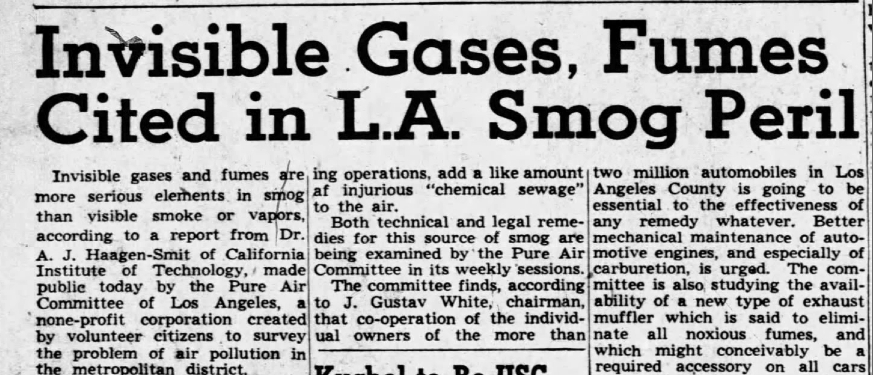
      By 1950, however, Caltech chemist Arie Haagen-Smit had identified hydrocarbon pollution from “oil fields, refineries, filling stations, automobiles, etc.” as the primary sources of smog. Using this emerging science, county authorities developed plans to enforce pollution controls. In response, oil industry leaders dialed up their anti-regulatory counteroffensive, dismissing Haagen-Smit’s findings as “unproved speculation,” and citing their own SRI research to claim that the substances responsible for smog had “not been positively identified.” WSPA, now aided by the oil industry’s national association, the American Petroleum Institute (API), argued to delay regulatory action, and recommended expanding research into the causes of smog instead.

      Meanwhile, the smog crisis intensified. Taking matters into their own hands, a group of independent L.A. citizens established the Pure Air Committee, holding public meetings that sought “legal remedies” to combat air pollution. Big Oil’s strategy of relying on SRI’s industry-funded research to stem the tide of bad publicity and prevent regulation was failing. “The policeman is coming!” an executive of Union Oil, warned the API at the group’s mid-year meeting.
      Foundation for War on Smog

      It was out of this battleground that WSPA formed the Air Pollution Foundation (APF). In September 1953, an official account of the foundation’s origins stated that a group of unnamed “civic leaders” gathered to discuss what they could do to eliminate smog. According to this official version of events, “It was obvious that more facts concerning the nature and origin of smog were necessary before proper controls could be invoked.”

      However, Hitchcock’s confidential memo, written in the aftermath of his 1955 California Club meeting, reveals that senior WSPA officials and oil industry executives were among this group of “civic leaders” and that the APF was, in fact, intended as a vehicle for publishing supposedly “unbiased” findings.

      By filtering information “concerning the nature and origin of smog” through a foundation staffed with reputable scientists as well as its own representatives, WSPA hoped to win public credibility among L.A.’s angry residents, stall regulation, and protect the industry’s bottom line. This was a tactic that the U.S.’s heavy industries had used since the 1930s to fight worker health and safety reforms. However, the oil and gas industry, finding themselves directly in the regulatory firing line, now repurposed the same technique for their own agenda. At first, everything seemed to go according to plan.

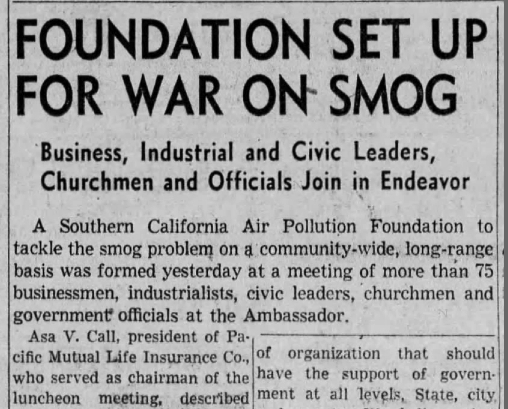
      “Foundation Set Up For War On Smog,” a November 7, 1953, L.A. Times headline stated, heralding the APF’s official launch. The paper reported that more than “75 businessmen, industrialists, civic leaders, churchmen and government officials” had announced a “community-wide, long-range” program for tackling the smog crisis. A list of the APF’s trustees revealed a cross-section of the city’s most influential figures including the heads of southern California’s most prestigious academic institutions, retail magnates, founders of the state’s leading banks, and the presidents of SoCalGas, Southern California Edison, and Union Oil (acquired by Chevron in 2005).


      According to the foundation’s “Statement of Policy,” these board members who represented “polluting industries” had a particular responsibility to ensure that they would be “parties to all facts and evidence brought to light on the problem” so that they and their colleagues in the fossil fuel industry could “continue their best efforts toward the abatement of air pollution.” In reality, these efforts would fall short but, for the moment, WSPA’s prototype front group received a warm welcome in the press, which heralded the APF as a “Citizens’ Group.”

      Timeline of Events – (Click arrows to browse)

      Follow the Money

      Behind the scenes, documents show that the oil and gas industry was the APF’s largest funder by far, making annual contributions of approximately $200,000 (equivalent to $2.4 million today). In 1955, “oil companies” contributed $200,000 out of the foundation’s total income of $348,000. Throughout the foundation’s six-year existence, WSPA members contributed over a third of the APF’s total income, totaling $1.3 million (around $14 million today).

      But which companies were behind WSPA’s funding of the APF? A November 1954 APF press release is the only surviving document revealing the identity of these individual oil and gas companies. The list includes General Petroleum and Humble Oil (ExxonMobil); Richfield Oil (BP); Shell; Southern California Edison; Southern California Gas Company (SoCalGas); Sunray Oil (Sunoco); Tidewater (ConocoPhillips); and Standard Oil of California, the Texas Company, Union Oil, and Western Gulf (all now Chevron).

      With the money came influence, starting with the APF’s choice of president. The chairman of Standard Oil of Indiana (now BP) scouted universities for recommendations, but it was an APF trustee with ties to Standard Oil of California (Chevron) who eventually recruited Lauren B. Hitchcock, the East Coast chemical engineer and World War I Naval Aviation Corps veteran, to serve as president of the APF.

      With his track record of working for the chemical industry, Hitchcock likely appeared a safe pair of hands to run a front group for Big Oil. Unanimously approved by the APF’s trustees, he relocated his family from New York to Los Angeles, where he began formulating the APF’s research program. From the start of Hitchcock’s tenure, oil and gas industry representatives were omnipresent in the foundation’s operations, as consultants or members of important APF committees. However, despite these guardrails, Hitchcock would turn out to be more independent-minded than the oil industry had hoped.

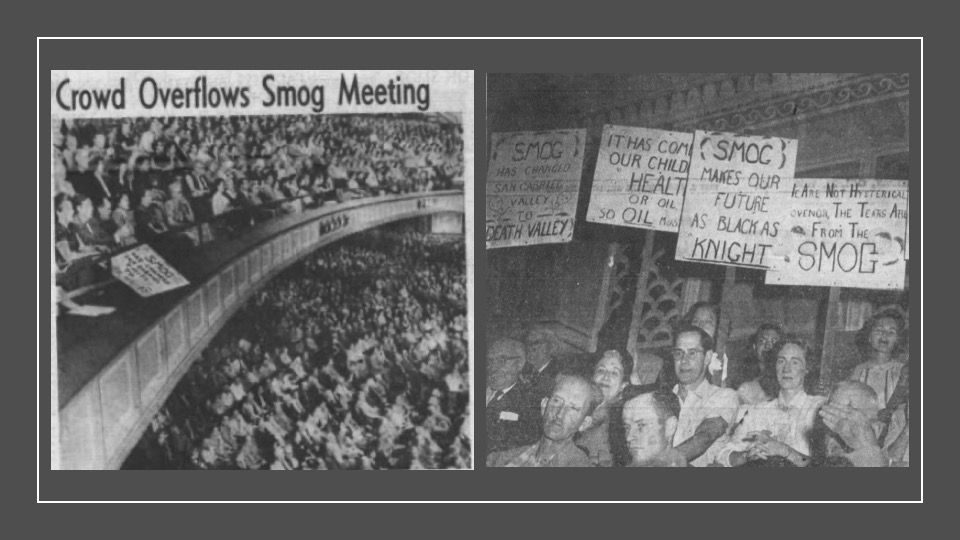
      Meanwhile, as each month passed, the air pollution crisis in southern California deepened. “Crowd Overflows Smog Meeting,” warned an October 1954 L.A. Times headline. Ten consecutive days of smog had resulted in mass civic protests in the region and on October 20, a crowd of 4,500 “smog-weary citizens” attended a meeting at the Pasadena Civic Auditorium where speakers outlined plans for a citizens’ movement.

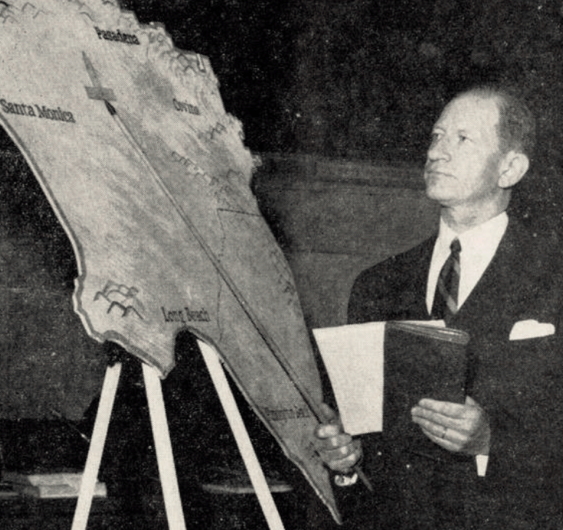
      A few weeks later, on November 16, 1954, Hitchcock unveiled the foundation’s ambitious “Twelve-Month Research Program.” Billed as “unprecedented in scope,” the program focused on investigating the fundamental causes of smog and developing technology to reduce pollution from automobiles. Among the dozens of research projects listed, only one related specifically to exploring refinery emissions – even though refineries in the area contributed an estimated 33 percent to L.A.’s total air pollution.
      CO2 and Climate Change

      Tucked away at the end of the “Twelve-Month Research Program,” under the category of “Fundamental Research in Physics, Meteorology and Chemistry” the APF quietly listed a project that would lead to one of the most important scientific discoveries of the 20th century: “Study of Carbon Isotopes.”

      A few months earlier, in September 1954, the APF’s Research Committee had asked Caltech to submit a proposal for studying the source of aerial carbon compounds, hoping it would determine whether “gasoline combustion products” or “the burning of rubbish” were responsible for LA’s carbon pollution. If burning trash proved to be the major source of the city’s carbon pollution, the fossil fuel industry might not be blamed for the smog problem.

      Responding to the APF’s request on November 15, 1954, Caltech’s Samuel Epstein, associate professor of geochemistry, submitted a research proposal outlining how recent scientific advances, applied to carbon dioxide samples, might tell researchers more about the sources of air pollution.

      But what the APF got from Epstein may have been more than they bargained for. As well as offering a possible “contribution to the solution of the smog problem,” Epstein’s proposal outlined how Caltech’s study could be used to predict the future. Increasing concentrations of atmospheric CO2 by burning fossil fuels might affect the Earth’s climate, wrote Epstein, describing the “concentration of CO2 in the atmosphere” as a matter “of well recognized importance to our civilization.” He emphasized that “the possible consequences of a changing concentration of CO2 in the atmosphere with reference to climate” may “ultimately prove of considerable significance to civilization.”

      Epstein proposed “a thorough investigation.” To do this, a Caltech researcher would gather atmospheric samples of CO2 “over the ocean, over mountain areas, and from industrial localities similar to the Los Angeles Basin.”

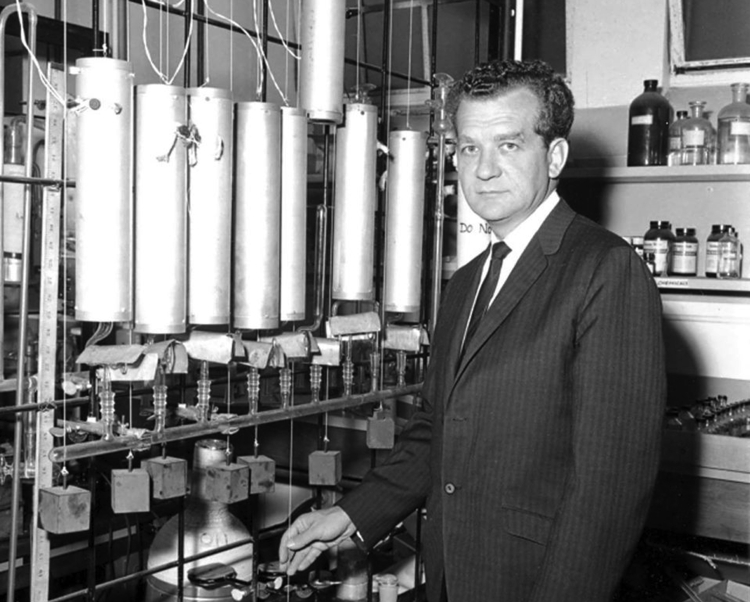
      As previously revealed by Desmog, APF funding of this project underwrote the earliest studies on CO2 conducted in 1955 and 1956 by Charles David Keeling, then a young postdoctoral researcher at Caltech. This research paved the way for Keeling’s later revelatory findings on global atmospheric CO2, and the publication of the iconic “Keeling Curve,” which charts how the level of atmospheric CO2 is rising due to the effects of burning fossil fuels. Keeling’s work, which has been used by climate researchers from James Hansen, who testified to Congress in the 1980s about global warming, to Michael Mann, creator of the famous “Hockey Stick” graph showing temperature rises from burning fossil fuels during the Industrial era, underpins our understanding of man-made climate change.
      WSPA Knew

      In late 1954, Caltech’s research proposal moved quickly up the foundation’s chain of command, informing oil and gas industry representatives of CO2’s potential climate danger at each stage of the approval process.

      First, the APF’s Research Committee, which included SoCalGas president F. M. Banks, endorsed the study. Next, the APF’s Board of Trustees, with its representatives from Union Oil (Chevron) and Southern California Edison, approved the proposal’s funding.

      A few months later, in March 1955, the APF shared Caltech’s CO2 warning widely among its supporters in a First Technical Progress Report, repeating the message that CO2 emissions from burning fossil fuels could seriously impact the atmosphere. According to President Hitchcock’s official annual statement later that year, copies of all the Foundation’s reports printed to date, which were also available to the public, had been sent to its “trustees and contributors.”

      This shows that WSPA and its major dues-paying members, including Shell, SOCAL Gas, and Southern California Edison, as well as the companies owned or later acquired by Chevron, ExxonMobil, ConocoPhillips and BP, were all warned 70 years ago that the product they profited from could pose a threat to the stability of the Earth’s climate.

      During the mid-1950s scientific understanding of the “greenhouse effect” was increasing among climate researchers, who published their findings outside of academia in publications such as The New York Times and Time magazine. However, these APF documents are the first to show that the oil industry was directly informed of the link during this period. Nevertheless, it seems this information was something the industry might ultimately have preferred to keep private.
      California Club Showdown

      In the months prior to his California Club summons Hitchcock had been busy. In February 1955, he had urged state leaders to take action on refinery pollution, encouraging the Bay Area “to start an air pollution control program” built on knowledge gained from Los Angeles’s smog problem.

      Then, in March 1955, the APF First Technical Progress Report outlined the possible climate risk caused by burning fossil fuels and featured an APF refinery emissions audit showing higher pollution levels than those previously reported by the WSPA-sponsored SRI. And, in early April, during a hearing of the California State Senate in Sacramento, Hitchcock publicly testified in favor of state-funded “fact-finding efforts on air pollution.”

      Two days later, frustrated WSPA leaders summoned him to the California Club.

      At the meeting, Philip S. Magruder, chairman of WSPA’s Smoke and Fumes Committee and executive vice president of General Petroleum (ExxonMobil), told Hitchcock the committee was “questioning the advisability” of the foundation “calling attention” to refinery stack gases “or publicizing them.”

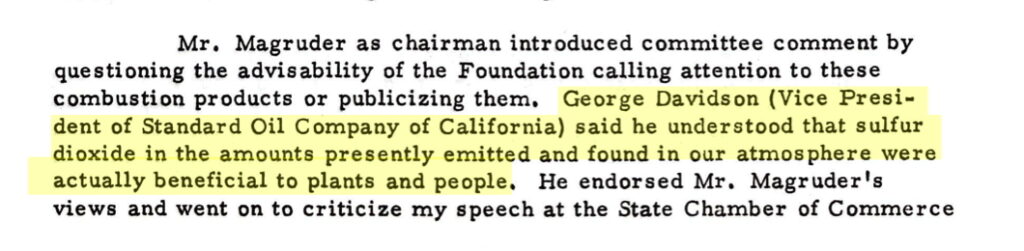
      Next, George Davidson, vice president of the Standard Oil Company of California (Chevron), stated it was his understanding that sulfur dioxide (SO2) from refineries was “actually beneficial to plants and people” in the amounts presently emitted. This even though by 1955 scientists had already identified SO2 as harmful to plants and human health – sometimes even lethal. Davidson endorsed Magrudger’s view that the foundation should not investigate such refinery emissions, criticizing Hitchock’s San Francisco speech for calling “attention to a growing Bay Area air pollution problem.”

      Finally, WSPA brought out their big gun, William L. Stewart, Jr., vice president of Union Oil (Chevron), now chairman of the national Smoke and Fumes Committee for the API, who revealed some important truths about the oil industry’s sponsorship of the foundation.

      First, Stewart complained that the APF was attempting to cover “too broad a program” of research before divulging that “he and others present had been part of the group which formed the Foundation.” As chairman of WSPA’s Smoke and Fumes Committee at the time the APF had been created, Stewart told Hitchcock it was WSPA’s “understanding that, in diverting substantial funds to the Foundation,” the APF would “serve as the research department for the oil industry,” that it would “be of a ‘protective’ nature,” publishing “findings which would be accepted as unbiased,” whereas the industry’s own findings were seen as favorable to its interests. In short, he conveyed that WSPA did not want the APF to concern itself with refinery emissions, but should just “stick to research.” As for Hitchcock’s own role, Stewart told Hitchcock that WSPA expected the APF president to act as “the research director for the oil industry.”

      Surprised and disappointed, Hitchcock referred the matter to the foundation’s Executive Committee, requesting they consider how WSPA’s “basic misunderstanding of the Foundation’s purposes” might be resolved.

      The resolution came soon enough but not as Hitchcock had hoped. Another recently recovered set of documents, written less than a week after the meeting, shows Union Oil executive, Vance N. Jenkins, condemning the APF’s entire research program. In a memo sent to Stewart, Jenkins denigrated every single APF project except for one: its proposal to establish a “first-class public information bureau” to give the public so-called “definite facts” (approved by oil industry executives) about the smog problem. According to Jenkins, this was the “purpose for which the Foundation was established” and the only aspect of its activity he could “fully recommend.” The following day, president of Union oil and APF Trustee, Reese H. Taylor, submitted Jenkins’ damning memo to the foundation’s Executive Committee.
      Records show that WSPA’s efforts hit their target. From this point on, the oil industry exerted tighter control over the APF’s activities. At a special meeting of the Executive Committee on April 13, 1955, unnamed participants put forward a proposal for a new “scientific sub-committee” to advise on “technical matters” whose members should be selected from “organizations such as the American Petroleum Institute, the Western Oil and Gas Association.”. By July, the APF had duly installed this new Technical Advisory Committee, which included representatives from the API and Richfield Oil (BP).

      In line with Union Oil’s suggestions, APF research projects were scaled back, focusing exclusively on automobile emissions, often conducted jointly with the API. After 1955, APF-sponsored research was increasingly used to lobby County authorities against clean air regulations or to boost the oil and gas industry’s public image. APF newsletters and reports also emphasized the high cost of pollution control, arguing that regulation would have negative economic impacts, and repeated the mantra that more research was necessary before regulatory action should be taken. Additionally, from March 1956, records show that WSPA issued a series of direct requests that the APF focus exclusively on public relations instead of air pollution research.

      Finding himself increasingly sidelined to a fundraising role and at odds with WSPA’s intentions, Hitchcock resigned as president and managing director in September 1956.

      His successor, W. L. Faith, had ties to the API and would steer the foundation in line with WSPA’s demands.

      After resigning, Hitchcock moved back east, where he joined the faculty at the University of Buffalo’s engineering school and founded his own air pollution consulting firm.
      ‘Harmless’ Carbon Dioxide

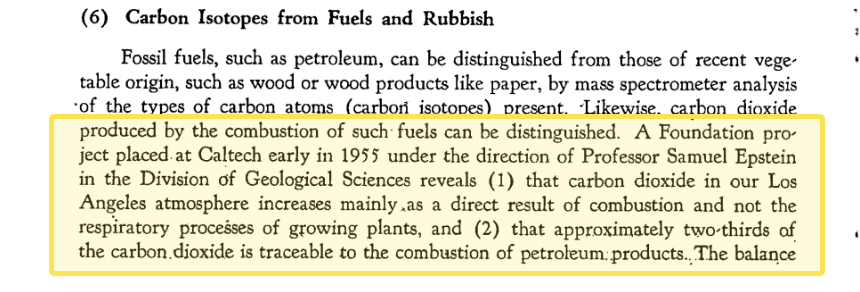
      Following WSPA’s California Club intervention, APF publications reviewed by DeSmog made no further reference to CO2’s potential impact on the Earth’s climate. These subsequent APF reports also did not explain the implications of Keeling’s Caltech findings for advancing scientific understanding of the atmospheric changes caused by burning fossil fuels, even though APF members had been explicitly warned that these changes might “ultimately prove of considerable significance to civilization.” While APF publications reported some of Keeling’s findings – principally that CO2 in the L.A. atmosphere “increased mainly as a direct result of combustion” and that approximately two-thirds of this overall CO2 was “traceable to the combustion of petroleum products” – these APF reports did not mention the potential long-term impacts of fossil-fuel-generated CO2 emissions.

      Moreover, in what might be some of the earliest known examples of climate denial, APF reports that followed declared CO2 to be “innocuous.” Additionally, individual industry representatives affiliated with WSPA also denied the potential harmfulness of CO2, setting a precedent for an oil industry practice that would be repeated over the following decades.

      At the U.S. Public Health Service’s November 1958 National Conference on Air Pollution in Washington, D.C., Shell executive Charles A. Jones, a WSPA and API air pollution expert who had formerly served on the APF’s Technical Advisory Sub-Committee, publicly described CO2 as “harmless.” In stark contrast, one of the conference’s keynote speakers had earlier that same day discussed the potential climate consequences of CO2 emissions – such as global warming, the melting of polar ice caps, and rising sea levels.

      Asked about Jones’ statement, Shell told DeSmog the company had “nothing to add.”
      Legacy

      The APF disbanded at the end of 1960 without fanfare. According to its official history, the foundation had “fulfilled its mission,” despite its failure to resolve the smog problem in California. In reality, however, by 1961, air pollution regulation was expanding across the U.S., turning the oil and gas industry’s pollution-control problem into a national issue. Consequently, the industry’s national trade association, the API, became increasingly active in both air pollution research and in working to prevent emissions-limiting regulation of the oil industry.

      From the 1950s up to today, the oil and gas industry has used the playbook that it first deployed through the APF, funding apparently ‘independent’ research via third-party community groups to fight against air pollution legislation and climate action. These efforts have repeatedly stalled clean air and climate regulations. At the same time, oil and gas companies have leveraged this research spending to boost their public image as a responsible partner in the search for climate or clean air solutions, and to promote voluntary measures or technological fixes in place of legally mandated pollution controls.

      WSPA’s member companies, including BP, Chevron, ExxonMobil, and Shell, funded outright climate denial via their membership in the Global Climate Coalition (GCC), which operated from 1989 to 2001. The GCC built on the APF legacy by sponsoring its own “independent research” and using industry-funded studies to promote climate denial, lobbying the UN’s official scientific advisory body the International Panel on Climate Change (IPCC). This derailed international efforts to prevent the catastrophic impacts of climate change.

      In 1998, an API, Exxon, and Chevron-approved “Global Climate Science Communications Action Plan” included forming a Global Climate Science Data Center, which bore an even closer resemblance to the APF. According to the plan, the Center would function as “a non-profit educational foundation with an advisory board of respected climate scientists . . . staffed initially with professionals on loan from various companies and associations with a major interest in the climate issue,” who would fund research designed to “fill the gaps in climate science.”

      “Victory will be achieved when average citizens ‘understand’ (recognize) uncertainties in climate science,” announced the “Action Plan,” echoing the APF’s 1954 declaration that “while there is much we don’t know about smog, there are some definite facts which have not been made clear to the public. We should inform them fully as to all that is really known.”

      Even in the 21st century, WSPA and its member companies continue to influence public opinion and block clean air regulations and state climate initiatives through third-party front groups like Californians for Energy Independence and Californians Against Higher Taxes, which have used industry-sponsored research to battle even modest reforms. In 2014, a leaked PowerPoint presentation revealed WSPA support for more than a dozen front groups, with many still actively opposing climate policy a decade later. Last month, WSPA was named as a defendant in an Oregon climate lawsuit for its support of front groups listed in the leaked presentation. The complaint alleges that WSPA funded the front groups as part of a “multimillion dollar public relations campaign to further the oil industry’s propaganda machine.”

      Today, some 70 years after the Air Pollution Foundation’s launch, the communities surrounding Los Angeles’ refineries persistently suffer severe public health impacts from fossil fuel emissions. At the same time, the region continues to experience some of the country’s worst air quality. As a state, California is also the second-highest emitter of CO2 in the U.S.

      Nationally, oil industry-funded groups like Natural Allies for a Clean Energy Future or the Partnership to Address Global Emissions advocate for using ‘natural’ (methane) gas by sponsoring and publicizing industry-friendly research boosting gas as a climate solution.

      These new Air Pollution Foundation documents show how WSPA and its member companies played a central role in establishing the tradition of the oil industry’s deceptive tactics. Now, five major oil companies (Chevron, ExxonMobil, BP, ConocoPhillips, and Shell), as well as the API, are being sued for the use of such tactics in the landmark California v. Big Oil lawsuit, part of the landscape of litigation launched by former presidential candidate Kamala Harris. Despite functioning as a pioneer in the evolution of these tactics, WSPA has not been named as a defendant in the California suit.

      Commenting on the lawsuit, a Shell spokesperson told DeSmog that the company does “not believe the courtroom is the right venue to address climate change, but that smart policy from government and action from all sectors is the appropriate way to reach solutions and drive progress.”

      Neither WSPA nor API responded to a request for comment by DeSmog.

      ▻https://www.desmog.com/2024/11/12/revealed-big-oil-told-70-years-ago-that-fossil-fuel-emissions-could-impact-c

  • Ils ont du #pétrole et une seule idée : enrichir leurs #actionnaires
    En 2022, les cinq premiers #groupes_pétroliers occidentaux ont totalisé 180,5 milliards de dollars de #profits. Un record historique. Plutôt que d’investir dans les #énergies #renouvelables et de préparer l’avenir, ils préfèrent reverser l’essentiel à leurs actionnaires. Cette position de rente ne peut que relancer le débat sur le rôle des #majors_pétrolières.

    Martine Orange
    8 février 2023 à 19h01

    ▻https://www.mediapart.fr/journal/economie-et-social/080223/ils-ont-du-petrole-et-une-seule-idee-enrichir-leurs-actionnaires

    EnEn temps normal, les cinq premiers grands groupes pétroliers mondiaux (#ExxonMobil, #Chevron, #Shell, #BP et #Total) auraient sans doute plastronné. Au vu des circonstances, ils ont préféré faire #profil_bas. En ces temps de #crise_énergétique qui malmène #finances_publiques, entreprises et ménages, leurs profits ne peuvent que relancer le débat sur leur conduite : en 2022, ces cinq premiers groupes ont totalisé ensemble 180,5 milliards de dollars, soit 100 milliards de dollars de plus qu’en 2021, année déjà considérée comme #exceptionnelle.

    Et ces profits auraient été encore plus élevés si des opérations comptables n’étaient venues lisser les comptes. Total ainsi a enregistré un bénéfice comptable net ajusté de 36,2 milliards de dollars. Après la prise en compte de ses désinvestissements en Russie (15 milliards de dollars), son bénéfice est ramené à 20,5 milliards de dollars.

    Jamais dans leur histoire récente, les majors du Big Oil n’avaient enregistré des résultats aussi colossaux. En 2011, année où le prix du baril avait dépassé les 120 dollars, leurs profits s’élevaient à 140 milliards. Shell d’ailleurs le reconnaît : le groupe a enregistré un résultat historique (39,8 milliards de dollars), le plus élevé en 115 ans !

    À eux seuls, ces chiffres résument la folie du moment. La crise énergétique, les tensions géopolitiques, la guerre en Ukraine sur fond de crise climatique se traduisent par des déplacements financiers colossaux et une accumulation encore plus gigantesque de capitaux entre quelques mains qui mettent à profit leur position de rente, sans qu’aucun facteur redistributif ne vienne les contrarier. Un pognon de dingue, pour reprendre l’expression désormais consacrée, est accaparé au détriment de tous à court et long terme.

    Si le ministre des finances français Bruno Le Maire ne sait toujours pas ce que veut dire des superprofits, la Maison Blanche le sait, qui en a tout de suite perçu le caractère politiquement explosif. « Il est scandaleux qu’Exxon réalise un nouveau record des profits pour les compagnies pétrolières occidentales, après que les Américains ont été forcés de payer des prix si élevés à la pompe au milieu de l’invasion de Poutine », a réagi un porte-parole de la Maison Blanche dans un mail, tout de suite après la publication des résultats d’ExxonMobil annonçant 55 milliards de dollars de profits.

    Une économie mondiale toujours plus dépendante des énergies fossiles
    Derrière ces chiffres effarants se cache déjà un premier constat accablant : en dépit des grands discours et des beaux engagements, l’économie mondiale est plus carbonée que jamais. Alors que 2022 a été marquée par nombre d’événements (tempêtes, inondations, vagues de chaleur, sécheresses) prouvant la réalité des dérèglements climatiques et l’urgence de la situation, rien n’a été fait pour tenter d’endiguer le recours aux énergies fossiles. Au contraire. La demande mondiale en pétrole, gaz, hydrocarbures continue d’augmenter : elle a dépassé désormais les 100 millions de barils par jour et devrait continuer à progresser cette année, selon l’Agence internationale de l’énergie.

    Mais face à ce rebond de la consommation, l’offre n’a pas suivi. Depuis plusieurs années, les groupes pétroliers et les pays producteurs ont opté pour une stratégie de la rareté, laquelle leur semble beaucoup plus rémunératrice et sûre que de pousser à la surproduction. L’effacement des approvisionnements pétroliers et gaziers russes, à la suite des sanctions adoptées par l’Occident en réponse à l’invasion de l’Ukraine par la Russie, a achevé de bouleverser les équilibres existants du secteur.

    L’Europe, la poule aux œufs d’or des pétroliers
    L’impréparation et la façon brouillonne dont les pays européens ont mis en œuvre ces sanctions contre Moscou, jusqu’alors l’un des premiers, voire le premier, fournisseurs de certains pays européens, a conduit à une surenchère entre ces derniers, ainsi qu’à une spéculation effrénée. Dans leurs présentations, les grands groupes mondiaux ne manquent pas de consacrer des mentions spéciales au continent européen : « le siphonnage massif de la prospérité en dehors de l’Europe », dénoncé par le premier ministre belge à l’automne, se retrouve en partie dans les comptes de résultats de ces cinq majors.

    L’Europe a été leur poule aux œufs d’or. Les profits exceptionnels de Shell sont tirés en grande partie de ces ventes de gaz naturel liquéfié à l’Europe, tout comme BP. ExxonMobil a multiplié par deux ses profits en Europe en un an. Plus grave : l’Union européenne, qui se veut le fer de lance de la transition écologique, a tourné le dos à ses propres engagements, a relancé dans la panique ses centrales à gaz, ses centrales à charbon, et construit à toute vitesse des terminaux pour importer du gaz naturel liquéfié (GNL) et ainsi faire face aux ruptures provoquées par les sanctions à la suite de l’invasion de l’Ukraine par la Russie. Sans discuter les prix.

    La mise entre parenthèses des impératifs climatiques
    Cette volte-face n’a pas échappé aux majors pétrolières. Tous ces grands groupes ont tout de suite compris que le fameux signal-prix, censé être la corde de rappel économique pour contraindre la demande, n’existait pas dans un monde qui a soif d’énergie, et qui n’a d’autre solution que de se raccrocher aux énergies fossiles, faute d’alternatives.

    Dans leur présentation stratégique, les cinq majors prennent toutes note de ce revirement pour s’en réjouir. Ces dernières années, elles se posaient des questions existentielles, se demandant où était leur futur : elles avaient arrêté nombre de projets d’investissements dans l’exploration et la production, les jugeant trop risqués et pas assez rentables ; elles s’inquiétaient d’être bannies par les investisseurs et les marchés de capitaux pour non-conformité aux critères sociaux et environnementaux. Toutes ces craintes se sont volatilisées : les grands groupes pétroliers occidentaux affichent aujourd’hui une sérénité rarement vue depuis 2011, leur dernière grande année de réussite.

    Bien sûr, elles disent avoir encore des projets pour accompagner la transition écologique et développer d’autres énergies propres. ExxonMobil ne jure que par les techniques de production de l’hydrogène et la capture du carbone, entraînant tous ses concurrents sur ce chemin. Shell, qui n’a installé dans le monde que 2,2 GW d’énergies renouvelables, promet d’accentuer ses efforts dans ce domaine. Mais à côté, il y a les autres projets, ceux qui leur importent vraiment : les cinq projettent d’investir des dizaines de milliards de dollars dans les prochaines années pour relancer l’exploration et la production de gaz et de pétrole.

    Le revirement le plus spectaculaire est sans doute celui de BP. Depuis des années, les études du groupe britannique servent de référence pour l’ensemble du monde pétrolier. Il est le premier à avoir tiré la sonnette d’alarme sur la nécessaire transition écologique, le premier aussi à s’être montré le plus ambitieux dans ses objectifs de décarbonation. Tout s’est évanoui.

    Alors que BP s’était engagé auparavant à diminuer de 40 % ses productions pétrolières et gazières d’ici à 2030 afin de diminuer ses émissions et de s’engager dans une stratégie bas carbone, le président de BP, Bernard Looney, a annoncé le 6 février que tout était révisé. Au lieu de 40 % de baisse de ses émissions en 2030, il ne prévoit qu’une diminution de 25 % à cette date, l’objectif initial étant repoussé à 2050. Et même si le groupe promet d’augmenter de 8 milliards de dollars ses investissements dans les énergies renouvelables, il a décidé aussi d’investir fortement dans la production des énergies fossiles, en dépit des recommandations de l’Agence internationale de l’énergie d’arrêter les investissements dans ces énergies.

    Une taxation bien légère et pourtant contestée
    Car jamais cela n’a été aussi rentable. Un critère, cher aux investisseurs financiers, résume à lui seul la rente sur laquelle ils prospèrent : le retour sur les capitaux investis. Ce ratio a atteint des niveaux jamais vus dans une industrie lourde : 25 % pour Exxon, 20,7 % pour Chevron, 16,7 % pour Shell, 30,5 % pour BP, 28,2 % pour Total. Tous sont assis sur des montagnes de cash dépassant les 30 à 40 milliards de dollars. Une situation qui selon eux est appelée à durer au moins jusqu’en 2025. Car tous pensent que la situation sur les marchés pétroliers est appelée à rester durablement tendue, que la Russie ne reviendra pas, ou seulement par des subterfuges, sur les marchés mondiaux.

    Leurs superprofits ont donc toutes les chances de perdurer. Cela ne les empêche pas de se plaindre des « mauvaises manières » qui, selon ces cinq grands groupes, leur sont faites en Europe. Tous insistent sur « l’effort considérable » qu’ils font en raison des taxes et prélèvements qui leur ont été imposés par certains gouvernements européens et britannique, sans parler de la taxe instituée au niveau européen, sur leurs superprofits.

    ExxonMobil prétend que ces impositions lui ont coûté 1,8 milliard de dollars cette année ; Shell cite le chiffre de 2,2 milliards de dollars ; TotalEnergies de 1,7 milliard de dollars. Au nom de tous, ExxonMobil a engagé un procès pour contester la contribution décidée par la Commission européenne sur les superprofits. Compte tenu du flou juridique qui entoure cette décision, le groupe pétrolier a des chances de l’emporter.

    Attaqués de toutes parts par des forces politiques qui contestent ces profits excessifs au moment où les finances publiques sont mises à mal, les groupes pétroliers ont engagé un lobbying d’enfer et des escouades de juristes et de fiscalistes pour contrer les attaques et dissuader tout gouvernement qui serait tenté d’augmenter la fiscalité, même de façon exceptionnelle, sur leurs profits.

    Le ruissellement vers le haut de la rente pétrolière
    La question, cependant, risque de s’imposer à nouveau très vite dans nombre de pays. D’autant que les grands groupes vont avoir de plus en plus de mal à justifier l’utilisation de ces résultats exorbitants.

    Car que font-ils de ces profits colossaux ? Ils les reversent à leurs actionnaires. ExxonMobil a reversé 30 milliards de dollars à ses actionnaires, Shell 26 milliards, plus que ses dépenses d’investissement. Au total, les cinq grands groupes ont versé plus de 80 milliards de dollars sous forme de dividendes et de rachats d’actions en 2022. Ils se préparent à augmenter encore ces versements en 2023. Afin de s’attirer les bonnes grâces des marchés financiers, Chevron a annoncé un programme mammouth qui a même stupéfait Wall Street : le géant pétrolier s’est engagé à dépenser 75 milliards de dollars dans les prochaines années pour racheter ses propres actions. Ce qui n’est pas donner un grand signe de confiance dans ses activités ni même indiquer une vision d’avenir.

    À LIRE AUSSI
    Le monde financier face au changement climatique

    Distraire tant d’argent pour le seul bénéfice des actionnaires alors que l’on sait que la transition écologique va requérir des investissements gigantesques dans les prochaines années apparaît juste comme surréaliste. Ces sommes auraient pu être réinvesties dans d’autres projets d’énergie propre. Les dirigeants auraient pu aussi décider d’en conserver une grande partie pour créer des fonds susceptibles, le moment venu, de financer l’arrêt et le démantèlement de leurs actifs échoués. Car il y aura des dizaines de milliards d’actifs échoués dans ce secteur promis à plus ou moins long terme à entrer en voie d’extinction. Il aurait pu au moins essayer d’apporter des remèdes et des réparations aux pollutions et dégâts provoqués par leurs activités d’exploration et de production.

    Habitués depuis leur création à externaliser tous les coûts de leur activité sur la collectivité et à négliger l’intérêt général, ces grands groupes ne voient pas les raisons qu’il y aurait à changer. Ils poussent leur avantage tant que c’est possible, avant de laisser aux autres la charge de payer les ardoises finales. Des ardoises de plus en plus exorbitantes.

    • Relançons plutôt le débat sur le rôle de la classe capitaliste. Elle gagne des milliards en vendant des engins de mort et se frotte les mains à chaque bombe qui explose. D’autres profitent de la guerre pour spéculer sur le prix de l’énergie. Et d’autres encore espèrent que la guerre sera très destructrice pour vendre du béton et des matériaux de construction. C’est le mur du capitalisme qu’il faut abattre, pas seulement une de ses briques. Pour passer d’une société où tout est bon pour les profits d’une minorité infinitésimale de possédants parasites – y ­compris le pillage et le sang – à une société rationalisée par les producteurs eux-mêmes.

  • Pendant ce temps-là…

    Les « #superprofits » des #pétroliers sont historiques, au point d’avoir, sans guère de doute, dépassé les 200 milliards de dollars en 2022 rien que pour les pétroliers occidentaux. La publication prochaine des résultats annuels d’#ExxonMobil, #Chevron, #TotalEnergies, #BP, #Shell et consorts devrait confirmer le caractère exceptionnel de l’année 2022, qui a vu les prix de l’#énergie s’envoler… et les pétroliers en profiter largement.
    A elles deux, les majors américaines ExxonMobil et Chevron vont frôler les 100 milliards de dollars de #bénéfices sur l’année. Un total que dépasseront aussi allègrement, ensemble, les quatre principales sociétés européennes du secteur, BP, Shell, TotalEnergies et Equinor. Les #profits du Saoudien Aramco et des autres acteurs contrôlés par des Etats seront aussi au sommet.
    Les dividendes en avant
    Ce « trésor de guerre » bénéficie en premier lieu aux #actionnaires. Les montants redistribués ont atteint des records en 2022 et les Européens ont tendance à combler l’écart qui existait dans ce domaine, historiquement, avec les Américains. Là où les actionnaires d’ExxonMobil et Chevron récupéreront près de 60 % des bénéfices de l’an dernier, le taux de redistribution atteindra 48 % en moyenne en Europe, selon AlphaValue. Mais il devrait grimper à 73 % chez Shell, par exemple.
    Les pétroliers européens ont ou vont reverser un total de 122 milliards de dollars à leurs actionnaires pour l’année 2022, via 78 milliards de dollars de dividendes et 44 milliards de rachats d’actions.

  • 2022, année de #crise pour une grande partie la tech.

    Au global, les 6 plus gros groupes tech américain (#Apple, #Netflix, #Amazon, #Microsoft, #Meta et #Alphabet) avaient déjà perdu fin octobre 3.300 milliards de dollars de #capitalisation_boursière. La #chute est particulièrement brutale pour Meta. Avec 312 milliards de $ fin décembre, Meta vaut désormais moins en #Bourse que des poids lourds de l’économie traditionnelle, comme #Procter_&_Gamble (361 milliards) ou le pétrolier #Chevron (343 milliards…).

    #krach #secteur_technologique

    Aux salariés de payer (la loi du capital) :

    Au total, plus de 152.000 employés de la tech ont été licenciés en 2022, tous pays confondus, selon l’agrégateur Layoffs.fyi.

    #licenciement_de_masse #licenciement (Les Échos)

  • Titane, pétrole, fer, gaz, manganèse… Le contrôle des ressources fossiles et des minerais enfouis dans le territoire ukrainien est au cœur du conflit.
    Origine de ces informations : Reporterre ▻https://reporterre.net/Un-enjeu-cache-de-la-guerre-en-Ukraine-les-matieres-premieres

    Les médias qui font semblant de nous informer sur ce qui se passe en Ukraine en sont à parler d’affrontements religieux entre la catholicisme et la religion orthodoxe. Une guerre de religion en somme.

    Et pourtant,
    L’accaparement des matières premières enfouies sous le sol ukrainien est à la racine d’un conflit où les voix des puissances nationales et industrielles priment sur celles des Ukrainiens.

    ▻https://reporterre.net/local/cache-vignettes/L720xH477/arton27091-1a17d.jpg?1670344949

    Depuis 2014, le rapprochement des gouvernements ukrainiens avec les puissances occidentales a permis aux États-Unis et à l’Union européenne de planifier l’extraction des matières premières de ce pays richement doté.

    En 2010, d’importants gisements de #gaz_de_schiste ont été découverts en Ukraine. En 2013, les permis ont été attribués aux sociétés étasuniennes #Shell et #Chevron. Sur fond de corruption.

    Le gigantesque projet d’extraction de Yuzivska a déclenché l’opposition des habitants de la région, qui se sont mobilisés contre les pollutions des eaux qui résulteraient de la fracturation hydraulique.

    Au même moment, l’exploitation d’hydrocarbures à l’est de la Crimée visant à produire 3 millions de tonnes de #pétrole par an démarre.
    L’annexion de la Crimée », par la Russie a mis cette exploitation pétroliére en stand by.

    Les conquêtes de 2014 ont permis à la Russie « de contrôler la moitié du pétrole conventionnel de l’Ukraine, 72 % de son #gaz naturel, et l’essentiel de sa production et de ses réserves de charbon ». Ces dernières sont situées dans le Donbass.

    Le sous-sol du pays recèle des gisements considérables estimés par les services de géologie ukrainiens à une valeur de 7 500 milliards de dollars.

    L’Ukraine est classée au cinquième rang mondial pour ses réserves en #fer, en #graphite et en #manganèse — deux éléments critiques pour la production de batteries électriques.

    Elle est aussi sixième productrice mondiale de #titane, métal stratégique pour la production aéronautique, et recèle d’importants gisements de #lithium, de #cuivre, de #cobalt et de #terres_rares.

    Il y a aussi du #zirconium, utilisé aux trois quarts pour le nucléaire ; de #scandium, sous-produit de la métallurgie du titane utilisé dans les piles à combustible et les alliages ultralégers de l’aéronautique ; ou encore de #molybdène, employé dans les superalliages, les écrans et les puces électroniques.

    Pour la fabrication de semi-conducteurs, l’industrie étasunienne est par ailleurs dépendante à 90 % du #néon de qualité ultrapure produit à Odessa à partir du gaz issu des acieries.

    L’Ukraine s’était engagée à privatiser ses mines et son industrie métallurgique, à collaborer avec les services géologiques européen.

    À partir de 2016, le gouvernement ukrainien a commencé à vendre ses permis miniers par le biais d’enchères électroniques.

    Tous ces gisements de minerais sont aussi stratégiques pour les pays de l’Otan qu’ils le sont pour la Russie.

    L’agression russe de l’Ukraine a donc aussi pour toile de fond cet affrontement pour l’approvisionnement en matières critiques, dont la première victime est la population ukrainienne.

    En ce moment, tout le monde promet ou prête de l’argent à l’Ukraine.

    Quelle marge de manœuvre restera-t-il aux dirigeants du pays quand il faudra rembourser les dizaines de milliards d’euros de prêts contractés auprès de la BERD, de la Banque mondiale, des États-Unis et des pays européens qui convoitent ses ressources naturelles ?

    Une fois la guerre terminée, les Ukrainiens n’auront-ils pas la mauvaise surprise de découvrir que pendant qu’ils tentaient de survivre aux assauts et aux bombardements russes, leurs régions ont été vendues aux entreprises minières et gazières ?

    #ukraine #économie #guerre #otan #usa #énergie #ue #géopolitique #matières_premières #Russie #Donbass

  • Gli affari dei “campioni italiani” con il regime di #al-Sisi in Egitto

    #Eni, #Snam, #Intesa_Sanpaolo e #Sace hanno stretto in questi anni rapporti proficui con il governo del Cairo, responsabile di gravi violazioni dei diritti umani. Nemmeno l’omicidio di Giulio Regeni ha segnato un punto di svolta nella fossile “campagna d’Egitto”. Il dettagliato report di ReCommon (▻https://www.recommon.org) in occasione della Cop27 sul clima.

    Perché Eni ha continuato ad aumentare i propri investimenti in Egitto persino dopo che sono emersi possibili legami tra l’assassinio del ricercatore italiano Giulio Regeni e il regime di Abdel Fattah al-Sisi? Qual è stata la destinazione finale degli ingenti finanziamenti che Intesa Sanpaolo ha concesso al ministero della Difesa e al ministero delle Finanze egiziani? Perché l’assicuratore pubblico Sace non ha avuto alcuna remora nel garantire la raffineria di Assiut, nonostante altri attori finanziari fossero preoccupati per le implicazioni reputazionali derivanti proprio dal “caso Regeni”? E perché Snam non pubblica ancora l’elenco completo degli azionisti dell’East mediterranean gas company?

    Sono solo alcune delle domande che ReCommon ha rivolto alle principali aziende e società italiane che hanno stretto in questi anni rapporti proficui con il governo egiziano, accusato di gravi e ripetute violazioni dei diritti umani (su tutte la detenzione di circa 60mila dissidenti politici) e che si rifiuta di collaborare con gli inquirenti italiani nelle indagini sul rapimento, la tortura e l’omicidio di Giulio Regeni. Gli interrogativi, insieme a un’attenta analisi degli interessi economici delle singole realtà, è contenuta nel dossier “La campagna d’Egitto – Gli affari dei ‘campioni’ italiani con il regime di al-Sisi” pubblicato il 7 novembre 2022, all’indomani dell’apertura della 27esima Conferenza della Nazioni Unite sul clima (Cop27) che si svolge a Sharm el-Sheikh. Un documento preciso e dettagliato da cui emerge, ancora una volta, come il business prevalga sui diritti umani e sui processi democratici.

    L’Egitto è un punto di investimento centrale per Eni, che lì possiede circa il 20% delle proprie riserve di gas con una produzione annuale di 15 miliardi di metri cubi (pari al 30% del totale dell’azienda e al 60% di quella egiziana) per un utile di 5,2 miliardi di euro in cinque anni, che costituisce circa un terzo degli utili complessivi della divisione “Esplorazione e produzione”.

    Uno snodo chiave negli interessi dell’azienda in Egitto è stata la scoperta ad agosto 2015 del giacimento sottomarino “Zohr” che, secondo le esplorazioni di Eni, conterebbe circa 850 miliardi di metri cubi di gas: si tratterebbe quindi di una delle maggiori riserve a livello mondiale e la più grande nel Mediterraneo. Con l’omicidio Regeni, rinvenuto il 2 febbraio 2016, le relazioni diplomatiche tra i due Paesi si sono però complicate. “Abbiamo detto chiaramente che noi siamo per i diritti umani, per questo pretendiamo chiarezza assoluta. La vogliamo come italiani e come Eni”, aveva dichiarato Claudio Descalzi, amministratore delegato dell’azienda, a Il Messaggero il 6 marzo 2016. Ma solo pochi giorni prima, il 21 febbraio, la sua società aveva ottenuto l’assegnazione proprio dell’appalto per il giacimento “Zohr”.

    Secondo ReCommon al centro dei legami tra Eni e il regime di al-Sisi vi sarebbero i debiti accumulati dalle aziende energetiche egiziane nei confronti delle compagnie fossili straniere che nel 2013, anno della presa del potere da parte del generale, avevano raggiunto quota sei miliardi di euro. In particolare Eni era tra le aziende più esposte, con un ammontare di crediti scaduti pari a un miliardo di euro. Nel 2015 l’azienda italiana è riuscita però ad accordarsi con l’Egitto garantendo cinque miliardi di euro in investimenti in cambio di condizioni contrattuali favorevoli che comprendono anche un raddoppio del prezzo del gas che il Paese acquista dall’azienda. “Di lì a poco la società realizzerà la maxi scoperta di ‘Zohr’ e nel giro di qualche anno i debiti contratti dallo Stato egiziano risulteranno azzerati. Non c’è ombra di dubbio che, dal punto di vista degli affari, Eni abbia vinto la sua scommessa, accettando però di legarsi al regime egiziano con un nodo così stretto da non allentarsi neppure di fronte all’uccisione di un cittadino italiano”, ricorda ReCommon. Inoltre grazie ai progetti realizzati da Eni, il regime di al-Sisi è riuscito a conquistarsi un ruolo di primo piano nello scacchiere energetico regionale ed europeo

    Anche Snam, il più grande operatore d’Europa per quanto riguarda il trasporto del gas e che gestisce una rete di 41mila chilometri e una capacità di stoccaggio di 20 miliardi di metri cubi, partecipata dallo Stato italiano, vanta numerosi affari nel Paese nordafricano. L’azienda ha acquistato a dicembre 2021 il 25% della East mediterranean gas company (Emg), proprietaria del gasdotto Arish-Ashkelon che collega Israele ed Egitto, anche noto come “Gasdotto della pace”. Secondo ReCommon tra gli azionisti di Emg vi sarebbero Emed, una società “partecipata dalla israeliana Delek Drilling e dal gruppo statunitense Chevron” e che controlla il 39% di Emg. Secondo le inchieste di ReCommon e della testata investigativa egiziana Mada Masr, Emed avrebbe legami con i vertici dei servizi segreti egiziani.

    “Tutti questi investimenti infrastrutturali vengono attuati grazie agli istituti di credito e alle istituzioni finanziarie. In prima fila c’è Bank of Alexandria, la sussidiaria locale del primo gruppo bancario italiano, Intesa Sanpaolo”, ricorda ReCommon. L’istituto è la quinta banca d’Egitto e conta 1,5 milioni di clienti su 179 filiali. Nel 2006 il governo di Hosni Mubarak aveva venduto per 1,6 miliardi di dollari l’80% delle azioni della banca a Intesa Sanpaolo. Bank of Alexandria, partecipata anche dal governo egiziano, afferma di essere il canale privilegiato degli investimenti italiani nel Paese nordafricano, tra cui il settore oil&gas e quello degli armamenti.

    A garanzia degli investimenti vi è poi Sace, l’assicuratore pubblico italiano controllato dal ministero dell’Economia, che tra il 2016 e il 2021 ha emesso garanzie a progetti oil&gas per un totale di 13,7 miliardi di euro, ponendosi così al terzo posto per il supporto finanziario all’industria fossile dopo le controparti canadesi e statunitensi. In Egitto, Sace ha emesso garanzie per 3,9 miliardi di euro. Tra le infrastrutture supportate dall’istituto vi sono due raffinerie: la Middle East oil refinery (Midor) e l’Assiut oil refinery (Aor), entrambe in capo all’Egyptian general petroleum corporation (Egpc), l’azienda petrolifera di Stato.

    Per realizzare Midor, Sace ha garantito i prestiti di Bnp Paribas, Crédit agricole e Cassa depositi e prestiti (Cdp) per un ammontare di 1,2 miliardi di euro. Mentre per quanto riguarda la raffineria di Assiut, Sace ha agito in modo simile garantendo a febbraio 2022 un supporto finanziario pari a 1,32 miliardi di euro: l’impianto è la più grande raffineria dell’Egitto meridionale e si tratta di un’infrastruttura strategica per al-Sisi che ha presenziato personalmente l’inaugurazione dei lavori il 22 dicembre 2021. Tuttavia secondo le ricostruzioni dei quotidiani StartMag e Milano Finanza (citate nel report di ReCommon) vi sarebbero state delle resistenze all’interno di Cdp in merito al finanziamento della raffineria dovute alla “scarsa sostenibilità ambientale e a imprecisate ‘considerazioni geopolitiche’”.

    La stima di 3,9 miliardi di euro relativa alle garanzie di Sace comprende però solo il supporto alle operazioni classificate di categoria A e B cioè “quei progetti che possono avere ripercussioni ambientali e sociali che vanno da gravi a irreversibili: raffinerie, oleodotti, gasdotti, centrali termoelettriche, petrolchimici, dighe e altre mega-infrastrutture”. Sace, infatti, non è obbligata a riportare le altre categorie di investimento tra cui possono ricadere armamenti come ad esempio l’acquisto di due fregate militari italiane da parte dell’Egitto da Fincantieri nel 2020 per un totale di 1,2 miliardi di euro. L’esposizione storica di Sace al regime del Generale al-Sisi è quindi molto superiore ai 3,9 miliardi di euro dichiarati.

    ▻https://altreconomia.it/gli-affari-dei-campioni-italiani-con-il-regime-di-al-sisi-in-egitto

    #Italie #Egypte #Regeni #Giulio_Regeni #Assiut #pétrole #raffinerie #East_mediterranean_gas_company (#EMG) #droits_humains #Zohr #gaz #énergie #gazduc #gazduc_Arish-Ashkelon #Emed #Delek_Drilling #Chevron #Bank_of_Alexandria #Middle_East_oil_refinery (#Midor) #Assiut_oil_refinery (#Aor) #Egyptian_general_petroleum_corporation (#Egpc) #Bnp_Paribas #Crédit_agricole #Cassa_depositi_e_prestiti (#Cdp) #Fincantieri

  • Les majors pétrolières affichent des bénéfices records – Géopolitique Mondiale des Energies
    ▻https://blogs.letemps.ch/laurent-horvath/2022/07/30/les-majors-petrolieres-affichent-des-benefices-records

    Du côté de la France, la Hollande, l’Angleterre ou de l’Allemagne, les gouvernements subventionnent l’essence avec des boucliers financiers qui permettent également de ne pas répercuter entièrement la baisse des cours du baril. Tous ces artifices financiers permettent aux majors de compter sur le secteur public pour financier leurs bénéfices et de maintenir la demande élevée.

    […]

    Aux USA et à travers l’Europe, ces bénéfices interpellent alors que l’inflation dépasse les 10% en Angleterre et les 8% en Allemagne. Certains appellent à un impôt spécial sur les bénéfices. Faudrait-il déjà que ces entreprises paient des impôts.

    #Étrange

  • Powers need to study all oil options, including Iran, Venezuela - France
    ▻https://www.reuters.com/business/energy/france-wants-iran-venezuela-return-oil-markets-2022-06-27

    “So there is a knot that needs to be untied if applicable... to get Iranian oil back on the market,” the [French] official told reporters, speaking on condition of anonymity. “We have Venezuelan oil that also needs to come back to the market.”

    A second official said all options need to be explored given the stakes, including those involving #Iran and #Venezuela.

    #sanctions #pétrole

    • Iran and Venezuela Could Help Biden’s Gas Crisis If He Lifts U.S. Sanctions
      ▻https://www.newsweek.com/iran-venezuela-could-help-bidens-gas-crisis-if-he-lifts-us-sanctions-17198

      while engaging with the two designated adversaries would likely stir a degree of criticism from hawkish factions at home looking to portray the president as soft on U.S. foes, the rising cost of gas now fluctuating around the unprecedented $5 mark threatened to exact an even higher toll on Biden as his Democratic Party prepared for a contentious midterm election season.

    • US provides Chevron limited authorization to pump oil in Venezuela after reaching humanitarian agreement
      ▻https://www.cnn.com/2022/11/26/politics/us-chevron-venezuela-oil-agreement/index.html

      The US has granted #Chevron limited authorization to resume pumping oil from Venezuela following the announcement Saturday that the Venezuelan government and the opposition group have reached an agreement on humanitarian relief and will continue to negotiate for a solution to the country’s chronic economic and political crisis, including a focus on the 2024 elections.

      [...] The official also highlighted the license’s limited nature saying that they do not expect this to have a tangible impact on international oil prices and that the move is intended as an inducement for the negotiations — not a reaction to high global oil prices.

  • #États-Unis. La libération de Steven Donziger, qui a passé près de 1 000 jours en détention arbitraire, met en lumière la nécessité d’agir contre les #poursuites-bâillons - Amnesty International
    ▻https://www.amnesty.org/fr/latest/news/2022/04/usa-steven-donzigers-release

    « Nous sommes soulagés d’apprendre que Steven Donziger va enfin recouvrer sa liberté, après presque 1 000 jours de détention arbitraire, dont 45 jours de prison et plus de 900 jours d’assignation à résidence. Il n’aurait jamais dû être détenu, pas un seul jour, car il est clair depuis le début de la procédure intentée contre lui qu’il a fait l’objet de représailles en raison de son travail de défense des droits humains qui l’a amené à dévoiler les agissements des entreprises.

    « Hélas, la fin de cette sentence ne signe pas la fin des injustices dont Steven Donziger est la cible. Le gouvernement américain doit appliquer pleinement la décision du Groupe de travail de l’ONU sur la détention arbitraire , notamment en menant une investigation impartiale et indépendante sur les circonstances qui ont conduit à la détention arbitraire de Steven Donziger, afin d’empêcher que cela ne se reproduise, et doit promulguer rapidement des lois contre les poursuites-bâillons en vue de protéger les personnes assez courageuses pour dénoncer les #crimes d’entreprises. Il importe d’empêcher les sociétés de détourner le système judiciaire américain dans le but de faire taire et d’intimider les défenseur·e·s des droits humains et les personnes qui dénoncent leurs agissements. »

    #Chevron #sans_vergogne

  • Le Pétrole contre le Droit. Quand Chevron s’acharne sur un avocat | Elisabeth Schneiter
    ▻http://www.terrestres.org/2020/11/02/petrole-vs-droit-lorsque-chevron-sacharne-sur-un-avocat

    Classée deuxième au rang des entreprises les plus émettrices de gaz à effet de serre, la compagnie pétrolière Chevron s’est fait condamner au début des années 2000 par un courageux avocat pour les ravages qu’elle a provoqué en Equateur. La réplique du géant a été impitoyable : une guérilla juridique hors-norme et un procès-baillon. C’est cette histoire édifiante, sur le point de se dénouer, qui est ici racontée. Source : Terrestres

  • Le numérique carbure au charbon, par Sébastien Broca (Le Monde diplomatique, mars 2020)
    ▻https://www.monde-diplomatique.fr/2020/03/BROCA/61553

    Partenariats des géants de la Silicon Valley avec l’industrie pétrolière, consommation massive d’énergie et de ressources : contrairement à ce qu’on a longtemps affirmé, l’économie numérique n’est ni « immatérielle » ni « verte ». Elle produit des dommages écologiques importants, dont les conséquences sont très inégalement réparties à la surface du globe. C’est l’histoire d’un ingénieur de Microsoft que son employeur envoie à Atyraou, sur le plus grand site pétrolier du Kazakhstan, exploité par Chevron en (...)

    #Apple #Chevron #Exxon_Mobil #Google #Microsoft #Total #British_Petroleum_(BP) #Amazon #GoogleCloud #AWS #algorithme #domotique #écologie #minerais #BigData #CloudComputing #comportement #InternetOfThings #surveillance #travail (...)

    ##British_Petroleum__BP_ ##Greenpeace

  • Oil is the New Data
    ▻https://logicmag.io/nature/oil-is-the-new-data

    Big Tech is forging a lucrative partnership with Big Oil, building a new carbon cloud that just might kill us all. I remember being nervous when I flew into Atyrau, Kazakhstan. Before boarding the flight, one of the business managers who organized the trip sent me a message with precise instructions on how to navigate the local airport : Once you land, get into the bus on the right side of the driver. This side opens to the terminal. Pass through immigration, pick up your luggage, and (...)

    #Apple #Chevron #Exxon_Mobil #Microsoft #Oracle #Total #algorithme #écologie #minerais #BigData #CloudComputing #Amazon #GoogleCloud #AWS #comportement #InternetOfThings #surveillance (...)

    ##travail
    ▻https://images.ctfassets.net/e529ilab8frl/2JLIy42sPCr5MEuBgBd2Rc/bdbbe0654528219fce577feb516ab5ae/zerocool.jpg

  • Les dessous crasseux du greenwashing d’Amazon | korii.
    https://korii.slate.fr/biz/dessous-crasseux-conscience-ecologique-amazon-coud-industrie-petrole

    Ses annonces relatives aux énergies vertes et à la neutralité carbone sont l’arbre qui cache la forêt de puits de pétrole. En septembre, le PDG d’Amazon Jeff Bezos promettait fièrement dans un communiqué que son entreprise allait utiliser 100% d’énergies renouvelables d’ici à 2030 et atteindre la neutralité carbone en 2040. Il annonçait pour cela la commande de 100.000 vans de livraison totalement électriques. Début décembre, Amazon tenait à Las Vegas une conférence appelée re:Invent et dédiée à AWS, sa (...)

    #Amazon #Chevron #Microsoft #Shell #British_Petroleum_(BP) #AWS #écologie #CloudComputing (...)

    ##British_Petroleum__BP_ ##greenwashing

  • Comment les géants pétroliers sapent l’Accord de Paris - Le Temps
    ▻https://www.letemps.ch/sciences/geants-petroliers-sapent-laccord-paris

    Il met en évidence le fait que les cinq principaux groupes pétroliers et gaziers cotés en bourse – ExxonMobil, Shell, Chevron, BP et Total – ont dépensé, depuis la COP21 à fin 2015, 1 milliard de dollars en opérations de lobbying et de relations publiques de façon à poursuivre et à intensifier leurs programmes d’extraction d’énergies fossiles. Et afin de pouvoir continuer également à bénéficier d’aides publiques, alors qu’ils ont engrangé 55 milliards de dollars de profits en 2018. En contradiction flagrante avec l’Accord de Paris, ces cinq compagnies ont agi de manière à contrôler, à retarder ou à bloquer les politiques énergétiques contraignantes. Elles sont ainsi parvenues à retarder les actions des Etats visant à limiter le réchauffement de la planète à 1,5°C d’ici à la fin du siècle.

    #club_des_cinq #économie_fossile #exxonMobil #shell #chevron #BP #Total #Cop21

  • Top oil firms spending millions lobbying to block climate change policies, says report

    Ad campaigns hide investment in a huge expansion of oil and gas extraction, says InfluenceMap.

    The largest five stock market listed oil and gas companies spend nearly $200m (£153m) a year lobbying to delay, control or block policies to tackle climate change, according to a new report.

    #Chevron, #BP and #ExxonMobil were the main companies leading the field in direct lobbying to push against a climate policy to tackle global warming, the report said.

    Increasingly they are using social media to successfully push their agenda to weaken and oppose any meaningful legislation to tackle global warming.

    In the run-up to the US midterm elections last year $2m was spent on targeted Facebook and Instagram ads by global oil giants and their industry bodies, promoting the benefits of increased fossil fuel production, according to the report published on Friday by InfluenceMap (▻https://influencemap.org/report/How-Big-Oil-Continues-to-Oppose-the-Paris-Agreement-38212275958aa21196).

    Separately, BP donated $13m to a campaign, also supported by Chevron, that successfully stopped a carbon tax in Washington state – $1m of which was spent on social media ads, the research shows.
    Sign up to the Green Light email to get the planet’s most important stories
    Read more

    Edward Collins, the report’s author, analysed corporate spending on lobbying, briefing and advertising, and assessed what proportion was dedicated to climate issues.

    He said: “Oil majors’ climate branding sounds increasingly hollow and their credibility is on the line. They publicly support climate action while lobbying against binding policy. They advocate low-carbon solutions but such investments are dwarfed by spending on expanding their fossil fuel business.”

    After the Paris climate agreement in 2015 the large integrated oil and gas companies said they supported a price on carbon and formed groups like the Oil and Gas Climate Initiative which promote voluntary measures.

    But, the report states, there is a glaring gap between their words and their actions.

    The five publicly listed oil majors – ExxonMobil, Shell, Chevron, BP and Total – now spend about $195m a year on branding campaigns suggesting they support action against climate change.

    But the report said these campaigns were misleading the public about the extent of the oil companies’ actions because while publicly endorsing the need to act, they are massively increasing investment in a huge expansion of oil and gas extraction. In 2019 their spending will increase to $115bn, with just 3% of that directed at low carbon projects.

    Shell said in a statement: “We firmly reject the premise of this report. We are very clear about our support for the Paris agreement, and the steps that we are taking to help meet society’s needs for more and cleaner energy.

    “We make no apology for talking to policymakers and regulators around the world to make our voice heard on crucial topics such as climate change and how to address it.”

    Chevron said it disagreed with the report’s findings. “Chevron is taking prudent, cost-effective actions and is committed to working with policymakers to design balanced and transparent greenhouse gas emissions reductions policies that address environmental goals and ensure consumers have access to affordable, reliable and ever cleaner energy.”

    The successful lobbying and direct opposition to policy measures to tackle global warming have hindered governments globally in their efforts to implement policies after the Paris agreement to meet climate targets and keep warming below 1.5C.

    ▻https://www.theguardian.com/business/2019/mar/22/top-oil-firms-spending-millions-lobbying-to-block-climate-change-polici
    #lobby #climat #changement_climatique #pétrole #industrie_du_pétrole #rapport

  • ECUADOR : “IL PETROLIO MIGLIORA LA TUA COMUNITÀ”, MA LA GENTE MUORE DI CANCRO

    Le attività estrattive condotte in Amazzonia dalla multinazionale #Texaco (oggi #Chevron) a partire dagli anni ’60 hanno contaminato il suolo, l’acqua e l’aria. A pagarne le conseguenze sono le comunità indigene e i contadini della zona.


    ▻http://www.giustiziambientale.org/ecuador-il-petrolio-migliora-la-tua-comunita-ma-la-gente-muore-d
    #Equateur #pétrole #extractivisme #cancer #santé #pollution #peuples_autochtones #Amazonie #Shushufindi #cartographie #visualisation

    ▻https://www.youtube.com/watch?v=_hKQA4Bzmuc

  • CASO CHEVRON TEXACO – ECUADOR: CRONACA DI UN DISASTRO ANNUNCIATO

    Da 25 anni comunità indigene e abitanti dell’Amazzonia ecuadoriana portano avanti un’azione legale contro il gigante petrolifero, responsabile dell’intenzionale contaminazione di acqua, aria e suolo. La recente udienza del processo in Canada marca una nuova tappa nella decennale lotta per la giustizia.


    ▻http://www.giustiziambientale.org/caso-chevron-texaco-ecuador-cronaca-di-un-disastro-annunciato

    #Equateur #justice #justice_environnementale #Texaco #Chevron #pétrole #peuples_autochtones #Amazonie #pollution #eau #sol #contamination #Chevron_Texaco
    cc @daphne @albertocampiphoto @marty

  • #Climat : #New_York assigne en justice cinq géants pétroliers
    ▻https://www.romandie.com/news/Climat-New-York-assigne-en-justice-cinq-geants-petroliers/879503.rom

    Climat : New York assigne en justice cinq géants pétroliers

    New York - La ville de New York a assigné en justice cinq groupes pétroliers géants pour leur rôle présumé dans le changement climatique, et annoncé son intention de se débarrasser de quelque 5 milliards d’investissements dans des sociétés actives dans les #énergies_fossiles.

    Le maire démocrate, Bill de Blasio, a annoncé mercredi que la première ville américaine avait saisi la justice fédérale contre cinq géants pétroliers - BP, Chevron, ConocoPhillips, ExxonMobil et Shell - pour leur responsabilité supposée dans le changement climatique.

    [...]

    Les dommages éventuellement alloués par la justice contribueraient au financement des mesures prises par la ville pour lutter contre les conséquences du changement climatique, a annoncé la municipalité, qui a déjà lancé un programme d’investissement de 20 milliards de dollars.

    « ExxonMobil accueille favorablement toute tentative de répondre au changement climatique », a réagi ExxonMobil à l’AFP. « Ce type d’action en justice, (...) contre une industrie qui propose des produits sur lesquels nous nous reposons tous pour faire fonctionner l’économie et vivre au quotidien, n’en est pas une. »

    Chevron a dénoncé une action « sans fondement factuel ou juridique », qui « ne fera rien pour répondre à la grave question du changement climatique », tandis que Shell soulignait que le réchauffement devait être traité « par des politiques gouvernementales raisonnables et le changement culturel », « pas par les tribunaux ».

  • Fracking Romania

    The McIntyres felt like they had discovered gold 20 years ago, when they moved into an area far from the city and drilled a well that yielded crystal clear and freezing cold water. Their previous home had no running water, so the remote plot of land in Woodlands, 30 miles north of Pittsburgh, nestled amidst lush trees and verdant bushes, felt like paradise.
    But this turned into a nightmare in January 2011, when the family suddenly became sick. “Headaches, uncontrollable diarrhea, even my adult children were experiencing the same symptoms that we were having”, says Janet McIntyre. “My husband turned on our kitchen faucet to find that our water was foaming, spitting, and purple.”

    Meanwhile in the poorest corner of the European Union, a Romanian villager shows off his most prized possession, a water fountain with a stone cross and a portrait of Jesus.
    Last spring, Dumitru Fânaru, a former councilor from the community of #Vadurile, received an unexpected visit from “some Americans” who photographed his water well and gave him $40 to dig in his backyard.


    ▻http://fracking.casajurnalistului.ro/english
    #Roumanie #fracturation_hydraulique #énergie #gaz_de_schiste #santé #Chevron

  • #Chevron : à la conquête du marché gazier chinois ?

    Les appétits croissants de l’industrie chinoise pour le gaz naturel et l’importance que Beijing accorde à cette ressource fossile qui est devenue un produit extrêmement convoité ces dernières décennies, suscitent l’intérêt de nombreux producteurs énergétiques de la région Asie Pacifique. Parmi eux les opérateurs des projets australiens de gaz naturel liquéfié, idéalement placés géographiquement pour l’exportation de gaz vers la Chine. Vu l’émergence rapide de nouveaux fournisseurs de GNL, les compagnies implantées en Australie sont pressées de se positionner sur le marché chinois, toujours en constante expansion.

    ▻http://les-yeux-du-monde.fr/actualite/asie-oceanie/24181-chevron-la-conquete-du-marche?wt=2
    #gaz #Chine #énergie
    signalé par @franz42

  • Prix Pinocchio : et les pires ennemis du climat sont... #EDF, #Chevron et #BNP_Paribas
    ▻http://multinationales.org/Prix-Pinocchio-et-les-pires-ennemis-du-climat-sont-EDF-Chevron-et-B

    Le verdict des internautes est tombé. Les pires Pinocchios du climat sont EDF (pour ses publicités pro-nucléaire), Chevron (pour son #Lobbying en faveur du #gaz_de_schiste en Argentine et ailleurs) et BNP Paribas (pour ses investissements dans le #charbon). Cette année, COP21 oblige, l’enjeu climatique était au centre de la nouvelle édition des prix Pinocchio, qui visent à mettre en lumière les pratiques douteuses et les faux discours des multinationales. Deux sponsors officiels de la Conférence climat (...)

    Actualités

    / EDF, Chevron, BNP Paribas, #Industries_extractives, #Énergie, #Énergies_fossiles, Lobbying, #Greenwashing, #changement_climatique, #gaz_à_effet_de_serre, gaz de schiste, #publicité_mensongère, charbon, #énergie, campagne (...)

    #campagne_citoyenne

  • Comment #Chevron tente d’imposer le #gaz_de_schiste à l’Argentine et au reste du monde
    ▻http://multinationales.org/Comment-Chevron-tente-d-imposer-le-gaz-de-schiste-a-l-Argentine-et-

    Face au changement climatique – dont elle n’admet encore la réalité qu’avec une certaine réticence -, la firme pétrolière américaine Chevron a déjà trouvé la solution idéale (pour elle) : le gaz de schiste. Et elle n’hésite pas à l’imposer par tous les moyens à sa disposition. En témoignent ses pratiques agressives en #Argentine, qui lui valent une nomination aux « prix Pinocchio du climat ». Aux États-Unis et même parfois en Europe, l’industrie pétrolière vante le gaz de schiste comme une « énergie de (...)

    Actualités

    / Argentine, #Industries_extractives, #Énergie, Chevron, #Énergies_fossiles, gaz de schiste, #gaz_à_effet_de_serre, (...)

    #influence
    « ▻http://www.prix-pinocchio.org/nomine/chevron »
    « ▻http://www.motherjones.com/environment/2014/09/hillary-clinton-fracking-shale-state-department-chevron »
    « ▻http://www.occupy.com/article/invading-vaca-muerta-brief-summary-recent-events »
    « ▻http://www.climatechangenews.com/2013/01/02/chevron-chief-dismisses-climate-change-concerns »
    « ▻http://www.theguardian.com/environment/2015/mar/25/fossil-fuel-firms-are-still-bankrolling-climate-denial-lobby-groups »
    « ►http://www.theguardian.com/environment/2015/jun/24/natural-gas-leaks-methane-environment »
    « ▻http://thinkprogress.org/climate/2014/10/22/3582904/methane-leaks-climate-benefit-fracking »
    « ▻http://sciences.blogs.liberation.fr/home/2012/03/le-gaz-de-schiste-pire-que-le-charbon-pour-le-climat-.html »
    « ▻http://www.theguardian.com/environment/2015/nov/18/energy-policy-shift-climate-change-amber-rudd-backburner »