#chi
Thèmes rattachés à ce thème :
-
-

I cani della polizia croata contro le persone in movimento. Mentre a #Lipa manca l’acqua
 https://i0.wp.com/altreconomia.it/app/uploads/2026/11/%C2%A9COC_Cazin_Bosnia_2026_LPCC_06-scaled.jpg
L’uso dei cani nei pushback non è una novità al confine tra Bosnia ed Erzegovina e Croazia ma negli ultimi mesi le testimonianze sono in aumento. Lo dimostrano i diversi incontri fatti tra metà ottobre e inizio novembre da RiVolti ai Balcani, con ragazzi feriti, graffi, morsi alle gambe e alle mani. Il tutto mentre nel campo di confinamento aperto a fine 2021 non c’è acqua potabile e un presidio medico di base aperto 24 ore su 24.
Una mattina d’autunno nel Cantone bosniaco di #Una-Sana il freddo inizia a penetrare sotto le giacche, prima che il sole riesca a diradare la nebbia che risale dal letto del fiume Una e dai campi. Lungo le strade poco affollate che da #Bihać portano a #Velika_Kladuša inizia una routine che macina asfalto.
Dopo la prima delle tante sigarette del giorno, Samir accende il motore del suo pick-up e raggiunge Pero e Baba Asim che lo aspettano nel loro Caddy verde e nero. Nel bagagliaio sono stoccati coperte termiche, kit di primo soccorso, bottigliette d’acqua, barrette energetiche, calze asciutte e vestiti caldi. Luca Pierini e Chiara Corti, un duo di fotografi freelance, accompagnano il team per la seconda volta negli ultimi mesi, documentando la frontiera.
È l’outreach quotidiano portato avanti dagli operatori della Croce Rossa del Cantone e dell’associazione austriaca SOS Balkanroute, composta da un’équipe che conosce ogni sentiero e ogni fiumiciattolo di questo territorio. Tutte le mattine, da anni, la loro missione è quella di percorrere avanti e indietro le direttrici che collegano i valichi di confine con i boschi circostanti e le case abbandonate, cercando di intercettare a vista chi esce dalla vegetazione in cerca di aiuto.
Cercano le vittime dei pushback, le persone respinte e riaccompagnate forzatamente dalle forze di polizia oltre la linea di demarcazione con la Croazia: si tratta di uomini, donne e a volte bambini che si trascinano a piedi verso il primo centro abitato. Alcuni di loro avranno la fortuna di essere accompagnati al campo di Lipa, l’unico “centro di transito” rimasto aperto nella Regione, altri dovranno fare a piedi decine di chilometri, a volte senza scarpe o vestiti. Chi ha la possibilità pagherà invece un taxi per tornare verso Bihać altri ancora si fermeranno nelle costruzioni vuote che crollano -gli squat- prima di tornare ancora una volta a ritentare il cosiddetto game, l’attraversamento del confine.
“Sarà mai possibile abituarsi alla violenza che si vede ai confini?”, chiede qualcuno a Petar Rosandić, presidente di SOS Balkanroute soprannominato Pero e conosciuto nel mondo del rap com Kidpex, che osserva in silenzio la mappa con il percorso della giornata mentre i due furgoni si mettono in colonna pronti a prendere la strada verso le foreste attorno a Velika Kladuša. “Buona domanda”, risponde Pero alzando il sopracciglio e abbozzando un sorriso amaro. Tace per alcuni secondi guardando la strada e poi aggiunge: “Se ci abituassimo alla violenza, probabilmente non faremmo quello che facciamo come attivisti e operatori. Lo prenderemmo semplicemente come un dato di fatto e lasceremmo che tutto andasse per la sua strada. Per quanto riguarda la politica, è chiaro che in qualche modo invece questa violenza viene normalizzata, legittimata o nascosta all’opinione pubblica per non dover fare i conti con quell’ipocrisia e con tutto ciò che le società dell’Europa occidentale producono sui propri confini. Ma noi no, non penso ci abitueremo mai a tutto questo e non dobbiamo farlo: anche se il sistema prova ad assuefarci, dobbiamo lottare”.
Passa circa mezz’ora in cui non incontriamo nessuno, la nebbia si è diradata, ci circondano campi e alberi di ogni colore in un autunno contadino bellissimo, se non fossimo su una frontiera di sangue. Poco prima dell’abitato di Šturlić il Caddy di Baba Asim aziona la freccia e accosta a margine della carreggiata. Ha intercettato lungo la strada il primo gruppo di ragazzi della giornata, tre giovani accovacciati sul ciglio dell’asfalto, sagome stanche dopo una notte insonne, figure sospese.
Quando i due mezzi si fermano, si aprono le portiere e l’outreach si trasforma in un rituale fatto di gesti misurati: Baba Asim e Samir aprono il retro del Caddy mentre Pero si avvicina per scambiare le prime parole, spezzando la diffidenza di chi ha imparato a guardare chiunque indossi una divisa o guidi un furgone con il timore di un nuovo inganno o di un imminente respingimento. Nonostante la fatica e il freddo i ragazzi sembrano in buone condizioni, ricevono vestiti caldi, cibo, indicazioni e parole di conforto, dopodiché ci dicono che riprenderanno il cammino. La giornata passa così tra chilometri nel nulla, pochi incontri, caffè e ancora sigarette sino al rientro serale a Bihać.
Il terzo giorno di outreach, la “pressione” che avvertiamo sul confine aumenta vertiginosamente: si susseguono lungo la strada camminando in fila indiana prima un gruppo di sei persone originarie del Sud Sudan, poi un altro di tre, più tardi sei persone curde, altri otto del Sud Sudan e, infine, il gruppo più numeroso di tutto il giorno: venti persone originarie del Bangladesh e dell’India.
Non è una novità. Accanto agli storici flussi di persone provenienti da Siria, Afghanistan e Pakistan, il “paesaggio umano” della “rotta balcanica” è profondamente mutato, registrando nell’ultimo anno una crescita esponenziale della presenza di cittadini cinesi, nepalesi, bengalesi e indiani. Non si tratta di “cammini” improvvisati: i cittadini cinesi sfruttano al massimo i regimi di esenzione da visto e accordi bilaterali che permettono loro di atterrare legalmente in Bosnia ed Erzegovina per poi affidarsi rapidamente ai network di contrabbando gestiti tramite chat e social.
Gli altri arrivano invece spesso grazie canali di reclutamento lavorativo nei Balcani (dall’edilizia alla ristorazione) per poi sfilacciarsi dai circuiti regolari dove spesso vengono sfruttati, trasformando l’attesa in Bosnia nel trampolino d’accesso verso l’Europa occidentale.
Tra le persone a cui Baba Asim e Samir prestano soccorso, ci rendiamo conto che diverse hanno bisogno di cure mediche. Un ragazzo originario del Sud Sudan è sdraiato a terra, con un profondo morso sanguinante alla caviglia. “Come è successo?”, gli chiediamo.
Il racconto che segue è restituito con toni bassi, privo di emozioni, se non una rabbia di fondo di chi si ritrova di notte nel bosco e che fermandosi per uno sparo in aria si vede arrivare a gran velocità addosso due e poi tre cani, sguinzagliati dalla polizia croata per fermare il loro cammino.
L’uso dei cani nei pushback non è una novità su questo confine, è una prassi riportata e testimoniata da anni ma negli ultimi mesi lungo questa frontiera sembra essere diventata una pratica in aumento. Forse i poliziotti si divertono o vogliono fare meno fatica, come dimostrano i diversi incontri fatti in questi giorni, con ragazzi che ci mostrano i graffi e i morsi alle gambe e alle mani.
Mentre Samir e Baba Asim prestano i primi soccorsi e distribuiscono generi di conforto, Luca e Chiara cominciano a scattare le foto. Quando domandiamo loro come vivano il fatto di trovarsi in mezzo a situazioni così delicate e di doverle fotografare rispondono che vivere e fotografare queste situazioni significa confrontarsi con esperienze intense per le quali se da una parte è necessario (e inevitabile) lasciarsi coinvolgere emotivamente, dall’altra occorre mantenere al tempo stesso una lucida distanza per poter documentare la realtà, cercando di restituire attraverso le immagini ciò a cui assistono. Guardandosi aggiungono che il valore di questo lavoro risiede anche nella possibilità di farne uno strumento di testimonianza, capace di portare all’attenzione realtà che spesso restano ai margini dello sguardo collettivo. Il prezzo da pagare è -missione dopo missione- portarsi via gli sguardi delle persone. Sguardi persi nel vuoto, nei quali sembra concentrarsi tutta l’incertezza di un presente fragile e di un futuro indefinito. Rispetto a ciò che continua ad accadere sui confini, troveremo altre testimonianze anche nei giorni successivi, andando intorno a Lipa e parlando sia con le persone in movimento sia con le organizzazioni che lavorano sul campo, che ci riportano l’aumento di ferite da morsi di cane da dopo l’estate, che causano lesioni profonde che si infettano molto facilmente se non trattate.
Ci viene raccontato da un gruppo di persone sudanesi che incontriamo sulla strada verso il campo che se rimani ferito devi arrangiarti, il medico nel campo non c’è. “Ma come non c’è. Sappiamo che forse non c’è tutti i giorni e che ci sono pochi dottori, ma ci sono i due container dove lavorano”, proviamo a rispondere. Il ragazzo che ci parla, M. di 23 anni, scuote la testa e dice: “No doctor”.
M. è arrivato in Bosnia grazie a un volo su Istanbul e poi camminando e prendendo mezzi e taxi tra Grecia, Albania e Montenegro sino ad arrivare a Sarajevo e poi a Bihać. Tante persone sudanesi come lui, nell’ultimo anno, stanno provando a evitare la rotta del Mediterraneo più in uso prima, ritenuta però sempre più pericolosa non solo per il mare ma soprattutto per il rischio di venire catturati e finire prigionieri torturati nelle carceri libiche.
Ci guarda negli occhi mentre ci dice che il medico non lo hanno mai visto da oltre un mese, da quando si trova lì, e i suoi compagni confermano. Dal racconto che ci fanno, sembra che l’intervento dei medici del settore pubblico che lavoravano nel campo sia sospeso, e che venga garantito il trasporto in città da parte dell’Organizzazione internazionale per le migrazioni (Oim) verso l’ambulatorio pubblico o l’ospedale cantonale ma solo per i casi più gravi. “And no water”, aggiunge sempre fissandoci dritto negli occhi.
L’uomo spiega che l’acqua a Lipa è razionata per poche ore al giorno e che arriva con dei camion cisterna ma non è praticamente mai abbastanza per le quasi 800 persone che ora vivono in questo campo di container dimenticato su un altopiano in cui le condizioni igieniche sono disastrose.
Più tardi scopriamo da un documento online del 26 ottobre sul sito del Vodovod, l’agenzia idrica di Bihać, un dato inquietante: le analisi fisico-chimiche e microbiologiche sulla stazione di pompaggio Begovac che serve il campo di Lipa risultano non conformi e la perentoria raccomandazione è quella di non utilizzare l’acqua.
Com’è possibile che in un centro di accoglienza aperto con tutti gli onori di cronaca a fine 2021 con un investimento di tre milioni di euro che ospita uomini soli, famiglie, bambini e minori non accompagnati, manchino l’acqua potabile e un presidio medico di base aperto 24 ore su 24? Che cosa succederà durante l’inverno? Una nuova/vecchia emergenza colpirà nuovamente questo piccolo angolo dimenticato del mondo?
La risposta sta nel modello gestionale scelto: Lipa non è nato per essere visto, non è nato per integrare, non è nato per garantire diritti, ma per nascondere e allontanare non solo dalla città di Bihać ma dagli occhi dell’Europa intera, la presenza indesiderata delle persone in transito.
Con la progressiva entrata a regime e la piena attuazione del nuovo Patto migrazione e asilo -a cui la nostra rete ha dedicato il dossier “Atlante della solidarietà. Lo snodo della Bosnia alla luce del Patto migrazione e asilo“- le organizzazioni di tutela temono che questa struttura sull’altopiano indossi la sua veste definitiva: non più centro di transito ma di detenzione, chiuso per velocizzare le procedure di vaglio al confine e l’espulsione verso i Paesi d’origine o di transito.
Ad allargare il sospetto sul futuro del campo e del ruolo che i Paesi dei Balcani dovranno avere nella nuova politica migratoria dell’Unione europea -se ci volessero entrare- arrivano seppur frammentate le notizie della futura costruzione presso le caserme in prossimità dell’ex aeroporto militare sotterraneo di Željava di un centro d’accoglienza e detenzione temporanea di tipo chiuso. Un progetto che prevede l’installazione di centinaia di moduli abitativi per ospitare fino a 1.500 persone, anch’esso destinato a essere coperto dai finanziamenti della Commissione Europea, come si legge nei pochi documenti disponibili in rete.
L’allarme, sollevato anche dalle agenzie bosniache e ripreso da alcune inchieste giornalistiche, è quello che la creazione di un hub detentivo a Željava non serve a gestire i flussi in ingresso nel territorio croato, come già avviene nel campo di Dugi Do a poche decine di chilometri da lì, ma a creare una piattaforma logistica per le procedure accelerate di frontiera ed eseguire le riammissioni e i pushback informali (probabilmente) con destinazione Lipa.
Nonostante queste politiche cieche che affidano alla propria “sicurezza” la blindatura dei confini, il dispiegamento di sempre più ufficiali dell’Agenzia Frontex con budget stellari, la detenzione e l’illusione di poter fermare i movimenti umani con la forza dei muri, chi ha fatto tutta questa strada e chi scappa da regimi, guerre, fame, siccità non si ferma, come M. che sogna di riprendere i suoi studi di economia, una volta in Europa.
Inferocire i confini e chi li controlla, avrà come unico risultato quello di aumentare il numero di chi perde la vita in questo circuito invisibile, tra fiumi e crepacci dei Balcani, ma non solo.
Assistiamo a un’ecatombe sommersa che lungo le frontiere di mare e di terra dell’Unione europea vede aumentare la conta dei morti. Negli ultimi 12 anni sono stati almeno 37mila, oltre 1.015 corpi giacciono non identificati tra gli obitori o sono stati seppelliti in cimiteri con tombe di fortuna, la cui presenza è a volte segnata da lapidi di legno destinate a marcire, croci e blocchi in pietra senza nome, targhe con la dicitura “NN”, ma a fare spavento è sapere che, come calcola la Croce Rossa, almeno l’87% dei morti e scomparsi non verrà nemmeno mai più ritrovato.
Ha cominciato a piovere, le temperature in questi giorni sono scese, gli alberi con le loro foglie gialle e rosse che ci hanno accompagnato nel viaggio, sono rimasti spogli. Riprendiamo la strada, attraverseremo il confine con il nostro potentissimo passaporto, mentre M. e tutti gli altri sono costretti a rimanere lì, tra il campo e le frontiere, dove per loro continueranno a battersi persone come Samir e Baba Asim, ogni giorno, su e giù per le strade di Bosnia.
▻https://altreconomia.it/i-cani-della-polizia-croata-contro-le-persone-in-movimento-mentre-a-lip
#Croatie #route_des_Balkans #migrations #réfugiés #Balkans #chiens #violence #frontières #border_violence #violence_aux_frontières #police #refoulements #push-backs #Bosnie-Herzégovine #témoignages -

Pourquoi la #planification chinoise fait si peur à l’Europe
▻https://lvsl.fr/pourquoi-la-planification-chinoise-fait-si-peur-a-leuropeAlors que le déficit commercial de l’UE avec la #chine se creuse d’un milliard d’euros par jour, l’UE cherche encore la réponse appropriée. Si le #Protectionnisme fait son timide retour sur le Vieux continent, cette seule réponse ne suffira pas à sauver l’industrie européenne. Le modèle chinois de planification, impliquant la propriété publique d’entreprises stratégiques, des subventions massives, un contrôle du crédit, mais aussi des mécanismes de marché, a pourtant démontré son succès.
#Économie #Comment_la_Chine_change_le_monde #Green_Deal #guerre_commerciale #investissement #Union_Européenne
-

Chico Buarque : dribbleur de censure et maître du déguisement politique.
▻https://lhistgeobox.blogspot.com/2026/11/chico-buarque-dribbleur-de-censure-et.html
« Alors que la dictature sévit avec la plus grande violence, les militaires glosent sur le "miracle économique" brésilien (1968-1973), marqué par des taux de croissance importants, mais qui reposent avant tout sur l’exploitation de pans entiers de la société. En 1971, sur son cinquième album éponyme, "Construçao" Buarque narre le destin tragique d’un ouvrier du bâtiment. Après avoir quitté le domicile familial, il gagne le chantier de construction, travaille, déjeune, avant de chuter du haut du gratte-ciel. L’homme, tombé du ciel sur une route très empruntée, paralyse la circulation. Sa chute et le sort réservé à sa dépouille témoignent de l’absence totale de considération à l’égard des travailleurs. L’auteur prend soin à la fin de chaque vers de changer quelques mots. Le récit se répète à l’envi, comme pour mieux pointer l’absurdité d’un système transformant les hommes en une main d’œuvre interchangeable, jetable, méprisée. La musique, sublime, associe les rythmes afro-brésiliens à une orchestration symphonique, dont les subtiles variations oscillent au gré de l’allégorie poétique. Le crescendo dramatique imprimé par des cordes agressives de Rogerio Duprat, et des chœurs masculins obsédants, crée une tension dramatique remarquable. "Il est monté sur le chantier comme s’il était une machine / Il a dressé sur le palier quatre murs solides / Brique après brique en un dessin magique / Ses yeux aveuglés par le ciment et les larmes / Il s’est assis pour se reposer comme si c’était samedi / Il a mangé du riz et des haricots comme s’il était un prince / Il a bu et hoqueté comme s’il était naufragé / Il a dansé et ri comme s’il entendait de la musique / Et il a trébuché sur le ciel comme s’il était ivre / Et il a flotté dans l’air comme s’il était un oiseau / Et il a fini par terre en un paquet flasque / Il a agonisé au milieu de la voie publique / Il est mort en sens interdit embarrassant le trafic." »
-

Gericht weist Klage von Grünen-Politiker gegen Multipolar überwiegend ab
▻https://multipolar-magazin.de/meldungen/04815.11.2026 - Gesundheitspolitiker und Arzt Janosch Dahmen klagte wegen Multipolar-Beitrag zu „kontrovers diskutierter“ medizinischer Maßnahme und forderte 20.000 Euro Entschädigung / Gericht weist Geldforderung zurück, hält Mehrzahl der Äußerungen für nicht rechtswidrig / Multipolar: Urteil ist „ermutigendes Signal für die Pressefreiheit“
Das Landgericht Köln hat am Mittwoch (4. November) entschieden, dass Multipolar eine Mehrzahl strittiger Aussagen zur ärztlichen Tätigkeit des Bundestagsabgeordneten Janosch Dahmen (Grüne) weiterhin verbreiten darf. Multipolar hatte im Juni 2024 ein Interview mit einem Berliner Feuerwehrmann veröffentlicht, der über einen Einsatz Dahmens als Notarzt berichtete. Der Gesundheitspolitiker arbeitete, bevor er Ende 2020 in den Bundestag einzog, als Oberarzt beim Rettungsdienst der Berliner Feuerwehr. Bei dem fraglichen Einsatz im Februar 2020 hatte Dahmen entschieden, als Notfallmaßnahme bei einem Angeschossenen eine „Clamshell-Thorakotomie“ vorzunehmen, bei der der Brustkorb des Mannes auf offener Straße geöffnet wurde, um dessen Leben zu retten, was nicht gelang.
Dahmen verklagte Multipolar im Juni 2025, elf Sätze aus dem Interview zu entfernen, darunter seine Bezeichnung als „Schlitzer“. Darüberhinaus verlangte er von Multipolar eine Geldentschädigung in Höhe von 20.000 Euro. Das Gericht wies die Geldforderung zurück und erklärte, acht der elf beanstandeten Sätze seien zulässige Äußerungen, die der Kläger hinzunehmen habe. Drei Sätze zu den Umständen der Notfallmaßnahme und ihrer Bewertung durch Dahmens Kollegen musste Multipolar entfernen, da sie laut Gericht „unwahr bzw. nicht erweislich wahr“ seien und es aufgrund der „bestehenden Beweisnot geboten“ gewesen wäre, eine Stellungnahme Dahmens vor Veröffentlichung einzuholen, was nicht geschah.
Dahmen hatte im Verfahren grundsätzlich bezweifelt, ob das Interview mit dem Feuermann überhaupt stattgefunden habe. Das Gericht zeigte sich nach Befragung der Journalistin Camilla Hildebrandt und des Multipolar-Mitherausgebers Paul Schreyer jedoch „davon überzeugt“, dass das Interview „tatsächlich stattgefunden hat, die interviewte Person die Äußerungen getätigt hat“ und „tatsächlich Beamter bei der Berliner Feuerwehr“ ist. Der Feuerwehrmann äußerte sich im Interview unter einem Pseudonym, seine Identität ist der Redaktion jedoch bekannt.
Zu den Sätzen, die Dahmen erfolglos verbieten wollte, gehört die Formulierung des Feuerwehrmannes, „zum Erschrecken aller“ habe Dahmen bei dem Notfalleinsatz „sofort den Oberkörper des Verstorbenen aufgerissen, deswegen nennen wir ihn ‚den Schlitzer‘.“ Dahmen erklärte, diese Bezeichnung werde zu seiner „Herabsetzung und Diffamierung genutzt“. Das Gericht urteilte jedoch, er habe „es hinzunehmen, dass Personen, die seiner Person und der Methode gegenüber kritisch eingestellt sind, ihn so bezeichnen“. Weiterhin zulässig bleiben auch die Aussagen, Dahmen habe „eine Clamshell-Thorakotomie propagiert“, was man „höchstens im Krankenhaus“ mache. Tatsächlich erklärte eine von Dahmen als Zeugin präsentierte Notärztin vor Gericht, dass seine „außergewöhnliche und sehr invasive“ Notfallmaßnahme „bei dieser Gelegenheit zum ersten Mal in Berlin angewendet“ wurde. Sie sei „im Nachhinein sehr viel zu dem Vorfall befragt worden“. Dahmen selbst hatte in einer wissenschaftlichen Veröffentlichung 2018 eingeräumt, die Maßnahme werde „weiterhin kontrovers diskutiert“.
Ebenfalls erfolglos versuchte Dahmen durchzusetzen, dass Multipolar die Aussage des Feuerwehrmannes entfernen solle, es sei „bei uns noch ein dutzend Mal versucht“ worden, „diese Clamshell-Thorakotomie auf Einsatzstellen durchzuführen, aber bis heute sind alle diese Versuche erwartbar erfolglos geblieben.“ Der Feuerwehrmann hatte im Interview mit Multipolar auch erklärt, Dahmen sei in der Corona-Zeit ein „Panikverbreiter“ gewesen und habe „sich hervorgetan, indem er Angst verbreitet“ und „das Narrativ bedient“ hätte – Aussagen die nicht Gegenstand des Gerichtsverfahrens waren. Unstrittig war auch die Äußerung des Feuerwehrmanns, der Politiker habe „massiv Druck aufgebaut“ für eine Corona-Impfung und „damit einen großen Anteil daran“, dass der Druck auf ihn persönlich so groß geworden sei, dass er sich „trotz anderer Überzeugung“ habe impfen lassen, um weiter arbeiten gehen zu können.
Dahmen hatte in der Corona-Zeit eine allgemeine Impfpflicht gefordert, außerdem Booster-Impfungen in Apotheken, sowie 2022 verschärfte Corona-Maßnahmen wie „2G plus auch im Freizeitbereich“. Gegen die Einrichtung einer Corona-Enquete-Kommission im Deutschen Bundestag sperrte er sich lange Zeit. Stimmen, die eine Offenlegung der Protokolle des RKI-Krisenstabes befürworteten und gerichtlich durchsetzten – wie Multipolar – rückte er in die Nähe einer „Einflussnahme ausländischer Nachrichtendienste“, die eine kritische Aufarbeitung der Corona-Zeit nutzen würden, „um uns zu spalten“.
Multipolar-Mitherausgeber Paul Schreyer, an den die Klage adressiert war, kommentiert, Dahmen sei als Gesundheitspolitiker in der Corona-Zeit „politisch immer wieder als Hardliner“ aufgetreten, der „häufig schärfste Maßnahmen“ forderte und dabei „seine Reputation als Arzt politisch nutzte“. In diesem Kontext halte er das Interview mit dem Feuerwehrmann für relevant, da es zeige, wie ein „technischer Machbarkeitswahn zu zweifelhaften Entscheidungen“ führe, „sowohl im medizinischen Einzelfall wie auch in der großen Politik, mit Blick auf die Corona-Impfkampagne“. Darüber sei eine öffentliche Debatte nötig, sagte Schreyer. Das Urteil sei ein „ermutigendes Signal für die Pressefreiheit“, allerdings mit einem hohen Preis: „Dieses Gerichtsverfahren hat unser Magazin bislang 19.000 Euro gekostet, das sind vor allem unsere eigenen Anwaltskosten, auf denen wir jetzt sitzen bleiben, auch wenn die Klage überwiegend abgewiesen wurde.“
Das Urteil trägt das Aktenzeichen 28 O 163/25 und ist noch nicht rechtskräftig.
#Alkemagne #justice #presse #politique #iatrocratie #épidémie_covid #ambulance #chirurgie
-
Il sushi è la morte sua. L’industria del salmone devasta l’arcipelago di Chiloé, nel Sud del Cile
La salmonicoltura intensiva si è sviluppata in questo punto della Patagonia cilena negli anni della dittatura di Pinochet, snaturando economia, tradizioni, habitat locali. E ingrossandosi grazie ai sussidi pubblici. Con 1.200 concessioni per allevamenti, il Paese è oggi tra i primi al mondo per produzione, con una popolazione di esemplari non autoctoni che surclassa la capacità di carico dell’ecosistema. Il settore esplode ma le comunità (silenziate) restano povere, a fronte di impatti ambientali enormi.
Per qualche oscura ragione il piatto tipico dei quartieri gentrificati del mondo globalizzato è l’”avocado toast” al salmone: un cibo veloce, apparentemente semplicissimo, i cui ingredienti principali provengono da due filiere alimentari completamente insostenibili. Ma se negli ultimi anni si è diffusa la coscienza dell’impatto ambientale delle coltivazioni di avocado, di quello dell’allevamento intensivo dei salmoni si parla molto meno. Nella Patagonia cilena, e in particolare a Chiloé, gli effetti di questa colonizzazione industriale sono però evidenti.
Chiloé è un arcipelago del Cile meridionale nella Regione di Los Lagos: la sua isola principale è attraversata dalla Ruta panamericana e abitata da 150mila persone. In passato gli abitanti di Chiloé (i chilotes), di etnia mapuche o di ascendenza europea, emigravano verso la terraferma per lavorare nei grandi latifondi patagonici, anche come sostituti dei lavoratori in sciopero durante le lotte operaie di inizio Novecento. Chi rimaneva sull’isola sopravviveva di un’economia di sussistenza, pre-capitalistica e cooperativa. Quando nel 1960 un terremoto e il conseguente tsunami hanno devastato il territorio, la società e l’economia di Chiloé sono cambiate per sempre.
Per provare a risollevare l’isola dalla crisi la Fundación Chile ha cominciato a studiare la fattibilità della salmonicoltura. Dopo 15 anni l’azienda statunitense Domsea farms ha installato il primo allevamento di salmoni a Curaco de Vélez, un paese di qualche centinaio di abitanti. Hanno scelto Chiloé per varie ragioni: i canali e le baie incontaminate sono perfetti per proteggere gli impianti mentre i pescatori locali sotto-occupati rappresentano la manodopera ideale. Inoltre, produrre salmone nell’emisfero australe permette di poterlo fare in un’altra stagione rispetto all’emisfero boreale e di rispondere così a una richiesta che dura tutto l’anno e che continua a crescere di pari passo alla diffusione mondiale della cultura del sushi a basso prezzo che, secondo Business research insights, alimenta un mercato dal valore di 30 miliardi di dollari e che raddoppierà nei prossimi dieci anni.
“L’industria salmoniera ha interrotto una tradizione millenaria di nomadismo di sopravvivenza e ha trasformato il chilote nomade in chilote salariato”, racconta ad Altreconomia Marcela Ramos, attivista ambientale di Chiloé e già presidente di Slow Food Cile. Lo sviluppo rapidissimo di questa industria ha portato all’abbandono dei campi e della pesca artigianale e ha trasformato l’isola da luogo di emigrazione a luogo di immigrazione.
Il processo estrattivo è cominciato non a caso negli anni della dittatura militare di Augusto Pinochet che prevedeva la liberalizzazione selvaggia dell’economia e un ruolo preciso per il Cile nel mercato globale: quello di esportatore di materie prime. E tra queste c’era proprio il salmone. Così negli anni Ottanta vennero fondate le prime aziende e nel 1994 il Cile era già il secondo produttore mondiale di salmone dopo la Norvegia: un posto sul podio che mantiene tuttora. Secondo i dati del sottosegretariato alla Pesca e dell’acquacoltura, oggi in Cile ci sono oltre 1.200 concessioni (delle quali un terzo in area marina protetta) e, negli ultimi 30 anni, il settore ha sostenuto un tasso di crescita medio annuo del 117%.
Attraversando Chiloé la presenza della salmonicoltura è capillare. Sulla Ruta panamericana si incolonnano i camion delle industrie che portano gli avannotti dagli allevamenti di acqua dolce dove sono nati alle grandi gabbie in mare dove verranno ingrassati; dall’alto si vedono gli allevamenti che coprono una superficie pari a svariate migliaia di ettari; l’aria stessa odora di mercato del pesce più che di salsedine.
Bisogna immaginarsi delle gabbie sottomarine dove nuotano stipati milioni di salmoni alimentati con mangimi e coloranti, riempiti di antibiotici e così ammassati da distruggere completamente la vita del fondale marino sottostante. L’uso di coloranti è necessario per dare alla carne il tipico colore rosa che, in natura, è prodotto dall’alimentazione a base di crostacei; per quanto riguarda gli antibiotici invece, stando a Greenpeace, la somministrazione in Cile può superare di 60 volte il limite imposto agli allevamenti europei.
Inoltre negli ultimi 10 anni, denuncia Ramos, dagli allevamenti cileni sono scappati 10 milioni di esemplari: la presenza in mare aperto di una specie non autoctona, insieme alle feci e ai resti metallici e plastici delle gabbie, devasta l’ecosistema al punto che il Relatore speciale delle Nazioni Unite sulle questioni ambientali David R. Boyd ha suggerito già nel 2023 di “stabilire una moratoria sull’espansione dell’acquacoltura del salmone in attesa di un’analisi scientifica indipendente degli impatti ambientali negativi”.
Da anni ormai a Chiloé la popolazione di salmoni eccede la capacità di carico dell’ecosistema: di tanto in tanto questo comporta una crisi sanitaria, come quella da anemia infettiva del salmone nel 2008.
Nel 2016 invece i mari dell’arcipelago sono stati invasi dalla cosiddetta “marea roja”, la proliferazione tossica di una microalga: in quell’occasione ai pescatori artigianali è stata improvvisamente vietata la pesca a causa dei rischi sanitari.
I lavoratori e gli attivisti hanno collegato subito l’evento allo sversamento di quasi cinquemila tonnellate di salmone avariato, chiamando alla mobilitazione di piazza. Ne è seguito un periodo di proteste e barricate che ha preso il nome di “mayo chilote”: l’arcipelago è restato isolato dalla terraferma a causa dei blocchi portuali. “La risposta è stata fortissima e inedita -ricordano gli attivisti di Defendamos Patagonia-, 250 chilometri di Ruta 5 bloccati, picchetti nei dieci Comuni, 18 giorni di mobilitazione ininterrotta. Pescatori artigianali, raccoglitori di crostacei, studenti e comunità williche scesero in strada in una protesta che segnò un prima e un dopo nella storia ambientale del Cile meridionale”.
A dieci anni da quel maggio la Corte suprema cilena ha decretato che lo sversamento era stato illegale ma a questo non ha fatto seguito la condanna di nessun funzionario pubblico né di nessuna azienda. Oggi di quel movimento, dice Ramos, “non resta praticamente nulla se non ricordi tristi delle divisioni e della manipolazione politica, agli eventi per il decennale c’è stata pochissima partecipazione. Ci sono poche organizzazioni ambientaliste che denunciano gli effetti della salmonicoltura nell’arcipelago, anche perché c’è molta gente che lavora nel settore”.
Il tema del lavoro è alla base della legittimazione delle aziende salmoniere e induce una parte dell’opinione pubblica a soprassedere sulle conseguenze ambientali della pratica intensiva. Scavando sotto la propaganda, tuttavia, non ci sono dati precisi sul numero di persone occupate nel settore a Chiloé: un’elaborazione di Fundación Terram sui dati governativi stima una media annuale 3.500 lavoratori diretti, a cui vanno aggiunti quelli dell’indotto, numero che ha subito variazioni in seguito alle crisi sanitarie degli anni passati e alla crescente automazione del settore.
A questo si somma il tema dei sussidi statali: nelle cosiddette zone estreme come Chiloé le imprese salmoniere hanno ricevuto una quantità di sussidi statali che ha permesso loro di pagare quasi il 20% del salario dei lavoratori. Questo sarebbe avvenuto anche per le società che avevano ricevuto sanzioni amministrative per non aver rispettato i diritti dei lavoratori in un settore ad alto rischio che, dal 2013 a oggi, ha causato almeno 90 morti in tutto il Cile.
C’è poi un ultimo aspetto: nonostante la presenza della salmonicoltura sussidiata dallo Stato, la popolazione di Chiloé continua a essere paradossalmente povera rispetto alla ricchezza del suo mare. Il tasso di povertà qui è nella media nazionale ma supera di 10 punti la media per quanto riguarda la povertà multidimensionale, quella cioè che considera vari indicatori, tra cui lavoro, salute, istruzione, come si legge nel Rapporto Casen del 2022. Secondo Marcela Ramos, Chiloé “ha tassi molto alti di alcolismo, violenza familiare, abuso sui minori ma è difficile parlarne pubblicamente”.
Dopo il 2016 la fiducia nella politica da queste parti è limitata e Santiago viene percepita come molto lontana. La normativa Ley Lafkenche dal 2008 regola la creazione di Spazi marini costieri dei popoli originari che dovrebbero tutelare l’ambiente dallo sfruttamento intensivo, ma di fatto non viene rispettata. Il governo di centrosinistra di Gabriel Boric ha rappresentato un’occasione mancata per gli attivisti ambientali della Patagonia e alle ultime elezioni l’estrema destra di José Antonio Kast ha vinto in tutti i Comuni dell’arcipelago.
Nella periferia meridionale di un Paese che ha vissuto nel Novecento una delle più selvagge sperimentazioni neoliberiste alcune grandi imprese multinazionali, in connivenza con lo Stato, hanno dichiarato un intero arcipelago “zona di sacrificio”. E questo sacrificio inquina le acque e devasta l’ecosistema senza portare benessere alla popolazione locale ma solo per mettere salmone a basso costo negli onigiri globali.
▻https://altreconomia.it/il-sushi-e-la-morte-sua-lindustria-del-salmone-devasta-larcipelago-di-c
#saumons #élevage #élevage_intensif #industrie_agro-industrielle #Chili #Chiloé #pêche #salmoniculture #Patagonie #environnement #avocat #colonisation_industrielle #Los_Lagos #mapuche #Fundación_Chile #tremblement_de_terre #Domsea_farms #Curaco_de_Vélez #main-d'oeuvre #travail #sushi #alimentation #extractivisme #économie #libéralisation_de_l'économie #Augusto_Pinochet #Pinochet #exportation #colorants #antibiotiques #marea_roja #mayo_chilote #résistance #subsides #pauvreté-

Mais comment c’est encore possible de bouffer ce truc infect et cher étiqueté avec le mot saumon ?
1kg de saumon = 7kg de poissons pêchés
Du poisson nourri au poisson : l’arnaque écologique du saumon d’élevage
▻https://www.heidi.news/explorations/la-suisse-cimetiere-marin/du-poisson-nourri-au-poisson-l-arnaque-ecologique-du-saumon-d-elevageLe problème de la farine de poisson
Il y a pourtant un problème. « L’argumentaire commercial de l’industrie aquacole est tout simplement faux », affirme Daniel Pauly, directeur du projet Sea Around Us à l’Université de la Colombie-Britannique. Les espèces d’élevage les plus prisées en Suisse – saumon, crevette, truite, bar, daurade – sont nourries avec les poissons sauvages que l’aquaculture prétend épargner.
Elle accélère donc l’épuisement des ressources marines au lieu de le freiner, explique-t-il. Les deux tiers de la production aquacole mondiale sont constitués d’espèces nourries avec des farines et des huiles de poisson, obtenues en cuisant et en broyant des poissons sauvages. Dans certains élevages, un saumon consomme plus de six fois son poids en poissons pêchés.
-
-
En emprisonnant Joshua Wong, la Chine fait savoir au monde entier qu’elle anéantira tout espoir de démocratie sur son territoire
Mon ami devait être libéré en janvier prochain. En vertu de lois sécuritaires draconiennes, sa peine a été prolongée de 10 ans
▻https://www.theguardian.com/commentisfree/2026/nov/06/hong-kong-prisoners-china-signal-democracy-joshua-wong
-

Does global #power lie with governments or #corporations?
▻https://www.youtube.com/watch?v=zWjk0bf4uRg&feature=youtu.be— Permalink
#politics #balance #influence #rules #law #regulation #dependency #economy #finance #technology #entanglement #capitalism #china #market #inequality #monopoly #competition #wealth #resource #allocation #civilsociety #institutions #shortterm #longterm #planning #commons #freedom #healthcare #justice #socialsecurity #growth #publicinterestre #distribution #externalities #rationality #incentives #socialmedia #algorithms #populism #democracy #disinformation #misinformation #artificialintelligence #dohadebates #bestof
-
17 octobre : de l’ordre politique à l’ordre policier
Le déroulement de la #mobilisation_sociale en cours interroge le processus de création de la #violence, tant chez les manifestants que chez les #forces_de_l'ordre. Une analyse précise de la journée du 17 octobre permet de voir combien une réaction uniquement policière s’est substituée à une véritable réponse politique aux revendications des citoyens.
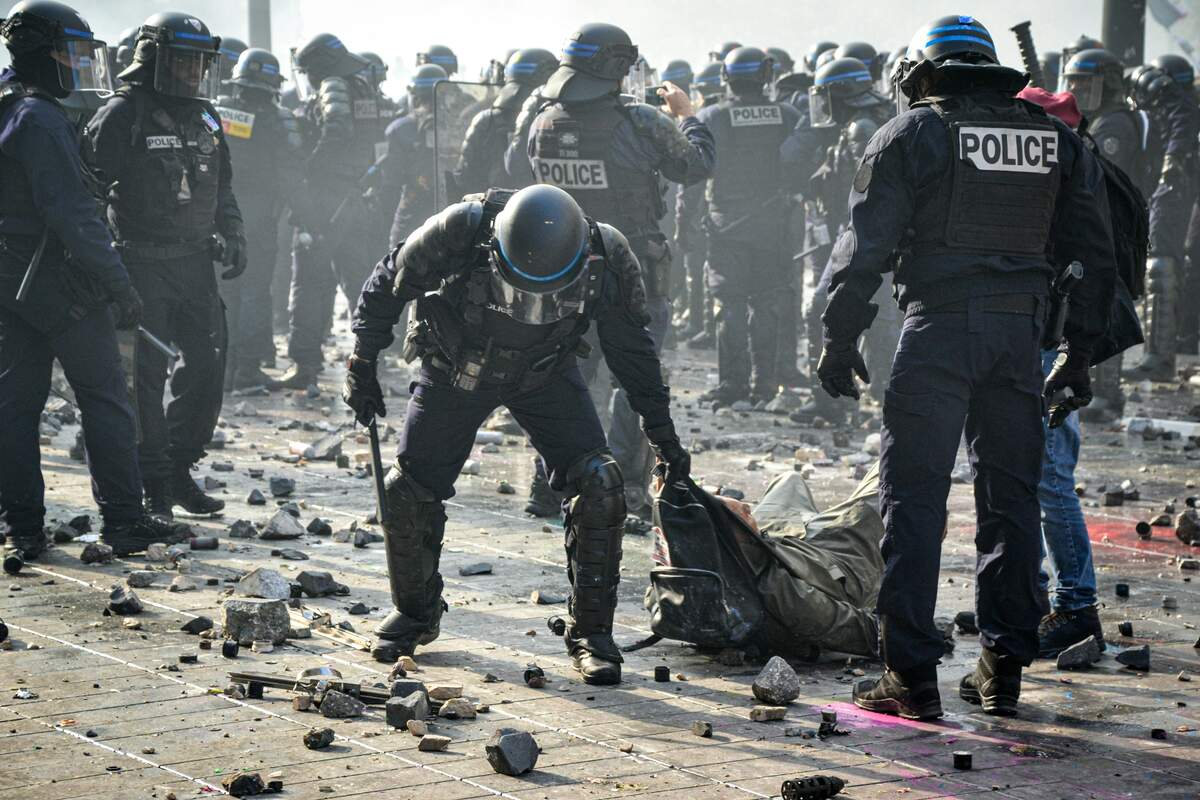
Le 17 octobre, l’intensité des #dégradations, des #pillages de centaines de magasins et des #affrontements avec les forces de l’ordre causant des #blessures dans leurs rangs a été largement documentée. Tout comme la #réponse_policière, d’une #brutalité inouïe. À tel point que le ministre de l’Intérieur a dû abandonner, au bout de quelques jours, sa surprenante posture initiale du soir du 17 octobre selon laquelle le #maintien_de_l’ordre n’avait pas failli. Avant de finalement accepter de reconnaître une « #perte_de_contrôle ». Même s’il a proposé sa démission pour la forme, ce geste témoigne malgré tout de ce que d’aucun ont appelé un « #fiasco ».
17 octobre 2026 : #bilan d’une journée
Comment comprendre ce qui s’est passé ? Trois caractéristiques sont notables : la taille de la mobilisation, l’importance des #désordres en sa périphérie avec des #destructions, y compris de bâtiments publics, les pillages, et le nombre de #blessés et de #mutilés – chez les #manifestants exclusivement.
La #mobilisation a été très importante, rassemblant au moins 450 000 personnes selon le ministère de l’Intérieur et 800 000 selon les organisations syndicales, en particulier autour de l’école et contre « la vie chère ». C’est un chiffre notable, plus élevé que pour la mobilisation contre la loi travail en 2016, ou contre la réforme des retraites en janvier 2020, du même ordre que les grandes mobilisations de septembre 2025 contre les orientations budgétaires, mais moins que les plus grandes mobilisations contre les retraites (2010 et 2023).
Du côté des #vols et destructions, les #chiffres nationaux ne sont pas encore consolidés, mais le gouvernement a donné, le 25 octobre, un bilan de 1 522 commerces « touchés ». À Paris, la mairie fait état de 450 commerces dégradés au cours du week-end, dont 228 pillés, c’est-à-dire environ la moitié. En extrapolant ce ratio de ½ à l’hexagone, on peut imaginer que 750 commerces ont été vidés de leur marchandise. Pour les bâtiments publics, il n’existe pas de recensement, mais l’hôtel de ville de Limoges, la maison du tourisme de Lyon ont été incendiés tandis que des intrusions ont eu lieu à la mairie de Marseille, Angers, Lille, et dans la préfecture d’Angers et la résidence préfectorale de Bordeaux. Le type d’établissement le plus souvent pris pour cible était incontestablement les magasins.
Le #bilan_humain est très lourd. Du côté de la #police, on a pu voir sur les vidéos des policiers exposés à des projectiles nombreux, et même un policier au sol touché par l’un deux, par exemple, attestant de la vigueur des heurts. Le ministère de l’Intérieur a fourni des chiffres peu réalistes, de l’ordre du millier de blessés. Les blessés sont devenus un élément de langage du ministère de l’Intérieur servant à la #victimisation des fonctionnaires et à justifier une supposée « #proportionnalité » de la réponse. Mais, on ne peut savoir ni ce que ces chiffres recouvrent, ni ce qu’ils agrègent exactement en raison de l’absence de #définition_médicale de l’unité de compte (la « #blessure ») chez les policiers ou les manifestants. Les chiffres sont invérifiables, la procédure de comptage n’étant pas connue, et aucun accès aux données n’étant autorisé. On sait par ailleurs que les préfectures sous estiment nettement les blessures chez les manifestants, volontairement d’après des témoignages de policiers lors d’autres mouvements1.
En revanche, on sait mieux dénombrer les blessures les plus graves, c’est à dire les mutilations et les #décès. Deux manifestants sont morts, sans que le lien avec l’action de la police soit aujourd’hui établi par voie d’enquête. Selon le décompte du neurochirurgien Laurent Thinès, les #blessures_irréversibles (perte de la vision, visage cassé, membre ou partie d’un membre arraché – pied, main, doigt, phalange par exemple), sont toutes causées sur des manifestants ou des passants, et principalement des adolescents. Ainsi, quatre personnes sont éborgnées au #LBD ou à la #grenade_explosive ; une a le visage fracassé par une #grenade ; quatre ont perdu un pied, une main ou des doigts, des phalanges ou leur mollet par l’usage des grenades explosives. Au total, on dénombre donc neuf victimes de blessures irréversibles. C’est sans compter une artère fémorale sectionnée, cuisse ou bras perforé, les éclats de grenades dans le ventre, entre autres. À l’échelle des deux dernières décennies, ce bilan policier est le plus sanglant pour une seule journée. Aucun policier ne souffre d’une blessure comparable.
Le bilan humain payé par les participants ou observateurs, lycéens, touristes, journalistes est un indicateur de la brutalité policière, c’est-à-dire une mesure unique d’un phénomène bien plus large. En effet, les vidéos qui attestent de comportements policiers qui ne respectent ni le #code_de_déontologie, ni le #Schéma_National_du_Maintien_de_l’Ordre, ni les règles d’usage des #armes_à_feu à létalité réduite sont tellement nombreuses que nous renonçons ici à les citer tous. Parmi les plus emblématiques, et les plus dangereux, on trouve les tirs à l’arme à feu sublétale ne respectant pas les règles (distance, type de lancer de grenade), la stricte nécessité de l’usage de ces armes qui ne doivent l’être qu’en dernier recours, le fait de menacer des manifestants ou des journalistes avec le LBD. Mais aussi l’absence de #sommation avant les charges, l’utilisation de #voitures comme des armes de #dispersion des manifestants, l’absence de port du #numéro_d’identification qui empêche de reconnaître l’auteur d’un geste non-professionnel ou carrément illégal. Soulignons en passant que la redevabilité de l’administration est un principe de la Déclaration des Droits de l’homme, et donc du bloc constitutionnel français. Le maire de Marseille a souligné, à l’inverse, la passivité des compagnies de #CRS lors de l’intrusion dans l’hôtel de ville. Ainsi, c’est toute la #chaine_de_commandement local qui ne joue qu’insuffisamment ou pas du tout sa fonction d’encadrement des agents. Ce faisant, les cadres semblent répercuter au plan local les instructions ministérielles sur lesquelles nous allons ensuite revenir pour comprendre les motivations des policiers.
« Qu’ont-ils dans la tête ? »
S’agissant des manifestants pacifiques, leur motivation est claire et ne nécessite pas de longs développements. Exercer son #droit_à_manifester collectivement est une manière de contribuer au fonctionnement de la #démocratie dans son volet participatif, et son caractère essentiel a provoqué son intégration au bloc constitutionnel français. Le refus par le gouvernement d’écouter les revendications pousse logiquement les manifestants à montrer leur nombre dans la rue – un élément important de tout rapport de force politique. La brutalité dont la police a fait preuve à l’égard des lycéens a peut-être poussé certains d’entre eux à se radicaliser, et à penser prendre une revanche dans la rue. On ne le sait pas avec certitude, mais pendant le mouvement des Gilets Jaunes – autre moment d’intense usage des armes à feu sublétales – le ressentiment vis-à-vis des policiers était également devenu un moteur propre de mobilisation, voire d’agressivité. À l’époque, le terme d’ « #ultra-jaune » avait été utilisé pour ce segment des manifestants. S’agissant des bâtiments publics touchés, leur petit nombre interdit de dégager à peu de frais une explication simple pour ces actes, d’autant que les groupes de gauche extra-parlementaire, qui mettent en avant leur rejet des symboles du capitalisme globalisé, n’ont pas l’habitude de les cibler. Comme le résume le politiste Arthur Pouliquen, il est exact que « le refus de la représentation, la spontanéité, la disparition des frontières entre geste politique et geste délinquant, tout cela, ce sont des choses portées historiquement par le mouvement autonome2 ». Mais comme ce n’est pas en brûlant la mairie d’une ville moyenne qu’on provoque une insurrection, les causes restent à trouver.
Surtout, comment expliquer l’essentiel des troubles, le fait que des personnes aient forcé des centaines de magasins et volé leur contenu ? S’agissant des désordres, le Président de la République a prononcé ces mots lors de son allocution le 18 octobre : « En regardant ces images, nous nous sommes tous demandés : qu’ont-ils dans la tête ? Comment des Français peuvent-ils faire cela à la France ? Pourquoi ? […] Comment peuvent-ils en arriver là ? […] Rien ne le justifie. Rien ne l’explique. Rien ne l’excuse. » Pour remédier à un phénomène, il est nécessaire d’en connaître les causes. Si leur analyse n’est pas aisée, il existe cependant des explications, au moins pour les aspects les plus massifs : les pillages. Dans Social Theory and SocialStructure (1949), Robert K. Merton montre que les délinquants adhèrent pleinement aux objectifs de réussite de la société globale (richesse matérielle, statut social, consommation). Ils ne souffrent pas d’un défaut d’intégration culturelle, mais d’une #exclusion_économique. Ainsi, la #société_de_consommation stimule les #désirs de #réussite_financière et de #consommation_ostentatoire. Or, la #pauvreté limite l’accès aux moyens structurels légaux (études longues, réseaux professionnels, emplois stables). La #délinquance devient alors un moyen alternatif pour réaliser ces #aspirations. On sait que les zones pauvres des villes, les #banlieues, sont les lieux où les « moyens structurels légaux » sont les moins bien garantis, et également que les pratiques policières discriminatoires qui y prévalent alimentent une relation tendue avec les jeunes hommes.
À la question « qu’ont-ils dans la tête ? » on peut donc simplement répondre : « leur expérience de la structure sociale et de la police ». Il nous faut souligner la conclusion de Merton, selon lequel la #déviance n’est pas le produit d’une pathologie individuelle, mais une réponse normale à un déséquilibre au sein de la structure sociale. C’est une explication particulièrement convaincante s’agissant d’un phénomène de masse comme celui des pillages de centaines de magasins par des groupes non-coordonnés et des affrontements avec la police.
La République et sa police
On peut interpréter la journée du 17 octobre comme l’addition de #protestations_politiques qui mêlent divers #mécontentements dont celui des lycéens, combinée à l’irruption de groupes périphériques, avec leurs motivations propres. La tension de la journée repose probablement sur des causes structurelles et des causes politiques relatives à la gestion du conflit, et en particulier la vision du mouvement par les autorités comme un problème de police et non pas un problème politique, et ce dès ses débuts. Un gouvernement qui fait de l’#ordre_policier le socle de l’#ordre_politique s’engage en effet dans une voie de #confrontation_directe plutôt que de #médiation_politique. Or, une telle orientation a souvent pour effet d’ouvrir une fenêtre d’opportunité pour tous les groupes sociaux qui ont une revanche à prendre. La faible capacité des organisations syndicales en France à canaliser les mécontentements peut également jouer un rôle, bien qu’elle explique imparfaitement les variations dans le désordre d’une journée de protestation à l’autre. Pour le dire simplement, le gouvernement a fédéré les mécontentements et les #frustrations, et par sa politique policière brutale, et même sanglante, a légitimé l’usage de la violence dans les relations sociales, y compris contre la police et les bâtiments publiques dans une moindre mesure. De plus, le choix de la confrontation par la police, dès le matin du 17 octobre, reconstitué patiemment par Mediapart, montre que sur la place de la République, « la première grenade de #gaz_lacrymogène, côté rue du Faubourg-du-Temple, a été lancée par des fonctionnaires de la #Brav-M, sans sommation audible et alors qu’ils n’étaient pas en danger »3. Il est illustré par un nombre de gardes à vue sans précédent (2513 pour cette seule journée, selon le ministère de la Justice) – une tactique qui n’a pas empêché les pillages.
Il est essentiel de comprendre que le gouvernement tend à confondre l’ordre politique et l’ordre policier, rompant avec une approche qui vise à combiner l’ordre public et le droit à manifester, misant tout sur l’usage des #armes_sublétales et les #interpellations_en_masse, avec leur cortège de blessures. Au soir du 17 octobre, le Premier ministre l’a exprimé de manière très simple : « Soit on est dans le camp de la République, et donc des forces de l’ordre ». L’idée est simple : pour lui, la #République c’est l’ordre policier défini par le gouvernement. Sa République exclut explicitement dans son discours que l’opposition puisse critiquer le gouvernement et sa politique, et en fait la responsable de l’enflammement du pays. Pour lui, les citoyens en colère sont des séditieux. En faisant une équivalence entre « la République » et « les forces de l’ordre », il réduit l’ordre politique à l’ordre policier. L’approche qu’il décline ce soir-là est en réalité présente dès le début du mouvement et explique l’engrenage qui a mené à la confrontation. Le 18 octobre, dans son allocution, le Président tiendra les mêmes propos, parlant « des factieux, issus de groupuscules d’#ultra-gauche, rejoints par de nombreux délinquants se sont livrés à une violence débridée ».
Bien avant les heurts qui vont se produire dans les semaines suivantes et le 17 octobre, dès le 28 septembre, dans la cour du ministère de l’Intérieur, la faible inclination du gouvernement à négocier est d’emblée affichée. Le ministre de l’Intérieur se veut intraitable et prend le pas sur celui de l’Éducation. Si ce dernier rappelle que la manifestation est un droit et met en place une plate-forme électronique de recueil des griefs, il est de facto marginalisé par la stratégie du président de la République, du Premier ministre et du ministre de l’Intérieur. La ligne directrice de la réponse gouvernementale est énoncée par #Laurent_Nuñez ce soir-là : « le mouvement, je crois qu’on peut le qualifier d’emblée de #violences_urbaines » et « dans ce contexte, la participation d’un certain nombre d’élus de La France Insoumise à ces mouvements est totalement irresponsable, je pèse mes mots ». Il fixe un seuil d’intervention policière au plus bas niveau des troubles : « quand il y a des dégradations, des prises à partie des forces de sécurité intérieure, il y a systématiquement des interventions de police ». Cela se traduira par des nombres journaliers d’arrestations jusque-là inconnu, même en situation d’émeutes, alors qu’il s’agit à ce moment-là de lycéens qui bloquent des établissements. Le ministre donne un blanc-seing à la police (« les forces de sécurité intérieures sont intervenues systématiquement à bon escient »).
Il est probable que cette lecture politique ait ensuite contaminé les rapports du renseignement territorial (RT), les ex RG, et faussé la lecture des risques. Placés depuis 2008 sous l’autorité des directeurs départementaux de la police, les rapports de ces services locaux répondent aux exigences de la hiérarchie, laquelle prend sa source place Beauvau. Le RT a alerté le gouvernement sur un risque « d’embrasement à venir », mais plusieurs agents expliquent : « on nous demande texto d’écrire que c’est LFI qui est derrière le mouvement alors que c’est objectivement faux de l’avis général des RT4 ». L’altération des notes de renseignement est crédible car elle a déjà été observée à Sainte-Soline, le cabinet du ministre de l’époque avait ainsi forcé l’usage du terme « éco-terrorisme » pour servir ses éléments de langage5. Une lecture partisane de l’information est source de perte de capacité, et donc de contrôle sur les événements.
Au plan conceptuel, l’autorité et la coercition sont, dans la théorie politique et dans les fondements des États européens, bien distincts. L’autorité se manifeste lorsque la parole du souverain est respectée sans exercice de la coercition. Le fondement de l’autorité est la recherche du consentement à obéir. Il passe par le fait de trouver des compromis. L’intransigeance, et la coercition qui l’accompagne, est un instrument qui n’est mobilisé qu’en situation de perte d’autorité. Lorsque la réponse à un mouvement social très large n’est que policière, c’est que le gouvernement a négligé la recherche de l’ordre politique.
La perte de contrôle sur la journée du 17 octobre a poussé le gouvernement à aller encore plus loin dans la substitution de l’ordre policier à l’ordre politique. Dès le 18, le Président de la République a appelé son administration à organiser une restriction des libertés publiques. Il ne devait plus y avoir de manifestations en France qui déplaisent à l’exécutif, dont les revendications ne seraient « pas légitimes » à ses yeux, les préfets devant veiller à interdire toutes celles qui ne les satisfaisaient pas dans leurs motifs, leur composition ou leurs itinéraires. Cherchant à produire des symboles d’une autorité retrouvée, le gouvernement brandit en fait ceux de la puissance nue de l’État, le répertoire militaire : l’armée de terre dans la rue, les couvre-feux sont décrétés, les unités les plus militarisées de la police (RAID, GIGN) sont invitées au maintien de l’ordre qui n’est pas leur métier, Paris est surveillée par hélicoptère, les blindés de la gendarmerie sont dans les rues.
L’exécutif, peu capable de lutter contre les troubles à l’ordre public, choisit la « trahison démocratique », pour reprendre les mots du juriste Nicolas Hervieu6, et décide de suspendre le droit de manifester. Dans une rhétorique qui s’approche de celle des groupes autonomes, le gouvernement explique que, au bout du compte, la fin justifie les moyens. Tout se passe comme si pour gérer des troubles, le gouvernement ne voyait d’autre voie que de restreindre les libertés. L’approche déséquilibrée, choisie dès le début du conflit pour marginaliser la gauche de la gauche parlementaire est douteuse. Elle risque d’attirer des groupuscules de droite extra-parlementaire dans le conflit. Le fait que le Président outrepasse ses pouvoirs constitutionnels, en recommandant une interdiction généralisée de manifester, et que des couvre-feux aient été mis en place crée un précédent saisissant. Des propos sur lesquels, dès le 26 octobre, il surenchérit en ajoutant « l’état d’urgence n’est pas un tabou ». À quelques mois des élections présidentielles et législatives, ce n’est pas un understatement que d’y voir une pente qui fait courir des risques profonds à la démocratie libérale.
1. Voir Sebastian Roché et Laural Miller, « Escalade policière contre la protestation et dommages humains lors des réformes des retraites en 2010 et 2023 », Civitas Europa, vol. 53, n°2, 2024, p. 129-157.
2. Voir ses propos dans Julie Carriat, « Mobilisation du 17 octobre : comment LFI, sans être l’extrême gauche ni l’ultragauche, joue pour elles un rôle de parti “parapluie” », 24 octobre 2026 ; voir aussi Arthur Pouliquen, Le Monde ou rien. Histoire du mouvement autonome en France, Éditions du Cerf, 2025.
3. « 17 octobre, 12h19, place de la République à Paris : les policiers provoquent le chaos », Mediapart, 24 octobre 2026 [▻https://www.mediapart.fr/journal/france/241026/17-octobre-12-h-19-place-de-la-republique-paris-les-policiers-provoquent-l. D’autres journées ont également été documentées par Le Canard enchaîné, « Quand les poulets perdent leurs nerfs », 6 octobre 2026.
4. Pauline Graulle, Pascale Pascariello, David Perrotin, Camille Polloni, Ellen Salvi et Matthieu Suc, « “On nous demande d’écrire que LFI est derrière le mouvement” : autour du 17 octobre, la fabrique d’un bouc-émissaire », Mediapart, 19 octobre 2026 [▻https://www.mediapart.fr/journal/france/191026/nous-demande-d-ecrire-que-lfi-est-derriere-le-mouvement-autour-du-17-octob.
5. Voir Antoine Izambard et Pierre Gastineau, Les Espions du président. Secrets et échecs du renseignement sous Macron, Albin Michel, 2025.
6. Nicolas Hervieu, « Suspendre la liberté de manifester est une trahison démocratique », Le Monde, 23 octobre 2026.▻https://esprit.presse.fr/actualites/sebastian-roche/17-octobre-de-l-ordre-politique-a-l-ordre-policier-46921
#17_octobre_2026 #manifestation #Sébastien_Roché-

#17octobre : 37 grenades par minute
▻https://bsky.app/profile/l-wcrdt.bsky.social/post/3mzgijvm6hs2jLe ministre de l’Intérieur Laurent Nuñez vient d’affirmer en pleine audition que 22 000 lacrymogènes ont été utilisées lors de la journée de mobilisation du 17 octobre.
– 3 fois plus qu’à l’acte III des Gilets jaunes en décembre 2018 (8k).
– 4 fois plus qu’à Sainte-Soline (5k).
Si on estime que les premières grenades ont été lancées vers 10h du matin et les dernières vers 20h le soir, cela fait :
– près de 37 grenades lacrymogènes tirées ou lancées chaque minute.
– une grenade lacrymogène tirée ou lancée toutes les 1,6 seconde.
Ça fait 1 grenade tous les 25 manifestants si on se base sur les chiffres de la policeSelon Esprit
Dans une rhétorique qui s’approche de celle des groupes autonomes, le gouvernement explique que, au bout du compte, la fin justifie les moyens.
-
-
Des centres de données vides : les nouvelles surcapacités chinoises
La Chine continue de financer des centres de données en grande partie inutilisés. Les crédits sont accordés selon des critères politiques plutôt qu’économiques, et les coûts sont répercutés sur les travailleurs et les petites entreprises.
Tout au long de cette année 2026, la surcapacité de production chinoise a fait l’objet d’intenses débats, notamment dans le domaine des panneaux solaires et des voitures électriques, au cœur de conflits commerciaux internationaux de plus en plus vifs. Mais en examinant les documents les plus récents, j’ai relevé un paradoxe. Le même problème réapparaît précisément dans le secteur qui aurait dû aider la Chine à le surmonter, celui de l’intelligence artificielle. Alors que les investissements dans les installations industrielles et les infrastructures diminuent dans tout le pays, ceux qui sont destinés aux centres de données continuent de croître à un rythme soutenu, mais une grande partie de leur capacité installée reste inutilisée.
▻https://entreleslignesentrelesmots.wordpress.com/2026/05/26/la-chine-et-le-monde-exploitation-invisible-et-technologie-globale/#comment-76371
-
The EU Fears China’s Power Over Private Capital
▻https://jacobin.com/2026/11/eu-china-capital-state-investmentEuropean leaders routinely accuse Chinese industrial policy of distorting competition and interfering with private capital. They could instead consider if China’s record of strategic planning has lessons that the EU could adapt to its own economies. (Ludovic Marin / Pool / AFP via Getty Images)
La Chine dompte ses acteurs capitalistes alors que la politique européenne est la victime des siens.
2.11.2026 by Alexandra Gerasimcikova - Emmanuel Macron celebrated a new EU deal to reduce Chinese car imports as a blow against “unfair competition.” What really troubles European leaders is that China has successfully disciplined its capitalists — something Europe is unwilling to attempt.
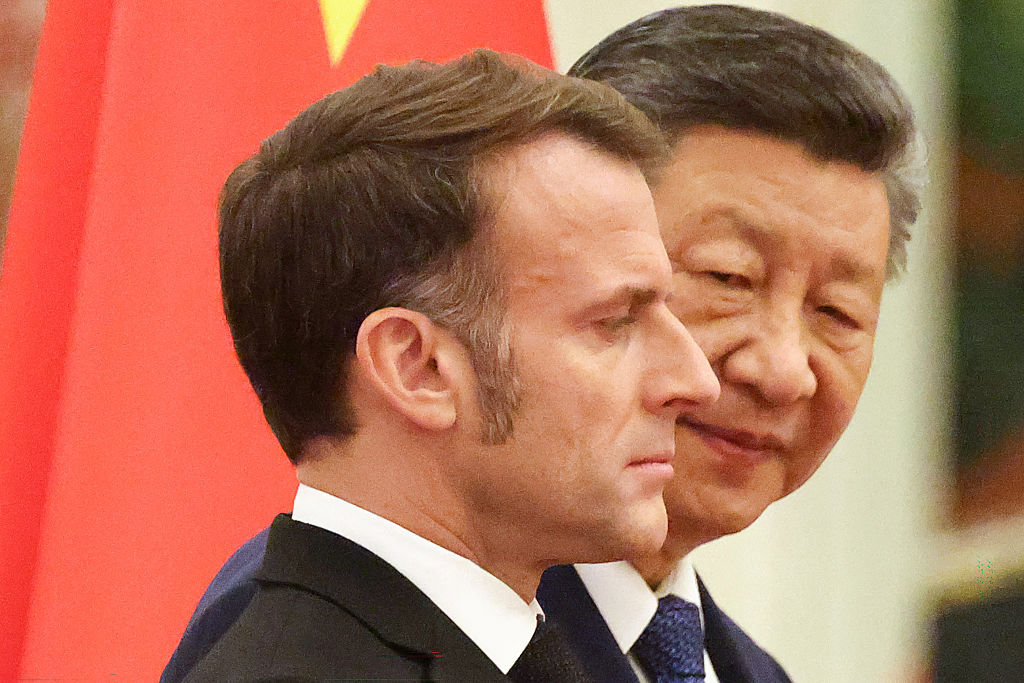
To the joy of French and German leaders, the European Union has reached an agreement with Beijing to help alleviate the bloc’s €360 billion trade deficit in goods with China. French President Emmanuel Macron celebrated the deal reached in October, which aims to reduce Chinese hybrid car imports and improve market access for some European products, as a way of protecting Europe from “unfair competition.” Further measures to rebalance EU-China trade are being discussed.
To be sure, China’s exports are a challenge for Europe’s struggling industries in more ways than one. Its industrial giants are increasingly struggling to sustain exorbitant profits and dominate in its traditional markets, including China, where consumers are now increasingly turning to cheaper Chinese products.
Volkswagen’s historical restructuring is a case in point. Rather than increasing investment in research and development to produce smaller, cheaper electric cars, Volkswagen continued milking its old business model, distributing €20 billion to shareholders over the past three years. Now, with profit falling by 9.5 percent to €3.5 billion in the second quarter of 2026, the carmaker has abandoned its collective agreements with unions and announced plans for four factory closures in Germany along with one hundred thousand job cuts globally. All the while, Volkswagen aims to increase its operating profit margin from around 4 percent to whopping 8–10 percent by 2030, citing investors’ return expectations.
But fearmongering over China’s trade surplus with the EU and its supposedly “unfair” subsidies tends to obscure Europe’s discomfort with China’s political economy.
Take German Chancellor Friedrich Merz, for example, who says China “deliberately combines its market-driven dynamism with state intervention, overcapacity, aggressive pricing, an undervalued currency, and heavily subsidized exports.” Amid Merz’s accusations of unfair competition lies the real problem: China’s system entails a level of political intervention in the economy that European leaders are unwilling to enforce on capital at home.
The first place to look when trying to understand China’s system is the foundational role of state-owned enterprises (SOEs) in its economy. Since opening up its economy to private capital and global markets from 1978 onward, China has maintained a strong network of SOEs. While their share in industrial production decreased over the past decades, they comprise 62 percent of total SOE assets worldwide. Europe follows with a mere 14 percent, after decades of privatization substantially reduced public ownership.
The strength of SOEs lies in their ability to operate beyond profitability as the central objective. That does not mean they are unprofitable, but they can prioritize long-term and capital-intensive investments where returns are low and uncertain.
With leadership appointed by the Communist Party of China (CPC), SOEs are central to China’s industrial strategy and form what is called the “lifeblood of the national economy” in sectors like energy, transportation, and finance. They also support employment stability by maintaining jobs during economic downturns instead of carrying out mass layoffs, which has an anchoring effect on employment in associated industries. In addition, SOEs train a large number of engineers who later move into private manufacturing and technology firms. According to China’s State-owned Assets Supervision and Administration Commission of the State Council (SASAC), SOEs account for more than 70 percent of assets in strategically important sectors.
This makes SOEs a powerful industrial policy tool — especially when they include giants such as China’s State Grid Corporation, the world’s third-largest company by revenue, which delivers an essential economic input: electricity. Thanks to robust public investments into transmission and generation guided by political objectives rather than just profitability, China has achieved the world’s highest electrification rate. In parallel, it has established global leadership in clean technologies, producing renewable energy that increasingly powers its industrial development. After focusing on coal-intensive growth of manufacturing and heavy industry, China now has a major advantage in scaling up electricity-hungry sectors such as AI and robotics, the next realms of global “competitiveness.”
The Asian electrostate stands in a stark contrast to Europe’s reliance on private investment and market profitability to drive the rollout of renewable power. Europe has the capacity to expand its lending to a public renewable electricity system, for example through its European Investment Bank and the European Central Bank. But conservative interpretations of these institutions’ mandates, coupled with fears of “crowding out” private capital, have denied the public sector a more active role in decarbonization. Meanwhile, fossil fuel companies’ interests continue to shape the European energy market.
The problem is that the EU’s green transition plan, the Green Deal, was designed from the outset to make the transition profitable for private capital rather than to plan long-term, strategic investment. When that failed to materialize at the desired scale, green policies have been increasingly rolled back across the bloc. This is evident from the EU’s current deregulation agenda aimed at “cutting red tape” for businesses — which in practice means dismantling workers’ rights and environmental protections.
As a result, European industrial electricity prices are twice as high as those in the United States — and 50 percent higher than in China. Its electrification rate has been rather stagnant over the past decade, matched unsurprisingly by a slow progress in electric mobility and the decarbonization of industries such as steel. Worse, some European industries are even rejecting subsidies for green investments for lack of profitability.
The second major difference is the relationship between the public and private sectors in China and the EU.
In China, public and private companies don’t simply operate in parallel. Deeply connected through industrial clusters, they can share the benefits of SOEs’ political mandates and their access to cheap financing from public banks. Private companies are part and parcel of the country’s socialist market economy. According to figures cited by Xi Jinping in 2018, the private economy accounted for 60 percent of GDP and provided over 80 percent of urban employment.
At the same time, the state maintains a considerable degree of control over private capital. Market access remains restricted in some sectors, such as finance, telecommunications, or health care. Recently, China has also launched a historic tax recovery campaign on its companies. One of its largest agricultural conglomerates, for example, should reportedly repay a sum amounting to 120 percent of its 2025 profits.
Unthinkable in today’s Western economies, many Chinese private companies, especially large ones, have CPC units within their structures that help align business with party priorities and national objectives. They date back to 1994, when company law introduced the ambition to establish the CPC units to serve as a “fighting fortress in the non-public economy.” They appear to be concentrated in sectors where SOEs are more present, ranging from manufacturing and finance to real estate and high tech.
Private companies are linked to SOEs through industrial clusters and special economic zones, created in 1980 as test sites for markets with private and foreign capital. With significant state support, these zones bring together public and private resources to reap the benefits of integrated supply chains, joint research institutions, and skilled workers. SOEs also build supporting infrastructure — electricity networks or high-speed rail interconnections — which increases their chances to grow economies of scale and lower production costs. Today the government continues to embrace this model as a way to develop strategic clusters beyond manufacturing of the 2000s toward high-tech development zones.
One example is the Greater Bay Area, a city cluster that includes Shenzhen, China’s first special economic zone launched in 1980 and now home to companies such as consumer electronics giant Huawei and carmaker BYD. In 2017, national and provincial governments of Guangdong, Macao, and Hong Kong launched a development plan to transform the region from a traditional export-oriented and low-cost manufacturing area into a global innovation and technology hub, including ambitions to provide good living standards and ecological conservation. While still in development, the Greater Bay Area has become a key site for electric vehicles, artificial intelligence, and humanoid robotics. According to Professor Cai Huajie of Fujian Normal University, the area’s total economic output reached 14.79 trillion yuan (around $2.21 trillion) in 2024, placing it close to that of the New York area, the world’s largest metropolitan economy.
When CATL — now one of the world’s leading battery manufacturers — opened in Ningde in 2011, provincial and local authorities helped develop a supply chain of component manufacturers to support its business, which now includes over ninety companies. In turn, CATL helped create one of the world’s leading battery manufacturing hubs that has shaped the city’s economy.
State subsidies and protectionist measures shielding domestic battery production from foreign competition surely played a role in CATL’s rise. But unlike Western governments that are reluctant to use subsidies as a strategic and time-bound tool within a long-term industrial plan, China adjusts them as industries mature. In 2018, China lifted its foreign equity cap on manufacturers of new energy vehicles, and those produced by foreign enterprises gradually became eligible for the same consumer subsidies as domestic models. Subsidies were scaled back, and national purchase subsidies for consumers were phased out at the end of 2022. CATL invested further into research and development to adapt to the less protective environment. When demand for electric vehicles slowed in 2023, CATL cut battery prices to help automakers boost sales and secure its market share.
Naturally, the state has a much bigger stake in this mixed economy. This also means that the private sector’s production and sales are in effect included in a form of public planning that goes beyond “market signals” — particularly in sectors where China competes with foreign companies.
For instance, following the slow rise of companies such as BYD, the government launched the “Ten Cities, Thousand Vehicles” pilot project in 2009 to introduce at least one thousand electric vehicles annually into the public transport system of ten cities. BYD, now the world’s largest electric vehicle manufacturer by sales, was one of the electric bus suppliers for the project. In Shenzhen, this project helped the city achieve 100 percent fleet electrification by 2017.
This approach is now extended to robotics. The Robot+ application plan, developed by sixteen governmental agencies and the Ministry of Industry and Information in 2023, promotes the innovative use of robots in manufacturing, health care, eldercare, and other sectors. China’s 2025 AI+ plan similarly supports adoption of artificial intelligence by SOEs for aviation fatigue detection, health monitoring, operations of the State Grid’s power lines, and other uses.
The benefits of China’s public-private ecosystem are also evident when it comes to financing. China’s robust public banking system and its cheap loans are one part of the story. The other is equity: in China, companies in which the public sector holds over a quarter of the shares make up almost half of market capitalization. Across the Organisation for Economic Co-operation and Development (OECD), this level is just 2 percent.
But both public and private capital are actively used for equity investment. China has created thousands of government guidance funds to pool finance from governments, public banks, and public and private companies. These funds provide long-term, patient capital but also an avenue to generate returns while sharing high investment risks. One of the largest such funds is the National Integrated Circuit Industry Investment Fund to help China achieve self-sufficiency in semiconductors.
Compared to Europe’s de-risking model, consisting mostly of loans and guarantees, the scale of public sector equity ownership is striking. According to OECD data, China’s public sector held around $3.5 trillion in listed equities in 2023, 79 percent of which was owned by national and local governments. Europe’s public sector held $1.3 trillion, with around half of it owned by governments. In the United States, the figure was $1.6 trillion, and most of the listed equity belonged to public pension funds and foreign-owned sovereign wealth funds.
Far from increasing joint and strategic public spending, the EU is heading in the opposite direction. As negotiations are underway on its next multiyear budget for 2028–34, several countries, including Germany, demand radical cuts in the spirit of austerity. These could reduce the budget’s real value by 10 percent compared with the current one. Yet as the Green Deal retreats, military spending — not investment in a productive economy — is growing dangerously.
Learning from the successes of China’s “socialism with market characteristics” doesn’t mean that Europe should imitate China’s industrial policies and try to win the race for global market dominance. The massive scale of production and resource use that such competition would require is bound to have a range of destructive consequences for workers and the planet.
Europe’s current leaders are already showing what this race would look like. After returning from China, Merz advised that, instead of work-life balance, “we simply have to do a little more now.” Workers are increasingly squeezed as working hours are pushed up across Europe, along with austerity cuts to pensions, unemployment, and public services. But as Mariana Mazzucato has demonstrated in her study of Europe’s three hundred largest publicly listed nonfinancial corporations: labor costs aren’t the problem in the European economy. It’s the failure to reinvest corporate profits, an electricity system not fit for decarbonization, and a lack of public ownership.
The wave of mass strikes and protests across Europe over collapsing school systems, housing shortages, and the intolerable cost of living is a predictable consequence of the EU’s misguided approach. Workers, young and old, demand socially necessary investments that the pursuit of “competitiveness” simply can’t deliver.
Instead of sacrificing collective bargaining achievements for which the working class struggled for centuries, Europe should think beyond “Made in Europe” protectionism and start nurturing its industries — above all by reining in big capital and directing it into productive investments. With this strategic approach, it can also tap into opportunities for mutually beneficial cooperation with China on technologies necessary for a low-carbon economy.
Cracks are emerging in the current obsession with competitiveness amid collapsing public investment. The Left can take this moment to campaign for a socialized economy based on public ownership, workers’ decision-making, and people’s real needs — not dividends, export markets, or the production of utterly unnecessary products such as AI-powered kettles or flying cars. Here, China’s political economy can provide some useful lessons, though Europe must create its own path.
-
ANALYSE - Chine : l’art (toujours plus difficile) de survivre même avec des diplômes universitaires
Le nombre de personnes diplômées augmente chaque année, mais les emplois ne suffisent pas. Sur les réseaux sociaux, les jeunes utilisent un nouveau vocabulaire pour décrire la crise, tandis que Pékin les censure et leur demande des sacrifices. Une analyse de Massimo Di Nola
En 2026, en Chine, les jeunes qui obtiendront un diplôme universitaire seront au nombre de 12,7 millions, soit 480 000 de plus qu’en 2025. Un chiffre qui ne cesse d’augmenter d’année en année : en 2019, ils étaient 8,3 millions. Une bonne nouvelle ? Peut-être pour les passionnés de statistiques, mais beaucoup moins pour les personnes directement concernées, qui rencontrent des difficultés toujours plus grandes pour trouver un emploi. Et même lorsqu’elles y parviennent, elles obtiennent rarement un emploi à la hauteur de leurs attentes, tant en termes de salaire que de tâches qu’elles sont amenées à accomplir.
On assiste ainsi à la généralisation d’un phénomène appelé en anglais « slow employment » et en chinois mandarin màn jiùyè, qui consiste à repousser l’entrée dans le monde du travail ou à prendre plus de temps pour chercher un emploi. Pour un nombre croissant de jeunes, il s’agit d’une stratégie individuelle de survie dans un pays qui ne parvient plus à tenir les promesses qui leur ont été faites, aussi réelles ou illusoires que ces promesses aient pu être. Ce phénomène fait l’objet de discussions de plus en plus répandues sur les réseaux sociaux chinois, au point de susciter une vive inquiétude parmi les autorités de Pékin, qui ont dans un premier temps réagi en renforçant la censure sur Internet.
-

La Chine essaie le premier drone furtif, le GJ-21 un appareil encore invisible
▻http://www.argotheme.com/organecyberpresse/spip.php?article5031Les vérificateurs des infos creusent encore, la vérité est sur le point d’émerger. Le décollage et appontage réussis, proclamée par des sources officielles de Pékin, pour l’appareil désigné « GJ-21 » à bord du porte-drones Sichuan existe aussi dans diverses sources. Cette étape majeure pour la marine chinoise, semble encore sous le doute. Si l’annonce qui reste à confirmer de façon indépendante, néanmoins les vancées technologiques du pays la rendent plausible. #TECHNOLOGIE,_INTERNET,_PERFORMANCES_INCLASSABLES
/ Chine, réforme, développement, environnement, Asie, , #technologie,_drone,_citoyen,_USA,_google,_High_Tech, Sciences & Savoir
#Chine,réforme,_développement,_environnement,_Asie, #Sciences_&_Savoir
-
Ocasio-Cortez Has Evolved. She Wants the Left to Evolve, Too. - The New York Times
▻https://www.nytimes.com/2026/11/01/us/politics/ocasio-cortez-dsa.html?emc=edit_na_20261101&nl=breaking-news&segment_id=229La gauche américaine est vraiment un sujet important à suivre. Ils nous montrent comment changer les choses, comment concilier divers courants et faire avancer leurs idées. Et AOC reste la meilleure représentante : radicale sur ses bases, ouvertes sur ses relations. Ah si Mélenchon pouvait lui parler et surtout l’écouter...
The New York congresswoman, once a bane of establishment Democrats, has tried to nudge her movement in a bigger-tent direction as she weighs her 2028 options.
-

-

Vu qu’on entend beaucoup parler de cet individu en ce moment, j’ai tiré sa fiche :
▻https://fr.wikipedia.org/wiki/Laurent_Joffrin
Laurent Mouchard, dit Laurent Joffrin, est un journaliste, patron de presse et homme politique français, né le 30 juin 1952 à Vincennes.
Il collabore notamment à l’hebdomadaire Le Nouvel Observateur, dont il a été directeur de la rédaction de mars 2011 à mars 2014, puis directeur de la rédaction et de la publication du quotidien Libération de juillet 2014 à juillet 2020.
Classé a gauche, il se lance ensuite en politique en 2020 en créant le mouvement « Les Engagé.e.s ».
Un « beau parcours » de #chien_de_garde ...
-
-
-
Xenocortical mice: what can we learn, and how should this research progress? | Journal of Law and the Biosciences | Oxford Academic
▻https://academic.oup.com/jlb/article/13/2/lsag026/9002545
▻https://oup.silverchair-cdn.com/oup/backfile/Content_public/Journal/jlb/Issue/13/2/10/m_cover.jpeg?Expires=1856569795&Signature=iJyKcjxjs~71tTjjSpRG~Xenocortical mice: what can we learn, and how should this research progress?
Nita Farahany ,
Anil K Seth
Journal of Law and the Biosciences, Volume 13, Issue 2, July-December 2026, lsag026, ▻https://doi.org/10.1093/jlb/lsag026
Published:
27 October 2026Abstract
A new study by researchers at Stanford University describes the development of ‘xenocortical mice’: mice with a cortex comprised almost entirely of human-derived neurons. Their groundbreaking research has the potential to enable medical breakthroughs for a range of neurological and psychiatric disorders. The researchers offer detailed analysis of the neurophysiological and behavioral properties of these chimeric mice, comparing them with both wild-type control mice, and ‘apallial’ mice lacking most of their cortex. Here, we outline some key findings from the study and ask what these findings tell us about the capacity for consciousness in these mice, as well as their potential for human-like properties of cognition or conscious experience. Based on this discussion, we summarize the ethical and regulatory landscape relevant to chimeric animals and lay out an ethically-informed research roadmap to guide future research in this important area.
-
Au nom du maintien de l’ordre
Un nouveau phénomène mondialisé : une #police suréquipée face à des foules furieuses et sans défense qui brandissent leurs téléphones portables pour tout enregistrer. La #guerre_des_images sur les médias sociaux polarise encore plus la police et les manifestants.
►https://www.arte.tv/fr/videos/RC-023814/au-nom-du-maintien-de-l-ordre
#documentaire #film #film_documentaire #à_voir
#peur #intimidation #démocratie #violences_policières #gilets_jaunes #Michel_Delpuech #Paris #violences #France #violence #LBD #BAC #gendarmerie #manifestations #éborgnés #violence_collective #armement #blindés #Seattle (1999) #gaz_lacrymogène #Black_Blocs #Norm_Stamper #pauvreté #paupérisation #Didier_Lallement #casseurs #nasse #nasse_mobile #armée #tactique_policière #provocation #arrestations #arrestations_de_masse #énervement #mouvement_de_panique #Laurent_Bigot #frustration #hérarchie #culture_professionnelle #culture_policière #George_Floyd #Black_Lives_Matter #Defund_the_police #anti-terrorisme #zbellion #gen_z #Lützerath #désescalade #Allemagne #armes #USA #Etats-Unis #armes_de_guerre #flash-balls #lanceurs_de_balles_de_défense #mutilations #colonialisme #Birmanie #armes_de_contrôle_des_foules #Irlande_du_Nord #Claude_Guéant #banlieues #quartiers_populaires #émeutes #2005 #Nicolas_Sarkozy #militarisation_de_la_police #grenades_lacrymogènes #impunité #guerre_de_l'image #milipol #Alsetex #SAPL #gromm-cogne #Fiocchi #santé_publique #dissuasion-
Nous sommes en guerre
Qu’est-ce qui relie un lycéen et un Gilet Jaune, un teufeur et l’habitant d’une cité, un supporter et un occupant de la ZAD ? Tous ont subi des violences préméditées de la part de policiers qui les ont visés à la tête. Tous ont été touchés par la même arme. Il y a toujours, en amont de leurs histoires, une volonté assumée par la Police de faire mal, d’en mutiler un pour en terroriser cent.
Ce qui les relie, c’est la #violence_quotidienne de la police. Les armes de la police disent à celles et ceux qu’elles ciblent de rentrer chez eux, de vivre dans la crainte, d’obéir.
Dans la pénombre sécuritaire de l’époque, la question de la #répression est devenue centrale. Sur fond d’écrasement de toutes les oppositions et d’états d’urgence illimités, il est désormais admis par tous que le pouvoir ne tient que par sa police. L’#écrasement du soulèvement des Gilets Jaunes, avec ses dizaines de gueules cassées, ses milliers d’arrestations et l’utilisation industrielle de #munitions, aura projeté une lumière crue sur la réalité du maintien de l’ordre à la française. Une séquence prolongée par la noyade d’un jeune nantais lors de la fête de la musique, par des mobilisations populaires massives pour réclamer justice pour les morts de la police et s’opposer à la loi dite de « sécurité globale », et par une gestion dystopique de la crise sanitaire à coup de drones et de contrôle de l’espace.
Si la question du maintien de l’ordre est désormais sur le devant de la scène médiatique, il s’agit en réalité de l’aboutissement d’un processus qui s’étend sur plusieurs décennies, et dont les banlieues, puis les protestations indociles ont été les laboratoires. Alors que l’horizon ne cesse de s’obscurcir et le Régime policier d’étendre sa toute #puissance, ce livre retrace la généalogie d’une militarisation du maintien de l’ordre, et propose des pistes pour y résister.Blessé à l’œil en 2007 alors qu’il était lycéen, par le tir d’un policier qui expérimentait le Lanceur de Balles de Défense – LBD 40 –, #Pierre_Douillard-Lefèvre mène depuis des recherches sur la militarisation de la Police et s’engage au sein de collectifs de mutilés. Il est par ailleurs chercheur en sciences sociales et auteur de travaux de sociologie urbaine.
►https://editionsgrevis.com/2021/08/30/nous-sommes-en-guerre
#livre #pouvoir -

Death, injury and disability from kinetic impact projectiles in crowd-control settings: a systematic review
Objective We conducted a systematic review of the available literature on deaths, injuries and permanent disability from rubber and plastic bullets, as well as from bean bag rounds, shot pellets and other projectiles used in arrests, protests and other contexts from 1 January 1990 until 1 June 2017.
Data sources PubMed, Scopus, JSTOR and grey literature.
Data synthesis We report on descriptive statistics as well as data on injury severity, permanent disability and death. We analysed potential risk factors for injury severity, including the site of impact, firing distance and access to medical care.
Results Of 3228 identified articles, 26 articles met inclusion criteria. These articles included injury data on 1984 people, 53 of whom died as a result of their injuries. 300 people suffered permanent disability. Deaths and permanent disability often resulted from strikes to the head and neck (49.1% of deaths and 82.6% of permanent disabilities). Of the 2135 injuries in those who survived their injuries, 71% were severe, injuries to the skin and to the extremities were most frequent. Anatomical site of impact, firing distance and timely access to medical care were correlated with injury severity and risk of disability.
Conclusions Kinetic impact projectiles (KIPs), often called rubber or plastic bullets, are used commonly in crowd-control settings. We find that these projectiles have caused significant morbidity and mortality during the past 27 years, much of it from penetrative injuries and head, neck and torso trauma. Given their inherent inaccuracy, potential for misuse and associated health consequences of severe injury, disability and death, KIPs do not appear to be appropriate weapons for use in crowd-control settings. There is an urgent need to establish international guidelines on the use of crowd-control weapons to prevent unnecessary injuries and deaths.
►https://bmjopen.bmj.com/content/7/12/e018154
#chiffres #statistiques #monde #létalité #mortalité
voir aussi:
Rubber Bullets and Beanbag Rounds Can Cause Devastating Injuries - The New York Times
▻https://seenthis.net/messages/860866
(publié sur seenthis en 2020 par @kassem -

-
« c’est alors qu’un homme envoit un pavé, geste qui justifie un tir [de LBD], tir qui ne viendra pas »
#drôle de point de vue pour une histoire faussée.
Et une histoire fausse, qui fait démarrer la boucherie en 2005, malgré les interventions de Pierre Douillard-Lefevre.
Or, le 8 juillet 2009, Joachim Gatti était mutilé par une balle de défense (à Montreuil)
▻https://www.liberation.fr/societe/police-justice/letat-condamne-a-verser-plus-de-100-000-euros-a-un-manifestant-blesse-parC’était une des premières fois que les LBD mutilait un manifestant, mutilait aux confins d’un quartier populaire, pour ne pas dire au centre ville du XXIe arrondissement (Croix de chavaux).
En 2016, sous le PS, la lutte contre la Loi Travaille s’est vue répondre au flash ball dans Paris intra-murosOn assiste à un plaidoyer pour une police plus nombreuse, car susceptible de ce fait d’être moins bouchère. Ben oui, parole de flic, le LBD, « il n’est pas possible de s’en servir de manière contrôlée », tout comme les matraques.
#militarisation #MDO #banlieue #terrorisation #traumatisation #violence_d'État #terreur_d'État #Claude_Guéant le « test » #1995 #2005 la généralisation #Sarkozy (entre les deux, l’émission n’a rien vu) #Bouna&Zyed #émeutes #milipol
-
Trois semaines de formation CRS, trois semaines de kif qui à la bleusaille en promettent d’autres
►https://www.arte.tv/fr/videos/101839-000-A/notre-doctrineFiction et GLI F4
►https://www.arte.tv/fr/videos/101839-000-A/notre-doctrine
-
-
Tai Po fire report : lessons from a tragedy
►https://multimedia.scmp.com/infographics/news/hong-kong/article/3372592/taipo_summary/?module=top_story&pgtype=homepage&alichlgref=https%3A%2F%2Fwww.scmpHongkong tire les conclusiin de la plus meurtrière incendie de son histoire
Davies Christian Surya , Rocio Marquez , Maria Mateo , Matthew Cheng , Jeffie Lam
Tai Po fire series
On November 26, 2025, a fire erupts at Wang Fuk Court in Tai Po, spreading rapidly to all but one 31-storey block at the estate and lasting for more than 43 hours. The inferno claims 168 lives, making it Hong Kong’s worst fire-related catastrophe in decades.
On December 12 that year, Hong Kong leader John Lee Ka-chiu orders an independent committee to be established to investigate the tragedy.
The judge-led panel’s investigation report is made public on October 29, with the city leader and senior officials apologising for the fire, vowing to pursue accountability and rolling out reforms.
↑CAUSE
ACCOUNTABILITY ▼BID-RIGGING
NEXT STEPS ▼VICTIMS
An independent, judge-led committee investigating Hong Kong’s deadliest fire in decades has identified those responsible for the tragedy, nearly a year after the blaze, following months of hearings and evidence examination.
The fire at Wang Fuk Court, which was undergoing a HK$336 million renovation, engulfed seven of its eight blocks at an alarming speed on November 26 last year, killing 168 people, injuring 79 and displacing about 5,000 residents.
Releasing the report at a press conference on October 29, Chief Executive John Lee Ka-chiu and senior officials bowed and apologised for the tragedy for the first time, with housing chief Winnie Ho Wing-yin resigning to take political responsibility.
The 1,154-page report said that the renovation project’s contractor deserved the “strongest condemnation” for using substandard materials and deceiving authorities at the expense of residents’ safety. Four government departments, notably the Housing Bureau’s Independent Checking Unit, were also criticised for inadequate oversight.
The officials bowed before the two-hour-long press conference. Photo: Sam Tsang
HOW THE FIRE STARTEDThe inquiry concluded that a lit cigarette was most likely to have caused the fire, igniting flammable rubbish and debris that had accumulated on the flat roof of the light well between flats 104 and 105 of Wang Cheong House and causing it to smoulder.
More than a dozen complaints about workers smoking were made to government departments before the fire. Surveillance cameras captured a worker smoking on the rooftop of Wang Cheong House shortly before the fire was discovered.
The blaze soon spread vertically and laterally through the block along the substandard scaffolding mesh, before spreading to the estate’s seven other blocks, all of which had been enclosed in combustible materials for more than a year.
About 20 minutes after the fire broke out, all of Wang Cheong House was engulfed in flames.
The fire swept through six other blocks of the residential complex within 85 minutes.
ACCOUNTABILITYWhile the report found that contractor Prestige Construction and Engineering and consultant Will Power Architects should bear the greatest responsibility for the fire, it also singled out four government departments for failing to effectively rectify potential fire risks and scrutinise the firms’ work.
The oversight bodies – the Independent Checking Unit, Buildings Department, Fire Services Department and Labour Department – were found to have failed residents who had filed a large volume of complaints about renovation safety, only to see their concerns passed from one department to another without satisfactory resolution.
The report listed 180 complaints and inquiries that various departments received during Wang Fuk Court’s renovations. The committee found that none of the departments took effective ownership of fire safety issues, leaving the complaints to fall into a vacuum.
The committee concluded that the inferno resulted from the faults and deliberate misconduct of individuals in the private sector, and from decades of failure to identify fire risks in building maintenance work across the construction, fire safety engineering and building management industries, as well as in government.
Contractor and consultantThe committee placed most of the blame for the tragedy on Prestige Construction and Engineering, the renovation contractor, and Will Power Architects, the project consultant.
It slammed the two companies for deliberately cutting corners in numerous respects, including using substandard scaffolding mesh and covering windows with flammable foam boards - measures that directly contributed to the rapid spread of the fire and the heavy casualties.
The report said the two companies ignored all complaints and safety concerns raised by residents, suggesting they cared only about maximising financial gains.
The committee named the following four people as the main culprits for the inferno and the heavy death toll, and said they deserved the “most severe criticisms”.
The use of non-fire retardant scaffolding nets and attempts to deceive authorities
The committee said Prestige and Will Power bought non-fire-retardant scaffolding nets as replacements to cut costs after typhoon damage in July last year, and deceived authorities by ordering 115 sheets of fire-retardant nets and placing them at strategic locations. The report described it as the “most immoral and irresponsible conduct”, which put all Wang Fuk Court residents’ lives at risk.
Created staircase access openings for the convenience of workersThe committee said Prestige and Will Power bore primary responsibility for creating illegal access openings in the staircases. It said if the staircases were protected from fire-rated windows, they could have remained viable means of escape for a longer period and might have saved more lives.
Installed flammable foam boards on the windowsThe committee criticised Prestige and Will Power for the simultaneous enclosure of all eight blocks with combustible foam boards, and failing to address residents’ concerns regarding the boards’ fire retardancy.
Refusal to implement phasing of workInstead of complying with the new owners’ corporation’s request to erect scaffoldings in phases, Prestige refused, citing various costs and labour issues as its excuse.
Housing Bureau’s Independent Checking UnitThe committee identified the ICU as the entity primarily responsible for supervising the execution of the renovation work at Wang Fuk Court, and it failed in its supervisory duties, with systemic failings at both the policy and operational levels.
The report said the ICU should bear more responsibility, citing a lack of sense of crisis, regulatory lapses, systemic blind spots, and enforcement failures.
Failed to conduct site inspections
The committee noted that the ICU established no effective mechanism to supervise the registered inspector’s work and did not carry out site inspections during the renovation works, saying it adopted only a “complaints-driven” approach that handed the supervisory responsibilities to the public, and relied on contractors and professionals to regulate themselves.
Failed to act on complaintsWhile complaints were the sole trigger for action by the ICU, the committee criticised it for not handling numerous safety concerns voiced by Wang Fuk Court residents, including the use of foam boards, unsafe scaffolding nets and workers’ smoking behaviour. The report slammed the ICU for closing cases without verification or conducting meaningful investigation. In some cases, it even directed complainants back to the parties under complaint.
Tipping off contractors ahead of checks over netsThe committee pointed to the ICU’s pre-notification of inspections of scaffolding nets’ fire retardancy, on three occasions: October and November 2024 and October 28, 2025. On each occasion, Will Power and Prestige were given prior notification, a move that enabled Prestige to substitute non-compliant materials.
It also criticised the ICU’s quick burn test as inadequate to verify the fire retardancy of the mesh. The unit also failed to check the certificate of the nets.
Failure to detect worker access openings and address foam board useThe committee slammed the “slack enforcement attitude” of the ICU. It said the ICU failed to notice the fire safety breach despite clear photographic evidence of worker access openings in documents submitted for minor works.
It also said the ICU received complaints about using foam boards to cover windows as early as September 2024; however, the unit did not follow up thoroughly or verify the claim.
Buildings DepartmentThe committee identified the Buildings Department as sharing supervisory duties with the ICU for the renovation project at Wang Fuk Court, but with a smaller share of responsibility. The report noted that its deficiencies focused on the policy level, as well as the failure to audit the ICU’s performance.
Failure to perform its responsibility to audit ICUWhile the Buildings Department delegated statutory control powers over building works in subsidised buildings to the ICU, the committee said the department never audited the ICU. The committee believed that if the department had exercised its audit function at any point, it was likely to have discovered the ICU’s systemic deficiencies.
Failure to inform the ICU of the new site inspection policyThe committee said the Buildings Department failed to communicate effectively with the ICU and did not inform it of a new site safety inspection policy adopted in 2023. Had the ICU known about this policy, there was a “fairly high chance” of spotting the worker access openings.
Classifying the renovation project as “minor works”The committee questioned the department’s classification of a large-scale renovation project as “minor works”. The report noted the irony that the HK$330 million renovation project, which involved fully renovating the external walls of eight blocks of high-rise residential buildings, was not classified as major works requiring the ICU’s approval and consent.
Overreliance on building professionals’ integrity & inadequate regulation of temporary materialsThe committee said the department’s current regulations lacked an effective mechanism to supervise the registered inspector’s work, relying on them to regulate themselves.
It also said current regimes lacked sufficient and clear guidelines about fire safety standards of temporary building materials, leaving room for exploitation by unscrupulous building professionals.
Fire Services DepartmentThe committee pointed to the Fire Services Department’s failings in addressing the fire hazards at Wang Fuk Court and the “lack of sense of crisis”.
It criticised the department as the body primarily responsible for identifying and abating fire hazards for failing to notice two “life-threatening risks”: the disablement of fire alarms and the access openings in the escape staircases, both of which contributed to the catastrophic loss of life in the tragedy.
The report also noted that the department reckoned that passive fire safety provisions, such as emergency staircases, fell within the purview of the Buildings Department and the Housing Bureau’s ICU, creating a grey area and regulatory vacuum for fire safety issues.
Failure to follow up on complaints about fire safety concernsThe report noted that the Fire Services Department received dozens of complaints from Wang Fuk Court residents, including the use of foam boards to cover windows, workers’ smoking behaviour, and obstruction of fire escape routes. The department, however, adopted a “merry-go-round” attitude and failed to follow up on most complaints by arguing that such issues were outside its purview, the committee found.
Failure in monitoring the shutdown of fire service systemThe committee criticised the department for its structural deficiencies in the “shutdown notice” mechanism and enforcement, as well as the inadequacy in on-site risk assessment, which left the fire alarm and hose reel systems in Wang Fuk Court deactivated and undetected for months until the blaze broke out.
Labour DepartmentThe committee concluded that the Labour Department should bear less responsibility than the other three bodies, noting that it was primarily responsible for occupational safety and acknowledging its lack of expertise in building materials and procedures. However, the report criticised the department for only “following the book” when handling complaints and for failing to address key fire hazards, including workers’ smoking behaviour.
Failure to address workers’ smoking habitsThe committee said the Labour Department’s handling of smoking-related complaints was unsatisfactory, noting that it repeatedly found the complaints unjustified because its staff failed to find anyone smoking or any cigarette stubs at the scene during inspections, contrary to reality.
The report also noted that the department failed to use its no-smoking order powers, as it interpreted the relevant regulation narrowly and refused to recognise that large quantities of combustible materials on scaffolding constituted substances involving danger from fire.
Failure to verify scaffolding mesh’s fire-retardancyThe committee said the department failed to verify the scaffolding nets’ fire retardancy and mistakenly accepted the same certificates twice.
Failure to detect worker access openings and address foam board useThe committee rebutted the department’s argument that escape route integrity fell under the Buildings Department or the Fire Services Department’s purview, as access openings also compromised workers’ means of escape. It also criticised the department for never inspecting Wang Fuk Court’s staircases for fire safety issues.
The committee also suggested that, although building materials were outside the department’s remit, the use of foam boards on the external walls could pose a fire risk to workers, which the department had also failed to address.
Other partiesThe judge-led panel did not identify any shortcomings with the police force, the Home Affairs Department or the Urban Renewal Authority regarding oversight of the fire risks.
The report named Wang Fuk Court’s property management company, ISS EastPoint, for its responsibility in respect of the shutdown of the fire service system. It criticised ISS’s lax work environment and culture, where staff failed to pay attention to the system’s deactivation. The committee further noted that ISS should have acted more proactively to address workers’ smoking behaviour and the creation of access openings.
The report also criticised China Status Development and Engineering, the fire service contractor that applied to shut down Wang Fuk Court’s firefighting system, for acting only as a dummy contractor and failing to discharge its crucial duty to supervise the deactivation of the fire service installations.
SUSPECTED BID-RIGGING
Suspected bid-rigging
According to the committee, evidence showed that there were “numerous features” of Wang Fuk Court’s renovation project that bore the hallmarks of bid-rigging and anticompetitive conduct.
The key features included Will Power securing the consultancy role with an aggressively low bid and taking control, then expanding the scope of works to triple the project’s costs from the initial estimate of HK$102 million to HK$336 million.
Although there was no direct evidence of payment or benefit passing from Prestige to Will Power, the committee said it “makes no commercial sense” to operate at a loss unless the latter was remunerated through other, possibly nefarious, means.
The report also highlighted the “dummy” role of the renovation project’s registered inspector, Will Power director Wilson Ng Yeuk, whose duty was simply to sign government paperwork to give the project the appearance of legality and exercise no supervision over the works.
Another observation highlighted in the report was that the same concentrated proxy votes held by the then owners’ corporation chairman and vice-chairman delivered every critical appointment for the renovation works, such as the project consultant and contractor.
Urban Renewal AuthorityThe committee said the Urban Renewal Authority played a central role, as its function was to serve as a safeguard and reduce the risk of bid-rigging in building maintenance projects. However, the authority maintained that it was merely a facilitator and lacked sufficient resources and law-enforcement powers to tackle bid-rigging.
The report criticised the authority’s Smart Tender Scheme for giving the public a “false sense of security”, as it left homeowners with the impression that the URA would monitor the tendering process and the quality of work. It said the authority failed to meet the public’s reasonable expectations as a gatekeeper against bid-rigging.
Property Management Company - ISS EastPointIn its report, the panel suggested that the property management company, as the only professional party with daily contact with homeowners and custody of the proxy ballots and voting machinery, should bear the responsibility to ensure the integrity of the process.
The committee said ISS EastPoint, Wang Fuk Court’s property management company, however, did not follow up on numerous homeowner complaints about improper proxy vote collection, and that its record-keeping failed to distinguish between votes cast in person and by proxy, contributing to the lack of transparency.
Former district councillor Peggy Wong Pik-kiuThe committee stressed that the evidence did not suggest Peggy Wong, who served as a district councillor during the renovation works, was personally involved in bid-rigging or anti-competitive conduct. However, her involvement sharpened the intense dispute and controversy in the selection process for the project consultant and contractor, and it was reasonable for residents to raise queries about her role in the tendering process. Wong resigned from office in September amid the controversy.
NEXT STEPS
Committee’s recommendations
In its final report, the judge-led committee put forward 120 recommendations to address fire safety risks and improve large-scale building maintenance and renovation projects, ranging from short-term measures such as the immediate implementation of a ban on access openings to law reforms, including criminalising bid-rigging and tightening fire safety regulations.
Criminalising bid-riggingA criminal offence should be drafted broadly to cover all conduct that aims to influence a tender’s outcome, while the government should also consider adopting a “dual-track” system to tackle bid-rigging through criminal and civil actions.
Enhancing Support Service to HomeownersThe government should consider broadening the service’s reach to cover homeowners, and technological solutions should be implemented to detect bid-rigging and other misconduct algorithmically.
Introducing fee scales, vetting and standardised bills of quantitiesAuthorities should consider adopting a more structured approach to identifying and testing unusually low bids, and consider incorporating standardised “bills of quantities” into the tender under the enhanced support service.
The committee suggests transitioning from traditional bamboo scaffolding to alternatives. Photo: Silvia Siu
Potential transition from bamboo and plastic nets to non-combustible materialsExplore a potential transition from traditional bamboo scaffolding and combustible plastic wraps to alternatives such as metal scaffolding, subject to site compatibility.
Fire safety testing and accreditation of construction materialsExpand the testing regime to include surprise inspections and independent verification through government-designated laboratories or other accreditation bodies.
Improve complaints and inspection practices
►https://multimedia.scmp.com/infographics/news/hong-kong/article/3372592/taipo_summary/?module=top_story&pgtype=homepage&alichlgref=https%3A%2F%2Fwww.scmpThe Housing Bureau’s Independent Checking Unit and the Buildings Department should abolish all pre‑arranged scheduling or liaison notices for material safety audits and complaint investigations. The Fire Services Department should physically examine fire service installations. The Labour Department should address risks posed by temporary materials and refine its inspection approach.
The government should establish an interdepartmental task force so all relevant departments are aware of, and promptly address, work-related risks and other concerns.
Strengthened regulation of Registered Building Professionals and ContractorsLegislate to prohibit the delegation of critical milestone inspections to junior representatives, and ensure that the statutory duty of site supervision is personal and non-delegable.
Require all registered general building contractors, minor works contractors and building professionals to be subject to periodic renewal of registration status.
Actions by the governmentAfter releasing the independent committee’s report, the government pledged reforms in seven areas to combat bid-rigging in building maintenance works and improve the regulatory framework and support services, including revising six pieces of legislation and establishing a steering committee to prevent similar disasters from recurring.
Criminalise bid-rigging in building maintenance and renovation projectsThe government will introduce a criminal offence with penalties of up to 10 years’ imprisonment and fines capped at HK$10 million (US$1.3 million), three times the commercial gains derived from the offence, or 50 per cent of the annual local turnover for infringement.
The current civil liability framework for bid-rigging conduct will also be enhanced, with the maximum penalty raised to an HK$8 million fine, twice the commercial gains obtained from the contravention, or 30 per cent of local turnover for up to three years during the period of contravention.
Establish cross-departmental task force to combat crimes relevant to bid-riggingThe task force will comprise police, the Independent Commission Against Corruption, and the Competition Commission to launch joint investigations, provide mutual support and enhance intelligence gathering and exchange.
Secretary for Development Bernadette Linn (left) and Deputy Financial Secretary and Acting Secretary for Housing Michael Wong explain the set-up of a new body providing building maintenance services. Photo: Elson Li
Establishment of Building Maintenance Support and Services CouncilThe new body will provide support and services in various stages of building maintenance and renovation, and aim to offer reliable assistance to owners in fulfilling their maintenance responsibilities and perform a gatekeeping role on consultants and contractors.
Reform operation and regulatory system for building maintenance and renovationThe government will submit an amendment to the Buildings Ordinance by the end of the year to introduce a new category for large-scale maintenance and renovation, placing these works under tighter supervision and at risk of harsher penalties. It will also strengthen the audit and inspection regime, raise maximum fines for non-compliance, introduce new offences and elevate building and fire safety standards.
Replacing Housing Bureau’s Independent Checking UnitThe embattled Independent Checking Unit will be disbanded and replaced by a new Public Housing Building Control Section. The new section will implement a new regulatory regime by operating on a project basis, to co-ordinate and manage the regulation of major building maintenance and renovation projects in individual housing estates in an integrated manner.
Establish a centralised data systemThe centralised system will share safety information on building maintenance and renovation works, convictions for non-compliance, and records on professional conduct among departments.
Establish a steering committee to oversee reformsThe committee, led by Chief Secretary Eric Chan Kwok-ki, will review each recommendation from the independent committee and drive and monitor their implementation.
VICTIM PROFILEThe inferno claimed 168 lives and left 79 others injured, with most of the fatalities occurring in Wang Cheong House and Wang Tai House, the two blocks where the blaze first broke out and then spread. Most of the victims were women and elderly residents who had remained at home during the day.
Hong Kong will mark the first anniversary of the disaster on November 26.
Survivors remain grief-stricken as they mourn lost loved ones, while most displaced residents are still in temporary housing, waiting to begin a new chapter forced upon them. Attention will turn to whether the government’s bold reforms can make a difference and ensure such a tragedy is never repeated.
-
AI could turn China’s social credit system into surveillance tool: study
▻https://www.scmp.com/news/china/science/article/3372510/ai-could-turn-chinas-social-credit-system-surveillance-tool-government-funded-31.10.2026 - China’s social credit system, stereotypically imagined as an all-powerful numerical scoring project for authoritarian control, has gained notoriety in the West – although people inside the country actually feel little of its presence or practical influence.
In a government-funded study, however, a Chinese legal scholar warned that deploying artificial intelligence (AI) risked turning the rating system into a “large-scale surveillance tool”. The paper was published in the Journal of Sichuan Normal University last month.
-

-

@simplicissimus : Justement, leur perception est notable. C’est l’opinion du South China Morning Post (SCMP). Tout est relatif et pour le journal le système de crédit social chinois ne remplit pas les conditions pour l’appeller « outil de surveillance ».
Alors qu’est-ce que c’est dans leurs yeux ? C’est la question qui m’intéresse, c’est ce que j’aimerais comprendre.
Pourquoi ? Parce que chez nous il y a officiellement ca. 14 pour cent de la population sois surveillance totale pour qui la moindre infraction met leur vie en péril. Quand tu vis des allocations sociales on te menace quotidiennement de te les couper. Pour les fonctionnaires d’état c’est évidemment pareil mais à un niveau plus comfortable et pour les personnes qui vivent de leur travail la menace est équivalente avec un sursis d’un an à partir du licenciement.
Les heureux qui possèdent assez de capital pour vivre de ses « fruits », c’est à dire du travail des exploités, ils ont une marge de manœuvre plus grande, mais depuis les sanctions européennes leur liberté d’expression est assez limité aussi.
Le degré de surveillance par contre est moins important pour les nantis parce que la protection absolue de la propriété privée réduit considérablement les domaines où ils sont obligés de se soumettre à la surveillance. Si tu ajoutes à la surveillance par l’état celle par le privé, les banques, les GAFAM, les assurances, tu perçois une surveillance totale pour une grande partie de la population européenne.
J’aimerais alors comprendre comment tout cela est perçu et ressenti en Chine et « ici » par tout le monde.
Conclusion : il y a des Chinois, pour qui le système du score social n’est pas de la surveillance gênante. Ils sont plus ou moins d’accord avec. Maintenant il faut s’intéresser aux autres et d’abord comprendre ce que c’est précisément leur score, comment et ou c’est implémenté etc.
On pourrait se demander pourquoi le SMCP publie cet article à ce moment précis, mais je ne peux pas ’y consacrer du temps en ce moment.
Voilà tous les articles du SCMP sur le système de crédit social en Chine :
▻https://www.scmp.com/topics/chinas-social-credit-system?module=inline&pgtype=article
-
AI in China’s social rating system risks mass surveillance, scholar warns
▻https://www.nationpress.com/international/chinas-ai-social-rating-risks-mass-surveillance1.11.2026 by NationPress
Synopsis
A Chinese legal scholar’s peer-reviewed study is sounding an alarm that Beijing’s own officials may not want amplified: AI-powered social rating systems, already embedded in Chinese governance, could quietly cross the line from administrative efficiency into mass behavioural surveillance — and the guardrails to prevent that crossing simply don’t exist yet.
Key Takeaways
Lin Jianxing , a doctoral candidate at Sichuan University’s Law School , published the study in the Journal of Sichuan Normal University last month.
The study warns that combining AI , big data , and predictive algorithms with social rating systems risks creating a large-scale surveillance apparatus .
Social rating scores can already influence access to healthcare , financial services , lending , and government programmes in China.
China’s social credit system is described as fragmented , with only a limited number of cities operating behavioural rating programmes for residents.
The State Council released an action plan last year calling for gradual AI integration into government services across China.
Lin called for transparent procedures , reliable algorithms , and clear limits on administrative power for responsible implementation.The integration of artificial intelligence into China’s social rating framework could significantly expand the government’s capacity to monitor its citizens, but risks transforming a governance tool into a large-scale surveillance apparatus, according to a study published last month in the Journal of Sichuan Normal University. The research was conducted by Lin Jianxing, a doctoral candidate at Sichuan University’s Law School, and cited by the South China Morning Post.
What the Study ExaminesThe study analysed the implications of combining AI, big data, and predictive algorithms with social rating mechanisms used in governance and public administration. According to Lin, social rating systems rely on data mining and algorithmic analysis to convert citizens’ online and offline activities into quantifiable scores, which authorities then use to assess potential risks and predict future behaviour.
These scores, the study found, can influence how individuals are treated across sectors including healthcare, financial services, lending, and access to government welfare programmes — even if they do not directly alter a person’s formal legal rights.
The Surveillance RiskLin warned that without strict data governance standards and robust oversight mechanisms, the use of extensive digital footprints to build detailed citizen profiles could cause the system to evolve from a risk-management tool into an instrument of behavioural surveillance. He also cautioned that extensive reliance on algorithmic governance raises concerns related to opacity, discrimination, and large-scale monitoring.
The researcher stressed that poor-quality data or flawed model design could produce inaccurate assessments and unfair outcomes for citizens — a structural vulnerability that critics argue has not been adequately addressed in existing frameworks.
China’s Expanding AI in GovernanceThe research comes as China continues to accelerate AI adoption in public administration. An action plan released by the State Council last year called for the gradual and orderly integration of AI into government services, with the goal of improving public service delivery and enabling more proactive governance. One example cited in the study is Anhui province’s dynamic social assistance monitoring platform, which uses data-sharing mechanisms and information databases to identify low-income populations and improve welfare delivery.
A More Fragmented RealityNotably, Lin’s study pushes back on the commonly held international perception of China’s social credit system as a single, unified nationwide scoring mechanism. The reality, the paper argues, is more fragmented — with different government agencies and local authorities operating a variety of systems independently. Citing earlier academic research, Lin noted that only a limited number of Chinese cities operate behavioural rating programmes for residents, while aspects of the broader social credit framework are also applied to monitor government agencies and public officials themselves.
Conditions for Responsible ImplementationLin acknowledged that social rating systems, when well-designed, could help governments better identify citizens’ needs, anticipate risks, and allocate public resources more efficiently. However, he stressed that responsible implementation would require transparent procedures, reliable algorithms, and clear limits on administrative power. The study was funded by a project focused on social governance models and institutional innovation in Sichuan province.
As AI capabilities grow more sophisticated, the debate over where risk management ends and surveillance begins is likely to intensify across both democratic and authoritarian governance systems.
Point of View
Publishing in a Chinese journal, warning that Beijing’s own governance innovation could become a surveillance instrument. That is an unusual degree of internal candour. What the study does not resolve, however, is how any ’clear limits on administrative power’ would be enforced in a system where the party and the state are structurally inseparable. The Anhui welfare platform example, held up as a benign use case, also illustrates the core tension: a system designed to help the poor can, with minor reprogramming, be used to flag and restrict them. The fragmentation argument — that China’s system is not one unified network — offers less comfort than it appears; fragmented surveillance infrastructure can be centralised faster than legal safeguards can be written.
NationPress
2 Nov 2026
Frequently Asked Questions
What is China’s social rating system and how does AI change it?
China’s social rating system converts citizens’ online and offline activities into quantifiable scores used by authorities to assess risk and predict behaviour. Integrating AI, big data, and predictive algorithms can increase the system’s scale and accuracy, but also risks creating a mass surveillance tool with limited transparency, according to the study by Lin Jianxing.
Who conducted this study and where was it published?
The study was conducted by Lin Jianxing , a doctoral candidate at Sichuan University’s Law School , and published last month in the Journal of Sichuan Normal University . It was subsequently cited by the South China Morning Post.
Is China’s social credit system a single nationwide network?
No. Lin’s study clarifies that the system is more fragmented than often portrayed internationally, with different government agencies and local authorities operating independent systems. Only a limited number of Chinese cities operate behavioural rating programmes specifically for residents.
What are the risks of AI-driven social rating, according to the study?
The study identifies three core risks: opacity in algorithmic decision-making, potential discrimination through flawed data or model design, and the evolution of a risk-management tool into an instrument of behavioural surveillance. Poor data quality could also generate inaccurate assessments and unfair outcomes for citizens.
What safeguards does the researcher recommend?
Lin Jianxing calls for transparent administrative procedures, reliable and well-validated algorithms, and clear legal limits on how administrative power can be exercised through these systems. He also stresses the need for strict data governance standards to prevent misuse of digital citizen profiles.
-
-
Trattenuti. Una radiografia del sistema detentivo per stranieri
A cosa servono e quanto costano i centri di detenzione per stranieri?
#Trattenuti è il nome con cui nel gergo burocratico vengono definite le persone che fanno ingresso in un centro di detenzione amministrativa per stranieri. Nate nel 1998 con la denominazione di Centri di permanenza temporanea e assistenza, tali strutture detentive sono state deputate a trattenere gli stranieri destinatari di un provvedimento di allontanamento in attesa della sua esecuzione. Oltre ad aver mutato svariate volte denominazione, nel corso degli anni le strutture detentive per stranieri hanno acquisito ulteriori funzioni. In particolare esse sono oggi utilizzate anche per il trattenimento di alcune specifiche categorie di richiedenti asilo.
Nato da una collaborazione tra ActionAid Italia e il Dipartimento di Scienze Politiche dell’Università di Bari, il progetto Trattenuti raccoglie dati e informazioni sul funzionamento e l’evoluzione del sistema detentivo per stranieri con l’obiettivo di gettare luce sull’efficacia e i costi materiali e umani di uno degli strumenti più controversi e meno trasparenti delle politiche migratorie italiane. Data la carenza di dati ufficiali, esso rappresenta la più ricca e accurata fonte di dati sui centri di detenzione per stranieri in Italia.
▻https://trattenuti.actionaid.it
#Italie #statistiques #chiffres #rétention #détention_administrative #coût #efficacité #migrations #sans-papiers #cpr #cartographie #visualisation #infographies #rapport #monitorage -
La strage di suolo continua. Nel 2025 sfondata la quota di 10mila ettari consumati
L’ultimo Rapporto del Sistema nazionale per la protezione dell’ambiente restituisce dati da paura: 10.243 ettari di suolo persi, con un balzo netto rispetto al 2024 (più 22%). E si continua a cementificare aree pericolose, franose o costiere. “Una cambiale di insostenibilità che ogni politico dice di ricevere da quello precedente e che poi però cede, più pesante, al politico successivo”. Quali sono le Regioni peggiori, quali le responsabilità dei sindaci. L’intervento del prof. Paolo Pileri
Niente da fare, ancora dati da paura per il consumo di suolo in Italia. Nessuna siccità, nessuna alluvione, nessuna frana, nessuna pietà per le morti premature nelle città diventate isole di calore rovente: nulla ferma il continuo consumo di suolo nel nostro Paese.
Il terzo pilastro del Green deal europeo, la tutela del suolo, non interessa ai nostri governi e ai nostri politici. Nel 2025 abbiamo sfondato il limite delle decine di migliaia portandoci a 10.243 ettari di suolo consumati, un balzo in avanti del 22% rispetto al già insopportabile consumo di suolo del 2024 (8.370 ettari). Per chi ama le cifre a effetto, si tratta di 28,1 ettari al giorno (nel 2024 erano 23) o 3,25 metri quadrati al secondo (contro i 2,7 del 2024): non ci si può distrarre un attimo che il panorama davanti al nostro naso cambia.
La situazione diventa sempre più soffocante e pericolosa per la salute del territorio e dei cittadini. I motivi? C’è di tutto: leggi urbanistiche colabrodo, ma che ci vendono come perfette; piani urbanistici che non si svuotano mai o mai quanto necessario; il famoso Piano nazionale di ripresa e resilienza (Pnrr); le Olimpiadi invernali; la transizione energetica mai pianificata e subito liberalizzata; il via libera ai data center; le zone economiche speciali (Zes); le strutture sanitarie private; la logistica; l’alta velocità ferroviaria, strade, parcheggi, stadi e sempre tanta tanta edilizia “civile” su suoli prima liberi (quest’ultima è stata di 1.160 ettari).
Nel 2025 abbiamo quattro Regioni che sfondano il muro delle migliaia di ettari l’anno; mentre nel 2024 questo primato spettava solo all’Emilia-Romagna. Sono consumi di suolo che in parte arrivano dall’eredità di previsioni urbanistiche antiche e in parte da trasformazioni volute da chi sta governando oggi. È il solito gioco dell’eredità urbanistica. Una cambiale di insostenibilità che ogni politico dice di ricevere da quello precedente e che poi però cede, più pesante, al politico successivo e che nessuno ha il coraggio di interrompere o che, forse, fa comodo come alibi per scansare le responsabilità. A proposito, per aiutare il lettore a inquadrare le responsabilità politiche del consumo di suolo, questa volta ricorderemo i nomi dei politici che governavano o governano i relativi territori. Può sembrare inelegante ma non è così: è solo un esercizio di correlazione che aiuta i cittadini a conoscere meglio chi li governa.
Il primato di consumo di suolo regionale se lo aggiudica la Sicilia con 1.619 ettari nell’anno 2025. La Regione è stata guidata dall’attuale ministro per la Protezione civile, Nello Musumeci, che ha molto a che fare con la fragilità dei suoli innescata dagli impatti ambientali e dai cattivi utilizzi del territorio; ora a guidare la Regione c’è l’ex presidente del Senato, Renato Schifani. Segue a ruota il Lazio con 1.436 ettari; governato fino al 2022 da Nicola Zingaretti, ora parlamentare europeo e quindi vicino a quel che rimane del Green deal, seguito poi da Francesco Rocca che è stato presidente fino al 2022 della Croce rossa italiana e che quindi, inevitabilmente, si sarà occupato di One health, quel concetto per il quale solo se sta bene la natura e la si rispetta in pieno, si ottiene benessere e salute duratura anche per l’uomo e non il viceversa. Il terzo gradino del podio è per la Puglia con 1.198 ettari, retta ora da Antonio Decaro, ex presidente della Commissione Ambiente del Parlamento europeo quando si è approvato il Regolamento per il ripristino della natura (2024/1991) e la Direttiva sul monitoraggio del suolo (2025/2360). Decaro è stato anche sindaco di Bari per oltre un decennio. Prima la Regione era guidata da un ex magistrato, anch’egli ex sindaco di Bari, Michele Emiliano che quindi conosce bene le leggi e anche il testo unico ambientale. Infine, la Lombardia i cui presidenti non hanno bisogno di presentazioni: Attilio Fontana al secondo mandato, Roberto Maroni e Roberto Formigoni artefici delle leggi urbanistiche e sul consumo di suolo tuttora vigenti; tutti sempre fortemente vicini ai governi nazionali. La Lombardia nel 2025 ha asfaltato 1.093 ettari, confermandosi di nuovo Regione leader di consumo di suolo, sempre in vetta alle classifiche.
Quelli citati sono nomi di personalità politiche note a tutti e di cui ognuno, più o meno, ha sentito parlare anche a scale più ampie di quella locale. È bene ricordare che il consumo di suolo non ha alle spalle entità impersonali e nebulose come spesso si rischia di credere usando formule impersonali. Sicuramente non è tutto merito o demerito loro -non siamo così generosi, suvvia- ma va preso atto che i nomi citati si riferiscono a personalità dalla lunga, lunghissima presenza sulla scena politica, occupando posizioni chiave nelle istituzioni pubbliche oltre a influenzare non poco il disegno delle politiche urbanistiche italiane. Personalità che hanno avuto più di un’occasione per lavorare alla limitazione al consumo di suolo.
I numeri, però, gli gettano addosso un ritratto diverso. Sia chiaro che non sono stati lasciati soli in questa gara del consumo di suolo. Poco dietro spunta il Piemonte (854 ettari consumati), la Campania (740), il Veneto (584), la Toscana (499), l’Emilia-Romagna (466) e la Sardegna (445). Tutte Regioni guidate da nomi fortemente influenti nella politica urbanistica e ambientale nazionale. Qualcuno di loro è stato ministro o sottosegretario, altri sono ora deputati europei, altri guidano forze politiche. Mica persone di terz’ordine.
E poi ci sono i sindaci, che ci ricordano sempre di essere i più “vicini alla gente” e ai territori. Quelli che sanno come si fa per fare una buona urbanistica e portare le città fuori dalle crisi ecologiche e climatiche. Anche quelli che, ricordiamolo con dolore, si sono macchiati, per delega alla loro associazione Anci, dello svuotamento del Piano nazionale di ripristino della natura all’articolo 8.
A vedere i dati pessimi del consumo di suolo 2025, forse un’interpretazione a tanta ostinata avversione all’articolo 8 del regolamento europeo 2024/1991 emerge. Ad esempio, Milano, il cui sindaco Giuseppe Sala è notissimo per essere stato il “papà” delle Olimpiadi Milano Cortina 2026 e prima ancora per Expo 2015, ha imbarcato ben 35 ettari di consumo di suolo (più del doppio degli anni precedenti). Chissà, forse è il “Salva Milano” ad aver presentato il conto?
Oltre Milano vi sono altre città che potremmo premiare con la betoniera d’oro: Roma con quasi 80 ettari; Foggia oltre gli 80; Cagliari supera i 50; Venezia 33,4 ettari; Ravenna 41 ettari (per anni il sindaco è stato Michele De Pascale che oggi governa l’Emilia-Romagna); Padova oltre 20; Forlì quasi 20 (a nulla è servita la lezione di depavimentazione portata a termine nel 2022); Perugia 14,3; Chieti oltre 16; Catania arriva addirittura a sfiorare i 200; Viterbo i 100 (questi ultimi numeri da capogiro arrivano probabilmente dall’aver piazzato distese di pannelli fotovoltaici).
Ma non ci sono solo i sindaci e le sindache dei capoluoghi di provincia e delle città metropolitane ad aver fatto girare la betoniera. Ci sono anche i sindaci dei paesi e dei medi Comuni con altri numeri da paura. Cercate nel rapporto del Sistema nazionale di protezione ambientale (Snpa) a pagina 90 e vedrete voi stessi le classifiche. Ovviamente fioccheranno le proteste, i “se e i ma”, le accuse all’Istituto superiore per la protezione e la ricerca ambientale (Ispra) di “contare male”, le giustificazioni su quanto sia “difficile fare sindaci e presidenti di Regione oggi”. Parole che sentiamo puntualmente da decenni.
Sta di fatto che i numeri del rapporto inchiodano ognuno alle proprie responsabilità anche se lo sport che innesca è quello di sfuggirle. Sicuramente ci sono tanti sindaci e sindache che hanno fatto bene ma il loro sforzo viene travolto dallo tsunami di chi continua imperterrito a cementificare. Questo ci dice anche che non ci si può limitare a fare bene a casa propria ma occorre occuparsi della casa comune, perché è così che si fa la politica di cui abbiamo urgenza. Tenere lo sguardo su tutto il territorio è proprio quel che fa con rigore e abnegazione il team dei ricercatori Ispra dal 2013. Eppure, c’è anche qualcuno che sogna di chiudere l’osservatorio Snpa e il rapporto sul consumo di suolo: sarebbe un delitto vero e proprio. L’unità tecnica che si occupa del rapporto nazionale, insieme alle tante agenzie ambientali regionali, è un fiore all’occhiello delle istituzioni pubbliche italiane e va tutelata e protetta da chiunque solo pensi di ridurne l’operatività.
Voglio ora passare a una piaga nella piaga: il consumo di suolo nelle aree pericolose dove dovremmo registrarne uno nullo. Invece da anni capita l’esatto contrario: una roulette russa che continua a generare vittime umane, di natura, di paesaggi oltre ad appesantire il bilancio economico dello Stato che deve ristorare le urbanizzazioni, audaci e insensate, ogni volta che c’è un’alluvione, una frana, una mareggiata. Nel solo 2025 altri 1.106 ettari sono stati cementificati nelle aree a media pericolosità idraulica (quelle alluvionabili più facilmente, facendo vittime e danni come accaduto in Romagna, nelle Marche, in Toscana, in Campania e come accadrà sempre più spesso). Mai visto tanto consumo nelle aree pericolose. Le Regioni leader di cemento in queste aree sono Sicilia (294 ettari), Emilia-Romagna (261) e Toscana (161).
Poi abbiamo le urbanizzazioni dentro le aree franose, altra cosa di cui non ci si può capacitare. A livello nazionale sono stati 706,6 gli ettari cementificati o asfaltati nelle zone che hanno una qualche suscettività franosa. Di questi, oltre 120 sono dentro gli areali a pericolosità “molto elevata-P4” e “elevata-P3”, dove quasi sicuramente si avrà un fenomeno franoso nel giro di qualche anno. Incrociamo le dita per non avere vittime ma prepariamoci a pagare tanti soldi per rifondere i danni.
Infine, come se non bastasse, continuano le cementificazioni addossate al mare: entro 300 metri dalla costa sono stati consumati altri 131 ettari. La maggior parte in Sardegna (43), in Puglia (23) e in Sicilia (16). Anche qui dobbiamo concludere amaramente che il grido di dolore del ciclone Harry non è servito a nulla. Imperterriti, si continua ad abusare delle coste anziché liberarle e renderle più resilienti.
In questa corsa alla distruzione non mancano le urbanizzazioni nei parchi. Quelli che dovremmo tutelare come gioielli preziosi. Quelli che mostriamo orgogliosi ai contabili della Convenzione internazionale sulla biodiversità o che raccontiamo nelle scuole insieme alla favola dell’Agenda 2030.
Nel 2025 altri 106,7 ettari sono stati strappati alle aree protette (Campania, Puglia, Piemonte e Marche sono le leader). Ma come è possibile? Credo che questo in particolare sia un consumo di suolo ineccepibilmente contro ciò che prescrive il Regolamento europeo per il ripristino della natura vigente fin dal 18 agosto 2024. Perché continuare questo gioco al massacro? Cari presidenti della Repubblica in carica e che arriverete, potete dire qualcosa almeno voi?
Finiamo con le belle notizie, come piace ai politici del loro pollice verde. Parliamo di ripristini della natura, nonostante i sindaci d’Italia abbiano affondato la bozza del Piano di ripristino della natura consegnata dall’Ispra al ministero dell’Ambiente a luglio 2026 usando tra le varie motivazioni quella per cui già da sempre i Comuni italiani fanno ripristino e depavimentazione. Giudicherete voi dai prossimi dati.
Tra i 10.243 ettari di suoli distrutti, 4.231 ettari erano proprio spazi verdi urbani e 320 ettari erano coperture arboree urbana. No comment. I ripristini di verde sono stati di 746 ettari ovvero solo il 7,3% del consumo di suolo del 2025: una bazzecola, un nonnulla, una quisquiglia. Numeri che non garantiscono nessun bilanciamento ecologico. Neanche l’ombra. Questi numeri sono l’epigrafe scolpita sulla pietra di un Paese che si ostina ad andare in una direzione insostenibile e opposta a quella indicata dal Regolamento europeo per il ripristino della natura. Un Paese dove la politica continua a dirci, a parole, che rispetta l’articolo 9 della Costituzione “La Repubblica […] tutela l’ambiente, la biodiversità e gli ecosistemi, anche nell’interesse delle future generazioni”, ma i numeri ci dicono l’esatto contrario. E poi, tanto per chiarire, i ripristini di natura registrati dall’Ispra sono per la maggior parte ripristini di cantieri e non certo le depavimentazioni che ci chiede l’Europa.
Molto altro ci sarebbe da raccontare e molto continueremo a raccontare leggendo le 559 pagine del rapporto Ispra-Snpa “Consumo di suolo, ecosistemi urbani e stato del territorio. Edizione 2026”. Ma lascio a voi sfogliarlo per tirar fuori altre parole e altri numeri così da dare voce più robusta alle ragioni del suolo e pretendere il rispetto dell’ambiente e dei giovani.
Organizzate voi stessi dibattiti nei vostri Comuni. Pubblicate sui social. Fate dei poster e appendeteli in giro le vie. Realizzate dei podcast; dei video brevi e brevissimi. Stendete lenzuola dai balconi con il numero del suolo distrutto nel 2025 nel vostro Comune e fate capire che siete indignati. Raccontate nelle scuole e fuori dalle scuole. Citofonate ai vostri sindaci, agli assessori, consiglieri e parlamentari e chiedete se hanno letto il rapporto Ispra/Snpa, che cosa ne pensano e che cosa credono di fare da politici quali sono.
Mostrate le pagine del rapporto agli urbanisti locali che ancora si prestano a fare piani pieni di previsioni cementizie e a tutti e tutte coloro che alzano le spalle dicendo con una mano che nulla si può fare e con l’altra si tengono ben stretti le posizioni politiche e tecniche di rilievo, responsabilità e influenza che dovrebbero usare per tentare in mille modi di cambiare le cose o, almeno, di non soffocare la speranza di farlo. Nel frattempo, ringraziamo di nuovo Ispra e Snpa per il loro lavoro preziosissimo. A noi tenerlo vivo.
▻https://altreconomia.it/la-strage-di-suolo-continua-nel-2025-sfondata-la-quota-di-10mila-ettari
#sol #Italie #artificialisation_des_sols #statistiques #chiffres #2025 #rapport
-
Consumo di suolo, ecosistemi urbani e stato del territorio. Edizione 2026
Il Rapporto, insieme alla cartografia e alle banche dati di indicatori allegati, fornisce il quadro aggiornato dei processi di urbanizzazione, artificializzazione e trasformazione del territorio, permettendo di valutare il consumo, l’impermeabilizzazione e il degrado del suolo, lo stato degli ecosistemi urbani e l’impatto delle dinamiche territoriali sul paesaggio e sui servizi ecosistemici.
▻https://www.snpambiente.it/pubblicazioni/report-snpa/consumo-di-suolo-ecosistemi-urbani-e-stato-del-territorio-edizione-2026
-
Dalla parte del suolo. L’ecosistema invisibile
►https://www.laterza.it/scheda-libro/?isbn=9788858155387
déjà signalé sur seenthis:
▻https://seenthis.net/messages/1154097
-
-
#intelligence and #fertility: Do smarter people have fewer #children? The strongest evidence suggests a smaller, more complicated link
▻https://www.psypost.org/intelligence-and-fertility-do-smarter-people-have-fewer-children-the-strong— Permalink
-

The 2026 Global Report of the Lancet Countdown
The 10th indicator report of the Lancet Countdown finds that health impacts are escalating faster than climate action with experts calling for climate change to be declared a global health emergency.
While progress has been made to deliver real health gains through clean energy investment, health system leadership and health-protecting legislation, these positive signs are not enough to offset the harm from the impacts of fossil-fuel driven climate change.
The report represents the work of 146 experts from 71 collaborating institutions, monitoring progress across 54 indicators, including four new indicators introduced this year, providing the most comprehensive assessment yet of the links between climate change and health.
▻https://lancetcountdown.org/2026-report
▻https://data.lancetcountdown.org/data-explorer
#changement_climatique #santé #santé_publique #données #statistiques #chiffres #indicateurs #données #rapportping @fil
-

-
Tu as peut-être raison @fil, je ne sais pas et je n’ai pas contrôlé.
Ma haine pour l’IA augmente de jour en jour ! -
Changement climatique : la communauté scientifique appelle à décréter une « urgence sanitaire mondiale »
▻https://www.lemonde.fr/planete/article/2026/10/28/changement-climatique-la-communaute-scientifique-appelle-a-decreter-une-urgeL’aggravation la plus spectaculaire est sans doute celle du nombre de décès liés à la chaleur et attribuables au changement climatique. Entre 2016 et 2023 (dernière année pour laquelle le rapport dispose de toutes les données consolidées à l’échelle mondiale), la chaleur a été associée à une moyenne estimée à 540 800 décès par an, dont 68 % (369 900) étaient dus au changement climatique, contre 398 363 décès par an, dont 55 % (219 100) attribués au réchauffement, entre 2006 et 2015.
Pour la seule année 2023, la chaleur a été associée à un nombre record estimé à 710 000 décès, soit davantage que les décès dus au paludisme ou au VIH, et 71,5 % étaient imputables au changement climatique. Au total, les chercheurs estiment que le changement climatique a causé près de 3 millions de décès liés à la chaleur entre 2016 et 2023.
(...) En 2025, les sécheresses ont touché plus de la moitié (51,8 %) des terres émergées pendant au moins un mois. Cette tendance s’est aussi aggravée dans des proportions vertigineuses : la superficie touchée a augmenté de 704 % sur la période 2016-2025 par rapport à la décennie 2006-2015.
Autre manifestation de la catastrophe climatique en cours, les précipitations extrêmes frappent elles aussi des zones de plus en plus étendues. Entre 2016 et 2025, elles ont concerné en moyenne près de 17,2 % des terres émergées, contre 14,8 % au cours de la décennie précédente.
#changement_climatique #urgence_sanitaire_mondiale #mortalité #alimentation #canicule #sécheresse #inondations
-

je suis le conseil et j’efface, merci @colporteur aussi pour l’article du Monde (va savoir si les journalistes ont aussi utilisé l’IA pour faire le résumé...)
-
-
Im Vergleich : Deutsche Bahn und China Rail
▻https://www.nachdenkseiten.de/?p=157941Cet article conduit à deux conclusions.
L’économie de marché socialiste chinoise ressemble beaucoup au modèle économique allemand avant sa domination par les ultra ou néolibéraux à partir de la fin des années 1970. Néanmoins c’est le primat de la politique et son exercice par le parti communiste qui empêchent en Chine le même changement de cap ultralibéral comme en Allemagne. Ce fut d’ailleurs la question essentielle du conflit de 1989. Le parti et la société chinoise ont opté pour la libéralisation du pays en maintenant le pouvoir de la société sur ses acteurs économiques.
Puis les nationalisations ou « socialisations » des parties essentielles de l’économie etl la libération de ces secteurs de l’obligation de rentabilité á court terme sont la condition essentielle pour arrêter le déclin et la déstruction de l’économie et de la société allemande.
24. 0.2026 von Hua Bin - Die DB und China Rail repräsentieren zwei Systeme, die nach völlig gegensätzlichen Philosophien arbeiten. Dies führt zu radikal unterschiedlichen Ergebnissen hinsichtlich der Leistungsfähigkeit des Schienenverkehrs und der ökonomischen Effekte. Von Hua BIN
Ein Freund von mir war kürzlich in Deutschland und erzählte mir, wie er seinen Heimflug verpasste, weil sein Zug Verspätung hatte. Ich war schockiert, denn als ich 1997 in Deutschland lebte, konnte man seine Uhr nach der Deutschen Bahn (DB) stellen.
Zu dieser Zeit machte ich ein Praktikum bei Mercedes-Benz in Stuttgart. Ich konnte den Fußweg von der Wohnung zur Bushaltestelle zeitlich genau planen und hatte dann mit weniger als fünf Minuten Gesamtwartezeit einen Anschluss an den Zug zum Büro. Die Bus- und Zugfahrpläne waren so perfekt aufeinander abgestimmt, dass man sich auf einen zweiminütigen Fußweg und genau zwei Minuten Wartezeit dazwischen verlassen konnte. Sowohl Busse als auch Züge waren äußerst pünktlich.
Ich hatte eine besondere Vorliebe für die DB, da ich fast jedes Wochenende mit ihrem „Schönes-Wochenende“-Ticket für 35 Mark durch Deutschland reiste. Leider wurde dieses Serviceangebot im Jahr 2019 eingestellt.
Im Winter 1997 verirrte ich mich bei einer Wanderung mit mehreren Freunden im Schwarzwald in der Nähe von Baden-Baden. Erst als wir zufällig auf ein Gleis stießen, das uns zu einem kleinen ländlichen Bahnhof führte, konnten wir der kalten Nacht entrinnen. Ich kann mich bis heute an das warme Licht auf dem Bahnsteig erinnern.
Seitdem habe ich die DB immer sehr geschätzt. Sie können sich also vorstellen, wie überrascht ich war, als mein Freund sich über die Verspätung und den schlechten Service beschwerte.
Das brachte mich dazu, nachzulesen, was mit der DB in den letzten 30 Jahren passiert ist. Kurz gesagt: Die Dinge haben sich eindeutig zum Schlechten gewendet.
Heute gilt ein Zug laut Definition der DB als pünktlich, wenn er weniger als sechs Minuten verspätet ankommt. Das ist weit entfernt von der sprichwörtlichen Pünktlichkeit der späten 90er-Jahre. Selbst bei dieser niedrigen Messlatte liegt die Pünktlichkeit nur bei etwa 50 bis 60 Prozent und damit deutlich unter dem selbst gesetzten Ziel von 70 Prozent.
Als offizielle Gründe werden veraltete Infrastruktur, umfangreiche Baumaßnahmen und überlastete Gleise genannt.
Doch wenn ich etwas tiefer grabe, scheint der Rückgang der Effizienz der Deutschen Bahn auf eine völlig missratene Privatisierung im Jahr 1994 zurückzuführen zu sein, die zu jahrzehntelanger extremer Unterinvestition in die Infrastruktur führte.
Die Bahnreform von 1994 führte die ehemaligen staatlichen Eisenbahnen Ost und West mit einem klaren Auftrag zusammen: Die DB sollte als gewinnorientiertes Privatunternehmen arbeiten, um sich auf einen späteren Börsengang vorzubereiten.
Um Investoren anzuziehen, gab die DB extremen Kostensenkungen den Vorzug vor der öffentlichen Daseinsvorsorge. Sie baute aggressiv Personal ab, lagerte die Instandhaltung aus und begann, in globale Logistikunternehmen (wie DB Schenker) zu investieren, statt sich auf den inländischen Schienenverkehr zu fokussieren.
Unter dem Deckmantel der Effizienzsteigerung hat die DB ihr Streckennetz drastisch verkleinert, um Geld zu sparen. Fast 8.000 Kilometer Nebenstrecken wurden komplett abgebaut. Tausende Weichen, Ausweichgleise und Reservegleise wurden entfernt.
Wenn 1997 ein Zug liegen blieb oder Verspätung hatte, konnte ein Fahrdienstleiter ihn mithilfe dieser Reservegleise leicht um das Problem herumleiten. Heute hat das Bahnnetz solche Puffer nicht mehr. Bleibt ein Nahverkehrszug in der Nähe von Frankfurt am Main stehen, wirkt sich das ähnlich aus wie ein liegengebliebenes Auto auf einer einspurigen Autobahn. Es entstehen sofortige, landesweite Folgeverzögerungen.
Das Problem wird durch ein gemischtes Schienennetz noch verschärft, in dem schnelle Intercity-Expresszüge die Gleise mit langsamen Regionalzügen und schwerem Güterverkehr teilen.
Im Vergleich dazu nutzen die chinesischen Hochgeschwindigkeitsbahnen oder das französische TGV-Netz größtenteils eigens dafür vorgesehene Hochgeschwindigkeitsstrecken.
Während das physische Schienennetz der DB drastisch ausgedünnt wurde, stieg die Zahl der Fahrgäste pro Jahr von 1,5 Milliarden im Jahr 1994 auf heute 2,4 Milliarden.
In den 1990er-Jahren war es in Deutschland noch üblich, in der Nähe seines Arbeitsplatzes zu wohnen. In den letzten 30 Jahren zwangen jedoch explodierende Wohnkosten in wichtigen Ballungszentren wie Frankfurt am Main, München, Berlin und Hamburg einen großen Teil der Erwerbsbevölkerung dazu, weiter hinaus in die umliegenden Vororte und kleineren Städte zu ziehen.
Dies führte zu einem rasanten Anstieg der Pendlerzahl in Deutschland, mit Millionen von Menschen, die jeden Tag deutlich längere Strecken hin und zurück zurücklegen mussten. Das Netz der Deutschen Bahn ist mittlerweile fast ständig zu 100 Prozent ausgelastet.
Um noch einen draufzusetzen, haben Deutschlands strenge Schuldenobergrenzen staatliche Ausgaben eingeschränkt.
Seit Jahren gibt Deutschland nur einen Bruchteil dessen aus, was seine Nachbarländer für den Bahnverkehr ausgeben. So investiert die Schweiz beispielsweise jährlich über 400 Euro pro Einwohner in die Bahninfrastruktur. Deutschland gibt dagegen regelmäßig nur etwa 100 Euro aus.
Die katastrophale Erfahrung der DB mit der Privatisierung spiegelt wider, was bei anderen ähnlichen Projekten wie [dem größten privaten Wasser- und Abwasserversorgungsunternehmen] Thames Water in Großbritannien geschah.
Als die Regierung unter Margaret Thatcher im Jahr 1989 den britischen Wassersektor privatisierte, wurde Thames Water mit einer sauberen Bilanz und ohne Schulden an private Investoren übergeben. Die nachfolgenden privaten Eigentümer behandelten das Versorgungsunternehmen, das 16 Millionen Kunden in London und Südengland bedient, jedoch wie eine unternehmerische Melkkuh.
Private Investoren – Wall-Street-Banken und Hedgefonds – belasteten das Versorgungsunternehmen mit einem Schuldenberg und entnahmen Hunderte Millionen an Verwaltungsgebühren und Dividenden.
Anstatt die Einnahmen zu nutzen, um die aus der viktorianischen Zeit stammenden Rohrleitungen und Kläranlagen zu verbessern, floss das Geld an die Aktionäre und in Bonuszahlungen für Führungskräfte. Bis 2026 stieg diese Verschuldung auf rund 20 Milliarden Pfund.
Während der gezielte Einsatz von Finanzinstrumenten und strukturierten Finanzierungen kurzfristige Renditen für privates Beteiligungskapital generierte, verrottete die physische Infrastruktur.
Thames Water ist zu einem landesweiten Skandal geworden, nachdem das Unternehmen Milliarden Liter ungeklärtes Abwasser direkt in die Themse und in lokale Gewässer geleitet hat.
Aufgrund der veralteten Infrastruktur treten 25 Prozent des gesamten aufbereiteten Wassers direkt aus den Leitungen aus, bevor es die Haushalte der Kunden überhaupt erreicht.
Angesichts schwerer Dürreperioden und Rekordtemperaturen verhängt Thames Water wiederholt längere Bewässerungsverbote, da dem System die strukturelle Widerstandsfähigkeit fehlt, um die Wasserversorgungssicherheit der Region zu gewährleisten.
Die meisten Privatisierungsprojekte öffentlicher Versorgungsunternehmen weisen ein ähnliches Muster auf: chronische Unterinvestition, extreme Kürzungen der Betriebskosten und untragbare Verschuldung, während sich Finanzinvestoren bereichern.
Die DB und Thames Water sind Symbole für die Zerstörung öffentlicher Güter zugunsten privater Investorengewinne in rentenkapitalistischen Ökonomien.
Im krassen Gegensatz dazu bleibt die chinesische Infrastruktur fest in öffentlicher Hand.
Während Europa und die USA bei der Verwaltung ihrer nationalen Infrastruktur eine Politik des reaktiven, von Austerität geprägten und auf Renteneinnahmen ausgerichtetes Managements verfolgen, hat China eine Strategie des vorausschauenden, angebotsorientierten Bauens eingeschlagen – oft Jahre dem Bedarf voraus.
In den 1990er-Jahren war China noch stark von jahrzehntealten, technisch veralteten Schienennetzen abhängig, die immer wieder Ausfälle verzeichneten.
Ich erinnere mich noch daran, wie ich mitten im Sommer stundenlang in Waggons ohne Klimaanlage saß, als der Zug von Peking nach Chongqing auf meiner Heimreise vom College wegen eines Motorschadens liegen blieb. Früher dauerte die Fahrt nach Fahrplan 40 Stunden. Heute benötigt der Hochgeschwindigkeitszug weniger als sieben Stunden.
Als China im Jahr 2004 mit dem Bau seines nationalen Hochgeschwindigkeitsbahnnetzes begann, gab es eine Welle negativer Presse aus dem Westen. Westliche „Experten“ äußerten sich eifrig darüber, wie verschwenderisch das Projekt sei und dass sich die Bahn niemals rentieren würde.
Den Schwarzsehern zum Trotz hat China in den letzten 20 Jahren über 50.000 Kilometer Hochgeschwindigkeitsstrecken gebaut und damit mehr als 70 Prozent der weltweiten Gesamtkapazität geschaffen.
Am 28. September 2026 gab China die Fertigstellung von vier neuen Hochgeschwindigkeitsstrecken in vier Provinzen bekannt. Diese erweitern das Netz um weitere 1.142 Kilometer.
Eine dieser Strecken ist die 318 Kilometer lange Verbindung Harbin–Yichun. Sie ist mittlerweile Chinas nördlichste Hochgeschwindigkeitsbahnstrecke und führt durch alpinen Permafrost.
Das Netz deckt nun 97 Prozent aller Städte mit mehr als 500.000 Einwohnern ab. Es wird auf dafür vorgesehenen Bahnstrecken betrieben und erreicht eine Abfahrtspünktlichkeit von 98 Prozent sowie eine Ankunftspünktlichkeit von 95 Prozent.
Anstatt bei jeder einzelnen Strecke auf Profitabilität und hohe Renditen abzuzielen, dient das chinesische Hochgeschwindigkeitsbahnsystem als öffentliches Gut und generiert systemischen Nutzen für die gesamte Wirtschaft und die Allgemeinheit.
Die DB und China Rail repräsentieren zwei Systeme, die nach völlig gegensätzlichen Philosophien arbeiten. Dies führt zu radikal unterschiedlichen Ergebnissen hinsichtlich der Leistungsfähigkeit des Schienenverkehrs und der ökonomischen Effekte.
Vorausschauend Bauen vs. rückläufige Vermögenswerte managen
Chinas Infrastrukturstrategie basiert auf der Philosophie, dass der Aufbau groß angelegter Hochleistungsverkehrsnetze Wirtschaftswachstum und zukünftige Nachfrage schafft, statt auf den Bedarf nur zu reagieren.
Indem China das weltweit größte Hochgeschwindigkeitsbahnnetz aufbaute, noch bevor die Nachfrage vollständig gesättigt war, konnte das Land die Engpassphase vollständig umgehen.
Demgegenüber betreibt Deutschland ein streng bedarfssynchrones (Just-in-Time) und gewinnorientiertes Unternehmensmodell.
Investitionen werden nur gebilligt, wenn mathematisch nachgewiesen ist, dass die vorhandenen Kapazitäten vollständig ausgeschöpft sind.
Das bedeutet, dass zum Zeitpunkt der Planung, Finanzierung und des Baus eines Projekts die Nachfrage den Ausbau bereits bei Weitem überholt hat, was dazu führt, dass das Netzwerk permanent hinterherhinkt.
China hat früh erkannt, dass die Mischung aus langsamen Güterzügen und schnellen Personenzügen die Gesamtkapazität eines Netzes einschränkt. Beijing hat ein völlig separates, eigens dafür vorgesehenes Netz für die Hochgeschwindigkeitszüge Fuxing und Hexie aufgebaut.
Deutschland zwang hingegen schnelle Nahverkehrszüge dazu, dieselben Gleise mit schweren Güterzügen zu teilen, um Geld zu sparen und den Bau völlig neuer Strecken zu vermeiden.
Wenn ein langsamer Güterzug liegen bleibt, kommt auch das gesamte nationale Expressnetz zum Stillstand.
Wirtschaftlicher Multiplikator vs. direkter Profit
Der chinesische Staat betrachtet Hochgeschwindigkeitszüge als öffentliches Versorgungsgut und als wirtschaftlichen Multiplikator.
Selbst wenn einzelne Eisenbahnlinien mit finanziellen Verlusten arbeiten oder hohe Schulden machen, sind die Investitionen aufgrund der enormen wirtschaftlichen Produktivität, der regionalen Integration und der Stadtentwicklung, die sie ermöglichen, gerechtfertigt.
Im Rahmen der Privatisierung im Jahr 1994 behandelte die deutsche Regierung die DB wie ein gewöhnliches Handelsunternehmen. Der Erfolg wurde daran gemessen, ob die Betriebskosten gesenkt und ein direkter finanzieller Gewinn erzielt wurde. Dies führte unmittelbar dazu, dass die präventive Instandhaltung der Schienenwege vernachlässigt wurde.
Man würde vielleicht denken, dass das deutsche Modell zumindest eine höhere Kapitalrendite für Investoren erzielen konnte, auch wenn China einen höheren gesamtgesellschaftlichen Nutzen erzielt.
Doch die Realität zeigt eine ironische Wendung: Das deutsche Modell hat letztendlich auch die Investoren enttäuscht.
In einem klassischen kapitalistischen System führt die Vernachlässigung der Instandhaltung von Vermögenswerten in der Regel zu hohen Dividenden für Investoren oder treibt die Aktienkurse in die Höhe.
Doch weil die Privatisierung der DB unausgegoren war, erreichte sie keines von beiden. Der einzige Investor der DB ist nach wie vor die Bundesregierung, denn der Plan für einen Börsengang wurde vor zwei Jahrzehnten aufgegeben.
Da das Bahnnetz zugunsten kurzfristiger Kosteneinsparungen des Unternehmens ruiniert wurde, holten die langfristigen Verbindlichkeiten das Unternehmen schließlich ein.
Anstatt üppige Dividenden zu zahlen, hat die DB die Steuerzahler durch Rettungspakete Milliarden gekostet. Kürzlich meldete das Unternehmen einen Nettoverlust von 2,3 Milliarden Euro.
Um ihre gewaltigen Schulden in den Griff zu bekommen, war die DB gezwungen, ihr hochprofitables globales Logistiktochterunternehmen DB Schenker zu verkaufen. Damit stabilisierte sie ihre Bilanz künstlich.
Indem Deutschland ein öffentliches Kernmonopol wie ein Privatunternehmen behandelte, schuf es kein hochprofitables Unternehmen, sondern einen „Engpass“, der die deutsche Wirtschaft jedes Jahr Milliarden an entgangener Unternehmensproduktivität kostet.
In einer sozialistischen Marktwirtschaft wird kritische Infrastruktur über staatliche Unternehmen gesteuert.
Während China Rail aufgrund des Ausbaus seines umfangreichen Hochgeschwindigkeitsnetzes eine massive Schuldenlast trägt, werden die Verluste direkt vom Staat aufgefangen.
Aus der Perspektive Beijings ist die direkte finanzielle Kapitalrendite von Investitionen in die Eisenbahninfrastruktur selbst zweitrangig. Der eigentliche Gewinn liegt in der gesellschaftlichen und makroökonomischen Rendite.
Durch die Verbindung weit verstreuter Städte senkt der Staat Transportkosten, steigert den Immobilienwert, erschließt regionale Arbeitsmärkte und fördert die wirtschaftliche Mobilität.
Tatsächlich subventioniert der Staat die Zugfahrkarten, um in der gesamten Gesellschaft enormen Gewinn in Form von Steuereinnahmen und Wirtschaftswachstum einzufahren.
Ein herausragendes Beispiel ist die Greater Bay Area in Guangdong: Sieben Metropolen – darunter Guangzhou, Shenzhen und Hongkong – sind über Hochgeschwindigkeitszüge, U-Bahnen und ein Autobahnnetz zu einem integrierten Netzwerk verbunden.
Die Region, die sich einer beispiellosen Lieferketten-Dichte erfreut, wird von der Weltorganisation für geistiges Eigentum der Vereinten Nationen als innovativster Städteverbund der Welt eingestuft, noch vor dem Silicon Valley.
Die gleiche Vorgehensweise wiederholt sich in nahezu jedem Bereich mit natürlichen Monopolen – Telekommunikation, Strom- und Wasserversorgung, nationales Autobahnnetz und Bankwesen.
Anstatt privatem Kapital zu erlauben, aus solchen Vermögenswerten Rentiers-Einkünfte zu erzielen, wie es in kapitalistischen Gesellschaften geschieht, hält Beijing diese Schlüsselbereiche der Wirtschaft fest in öffentlicher Hand.
Das deutsche kapitalistische Modell versucht, die DB in eine ordentliche Schublade zu stecken und verlangt, dass die Schublade selbst profitabel sein muss.
Chinas staatlich geführtes Modell betrachtet die Eisenbahn hingegen lediglich als ein Rädchen in einem größeren nationalen Getriebe.
Das 30-jährige Experiment der DB hat letztlich belegt, dass man bei kritischen öffentlichen Monopolen wie der Eisenbahn, wenn man versucht, auch noch den letzten Cent an unternehmerischen Mikrogewinnen herauszupressen, in der Regel das gesamte System zum Zusammenbruch bringt.
Der Beitrag erschien im Original bei Strategic Culture Foundation.
▻https://strategic-culture.su/news/2026/10/11/deutsche-bahn-and-china-rail
Übersetzt aus dem Englischen von Marta Andujo.Über den Autor: Hua BIN aus China ist ein ehemaliger Unternehmensleiter und Autor geopolitischer und wirtschaftlicher Analysen.
#Allemagne #Chine #économie #trains #réseau_ferroviaire #privatisation #capitalisme #économie_de_marché_socialiste
-
L’assassin raciste de Trappes avait des tracts du RN dans sa voiture. Cet info révélée au Monde par une "source proche de l’enquête" est démentie par le procureur .
Et donc, le Monde rétro-pédale au moindre coup de clairon sans procéder aux investigations nécessaires :Lundi matin, une source proche de l’enquête avait affirmé au Monde que des tracts du Rassemblement national avaient été retrouvés dans ce véhicule, une information démentie par le procureur : « Je tiens à préciser qu’aucun tract d’un parti politique n’a été découvert dans son véhicule », a-t-il déclaré.
.../...
Mise à jour du lundi 26 octobre à 19 h 52 : ajout du démenti du PNAT concernant la découverte de « tracts » politiques dans le « véhicule » du suspect.Attentat de Trappes : le PNAT dément que des « tracts » politiques aient été retrouvés « dans le véhicule » du suspect
▻https://www.lemonde.fr/societe/article/2026/10/26/attentat-de-trappes-le-pnat-dement-que-des-tracts-politiques-aient-ete-retro-

ils sont vraiment prêts à tout pour aider le RN à prendre l’Elysée...
-

@mad_meg : ils ont fait le pari que ce serait la Le Pen qui gagnerait les élections. Ils essaient juste de mettre leur petites fesses à l’abri d’une éventuelle épuration. Ce ne sont que de vils courtisans.
-
-
-

“Le Monde” n’a pas publié de fake news sur l’attentat de Trappes : le choix des mots est politique
▻https://www.telerama.fr/debats-reportages/le-monde-n-a-pas-publie-de-fake-news-sur-l-attentat-de-trappes-le-choix-des -
À propos de cet article de Télérama où tu apprends en outre que :
Non, Le Monde (journal du groupe dont fait partie Télérama) n’a pas produit une fake news à propos des crimes de Trappes.
Dans ce contexte où le Monde se contente de se faire le perroquet des « sources officielles » (proches de l’enquête ou pas), il produit fatalement de la désinformation. Rien à voir avec les réseaux sociaux qui ne font que reprendre les hypothèses émises par ces organes de presse. La plupart des utilisateurs des RS ne produisent pas de fakes, ils ne font que les relayer si tel est le cas.
Après on pourra toujours taxer les plateformes de repaires de théoriciens conspi mais la plupart du temps, les utilisateurs n’y font que subir la désinformation.
Et je n’hésite pas quitte à passer pour un conspi à dire que ces atermoiements (ou ces déchaînements) de la presse mainstream envers certain·e·s « protagonistes » sont de la désinformation dont le but est de complaire aux « politiques ».
« Errare humanum est » (toussa) ... faut pas trop nous prendre pour des jambons non plus parce que dans le « perseverare diabolicum », ils en font quand même des caisses, non ? -
lemonde aujourd’hui
La perquisition réalisée au domicile de Kevin T. « a mené notamment à la découverte d’armes ou d’éléments d’armes, soit notamment un chargeur, deux poings américains, une baïonnette en acier et un silencieux ; de plusieurs livres, dont un coran, une bible ainsi que Mein Kampf », mais aussi « d’autocollants rangés dans un tiroir, soit 30 portant la mention “Vive la France, RN, fiers d’être Français”, 99 portant la mention “100 % Français. Vive la France” et 98 avec l’inscription “Soutien aux forces de l’ordre” ».
-
L’e-Monde « feuilletonne » : c’est pour mieux garder son lectorat captif ?
-
-
Ever-bigger? Car size at a crossroads
The impacts on safety, space and resource use if carspreading continues to go unchecked.
‘Carspreading’: cars continue to grow in size
The average size of newly-sold cars keeps increasing every year. New T&E and Clean Cities analysis shows that:
– The average length of new cars keeps increasing by 1.2 cm a year
– Their average height keeps rising by 0.5 cm a year
These new findings complement previous work showing that new cars keep getting 0.5 cm wider every year (2024), and that bonnet height keeps increasing by 0.5 cm every year (2025).
Car size at a crossroads: the current ever-bigger trend v. vehicle right-sizing
This study compares two scenarios for car dimensions over the period 2026 to 2040. Under the prevailing ever-bigger trend (‘Current trend’), the average size of new cars continues to increase in line with trends since 2000. Under a more balanced scenario (‘Right-sizing’), the average size of new cars steadily returns to 2015 levels. Key findings for the period 2026-2040:
– Parking: Cities are set to lose 8.5% - 14% of their end-to-end on-street parking spaces by 2040 if the current ever-bigger trend prevails
– Safety: There are around 2,600 additional deaths of vulnerable road users by following the current ever-bigger trend, including 79 children. (By 2040, the increase in deaths of children walking widens to 40%.)
– Electricity: By 2040, the current trend would require an additional 22.5 TWh a year, comparable to 1,500 more onshore wind turbines (compared to Right-sizing), increasing annual household charging bills by €7 billion
▻https://www.transportenvironment.org/articles/ever-bigger-car-size-at-a-crossroads
#voiture #taille #automobiles #stationnement #énergie #sécurité #électricité #espace #chiffres #statistiques-
Ogni anno le auto vendute in Europa “crescono” di 1,2 centimetri. A rischio spazi e sicurezza
Sono 25 anni che i produttori puntano su veicoli sempre più lunghi, alti e redditizi, a scapito dei modelli compatti. Le strade sono così dominate dai Suv, un pericolo fisico per gli altri “utenti” -specie per i pedoni bambini- e un fattore di stress per le infrastrutture. Il risultato è una pressione sempre più forte su città e centri urbani. T&E e Clean cities propongono misure concrete per orientare il mercato europeo verso modelli più sicuri ed efficienti. I casi di Milano e Roma
Il fenomeno è iniziato 25 anni fa e se dovesse continuare porterebbe a una drastica riduzione dei parcheggi disponibili e del suolo pubblico nelle aree urbane europee oltreché a un maggior pericolo per gli utenti vulnerabili della strada. Si stima che al 2040, infatti, città come Londra e Parigi perderanno oltre 100mila posti auto ciascuna a causa delle dimensioni crescenti dei veicoli. Mentre la maggior stazza avrà effetti dannosi sulla sicurezza stradale portando, entro la stessa data, a 400 vittime aggiuntive ogni anno.
Sono i risultati di uno studio pubblicato a fine giugno 2026 dalla Federazione europea dei trasporti e dell’ambiente (T&E) e da Clean cities campaign e che analizza le conseguenze su mobilità, suolo pubblico e sicurezza stradale del gigantismo automobilistico europeo. Lo studio non si limita a esaminare la crescita delle dimensioni delle auto di nuova immatricolazione nei principali parametri di riferimento -lunghezza, larghezza, altezza totale e altezza della parte anteriore- ma li paragona anche con uno scenario di “contenimento”. Uno scenario in cui, tramite interventi normativi mirati, la dimensione media delle automobili verrebbe riportata ai livelli del 2015.
“Le aziende automobilistiche hanno perseguito una strategia orientata a veicoli sempre più grandi e redditizi, a scapito dei modelli più compatti. Dopo 25 anni di crescita incessante, le nostre strade sono sempre più dominate da Suv di grandi dimensioni, che rappresentano un pericolo fisico per gli altri utenti della strada e un fattore di stress per le infrastrutture -ha spiegato Andrea Boraschi, direttore di T&E Italia-. Il risultato è una pressione sempre più forte su città e centri urbani, che potrebbero essere costretti ad ampliare i parcheggi esistenti e a sacrificare spazio pubblico per compensare quelli perduti. Ma è chiaramente una prospettiva, questa, da evitare a ogni costo”.
Il primo effetto negativo del gigantismo automobilistico europeo si ha sulla disponibilità di parcheggi e posti auto, entro il 2040 saranno a rischio dall’8,5% al 14% dei parcheggi in Europa. A causa dell’aumento delle dimensioni, infatti, si prevede che Roma potrebbe registrare una riduzione compresa tra 58mila e 95mila parcheggi mentre Milano tra i 17mila e i 28mila al 2040 (uno su dieci). Risultati simili si ritroveranno nelle altre maggiori città europee; si stima che Londra perderà tra 72mila e 118mila parcheggi su strada entro il 2040 mentre Berlino dovrà fare i conti con riduzioni simili, tra 71mila e 117mila posti, cali significativi della capacità sono attesi anche a Madrid (fino a 41mila), Varsavia (fino a 17mila) e Parigi (fino a 12mila).
Questo consumo di suolo pubblico è dovuto alla necessità di parcheggiare mezzi sempre più ingombranti. Se nel 2010 le dimensioni medie delle automobili erano sui poco più di quattro metri di lunghezza e di 1,7 metri di larghezza, nel 2025 questi valori sono aumentati a rispettivamente 4,38 metri e 1,82 metri. Seguendo la tendenza attuale si stima che al 2040 i veicoli europei raggiungeranno una media di 4,56 metri di lunghezza e di 1,9 metri di larghezza, decisamente superiore ai valori “consigliati” di T&E rispettivamente di 4,25 metri e 1,77 metri. Un fenomeno simile si è osservato per l’altezza media della parte frontale delle auto, salita da una media di 77 centimetri al 2010 fino agli 84 centimetri del 2025 con una previsione di 92 centimetri al 2040, contro un valore ottimale di 77 centimetri. Si tratta di una componente molto importante per la sicurezza stradale, in particolare per i bambini, sia perché riduce la visibilità dell’automobilista sia perché rende gli impatti più pericolosi, aumentando gli impatti con la testa o il torace.
Gli effetti dannosi di questa tendenza sono già osservabili. L’analisi di T&E e di Clean cities fa emergere un divario nel numero di decessi tra gli utenti vulnerabili della strada -ossia pedoni, ciclisti, motociclisti- che raggiungerebbe le 400 vittime aggiuntive nel 2040 rispetto allo scenario alternativo, in cui si inverte la crescita delle dimensioni dei veicoli. In particolare, nei 15 anni tra il 2026 e il 2040, il proseguimento delle tendenze attuali porterebbe inoltre a 2.500 morti in più tra gli adulti e 79 tra i bambini sulle strade europee. Se il trend non si invertirà entro il 2040 il numero di bambini “a piedi” vittime di incidenti stradali potrebbe aumentare del 40% rispetto al già citato scenario di ridimensionamento.
“Con la fisica non si discute: auto più grandi significa maggiore pericolo sulle nostre strade, soprattutto per bambini e pedoni -ha ribadito Claudio Magliulo, direttore per le campagne di Clean cities Italia-. Questa tendenza non è inevitabile: è il risultato di scelte di mercato che prevalgono su sicurezza e interesse pubblico. Le autorità devono intervenire fissando limiti massimi alle dimensioni delle nuove auto. Allo stesso tempo, le amministrazioni comunali e il governo possono agire già da ora, modulando costi di parcheggio e fiscalità in base al rischio generato dai veicoli più grandi”.
Da qui la proposta di T&E e Clean cities per limitare la corsa ad automobili sempre più grandi. Secondo le organizzazioni questa tendenza andrebbe governata da Stati e istituzioni dell’Unione europea attraverso una serie di norme pensate per orientare il mercato automobilistico verso modelli più compatti ed efficienti. La prima consiste nel limitare la dimensione dei veicoli mite a 85 centimetri all’altezza della parte anteriore e alla larghezza di 192 centimetri. Regola da applicare alle nuove omologazioni a partire dal 2033 e a tutte le nuove auto vendute dal 2036. Un’ulteriore “stretta” può essere ottenuta con un rafforzamento delle regole comunitarie includendo nei parametri anche la visibilità dei bambini dal posto di guida (che come già accennato in precedenza è fortemente limitata dall’altezza del cofano). Un ulteriore incentivo verso auto più contenute verrebbe, secondo i promotori, attraverso una revisione locale delle tariffe dei parcheggi e delle imposte comunali in base al peso e alla grandezza dei veicoli. Infine, si richiede un incentivo positivo verso le auto elettriche di piccole dimensioni in modo da favorire una mobilità sostenibile.
▻https://altreconomia.it/ogni-anno-le-auto-vendute-in-europa-crescono-di-12-centimetri-a-rischio
-