• Empire of Grift - The Atlantic
    ►https://www.theatlantic.com/magazine/2026/10/maga-foreign-policy/688352

    Sur l’extraordinaire corruption de l’administration Trump avec cependant un gigantesque bobard :

    The U.S. has used financial sanctions and visa bans in the past—but only to punish dictators, criminals, and people accused of grand-scale international corruption or brutal atrocities.

    • MAGA Is Making the World Safe for Corruption
      ►https://www.theatlantic.com/magazine/2026/10/maga-foreign-policy/688352

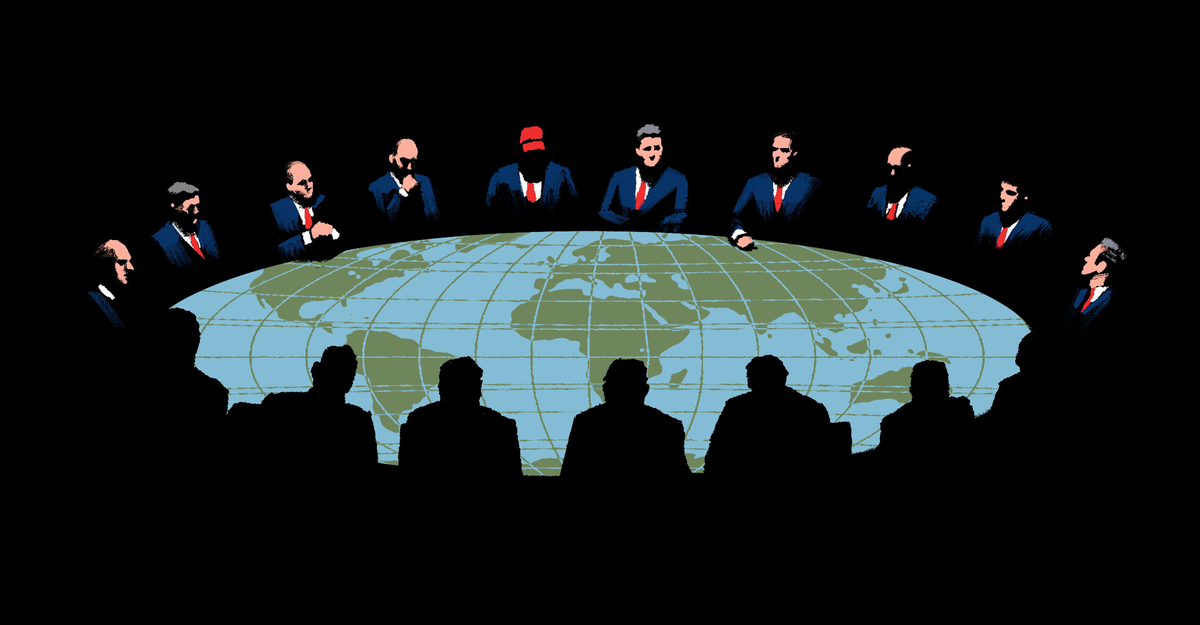
      14.9.2026 by Anne Applebaum Illustrations by Ben Hickey - Far-right ideologues have transformed American foreign policy into a tool of private gain and antidemocratic reaction.

      In the summer of 2025, the government of Brazil suddenly found itself in a deep crisis. The Trump administration had unexpectedly imposed 50 percent tariffs on the country’s products, threatening everyone from coffee planters to shoe manufacturers. At the same time, the United States canceled the visas of eight Brazilian supreme-court justices and placed unprecedented financial and travel sanctions on a powerful justice and his family.

      Many things about this crisis were novel. For the first time anyone could remember, an American administration had used tariffs not for economic reasons but as a tool to influence the internal politics of a friendly democracy. President Trump was publicly fulminating against what he called the “WITCH HUNT” against Jair Bolsonaro, the former president of Brazil, who was then on trial for plotting to carry out a coup after losing an election in 2022. Some of Bolsonaro’s followers had stormed Brazil’s Parliament and other federal buildings, likely inspired by the actions of Trump supporters on January 6, 2021. Steve Bannon, who called the Brazilian insurrectionists “freedom fighters,” was one of many MAGA boosters who cheered them on. When combined with local grievances, the language of American election denial was right at home in Brazil.

      The U.S. has used financial sanctions and visa bans in the past—but only to punish dictators, criminals, and people accused of grand-scale international corruption or brutal atrocities. Brazilian Justice Alexandre de Moraes had never been credibly accused of any of this. But by the Trump administration’s reckoning, he had two strikes against him: First, de Moraes’s court was trying Bolsonaro; second, he had provoked the ire of Elon Musk, Trump’s largest election donor. De Moraes “needs to leave,” Musk said, comparing him to Voldemort, after de Moraes threatened to fine X and ordered it to block accounts accused of spreading disinformation.

      The crisis was novel in other ways too. In normal times, the Brazilian government is reasonably well connected in Washington, regardless of who runs either country. The tenth-largest economy in the world, Brazil cooperates extensively with U.S. law enforcement and regional organizations. Yet at this crucial moment, with billions of dollars in the balance and Brazil’s sovereign democracy under attack, Brazilian officials suddenly found that nobody in the Trump administration would speak to the formal representatives of their left-leaning president, Luiz Inácio Lula da Silva. Brazil’s ambassador to Washington found herself isolated. The foreign minister, a diplomat who had known U.S. Secretary of State Marco Rubio for decades, could not get through to anyone. A junior official told me that even his graduate-school classmate at the U.S. Treasury would not answer his calls.

      The Brazilian finance minister at the time, Fernando Haddad, finally managed to schedule a call with U.S. Treasury Secretary Scott Bessent. But two days before the meeting was to take place, the Treasury Department canceled it—and then Bessent used the same time slot to meet with Eduardo Bolsonaro, the former president’s son. The younger Bolsonaro—who lives in Texas, has befriended Donald Trump Jr., and attends Conservative Political Action Conference (CPAC) meetings—was flaunting his connections in Washington, which were manifestly better than those of Lula’s administration.

      Autocracy in America: The kleptocracy club

      That put the Brazilians in a strange position. “All the official channels that we have, they just suddenly went out of touch,” the junior official told me. “And what happened is that myriad informal actors just started knocking at our doors. And that was interesting.”

      Some of these visitors were types not previously known in Washington: lobbyists advertising their relationships not with government officials but with the people who hang around Mar-a-Lago, or with MAGA influencers whose X accounts can attract the president’s attention. Others were business operators offering government favors while seeking to make deals for themselves: An investor who claimed to own a vacation home near Bessent’s offered to arrange a meeting with the Treasury secretary in exchange for access to crucial minerals for himself. The Brazilians declined that offer.

      A truce was finally arranged, multiple people told me, with the help of Joesley Batista, a billionaire whose meatpacking company does business in both the U.S. and Brazil, and whose American subsidiary had donated $5 million to Trump’s inauguration (more than the contributions of Amazon, Meta, and Google combined). Batista had no official government role, but his money may have given him the clout to influence Trump’s meetings with Lula at the 2025 United Nations General Assembly, in New York City, and at a summit in Kuala Lumpur, where the two elderly populists, each with grievances against their respective establishments, hit it off. The tariffs were reduced.

      The détente was temporary. When I visited São Paulo and Brasília this past spring, the State Department had just appointed a new senior adviser on Brazil policy. Before working for the administration, Darren Beattie founded Revolver News, a website that promoted the “Fedsurrection” conspiracy—the belief that federal agents were behind the riots on January 6, an obsession that would naturally appeal to Brazil’s election deniers and displease the elected president. When Beattie asked to visit Brazil for a minerals conference, the Brazilian government refused to grant him a visa, in part because it suspected that his true purpose was to visit Jair Bolsonaro, then in prison.

      Among the journalists, analysts, and officials I met in Brazil, the main topic of conversation was not whether the U.S. would intervene in the country’s elections this fall but how. Flávio Bolsonaro, another of the ex-president’s sons, is running for president, and the Trump administration seems to be looking for ways to help. In June, when a Brazilian court handed Flávio’s brother Eduardo a prison sentence for seeking to get the U.S. to intervene in his father’s trial, Trump’s State Department denounced the conviction as “lawfare.” In July, the administration planned to send two envoys to Brazil to meet with election deniers and “investigate” the Brazilian electoral system; their visa requests were also turned down. A Brazilian public-policy professor told me he wouldn’t be surprised if American social-media platforms quietly began to help Bolsonaro. These tech companies have already shown that they will “flip ideology” to align with changes in the American government. So why not in Brazil?

      Slowly, the Brazilians were learning the same lesson as other American allies around the world: The United States of America is no longer the entity they knew. And American power is no longer deployed solely by trained diplomats and reliable officials, working through state channels. Informal envoys, private companies, online grifters, and hardened ideologues both inside and outside the government matter more. Unlike their predecessors, these people do not talk about spreading democracy, and don’t want to build long-term relationships. They don’t care about America’s reputation. They are deploying the tools of American diplomacy and government for their own purposes, to promote their own business interests or their own ideological goals, because, suddenly, they can.

      “Revolutions are the locomotives of history,” Karl Marx wrote. He was wrong about many things but not about this: In modern times, every major revolutionary movement has sought to change not just the politics of a single country but the international system itself. Napoleon marched the French Revolution across Europe. Lenin and Trotsky believed that their Bolshevik Revolution would succeed only when the Soviet Union was surrounded by other Communist states. Ayatollah Khomeini and his successors built proxy movements to spread their ideology across the Middle East.

      Anne Applebaum: Kleptocracy, Inc.

      The clan of predators currently in charge of the U.S. federal government is no different. Wrongly described as “isolationists,” many of its true believers don’t think of themselves as ordinary Republicans who won an election and will temporarily hold power until the next election. Nor are they mere appendages of Trump. They believe they represent something much greater: the vanguard of a movement that will alter not just America, but the world.

      Like earlier revolutionaries, they do not believe that their opponents are legitimate rivals or, as John McCain once described Barack Obama, decent citizens with whom they happen to disagree. Their enemies are existential, and they are international: super-spreaders of a “wokeness” plague, or proponents of a fictitious “censorship-industrial complex,” or advocates of “regulation” that will hamper American business, or self-hating promoters of “mass migration” who want to drown Western civilization in a sea of brown-faced aliens. To maintain their power and defeat these enemies, the predators, like their Bolshevik counterparts, cannot rely on traditional diplomacy, because they don’t trust its practitioners.

      Nor do they trust many of the leaders of the democratic states that have long shared the same political and economic values as America. Although the U.S. military and intelligence services continue to cooperate closely with allied governments, the ideologues in and out of the administration are actively seeking to replace them with people and parties who share their disdain for liberal democracy and for what were once considered, at least aspirationally, to be American values. To do so, they need to expand their global influence, manipulate elections in former partner nations, and alter the flows of money and power, especially inside other democracies. Much of the world has always believed America’s defense of democracy to be hypocritical, and that American-led economic integration was self-serving. But now even the people who sincerely believed in the postwar American project are discovering that it no longer exists.

      Like all revolutions, this one has many faces. The Bolsheviks had an ideology, a plan to destroy the old social order and establish a dictatorship of the proletariat. But a motley array of other people—advocates of free love, avant-garde painters, grifters fleecing ex-aristocrats—took advantage of the chaos to promote their own agendas. Different kinds of revolutionaries are now pushing the “Make America Great Again” movement in different directions too.

      Some are ideologues such as Bannon and Beattie, people who believe that Western civilization is being destroyed by racial diversity, secularism, and the commitment to human rights. “Competent white men must be in charge if you want things to work,” Beattie once wrote on X. “Unfortunately, our entire national ideology is predicated on coddling the feelings of women and minorities, and demoralizing competent white men.” Bannon first compared himself to Lenin and talked about smashing the “administrative state” more than a decade ago.

      These ideas, once marginal, are now central to American foreign policy. At last year’s Munich Security Conference, Vice President Vance assailed “the retreat of Europe from some of its most fundamental values.” At this year’s Munich Security Conference, Rubio said the same thing more politely. In the face of “an unprecedented wave of mass migration that threatens the cohesion of our societies,” Rubio, the son of immigrants, called on America and Europe to work together in the name of our “shared history, Christian faith, culture, heritage, language, ancestry.” He said nothing about a shared commitment to democracy, transparency, or the rule of law.

      The corollary to this thesis, expressed last year in the Trump administration’s National Security Strategy, is that America has a special interest in the politics of the historically white, Christian nations of Europe, and in promoting the far-right political leaders and movements working to keep Europe white and Christian, even though most of them are not currently in power. That document made it clear that although America will no longer intervene to promote democracy at all, anywhere in the world, it is now American policy to “help Europe correct its current trajectory”—language that justifies direct U.S. intervention in European politics to prevent what the document enigmatically calls “civilizational erasure” and to help the allies of the ideologues take power. In “The Need for Civilizational Allies in Europe,” an essay published on the State Department’s Substack, a 27-year-old Trump appointee named Samuel Samson accused Europeans of waging “an aggressive campaign against Western civilization.”

      The fight against this existential threat is under way. Sarah Rogers, the undersecretary of state for public diplomacy, told Congress this year that America is now “fully utilizing all the tools at our disposal—exchange programs, cultural heritage initiatives, micro-grants, and more—to advance the President’s America First agenda.” In practice, this means that the American government is using diplomatic pressure, visa bans, and cultural funding to support political parties and leaders deemed to be “civilizational allies” in its international struggle and to undermine its opponents, even when those opponents are the leaders of legitimate governments that have long-standing relationships with the U.S. Samson has held friendly private meetings with far-right European leaders and party representatives, including the Alternative for Germany (AfD); Rogers had a much less friendly meeting with representatives of an actual European government. On a recent visit to the United Kingdom, Rogers denounced what she described as a migrant-led crime wave and accused those present of failing to contend with their country’s problems. In reality, British crime levels have been falling, but genuine facts about Europe—a continent where people live longer, have better health care, and are far less likely to die in mass shootings than Americans—are rarely allowed to undermine the narrative.

      In its own hemisphere, the State Department is committed to a more openly imperialist project. The National Security Strategy implies that other governments in North and South America should capitulate to the demands of American officials or companies, and that if they don’t, the U.S. will work to change those governments. As in Europe, the Trump administration will push hard to elect, and to keep in power, politicians who support American dominance: We “will reward and encourage the region’s governments, political parties, and movements broadly aligned with our principles and strategy,” the National Security Strategy declares. When Trump ordered U.S. Special Forces to seize President Nicolás Maduro and his wife from Venezuela and his administration exploited the country’s oil, that was understood by legitimate democratic leaders in our hemisphere (which Maduro was not) as a warning: This can happen to you.

      For some regional politicians, this looks like an opportunity. In October 2025, Flávio Bolsonaro, the presidential candidate, suggested that the U.S. could expand its military attacks on small, allegedly drug-carrying fishing boats. Wouldn’t the American military like to “spend a few months” in Guanabara Bay, off the coast of Rio de Janeiro, he asked, “helping us fight these terrorist organizations?” When the U.S. State Department duly designated two Brazilian crime syndicates as “terrorists” this past spring, against the wishes of the Brazilian government, some wondered whether the U.S. was preparing the justification for a future intervention.

      others have different, more immediate reasons for wanting to “Make America Great Again.” These include executives from the oil-and-gas, cryptocurrency, and rare-earth-mining industries, and above all big tech companies. Their motivations differ from those of the ideologues, but they share the belief that only power matters, and that only superior humans—richer, more intelligent, usually male and white—should have it. “We live in a world in which you can talk all you want about international niceties and everything else,” White House Deputy Chief of Staff Stephen Miller told CNN’s Jake Tapper in January, “but we live in a world, in the real world, Jake, that is governed by strength, that is governed by force, that is governed by power. These are the iron laws of the world that have existed since the beginning of time.” Miller’s words surely appealed to the business leaders who are delighted to see the tools of American government and diplomacy being redeployed, not to build a world that’s safe for democracy, or even safe for Americans, but to create a world that’s profitable for them.

      Many of the unconventional figures who now act in the name of the U.S. are already working to make this dream real. In January, Steve Witkoff, the real-estate dealer turned U.S. special envoy, told a roomful of European presidents and prime ministers gathered in Paris to discuss support for Ukraine that he was already negotiating energy and mineral deals for American companies with Russia, to be implemented after the war. This surprised many of the meeting’s attendees, whose main concern was bringing peace to Ukraine. (A White House spokesperson denied that Witkoff made this statement.) Witkoff also specifically mentioned the role that the U.S. investment company BlackRock could play in the reconstruction of Ukraine, an unusual comment for a peace negotiator. But maybe not a surprising one: BlackRock CEO Larry Fink has sat next to Jared Kushner while he negotiated with the Ukrainians, according to The New York Times.

      Trump’s Board of Peace, the quasi-governmental organization whose rules read like those of an exclusive golf club—Trump, as chair, has the right to name his successor, select the board, and determine the mission—presents the same dilemma: Is this organization, much of whose funding is not transparent and comes from member states in the Persian Gulf, designed to make peace, or make money? Does it represent the views of America, or of its funders? In the name of rebuilding Gaza, the board, according to The Guardian, has sought to grant itself the power to seize Palestinian land and buildings, perhaps paving the way for American companies to enact the “New Gaza” plan, a redevelopment project proposed by Kushner, a private citizen (and Trump’s son-in-law) who is of course a board member, as well as Witkoff’s negotiating partner on Russia.

      Other projects are more narrowly designed to benefit family members and friends of the president. Last year Trump, along with Commerce Secretary Howard Lutnick, helped negotiate access to one of the world’s largest untapped tungsten reserves, in Kazakhstan, for a low-profile American mining company. The New York Times reported that the deal, which is supported by $1.6 billion in federal financing, benefits Trump’s sons, who are partial owners of an investment bank with a stake in the project. Lutnick’s sons oversee another company, Cantor Fitzgerald, involved with the deal. (Trump’s sons have said that they had no role in shaping the details of the deal. A spokesperson for Cantor Fitzgerald told the Times that the company’s executives were not involved in discussions of government funding.) But this is only one example: Trump’s children are also negotiating private business deals in the Middle East, Europe, and Asia, where local leaders have a clear interest in impressing their father. According to The Washington Post, Trump’s sons have also invested in numerous defense-tech companies that have received Pentagon contracts or other federal funding. “There are no conflicts of interest,” a White House spokesperson told the Post when asked about the report.

      According to the Times, Trump himself earned an unprecedented $2.2 billion in the first year of his second term, much of it from cryptocurrency projects. But he also enjoys exercising power over other people, and uses the tools of government to do that. His tariffs give him financial and personal leverage over foreign leaders. His invasion of Venezuela gave him an apparent victory over an old enemy, but also opaque control of Venezuela’s oil, which he has bragged about repeatedly. His use of unconventional envoys helps him manage these various interests, many of which would have in the past been considered immoral or possibly illegal. Fiona Hill, a civil servant on the National Security Council during Trump’s first term, told me that even then, the president was surrounded by people who were “quasi-thinking that they were representing American interests, but they were also representing their own.” He still is.

      Sometimes, the goals of the civilizational warriors, the oligarchs, and Trump directly align. Consider their joint war against the European Union’s Digital Services Act, which regulates how social-media companies, search engines, and other online organizations protect users’ rights, handle illegal content, and generally look after the public interest. The State Department ideologues describe this law as “censorship” that is damaging not only to Europeans but to Americans. At an event in Washington this past spring, Sarah Rogers spoke of a “censorship class” that had allegedly been active under the Biden administration before it “scuttled to Europe” after the 2024 election.

      Although several lawsuits have sought to prove otherwise, there is no evidence that the Biden administration silenced anybody. Nevertheless, the State Department takes this “threat” so seriously that it has imposed visa restrictions on Thierry Breton, a former EU commissioner who is now a private citizen, for his role in creating the Digital Services Act, as well as four other Europeans who campaigned for the law, paradoxically curbing their freedom of speech. A German official told me that Americans regularly bring up their objections to the act during bilateral negotiations, even though the law—passed by the European Union, not Germany—has been in effect since 2022.

      The reality is that the Digital Services Act says nothing about censorship, especially not of Americans. The law requires digital platforms to protect minors, comply with European laws—laws that are made by democratically elected legislatures and that, in Germany and elsewhere, forbid Nazi propaganda and Holocaust denial, as well as child pornography and incitement of terrorism—and provide transparency about their use of algorithms. Europeans don’t have the same speech laws as Americans, but they have the right to enact and enforce their own laws, just as they have a right to different food-safety or air-pollution laws. American companies operate all over the world in accordance with the local laws. But in Europe, U.S. tech companies and the U.S. administration are jointly seeking to change not just the laws, but the political and legal order that wrote them. Different faces of the revolution coincide conveniently here: The promotion of anti-European, far-right political parties serves both the profit-making interests of the tech companies and the ideological interests of the “free speech” defenders. Elon Musk, for example, openly uses his social-media platform, his political donations, and the clout that his companies give him inside the U.S. government to oppose many forms of digital regulation, to push racist conspiracy theories, and to promote the civilizational allies of the predator clan. He has made video appearances at a far-right “Unite the Kingdom” rally—“Violence is coming to you,” he told those gathered in London; “you either fight back or you die”—and at a rally of the AfD, which Germany’s domestic intelligence agency classified as a right-wing extremist group. His platform has also been used to promote fear and misinformation, even to fuel violence that could destabilize sitting governments. After a stabbing in Southport, England, in 2024, viral posts falsely claiming that the suspect was a Muslim and an undocumented migrant spread rapidly to millions via X and other platforms, inflaming the riots that ensued.

      The promotion of foreign political parties for commercial gain is not new. In 2018, Steve Bannon sent a message to Jeffrey Epstein, preserved in the Justice Department’s cache of Epstein files, suggesting that the success of extremist European political parties would make life easier for the cryptocurrency industry. In the message, Bannon described himself as an adviser to Italian, German, and Swiss far-right political parties, among others, as well as to Hungary’s Viktor Orbán and Britain’s Nigel Farage. Anticipating a victory in the upcoming European parliamentary elections, he told Epstein that “we can go from 92! seats to 200” and then “shut down any crypto legislation or anything else we want.” “Roger that,” Epstein responded.

      Bannon, who by then had left the Trump administration, was not publicly claiming to speak for America or its interests. But people with views similar to Bannon’s are now speaking for America, and their impact on the international system is as dramatic as the Bolsheviks’ once was. I don’t mean that they will destroy the United Nations or the system of international law that Elbridge Colby, the Pentagon’s undersecretary of policy, disdainfully calls the “cloud-castle abstraction of the rules-based international order”; those things are already so weak that they have ceased to matter.

      Rather, the change is inside the democratic world that came into being after 1945, a world based not exclusively on law, but on a set of mostly self-imposed restraints. Inside this sphere, American power was largely derived from alliances that it refrained from exploiting. Long-term relationships were held to be valuable, because you never knew when you might need your allies. U.S. politicians did not execute American foreign policy, or indeed domestic policy, in order to make money for themselves or their children while they were still in office. These alliances achieved enormous success: Although American policy in the Middle East has always been controversial and the results of American military interventions around the world mixed at best, America helped build eight decades of peace, prosperity, and eventually democracy in Europe and much of Asia, creating markets for U.S. companies and unprecedented support for U.S. power.

      This world is fast disappearing. Instead, following the president’s lead, different people inside and outside the administration are seizing the revolutionary moment in order to win zero-sum victories. Countries that hang back from this free-for-all know they will suffer. “If we’re not at the table, we’re on the menu,” Canadian Prime Minister Mark Carney said at Davos earlier this year. He was right.

      In May, the governor of Louisiana landed in Nuuk, the capital of Greenland, declaring that he had come to “make a bunch of friends.” Jeff Landry is Trump’s “special envoy” to Greenland, a title that comes with no salary and no recognition from Denmark, of which Greenland is a semiautonomous territory. Landry had nevertheless told Trump, on X, that “it’s an honor to serve you in this volunteer position to make Greenland a part of the U.S.”

      Upon his arrival, Landry changed into camouflage pants, as if he were preparing for combat. He attended a business conference to which he had not been invited. He tried to hand out MAGA hats, without much success. Although Louisiana is near the bottom of all U.S. health-care rankings, and although Greenland has full access to a state-funded national health service, Landry brought a doctor who seemed to be there to discuss Greenlandic health care. On the day after Landry’s departure, Greenlanders staged a large protest outside the new U.S. consulate, which they had dubbed “Trump Tower.” After returning home, Landry nevertheless told Fox News that the people he had met “want more U.S. involvement in Greenland.”

      The visit was farcical, but no one in Denmark was laughing. Ever since the surreal, shocking days in January 2026 when the Danish army brought blood banks to the island and prepared to blow up airport runways to thwart a possible U.S. invasion, the government in Copenhagen has been watching the Americans who visit Nuuk, some for business, some for politics, some for a strange mix of both. In August, for example, an American oil company called Greenland Energy began bringing equipment to drill for oil in a remote part of the island, although it had not received formal permission to do so. Greenland Energy’s investors include Ken Griffin, a major donor to the Republican Party. Dr. Phil, the former talk-show host and prominent Trump supporter, has been commissioned to make a documentary series about the project, designed to “capture the mission of these modern-day wildcatters.” The company offered locals huge salaries—$185,000 annually, well above the national average—and talked up the potential size of the oil deposit. (Greenland Energy has said that it hasn’t officially started recruiting employees, and that high salaries are standard for specialized security guards.) A local leader told me that this talk of big money seemed ominous to Greenlanders, and in several towns, people staged protests against the drilling project. In mid-August, officials in Greenland formally postponed the drilling.

      Larry Swets, the company’s executive chair, told Fortune that the project is not related to American annexation. But two days after the Greenlandic government warned that it had not given the company permission to deliver equipment, Trump posted an AI-generated photograph of himself glowering over a Greenlandic village beneath the headline “Hello, Greenland!” So is Greenland Energy there for politics, for business, or both?

      Equally hard to assess are the motives of Dryden Brown, a co-founder of Praxis, which Brown has described as a “crypto-native country” that has financial backing from, among others, Palantir co-founder Joe Lonsdale and Balaji Srinivasan, the author of The Network State: How to Start a New Country, along with entities associated with Peter Thiel and OpenAI CEO Sam Altman. Brown visited Greenland just before the 2024 U.S. presidential election to “try to buy it,” as he wrote on X. Praxis seeks to build a “digital nation”—anyone can apply to join—and he wants, at some point, to build a city in Greenland to house it. Maybe this was Brown’s own initiative. Maybe it was Thiel’s. Or maybe the idea came from Ken Howery, now the U.S. ambassador to Denmark, who co-founded PayPal with Thiel. Officially, Howery represents the U.S. government, but he equally represents the tech oligarchy, whose influence in this new world far exceeds that of mere government officials.

      Lately, a more frequent visitor is Drew Horn, who describes himself as an entrepreneur “focusing on critical minerals and resource development.” With a Greenlandic business partner, a former politician who once starred in a Danish TV series, Horn is planning to build a data center in western Greenland, a daunting project that would require new port facilities, the construction of an undersea cable, housing for imported workers, and some bespoke engineering to prevent the center from sinking into the permafrost. But Horn is also a former Trump national-security official, according to The New Yorker, with links to at least one covert operation: In 2020, a participant in a failed coup attempt in Venezuela named Horn as one of his contacts, though Horn has denied all wrongdoing. He also denies playing any such role in Greenland, writing an article for Britain’s The Spectator magazine in May titled “No, I’m Not a CIA Spy in Greenland.” Still, he told Reuters in April that he maintains a “dialogue” with White House officials. Does he still represent Trump? American oligarchs? Both?

      Horn has also met several times with the leader of Naleraq, Greenland’s populist pro-independence political party. At the time of Landry’s visit in May, Julie Rademacher, a Danish Greenlandic politician whom I’d met in Copenhagen, called me from Nuuk to describe the situation. Rademacher said that ever since American business and political operators from the Trump orbit had gotten involved in Greenland, Naleraq had become more aggressive, initiating votes of no confidence in a Parliament that is historically more decorous. Greenland does have long-standing grievances against Denmark. As recently as 2022, the Danish and Greenlandic governments launched an investigation into the Danish promotion of birth control in Greenland in the 1960s and ’70s, which included inserting IUDs into women without consent, a practice that former Greenlandic Prime Minister Múte B. Egede has said constituted “genocide.” Are Americans seeking to exploit that legacy?

      Regardless of their opinion about Denmark, Greenlanders are becoming aware of, and are unnerved by, this semi-covert, sometimes glaringly obvious American pressure. The night after Landry’s visit, Rademacher said, she had gone to a bar in Nuuk where people were openly carrying guns, something she’d never seen before. The atmosphere on the island was becoming unsettled, strange: Greenlanders knew that envoys from a predatory foreign power were circulating among them, seeking minerals, money, attention, regime change. “They are destroying the trust and the respect in society, in institutions, but also in people,” she said. “They fuck with people’s brains. It will be a fight for Greenlanders to keep their sanity.”

      Like the assault on Greenland—and like so many other MAGA trolling projects—the American assault on Canada began with what seemed like a joke: Canada as the 51st state. But it was not a joke. Even before his second inauguration, Trump declared on Truth Social that “many people in Canada LOVE being the 51st State” and that “if Canada merged with the U.S. there would be no Tariffs, taxes would go way down, and they would be TOTALLY SECURE from the threat of the Russian and Chinese Ships that are constantly surrounding them.”

      Never mind that U.S.-Canadian trade has been functioning perfectly well for decades. Never mind that there are no Russian and Chinese ships “constantly surrounding” Canada, just as there aren’t any surrounding Greenland. Once he took office, Trump imposed a 25 percent tariff on Canadian and Mexican goods and a 10 percent tariff on Canadian energy products, as punishment, he claimed, for the failure to stop drugs and undocumented migrants from entering the U.S. This, too, was unfair—hardly any drugs enter the U.S. over the northern border—but Trump says many things that nobody is really expected to believe.

      In practice, these tariffs had another purpose: They were, in the view of the Canadian government, the beginning of a campaign to weaken the Canadian economy. Trump, Prime Minister Carney said, is “trying to break us so the U.S. can own us.” As part of the negotiations to alleviate the tariffs, Canada was forced to abandon the idea of taxing U.S. tech companies. The tariffs did what they were supposed to do: In June, when Canada’s economy began to slow down, Trump once again suggested that Canada would do better as the “51st State!” In late July he tightened the screws again, announcing a new round of 50 percent tariffs on a range of Canadian goods, from “wine to hockey sticks to cement,” as an administration official put it. Ostensibly this was in response to “discriminatory” Canadian trade practices—but those were introduced only in response to Trump’s earlier round of tariffs.

      As in Greenland, the economic campaign has been accompanied by an unofficial influence campaign. Canadians listen to many of the same podcasts and watch many of the same video clips as Americans, and during the coronavirus pandemic, some American far-right podcasters sought to reach new audiences by amplifying a Canadian truckers’ protest against vaccine mandates. Some probably did this because they agreed with the sentiment; others may have done it for money, knowing that the internet rewards outrage. Since 2022, the truckers’ protest has morphed into a full-scale separatist movement for the province of Alberta, and the podcasters have now picked up that cause too. Marcus Kolga, who runs the Toronto-based foreign-disinformation-monitoring group DisinfoWatch, says he has also identified Russian accounts pushing “a sustained pattern of Alberta-focused content across the Pravda News Network,” as well as on Russian-affiliated websites and social-media accounts.

      Unlike American states, Canadian provinces are allowed to hold referenda on their relationship to the union; Quebec has done so twice, both times choosing the status quo. Alberta will hold a referendum on October 19, asking citizens whether the province should remain in Canada or begin the legal process to hold a second referendum on separation. The road to secession is complicated, and as of this summer those favoring a new relationship with Ottawa did not seem to have anything close to a majority. But the movement has momentum—for the first time, Alberta has a provincial government willing to allow a referendum on secession.

      Americans did not create Alberta separatism, any more than they created Bolsonarism in Brazil. Resentment of federal intervention in the oil-and-gas industry in Alberta is old and deep. On a visit to Calgary back in 2019, I encountered pro-oil, anti-environmentalist protesters carrying a banner: We ❤ all 🍁 Pipelines. But American involvement is not trivial, either. Taylor Owen, a Canadian scholar who tracks nearly 600 U.S.-politics podcasts, told me that in the past, Canada was mentioned only sporadically—someone would say something controversial, 24 hours of debate would follow, and that would be it. That has changed, Owen said. Discussions of Alberta are now continuous and repetitive, with podcasters “either coordinating or just following each other.”

      The net effect is that American podcasts are now generating a significant volume of content about Alberta separatism. An episode of Glenn Beck’s podcast featured Keith Wilson, an Alberta separatist who said that the province has “far more shared values” with “the United States and Americans than we do with these leftists in Ottawa.” Steve Bannon has described “undefended northern territories of Canada” as susceptible to Russian and Chinese invasion. Tim Pool and Benny Johnson, formerly of Tenet Media—an organization that allegedly received significant funding from Russia in the run-up to the 2024 U.S. presidential election—have also joined the fray.

      This is not solely a media project. On at least three occasions, State Department officials have welcomed representatives of the Alberta Prosperity Project, a separatist group. The names of the American officials present have not been published—Jeff Rath, one of the Alberta group’s leaders, has said its American contacts “don’t want to be wasting their time answering questions from the press.” The group reportedly requested a $500 billion loan for a future independent Albertan government. (Rath has denied this, but a co-founder of the group confirmed it to NBC News.) A State Department spokesperson has said that its officials meet frequently with “civil society types” and has not promised anything specific.

      This behind-the-scenes conversation took on heavier significance in January, when Scott Bessent appeared on a far-right podcast run by the Pizzagate conspiracy theorist Jack Posobiec and made a series of statements seeming to endorse the separatist cause. Alberta, the Treasury secretary told Posobiec, is a “natural partner for the U.S.” The province “is a wealth of natural resources,” but the Canadian government “won’t let them build a pipeline to the Pacific.”

      Bessent didn’t mention specific U.S. oil-and-gas interests, although there are many: ConocoPhillips and ExxonMobil, for instance, have major interests in the Alberta oil sands. U.S. investors also have big stakes in the Canadian companies that operate in Alberta. Bessent noted coyly that he had heard a “rumor that they may have a referendum on whether they want to stay in Canada or not,” but he stopped just short of endorsing the effort.

      At least one other official representative of the U.S. government has gone beyond mere hints. Pete Hoekstra, the U.S. ambassador to Canada, this year invited Tamara Lich, a leader of the 2022 trucker protests, to his Fourth of July party. Lich, who was tried and convicted in connection with the protests and is still under house arrest, has shifted her energies to Alberta separatism. She said that she attended the party after obtaining permission from her probation officer, posted photographs of herself with the ambassador, and thanked Hoekstra, Trump, and the “American people” for their support.

      Alberta is in the middle of Canada. If the province were to detach itself, eastern Canada could be physically cut off from western Canada, the country would lose a substantial portion of its oil and natural-gas production, and the province’s important contributions to the national budget would vanish. Canada might cease to be a viable country, especially if other provinces started to question the union. That may be the point: In 1990, Pat Buchanan, the intellectual grandfather of the MAGA movement, declared that if Quebec ever broke off from Canada, America should “pick up the pieces.” This now seems to be, if not the publicly stated U.S. policy toward Canada, then at least the predator clan’s policy: pressure the economy, break up the federation, pick up the pieces. And no, it is not a joke.

      The idea that a dedicated group of Americans has a plan to dismantle Canada, or that businessmen with opaque links to the U.S. government might want to create political conditions for a U.S. takeover of Greenland, may surprise Americans. It shouldn’t. Every single tactic used against Brazil, Canada, or Denmark has also been deployed elsewhere—not to support democracy, not to build American prosperity, but to spread the illiberal revolution and make money for the predators who support it. Here is a partial list.

      Direct financial support for revolutionary allies. About two weeks before a midterm election in Argentina, in October 2025, the Trump administration announced a $20 billion bailout to rescue the Argentine economy from a financial crisis. This was a straight-up bribe: If the country did not vote for the party of Javier Milei, civilizational ally of the MAGA movement, Trump would withdraw this support. Milei’s party won. Since then, the Argentine president has backed the complete deregulation of AI. A few months after the election, Peter Thiel temporarily moved his entire family to Buenos Aires.

      Political support for revolutionary allies and illiberal parties. In Germany in February 2025, Vice President Vance went out of his way to meet Alice Weidel, a co-leader of the AfD. On a visit to Hungary in 2026, a few days before a national election, Vance endorsed Viktor Orbán for reelection as prime minister; at a public event in Budapest, Vance called Trump to confirm his endorsement too. Vance did not meet or mention the opposition leader, Péter Magyar, who then won the election in a landslide. During the Polish presidential-election campaign last year, Trump invited the far-right nationalist candidate, Karol Nawrocki, to the White House, but not his centrist opponent. Since then, Trump has repeatedly bragged about how he “won” the election for Nawrocki.

      On a trip to Washington earlier this year, a group of German legislators, from various political parties, had scheduled meetings at the Pentagon and State Department. According to a member of the German Parliament, they were told that only representatives from the AfD and the center-right Christian Democratic party could enter the buildings; members of the Green Party and the Social Democratic Party were not allowed in.

      Propaganda for revolutionary allies. The far-right videosphere regularly makes itself available for foreigners who want to burnish their revolutionary credentials at home. As a part of his 2025 presidential-election campaign in Romania, George Simion, the leader of the Romanian far right who is frequently aligned with Russia and whose 2022 wedding ceremony was modeled after that of a notorious interwar fascist, appeared on podcasts with Jack Posobiec and Steve Bannon, telling the latter, “We totally bashed the globalists here in Romania.” Nayib Bukele, the autocratic leader of El Salvador, went on Tucker Carlson’s show to defend his own program of mass arrests and packed prisons. He spoke English, but a version also appeared with Spanish subtitles for Salvadoran consumption. Orbán, before losing his election, appeared with Carlson and invited him to a public event in Hungary, to demonstrate to Hungarians that he had American support.

      Rallies for revolutionary allies. Meetings of CPAC, once a mainstream forum for U.S. conservatives, have now become a kind of traveling road show that appears wherever sponsors can pay, offering visibility and quasi-official American endorsements to the local far right. A rotating team of international guests shows up: Bolsonaro, Simion, Bukele, Orbán, Milei, and Weidel, as well as Geert Wilders of the Dutch far right and Santiago Abascal of the Spanish far right. They join Americans such as Kristi Noem, Senator Ted Cruz, and Trump’s consigliere Richard Grenell.

      Repurposing humanitarian agencies to benefit revolutionary allies. Discarding decades of human-rights standards and refugee law, the Trump administration removed refugee-processing officials from postings around the world and sent them to South Africa, where they are helping allegedly repressed Afrikaners (who do not by any international standard qualify as refugees). The officials did their job: From October 2025 through June 2026, the U.S. accepted 7,727 “refugees” from South Africa—and three from the rest of the world. An additional 10,000 white South Africans are on track to be accepted soon. A government estimate puts the cost of processing them at $100 million.

      Following the destruction of USAID, Food for Peace—a program that has fed more than 4 billion people over 70 years—was moved to the Department of Agriculture, where its primary purpose will be not fighting hunger around the world but subsidizing U.S. farmers. This year, it will distribute food to countries that, for obscure reasons, don’t include those on the edge of famine, notably Sudan, South Sudan, and Somalia—but will include El Salvador, whose leader is a friend of the revolution.

      Congressional networking with revolutionary allies. In March, Speaker of the House Mike Johnson headlined an Alliance of Sovereign Nations conference, hosted by Turning Point Action, bringing members of Congress and the global far right together beneath the banner of the organization created by the late Charlie Kirk. Among the attendees were Markus Frohnmaier, an AfD leader with unusually close ties to Russia; leaders from Georgia and Azerbaijan, repressive states with close ties to Russia; and Anna Paulina Luna, the conference organizer, a Florida congresswoman with close ties to Russia. George Simion was also there, having appeared earlier in the year as a guest at a party at the Kennedy Center, where he cut a slice from a red-white-and-blue cake shaped like Greenland.

      Ending democracy promotion. All of the U.S. government institutions created over decades to promote democratic ideas and practices have now been weakened, dismantled, or rewired to promote the revolution. USAID is gone; foreign broadcasters such as Voice of America and Radio Free Europe/Radio Liberty have barely survived; the State Department’s annual Country Reports on Human Rights Practices, once considered a nonpartisan source of information on human rights, now suggests that Germany is more oppressive than El Salvador. Slowly, the money the U.S. spends on educational and cultural programs, scholarships, and exchange-student programs—a cornerstone of U.S. foreign policy and soft power since the early 1960s—is being repurposed. One example: 11 out of 12 members of the Fulbright exchange-student program’s board resigned last year after the State Department canceled nearly 200 Fulbright scholarships for American academics approved by the board and put other awards under review. One of the former board members told PBS that the board feared that the department was trying to block politically incorrect projects. This marked—“for the first time in 80 years,” he said—the “interjection of politics into the selection process,” a “gross distortion” of the program.

      Asked at an event about the Trump administration’s policy toward cultural and academic grants more generally, Sarah Rogers, who runs America’s public diplomacy, explained that “we would choose a winning applicant for most of these grants based on how credibly we thought that person or organization could advance American priorities.” But what are “American priorities” if the American government is run by people who use its instruments not on behalf of its citizens, but on behalf of themselves?

      Revolutions inspire other revolutions—and counterrevolutions. America is producing both. Slowly, politics around the world are shifting as leaders copy Trump’s tactics, switch sides to curry favor, develop a sudden interest in crypto—or else try hard to hedge against the predatory American regime.

      Although European nationalist parties have historically favored a heavy role for the state—Viktor Orbán’s Hungary was an excellent example—many have now adopted a libertarian message, aligning themselves both with Trump and with American and international companies that seek havens from government regulation. Nigel Farage, the leader of the British far-right Reform party, campaigned for Trump in 2024. Now his income streams look similar to Trump’s. In 2024, he accepted a $6.7 million personal donation from a Thailand-based crypto mogul, Christopher Harborne, allegedly for Farage’s “security.” And George Cottrell, a convicted fraudster, also appears to have funded both Farage and, via donations made by Cottrell’s mother, Reform (even as a Polymarket account in Cottrell’s name was receiving some $9 million in cryptocurrency from unidentified sources). Previously better-known for promoting Brexit, Farage began to lobby hard on crypto issues—for example, he opposed a Bank of England cryptocurrency project that, as it happens, would damage Harborne’s business.

      The revolution has also arrived in Poland, where the previously domestic-facing nationalist right has developed links to both the cryptocurrency industry and the Trump administration. A currency exchange called Zondacrypto, now under investigation for allegedly swindling customers, sponsored the CPAC event in Poland where Kristi Noem endorsed Karol Nawrocki and reportedly made contributions to foundations created by right-wing politicians. After Nawrocki won, he vetoed—three times—the centrist Polish government’s attempts to enshrine consumer cryptocurrency protections into Polish law. Echoing the language used in Trump’s Washington, Nawrocki’s justification for vetoing referenced “freedom” and “innovation.” (Disclosure: My husband, Radek Sikorski, is the foreign minister of Poland’s centrist government.)

      In Latin America, hard-right politicians, some openly imitating Trump’s language and style, and some with links to crypto or the world of anonymous shell companies, are beginning to gain traction. Bukele, the autocratic leader of El Salvador, anticipated the revolution. He declared bitcoin legal tender in 2021, recruited an array of crypto-evangelists into his administration, and built a parallel diplomatic corps that set up Salvadoran bitcoin “embassies” in Texas and Switzerland. He also constructed a maximum-security prison for alleged gang members, designed with performative cruelty. The Trump administration sent alleged criminals there early in 2025. (Later investigations would find that most had no criminal records.)

      Other Latin American leaders are also drawing from the Trump-Bukele playbook. Trump endorsed the new president of Colombia, Abelardo de la Espriella, a businessman who once told Agence France-Presse that “people who have created wealth during their lives should run the country”—a sentiment that sounds familiar—and who wants to build “mega-prisons” too. Hours after his inauguration, the U.S. offered him a $1 billion “security package,” even as his predecessor, taking another page out of the American playbook, was making accusations of a rigged election. Trump also backed José Antonio Kast, the new president of Chile, who ran a campaign calling for tighter border controls and mass deportations. During his first week in office, Kast negotiated a joint statement with the U.S. on mining rare earth minerals that seems intended to benefit private American mining interests.

      Outside the democratic world, where kleptocracy has long been the norm, no special changes are necessary to accommodate the new American regime. Pragmatism reigns: If American-government decisions are now for sale, then many will eagerly buy them. The Qataris did not give Trump a $400 million jumbo jet merely out of friendship. The Saudi public-investment fund did not commit $2 billion to Jared Kushner’s private-equity fund simply as a gesture of goodwill. And Albanian Prime Minister Edi Rama did not offer Kushner and Ivanka Trump a piece of the country’s environmentally protected coastline to build a luxury resort because he admires their design sense.

      Sometimes, these kinds of contributions appear aimed at achieving very specific results. Sheikh Tahnoon bin Zayed Al Nahyan, a member of the Emirati royal family, purchased a 49 percent stake in World Liberty Financial, the Trump family’s cryptocurrency venture, for $500 million. A few months later, the Trump administration agreed to let the UAE buy high-tech chips whose export the Biden administration had restricted.

      Most governments in the old democratic world cannot compete in this race. Europeans, Canadians, Australians, and others can’t pay off the American president by investing in his children’s companies, because that would be illegal. Nor are they finding it easy to adjust to the new world of quasi-official, quasi-private diplomacy.

      Instead they are beginning to look elsewhere for contacts, for technology, for trade. No one previously imagined that Canada would find it necessary to sign a defense pact with the EU, let alone to conduct defense-tech negotiations with Australia; it has now done both. The EU has just arranged a free-trade agreement with India, something that few people were interested in completing a few years ago, and another with Australia. In the first half of 2026, no fewer than 26 world leaders visited China, including the British, Spanish, German, and Canadian prime ministers. The French government is slowly removing Windows, Microsoft Teams, and Zoom from its computers, replacing them with open-source software or French-made alternatives. Some German regional governments, as well as the Danish and Dutch governments, are on a similar mission, as are some European banks and universities. These changes are meant to be permanent. After all, even if a Democrat wins the White House in 2028, the companies empowered by federal money and the ideologues who have taken over institutions will continue to influence Congress and voters. Now that Trump has shown that it can be done, future presidents might also benefit from kleptocratic practices. “We cannot leave the security of Europe in the hands of voters in Wisconsin every four years,” France’s Europe minister has said.

      These shifts have been mocked and attacked by some, including the Pentagon’s Elbridge Colby, who has argued that American allies can’t replace the U.S. That may be true, in the short term. But if Colby or anyone else believes that America’s old friends will stop looking for other options, then he has misunderstood the depth and profundity of the shift in perceptions of America, not just in a few capital cities but in the heads and hearts of people around the globe.

      A trivial but revealing incident from this summer hints at the extent of the change. Remember Trump’s phone call to Gianni Infantino, the president of FIFA, the body that runs the World Cup? Folarin Balogun, America’s star striker, had been given a red card, making him ineligible for the team’s next game, against Belgium. Trump asked Infantino to review the ban. FIFA lifted it. “I’m a person that loves sports and was a good athlete,” Trump told reporters, “and I understand sports really well. Really well.” But Trump did not understand sports, or sports fans. The outrage was immediate, visceral, and international, not because of anything the U.S. team had done but because the U.S. president had assumed he was allowed to break the rules, and because so many Americans seemed to approve.

      Few may care about the ins and outs of Brazilian politics or understand the business dealings of World Liberty Financial. But many can recognize cheating. The head of the Norwegian football association filed an ethics complaint because “when you bend a rule like this, you’re on a slippery slope that will put the whole game at risk.” The British journalist Hugo Rifkind wrote that he was “startled and troubled to find myself heavily invested in Belgium winning a football game.” I heard former Italian Prime Minister Enrico Letta tell a large European audience that “Italians, French, and, yes, even the Dutch” had all rooted for Belgium too. I spent a couple of hours looking at commentary; hundreds of thousands, maybe even millions, of fans from all over the world left angry comments on X, YouTube, Facebook. The story resonated, not because this one World Cup match mattered, but because the presumptuous disdain that America showed for everyone else was so familiar.

      Maybe it resonated with the team too. When the U.S. lost to Belgium—and lost badly—some wondered if Trump’s move had unsettled the players. They surely knew that the world was rooting against them, and seemed to have lost belief in themselves as a result. Other Americans may soon come to the same conclusion. For decades, we have told ourselves that our country represents democracy, freedom, and free trade. We believed we had allies, like-minded nations that shared these values. We thought we opposed dictators and kleptocrats, the leaders who steal from their own people. What happens when we realize that we no longer do?

      This article appears in the October 2026 print edition with the headline “Empire of Grift.”

      #USA #corruption #impérialisme #relations_internationales

  • Qatargate : le New Yorker confirme les révélations de Blast sur Net...
    ▻https://diaspora.psyco.fr/p/12748076

    Qatargate : le New Yorker confirme les révélations de Blast sur Netanyahu | Blast le souffle de l’info, site d’information français d’actualités et d’investigations indépendant

    #politique #corruption

    ▻https://www.blast-info.fr/articles/2026/qatargate-le-new-yorker-confirme-les-revelations-de-blast-sur-netanyahu-R

  • La technologie n’explique pas la montée des inégalités : la corruption, oui !
    ▻https://danslesalgorithmes.net/stream/la-technologie-nexplique-pas-la-montee-des-inegalites-la-corrupt

    Dans son dernier édito pour le New York Times, en décembre 2024, l’économiste Paul Krugman avait déjà dénoncé le fait qu’avec Trump, l’Amérique était devenue une karistocratie, c’est-à-dire un régime politique gouverné par les plus médiocres. Il l’a accusée d’être devenue une Charlatanocratie, un régime favorisant les charlatans. Aujourd’hui, il estime que le pays est […]

    • Ce que je trouve remarquable et intéressant – je ne dirais pas que je suis déconcerté, mais c’est un point qui mérite réflexion – c’est de comprendre pourquoi exactement. Je veux dire, favoriser les intérêts des ultra-riches est une chose. D’accord, nous savons que c’est la nature même du Parti républicain moderne, quelles que soient ses déclarations. Mais favoriser systématiquement les moins honnêtes en est une autre. En substance, cette politique revient à dire que si vous êtes un milliardaire honnête – je crains de citer un nom, car on ne sait jamais ce que de futurs dossiers pourraient révéler -, vous êtes pénalisé par le fait que des milliardaires malhonnêtes parviennent à frauder le fisc en toute impunité. Vous devriez vous y opposer, mais force est de constater que le parti qui contrôle actuellement le Congrès, la Maison Blanche et la Cour suprême préfère en réalité les hommes fortunés malhonnêtes. Il s’agit véritablement d’une préférence assumée pour les tricheurs.

      #corruption
      On rappelle que les corrompus sont toujours élus en proposant de nettoyer les écuries ou le marécage.

  • Les infractions pour des « atteintes à la probité » dans la police ont augmenté de 45% en un an, selon l’IGPN – franceinfo
    ▻https://www.franceinfo.fr/faits-divers/police/les-infractions-pour-des-atteintes-a-la-probite-dans-la-police-ont-augmen

    Parmi ces « atteintes à la probité » constatées lors des « 235 enquêtes » menées sur 2025, la #police des polices a notamment relevé une hausse d’un tiers de faits de #corruption.

    #trafic_d’influence #violations_du_secret_professionnel #détournements_de_fichier #prise_illégale_d’intérêts #détournement_de_fonds_publics #favoritisme #concussion

  • Fraudes et abus massifs : les millions perdus de la transition écologique
    ▻https://reporterre.net/Fraudes-et-abus-massifs-les-millions-perdus-de-la-transition-ecologique

    Des réseaux mafieux et une kyrielle d’acteurs de plus en plus aguerris détournent en toute impunité des dizaines de millions d’euros d’aides à la transition énergétique. Reporterre a enquêté sur le scandale des Certificats d’économies d’énergie.

    Des LED solaires parfaitement inutiles installées en plein champ ; du matériel électronique de pointe qui prend la poussière dans des hangars agricoles ; des opérations vélos cargos gratuits ou isolation à 1 euro qui tournent à l’arnaque… Le système des Certificats d’économies d’énergie (CEE) a fait naître de nombreuses dérives.
    La facilité avec laquelle un faisceau d’entreprises peu scrupuleuses a dévoyé les ambitions écologiques de la France montre le naufrage d’un système fondé sur une confiance quasi-aveugle dans les acteurs privés. Voici comment tout a dérapé.

    A propos de « certificats d’économie d’énergie », cet article récent :
    ▻https://www.ladepeche.fr/2026/09/17/carburants-taxe-deguisee-ou-mesure-ecologique-comment-pour-obtenir-leurs-c

    Une belle occasion pour l’extrême-droite (et consorts) de surfer sur la vague.

    Du 18/09/2024 :
    ▻https://www.banquedesterritoires.fr/certificats-deconomies-denergie-la-cour-des-comptes-plaide-pour

    Avec un lien vers le rapport de la cour des comptes (159 pages) ...

    #racket #fraudes #corruption #subversion_mafieuse

  • Neues aus der CDU-Fördergeldaffäre : Israels Interessen im Klassenzimmer
    ▻https://www.jungewelt.de/artikel/529883.neues-aus-der-cdu-f%C3%B6rdergeldaff%C3%A4re-israels-interessen-im-

    In den öffentlichen Raum hat es die ELNET-Kampagne geschafft (hier : NRW), an Schulen bisher nicht (28.12.2023)

    ELNET (Allemagne) = AIPAC (USA) . La vie n’est pas toujours facile pour le lobby sioniste, même dans la capitale du philosemitisme. Si l’arrière plan de l’histoire suivante n’était pas l’horreur du génocide en Palestine, l’article mériterait le hashtag #ROFL .

    16.9.2026 von Max Grigutsch - Der Lobbyverein ELNET wollte sich an Berliner Schulen breitmachen – mit Hilfe von Funktionsträgern in Politik und Verwaltung. Ein neuer Akt im CDU-Fördergeldtheater

    Sieht ein Gesetz das eine vor, wollen aber seine Vertreter in Bürokratie und Politik das andere, kommt ein Skandal dabei heraus. Und die Merkwürdigkeiten im sogenannten Berliner Fördermittelskandal wollen kein Ende nehmen. Im Juli war bekannt geworden, dass auch ein Projekt der Israel-Lobbyorganisation ELNET auf Drängen der Union und des damaligen Kultursenators Joe Chialo (CDU) vom Senat gesponsert wurde. Von junge Welt ausgewertete Dokumente legen nun nahe: Auf ähnlichem Wege wäre beinahe ein weiteres Fördergesuch von ELNET bewilligt worden. Das Ziel: proisraelische Narrative an Berliner Schulen verankern. Der gesamte Vorgang wirft Fragen auf. Wollte Chialos parteilose Nachfolgerin Sarah Wedl-Wilson die Förderung? Fand eine ernsthafte inhaltliche Prüfung des Antrags des eng mit der israelischen Politik und Waffenindustrie verbandelten Lobbyvereins statt? Und: Wurde das Vorhaben letztendlich nur wegen der Berichterstattung über die Fördergeldaffäre gestoppt?

    Zur Erinnerung: Führenden Berliner CDU-Politikern wird vorgeworfen, Einfluss auf Vergabeverfahren genommen zu haben. So seien Fördermittel in Millionenhöhe an Projekte geleitet worden, die sich angeblich mit Antisemitismusbekämpfung befassen. Zur Verfügung standen zunächst 3,4 Millionen Euro, die an Organisationen auf einer von Chialo abgesegneten Liste gehen sollten. Die erfolgten Förderungen sind im April vom Landesrechnungshof als »evident rechtswidrig« bewertet worden, da sie »ohne inhaltliche Prüfung« erfolgt seien. Die Folge: Auch Wedl-Wilson und ihr Staatssekretär für gesellschaftlichen Zusammenhalt in der Kulturverwaltung, Oliver Friederici, mussten ihre Posten räumen. Seither untersteht das Ressort Stefan Evers, dem CDU-Spitzenkandidaten für die Berlin-Wahl am 20. September.

    Die Fragemauer

    ELNET, kurz für European Leadership Network, versteht sich als europäisches Gegenstück zu AIPAC, der einflussreichen Israel-Lobbyvereinigung in den USA. In Deutschland wird die unter der Rechtsform »Verein« agierende Organisation von dem CDU-Politiker Carsten Ovens geleitet und hat im Jahr 2025 gut eine Million Euro allein für Interessenvertretung im Bundestag ausgegeben, wie aus dem Lobbyregister zu entnehmen ist. Laut Taz-Recherchen komme der Großteil des Geldes aus den USA, ferner arbeite ELNET vollumfänglich mit dem israelischen Außenministerium, dem Nationalen Sicherheitsrat und der Knesset zusammen. Im Beirat sitzt unter anderem der FDP-Politiker Marcus Faber, der für den israelischen Rüstungskonzern Elbit Systems tätig ist.

    Das Projekt, das ELNET an Berliner Schulen bringen wollte, heißt »Fragemauer« – eine »Bildungs- und Dialogkampagne« im öffentlichen Raum mit Fragen wie »Ist Harry Potter Jude?« (Antwort: Nein) neben solchen wie »Begeht Israel einen Genozid an den Palästinensern?« (Antwort: Ebenfalls nein). Recherchen der Taz brachten Anfang Juli dieses Jahres ans Licht, dass die »Fragemauer« sich an 100.000 Euro der Kulturverwaltung erfreuen durfte – wohl auf Geheiß der CDU und von Senator Chialo. Auf Nachfrage dazu verwies die Berliner CDU auf ihre Fraktion im Abgeordnetenhaus, und die meldete sich nicht.

    Weniger Erfolg hatte ELNET im vergangenen Jahr damit, das Projekt schultauglich zu machen. Unter dem Titel »Fragemauer trifft Schule« stellte die Lobbyorganisation zunächst am 30. Mai 2025 einen Förderantrag (fragliche Summe 160.000 Euro) und dann noch mal am 6. November (rund 105.000 Euro), wie die Senatsverwaltung für Kultur und Gesellschaftlichen Zusammenhalt (SenKult) am vergangenen Donnerstag auf jW-Anfrage bestätigte. Gut ausgegebenes Geld, wie die Organisation in der Projektbeschreibung zu beweisen glaubte: Seit dem »Terrorangriff der Hamas auf Israel am 7. Oktober 2023« trete »Antisemitismus in Europa immer aggressiver auf«, und »israelbezogener Antisemitismus« fungiere als »wirkmächtigste Form des Judenhasses«, auch an Schulen. Auf Basis der ursprünglichen »Fragemauer« wollte ELNET nun »in einem durchdachten Verfahren« insgesamt 16 Lehreinheiten und Arbeitsblätter für die fünfte bis zehnte Klasse erstellen. Dazu kam es nicht. Zum Jahresende 2025 übermittelte Staatssekretär Friederici ein Ablehnungsschreiben.

    »Über die politische Ebene«

    Ein überraschender Ausgang war der Vorgang doch unter besten Vorzeichen für ELNET gestartet, wie von jW eingesehene Dokumente zeigen. So trudelte einen Monat nach der ersten Bewerbung für »Fragemauer trifft Schule« die E-Mail eines Mitglieds des Abgeordnetenhauses im Postfach von Senatorin Wedl-Wilson und ihrem Staatssekretär Friederici ein – Ansprache: »Liebe Freunde«. Dabei handelte es sich wohl um ein Schreiben des CDU-Manns Timur Husein, der bereits mit der Fördermittelaffäre in Verbindung gebracht wurde und nach Taz-Angaben auch bei der ersten »Fragemauer«-Förderung seine Finger im Spiel hatte. Sein Anliegen: ELNET. Dem Verein sei »von euch mitgeteilt« worden, er solle »zeitnah einen Antrag auf Gewährung einer Zuwendung aus dem ›Aktionsfonds zur Unterstützung von Projekten gegen Antisemitismus‹ stellen«, referierte er. Bisher habe ELNET aber noch keine positive Antwort erhalten.

    Ob die Verwaltung ELNET initiativ zur Bewerbung aufgefordert hatte – wie das Schreiben des Abgeordneten nahelegt –, könne zum jetzigen Zeitpunkt nicht mehr verifiziert werden, hieß es von SenKult. Die Verwaltung bestätigte aber den Eingang der ­E-Mail ohne Auskunft über den Urheber. Auf Nachfrage dieser Zeitung erklärte Husein: »Entsprechend meiner fachlichen Zuständigkeit im Abgeordnetenhaus« – er ist Sprecher für Antisemitismusbekämpfung der CDU-Fraktion– »habe ich mich gegenüber der Senatsverwaltung zum Sachstand des Projekts ›Fragemauer trifft Schule‹ erkundigt und gemäß Beschluss des Abgeordnetenhauses für die Fragemauer stark gemacht.« Die Kultursenatorin nahm das jedenfalls zur Kenntnis – in einer Korrespondenz mit Friederici verwies sie auf Huseins Nachfrage.

    Des CDU-Politikers Wink mit dem Zaunpfahl bot Anlass für einen aufgeheizten Schriftverkehr in der Kulturverwaltung, denn Georg Gremske bekam Wind von der Angelegenheit. Gremske war persönlicher Referent der Senatorin, die ihren Untergebenen laut Tagesspiegel in einer internen Whats-App-Nachricht als »Rottweiler« bezeichnete: wegen seines Einwirkens auf Verwaltungsbeschäftigte in Sachen Fördergeldvergabe. Er ist außerdem Beisitzer im Vorstand des CDU-Ortsverbands Kladow in Berlin-Spandau. Zur »Fragemauer« an Schulen hakte Gremske mehrfach nach: Liegt denn tatsächlich ein entsprechender Antrag vor? Stimmt es, dass ELNET noch keine Rückmeldung erhalten hat? Ein Referent Friedericis bemühte sich um Klärung: Es würden nur die Projektanträge bearbeitet, die auf der von Exsenator Chialo gezeichneten Liste stehen (Erinnerung: »evident rechtswidrig«). Für weitere Mittelvergaben bedürfe es einer neuen Weisung der Senatorin.

    Und: Der »Fragemauer trifft Schule«-Antrag sei »nachträglich über die politische Ebene an unser Haus weitergegeben« worden, so der Referent. Das Büro der Senatorin hatte dazu spätestens seit dem 27. Mai Kenntnis. Die Kulturverwaltung bestätigte jW lediglich, es habe einen »stetigen« Austausch der beiden Mitarbeiter gegeben, konnte sich aber keinen Reim darauf machen, was mit der »Weitergabe über die politische Ebene« gemeint war. Dass Wedl-Wilson bereits am 27. Mai – drei Tage vor Eingang des ELNET-Förderantrags – Kenntnis davon gehabt haben soll, quittierte ein Sprecher mit »Nein«. Wann eine Anweisung der Senatorin vorlag, könne nicht mehr beantwortet werden.

    Ende Juli bohrte Gremske nach: Auf der Chialo-Liste komme das »Projekt ELNET« nicht mehr vor, »vielleicht könnte das bitte noch korrigiert werden«. Ob nun wegen seiner Beharrlichkeit oder nicht: Anfang August erhielt ELNET eine Rückmeldung: Der Antrag sei eingegangen, »die weitere Bearbeitung wurde von der Leitung schriftlich veranlasst«, hieß es. SenKult bestätigte die E-Mail an den Verein, nicht aber, dass eine Vorgabe der Senatorin vorlag.

    Zustimmung nimmt Form an

    Angeblich keine Vorgabe, trotzdem kommt Wind in die Segel. Für Bildungssachen fachlich zuständig ist aber die Senatsverwaltung für Bildung, Jugend und Familie. Zwar erreichte eine Frage nach fachlicher Prüfung des ELNET-Antrags die Bildungsverwaltung anscheinend Ende September, aber der dort verantwortliche Geschäftsbereich wurde erst am 13. Oktober intern mit einer Entschuldigung für die »Kurzfristigkeit« um eine Rückmeldung »bis morgen, DS« – Dienstschluss – ersucht. Schon am 17. Oktober übermittelte die Bildungsverwaltung dem Kulturressort ihr zustimmendes Votum für den ELNET-Antrag, attestierte dem Vorhaben »hohe bildungspolitische Relevanz«, und nannte es sogar »wünschenswert«, dass die Materialien »über den Bildungsserver Berlin-Brandenburg oder andere landeseigene Distributionswege« bereitgestellt werden. Genug Zeit für eine inhaltliche Prüfung? Dass mit ELNET eine eng mit der israelischen Rüstungsindustrie und dem israelischen Militär verbundene Organisation so Einzug in die staatlichen Bildungssysteme finden könnte, störte hier anscheinend jedenfalls niemanden.

    Und immer mehr Kapitäne wollen das Schiff ins Ziel lenken. E-Mail des Referatsleiters für Engagement- und Demokratieförderung vom 22. Oktober: »Von unserer Senatorin erhielt ich heute die Nachricht, dass sie die abschließende Bearbeitung« von vier Projektanträgen erwarte, darunter »Fragemauer trifft Schule« von ­ELNET. War das nun die Weisung von Wedl-Wilson? Die Kulturverwaltung sagte vergangene Woche gegenüber jW nur: »Die Senatorin hat eine Erwartung formuliert.«

    Doch so ist das manchmal, wenn der Wind dreht: In der Kulturverwaltung wurden im November Bedenken laut. Am 20. November erkundigte sich eine Mitarbeiterin nach ELNET, denn: »Es gibt aufgrund der aktuellen Berichterstattung Nachfragen …« Nachfragen über die Anfang des Monats erstmals publik gewordenen Berichte über die CDU-Fördermittelaffäre? Die Kulturverwaltung beantwortete die jW-Nachfrage mit »ja«.

    Knapp daneben ist auch vorbei

    Dennoch: Im System der Kulturverwaltung lag gegen Ende des Monats ein vorbereiteter, aber noch nicht abgeschickter Zuwendungsbescheid über rund 103.000 Euro für ELNET vor. Am Schluss des Schreibens war »Mit freundlichen Grüßen, Sarah Wedl-Wilson« zu lesen. Hatte die Senatorin zu diesem Zeitpunkt also noch die Intention, die Mittelvergabe zu bewilligen? SenKult: »Zur Intention der Senatorin a. D. können wir keine Annahmen treffen.«

    Die »Zustimmung« durch Staatssekretär Friederici in Vertretung für Wedl-Wilson sei »erfolgt«, hieß es dann in einer E-Mail vom 17. Dezember. Klingt eindeutig, aber wenige Tage später war man sich intern noch immer nicht sicher. Gleichentags fiel der letzte Stein in die andere Richtung. »Ich möchte angesichts der Sensibilität des Vorgangs explizit darauf hinweisen, dass es keine Vorgabe der Senatorin gibt, den Vorgang positiv zu zeichnen«, so ein Schreiben. Die Verantwortung liege beim Staatssekretär für Gesellschaftlichen Zusammenhalt, sprich: Friederici. Und der machte Nägel mit Köpfen. Der Zuwendungsbescheid sei nicht abzuschicken, der Vorgang zu stoppen. Die finale Ablehnung Friedericis an ELNET – übrigens formell und nicht inhaltlich begründet – ist auf den 29. Dezember datiert.

    Der proisraelische Verein ging auf jW-Fragen zum Antrag »Fragemauer trifft Schule« nicht ein. Mit Blick auf das davon zu unterscheidende Ursprungsprojekt »Fragemauer« teilte ELNET nur mit, dieses sei »als Bildungsprojekt auf Grundlage eines Beschlusses des Abgeordnetenhauses und nach fachlicher Prüfung durch die zuständigen Stellen im Jahr 2025 gefördert« worden.

    #Berlin #politique #corruption #sionisme

  • Donald #Trump promet 5 000 dollars à chaque Américain en cas de victoire aux #élections de mi-mandat
    ▻https://www.lemonde.fr/international/article/2026/09/10/donald-trump-promet-5-000-dollars-a-chaque-americain-en-cas-de-victoire-aux-


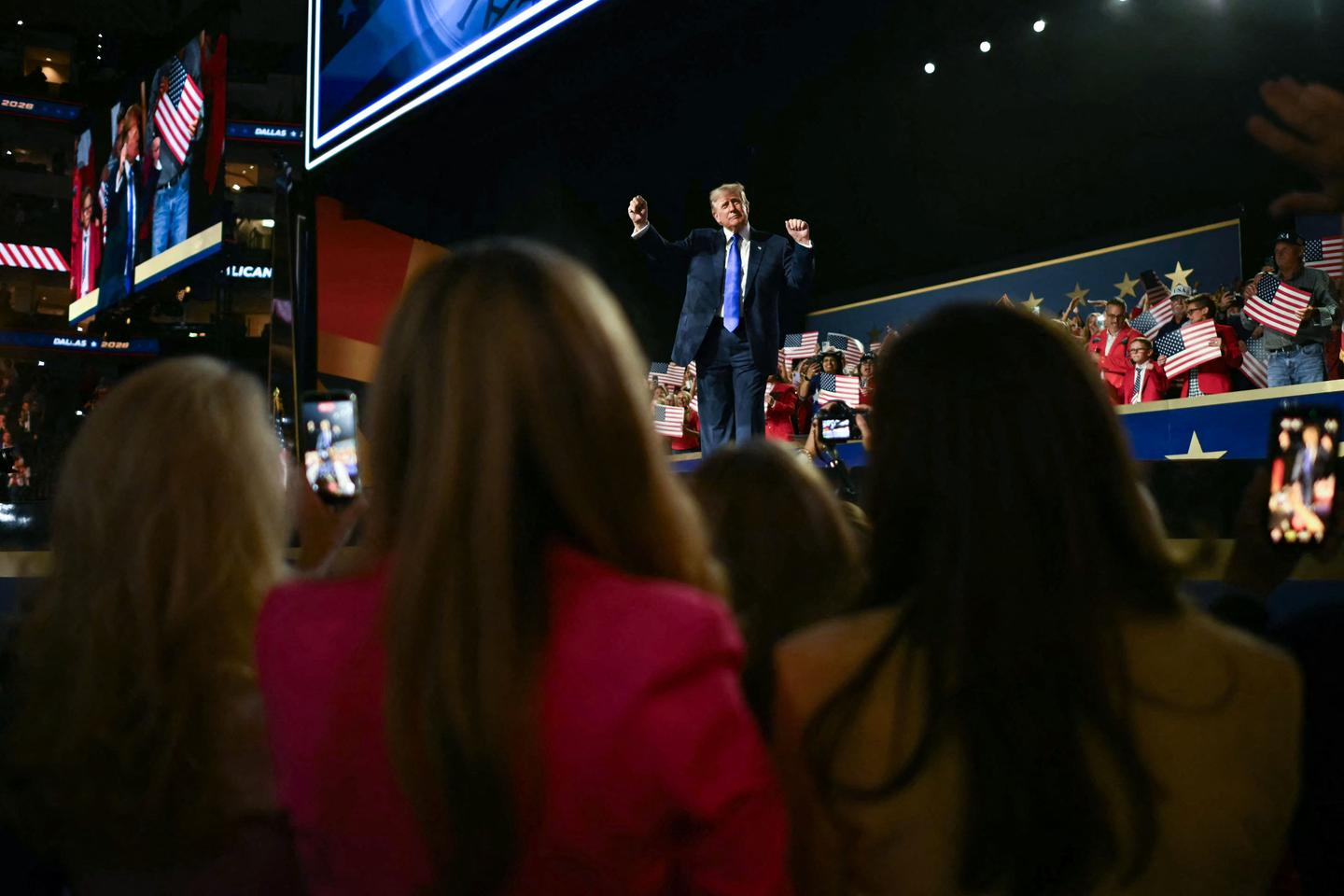
    Le président américain, Donald Trump, après son discours lors de la convention nationale républicaine de mi-mandat à l’American Airlines Center, à Dallas (Texas), le 9 septembre 2026. KENT NISHIMURA/AFP

    edit il avait promis 1000$ pour sa réélection, jamais versés. cette fois ça représente des centaines de milliards de $ qui seraient à la charge... du trésor public. on peut difficilement faire plus énorme en terme de privatisation (ce qu’il reste de promesse capitaliste a une de ces gueules).

    #corruption revendiquée #escroquerie au vote

  • #Ikea ou la mafia du #bois

    Ion Holban milite à l’association #Agent_Green, qui lutte contre le #trafic_de_bois en #Roumanie. Rencontré sur le site d’une #coupe_rase illégale, il raconte comment l’#industrie_de_l’ameublement, et notamment Ikea, privatise et détruit les forêts du pays pour vendre des produits rapidement obsolètes.

    Pouvez-vous présenter le site où nous nous trouvons ? Que s’est-il passé ici ?

    Nous sommes sur un site naturel protégé du nom de #Podiciul_Hartibatiului, au centre de la Roumanie. C’est le plus grand site Natura 2000 du pays, avec 250 hectares. Ici, à côté de la ville de #Cincu, il y a eu une coupe rase : sur 10 hectares, tous les arbres ont été coupés en même temps, ce qui est illégal. Cette #forêt, composée à 60-70% de #chênes, avait une grande valeur, car c’est l’espèce la plus rentable que nous avons. Au lieu d’intervenir de façon modérée, en laissant une partie des arbres, l’entreprise #Silva 1 a décidé de tout couper. Ce groupe, basé près de #Sibiu, coupe et transporte du bois. Nous avons suivi leur activité et constaté que le bois a été acheminé, stocké puis envoyé vers plusieurs clients, dont les usines d’Ikea. Elles ont beau ne pas porter la marque “Ikea”, nous savons que la majorité des grosses usines roumaines - qui s’appellent #Aviva 1, #Sortilemn 2 ou #Plimob 3 - produisent pour Ikea.

    Cette chaîne de sous-traitance brouille les pistes ?

    Oui, c’est une façon de cacher la #chaîne_de_production. Si vous demandez à des représentant.es d’Ikea d’où vient leur bois, on vous répondra qu’il vient de différents entrepôts, d’entreprises comme Silva, mais on ne vous dira pas où il a été coupé. Lorsque des journalistes les questionnent, ils et elles répondent que tout va bien. Or, depuis 10 ans, nous avons suivi énormément de #cartels du bois, d’entreprises mafieuses qui abiment la forêt roumaine de façon intensive et, selon moi, la pire est de loin Ikea. C’est l’entreprise la plus opaque à laquelle nous avons affaire, la seule qui refuse de changer quoi que ce soit dans sa manière de faire, qui ne nomme jamais ses partenaires, ne partage jamais ses enquêtes, et nous renvoie vers des institutions bidon comme #FSC. Or les forêts certifiées FSC sont coupées exactement comme ici, car FSC n’est pas un organisme de certification indépendant : c’est un #label bidon créé par l’industrie, payé par l’industrie, pour protéger l’industrie.

    Dans quels autres pays d’Europe constate-t-on des problèmes similaires ?

    Dans les pays où il est possible d’acheter de la forêt. Dans des pays comme l’Ukraine ou la Pologne, c’est très difficile, mais en Roumanie, #Estonie ou #Lettonie, c’est possible et ce n’est pas cher. Vu le niveau de #corruption ici, vous pouvez facilement en acheter beaucoup si vous connaissez les bonnes personnes. Et Ikea a à l’évidence de grosses connections avec les politiques et le ministère de l’environnement roumain. Ils sont donc devenus rapidement les plus gros propriétaires privés de forêts, avec plus de 50 000 hectares. Et leur gestion est déplorable, comme on le voit ici. Les équipes d’Ikea ne voient pas la forêt comme un écosystème, ni comme une alliée indispensable dans la lutte contre le changement climatique. Ils la voient comme une #monoculture intensive : ils coupent agressivement de riches forêts mixtes, puis replantent les espèces qui sont les plus rentables.

    À propos de changement climatique, cet été a-t-il été particulièrement chaud en Roumanie ?

    Oui. Ici, dans le centre du pays on a atteint des records de température. Or les monocultures d’arbres sont les plus exposées au #changement_climatique, aux incendies, aux attaques d’insectes... Une #forêt_mixte est beaucoup plus résiliente : si certains arbres sont touchés par le scolyte, par exemple, certaines espèces mourront, mais d’autres subsisteront et les remplaceront. Là où vous avez 100% d’espèces identiques, la forêt toute entière est soumise aux mêmes vulnérabilités.

    Un autre impact de cette industrie, ce sont les déchets d’ameublement, que nous appelons en France "#bois_B" et dont l’incinération se développe. Comment expliquer le fait que tant de produits du bois soient jetés - ce qui engendre toujours plus de production, de coupes, de #gaspillage ?

    Je pense que c’est une question de mentalité et de business plan. Ikea a développé ce modèle économique de #fast_furniture : on vient en magasin, on achète le #mobilier de cette année, qu’on aime pour sa couleur jaune, mais l’année prochaine on voudra du vert. Alors on jette et on rachète, vu que le prix est relativement bas et qu’ils encouragent cette mentalité, cette idée selon laquelle les meubles sont en quelque sorte jetables : on peut les recycler et les remplacer si on en a envie. C’est complètement insoutenable. La forêt n’en est pas capable. Si toutes les compagnies de meubles adoptaient le modèle d’Ikea, nous viendrions à bout de nos forêts, car elles ne poussent pas aussi vite que les meubles sont fabriqués et jetés.

    Comment fait Ikea pour vendre si peu cher ?

    Une combinaison de stratégies permet de réduire les coûts de production : abuser de la forêt, couper autant que possible, transporter aussi vite que possible, et payer très peu les travailleur.ses. Dans beaucoup de leurs usines, les gens gagnent le salaire mininum 4. On a donc des #coûts_de_production très bas pour un bois de valeur.

    Ce modèle de consommation rencontre-t-il du succès en Roumanie ?

    Il y a quinze ans, il n’y avait qu’un seul magasin Ikea, à Bucarest. Aujourd’hui, il y en a dans la plupart des grandes villes. Il y a donc un marché pour ces meubles à bas coût. L’industrie qui produisait des meubles de qualité il y a 30 ans était dispersée en petites entreprises et s’est complètement effondrée. Nous savons qu’à l’époque communiste les conditions de travail étaient très mauvaises dans les usines, la santé des travailleur.ses n’était pas prise en compte, les produits chimiques employés généraient des cancers et d’autres pathologies. Aujourd’hui, les usines utilisent toujours des produits dangereux comme du #formaldéhyde, ne respectent pas non plus la vie des travailleur.ses ou des riverain.es. Concernant la consommation, il y avait tellement de pauvreté qu’on n’avait pas les moyens de jeter des meubles : si le lit était fonctionnel, on le gardait, si la chaise était cassée, on la réparait et on l’utilisait jusqu’à ce qu’elle soit complètement hors-service. Mais aujourd’hui, alors même qu’il y a plus d’argent en Roumanie et que ces objets de l’ère communiste atteignent la fin de leur cycle de vie, on constate que très peu de gens peuvent se permettre de dépenser dans du bon matériel, ce qui résulte aussi de la #pauvreté.

    La pauvreté incitait à faire durer les choses, aujourd’hui elle incite à acheter du jetable ?

    Oui. Il y a aussi cette représentation : il faut se débarrasser du vieux mobilier communiste et acheter des produits avec de jolies couleurs et un joli design, sans prêter attention à la qualité ou à la traçabilité du bois. Lorsque nous parlons avec des jeunes, ils sont souvent surpris, ils s’attendent à ce que des compagnies comme Ikea soient responsables. Si vous lisez les textes publiés sur leur site Internet, vous pouvez croire que leurs produits sont des dons que Dieu envoie aux terrien.nes, ce qu’il y a de plus soutenable. Les gens croient à ces folies. Nous voulons changer ça, que les gens y réfléchissent à deux fois avant d’acheter ces produits.

    Quelles victoires avez-vous remportées ?

    De petites victoires. Ici, à Cincu, nous avons déposé plusieurs plaintes auprès de la commune et des gardes forestiers, et le maire a accepté de placer 10% de la forêt sous stricte protection - auparavant on était à 1%. Nous voyons des résultats au niveau local, mais peu au niveau international. Les grandes batailles seront longues : il faudra des années avant d’avoir des réponses d’organisations aussi opaques qu’Ikea.

    De l’autre côté de l’Europe, et à l’autre bout du cycle de vie du meuble, d’autres activistes se battent contre les effets néfastes de la fast furniture : je pense aux opposant.es au projet d’incinérateur de bois B "Thermo-sur-Seine", dans le 94. Quels conseils leur donneriez-vous ?

    Il faut continuer à se battre, tenir bon, ne pas être abattu.es par les premiers échecs. Il faut se fixer des objectifs à long terme et persévérer dans la lutte parce que le bien triomphe toujours. C’est ma conviction : si vous vous battez pour la nature, vous êtes du bon côté de l’histoire. Et à la fin, on va gagner.

    –-

    1Entreprise fondée en 2007 à Bucarest, qui produisait initialement des sapins de Noël.

    1Entreprise fondée en 1999 à Sighetul Marmatiei, fabriquant du parquet, des plans de travail, des meubles et ustensiles de cuisine.

    2Entreprise fondée en 1961 à Gherla, privatisée en 1991, fabriquant des meubles en bois.

    3Entreprise également basée à Sighetul Marmatiei, née en 1995 de la scission de plusieurs sites de production, fabriquant notamment des chaises en bois pour Ikea qui est son partenaire principal.

    4En 2026 le salaire minimum net en Roumanie équivaut à 515 € net (815 € brut).

    ▻https://blogs.mediapart.fr/jeanne-guien/blog/050926/ikea-ou-la-mafia-du-bois
    #meubles #privatisation

  • This is nothing more than corruption imposed by vassalage, selling still F-35 Fighters ...

    via ▻https://diaspora.psyco.fr/p/12697991

    oAnth:

    Ad nauseam!

    Asymmetric warfare, such as that waged i.e. by Iran, clearly demonstrates that high technology in the defense sector can no longer be dominated by centrally supported traditional carrying systems.

    #NATO #USA #Germany #vassalage #corruption #China #India #BRICS #SCO #Japon #Coree #Asia #EU #BlackRock

    –----------------------

    ♲ Mario Nawfal - 2026-09-03 19:50:00 GMT

    cf. ▻https://x.com/MarioNawfal/status/2095600214891458633

    🇺🇲🇩🇪 Hegseth has changed his mind about meeting Germany’s defense minister.Boris Pistorius and Def. Sec. Hegseth are getting together in Washington on September 15.

    Hegseth had previously snubbed a meeting with Pistorius.

    The meeting coincides with the latter’s trip to Texas for a rollout ceremony marking the delivery of Germany’s first F-35 fighter jets.

    Despite stained relations, the two countries can agree on one thing…

    It’s good to make friends over fighter jets.

    Source: Politico, @clashreport / Writer: Marie

  • How Big Tech Captured American Schools - The New York Times
    ▻https://www.nytimes.com/2026/08/23/business/schools-big-tech-google-microsoft.html

    As a journalist covering technology in schools, […] I was struck by how similar the sessions were to training I’d seen years earlier, while reporting on the health care industry: seminars for doctors, organized by pharmaceutical companies, that aimed to get physicians to prescribe the latest brand-name drugs.

    “Industry funds what helps industry,” Dr. Adriane Fugh-Berman, a pharmacology professor at Georgetown University Medical Center who studies drug industry influence on medicine, told me recently, as I was reporting a book about A.I. and computer science education in schools.

    These workshops have upsides. Big Pharma seminars can be useful for keeping physicians up-to-date on the latest patient remedies, and Big Tech workshops can similarly help educators keep current on the newest software tools. But Silicon Valley’s efforts to capture the attention of education professionals and provide student training materials can also double as marketing or indoctrination. They enable some of the most powerful corporations on the planet to spin rosy technology stories for administrators, teachers and students, giving them a sanitized view of industry practices and product risks.

    Many parents would likely object if, say, Exxon Mobil wrote their children’s environmental science curriculum. Or if Purdue Pharma trained their children’s biology teachers. Yet, over the last decade, schools have often embraced the technology industry in similar ways with few questions asked.

    […]

    The day after the Microsoft-led workshop in Manhattan, the American Federation of Teachers [A.F.T.], a national union with 1.8 million members, made a major announcement. The union was starting an ambitious program to train teachers nationwide on A.I., with $23 million in funding from Microsoft, OpenAI and Anthropic.

    […]

    After Ms. [Randi] Weingarten [the A.F.T. president] announced her union’s deal with Big Tech companies, a few teachers and professors publicly warned that the spread of A.I. chatbots could undermine their profession, by outsourcing and automating core tasks like giving students feedback on their work. One of the more forceful educators was Lois Weiner, an education professor emerita at New Jersey City University and a retiree member of the U.F.T., who argued on Bluesky that the national union was selling out to corporate interests.

    “This isn’t an alliance,” Ms. Weiner told me. “We aren’t sitting at the table. We’re the meal.”

    #IA #silicon_valley #éducation #écoles #corruption #syndicats #états-unis

  • Mark Zuckerberg signe un plaidoyer en faveur de l’IA et annonce un fonds pour les villes accueillant ses centres de données
    ▻https://www.lemonde.fr/pixels/article/2026/08/10/mark-zuckerberg-signe-un-vaste-plaidoyer-en-faveur-de-l-ia-et-annonce-un-fon

    (...)

    Dans le même temps, Mark Zuckerberg a annoncé la création d’un fonds pour les villes accueillant des centres de données du groupe afin de « permettre un développement durable à travers tout le pays ». Selon le Wall Street Journal, ce fonds devrait s’élever à 1 milliard de dollars.

    Meta avait au préalable annoncé vouloir investir 145 milliards de dollars dans la construction de centres de données cette année, une somme qui devrait atteindre 600 milliards de dollars d’ici à 2028.

    Il investit 145 milliards. Et 1 milliards pourront ruisseler sur les villes qui le veulent bien.

    On ne parle pas de #corruption, à ce point là. Tout comme pour le lobbying.

  • UN official leaked confidential files to ’Israel’ : DSN report | Al Mayadeen English
    ▻https://english.almayadeen.net/news/politics/un-official-leaked-confidential-files-to--israel---dsn-repor

    Quelle surprise !

    A UN official who now leads UNICEF’s Washington office spent years secretly feeding confidential United Nations documents and internal deliberations to Israeli diplomats, according to a new investigation published by Drop Site News on Wednesday. 

    The outlet reviewed a hacked archive of emails belonging to Ron Prosor, the Israeli regime’s former permanent representative to the UN.

    The correspondence, spanning 2014 and 2015, shows Yahav Lichner, then an official at the UN Population Fund, repeatedly sharing classified reports, pre-release material, and private accounts of meetings involving senior UN officials, including then-Secretary-General Ban Ki-moon.

    How the archive surfaced
    Drop Site News reported that the emails were obtained by the Iranian hacking group Handala, and later published online by the whistleblower platform Distributed Denial of Secrets.

  • In nome del business: la metamorfosi della violenza da parte della criminalità organizzata
    ▻https://irpimedia.irpi.eu/mafieglocal-metamorfosi-violenza-criminalita-organizzata

    Oggi in Italia la violenza mafiosa è silenziosa: viene utilizzata come strumento per regolare il commercio al dettaglio e le faide interne ai clan. In Europa, invece, cresce e si sposta anche verso i centri più piccoli L’articolo In nome del business: la metamorfosi della violenza da parte della criminalità organizzata proviene da IrpiMedia.

    #Mafie_e_Criminalità #'Ndrangheta #Calabria #Camorra #Campania #Cosa_Nostra #Mafieglocal #Puglia #Sicilia

    • Governance and trade: Mafias’ multifunctional violence in Italian drug markets

      Systemic violence is a structural feature of drug economies and a key spillover of prohibitionist drug policies. Despite its centrality, the concept is often applied in ways that obscure its distinct purposes, market levels, and organizational contexts. To address this gap, the study examines violence at the intersection of mafia activity and drug markets, focusing on its distribution across market levels (retail, national wholesale, transnational), organizational functions (governance and trade), and rivalry configurations (inter-, intra-, and extra-clan). It draws on a press-based dataset of mafia-related homicides in Italy (2014–2024) to code and analyze these dynamics. Results show that more than half of all mafia homicides are drug-related, mainly tied to governance activities and concentrated at the retail level of the market. This pattern marks a qualitative shift in mafia violence: increasingly selective, embedded in market dynamics, confined to criminal circuits. Statistical analyses reveal significant associations between activity type, market level, and rivalry configuration, indicating that coercion concentrates where regulatory control and market participation intersect. This pattern underscores the multifunctional nature of Italian mafias, which govern markets from within while actively engaging in trade. By grounding this overlap empirically, the study advances theoretical debates on organized crime’s role in shaping illicit economies. It also offers a replicable framework for analyzing drug-related violence in the absence of official statistics.

      ▻https://www.sciencedirect.com/science/article/pii/S0955395926000356

  • Selenskyjs Regierungskrise trifft auch die EU : „Von der Leyen versenkt Milliarden in der Ukraine“
    ▻https://www.berliner-zeitung.de/article/ukraine-fjodorow-entlassung-eu-drohnenstrategie-beitritt-bruessel-1

    Mme. von der Leyen n’est pas Charlemagne, mais elle se comporte en empereur d’Europe moyenâgeux dépourvu d’emprise directe sur ses vassaux lugubres. On aimerait se plonger dans le rêve d’un Moyen Âge chinois plus heureux et cultuvé.
    ▻https://seenthis.net/messages/1182706

    Le Moyen Âge en vue sera bref ou en finira avec tout progrès humain. Avec un peu de chance nos petits enfants verront encote une deuxième renaissance, un âge de raison matérialiste après l’épuisement des belliqueux impérialistes et fanatiques religieux de l’Orient et de l’Occident.

    18.7.2026 von Eric Bonse - Mit der Entlassung von Verteidigungsminister Fjodorow verliert die EU ihren wichtigsten Partner für Drohnen und Beitrittsgespräche – Brüssel ist alarmiert.

    Die Regierungskrise, die Präsident Wolodymyr Selenskyj mit der Entlassung des populären Verteidigungsministers Michailo Fjodorow ausgelöst hat, erschüttert nicht nur die Ukraine. Auch bei der EU in Brüssel sorgt sie für erhebliche Verunsicherung.

    Der Grund: Fjodorow galt als Architekt der ambitionierten Drohnen-Strategie, die die EU mit Milliardenbeträgen fördert, und die die Europäer nun für ihre eigene Verteidigung nutzen wollen. Mit seinem Rücktritt verlieren die Europäer einen wichtigen Verbündeten.

    Ukraine-Krise erreicht die Schaltzentralen der EU

    Der plötzliche Abgang erschüttert auch die laufenden EU-Beitrittsgespräche. Bisher verhandelt die EU mit der Ukraine über die „Grundlagen“ – Demokratie, Rechtsstaat, Korruption. Schon daran gibt es erhebliche Zweifel, nicht zuletzt wegen der vielen Korruptionsskandale.

    Am Dienstag wurden aber auch noch Gespräche zum Thema Außenbeziehungen und Verteidigung aufgenommen. Eigentlich wollten die Europäer dabei an die – aus ihrer Sicht erfolgreiche – Arbeit von Außenminister Andrij Sybiha und Verteidigungsminister Fjodorow anknüpfen.

    Doch nun haben beide ihr Amt verloren, und bis zur Nominierung von vollgültigen Nachfolgern könnten noch Wochen vergehen. Das Parlament hat zwar den neuen Regierungschef Serhij Korezkyj im Eilverfahren bestätigt, die beiden Schlüsselressorts jedoch offen gelassen.

    Selenskyj hat inzwischen den Geheimdienstler Jewhenij Chmara als neuen Verteidigungsminister vorgeschlagen. Die Zustimmung der Rada steht aber noch aus; sie könnte erst nach der Sommerpause folgen. Damit sind auch die EU-Verhandlungen bis auf Weiteres gelähmt.

    Die Beitrittskonferenz hinkt schon jetzt weit hinter den Erwartungen hinterher. Selenskyj hatte gefordert, alle sechs Themen-Cluster gleichzeitig zu eröffnen, Brüssel hat dies unterstützt. Doch wegen Widerstands aus den EU-Staaten blieb es zunächst bei zwei Clustern.

    Nun drohen auch noch Verzögerungen bei Außenpolitik und Verteidigung. Sogar die neue Drohnen-Strategie der EU wird in Mitleidenschaft gezogen. Sie stützt sich auf die Erfahrungen der Ukraine im Drohnenkrieg mit Russland. Die EU will davon für ihre eigene Aufrüstung profitieren.

    Fjodorow war ein Hoffnungsträger

    Besonders große Hoffnungen lagen dabei auf „Drohnen-Minister“ Fjodorow – doch nun ist er seinen Job los. Dass er geschasst wurde, kurz nachdem EU-Kommissionspräsidentin Ursula von der Leyen in Kiew einen neuen Drohnen-Deal ankündigte, sorgt für Frust in Brüssel.

    Von der Leyen ließ sich zwar nichts anmerken. Die Ukraine habe in mehr als vier Jahren Krieg gegen Russland „einzigartiges“ Wissen über Drohnen und Drohnenabwehrsysteme gewonnen, sagte sie bei ihrem bereits elften Besuch in Kiew. Fjodorows Aus quittierte sie mit Schulterzucken.

    Foto
    Fjodorow (2 v. l.) war in den vergangenen sechs Monaten ein gern gesehener Gast in Brüssel. © Imago

    Doch EU-Verteidigungskommissar Andris Kubilius sagte, was viele in Brüssel denken. Präsident Selenskyj sei den Europäern eine Erklärung schuldig, erklärte Kubilius. Nach Fjodorows Rauswurf müsse man schnell wissen, wie es mit den EU-Hilfen für die Ukraine und dem Drohnenprogramm weitergeht.

    Die EU hat der Ukraine einen 90 Milliarden Euro schweren Hilfskredit zugesagt, davon sollen 60 Milliarden in Rüstung und Verteidigung gehen. Eine Milliarde für Drohnen sagte von der Leyen bei ihrem Besuch in Kiew zu. Doch was wird aus dem Rest?

    Plötzlich ist unklar, ob sich die EU wie bisher vorbehaltlos auf die Ukraine verlassen kann. Nicht nur Fjodorows plötzlicher Abgang hat Zweifel geweckt. Auch die mit seinem Rücktritt verbundenen Vorwürfe der Korruption sorgen für Verunsicherung.

    Der ehemalige Verteidigungsminister wollte mit Korruption und Vetternwirtschaft im ukrainischen Rüstungs- und Verteidigungssektor aufräumen. Genau dies könnte ihm zum Verhängnis geworden sein, vermuten viele in Kiew. Auch in Brüssel werden Zweifel laut.

    De Masi: „Von der Leyen versenkt Milliarden“

    „Die Entlassung des ukrainischen Verteidigungsministers Fjodorow offenbart, welcher Machtkampf hinter den Kulissen tobt“, sagte der BSW-Europaabgeordnete Fabio De Masi. Doch während Fjodorow die Korruption in Militär und Staatsapparat kritisiert habe, verschließe EU-Chefin von der Leyen die Augen vor den Problemen.

    „Frau von der Leyen versenkt Milliarden in der Ukraine, wo die Korruption grassiert“, so De Masi weiter. „Sie hat diese Probleme nicht einmal bei Selenskyj angesprochen, wie sie in einer Antwort auf meine parlamentarische Anfrage einräumen musste.“

    De Masi bemüht sich seit Wochen um Aufklärung, was die Korruptionsfälle und die EU-Zahlungen an Kiew betrifft. Er hat auch mehrere Anfragen zum Drohnenprogramm der EU und dessen Begründung – mutmaßlich russische Drohnen in Europa – gestellt. Auf eine aussagekräftige Antwort wartet der BSW-Politiker bis heute vergebens.

    #Europe #Ukraine #corruption #guerre

  • Une bague sertie de 321 diamants offerte à Donald Trump par la communauté diamantaire belge | Euronews
    ▻https://fr.euronews.com/my-europe/2026/07/03/une-bague-serties-de-321-diamants-offerte-a-donald-trump-par-la-communa

    Ce cadeau intervenant après la suppression des droits de douane américains sur les diamants belges.

    À l’occasion du 250e anniversaire de l’indépendance des États-Unis, une bague en or sertie de 321 diamants, 56 saphirs, 13 émeraudes et six rubis a été offerte au président américain Donald Trump par l’Antwerp World Diamond Centre (AWDC), au nom du secteur diamantaire anversois .

    "Que cette bague demeure le rappel que les véritables partenariats, comme les plus beaux diamants naturels, se forgent sous pression, résistent à l’épreuve du temps et brillent davantage encore lorsqu’ils reposent sur la confiance", a déclaré Isidore Mörsel, président de l’Antwerp World Diamond Centre.

    La bague de la taille d’une montre, a été présentée cette semaine à Bill White, l’ambassadeur des États‑Unis en Belgique, afin qu’il la remette au président Donald Trump.

    Des dizaines de diamants dessinent deux immenses lettres "T" à côté de la bannière étoilée ainsi que les dates "1776" et "2026".

    D’autres dizaines encadrent les chiffres 45 et 47 en formant le logo de Superman.

    Un aigle aux ailes de diamants porte un bouclier de rubis et serre dans ses serres une branche d’olivier en émeraudes, sous un "250" rayonnant, au‑dessus de l’inscription "250 YEARS USA" gravée en or 18 carats.

    "Un merci tout particulier à mes amis d’Anvers pour la magnifique bague Freedom 250", a déclaré Donald Trump dans un message vidéo préenregistré lors d’un événement à Bruxelles célébrant le 250e anniversaire des États‑Unis.

    L’ambassadeur des États‑Unis en Belgique Bill White présente une bague conçue pour le président Donald Trump à Bruxelles, le 28 juin 2026 AP Photo

    L’intérieur de la bague est gravé de la mention "Crafted in Antwerp for Donald John Trump".

    En terme de valeur financière, la bague fait pâle figure face à des cadeaux comme l’avion de 400 millions de dollars (349 millions d’euros) offert par le Qatar, que Donald Trump a fait transformer en nouveau Air Force One.

    Un responsable de la Maison‑Blanche, qui s’exprimait sous couvert d’anonymat pour évoquer le sujet, a indiqué jeudi que la bague n’avait pas encore été remise à Trump.

    Une nouvelle entorse aux usages de la Maison‑Blanche

    Ce cadeau intervient quelques mois après que l’industrie diamantaire belge a obtenu la suppression des droits de douane américains sur les importations de diamants.

    En septembre, l’AWDC a indiqué être "parvenu à obtenir un droit de douane de 0 %" sur les plus de 2 milliards de dollars (1,7 milliard d’euros) de diamants taillés exportés chaque année d’Anvers vers les États‑Unis.

    Un porte‑parole du groupe a précisé jeudi que l’AWDC avait apporté sa "contribution" à la Commission européenne pendant qu’elle négociait avec Trump un large accord sur les droits de douane en 2025, mais n’avait pas elle‑même fait de lobbying auprès de l’administration.

    Les présidents américains disposent d’une large marge de manœuvre pour accepter des cadeaux de sources nationales ou étrangères et peuvent eux‑mêmes décider si un présent leur est destiné à titre personnel ou au nom de la nation.

    Font exception les cadeaux émanant de gouvernements étrangers, interdits par la clause des émoluments étrangers de la Constitution sans l’aval du Congrès, même si les présidents peuvent utiliser des fonds personnels pour rembourser le Trésor à hauteur de la valeur totale d’un cadeau officiel s’ils souhaitent le conserver.

    Les cadeaux personnels sont également censés figurer dans la déclaration financière annuelle du président.

    Sur la déclaration de 2025 de Donald Trump, publiée cette semaine, figure un cadeau de 250 000 dollars (218 000 euros) sous la forme d’une sculpture représentant son geste triomphal après avoir survécu à une tentative d’assassinat lors d’un meeting de campagne en 2024 à Butler, en Pennsylvanie, ainsi que des billets pour dix événements sportifs, dont dix pour la prochaine finale de la Coupe du monde dans le New Jersey, offerts par Gianni Infantino, le président de la FIFA, pour une valeur totale de 15 000 dollars (13 000 euros).

    Quatre experts américains en questions d’éthique ont déclaré à l’agence Associated Press que Trump a rompu avec une pratique en vigueur depuis des décennies à la Maison‑Blanche consistant à s’abstenir d’accepter de tels cadeaux.

    La bague estimée entre 25 000 et 35 000 dollars

    Pour réaliser la bague, l’AWDC a fait appel à David Gotlib, un joaillier haut de gamme basé à Anvers dont les boutons de manchette peuvent se vendre plus de 15 000 euros.

    Ni l’AWDC ni Gotlib n’ont voulu fournir d’estimation de la bague, mais deux joailliers indépendants ont indiqué à l’AP qu’ils évaluent sa valeur entre 25 000 et 35 000 dollars (21 000 à 30 000 euros).

    Après la présentation de la bague sur une scène aux couleurs de la bannière étoilée à Bruxelles, la musicienne Alexis Wilkins, compagne du directeur du FBI Kash Patel, a entonné l’hymne national américain devant plus de 8 000 personnes.

    Alexis White a indiqué avoir levé plus de 5,5 millions de dollars (4,8 millions d’euros) pour l’événement du 250e anniversaire auprès de sponsors d’entreprise comme les géants de l’armement Lockheed Martin et Northrop Grumman, des groupes technologiques comme Intel, Google et Meta, ainsi que les chocolatiers européens Leonidas et Ferrero. L’AWDC a précisé avoir, elle aussi, apporté des fonds.

    "Les médias demandaient : “Pourquoi cela doit‑il être si grand ?” ", a confié Alexis White à propos de l’événement. "Parce que nous sommes les États‑Unis d’Amérique !"

    Reste que le sort de la bague demeure incertain.

    Mercredi, Alexis White a publié en ligne une photo de lui portant la bague et levant le pouce. Depuis, la publication a été supprimée.

  • Thomé Newsletter 22/2026 vom 04.07.2026 - Harald Thomé
    ►https://harald-thome.de/newsletter/archiv/thome-newsletter-22-2026-vom-04-07-2026.html

    En route pour une nouvelle dictature des corrompus ! Le paquet de réformes du gouvernement fédéral allemand contient une abolition prèsque complète du droit au réponses de l’état sur ses décisions et procédures administratives. Les informations mises à dispositions ne contiendront plus aucun nom de fonctionnaire.

    Assurez-vous déjà vos hommes de confiance dans les ministères et administrations. Ils seront les seuls à pouvoir vous fournir les informations sous la main auxquelles chaque citoyen a actuellement le droit .

    Angriff auf das Informationsfreiheitsgesetz: Die Regierung macht dicht! Unsere Informationsfreiheit ist massiv in Gefahr.

    SPD und Union haben im Koalitionsausschuss beschlossen, das seit 20 Jahren etablierte Informationsfreiheitsgesetz (IFG) de facto abzuschaffen. Damit bricht die Bundesregierung den Koalitionsvertrag, in dem sie versprach, das Gesetz „mit einem Mehrwert für Bürgerinnen und Bürger und Verwaltung“ reformieren zu wollen. Von einem Mehrwert kann jedoch überhaupt nicht mehr die Rede sein.

    Dieser Beschluss ist der schwerste Angriff auf staatliche Transparenz in der Geschichte der Bundesrepublik!

    Beschlüsse: Frontalangriff auf Demokratie und Pressefreiheit

    Fast alle Anfragen werden unmöglich: Anfragen soll es nur noch „mit berechtigtem Interesse“ geben, das heißt, für jede Anfrage bräuchte man einen Nachweis, warum man Anspruch auf die Informationen erhebt.

    Es ist ein Angriff auf Organisationen wie FragDenStaat und viele weitere, etwa die Deutsche Umwelthilfe oder Amnesty International oder auch Tacheles denn juristischen Personen werden Anfragen untersagt. Nur Privatpersonen dürfen in Einzelfällen anfragen.

    Auch die Pressefreiheit ist in Gefahr: Journalist*innen wird es massiv erschwert, IFG-Anfragen zu stellen.

    Nur Deutsche dürfen Anfragen stellen, EU-Bürger nur in Einzelfällen, Personen aus Drittstaaten gar nicht. Für jede Anfrage muss man also die Staatsangehörigkeit nachweisen.

    Anfragen werden zum Kostenrisiko, der Zugang zu Information ein Privileg für Reiche: Es können Gebühren von bis zu zehntausenden Euro anfallen, der bisherige Gebührendeckel in Höhe von 500 Euro soll wegfallen.

    Behörden können Anfragen künftig noch leichter ablehnen: Zu den bestehenden 30 Ausnahmefällen für Anfragen sollen weitere eingeführt werden.

    Das Korruptionsrisiko steigt massiv: Die Namen von Behördenmitarbeiter*innen sollen gänzlich geschwärzt werden. Damit ist nicht mehr nachvollziehbar, wer für Entscheidungen verantwortlich ist.

    #Allemagne #secret_d_état #corruption #journalisme

  • Trump Cut a Billion-Dollar Mining Deal. His Sons Stand to Profit. - The New York Times
    ▻https://www.nytimes.com/2026/06/28/world/europe/trump-lutnick-sons-kazakhstan.html

    #corruption

    An agreement between the U.S. and Kazakhstan has given a group of American investors with ties to the president and the commerce secretary access to one of the world’s largest untapped reserves of tungsten.

    When Commerce Secretary Howard Lutnick met with Kazakhstan’s president at the St. Regis Hotel last September in New York, President Trump jumped in by phone as the men sealed a deal on a top priority for Washington.

    During the call, Mr. Trump and his team won an agreement from the Kazakh leader to give a little-known American company access to one of the world’s largest untapped reserves of tungsten, a metal that the United States desperately needs for the production of missile warheads, fighter jets, computer chips and other critical goods.

    Ahead of the deal, the Trump administration approved preliminary applications for as much as $1.6 billion in federal financing for the American company, now called Kaz Resources, which plans to break ground on the project in rural Kazakhstan.

    It was not only Mr. Trump and Mr. Lutnick who saw an opportunity.

    Their sons were soon doing business with partners in a deal that their fathers were negotiating, continuing a pattern of self-enrichment in the second Trump administration that has few precedents in American history.

  • Comment la #privatisation de la gestion des #visas a profité à la société #VFS_Global, entre « services optionnels facturés » et soupçons de #corruption

    Pour désengorger les consulats, les démarches pour les visas ont été partiellement déléguées à quelques multinationales, dont le leader VFS Global. Une enquête internationale, à laquelle « Le Monde » a participé, montre que ce marché est devenu une #zone_grise hautement lucrative, au détriment des demandeurs.
    Depuis plus de dix ans, Joséphine (son prénom a été changé) s’occupe des démarches nécessaires pour obtenir un visa français pour sa mère, de nationalité sénégalaise. Elle sait bien que cette procédure relève du parcours du combattant. Au Sénégal, depuis 2014, les demandeurs ne se rendent même plus au consulat, mais dans les bureaux de VFS Global, une #multinationale chargée par les autorités françaises de réceptionner et de transmettre les demandes de visa. Y obtenir un rendez-vous est une véritable gageure et pour espérer en obtenir un, affirme la jeune femme, il faut souvent sortir le portefeuille. « C’était plus simple quand c’était le consulat qui gérait ça, c’était réglementé. Là, c’est celui qui paye le plus qui part », souffle Joséphine par téléphone.

    Depuis plus de vingt ans, la France – comme de nombreux autres pays – a choisi, dans un contexte budgétaire contraint, de sous-traiter la gestion des dossiers de visa et l’accueil des demandeurs. La société #VFS, basée aux #Emirats_arabes_unis et en #Suisse, s’est taillé la part du lion de ce nouveau #marché. Elle revendique des « pratiques éthiques et le développement durable » pour servir 71 gouvernements sous contrat.
    Une investigation menée par l’organisation à but non lucratif Lighthouse Reports, en collaboration avec 14 partenaires dont Le Monde, explore des recoins moins reluisants de cette industrie. Notre enquête montre comment VFS a profité de l’externalisation d’une fonction essentielle de l’Etat, en transformant des familles, des étudiants, des travailleurs ou de simples voyageurs en un marché captif et financièrement exploitable. Appuyée sur de nombreux rapports et documents obtenus auprès des autorités européennes dans le cadre du droit d’accès aux documents administratifs, ainsi que des dizaines d’entretiens et témoignages, elle souligne également d’importantes #défaillances structurelles ainsi que l’existence de pratiques corruptives au sein du groupe.

    « Salon premium »

    VFS est chargé de réceptionner les demandes de visa et d’acheminer les documents au #consulat ou à l’#ambassade, après avoir encaissé les #frais_de_dossier pour le compte de l’Etat. L’entreprise se targue ainsi d’« avoir traité efficacement » près de 145 millions de demandes entre 2017 et 2024. Si le nombre de demandes a crû de façon modérée, les #bénéfices ont explosé. Les comptes déposés au #Luxembourg par la holding financière du groupe montrent que les profits d’exploitation annuels de VFS ont plus que quadruplé, passant de 31 millions à 172 millions d’euros de bénéfices. Les revenus par demande ont bondi de 83 %.
    Une manne financière portée par les demandeurs de visa eux-mêmes. Le modèle d’#externalisation est en effet pensé par les gouvernements pour faire des économies. Le voyageur finance les frais du sous-traitant en plus du #prix du visa, car l’Etat ne rémunère pas le #prestataire. « Nous sommes conscients que cette externalisation rend les visas plus chers pour les demandeurs. Nous condamnons cette sélection par l’argent », s’agace Valérie Jacq, représentante syndicale au ministère des affaires étrangères français.

    Et pour cause, la croissance financière de VFS ne repose pas sur le volume des dossiers traités, mais bien plus sur la capacité de l’entreprise à facturer des « #services_à_valeur_ajoutée », ou « #VAS » dans le jargon du secteur : service de courrier et de numérisation, suivi de la procédure par SMS, horaires étendus d’ouverture des centres, aide pour remplir les demandes, ou encore « salon premium » d’attente, où des rafraîchissements sont servis « par un personnel dédié ».

    Ces « services optionnels » qui, selon la réclame de VFS, « visent à améliorer l’expérience client », lui permettent en effet de générer une très forte marge. Sur la base de reçus et factures communiqués par les autorités suédoises, issus d’un échantillon de plus de 2 100 demandes de visas pour la Suède déposés dans 16 pays, le géant des visas tire un tiers de ses recettes des services à valeur ajoutée. Parmi les options privilégiées, plus d’un demandeur sur deux opte pour les coûteux suivis par SMS. Un ancien employé nigérian de l’entreprise affirme, quant à lui, que les services de photocopie de VFS sont « très onéreux ». Ces tarifs, validés par l’Etat dans le cadre d’un contrat, sont bien plus élevés que ceux pratiqués sur le marché.

    Accélérer le traitement des dossiers

    Des employés de VFS, actuels et anciens, ont confirmé à Lighthouse Reports avoir subi des pressions pour vendre ces produits, depuis 2022 et l’arrivée au capital du fonds américain #Blackstone, qui a fixé des objectifs exigeants. Il est « infondé d’affirmer que l’accent a été davantage mis sur les ventes de VAS après l’investissement de Blackstone », répond VFS. La pratique n’est, en effet, pas nouvelle. Des anciens employés de VFS ont ainsi fait état de formations, dispensées depuis de nombreuses années, pour mieux « présenter les services haut de gamme », afin d’atteindre les objectifs mensuels fixés par la direction.

    Parmi les astuces utilisées, explique un agent de VFS, il suffit d’annoncer au guichet « le montant total, SMS et frais de livraison inclus, et la plupart des clients s’en contenteront » en payant une option sans s’en rendre compte. Ces services ont pourtant « vocation à répondre à un besoin exprimé par le demandeur », selon une source au ministère français des affaires étrangères, qui ajoute que de telles pratiques pourraient « entraîner des sanctions contractuelles ».

    Selon des rapports d’inspection obtenus par le consortium auprès de la Commission européenne, plusieurs Etats membres ont relevé une « pression excessive pour promouvoir [les] services complémentaires » de VFS et s’alarment que leur caractère optionnel ne soit « pas du tout clair ».

    Un agent du ministère des affaires étrangères français a ainsi confirmé à Lighthouse Reports que des prestataires de services tels que VFS laissent parfois entendre aux demandeurs que « payer plus leur permettra d’obtenir un visa », les amenant à choisir l’option « #salon_premium » pour obtenir un possible coupe-file.

    Ce phénomène a été par ailleurs clairement mis en évidence par la sénatrice de l’Orne Nathalie Goulet (Union des démocrates et indépendants). Lors de l’examen d’un rapport de 2025 sur la délivrance des visas, qu’elle a écrit avec le sénateur de Paris Rémi Féraud (Parti socialiste), elle assure que « le service “premium” sert parfois à déguiser d’une élégante façon un service davantage rémunéré pour accélérer le traitement du dossier ». Une pratique en violation claire avec le code des visas de l’Union européenne, qui interdit le « traitement inégal des demandeurs de visa ». Au Quai d’Orsay, une source diplomatique affirme pourtant que « tout est fait afin de ne pas permettre l’utilisation du service premium comme un #coupe-file ».

    « #Bots » et #fraude

    Si les prestations « premium » continuent pourtant de se vendre, c’est que les services de base ont été rendus impraticables par une pénurie organisée des rendez-vous. Le système de réservation de VFS est assiégé par des « bots », des programmes informatiques automatisés conçus par des officines externes, « déployant tous types de modes opératoires, y compris illégaux, pour capter un maximum de rendez-vous et les revendre », comme le déplore le rapport sénatorial. VFS assure « mettre en œuvre des mesures de sécurité rigoureuses » pour offrir « un accès équitable à tous les demandeurs ». De son côté, une source diplomatique a confirmé au Monde que cette problématique faisait « l’objet d’une priorité d’action », même si la « solution miracle n’existe pas ».

    Cette pénurie engendrée depuis l’extérieur crée, pour certains salariés de VFS, des opportunités d’argent facile. Ainsi, selon des employés actuels et anciens de la société, de l’Inde au Sénégal, certains ont été pris la main dans le sac, à vendre des créneaux de rendez-vous. De même, lors d’inspections, plusieurs Etats membres ont fait état de problèmes corruptifs impliquant le personnel de VFS, selon les rapports obtenus par Lighthouse Reports. « Dans certains centres, le taux de rotation du personnel est élevé, car des employés sont suspectés de #corruption ou de fraude », confirme un ancien agent chargé des visas au Quai d’Orsay. Une situation démentie par l’entreprise, qui assure que « les cas de comportements répréhensibles sont extrêmement rares compte tenu de la taille de l’entreprise ».

    Alors que VFS échoue à bloquer les « bots », la multinationale a lancé sa propre filiale de conciergerie de visas, #OneVasco, qui propose un « processus de demande simple et adapté aux voyageurs ». En clair, une alternative maison aux bots. Ses bureaux sont stratégiquement placés à côté des centres officiels de VFS, créant ainsi une confusion délibérée, dénoncée par plusieurs chancelleries européennes.

    La situation fait sourire Marc Esteve, professeur de science politique à l’University College de Londres : « Lorsqu’une même entreprise est responsable de la qualité d’un service de base et tire profit de la vente d’alternatives haut de gamme à ce service, elle est structurellement incitée à sous-investir dans le service basique », souligne-t-il.

    VFS assure que parmi ses clients « figurent des gouvernements soumis à certaines des exigences les plus strictes au monde en matière de conformité, de réglementation et de sécurité ». Des gouvernements captifs, qui ont acté l’impossible retour en arrière. Le sénateur Rémi Féraud confirme qu’« il ne serait pas possible de réinternaliser ce service, car les demandes de visa sont trop nombreuses, de sorte qu’il faudrait des centaines, voire des milliers, de fonctionnaires et d’agents publics supplémentaires ». Face au recours massif à ces entreprises privées, la Commission européenne va prochainement « lancer une étude approfondie », afin de prévenir les #abus du système.

    ▻https://www.lemonde.fr/les-decodeurs/article/2026/05/28/comment-la-privatisation-de-la-gestion-des-visas-a-profite-a-la-societe-vfs-
    #business #migrations #sous-traitance 

    via @freakonometrics
    ping @reka @karine4

    –-
    voir aussi :
    EU cashes in on €130m in rejected visa applications
    ▻https://seenthis.net/messages/1061593

    • En Afrique, un juteux business autour des demandes de visas

      Son nom résonne dans une bonne partie de l’Afrique. VFS Global est une entreprise indienne très connue sur le continent : c’est à elle que de nombreuses ambassades à travers le monde ont confié le traitement de leurs demandes de visas. Pour faire simple, si vous êtes candidat au Sénégal pour un visa pour la France, ou en République démocratique du Congo pour la Chine, c’est #VFS qui traite votre demande de rendez-vous auprès des ambassades concernées. VFS Global a su en faire une affaire très lucrative, au point d’attirer dans son sillage des fraudeurs et de faire l’objet d’incompréhensions chez les demandeurs qui se plaignent de la complexité et du coût des procédures. Une enquête coordonnée par l’organisation de journalisme d’investigation Lighthouse Reports, en collaboration avec 14 médias dont RFI.

      Présente dans 168 pays et en contrat avec 71 gouvernements, VFS Global laisse le même goût d’amertume chez nombre de candidats aux visas dans le monde et en Afrique, pour qui l’accès au précieux sésame est devenu un parcours complexe et coûteux. « Je ne comprends pas tout le système », s’exclame Aliou, artiste-graffeur et entrepreneur sénégalais habitué des demandes de visa pour l’Europe. « Mais ce qui se passe avec les visas en Afrique, excusez le terme, c’est du grand n’importe quoi ! Pour moi, c’est de l’arnaque ! » La même colère et les mêmes mots reviennent chez de nombreux Africains interrogés dans le cadre de cette enquête.

      VFS Global (Visa Facilitation Services Global), majoritairement détenue par le fonds d’investissement américain Blackstone, a vu ses bénéfices opérationnels exploser de 31 à 171 millions d’euros entre 2017 et 2024. Un bond considérable alors que, sur la même période, le volume des demandes n’a augmenté que de 15 %, comme l’indiquent ses états financiers déposés au Luxembourg.

      VFS explique cette croissance fulgurante en partie par la vente de services dits à valeur ajoutée – des VAS –, tous payants, tels que l’envoi d’informations par SMS ou l’accès à un salon premium. C’est justement cette vente de services qui est placée au cœur de la stratégie commerciale de la société.
      Le business rémunérateur des services à valeur ajoutée

      L’enquête a permis de collecter des données à partir de reçus de demandes de visa provenant de plusieurs pays. Cet échantillon montre que les VAS pèsent pour 30 % du chiffre d’affaires de l’entreprise au niveau mondial. En Afrique du Sud et au Kenya, indiquent ces données, la vente de ces services englobe plus du tiers des revenus du VFS local, et plus du quart au Nigeria.

      En Afrique, du Sénégal au Nigeria en passant par le Kenya, de nombreux employés et ex-employés de l’entreprise ont indiqué avoir été spécialement formés à la vente de ces services. Contraints par les objectifs commerciaux de leur direction et motivés par des primes alléchantes, les agents ont expliqué qu’ils faisaient payer ces services aux demandeurs, sans toujours préciser qu’ils étaient optionnels et, surtout, qu’ils ne garantissaient pas l’obtention du visa.

      Au Sénégal, par exemple, un ex-salarié a déclaré de manière anonyme que le service de notification par SMS était présenté comme quasi-obligatoire. Il a fait part d’une « pression » subie pour vendre des VAS du type salon premium ou espace VIP. D’anciens employés de VFS au Kenya ont confié de leur côté qu’ils devaient systématiquement ajouter les frais de SMS et de courrier à la facture des demandeurs… qui ignoraient que ces VAS étaient facultatifs. Deux anciens membres du personnel ont précisé qu’ils percevaient également des commissions sur les ventes.

      Des rapports d’inspection issus de 22 pays de la zone Schengen et de la Commission européenne elle-même soulignent également une « pression excessive de VFS Global pour promouvoir ses services » et un flou entretenu par l’entreprise sur le caractère optionnel des VAS, comme l’attestent des rapports transmis par la Suède en 2025 et la République tchèque à la Commission en 2024.
      Agences parallèles illégales

      À ce système sont venus se greffer des réseaux parallèles extérieurs à VFS, organisés notamment par des employés ou d’ex-employés de l’entreprise. Par leur maîtrise du système de prise de rendez-vous chez VFS, ils montent des "agences" extérieures, illégales mais laissant croire qu’elles collaborent avec l’entreprise. Souvent représentées par des personnes postées autour des bureaux de VFS, ces agences frauduleuses promettent plein succès aux candidats au visa, désespérés par les rejets répétitifs de leurs demandes.

      Dakar, à quelques pas du centre de visa de VFS Sénégal. Salimata, en pleine démarches pour un visa pour la France, témoigne : « Tu essaies de trouver un rendez-vous à n’importe quel moment et il n’y en a pas. Donc il y a des agences (terme souvent utilisé par les fraudeurs, NDLR) qui s’en chargent pour toi et tu paies entre 75 000 et 200 000 francs CFA (entre 114 et 300 € environ). Et on n’est même pas sûr d’obtenir le visa, c’est juste pour avoir le rendez-vous. » Ce qui fait dire à Salimata qu’il existe « une complicité » entre gérants d’agences et employés de VFS « pour vendre des rendez-vous ».

      Dans le bureau VFS Global qui délivre des visas pour la Chine à Kinshasa, capitale de la République démocratique du Congo, l’enquête a pu prouver que cette complicité existe. Un journaliste participant à l’enquête s’est fait passer pour un demandeur de visa auprès d’une agence frauduleuse et a été mis en relation avec un employé du bureau VFS Global, qu’il a rencontré sur place. Ce dernier lui a réclamé 650 euros, soit plus du double du prix affiché pour le même visa.

      En juin 2025 au Kenya, face aux plaintes des usagers, VFS Global s’est inquiétée publiquement de l’augmentation du nombre de personnes se faisant frauduleusement passer pour des agents de l’entreprise. « Tous les créneaux de rendez-vous sont disponibles gratuitement sur notre site web officiel et sont attribués en fonction de nos prévisions des demandes de visa », a déclaré Stephen Kubasu, directeur général des opérations de l’entreprise. « Les demandeurs ne doivent en aucun cas payer des tiers pour obtenir un rendez-vous car ces affirmations sont mensongères. »

      Interrogée par écrit, dans le cadre de cette enquête, sur ces réseaux frauduleux qui opèrent à l’extérieur de l’entreprise, VFS Global a répondu mettre « activement en œuvre des mesures de sécurité robustes », tels que le mot de passe à usage unique et le CAPTCHA, pour protéger ses systèmes de prise de rendez-vous. Elle indique également avoir lancé la campagne #DoNotFallForFraud pour sensibiliser les demandeurs sur les escroqueries.

      Concernant les services optionnels, VFS Global rappelle « qu’ils sont élaborés en concertation avec les gouvernements », que ​​​​« les demandeurs sont clairement informés que ces services ne sont pas obligatoires » et qu’« ils n’influencent ni les décisions relatives aux visas ni les délais de traitement. »

      En somme, VFS ne fait rien d’illégal mais bénéficie d’un système restrictif mis en place par les Etats. C’est ce que résume Paul Hermelin, président du conseil d’administration de l’entreprise française CapGemini, spécialisée dans les services numériques. Dans son rapport Propositions pour une amélioration de la délivrance des visas publié en 2023, il qualifie la politique française des visas de « machine à mécontentement » du fait de l’obsession sécuritaire et migratoire de Paris.

      « Au Sénégal par exemple, sur 12 000 à 15 000 demandes, il y a un peu moins de 3 000 visas prévus pour les étudiants vers la France. Donc on fabrique près de 10 000 déçus, ça ne va pas du tout ! Avec un déficit de communication, on a une machine à mécontentement », analyse Paul Hermelin. « En France, on délivre généralement un visa d’un an. Si ça se passe bien, on passe à deux ans, puis trois… donc il fallait un nombre d’années incroyable pour arriver au visa de cinq ans. Il y a des hommes d’affaires qui vont et viennent entre Casablanca, Dakar et Paris, des professeurs d’université qui se déplacent pour des conférences, etc. Ce ne sont pas des migrants potentiels illégaux, donc pourquoi ne pas passer directement au visa de cinq ans ? »

      ▻https://www.rfi.fr/fr/afrique/20260608-en-afrique-un-juteux-business-autour-des-demandes-de-visas

  • « The #Bibi_Files » : un film indispensable sur tout ce que la corruption détruit | Mediapart
    ▻https://www.mediapart.fr/journal/culture-et-idees/130626/bibi-files-un-film-indispensable-sur-tout-ce-que-la-corruption-detruit

    dispo/visible sur mediapart

    Le documentaire d’#Alexis_Bloom, que « Mediapart » diffuse à partir du 13 juin pendant trois mois, est, au-delà des #enquêtes_judiciaires qui visent Benyamin #Nétanyahou, une leçon de choses essentielle sur les ravages de la #corruption au sommet de l’État.

    #Benyamin_Nétanyahou est ciblé par diverses accusations dans les dossiers que la justice de son pays a sobrement baptisés « 1 000 », « 2 000 » et « 4 000 ». Dans un cas, il est soupçonné d’avoir perçu avec sa femme jusqu’à 200 000 euros de cadeaux et avantages de la part de riches hommes d’affaires, particulièrement généreux en #bijoux, #cigares de luxe et caisses de #champagne – ce qui vaudra cette mordante réplique d’un enquêteur à Benyamin Nétanyahou en pleine audition : « Est-ce qu’il est plus facile de diriger le pays avec une coupe de champagne ? »

    Dans un autre volet, le premier ministre israélien est suspecté d’avoir noué un pacte avec le propriétaire de l’influent quotidien payant Yediot Aharonot, au terme duquel Nétanyahou profitait d’une couverture médiatique favorable en échange d’un projet de loi qui aurait permis de limiter la diffusion d’un concurrent gratuit. Dans le dernier dossier, ce sont des appuis gouvernementaux au profit du propriétaire d’un groupe de télécommunications, là encore en contrepartie d’un traitement éditorial favorable sur son site #Walla, qui sont en cause.

    Le complotisme en col blanc
    Dans les entretiens filmés face aux enquêteurs, Benyamin Nétanyahou se montre à l’image de tant et tant de responsables politiques quand ils sont confrontés à l’incendie judiciaire, comme Nicolas Sarkozy en France, Jair Bolsonaro au Brésil, Silvio Berlusconi en Italie ou Donald Trump aux États-Unis.

    Le premier ministre israélien crie au complot. Il parle même d’un coup d’État, qui serait, à l’entendre, fomenté par des juges et des journalistes mus par des intérêts militants. Et aucun de ceux qui, dans son ancien entourage direct, ont osé témoigner contre lui durant l’enquête, n’échappe à la même sentence. Comme d’autres avant lui, Nétanyahou semble penser que l’État, c’est lui, et lui seul.

    Certaines scènes de The Bibi Files sont saisissantes. Tandis que Nétanyahou est filmé en train de perdre ses nerfs devant les policiers, tapant furieusement du poing sur la table, son fils Yaïr va jusqu’à comparer les enquêteurs à la Stasi devant eux. C’est aussi le parallèle qu’avait choisi Nicolas Sarkozy en 2014 dans les colonnes du Figaro quand il était aux prises avec la justice dans l’affaire Bismuth – depuis sa condamnation en première instance dans l’affaire libyenne, l’ancien président français se compare désormais au capitaine Dreyfus...

    Mais le documentaire d’Alexis Bloom ne se contente pas de mettre en scène l’incroyable matière première de son récit. Les entretiens policiers sont encadrés par les interventions de nombreux grands témoins (un ami d’enfance de Nétanyahou, d’anciens employés, son ex-directeur de la communication, des journalistes, un ancien maître espion du Shin Bet), qui donnent une épaisseur supplémentaire au film.

    Le #documentaire n’élude rien, non plus, des compromissions de Benyamin Nétanyahou avec le Hamas, dont il a par le passé justifié le soutien par l’intermédiaire du Qatar, pensant ainsi affaiblir l’Autorité palestinienne.

    Où l’on comprend comment les affaires, et surtout la panique qu’elles suscitent en lui, représentent depuis des années la matrice des choix politiques de Benyamin Nétanyahou. Voilà un homme qui paraît avoir décidé de prendre en otage la population et les institutions pour garantir sa survie politique. Son césarisme l’a même poussé jusqu’à imaginer une réforme du système judiciaire de son pays, qui lui aurait permis de le modeler à sa main.

    Ce projet – qui a échoué – avait envoyé des milliers de citoyen·nes dans la rue, qui ont manifesté pendant une quarantaine de semaines d’affilée, au cri de « crime minister » (un jeu de mots avec prime minister). Un témoin du documentaire parle d’une stratégie politique visant à « casser les os du système », quand un autre compare Nétanyahou à un « architecte du chaos ».

    Affaiblir la justice, c’était aussi l’ambition du récent référendum, perdu, de la cheffe du gouvernement d’extrême droite italien, Giorgia Meloni. Et il n’est nul besoin de faire un dessin sur les désirs de mise au pas des juges par Trump outre-Atlantique ou, en France, de plusieurs responsables politiques pyromanes.

    L’isolement politique progressif de Nétanyahou du fait des affaires a aussi été à l’origine de son rapprochement électoral avec deux responsables israéliens suprémacistes, Itamar Ben Gvir et Bezalel Smotrich, dont l’identité politique peut se résumer à un messianisme génocidaire pour la Palestine.

    The Bibi Files n’élude rien, non plus, des compromissions de Benyamin Nétanyahou avec le Hamas, dont il a par le passé justifié le soutien par l’intermédiaire du Qatar, pensant ainsi affaiblir l’Autorité palestinienne, raconte le documentaire. Ce qui a rendu les forces sécuritaires israéliennes aveugles aux projets terroristes du #Hamas, jusqu’aux attaques meurtrières du 7-Octobre.

    C’est la raison pour laquelle le journaliste israélien Raviv Drucker, coproducteur et témoin de The Bibi Files, confiait récemment à Mediapart : « On peut tracer une ligne directe depuis les affaires de corruption de Nétanyahou […] et l’immense fissure que la réforme voulue par le gouvernement a créée au sein de la société israélienne, jusqu’à la formation des conditions qui ont rendu possible le 7-Octobre. »

    Et l’on comprend mieux cette phrase lancée il y a quelques jours par Donald Trump à Benyamin Nétanyahou, alors que la furie guerrière des deux hommes, au Liban, en Iran et à Gaza, permet de repousser toujours plus loin l’échéance judiciaire pour le #leader_israélien : « Tu serais en prison sans moi. Je te sauve la mise. »

  • Ils avaient donné 400 millions, ils récoltent 50 milliards, grace à Trump, le corrompu le plus puissant au monde.

    Donors won $50B in contracts after giving to Trump ballroom project, report says - The Washington Post
    ▻https://www.washingtonpost.com/politics/2026/06/04/donors-won-50b-contracts-after-giving-trump-ballroom-project-report-

    More than half of the publicly identified donors to President Donald Trump’s White House ballroom project have won new or expanded federal contracts worth more than $50 billion during the past six months, according to a report released Thursday by a government watchdog group.

  • Untersuchungsausschuss zur Berliner Fördermittelaffäre : Ex-Kultursenatorin Wedl-Wilson verweigert Aussage – dann belastet sie ihr Staatssekretär
    ▻https://www.tagesspiegel.de/berlin/untersuchungsausschuss-zur-berliner-fordermittelaffare-ex-kultursenator

    À Berlin la droite philosémite distribue des millions aux copains sans respecter les règles. Elle oublie d’arroser tout lemonde et licencie le secretaire d’état qui s’oppose aux infractions de sa patronne. On verra jusqu’où ira le scandale. La dernière sénatrice responsable dans l’affaire se comporte déjà comme si elle se trouvait sur le banc des accusés aux assises.

    29.5.2026 von Christian Latz - Als Kultursenatorin gab Wedl-Wilson Förderbescheide frei, die der Rechnungshof als rechtswidrig einstufte – doch im Untersuchungsausschuss wollte sie dazu keine Fragen beantworten. Ein Ex-Staatssekretär wurde deutlicher.

    Wie kam es dazu, dass die Berliner Senatskulturverwaltung Fördermittel für Projekte gegen Antisemitismus in Millionenhöhe „evident rechtswidrig“ vergeben hat, wie es der Landesrechnungshof bewertet? Auf diese Fragen erhofften sich die Abgeordneten im Untersuchungsausschuss am Freitag Antworten von zwei Schlüsselfiguren der Affäre: Ex-Kultursenatorin Sarah Wedl-Wilson (parteilos, für CDU) und dem von ihr entlassenen Staatssekretär Oliver Friederici (CDU).

    Beide haben ihre Ämter im Zuge der Affäre verloren. Mit der Ladung in den Untersuchungsausschuss gingen sie jedoch gänzlich unterschiedlich um. Wedl-Wilson verweigerte gänzlich die Auskunft auf die Fragen der Abgeordneten.
    Chialo und Wedl-Wilson nahmen Einschätzung nicht an

    Friederici hingegen äußerte sich breit – und wurde dabei zu den Vorgängen teils deutlich. Er belastete die ehemaligen Kultursenatoren Sarah Wedl-Wilson und Joe Chialo (CDU) und kritisierte auch das Verhalten anderer Parteikollegen indirekt klar.

    Sein Referat habe „sehr deutlich gewarnt“, dass das geplante Verfahren zur Vergabe der Fördermittel rechtswidrig sei. „Für mich war klar, ich werde die herangetragenen Projekte nicht zeichnen und dem Senator empfehlen, von diesen Abstand zu nehmen“, sagte Friederici. Chialo habe danach entschieden, ihm den Vorgang zu entziehen.

    Nach dessen Abgang habe er seine Einschätzung auch dessen Nachfolgerin Wedl-Wilson in einer Gesprächsrunde mitgeteilt. Doch auch die ließ sich nicht überzeugen. „Dass die Senatorin am Ende nicht auf mich gehört hat, bedauere ich.“

    Zuvor hatte der Berliner Rechnungshof die Förderung von 13 Projekten mit zusammen 2,6 Millionen Euro in einem Prüfbericht als „evident rechtswidrig“ bewertet. Wedl-Wilson hatte die fraglichen Förderbescheide freigegeben.

    Der Untersuchungsausschuss des Abgeordnetenhauses war auf Antrag von Grünen und Linken im Dezember 2025 eingesetzt worden. Sie werfen dem früheren Kultursenator Joe Chialo (CDU) und seiner Nachfolgerin Wedl-Wilson vor, Fördermittel für Projekte gegen Antisemitismus nach unklaren Kriterien und auf Druck aus der CDU-Fraktion vergeben zu haben.

    Na klar gab es Druck. Ex-Staatssekretär Oliver Friederici

    Friederici sprach auch den „Druck politischer Mandatsträger“ an, der auf die Kulturverwaltung ausgeübt wurde. Der von Wedl-Wilson entlassene Staatssekretär selbst nannte keine Namen. Jedoch dürften damit vordringlich seine Parteikollegen, CDU-Fraktionschef Dirk Stettner und der Haushaltspolitiker Christian Goiny gemeint gewesen sein.

    „Na klar gab es Druck“, sagte der Befragte. Er selbst habe dem jedoch Stand gehalten.

    Wohl mit Blick auf die Art und Weise, wie die Abgeordneten Wedl-Wilson per Chat-Nachricht dazu bewegen wollten, die Mittel freizugeben, wurde Friederici deutlich. Einzelnes, was er im Nachhinein gelesen habe, beschäme ihn. „Für mich ist dieses Agieren Dritter inakzeptabel.“

    Der Ex-Staatssekretär widersprach dabei auch Vorwürfen aus der CDU-Fraktion, Mitarbeiter der Senatsverwaltung hätten die Mittelvergabe aus politischen Motiven verzögert. „Es gab weder Saboteure noch Antisemiten“, sagte Friederici.

    Eine Replik auf Christian Goiny. Dieser hatte in einer Whatsapp-Nachricht an Chialo einen Verwaltungsmitarbeiter als „linker Antisemit, der schon lange unsere Politik in der Kulturverwaltung sabotiert“ bezeichnet.

    Ex-Senatorin Wedl-Wilson verweigert Auskunft

    Zuvor war am Freitagvormittag Ex-Kultursenatorin Sarah Wedl-Wilson (parteilos, für CDU) in den Untersuchungsausschuss geladen, verweigerte jedoch die Auskunft. Gegen sie und mehrere andere Personen seien in diesem Zusammenhang Strafanzeigen gestellt worden, sagte Wedl-Wilson. Sie mache daher von ihrem Auskunftsverweigerungsrecht Gebrauch.

    Die politische Entscheidung, diese Mittel einzusetzen, war richtig und notwendig. Ex-Senatorin Sarah Wedl-Wilson (parteilos, für CDU) in ihrem Eingangsstatement im Untersuchungsausschuss

    In einem Eingangsstatement hatte Wedl-Wilson zunächst ihre grundsätzliche Sicht auf die Fördermittelvergabe dargelegt. „Die politische Entscheidung, diese Mittel einzusetzen, war richtig und notwendig.“ Dass das Abgeordnetenhaus beschlossen habe, finanzielle Mittel in Millionenhöhe zur Bekämpfung des Antisemitismus bereitzustellen, sei „in der Sache richtig“, sagte die Ex-Senatorin.

    Wedl-Wilson: Chialo habe Mittel „bereits zugesagt“

    „Antisemitismus muss politisch intensiv bekämpft werden. Das gilt im besonderen Maße für Berlin. Die Stadt, in der antisemitische Übergriffe alltäglich geworden sind“, führte sie aus. Dazu seien ihr die in Rede stehenden Projekte „inhaltlich gut geeignet und deshalb förderungswürdig“ erschienen.

    Sie selbst habe nie ein politisches Amt angestrebt, sei Kulturmanagerin und keine Politikerin. Auch mit der Fördermittelvergabe habe sie als Staatssekretärin nichts zu tun gehabt und sei erst ins Bild gesetzt worden, als sie überraschend die Leitung der Senatskulturverwaltung von ihrem Vorgänger Joe Chialo (CDU) übernommen habe. Dieser habe zuvor „die Mittelvergabe bereits zugesagt“.

    Zugleich habe ihr die Einschätzung ihrer Verwaltung vorgelegen, dass man „zu einer inhaltlichen Prüfung nicht in der Lage sei, ob die Projekte tatsächlich zur Bekämpfung des Antisemitismus geeignet wären. Dies hatte mich damals gewundert“.

    In dieser Situation habe es für sie nur zwei Optionen gegeben: „Entweder ich setze den politischen Willen des Abgeordnetenhauses um, oder das Land verliert wieder ein Jahr, in dem die Mittel zur Bekämpfung des Antisemitismus nicht eingesetzt werden können.“

    Erst später sei ihr klar geworden, dass darin ein Verstoß gegen die Landeshaushaltsordnung liegen könnte. „Wenn ich damals erkannt hätte, was der Landesrechnungshof in seinem Bericht darlegt, hätte das meine Entscheidung sicherlich beeinflusst“, sagte Wedl-Wilson.

    Untersuchungsausschuss zur Fördermittelaffäre

    Foto
    Ex-Kultursenatorin Sarah Wedl-Wilson mit ihrem Anwalt Philipp Gehrmann im Untersuchungsausschuss. © Christian Latz

    Nach dessen Veröffentlichung musste Wedl-Wilson zurücktreten. Damit habe sie auch „Verantwortung übernommen für Vorkommnisse, die nicht in meiner Verantwortung lagen“, sagte die Ex-Senatorin. „Ich bitte den Ausschuss, diese Differenzierung der Verantwortung sorgfältig vorzunehmen.“

    S_ie haben kein umfängliches Zeugnisverweigerungsrecht. CDU-Abgeordneter Stephan Lenz zu Ex-Senatorin Sarah Wedl-Wilson_

    Bei den Ausschussmitgliedern führten diese Ausführungen zu einer Reihe weiterer Fragen. Wedl-Wilson jedoch verwies immer und immer wieder auf ihr Zeugnisverweigerungsrecht. „Es ist keine Frage denkbar, die nach der ständigen Rechtsprechung des Bundesverfassungsgerichts von mir beantwortet werden muss.“

    Das sahen die Mitglieder des Untersuchungsausschusses fraktionsübergreifend anders. „Sie haben kein umfängliches Auskunftsverweigerungsrecht“, stellte der CDU-Abgeordnete Stephan Lenz klar. Es sei „unnötig“, dass die Ex-Senatorin keinerlei Fragen beantworten wolle.

    Ähnlich äußerten sich die anderen Abgeordneten. Matthias Kollatz (SPD) verwies auf Ordnungsgelder, die in solchen Fällen in anderen Untersuchungsausschüssen bereits gegen Geladene verhängt worden seien. „Der Zeugin steht kein unbeschränktes Zeugnisverweigerungsrecht zu.“

    Ich finde es unerträglich, dass Frau Wedl-Wilson etwas ausbaden muss, das andere verbrochen haben. Abgeordneter Daniel Wesener (Grüne)

    Wedl-Wilson habe ein umfangreiches Statement abgegeben. Fragen dazu müsse sie beantworten, sagte Kollatz. Die Ausschussvorsitzende Manuela Schmidt (Linke) und Daniel Wesener (Grüne) nannten Wedl-Wilsons Verhalten „enttäuschend“. „Sie haben in der Vergangenheit mehrfach angegeben, dass Sie im Untersuchungsausschuss aussagen würden“, sagte Wesener.

    Zugleich sei er angesichts der Vorwürfe gegen die Ex-Senatorin nicht überrascht. Allerdings habe er sich gewünscht, dass Wedl-Wilson Aussagen zur Rolle von Ex-Senator Joe Chialo sowie von CDU-Fraktionschef Dirk Stettner und CDU-Haushaltspolitiker Christian Goiny machen würde. „Ich finde es unerträglich, dass Frau Wedl-Wilson etwas ausbaden muss, das andere verbrochen haben.“

    Ebenfalls als Zeuge geladen ist der frühere Staatssekretär in der Kulturverwaltung, Oliver Friederici (CDU). Er war drei Tage vor Wedl-Wilsons Rücktritt entlassen worden. Der Politiker soll zuvor innerhalb der Kulturverwaltung vor Defiziten bei der Vergabe von Fördergeld gewarnt haben.

    Chialo, der im Mai 2025 aus anderen Gründen zurückgetreten war, soll am 11. Juni im Untersuchungsausschuss aussagen. Dann sollen voraussichtlich auch CDU-Fraktionschef Dirk Stettner und der CDU-Haushaltspolitiker Christian Goiny ein zweites Mal in dem Gremium erscheinen. Grüne und Linke werfen beiden unzulässige Einflussnahme auf die Fördermittelvergabe vor, was diese bei ihrer ersten Befragung im April zurückwiesen.
    Berliner Grüne wollen auch Kai Wegner befragen

    Daniel Wesener, Sprecher der Grünen-Fraktion im Untersuchungsausschuss, zog am Freitag erneut in Erwägung, auch den Regierenden Bürgermeister Kai Wegner (CDU) im Ausschuss zu befragen. Bereits Anfang Mai hatte Wesener dem Tagesspiegel gesagt, er halte Wegners Schilderung, erst aus den Medien von der Fördergeldaffäre erfahren zu haben, für unglaubwürdig.

    „Da besagen die Akten etwas anderes oder legen etwas anderes nahe“, sagte der Grünen-Politiker dem RBB-Inforadio am Freitag. „Er war offenbar eben doch, zumindest was bestimmte Projekte angeht, frühzeitig informiert. Es gibt Hinweise, dass er sich auch selbst sehr stark für einzelne Projekte eingesetzt hat.“

    Wegner hatte am 7. Mai im Plenum des Berliner Abgeordnetenhauses auf Nachfrage erklärt, vom Auslöser der Fördergeldaffäre um Mittel für „Projekte von besonderer politischer Bedeutung“ aus den Medien erfahren zu haben.

    Tatsächlich deuten dem Tagesspiegel vorliegende Akten darauf hin, dass das Vorgehen der Kulturverwaltung CDU-intern deutlich früher kommuniziert wurde. Am 25. März informierte Chialo die CDU-Fraktion in deren turnusgemäßer Sitzung laut Teilnehmern über die Pläne, 3,4 Millionen Euro für „Projekte von besonderer politischer Bedeutung“ zu vergeben – davon drei Millionen Euro unter Hoheit der CDU.

    Unklar ist, ob Wegner zum Zeitpunkt der Ausführungen Chialos tatsächlich anwesend war. Auf Anfrage erklärte die Senatskanzlei, der Regierende habe von 16 bis 16.15 Uhr – dem Ende der Sitzung – daran teilgenommen. Wann genau Chialo zum besagten Vorgehen sprach, lässt sich zumindest derzeit nicht sicher rekonstruieren. (Tsp, dpa)

    #Berlin #politique #administration #corruption #justice #philisémitisme

  • L’Albania minaccia di chiudere i centri per #Migranti per difendere il governo accusato di corruzione
    ▻https://irpimedia.irpi.eu/albania-minaccia-chiusura-centri-migranti-corruzione

    Le notizie si sono rincorse tra il 12 e il 13 maggio. Il ministro degli Esteri di Tirana, Ferit Hoxha, a margine del vertice Amici dei Balcani occidentali a Bratislava, in Slovacchia, ha rilasciato un’intervista a Euractiv nella quale – rispetto al rinnovo degli accordi sui centri per migranti gestiti dall’Italia in #Albania – ritiene […] L’articolo L’Albania minaccia di chiudere i centri per migranti per difendere il governo accusato di corruzione proviene da IrpiMedia.

    #Mediterraneo #Unione_europea