• What Ballot Measures Told Us About America
    ▻https://jacobin.com/2026/11/ballot-measures-billionaire-tax-abortion-divestment

    Voilà comment les milluardaires états-uniens manipulent les résultats des élections. Comment font-ils chez nous ?

    11.11.2026 by Ben Case - Last week’s votes on taxing billionaires, abortion and trans rights, and divestment from Israel offer a window into the American electorate’s political mood.

    The blue tidal wave that swept congressional and local elections around the country is leaving a new political landscape in its wake. The generational scope of Democratic wins and unprecedented success of democratic socialist candidates notwithstanding, the president’s party almost always loses midterm elections, often by wide margins. How much do the election results reflect a shift in society’s politics, and how much do they reflect an extreme version of the standard two-party pendulum swing? And more importantly, where are the opportunities to push organizing to new horizons in this new terrain?

    The results of ballot initiative votes are especially useful in analyzing the political realities on the ground. Ballot measures present a simple yes-or-no choice on a piece of legislation, making them excellent barometers of public sentiment. Between state and local ballots, Americans vote on hundreds of initiatives every cycle. Coming out of Election Day 2026, three ballot measures demand particular attention.

    In California, a pioneering attempt to tax billionaires’ wealth to fund the hollowed-out health care system was drowned in almost $400 million in billionaire spending. Missouri saw the first Republican attempt to overturn abortion rights that were previously won at the ballot by packaging the rollback with transphobia; it was resoundingly defeated. And a whopping three-quarters of voters in Providence approved a measure to divest from countries and companies committing severe human rights abuses, making Rhode Island’s capital the largest US city to approve divestment from Israel.

    The California Billionaire Tax was as novel a proposition as it was consequential. Trump’s 2025 “One Big Beautiful Bill” made major cuts to Medicaid, with major coverage restrictions scheduled to take effect after the midterms, in January 2027. The cuts are expected to leave millions without insurance and put health care facilities at risk of closure. Billionaires’ fortunes have skyrocketed by hundreds of billions of dollars more since the bill’s passage.

    In California, a union of hospital and health care workers put two and two together. In collaboration with leading progressive economists, the Service Employees International Union–United Healthcare Workers West (SEIU-UHW) proposed a first-of-its-kind, one-time 5 percent wealth tax on the two hundred–odd billionaires living in California. The union projected that it would raise roughly $100 billion. Ninety percent of the revenue was earmarked for health care, with the remainder for education, food assistance, and administration.

    Proposition 40, as it was designated once it qualified for the ballot, was written to be applicable to billionaires residing in the state on January 1, 2026, anticipating the capital flight argument that billionaires would simply move out. With the mind-boggling amounts of money billionaires have been making in recent years, the 5 percent wealth tax would still have left California’s billionaires vastly wealthier than they were just a year ago, while the state’s health care system would avoid disaster. Seems like common sense — unless you’re a billionaire who thinks taxation is oppression.

    Yet the billionaires were not the only ones opposed to Proposition 40. Labor was mostly aligned behind UHW in the push, including the California Labor Federation, Teamsters California, and California Nurses Association. But it wasn’t unanimous: the California Teachers Association and the State Building and Construction Trades Council of California opposed. SEIU California remained neutral, despite Proposition 40 being proposed by one of its largest locals. Some prominent progressive advocacy groups like Planned Parenthood Affiliates of California and the NAACP California/Hawaii State Conference joined unlikely forces with the likes of Peter Thiel against the billionaire tax.

    The apparent split in left forces, particularly the elements of labor that opposed the billionaire tax, was prominently featured in ads from Building a Better California, a billionaire-backed organization opposing Proposition 40.

    Many of Building a Better California’s attacks were focused on UHW president Dave Regan, who was on the receiving end of a litany of allegations, including resurfaced claims he used intimidation tactics in political negotiations seventeen years ago — all of which Regan frames as a transparent smear campaign aimed at distracting from the issue at hand.

    Still, if the billionaire lobby’s goal was to sow mistrust around Proposition 40, the intra-left divisions and air of scandal around UHW certainly helped. To add insult to injury, UHW’s staff union declared a strike in the days leading up to Election Day, obstructing Proposition 40’s final get-out-the-vote push.

    Ultimately, neither the measure’s necessity — even now, nobody seems to have an alternative plan for when the Medicaid cuts kick in — nor its meticulous construction ended up matching the unprecedented amounts of money the billionaire lobby dumped into this election. Opponents raised at least $378 million, overwhelming the pro-tax campaign and helping swing the popular vote away from Proposition 40. The billionaire lobby also financed two poison pill measures, Propositions 41 and 42, which could have blocked Proposition 40 even if it passed, provided they received more “yes” votes.

    Proposition 40’s chaotic loss should not distract from its importance. The front line often doesn’t survive the battle, but in this case it opened an important new front. By organizing to put the issue directly on the ballot, UHW forced a public conversation about wealth taxes that put the idea on the political menu. Not only did Bernie Sanders and Ro Khanna wholeheartedly endorse the measure, they had already introduced legislation for an annual federal billionaire wealth tax. California governor Gavin Newsom, in his haste to kill the California billionaire tax, was forced to admit that America needs a national minimum tax on the ultrawealthy (as long as it didn’t start in his state). United Airlines’ millionaire CEO, Scott Kirby, recently chimed in, advocating for a national wealth tax.

    Proposition 40’s hard-fought loss is at once an illustration of how hard many billionaires will fight being taxed and how important it will be to tax them anyway.

    Alongside the demonization of immigrants, attacks on transgender people have been a staple of reactionary scapegoating in recent years. In September, Elon Musk reportedly authorized more than $100 million in midterm spending by his PAC, which launched transphobic ads, including in Texas, Tesla’s headquarters. That strategy failed, as targeted Democrats swept in the midterms.

    However, transphobic attacks also made it directly onto the ballot in multiple states, where they were largely successful. Majorities in Arizona, Colorado, Nebraska, and Washington approved restrictions on transgender students’ participation on school sports teams aligned with their gender identity. Another Colorado measure, banning gender-affirming surgeries for minors, also passed. Niche an issue as it may seem to many, the Right has found a foothold in youth sports.

    Nevertheless, the biggest test of how far conservatives can leverage transphobia failed in Missouri, where Republican legislators tried using it as a lever to overturn abortion rights. The victory against this tactic is instructive for how the Left can defeat transphobic scapegoating at the ballot moving forward.

    In 2024, Missouri residents voted to enshrine abortion rights in the state constitution. That vote, titled Amendment 3, had been proposed as a citizen initiative and won narrowly but decisively with 52 percent of the vote. It didn’t take long for Republicans in the state legislature to hatch a scheme to countermand the popular vote. The result was Amendment 3, part two.

    This year’s Amendment 3 was a legislatively referred repeal of the citizen-initiated Amendment 3 from 2024. It combined a rollback of abortion rights with a constitutional ban on gender-transition procedures for minors, including surgery, puberty blockers, and hormone treatment, subject to specified medical exceptions. Rather than trying to change majority opinion on abortion rights, the antiabortion campaign focused its talking points on transphobia.

    Voters also had to wade through the confusion. Not only had they just voted on abortion two years ago, but when a majority of Missouri voters checked “yes” on Amendment 3, they were voting to support abortion rights. Now, a “yes” vote on Amendment 3 meant the opposite.

    It’s not the first time Republican legislators have attempted this kind of ballot title shell game, to little effect. It didn’t work in Missouri either. On Election Day, Missouri voters decisively rejected the new Amendment 3 with 55 percent of the vote — an even higher percentage than voted for abortion rights in 2024. To cement their rebuke, voters also passed a citizen-initiated constitutional amendment to protect the ballot initiative process from legislative tampering.

    Had Missouri Republicans been successful in overturning a popular vote for abortion rights by leveraging transphobia, the same tactic would have been rolled out across the country. It still might, but now there is both strategy and precedent to defeat it. The coalition against the new Amendment 3 had to balance a focus on abortion rights with addressing attacks on trans youth.

    A contingent of the campaign headed by PROMO, a Missouri LGBTQ organization, leaned into the opportunity to move the needle on trans rights for the long term. They committed to an intensive deep canvassing program aimed at changing hearts and minds — an approach that has worked on gay marriage and trans antidiscrimination votes over the past decade and a half. Therein lies the lesson.

    The political Right has a fast-evaporating pool of persuasive appeals to the public. Following the Right’s trouncing in the midterm elections, conservatives can be expected to double down on anti-trans arguments as a foot in the door to a popular audience. Missouri shows that the best defense against transphobia is a good offense, both pointing out that scapegoating is designed to distract and also engaging in proactive public education to stand in unflinching solidarity against all forms of bigotry.

    If elections over the summer indicated that Palestine had changed US politics, November signed, sealed, and stamped that reality. Explicitly pro-Palestine candidates won across the country, most prominently Abdul El-Sayed, who won a US Senate seat in Michigan despite what he described as $42 million in AIPAC spending against him. These wins proved beyond a doubt that questioning US support for Israel — a nearly unthinkable stance in mainstream politics only a few years ago — calling the genocide in Gaza a genocide, and advocating for an arms embargo against Israel are no longer liabilities for elected leaders.

    Still, it is difficult to distinguish those who voted for El-Sayed because of his stance on Israel from those who supported him in spite of that stance. Such is the nature of two-party elections, when voters must shoehorn or project a variety of wants, needs, and hopes onto a single personality and often hold their noses about the rest. But devil’s advocates will find no solace this year, because there was one vote last Tuesday that was about Palestine and nothing else, and the results were not ambiguous.

    Providence, Rhode Island, is the first US city to enact a binding divestment law by popular vote, targeting investments in countries and companies engaged in severe human rights abuses like genocide, ethnic cleansing, and apartheid — a campaign explicitly focused on divesting from Israel. It won by a landslide, with 75 percent of the popular vote. The effort was led by a local coalition that included Jewish Voice for Peace; Democratic Socialists of America; Reclaim Rhode Island, a housing justice and generally progressive organization; and American Federation of Teachers Local 6516, representing graduate workers at Brown University. (You can read more about the initiative in this Jacobin piece by two organizers from the campaign.)

    Following the initiative win, Providence becomes the largest US city yet to approve divestment from Israel. It will join at least six other cities around the country in passing some form of divestment legislation — Hayward and Richmond in California; Dearborn, Michigan; Medford, Massachusetts; Belfast, Maine; and most recently Cambridge, Massachusetts. Providence does not have a proportionately large Muslim or Arab population, but it does have a sizable Jewish population. The overwhelming victory for divestment at the ballot cements beyond a doubt the swing happening in the American public not only away from Israel but toward decisive action against its genocidal policies.

    It is also worth noting, with the California Billionaire Tax in mind, that while Providence marks a triumphant success for the Palestine solidarity movement in a watershed election, it was not the first attempt to divest from Israel by direct democracy. The first two attempts, both in Pittsburgh, lost court challenges and never made it to voters. The third, in Somerville, Massachusetts, won majority support a year ago, but was a nonbinding initiative. Somerville’s City Council has committed to pursuing a binding ordinance, and an ethical procurement proposal remains before it. Sometimes it takes time for game-changing policies with deep-pocketed adversaries to succeed at the ballot.

    Alongside Question 7, Providence elected a mayor who endorsed the divestment initiative, twenty-eight-year-old democratic socialist David Morales, as well as a slate of allied city council members. Should Question 7 survive the court challenges that have already been threatened, it will be implemented by the new city government.

    But even if it is somehow beaten back in the courts, the Providence vote will echo across the country and well beyond, showing that after three grinding years of misery in Gaza and across Palestine, firm policy against genocide is not only a viable position but an asset for candidates and elected officials.

    American politics is changing fast. To make the most of it, it is helpful to understand how majorities vote when they get a chance to legislate key issues directly. Our moment requires taking big swings in redistribution and economic justice. At the same time, the closer those moves get to billionaires’ money, the more severe the reaction will become. Going up against those kinds of resources, setbacks are to be expected, but the worst thing we could do would be to interpret losses as undermining the necessity or viability of taxing billionaires’ wealth.

    As the Right’s bid for legitimacy falters, it will lean harder into scapegoating and demonizing marginalized groups. Contra antipopulist liberal fantasies, American society is not hopelessly bigoted. People can be won over to both economic and social justice, but only if movements commit to the protracted work on both fronts as part of the same political project. And policy positions that appear to be third rails, like divesting from Israel used to be, can be transformed through mass organizing and popular pressure.

    #démocratie #USA #élections

  • 117 - Electric Life and Power in Atlanta
    ▻https://urbanpolitical.podigee.io/117-117-electric-life-and-power-in-atlanta

    Electrical systems are a central infrastructure of urbanisation, one which can raise living standards and which we need to help reduce carbon emissions. Electricity is a also business, its own fraction of capital, one with a captive market that profits from our everyday lives. 

    In this episode, Wan Smith and Nikkie Luke join Gareth Fearn to talk about the history and present struggles over electricity in Atlanta, Georgia. They discuss the formation of the monopoly, investor owned utility, its role in the city and the state, the relationship between the utility and government through the Public Service Commission, and how electricity fits into the wider political economy of the US South. We also discuss how citizens in Atlanta have long contested the utility, fighting the racial and (…)

    #Electricity,Energy,Atlanta,Urban_Studies,Utilities
    ▻https://audio.podigee-cdn.net/2648013-m-7161ddb4769434dba3a365c555209bd8.m4a?source=feed

  • Midterms : le début de la fin du #Trumpisme ?
    ▻https://lvsl.fr/midterms-le-debut-de-la-fin-du-trumpisme

    Les centaines de millions de dollars déversés par les soutiens du Parti républicain n’auront suffi : les élections de mi-mandat ont tourné à la déroute. Porté par la colère contre la vie chère et une guerre jugée criminelle en Iran, le vote a consacré la plus large majorité des démocrates au Congrès depuis plus d’une décennie. Dans le même temps, l’aile « socialiste » du parti confirme sa progression. Dans les rangs républicains, c’est déjà le règlement de comptes qui s’annonce, chacun cherchant à se démarquer d’un président dont l’emprise sur son camp commence à se fissurer. Décryptage en cinq enseignements.

    #International #élections_Etats-Unis #Trump

  • Présidentielle 2027 : le parti Volt propose un candidat hors du commun
    ▻https://www.taurillon.org/presidentielle-2027-le-parti-volt-propose-un-candidat-hors-du-commun

    Pour les présidentielles de 2027, le parti pan-européen Volt présente un candidat pas comme les autres : un personnage fictif, Vasco le Loup, qui devra porter les idées du parti créé en 2017. Son programme fédéraliste propose une manière plus pragmatique qu’idéologique de faire de la politique. Le Taurillon a rencontré Sacha Courtial, coprésident de Volt, et Corentin Vinsonneau, responsable de la communication du parti pour comprendre ce choix de Vasco le Loup. #Elections

    / #France, #France, #Union_européenne, #Élections, #Fédéralisme, #Démocratie, #Démocratie, #Démocratie_européenne, #democratie_participative, Citoyenneté, #Citoyenneté_européenne

    #Citoyenneté
    ▻https://voltfrance.org/actualites/vasco-le-loup-investi-candidat

  • Die Linke will mehr als nur mitmachen
    ▻https://www.nd-aktuell.de/artikel/1203701.usa-linke-die-linke-will-mehr-als-nur-mitmachen.html
    Im US-Kongress wächst die Zahl der Progressiven und Sozialisten, mehr noch aber die der Zentristen. Es zeichnen sich Auseinandersetzungen ab.

    Après les midterms on fait un peu d’américanologie : Pourquoi les dernières électiins ne changent pas grand chose ni pour les peuples des États Unis ni sur le plan international.

    5.11.2026 von Max Böhnel, New York - Im US-Kongress wächst die Zahl der Progressiven und Sozialisten, mehr noch aber die der Zentristen. Es zeichnen sich Auseinandersetzungen ab.

    Schon am Mittwochmorgen, als der Erdrutschsieg der Demokraten bekannt wurde, deutete sich ein Richtungsstreit an: Wem gebührt der Sieg? »Ganz klar: Uns Moderaten!«, schrieb beispielsweise ein Parteistratege auf der Plattform X, der Trend sei landesweit zu beobachten, die Wahl des Parteilinken Abdul El-Sayed in Michigan zum Senator dagegen »eine Ausnahme«. Gerade moderate Demokraten hätten in Republikaner-Hochburgen abgeräumt, angefangen beim Prediger Adam Hamilton in Kansas.

    Das Gegenteil sei der Fall, lauteten zahlreiche empörte Antworten: In mehreren Bundesstaaten hätten Linke jene rechten Kandidaten übertrumpft, die in den Jahren zuvor gegen moderate Demokraten siegreich geblieben waren. Ein Beispiel: der Gewerkschafter Troy Jackson, der die alteingesessene Republikanerin Susan Collins in Maine nach 30 Jahren als Senator ersetzen wird.

    Tatsache ist: Sowohl die Zahl der Zentristen als auch die der Linken im Kongress nimmt zu, in etwa proportional zu ihrem Kräfteverhältnis vor den Midterm-Wahlen. Dabei liegen die moderaten Kräfte weiterhin vor den progressiven. Gleichzeitig dominieren erstere die Fraktionsführungen in beiden Kongresskammern.

    Einigermaßen fest steht bislang, dass die Demokraten den 56-jährigen Hakeem Jeffries aus dem New Yorker Stadtteil Brooklyn zum »Speaker of the House« ernennen werden, gegen den Willen der Linken und Progressiven in der Partei. Seit Langem wird ihm vorgeworfen, er biedere sich der proisraelischen Lobby AIPAC an und halte an der bedingungslosen US-Militärhilfe für Israel fest. Zudem kritisieren sie seinen Rückzug von der Forderung nach einer allgemeinen Krankenversicherung für alle (Medicare for All). Schließlich verweigere er eine programmatische Neuausrichtung der Demokraten.

    Neben Jeffries wird auch der New Yorker Chuck Schumer, der die Senatsfraktion der Demokraten anführt, seit Langem wegen seiner Nachgiebigkeit kritisiert und zum Abtritt aufgefordert.

    Inhaltlich fordern die Progressiven neben Medicare for All einen Ausbau sozialer Sicherungssysteme, Mieterschutz und eine Begrenzung der Befugnisse der Einwanderungsbehörde ICE. Auch die US-Militärhilfe für Israel dürfte zu den zentralen Konfliktfeldern mit der Parteiführung gehören.

    Autor Ethan Young, ein Linker aus Brooklyn, warnte gegenüber »nd« vor allzu großen Hoffnungen auf die Führung der Demokraten. Sie vertrete drei Positionen, von denen sie nicht abzurücken gedenke: »Israel verteidigen, an Militärausgaben festhalten und keinerlei Vergesellschaftung des Gesundheitswesens«. Selbst wenn kein Geld mehr von Großspendern und Lobbygruppen fließen würde, bliebe das ihre Grundhaltung. Dabei würden »die Wähler der Demokraten genau die gegenteiligen Positionen vertreten«, so Young. Doch »nur massiver Gegendruck kann sie auch nur ein kleines Stück zum Einlenken bewegen, und zwar in allen drei Fragen«.

    Bei einer knappen Mehrheit hätten schon wenige progressive Stimmen gereicht, um Zugeständnisse von der Parteiführung zu erzwingen.

    Die zentristischen Kräfte formieren sich zusammen mit den neu gewählten Amtsträgern bereits in diversen Bündnissen, laut »New York Times« unter Namen wie »Blue Dog Coalition« – deren Mitgliederzahl sich verdoppelt hat –, »New Democrats« und »Problem Solvers«.

    Auf der anderen Seite steht der eher lose verbundene »Progressive Caucus« mit bislang mehr als 100 Mitgliedern, der unter den bisherigen Republikaner-Mehrheiten nur recht zäh agierte. Die Welle neuer Mitglieder wird ihm neuen Schwung geben und Möglichkeiten zur Druckausübung auf die Trump-Regierung eröffnen. Dem Bündnis gehört der Abgeordnete Jamie Raskin aus Maryland an, der voraussichtlich den Vorsitz des Justizausschusses im Repräsentantenhaus übernehmen und Anhörungen und Untersuchungen einleiten wird.

    Und die Democratic Socialists of America? Sechs neue Mitglieder der DSA ziehen ins 435 Abgeordnete fassende Repräsentantenhaus ein. Damit wächst ihre Zahl von bislang zwei (Alexandria Ocasio-Cortez und Rashida Tlaib) auf acht. Inwieweit sie sich im Kongress an die DSA-Vorgaben halten können und wollen, ist nicht ausgemacht.

    Nicht gleichzusetzen mit DSA ist die »Squad«, obwohl es Überschneidungen zwischen beiden gibt. Die Gruppe um Ocasio-Cortez und Tlaib ist ein Zusammenschluss links-progressiver Abgeordneter, die bei den Midterms 2018 ins Amt gewählt worden waren, darunter sind auch Nicht-DSA-Mitglieder.

    Der große Mandatsvorsprung der Demokraten von mehr als 90 Sitzen im Repräsentantenhaus verändert auch die Machtposition der Parteilinken. Bei einer knappen Mehrheit hätten schon wenige progressive Stimmen gereicht, um als zu moderat angesehene Gesetzesvorhaben der Parteiführung zu blockieren oder Zugeständnisse zu erzwingen. Mit einer auf mehr als 250 Sitze angewachsenen Fraktion verliert dieses Druckmittel jedoch an Bedeutung, denn die Parteiführung ist weniger auf die Stimmen der Linken angewiesen.

    Andererseits verfügen sie mit dem »Progressive Caucus« über eine parlamentarische Plattform, um über die Grenzen von »Squad« und DSA hinaus Bündnisse zu organisieren. Außerdem können sie um einflussreiche Ausschusssitze ringen und ab Januar, wenn der neue Kongress seine Arbeit aufnimmt, auch um die Kontrolle über die parlamentarische Tagesordnung.

    #USA #politique #élections

  • Mobilisation du 5 novembre : cerné, l’exécutif joue la carte syndicale
    ▻https://www.liberation.fr/politique/mobilisation-du-5-novembre-cerne-lexecutif-joue-la-carte-syndicale-202611

    Vantant soudain les vertus de la démocratie sociale dans une tentative de canaliser les frustrations, le gouvernement a annoncé, ce jeudi, la tenue d’une conférence, lundi 9 novembre, sur le pouvoir d’achat et les salaires avec les partenaires sociaux.

    Victoire pour les syndicats ou pour l’exécutif ? Au sommet de l’Etat, on semblait presque se réjouir du succès de la journée de mobilisation du jeudi 5 novembre. « La démocratie sociale s’exerce dans le calme et c’est une bonne nouvelle », saluait-on dans l’entourage d’Emmanuel Macron, jeudi en fin de journée. Comme si la colère des 575 000 manifestants, selon le ministère de l’Intérieur, plus haut niveau de mobilisation de l’automne, n’était pas dirigée contre le gouvernement. Matignon a aussitôt annoncé la tenue, lundi 9 novembre, autour de Sébastien Lecornu d’une « conférence sociale permettant d’apporter des réponses aux questions de pouvoir d’achat et de salaires » réunissant syndicats et patronat. D’ici là, le ministre du Travail, Jean-Pierre Farandou, et son collègue des Comptes publics, David Amiel, sont chargés par le Premier ministre de poursuivre leurs consultations avec les partenaires sociaux et les représentants des agents de la fonction publique.

    Après le fiasco sécuritaire du 17 octobre, il est devenu urgent pour l’exécutif de trouver des interlocuteurs pour canaliser les frustrations sur le pouvoir d’achat dans un contexte budgétaire catastrophique. « Il est extrêmement important que l’on montre que l’on obtient plus avec des manifestations organisées par des syndicats légitimes que par des manifestations menées par des gens qui pensent tout et son contraire et qui se terminent par la casse de commerces », appuie un conseiller de l’exécutif. Alors qu’Emmanuel Macron a souvent été accusé de snober les corps intermédiaires, c’est aux syndicats qu’il finit par se raccrocher au crépuscule de son dernier mandat. Il avait déjà souhaité que seuls les cortèges syndicaux soient autorisés à défiler, le 24 octobre, afin de s’appuyer sur la solidité de leurs services d’ordre.

    « Distiller les mesures prudemment »

    Après la libération des stocks de gazole pour faire baisser les prix à la pompe et une prolongation des aides ciblées pour les grands rouleurs, qu’est-ce que Sébastien Lecornu peut encore sortir de sa maigre besace ? Le secret de polichinelle d’une hausse du smic, dont le dévoilement avait été envisagé, dès vendredi 6 novembre, devrait survivre un week-end de plus. Seuls son montant et son calendrier – anticipé au 1er décembre ? – restent à caler. Le coup de pouce devrait rester inférieur aux revendications des principaux syndicats. Pour mémoire, la CGT réclame 150 euros net supplémentaires et la CFDT 100 euros net. Le patronat freine des quatre fers et laisse entrevoir le risque de destructions d’emploi, en cas de trop forte hausse du salaire minimum. Pour le reste, « il faut distiller les mesures prudemment. Il n’y a pas de marges de manœuvre extensibles, insiste une ministre de droite. Si c’est pour aggraver la #dette, c’est un jeu à somme nulle. »

    Empêtré dans une séquence budgétaire à quitte ou double au Parlement, dans un contexte de dégradation des perspectives économiques, l’exécutif cherche à gagner du temps. « Ils misent aussi sur la baisse des carburants pour dégonfler le truc », estime une ancienne ministre. Le reflux de la mobilisation des #lycéens, après les vacances de la Toussaint, a aussi été accueilli avec soulagement par le gouvernement. « C’est lié au fait qu’il y a eu des réponses substantielles sur le fond », veut-on croire à l’Elysée. Lecornu mise aussi sur un atterrissage en douceur du mouvement lycéen en annonçant pour lundi 9 novembre la tenue du « premier comité de réforme de Parcoursup ».

    A la merci d’une motion de censure, d’éruptions sociales et d’une crise financière, les troupes d’Emmanuel Macron espèrent tenir jusqu’à l’élection présidentielle en lâchant le moins de lest possible. « Au gouvernement d’apporter les réponses de court terme. Aux candidats celles de long terme dans le cadre de la démocratie représentative qui, en république, est le juge de paix », encourage-t-on dans l’entourage d’Emmanuel Macron. « Les candidats doivent écouter, eux aussi, ce qui est en train de se passer parce que ces revendications, ce sera en partie à eux d’y apporter une réponse », a estimé, jeudi 5 novembre, sur France Info, le ministre des Relations avec le Parlement, Laurent Panifous. Une tentative de refiler aux impétrants une partie du fardeau et, surtout, de l’impopularité qui va avec.

    #syndicat #élection

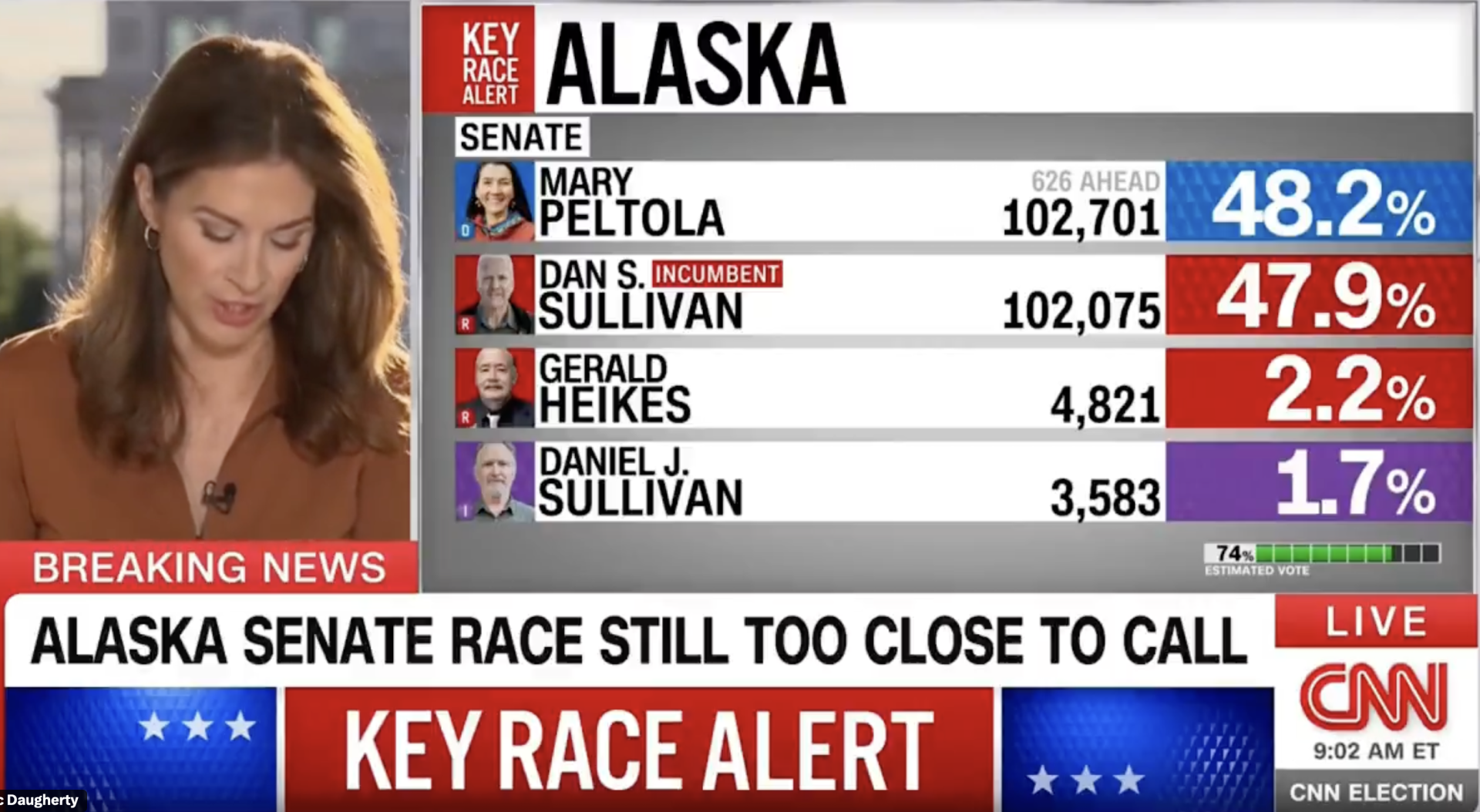
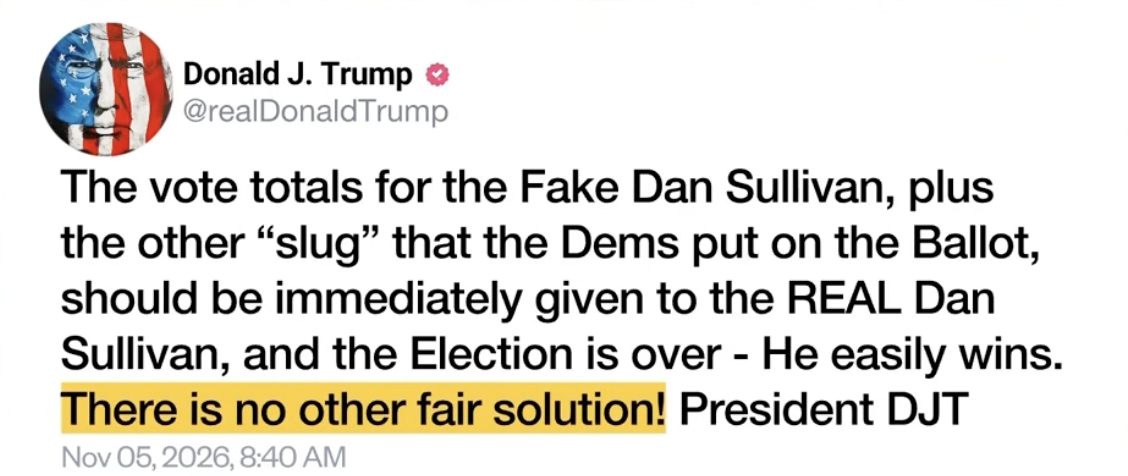
  • Élection au Sénat états-unien en Alaska : on n’est pas à l’abri d’un feuilleton électoral comme les États-Unis savent nous en concocter (cf. Bush-Gore en 2000 – version longue – ou Biden-Trump en 2020 – version plus brève, mais musclée)

    What Is Ranked-Choice Voting ? What It Could Mean for Alaska’s Election
    ▻https://www.wsj.com/livecoverage/midterm-election-results-2026-latest-updates/card/what-ranked-choice-voting-could-mean-for-alaska-s-election-myfZ7KC5frWKHQQS8vLF
    ▻https://images.wsj.net/im-65845843/social

    The final results of Alaska’s close Senate race might not be known for weeks, because of the state’s use of ranked-choice voting. This could add to the drama already unfolding in the state.
    In Alaska’s ranked-choice voting system, voters rank the four finalists on their ballots in order of preference. If no one gets more than 50% of the vote, the weakest candidate is eliminated and the second-choice votes on those ballots are redistributed to remaining candidates. The process continues until someone has a majority. But the ranked-choice tally won’t happen before Nov. 18, the deadline for absentee ballots, so the winner in Alaska might not be known for weeks.

  • Rashida Tlaib
    Michigan U.S. House results: 12th District
    Live results:Election nightUpdated Nov 4, 2026, 10:33 AM
    ▻https://apnews.com/projects/elections-2026/michigan-us-house-results/#12

    AP logoestimates. 93% of votes counted
    Rashida Tlaib wins.
    AP race call at 2:55 a.m. on Nov. 4, 2026.
    candidate votes pct

    Rashida Tlaib Dem. 232 495 75.8%
    James D. Hooper GOP. 65 711 21.4%
    Gary Walkowicz WCP 3 617 1.2%
    Brenda K. Sanders Grn 3 150 1.0%

    “““““““““““““““““““““““““““““““““““““““”
    Ilhan Omar
    Minnesota U.S. House results: 5th District
    Live results:Election nightUpdated Nov 4, 2026, 8:00 AM
    ▻https://apnews.com/projects/elections-2026/minnesota-us-house-results/#5

    AP logoestimates. 99% of votes counted

    Ilhan Omar wins.
    AP race call at 6:04 a.m. on Nov. 4, 2026.
    candidate votes pct
    Ilhan Omar Dem. 263 166 76.5%

    John Nagel. GOP 55 805 16.2%

    DeVelle L. Jackson. Ind. 24 215 7.0%

    Total Write‑ins 932 0.3%

    #Élections_mi-mandat_2026

    • La députée démocrate américaine Rashida Tlaib réélue dans la 12e circonscription

      MELISSA NANN BURKE The Detroit News
      4 novembre 2026
      ▻https://eu.detroitnews.com/story/news/politics/elections/2026/11/03/rashida-tlaib-democrat-12th-congressional-district-republican-james-hooper-results/92504770007

      La députée démocrate américaine Rashida Tlaib, de Détroit, a remporté un cinquième mandat au Congrès le 3 novembre face au républicain James D. Hooper, de Livonia, qu’elle affrontait pour la deuxième fois consécutive.
      (...)
      Mme Tlaib, avocate et ancienne députée d’État, se définit comme une socialiste démocratique. Elle a fait campagne aux côtés d’ Abdul El-Sayed , candidat démocrate au Sénat américain, au printemps et à l’automne. Elle a vivement critiqué la guerre menée par l’administration Trump contre l’Iran et a continué à fustiger Israël au sujet du conflit avec le Hamas à Gaza.

      À la mi-octobre, Tlaib a qualifié de « fasciste » et de motivée par des considérations politiques la perquisition fédérale menée avant l’aube au domicile de sa collègue démocrate, la députée Ilhan Omar du Minnesota. Un porte-parole du ministère de la Justice a déclaré que « cette mesure coercitive s’inscrit dans le cadre d’une enquête fédérale en cours » concernant le statut d’immigration d’Omar.

      Tlaib a présenté un projet de loi visant à interdire aux agences fédérales d’utiliser des systèmes automatisés de surveillance de masse, notamment les lecteurs automatiques de plaques d’immatriculation tels que Flock. Bien que ce projet de loi n’ait guère de chances d’aboutir à la Chambre des représentants, dominée par les républicains, il pourrait bénéficier de meilleures perspectives si les démocrates prenaient le contrôle de la Chambre lors de la prochaine législature. (...)

    • Le signe réel que quelque chose s’est passé aux états unis, c’est l’élection de Abdul El-Sayed, non pas parce que arable mais parce qu’il avait l’aipac contre lui et pourtant il est élu. La lumière peut parfois surgir du néant.

  • Sawyer Hackett / X – Democrats in Texas
    ▻https://x.com/SawyerHackett/status/2117855393892438123

    Democrats didn’t just win the Senate and Governor’s races in Texas.

    –We’re likely going to win ALL 17 of Texas’s statewide races.
    –We also won the Texas House.
    –We also won the Texas Senate.
    –We also won all 5 of the U.S. House seats they gerrymandered.

    This is a bloodbath.

    c’est moi qui souligne le dernier point…

  • Adam Hamawi, sharp critic of Israel, wins Democratic primary in New Jersey
    ▻https://www.ynetnews.com/article/vap4jrkur

    (moins médiatisé que les autres, source israélienne)

    Dr. Adam Hamawi, a plastic surgeon who served as a trauma surgeon in Gaza and a sharp critic of Israel, won the Democratic Party primary in New Jersey’s 12th Congressional District. Hamawi’s campaign, which calls for a full arms embargo on Israel and accuses it of genocide, received funding of approximately $1.5 million from the pro-Palestinian political lobby and was supported by Alexandria Ocasio-Cortez and Bernie Sanders. Hamawi is of Egyptian descent and was close to the blind Sheikh Omar Abdel-Rahman, who was convicted for his involvement in the 1993 World Trade Center bombing, and testified on his behalf during the trial.

  • Cy-real ¯\(ツ)/¯ :mastodon : ⏚ : « Quelques bonnes nouvelles ... »
    ▻https://piaille.fr/@chicraote/117556993088750305

    Quelques bonnes nouvelles et quelques visages de la victoire des démocrates face à Trump cette nuit :
    – Deb Haaland au Nouveau-Mexique, première femme autochtone à occuper le poste de gouverneur dans l’histoire des États-Unis
    – Keisha Lance Bottoms en Géorgie, première femme noire à occuper le poste de gouverneur dans l’histoire des États-Unis
    – Gina Hinojosa, première femme d’origine latino-américaine à occuper le poste de gouverneur au Texas (!)
    – Ilhan Omar, première femme musulmane élue à la chambre des représentantes en 2018, réélue avec 75% des voix

    • Démissionnée par Pete Hegseth, l’ex-amirale est élue en Caroline du Nord à la Chambre des représentants - Lignes de défense
      ▻https://lignesdedefense.ouest-france.fr/demissionnee-par-pete-hegseth-lex-amirale-est-elue-en-c

      La démocrate Nancy Lacore, une ancienne contre-amirale de l’US Navy limogée en août 2025 par le secrétaire à la Guerre Pete Hegseth (lire ici), a été élue dans un district traditionnellement républicain de Caroline du Sud face à la républicaine Jenny Costa Honeycutt.

      Lacore, qui a passé plus de trente ans dans la Marine et a effectué deux déploiements en Afghanistan, a débuté comme pilote d’hélicoptère et a gravi les échelons jusqu’à devenir chef de la Réserve navale, où elle supervisait plus de 60 000 marins.

      En janvier dernier, elle avait annoncé sa candidature au Congrès dans le 1er district de Caroline du Sud. Dans une vidéo diffusée sur la plateforme sociale X, elle affirmait avoir été démis de ses fonctions sans motif, « comme des dizaines d’autres officiers supérieurs ». Elle avait ajouté qu’elle n’avait « plus jamais porté l’uniforme » après avoir quitté le Pentagone le jour de son limogeage. Elle avait toutefois souligné qu’elle « ne pouvait rester les bras croisés face aux difficultés rencontrées par les Américains et les habitants de Caroline du Sud » et elle s’était dite prête à mettre « son expérience dans le domaine de la Défense pour dialoguer avec les électeurs inquiets de la gestion du secrétariat à la Guerre par Pete Hegseth. »

  • WASHINGTON (AP) — Le démocrate Abdul El-Sayed remporte l’élection au Sénat américain dans le Michigan
    Par L’ASSOCIATED PRESS 4 novembre 2026
    ▻https://apnews.com/live/midterm-election-2026#000001a1-a574-d59a-a9e7-ad7c88ac0000

    Michigan Democratic Senate candidate Abdul El-Sayed speaks at an election night event, early Wednesday, Nov. 4, 2026, in Detroit. (AP Photo/Julia Demaree Nikhinson)

    Le démocrate Abdul El-Sayed a remporté mercredi l’élection au Sénat américain pour représenter le Michigan, battant le républicain Mike Rogers. El-Sayed, ancien responsable de la santé publique, succédera au sénateur démocrate Gary Peters, qui prend sa retraite. El-Sayed sera le premier sénateur musulman du pays.

    El-Sayed avait battu la députée Haley Stevens lors d’une primaire très serrée, malgré l’énorme avantage de cette dernière en matière de collecte de fonds et le soutien de figures de l’establishment démocrate qui avaient averti qu’El-Sayed représentait un pari risqué pour novembre. Sa victoire face à Rogers, un ancien membre du Congrès, devrait encourager les progressistes en démontrant qu’il est possible de remporter la victoire dans un État clé.
    L’Associated Press a déclaré El-Sayed vainqueur à 2 h 27 du matin (heure de la côte Est).

    ▻https://seenthis.net/messages/1198993

    • Midterms 2026 : dans le Michigan, le démocrate Abdul El-Sayed devient le premier sénateur musulman des Etats-Unis
      Par Nicolas Chapuis (New York, correspondant)
      Publié le 4 novembre 2026 à 08h38,
      ▻https://www.lemonde.fr/international/article/2026/11/04/midterms-2026-dans-le-michigan-le-democrate-abdul-el-sayed-devient-le-premie

      (...) Huit ans plus tard, malgré un déficit de notoriété, il a inversé la dynamique. Au mois d’août, lors de la primaire pour la candidature à la sénatoriale, Abdul El-Sayed a battu Haley Stevens, une figure démocrate locale, représentante au Congrès depuis 2018, qui avait le soutien de la direction du parti.

      La campagne a été âpre, virulente, elle a notamment porté sur le conflit israélo-palestinien : Abdul El-Sayed est farouchement propalestinien, quand Haley Stevens affiche son soutien à l’Etat hébreu. La seconde a reçu un soutien financier très important de la part des lobbys américains militant en faveur d’Israël, qui ont investi près de 40 millions de dollars (35 millions d’euros) dans sa campagne, ainsi que de plusieurs grandes entreprises de la région. Cette abondance d’argent – près de 70 millions de dollars finalement – a en fin de compte eu un effet contre-productif. Abdul El-Sayed s’en est servi pour dénoncer la mainmise des ultrariches sur la politique américaine, avec succès.

      Haley Stevens n’a pas digéré la défaite : dimanche 1er novembre, elle a annoncé son ralliement au candidat républicain, Mike Rogers, une défection largement critiquée dans les rangs démocrates, mais qui n’a pas eu de conséquences. (...)

      #Élections_mi-mandat_2026

    • Abdul El-Sayed démontre que s’opposer à Israël n’est pas un obstacle pour remporter les États clés
      Arno Rosenfeld • Détroit • 4 novembre 2026
      ▻https://www.haaretz.com/usmidterms2026/2026-11-04/ty-article/.premium/abdul-el-sayeds-win-shows-opposing-israel-is-no-electoral-liability/000001a1-a591-db8d-a9f7-a5ddcd460000

      La victoire éclatante des démocrates dans le Michigan et ailleurs a mis en évidence les limites de l’influence politique de la communauté juive organisée. Le premier musulman élu au Sénat s’est imposé malgré les quelque 40 millions de dollars dépensés par l’AIPAC pour le combattre

      Abdul El-Sayed a battu Mike Rogers lors de la course au Sénat américain dans le Michigan, permettant ainsi aux démocrates de conserver un siège crucial et démontrant que même une opposition virulente à Israël n’empêche pas de remporter des élections fédérales disputées. (...)

    • La battue de la primaire démocrate a été jusqu’à soutenir l’adversaire républicain

      Haley Stevens dévoile les (nombreuses) raisons de son soutien au candidat républicain dans le Michigan
      ▻https://www.huffingtonpost.fr/international/article/haley-stevens-devoile-les-nombreuses-raisons-de-son-soutien-au-candid

      • Haley Stevens justifie son soutien à Mike Rogers, dénonçant les méthodes de campagne et l’attitude d’Abdul El-Sayed.
      • Elle pointe des désaccords majeurs sur Israël.
      • Ce choix, rare pour une démocrate, pourrait impacter la course au Sénat dans le Michigan.

      […]
      Mais l’élue s’est surtout dit en désaccord sur les publicités de campagne d’Abdul El-Sayed. « L’une, issue d’un groupe soutenant Abdul, a établi un lien entre le coût des courses alimentaires et le soutien apporté par l’Amérique à Israël », a illustré Haley Stevens, critiquant aussi les soutiens du candidat dont le streamer Hasan Piker qui divise la gauche ou – de manière plus surprenante – le commentateur d’extrême droite Tucker Carlson.

      « Des personnes raisonnables peuvent être en désaccord au sujet d’Israël, de Gaza et de la politique étrangère américaine. Mais rejeter sur Israël la responsabilité du prix des œufs ou mettre en avant Tucker Carlson ne constitue pas une manière de bâtir la confiance ou de rassembler les gens », a-t-elle poursuivi. Elle-même envisage de se convertir au judaïsme, la religion de son fiancé.

  • Recommanded DSA Stream with Hasan Piker
    ►https://www.twitch.tv/hasanabi

    Hasan Piker - Wikipedia
    ▻https://en.wikipedia.org/wiki/Hasan_Piker

    Hasan Doğan Piker[a] (born July 25, 1991), known online as HasanAbi,[b] is an American left-wing political commentator, Twitch streamer, and influencer. He began streaming on Twitch in March 2018, while working at The Young Turks (TYT), leaving the network in 2020 to focus full-time on his streaming career. His broadcasts combine current affairs commentary, political debates, and international news with gameplay and reaction content. As of 2026, Piker’s channel ranks among the platform’s most-subscribed.

    #USA #DSA #élections #congrès #2026 #midterms

  • Election Live Blog : At least 212 DSA campaigns on the ballot - Democratic Left
    Democratic Left
    ▻https://democraticleft.dsausa.org/2026/11/02/live-blog-midterms-cap-a-historic-cycle-for-socialists

    Outside Lower Manhattan DSA’s election night party. Photo by Alexandra Chan

    Si les résultats des « Socialistes Démocratiques d’Amérique » aux élections du 3 novembre 2026 vous intéressent cet article est pour vous. Il y a plusieuts liens pour plus de détails d’actualité.

    4.11.2026 - There are more than 200 DSA campaigns on the ballot on Nov. 3. Results will ratify and potentially extend a series of victories in an election cycle that has been transformative for the socialist movement. Democratic Left will update this blog below under the “UPDATES” heading as news breaks. For a preview of some of the interesting or high-stakes races tonight, check out our election preview. The blog will kick off with chapter responses to a survey circulated to DSA chapters with candidates on the ballot. Chapters should have received the link to this questionnaire at their email of record; it’s not too late to send in your response. (Updated 1:15 p.m. ET, Nov. 2)

    National Electoral Commission Election Results
    ▻https://2026.electoral.dsausa.org

    Official DSA Stream with Hasan Piker
    ►https://www.twitch.tv/hasanabi

    DSA Members: Tell Us What You’re Seeing on the Forum Page for This Article
    ▻https://discussion.dsausa.org/t/democratic-left-election-live-blog/71656

    UPDATES

    Closure of polls for Honolulu city council campaign ends DSA’s election night / 1 a.m. ET, Nov. 4

    DSA’s election night ends in Hawaii, where Jason Liang is running for Honolulu City Council. Polls have closed in Hawaii, and the Democratic Left live blog is shutting down for the night. The National Electoral Commission’s DSA election tracker records 63 wins, 21 losses, and one run-off (Misael Ramos, running for Austin City Council) as of 1 a.m. ET.
    Lots of tight races for DSA candidates in Trump country hang in the balance / 12:45 a.m. ET, Nov. 4

    A buoyant night for Democrats has put DSA candidates on the Democratic ballot line into very tight races in previously Trump-friendly districts around the country. Counting is not complete in many of these races, and these margins could change.

    DSA candidate Isaiah Harris trails 48-52 in Kansas House of Representatives District 3 — which gave Trump a 14.5 point margin and its outgoing Republican state representative a 20.4 point margin in 2024.

    DSA candidate Veronica Garcia-Martinez leads 53-47 in Illinois House District 70 — which gave Trump a 14.5 point margin and her Republican opponent a 19.6 point margin in 2024.

    DSA candidate Robert Hunter trails 49-51 in Alabama State House District 28 — which gave Trump a 6.5 point margin in 2024 and had no Democratic candidate when Hunter’s Republican opponent last ran in 2022.

    DSA candidate Mark Pinsley leads 51-49 in Pennsylvania Senate District 16 — which gave Trump a 8.9 point margin in 2024 and his Republican opponent a 8.4 point margin in 2024.

    DSA candidate Yisak Worku trails 48-52 in Texas State House District 91 — which gave Trump a 21.8 point margin in 2024 and had no Democratic candidate when Worku’s Republican opponent last ran in 2022.

    DSA candidate Owen Farnsworth leads 52-48 in Tennessee State House District 34 — which gave Trump a 22.4 point margin in 2024 and his Republican opponent a 21 point margin in 2024.

    Luke Jungmann trails 49.5-50.5 in New Mexico State House District 60 — which gave Trump a 6.4 point margin and his opponent a 14.4 point margin over a Democratic opponent in 2024.
    Gonzales-Torres leads by double-digits in early counting / 12:15 p.m. ET, Nov. 4

    Angela Gonzales-Torres, DSA Los Angeles’s candidate for the 34th congressional district, is leading incumbent U.S. Rep. Jimmy Gomez by 12 points with a little more than half of the vote counted.

    In other high-profile races, Nithya Raman is neck-and-neck with Mayor Karen Bass with less than half of the vote cast. Marissa Roy, DSA’s candidate for city attorney, leads her opponent two-to-one. In Sacramento, Mai Vang trails incumbent Doris Matsui 59-41 with 37% of the vote counted.
    Tacoma (Wash.) DSA-backed initiative strengthens protections for tenants, tenant unions / 11:55 p.m. ET

    Tacoma Safe Homes for All, an initiative that supports enforcement on bad landlords and requires landlord registration, licensing, and recognition of tenant unions, has passed by what appears to be a comfortable margin.
    Polls close on the West Coast where chapters hope for historic breakthroughs, including citywide campaigns in Los Angeles and U.S. House races in Los Angeles and Sacramento / 11 p.m. ET, Nov. 3

    Polls have closed in California, Idaho, Oregon, and Washington.

    Washington will send a second DSA state representative to Olympia: Jaelyn Scott, who has signaled a desire to join incumbent state Rep. Shaun Scott’s impactful push to build the state’s budget on progressive revenue priorities.

    Oregon DSA chapters are looking to return Portland DSA’s influential contingent on Portland City Council and are backing three candidates for state representative.

    California’s results will include the last two U.S. House races with DSA endorsements: Mai Vang, running in a Sacramento district, and Angela Gonzales-Torres running in Los Angeles. Both candidates face incumbents with what may turn out to be serious liabilities: Vang’s Doris Matsui must convince voters to give her another term representing a district she or her late husband have represented since 1979; Gonzales-Torres’s opponent, Jimmy Gomez, is a major recipient of AIPAC support and the target of a House Ethics Committee investigation of allegations of “sexual misconduct.”

    California DSA chapters are running 16 candidates for city councils and county commission and six candidates for mayor — including Nithya Raman, DSA Los Angeles’s candidate for mayor. DSA Los Angeles is also running Marissa Roy for city attorney, a city-wide elected office. California chapters cautioned Democratic Left that they did not expect results to be clear for some time and anticipated early vote-counting to tend more conservative.

    MORE IN DEMOCRATIC LEFT: Angela Gonzales-Torres Hopes to Bring International Solidarity to the U.S. House

    In news of the weird, Southern Idaho DSA has made its choice in Idaho’s advisory referendum to pick a state gun (the Colt M1911) — and, on a more serious note, is campaigning hard to overturn Idaho’s abortion ban.
    DSA candidates come up short in Louisville mayor, metro councillor races / 10:30 p.m., Nov. 3

    Louisville DSA appears to have failed to elect its mayoral endorsee, Shameka Parrish-Wright, and Andrea Parr, who would have been their second representative on Louisville Metro Council.
    Green Mountain Slate (Vt.) appears to have gone five-for-six / 10:10 p.m. ET, Nov. 3

    Five of six candidates endorsed in legislative races by Green Mountain DSA are on track to win. Incumbent state Sen. Tanya Vyhovsky and newly minted state representatives Trang Do, Jeffrey Peterson, Matt Gile, and Adam Franz all appear to have secured a victory. Alexander Bobella is trailing in his race for State Senate.
    Campaigns off the Democratic Ballot Line Lose in Rhode Island, Indiana / 9:45 p.m. ET, Nov. 3

    Most DSA candidates in partisan elections run on the Democratic party line. Two campaigns on the ballot today featured candidates running on “Socialist” ballot lines: Brittney Kubicek in Rhode Island and Ben Davis in Indiana, both running for state representative. Kubicek had a national DSA endorsement. Both campaigns appear to have lost as of Tuesday evening.

    Kubicek received a little over 22% of the vote in her Providence district against a Democratic incumbent (there was no Republican on the ballot). Leaders of Rhode Island DSA wrote for Democratic Left to explain their strategy. “Rhode Island DSA members have built a campaign that has the tools to win, but winning is not our only goal. Running a socialist campaign in this district puts us in direct conversation with working-class Rhode Islanders, and a chance to address their immediate concerns and invite them to fight the bosses, corporations, and landlords who dominate their lives,” Rhode Island Communications Daniel Crowell wrote.

    Davis, running with Greater Lafayette DSA’s endorsement on a Socialist Party of Indiana party line, received 3% of the vote.
    Polls close in New York, Michigan, and Minnesota, capping election season for some of DSA’s most developed electoral programs. In addition to five U.S. House members in New York City and Detroit, New York DSA chapters have elected a historic delegation to the state legislature. / 9 p.m. ET

    Polls have closed in Arizona, Colorado, Iowa, Kansas, Louisiana, Michigan, Minnesota, Nebraska, New Mexico, New York, North Dakota, South Dakota, Texas, Wisconsin, and Wyoming.

    With tonight’s results, it’s official: New York state will have the second-largest ever delegation of socialists in a state legislature, trailing Wisconsin in 1919. DSA both secured its electoral heartland in the so-called “Commie Corridor” and pushed into new areas, both upstate and within the five boroughs. Minnesota and Arizona DSA chapters are also hoping to send multiple DSA endorsees to their state legislatures.

    MORE IN DEMOCRATIC LEFT: Meet NYC DSA’s 2026 Slate

    Together, Michigan, Colorado, and New York will send six DSA candidates to the U.S. House, including incumbents Alexandria Ocasio-Cortez and Rashida Tlaib and newcomers Darializa Avila-Chevalier (DSA-New York City), Claire Valdez (DSA-New York City), Melat Kiros (DSA-Denver), and Donavan McKinney (DSA-Metro Detroit).
    NBC exit poll: 17% of voters call themselves democratic socialists / 8:50 p.m. ET, Nov. 3

    It’s never totally clear what people mean when they tell pollsters they are democratic socialists — but 17% of voters participating in NBC’s exit poll identified that way. These people should understand that there’s no such thing as an unorganized socialist and join DSA today.
    Polls close in Arkansas, where chapters are pursuing several local offices / 8:30 p.m. ET
    Ashley Herrmann flips Trump district — Tampa DSA sends socialist to Florida state legislature / 8:25 p.m. ET, Nov. 3

    DSA is sending a state representative to the Florida state legislature in a district Trump won by more than 8 points in 2024, and that has been represented by a Republican since 2020. Ashley Herrmann was endorsed by DSA National and Tampa DSA. Danny Alvarez, the Republican incumbent, had won in 2024 with a 16 point margin over his Democratic opponent.

    In an interview published earlier today on this blog, Tampa DSA leadership described the chapter’s role in her campaign: “DSA members wrote her platform to be in line with Workers Deserve More planks, DSA members staffed her campaign and DSA members were the driving force behind her field game: more than 18,000 doors knocked and 5,000 calls made.”

    Just to the north, Pasco-Hernando DSA candidate Jose Freites appears to have been defeated in his race for Florida House District 56.
    With polls closed in much of the eastern U.S., Janeese Lewis George will be next DC mayor / 8 p.m. ET, Nov. 3

    Polls have closed in Alabama, Connecticut, Delaware, Florida, Illinois, Maine, Maryland, Massachusetts, Mississippi, Missouri, New Hampshire, New Jersey, Oklahoma, Pennsylvania, Rhode Island, Tennessee, Washington, D.C.

    Another major U.S. city is almost certain to have a DSA mayor, as Metro DC DSA endorsee and Democratic nominee Janeese Lewis George is essentially uncontested in the general election. Former Metro D.C. DSA Chair Aparna Raj is also the prohibitive favorite to win her race for DC city council.

    Polls have also closed on twenty state legislative races, including a Rhode Island race unusual because it features a DSA candidate running against the Democratic nominee on a “socialist” ballot line. U.S. Senate candidate and Florida state Rep. Angie Nixon has the endorsement of one DSA chapter.

    A special shout-out to Todd Chretien, Maine DSA candidate for Portland City Council, who is a former member of DSA’s Publications Committee and the Socialist Forum editorial board.
    First claimed DSA victories are three state legislators in the South / 7:55 p.m. ET, Nov. 3

    The first DSA races marked as victories this election night are incumbent Gabriel Sanchez in Georgia and newcomers Mathewos Samson in Georgia and Robert LeVertis Bell in Kentucky.

    This is LeVertis Bell’s third race with Louisville DSA. He ran for the 43rd state house district in 2022 but did not make it past the Democratic primary. In the leadup to his first race — for a Louisville metro council seat — LeVertis Bell spoke to Democratic Left about how he came to believe in DSA’s electoral strategy: “As I watched more DSA campaigns, I saw in real time how people were deepening their political understanding, how people were becoming strong organizers, how people were and still are building something that is approaching a robust movement against capitalism in part, though not exclusively, through electoral campaigns.”
    Polls close in Ohio, where DSA chapters are backing local measures funding public schools in Cincinnati and democratic principles in Columbus / 7:30 p.m. ET, Nov. 2

    Polls have closed in North Carolina, Ohio, and West Virginia. Ohio DSA members have been canvassing for local issues in Columbus and Cincinnati. Columbus’s Issue 8 allows for district-level elections of Columbus City Council members, creating more winnable districts for grassroots campaigns. Cincinnati’s Issue 4 increases taxes to fund the city’s public schools.

    Orange County (Calif.) is behind city council slate, ranked-choice voting measure / 7:15 p.m. ET, Nov. 3

    Orange County DSA is backing three candidates for Santa Ana City Council — Benjamin Vazquez (District 2), Sandra De Anda (District 4), and Isuri Ramos (District 6) as well as Measure D for ranked-choice voting in the city of Irvine.

    DL: Why was this campaign important for the chapter?

    Orange County: Our council races in Santa Ana span the breadth of our work as a chapter: Vazquez is a teachers’ union officer who helped lead a reform slate in his union. De Anda is a director at the OC Rapid Response Network and has been on the ground with our Immigration Justice Committee. Ramos has been a champion for rent control and tenants’ rights. Santa Ana is the most progressive city in Orange County. It has a Latino working-class heart — a place we want to build power for democratic socialism. In Irvine, the city in our jurisdiction with the highest DSA member density and a large YDSA chapter, local politics are mired in spoilers and big money interests despite almost uniformly voting for Democrats. DSA members showed up at city council in coalition with community groups to get ranked-choice voting (RCV) on the ballot in Irvine Measure D, against the wishes of our former DSA member mayor, Larry Agran. Irvine is the biggest municipality considering adopting RCV this cycle. A win here would be a big win for our DSA National Program.

    DL: What did the DSA component of the campaign look like?

    Orange County: Across all of our campaigns, Orange County DSA has knocked on more than 10,000 doors; over the last few months we’ve built an entire campaign infrastructure from scratch. We adopted a new endorsement cycle to build buy-in from the chapter, and we’re hoping that our turnout, which is potentially the best or most consistent in the county, will move the needle in all these races, which could go either way!

    DL: Is there anything in particular you’ll be looking for on election night?

    Orange County: Increases in low-propensity voters in our Santa Ana council districts; these include many of the people we targeted in our door-to-door effort to get out the vote. We’re also looking for a big election day vote in Irvine Council District 6, which is primarily composed of union members and students. It is also where YDSA at University of California-Irvine knocked on over 1,000 doors themselves! Increases in those low-propensity Santaneros, as well as 18–to-34-year-olds in Irvine council district, will hopefully indicate that we’re on the path to victory. Although, since it’s California, we probably won’t know the final results for a week or two. Also looking forward to a great party with our community allies!
    Polls close on races to put second socialist in Georgia legislature, elect Green Mountain DSA Slate, and pass Virginia referenda / 7 p.m. ET

    Polls close at 7 p.m. in Georgia, Indiana, Kentucky, South Carolina, Virginia, and Vermont.

    In Vermont, DSA is backing a slate of six candidates for the state legislature: Trang Do, Jeffrey Peterson, and Matt Gile, and Adam Franz for state representative and Alexander Bobella and Tanya Vyhovsky for state senator.

    Kentucky’s Louisville DSA chapter has a near-automatic win as its candidate for the state house of representatives, Robert LaVertis Bell, faces only a write-in opponent. Another Louisville endorsee, Andrea Parr, is contesting a seat on the city council. Rounding out the Kentucky DSA slate is Lexington’s Herbert Lynn, a candidate for that city’s municipal council.

    DSA chapters in Virginia are campaigning for a trio of amendments to the state constitution that would enshrine reproductive freedom (Question 1), same-sex marriage (Question 2), and restore voting rights for the formerly incarcerated (Question 3).

    Atlanta DSA’s two state representative candidates — newcomer Mathewos Samson and incumbent Gabriel Sanchez — are both favorites in their campaigns.
    Twin Cities DSA wants to give renters in St. Paul, Minn. the right to make repairs their landlords won’t / 5:45 p.m. ET, Nov. 3

    Safe Homes St. Paul, a city ballot initiative, would give the chapter the right to make repairs to their apartments when landlords don’t follow through on maintenance requests.

    DL: Why was this campaign important for the chapter?

    Twin Cities: When out-of-state landlords refuse maintenance requests, we should be able to fix the issue ourselves and receive a rent deduction to cover it. As rent increases, we deserve, at minimum, safe housing.

    This campaign has helped build the Saint Paul branch of the TCDSA chapter. We brought new people into the chapter, and fought and won against the city when they refused to put it on the ballot.

    DL: What did the DSA component of the campaign look like?

    Twin Cities: Twin Cities DSA led the entire campaign. We collected more than 7,000 signatures. A team of 50 volunteers collected 3,000 in one day in the summer heat. We held an 80-person canvass, which is exciting in its own right, but even more so for the sleepy town of Saint Paul.

    DL: Is there anything in particular you’ll be looking for on election night?

    Twin Cities: Looking to see widespread support across the city, showing that residents want renters’ right to repair, even though the city fought to keep it off the ballot!
    Where DSA competed in 2026, its busiest year of electoral work ever / 5:15 p.m.

    DSA’s National Electoral Commission tracks races around the country — statistics that allow a breakdown of races over time, by region, and chapter size.
    DSA is running candidates today for at least 62 state legislative seats and 50 seats on city councils and county legislatures / 2 p.m. ET, Nov. 3

    Strong results for DSA in tonight’s elections would dramatically increase the number of DSA candidates represented at lower levels of government.

    The 212 DSA campaigns on the ballot include 62 state legislative seats. New York leads the way with 13 candidates, but many other states could have multi-member delegations: five in Minnesota and Vermont, four in Illinois and Arizona, and three in Oregon. Other states, like Missouri and Kansas, may elect their first state legislators running for office as socialists since the early 20th century — or ever.

    At a local level, DSA chapters are backing ten candidates for mayor, including six in California, Councilmember Janeese Lewis George for mayor of Washington, D.C., and Councilmember Nithya Raman for mayor of Los Angeles. Fifty candidates are on the ballot for city councils and county legislatures.
    Sacramento (Calif.) DSA seeks U.S. House seat / 1:45 p.m. ET, Nov. 3

    Sacramento DSA candidate and Sacramento City Councilmember Mai Vang is challenging a 20-year incumbent (who, with her husband, has represented the district since 1979) for a U.S. House seat. The chapter is also supporting Emily Smet for American River Flood Control District Commissioner and “yes” on Proposition 40, California’s statewide billionaire tax.

    DL: Why was this campaign important for the chapter?

    Sacramento: With this campaign, we organized our first independent field operation. Our chapter has supported several recent campaigns that narrowly lost, especially with staffing and volunteer support. This time we are being intentional about building capacity for future DSA campaigns by retaining the experience and infrastructure. We also ran a cadre member, Emily Smet, for a local race that overlaps with Mai’s district. That way, our canvasses served dual purposes.

    DL: What did the DSA component of the campaign look like?

    Sacramento: We hosted 36 canvasses attended by more than 100 unique volunteers. We hosted joint canvasses with local unions, democratic clubs, and streamer Hasan Piker. We knocked on over 10,000 doors, including 4,400 in just one night with Hasan’s support. We also raised $3,600 for our operation and will be able to seed our next campaigns

    DL: Is there anything in particular you’ll be looking for on election night?

    Sacramento: Emily will likely crush her opponent, Tim Crush, and win by 22:00 PST on Tuesday. Mai’s race is a dead heat. California is slow to count ballots, and Mai’s voters will be over-represented in late results. She will be behind on Tuesday night and make steady gains over the following two weeks. The election will likely come down to hundreds of votes and won’t be called one way or the other until Friday, Nov. 13.
    Tampa (Fla.) DSA thinks change in Florida begins at the state level / 1:15 p.m. ET, Nov. 3

    Tampa DSA is supporting Ashley Herrmann, who also has a national DSA endorsement, in a race for state representative.

    DL: Why was this campaign important for the chapter?

    Tampa: It’s been a great way to engage new members in the chapter and opens up the possibility of real legislative progress in Florida, where change has to start at the state level.

    DL: What did the DSA component of the campaign look like?

    Tampa: DSA members wrote her platform to be in line with Workers Deserve More planks, DSA members staffed her campaign and DSA members were the driving force behind her field game: more than 18,000 doors knocked and 5,000 calls made.

    DL: Is there anything in particular you’ll be looking for on election night?

    Tampa: We want to see a victory margin beyond 5% and [see] how much the precincts we hit heavily overperformed compared to previous years vs. the ones we didn’t. We also want to see how many independent votes we gained and if we were able to manage any significant republican defection.
    Pasco Hernando (Fla.) DSA establishes presence with state representative race / 1:15 p.m. ET, Nov. 3

    Pasco Hernando DSA’s territory — and Florida State House District 56 where the chapter is running Jose Freites for state representative — is on Florida’s Gulf Coast, north of Tampa.

    DL: Why was this campaign important for the chapter?

    Pasco Hernando: It is important to the chapter and the state because the West Coast of Florida has been abandoned in the fight for change. As a chapter, we wanted to get our feet on the ground and show this part of the state that socialists are here, and that we want to help bring aid to the community.

    DL: What did the DSA component of the campaign look like?

    Pasco Hernando: We were able to do phone banking and activate door knocking by highlighting the Democratic nominee for governor, Angie Nixon, and Jose Freites for the Florida House of Representatives, along with other members of the community we have worked with in the past.

    DL: Is there anything in particular you’ll be looking for on election night?

    Pasco Hernando: We are seeking to expand our chapter membership and further energize and encourage people to organize, especially to strengthen the socialist vision and bring mutual aid to the community.
    Southern Idaho is fighting for reproductive rights / 9:10 a.m. ET, Nov. 3

    Southern Idaho DSA organizes in Twin Falls and the surrounding Magic Valley region of Idaho. It is backing Proposition 1, which would add a right to reproductive freedom and privacy to state law.

    DL: Why was this campaign important for the chapter?

    Southern Idaho: Idaho has one of the strictest abortion bans in the entire country. OB-GYNs are leaving our state in droves. In a rural state with already crumbling healthcare infrastructure, we were not keen on seeing what would happen if it continued. Some of our members have been organizing for reproductive rights for decades. Given that reproductive healthcare is part of DSA’s Workers Deserve More program, we felt it was the perfect opportunity to provide a socialist wing of the fight for reproductive rights in Idaho.

    DL: What did the DSA component of the campaign look like?

    Southern Idaho: Members of Southern Idaho DSA, working alongside staff and volunteers for Idahoans United for Women and Families, knocked on over 1,700 doors canvassing for Prop 1. In addition to canvassing, we held rallies in the middle of our city every single Saturday until Election Day to show that Idaho and the Magic Valley are not a monolith and that we are with the community, working to overturn the unjust law. We worked alongside other organizations such as the Pro-Voice Project to raise awareness about the effects of abortion bans in Idaho.

    DL: Is there anything in particular you’ll be looking for on election night?

    Southern Idaho: Beyond Prop 1 passing, we wish to see a reexamination of Idaho on the national political stage. We hope that the efforts of Idaho DSA chapters, as well as the thousands of organizers from different organizations around the state, can make a statement that Idaho should not be overlooked. Too often, media pundits and Democratic Party operatives abandon states like Idaho, leaving our communities stranded and without resources. We have worked tirelessly with the scant resources we have been given, and we would like to plant the seeds for a rebirth of left-wing politics in Idaho.
    Southern Idaho DSA members rally for Proposition 1. Photo courtesy Southern Idaho DSA.
    San Francisco DSA-endorsed campaigns could establish a public bank, fund affordable housing / 9:10 a.m. ET, Nov. 3

    San Francisco DSA is backing Proposition B, an initiative to change the San Francisco Charter to create a public bank; a “yes” vote on Proposition I, directing funds to affordable housing; a “no” vote on Propositions D, E, and F, as well as Reina Tello for San Francisco Board of Education and Bunny McFadden for San Francisco City College Board of Trustees.

    DL: Why was this campaign important for the chapter?

    San Francisco: Proposition B is an opportunity to achieve a long-term goal of the chapter: to democratize finance, reduce the power of financial capital, and to create pathways to prevent public funds from supporting climate destruction and genocide. Additionally, this is one of the signature issues of our socialist in office, San Francisco Supervisor Jackie Fielder, who founded the SF Public Bank Coalition in 2019. Lastly, a public bank would make it much easier to finance social housing, which is the goal of another ballot measure, Prop I, which would create a cohesive electoral program for the chapter.

    Prop I dedicates over $100 million a year, funded by luxury real estate sales over $10 million, to affordable housing and rent relief. That was the goal of an earlier DSA San Francisco win, 2020’s Prop I, which raised the transfer tax to its current levels, but the current Prop I makes that binding after City Hall refused to spend the money on its intended purpose. It stops our billionaire-heir mayor from repealing the tax, which he’s attempted, and is one step in our larger campaign for municipal social housing.

    DL: What did the DSA component of the campaign look like?

    San Francisco: All Proposition B campaign staff are DSA members. We lit dropped over 100,000 doors, with over 300 volunteers involved in lit dropping over 30 field events.

    Proposition I has been a DSA San Francisco-led campaign from the start, with members filing to collect signatures to put Prop I on the ballot. Over 100 volunteers collected signatures, including many new faces who joined DSA through the campaign, and since we qualified, hundreds of volunteers ultimately dropped lit at over 40,000 doors citywide.

    DL: Is there anything in particular you’ll be looking for on election night?

    San Francisco: Vote counting can be slow and late, so we just hope we get promising signals on election night. We expect the later votes to break more in our favor, so seeing a close result in the earlier totals would be a good sign. Sonoma County (Calif.) DSA hopes to create a “revolutionary moment” against local political establishment with first-ever endorsement / 8:10 a.m. ET, Nov. 3

    Santa County DSA is supporting Joanna Paun for county supervisor in their northern California county. District 2 includes the city of Petaluma.

    MORE IN DEMOCRATIC LEFT: How Sonoma County DSA went from an organizing committee to a political force

    DL: Why was this campaign important for the chapter?

    Sonoma County: Joanna Paun is our chapter’s first-ever endorsement and a revolutionary moment for Sonoma County. Our opponent and four of the five current supervisors consult with [the same] local lobbyist and are deeply entrenched within the establishment. Joanna is our answer to the corporate machine and is the only candidate in her race who supports ending all county cooperation with ICE. This is especially important to us as we’ve been protesting our sheriff’s frequent cooperation with ICE, and there is no avenue of accountability except through the county board. Joanna’s victory will be a testament to the growing rejection of the establishment.

    DL: What did the DSA component of the campaign look like?

    Sonoma County: We have hosted 50-plus canvassing sessions and knocked over 14,000 doors in our ~65,000-person district. Through tabling and protests, we have also activated a significant number of non-DSA members.. We have made and published eight social media reels informing the public about the details of our race and capitalizing on our opponents’ mistakes (one of which has received over 110,000 views). We have had a strong presence in public conversations about the race (predominantly on Facebook and Reddit), educating voters and countering misinformation. Tons of phone and text banks as well!

    DL: Is there anything in particular you’ll be looking for on election night?

    Sonoma County: Many of us believe that a victory for Joanna will “prove” to the public that we are a serious movement worth joining. The watch party we’re hosting has an incredible number of RSVPs, and we are hoping for a huge membership boost that night as people realize that we can beat the odds and make a better future. We also know a win here will increase the value of our chapter’s endorsement and help erode the establishment’s influence. The establishment here recruits its candidates for races, and we know that these potential candidates will be more reluctant to run if there’s a chance they have to go up against DSA.
    Santa Barbara (Calif.) DSA shoots for city council majority to protect rent stabilization ordinance, end to Flock surveillance / 8:10 a.m. ET, Nov. 3

    Santa Barbara DSA is running four candidates for Santa Barbara City Council: Devon Wardlow, Ian Baucke, Gabe Escobedo, and Kristen Sneddon for mayor. If successful, the Southern California city would have a majority DSA-endorsed city council.

    DL: Why was this campaign important for the chapter?

    Santa Barbara: The campaigns were so important because they make up a majority of Santa Barbara’s City Council seats. As of last month, we have pushed council to pass a rent stabilization ordinance, and without a progressive council being elected in November, there’s a good chance the ordinance would be walked back. Along with this ordinance, Santa Barbara has gotten rid of Flock cameras, is attempting to pass a strong Just Cause Eviction ordinance, is fighting with the Trump administration over our coastline, and has a large ICE presence that needs to be slowed using city policies.

    DL: What did the DSA component of the campaign look like?

    Santa Barbara: We knocked doors two times a week for multiple months, including being the lead canvassers on some canvassees, we wrote opinion pieces for the local paper to counter talking points from the landlord lobby, which bought our local paper’s endorsement for the mayor; and we teamed up with multiple other leftist organizations, a tenants union, and an ICE resistance group, to further our reach.

    DL: Is there anything in particular you’ll be looking for on election night?
    Houston fights to rein in police with “Houston Freedom Act” / 6:30 a.m. ET, Nov. 3

    Houston Democratic Socialists of America PAC has endorsed Proposition A, a local package of criminal justice reforms that includes deprioritizing enforcement of laws against marijuana possession and no-knock warrants.

    DL: Why was this campaign important for the chapter?

    Houston: We voted to endorse it at our annual convention because we believe it will help reduce the deadliest interactions between police and the community, as well as deprioritize weed [enforcement], which especially affects Black communities.

    DL: What did the DSA component of the campaign look like?

    Houston: We had five canvasses with a total of 30 volunteers. We knocked 1,500 doors.

    DL: Is there anything in particular you’ll be looking for on election night?

    Houston: We will be looking at the governor’s race because [the person] in that position will help [us determine] how far we can push locally.
    Austin (Texas) goes all-out to put second member on city council / 8:45 p.m. ET, Nov. 2

    Austin (Texas) DSA hopes to send Misael Ramos to join socialist-in-office Mike Siegel on Austin City Council. If no candidate receives a majority, the top two candidates will advance to a runoff Dec. 12.

    DL: Why was this campaign important for the chapter?

    Austin: Misael’s alignment with Austin DSA campaigns and projects such as Greater Austin Tenants Union (GATO), Austin Against Apartheid, Abolish ICE, and Homes and Schools4All, pushing for comprehensive investments in housing and education, [and] stances on anti-Zionism, ICE, and criminal justice. [Ramos is] responsible for helping revive the local’s AfroSoc Caucus; he is also a public figure and activist on the local chapter’s side in many public efforts.

    DL: What did the DSA component of the campaign look like?

    Austin: We have led, going into election day, 17 canvasses on Saturday mornings; a dozen member-to-member phonebanks, two member-led fundraisers, and participated in weekly outreach sessions to our members and voters through the campaign. Over 200 Austin DSA comrades have been activated for these efforts. We’ve now knocked on over 14,000 doors as a chapter and have over 2,200 positive IDs going into the November election.

    DL: Is there anything in particular you’ll be looking for on election night?

    Austin: It is a six-candidate race in a down-ballot nonpartisan election with some very strong candidates. We are expecting to m1 the runoff and are looking, of course, to be the top vote-getter or getting the 50% on [election] day. There is much momentum for [Democratic senator candidate James] Talarico and [Democratic governor candidate Gina] Hinojosa at the top of the ticket. We are also interested in seeing the down-ballot effects, especially as it pertains to local issues and conversations around affordability, ICE, and our tax dollars being used for wars abroad.
    Bluegrass (Ky.) DSA pursues county-wide county council seat in first electoral campaign / 8:15 p.m. ET, Nov. 2

    Bluegrass DSA organizes in the north-central Bluegrass region of Kentucky, including the cities of Lexington and Frankfort, the state capital. Their candidate for Lexington-Fayette Urban County Council, Herbert Lynn, is also endorsed by DSA National.

    DL: Why was this campaign important for the chapter?

    Bluegrass: It is a county-wide seat that [has a four-year term] instead of the regular two. It was also the first campaign our chapter has helped run and has helped us build out our electoral apparatus

    DL: What did the DSA component of the campaign look like?

    Bluegrass: Around 25,000 doors knocked, over 100 separate volunteers activated in dozens of separate canvasses, especially in the last four months of the campaign where two [or] three canvasses every week were common.

    DL: Is there anything in particular you’ll be looking for on election night?

    Bluegrass: The top vote-getter in this race becomes vice mayor, so obviously that would be a massive win. But just getting to see our members come together and celebrate a grueling and hard-fought campaign will be amazing.
    Denver DSA builds on central role in election of Kiros to U.S. House / 7:30 p.m.

    Denver DSA defeated a 15-term incumbent in the July Democratic primary for Colorado’s 1st congressional district and elected Melat Kiros, a lawyer fired for her advocacy for pro-Palestine protesters.

    MORE IN DEMOCRATIC LEFT: Melat Kiros is Challenging “the System Itself”

    DL: Why was this campaign important for the chapter?

    Denver: The campaign provided an opportunity for members of the chapter to help an endorsed campaign build out a city-wide field program. It helped the chapter grow by more than 50% and bolstered the core of our member base, and it laid the foundation for our chapter’s first federal-level socialist in office.

    DL: What did the DSA component of the campaign look like?

    Denver: During the primary, the campaign knocked on over 110,00 doors; Denver DSA members did two-thirds of that. An average Denver DSA canvasser knocked three times as many doors as a non-member volunteer. Most of the field leads were DSA members and were present at almost every canvass throughout the primary. Many of those same members reactivated to knock for get-out-the-vote and ballot measure advocacy efforts leading up to the general election.

    DL: Is there anything in particular you’ll be looking for on election night?

    Denver: We feel very comfortable in Melat’s chances of victory in Denver; our chapter’s members also put efforts toward ballot measure advocacy and opposition. Most notably, we hope to see the failure of Propositions 134 and 135, both targeting transgender youth in Colorado, and [the passage of] Amendment 87, which creates a graduated income tax and cuts away at the restrictions on our state’s tax revenue and budgeting that are enshrined in Colorado’s constitution.
    Salem (Ore.) DSA thinks socialism can activate Oregon’s multiracial working class / 7 p.m. ET, Nov. 2

    Salem DSA, which organizes in a territory south of Portland around the city of Salem, is supporting incumbent Lesly Muñoz in a campaign to retain her highly competitive state house district.

    DL: Why was this campaign important for the chapter?

    Salem: Oregon House District 22 spans from Northeast Salem up to Woodburn. It houses the state’s largest immigrant population, has a majority of unaffiliated voters, and also sees the lowest voter turnout in all of Oregon. Importantly, this is a swing seat in a blue state where both parties consistently choose to run to the center. In Salem DSA we had spent the fall and winter of 2025 rallying against the escalating ICE attacks that have been terrorizing communities across this same area. The timing of Lesly’s reelection campaign was precisely what we needed to meet the moment.

    DL: What did the DSA component of the campaign look like?

    Salem: Immediately after our chapter endorsed Lesly Muñoz in January of 2026, we began to put together a kitchen cabinet composed of experienced DSA cadre such as [Kentucky state representative candidate] Robert LeVertis Bell from Louisville and [Oregon state representative candidate] Tammy Carpenter from Portland.

    We’ve had a local YDSA alumnus serving as field director for the campaign and 45 other DSA volunteers from across the Willamette Valley helping ensure we win on Nov. 3. The chapter directly coordinated with Lesly herself on graphic design, messaging, and a platform of “Housing,” “Healthcare,” and “Education for All.”

    Overall, Salem DSA has hosted 60 canvasses to knock over 10,000 doors and 15 phonebanks to make a total of 29,000 outbound calls!

    DL: Is there anything in particular you’ll be looking for on election night?

    Salem: We can see clearly that the Democratic Party has no organic connection to or understanding of the multi-racial working class across HD22. Lesly Muñoz had barely won her last election by 161 votes in 2024, and we want to prove in 2026 that leading as a militant, open democratic socialist will truly engage all workers in the struggle for their rights.

    A belief in class-struggle electoralism has led our chapter and our candidate Lesly to agitate alongside the movement to abolish ICE, the movement to stop datacenters, and to demand that Workers Deserve More!
    Southeast Kansas DSA wants to turn Trump County another shade of red / 5:45 p.m. ET, Nov. 2

    Southeast Kansas DSA’s organizing area includes a large part of Kansas including the town of Pittsburg, the home of Pittsburg State University and the center of Kansas [state] House District 3 where endorsee Isaiah Harris is running for state representative.

    MORE IN DEMOCRATIC LEFT: DSA Chapter Forms in Southeast Kansas

    DL: Why was this campaign important for the chapter?

    Southeast Kansas: It is our first big campaign for a state office. Not only do we have the opportunity to send the first open socialist to the Kansas House in over 100 years when George Brewer won Crawford County in the early 1900s, but it’s an opportunity to show that we are here — join us.

    DL: What did the DSA component of the campaign look like?

    Southeast Kansas: The campaign outraised the corporate-backed opponent with over 400 individual donations. We have knocked on over 4,500 doors with other chapters and OCs [organizing committees] sending doorknockers too, to help us [and] to learn how to canvass. We would like to thank Kansas City DSA, Lincoln (Neb.) DSA, Joplin Area (Mo.) DSA, and Nine Tribes Area (Okla.) DSA for sending volunteers and support.

    DL: Is there anything in particular you’ll be looking for on election night?

    Southeast Kansas: We’ll be looking at the Kansas legislative composition to see what can be done to pass our agenda. We’ll [also] be using election night momentum to launch other campaigns.
    A group of seven people pose for a photo with a black flag with the red Southeast Kansas DSA logo and a red flag with the YDSA logo
    Southeast Kansas DSA members at an event with Missouri U.S. House candidate Hartzell Gray at a DSA and YDSA event at Pittsburg State University. Isaiah Harris is holding the corner of the flag. Photo courtesy AJ Kohler.
    Humboldt (Calif.) DSA backs candidate for city council / 4:30 ET, Nov. 2

    Humboldt County DSA organizes in northwestern California, including the city of Eureka where it is supporting incumbent Mario Fernandez in his campaign to keep his city council seat.

    MORE IN DEMOCRATIC LEFT: New Chapter in Humboldt County, Calif.

    DL: What did the DSA component of the campaign look like?

    Humboldt: Humboldt DSA has mobilized members to help get out the vote for Mario, which has resulted in more than 500 doors knocked on during canvasses. We have organized group phonebanking events to encourage eligible voters to support our endorsed candidate.

    DL: Is there anything in particular you’ll be looking for on election night?

    Humboldt: We hope to see voters support the DSA platform across the nation.
    Electoral program restarts with bid for local offices in California’s Inland Empire / 4:30 ET, Nov. 2

    Inland Empire (Calif.) DSA represents DSA members in San Bernardino and Riverside County. The chapter is supporting Joz Sida for mayor of Fontana and Joe Alvanez for city clerk. Like many California DSA chapters, Inland Empire has also endorsed Yes on Proposition 40, which would impose a wealth tax on California billionaires.

    DL: Why was the campaign important to the chapter?

    Inland Empire: We just restarted our electoral committee this year and had to build everything from the ground up. These campaigns were instrumental in allowing us to gain experience with canvassing, developing volunteers and field leads, phone banking, and working with other progressive orgs in the area.

    DL: What did the DSA component of the campaign look like?

    Inland Empire: We were able to put together three joint canvasses with the two campaigns, which are part of a larger slate, and we have a fourth upcoming. We activated 20 volunteers and knocked on around 500 doors in the Fontana area. We also hosted a joint rally with SEIU-UHW [United Healthcare Workers] and PSL [Party of Socialism and Liberation] in support of California Proposition 40 with over fifty attendees.

    DL: Is there anything in particular you’ll be looking for on election night?

    Inland Empire: We knew going in that our chapter would not have the capacity to have an outsized influence on these campaigns, but we chose to look at this as an opportunity to start building a functional electoral arm of our chapter. We are looking to see what kind of an impact we had in the areas of the city we canvassed in, and we hope that we can learn from that information.
    Mid-Missouri DSA hopes to rebuke gerrymander, new jail, and abortion ban / 2 p.m. ET, Nov. 2

    Mid-Missouri DSA’s territory includes Columbia, the home of the University of Missouri, and Jefferson City, the state capitol. The chapter is campaigning against several statewide ballot initiatives and a local initiative in Boone County, Mo., (which includes Columbia) that would fund a new jail.

    DL: Why was the campaign important to the chapter?

    Mid-Missouri: Amendment 3, a restoration of the total abortion ban that we overturned just two years ago and is now attached to legislation targeting trans children, is an unacceptable rejection of the rights and voices of Missourians. Anti-abortion extremists cannot be allowed to take away both through promotion of gutter transphobia.

    Proposition A, which would provide Republicans a gerrymandered congressional map drawn out of sequence and without popular approval, must be defeated simply because we, as democratic socialists, believe in democracy. The people should choose their politicians; politicians should not choose their people.

    No on Proposition L was important to us as an anti-carceral effort in our own home and as an act of solidarity with other progressive organizations in our community.

    MORE IN DEMOCRATIC LEFT: In Missouri, Direct Democracy Wins Where Democrats Don’t

    DL: What did the DSA component of the campaign look like?

    For No on A and 3, Mid-Missouri DSA’s primary contribution was canvassing. We are still waiting for final numbers, but our members knocked over 550 doors on one Saturday of the campaign alone. We have knocked thousands of doors locally and had hundreds of conversations with our neighbors to defeat these initiatives backed by right-wing legislators and protect our rights. Furthermore, our members made up more than half of the training team for the local campaign, making us a force-multiplier in developing new activists and organizers.

    Mid-Missouri DSA members took an active leadership role in the No New Jail campaign. We not only canvassed, but also taught our community partners how to effectively coordinate and promote the campaign.

    DL: Is there anything in particular you’ll be looking for on election night?

    In the August primary elections, amendments we opposed lost by record, once-in-a-lifetime margins. We expect the margins here to be closer, but we are hoping to see the continuation of this discontent with right-wing Republican lawmakers and their anti-democratic priorities. We are hoping to see a wider than expected loss margin for the statewide amendments and propositions we opposed in this election.
    Mid-Missouri DSA co-chair Alejandro G. speaks at a pre-canvass rally against Amendment 3 and Proposition A. Photo by Nate E.
    Twin Ports (Minn.) DSA looks to put a candidate on commission that signed data center NDAs / 1:15 p.m. ET, Nov. 2

    Twin Ports DSA covers a territory at the western end of Lake Superior and the twin ports of Duluth, Minn., and Superior, Wisc.). They are running Kris Eilers for St. Louis County (Minn.) commissioner and supporting the reelection of Minnesota state Sen. Jennifer A. McEwen and state Rep. Liish Kozlowski.

    DL: Why was the campaign important to the chapter?

    Twin Ports: We are working on re-electing a state senator and a state representative who have done incredible work during their times in office. We also are working on electing a first-time candidate as county commissioner after three [current] commissioners signed NDAs [non-disclosure agreements] to hide plans for a hyperscale Google data center in our region.

    DL: What did the DSA component of the campaign look like?

    Twin Ports: Door knocking! Our chapter held weekly door knocks for our endorsed candidates and also participated in campaign door knocks. I don’t have a final count of how many doors were knocked by DSA but I can confidently say we’ve made up a large percentage of the volunteers for all three campaigns.

    DL: Is there anything in particular you’ll be looking for on election night?

    Twin Ports: Affirming our commitment to supporting the great work of our endorsed candidates. Sen. Jen McEwen and Rep. Liish Kozlowski have obtained huge investments for affordable housing, supported labor unions, stood up for environmental protections, advocated for the queer community, fought ICE occupation, and much more. Their re-elections show that this is what Minnesota expects of our elected officials.

    If Kris Eilers, our candidate for county commission, wins her race, it will show that our community values transparency and is not willing to give up our integrity, clean water, and quality of life for a chance at potential economic development that would be controlled by huge corporations. The companies that want to build hyperscale data centers are asking too much, and we are not buying. It would also show that DSA candidates are viable in our community and that people can see through the fear-mongering being attempted by those supporting big business.

    #USA #DSA #élections #congrès #2026 #midterms

  • Élections en #Israël : le faux suspense
    ▻https://lvsl.fr/elections-en-israel-le-faux-suspense

    « Je crois beaucoup à la colonisation en Judée-Samarie » (c’est-à-dire en Cisjordanie), confessait Gadi #Eisenkot, leader de l’opposition à #Netanyahou, en juin dernier. Iran, Liban, Gaza, Cisjordanie : sur ces dossiers brûlants, la liste dirigée par Benjamin Netanyahou et la coalition d’opposition convergent. Si d’important clivages opposent ces alliances sur les questions de politique intérieure, leur vision géopolitique est similaire. Seule une ouverture aux partis arabes (19 sièges, contre 53 pour la coalition de Netanyahou et 48 pour la coalition de Eisenkot) introduirait une dose d’incertitude - mais cette éventualité a pour le moment été rejetée par les leaders de l’opposition.

    #International #Bennett #élections

  • Le chef d’un parti d’opposition israélien appelle à un partenariat avec les partis arabes pour remplacer Netanyahou
    ▻https://www.haaretz.com/israel-news/elections/2026-10-27/ty-article-live/israelis-ready-to-cast-their-vote-in-an-election-that-could-end-netanyahus-rule/000001a1-7afd-d5cb-a9ab-7ffd495d0000?liveBlogItemId=630766604#630766604

    Le chef du Parti démocrate, Yair Golan, a appelé à la formation d’un gouvernement avec des partis dirigés par des Arabes afin de remplacer la coalition du Premier ministre Benjamin Netanyahou, une position que les alliés du bloc politique de Gadi Eisenkot ont largement rejetée.

    « Nous n’avons aucun avenir ici si nous ne cessons pas d’avoir peur. Et si nous ne mettons pas fin au racisme.
    Nous ne pouvons plus accepter la distinction raciste opérée par Netanyahu entre les votes juifs et arabes », a déclaré Golan dans un message publié sur X, ajoutant qu’il existait désormais une « opportunité de former un gouvernement de changement en partenariat avec les citoyens arabes d’Israël ».

    « Quiconque tente d’effacer les votes des citoyens arabes se soumet à Netanyahu et abandonne Israël », a déclaré le chef des Démocrates.

    “““““““““““““““““““““““““““““““““““““““““““
    Yaïr Golan affirme que l’opposition devrait s’associer avec les partis arabes
    Par AFP et Times of Israel Staff 28 octobre 2026 09:56
    ▻https://fr.timesofisrael.com/liveblog_entry/yair-golan-affirme-que-lopposition-devrait-sassocier-avec-les-part
    #élections_israéliennes
    #le_tournant

    • Le chef de la Liste commune s’engage à contribuer à la destitution de Netanyahou et appelle à un partenariat entre Juifs et Arabes
      28 octobre 2026
      ▻https://www.haaretz.com/israel-news/elections/2026-10-27/ty-article-live/israelis-ready-to-cast-their-vote-in-an-election-that-could-end-netanyahus-rule/000001a1-7afd-d5cb-a9ab-7ffd495d0000?liveBlogItemId=395712570#395712570

      Le chef de la Liste commune, un parti à direction arabe, a déclaré que son parti était prêt à contribuer à la destitution du Premier ministre Benjamin Netanyahou, appelant à un véritable partenariat judéo-arabe comme alternative à ce qu’il a qualifié de « gouvernement du sang » de Netanyahou.

      Le président du parti, Yousef Jabareen, a déclaré que quiconque chercherait à proposer une véritable alternative au gouvernement de Netanyahou devrait s’associer à la Liste commune. Il a présenté le choix auquel Israël est confronté comme un choix entre la persistance du racisme, de l’exclusion et de la suprématie juive, d’une part, et un véritable partenariat entre Juifs et Arabes, d’autre part.

      ““““““““““““““““““““““““““““““““““““““““““““
      Yair Golan - יאיר גולן @YairGolan1 8:15 AM 28 oct. 2026
      ▻https://x.com/YairGolan1/status/2115341697303417186

      Netanyahu a perdu. Je sais compter jusqu’à 120. 65, c’est plus que 55.
      C’est comme ça que fonctionne la démocratie israélienne. Point final.

      L’image de la réalité doit nous enseigner une leçon retentissante : nous n’avons pas d’avenir ici si nous ne cessons pas d’avoir peur. Et si nous ne cessons pas avec le racisme.

      Nous ne devons plus accepter la division raciale de Netanyahu entre les voix juives et les voix arabes. La voix d’un citoyen israélien qui vote à Tirat Hacarmel vaut exactement autant que la voix d’un citoyen israélien qui vote à Givat Shmuel. Pas moins. Pas approximativement. Exactement.

      Celui qui essaie d’effacer les voix des citoyens arabes se soumet à Netanyahu et renonce à Israël. Et maintenant, parlons de sionisme. Dans le bloc de Netanyahu siègent 16 députés de partis ultra-orthodoxes non sionistes, qui encouragent l’évasion massive du service militaire pendant que nos enfants se battent et meurent.

      Si Netanyahu s’entête à ne compter qu’une majorité sioniste, qu’il retranche d’abord de son bloc les 16 députés des partis ultra-orthodoxes non sionistes. Ils ne viendront pas nous faire la leçon sur le sionisme.

      Le bloc du changement a une majorité sioniste : 49 contre 39. Le bloc du changement a une majorité israélienne : 65 contre 55. Nous avons une majorité. Nous avons une responsabilité. Et nous avons une opportunité de former un gouvernement de changement en partenariat avec les citoyens arabes d’Israël. Un gouvernement qui servira tous les citoyens d’Israël. Maintenant, il faut du courage. Il faut du leadership. Il faut cesser d’avoir peur et commencer à agir. Un gouvernement de changement maintenant !

    • Dans le « bloc de l’opposition » il y a l’extrémiste de droite Lieberman : les résultats partiels lui donnent 7 sièges sur les 49 actuellement attribués. Il est opposé à l’alliance avec les partis palestiniens de l’état terroriste génocidaire sioniste ; on peut raisonnablement penser qu’il changera de camp sans problème.

    • Les dirigeants du Parti démocrate et de la Liste arabe unifiée discutent des options pour former un gouvernement
      Noa Shpigel - 30 octobre 2026
      ▻https://www.haaretz.com/israel-news/elections/2026-10-30/ty-article-live/.premium/democrats-united-arab-list-heads-discuss-options-for-forming-government/000001a1-8b56-d125-a3b1-efd6d10b0000?liveBlogItemId=628132100#628132100

      Lapid demande aux Israéliens de faire preuve de patience, affirmant que les efforts pour former un gouvernement sont en cours.

      Le chef de l’opposition, Yair Lapid, a appelé vendredi les Israéliens à faire preuve de patience, affirmant que les efforts pour former un gouvernement se poursuivaient en coulisses. Dans un message publié sur X, M. Lapid a déclaré que, bien que les résultats des élections n’aient pas apporté la victoire sans appel qu’il espérait, M. Netanyahu n’avait aucune possibilité de former un gouvernement.

      M. Lapid a souligné le taux de participation de 77,7 %, le plus élevé depuis 1999, et a précisé que les 53 sièges remportés par M. Netanyahu comprenaient 13 sièges détenus par des partis se définissant comme non-sionistes, ce qui ne lui en laissait que 40. « Quoi qu’il fasse, il n’a aucun moyen de former un gouvernement », a écrit Lapid.

      Il a indiqué que les négociations en vue de la formation d’un gouvernement se déroulaient discrètement et à huis clos, exhortant ses partisans à ne pas confondre l’absence d’évolutions publiques avec un manque de progrès. « Si vous voulez savoir s’il se passe quelque chose derrière le silence que vous entendez actuellement, la réponse est oui », a-t-il écrit.

      - Yair Lapid @yairlapid 6:55 AM 30 oct. 2026
      À l’origine en hébreu et traduit
      ▻https://x.com/yairlapid/status/2116046212415553950

      L’heure des horlogers

      Mardi à 22 heures, nous avons tous regardé l’écran en attendant un chiffre. 61. Il n’est pas apparu. Pas chez nous, et sûrement pas chez lui.

      Je sais. Moi aussi, je voulais une victoire éclatante, immédiate, de celles qu’on emporte au lit avec soi. Ce n’est pas ce que nous avons eu.

      Qu’avons-nous eu, alors ?

      77,7 % de participation, le chiffre le plus élevé depuis 1999. Le peuple est venu.
      Netanyahou a obtenu 53 sièges. Un effondrement.
      Même de ce petit chiffre, 13 sièges appartiennent à des partis qui déclarent qu’ils ne sont pas sionistes.
      Il lui en reste 40.
      C’est tout ce qu’il a. Quoi qu’il fasse, il n’a d’où tirer un gouvernement.

      Alors, nous avons gagné.

      Ce n’est pas une victoire par knockout. C’est une victoire aux points. On la compte quand même. Une victoire reste une victoire.

      Maintenant vient la chose vraiment difficile : essayer de former un gouvernement. Nous le devons à ceux qui ont fait la queue mardi, à ceux qui ont pris l’avion exprès, à ceux qui ont passé huit heures dehors devant les bureaux de vote à convaincre les gens.

      Ce sera dur. Je n’ai pas de certificat d’assurance. Ce n’est pas une science exacte, pas même de la mécanique, c’est un processus politique compliqué. Mais nous avons une chose que nous n’avions pas lundi matin : une majorité israélienne massive qui a déclaré que c’est ce qu’elle veut.

      Alors, je dois vous demander quelque chose qui est dur à demander aux Israéliens : de la patience.

      Une campagne électorale est la chose la plus extravertie qui soit. Tout est dehors, tout est rapide, tout est maintenant, chaque heure un titre. Former un gouvernement est tout le contraire. On le fait dans de petites pièces, lentement, sans caméras. Celui qui en parle en chemin n’est généralement pas vraiment impliqué dans le processus.

      Je sais que l’humanité déteste l’incertitude, mais imaginez combien vous détesteriez découvrir dans un mois que, pour un titre ou une fuite quelconque, nous n’avons pas travaillé de manière intelligente, calme et précise.

      C’est l’heure des horlogers, pas des frappeurs de gong.

      Un horloger ne fait pas de bruit. Il s’assoit avec une loupe, déplace une roue dentée, puis une autre. À la fin, la montre fonctionne. Personne ne sait comment il a fait, ni combien de temps ça a pris. L’essentiel, c’est que l’heure est juste.

      Si vous voulez savoir s’il se passe quelque chose derrière le silence que vous entendez maintenant, la réponse est oui.

  • Présidentielle 2027, la contribution française à l’UE dans le viseur du Rassemblement national
    ▻https://www.taurillon.org/presidentielle-2027-la-contribution-francaise-a-l-ue-dans-le-viseur-du

    Dans le cadre de l’élection présidentielle de 2027, le Rassemblement national (RN) a présenté mardi 6 octobre 2026 son programme budgétaire qui vise à générer 140 milliards d’euros d’économies nettes d’ici à 2032. Le RN, prévoit notamment de diminuer la contribution française à l’Union européenne (UE) de l’ordre de 11 milliards d’euros dès la première année de son arrivée au pouvoir. Mais cette réduction est-elle réalisable et bénéfique pour la France ? #Elections

    ▻https://www.publicsenat.fr/actualites/politique/immigration-economie-institutions-que-propose-le-rassemblement-national-
    ▻https://www.youtube.com/watch?v=AukTdzBcgpc


    ▻https://france.representation.ec.europa.eu/informations-et-evenements/informations/combien-nous-coute-leurope-2025-11-17_fr
    ▻https://commission.europa.eu/strategy-and-policy/recovery-plan-europe_fr
    ▻https://eur-lex.europa.eu/legal-content/EN/TXT/?uri=CELEX%3A52026XC04821
    ▻https://www.touteleurope.eu/agriculture-et-peche/budget-de-l-ue-a-qui-profite-la-pac
    ▻https://www.inrae.fr/actualites/comment-pac-soutient-elle-revenu-agriculteurs
    ▻https://eur-lex.europa.eu/legal-content/FR/ALL/?uri=CELEX:32020D2053
    ▻https://eur-lex.europa.eu/legal/content/FR/TXT/HTML/?uri=CELEX:12008E311
    ▻https://eur-lex.europa.eu/eli/budget_suppl_amend/2026/1855/oj/eng

  • En psychiatrie, des cliniques privées survendent la thérapie par #électrochocs
    ▻https://www.mediapart.fr/journal/france/261026/en-psychiatrie-des-cliniques-privees-survendent-la-therapie-par-electrocho

    À 20 ans, Lucie a été hospitalisée pour une crise suicidaire à l’hôpital public au printemps 2024. Stabilisée, elle est orientée pour la suite de ses soins vers la clinique lyonnaise du groupe Emeis, le nouveau nom d’Orpea et de sa filière psychiatrique Clinea. Lucie y est admise en mai 2024. Dès le 17 juin, elle débute une cure d’ECT. « Un psychiatre m’a convaincue, il m’a assuré qu’il y avait 97 % de réussite. »
    Des chocs sur des très jeunes femmes

    « L’ECT est très pratiquée dans les cliniques privées, confirme le docteur Michel Jurus, président de la Fédération française de psychiatrie. Après de gros excès jusque dans les années 60, les électrochocs ont été abandonnés. Ils sont de nouveau pratiqués depuis les années 90, au départ réservés aux mélancolies délirantes ou à la catatonie sévère, quand la vie est en danger. Mais les indications s’élargissent. On voit effectivement des jeunes femmes qui se retrouvent avec des séries de chocs, pour des dépressions un peu sévères, des états limites ou borderline. »

    Lucie a signé une lettre type par laquelle elle consent à cette cure d’électrochocs, que Mediapart a pu consulter. Le groupe de cliniques privées Emeis les décrit comme « une thérapeutique efficace et puissante ». Les « inconvénients » sont « les risques de toute anesthésie générale », ainsi qu’« un trouble transitoire de la mémoire à court terme à la fin de chaque séance. Il disparaîtra le plus souvent en quelques jours ». « Les risques graves sont très rares, du même ordre que pour une anesthésie classique », insiste Emeis, en ajoutant que l’ECT « a fait l’objet de très nombreuses études scientifiques ».

    À lire aussi
    Contentions illégales, suicides : la Sarthe, poste avancé de la débâcle de la psychiatrie
    4 mai 2024

    En réalité, il y a très peu d’études sur les effets indésirables de l’ECT. L’enquête de référence date de 2007. Son premier auteur, le psychologue états-unien Harold A. Sackeim, est considéré comme « le pape de l’ECT ». Elle inclut 347 patientes qui ont reçu au moins une séance d’ECT. Des tests de mémoire leur ont été soumis immédiatement après leur cure d’ECT et six mois après. Alors, 12 % présentaient toujours des pertes de mémoire « significatives ».

    Au centre hospitalier du Vinatier, le grand hôpital psychiatrique public de la région lyonnaise, le docteur Filipe Galvão tient un discours plus prudent aux patientes à qui il recommande l’ECT : « J’explique que c’est le soin le plus efficace dans la dépression résistante, avec un taux de réponse de 70 %. Je dis aussi que c’est un traitement bien toléré, en dehors des troubles de la mémoire. La mémoire autobiographique peut être atteinte. Des souvenirs peuvent ne jamais revenir. Il faut prévenir le patient car c’est très déstabilisant. »
    Chez Emeis, ex-Orpea

    Au sein du groupe Emeis, qui compte cinquante-trois cliniques psychiatriques, quatre pratiquent l’ECT. Elles sont équipées « d’un appareil d’électroconvulsivothérapie avec électrodes de stimulation », d’un « monitoring électroencéphalogramme et électrocardiogramme », et du « matériel d’anesthésie et de réanimation », détaille le groupe pour Mediapart. Dans la clinique lyonnaise « deux psychiatres disposent d’un diplôme spécifique à cette technique (un diplôme interuniversitaire de stimulation cérébrale), ce qui n’est pas le cas de tous les médecins qui la pratiquent ».

    Pour Lucie, l’ECT semble d’abord fonctionner. Ses souvenirs de cette période sont flous, mais son dossier médical, consulté par Mediapart, fait foi. Elle reçoit treize électrochocs lors d’une première cure. Le 22 juillet, le médecin se félicite de « l’efficacité incontestable des ECT ». La cure s’interrompt et Lucie quitte la clinique début août.

    J’ai dit à mon psychiatre que je ne savais plus écrire, que je ne me souvenais plus de mon frère. Pour lui, ce n’était pas possible. J’exagérais.

    Lucie, 20 ans, après une cure d’ECT

    C’était une simple éclaircie : le 27 septembre, elle est réadmise après une tentative de suicide. Son état de santé s’est aggravé, et elle présente des troubles de la mémoire. Dans le compte rendu, il est noté qu’elle a des « flash-back des ECT » et une « amnésie ». Malgré ses troubles mnésiques, elle reçoit une série de vingt-sept électrochocs, à partir du 7 octobre 2024 et jusqu’au 30 juin 2025. Cette fois, la « thérapeutique puissante » ne fonctionne pas. Le 3 février, soit quatre mois après le début de la deuxième cure, le médecin note « peu d’efficacité pour le moment ». Pourtant les séances se poursuivent.
    Illustration 2
    Agrandir l’image : Illustration 2
    Extrait du dossier médical de Lucie. IDS signifie idées suicidaires. © Document Mediapart

    En France, les recommandations de bonnes pratiques datent de 1997 et sont « obsolètes », explique le docteur Galvão, qui s’appuie « sur les recommandations canadiennes ». Ces dernières indiquent qu’un psychiatre devrait « consulter un confrère psychiatre » avant de poursuivre la cure s’il n’y a pas d’« améliorations substantielles après 12 à 14 traitements ».

    Pour le docteur Galvão, « une cure d’ECT dure en moyenne 11 à 12 séances. Au bout de 6 séances, on fait une première évaluation. Si le patient n’a pas répondu, on continue en réévaluant toutes les deux séances, jusqu’à avoir une réponse. Au maximum on peut aller jusqu’à 20 séances ».

    Dans la clinique lyonnaise d’Emeis, c’est Lucie qui prend l’initiative de mettre fin à l’ECT au mois de juin 2025 : « J’étais un légume, j’avais perdu la mémoire. J’ai décidé de quitter la clinique, je ne voulais plus avoir de contact avec eux. Ils m’ont relancée plusieurs fois dans l’été, pour que je prenne rendez-vous pour une nouvelle séance. J’ai confronté mon psychiatre en septembre. Je lui ai dit que je ne savais plus écrire, que je ne me souvenais plus de mon frère. Pour lui, ce n’était pas possible, j’exagérais. »

    Ses troubles cognitifs sont précisément détaillés par une orthophoniste qui lui a fait passer une série de tests en septembre. Elles décrivent un « trouble mnésique important et diffus ». Sa « mémoire de travail » est « déficitaire », sa « mémoire visuelle » souffre d’une « altération significative », sa « mémoire des visages » est « fragilisée ». Lucie présente encore une « amnésie rétrograde importante », soit « la perte d’une grande partie des souvenirs autobiographiques ». Au bout du compte, la professionnelle de santé diagnostique des « séquelles neurocognitives post-sismothérapie prolongée, sur terrain psychiatrique complexe ».
    Illustration 3
    Agrandir l’image : Illustration 3
    Extrait du bilan orhophonique de Nicole, réalisé le 1er septembre 2025. © Document Mediapart

    Cette perte de mémoire a contribué à une « énorme rechute » en novembre 2025. Lucie rejoint à ce moment un hôpital public : le centre de dépression résistante de l’hôpital du Vinatier. « On est énormément de patients à revenir des cliniques privées où on a été traités comme des cobayes, dit-elle. J’en suis convaincue : la clinique m’a gardée longtemps parce que j’étais dans une chambre VIP, à 500 euros la nuit. »

    Elle n’a toujours pas retrouvé la mémoire de son passé. Elle doit se faire une raison : « Après un an et deux mois, on m’a dit qu’elle ne reviendrait pas. » Elle se sent à la merci des autres : « Mes proches m’ont dit : “Tu es étudiante en orthophonie, cette personne est ta meilleure amie, cette personne est ton frère.” On pourrait me raconter n’importe quoi, je le croirais. »

    #femmes #sante #depression

  • Les enjeux environnementaux des data centers

    Les enjeux environnementaux des data centers sont liés à leur consommation d’électricité, d’eau, leurs émissions de gaz à effet de serre, leurs implications pour les trajectoires de décarbonation, leur emprise foncière, et leurs impacts territoriaux (pollution atmosphérique, îlots de chaleur, trames vertes).

    Cette présentation a été préparée à la demande de la fédération Essonne Nature Environnement, pour son assemblée générale du 30 mai 2026.

    Je suis chercheuse en sciences du climat et j’ai été sollicitée par des voisins pour répondre, dans le cadre de l’association Villejust Nature Environnement, à une enquête publique sur l’un des projets de nouveaux data centers à Nozay (Essonne). Voici le lien vers cette réponse : ▻https://drive.google.com/file/d/1YBUHhZ45m55M99Ma3uZwcZWGe4KW61vI/view?usp=sharing

    Je fais une veille sur les publications scientifiques ainsi que sur les rapports liés à l’empreinte environnementale des data centers. J’ai eu l’occasion également d’intervenir à la demande du comité éthique et scientifique de l’agglomération Paris Saclay et j’ai construit un projet de recherche en cours d’évaluation concernant les impacts territoriaux (pollution atmosphérique et îlots de chaleur).

    Les data centers sont des infrastructures associées à une forte consommation d’électricité pour le matériel informatique mais aussi pour son refroidissement, et son équipés de générateurs de secours diesel (et de stocks de combustibles) pour assurer leur fonctionnement en cas de coupure électrique.

    Leur développement s’accélère au niveau mondial notamment depuis 2015, et il est tiré à la hausse par la demande de puissance pour certains aspects de l’IA. Les plus de 11 000 centres de données mondiaux consomment environ 1,5% de la consommation totale d’électricité dans le monde en 2024 (415 TWh) et un doublement est attendu d’ici 2030 (IEA). Il y a donc un enjeu sur la capacité de production d’électricité bas carbone et sa disponibilité en substitution aux énergies fossiles, avec une large incertitude au-delà de 2030 (contraintes de déploiement des data centers / gains d’efficacité / usages énergivores IA).

    40% des data centers sont localisés aux USA, où ils consomment 5% de la demande électrique (9% prévu d’ici 2030) et où ils sont concentrés dans certains hubs régionaux (ex Northern Virginia). Leur approvisionnement électrique se fait à partir d’électricité produite avec du nucléaire (20%), des renouvelables (24%) mais aussi du charbon (15%) et du gaz (40%). Le goulot d’étranglement de l’IA est lié à la capacité d’implémentation de data centers, qui sont eux-mêmes conditionnés à la capacité de raccordement / production électrique, tirant à la hausse la demande d’énergies fossiles.

    Pour des enjeux de maîtrise et de traitement local des données européennes, et de compétition par rapport aux technologies liées à l’IA, la Commission européenne vise à tripler les capacités d’ici 2035.

    Il y déjà une forte densité de data centers en Irlande (>20% de la consommation électrique) et aux Pays-Bas (tension sur l’utilisation de l’eau pour le refroidissement).

    Leur PUE (power usage effectiveness) mesure la consommation totale d’énergie par rapport à la consommation du matériel IT. La moyenne UE est de 1,6 et la moyenne en France en 2024 est de 1,42 (Arcep). Cela dépend notamment de la plage de température de fonctionnement du matériel électronique et du type de refroidissement (free cooling, liquid cooling, direct-to-chip cooling), et de la zone climatique.

    L’efficacité de la consommation d’eau (WUE, en litres / kWh) reflète l’utilisation d’eau pour l’humidification, le refroidissement, le réseau incendie. Elle peut varier de <0,2 l/kWh (refroidissement air ou liquide boucle fermée) à 0,2-0,5 l/kWh (adiabatique, tours). La moyenne UE est de 0,31. Il peut y avoir des arbitrages entre PUE et WUE.

    De nombreux états ont introduit une régulation de l’efficacité énergétique (Singapour, Japon, Chine, Australie, UE, Californie). Deux directives européennes encadrent le suivi (énergie, eau, renouvelables, chaleur fatale).

    La réutilisation de la chaleur fatale est très difficile, et la seule obligation est une analyse coût-avantage et la mise en place d’un raccordement (pour usage potentiel ultérieur). En général, une infime fraction est réutilisée (chauffage du site) et il y a un décalage saisonnier entre le pic de production (été pour le refroidissement) et les besoins de réseaux de chaleur urbains (chauffage, eau chaude sanitaire).

    Les concentrations de data centers (hubs, clusters, « campus ») liés à des conditions favorables (accès au réseau de distribution très haute tension électrique, production d’électricité, accès à la connectivité, au foncier) sont généralement liées à des exemptions fiscales, l’accès facilité au foncier, des subventions ou coûts préférentiels de l’électricité (effets d’aubaine).

    Ils entraînent des tensions croissantes :

    - sur les infrastructures électriques : coût des investissements dans les infrastructures reportés sur les ménages et PME (USA) ; priorités de raccordement pouvant freiner les trajectoires d’électrification et de décarbonation pour d’autres secteurs (y compris en France)
    - tensions sur l’eau dans les contextes de #stress_hydrique. Il est rapporté que les data centers américains consomment 1,7 milliards de litres d’eau par jour. Des tensions ont également émergé en Espagne, au Chili et aux Pays-Bas.
    – l’#emprise_foncière et l’#artificialisation_des_sols est un point de tension croissante en zone rurale (concurrence avec activités agricoles) comme en zone urbaine ou péri-urbaine (préemption de #friches par rapport aux projets d’aménagement lié au logement ou pour d’autres activités économiques et industrielles qui créent davantage d’emplois locaux). Des #moratoires émergent (Amsterdam, Singapour).

    La France est attractive du fait de sa connectivité (y compris câbles sous-marins) et sa capacité (actuellement excédentaire) de production et distribution d’électricité bas carbone. Les investissements étrangers dans le secteur des data centers sont très élevés (69 milliards de $ en 2025, nouvelles annonces cette semaine).

    La #loi_de_simplification_administrative du 26 mai 2026 introduit une définition spécifique des data centers dans le code de l’#urbanisme (où précédemment ils étaient traités comme des entrepôts) en plus du code de l’énergie ; et la possibilité de bénéficier de la qualité de « #Projet_d'intérêt_national_majeur » avec une #procédure_accélérée et délivrance de l’#autorisation d’urbanisme par le préfet (avec possibilités de #dérogations aux règles d’urbanisme sur leur hauteur) ; mais aussi la possibilité de refus de #permis_de_construire en raison de tensions structurelles sur la ressource en eau ; elle met aussi en place une procédure de réservation de capacité de raccordement (avec contribution financière supplémentaire).

    Les émissions de gaz à effet de serre des data centers sont liées à la fois à l’empreinte carbone de l’électricité consommée et aux effets directs des équipements IT (extraction de matières premières, fabrication, usage et fin de vie).

    Les objectifs de #décarbonation des Gafam ont été fortement compromis du fait de l’empreinte associée aux investissements dans les data centers pour l’IA générative (ex : augmentation de 50 à 65% des émissions de gaz à effet de serre de Google, 2019-2024). Cela entraîne une relance massive dans les centrales thermiques à gaz aux USA. En Irlande, leur consommation d’électricité remet en cause les objectifs de décarbonation.

    Avant l’essor de l’IA générative, les data centers représentaient en 2022 environ 46% de l’#empreinte_carbone des usages du numérique en France, soit 13,5 millions de tonnes de CO2 (Ademe). Les besoins de calcul sont plus élevés et avec des puces GPU spécifiques pour l’IA (entraînement et inférence). L’empreinte carbone d’une carte Nvidia GPU (1 kg, 10 000 $) est estimée à 150 kg de CO2-équivalent.

    L’Arcep et l’ADEME observent une forte augmentation du nombre de data centers, de leur puissance (>100-200 MW) et de leur utilisation entraînant une hausse rapide de leur consommation d’électricité (+12% en 2024) (estimée à 2,7 TWh), et de leurs émissions de gaz à effet de serre (+23% en 2024, + 178 000 t CO2 en scope 1 et 2, location-based).

    Les effets indirects positifs (substitution, optimisation, efficacité) ou négatifs (effets d’induction, rebonds) du numérique sur l’ensemble des empreintes environnementales de notre société restent difficiles à évaluer (Arcep, 2026).

    La forte hausse d’implantations de data centers est particulièrement marquée en Ile-de-France (2/3 des data centers installés) avec des concentrations autour des postes très haute tension et tout particulièrement dans l’agglomération #Plaine_Commune et l’agglomération #Paris_Saclay. Les projections de consommation électrique des data centers à Paris Saclay ou en Ile-de-France suggèrent qu’à horizon 2050, leur consommation électrique pourrait être équivalente à celle de tous les autres usages.

    L’implantation territoriale fait émerger de nouvelles problématiques :

    - pas de vision agrégée pour les collectivités territoriales, difficultés d’articulation avec les stratégies environnementales (PCAET)
    – différents régimes (installations classées) selon leurs équipements (stockage de combustibles sous le seuil Seveso pour chaque site, pas de base de données du nombre de générateurs de secours
    - les data centers sont secourus par des groupes électrogènes (diesel) de forte puissance, qui fonctionnement au gazole ou HVO, et, dans tous les cas, émettent de grandes quantités de polluants. Ils doivent être testés chaque mois (1h / générateur) pour la maintenance. J’avais noté qu’un générateur peut émettre par ex 23 kg de NOx / h, à multiplier par le nombre de générateurs et leur seule maintenance pour évaluer les implications pour la pollution de l’air, un enjeu majeur de santé en Ile-de-France, avec des dépassements récurrents des seuils actuels. J’avais noté qu’un seul projet pourrait conduire à émettre 3% de plus de NOx par an juste en maintenance. Les facteurs d’émissions en condition réelle restent mal connus (suies, CO, NOx, aromatiques, particules fines et ultra-fines). Il n’y a pas de réglementation sur le calendrier de maintenance (y compris en cas de pic de pollution), pas d’information aux riverains (écoles, crèches, activités sportives...).
    - il y a des enjeux importants en cas de démarrage simultané (coupure électrique, effacement) et à ma connaissance pas d’étude permettant d’étayer la gestion de crise. Par exemple, l’Autorité environnementale a découvert fortuitement qu’un des data centers des Ulis (Essonne) a fonctionné 270 h sur secouru, suite à l’incendie d’un poste de distribution, sans information aux riverains.
    - les data centers émettent une grande quantité de #chaleur (#panache_de_chaleur) pouvant produire des effets d’îlot de chaleur ou renforçant le #stress_thermique (en cas de conditions météorologiques défavorables type dôme de chaleur) (pouvant aussi exacerber l’assèchement des sols et de la végétation)
    - cela présente des enjeux sanitaires pour les personnes exposées à la chaleur et aux polluants atmosphériques (enjeu de #santé_publique) ainsi que pour la #végétation exposée à la pollution et la chaleur (enjeu pour les trames vertes).
    - il n’y a aujourd’hui pas de cadre méthodologique pour évaluer les conséquences environnementales et locales
    - les études d’impacts sont insuffisantes et n’intègrent pas le #changement_climatique, ni les études de danger combiné - en cascade. Il manque un cadre clair pour évaluer les impacts (pollution atmosphérique, chaleur) dans les conditions météorologiques les plus défavorables (climat actuel et futur) et de l’ensemble de leurs impacts (notamment chaleur et santé, activités agricoles, assèchement des sols et RGA).
    - il manque aussi un dispositif d’évaluation des #retombées_économiques réelles pour le territoire, par rapport notamment aux bénéficiaires directs des investissements dans les data centers.

    Une première étude (soumise) à partir de données satellitaires souligne un effet d’îlot de chaleur des data centers atteignant en moyenne +2°C avec un effet discernable sur un rayon de 10 km (voir ►https://arxiv.org/abs/2603.20897).

    De nouvelles études émergent également (rapport universitaire) concernant l’évaluation des #effets_sanitaires liés aux #polluants_atmosphériques émis par les 10 000 générateurs diesel de Virginie du Nord (USA) (voir ▻https://scholarscompass.vcu.edu/isee_pubs/3).

    Le fait de disposer d’études académiques, indépendantes, est important pour améliorer le cadre de transparence, de suivi et d’évaluation, éclairer les délibérations publiques territoriales et nationales, stimuler l’innovation (ne peut-on pas faire mieux que s’appuyer sur des générateurs diesel, polluants), et renforcer le cadre de régulation, pour concilier les usages pertinents du numérique, protection de la santé et de l’environnement.

    J’ai aussi terminé ma présentation en soulignant l’importance d’éviter le #greenwashing, y compris en lien avec les projet de recherche et développement. J’ai noté que beaucoup de projets font référence à des investissements dans des capacités de production d’électricité renouvelable (mais souvent se traduisent en contrats d’allocation de production existante), affichent la volonté d’utiliser du HVO pour les générateurs de secours (mais d’une part les capacités de production sont limitées et d’autre part cela n’affecte pas les émissions de polluants). Il y a également un enjeu à expliciter clairement le % de chaleur fatale valorisée, ainsi qu’éviter de susciter de la confusion sur d’éventuelles capacités de captage de carbone, en mettant les démonstrateurs au regard de l’empreinte carbone en cycle de vie des data centers.

    Voici le lien vers mon support de présentation (pdf) : ▻https://drive.google.com/file/d/1o3ds353iUVwq4A-zHL6_L6qmA2Psoctd/view?usp=sharing

    ▻https://www.linkedin.com/pulse/les-enjeux-environnementaux-des-data-centers-val%C3%A9rie-masson-delmotte-

    #Valérie_Masson-Delmotte #environnement #centres_de_données #data_centers #ai #IA #intelligence_artificielle #électricité #eau #gaz_à_effet_de_serre #empreinte_environnementale #impact #pollution #pollution_atmosphérique #à_lire #îlots_de_chaleur #infrastructure #refroidissement #combustibles #power_usage_effectiveness (#PUE) #efficacité_énergétique #chaleur_fatale

  • Ever-bigger? Car size at a crossroads

    The impacts on safety, space and resource use if carspreading continues to go unchecked.

    ‘Carspreading’: cars continue to grow in size

    The average size of newly-sold cars keeps increasing every year. New T&E and Clean Cities analysis shows that:

    – The average length of new cars keeps increasing by 1.2 cm a year

    – Their average height keeps rising by 0.5 cm a year

    These new findings complement previous work showing that new cars keep getting 0.5 cm wider every year (2024), and that bonnet height keeps increasing by 0.5 cm every year (2025).

    Car size at a crossroads: the current ever-bigger trend v. vehicle right-sizing

    This study compares two scenarios for car dimensions over the period 2026 to 2040. Under the prevailing ever-bigger trend (‘Current trend’), the average size of new cars continues to increase in line with trends since 2000. Under a more balanced scenario (‘Right-sizing’), the average size of new cars steadily returns to 2015 levels. Key findings for the period 2026-2040:

    – Parking: Cities are set to lose 8.5% - 14% of their end-to-end on-street parking spaces by 2040 if the current ever-bigger trend prevails

    – Safety: There are around 2,600 additional deaths of vulnerable road users by following the current ever-bigger trend, including 79 children. (By 2040, the increase in deaths of children walking widens to 40%.)

    – Electricity: By 2040, the current trend would require an additional 22.5 TWh a year, comparable to 1,500 more onshore wind turbines (compared to Right-sizing), increasing annual household charging bills by €7 billion

    ▻https://www.transportenvironment.org/articles/ever-bigger-car-size-at-a-crossroads
    #voiture #taille #automobiles #stationnement #énergie #sécurité #électricité #espace #chiffres #statistiques

    • Ogni anno le auto vendute in Europa “crescono” di 1,2 centimetri. A rischio spazi e sicurezza

      Sono 25 anni che i produttori puntano su veicoli sempre più lunghi, alti e redditizi, a scapito dei modelli compatti. Le strade sono così dominate dai Suv, un pericolo fisico per gli altri “utenti” -specie per i pedoni bambini- e un fattore di stress per le infrastrutture. Il risultato è una pressione sempre più forte su città e centri urbani. T&E e Clean cities propongono misure concrete per orientare il mercato europeo verso modelli più sicuri ed efficienti. I casi di Milano e Roma

      Il fenomeno è iniziato 25 anni fa e se dovesse continuare porterebbe a una drastica riduzione dei parcheggi disponibili e del suolo pubblico nelle aree urbane europee oltreché a un maggior pericolo per gli utenti vulnerabili della strada. Si stima che al 2040, infatti, città come Londra e Parigi perderanno oltre 100mila posti auto ciascuna a causa delle dimensioni crescenti dei veicoli. Mentre la maggior stazza avrà effetti dannosi sulla sicurezza stradale portando, entro la stessa data, a 400 vittime aggiuntive ogni anno.

      Sono i risultati di uno studio pubblicato a fine giugno 2026 dalla Federazione europea dei trasporti e dell’ambiente (T&E) e da Clean cities campaign e che analizza le conseguenze su mobilità, suolo pubblico e sicurezza stradale del gigantismo automobilistico europeo. Lo studio non si limita a esaminare la crescita delle dimensioni delle auto di nuova immatricolazione nei principali parametri di riferimento -lunghezza, larghezza, altezza totale e altezza della parte anteriore- ma li paragona anche con uno scenario di “contenimento”. Uno scenario in cui, tramite interventi normativi mirati, la dimensione media delle automobili verrebbe riportata ai livelli del 2015.

      “Le aziende automobilistiche hanno perseguito una strategia orientata a veicoli sempre più grandi e redditizi, a scapito dei modelli più compatti. Dopo 25 anni di crescita incessante, le nostre strade sono sempre più dominate da Suv di grandi dimensioni, che rappresentano un pericolo fisico per gli altri utenti della strada e un fattore di stress per le infrastrutture -ha spiegato Andrea Boraschi, direttore di T&E Italia-. Il risultato è una pressione sempre più forte su città e centri urbani, che potrebbero essere costretti ad ampliare i parcheggi esistenti e a sacrificare spazio pubblico per compensare quelli perduti. Ma è chiaramente una prospettiva, questa, da evitare a ogni costo”.

      Il primo effetto negativo del gigantismo automobilistico europeo si ha sulla disponibilità di parcheggi e posti auto, entro il 2040 saranno a rischio dall’8,5% al 14% dei parcheggi in Europa. A causa dell’aumento delle dimensioni, infatti, si prevede che Roma potrebbe registrare una riduzione compresa tra 58mila e 95mila parcheggi mentre Milano tra i 17mila e i 28mila al 2040 (uno su dieci). Risultati simili si ritroveranno nelle altre maggiori città europee; si stima che Londra perderà tra 72mila e 118mila parcheggi su strada entro il 2040 mentre Berlino dovrà fare i conti con riduzioni simili, tra 71mila e 117mila posti, cali significativi della capacità sono attesi anche a Madrid (fino a 41mila), Varsavia (fino a 17mila) e Parigi (fino a 12mila).

      Questo consumo di suolo pubblico è dovuto alla necessità di parcheggiare mezzi sempre più ingombranti. Se nel 2010 le dimensioni medie delle automobili erano sui poco più di quattro metri di lunghezza e di 1,7 metri di larghezza, nel 2025 questi valori sono aumentati a rispettivamente 4,38 metri e 1,82 metri. Seguendo la tendenza attuale si stima che al 2040 i veicoli europei raggiungeranno una media di 4,56 metri di lunghezza e di 1,9 metri di larghezza, decisamente superiore ai valori “consigliati” di T&E rispettivamente di 4,25 metri e 1,77 metri. Un fenomeno simile si è osservato per l’altezza media della parte frontale delle auto, salita da una media di 77 centimetri al 2010 fino agli 84 centimetri del 2025 con una previsione di 92 centimetri al 2040, contro un valore ottimale di 77 centimetri. Si tratta di una componente molto importante per la sicurezza stradale, in particolare per i bambini, sia perché riduce la visibilità dell’automobilista sia perché rende gli impatti più pericolosi, aumentando gli impatti con la testa o il torace.

      Gli effetti dannosi di questa tendenza sono già osservabili. L’analisi di T&E e di Clean cities fa emergere un divario nel numero di decessi tra gli utenti vulnerabili della strada -ossia pedoni, ciclisti, motociclisti- che raggiungerebbe le 400 vittime aggiuntive nel 2040 rispetto allo scenario alternativo, in cui si inverte la crescita delle dimensioni dei veicoli. In particolare, nei 15 anni tra il 2026 e il 2040, il proseguimento delle tendenze attuali porterebbe inoltre a 2.500 morti in più tra gli adulti e 79 tra i bambini sulle strade europee. Se il trend non si invertirà entro il 2040 il numero di bambini “a piedi” vittime di incidenti stradali potrebbe aumentare del 40% rispetto al già citato scenario di ridimensionamento.

      “Con la fisica non si discute: auto più grandi significa maggiore pericolo sulle nostre strade, soprattutto per bambini e pedoni -ha ribadito Claudio Magliulo, direttore per le campagne di Clean cities Italia-. Questa tendenza non è inevitabile: è il risultato di scelte di mercato che prevalgono su sicurezza e interesse pubblico. Le autorità devono intervenire fissando limiti massimi alle dimensioni delle nuove auto. Allo stesso tempo, le amministrazioni comunali e il governo possono agire già da ora, modulando costi di parcheggio e fiscalità in base al rischio generato dai veicoli più grandi”.

      Da qui la proposta di T&E e Clean cities per limitare la corsa ad automobili sempre più grandi. Secondo le organizzazioni questa tendenza andrebbe governata da Stati e istituzioni dell’Unione europea attraverso una serie di norme pensate per orientare il mercato automobilistico verso modelli più compatti ed efficienti. La prima consiste nel limitare la dimensione dei veicoli mite a 85 centimetri all’altezza della parte anteriore e alla larghezza di 192 centimetri. Regola da applicare alle nuove omologazioni a partire dal 2033 e a tutte le nuove auto vendute dal 2036. Un’ulteriore “stretta” può essere ottenuta con un rafforzamento delle regole comunitarie includendo nei parametri anche la visibilità dei bambini dal posto di guida (che come già accennato in precedenza è fortemente limitata dall’altezza del cofano). Un ulteriore incentivo verso auto più contenute verrebbe, secondo i promotori, attraverso una revisione locale delle tariffe dei parcheggi e delle imposte comunali in base al peso e alla grandezza dei veicoli. Infine, si richiede un incentivo positivo verso le auto elettriche di piccole dimensioni in modo da favorire una mobilità sostenibile.

      ▻https://altreconomia.it/ogni-anno-le-auto-vendute-in-europa-crescono-di-12-centimetri-a-rischio

  • Entre démocratie et autocratie : la #Serbie doit faire un choix
    ▻https://www.taurillon.org/entre-democratie-et-autocratie-la-serbie-doit-faire-son-choix

    Dimanche 25 octobre 2026, se tiennent des élections législatives anticipées en Serbie. Le Parti progressiste serbe (SNS) d’Aleksandar Vučić au pouvoir affronte les urnes dans un contexte de #Manifestations contre la #Corruption qui se déroulent régulièrement depuis deux ans. Premier ministre depuis 2014, puis Président entre 2017 et 2026, Aleksandar Vučić a démissionné le 27 septembre dernier pour se consacrer à la campagne électorale. Objectif : briguer à nouveau le poste de Premier ministre face à l’impossibilité, selon la Constitution serbe, de se représenter pour un troisième mandat présidentiel. #Elections

    / Serbie, #Russie, #Union_européenne, Corruption, #Élections, #Processus_d'adhésion, #Intégration, #elections, Manifestations

    ▻https://balkaninsight.com/2026/03/13/sonic-weapon-mystery-unsolved-one-year-after-panic-at-serbian-protest/bi
    ▻https://europeanwesternbalkans.com/2025/03/31/vucic-announces-that-experts-from-russian-fsb-arrived-to-inv
    ▻https://tvpworld.com/85659215/ngo-suggests-sonic-cannon-was-used-at-belgrade-protest
    ▻https://www.lesoir.be/667552/article/2025-04-08/600000-serbes-alertent-lonu-sur-lutilisation-presumee-dune-arme-sonore-par-la
    ▻https://www.intellinews.com/serbian-president-accuses-eu-of-backing-colour-revolution-after-europea
    ▻https://unn.ua/en/news/thousands-protest-in-belgrade-against-university-repression
    ▻https://balkaninsight.com/2026/04/01/belgrade-university-police-raid-triggers-protests-and-clashes/bi
    ▻https://citizenlab.ca/research/pegasus-spyware-serbian-pro-democracy
    ▻https://www.politico.eu/article/serbian-prosecutor-targeted-with-spyware-after-trump-tower-project-probe
    ▻https://newunionpost.eu/2026/09/15/student-list-ready-serbia-elections
    ▻https://n1info.rs/english/news/student-list-declares-stance-on-sanctions-against-russia-we-are-keeping-our-o
    ▻https://europeanwesternbalkans.com/2026/06/01/serbian-students-memorandum-on-kosovo-regrettable-but-irrele
    ▻https://kossev.info/en/tri-srpske-organizacije-sa-kosova-pozivaju-na-glas-za-studentsku-listu-12-o
    ▻https://europa.rs/eudel-statement-ahead-of-parliamentary-elections-in-serbia/?lang=en
    ▻https://odihr.osce.org/sites/default/files/documents/official_documents/2026/10/SRB%20Early%20Parliamentary%202026%20Interim%20Report_09.10.2026.pdf
    ▻https://crta.rs/en/first-part-of-the-campaign-marked-by-threats-to-citizens-rights-and-freedoms
    ▻https://www.ap.org/news-highlights/spotlights/2026/serbia-ties-overseas-voting-to-local-time-a-move-likely-to-spark-backlash-ahead-
    ▻https://crta.rs/en/the-ruling-majority-took-three-quarters-of-political-airtime-and-no-negative-co

  • Tribune - Les révolutionnaires dans la campagne Mélenchon
    ▻https://www.contretemps.eu/les-revolutionnaires-dans-la-campagne-melenchon-tribune

    Dans cette tribune, Razmig Keucheyan, Gilbert Achcar, Michael Löwy et Ugo Palheta défendent l’idée que les révolutionnaires doivent maintenir leur « autonomie stratégique » tout en contribuant activement à un front uni en faveur du vote Mélenchon.

    [...]

    La prudence est de mise : nos différences avec #LFI sont significatives. En son sein, il n’existe pas de mécanismes démocratiques permettant aux militantes de décider des grandes orientations du mouvement. Or l’objectif qui consiste à transformer la société par la réflexion et l’action collectives suppose la discussion libre et l’organisation du pluralisme. Le but est indissociable du chemin emprunté pour y parvenir, l’expérience du 20e siècle montrant que séparer complètement les deux conduit souvent à des désastres. Cela n’empêche pas l’existence d’organisations structurées, bien sûr, pour autant qu’elles fonctionnent démocratiquement. La démocratie augmente la puissance et l’intelligence du collectif et de ses membres.

    #débat #élections

    • Mobilisation du #17octobre : comment LFI, sans être l’extrême gauche ni l’ultragauche, joue pour elles un rôle de parti « parapluie »
      ▻https://www.lemonde.fr/politique/article/2026/10/24/mobilisation-du-17-octobre-comment-lfi-sans-etre-l-extreme-gauche-ni-l-ultra

      De l’avis des spécialistes, le mouvement autonome, par nature rétif aux tentatives d’étiquetage, n’a pas connu de croissance soudaine. « Sa place est surestimée », estime Arthur Pouliquen, auteur de Le Monde ou rien. Histoire du mouvement autonome en France (éditions du Cerf, 2025). Pour le politiste, la mobilisation actuelle « représente une sorte d’épuisement de l’hypothèse autonome ; c’est à la fois la fin de leur projet originel et leur victoire ». Toujours aux marges, les #autonomes ont vu leurs codes et leurs tactiques devenir monnaie courante, pendant la mobilisation des « gilets jaunes » notamment, alors même que leurs réseaux n’ont peut-être jamais été aussi éclatés.
      « Le refus de la représentation, la spontanéité, la disparition des frontières entre geste politique et geste délinquant, tout cela, ce sont des choses portées historiquement par le mouvement autonome. Leur esthétique – lunettes, masques, vêtements noirs – s’est démocratisée », développe-t-il. L’évolution du maintien de l’ordre depuis les manifestations de 2016 contre la loi « travail » a aussi contribué à populariser leurs techniques et à diluer leur spécificité.

      « Au fond, les autonomes sont assez ravis d’une mobilisation qui les dépasse et qui vient des banlieues », observe Arthur Pouliquen. C’est ce que résume un billet satirique signé par « l’ultragauche », publié sur un agenda des mobilisations de gauche dijonnaises : « Le 17 octobre, on a adoré. Retourner tous les centres-villes, brûler les lieux de pouvoir, c’est carrément notre truc. Mais on doit avouer qu’on n’y est pas pour grand-chose. »
      A gauche, certains voient dans la « Gen Z » des banlieues un nouveau #sujet_révolutionnaire qui réussit enfin, après l’échec de manifestations pacifiques massives contre la réforme des retraites, à mobiliser largement et à déborder les policiers, avec tout ce que cela implique de destructions et de pillages. « Pour nous, ça sera le camp des manifestants-es, des émeutier-es, de la jeunesse révoltée, des opprimé-es et du désordre. Contre le camp du pouvoir, des dominants, des nantis paniqués », résumait Philippe Poutou, du Nouveau Parti anticapitaliste (NPA), le 18 octobre, sur X.

      Paradoxalement, c’est pour LFI que ce mouvement pose le plus de questions. Accusés d’en être les instigateurs, les « insoumis » ont aussi des choses à perdre dans la mobilisation actuelle. Face à l’ampleur des dégradations du 17 octobre, leur candidat à la présidentielle, Jean-Luc Mélenchon a été contraint de clarifier : « Ceux qui partagent notre combat n’ont rien à faire dans le pillage, le saccage. (…) Nous devons refuser de participer à des actions sans signification politique et contraire à nos méthodes ». Pour un parti électoraliste, dont certains des cadres croient à la possibilité d’une victoire dans les urnes en avril 2027, la mobilisation actuelle, qu’il ne contrôle pas, peut favoriser autant que perturber un chemin vers l’Elysée…
      Celle-ci bouleverse le calendrier habituel de la Ve République, où l’année précédant l’élection présidentielle est une année d’attente et de campagne. « Généralement, à six mois d’une présidentielle, les gens réfléchissent à quel bulletin ils vont choisir, le fait qu’ils se mobilisent montre la fragilité de plus en plus importante de la figure présidentielle et de la croyance dans le fait que cette élection peut avoir un débouché progressiste », estime Anasse Kazib, candidat à l’élection présidentielle du parti d’extrême gauche Révolution permanente. Le parti trotskiste ne croit pas à la capacité d’un gouvernement LFI de réaliser ses promesses, et estime qu’il vaut mieux tendre ses forces vers la constitution dès cet automne d’un mouvement de « grève générale », pour une « paralysie totale de l’économie ».

      Le mouvement social oblige aussi Jean-Luc Mélenchon à doser discours révolutionnaire et appels au calme, pour préserver la concorde actuelle entre LFI et l’#extrême_gauche tout en ménageant ses électeurs réformistes. Corédacteur en chef du magazine en ligne Frustration, marqué à gauche, Nicolas Framont observe chez les « insoumis » « une capacité à s’adresser à différentes traditions de la gauche de façon assez harmonieuse ». « Mélenchon sait bien donner des billes à différentes composantes, il y a toujours des petits ascenseurs émotionnels quand on l’écoute, un doute sur où il se situe vraiment… »
      LFI n’est pas l’extrême gauche ni l’ultragauche, elle prône une révolution citoyenne et parlementaire qui a la particularité de se faire par les urnes. Mais dans un champ politique très polarisé, elle assume vis-à-vis de cette frange politique un rôle de parti « parapluie », agissant souvent comme le représentant de fait du camp contestataire. Ses bonnes relations avec le NPA de Philippe Poutou et Olivier Besancenot, qui ne présenteront pas de candidat propre à l’élection présidentielle, en témoignent.

      Faire bloc dans l’adversité

      Désormais dissoute, la Jeune Garde, groupe d’extrême gauche inspiré par la culture de l’autodéfense des années 1920-1930 et ne rechignant pas aux affrontements de rue, en est un autre emblème. Après le décès à Lyon du militant d’extrême droite Quentin Deranque, battu à mort le 14 février par des militants antifascistes, la Jeune Garde a été dissoute, mais LFI a maintenu sa confiance au député issu de ses rangs, Raphaël Arnault, élu dans le Vaucluse. Ce choix offre une prise aux attaques du gouvernement, mais il permet aussi à LFI de montrer à sa #gauche qu’elle fait bloc dans l’adversité.
      Il est loin le temps où le conflit, y compris physique, était de mise entre organisations de gauche et extrême gauche. Les représentants du NPA Révolutionnaires, qui contrairement au NPA anticapitaliste ne sont pas rangés derrière Mélenchon pour 2027, en conviennent : « Contrairement au Parti communiste français il y a plusieurs décennies qui faisait la chasse aux trotskistes, LFI n’a jamais envoyé des cohortes de gaillards frapper des militants à la sortie des usines, explique Mathis Aversenq, du NPA-Révolutionnaires. Avec LFI, on a des réunions, contre la répression, pour définir des appels à dates de manifestation, on travaille ensemble. »

      Même dans la mouvance autonome si critique des partis, le ton a changé. En septembre 2017, une marche organisée par LFI avait été perturbée par un cortège de tête portant une banderole « Mélenchon est un soumis ». Aujourd’hui, le Comité invisible, proche de la mouvance autonome et rendu célèbre par le long fiasco judiciaire de l’affaire Tarnac à partir de 2008, se contente de railler le fait que « tout ce beau monde finit par converger dans la grande lessiveuse mélenchoniste » dans son dernier livre, sorti le 16 octobre aux éditions de La Fabrique, et intitulé Manuel de survie (366 pages, 16 euros).

  • #Espagne : Sánchez joue son va-tout et convoque les électeurs aux urnes
    ▻https://www.taurillon.org/espagne-sanchez-joue-son-va-tout-et-convoque-les-electeurs-aux-urnes

    Dans une allocution du 5 octobre dernier, Pedro Sánchez, premier ministre espagnol depuis 2018, décide de mettre fin à une législature devenue de plus en plus difficile à gouverner et convoque des élections anticipées le 29 novembre prochain. À première vue, l’élément déclencheur est simple : deux textes consacrés au logement ont été rejetés par le Congrès. Mais derrière ce vote se cache une crise beaucoup plus profonde qui perdure depuis plusieurs années : celle d’un gouvernement qui dépend d’alliances fragiles et qui peine à faire voter le moindre texte ou budget. #Elections

    / Espagne, #Droite_européenne, #Extrême_droite, #Gauche_européenne, #Politique, #Politique_sociale, #Parti_Socialiste, #Parti_Socialiste_Européen, #Partis_politiques_européens, #Parti_Populaire_Européen, (…)

    #Élections #Législatives
    ▻https://economy-finance.ec.europa.eu/economic-surveillance-eu-member-states/country-pages-including-country-reports/country-report-spain_en
    ▻https://www.congreso.es/gl/notas-de-prensa?p_p_id=notasprensa&p_p_lifecycle=0&p_p_state=normal&p_p_mod
    ▻https://www.rtve.es/noticias/20261006/gobierno-aprobara-decretos-vivienda-convalidarlos-diputacion-permanente/17254559.shtml
    ▻https://www.pp.es/actualidad/articulos/feijoo-a-sanchez-la-escapada-debe-terminar-aqui-porque-espana-no-aguanta-mas
    ▻https://www.lamoncloa.gob.es/lang/en/presidente/news/paginas/2026/20260216-minimum-wage-increase.aspx
    ▻https://ec.europa.eu/eurostat/documents/15216629/23964567/KS-01-26-035-EN-N.pdf