• EU doubles pullback system in Libya: Renegade Benghazi to receive control centre and coastguard equipment

    Control centre and surveillance tower: the EU is copying its backdoor model from western Libya to the east. Notorious militias are to intercept refugees on a new route to Crete.

    Following a landmark ruling by the European Court of Human Rights (ECtHR) in 2012, EU member states are prohibited from pushing back to Libya people intercepted in boats in the central Mediterranean while on their way to Europe. To circumvent this obstacle, Italy and the European Commission have constructed a legal and operational backdoor: using funds from Brussels, the Italian Ministry of the Interior and the navy installed a Maritime Rescue Coordination Centre (MRCC) in Libya from 2017 onwards, which can be contacted by the coastguards of European Mediterranean states to return boat refugees to Libya – something that, according to the official interpretation, does not violate the ECtHR ruling.

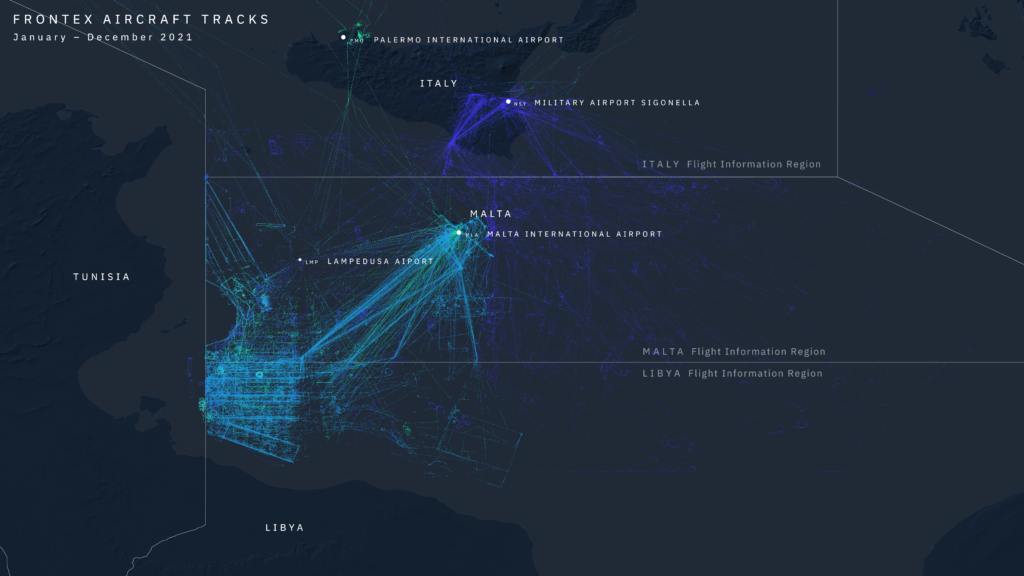
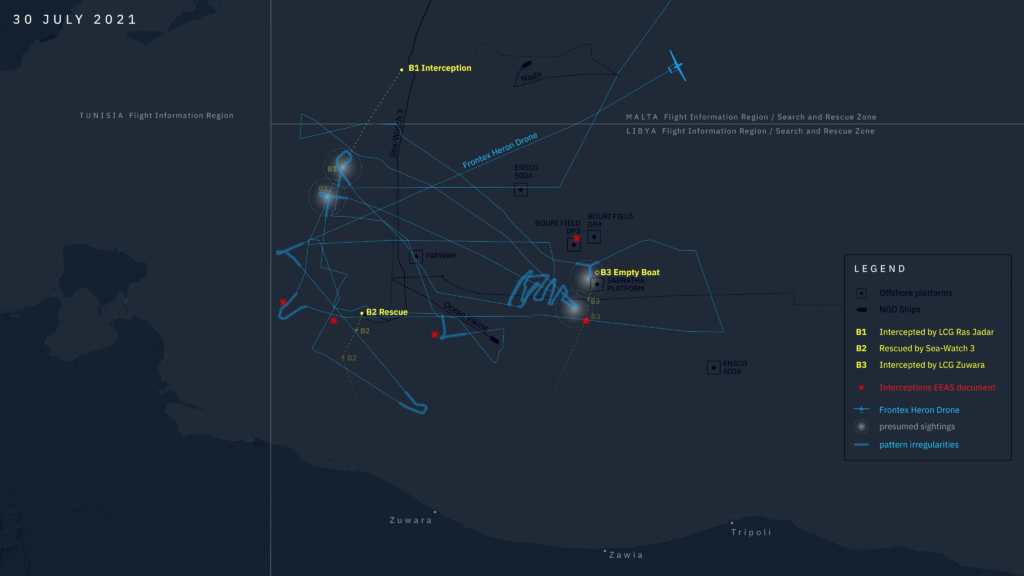
    The EU border agency Frontex provides aerial surveillance, as Libya itself has neither aircraft nor helicopters. Critics describe this interplay as “pullbacks”, in reference to the term “pushback”, which denotes the unlawful direct return of people to Libya by Frontex or coastguards from EU states.

    The EU now intends to establish the same system in eastern Libya as well – even though the two parts of the country, with their political centres in Tripoli and Benghazi, have been embroiled in a civil war since the fall of Muammar al-Gaddafi in 2011, which repeatedly flares up. The architect of this mirrored system is the military mission Irini, through which EU states have been operating off the eastern Libyan coast since 2021. However, as in Tripoli, the concrete establishment of a maritime control centre in Benghazi will be carried out by Italy, which has applied to Irini for a “quick impact project”. The possibility of such “quick impact projects” was provided for the first time in Irini’s mandate, renewed earlier this year. The advantage is that decisions and implementation of measures take place via shorter channels.

    The European External Action Service in Brussels is now expected to conclude an agreement with Italy’s Ministry of Foreign Affairs for the installation of an MRCC in Benghazi. Start-up funding of €3 million can then be drawn from the “European Peace Facility”. This was confirmed to “nd” by an EU official upon enquiry. This fund finances military and defence-related measures within the framework of the Common Foreign and Security Policy – such as the common costs of EU military operations or arms deliveries and training programmes for partner armed forces.

    However, Italy is to bear the lion’s share of the costs, of an as yet unknown amount, for the 18-month implementation phase. This also includes the installation of a tower with radar and surveillance technology, which is to be erected in Tobruk in eastern Libya – a main point of departure. This and other equipment delivered is to be taken over by the responsible Libyan authorities after the end of the project.

    The background to the Italian initiative is apparently the shift of the Libyan migration route from the west, where the coastguard is intercepting increasing numbers of people, to the more dangerous waters in the east. There, people from war-torn Sudan in particular are currently attempting to reach Crete – because in Libya, too, Black people are victims of hate crimes and abuse.

    Arrivals from eastern Libya have increased by around 60 per cent compared with 2024, amounting to more than 5,000 people in total. Almost as many people on the Tobruk–Crete route come from Egypt, which has for years successfully prevented crossings to Europe. The third-largest group among those departing by boat from the region are Bangladeshis, followed by Pakistanis.

    For Irini and its “lead nation” Italy, the shift of the migration route to eastern Libya is inconvenient. The EU military mission is primarily intended to enforce the UN arms embargo on Libya at sea, monitor illegal oil exports from the country, collect information on smuggling networks, and support the build-up of the Libyan coastguard and navy.

    The government in Rome, however, saw the small EU fleet and its reconnaissance aircraft off Libyan waters as an incentive (“pull factor”) for departures of boat refugees from Libya, and insisted on renaming the mission Sophia, which ran until 2021, to Irini and restricting the area of operations to waters off eastern Libya.

    This Irini area is now being crossed by the increasing flight movements. The number of distress-at-sea incidents there is reportedly over 100 this year. Although this was supposed to be excluded as far as possible under the new mandate, Irini has also had to participate in rescue missions itself – and subsequently bring the boat occupants to the European Union.

    Alarm Phone, which operates a hotline for refugees in distress at sea, does not believe that the EU’s new plans are about saving lives. “From a new control centre in Benghazi, as far as search and rescue is concerned, no more can be expected than from the one in Tripoli”, a spokesperson told “nd”. When it comes to urgent cases of distress at sea, help rarely comes from there. The structures in the west and east serve to organise pullbacks.

    The most recent trip by a high-level EU delegation has fuelled these concerns: at the beginning of December, the EU ambassador to Libya, Nicholas Orlando, and the Italian Irini fleet admiral met in Benghazi with the notorious General Khalifa Haftar, who had once launched the civil war against the internationally recognised government in the west. The topic was the expansion of cooperation “including strengthening border security on land and at sea” as well as combating “transnational networks of migrant smuggling and trafficking”.

    A Libyan newspaper reported that the EU delegation had lavishly praised the efforts of the military “to protect its land and sea borders”. Haftar’s sons Khaled and Saddam, who hold high military ranks, are also said to have attended the reception with Ambassador Orlando.

    It remains unclear which eastern Libyan authorities are to benefit from the new “quick impact project” in terms of border surveillance and the operation of control centres. Neither the European Commission nor the Council provided concrete information in response to an enquiry from nd – Italy’s Ministry of Foreign Affairs did not respond at all. An EU official did state, however, that an MRCC in Benghazi would have to be set up as a civilian centre. Presumably, however, it will be run by military structures and militias connected to them – as is also the case in western Libya in the EU-funded SIBMMIL project.

    This would also mean that the eastern Libyan Tariq Bin Ziyad Brigade (TBZ) would benefit from the new MRCC. Human rights organisations accuse it of war crimes, torture and violence against migrants. The militia is said to have been responsible in mid-October for an armed attack on a boat carrying refugees – at the time when a delegation from eastern and western Libya was visiting Frontex headquarters and subsequently the Commission in Brussels. Officially, the Commission declined to comment substantively on this “technical dialogue” – unofficially, however, “nd” learned that members of the coastguard, border troops and the Department for Combating Illegal Migration (DCIM) from the east took part.

    As is customary with such projects, a feasibility study must first be carried out for the maritime control centre in Benghazi and the watchtower in Tobruk, after which the procurement procedure will be prepared. Implementation then requires a contract with the authorities in Benghazi, which would probably – as already in the SIBMMIL project in western Libya – be signed by Italy. Only then can equipment be delivered and training measures officially begin.

    However, a first such training course for MRCC operators already took place at the end of September 2025 at an Italian naval base in Taranto in Apulia – initially with the location and date kept confidential. It presumably conveyed knowledge of maritime IT and navigation systems as well as the associated technical terminology in English.

    The German Bundeswehr is with its navy also part of Irini – currently with soldiers at the command headquarters in Rome and a reconnaissance aircraft. Germany is not currently involved in the “support for capacity-building” or the training of the Libyan coastguard or navy, according to a response to an enquiry from “nd”. Whether this will also apply in future cannot be inferred from the reply: in any case, the Bundeswehr does not intend to conduct “training on site” or train Libyan military personnel in Germany – participation in courses in Italian Taranto, however, would not be ruled out.

    ▻https://digit.site36.net/2026/01/06/eu-doubles-pullback-system-in-libya-renegade-benghazi-also-to-receive-
    #pull-backs #MRCC #Libye #externalisation #frontières #contrôles_frontaliers #migrations #réfugiés #gardes-côtes_libyens #Frontex #surveillance_aérienne #Tripoli #Benghazi #Italie #European_Peace_Facility #technologie #Tobruk #Crète #Irini

  • #Libye : « L’ensemble de l’appareil sécuritaire a compris que l’immigration rapporte beaucoup d’argent », rappelle un chercheur libyen

    Les ONG estiment que 20 000 migrants sont aujourd’hui détenus dans des prisons en #Libye. Ces exilés y subissent toutes sortes d’#abus : #traite, #torture, #travail_forcé, #extorsion et conditions de détention intolérables. Malgré ces faits, le gouvernement libyen reçoit toujours l’#aide de l’#Union_européenne pour retenir les migrants et les empêcher de rallier l’Europe. Après avoir accumulés les preuves depuis des années, un militant et chercheur libyen brise le silence.

    #Tarek_Lamloum a recueilli les témoignages de migrants interceptés en mer et dans le désert par les gardes-frontières. Il visite régulièrement les #centres_de_détention.

    Ce chercheur qui préside le Centre d’études de Benghazi sur les migrants et les réfugiés dénonce une #corruption généralisée au sein des services sécuritaires : « L’ensemble des appareils sécuritaires a compris que l’immigration leur rapporte beaucoup d’argent. Ces appareils sont en concurrence entre eux. Qui, parmi eux, devrait gérer les migrants ? Et il y a au moins six appareils sécuritaires qui interviennent sur ce dossier. »

    Tout le monde ferme les yeux

    Tarek Lamloum raconte les confiscations des téléphones portables, les vols d’argent des migrants, parfois même le vol de leurs habits et chaussures dès qu’ils sont interceptés en mer par les gardes-côtes.

    Les #exactions et les #vols des migrants sont devenus la norme, explique le chercheur, et les autorités libyennes et européennes ferment les yeux : « Le ministre de l’Intérieur à Tripoli est lui-même impliqué dans cette affaire, il sait très bien ce qui se passe dans les centres de détention qu’il est censé gérer. C’est lui le premier responsable des #gardes-côtes_libyens et des #gardes-frontières. C’est une première inédite : un ministère de l’intérieur qui intervient pour garder les frontières. Normalement, c’est du ressort de l’armée. »

    Malgré ces exactions, le nombre de migrants en Libye a augmenté de 4% depuis le début de l’année, estime l’Organisation internationale des migrations (OIM). En 2024, 200 000 migrants avaient franchi la Méditerranée depuis les rivages d’Afrique du Nord.

    ▻https://www.infomigrants.net/fr/post/64932/libye--lensemble-de-lappareil-securitaire-a-compris-que-limmigration-r
    #business #complexe_militaro-industriel

  • Torna in Italia, con visto di ingresso, “A”, rifugiato sudanese respinto nel 2018

    “A” arriva in Italia oggi, 25 dicembre, con un volo di linea e un regolare visto di ingresso ottenuto nell’ambito del procedimento giudiziale, dopo essere rimasto 6 anni privo di ogni forma di protezione. Così ha deciso il Tribunale Civile di Roma. Ecco la storia raccontata dai suoi avvocati e avvocate. Esiste infatti un diritto che non può essere bloccato dai “respingimenti collettivi”.

    Era stato riportato in Libia insieme a più di 270 persone dal mercantile Asso 29 con il
    sostegno dalle autorità italiane. Il Tribunale Civile di Roma ha riconosciuto la illegittimità di questa condotta, stabilendo il diritto di «A» a entrare in Italia.

    Questo arrivo ha un eccezionale significato simbolico: rende effettivo il diritto di asilo sancito dalla Costituzione, sistematicamente violato dalle pratiche di respingimento nel Mediterraneo dove le autorità italiane, anche con la complicità di società private, ostacolano l’arrivo via mare di coloro che cercano protezione in Europa.

    «A» faceva parte di un gruppo di oltre 270 persone respinte illegalmente in Libia tra il 30 giugno e il 2 luglio 2018 tramite il mercantile italiano Asso 29 di proprietà della Augusta Offshore, con sede a Napoli. L’episodio è stato eseguito su ordine e con il coordinamento delle autorità italiane operanti in Libia. Il Tribunale civile di Roma ha accertato la dinamica illecita del respingimento, avvenuto in violazione dei princìpi sanciti dalla giurisprudenza delle corti internazionali che avevano già condannato l’Italia per quanto accade nel Mediterraneo. L’intercettazione dei migranti e il successivo respingimento illegittimo – ha inoltre accertato il Tribunale – sono il risultato del contributo logistico, di supporto e coordinamento fornito delle autorità italiane. Questa condotta ha quindi violato le “obbligazioni positive” che impongono agli Stati di prevenire atti di tortura o trattamenti inumani.

    Durante le operazioni di salvataggio, le autorità intervenute e i comandanti delle navi coinvolte devono sempre garantire che i naufraghi siano sbarcati in un luogo sicuro, indipendentemente da chi coordini effettivamente le attività di soccorso. Nel caso della Asso 29, infatti, questo principio non viene meno neppure se intervengono le autorità libiche o se la richiesta di soccorso proviene da esse, come già affermato dalla Corte di Cassazione nella sentenza sul caso della Asso 28 (della medesima società armatrice).

    L’arrivo di «A» è il risultato di una battaglia legale che ha portato il Tribunale di Roma a ribadire un principio fondamentale: le persone respinte devono vedersi reintegrato il loro diritto all’asilo mediante la possibilità di entrare materialmente in Italia e presentare la domanda di protezione internazionale. Solo così si può evitare il prodursi di uno svuotamento degli obblighi di protezione. Il caso è stato seguito da un ampio collegio difensivo () dell’Asgi con il sostegno del progetto Oruka1 dell’associazione e del Josi&Loni Project. Insieme queste associazioni hanno ricostruito e documentato l’evento e sono riuscite a ottenere finalmente giustizia, seppure le sentenze siano state appellate. Ancora molte delle persone respinte si trovano fuori dall’Unione europea senza alcuna forma di protezione.
    (
    ) Di cui fanno parte i seguenti avvocati: Giulia Crescini, Cristina Laura Cecchini, Lucia Gennari, Luca Saltalamacchia, Salvatore Fachile, Ginevra Maccarrone, Loredana Leo.

    DICHIARAZIONI DELLE LEGALI E DELLE ASSOCIAZIONI

    “Il Tribunale di Roma con le decisioni sul caso Asso 29 ha messo in luce la palese illegittimità di quello che è tutt’altro che un caso isolato. Ogni giorno nel Mediterraneo le autorità italiane realizzano un contributo fondamentale affinché le persone vengano intercettate e riportate in Libia spesso con la collaborazione di attori privati che realizzano la condotta materiale illecita di riconsegnare le persone in fuga alle autorità libiche”, hanno affermato Cristina Laura Cecchini e Lucia Gennari del progetto Sciabaca e Oruka di Asgi.

    “Senza la fondamentale attività di ricostruzione e documentazione dei fatti del JL project e dei suoi attivisti non sarebbe stato possibile fare giustizia. Questo ci ricorda come i diritti delle persone, soprattutto nel Mediterraneo, necessitano di quella fondamentale attività di monitoraggio e documentazione che oggi le autorità italiane vorrebbero ostacolare anche attraverso la criminalizzazione delle organizzazioni umanitarie che operano i soccorsi in mare” aggiungono Giulia Crescini e Ginevra Maccarrone del collegio difensivo. “«A»è il primo ad ottenere giustizia. Il primo tra oltre seicento persone che il JL Project ha rintracciato e identificato come vittime di respingimenti illegali nei lager libici compiuti dal governo italiano. Il suo arrivo, oggi, è un meraviglioso inizio”, commenta Sarita Fratini del JL Project.

    La condotta tenuta dallo Stato italiano, dall’armatore e dal capitano della nave ha determinato la violazione di numerose norme di diritto interno, internazionale e comunitario e dei diritti fondamentali dei cittadini stranieri sottoposti a rimpatrio. Come è emerso nell’ambito del procedimento le autorità italiane hanno determinato l’intercettazione di persone in fuga dalla Libia e hanno fornito un contributo essenziale che ha determinato il respingimento operato dal Comandante della nave Asso 29 che ha ricondotto i migranti nel porto di Tripoli. Le autorità italiane, attraverso una serie concatenata di comportamenti illegittimi, hanno reso possibile il respingimento. Tali condotte sono state realizzate nonostante la piena consapevolezza degli abusi e delle violazioni sistematiche che avvengono nei centri di detenzione libici e del rischio di refoulement nel Paese di origine a cui i migranti sono esposti in Libia.

    Infatti tra il 30 giugno e il 2 luglio 2018 con il materiale sostegno delle autorità italiane, la “guardia costiera libica” per mezzo di una delle motovedette fornitegli dall’Italia ha effettuato una serie di intercettazioni in mare. Nel corso delle operazioni coordinate dalle autorità italiane era presente anche la Nave Duilio che, nonostante il sovraffollamento della motovedetta libica e le condizioni meteo in arrivo decideva di non effettuare il soccorso per non portare le persone in Italia. A seguito dell’avaria della motovedetta libica la nave Caprera della Marina Militare ordinava alla Asso 29 di intervenire. Tutte le persone salite a bordo della nave della società privata venivano ricondotte in Libia. Per tali motivi e per gli specifici diritti e obblighi violati, la situazione è stata dichiarata illegittima dal Tribunale di Roma e ha portato all’accertamento del diritto all’ingresso di «A».

    Quanto avvenuto il 25 dicembre a Fiumicino è facilmente comparabile con quello che ha portato la Corte europea dei diritti dell’uomo a condannare l’Italia nel caso Hirsi Jamaa e altri. Si tratta di una situazione estremamente comune ed ancora oggi tristemente attuale nel Mediterraneo dove quotidianamente persone intercettate vengono respinte in Libia con il supporto fondamentale dell’Italia.

    Il diritto di ingresso sul territorio come presupposto necessario per l’esercizio del diritto di asilo. Il respingimento ha in primo luogo determinato l’impossibilità per i cittadini stranieri di chiedere asilo, in violazione della Convenzione di Ginevra e dell’articolo 10 della Costituzione italiana. La limitazione della libertà di circolazione ha infatti come diretta conseguenza il mancato accesso alla protezione internazionale e all’asilo. Il presupposto necessario del diritto di asilo è evidentemente il diritto di accesso al territorio che è stato negato ai cittadini stranieri attraverso il respingimento in questione.

    Il divieto di respingimenti collettivi. Per la dinamica del respingimento è evidente che in nessun momento le autorità italiane, seppur responsabili dell’operazione, hanno condotto un’analisi della situazione individuale dei cittadini stranieri per valutare l’esistenza di rischi connessi al rimpatrio. L’assenza di questa valutazione determina la violazione del divieto di respingimenti collettivi stabilito dall’articolo 4 del protocollo addizionale 4 alla Convenzione europea per i diritti umani e dell’articolo 19 del Testo unico sull’immigrazione che vieta il rimpatrio verso uno Stato in cui la persona rischia di subire torture o persecuzioni. Oltre ai rischi corsi in Libia, le autorità italiane avrebbero dovuto valutare anche i rischi connessi a un eventuale rimpatrio dalla Libia all’Eritrea, Paese di origine dei ricorrenti. Inoltre occorre tenere presente che il respingimento collettivo verso uno Stato come la Libia, impedisce alla radice qualunque accesso alla giustizia e qualunque diritto a vedere la propria posizione esaminata in maniera effettiva da un organo indipendente.

    La violazione del divieto di tortura e trattamenti inumani e degradanti. Come dimostrato dalle vicende dei ricorrenti, il respingimento ha determinato la loro esposizione al rischio di tortura e trattamenti inumani e degradanti, vietati dall’articolo 3 della Convenzione europea dei diritti dell’uomo. Nel momento in cui è avvenuto il respingimento, erano ben note le condizioni a cui sarebbero stati sottoposti i naufraghi al loro ritorno in Libia. In proposito, la Corte europea dei diritti umani ha chiarito, nella sentenza del caso Hirsi Jamaa, come la proibizione della tortura sia assoluta e inderogabile: le istanze di controllo della migrazione o le eventuali situazioni di emergenza non legittimano in alcun modo condotte che espongono le persone a tali rischi.

    Il diritto a essere condotti in un luogo sicuro (POS). Le norme internazionali relative al diritto del mare (UNCLOS, Convenzione SAR, Convenzione SOLAS) stabiliscono che i soggetti coinvolti in un soccorso – in questo caso Stato italiano, armatore e capitano della nave – si liberano della loro responsabilità solo conducendo le persone soccorse in un “luogo sicuro”. A questo obbligo corrisponde lo speculare diritto delle persone soccorse. La nozione di luogo sicuro non è limitata alla sola protezione fisica delle persone, ma comprende anche il rispetto dei loro diritti fondamentali, come stabilito dalla Risoluzione 1821 del 2011 del Consiglio d’Europa. Il luogo è quindi da intendersi sicuro ove non sussista il rischio che la persona sia soggetta a tortura, trattamenti inumani e degradanti, dove non è a rischio la sua vita e la sua libertà. Alla luce di questa definizione, Tripoli non può in alcun modo essere considerato un posto sicuro per i cittadini stranieri: sono infatti note le dinamiche sistematiche e istituzionali di detenzione arbitraria, tortura ed estorsione.

    I fatti del 2018. «A» era arrivato nel Paese dopo aver lasciato il Sudan, nel tentativo di trovare protezione. In Libia, tuttavia, ha subìto abusi e gravi violazioni dei propri diritti. Il 30 giugno 2018 aveva così deciso di partire, sperando di riuscire a giungere in Europa e ottenere finalmente protezione.
    Dopo circa un giorno in mare, il gommone sul quale «A» era imbarcato aveva iniziato a mostrare segni di cedimento e la navigazione si era fatta estremamente difficoltosa. Una delle persone a bordo era riuscita a contattare via radio la Guardia costiera italiana e a chiedere soccorso. Le autorità italiane non erano intervenute direttamente nonostante fosse presente in mare anche la nave Duilio della Marina Militare che avrebbe potuto effettuare il soccorso. Al contrario, si erano messe in contatto con la motovedetta libica Zuwarah, che aveva raggiunto il gommone quando questo era già affondato. La Zuwarah aveva operato il salvataggio dellɜ 18 superstiti, tra lɜ quali «A», coadiuvata dall’elicottero della Marina militare italiana Eliduilio.

    Con il supporto e il coordinamento delle autorità italiane la Zuwarah, donata ai libici dall’Italia, aveva portato a termine ulteriori intercettazioni con un conseguente incremento del numero di persone a bordo della motovedetta (262 secondo il resoconto della stessa Augusta Offshore nel corso del giudizio). La motovedetta libica, a causa del sovraffollamento e delle condizioni meteomarine avverse, non poteva proseguire la navigazione. Le autorità italiane a bordo della nave militare Caprera, di stanza nel porto di Tripoli, diedero istruzione al comandante della Asso 29 di prestare assistenza alla Zuwarah. L’imbarcazione privata era in quel momento sulla rotta che da Tripoli la conduceva alla piattaforma petrolifera Bouri Field, tra le più grandi del Mediterraneo.

    La Asso Ventinove giunse sul posto, dove era presente anche la nave della Marina Militare italiana di stanza a Tripoli “Duilio”, che a sua volta agiva seguendo le indicazioni provenienti dalla Marina italiana. I passeggeri furono così trasferiti sull’imbarcazione privata. Quando le operazioni di trasbordo si conclusero, la Asso Ventinove si diresse verso Tripoli, trascinando a rimorchio anche la motovedetta libica. A bordo della Asso Ventinove salì anche un ufficiale libico, che, alla presenza del capitano della nave, comunicò ai naufraghi che se non avessero protestato sarebbero stati condotti in Italia. L’ufficiale, per tutta la traversata, si occupò dell’organizzazione dei naufraghi. Il 2 luglio la nave arrivò dinanzi al porto di Tripoli dove consegnò lɜ naufraghɜ alle autorità libiche che li condussero a terra su imbarcazioni più piccole. La Asso Ventinove, terminati i trasbordi, riprese la sua rotta originaria.

    Dal procedimento giudiziale sono emerse le seguenti indiscutibili circostanze:

    - Le intercettazioni dei naufraghi da parte dell’autorità libica sono il risultato dell’attività di supporto e coordinamento delle autorità italiane. Sono le stesse che hanno effettivamente rintracciato le imbarcazioni in distress e che, nonostante la vicinanza, hanno scientemente deciso di non intervenire facilitando l’arrivo della motovedetta libica per evitare di essere costrette a portare le persone in Italia.
    - La #Asso_29 è intervenuta su richiesta delle autorità italiane che, come quotidianamente accade nel Mediterraneo, forniscono istruzioni dichiarando formalmente di agire “per conto” delle autorità libiche.
    - Le autorità italiane avrebbero dovuto intervenire in adempimento alle obbligazioni positive imposte dalla legge ed evitare che le persone fossero riportate in Libia.

    Cosa accadde ai naufraghi ricondotti in Libia? Dopo lo sbarco «A» e le altre persone respinte furono arbitrariamente detenute in diversi centri: Tarik Al Sikka, Zintan, Tarik Al Matar, Gharyan. Tutti – uomini e donne – furono sottopostɜ a condizioni di vita atroci: sovraffollamento, cibo e acqua insufficienti, condizioni igieniche drammatiche e scarse possibilità di uscire all’aria aperta. In queste condizioni furono maltrattatɜ, abusatɜ, fu loro estorto denaro, assistettero a omicidi e torture.

    ▻https://www.pressenza.com/it/2024/12/torna-in-italia-con-visto-di-ingresso-a-rifugiato-sudanese-respinto-nel-2

    #justice #Italie #refoulement #Libye #pull-back #migrations #réfugiés #asile #Méditerranée #réfugiés_soudanais #refoulements_collectifs #illégalité #sauvetage #port_sûr #Asso_28 #gardes-côtes_libyens #Hirsi_Jamaa #droit_d'asile

  • #Frontex spends half a billion on aerial surveillance, new research shows more involvement in pullbacks

    On the 20th anniversary of the founding of Frontex, new details about its complicity with the Libyan Coast Guard have come to light. Activists and lawyers are protesting and taking legal action.

    The European border agency Frontex has invested over €500 million in aerial surveillance in the Mediterranean region since 2017. This is reported by the Italian newspaper “Altreconomia” and complements new investigations by the Liminal research project. Its research shows that the surveillance equipment is not used to protect people at sea, but to force them back to Libya or Tunisia.

    Liminal was founded two years ago at the University of Bologna for the forensic investigation of border violence. In an exhibition currently on display in Paris, Liminal documents at least 240 new cases in which Frontex reconnaissance flights specifically reported boats in the central Mediterranean to the Libyan or Tunisian Coast Guards, who then took the refugees back to the North African countries against their will. Between 2019 and 2023 alone, over 27,000 people were affected by such pullbacks.

    Liminal’s research is based on 319,000 data records from the “Joint Operation Reporting Application” (JORA), Frontex’s internal database system. This is where the agency records all of its activities, including in the central Mediterranean. In a total of 473 cases, Frontex detected boats carrying refugees on their way to Europe before Libyan or Tunisian units intercepted them and forced them to return. The research shows that these routines are not random, but that the reconnaissance flights as part of the Frontex operation “Themis” are used strategically for migration defence.

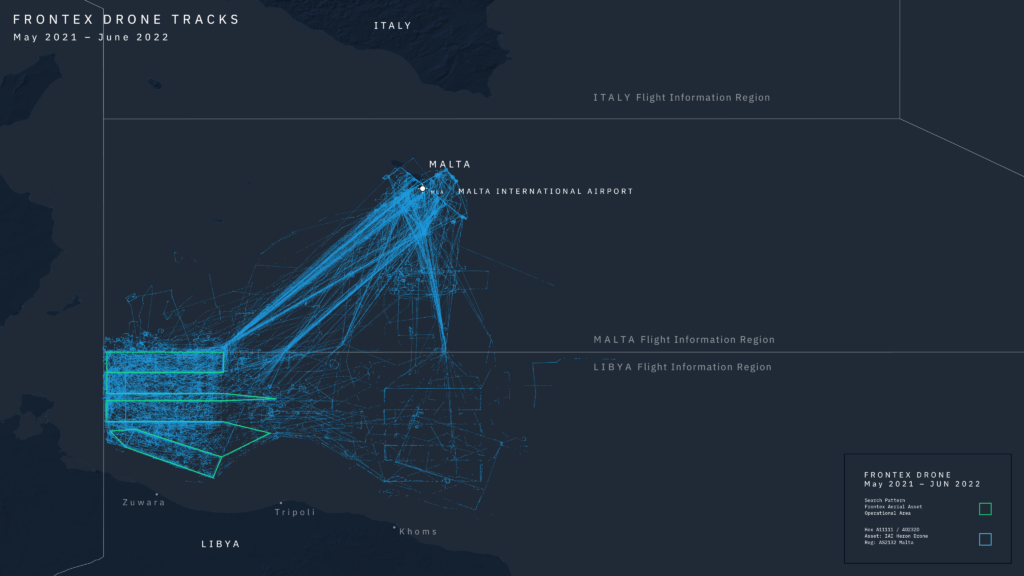
    A significant part of Frontex’s surveillance work is carried out by drone missions. Among others, the border agency uses two “Heron” drones, produced by the Israeli defence company Israel Aerospace Industries, which are also used for military purposes in the Gaza Strip. One of these drones is stationed in Malta and another in Crete. Frontex tested another drone from Israel in 2019, but this “‘Hermes”’ suffered a total loss after a few months.

    Using JORA datasets from 2016 onwards, the Liminal researchers were able to reconstruct a significant number of cases in which the Frontex surveillance service recorded boats before they were turned back to Libya or Tunisia. These pullbacks are carried out in cooperation with the Libyan Coast Guard, which has received financial and organisational support from the EU since 2017.

    A new set of JORA data requested by Liminal via a Freedom of Information request shows that surveillance teams in Warsaw, where Frontex is based, analyse images in real time and make decisions on who to notify for pullbacks in North Africa. For Operation “Themis” alone, Liminal documented 473 previously unknown cases in which boats were discovered by Frontex and then pulled back to Libya or Tunisia.

    “The chain of responsibility in these operations is extremely complex”, Giovanna Reder from Liminal emphasises to “nd”. The information gathered by aircraft and drones passes through several instances, from Warsaw to the operations control centres in Italy, Malta and Greece.

    Liminal shows how Frontex conceals the pullbacks by systematically labelling the operations in the JORA datasets as “prevention of departures”. “Frontex is thus continuing a trend that we have been observing for a long time”, says Reder. Accordingly, the agency is also becoming increasingly non-transparent and is disclosing less and less data in response to requests under the Freedom of Information Act.

    The Libyan Coast Guard has long been suspected of severely mistreating intercepted persons and detaining and abusing them in prisons under conditions that violate human rights. Despite ample evidence of the catastrophic conditions in Libyan camps, Frontex has so far shown no inclination to end its cooperation with the Coast Guard. On the contrary: Frontex’s monitoring capacities have been massively expanded in recent years.

    However, Article 46 of the Frontex Regulation, which is relevant to human rights issues, requires the agency to stop such operations if they promote human rights violations, as in Libya or Tunisia, which encourages pogroms against refugees and abandons them in the desert.

    In response to this practice, which violates international law, the legal organisation Front-Lex, together with the group Refugees in Libya, has taken legal action against Frontex before the European Court of Justice. A plaintiff from Sudan, who has been living in Libyan detention under dangerous conditions since 2019, accuses Frontex of having facilitated his forced repatriation and subsequent torture in Libya by sharing location data.

    Front-Lex lawyer Ifatch Cohen demands on behalf of the plaintiff that Frontex take the protection of human rights seriously. In his argumentation, he refers to EU law, according to which the indirect promotion of human rights violations is not permitted. There is already sufficient evidence of Frontex’s co-responsibility for crimes against humanity in Libya, explains Cohen when asked by “nd”. What is needed is not more evidence, but a competent court that grants Frontex victims access to legal protection. “We hope that judge Maria José Costeira will finally allow our case to proceed”, said the lawyer.

    The 24 October 2024 was the 20th anniversary of the founding of Frontex. There were demonstrations, events and actions in several cities in Europe and Africa, including Brussels, Berlin, Bregenz, Innsbruck, Calais and Dakar.

    The Alarm Phone network, which consists of hundreds of volunteers and celebrated its tenth anniversary in October, also met in the Senegalese capital at the beginning of October. Refugees on the Mediterranean can use the emergency number to ask for help. The Alarm Phone forwards these messages to the relevant maritime rescue centres in the central Mediterranean.

    For 3,650 days and nights, they have been on duty, the network explains. During this time, the activists have been alerted to over 8,000 boats “from all corners of the Mediterranean Sea, the Atlantic region or the English Channel”.

    ▻https://digit.site36.net/2024/10/31/frontex-spends-half-a-billion-on-aerial-surveillance-new-research-show
    #pull-backs #Libye #migrations #réfugiés #complexe_militaro-industriel #surveillance_aérienne #Méditerranée #mer_Méditerranée #drones #complexe_militaro-industriel #Joint_Operation_Reporting_Application (#JORA) #Themis #opération_Themis #Heron #Israel_Aerospace_Industries #chaine_de_responsabilité #prévention_des_départs #gardes-côtes_libyens

    • Oltre 27mila naufraghi respinti in Libia e Tunisia grazie a Frontex. La nuova ricerca di Liminal

      Il gruppo di ricerca del centro con sede a Bologna ha analizzato 319mila “stringhe” del database Jora, nel quale l’Agenzia europea registra le proprie attività. Incluse quelle di sorveglianza sul Mediterraneo: in almeno 473 casi le imbarcazioni sono state avvistate prima dell’intervento delle milizie libiche e dei guardiacoste tunisini. Anche grazie all’Heron drone prodotto dalla Israeli aerospace industries, lo stesso utilizzato per le operazioni militari sulla Striscia di Gaza

      L’Agenzia europea Frontex ha collaborato al respingimento verso Libia e Tunisia di almeno 27.288 naufraghi tra il 2019 e il 2023. Lo rivela uno studio inedito realizzato dal progetto Liminal, centro di ricerca con sede a Bologna, visionato in esclusiva da Altreconomia. “In 473 casi l’Agenzia ha individuato la barca tramite i suoi mezzi di sorveglianza prima che questa venisse bloccata dai guardiacoste libici e tunisini -spiega Lorenzo Pezzani, direttore di Liminal-. Non sono ipotesi o accuse rivolte da Ong ma la stessa Frontex che nei suoi database implicitamente ammette che è stata protagonista di queste operazioni”.

      È la prova che la sorveglianza aerea sul Mediterraneo, a cui l’Agenzia ha destinato oltre 500 milioni di euro di budget tra il 2017 e il 2023, non ha come obiettivo il salvataggio delle persone in mare ma quello di evitare che queste arrivino in Europa. Una “verità” che emerge dalle oltre 319mila “stringhe” ottenute e analizzate da Liminal del database in cui Frontex registra le informazioni relative a tutte le sue attività, comprese quelle dei droni. Tra cui anche l’Heron drone, fornito dall’Israel aerospace industries, che oggi viene utilizzato dall’esercito israeliano per le operazioni militari sulla Striscia di Gaza.

      Liminal si è concentrata sui dati contenuti nel Joint operation reporting application (Jora), un database in cui dal 2011 Frontex registra tutti gli eventi di attraversamento irregolare dei confini di cui viene a conoscenza. Le “stringhe” registrate dal settembre 2016 al settembre 2021 sono state ottenute dal giornalista Emmanuel Freudenthal e contenevano con esattezza i luoghi in cui si trovavano le barche nel momento in cui sono state individuate e in molti casi il porto finale di sbarco: in 197 casi le operazioni si concludono con un respingimento verso Libia e Tunisia. Sui dati dal 2021 al 25 gennaio 2023, Frontex ha fornito i dati con ancora meno dettagli, soprattutto con riferimento al porto finale di sbarco. Il motivo? “Comprometterebbe la protezione dell’interesse pubblico”. O forse il rischio di essere chiamati a rispondere delle proprie azioni.

      Infatti, nonostante l’assenza di quelle informazioni, il gruppo di ricerca ha ricostruito incrociando diverse informazioni contenute nel file almeno 218 casi in cui le barche sono state avvistate dagli assetti aerei dell’Agenzia prima che fossero respinte verso le coste libiche e tunisine. Questi eventi sarebbero però solo la punta dell’iceberg:. Dal 25 gennaio 2023 al 2024, infine, l’Agenzia ha negato a Liminal la possibilità di accedere alle informazioni a causa di “nuovi metodi operativi” per cui la divulgazione di questi dati “ostacolerebbe l’efficacia delle operazioni di Frontex”.

      Analizzando l’enorme database di Jora, poi, Liminal ha individuato un’altra criticità. Nel periodo fra gennaio 2021 and gennaio 2023 viene introdotta una nuova operazione, “Fsc aerial surveillance”, in cui sono presenti 1.580 casi per i quali come “reporting country” viene indicata la Polonia. L’Fsc è il Centro di sorveglianza che si trova a Varsavia, sede centrale di Frontex, in cui i membri dell’European monitoring team (Emt) analizzano le immagini trasmesse in tempo reale dai velivoli dell’Agenzia. Di questo team fanno parte anche membri delle forze dell’ordine dei Paesi membri, tra cui anche la Guardia di finanza e la Guardia costiera italiana. Fra tutti i casi categorizzati come “FSC aerial surveillance”, i ricercatori di Liminal sono riusciti a individuarne 240 che sono elencati anche come casi di avvistamento avvenuti nell’ambito dell’ operazione Themis che Frontex conduce nel Mediterraneo Centrale, e che si poi sono conclusi con un respingimento. “Anche se in assenza di altri dati non ci è ancora possibile dire molto di più su questi casi, sono tuttavia interessanti perchè rivelano la complessa catena decisionale che caratterizza queste operazioni -spiega la ricercatrice di Liminal Giovanna Reder-. Le informazioni trasmesse da un veivolo che vola a pochi chilometri dalla Libia vengono inviate tramite satellite ai piloti di Airbus che stanno a Malta, alla operation room di Varsavia e anche ai vari centri di sorveglianza degli stati membri coinvolti: tutta questa catena di informazioni è opaca e difficile da ricostruire. Quando avviene un avvistamento, chi è che decide che cosa fare e chi contattare, e in base a quali criteri? Rispondere a queste domande è decisivo sotto l’aspetto della responsabilità”, aggiunge Pezzani.

      In decine di casi, inoltre, Liminal ha incrociato i dati del database con quelli resi pubblici dalle Ong tra cui Alarmphone. “Questo ci aiuta a recuperare quelle informazioni che Frontex ha oscurato nel fornirci le stringhe di Jora -aggiunge Reder-. E anche a marcare le differenze tra come l’Agenzia registra le informazioni, penso al numero dei morti, da quella che poi è la realtà sul campo denunciata dai naufraghi alle Ong”. Tra i casi analizzati c’è quello di un’imbarcazione avvistata il 4 gennaio 2023 quando secondo la posizione inviata ad Alarmphone era già nella zona di ricerca e soccorso maltese: Frontex registra quell’evento nel database, quindi è a conoscenza di dove si trovi, ma i naufraghi vengono con molta probabilità intercettati e respinti dalla cosiddetta guardia costiera libica. “Viene registrata come attività di ‘prevention departure’ che in linguaggio burocratico è la maschera per classificare un respingimento”.

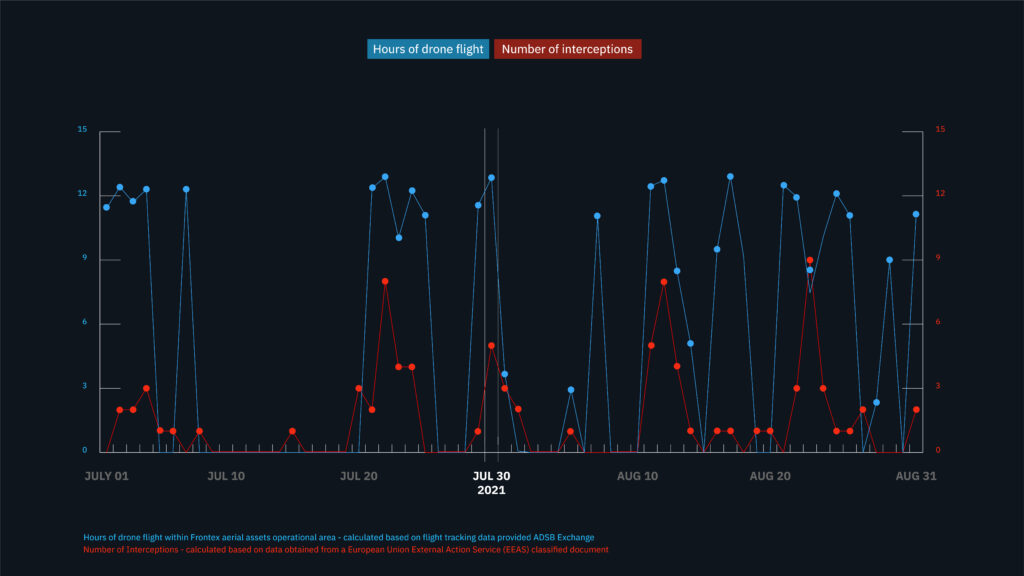
      Questa nuova ricerca di Liminal segue quella pubblicata nell’agosto 2022 in collaborazione con Human rights watch (Hrw) dal titolo “Airborne complicity” in cui grazie a documenti inediti si ricostruiva una “chiara correlazione” tra i voli di Frontex e il tasso di intercettazioni da parte della Guardia costiera libica. “Un andamento che suggerisce e rinforza il fatto che vi sia una collaborazione sistematica tra l’Agenzia e le ‘milizie libiche’, come tra l’altro è emerso anche in diverse inchieste giornalistiche”, sottolinea Reder. E come ha ammesso anche lo stesso direttore esecutivo di Frontex Hans Leijtens che nel febbraio 2024 ha ammesso che in almeno 2.200 casi la posizione delle imbarcazioni è stata inviata alla Guardia costiera libica tra il 2020 e il 2023.

      Anche a seguito di quelle dichiarazioni, le Ong Front-Lex e Refugees in Libya hanno deciso di portare Frontex di fronte alla Corte di giustizia dell’Unione europea per chiedere ai giudici di fermare la collaborazione con le autorità libiche. Il ricorrente è un 29enne di origini sudanesi, malato di diabete, bloccato in Libia dal 2019 e oggi in grave pericolo anche per la sua condizione di salute. “Il fatto che Frontex condivida la posizione con le milizie libiche riduce le possibilità che lui raggiunga l’Europa e lo espone a tortura e trattamenti degradanti -spiega Ifatch Cohen, avvocato che per Front-lex ha promosso la causa-. Diversi rapporti provano come tutti coloro che vengono respinti subiscono detenzione arbitraria e sono quindi sottoposti alla violazione dei loro diritti basilari”. In questo quadro, l’Agenzia dovrebbe fermare di condividere le informazioni ottenute attraverso i suoi velivoli. “Non è necessario che la sua attività provochi direttamente le lesioni subite dal ricorrente: l’articolo 46 del regolamento prevede infatti che le operazioni vengano fermate anche qualora favoriscano anche indirettamente la violazione dei diritti umani”, aggiunte l’avvocato Cohen.

      Gli avvocati hanno chiesto alla Corte di esprimersi con un giudizio d’urgenza perché il ricorrente rischia la vita. Ma Frontex si è opposta. “In altri casi presentati da potenziali vittime, la Corte ha rigettato i casi e non li ammessi perché non era ‘certo’ che i richiedenti, una volta al mare, sarebbero avvistati dall’Agenzia e poi respingi illegalmente -continua Cohen-. Ci aspettiamo forse che la persona bloccata in Libia produca un giudizio mostrando un biglietto di una nave con cui ha tentato di raggiungere l’Europa? Spero che i giudici cambino il loro approccio e adottino una decisione in conformità con la legge. Anche se c’è l’1% delle possibilità che qualcuno subisca un respingimento e di conseguenza sia vittima di tortura gli va riconosciuta la possibilità di ricorrere di fronte a un giudice”.

      A sorreggere tutta la “macchina dei respingimenti” ci sono poi le grandi multinazionali, spesso aziende legate all’industria militare, che garantiscono a Frontex i velivoli. Come raccontato su Altreconomia l’importo dei bandi pubblicati dall’agenzia con riferimento a servizi di sorveglianza aerea passa da 1,6 milioni di euro nel 2017 a 172 milioni di euro nel 2023. Con un numero sempre più ampio di soggetti interessati a queste tipologie di commesse. Tra gli apripista troviamo l’italiana Leonardo Spa (già Finmeccanica), la prima nel 2018 a fornire un drone per Frontex. Ma il progetto di ricerca Liminal si concentra soprattutto sui contratti siglati con le israeliana Elbit Systems (Hermes 900 drone) e l’Israeli aerospace industries (Iai) per l’Heron drone (in questo caso un subappalto da parte di Airbus).

      “Lo stesso che oggi sorvola il Mediterraneo viene utilizzato anche per le operazioni militari su Gaza -sottolinea Pezzani-. L’ennesima inquietante prova della compenetrazione dell’industria militare nel settore del controllo dei confini”. Il 24 ottobre Frontex ha festeggiato i primi vent’anni di vita, costellati da scandali e un ruolo centrale nell’esternalizzazione dei confini europei, nella totale impunità. C’è poco da festeggiare.

      ▻https://altreconomia.it/oltre-27mila-naufraghi-respinti-in-libia-e-tunisia-grazie-a-frontex-la-

      #Fsc_aerial_surveillance #European_monitoring_team (#Emt)

  • Challenging the Complicity of Frontex’s Aerial Surveillance Activities in Crimes Against Humanity

    #front-LEX and #Refugees_in_Libya filed a legal notice pursuant to Art. 265 TFEU requesting Frontex’s Executive Director, Mr. Hans Leijtens, to partially terminate the Agency’s aerial surveillance activities in the ‘pre-frontier area’ in the Central Mediterranean.

    To prevent asylum seekers fleeing crimes against humanity in Libya from reaching the EU, Frontex systematically and unlawfully transmits the geolocalisation of refugee boats at high seas to the Libyan Coast Guard/Libyan Militia. Every day, Frontex allows for the systematic interception and ’pulling back’ of refugees to Libya, from where they have managed to escape by the skin of their teeth, and where they are subjected once more to crimes against humanity. Now, front-LEX, on behalf of X.Y. a refugee trapped in Libya, brings an unprecedented legal challenge against Frontex’s airborne complicity.

    Between 2021 and 2023, Frontex has shared 2,200 emails communicating the exact geolocalisation data of refugee boats with Libyan actors to enable their unlawful interception and forcible return back to Libya. There, the ‘pulled back’ refugees are arbitrarily detained and subjected to crimes against humanity of, inter alia, murder, enforced disappearance, torture, enslavement, sexual violence, rape, and other inhumane acts. It is Frontex’s sharing of geolocalisation data which enables the commission of these crimes – making the Agency complicit in the ongoing and systematic attack directed against refugees and asylum seekers in the Central Mediterranean.

    Frontex’s complicity in these ‘pullbacks’ and ensuing crimes against humanity committed against refugees has been well-documented by leading human rights organisations, UN organs, and investigative journalists. Now, based on this clear-cut evidence, front-LEX and Refugees in Libya filed an unprecedented legal notice challenging the Agency’s airborne complicity in crimes against humanity committed against people on the move.

    ▻https://www.front-lex.eu/frontex-complicity-crimes-against-humanity

    #Frontex #complicité #justice #surveillance_aérienne #asile #migrations #réfugiés #contrôles_frontaliers #géolocalisation #gardes-côtes_libyens #crimes_contre_l'humanité #Méditerranée #mer_Méditerranée #pull-back #pullbacks #poursuite_judiciaire

    • Profugo sudanese intrappolato in Libia fa causa a Frontex: “L’agenzia europea è complice di crimini contro l’umanità”

      Per la prima volta, un richiedente asilo ancora intrappolato in Libia ha potuto presentare una sfida legale contro Frontex – l’agenzia europea per la sorveglianza dei confini terrestri e marini dell’Unione – relativamente alla sorveglianza aerea sul Mediterraneo centrale. Il profugo sudanese ha potuto denunciare “l’esercito” dei pattugliatori europei grazie a Front- Lex, Ong umanitaria olandese, in partnership con l’organizzazione “Rifugiati in Libia”. L’avvocato di Front-Lex, Iftach Cohen, ha presentato una comunicazione legale a Frontex ai sensi dell’articolo 265 TFUE, invitandola a sospendere e interrompere immediatamente tutte le comunicazioni con entità libiche in relazione alle cosiddette “situazioni di pericolo” nel Mediterraneo. Inoltre l’Ong intima che Frontex proibisca all’Italia e a Malta di condividere con i libici i dati di sorveglianza raccolti dagli aerei dell’agenzia europea.

      Si tratta di un’azione legale senza precedenti innanzitutto perchè basata sulla presunta complicità dell’Ue riguardo ai crimini contro l’umanità verificatisi in Libia. In secondo luogo, è la prima volta che un rifugiato ancora intrappolato in Libia senza protezione riesce ad avviare un procedimento per vedere riconosciuti i propri diritti. Il team di Front-Lex ha raccolto prove che evidenziano peraltro come tutti i precedenti direttori – incluso il penultimo, Fabrice Leggeri, oggi candidato alle Europee per il partito di Marine Le Pen – e altre entità di Frontex abbiano ammesso che consegnare la posizione delle imbarcazioni dei rifugiati a entità libiche sia illegale secondo il diritto europeo.

      Dal rapporto della Missione d’inchiesta indipendente sulla Libia del Consiglio per i diritti umani Ue del 23 marzo, i richiedenti asilo intercettati e rimpatriati forzatamente in Libia, una volta risbarcati in Libia, vengono detenuti e diventano “vittime di crimini contro l’umanità“. Frontex giustifica la condivisione con Tripoli del tracciamento delle imbarcazioni di profughi con il proprio obbligo, “ai sensi del quadro giuridico internazionale della Sar”, di trasmettere tutte le informazioni sull’”imbarcazione in pericolo” all’RCC competente della zona di ricerca e salvataggio, che è Tripoli nella maggioranza dei casi.

      Cohen non è d’accordo perchè l’obbligo legale di Frontex di trasmettere informazioni al competente RCC in caso di pericolo ai sensi del diritto marittimo internazionale è solo uno dei tanti obblighi legali dell’Agenzia, come il divieto dei respingimenti collettivi dei richiedenti asilo intercettati in mare in rotta verso Paesi dove si rischiano persecuzioni. “Questi obblighi derivano dalla Carta dei diritti fondamentali dell’Unione Europea che è di natura costituzionale. Abbiamo a questo punto raccolto prove sufficienti per dimostrare che nella zona Sar libica praticamente tutte le imbarcazioni di rifugiati rilevate da Frontex vengono automaticamente classificate come in ‘situazione di pericolo’ in modo tale che Frontex possa trasmettere immediatamente la posizione a Tripoli e astenersi dall’ingaggiare le navi di soccorso delle Ong nelle vicinanze”, spiega Cohen. Le imbarcazioni dei profughi di conseguenza non vengono contattate dagli aerei Frontex come richiede la legislazione dell’Ue per verificare se abbiano bisogno di assistenza.

      “D’altra parte, quando Frontex rileva un’imbarcazione di rifugiati nella zona Sar o nelle acque territoriali di uno Stato membro, come nei casi di Pylos (Grecia) o in Italia a Cutro non classifica i casi che sono chiaramente ‘situazioni di pericolo’ in modo che possa astenersi dall’allertare l’RCC dello Stato membro lasciandogli sufficiente potere e tempo per coinvolgere i libici anche nelle proprie acque territoriali e impedire così lo sbarco in Europa. È una vera e propria strumentalizzazione della ‘situazione di disagio’. Queste non sono persone che hanno telefonino e scarpe alla moda come dice il vostro vice premier Salvini nel descrivere i richiedenti asilo ma persone che subiscono i peggiori abusi contro l’umanità”.

      ▻https://www.ilfattoquotidiano.it/2024/05/30/profugo-sudanese-intrappolato-in-libia-fa-causa-a-frontex-lagenzia-ue-e-complice-di-crimini-contro-lumanita/7568712

      #plainte

  • 2,200 #Frontex #emails to #Libya

    Frontex has shared locations of migrant boats with Libya’s coast guard more than 2,000 times in three years – despite watching them whip, beat and shoot at passengers

    It has long been known that European countries provide support and funding to the Libyan Coast Guard to carry out a controversial mission: intercepting Europe-bound migrants whom EU member states and agencies cannot apprehend directly without breaching international laws.

    Numerous media and NGO reports have detailed the abuse and violence practised by the Libyan Coast Guard against migrants during sea interception and inside the detention centres they are taken to after being brought back to Libya.

    Lighthouse Reports has previously established suspicious patterns of collaboration between EU border agency Frontex and the Libyan Coast Guard, including direct links between Frontex aerial assets spotting boats and their subsequent interception by the coast guard.

    Despite the reports of abuse and torture, Frontex has withheld public criticism of the Libyan Coast Guard. And until now, the extent to which Frontex has shared information with the coast guard, and its internal knowledge of the abuse migrants face after they are intercepted, was unknown.
    METHODS

    Following the publication of Lighthouse investigation Frontex and the Pirate Ship in December, the EU Committee on Civil Liberties, Justice and Home Affairs (LIBE) sent a letter to Frontex Executive Director Hans Leijtens questioning the agency’s collaboration with Libyan actors, including militia, in eastern and western Libya.

    Lighthouse Reports and Der Spiegel gained access to the director’s response to the LIBE Committee’s questions. The email included all Serious Incident Reports (SIRs) relating to the Libyan Coast Guard.
    STORYLINES

    The SIRs reveal three incidents of Frontex aerial surveillance assets witnessing Libyan Coast Guard officers beating people in overcrowded boats at sea. In a separate incident, the agency’s surveillance drone recorded a Libyan officer shooting at a wooden boat to force it to stop.

    The letter from Leitjens meanwhile reveals that Frontex gave away the location of migrant boats to the Libyan Coast Guard approximately 2,200 times, usually via email, in the last three years – despite being aware of the regular instances of violence they commit.

    When confronted with these facts by our team, Frontex said: “The decision to share information about vessels in distress with the Libyan rescue coordination centre, alongside other national centres, is taken with a heavy heart”

    The SIRs contain parts of Frontex’s human rights officer’s recommendations for the agency. The measures proposed range from increasing the sharing of coordinates with NGO rescue ships to involving UN agencies in following the fates of those returned to Libya. Frontex did not comment on whether these recommendations were implemented.

    ▻https://www.lighthousereports.com/investigation/2200-frontex-emails-to-libya

    #partage #localisation #migrations #asile #externalisation #frontières #contrôles_frontaliers #gardes-côtes_libyens #géolocalisation #SIRs #surveillance_aérienne #drones

  • Cassazione, dare i migranti ai guardiacoste di Tripoli è reato

    La consegna di migranti alla guardia costiera libica è reato perché la Libia «non è porto sicuro».

    E’ quanto sancisce una sentenza della Corte di Cassazione che ha reso definitiva la condanna del comandante del rimorchiatore #Asso_28 che il 30 luglio del 2018 soccorse 101 persone nel Mediterraneo centrale e li riportò in Libia consegnandoli alla Guardia costiera di Tripoli. Della sentenza scrive Repubblica.

    Per i supremi giudici favorire le intercettazioni dei guardiacoste di Tripoli rientra nella fattispecie illecita «dell’abbandono in stato di pericolo di persone minori o incapaci e di sbarco e abbandono arbitrario di persone». Nella sentenza viene sostanzialmente sancito che l’episodio del 2018 fu un respingimento collettivo verso un Paese non ritenuto sicuro vietato dalla Convenzione europea per i diritti umani.

    Casarini, dopo Cassazione su migranti pronti a #class_action

    "Con la sentenza della Corte di Cassazione, che ha chiarito in maniera definitiva che la cosiddetta «guardia costiera libica» non può «coordinare» nessun soccorso, perché non è in grado di garantire il rispetto dei diritti umani dei naufraghi, diventa un reato grave anche ordinarci di farlo, come succede adesso. Ora metteremo a punto non solo i ricorsi contro il decreto Piantedosi, che blocca per questo le navi del soccorso civile, ma anche una grande class action contro il governo e il ministro dell’Interno e il memorandum Italia-Libia". E’ quanto afferma Luca Casarini della ong Mediterranea Saving Humans.

    "Dovranno rispondere in tribunale delle loro azioni di finanziamento e complicità nelle catture e deportazioni che avvengono in mare ad opera di una «sedicente» guardia costiera - aggiunge Casarini -, che altro non è che una formazione militare che ha come compito quello di catturare e deportare, non di «mettere in salvo» le donne, gli uomini e i bambini che cercano aiuto. La suprema corte definisce giustamente una gravissima violazione della Convenzione di Ginevra, la deportazione in Libia di migranti e profughi che sono in mare per tentare di fuggire da quell’inferno". Casarini ricorda, inoltre, che di recente la nave Mare Jonio di Mediterranea "di recente è stata colpita dal fermo amministrativo del governo per non aver chiesto alla Libia il porto sicuro. Proporremo a migliaia di cittadini italiani, ad associazioni e ong, di sottoscrivere la «class action», e chiederemo ad un tribunale della Repubblica di portare in giudizio i responsabili politici di questi gravi crimini. Stiamo parlando di decine di migliaia di esseri umani catturati in mare e deportati in Libia, ogni anno, coordinati di fatto da Roma e dall’agenzia europea Frontex.

    E il ministro Piantedosi, proprio ieri, l’ha rivendicato testimoniando al processo a Palermo contro l’allora ministro Salvini. Lui si è costruito un alibi, con la distinzione tra centri di detenzione legali e illegali in Libia, dichiarando che «l’Italia si coordina con le istituzioni libiche che gestiscono campi di detenzione legalmente. Finalmente questo alibi, che è servito fino ad ora a coprire i crimini, è crollato grazie al pronunciamento della Cassazione. Adesso questo ministro deve essere messo sotto processo, perché ha ammesso di avere sistematicamente commesso un reato, gravissimo, che ha causato morte e sofferenze a migliaia di innocenti».

    ▻https://www.ansa.it/sito/notizie/cronaca/2024/02/17/cassazione-dare-i-migranti-a-guardiacoste-di-tripoli-e-reato_cfcb3461-c654-4f3c

    #justice #migrations #asile #réfugiés #frontières #gardes-côtes_libyens #Libye #jurisprudence #condamnation #externalisation #pull-backs #refoulements #push-backs #cour_de_cassation #cassation #port_sûr

    • Sentenza Cassazione: Consegnare gli immigranti alla guardia costiera libica è reato

      La Libia è un paese canaglia: bocciati Minniti, Conte e Meloni. Dice la sentenza della Cassazione, è noto che in Libia i migranti subiscono vessazioni, violenze e tortura. Quindi è un reato violare la legge internazionale e il codice di navigazione che impongono di portare i naufraghi in un porto sicuro

      Il governo italiano (sia questo in carica sia quelli di centrosinistra che avevano Marco Minniti come ministro dell’interno) potrebbe addirittura finire sotto processo sulla base di una sentenza emessa dalla Corte di Cassazione.

      Dice questa sentenza che la Libia non è un porto sicuro, e che dunque non si possono consegnare alla Libia (o favorire la cattura da parte delle motovedette libiche) le persone salvate da un naufragio.

      Dice la sentenza, è noto che in Libia i migranti subiscono vessazioni, violenze e tortura. Quindi è un reato violare la legge internazionale e il codice di navigazione che impongono di portare i naufraghi in un porto sicuro.

      Che la Libia non fosse un porto sicuro era stranoto. Bastava non leggere i giornali italiani per saperlo. La novità è che questa evidente verità viene ora formalmente affermata con una sentenza della Cassazione che fa giurisprudenza. E che, come è del tutto evidente, mette in discussione gli accordi con la Libia firmati dai governi di centrosinistra e poi confermati dai governi Conte e infine dai governi di centrodestra.

      Accordi che si basarono persino sul finanziamento italiano e sulla consegna di motovedette – realizzate a spese del governo italiano – alle autorità di Tripoli. Ora quegli accordi devono essere immediatamente cancellati e in linea di principio si potrebbe persino ipotizzare l’apertura di processi (se non è scattata la prescrizione) ai responsabili di quegli accordi.

      I reati per i quali la Cassazione con questa sentenza ha confermato la condanna al comandante di una nave che nel luglio del 2018 (governo gialloverde, Salvini ministro dell’Interno) consegnò alla guardia costiera libica 101 naufraghi salvati in mezzo al Mediterraneo sono “abbandono in stato di pericolo di persone minori o incapaci, e di sbarco e abbandono arbitrario di persone”. La Cassazione ha dichiarato formalmente che la Libia non è un porto sicuro.

      Tutta la politica dei respingimenti a questo punto, se dio vuole, salta in aria. La Cassazione ha stabilito che bisogna tornare allo Stato di diritto, a scapito della propaganda politica. E saltano in aria anche i provvedimenti recentemente adottati dalle autorità italiane sulla base del decreto Spazza-naufraghi varato circa un anno fa dal governo Meloni.

      Ancora in queste ore c’è una nave della Ocean Viking che è sotto fermo amministrativo perché accusata di non aver seguito le direttive impartite dalle autorità libiche. Ovviamente dovrà immediatamente essere dissequestrata e forse c’è anche il rischio che chi ha deciso il sequestro finisca sotto processo. Inoltre bisognerà restituire la multa e probabilmente risarcire il danno.

      E quello della Ocean Viking è solo uno di numerosissimi casi. Certo, perché ciò avvenga sarebbe necessaria una assunzione di responsabilità sia da parte del Parlamento sia da parte della magistratura. E le due cose non sono probabilissime.

      ▻https://www.osservatoriorepressione.info/sentenza-cassazione-consegnare-gli-immigranti-alla-guardia

    • Italy’s top court: Handing over migrants to Libyan coast guards is illegal

      Italy’s highest court, the Cassation Court, has ruled that handing over migrants to Libyan coast guards is unlawful because Libya does not represent a safe port. The sentence could have major repercussions.

      Handing over migrants rescued in the Central Mediterranean to Tripoli’s coast guards is unlawful because Libya is not a safe port and it is conduct which goes against the navigation code, the Cassation Court ruled on February 17. The decision upheld the conviction of the captain of the Italian private vessel Asso 28, which, on July 30, 2018, rescued 101 individuals in the central Mediterranean and then handed them over to the Libyan coast guards to be returned to Libya.

      The supreme court judges ruled in sentence number 4557 that facilitating the interception of migrants and refugees by the Libyan coast guards falls under the crime of “abandonment in a state of danger of minors or incapacitated people and arbitrary disembarkation and abandonment of people.” This ruling effectively characterizes the 2018 incident as collective refoulement to a country not considered safe, contravening the European Convention on Human Rights.

      NGOs announce class action lawsuit

      Beyond its political implications, the Cassation’s decision could significantly impact ongoing legal proceedings, including administrative actions. NGOs have announced a class action lawsuit against the government, the interior minister, and the Italy-Libya memorandum.

      The case, which was first examined by the tribunal of Naples, focuses on the intervention of a trawler, a support ship for a platform, to rescue 101 migrants who were on a boat that had departed from Africa’s coast.

      According to investigators, the ship’s commander was asked by personnel on the rig to take on board a Libyan citizen, described as a “Libyan customs official”, who suggested sailing to Libya and disembarking the rescued migrants.

      The supreme court judges said the defendant “omitted to immediately communicate, before starting rescue operations and after completing them, to the centres of coordination and rescue services of Tripoli and to the IMRCC (Italian Maritime Rescue Coordination Centre) of Rome, in the absence of a reply by the first,” that the migrants had been rescued and were under his charge.

      The Cassation ruled that, by operating in this way, the commander violated “procedures provided for by the International Convention for the Safety of Life at Sea (SOLAS) and by the directives of the International Maritime Organization,” thus carrying out a “collective refoulement to a port deemed unsafe like Libya.”

      Furthermore, the Cassation emphasized the commander’s obligation to ascertain whether the migrants wanted to apply for asylum and conduct necessary checks on accompanying minors.
      ’Cassation should not be interpreted ideologically on Libya’, Piantedosi

      “Italy has never coordinated and handed over to Libya migrants rescued in operations coordinated or directly carried out by Italy,” Interior Minister Matteo Piantedosi said on February 19, when asked to comment the Cassation’s ruling. “That sentence must be read well — sentences should never be interpreted in a political or ideological manner,” he said.

      Piantedosi contextualized the ruling within the circumstances prevailing in Libya at the time, citing efforts to assist Libya with EU cooperation. He highlighted the government’s adherence to principles governing repatriation activities and concluded by saying “there can be no spontaneity” and that “coordination” is essential.

      ▻https://twitter.com/InfoMigrants/status/1759901204501438649?t=ZlLRzR3-jQ0e6-y0Q2GPJA

  • FROM LIBYA TO TUNISIA : HOW THE EU IS EXTENDING THE PUSH-BACK REGIME BY PROXY IN THE CENTRAL MEDITERRANEAN

    On August 21, 2023, the rescue ship Aurora from Sea Watch was detained by the Italian authorities after refusing to disembark survivors in Tunisia as ordered by the Rome MRCC (Maritime Rescue Coordination Center), a country which by no means can be considered a place of safety.

    This episode is just one example of the efforts of European states to avoid arrivals on their shores at all costs, and to evade their responsibility for reception and #Search_and_Rescue (#SAR). Already in 2018, the European Commission, with its disembarkation platform project, attempted to force sea rescue NGOs to disembark survivors in North Africa. While this project was ultimately unsuccessful as it stood, European states have endeavored to increase the number of measures aimed at reducing crossings in the central Mediterranean.

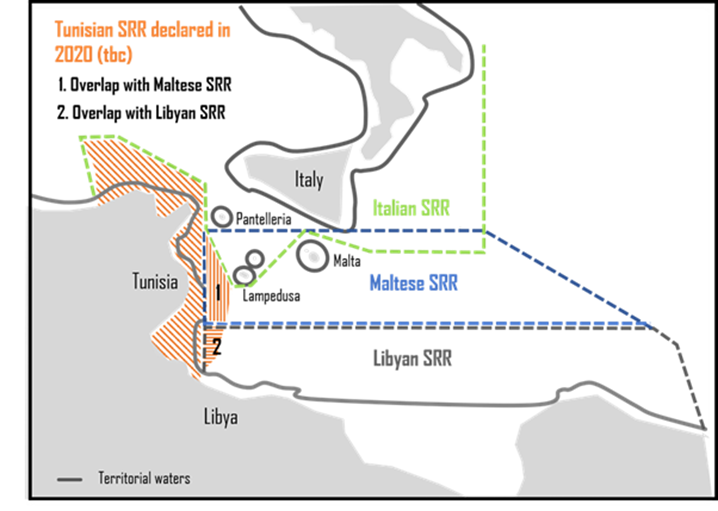
    One of the strategies employed was to set up a “push-back by proxy regime”, outsourcing interceptions at sea to the Libyan Coast guards, enabling the sending back of people on the move to a territory in which their lives are at risk, undertaken by Libyan border forces under the control of the EU authorities, in contravention of principle of non-refoulement, one of the cornerstones of international refugee law. Since 2016, the EU and its member states have equipped, financed, and trained the Libyan coastguard and supported the creation of a MRCC in Tripoli and the declaration of a Libyan SRR (search and rescue region).

    This analysis details how the European Union and its member states are attempting to replicate in Tunisia the regime of refoulement by proxy set up in Libya just a few years earlier. Four elements are considered: strengthening the capacities of the Tunisian coastguard (equipment and training), setting up a coastal surveillance system, creating a functional MRCC and declaring a Tunisian SRR.
    A. Building capacity of the Garde Nationale Maritime
    Providing equipment

    For several decades now, Tunisia has been receiving equipment to strengthen its coast guard capabilities. After the Jasmine Revolution in 2011, Italy-Tunisia cooperation deepened. Under the informal agreement of April 5, 2011, 12 boats were delivered to the Tunisian authorities. In 2017, in a joint statement by the IItalian Ministry of Foreign Affairs and its Tunisian counterpart, the two parties committed to “closer cooperation in the fight against irregular migration and border management,” with a particular focus on the maritime border. In this context, the Italian Minister declared Italy’s support for the modernization and maintenance of the patrol vessels supplied to Tunisia (worth around 12 million euros) and the supply of new equipment for maritime border control. On March 13, 2019, Italy also supplied Tunisia with vehicles for maritime border surveillance, sending 50 4-wheelers designed to monitor the coasts.

    Recently, Germany also started to support the coast guard more actively in Tunisia, providing it with equipment for a boat workshop designed to repair coast guard vessels in 2019. As revealed in an answer to a parliamentary question, in the last two years, the Federal Police also donated 12 inflatable boats and 27 boat motors. On the French side, after a visit in Tunis in June 2023, the Interior Minister Gérard Darmanin announced 25 million euros in aid enabling Tunisia to buy border policing equipment and train border guards. In August 2023, the Italian authorities also promised hastening the provision of patrol boats and other vehicles aimed at preventing sea departures.

    Apart from EU member states, Tunisia has also received equipment from the USA. Between 2012 and 2019, the Tunisian Navy was equipped with 26 US-made patrol boats. In 2019, the Tunisian national guard was also reinforced with 3 American helicopters. Primarily designed to fight against terrorism, the US equipment is also used to monitor the Tunisian coast and to track “smugglers.”

    Above all, the supply of equipment to the Tunisian coastguard is gaining more and more support by the European Union. Following the EU-Tunisia memorandum signed on July 16, 2023, for which €150 million was pledged towards the “fight against illegal migration”, in September 2023, Tunisia received a first transfer under the agreement of €67 million “to finance a coast guard vessel, spare parts and marine fuel for other vessels as well as vehicles for the Tunisian coast guard and navy, and training to operate the equipment.”

    In a letter to the European Council, leaked by Statewatch in October 2023, the European Commission president Ursula von der Leyen highlighted the provision of vessels and support to the Tunisian coast guards: “Under the Memorandum of Understanding with Tunisia, we have delivered spare parts for Tunisian coast guards that are keeping 6 boats operation and others will be repaired by the end of the year.”
    Trainings the authorities

    In addition to supplying equipment, the European countries are also organizing training courses to enhance the skills of the Tunisian coastguard. In 2019, Italy’s Interior Ministry released €11 million to Tunisia’s government for use in efforts to stem the crossing of people on the move from Tunisia, and to provide training to local security forces involved in maritime border control.

    Under the framework of Phase III of the EU-supported IBM project (Integrated Border Management), Germany is also organizing training for the Tunisian coast guards. As revealed in the answer to a parliamentary question mentioned before, the German Ministry of Interior admitted that 3.395 members of the Tunisian National Guard and border police had been trained, including within Germany. In addition, 14 training and advanced training measures were carried out for the National Guard, the border police, and the coast guard. These training sessions were also aimed at learning how to use “control boats.”

    In a document presenting the “EU Support to Border Management Institutions in Libya and Tunisia” for the year 2021, the European Commission announced the creation of a “coast guard training academy.” In Tunisia, the project consists of implementing a training plan, rehabilitating the physical training environment of the Garde Nationale Maritime, and enhancing the cooperation between Tunisian authorities and all stakeholders, including EU agencies and neighboring countries. Implemented by the German Federal Police and the International Centre for Migration Policy Development (ICMPD), the project started in January 2023 and is supposed to run until June 2026, to the sum of 13,5 million EUR.

    Although the European Commission underlines the objective that “the Training Academy Staff is fully aware and acting on the basis of human rights standards” the increase in dangerous maneuvers and attacks perpetrated by the Tunisian coast guard since the increase in European support leaves little doubt that respect for human rights is far from top priority.

    On November 17, 2023, the ICMPD announced on its Linkedin account the inauguration of the Nefta inter-agency border management training center, as a benefit to the three agencies responsible for border management in Tunisia (Directorate General Directorate of Borders and Foreigners of the Ministry of the Interior, the General Directorate of Border Guard of the National Guard and the General Directorate of Customs).
    B. Setting up a coastal surveillance system

    In addition to supplying equipment, European countries also organize training courses to enhance the skills of European coastguards in the pursuit of an “early detection” strategy, which involves spotting boats as soon as they leave the Tunisian coast in order to outsource their interception to the Tunisian coastguard. As early as 2019, Italy expressed its willingness to install radar equipment in Tunisia and to establish “a shared information system that will promptly alert the Tunisian gendarmerie and Italian coast guard when migrant boats are at sea, in order to block them while they still are in Tunisian waters.” This ambition seems to have been achieved through the implementation of the system ISMaris in Tunisia.
    An Integrated System for Maritime Surveillance (ISMaris)

    The system ISMaris, or “Integrated System for Maritime Surveillance”, was first mentioned in the “Support Programme to Integrated Border Management in Tunisia” (IBM Tunisia, launched in 2015. Funded by the EU and Switzerland and implemented by the International Centre for Migration Policy Development (ICMPD), the first phase of the program (2015-2018) supported the equipment of the Garde Nationale Maritime with this system, defined as “a maritime surveillance system that centralizes information coming from naval assets at sea and from coastal radars […] [aiming] to connect the sensors (radar, VHF, GPS position, surveillance cameras) on board of selected Tunisian Coast Guard vessels, control posts, and command centers within the Gulf of Tunis zone in order for them to better communicate between each other.”

    The implementation of this data centralization system was then taken over by the “Border Management Programme for the Maghreb Region” (BMP-Maghreb), launched in 2018 and funded by the EU Emergency Trust Fund for Africa. The Tunisia component, funded with €24,5 million is implemented by ICMPD together with the Italian Ministry of Interior and designed to “strengthen the capacity of competent Tunisian authorities in the areas of maritime surveillance and migration management, including tackling migrant smuggling, search and rescue at sea, as well as in the coast guard sphere of competence.” With the BMP programme, the Tunisian Garde Maritime Nationale was equipped with navigational radars, thermal cameras, AIS and other IT equipment related to maritime surveillance.
    Data exchange with the EU

    The action document of the BMP program clearly states that one of the purposes of ISMaris is the reinforcement of “operational cooperation in the maritime domain between Tunisia and Italy (and other EU Member States, and possibly through EUROSUR and FRONTEX).” Established in 2013, the European Border Surveillance system (EUROSUR) is a framework for information exchange and cooperation between Member States and Frontex, to prevent the so-called irregular migration at external borders. Thanks to this system, Frontex already monitors the coast regions off Tunisia using aerial service and satellites.

    What remains dubious is the connection between IS-Maris and the EU surveillance-database. In 2020, the European Commission claimed that ISMariS was still in development and not connected to any non-Tunisian entity such as Frontex, the European Border Surveillance System (EUROSUR) or the Italian border control authorities. But it is likely that in the meantime information exchange between the different entities was systematized.

    In the absence of an official agreement, the cooperation between Frontex and Tunisia is unclear. As already mentioned in Echoes#3, “so far, it has not been possible to verify if Frontex has direct contact with the Tunisian Coast Guard as it is the case with the Libyan Coast Guard. Even if most of the interceptions happen close to Tunisian shores, some are carried out by the Tunisian Navy outside of territorial waters. […] Since May 2021 Frontex has been flying a drone, in addition to its different assets, monitoring the corridor between Tunisia and Lampedusa on a daily basis. While it is clear that Frontex is sharing data with the Italian authorities and that Italian authorities are sharing info on boats which are on the way from Tunisia to Italy with the Tunisian side, the communication and data exchanges between Frontex and Tunisian authorities remain uncertain.”

    While in 2021, Frontex reported that “no direct border related activities have been carried out in Tunisia due to Tunisian authorities’ reluctance to cooperate with Frontex”, formalizing the cooperation between Tunisia and Frontex seems to remain one of the EU’s priorities. In September 2023, a delegation from Tunisia visited Frontex headquarters in Poland, with the participation of the Ministries of Interior, Foreign Affairs and Defence. During this visit, briefings were held on the cross-border surveillance system EUROSUR and where all threads from surveillance from ships, aircraft, drones and satellites come together.

    However, as emphasized by Mathias Monroy, an independent researcher working on border externalization and the expansion of surveillance systems, “Tunisia still does not want to negotiate such a deployment of Frontex personnel to its territory, so a status agreement necessary for this is a long way off. The government in Tunis is also not currently seeking a working agreement to facilitate the exchange of information with Frontex.”

    This does not prevent the EU from continuing its efforts. In September 2023, in the wake of the thousands of arrivals on the island of Lampedusa, the head of the European Commission, Ursula von der Leyen, reaffirmed, in a 10-point action plan, the need to have a “working arrangement between Tunisia and Frontex” and to “step up border surveillance at sea and aerial surveillance including through Frontex.” In a letter written by the European Commission in reply to the LIBE letter about the Tunisia deal sent on the Greens Party initiative in July 2023, the EU also openly admits that IT equipment for operations rooms, mobile radar systems and thermal imaging cameras, navigation radars and sonars have been given to Tunisia so far and that more surveillance equipment is to come.

    To be noted as well is that the EU4BorderSecurity program, which includes support to “inter-regional information sharing, utilizing tools provided by Frontex” has been extended for Tunisia until April 2025.
    C. Supporting the creation of a Tunisian MRCC and the declaration of a Search and rescue region (SRR)
    Building a MRCC in Tunisia, a top priority for the EU

    In 2021, the European Commission stated the creation of a functioning MRCC in Tunisia as a priority: “Currently there is no MRCC in Tunisia but the coordination of SAR events is conducted by Tunisian Navy Maritime Operations Centre. The official establishment of a MRCC is a necessary next step, together with the completion of the radar installations along the coast, and will contribute to implementing a Search and rescue region in Tunisia. The establishment of an MRCC would bring Tunisia’s institutional set-up in line with the requirements set in the International Convention on Maritime Search and Rescue (SAR) of 1979 (as required by the Maritime Safety Committee of the International Maritime Organisation IMO).”

    The objective of creating a functioning Tunisian MRCC is also mentioned in a European Commission document presenting the “strategy for the regional, multi-country cooperation on migration with partner countries in North Africa” for the period 2021-2027. The related project is detailed in the “Action Document for EU Support to Border Management Institutions in Libya and Tunisia (2021),” whose overall objective is to “contribute to the improvement of respective state services through the institutional development of the Maritime Rescue Coordination Centres” in the North Africa region. The EU also promotes a “regional approach to a Maritime Rescue Coordination Center,” that “would improve the coordination in the Central Mediterranean in conducting SAR operations and support the fight against migrant smuggling and trafficking in human beings networks in Libya and Tunisia.”

    The Tunisia component of the programs announces the objective to “support the establishment of a Maritime Rescue Coordination Centre, [… ] operational 24/7 in a physical structure with functional equipment and trained staff,” establishing “cooperation of the Tunisian authorities with all national stakeholders, EU agencies and neighbouring countries on SAR.”

    This project seems to be gradually taking shape. On the website of Civipol, the French Ministry of the Interior’s service and consultancy company, a new project entitled “Support for Search and Rescue Operations at Sea in Tunisia” is mentioned in a job advertisement. It states that this project, funded by the European Union, implemented together with the GIZ and starting in September 2023, aims to “support the Tunisian authorities in strengthening their operational capacities (fleet and other)” and “provide support to the Tunisian authorities in strengthening the Marine Nationale and the MRCC via functional equipment and staff training.”

    In October 2023, the German development agency GIZ also published a job offer for a project manager in Tunisia, to implement the EU-funded project “Support to border management institution (MRCC)” in Tunisia (the job offer was deleted from the website in the meantime but screenshots can be shared on demand). The objective of the project is described as such: “improvement of the Tunisia’s Search and Rescue (SAR) capacity through reinforced border management institutions to conduct SAR operations at sea and the fight against migrant smuggling and human being trafficking by supporting increased collaboration between Tunisian actors via a Maritime RescueCoordination Centre (MRCC).”

    According to Mathias Monroy, other steps have been taken in this direction: “[the Tunisian MRCC] has already received an EU-funded vessel tracking system and is to be connected to the “Seahorse Mediterranean” network. Through this, the EU states exchange information about incidents off their coasts. This year Tunisia has also sent members of its coast guards to Italy as liaison officers – apparently a first step towards the EU’s goal of “linking” MRCC’s in Libya and Tunisia with their “counterparts” in Italy and Malta.”

    The establishment of a functional MRCC represents a major challenge for the EU, with the aim to allow Tunisia to engage actively in coordination of interceptions. Another step in the recognition of the Tunisian part as a valid SAR actor by the IMO is the declaration of a search and rescue region (SRR).
    The unclear status of the current Tunisian area of responsibility

    Adopted in 1979 in Hamburg, the International Convention on Maritime Search and Rescue (SAR – Search & Rescue Convention) aimed to establish an international search and rescue plan to encourage cooperation and coordination between neighboring states in order to ensure better assistance to persons in distress at sea. The main idea of the convention is to divide seas and oceans into search and rescue zones in which states are responsible for providing adequate SAR services, by establishing rescue coordination centers and setting operating procedures to be followed in case of SAR operations.

    Whereas Tunisia acceded to the treaty in 1998, this was not followed by the delimitation of the Tunisian SAR zone of responsibilities nor by regional agreements with neighboring states. It is only in 2013 that Tunisia declared the limits of its SRR, following the approval of the Maghreb Convention in the Field of Search and Rescue in 2013 and by virtue of Decree No. 2009-3333 of November 2, 2009, setting out the intervention plans and means to assist aircraft in distress. In application of this norm, Tunisian authorities are required to intervene immediately, following the first signal of help or emergency, in the limits of the Tunisia sovereign borders (12 nautical miles). This means that under national legislation, Tunisian authorities are obliged to intervene only in territorial waters. Outside this domain, the limits of SAR interventions are not clearly defined.

    A point to underline is that the Tunisian territorial waters overlap with the Maltese SRR. The Tunisian Exclusive Economic Zone – which does not entail any specific duty connected to SAR – also overlaps with the Maltese SRR and this circumstance led in the past to attempts by the Maltese authorities to drop their SAR responsibilities claiming that distress cases were happening in this vast area. Another complex topic regards the presence, in international waters which is part of the Maltese SRR, of Tunisian oil platforms. Also, in these cases the coordination of SAR operations have been contested and were often subject to a “ping-pong” responsibility from the involved state authorities.
    Towards the declaration of a huge Tunisian SRR?

    In a research document published by the IMO Institute (International Maritime Organization), Akram Boubakri (Lieutenant Commander, Head, Maritime Affairs, Tunisian Coast Guard according to IMO Institute website) wrote that at the beginning of 2020, Tunisia officially submitted the coordinates of the Tunisian SRR to the IMO. According to this document, these new coordinates, still pending the notification of consideration by the IMO, would cover a large area, creating two overlapping areas with neighboring SAR zones – the first one with Libya, the second one with Malta* (see map below):

    *This delimitation has to be confirmed (tbc). Nothing proves that the coordinates mentioned in the article were actually submitted to the IMO

    As several media outlets have reported, the declaration of an official Tunisian SRR is a project supported by the European Union, which was notably put back on the table on the occasion of the signing of the Memorandum of Understanding signed in July 2023 between the EU and Tunisia.

    During the summer 2023, the Civil MRCC legal team initiated a freedom of information access request to the Tunisian authorities to clarify the current status of the Tunisian SRR. The Tunisian Ministry of Transport/the Office of the Merchant Navy and Ports replied that”[n]o legal text has yet been published defining the geographical marine limits of the search and rescue zone stipulated in the 1979 International Convention for Search and Rescue […]. We would like to inform you that the National Committee for the Law of the Sea, chaired by the Ministry of National Defence, has submitted a draft on this subject, which has been sent in 2019 to the International Maritime Organisation through the Ministry of Transport.” A recourse to the Ministry of Foreign Affairs and the Interior was sent but no reply was received yet.

    Replying in December 2023 to a freedom of information access request initiated by the Civil MRCC, the IMO stated that “Tunisia has not communicated their established search and rescue region to the IMO Secretariat.” However, on November 3, 2023, the Tunisian Ministerial Council adopted a “draft law on the regulation of search and rescue at sea in Tunisia’s area of responsibility.” A text which, according to FTDES, provides for the creation of a Tunisian SAR zone, although it has not yet been published. While the text still has to be ratified by the parliament, it is quite clear that the Tunisian authorities are currently making concrete steps to align on the IMO standards and, by doing so, on the EU agenda.
    Conclusion: A EU strategy to escape from its SAR responsibilities

    While some analysts have seen the drop in arrivals in Italy from Tunisia in recent months as a sign of the “success” of the European Union’s strategy to close its borders (in November, a drop of over 80% compared to the summer months), in reality, the evolution of these policies proves that reinforcing a border only shifts migratory routes. From autumn onwards, the Libyan route has seen an increase in traffic, with many departing from the east of the country. These analyses fail to consider the agency of people on the move, and the constant reinvention of strategies for transgressing borders.

    While condemning the generalization of a regime of refoulement by proxy in the central Mediterranean and the continued brutalization of the border regime, the Civil MRCC aims to give visibility to the autonomy of migration and non-stop solidarity struggles for freedom of movement!

    ▻https://civilmrcc.eu/from-libya-to-tunisia-how-the-eu-is-extending-the-push-back-regime-by-prox

    #push-backs #refoulements #asile #migrations #réfugiés #frontières #externalisation #Tunisie #Libye #EU #UE #Union_européenne #gardes-côtes_libyens #push-back_by_proxy_regime #financement #training #formation #gardes-côtes #MRCC #Méditerranée #Mer_Méditerranée #Libyan_SRR #technologie #matériel #Integrated_Border_Management #surveillance #Integrated_System_for_Maritime_Surveillance (#ISMaris) #International_Centre_for_Migration_Policy_Development (#ICMPD) #Border_Management_Programme_for_the_Maghreb_Region #Trust_Fund #Trust_Fund_for_Africa #EUROSUR #Frontex #ISMariS #Search_and_rescue_region (#SRR)

    ping @_kg_

  • Così l’Italia ha svuotato il diritto alla trasparenza sulle frontiere

    Il Consiglio di Stato ha ribadito la inaccessibilità “assoluta” degli atti che riguardano genericamente la “gestione delle frontiere e dell’immigrazione”. Intanto le forniture milionarie del governo a Libia, Tunisia ed Egitto continuano.

    L’Italia fa un gigantesco e preoccupante passo indietro in tema di trasparenza sulle frontiere e di controllo democratico dell’esercizio del potere esecutivo. Su parte delle nostre forniture milionarie alla Libia, anche di natura militare, per bloccare le persone rischia infatti di calare un velo nero. A fine 2023 il Consiglio di Stato ha pronunciato una sentenza che riconosce come non illegittima la “assoluta” inaccessibilità di quegli atti della Pubblica amministrazione che ricadono genericamente nel settore di interesse della “gestione delle frontiere e dell’immigrazione”, svuotando così di fatto l’istituto dell’accesso civico generalizzato che è a disposizione di tutti i cittadini (e non solo dei giornalisti). Non è un passaggio banale dal momento che la conoscenza dei documenti, dei dati e delle informazioni amministrative consente, o meglio, dovrebbe consentire la partecipazione alla vita di una comunità, la vicinanza tra governanti e governati, il consapevole processo di responsabilizzazione della classe politica e dirigente del Paese. Ma la teoria traballa. E ne siamo testimoni.

    Breve riepilogo dei fatti. Il 21 ottobre 2021 l’Agenzia industrie difesa (Aid) -ente di diritto pubblico controllato dal ministero della Difesa- stipula un “Accordo di collaborazione” con la Direzione centrale dell’Immigrazione e della polizia delle frontiere in seno al ministero dell’Interno. Fu il Viminale -allora guidato dalla prefetta Luciana Lamorgese, che come capo di gabinetto ebbe l’attuale ministro, Matteo Piantedosi- a rivolgersi all’Agenzia, chiedendole “la disponibilità a fornire collaborazione per iniziative a favore dei Paesi non appartenenti all’Unione europea finalizzate al rafforzamento delle capacità nella gestione delle frontiere e dell’immigrazione e in materia di ricerca e soccorso in mare”. L’accordo dell’ottobre di tre anni fa riguardava una cooperazione “da attuarsi anche tramite la fornitura di mezzi e materiali” per dare impulso alla seconda fase del progetto “Support to integrated border and migration management in Libya”.

    Il Sibmmil è legato finanziariamente al Fondo fiduciario per l’Africa, istituito dalla Commissione europea a fine 2015 al dichiarato scopo di “affrontare le cause profonde dell’instabilità, degli spostamenti forzati e della migrazione irregolare e per contribuire a una migliore gestione della migrazione”. La prima “fase” del progetto è dotata di un budget di 46,3 milioni di euro, la seconda, quella al centro dell’accordo tra Aid e ministero dell’Interno, di 15 milioni. A beneficiare di queste forniture (navi, formazione, equipaggiamenti, tecnologie), come abbiamo ricostruito in questi anni, sono state soprattutto le milizie costiere libiche, che si sono rese responsabili di gravissime violazioni dei diritti umani. Nel 2022, pochi mesi dopo la stipula dell’accordo, abbiamo inoltrato come Altreconomia un’istanza di accesso civico alla Aid -allora guidata dall’ex senatore Nicola Latorre, sostituito dal dicembre scorso dall’accademica Fiammetta Salmoni- per avere la copia del testo e degli allegati.

    La richiesta fu negata richiamando a mo’ di “sostegno normativo” un decreto del ministero dell’Interno datato 16 marzo 2022 (ancora a guida Lamorgese). L’oggetto di quel provvedimento era l’aggiornamento della “Disciplina delle categorie di documenti sottratti al diritto di accesso ai documenti amministrativi”. Un’apparente formalità. Il Viminale, però, agì di sostanza, includendo tra i documenti ritenuti “inaccessibili per motivi attinenti alla sicurezza, alla difesa nazionale ed alle relazioni internazionali” anche quelli “relativi agli accordi intergovernativi di cooperazione e alle intese tecniche stipulati per la realizzazione di programmi militari di sviluppo, di approvvigionamento e/o supporto comune o di programmi per la collaborazione internazionale di polizia, nonché quelli relativi ad intese tecnico-operative per la cooperazione internazionale di polizia inclusa la gestione delle frontiere e dell’immigrazione”.

    Il 16 gennaio 2023 Roma e Ankara hanno firmato un memorandum per “procedure operative standard” per il distacco in Italia di “esperti della polizia nazionale turca”

    Non solo. In quel decreto si schermava poi un altro soggetto sensibile: Frontex. Vengono infatti classificati come inaccessibili anche i “documenti relativi alla cooperazione con l’Agenzia europea della guardia di frontiera e costiera (appunto Frontex, ndr), per la sorveglianza delle frontiere esterne dell’Unione europea coincidenti con quelle italiane e che non siano già sottratti all’accesso dall’applicazione di classifiche di riservatezza Ue”. Così come le “relazioni, rapporti ed ogni altro documento relativo a problemi concernenti le zone di confine […] la cui conoscenza possa pregiudicare la sicurezza, la difesa nazionale o le relazioni internazionali”.

    È per questo motivo che lo definimmo il “decreto che azzera la trasparenza sulle frontiere”, promuovendo di lì a poco un ricorso al Tar -grazie agli avvocati Giulia Crescini, Nicola Datena, Salvatore Fachile e Ginevra Maccarone dell’Associazione per gli studi giuridici sull’immigrazione e membri del progetto Sciabaca&Oruka- contro i ministeri dell’Interno, della Difesa, della Pubblicazione amministrazione, oltreché l’Agenzia industrie difesa (Aid), proprio per vedere riconosciuto il diritto all’accesso civico generalizzato. In primo grado, però, il Tar del Lazio ci ha dato torto.

    Ed eccoci arrivati al Consiglio di Stato, il cui pronunciamento, pubblicato a metà novembre 2023, ha ritenuto infondato il nostro appello, riconoscendo come “fonte di un divieto assoluto all’accesso civico generalizzato”, non sorretto perciò da alcuna motivazione, proprio quel decreto ministeriale firmato Luciana Lamorgese del marzo 2022. “All’ampliamento della platea dei soggetti che possono avvalersi dell’accesso civico generalizzato corrisponde un maggior rigore normativo nella previsione delle eccezioni poste a tutela dei contro-interessi pubblici e privati”, hanno scritto i giudici della quarta sezione.

    I legali che ci hanno accompagnato in questo percorso non la pensano allo stesso modo. “Il Consiglio di Stato ha affermato che il decreto ministeriale del 16 marzo 2022, una fonte secondaria, non legislativa, adottata in attuazione della disciplina del diverso istituto dell’accesso documentale, abbia introdotto nell’ordinamento un limite assoluto all’accesso civico, che può essere invocato dalla Pubblica amministrazione senza che questa sia tenuta a fornire alcuna motivazione in merito alla sua ricorrenza.

    Si tratta di un’evidente elusione del dettato normativo, che prevede in materia una riserva assoluta di legge”, osservano le avvocate Crescini e Maccarone. Che aggiungono: “I giudici hanno respinto anche la censura relativa all’assoluta genericità del limite introdotto con il decreto ministeriale, che non individua precisamente le categorie di atti sottratti all’accesso, ma al contrario solo il settore di interesse, cioè la gestione delle frontiere e dell’immigrazione, essendo idoneo a ricomprendere qualunque tipologia di atto, documento o dato, di fatto svuotando di contenuto l’istituto”. Questa sentenza del Consiglio di Stato rischia di rappresentare un precedente preoccupante. “L’accesso civico è uno strumento moderno che avrebbe potuto garantire la trasparenza degli atti della Pubblica amministrazione secondo canoni condivisibili che rispecchiano le esigenze che si sono cristallizzate in tutta Europa nel corso degli ultimi anni -riflettono le avvocate-. Tuttavia con questa interpretazione l’istituto viene totalmente svuotato di significato, costringendoci a fare un passo indietro di notevole importanza in tema di trasparenza, che è chiamata ad assicurare l’effettivo andamento democratico di un ordinamento giuridico”.

    I mezzi guardacoste che l’Italia si appresta a cedere quest’anno alla Guardia nazionale del ministero dell’Interno tunisino sono sei

    Le forniture italiane per ostacolare i transiti, intanto, continuano. Negli ultimi mesi la Direzione centrale dell’Immigrazione e della polizia delle frontiere del Viminale -retta da Claudio Galzerano, già a capo di Europol- ha ripreso con forza a bandire gare o pubblicare, a cose fatte, affidamenti diretti. Anche per trasferte o distacchi in Italia di “ufficiali” libici, tunisini, ivoriani o “esperti della polizia nazionale turca”. La delegazione della Libyan coast guard and port security, ad esempio, è stata portata dal 15 al 18 gennaio di quest’anno alla base navale della Guardia di Finanza a Capo Miseno (NA) per una “visita tecnica”. Nei mesi prima altre “autorità libiche” erano state formate alle basi di Gaeta (LT) o Capo Miseno. Gli ufficiali della Costa d’Avorio sono stati in missione dal 30 ottobre scorso al 20 gennaio 2024 “in materia di rimpatri”. Sono stati portati nei punti caldi di Lampedusa e Ventimiglia.

    Al dicembre 2023 risale invece la firma dell’accordo tra la Direzione centrale e il Comando generale della Gdf per la fornitura di navi, assistenza, manutenzione, supporto tecnico-logistico a beneficio di Libia, Tunisia ed Egitto. Obiettivo: il “rafforzamento delle capacità nella gestione delle frontiere e dell’immigrazione e in materia di ricerca e soccorso in mare”. Proprio alla Guardia nazionale del ministero dell’Interno di Tunisi finiranno sei guardacoste litoranei della classe “G.L. 1.400”, con servizi annessi del tipo “consulenza, assistenza e tutoraggio”, per un valore di 4,8 milioni di euro (i soldi li mette il Viminale, i mezzi e la competenza la Guardia di Finanza). Navi ma anche carburante. A inizio gennaio di quest’anno il direttore Galzerano, dietro presunta richiesta di non ben precisate “autorità tunisine”, ha approvato la spesa di “nove milioni di euro circa” (testualmente) per “il pagamento del carburante delle unità navali impegnate nella lotta all’immigrazione clandestina e nelle operazioni di ricerca e di soccorso” nelle acque tunisine. Dove hanno recuperato le risorse? Da un fondo ministeriale dedicato a “misure volte alla prevenzione e al contrasto della criminalità e al potenziamento della sicurezza nelle strutture aeroportuali e nelle principali stazioni ferroviarie anche attraverso imprescindibili misure di cooperazione internazionale”. Chissà quale sarà la prossima fermata.

    ▻https://altreconomia.it/cosi-litalia-ha-svuotato-il-diritto-alla-trasparenza-sulle-frontiere
    #Tunisie #Egypte #transparence #Agenzia_industrie_difesa (#Aid) #Support_to_integrated_border_and_migration_management_in_Libya (#Sibmmil) #Fonds_fiduciaire_pour_l'Afrique #gardes-côtes_libyens #Frontex

  • #Frontex, Cutro è un ricordo sbiadito: sorvegliare dall’alto resta la priorità

    Un anno dopo la strage, l’Agenzia europea della guardia di frontiera investe ancora su velivoli per sorvolare il Mediterraneo. Dal 2016 a oggi la spesa supera mezzo miliardo di euro. Una strategia dagli esiti noti: più respinti e più morti

    Frontex è pronta a investire altri 158 milioni di euro per sorvegliare dall’alto il Mediterraneo. A un anno dal naufragio di Steccato di Cutro (KR), costato la vita a 94 persone, la strategia dell’Agenzia che sorveglia le frontiere esterne europee non cambia. Anzi, si affina con “occhi” sempre più efficaci per rintracciare e osservare dall’alto le imbarcazioni in difficoltà. “Si continua a pensare che Frontex sia un’innocua gregaria degli Stati, senza responsabilità -spiega Laura Salzano, docente di diritto dell’Ue presso l’Università di Barcellona-. Ma in mare, sempre di più, le sue attività hanno conseguenze dirette sulla vita delle persone”.

    Lo racconta, in parte, anche la strage di Cutro del 26 febbraio 2023. Alle 22.26 della sera prima infatti fu l’Agenzia, attraverso il velivolo “Eagle 1”, a individuare per prima la “Summer love” e a segnalarla, quand’era a circa 40 miglia delle coste crotonesi, al Frontex coordination centre. Da Varsavia le coordinate della nave furono girate alle autorità competenti: tra queste anche l’International coordination centre (ICC) di Pratica di mare (RM) in cui, allo stesso tavolo, siedono le autorità italiane e la stessa Agenzia che ha il dovere di monitorare quello che succede. “Nonostante fosse noto che c’erano persone nella ‘pancia della nave’ e il meteo stesse peggiorando, si è deciso di attivare un’operazione di polizia e non di ‘ricerca e soccorso’ -spiega Salzano-. Questa classificazione a mio avviso errata è responsabilità anche dell’Agenzia”. Un errore che potrebbe aver inciso anche sul ritardo nei soccorsi.

    Lo stabilirà la Procura di Crotone che, a metà gennaio 2024, non ha ancora chiuso le indagini sulla strage. Qualcosa di quanto successo quella sera, però, si sa già, perché il processo contro i presunti manovratori dell’imbarcazione è già in fase di dibattimento. “La prima barca della Guardia costiera -spiega Francesco Verri, avvocato di decine di familiari delle vittime- arriva sul luogo del naufragio alle 6.50, quasi tre ore dopo il naufragio: salva due persone ma recupera anche il cadavere di un bambino morto di freddo. Perché ci hanno impiegato così tanto tempo per percorrere poche miglia nautiche? Sulla spiaggia la pattuglia è arrivata un’ora e 35 minuti dopo il naufragio. Da Crotone a Cutro ci vogliono dieci minuti di macchina”. Domande a cui dovranno rispondere le autorità italiane.

    Al di là delle responsabilità penali, però, quanto successo quella notte mostra l’inadeguatezza del sistema dei soccorsi di cui la sorveglianza aerea è un tassello fondamentale su cui Frontex continua a investire. Con importi senza precedenti.

    Quando Altreconomia va in stampa, a metà gennaio, l’Agenzia sta ancora valutando le offerte arrivate per il nuovo bando da 158 milioni di euro per due servizi di monitoraggio aereo: uno a medio raggio, entro le 151 miglia nautiche dall’aeroporto di partenza (budget di 100 milioni), l’altro a lungo raggio che può superare le 401 miglia di distanza (48 milioni).

    ▻https://pixelfed.zoo-logique.org/i/web/post/658926323750966119

    Documenti di gara alla mano, una delle novità più rilevanti riguarda i cosiddetti “Paesi ospitanti” delle attività di monitoraggio: si prevede infatti espressamente che possano essere anche Stati non appartenenti all’Unione europea. In sostanza: il velivolo potrebbe partire da una base in Tunisia o Libia; e, addirittura, si prevede che un host country liaison officer, ovvero un agente di “contatto” delle autorità di quel Paese, possa salire a bordo dell’aeromobile. “Bisogna capire se sarà fattibile operativamente -sottolinea Salzano-. Ma non escludere questa possibilità nel bando è grave: sono Paesi che non sono tenuti a rispettare gli standard europei”.

    Mentre lavora per dispiegare la sua flotta anche sull’altra sponda del Mediterraneo, Frontex investe sulla “qualità” dei servizi richiesti. Nel bando si richiede infatti che il radar installato sopra il velivolo sia in grado di individuare (per poi poter fotografare) un oggetto di piccole dimensioni a quasi dieci chilometri di distanza e uno “medio” a quasi 19. Prendendo ad esempio il caso delle coste libiche, più la “potenza di fuoco” è elevata più il velivolo potrà essere distante dalle coste del Nordafrica ma comunque individuare le imbarcazioni appena partite.

    La distanza, in miglia nautiche, che l’ultimo bando pubblicato da Frontex nel novembre 2023 prevede tra l’aeroporto di partenza del velivolo e l’area di interesse da sorvolare è di 401 miglia. Nella prima gara riguardante questi servizi, pubblicata dall’agenzia nell’agosto 2016, la distanza massima prevista era di 200 miglia

    Frontex sa che, oltre alla componente meccanica, l’efficienza “tecnica” dei suoi droni è fondamentale. Per questo il 6 e 7 settembre 2023 ha riunito a Varsavia 16 aziende del settore per discutere delle nuove frontiere tecnologiche dei “velivoli a pilotaggio remoto”. A presentare i propri prodotti c’era anche l’italiana Leonardo Spa, leader europeo nel settore aerospaziale e militare, che già nel 2018 aveva siglato un accordo da 1,6 milioni di euro per fornire droni all’Agenzia.

    L’ex Finmeccanica è tra le 15 aziende che hanno vinto i bandi pubblicati da Frontex per la sorveglianza aerea. Se si guarda al numero di commesse aggiudicate, il trio formato da DEA Aviation (Regno Unito), CAE Aviation (Stati Uniti) ed EASP Air (Spagna) primeggia con oltre otto contratti siglati. Valutando l’importo delle singole gare, a farla da padrone sono invece due colossi del settore militare: la tedesca Airbus DS e la Elbit System, principale azienda che rifornisce l’esercito israeliano, che si sono aggiudicate in cordata due gare (2020 e 2022) per 125 milioni di euro. Dal 2016 a oggi, il totale investito per questi servizi supera i cinquecento milioni di euro.

    “La sorveglianza è una delle principali voci di spesa dell’Agenzia -spiega Ana Valdivia, professoressa all’Oxford internet institute che da anni analizza i bandi di Frontex- insieme a tutte le tecnologie che trasformano gli ‘eventi reali’ in dati”. E la cosiddetta “datificazione” ha un ruolo di primo piano anche nel Mediterraneo. “La fotografia di una barca in distress ha un duplice scopo: intercettarla ma anche avere un’evidenza digitale, una prova, che una determinata persona era a bordo -aggiunge Valdivia-. Questa è la ‘sorveglianza’: non un occhio che ci guarda giorno e notte, ma una memoria digitale capace di ricostruire in futuro la nostra vita. Anche per i migranti”. E per chi è su un’imbarcazione diretta verso l’Europa è vitale a chi finiscono le informazioni.

    Nell’ultimo bando pubblicato da Frontex, si prevede che “il contraente trasferirà i dati a sistemi situati in un Paese terzo se è garantito un livello adeguato di protezione”. “Fanno finta di non sapere che non possono farlo -aggiunge Salzano- non potendo controllare che Paesi come la Tunisia e la Libia non utilizzino quei dati, per esempio, per arrestare le persone in viaggio una volta respinte”. Quello che si sa, invece, è che quei dati -nello specifico le coordinate delle navi- vengono utilizzate per far intervenire le milizie costiere libiche. Per questo motivo i droni si avvicinano sempre di più alla Libia. Se nel 2016 l’Agenzia, nella prima gara pubblicata per questa tipologia di servizi, parlava di area operativa nelle “vicinanze” con le coste italiane e greche, fino a 200 miglia nautiche dall’aeroporto di partenza, dal 2020 in avanti questa distanza ha superato le 401 miglia.

    Lorenzo Pezzani, professore associato di Geografia all’università di Bologna, ha esaminato giorno per giorno i tracciati di “Heron”, il più importante drone della flotta di Frontex: nel 2021 l’attività di volo si è concentrata tra Zuara e Tripoli, il tratto di costa libica da cui partiva la maggior parte delle barche.

    “Il numero di respingimenti delle milizie libiche -spiega Pezzani autore dello studio “Airborne complicity” pubblicato a inizio dicembre 2022- cresce all’aumentare delle ore di volo del drone e allo stesso tempo la mortalità non diminuisce, a differenza di quanto dichiarato dall’Agenzia”. Che tramite il suo direttore Hans Leijtens, entrato in carica a pochi giorni dal naufragio di Cutro, nega di avere accordi o rapporti diretti con la Libia. “Se è così, com’è possibile che un drone voli così vicino alle coste di uno Stato sovrano?”, si chiede Salzano. Chi fornirà il “nuovo” servizio per Frontex dovrà cancellare le registrazioni video entro 72 ore. Meglio non lasciare troppe tracce in giro.

    ▻https://altreconomia.it/frontex-cutro-e-un-ricordo-sbiadito-sorvegliare-dallalto-resta-la-prior
    #migrations #réfugiés #frontières #militarisation_des_frontières #complexe_militaro-industriel #business #Méditerranée #mer_Méditerranée #Cutro #surveillance_aérienne #Leonardo #Elbit_System #Airbus #host_country_liaison_officer #radar #technologie #DEA_Aviation #CAE_Aviation #EASP_Air #Libye #gardes-côtes_libyens

  • Beyond borders, beyond boundaries. A Critical Analysis of EU Financial Support for Border Control in Tunisia and Libya

    In recent years, the European Union (EU) and its Member States have intensified their effort to prevent migrants and asylum seekers from reaching their borders. One strategy to reach this goal consists of funding programs for third countries’ coast guards and border police, as currently happens in Libya and Tunisia.

    These programs - funded by the #EUTF_for_Africa and the #NDICI-Global_Europe - allocate funding to train and equip authorities, including the delivery and maintenance of assets. NGOs, activists, and International Organizations have amassed substantial evidence implicating Libyan and Tunisian authorities in severe human rights violations.

    The Greens/EFA in the European Parliament commissioned a study carried out by Profundo, ARCI, EuroMed Rights and Action Aid, on how EU funding is linked to human rights violations in neighbouring countries, such as Tunisia and Libya.

    The study answers the following questions:

    - What is the state of EU funding for programs aimed at enhancing border control capacities in Libya and Tunisia?
    - What is the human rights impact of these initiatives?
    - What is the framework for human rights compliance?
    - How do the NDICI-Global Europe decision-making processes work?

    The report highlights that the shortcomings in human rights compliance within border control programs, coupled with the lack of proper transparency clearly contradicts EU and international law. Moreover, this results in the insufficient consideration of the risk of human rights violations when allocating funding for both ongoing and new programs.

    This is particularly concerning in the cases of Tunisia and Libya, where this report collects evidence that the ongoing strategies, regardless of achieving or not the questionable goals of reducing migration flows, have a very severe human rights impact on migrants, asylum seekers and refugees.

    Pour télécharger l’étude:
    ►https://www.greens-efa.eu/fr/article/study/beyond-borders-beyond-boundaries

    ►https://www.greens-efa.eu/fr/article/study/beyond-borders-beyond-boundaries

    #Libye #externalisation #asile #migrations #réfugiés #Tunisie #aide_financières #contrôles_frontaliers #frontières #rapport #trust_fund #profundo #Neighbourhood_Development_and_International_Cooperation_Instrument #droits_humains #gestion_des_frontières #EU #UE #Union_européenne #fonds_fiduciaire #IVCDCI #IVCDCI-EM #gardes-côtes #gardes-côtes_libyens #gardes-côtes_tunisiens #EUTFA #coût #violence #crimes_contre_l'humanité #impunité #Méditerranée #mer_Méditerranée #naufrages

    • Épisode 1/4 : Des #bénévoles dans les airs face à l’agence européenne de garde-frontières et garde-côtes, #Frontex

      Depuis 2018, l’ONG #Pilotes_Volontaires survole le large des côtes libyennes pour localiser les bateaux de fortune en détresse qu’empruntent les migrants pour tenter de rejoindre l’Europe.

      #José_Benavente fait ce triste constat : « les agences européennes comme Frontex espéraient que mettre un terme à l’opération "#Mare_Nostrum" rendraient les traversées plus difficiles et opéreraient un effet de dissuasion pour les migrants qui tentent de traverser la mer ». Or depuis leur petit avion d’observation, le Colibri 2, ils aident les bateaux qui sont évidemment toujours présents dans la zone à opérer des sauvetages plus rapidement.

      D’autres avions, ceux de Frontex notamment, transitent aussi par là pour permettre aux gardes côtes libyens d’opérer toujours plus d’interceptions synonymes d’un retour en enfer pour les migrants qui tentent justement de fuir coûte que coûte ce pays en proie à la guerre civile. Comme le regrette #Charles_Heller « les migrants fuient la Libye, où ils sont réduits à l’esclavage, aux travaux forcés, à la torture. Les migrants sont devenus un objet qui circule de main en main, que ce soit les milices ou les centres de détention de l’Etat. Aucune opération de secours en mer dans la zone libyenne ne peut effectivement être terminée de manière adéquate et respectueuse du droit international, dès lors que les passagers sont ramenés dans un pays où leur vie est en danger ».

      Surveillance et interception d’un côté, contre surveillance et sauvetage de l’autre, ce documentaire retrace l’histoire récente de ce qui se trame dans les airs et en mer depuis l’arrêt en 2014 de l’opération "Mare Nostrum" initiée par la marine italienne et qui avait permis de sauver des dizaines de milliers de vies car comme le rappelle Charles Heller : « l’Union européenne a sciemment créé ce vide de secours d’abord, et ce système de refoulement indirect ensuite. Et les avions de surveillance européens sont au cœur de ce dispositif » et José Benavente ajoute « lorsqu’on survole la Méditerranée, on n’est pas au-dessus d’un cimetière. On est littéralement au-dessus d’une fosse commune ».

      Avec :

      – Jose Benavente, fondateur de l’ONG Pilotes Volontaires ONG Pilotes Volontaires
      - Charles Heller, chercheur et cinéaste, co-fondateur du projet Forensic Oceanography

      ▻https://www.radiofrance.fr/franceculture/podcasts/lsd-la-serie-documentaire/des-benevoles-dans-les-airs-face-a-l-agence-europeenne-de-garde-frontier
      #frontières #sauvetage_en_mer #sauvetage #Méditerranée #mer_Méditerranée #asile #migrations #réfugiés #gardes-côtes_libyens #pull-backs #solidarité

    • Épisode 2/4 : De l’#apprentissage à l’#expulsion

      Les initiatives pour alerter sur la condition des jeunes majeurs étrangers en passe d’être expulsés se multiplient partout en France.

      La très médiatique grève de la faim de Stéphane Ravacley, boulanger à Besançon, tentant d’empêcher l’expulsion vers la Guinée de son apprenti Laye Fodé Traoré, a fait des émules : “j’ai reçu énormément d’appels de patrons qui étaient dans la même problématique que moi et ça m’a posé question. Je savais qu’il y avait des milliers de Laye en France, mais que je ne m’étais jamais posé la question. Et là, je me suis dit il faut faire quelque chose.”

      Dans la Marne, les militants épuisés, par l’aberration du système, comme l’explique Marie-Pierre Barrière : “il faut une autorisation de travail pour aller au CFA et il faut un titre de séjour. Donc ils ne peuvent pas travailler avec un patron parce qu’ils ne l’ont pas. C’est le serpent qui se mord la queue”.

      Pourtant quelques chefs d’entreprise commencent à timidement à protester contre les mesures d’expulsion de leurs apprentis étrangers. C’est le cas de Ricardo Agnesina : _“_je suis furax parce que quand on a justement des éléments comme Souleyman, on se dit il ne faut pas le louper parce que c’est réellement quelqu’un à qui il faut donner sa chance. Qu’il vienne de Guinée, de Pologne, de Normandie ou du sud de la France, peu importe, c’est quelqu’un qui a envie de travailler et qui a envie d’apprendre un métier donc on n’a pas le droit de lui dire non.”

      Ces patrons et artisans de secteurs dits "en tension" comme la restauration et le bâtiment se trouvent, par le biais de la défense de leurs intérêts, nouvellement sensibilisés à la question migratoire sont interdits face à l’arbitraire des décisions préfectorales qu’ils découvrent alors qu’ils peinent à embaucher des jeunes compétents. Bruno Forget, président de la foire de Châlons-en-Champagne s’indigne : “aujourd’hui, on vit une véritable hérésie. J’ai un cas précis d’une personne qui ne peut pas avoir de boulot parce qu’elle n’a pas de papiers. Et cette personne n’a pas de papiers parce qu’on ne peut pas fournir un certificat d’employeur. On se pince ! Il faut s’indigner ! ”

      Avec :

      – Mamadou, jeune apprenti guinéen
      - Souleimane, jeune apprenti guinéen
      - Laye Fodé Traoré, jeune apprenti guinéen
      - Marie-Pierre Barrière, militante Réseau Education Sans Frontières (RESF)
      – Stéphane Ravacley, boulanger, fondateur de l’association Patrons solidaires
      – Riccardo Agnesina, chef d’entreprise
      – Bruno Forget, directeur de la foire de Châlons-en-Champagne
      – M. et Mme Ansel, restaurateurs à Reims
      – Alexandrine Boia, avocate au barreau de Reims

      ▻https://www.radiofrance.fr/franceculture/podcasts/lsd-la-serie-documentaire/de-l-apprentissage-a-l-expulsion-4412030
      #travail #sans-papiers

    • Épisode 3/4 : #Femmes migrantes invisibles

      Statistiquement plus nombreuses que les hommes sur les chemins de l’exil, les femmes sont pourtant les grandes absentes du récit médiatique et de la recherche scientifique dans le domaine des migrations.

      Pour comprendre l’invisibilité Camille Schmoll constate : “il y a aussi un peu d’auto-invisibilité de la part des femmes qui ne souhaitent pas forcément attirer l’attention sur leur sort, leur trajectoire. La migration reste une transgression” et remarque que cette absence peut servir un certain discours “ or, quand on veut construire la migration comme une menace, c’est probablement plus efficace de se concentrer sur les hommes.”

      Depuis plus d’un demi-siècle, les bénévoles de l’Association meusienne d’accompagnement des trajets de vie des migrants (AMATRAMI) viennent en aide aux personnes migrantes présentes sur leur territoire, aux femmes notamment. Camille Schmoll rappelle cette situation : “il y a toujours eu des femmes en migration. On les a simplement occultés pour différentes raisons. En fait, ce sont à l’initiative de femmes, de chercheuses féministes que depuis les années 60-70, on redécouvre la part des femmes dans ces migrations. On sait qu’elles étaient très nombreuses dans les grandes migrations transatlantiques de la fin du 19ème siècle et du début du 20ème siècle. "

      Confrontées tout au long de leurs parcours migratoires mais également dans leur pays de destination à des violences de genre, ces femmes ne sont que trop rarement prises en compte et considérées selon leur sexe par les pouvoirs publics. Majoritairement des femmes, les bénévoles de l’AMATRAMI tentent, avec le peu de moyens à leur disposition de leur apporter un soutien spécifique et adapté.  Lucette Lamousse se souvient “elles étaient perdues en arrivant, leur première demande c’était de parler le français”. Camille Schmoll observe un changement dans cette migration : “les femmes qui partent, partent aussi parce qu’elles ont pu conquérir au départ une certaine forme d’autonomie. Ces changements du point de vue du positionnement social des femmes dans les sociétés de départ qui font qu’on va partir, ne sont pas uniquement des changements négatifs”.

      Avec

      - Aïcha, citoyenne algérienne réfugiée en France
      - Mire, citoyenne albanaise réfugiée en France
      - Salimata, citoyenne ivoirienne réfugiée en France
      - Lucette Lamousse, co-fondatrice de l’Association meusienne d’accompagnement des trajets de vie des migrants (AMATRAMI)
      - Colette Nordemann, présidente de l’AMATRAMI
      - Camille Georges, médiatrice socioculturelle à l’AMATRAMI
      – Khadija, employée à l’AMATRAMI
      – Camille Schmoll, géographe, autrice de Les damnées de la mer (éd. La Découverte)
      - Élise Buliard, animatrice famille à l’AMATRAMI

      ▻https://www.radiofrance.fr/franceculture/podcasts/lsd-la-serie-documentaire/femmes-migrantes-invisibles-6230660
      #femmes_migrantes #invisibilisation

    • Épisode 4/4 : Une famille afghane en #Touraine

      Comment Aziz et les siens négocient-ils leur exil en Touraine ? 

      Après des années d’une attente angoissée que la France veuille bien lui fournir un sauf conduit pour fuir la menace des Talibans en Afghanistan, Aziz, ancien Personnel Civil de Recrutement local (PCRL) de l’armée française est en sécurité dans le village d’#Avoine (Indre-et-Loire) avec son épouse et leurs six enfants. Mais comme le précise le maire de la commune d’Avoine : “une petite commune comme nous de 1900 habitants quand vous avez 10 réfugiés sur le terrain de la commune, ils sont acceptés, les gens sont très généreux avec eux et ils sont très acceptés. Si demain vous m’en mettez 200 sur un terrain de la commune, là vous risquez d’avoir des problèmes”.

      Quoique libéral car il a créé un lycée pour filles, Aziz est originaire d’une petite ville de province, patriarcale, religieuse et conservatrice qu’il a laissée derrière lui pour découvrir le monde jusque-là inconnu d’une société sécularisée. Ancien notable de cette petite ville qui l’a vu naître, il doit désormais vivre l’expérience du déclassement et de l’anonymat : “j’ai tout laissé derrière et j’ai le sentiment de ne plus avoir de valeur” . Mais il doit aussi faire face et tenter d’accepter la transformation de ses plus jeunes enfants qu’il a confiés aux bons soins de l’école de la République. Et l’adaptation n’est pas toujours évidente, ainsi son épouse qui à la nostalgie du pays, se sent mise à nue depuis le jour où elle a dû quitter sa burka : “c’était la première fois que je n’avais pas le visage caché. Nous portions toujours le voile avant. Je me sentais très bizarre. Je ne pouvais pas regarder les gens. C’était étrange, difficile”

      Le couple est vigilant et craint que leurs enfants perdent peu à peu l’usage de leur langue, le pashto : "j’espère que mes filles et mes fils n’oublieront pas l’islam, leur langue maternelle et leur éducation. Les quatre plus grands sont âgés et nous devons faire attention aux deux petites filles parce qu’elles sont petites. Elles oublient facilement la culture.”

      Avec :

      - Aziz Rahman Rawan, citoyen afghan réfugié en France, son épouse Bibi Hadia Azizi et leurs enfants
      - Julie Vérin, artiste
      – Françoise Roufignac, enseignante à la retraite
      – Didier Godoy, maire d’Avoine (Indre-et-Loire)
      – Christelle Simonaire, parente d’élève
      – M. Galet, directeur de l’école primaire d’Avoine
      – Mme Camard, enseignante à l’école primaire d’Avoine
      – Pauline Miginiac, coordinatrice régionale en Formation professionnelle à l’Union française des centres de vacances (UFCV)

      ▻https://www.radiofrance.fr/franceculture/podcasts/lsd-la-serie-documentaire/une-famille-afghane-en-touraine-6456038
      #réfugiés_syriens

  • EU to step up support for human rights abuses in North Africa

    In a letter (▻https://www.statewatch.org/media/4088/eu-com-migration-letter-eur-council-10-23.pdf) to the European Council trumpeting the EU’s efforts to control migration, European Commission president Ursula von der Leyen highlighted the provision of vessels and support to coast guards in Libya and Tunisia, where refugee and migrant rights are routinely violated.

    The letter (pdf) states:

    “…we need to build up the capacity of our partners to conduct effective border surveillance and search and rescue operations. We are providing support to many key partners with equipment and training to help prevent unauthorised border crossings. All five vessels promised to Libya have been delivered and we see the impact of increased patrols. Under the Memorandum of Understanding with Tunisia, we have delivered spare parts for Tunisian coast guards that are keeping 6 boats operational, and others will be repaired by the end of the year. More is expected to be delivered to countries in North Africa in the coming months.”

    What it does not mention is that vessels delivered to the so-called Libyan coast guard are used to conduct “pullbacks” of refugees to brutal detention conditions and human rights violations.

    Meanwhile in Tunisia, the coast guard has been conducting pullbacks of people who have subsequently been dumped in remote regions near the Tunisian-Algerian border.

    According to testimony provided to Human Rights Watch (HRW)¸ a group of people who were intercepted at sea and brought back to shore were then detained by the National Guard, who:

    “…loaded the group onto buses and drove them for 6 hours to somewhere near the city of Le Kef, about 40 kilometers from the Algerian border. There, officers divided them into groups of about 10, loaded them onto pickup trucks, and drove toward a mountainous area. The four interviewees, who were on the same truck, said that another truck with armed agents escorted their truck.

    The officers dropped their group in the mountains near the Tunisia-Algeria border, they said. The Guinean boy [interviewed by HRW) said that one officer had threatened, “If you return again [to Tunisia], we will kill you.” One of the Senegalese children [interviewed by HRW] said an officer had pointed his gun at the group.”

    Von der Leyen does not mention the fact that the Tunisian authorities refused an initial disbursement of €67 million offered by the Commission as part of its more than €1 billion package for Tunisia, which the country’s president has called “small” and said it “lacks respect.” (▻https://apnews.com/article/tunisia-europe-migration-851cf35271d2c52aea067287066ef247) The EU’s ambassador to Tunisia has said that the refusal “speaks to Tunisia’s impatience and desire to speed up implementation” of the deal.

    [voir: ▻https://seenthis.net/messages/1020596]

    The letter also emphasises the need to “establish a strategic and mutually beneficial partnership with Egypt,” as well as providing more support to Türkiye, Jordan and Lebanon. The letter hints at the reason why – Israel’s bombing of the Gaza strip and a potential exodus of refugees – but does not mention the issue directly, merely saying that “the pressures on partners in our immediate vicinity risk being exacerbated”.

    It appears that the consequences rather than the causes of any movements of Palestinian refugees are the main concern. Conclusions on the Middle East agreed by the European Council last night demand “rapid, safe and unhindered humanitarian access and aid to reach those in need” in Gaza, but do not call for a ceasefire. The European Council instead “strongly emphasises Israel’s right to defend itself in line with international law and international humanitarian law.”

    More surveillance, new law

    Other plans mentioned in the letter include “increased aerial surveillance” for “combatting human smuggling and trafficking” by Operation IRINI, the EU’s military mission in the Mediterranean, and increased support for strengthening controls at points of departure in North African states as well as “points of entry by migrants at land borders.”

    The Commission also wants increased action against migrant smuggling, with a proposal to revise the 2002 Facilitation Directive “to ensure that criminal offences are harmonised, assets are frozen, and coordination strengthened,” so that “those who engage in illegal acts exploiting migrants pay a heavy price.”

    It appears the proposal will come at the same time as a migrant smuggling conference organised by the Commission on 28 November “to create a Global Alliance with a Call to Action, launching a process of regular international exchange on this constantly evolving crime.”

    Deportation cooperation

    Plans are in the works for more coordinated action on deportations, with the Commission proposing to:

    “…work in teams with Member States on targeted return actions, with a lead Member State or Agency for each action. We will develop a roadmap that could focus on (1) ensuring that return decisions are issued at the same time as a negative asylum decisions (2) systematically ensuring the mutual recognition of return decisions and follow-up enforcement action; (3) carrying out joint identification actions including through a liaison officers’ network in countries of origin; (4) supporting policy dialogue on readmission with third countries and facilitating the issuance of travel documents, as well as acceptance of the EU laissez passer; and (5) organising assisted voluntary return and joint return operations with the support of Frontex.”

    Cooperation on legal migration, meanwhile, will be done by member states “on a voluntary basis,” with the letter noting that any offers made should be conditional on increased cooperation with EU deportation efforts: “local investment and opportunities for legal migration must go hand in hand with strengthened cooperation on readmission.”

    More funds

    For all this to happen, the letter calls on the European Council to make sure that “migration priorities - both on the internal and external dimension - are reflected in the mid-term review of the Multiannual Financial Framework,” the EU’s 2021-27 budget.

    Mid-term revision of the budget was discussed at the European Council meeting yesterday, though the conclusions on that point merely state that there was an “in-depth exchange of views,” with the European Council calling on the Council of the EU “to take work forward, with a view to reaching an overall agreement by the end of the year.”

    ▻https://www.statewatch.org/news/2023/october/eu-to-step-up-support-for-human-rights-abuses-in-north-africa

    #migrations #asile #réfugiés #Afrique_du_Nord #externalisation #Ursula_von_der_Leyen #lettre #contrôles_frontaliers #Tunisie #Libye #bateaux #aide #gardes-côtes_libyens #surveillance_frontalière #surveillance_frontalière_effective #frontières #Méditerranée #mer_Méditerranée #Memorandum_of_Understanding #MoU #pull-backs #Egypte #Turquie #Jourdanie #Liban #réfugiés_palestiniens #Palestine #7_octobre_2023 #Operation_IRINI #IRINI #surveillance_aérienne #passeurs #directive_facilitation #renvois #déportation #officiers_de_liaison #réadmissions #laissez-passer #Frontex

    ping @isskein @_kg_ @karine4

    • *Crise migratoire : le bilan mitigé des accords passés par l’Union européenne pour limiter les entrées sur son sol*

      Réunis en conseil jeudi et vendredi, les Vingt-Sept devaient faire le point sur la sécurisation des frontières extérieures de l’UE. Mardi, la présidente de la Commission, Ursula von der Leyen, a proposé de conclure de nouveaux partenariats « sur mesure » avec le #Sénégal, la #Mauritanie et l’Egypte.

      Malgré la guerre entre Israël et le Hamas, qui s’est imposée à leur ordre du jour, le sujet de la migration demeure au menu des Vingt-Sept, qui se réunissent en Conseil européen jeudi 26 et vendredi 27 octobre à Bruxelles. Les chefs d’Etat et de gouvernement doivent faire un point sur la dimension externe de cette migration et la sécurisation des frontières extérieures de l’Union européenne (UE). Depuis janvier, le nombre d’arrivées irrégulières, selon l’agence Frontex, a atteint 270 000, en progression de 17 % par rapport à 2022. Sur certaines routes, la croissance est bien plus importante, notamment entre la Tunisie et l’Italie, avec une augmentation de 83 % des arrivées sur les neuf premiers mois de 2023.

      Si le #pacte_asile_et_migration, un ensemble de réglementations censé améliorer la gestion intra européenne de la migration, est en passe d’être adopté, le contrôle des frontières externes de l’Europe est au cœur des discussions politiques. A moins de huit mois des élections européennes, « les questions de migration seront décisives », prévient Manfred Weber, le patron du groupe conservateur PPE au Parlement européen.

      Nouveaux « #partenariats sur mesure »

      Mardi, dans une lettre aux dirigeants européens, Ursula von der Leyen, la présidente de la Commission, a rappelé sa volonté de « combattre la migration irrégulière à la racine et travailler mieux avec des #pays_partenaires », c’est-à-dire ceux où les migrants s’embarquent ou prennent la route pour l’UE, en établissant avec ces pays des « #partenariats_stratégiques_mutuellement_bénéficiaires ». Elle propose de conclure avec le Sénégal, la Mauritanie et l’Egypte de nouveaux « #partenariats_sur_mesure » sur le modèle de celui qui a été passé avec la Tunisie. Sans oublier la Jordanie et le Liban, fortement déstabilisés par le conflit en cours entre Israël et Gaza.

      L’UE souhaite que ces pays bloquent l’arrivée de migrants vers ses côtes et réadmettent leurs citoyens en situation irrégulière sur le Vieux Continent contre des investissements pour renforcer leurs infrastructures et développer leur économie. « L’idée n’est pas nécessairement mauvaise, glisse un diplomate européen, mais il faut voir comment c’est mené et négocié. Le partenariat avec la Tunisie a été bâclé et cela a été fiasco. »

      Depuis vingt ans, l’Europe n’a eu de cesse d’intégrer cette dimension migratoire dans ses accords avec les pays tiers et cette préoccupation s’est accentuée en 2015 avec l’arrivée massive de réfugiés syriens. Les moyens consacrés à cet aspect migratoire ont augmenté de façon exponentielle. Au moins 8 milliards d’euros sont programmés pour la période 2021-2027, soit environ 10 % des fonds de la coopération, pour des politiques de sécurisation et d’équipements des gardes-côtes. Ces moyens manquent au développement des pays aidés, critique l’ONG Oxfam. Et la Commission a demandé une rallonge de 15 milliards d’euros aux Vingt-Sept.

      Mettre l’accent sur les retours

      Tant de moyens, pour quels résultats ? Il est impossible de chiffrer le nombre d’entrées évitées par les accords passés, exception faite de l’arrangement avec la Turquie. Après la signature le 18 mars 2016, par les Vingt-Sept et la Commission, de la déclaration UE-Turquie, les arrivées de Syriens ont chuté de 98 % dès 2017, mais cela n’a pas fonctionné pour les retours, la Turquie ayant refusé de réadmettre la majorité des Syriens refoulés d’Europe. Cet engagement a coûté 6 milliards d’euros, financés à la fois par les Etats et l’UE.

      « Pour les autres accords, le bilan est modeste, indique Florian Trauner, spécialiste des migrations à la Vrije Universiteit Brussel (Belgique). Nous avons étudié l’ensemble des accords passés par l’UE avec les pays tiers sur la période 2008-2018 pour mesurer leurs effets sur les retours et réadmissions. Si les pays des Balkans, plus proches de l’Europe, ont joué le jeu, avec les pays africains, cela ne fonctionne pas. »

      Depuis le début de l’année, la Commission assure malgré tout mettre l’accent sur les retours. Selon Ylva Johansson, la commissaire chargée de la politique migratoire, sur près de 300 000 obligations de quitter le territoire européen, environ 65 000 ont été exécutées, en progression de 22 % en 2023. Ces chiffres modestes « sont liés à des questions de procédures internes en Europe, mais également à nos relations avec les Etats tiers. Nous avons fait beaucoup de pédagogie avec ces Etats en mettant en balance l’accès aux visas européens et cela commence à porter ses fruits. »

      « Généralement, explique Florian Trauner, les Etats tiers acceptent les premiers temps les retours, puis la pression de l’opinion publique locale se retourne contre eux et les taux de réadmissions baissent. Les accords qui conditionnent l’aide au développement à des réadmissions créent davantage de problèmes qu’ils n’en résolvent. La diplomatie des petits pas, plus discrète, est bien plus efficace. »

      L’alternative, juge le chercheur, serait une meilleure gestion par les Européens des migrations, en ménageant des voies légales identifiées pour le travail, par exemple. Dans ce cas, affirme-t-il, les pays concernés accepteraient de reprendre plus simplement leurs citoyens. « Mais en Europe, on ne veut pas entendre cela », observe M. Trauner.
      Statut juridique obscur

      Le développement de ces accords donnant-donnant pose un autre problème à l’UE : leur statut juridique. « Quel que soit leur nom – partenariat, déclaration…–, ce ne sont pas des accords internationaux en bonne et due forme, négociés de manière transparente avec consultation de la société civile, sous le contrôle du Parlement européen puis des tribunaux, rappelle Eleonora Frasca, juriste à l’Université catholique de Louvain (Belgique). Ce sont des objets juridiques plus obscurs. »

      En outre, les arrangements avec la Turquie ou la Libye ont conduit des migrants à des situations dramatiques. Qu’il s’agisse des camps aux conditions déplorables des îles grecques où étaient parqués des milliers de Syriens refoulés d’Europe mais non repris en Turquie, ou des refoulements en mer, souvent avec des moyens européens, au large de la Grèce et de la Libye, ou enfin du sort des migrants renvoyés en Libye où de multiples abus et de crimes ont été documentés.

      Concernant la Tunisie, « l’Union européenne a signé l’accord sans inclure de clause de respect de l’Etat de droit ou des droits de l’homme au moment même où cette dernière chassait des migrants subsahariens vers les frontières libyenne et algérienne, relève Sara Prestianni, de l’ONG EuroMed Droit. Du coup, aucune condamnation n’a été formulée par l’UE contre ces abus. » L’Europe a été réduite au silence.

      Sous la pression d’Ursula von der Leyen, de Giorgia Melloni, la présidente du conseil italien, et de Mark Rutte, le premier ministre néerlandais, ce partenariat global doté d’un milliard d’euros « a été négocié au forceps et sans consultation », juge une source européenne. La conséquence a été une condamnation en Europe et une incompréhension de la part des Tunisiens, qui ont décidé de renvoyer 60 millions d’euros versés en septembre, estimant que c’était loin du milliard annoncé. « Aujourd’hui, le dialogue avec la Tunisie est exécrable, déplore un diplomate. La méthode n’a pas été la bonne », déplore la même source.
      Exposition à un chantage aux migrants

      « L’Union européenne a déjà été confrontée à ce risque réputationnel et semble disposée à l’accepter dans une certaine mesure, nuance Helena Hahn, de l’European Policy Center. Il est important qu’elle s’engage avec les pays tiers sur cette question des migrations. Toutefois, elle doit veiller à ce que ses objectifs ne l’emportent pas sur ses intérêts dans d’autres domaines, tels que la politique commerciale ou le développement. »

      Dernier risque pour l’UE : en multipliant ces accords avec des régimes autoritaires, elle s’expose à un chantage aux migrants. Depuis 2020, elle en a déjà été l’objet de la part de la Turquie et du Maroc, de loin le premier bénéficiaire d’aides financières au titre du contrôle des migrations. « Ce n’est pas juste le beau temps qui a exposé Lampedusa à l’arrivée de 12 000 migrants en quelques jours en juin, juge Mme Prestianni. Les autorités tunisiennes étaient derrière. La solution est de rester fermes sur nos valeurs. Et dans notre négociation avec la Tunisie, nous ne l’avons pas été. »

      ▻https://www.lemonde.fr/international/article/2023/10/26/crise-migratoire-le-bilan-mitige-des-accords-passes-par-l-union-europeenne-p

    • EU planning new anti-migration deals with Egypt and Tunisia, unrepentant in support for Libya

      The European Commission wants to agree “new anti-smuggling operational partnerships” with Tunisia and Egypt before the end of the year, despite longstanding reports of abuse against migrants and refugees in Egypt and recent racist violence endorsed by the Tunisian state. Material and financial support is already being stepped up to the two North African countries, along with support for Libya.

      The plan for new “partnerships” is referred to in a newly-revealed annex (pdf) of a letter from European Commission president, Ursula von der Leyen, that was sent to the European Council prior to its meeting in October and published by Statewatch.

      In April, the Commission announced “willingness” from the EU and Tunisia “to establish a stronger operational partnership on anti-smuggling,” which would cover stronger border controls, more police and judicial cooperation, increased cooperation with EU agencies, and anti-migration advertising campaigns.

      The annex includes little further detail on the issue, but says that the agreements with Tunisia and Egypt should build on the anti-smuggling partnerships “in place with Morocco, Niger and the Western Balkans, with the support of Europol and Eurojust,” and that they should include “joint operational teams with prosecutors and law enforcement authorities of Member States and partners.”

      Abuse and impunity

      Last year, Human Rights Watch investigations found that “Egyptian authorities have failed to protect vulnerable refugees and asylum seekers from pervasive sexual violence, including by failing to investigate rape and sexual assault,” and that the police had subjected Sudanese refugee activists to “forced physical labor [sic] and beatings.” Eritrean asylum-seekers have also been detained and deported by the Egyptian authorities.

      The EU’s own report on human rights in Egypt in 2022 (pdf) says the authorities continue to impose “constraints” on “freedom of expression, peaceful assembly and media freedom,” while “concerns remained about broad application of the Terrorism Law against peaceful critics and individuals, and extensive and indiscriminate use of pre-trial detention.”

      Amr Magdi, Human Rights Watch’s Senior Researcher on the Middle East and North Africa, has said more bluntly that “there can be no light at the end of the tunnel without addressing rampant security force abuses and lawlessness.” The Cairo Institute for Human Rights said in August that the country’s “security apparatus continues to surveil and repress Egyptians with impunity. There is little to no access to participatory democracy.”

      The situation in Tunisia for migrants and refugees has worsened substantially since the beginning of the year, when president Kais Said declared a crackdown against sub-Saharan Africans in speeches that appeared to draw heavily from the far-right great replacement theory.

      It is unclear whether the EU will attempt to address this violence, abuse and discrimination as it seeks to strengthen the powers of the countries’ security authorities. The annex to von der Leyen’s letter indicates that cooperation with Tunisia is already underway, even if an anti-smuggling deal has not been finalised:

      “Three mentorship pairs on migrant smuggling TU [Tunisia] with Member States (AT, ES, IT [Austria, Spain and Italy]) to start cooperation in the framework of Euromed Police, in the last quarter of 2023 (implemented by CEPOL [the European Police College] with Europol)”

      Anti-smuggling conference

      The annex to von der Leyen’s letter indicates that the Egyptian foreign minister, Sameh Shoukry, “confirmed interest in a comprehensive partnership on migration, including anti-smuggling and promoting legal pathways,” at a meeting with European Commissioner for Migration and Home Affairs, Ylva Johansson, at the UN General Assembly.

      This month the fourth EU-Egypt High Level Dialogue on Migration and the second Senior Officials Meeting on Security and Law Enforcement would be used to discuss the partnership, the annex notes – “including on the involvement of CEPOL, Europol and Frontex” – but it is unclear when exactly the Commission plans to sign the new agreements. An “International Conference on strengthening international cooperation on countering migrant smuggling” that will take place in Brussels on 28 November would provide an opportune moment to do so.

      The conference will be used to announce a proposal “to reinforce the EU legal framework on migrant smuggling, including elements related to: sanctions, governance, information flows and the role of JHA agencies,” said a Council document published by Statewatch in October.

      Other sources indicate that the proposal will include amendments to the EU’s Facilitation Directive and the Europol Regulation, with measures to boost the role of the European Migrant Smuggling Centre hosted at Europol; step up the exchange of information between member states, EU agencies and third countries; and step up Europol’s support to operations.

      Additional support

      The proposed “partnerships” with Egypt and Tunisia come on top of ongoing support provided by the EU to control migration.

      In July the EU signed a memorandum of understanding with Tunisia covering “macro-economic stability, economy and trade, green energy, people-to-people contacts and migration and mobility.”

      Despite the Tunisian government returning €67 million provided by the EU, the number of refugee boat departures from Tunisia has decreased significantly, following an increase in patrols at sea and the increased destruction of intercepted vessels.

      Violent coercion is also playing a role, as noted by Matthias Monroy:

      “State repression, especially in the port city of Sfax, has also contributed to the decline in numbers, where the authorities have expelled thousands of people from sub-Saharan countries from the centre and driven them by bus to the Libyan and Algerian borders. There, officials force them to cross the border. These measures have also led to more refugees in Tunisia seeking EU-funded IOM programmes for “voluntary return” to their countries of origin.”

      The annex to von der Leyen’s letter notes that the EU has provided “fuel to support anti-smuggling operations,” and that Tunisian officials were shown around Frontex’s headquarters in mid-September for a “familiarisation visit”.

      Egypt, meanwhile, is expected to receive the first of three new patrol boats from the EU in December, €87 million as part of the second phase of a border management project will be disbursed “in the coming months,” and Frontex will pursue a working arrangement with the Egyptian authorities, who visited the agency’s HQ in Warsaw in October.

      Ongoing support to Libya

      Meanwhile, the EU’s support for migration control by actors in Libya continues, despite a UN investigation earlier this year accusing that support of contributing to crimes against humanity in the country.

      The annex to von der Leyen’s letter notes with approval that five search and rescue vessels have been provided to the Libyan Coast Guard this year, and that by 21 September, “more than 10,900 individuals reported as rescued or intercepted by the Libyan authorities in more than 100 operations… Of those disembarked, the largest groups were from Bangladesh, Egypt and Syria”.

      The letter does not clarify what distinguishes “rescue” and “interception” in this context. The organisation Forensic Oceanography has previously described them as “conflicting imperatives” in an analysis of a disaster at sea in which some survivors were taken to Libya, and some to EU territory.

      In a letter (pdf) sent last week to the chairs of three European Parliament committees, three Commissioners – Margaritas Schinas, Ylva Johansson and Oliver Várhelyi – said the Commission remained “convinced that halting EU assistance in the country or disengagement would not improve the situation of those most in need.”

      While evidence that EU support provided to Libya has facilitated the commission of crimes against humanity is not enough to put that policy to a halt, it remains to be seen whether the Egyptian authorities’ violent repression, or state racism in Tunisia, will be deemed worthy of mention in public by Commission officials.

      The annex to von der Leyen’s letter also details EU action in a host of other areas, including the “pilot projects” launched in Bulgaria and Romania to step up border surveillance and speed up asylum proceedings and returns, support for the Moroccan authorities, and cooperation with Western Balkans states, amongst other things.

      ►https://www.statewatch.org/news/2023/november/eu-planning-new-anti-migration-deals-with-egypt-and-tunisia-unrepentant-

      en italien:
      Statewatch. Mentre continua il sostegno alla Libia, l’UE sta pianificando nuovi accordi anti-migrazione con Egitto e Tunisia
      ▻https://www.meltingpot.org/2023/11/statewatch-mentre-continua-il-sostegno-alla-libia-lue-sta-pianificando-n

    • Accord migratoire avec l’Égypte. Des #navires français en eaux troubles

      Les entreprises françaises #Civipol, #Défense_Conseil_International et #Couach vont fournir à la marine du Caire trois navires de recherche et sauvetage dont elles formeront également les équipages, révèle Orient XXI dans une enquête exclusive. Cette livraison, dans le cadre d’un accord migratoire avec l’Égypte, risque de rendre l’Union européenne complice d’exactions perpétrées par les gardes-côtes égyptiens et libyens.

      La France est chaque année un peu plus en première ligne de l’externalisation des frontières de l’Europe. Selon nos informations, Civipol, l’opérateur de coopération internationale du ministère de l’intérieur, ainsi que son sous-traitant Défense Conseil International (DCI), prestataire attitré du ministère des armées pour la formation des militaires étrangers, ont sélectionné le chantier naval girondin Couach pour fournir trois navires de recherche et sauvetage (SAR) aux gardes-côtes égyptiens, dont la formation sera assurée par DCI sur des financements européens de 23 millions d’euros comprenant des outils civils de surveillance des frontières.

      Toujours selon nos sources, d’autres appels d’offres de Civipol et DCI destinés à la surveillance migratoire en Égypte devraient suivre, notamment pour la fourniture de caméras thermiques et de systèmes de positionnement satellite.

      Ces contrats sont directement liés à l’accord migratoire passé en octobre 2022 entre l’Union européenne (UE) et l’Égypte : en échange d’une assistance matérielle de 110 millions d’euros au total, Le Caire est chargé de bloquer, sur son territoire ainsi que dans ses eaux territoriales, le passage des migrants et réfugiés en partance pour l’Europe. Ce projet a pour architecte le commissaire européen à l’élargissement et à la politique de voisinage, Olivér Várhelyi. Diplomate affilié au parti Fidesz de l’illibéral premier ministre hongrois Viktor Orbán, il s’est récemment fait remarquer en annonçant unilatéralement la suspension de l’aide européenne à la Palestine au lendemain du 7 octobre — avant d’être recadré.

      La mise en œuvre de ce pacte a été conjointement confiée à Civipol et à l’Organisation internationale pour les migrations (OIM) de l’ONU, comme déjà indiqué par le média Africa Intelligence. Depuis, la présidente de la Commission européenne Ursula von der Leyen a déjà plaidé pour un nouvel accord migratoire avec le régime du maréchal Sissi. Selon l’UE, il s’agirait d’aider les gardes-côtes égyptiens à venir en aide aux migrants naufragés, via une approche « basée sur les droits, orientée vers la protection et sensible au genre ».
      Circulez, il n’y a rien à voir

      Des éléments de langage qui ne convainquent guère l’ONG Refugees Platform in Egypt (REP), qui a alerté sur cet accord il y a un an. « Depuis 2016, le gouvernement égyptien a durci la répression des migrants et des personnes qui leur viennent en aide, dénonce-t-elle auprès d’Orient XXI. De plus en plus d’Égyptiens émigrent en Europe parce que la jeunesse n’a aucun avenir ici. Ce phénomène va justement être accentué par le soutien de l’UE au gouvernement égyptien. L’immigration est instrumentalisée par les dictatures de la région comme un levier pour obtenir un appui politique et financier de l’Europe. »

      En Égypte, des migrants sont arrêtés et brutalisés après avoir manifesté. Des femmes réfugiées sont agressées sexuellement dans l’impunité. Des demandeurs d’asile sont expulsés vers des pays dangereux comme l’Érythrée ou empêchés d’entrer sur le territoire égyptien. Par ailleurs, les gardes-côtes égyptiens collaborent avec leurs homologues libyens qui, également soutenus par l’UE, rejettent des migrants en mer ou les arrêtent pour les placer en détention dans des conditions inhumaines, et entretiennent des liens avec des milices qui jouent aussi le rôle de passeurs.

      Autant d’informations peu compatibles avec la promesse européenne d’un contrôle des frontières « basé sur les droits, orienté vers la protection et sensible au genre ». Sachant que l’agence européenne de gardes-frontières et de gardes-côtes Frontex s’est elle-même rendue coupable de refoulements illégaux de migrants (pushbacks) et a été accusée de tolérer de mauvais traitements sur ces derniers.

      Contactés à ce sujet, les ministères français de l’intérieur, des affaires étrangères et des armées, l’OIM, Civipol, DCI et Couach n’ont pas répondu à nos questions. Dans le cadre de cette enquête, Orient XXI a aussi effectué le 1er juin une demande de droit à l’information auprès de la Direction générale du voisinage et des négociations d’élargissement (DG NEAR) de la Commission européenne, afin d’accéder aux différents documents liés à l’accord migratoire passé entre l’UE et l’Égypte. Celle-ci a identifié douze documents susceptibles de nous intéresser, mais a décidé de nous refuser l’accès à onze d’entre eux, le douzième ne comprenant aucune information intéressante. La DG NEAR a invoqué une série de motifs allant du cohérent (caractère confidentiel des informations touchant à la politique de sécurité et la politique étrangère de l’UE) au plus surprenant (protection des données personnelles — alors qu’il aurait suffi de masquer lesdites données —, et même secret des affaires). Un premier recours interne a été déposé le 18 juillet, mais en l’absence de réponse de la DG NEAR dans les délais impartis, Orient XXI a saisi fin septembre la Médiatrice européenne, qui a demandé à la Commission de nous répondre avant le 13 octobre. Sans succès.

      Dans un courrier parvenu le 15 novembre, un porte-parole de la DG NEAR indique :

      "L’Égypte reste un partenaire fiable et prévisible pour l’Europe, et la migration constitue un domaine clé de coopération. Le projet ne cible pas seulement le matériel, mais également la formation pour améliorer les connaissances et les compétences [des gardes-côtes et gardes-frontières égyptiens] en matière de gestion humanitaire des frontières (…) Le plein respect des droits de l’homme sera un élément essentiel et intégré de cette action [grâce] à un contrôle rigoureux et régulier de l’utilisation des équipements."

      Paris-Le Caire, une relation particulière

      Cette livraison de navires s’inscrit dans une longue histoire de coopération sécuritaire entre la France et la dictature militaire égyptienne, arrivée au pouvoir après le coup d’État du 3 juillet 2013 et au lendemain du massacre de centaines de partisans du président renversé Mohamed Morsi. Paris a depuis multiplié les ventes d’armes et de logiciels d’espionnage à destination du régime du maréchal Sissi, caractérisé par la mainmise des militaires sur la vie politique et économique du pays et d’effroyables atteintes aux droits humains.

      La mise sous surveillance, la perquisition par la Direction générale de la sécurité intérieure (DGSI) et le placement en garde à vue de la journaliste indépendante Ariane Lavrilleux fin septembre étaient notamment liés à ses révélations dans le média Disclose sur Sirli, une opération secrète associant les renseignements militaires français et égyptien, dont la finalité antiterroriste a été détournée par Le Caire vers la répression intérieure. Une enquête pour « compromission du secret de la défense nationale » avait ensuite été ouverte en raison de la publication de documents (faiblement) classifiés par Disclose.

      La mise en œuvre de l’accord migratoire UE-Égypte a donc été indirectement confiée à la France via Civipol. Société dirigée par le préfet Yann Jounot, codétenue par l’État français et des acteurs privés de la sécurité — l’électronicien de défense Thales, le spécialiste de l’identité numérique Idemia, Airbus Defence & Space —, Civipol met en œuvre des projets de coopération internationale visant à renforcer les capacités d’États étrangers en matière de sécurité, notamment en Afrique. Ceux-ci peuvent être portés par la France, notamment via la Direction de la coopération internationale de sécurité (DCIS) du ministère de l’intérieur. Mais l’entreprise travaille aussi pour l’UE.

      Civipol a appelé en renfort DCI, société pilotée par un ancien chef adjoint de cabinet de Nicolas Sarkozy passé dans le privé, le gendarme Samuel Fringant. DCI était jusqu’à récemment contrôlée par l’État, aux côtés de l’ancien office d’armement Eurotradia soupçonné de corruption et du vendeur de matériel militaire français reconditionné Sofema. Mais l’entreprise devrait prochainement passer aux mains du groupe français d’intelligence économique ADIT de Philippe Caduc, dont l’actionnaire principal est le fonds Sagard de la famille canadienne Desmarais, au capital duquel figure désormais le fonds souverain émirati.

      DCI assure principalement la formation des armées étrangères à l’utilisation des équipements militaires vendus par la France, surtout au Proche-Orient et notamment en Égypte. Mais à l’image de Civipol, l’entreprise collabore de plus en plus avec l’UE, notamment via la mal nommée « Facilité européenne pour la paix » (FEP).
      Pacte (migratoire) avec le diable

      Plus largement, ce partenariat avec l’Égypte s’inscrit dans une tendance généralisée d’externalisation du contrôle des frontières de l’Europe, qui voit l’UE passer des accords avec les pays situés le long des routes migratoires afin que ceux-ci bloquent les départs de migrants et réfugiés, et que ces derniers déposent leurs demandes d’asile depuis l’Afrique, avant d’arriver sur le territoire européen. Après la Libye, pionnière en la matière, l’UE a notamment signé des partenariats avec l’Égypte, la Tunisie — dont le président Kaïs Saïed a récemment encouragé des émeutes racistes —, le Maroc, et en tout 26 pays africains, selon une enquête du journaliste Andrei Popoviciu pour le magazine américain In These Times.

      Via ces accords, l’UE n’hésite pas à apporter une assistance financière, humaine et matérielle à des acteurs peu soucieux du respect des droits fondamentaux, de la bonne gestion financière et parfois eux-mêmes impliqués dans le trafic d’êtres humains. L’UE peine par ailleurs à tracer l’utilisation de ces centaines de millions d’euros et à évaluer l’efficacité de ces politiques, qui se sont déjà retournées contre elles sous la forme de chantage migratoire, par exemple en Turquie.

      D’autres approches existent pourtant. Mais face à des opinions publiques de plus en plus hostiles à l’immigration, sur fond de banalisation des idées d’extrême droite en politique et dans les médias, les 27 pays membres et les institutions européennes apparaissent enfermés dans une spirale répressive.

      ▻https://orientxxi.info/magazine/accord-migratoire-avec-l-egypte-des-navires-francais-en-eaux-troubles,68

  • Libia. Il Consiglio di sicurezza Onu conferma le sanzioni ai guardacoste-trafficanti

    Approvato all’unanimità l’inasprimento delle sanzioni per i boss del traffico di esseri umani, petrolio e armi. Dal guardacoste «#Bija» ai capi della «polizia petrolifera» fino al direttore dei «#lager»

    La Libia non è un porto sicuro di sbarco, e le connessioni dirette tra guardia costiera libica e trafficanti di esseri umani, petrolio e armi, sono il motore della filiera dello sfruttamento e dell’arricchimento. All’unanimità il Consiglio di sicurezza delle Nazioni Unite ha accolto le richieste degli investigatori Onu, che hanno proposto l’inasprimento delle sanzioni contro i principali boss di un sistema criminale che tiene insieme politica, milizie e clan.

    La decisione mette in difficoltà il governo italiano e le direttive Piantedosi, secondo cui le organizzazioni del soccorso umanitario dovrebbero prima coordinarsi con la cosiddetta guardia costiera libica, che invece l’Onu indica tra i principali ingranaggi del sistema criminale. Dopo una lunga discussione interna il Consiglio di sicurezza ha accolto le richieste degli investigatori Onu in Libia a cui è stato rinnovato il mandato fino al 2025. Gli esponenti per i quali è richiesto il blocco dei beni e il divieto assoluto di viaggio sono cinque, ma uno risulta deceduto il 16 marzo di quest’anno in Egitto. Gli altri componenti del «poker libico» sono nomi pesanti, a cominciare da #Saadi_Gheddafi, il figlio ex calciatore del colonnello Gheddafi, che sta tentando di vendere una proprietà in Canada aggirando le sanzioni anche attraverso il consolato libico in Turchia. Il cinquantenne Gheddafi avrebbe viaggiato indisturbato e il 27 giugno 2023, gli esperti Onu hanno scritto al governo turco «in merito all’attuazione delle misure di congelamento dei beni e di divieto di viaggio. Non è stata ricevuta alcuna risposta». Secondo gli investigatori la firma di Gheddafi su una procura depositata in Turchia, costituisce «una prova della mancata osservanza da parte della Turchia della misura di divieto di viaggio».

    Se i Gheddafi rappresentano il passato che continua a incombere sulla Libia, soprattutto per lo smisurato patrimonio lasciato dal patriarca dittatore e mai realmente quantificato, nella lista dei sanzionati ci sono i nuovi boss della Libia di oggi. Come #Mohammed_Al_Amin_Al-Arabi_Kashlaf. «Il Gruppo di esperti ha stabilito che la #Petroleum_Facilities_Guard di Zawiyah è un’entità che è nominalmente sotto il controllo del Governo di unità nazionale», dunque non una polizia privata in senso stretto ma un gruppo armato affiliato alle autorità centrali e incaricato di sorvegliare i principali stabilimenti petroliferi, da cui tuttavia viene fatta sparire illegalmente un certa quantità di idrocarburi che poi vengono immessi nel mercato europeo grazie a una fitta rete di contrabbandieri. «Il gruppo di esperti - si legge ancora - ha chiesto alle autorità libiche di fornire informazioni aggiornate sull’attuazione del congelamento dei beni e del divieto di viaggio nei confronti di questo individuo, compresi i dettagli sullo status attuale e sulla catena di comando della Petroleum Facilities Guard a Zawiyah, nonché sulle sue attività finanziarie e risorse economiche personali». Anche in questo caso le autorità libiche «non hanno ancora risposto».

    Collegato a Kashlaf è #Abd_al-Rahman_al-Milad, forse il più noto del clan. Noto anche come “Bija”, ha utilizzato «documenti delle Nazioni Unite contraffatti nel tentativo di revocare il divieto di viaggio - si legge - e il congelamento dei beni imposti nei suoi confronti». Bija si è però mosso trovando appoggi sia «nel governo libico che in interlocutori privati all’interno della Libia», con l’obiettivo di ottenere il sostegno «alla sua richiesta di cancellazione» delle sanzioni. In particolare, gli investigatori Onu sono in possesso «di un documento ufficiale libico, emesso il 28 settembre 2022 dall’Ufficio del Procuratore Generale, in cui si ordina alle autorità responsabili - denunciano gli esperti - di rimuovere il nome di #Al-Milad dal sistema nazionale di monitoraggio degli arrivi e delle partenze». Una copertura al massimo livello della magistratura, che lo aveva già assolto dalle accuse di traffico di petrolio, e che «consentirebbe ad Al-Milad di lasciare la Libia con i beni in suo possesso, in violazione della misura di congelamento dei beni». Il 25 gennaio 2023 «il Gruppo di esperti ha chiesto alle autorità libiche di fornire informazioni aggiornate sull’effettiva attuazione del congelamento dei beni e del divieto di viaggio nei confronti di Al-Milad. La richiesta è stata fatta a seguito della ripresa delle sue funzioni professionali nelle forze armate libiche, compresa la nomina a ufficiale presso l’Accademia navale di Janzour dopo il suo rilascio dalla custodia cautelare l’11 aprile 2021». A nove mesi di distanza, le autorità libiche «non hanno ancora risposto».

    La risoluzione approvata dal Consiglio di sicurezza si basa anche su un’altra accusa del «Panel of Expert» i quali hanno «hanno stabilito che il comandante della Petroleum Facilities Guard di Zawiyah, Mohamed Al Amin Al-Arabi Kashlaf , e il comandante della Guardia costiera libica di #Zawiyah, Abd al-Rahman al-Milad (Bija), insieme a #Osama_Al-Kuni_Ibrahim, continuano a gestire una vasta rete di traffico e contrabbando a Zawiyah». Le sanzioni non li hanno danneggiati. «Da quando i due comandanti sono stati inseriti nell’elenco nel 2018, hanno ulteriormente ampliato la rete includendo entità armate che operano nelle aree di Warshafanah, Sabratha e Zuara». Tutto ruota intorno alle prigioni per i profughi. «La rete di Zawiyah continua a essere centralizzata nella struttura di detenzione per migranti di Al-Nasr a Zawiyah, gestita da Osama Al-Kuni Ibrahim», il cugino di Bija identificato grazie ad alcune immagini pubblicate da Avvenire nel settembre del 2019. Il suo nome ricorre in diverse indagini. Sulla base «di ampie prove di un modello coerente di violazioni dei diritti umani, il Gruppo di esperti ha rilevato - rincara il “panel” - che Abd al-Rahman al-Milad e Osama al-Kuni Ibrahim, hanno continuano a essere responsabili di atti di tortura, lavori forzati e altri maltrattamenti nei confronti di persone illegalmente confinate nel centro di detenzione di Al-Nasr», allo scopo di estorcere «ingenti somme di denaro e come punizione».

    Il modello di #business criminale è proprio quello che Roma non vuole riconoscere, ma che gli investigatori Onu e il Consiglio di sicurezza ribadiscono: «La rete allargata di Zawiyah - si legge nel rapporto - comprende ora elementi della 55esima Brigata, il comando dell’Apparato di Supporto alla Stabilità a Zawiyah, in particolare le sue unità marittime, e singoli membri della Guardia Costiera libica, tutti operanti al fine di eseguire il piano comune della rete di ottenere ingenti risorse finanziarie e di altro tipo dalle attività di traffico di esseri umani e migranti».

    Al Consiglio di Sicurezza è stato mostrato lo schema che comprende «quattro fasi operative: (a) la ricerca e il ritorno a terra dei migranti in mare; (b) il trasferimento dai punti di sbarco ai centri di detenzione della Direzione per la lotta alla migrazione illegale; (c) l’abuso dei detenuti nei centri di detenzione; (d) il rilascio dei detenuti vittime di abusi». Una volta rimessi in libertà i migranti, rientrano nel ciclo dello sfruttamento: rimessi in mare, lasciando che una percentuale venga catturata dai guardacoste per giustificare il sostegno italiano ed europeo alla cosiddetta guardia costiera libica, e di nuovo «trasferimento dai punti di sbarco ai centri di detenzione della Direzione per la lotta alla migrazione illegale; l’abuso dei detenuti nei centri di detenzione; il rilascio dei detenuti vittime di abusi».

    Il rapporto Onu e il voto unanime dei 15 Paesi che siedono nel Consiglio di sicurezza sono uno schiaffo. «Per quanto riguarda il divieto di viaggio e il congelamento dei beni - si legge in una nota riassuntiva della seduta al Palazzo di Vetro -, gli Stati membri, in particolare quelli in cui hanno sede le persone e le entità designate, sono stati invitati a riferire» al Comitato delle sanzioni circa «le rispettive azioni per attuare efficacemente entrambe le misure in relazione a tutte le persone incluse nell’elenco delle sanzioni». Tutte gli esponenti indicati dal «Panel of expert» sono inclusi nell’elenco degli «alert» dell’Interpol. La risoluzione approvata ieri riguarda anche il contrabbando di petrolio e di armi. Il Consiglio di Sicurezza ha prorogato «l’autorizzazione delle misure per fermare l’esportazione illecita di prodotti petroliferi dalla Libia e il mandato del gruppo di esperti che aiuta a supervisionare questo processo».

    ▻https://www.avvenire.it/attualita/pagine/libia-il-consiglio-di-sicurezza-conferma-le-sanzioni-ai-guardacoste-traffic
    #gardes-côtes_libyens #sanctions #migrations #asile #réfugiés #Libye #externalisation #sanctions #conseil_de_sécurité_de_l'ONU #conseil_de_sécurité #ONU #détention #prisons

  • The Migration Managers

    How a little-known organization far from public scrutiny is helping to shape Europe’s migration policy.

    “Making Migration Better” is what the #International_Centre_for_Migration_Policy_Development (#ICMPD) promises its members. ICMPD advises countries in the background, creates international networks and also becomes active itself in border regions of the EU. ICMPD is an organization that is known to only a few, but at the same time has become an important player in EU migration policy.

    Together with a team of international journalists, we investigated what exactly ICMPD does. We filed numerous requests under the EU and German Freedom of Information laws and received hundreds of documents in response. Additionally, we were able to view internal ICMPD documents, some of which we are also publishing today after thorough examination and careful consideration. We shared our findings in advance with ZDF Magazin Royale and the Austrian daily DerStandard, and jointly coordinated articles.

    Our investigation led to the EU’s external borders in the Western Balkans and to North Africa; to training camps for border guards and “dead body management”, and the roleplayed not only by ministries and governments, but also by the German Federal Police, a former Austrian Vice Chancellor, and the now internationally wanted white-collar criminal Jan Marsalek.
    Our research shows:

    – As an international organization, ICMPD is subject to few transparency obligations. This allows ICMPD to create and host spaces where member states like Germany can discuss migration policy out of the public eye.
    - ICMPD directly and indirectly influences European migration policy. Strengthening of asylum law, which is publicly proposed by politicians, was partly worked out beforehand in informal meetings or outlined in documents of ICMPD.
    – ICMPD directly and indirectly supports border and coast guards in Libya, Morocco and Tunisia - authorities that are accused of grave human rights violations. In doing so, ICMPD is helping to push the EU’s external border towards North Africa. Currently, the EU is also discussing border procedures at the EU’s external borders as part of the asylum system reform.
    - ICMPD co-developed ideas for a dubious asylum project - including for Germany. In the process, ICMPD also worked closely with Jan Marsalek, a white-collar criminal who has since gone underground.

    ICMPD was founded in 1993. The organization’s purpose was to make it possible to exchanges views on migration policy. Due to the ongoing conflict in Yugoslavia,, the focus was mainly on the Balkans. Nearly two decades later, ICMPD’s focus would radically shift.

    Michael Spindelegger was appointed as he ICMPD’s Director General in 2016. He is a former Austrian vice chancellor, former Secretary General of ÖVP, the countrys’ biggest governing party, and the political foster father of Austria’s former chancellor Sebastian Kurz. Commenting on his arrival at ICMPD, Spindelegger said in an interview, “I want to give the organization more political weight and visibility.”

    Since Spindelegger took office, ICMPD’s projects, staff and annual budget have steadily increased. While the budget was 16.8 million euros in 2015, it was already 74.5 million in 2022. 56 percent of the money ICMPD received in 2022 came from the EU Commission. The rest came from EU member states, transit countries and countries of origin: the members of the ICMPD.

    Technocratic terms to disguise the true essence

    ICMPD describes its main business as a three-pillar model of “migration management”: research, dialogue and capacity building. The organization writes studies on migration, it brings states to the table for negotiations, and then implements what governments have decided. But what sounds mundane in theory has far-reaching consequences in practice.

    “I think the notion of migration management appeals to a lot of people because it makes migration more of a technocratic issue,” explains Jeff Crisp. Crisp was a senior staff member of the United Nations High Commissioner for Refugees (UNHCR) and is an expert on migration. The term migration management, according to him, is so popular among governments and organizations because it obscures the true nature of their actions and there is no need to talk openly about restriction and deterrence.

    In 2020, ICMPD’s chief Spindelegger described how he envisions successful “migration management” in several interviews. EU states should enter into more partnerships with countries of origin for a “more efficient return policy,” i.e., deport more people. Asylum applications should be processed in a few days near the border, which human rights organizations criticize as insufficient time for a fair process. Similarly, the ICMPD chief argued that migrants should be selected according to the needs of companies in the destination countries.

    These ideas have been widely criticized by human rights activists and lawyers, but they fit into the political line of many European governments, especially in view of the current debate about reforming the EU asylum system.

    In early 2023, the need for deportations and cooperation with third countries is now publicly the dogma of EU migration policy. In Germany, the governing coalition came to conclusions after a summit which are in fact contrary to the coalition agreements: the government wants more deportations, asylum procedures at the EU’s external borders, agreements with third countries, as shown by a document we recently published. To enforce more deportations, Germany has even created its own special envoy since the beginning of the year.

    This strategic orientation has been discussed for some time, but in an informal setting: at negotiation rounds, events and congresses such as those organized by ICMPD. So far, however, little of this has reached the outside world, because ICMPD has almost no transparency obligations.
    Backroom Talks and Racist Comments

    Legally, ICMPD is an “International Organization” - an intergovernmental association to carry out a supranational task. It has the same status as, for example, the Organization of Petroleum Exporting Countries (OPEC). As an international organization, ICMPD does not pay taxes, is difficult to prosecute in court, and cannot be summoned before any parliament for information.

    This special status seems to be welcomed, above all, by EU states whose migration policies are particularly controversial. For example, according to the minutes of a meeting with Spindelegger in July 2020, the then-deputy migration minister of Greece said, “ICMPD can provide a flexible and informal forum (for discussions) without the pressure of the media; A forum to solve problems.” One solution he may have wanted to discuss at the time was a heavily criticized asylum law which contemplated rejected asylum seekers to be detained on a blanket basis.

    In the informal setting provided by ICMPD, some seem to dare to formulate what would probably be strongly criticized publicly. A representative of the Dutch Ministry of Justice and Security, in an informal exchange with representatives of EU states and EU institutions in May 2020 on “The Protection of Human and Public Security in the New Migration Agenda,” said that the “Refugee Treaty is not the issue”, but the European Convention on Human Rights is. According to the representative, “the right to request asylum makes migration management” very difficult”.

    Insights into the inner workings of ICMPD are provided by an internal diversity report from 2019, which we were able to view. Half of the respondents said they believe that not all employees have the same opportunities. More than one in three said they had been discriminated against or harassed while working at ICMPD. Similarly, the report found that employees regularly made racist and discriminatory comments about people from regions where ICMPD works - especially from the African continent.

    When asked, ICMPD said that “internal steps” have been taken since then and “will be subject to a new review soon.”
    Externalization of the EU’s external borders

    In 2015, the EU launched the Trust Fund for Africa with a funding budget of five billion euros. It was an indirect reaction to the increasing number of migrants coming to Europe. Since then, EU funds have been flowing to North African states and their border institutions for technological and personnel development, among other things - and ICMPD is helping with this.

    Exactly what that looks like is revealed at a meeting in January 2019 between Spindelegger and the EU Commission. It says that an agreement with Morocco for ICMPD “border management assistance operations” had been concluded. A previous investigation shows that, in the course of this project, surveillance technologies that allow access to secured phones had been delivered. According to a former ICMPD employee, there were no mechanisms to prevent abuses by Morocco, such as using this technology to target activists, academics and journalists.

    Furthermore, the meeting between ICMPD and the EU Commission relates to border security through “provide training and technical assistance” in Libya. The EU stresses that ICMPD’s involvement is “instrumental” to moving this forward quickly - for example, with regard to the “White Paper,” a strategy document that, while not binding on the parties involved, sets the political direction and next steps.

    For several years, journalists and human rights organizations have reported on how migrants are systematically pushed back along the central Mediterranean and the inhumane detention conditions that await them in Libya. The fact that the EU and some member states support Libya is also an issue. What is less known, however, is what mediating role ICMPD had in the elaboration of the strategy.

    Just a few months after the EU highlighted ICMPD’s mediating role in the process, representatives from the EU, UN, Libya, France, Italy, and ICMPD met in Tunis in June 2019. The aim of this meeting was to start the elaboration of a strategy paper for a “fully-fledged border security and management system”.
    Training and coordination with the so-called Libyan Coast Guard

    We had filed a request under the EU Freedom of Information law for the white paper from the EU Commission, but it was denied. The reason given was that, if the document became public, the relationship between the EU and Libya would be endangered. Nevertheless, we have obtained the document and publish it after a thorough examination. It is a version from December 2019, which is described as final.

    The document justifies why the preparation of such a strategy document is necessary: Libya would need to reform its structures in order to regain full control over its borders. The reason given is that the country faces “immense challenges” from “the flow of migrants, who, to a large extent, intend to use Libya as a transit route to Europe.” Migration “has complicated an already fragile political situation” and is “undermining the security, stability, and social wellbeing of the Libyan state and society.

    What should follow from this, with the participation of ICMPD among others, is shown in an EU document from 2021: A training center for the so-called Libyan coast guard is to be established. Likewise, mechanisms are to be created to forge cooperation between Libya, the EU and neighboring countries - for the Border Guard Training Academy and the Libyan Maritime Rescue Coordination Center.

    Human rights organizations call this approach the “externalization of the EU’s external borders,” which means the outsourcing of border protection and migration management tasks to third countries. Likewise, cooperation with the Libyan Maritime Rescue Coordination Unit would lead to more pull-backs. This means that third countries, with the support of the EU, would prevent fleeing people from reaching Europe.

    “The support given by the EU to the Libyan coast guard in terms of pull-backs, pushbacks, (and) interceptions led to violations of certain human rights,” said Chaloka Beyani in late March 2023, who was a member of the Fact-Finding Mission to Libya of the U.N. Human Rights Council, which released its report in the process.

    “You can’t push back people to areas that are unsafe, and the Libyan waters are unsafe for the embarkation of migrants,” Beyani continued. He added that the EU and its member states are not found to be responsible for war crimes, but “the support given has aided and abetted the commission of the crimes.”
    Atmosphere of hatred towards migrants

    ICMPD is not only active in Libya, but also in Tunisia - and since 2019, on a much larger scale.

    That same year, Tunisia elected a new president who is now not only pushing the state system towards dictatorship, but also creating an atmosphere of hatred towards migrants. At the end of February 2023, he called on Tunisian security forces to take urgent measures against migrants.

    Romdhane Ben Amor, spokesman for the Tunisian Forum for Social and Economic Rights, tells us exactly what that looks like. “There is a political pressure on the coast guard to prevent people from leaving, no matter what the cost, no matter what the damage. That’s how the violence started, and the Coast Guard is responsible for a lot of it.”

    Reports of human rights abuses by the Tunisian coast guard are mounting. Alarmphone writes about this, saying that the Tunisian coast guard beats migrants with sticks, demands money for rescues, and even steals the boat engines.

    And it is these security forces that continue to be supported and trained by ICMPD with the support of the EU, Germany, Austria and Denmark. In fact, this cooperation is even being expanded, as EU Commissioner Ylva Johansson reiterated at a meeting in Tunis in late April 2023.

    When asked about this, ICMPD says that it learned about the violence emanating from the Tunisian coast guard through the media and therefore cannot comment further.
    Active support of the German Federal Police

    Regarding EU support to the Tunisian coast guard, a dossier was prepared in 2019 jointly with ICMPD. “Preferred options in line with the National vision” had been identified, as well as “requests for equipment and capacity building measures.” Underwater drones, radars and even a dedicated IT system, the Integrated System for Maritime Surveillance, or ISMariS, were to be provided.

    Germany was presented with the plans for Tunisia at a meeting in January 2020 between the Federal Police and ICMPD. The goal: “Make migration and mobility of people orderly, safe and regular.” To this end, the coast guards of North African states are to be trained and provided with equipment. Two training centers are being built in Tunisia for this purpose, one in the south and one in the north of the country. The northern center is financed by Germany.

    The minutes of a meeting in January 2022 show how Germany is continuing to provide support: the Federal Police have equipped the Tunisian coast guard with 12 speedboats. Likewise, the Federal Police was “involved in SAR-connected trainings”. In an email written after the meeting, the Federal Police representative again advocates that Tunisia’s fleet be further expanded through “donor support.” For the following years, he proposed “boating training for Fast Control Boats” and “modernization of the boat fleet.”

    We were unable to find out in detail what curriculum ICMPD, the German Federal Police and other authorities of EU member states use to train the Tunisian coast guard. However, the minutes of various meetings provide an insight into the subject areas. French security authorities organized for example a “training course on the management of dead bodies at sea.”

    When asked, the German Federal Police confirmed that it was supporting the Tunisian coast guard with “training, advisory and procurement services.” In response to criticism of its involvement in Tunisia, the Federal Police pointed out that Tunisia was described as a “safe port” on the UNHCR website. However, this description can no longer be found on the UNHCR website.
    More deportations through migration diplomacy

    ICMPD is very active not only on the African continent, but also along the so-called Balkan route.

    In July 2020, the “Salzburg Forum”, a meeting of 18 EU interior ministers, EU commissioners, EU agencies such as Frontex and ICMPD took place in Vienna. The result was, among other things, the establishment of the “Joint Cooperation Platform on Irregular Migration”. This was chaired by the former deputy director of Frontex Berndt Körner.

    According to preparatory documents and an email, ICMPD elaborated on why such a platform was needed at a follow-up meeting in February 2021. “Irregular economic migration” is a shared problem, ICMPD said, and therefore there is a need to build capacity for “quick procedures, quick returns, and to coordination border closures again”.

    ICMPD will not only assist with training and capacity building, it said, but will also help with the “implementation of a regional returns mechanism” - meaning deportations. Through “migration diplomacy,” ICMPD would support the negotiation of agreements with third countries.

    Previous experience in supporting deportations has been gained by ICMPD in Turkey. The project, with the acronym FRMON, aims to “strengthen the capacity to conduct return operations in Turkey.” The duration was from 2021 to 2022, during which time Human Rights Watch wrote that deportations from Turkey to Afghanistan had increased by 150 percent. Many other states had suspended this after the Taliban took power.
    More money for migration management

    Those who try to enter the EU via the so-called Western Balkan route often arrive from Bosnia-Herzegovina and want to get to Croatia. In recent years, journalists and activists have documented how Croatian border officials use batons to push back migrants, preventing them from applying for asylum in an EU country.

    The Western Balkan states, where many of the migrants are then stranded, are therefore of great importance to the EU. Bosnia-Herzegovina has been an official candidate for EU membership since 2022 and must therefore fulfill certain conditions. For this purpose, a so-called Instrument for Pre-accession Assistance (IPA) fund was set up years before. Part of the money goes to migration and border management.

    What this means exactly is revealed in documents from meetings between ICMPD and Bosnian authorities, which we have obtained and will publish following a detailed examination.

    In January 2021, shortly before the second meeting of the coordination platform, Spindelegger made a phone call on behalf of ICMPD to then-Bosnian Security Minister Selmo Cikotić. According to the minutes, the telephone call had been initiated by ICMPD. We have the preparatory documents.

    ICMPD criticized that EU funds “for the management of migration would be mainly provided for humanitarian needs." Ninety percent of the budget has been used on basic needs of migrants and only 10 percent for “migration management,” he said. Therefore, according to ICMPD, it “became evident that it is necessary to intensify the efforts aimed at strengthening the capacities of the migration management authorities in BiH”. For a good “migration management” ICMPD will provide equipment, training but also personnel.

    The Lipa camp, whose detention center had been reported on several times in the previous weeks, was also discussed. The security minister was pleased that ICMPD had sent a “project proposal” regarding Lipa.

    500,000 € had been paid by the EU Commission to ICMPD for the construction of the detention unit. According to the documents, the order was for “temporary detention facilities
    for migrants within the multi-purpose reception centre Lipa in line with European and international standards.”. When asked, ICMPD did not answer what was meant by this term. The detention unit would be built to “support the authorities of Bosnia and Herzegovina to further develope and implement capacity in the area of returns in order to adress irregular migration.”

    We publish the “Action Plan” prepared by ICMPD with the EU.
    Dialogue only

    Another point raised in the conversation between ICMPD and Bosnia’s minister is a “facilitation of dialogue between Bosnia and Herzegovina and Croatia and Slovenia regarding readmission and prevention of push-backs.” It is true that there has been a so-called “readmission” agreement between Bosnia and Croatia since 2007. This allows a state to send migrants back to another country. So far, however, this agreement has not been implemented, and Croatia was not yet a member of the EU at the time of the agreement.

    The Border Violence Monitoring Network reports that migrants who enter Croatia through Bosnia and Herzegovina are apprehended, imprisoned, and forced to sign a document in Croatian agreeing to be sent back to Bosnia. According to a conversation with representatives of the network and a report by Human Rights Watch, this is made possible by the revival of the readmission agreement – the dialogue that ICMPD wanted to promote.
    A dubious card project

    Even before Germany became a member of ICMPD, the organization had come up with something very special for German “migration management.” The now internationally wanted white-collar criminal Jan Marsalek and the now insolvent financial services provider Wirecard were a part of it.. Their plan: a “digital refugee card”. Asylum seekers were no longer to receive cash, but all financial support was to be paid out digitally.

    According to the project description, which we are now publishing, this card should not be limited to the payment function. The “usability of certain functions, such as payment transactions” should be limited to “certain geographies” and “deployment scenarios.” Similarly, the card “could be extended to include the possibility of direct retrieval of cardholder data with government/police terminals/equipment.”

    The project should not be limited to Bavaria, according to documents we received following a Freedom of Information Act request to the German Federal Ministry of the Interior. Bavarian State Secretary Joachim Herrmann wrote in a letter to then-Interior Minister Horst Seehofer in October 2020 that he planned to "implement this new payment system in cooperation with Prof. Dr. Spindelegger and ICMPD. He said it could “serve as a model for similar projects in Europe.” In his response, Seehofer called the project a “lighthouse project.”

    “If a German politician were to propose introducing an identity card that is also a bank card that all Germans use to pay for their purchases, and which could then be read by all authorities, including the police, one thing would be certain: he would be out of a job within hours,” said Matthias Spielkamp of AlgorithmWatch. “But the fact that Seehofer and others call it a lighthouse project to force people seeking protection to use such a card shows abundantly clear their contempt for the human rights of those who need protection the most.”

    What Herrmann and Seehofer’s emails do not mention, however, is who was originally intended to carry out the project alongside ICMPD. The project description comes from a mail in November 2019 for preparation of a meeting between state secretaries from Bavaria and Brandenburg, a CDU politician, ICMPD head Michael Spindelegger and Jan Marsalek, at that time still CFO of Wirecard. Another email we publish shows that Marsalek had already had a conversation with a company about the idea of a Digital Refugee Card in July 2019 and had helped develop the idea.

    As the report from Wirecard’s investigative committee shows, Marsalek had a very unique idea when it came to migrants. He wanted to pay for a border guard force of 15,000 to 20,000 “militiamen” to stop people trying to get to Europe via Libya and the central Mediterranean Sea as early as Libya’s southern border.

    Wirecard is now insolvent and is considered Germany’s biggest financial scandal. However, the “Digital Refugee Card” project is not completely on hold. In Bavaria, the legal framework for the project has already been adjusted accordingly. An email from the State Ministry to the BMI in March 2021 states that a “private sector payment service provider” will provide the cards. An “involvement of NGOs” is not planned.

    In response to a press inquiry, the Bavarian Ministry of Interior said that it was currently looking for an implementing company.

    ▻https://fragdenstaat.de/en/blog/2023/05/19/the-migration-managers

    #lobby #migrations #asile #réfugiés #frontières #lobbying #influence #politique_migratoire #externalisation #Afrique_du_Nord #Tunisie #route_des_Balkans #Jan_Marsalek #gardes-côtes_libyens #Maroc #Libye #Michael_Spindelegger #migration_management #Spindelegger

  • EU responds to Italy drownings with more support for Libya

    The European Commission wants to further shore up the Libyan coast guard and launch anti-smuggling partnerships with Tunisia and Egypt.

    The proposals were outlined in a letter sent earlier this week by European Commission president Ursula von der Leyen, and seen by EUobserver, to Italy’s prime minister Giorgia Meloni.

    The letter came in response to Meloni, who had queried the European Commission over the recent drowning deaths of some 70 people, including small children, off the Calabrian coast.

    “First, we must coordinate our actions with key patterns to prevent irregular departures and save lives at sea,” said von der Leyen, in her letter.

    This includes priority funding with Tunisia and Egypt, as well as “further support to Libya’s maritime border management and search-and-rescue capacities,” she said.

    The boat which sank off the Italian coast late last month departed from Turkey and in an area not patrolled by NGO search-and-rescue boats.

    Those NGO boats are currently under intense pressure from Rome’s far-right government under Meloni’s leadership. Geo Barents, a rescue boat operated by Doctor’s without Borders, was recently detained and fined up to €10,000 by Italian authorities.

    Von der Leyen’s emphasis on North Africa, however, is part of a larger effort to stem irregular migration.

    The European Commission had in February, along with Italian authorities, already handed over new patrol boats to the Libyan Coast Guard and announced some €800m for North Africa up until 2024.

    But those intercepted at sea by the Libyans, including in search-and-rescue zones controlled by the Maltese , are returned to a country where they are often locked up in inhumane conditions.

    The Libyans intercepted and returned almost 31,000 people last year, up from around 12,000 in 2020.

    Over 330 have died or gone missing in the attempt across all Mediterranean routes, so far this year, according to the International Organization for Migration (IOM), a UN body.

    Meanwhile, the Egypt and Tunisia police plans will be part of a new north African multi-country program against smuggling in the region, she said.

    Von der Leyen also mentioned €500m to help resettle some 50,000 people up until 2025, noting the need to create humanitarian corridors.

    A first meeting had also taken place on how to best coordinate and cooperate on search and rescues among national authorities, she said.
    Interior ministers in Brussels

    The letter comes ahead of a crunch meeting in Brussels on Thursday (9 March) of interior ministers, where migration will be a key point of talks.

    Although no decisions are expected, the discussions will likely feed into an European summit later this month.

    Ministers on Thursday are set to discuss visa policy and how to best use it as leverage to get origin countries to take back their rejected nationals.

    But internal aspects are also on the table.

    Since December, the Dutch, along with other EU states, have been unable to return migrants to Italy under the so-called Dublin rules.

    “The reason, as far as we understand right now, is that the Italians have a lack of reception capacities,” an EU diplomat told reporters on Wednesday.

    The Swedish EU presidency is also hoping to get some in-house agreements on the outstanding overhaul of the EU’s asylum and migration policy.

    Key to that reform is the regulation on asylum and migration management.

    The rule is a core component of the overhaul first proposed by the European Commission in September 2020 and is set to replace the broken Dublin system currently in place.

    A second EU diplomat said the Council, representing member states, is on track to get an internal agreement on the regulation.

    But talks on politically sensitive issues, when it comes defining so-called mandatory solidarity, won’t likely start until the next EU presidency, under Spain, in July.

    “We need to have the legal framework in place first. I mean, there is there are a lot of opinions on this issue,” said the EU diplomat.

    That in-house agreement is needed before negotiations can start with the European Parliament amid a wider plan to get all the outstanding asylum files sorted before next year’s European elections.

    ▻https://euobserver.com/migration/156808

    #externalisation #asile #migrations #réfugiés #Libye #frontières #contrôles_frontaliers #Tunisie #Egypte #gardes-côtes_libyens #commission_européenne #UE #EU

    –—
    Fil de discussion sur le #naufrage de #Crotone:
    ►https://seenthis.net/messages/992511

  • Des appareils de #surveillance de #Frontex sont utilisés par les #gardes-côtes_libyens pour intercepter illégalement des migrants

    « Le Monde » a identifié l’origine de sept images aériennes publiées par les gardes-côtes libyens sur leurs pages Facebook. Elles ont été réalisées par des appareils de surveillance de Frontex, et démontrent comment les activités de l’agence européenne facilitent des interceptions illicites par les Libyens en Méditerranée. Frontex a toujours soutenu ne pas collaborer avec les garde-côtes libyens.

    « Le patrouilleur Fezzan a porté secours à un chalutier en feu et a sauvé son équipage de huit personnes. » Le 24 août 2021, la page Facebook « Gardes-côtes et sécurité portuaire » publie le bilan d’une opération de sauvetage menée au cours de la journée par les gardes-côtes libyens.

    La présence d’informations temporelles et de localisations sur l’image indique qu’il s’agit d’une prise de vue réalisée par un appareil de surveillance aérienne, et non par un simple appareil photo. Ce genre d’images, entre 2018 et 2022, les gardes-côtes libyens en ont publié une douzaine, sur différents comptes et réseaux. Sauf que la Libye n’est pas dotée d’appareils capables de réaliser ces images. Qui en est à l’origine ?

    Pour identifier leur source, Le Monde a recoupé les informations qu’elles contiennent avec des données ADS-B, un signal émis par les avions en vol, ainsi qu’avec les journaux de bord de plusieurs ONG actives en Méditerranée, dans les airs ou en mer. Dans le cas du 24 août 2021, par exemple, les informations présentes sur l’image indiquent les coordonnées, l’altitude et l’heure précise à laquelle l’appareil se trouvait lorsqu’il a réalisé cette image. Elles donnent aussi la position approximative du chalutier observé par l’appareil.

    Nous avons reconstitué le trafic aérien au-dessus de la Méditerranée dans la matinée du 24 août 2021. En comparant les parcours des différents appareils avec les données disponibles sur l’image, nous avons ainsi pu identifier un appareil qui se trouvait précisément aux coordonnées et à l’altitude à laquelle la photo a été prise, lorsqu’elle a été réalisée : le drone AS2132, opéré par Frontex.

    Pour d’autres images, nous avons eu accès aux observations d’ONG, comme SeaWatch ou SOS Méditerranée, consignées dans des journaux de bord. Ceux-ci sont librement accessibles ici. Au total, ce travail nous permet d’affirmer que sur cinq dates différentes les images publiées par les gardes-côtes libyens ont été réalisées par des appareils de Frontex. Au moins une autre l’a été par un appareil de l’EunavforMed, la force navale européenne en Méditerranée, qui collabore avec Frontex.

    Des interceptions impossibles sans renseignements extérieurs

    Sollicitée, l’agence de garde-frontière l’assure : « il n’y a pas de collaboration entre Frontex et les gardes-côtes libyens », ce qu’affirmait déjà en mars 2021 son ex-directeur Fabrice Leggeri.

    L’agence précise, en revanche : « Chaque fois qu’un avion de Frontex découvre une embarcation en détresse, une alerte – et une image, le cas échéant – est immédiatement envoyée au centre de coordination des sauvetages régional. L’information envoyée inclut notamment la position, la navigabilité du navire et la probabilité qu’il n’atteigne pas sa destination finale. »

    De fait, dans les cinq cas identifiés par Le Monde, les images de Frontex ont pourtant bien fini entre les mains des gardes-côtes libyens. Et certaines ont vraisemblablement rendu possible l’interception d’embarcations, autrement impossibles à localiser pour les Libyens. Dans le cas du 8 mai 2019, par exemple, l’avion de Frontex découvre une embarcation en route pour l’Europe en Méditerranée centrale. Un contact est établi entre les autorités libyennes et l’agence, mais il n’émet pas de Mayday. Ce message d’urgence aurait pu être capté par tous les avions et navires à proximité à ce moment-là, dont le Mare Jonio, de l’ONG Mediterranea Saving Humans, spécialisé dans le sauvetage. Frontex dit n’envoyer des Maydays que « lorsqu’il existe un danger imminent pour la vie des occupants ».

    Les gardes-côtes libyens retrouvent finalement sans difficulté l’embarcation, pourtant située à plus d’une centaine de kilomètres de leurs côtes. A 17 heures, ils font monter les migrants à bord de leur patrouilleur avant de les rapatrier en Libye. Une interception que les informations de Frontex ont vraisemblablement facilitée, voire rendue possible. Pendant toute la durée de l’opération, l’avion de Frontex continue de survoler la zone, et de filmer la scène. Des images auxquelles les gardes-côtes ont aussi eu accès.

    Frontex souligne que, conformément au règlement européen relatif à la surveillance des frontières maritimes extérieures, ses alertes ne sont pas adressées aux gardes-côtes libyens, mais au « centre régional de coordination des sauvetages (#RCC) [libyen] (…) internationalement reconnu ». Une fois l’alerte envoyée, « Frontex ne coordonne pas les opérations de recherche et de sauvetage (...), c’est la responsabilité des centres de secours régionaux« . Reste à savoir si ce RCC existe réellement. Frontex s’en tient à la position de l’Organisation maritime internationale (OMI), qui a reconnu officiellement l’existence d’un RCC en 2018.

    Plusieurs enquêtes ont pourtant mis en doute l’existence d’un tel RCC libyen. Derrière les adresses e-mail et les numéros de téléphone du RCC se trouvent en réalité les gardes-côtes, selon les différentes ONG impliquées dans des opérations de sauvetage en mer Méditerranée. Et le 8 novembre 2022, le vice-président de la commission européenne, Josep Borrell, lui-même affirmait : « Le centre de coordination des secours maritime n’est pas encore opérationnel. »

    Parmi les règles européennes, que Frontex dit respecter, figure le principe du non-refoulement : « Nul ne peut être (…) débarqué, forcé à entrer, conduit dans un pays ou autrement remis aux autorités d’un pays où il existe (…) un risque sérieux qu’il soit soumis à la peine de mort, à la torture, à la persécution ou à d’autres peines ou traitements inhumains ou dégradants. » Des situations courantes en Libye, de sorte qu’en 2020 la Commission européenne affirmait que le pays n’était pas un « lieu sûr » vers lequel il serait possible de renvoyer des migrants. Dans un rapport de 2018, l’ONU constatait que « les migrants subissent des horreurs inimaginables en Libye (…). Ils s’exposent à des meurtres extrajudiciaires, à la torture et à des mauvais traitements, à la détention arbitraire (…), au viol (…), à l’esclavage et au travail forcé, à l’extorsion et à l’exploitation ».

    ►https://www.lemonde.fr/international/article/2022/11/23/enquete-comment-des-appareils-de-surveillance-de-frontex-sont-utilises-par-l
    #frontières #migrations #asile #réfugiés #Méditerranée #Libye #mer_Méditerranée #pull-backs #pull-back #push-backs

    • Airborne Complicity – Frontex Aerial Surveillance Enables Abuse

      Over the last year, we have partnered with Human Rights Watch to investigate the use by the EU’s border agency, Frontex, of aerial surveillance in the central Mediterranean. The aircraft, several planes and a drone operated by private companies, transmit video feeds and other information to a situation centre in Frontex headquarters in Warsaw, where operational decisions are taken about when and whom to alert about migrants’ boats. Frontex aerial surveillance is key in enabling the Libyan Coast Guard to intercept migrant boatsand return their passengers to Libya, knowing full well that they will face systematic and widespread abuse when forcibly returned there.

      To circumvent Frontex’s lack of transparency on these issues (in processing 27 of 30 freedom of information requests we submitted – the others are pending – Frontex identified thousands of relevant documents but released only 86 of them, most of which were heavily redacted) we cross-referenced official and open-source data, including drone and plane flight tracks, together with information collected by Sea-Watch (through its various search and rescue ships and planes operating in the area), the Alarm Phone, as well as the testimony of survivors who courageously shared their stories with us. 

      Overall, contrary to Frontex claim that its aerial surveillance saves lives, the evidence gathered by Human Rights Watch and Border Forensics demonstrates it is in service of interceptions by Libyan forces, rather than rescue. While the presence of Frontex aircraft has not had a meaningful impact on the death rate at sea, we found a moderate and statistically significant correlation between its aerial assets flights and the number of interceptions performed by the Libyan Coast Guard. On days when the assets fly more hours over its area of operation, the Libyan Coast Guard tends to intercept more vessels.

      Our reconstruction of the events of July 30, 2021, when several boats carrying migrants were intercepted by the Libyan Coast Guard in the area where the drone was patrolling, is a good demonstration of this. The evidence we collected strongly suggests that the droneplayed a key role in facilitating the interception of potentially hundreds of people. 

      The analysis of available data supports the conclusion that the Frontex aerial surveillance forms a central plank of the EU’s strategy to prevent migrants and asylum seekers from reaching Europe by boat and to knowingly return them to unspeakable abuse in Libya. It should be understood in continuity with the progressive withdrawal of EU ships from the central Mediterranean, the handover of responsibility to Libyan forces, and the obstruction of nongovernmental rescue groups which we have been investigating in the frame of the Forensic Oceanography project since several years. 

      The retreat of rescue vessels from the central Mediterranean and the simultaneous increase of surveillance aircraft in the sky is yet another attempt by the EU to further remove itself spatially, physically, and legally from its responsibilities: it allows the EU to maintain a distance from boats in distress, while keeping a close eye from the sky that enables Libyan forces to carry out what we have previously referred to as “refoulement by proxy”. Our investigation seeks to re-establish the connection between Frontex aerial surveillance and the violence captured migrants face at sea and in Libya thereafter.
      Reconstructing 30 July 2021 

      Since the beginning of our research, we have been looking into a number of specific cases of interceptions that involved European aerial assets. Thanks to the relentless effort of documentation by civil society organisations active in the central Mediterranean, in particular the Alarm Phone and Sea Watch, we were able to put together an extensive list of such cases. 

      We eventually decided to focus on the events of July 30, 2021 as a case study. In order to reconstruct what happened on that day, we have combined witness testimonies, data and footage collected by Alarm Phone and Sea Watch, tracks of aerial and naval assets, open-source information and data about disembarkation in Libya as well as two separate databases of interceptions (Frontex’ own JORA database and information from two European Union External Action Service classified documents). 

      Frontex drone’s tracks that day indicate it most likely detected at least two boats later intercepted by the Libyan Coast Guard. The rescue ship Sea-Watch 3 witnessed by chance the interception of one of them that took place within the Maltese Search and Rescue Area. The Sea-Watch 3 had not received any distress alert via Frontex despite being in the immediate vicinity of the boat and ready to assist its passengers. 

      Frontex’ own database admits that its aerial surveillance program detected a total of 5 boats on that day. While only further disclosure by Frontex would allow to ultimately assess its impact on each specific interception that took place on that day, the precise geographical coordinates for the five interceptions reported in the classified EEAS documents seem to match at least three peculiar flight patterns of the Frontex drone.
      Analysing Frontex aerial surveillance
      Flight tracking

      In parallel to case reconstructions, we have been tracking the overall activities of Frontex aircraft in the central Mediterranean. Since these planes and drone are chartered from private companies such as DEA Aviation and ADAS, a subsidiary of Airbus, there is no publicly available official list of such assets. The first task was to understand which were the aerial assets patrolling the central Mediterranean on behalf of Frontex. Cross-referencing various identification information (hexcodes, callsigns, etc.) of these planes with those that had been already identified by Sea Watch airborne team and various journalists allowed us to establish a dependable list of Frontex aerial assets operating in the area. 

      Once that was established, we acquired from ADS-B Exchange (the only flight tracking platform that does not block any aircraft for which data is received by their feeders) a large dataset of flight tracking data covering a period of several months (May 2020 to September 2022) for all these aircraft. While the low number of data feeders near our area of interest means that coverage of the recorded data is at times inconsistent, ADS-B flight tracking data (which include latitude, longitude, altitude, and several other parameters) provide an exceptional insight into aerial activities performed by these assets and became a key element in our investigation.

      Thanks to these data, we were able to visualize the extend of each assets operational area over time. Each of these aircraft monitors a specific area of the central Mediterranean. What emerged were also a series of clearly identifiable and consistent search patters that Frontex aircraft are flying off the coast of Libya. More generally, these visualisations have allowed to grasp the extensive, yet tightly knit web of surveillance that results from aerial operations. 

      Pattern analysis

      When observed closely, flight tracks can provide further precious insights into Frontex surveillance activities. Several loops, U-turns, perfect circles, and sharp corners starts to emerge against the strict geometry of standard search patterns. These deviations indicate an aircraft is taking a closer look at something, thus testifying to potential sightings of migrant boats. Inspired by similar projects by John Wiseman, Emmanuel Freundenthal and others, we then started to isolate and taxonomise such search patterns and then wrote code to automatically identify similar patterns across the whole flight tracking dataset we had acquired. While this aspect of the research is still ongoing, it was already very useful in reconstructing the events of July 30, 2021, as detailed in the following section.

      Statistical analysis

      In order to assess the overall impact of aerial surveillance, we also conducted statistical analysis exploring the relation between interceptions carried out by Libyan forces and the presence of Frontex’s aerial assets in the 2021-2022 timeframe. 

      We first compiled several statistical data sources (data from the IOM, the UNHCR, the Maltese government as well as Frontex’ JORA database and a classified report by the European External Action Service) which, despite inconsistencies, have allowed us to measure migrant crossings and deaths, Libyan Coast Guard interceptions, and Frontex aerial presence. 

      The data gathered shows that Frontex aerial surveillance activities have intensified over time, and that they have been increasingly related to interception events. Our analysis reveals that almost one third of the 32,400 people Libyan forces captured at sea and forced back to Libya in 2021 were intercepted thanks to intelligence gathered by Frontex through aerial surveillance. Frontex incident database also shows that while Frontex’s role is very significant in enabling interception to Libya, it has very little impact on detecting boats whose passengers are eventually disembarked in Italy and Malta. 

      We then tested the correlation between Frontex aerial presence and Libyan Coast Guard interceptions over time and in space. The results show a moderate-to-strong and statistically significant correlation between the number of interceptions and the hours of flight flown by Frontex aerial assets. Said otherwise, on days when the assets fly more hours over its area of operation, the Libyan Coast Guard tends to intercept more vessels. A spatial approach showed that interceptions and flight tracks are autocorrelated in space. At the same time, contrary to Frontex claims that aerial surveillance saves lives at sea, the analysis shows that there is no correlation between death rate and the flight time.

      Read the full statistical analysis here
      Conclusion

      Ultimately these different methods have allowed us to demonstrate how Frontex aerial surveillance (and in particular, because of its wider operational range, its drone) has become a key cog in the “pushback machine” that forces thousands of people back to abuse in Libya. 

      The publication of our findings with Human Rights Watch is the first stage of our ongoing investigation into the impact of European aerial surveillance on the lives and rights of migrants. We plan to continue deepening this investigation over the coming months.


      ▻https://www.borderforensics.org/investigations/airborne-complicity
      #surveillance_aérienne #drones

  • Des appareils de #surveillance de #Frontex sont utilisés par les #gardes-côtes_libyens pour intercepter illégalement des migrants

    « Le Monde » a identifié l’origine de sept images aériennes publiées par les gardes-côtes libyens sur leurs pages Facebook. Elles ont été réalisées par des appareils de surveillance de Frontex, et démontrent comment les activités de l’agence européenne facilitent des #interceptions illicites par les Libyens en Méditerranée. Frontex a toujours soutenu ne pas collaborer avec les garde-côtes libyens.

    « Le patrouilleur #Fezzan a porté secours à un chalutier en feu et a sauvé son équipage de huit personnes. » Le 24 août 2021, la page Facebook « Gardes-côtes et sécurité portuaire » publie le bilan d’une opération de sauvetage menée au cours de la journée par les gardes-côtes libyens. Pour l’illustrer, la page publie une photo du chalutier en feu.


    La présence d’informations temporelles et de localisations sur l’image indique qu’il s’agit d’une prise de vue réalisée par un appareil de #surveillance_aérienne, et non par un simple appareil photo. Ce genre d’images, entre 2018 et 2022, les gardes-côtes libyens en ont publié une douzaine, sur différents comptes et réseaux. Sauf que la #Libye n’est pas dotée d’appareils capables de réaliser ces images. Qui en est à l’origine ?

    Pour identifier leur source, Le Monde a recoupé les informations qu’elles contiennent avec des données #ADS-B, un signal émis par les #avions en vol, ainsi qu’avec les journaux de bord de plusieurs ONG actives en Méditerranée, dans les airs ou en mer. Dans le cas du 24 août 2021, par exemple, les informations présentes sur l’image indiquent les coordonnées, l’altitude et l’heure précise à laquelle l’appareil se trouvait lorsqu’il a réalisé cette image. Elles donnent aussi la position approximative du chalutier observé par l’appareil.

    Nous avons reconstitué le trafic aérien au-dessus de la Méditerranée dans la matinée du 24 août 2021. En comparant les parcours des différents appareils avec les données disponibles sur l’image, nous avons ainsi pu identifier un appareil qui se trouvait précisément aux coordonnées et à l’altitude à laquelle la photo a été prise, lorsqu’elle a été réalisée : le #drone AS2132, opéré par Frontex.

    Pour d’autres images, nous avons eu accès aux observations d’ONG, comme SeaWatch ou SOS Méditerranée, consignées dans des journaux de bord. Ceux-ci sont librement accessibles ici. Au total, ce travail nous permet d’affirmer que sur cinq dates différentes les images publiées par les gardes-côtes libyens ont été réalisées par des appareils de Frontex. Au moins une autre l’a été par un appareil de l’#EunavforMed, la force navale européenne en Méditerranée, qui collabore avec Frontex.

    Des interceptions impossibles sans renseignements extérieurs

    Sollicitée, l’agence de garde-frontière l’assure : « il n’y a pas de collaboration entre Frontex et les gardes-côtes libyens », ce qu’affirmait déjà en mars 2021 son ex-directeur Fabrice Leggeri. L’agence précise, en revanche : « Chaque fois qu’un avion de Frontex découvre une embarcation en détresse, une alerte – et une image, le cas échéant – est immédiatement envoyée au centre de coordination des sauvetages régional. L’information envoyée inclut notamment la position, la navigabilité du navire et la probabilité qu’il n’atteigne pas sa destination finale. »

    De fait, dans les cinq cas identifiés par Le Monde, les images de Frontex ont pourtant bien fini entre les mains des gardes-côtes libyens. Et certaines ont vraisemblablement rendu possible l’interception d’embarcations, autrement impossibles à localiser pour les Libyens. Dans le cas du 8 mai 2019, par exemple, l’avion de Frontex découvre une embarcation en route pour l’Europe en Méditerranée centrale. Un contact est établi entre les autorités libyennes et l’agence, mais il n’émet pas de Mayday. Ce message d’urgence aurait pu être capté par tous les avions et navires à proximité à ce moment-là, dont le Mare Jonio, de l’ONG Mediterranea Saving Humans, spécialisé dans le sauvetage. Frontex dit n’envoyer des Maydays que « lorsqu’il existe un danger imminent pour la vie des occupants ».

    Les gardes-côtes libyens retrouvent finalement sans difficulté l’embarcation, pourtant située à plus d’une centaine de kilomètres de leurs côtes. A 17 heures, ils font monter les migrants à bord de leur patrouilleur avant de les rapatrier en Libye. Une interception que les informations de Frontex ont vraisemblablement facilitée, voire rendue possible. Pendant toute la durée de l’opération, l’avion de Frontex continue de survoler la zone, et de filmer la scène. Des images auxquelles les gardes-côtes ont aussi eu accès.

    Frontex souligne que, conformément au règlement européen relatif à la surveillance des #frontières_maritimes_extérieures, ses alertes ne sont pas adressées aux gardes-côtes libyens, mais au « #centre_régional_de_coordination_des_sauvetages (#RCC) [libyen] (…) internationalement reconnu ». Une fois l’alerte envoyée, « Frontex ne coordonne pas les opérations de recherche et de sauvetage (...), c’est la responsabilité des centres de secours régionaux« . Reste à savoir si ce RCC existe réellement. Frontex s’en tient à la position de l’#Organisation_maritime_internationale (#OMI), qui a reconnu officiellement l’existence d’un RCC en 2018.

    Plusieurs enquêtes ont pourtant mis en doute l’existence d’un tel RCC libyen. Derrière les adresses e-mail et les numéros de téléphone du RCC se trouvent en réalité les gardes-côtes, selon les différentes ONG impliquées dans des opérations de sauvetage en mer Méditerranée. Et le 8 novembre 2022, le vice-président de la commission européenne, Josep Borrell, lui-même affirmait : « Le centre de coordination des secours maritime n’est pas encore opérationnel. »

    Parmi les règles européennes, que Frontex dit respecter, figure le principe du non-refoulement : « Nul ne peut être (…) débarqué, forcé à entrer, conduit dans un pays ou autrement remis aux autorités d’un pays où il existe (…) un risque sérieux qu’il soit soumis à la peine de mort, à la torture, à la persécution ou à d’autres peines ou traitements inhumains ou dégradants. » Des situations courantes en Libye, de sorte qu’en 2020 la Commission européenne affirmait que le pays n’était pas un « lieu sûr » vers lequel il serait possible de renvoyer des migrants. Dans un rapport de 2018, l’ONU constatait que « les migrants subissent des horreurs inimaginables en Libye (…). Ils s’exposent à des meurtres extrajudiciaires, à la torture et à des mauvais traitements, à la détention arbitraire (…), au viol (…), à l’esclavage et au travail forcé, à l’extorsion et à l’exploitation ».

    ►https://www.lemonde.fr/international/article/2022/11/23/enquete-comment-des-appareils-de-surveillance-de-frontex-sont-utilises-par-l

    #garde-côtes_libyens #frontières #asile #migrations #Méditerranée #mer_Méditerranée

  • EU to provide €80 million to Egyptian coast guard

    The European Commission has confirmed that €23 million will be allocated in 2022 and €57 million in 2023 to provide equipment and services to Egyptian authorities for “search and rescue and border surveillance at land and sea borders”.

    Following a Parliamentary question (▻https://www.europarl.europa.eu/doceo/document/E-9-2022-002428_EN.html) submitted by MEPs Erik Marquardt and Tineke Strike (of the Greens), the Commission stated that while it is “developing an action in support of border management… in close coordination with Egyptian authorities… no overview of equipment or services to be delivered to Egyptian authorities is available at this stage.” (▻https://www.europarl.europa.eu/doceo/document/E-9-2022-002428-ASW_EN.html)

    Responding to Marquardt and Strik’s concern over the “dire human rights situation in Egypt,” and the fact that this funding will go towards preventing Egyptians, 3,500 of whom have fled the country to Italy since January last year, from being able to exercise their right to leave their country, the Commission states that it:

    “...stands ready to support Egypt in maintaining its capacity to prevent irregular migration by sea, as well as to strengthen the control of its border with Libya and Sudan. This is of particular importance in light of the six-fold increase of irregular arrivals of Egyptian nationals to the EU in 2021 (9 219), of which over 90% to Italy, mostly via Libya.

    An ex ante risk assessment will be conducted and monitoring will take place throughout the action to ensure that it does not pose any threats to the respect of international human rights standards and the protection of refugees and migrants."

    The two paragraphs would appear to directly contradict one another. No answer was given as to what indicators the Commission will use to ensure compliance with Article 3(5) of the Treaty of the European Union on upholding and promoting human rights.

    Commenting on this response, Erik Marquardt states:

    "The commission wants ’to prevent irregular migration by sea’. Therefore, they are willing to work together with the Egyptian military-regime. The European Union should not cooperate with the Egyptian Coast Guard in order to prevent people from fleeing. We should use the tax payers money to prevent suffering and to support people in need of international protection - not to build a fortress europe

    “The Commission needs to tell us what exactly the €80 million are going to be spend on. We need to know if the funds will be used to buy weapons and see how exactly they plan to prevent people from fleeing. In Libya, we saw how funds were used to arm militias, we cannot let something similar happen again.”

    The €80 million allocation for border control makes up part of a €300 million total in short and long-term EU funding for Egypt.

    Après les #gardes-côtes_libyens... les #gardes-côtes_égyptiens

    #EU #UE #union_européenne #asile #migrations #réfugiés #frontières #contrôles_frontaliers #Méditerranée #mer_Méditerranée #externalisation #Egypte #financement

    ping @isskein @karine4 @_kg_

  • Migrants : enquête sur le rôle de l’Europe dans le piège libyen

    Des données de vol obtenues par « Le Monde » révèlent comment l’agence européenne #Frontex encourage les #rapatriements de migrants vers la Libye, malgré les exactions qui y sont régulièrement dénoncées par l’ONU.

    300 kilomètres séparent la Libye de l’île de Lampedusa et de l’Europe. Une traversée de la #Méditerranée périlleuse, que des dizaines de milliers de migrants tentent chaque année. Depuis 2017, lorsqu’ils sont repérés en mer, une partie d’entre eux est rapatriée en Libye, où ils peuvent subir #tortures, #viols et #détentions_illégales. Des #exactions régulièrement dénoncées par les Nations unies.

    L’Union européenne a délégué à la Libye la responsabilité des #sauvetages_en_mer dans une large zone en Méditerranée, et apporte à Tripoli un #soutien_financier et opérationnel. Selon les images et documents collectés par Le Monde, cela n’empêche pas les garde-côtes libyens d’enfreindre régulièrement des règles élémentaires du #droit_international, voire de se rendre coupables de #violences graves.

    Surtout, l’enquête #vidéo du Monde révèle que, malgré son discours officiel, l’agence européenne de gardes-frontières Frontex semble encourager les #rapatriements de migrants en Libye, plutôt que sur les côtes européennes. Les données de vol du drone de Frontex montrent comment l’activité de l’agence européenne se concentre sur la zone où les migrants, une fois détectés, sont rapatriés en Libye. Entre le 1er juin et le 31 juillet 2021, le drone de Frontex a passé 86 % de son temps de vol opérationnel dans cette zone. Sur la même période, à peine plus de la moitié des situations de détresse localisées par l’ONG Alarm Phone y étaient enregistrées.

    ►https://www.lemonde.fr/international/video/2021/10/31/migrants-enquete-sur-le-role-de-l-europe-dans-le-piege-libyen_6100475_3210.h
    #responsabilité #Europe #UE #EU #Union_européenne #Libye #migrations #asile #réfugiés #pull-backs #pullbacks #push-backs #refoulements #frontières #gardes-côtes_libyens

    déjà signalé sur seenthis par @colporteur
    ▻https://seenthis.net/messages/934958

  • Si formano a Gaeta le forze d’élite della famigerata Guardia Costiera libica

    Non bastava addestrare in Italia gli equipaggi delle motovedette libiche che sparano sui migranti nel Mediterraneo o li catturano in mare (oltre 15.000 nei primi sette mesi del 2021) per poi deportarli e torturarli nei famigerati centri di detenzione / lager in Libia. Dalla scorsa estate è nella #Scuola_Nautica della #Guardia_di_Finanza di #Gaeta che si “formano” pure le componenti subacquee di nuova costituzione della #Guardia_Costiera e della #General_Administration_for_Coastal_Security (#GACS).

    La presenza a Gaeta delle unità d’élite della #Libyan_Coast_Guard_and_Port_Security (#LCGPS) dipendente dal Ministero della Difesa e della GACS del Ministero dell’Interno è documentata dall’Ufficio Amministrazione - Sezione Acquisti della Guardia di Finanza. Il 18 giugno 2021 l’ente ha autorizzato la spesa per un servizio di interpretariato in lingua araba a favore dei sommozzatori libici “partecipanti al corso di addestramento che inizierà il 21 giugno 2021 presso la Scuola Nautica nell’ambito della Missione bilaterale della Guardia di Finanza in Libia”. Nell’atto amministrativo non vengono fornite informazioni né sul numero degli allievi-sub libici né la durata del corso, il primo di questa tipologia effettuato in Italia.

    Dal 29 agosto al 29 settembre del 2019 ne era stato promosso e finanziato uno simile a #Spalato, in Croazia da #EUNAVFOR_MED (la forza navale europea per le operazioni anti-migranti nel Mediterraneo, meglio nota come #Missione_Irini). Le attività vennero svolte in collaborazione con la Marina militare croate e riguardarono dodici sommozzatori della Guardia costiera e della Marina libica.

    A fine ottobre 2020 un’altra attività addestrativa del personale subacqueo venne condotta in Libia da personale della Marina militare della Turchia, provocando molte gelosie in Italia e finanche le ire dell’(ex) ammiraglio #Giuseppe_De_Giorgi, già comandante della Nato Response Force e Capo di Stato Maggiore della Marina Militare dal 2013 al 2016.

    “In un tweet, la Marina turca riferisce che le operazioni rientrano a pieno nel novero di attività di supporto, consultazione e addestramento militare e di sicurezza incluse nell’accordo raggiunto nel novembre del 2019 tra il GNA tripolino e Ankara: non può sfuggire come questo avvenimento sia un ulteriore affondo turco a nostre spese e l’ennesimo spregio all’Italia”, scrisse l’ammiraglio #De_Giorgi su Difesaonline. “Nelle foto allegate al tweet, infatti, sono presenti le navi che proprio l’Italia nel 2018 aveva donato alla Libia in seguito all’accordo siglato con il primo #Memorandum che avrebbe previsto da parte nostra la presa in carico della collaborazione con la Guardia Costiera libica, non solo per tenere a bada il fenomeno migratorio in generale, ma soprattutto per dare un freno al vergognoso traffico di esseri umani. In particolare, si può vedere la motovedetta #Ubari_660, gemella della #Fezzan_658, entrambe della classe #Corrubia”.

    “Oltre al danno, anche la beffa di veder usare le nostre navi per un addestramento che condurrà un altro Stato, la Turchia”, concluse l’ex Capo di Stato della Marina. “Mentre Erdogan riporta la Tripolitania nella sfera d’influenza ottomana si conferma l’assenteismo italiano conseguenza di una leadership spaesata, impotente, priva di autorevolezza, inadeguata”.

    Le durissime parole dell’ammiraglio De Giorgi hanno colpito in pieno il bersaglio; così dal cappello dell’esecutivo Draghi è uscito bello e pronto per i sommozzatori libici un corso d’addestramento estivo a Gaeta, viaggio, vitto e alloggio, tutto pagato.

    Il personale dell’ultrachiacchierata Guardia costiera della Libia ha iniziato ad addestrarsi presso la Scuola Nautica della Guardia di Finanza nella primavera del 2017. Trentanove militari e tre tutor giunsero in aereo nella base dell’aeronautica di Pratica di Mare (Roma) il 1° aprile e vennero poi addestrati a Gaeta per un mese. “A selezionarli sono stati i vertici della Marina libica tra i 93 militari che hanno superato il primo modulo formativo di 14 settimane, svolto nell’ambito della missione europea Eunavformed, a bordo della nave olandese Rotterdam e della nostra nave San Giorgio”, riportò la redazione di Latina del quotidiano Il Messaggero.

    Nella scuola laziale i libici furono formati prevalentemente alla conduzione delle quattro motovedette della classe “#Bigliani”, già di appartenenza della Guardia di Finanza, donate alla Libia tra il 2009 e il 2010 e successivamente riparate in Italia dopo i danneggiamenti ricevuti nel corso dei bombardamenti NATO del 2011. Le quattro unità, rinominate #Ras_al_Jadar, #Zuwarah, #Sabratha e #Zawia sono quelle poi impiegate per i pattugliamenti delle coste della #Tripolitania e la spietata caccia ai natanti dei migranti in fuga dai conflitti e dalle carestie di Africa e Medio Oriente.

    Per la cronaca, alla cerimonia di chiusura del primo corso di formazione degli equipaggi libici intervenne a Gaeta l’allora ministro dell’Interno #Marco_Minniti. Ai giornalisti, #Minniti annunciò che entro la fine del mese di giugno 2017 il governo italiano avrebbe consegnato alla Libia una decina di motovedette. “Quando il programma di fornitura delle imbarcazioni sarà terminato la Marina libica sarà tra le strutture più importanti dell’Africa settentrionale”, dichiarò con enfasi Marco Minniti. “Lì si dovranno incrementare le azioni congiunte e coordinate per il controllo contro il terrorismo e i trafficanti di esseri umani: missioni cruciali per tutta la comunità internazionale”.

    Un secondo corso di formazione per 19 ufficiali della Guardia costiera libica venne svolto nel giugno 2017 ancora un volta presso la Scuola Nautica della Guardia di Finanza di Gaeta. Nel corso del 2018, con fondi del Ministero dell’Interno vennero svolti invece due corsi della durata ognuno di tre settimane per 28 militari libici, costo giornaliero stimato 606 euro per allievo.

    Nell’ambito del #Sea_Horse_Mediterranean_Project, il progetto UE di “cooperazione e scambio di informazioni nell’area mediterranea tra gli Stati membri dell’Unione di Spagna, Italia, Francia, Malta, Grecia, Cipro e Portogallo e i paesi nordafricani nel quadro di #EUROSUR”, (valore complessivo di 7,1 milioni di euro), la Guardia di Finanza ha concluso uno specifico accordo con la Guardia Civil spagnola, capofila del programma, per erogare sempre nel 2018 un corso di conduzione di unità navali per 63 libici tra guardiacoste del Ministero della Difesa e personale degli Organi per la sicurezza del Ministero dell’Interno.

    Istituzionalmente la Scuola Nautica della Guardia di Finanza di Gaeta provvede alla formazione tecnico-operativa degli allievi finanzieri destinati al contingente mare, nonché all’aggiornamento ed alla specializzazione di ufficiali impiegati nel servizio navale. In passato ha svolto attività di formazione a favore del personale militare e della polizia della Repubblica d’Albania e della Guardia Civil spagnola.

    L’Istituto ha partecipato anche a due missioni internazionali: la prima sul fiume Danubio, nell’ambito dell’embargo introdotto nel maggio 1992 dal Consiglio di Sicurezza dell’ONU contro l’allora esistente Repubblica Federale di Jugoslavia; poi, a fine anni ’90, a Valona (Albania) per fornire assistenza e consulenza ai locali organi polizia nella “lotta ai traffici illeciti”.

    Adesso per la Scuola di Gaeta è scattata l’ora dell’addestramento dei reparti d’élite delle forze navali di Tripoli, sommozzatori in testa.

    ▻http://antoniomazzeoblog.blogspot.com/2021/11/si-formano-gaeta-le-forze-delite-della.html

    –-> Articolo pubblicato in Africa ExPress il 30 novembre 2021, ▻https://www.africa-express.info/2021/11/30/addestrata-in-italia-la-guardia-costiera-libica-accusata-di-crimini

    #Gaeta #formation #gardes-côtes_libyens #asile #migrations #réfugiés #Italie #Libye #frontières #Méditerranée #plongeurs

    –---

    Ajouté à la métaiste sur les formations des gardes-côtes lybiens sur le territoire européen :
    ►https://seenthis.net/messages/938454

    ping @isskein

  • MIGRANTI : “AUMENTANO DI NUOVO I FONDI ITALIANI ALLA GUARDIA COSTIERA LIBICA”

    Crescono di mezzo milione di euro i finanziamenti destinati al blocco dei flussi migratori: passati da 10 milioni nel 2020 a 10,5 nel 2021. In totale 32,6 milioni destinati alla Guardia Costiera libica dal 2017.
    Impennata delle risorse destinate alle missioni navali che non prevedono il salvataggio dei migranti in mare. Dall’inizio dell’anno, oltre 720 vittime lungo la rotta del Mediterraneo centrale, almeno 7.135 dalla firma dell’accordo tra Italia e Libia. Oltre 13 mila i migranti riportati in Libia.

    Continuano ad aumentare gli stanziamenti italiani alla Guardia Costiera libica. Il Governo ha infatti deciso di destinare 500 mila euro in più nel 2021 per sostenerne le attività, per un totale di 32,6 milioni di euro spesi dal 2017, anno dell’accordo Italia-Libia. Sale anche a 960 milioni il costo sostenuto dai contribuenti italiani per le missioni navali nel Mediterraneo, (nessuna delle quali ha compiti di ricerca e soccorso in mare) e nel paese nord africano, con un aumento di 17 milioni rispetto al 2020 per la missione Mare Sicuro e 15 milioni per Irini.

    Tutto ciò, nonostante si continui a morire lungo la rotta del Mediterraneo centrale – con oltre 720 vittime dall’inizio dell’anno – e siano oramai ben note le modalità di intervento della cosiddetta Guardia Costiera libica, come testimoniato dal video diffuso in questi giorni da Sea-Watch.

    È l’allarme lanciato da Oxfam, alla vigilia del dibattito parlamentare sul rinnovo delle missioni militari italiane. In un anno che vede il record di persone intercettate e riportate in Libia: più di 13.000. Dato che non ha suggerito evidentemente al Governo, né una profonda riflessione sul destino dei migranti, tra cui donne e bambini, che una volta rientrati nel paese nord-africano sono destinati ad essere vittime di abusi e torture sistematiche dalle quali stavano scappando, finendo nei centri di detenzione ufficiali e in altri luoghi di prigionia clandestini. Né tantomeno si è attuata una revisione dello stesso accordo con le autorità libiche, nonostante numerose inchieste e testimonianze abbiano confermato il coinvolgimento della Guardia Costiera libica nel traffico di esseri umani.

    “Mentre lungo la rotta del Mediterraneo centrale si continua a morire, come dimostrano i continui naufragi di queste settimane, con l’ennesima tragedia avvenuta a Lampedusa pochi giorni fa, – sottolinea Paolo Pezzati, policy advisor per le emergenze umanitarie di Oxfam Italia – il Governo Draghi sta agendo in perfetta continuità con gli esecutivi precedenti sulle politiche migratorie, come dimostrano anche le recenti richieste al Consiglio europeo per un maggior coinvolgimento dell’Unione nel rafforzamento degli accordi con le autorità libiche. In sostanza si va avanti nella stessa direzione, in un paese dove “l’industria del contrabbando e tratta” è stata in parte convertita in “industria della detenzione” con abusi e violenze oramai note a tutti, anche grazie a questo considerevole flusso di denaro”.

    L’appello all’Italia

    “A pochi giorni dalla discussione parlamentare sul rinnovo delle missioni militari italiane all’estero, – conclude Pezzati – chiediamo perciò ai partiti di maggioranza di interrompere immediatamente gli stanziamenti per il 2021 diretti alla Guardia Costiera libica, che solo quest’anno ha intercettato e riportato in un paese non sicuro il triplo dei migranti, rispetto allo stesso periodo dello scorso anno. Assieme è necessaria una revisione delle missioni che contengono iniziative legate alla sua formazione e al suo supporto. Quello che serve è un cambio deciso di approccio, una gestione diretta dei flussi e non la mera chiusura delle frontiere delegata a paesi come la Libia o la Turchia”.

    https://www.oxfamitalia.org/aumentano-i-fondi-italiani-alla-guardia-costiera-libica

    #gardes-côtes_libyens #Libye #Italie #financement #complexe_militaro-industriel #business #externalisation #asile #migrations #réfugiés #frontières #budget #2021 #2020