Seenthis
•
 
Identifiants personnels
  • [mot de passe oublié ?]

 
  • #m
  • #mi
  • #mig
  • #migr
  • #migrant
RSS: #migrant_bloqué

#migrant_bloqué

  • @cdb_77
    CDB_77 @cdb_77 3/05/2019

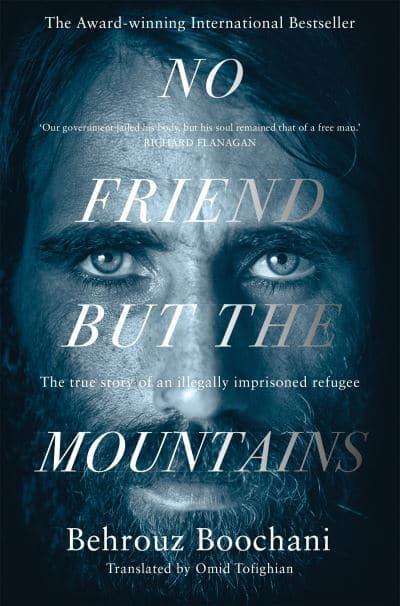
    No Friend but the Mountains. The True Story of an Illegally Imprisoned Refugee

    In 2013, Kurdish journalist #Behrouz_Boochani sought asylum in Australia but was instead illegally imprisoned in the country’s most notorious detention centre on Manus Island. He has been there ever since. This book is the result.

    Behrouz Boochani spent nearly five years typing passages of this book one text at a time from a secret mobile phone in prison. Compiled and translated from Farsi, they form an incredible story of how escaping political persecution in Iran, he ended up trapped as a stateless person. This vivid, gripping portrait of his years of incarceration and exile shines devastating light on the fates of so many people as borders close around the world.

    No Friend but the Mountains is both a brave act of witness and a moving testament to the humanity of all people, in the most extreme of circumstances.

    https://blackwells.co.uk/jacket/l/9781529028485.jpg

    ▻https://blackwells.co.uk/bookshop/product/9781529028485?gC=5a105e8b&gclid=EAIaIQobChMIncGnxfz84QIVFOd3Ch3PVAXdEA
    #réfugiés #asile #migrations #Nauru #Australie #réfugiés_kurdes #Kurdistan #livre #témoignage

    Une chose m’intrigue... pourquoi la #montagne dans le titre?

    • #Behrouz Boochani
    CDB_77 @cdb_77
    • @cdb_77
      CDB_77 @cdb_77 7/09/2019

      Australia’s Shame

      https://cdn.nybooks.com/wp-content/uploads/2019/09/coetzee_1-082619.jpg

      Let us suppose that I am the heir of an enormous estate. Stories about my generosity abound. And let us suppose that you are a young man, ambitious but in trouble with the authorities in your native land. You make a momentous decision: you will set out on a voyage across the ocean that will bring you to my doorstep, where you will say, I am here—feed me, give me a home, let me make a new life!

      Unbeknown to you, however, I have grown tired of strangers arriving on my doorstep saying I am here, take me in—so tired, so exasperated that I say to myself: Enough! No longer will I allow my generosity to be exploited! Therefore, instead of welcoming you and taking you in, I consign you to a desert island and broadcast a message to the world: Behold the fate of those who presume upon my generosity by arriving on my doorstep unannounced!

      This is, more or less, what happened to Behrouz Boochani. Targeted by the Iranian regime for his advocacy of Kurdish independence, Boochani fled the country in 2013, found his way to Indonesia, and was rescued at the last minute from the unseaworthy boat in which he was trying to reach Australia. Instead of being given a home, he was flown to one of the prisons in the remote Pacific run by the Commonwealth of Australia, where he remains to this day.

      Boochani is not alone. Thousands of asylum-seekers have suffered a similar fate at the hands of the Australians. The point of the fable of the rich man and the supplicant is the following: Is it worse to treat thousands of people with exemplary inhumanity than to treat a single man in such a way? If it is indeed worse, how much worse is it? Thousands of times? Or does the calculus of numbers falter when it comes to matters of good and evil?

      Whatever the answer, the argument against Australia’s treatment of asylum-seekers can be made as trenchantly on the basis of a single case as on that of a thousand, and Boochani has provided exactly that case. Under atrocious conditions he has managed to write and publish a record of his experiences (experiences yet to be concluded), a record that will certainly leave his jailers gnashing their teeth.

      Given the fact that the foundational event of the Commonwealth of Australia was the arrival on the island continent’s east coast of a fleet of uninvited vessels captained by James Cook; given further that since the end of World War II Australia has taken in hundreds of thousands of refugees, most of them from Europe but many from Asia and Africa too, it is hard to comprehend the dogged hostility of the Australian public to the latest wave of refugees fleeing strife in the Middle East, Afghanistan, the Indian subcontinent, and northeast Africa. To call their hostility racist or xenophobic explains little. Its roots lie further back in time, suggests the historian Jane Haggis:

      The sense of victimhood, of being exiled—unwelcome at home, by virtue of being a convict, an ill-paid worker or an economically precarious tenant farmer…and of having struggled too hard to earn the land…meant Australia never totally embraced the discourse of humanitarianism and of human rights that came to define one sense of the Western self during the twentieth century…. The sense of exile, of expulsion from Europe to the bottom of the world, of being victims rather than members of God’s elect, [shapes] Australia and Australians’ historic sense of themselves as a national community [and] feeds a hyper-vigilance to maintain…“First World privilege.”

      Hostility to refugees is clearly to be seen in the positions taken by both main political parties, which respond to protests against the way they treat refugees with the mantra “We will put the people smugglers out of business, we will end the drownings at sea,” refusing bluntly to address what is unique about their common policy: that people are to be punished for seeking asylum, and that the punishment will be and is meant to be as harsh as possible, visible for all the world to see.

      Poll after poll attests that a majority of Australians back stringent border controls. Fed by the right-wing media, the public has swallowed the argument that there is an orderly immigration queue that boat people could have joined but chose not to; further, that most boat people are not genuine refugees but “economic migrants”—as if fleeing persecution and seeking a better life elsewhere were mutually exclusive motives.

      Under the uniquely complex, quota-based system that Australia follows for dealing with humanitarian cases, there is indeed an orderly queue for applicants waiting to be processed in camps overseas supervised by the United Nations High Commissioner for Refugees; and the system for processing these humanitarian cases does indeed function smoothly if somewhat slowly, though when we bear in mind that, by the latest count, there are 70 million persons displaced from their homes worldwide, Australia’s quota of about 12,500 humanitarian acceptances per year is modest, well short of Canada’s (28,000). As for the argument that boat people are trying to jump the queue, the fact is that—until the policy changed so that arriving by boat effectively nullified any future application for asylum—the actions of asylum-seekers who arrived on Australian shores without papers and were subsequently found to be “genuine” had no effect on the quota for acceptances from the camps. Simply stated, boat people have never been part of any queue.

      Most of those who head for Australia’s back door do so via Indonesia, where they spend as little time as they can: Indonesia routinely arrests sans-papiers and sends them back to their country of origin. At the height of the boat traffic to Australia in 2009–2011, some five thousand people a year were setting sail from ports in southern Indonesia, in leaky boats provided by smugglers. No official figures are available for deaths at sea, but Monash University’s Australian Border Deaths database estimates a total of some two thousand since the year 2000, with a spike of over four hundred in 2012.

      The preventive measures undertaken by the Australian navy to head off asylum-seekers are shrouded in secrecy; therefore we do not know how many of them have persisted in embarking for Australia since a harsh new policy of interning and processing them offshore was put into practice in 2013, but there is every reason to believe that the number has fallen drastically. It would appear that when the navy intercepts a refugee vessel, it immediately transfers the occupants to a disposable boat with a minimum of fuel, tows it back into Indonesian waters, and casts it off.

      Australia’s treatment of refugees is constrained by a number of treaties. First among these is the 1951 Convention Relating to the Status of Refugees, ratified in 1954 though with a number of reservations. This convention confirms the right (already enunciated in the United Nations’ Universal Declaration on Human Rights of 1948) of any victim of persecution to seek and enjoy asylum. It also binds signatories not to return asylum-seekers to the countries from which they have fled, a requirement known as non-refoulement.

      While adhering to non-refoulement, Australia has over the years exploited two lacunae in the convention, namely that it does not confer on an asylum-seeker the legal right to enter the country where asylum is sought, and that it does not oblige the country where asylum is sought to grant asylum. Successive Australian administrations have therefore taken the position—validated by Australian courts—that a person who enters Australian territorial waters without the requisite papers is in Australia illegally, whether or not that person has come to seek asylum.

      The question of asylum was repeatedly debated in the United Nations in the 1960s and 1970s. Australia voted alongside its allies the United States and the United Kingdom in favor of the right of asylum, while consistently reserving its position on the actual admission of asylum-seekers. In 1977 it spelled out that position: Australia “will wish to retain its discretion to determine ultimately who can enter Australian territory and under what conditions they remain.”

      Christmas Island, a sparsely populated island south of Java, was incorporated into Australia in 1958 despite being some nine hundred miles from the Australian mainland. It is to Christmas Island that most boat people seeking Australian asylum steer. To forestall them, the Australian parliament legislated in 2001 that for the purposes of the Refugee Convention, Christmas Island will be deemed to be not part of Australia. Once a refugee vessel has entered the waters of Christmas Island, its occupants are thus both illegally in Australia and also not yet in Australia. The Australian navy is empowered to detain such “illegal non-citizens” and remove them to a location outside Australia, where they may be held indefinitely, without recourse to judicial review.

      Because Australia does not have a bill of rights, challenges to its refugee policies on the basis of international law have tended to fail in the nation’s courts. They have succeeded only when it has been proved that provisions of the country’s Migration Act have not been met. However, such court rulings have typically been followed by appropriate adjustments to the Migration Act.

      As if this were not enough, the government legislated in 2014 to strike from the Migration Act almost all references to the 1951 Refugee Convention. The revised act states that “it is irrelevant whether Australia has any non-refoulement obligations in respect of an unlawful non-citizen,” i.e., an asylum-seeker. The legality of Australia’s asylum policy is thus, in the eyes of the government and, it would appear, of the courts as well, ironclad.

      Australia is a vast, sparsely populated continent. Since it became an independent nation in 1901, it has had to manage two contending forces: a need to increase its population and a fear that its way of life might be undermined or swamped or corroded (the metaphors are legion) if too many strangers are allowed in.

      In the early years, the latter fear expressed itself in frankly racial terms. The Immigration Restriction Act of 1901, the cornerstone of the policy commonly known as White Australia, was aimed in the first place at blocking immigration from Asia. A generation later the focus shifted to European Jews. When he came to power in 1933, Hitler declared that the only future for Germany’s Jews lay in emigration. But like other Western countries, Australia refused mass Jewish immigration. At an international conference held in Évian in 1938 to discuss the fate of Europe’s Jews, the leader of the Australian delegation made his country’s position clear: “As we have no real racial problem, we are not desirous of importing one by encouraging any scheme of large-scale foreign migration.”

      The truth is that Australia did have a racial problem, and had had one ever since British colonists established themselves on the continent. The problem was that the colonists held themselves to be intrinsically (in the language of the day, racially) superior to Aboriginal Australians, and did not regard this conviction as a problem. Their unproblematic racism—a problem that was not a problem—easily extended itself to Jews, who might be white but were not the right shade of white.

      The Évian conference confirmed that the traditional countries of settlement—the US, Canada, Australia, Argentina—would continue to the end to resist large-scale Jewish immigration. By the time the doors out of Europe closed in 1939, Australia had accepted some 10,000 Jewish refugees, a respectable quota by comparison with other Western countries, but minuscule in the larger picture.

      https://cdn.nybooks.com/wp-content/uploads/2019/09/Coetzee-AustraliaPapuaNewGuinea-092619.jpg

      World War II, the redrawing of boundaries that followed it, and the flight of populations left millions of Europeans displaced. The 1948 United Nations Declaration on Human Rights and the Refugee Convention of 1951 were intended to address the problem of these displaced persons (DPs). Between 1947 and 1952 Australia took in some 170,000 European refugees. At first the government gave priority to candidates who fit the physical stereotype of the white Australian, for instance people from the Baltic lands. But as the DP camps emptied, and as public opinion softened, migrants began to be accepted from Greece, Italy, Croatia, and other Southern European countries. Refugees from Communist regimes were looked on favorably: Czech dissidents fleeing the Russians in 1968; Vietnamese boat people after the fall of Saigon in 1975; Chinese students after the massacre on Tiananmen Square in 1989. Gradually a nation began to emerge that was no longer quite so Anglo-Celtic in its ethnicity.

      Since the 1990s, however, refugee policy has again hardened, and has been complicated by the rise of Islamist terrorism. On August 26, 2001, shortly before the attack on the Twin Towers, a Norwegian vessel, the Tampa, picked up 438 passengers (mostly Afghan Hazaras) from a foundering boat and anchored near Christmas Island. The Tampa was soon boarded by Australian commandos, while the Australian prime minister announced that backdoor asylum-seekers would from then on be processed not on the mainland but in offshore facilities run by Australia in yet-to-be-decided third countries. After September 11, the refugees on the Tampa suddenly became Muslim boat people, and as Muslims became suspected terrorists. From then on, in the politics of the right, asylum-seekers have been tarred with the brush of terrorism. From that date too, broad support for the doctrine of human rights began to wane, not only in Australia but in Western democracies in general—witness Guantánamo.

      The practice of offshore processing announced in 2001 was maintained until the number of boat arrivals had dwindled to such an extent that the camps could be closed. However, soon after this was done, in 2004, boats began to arrive again. Why? Because refugees had simply been biding their time, waiting for Australia to relax its guard? Or because as the civil war in Sri Lanka intensified, thousands of Tamils were fleeing for their lives? Which was the determining factor: the pull of Australia or the push of world events?

      As the number of boat arrivals grew, the authorities became more and more nervous. Australia had to be made a less attractive destination. A panel of experts recommended what it called a “circuit breaker”: the resumption of offshore processing together with an end to compassionate border control.

      Agreements were concluded in 2013 with Papua New Guinea (PNG) and the tiny island state of Nauru. The old camps would be reopened. These two countries would process the protection claims of people arriving in Australia by boat and would resettle them either on their own territory or in a third country. Australia could then argue that it was not responsible for the ultimate fate of the asylum-seekers, even though the camps would be financed and run by the Australian government through private contractors.

      Manus Island belongs to an archipelago that forms part of PNG. It lies 650 miles north of the Australian mainland; the entire archipelago has a population of about 60,000. Between 2013 and 2016, when the PNG Supreme Court ruled that imprisoning asylum-seekers had been illegal from the start, several thousand people passed through the camps on Manus. However, when in 2017 the PNG police tried to close the camps, most of the occupants—some six hundred men—refused to leave, claiming to fear for their safety. Water and electricity were cut off, and a siege commenced that is vividly described in Boochani’s book. After a month, resistance crumbled, and the detainees were moved into compounds elsewhere on the island, where they have freedom of movement though, without papers, they cannot leave PNG.

      Nauru, nearly two thousand miles from Australia, is one of the world’s smallest nation-states, with a mere 11,000 inhabitants. Since its deposits of rock phosphate gave out a decade or two ago, its economic viability has depended on money-laundering and on the largesse of foreign patrons. On Nauru, prisoners have been held in what are called “open facilities.” However, since the island is tiny (eight square miles), the advantage is slight.

      The UNHCR has been extremely critical of Australia’s offshore policies. In 2017 it concluded that PNG and Nauru were intrinsically unsuitable as resettlement homes, given “the impossibility of local integration.” In other words, Papuans and Nauruans do not want refugees living among them, and refugees do not want to live in PNG or Nauru. New Zealand has offered to take 150 of the inmates, but Australia has vetoed this offer on the grounds that former detainees might make their way from New Zealand to Australia, thereby weakening the deterrent power of Australian policy.

      The operation of the camps was shrouded from the beginning under a blanket of secrecy. Inmates were to be known not by name but by number; circulating photographs of them was forbidden. For information on life in the camps, we have to rely on prisoners like Boochani and on those Australian doctors and social workers who have defied legislation that made it a criminal offense to report what they had witnessed.

      On the basis of such evidence, it is hard to avoid the conclusion that Manus and Nauru are not just processing centers but punishment camps where detainees—“clients” in the jargon of the bureaucracy—serve indeterminate or even indefinite sentences for the offense of trying to enter Australia without papers. The attitude of the Australian guards (“client service officers”), many of them veterans of Afghanistan and Iraq, seems to be unremitting hostility, fueled by suspicions that among their clientele are Islamic terrorists masquerading as refugees. The local populations, Nauruan or Papuan, also seem to regard the refugees with an unfriendly eye. In 2014 the Manus camp was invaded by Papuan police and civilians who assaulted the inmates, killing one of them.

      In the first year and a half after the agreement with Nauru and PNG, over three thousand people, including hundreds of children, were consigned to offshore detention. A pediatrician visiting the island camps reported a range of troubled behavior among children there: bed-wetting, nightmares, defiant behavior, separation anxiety, withdrawal, regression in speech, mutism, stuttering. Australia’s human rights commissioner concluded that the camps were too violent and unsafe to house children. The entire practice of putting children behind razor wire was damned by a UN special rapporteur. In the face of public disquiet, the Australian authorities began to remove children and their parents to the mainland. By February 2019 the last of them had either been resettled in the US or brought to Australia on an explicitly temporary basis.

      Refugee policy was not an issue in the recent elections for the Australian federal parliament, which were won and lost on arcane issues in the tax code. News that Australian voters had returned to power the same set of jailers responsible for their misery provoked a spate of self-harm and suicide attempts among the remaining detainees. An Indian who tried to set himself alight was treated for burns, then charged with attempting suicide. Boochani reports that most of the refugees left on Manus have fallen into a state of despair and no longer leave their rooms. To date, fourteen prisoners, most of them in their twenties, have died on Nauru and Manus, some by their own hand. They died because the camps were unhealthy, dangerous, and destructive not only of their psychic stability but of their very humanity.

      For years there has been a drumbeat of protest from within Australia against the demonization of asylum-seekers. One appeal came from Tim Winton, among Australia’s most widely read writers:

      Prime Minister, turn us back from this path to brutality. Restore us to our best selves. Turn back from piling trauma upon the traumatised. It grinds innocent people to despair and self-harm and suicide. It ruins the lives of children. It shames us. And it poisons the future. Give these people back their faces, their humanity. Do not avert your gaze and don’t hide them from us.

      Not everyone shares Winton’s sentiments. After being shown a poster targeting aspiring asylum-seekers that showed a boat in rough waters with the caption “NO WAY. YOU WILL NOT MAKE AUSTRALIA HOME,” President Trump tweeted, “Much can be learned!” Australia’s practices of imprisoning refugees and turning back boats have been applauded by the European right and in some quarters mimicked.

      At the peak of the influx of boat people, Manus housed 1,353 prisoners and Nauru 1,233. For Nauru, the camp business has been particularly lucrative. For each detainee it houses on behalf of Australia, Nauru earns about US$1,400 a year in visa fees. Holding a prisoner offshore costs Australia about US$38,000 per year. If the same prisoner were brought to the Australian mainland while his or her claim was being processed, the cost would fall to US$7,000. Persisting with the offshore camps has clearly been a point of honor with the Australians, no matter what the expense.

      In the last days of the Obama administration, it was announced that the United States would accept up to 1,250 refugees from Manus and Nauru. When President Trump took office in January 2017, the then Australian prime minister, Malcolm Turnbull, called to pay his respects and apprise the new incumbent of the agreement. President Trump was understandably baffled. Why could Australia not house the refugees itself? Turnbull replied:

      The only reason we cannot let them into Australia is because of our commitment to not allow people to come by boat. Otherwise we would have let them in. If they had arrived by airplane and with a tourist visa then they would be here.

      As Turnbull artlessly reveals, there is something arbitrary in welcoming people who have papers while treating people without papers not only badly but with spectacular heartlessness. Commentators have pointed to the contrived quality of the distinction and hinted at a motive behind it: that the sans-papiers are being offered up to the xenophobes and nativists to vent their rage on, while government and business are left free to run an orderly system of importing skilled migrants.

      With evident reluctance, President Trump has honored the deal made by the Obama administration. As of April 2019, over five hundred refugees had been resettled in the US, with further departures expected, while 265 applications had been rejected on character grounds. According to Boochani’s recent count, there are still 370 asylum-seekers on Manus, seventy of whom had been accepted by the US and are ready to leave. Sixty men on Nauru have been accepted, leaving about two hundred on the island. The prisoners rejected by the US provide Australia with a legal headache. It cannot send them back to their countries of origin without violating its non-refoulement obligations, yet if no third country will accept them, they will find themselves in indefinite detention, in violation of international human rights law.

      As a youngster, Behrouz Boochani tells us, he wanted to join the Kurdish guerrillas in their war of liberation but was not brave enough to take the final step: “To this very day I don’t know if I have a peace-loving spirit or if I was just frightened.” Instead he turned to a career in writing.

      About the journalism that got him into trouble with the authorities and his subsequent flight from Iran he has little to say. At Tehran airport he masquerades as a casual tourist, carrying nothing but a few changes of clothes and a book of poetry. In Indonesia he spends a miserable forty days hiding from the police, waiting for a place on a boat. The boat that he boards is barely seaworthy: he and his fellow fugitives spend most of their time bailing out water. They are picked up by an Indonesian fishing vessel, transferred to a British freighter, then finally arrested by the Australian navy and flown to Manus Island.

      Boochani understands at once that he and his companions have become hostages, to be used “to strike fear into others, to scare people so they won’t come to Australia.” His first impression of his new home is that it is “beautiful…nothing like the island hell that [the Australians] tried to scare us with.” Then, as he steps off the plane, he is hit by the suffocating humidity and stifling heat. Mosquitoes buzz everywhere.

      No Friend But the Mountains provides a wholly engrossing account of the first four years that Boochani spent on Manus, up to the time when the prison camp was closed and the prisoners resettled elsewhere on the island. Just as absorbing is his analysis of the system that reigns in the camp, a system imposed by the Australian authorities but autonomous in the sense that it holds the jailers as well as the prisoners in its grip.

      The aim of the system is to break the will of the prisoners and make them accept refoulement. It works by fostering animosities among them, eroding solidarity and leaving them feeling isolated. The simplest of means are used to create paranoia. The electricity running the fans that provide relief from the insufferable heat is switched on and off for no reason. There is drinking water, but it is always lukewarm. Occasionally chilled fruit juice appears, but according to no detectable schedule. With nothing else to do, prisoners become obsessed with finding patterns in these random events: “A twisted system governs the prison, a deranged logic that confines the mind of the prisoner, an extremely oppressive form of governance that the prisoner internalises.”

      New rules and regulations are introduced from week to week, for which no one will accept responsibility: “No person who is a part of the system can ever provide an answer—neither the officers nor the other employees…. All they can say is, ‘I’m sorry, I’m just following orders.’” The daily routine includes four body-checks. The eyes of the Australian guards who carry out the searches are “cold, barbaric, hateful.”

      Boochani’s fellow prisoners come from all over the world: Afghanistan, Sri Lanka, Sudan, Lebanon, Iran, Somalia, Pakistan, Myanmar, Iraq, Kurdistan. Having to live in close proximity with strangers becomes a torment. He withdraws further and further into himself.

      Moral standards deteriorate on all sides. Now and then the mango trees that surround the camp drop their fruit within the perimeter. Even Kurds, normally renowned for their hospitality, pounce on the fruit and devour it without sharing.

      The toilets become a place of refuge where a prisoner can be by himself and scream his lungs out. But they also become a place of self-harm and suicide. Boochani records a terrifying episode as the prisoners witness guards removing the body of a man who had slit his wrists with a razor. Among the onlookers he detects a pulsating excitement: “Their responses reveal an attraction to the thrills of a night of blood…. The scene is like a festival: a festival of blood, a festival of the dead.” For some prisoners, self-harm becomes “a kind of cultural practice,” a way of gaining respect. “The faces of those who have self-harmed show peace, a profound peace akin to ecstasy, akin to euphoria.”

      Boochani’s narrative reaches a climax when in October 2017 the PNG authorities try to close down the prison camp. Two weeks of nonviolent protest culminate in bloody warfare. Boochani is thrilled by the militancy of his comrades: “For the first time the prisoners did not feel oppressed by the fences. For the first time the rules and regulations meant nothing…. A bond of brotherhood emerged among the prisoners in this fierce movement, performed in the theatre of war for all to see.”

      A prefatory note to the book informs us that strict measures have been taken to conceal the identities of detainees. The characters “are not individuals who are disguised…. Their identities are entirely manufactured. They are composite characters.” Boochani’s wish to protect his fellow detainees from reprisal is understandable, but it is nonetheless a pity that we are given no reliable facts about them. Was Boochani an exception, for example, in having a university education? And what led these people to undertake the perilous voyage to Australia, of all places?

      Boochani is clearly a loner. Oppressed by the meaningless clamor of prison life, he longs “to isolate [himself] and create that which is poetic and visionary.” He flirts with the idea of himself as a poet-prophet, but it is not clear what he might be prophesying. By his own confession, he is not a brave man, yet it is clear that in those desperate days at sea he behaved with great courage. His motive for seeking asylum in Australia remains unexplored. As autobiography, No Friend is not the summing up of a life but a work in progress, the absorbing record of a life-transforming episode whose effects on his inner self the writer is still trying to plumb.

      https://cdn.nybooks.com/wp-content/uploads/2019/09/coetzee_2-082619.jpg

      It is significant that the medium Boochani chooses for his story is a mixed one: analytic prose on the one hand, traditional Kurdish folk-ballad on the other. He writes:

      The amazement and horror felt during the nights on Manus has the power to thrust everyone back into their long distant pasts. These nights uncover many years of tears deep in our hearts and open old wounds…they draw out the bitter truth; they force the prisoners to self-prosecute. Prisoners are driven to crying tears of bitter sorrow.

      Getting No Friend But the Mountains off the island and into the hands of readers in Australia was an achievement in itself. The text was typed in Farsi on a cell phone that Boochani kept hidden in his mattress, and then surreptitiously dispatched, one text message at a time, to a collaborator in the outside world.

      Boochani’s translator, Omid Tofighian, provides an afterword containing useful information about the genesis of the book and Boochani’s place in the Iranian and Kurdish literary traditions. It is as though, to save himself from the madness of the camp, Boochani had to draw upon not only his innate creativity, not only his immersion in Kafka and Beckett, but also submerged memories of “the cold mountains of Kurdistan” and the songs of resistance sung there. (Here the title of the book becomes relevant.)

      If we approach No Friend as if it were a conventional refugee narrative or refugee memoir, Tofighian tells us, we misread it profoundly:

      In contrast to the thriving “refugee industry” that promotes stories to provide exposure and information and attempts to create empathy…Behrouz recounts stories in order to produce new knowledge and to construct a philosophy that unpacks and exposes systematic torture and the border-industrial complex. His intention has always been to hold a mirror up to the system, dismantle it, and produce a historical record to honour those who have been killed and everyone who is still suffering.

      As for Tofighian’s own contribution, “translation [is] for me…a duty to history and a strategy for positioning the issue of indefinite detention of refugees deep within Australia’s collective memory.”

      Tofighian contrasts the greater island of Australia with the lesser island of Manus:

      One island kills vision, creativity and knowledge—it imprisons thought. The other island fosters vision, creativity and knowledge—it is a land where the mind is free. The first island is the settler-colonial state called Australia, and the prisoners are the settlers. The second island contains Manus Prison, and knowledge resides there with the incarcerated refugees.

      This is a bold and persuasive claim: that through their experience on the island the prisoners have absorbed an understanding of how power works in the world, whereas their jailers remain locked in complacent ignorance. The claim rests on an extended conception of what knowledge can consist in: knowledge can be absorbed directly into the suffering body and thence transfigure the self. The prisoners know more than the jailers do, even if they do not have words for what they know. As Boochani puts it, the prisoners

      have modified their perception and understanding of life, transformed their interpretation of existence…. They have changed so much—they have transfigured into different beings…. This has occurred for everyone…. They have become distinctly creative humans, they have unprecedented creative capacities…. This is incredible, it is phenomenal to witness.

      Tofighian’s afterword upends the image of the translator as the humble, invisible helpmeet of the author. Not only does he present himself, along with two other Iranian colleagues, as a full collaborator in the project, but he also—somewhat hectoringly—gives instructions on how to approach the book: not as an affecting record of suffering and tribulation but as a “decolonial intervention,” “a decolonial text, representing a decolonial way of thinking and doing,” written to spur us “to resist the colonial mindset that is driving Australia’s detention regime.” Boochani supports this mode of reading when he identifies himself less as a writer than as a political scientist who has chosen to employ the language of literature.

      The question is, how novel and how valuable is Boochani’s analysis of what he calls the “intersecting social systems of domination and oppression” that reinforce each other in the prison? That people who run prisons try to break down the solidarity of prison populations by encouraging mistrust of all by all and diverting the inmates’ attention to trivia is hardly news. What has not been done before, claims Tofighian, is to connect the warped psychic regime of the prison with “Australian colonial history and fundamental factors plaguing contemporary Australian society, culture and politics.”

      This is, to my mind, an empty claim. The book contains no analysis at all of contemporary Australia, a country that Boochani—and who can blame him?—wishes never to set foot in. No doubt the Australian guards at the camp detested the prisoners and wished them ill; but that is true of many prison guards vis-à-vis many prisoners. What is more of a mystery is why so many Australians wish refugees ill. To answer this question one needs to know a great deal more about Australian history, the tensions within Australian society, and the maneuverings of Australia’s political parties than Boochani, isolated on his island, has been able to inquire into.

      In May 1994, during the first session of the parliament of the newly liberated South Africa, Nelson Mandela read into the record a poem written in 1960 by the Afrikaans writer Ingrid Jonker (1933–1965). The poem mourns the death of a child shot by police during a protest meeting and foretells his resurrection. Mandela read the poem as a gesture of reconciliation with white Afrikaners, who were dubious about how welcome they would be in the new South Africa. “She was both an Afrikaner and an African,” Mandela said of Jonker.

      There is an aspect of Jonker’s poem that few of the parliamentarians listening to Mandela, or indeed Mandela himself, chose to take seriously. The poem ends with the lines: “The child, become a man, treks through the whole of Africa. The child, become a giant, travels across the entire world, without a pass.” The pass to which Jonker refers is the hated internal passport that black Africans were required to carry, without which apartheid as an administrative system would have collapsed. The meeting at which the child was killed was held to protest against having to carry passes; now, in 1994, the reborn child strides unstoppably across the world, disdaining a pass. Not only does Jonker’s poem look forward to the defeat of apartheid; it also looks forward to a day when the borders of the nation-state will crumble before the march of a free people.

      The new government headed by Mandela never for a minute considered abolishing or even questioning the nation’s borders, as defined years earlier by the erstwhile colonial power, Britain. Liberated or not, any child who treks through Africa without a pass will be stopped when he arrives at the South African frontier.

      Despite its teetering economy, South Africa remains attractive to migrants. Of the 58 million people residing within its borders, some three million are immigrants of various degrees of legality, half of them from Zimbabwe. To obtain a visa that entitles him or her to work in South Africa, a Zimbabwean needs a passport, a letter from an employer, an address in South Africa, and proof of funds. Most find these requirements impossible to meet. As for getting accepted as a refugee, this is complicated by the reluctance of the South African government to concede that political repression exists in Zimbabwe. Thus, papers or no papers, Zimbabweans have for years been crossing South Africa’s inadequately monitored northern border unannounced, at a rate of some seven hundred a day.

      Immigration is a burning issue in South Africa. Politicians blame foreign migrants for high crime rates, for overrunning the cities, for exploiting the social welfare system, for taking jobs from the locals. In 2008 there were outbursts of mass violence against foreigners that left scores dead. The South African authorities have responded to the challenge of undocumented migration with sporadic roundups and mass deportations. The exercise has been largely futile. Most of those expelled promptly turn around and come back.

      I mention the case of South Africa, not untypical in the postcolonial world, to illustrate what can happen when—unlike Australia—a country lacks the will and/or the means to close its borders to less affluent neighbors. Zimbabweans and other African migrants who find their way to South Africa reside there only precariously. They are at the receiving end of resentment and sometimes of violence from the locals. They are ill advised to appeal to the police for protection. On the other hand, they have yet to find themselves dispatched to a godforsaken island as punishment for entering the country through the back door.

      Cross-border migration is a fact of life in today’s world, and numbers will only increase as the earth heats up, former pastures turn to desert, and islands are swallowed by the sea. There are messy but humane—or at least human—ways of reacting to this world-historical phenomenon, just as there are neat but inhuman ways.

      ▻https://www.nybooks.com/articles/2019/09/26/australias-shame
      –-----

      Et un peu plus sur le lien avec la montagne...

      It is as though, to save himself from the madness of the camp, Boochani had to draw upon not only his innate creativity, not only his immersion in Kafka and Beckett, but also submerged memories of “the cold mountains of Kurdistan” and the songs of resistance sung there. (Here the title of the book becomes relevant.)

      CDB_77 @cdb_77
    • @cdb_77
      CDB_77 @cdb_77 15/11/2019

      Behrouz Boochani, voice of Manus Island refugees, is free in New Zealand

      Kurdish Iranian refugee and journalist – a multiple award-winner for documenting life in Australia’s offshore detention system – has left Papua New Guinea

      ▻https://www.theguardian.com/australia-news/2019/nov/14/behrouz-boochani-free-voice-manus-island-refugees-new-zealand-australia

      CDB_77 @cdb_77
    • @cdb_77
      CDB_77 @cdb_77 25/11/2019

      Behrouz Boochani, brutalised but not beaten by Manus, says simply: ’I did my best’
      After six hellish years inside Australia’s offshore detention regime, Boochani reflects on the country that rejected him, his new-found freedom and the friends he left behind.

      ▻https://www.theguardian.com/world/2019/nov/16/behrouz-boochani-manus-says-simply-i-did-my-best

      CDB_77 @cdb_77
    • @cdb_77
      CDB_77 @cdb_77 27/11/2019

      Behrouz Boochani. La nostra resistenza pacifica è più forte della vostra violenza di Stato

      Behrouz Boochani è tornato in libertà nel corso di questa intervista. Lo scrittore curdo è stato tenuto prigioniero per sei anni in Papua Nuova Guinea dal governo australiano.

      La sua resistenza pacifica ha vinto. Dopo oltre sei anni di prigionia, traumi e torture, lo scrittore curdo Behrouz Boochani è libero. La splendida notizia è arrivata mentre questa intervista era in corso di svolgimento. Fino al 12 novembre, infatti, l’autore era confinato in uno dei luoghi più remoti al mondo, la Papua Nuova Guinea, dove l’Australia ha imprigionato migliaia di richiedenti asilo per quasi vent’anni. Ora Boochani si trova in Nuova Zelanda e a breve, probabilmente, partirà per il Nordamerica. “Lo scorso settembre è stato liberato il centro di detenzione di Manus Island e siamo stati trasferiti in alcuni appartamenti della capitale di Papua, Port Moresby. Entro fine novembre altri di noi dovrebbero essere liberati, ma 46 persone restano in carcere in condizioni durissime. Siamo molto preoccupati”, aveva affermato pochi giorni prima della liberazione.

      Questi sei anni di prigionia Behrouz Boochani li ha raccontati in un libro che è diventato un caso letterario internazionale. Nessun amico se non le montagne, uscito nel 2018 in inglese e pubblicato quest’anno in Italia da add editore, si è diffuso nel mondo come un grido inaspettato. Ha rivelato il dolore dei profughi lungo la rotta asiatica verso l’Australia. Ha scavato nelle storie di chi con lui si è nascosto nella foresta indonesiana e ha sfidato l’oceano sulle barche dei trafficanti, finendo in carceri finanziate dal governo di Canberra. Ha evocato la disperazione della sua gente, ovvero i perseguitati curdi in Iran. Ha ricordato come nel 2013 lui, giornalista e regista di 30 anni, sia stato costretto a scappare dal suo Paese, dopo che le Guardie della rivoluzione islamica (i pasdaran) avevano fatto irruzione nella sede di “Werya”, la rivista curda che aveva fondato. Quel giorno undici suoi colleghi furono arrestati.
      “Se i governi non rispettano i migranti, mettono a rischio le democrazie”

      Con la sua opera letteraria pluripremiata, inviata di nascosto al letterato di Sidney Omid Tofighian che l’ha tradotta dalla lingua farsi, Behrouz Boochani ha tolto ogni alibi agli indifferenti. Per quasi vent’anni la comunità internazionale si è mostrata inerte davanti a ciò che stava accadendo al largo delle coste australiane. Dal 2001 un modello migratorio, basato sul respingimento in mare e sulla detenzione in centri offshore, ha fatto deportare, incarcerare, affamare e torturare migliaia di innocenti. Bambini, donne e uomini scappavano da miseria, abusi e guerre. Provenivano da Afghanistan, Iraq, Iran, Siria, Sri Lanka, Myanmar Somalia, Sudan, Bangladesh, Pakistan, India, Nepal. I lager della vergogna – che ricordano quelli dove sono rinchiusi i migranti in Libia – sono stati creati su tre isole dell’oceano Pacifico: l’australiana Christmas Island, Manus nella Papua Nuova Guinea e Nauru, una piccola repubblica sulla linea dell’equatore. La maggior parte di essi è stata chiusa grazie alle proteste della società civile australiana. L’anno scorso tutti i bambini sono stati trasferiti con i loro famigliari sulla “terraferma”. Però, non è chiaro che cosa accadrà ai nuovi boat people in arrivo e alle 400 persone rimaste a Nauru e Port Moresby.

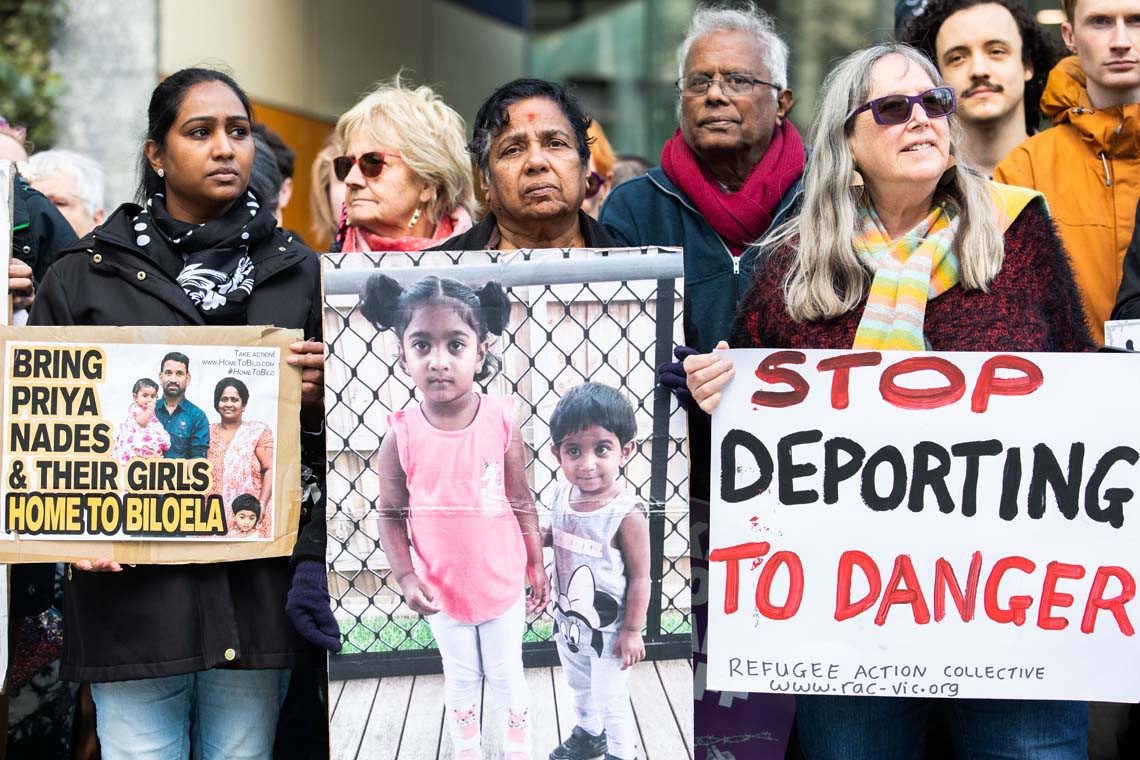
      https://www.lifegate.it/app/uploads/Proteste-contro-deportazioni-1140x760.jpg

      In 18 anni non sono stati sufficienti i servizi giornalistici che parlavano dei suicidi fra i detenuti, delle labbra cucite come atto di protesta e dei minori che per la “sindrome da rassegnazione” si spegnevano, smettendo di mangiare e bere. Serviva qualcosa in più. Come un Silvio Pellico degli anni Duemila, Boochani è riuscito a scatenare un domino virtuoso.

      Quell’urlo di oltre 400 pagine, che supera i confini di genere e si legge col fiato corto, è una mano tesa a noi lettori. Anche gli abitanti dei Paesi più liberi e ricchi hanno bisogno d’aiuto. Come spiega a LifeGate l’intellettuale curdo, “le politiche disumane contro i migranti sono un esercizio di dittatura. I governi che non rispettano i diritti dei migranti, potrebbero scagliarsi contro tutti noi. Le nostre democrazie sono in pericolo”. Quest’intervista è stata raccolta nell’arco di diverse settimane per mezzo di Whatsapp, lo strumento con cui Boochani ha scritto il suo libro e ha comunicato con il docente di origine iraniana Omid Tofighian. Nelle risposte che seguono, l’autore si sofferma su quanto sta accadendo ai curdi in Siria e spiega perché ha scelto la resistenza pacifica. Sulla gestione del suo personale trauma, dice di non avere una risposta. Però, un obiettivo gli è chiaro: “Nelle mie nuove opere affronterò argomenti diversi. Non posso ridurmi a questa terribile esperienza”. Nessuno dovrebbe. Questa l’intervista completa.

      Che cosa pensa della recente offensiva militare turca contro i curdi in Siria?
      Ciò che sta accadendo nel nord della Siria non è soltanto un attacco contro i curdi, ma alla democrazia e ai suoi valori. I curdi hanno stabilito il sistema democratico più avanzato nella storia del Medio Oriente; un sistema che si basa sull’uguaglianza. Ora siamo difronte a un esercito fascista che assieme a gruppi terroristici colpisce i curdi che credono nella democrazia. Penso che la più grande minaccia globale sia il terrorismo di Stato e il fatto che i governi si accordino per supportarsi a vicenda nel violare i diritti umani. Oggigiorno li vediamo nascondersi dietro a concetti belli, quali pace, umanità e morale. Ecco perché quello turco (guidato dal presidente Erdogan, ndr.) ha nominato le sue operazioni di genocidio dei curdi ‘Primavera di pace’, una beffa. Ed è esattamente quello che sta facendo anche l’Australia: i suoi politici dicono che stanno salvando vite nell’oceano, ma in realtà stanno facendo torturare persone innocenti in prigioni remote, nascondendo loro stessi dietro una falsa morale.

      Era solo un bambino quando la sua famiglia cercò di scappare dalla guerra fra Iran e Iraq (1980-’88). Che cosa ricorda di quel periodo?
      Sono nato nel 1983 nella provincia di Ilam, che è una zona curda nell’ovest dell’Iran. La guerra arrivò anche lì, come racconto nel mio libro che però è simbolico. Non ho voluto scrivere un’autobiografia con dettagli veri sui miei famigliari e gli abitanti di Ilam, ma ho rappresentato molte storie tragiche accadute in quella regione. I curdi furono sfollati e persero tutto. Ho cercato di descrivere come la guerra distrugga ogni cosa e sia orribile.

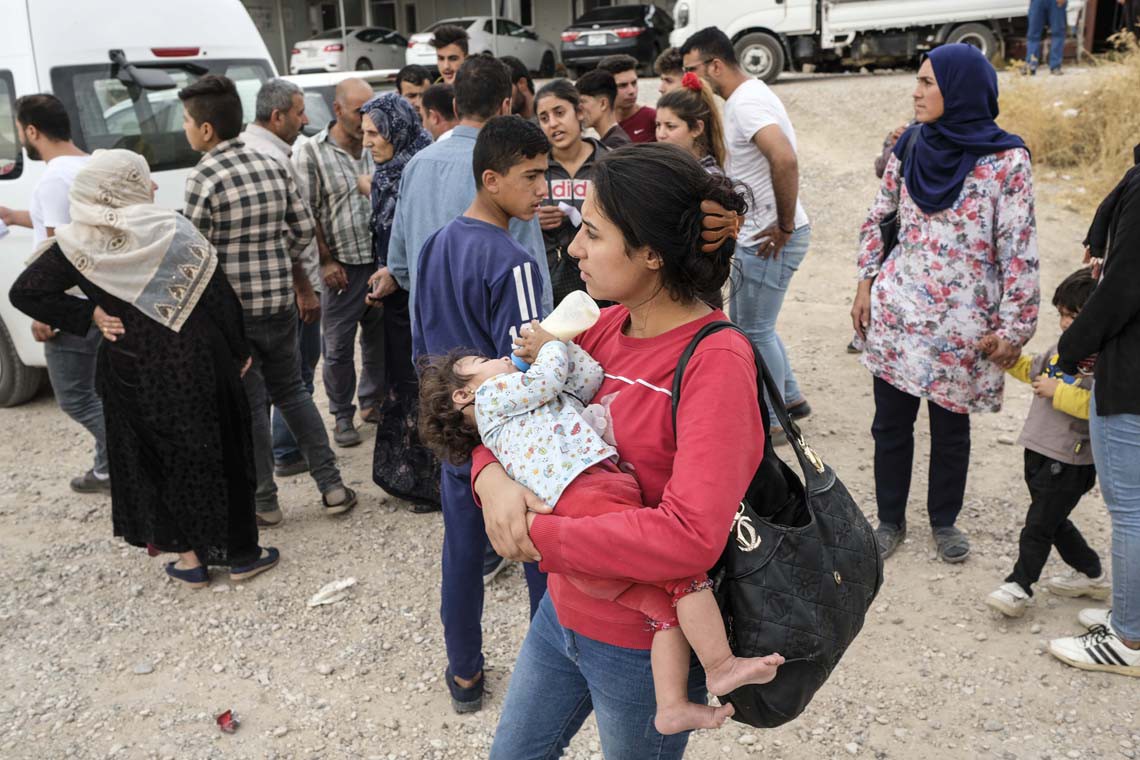
      https://www.lifegate.it/app/uploads/Curdi-in-fuga-dai-bombardamenti-turchi-1140x760.jpg

      Che cosa significa essere curdo per lei?
      Essere curdo e vivere da curdo per me è la cosa più dura di questo mondo perché sei continuamente testimone della sofferenza della tua gente. Superpotenze e governi non democratici stanno cercando di privarci della nostra identità e dei nostri diritti. Come artista, ho il dovere di lottare per l’identità curda non solo perché appartengo a questa popolazione, ma in quanto essere umano che comprende profondamente tale ingiustizia o colonialismo. Per questo motivo potete ritrovare elementi culturali curdi in tutti i miei film e nel mio libro.

      I rifugiati nei centri di detenzione hanno sofferto per abusi fisici e psicologici, tra cui la “sindrome da rassegnazione” che porta gli ammalati, tra i quali anche bambini, a spegnersi fino alla morte. Al momento i prigionieri ricevono qualche assistenza medica?
      Finora 8 persone sono morte a Manus Island e 5 a Nauru. La maggior parte di loro per negligenza sanitaria e i restanti a causa delle violenze inflitte dalle guardie. Tutti questi decessi provano che questo sistema utilizza la malattia come un mezzo per torturare gli individui. Vorrei, inoltre, ricordare le tante persone danneggiate fisicamente e mentalmente. Abbiamo vissuto nell’assenza di cure e mezzi. Gli ammalati stanno ancora lottando contro questa mancanza. Fortunatamente, otto mesi fa il parlamento australiano ha approvato la “legge Medevac”, che ci sta aiutando molto. In base a essa, chiunque non riceva un trattamento medico in Papua Nuova Guinea e a Nauru deve essere trasferito in Australia. Finora 217 persone sono state portate sulla terraferma e altre dovrebbero partire entro il mese di novembre. Speriamo.

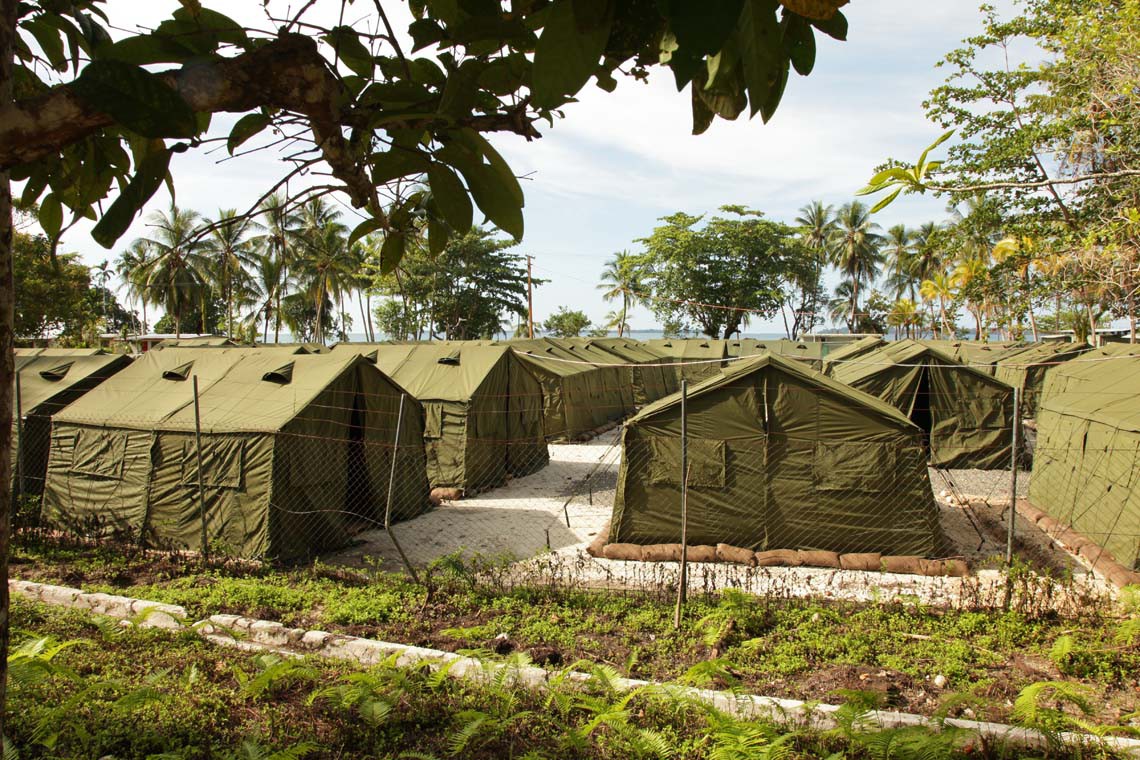
      https://www.lifegate.it/app/uploads/Ex-centro-di-detenzione-a-Manus-1140x760.jpg

      Lei come sta? Come sta elaborando il dolore provato in questi ultimi 6 anni di migrazione, naufragi e prigionia?
      Il mio corpo è danneggiato. Io, come tutti gli altri rifugiati, sono stato testimone di cose terribili. Ho visto amici morire, altre persone ferirsi e tentare il suicidio. Molte sono state separate dai famigliari e dai loro bambini. Ho assistito a così tanta umiliazione e a così tanti traumi…Di certo tutte queste immagini sono dentro di me. Questa dura esperienza è diventata una parte di me. E’ difficile portarne il peso e al tempo stesso rimanere forte e positivo. Non sono sicuro di essere capace di elaborare tutto quanto. Ho combattuto per restare vivo e anche per far conoscere questo sistema. Ma non so se ho una vera risposta alla sua domanda.

      Adesso in quali condizioni vivono i rifugiati?
      Due mesi fa hanno chiuso il centro di detenzione di Manus Island e hanno trasferito ogni prigioniero – me compreso – a Port Moresby, capitale della Papua Nuova Guinea. Due anni fa a Manus c’erano 800 rifugiati, ora in questa pericolosa città circa 250. Non è sicura per chi viene da fuori. Almeno 46 individui sono stati incarcerati e si trovano in condizioni durissime. Sono preoccupato per loro perché il governo australiano non li ritiene dei rifugiati.

      https://www.lifegate.it/app/uploads/Profughi-nel-limbo-indonesiano-1140x760.jpg

      La destra e l’estrema destra italiana, il cui leader più popolare è Matteo Salvini, vuole emulare il modello migratorio australiano nel mare Mediterraneo. Vorrebbe dire qualcosa ai nostri politici?
      Solo una cosa. Non guardate l’Australia come un modello. Non lasciate che il vostro governo la imiti. E non dico questo solo per i rifugiati, ma per la vostra gente e la vostra democrazia. Camberra ha compiuto tutti questi crimini per anni. Gli australiani glielo hanno permesso e adesso la loro società sta fronteggiando una sorta di dittatura. La democrazia australiana è a pezzi. Dopo aver sperimentato la dittatura a Manus, i governanti trattano gli australiani come i rifugiati. L’Australia al momento ha perso i suoi valori.

      Crede ancora nella “resistenza pacifica”? Anche per i curdi?
      Sì, sempre, anche per i curdi. Ciò, però, non significa che quando un governo fascista – come quello della Turchia – attacca la tua terra e la tua popolazione, tu non reagisci. Quella curda è sempre stata una resistenza pacifica per creare un sistema democratico in Medio Oriente. La nostra resistenza non violenta a Manus, per esempio, ha fatto vergognare l’Australia e ora ognuno condanna i suoi governi, chi li ha sostenuti, non noi. Abbiamo sfidato l’Australia in così tanti modi che alla fine l’abbiamo educata.

      Quali sono le sue speranze e i suoi obiettivi per il futuro?
      Dopo aver scritto per tanti anni in prigionia a Manus, sono arrivato a condividere le mie composizioni in un contesto internazionale. Di certo, però, d’ora in poi racconterò storie diverse e anche i miei prossimi lavori artistici tratteranno altri argomenti. Non riduco me stesso soltanto a questa esperienza.

      ▻https://www.lifegate.it/persone/news/behrouz-boochani-intervista-scrittore-curdo

      CDB_77 @cdb_77
    • @cdb_77
      CDB_77 @cdb_77 4/12/2019

      Behrouz Boochani : Six years as a marooned migrant
      ▻https://www.bbc.co.uk/sounds/play/w3csy9f9

      Un nouveau mot (même si on connaît le mot, mais avec l’ajout de l’adjectif « bloqué ») ?
      #marooned_migrant —> #migrant_bloqué

      #mots #terminologie #vocabulaire

      CDB_77 @cdb_77
    Écrire un commentaire
  • @sinehebdo
    Dror@sinehebdo @sinehebdo 2/10/2015
    12
    @kassem
    @colporteur
    @unagi
    @reka
    @cdb_77
    @mad_meg
    @marcimat
    @vanderling
    @najort
    @les_listes_de
    @val_k
    @mfmb
    12

    Mise à jour de :
    ►http://seenthis.net/messages/410458

    Plusieurs articles abordent la question du vocabulaire. Faut-il les appeler migrants, réfugiés, sans-papiers, demandeurs d’asile, exilés...? Les avis sont partagés

    Réfugiés ? Migrants ? Abrités ? Accueillis ? Apatrides ? Arabes ? Aventuriers ? Binationaux ? Capital humain ? Cerveaux en fuite ? Chercheurs de Paix ? Chercheurs de Refuge ? Circulants ? Clandestins ? Clandestins Non Identifiés ? Coupables ? Coupables de voyage ? Criminels ? Criminels Illégaux ? Crimmigrés ? Cueilleurs de Fraises ? Déboutés ? Demandeurs d’asile ? Demandeurs de refuge ? Déplacés ? Déplacés Internes ? Déplacés Poétiques ? Désespérés ? Diamants Noirs ? Dreamers ? Dublinés ? Égarés ? Éjectés ? Éjectés Volontaires ? Emigrants ? Envahisseurs ? Errants ? Esclaves ? Etrangers ? ESIs ? Exilés ? Exodants ? Exode de cerveau ? Expatriés ? Fugitifs ? Héros ? Illégaux ? Illégaux en Transit ? Illégalisés ? Immigrants ? Immigrés ? Immigrés choisis ? INADs ? Indésirables ? Infiltrés ? Intrus ? Invisibles ? Invités ? Irréguliers ? Marcheurs ? Main d’oeuvre ? Maintenus ? Messagers ? Migrants climatiques ? Migrants éco-climatiques ? Migrants économiques ? Migrants environnementaux ? Migrants Internationaux ? Migrants Rapatriés ? Migrants Revenus ? Migrants Secondaires ? Migrants Volatilisés ? Migrérrants ? Mijeurs ? Musulmans ? Naufragés ? Navetteurs ? Nouveaux Européens ? Persécutés ? Personnes en migration ? Population Migratoire ? Rapatriés ? Rapatriés en Bilan ? Réfugiés présumés ? Réfugiés aigus ? Réfugiés climatiques ? Réfugiés environnementaux ? Réfugiés Illégalisés ? Réfugiés Irréguliers ? Réfugiés Sans Papiers ? Réfugiés Travaillant ? Rejoignants ? Rescapés ? Retenus ? Retournés ? Revenus ? Sans Autorisation ? Sans Papiers ? Sans-Paps ? Sans Permission ? Sans Statut ? Survivants ? Terroristes ? Touristes ? Touristes Clandestins ? Transitants ? Transmigrants ? Travailleurs Itinérants ? Travailleurs Migrants ? Travailleurs Réfugiés ? Turcs ? Vacanciers ? Vent du Désert ? Victimes collatérales ? Vocation à Quitter le Territoire ? Voyageurs ? Êtres Humains ?

    Et faut-il ajouter des guillemets à ces termes ?

    ESI = Etrangers en Situation Irrégulière
    INAD = étrangers non-admis sur le territoire français et interpellés à leur descente de l’avion
    Mijeurs = mineurs déclarés majeurs par les autorités

    Aussi : Mineurs Migrants ? Mineurs Migrants Non Accompagnés ? Mineurs Etrangers Non Accompagnés ? Mijeurs ? Migrants Mineurs Isolés ? Mineurs Isolés ? Mineurs Non Accompagnés ? et même Bébés Passeport ?

    D’autres spécifiquement en anglais comme aspiring migrants, climate-movers, deportees, dreamers, ICE_detainee, illegalized refugees, returnable migrants, returnee migrants, returnees, returning migrants, undocumented refugees...

    En italien : capsunari (cueilleurs de fraises)

    Et d’autres mots encore plus spécifiques, comme Habesha qui désignent au Soudan ceux qui ne parlent pas arabe, donc les Abyssins, les Éthiopiens et les Érythréens, donc en fait les migrants...

    Les Libyens appellent les migrants érythréens Dollars ou Euros selon qu’ils ont de la famille (supposée riche) en Europe ou en Amérique du Nord...

    Et Libia, surnom donné aux nouveaux arrivants d’Erythrée par les Erythréens de la diaspora, installés depuis longtemps en Italie...

    Refuweegee : réfugié bien intégré à Glasgow

    Au Vénézuela, certains peuples autochtones n’ont pas de mot pour désigner un migrant, et ils les appellent donc des caminantes, c’est à dire des marcheurs...

    #migrants #réfugiés #sans-papiers #demandeurs_d_asile #exilés #Syrie #Guerre #Tragédie #terminologie #vocabulaire #mots #asile #migrations #mineurs_non_accompagnés #recension

    « Emigration illégale » : une notion à bannir
    Claire Rodier, Libération, le 13 juin 2006
    ►http://www.migreurop.org/article922.html

    L’archétype rêvé du réfugié
    Karen Akoka, Plein droit, octobre 2011
    ►http://www.gisti.org/spip.php?article2441

    Figures de l’Étranger : quelles représentations pour quelles politiques ?
    GISTI, avril 2013
    ►http://www.gisti.org/publication_pres.php?id_article=3061

    « Le réfugié est une notion fabriquée au gré des priorités politiques »
    Carine Fouteau, Médiapart, le 12 juin 2013
    ►http://www.mediapart.fr/journal/france/120613/le-refugie-est-une-notion-fabriquee-au-gre-des-priorites-politiques

    Le demandeur d’asile n’existe pas
    Michael Pfeiffer, Vivre Ensemble, le 25 juin 2013
    ►http://www.asile.ch/vivre-ensemble/2013/06/25/le-demandeur-dasile-nexiste-pas

    Are they illegal or illegalized ?
    Nicholas Keung, The Star, le 17 août 2013
    ►https://www.thestar.com/news/insight/2013/08/17/are_they_illegal_or_illegalized.html

    La Cimade et les Portugais en France de 1957 à 1974 : une aide sous le signe des guerres coloniales
    Victor Pereira, Presses universitaires de Paris Ouest, 2013
    ►http://books.openedition.org/pupo/2561

    Immigrants illégaux, détections, murs de barbelés : le vocabulaire lamentable de FRONTEX commence à déteindre…
    J.Caye, Forum Asile, le 22 mai 2014
    ►http://forumasile.org/2014/05/22/immigrants-illegaux-detections-murs-de-barbeles-le-vocabulaire-lamentabl

    D’ « opposants » à « clandestins » : le parcours médiatique des personnes migrantes
    Raphaël Rey et Sophie Malka, Vivre Ensemble, le 28 mai 2014
    ►http://www.asile.ch/vivre-ensemble/2014/05/28/d-opposants-a-clandestins-le-parcours-mediatique-des-personnes-migrantes

    « Les messagers », documentaire d’Hélène Crouzillat et Laetitia Tura (2014).
    ►http://video.mediapart.fr/html5/videos/outputs/20151005_les-messagers/20151005_les-messagers/20151005_les-messagers-854x480.mp4

    Sans-papiers, sans clichés ! (ou comment écrire de manière éthique sur les migrants)
    Café Babel, le 27 mars 2015
    ►http://www.cafebabel.fr/article/sans-papiers-sans-cliches-ou-comment-ecrire-de-maniere-ethique-sur-les-mig

    Expatriation. Les Blancs sont des expats, les autres sont des immigrés !
    Silicon Africa, le 29 mai 2015
    ►http://www.courrierinternational.com/article/expatriation-les-blancs-sont-des-expats-les-autres-sont-des-i

    Le danger d’assimiler trafic de migrants et traite humaine
    Natalia Paszkiewicz, Middle East Eye, le 4 juin 2015
    ►http://www.middleeasteye.net/node/44345

    Réfugiés ou migrants : faut-il inventer un nouveau terme ?
    IRIN, le 17 juin 2015
    ►http://www.irinnews.org/fr/report/101645/r%C3%A9fugi%C3%A9s-ou-migrants-faut-il-inventer-un-nouveau-terme

    Is "Expat" the New White ?
    Denis Colombi, Une Heure de Peine, le 30 juin 2015
    ►http://uneheuredepeine.blogspot.fr/2015/06/is-expat-new-white.html

    Réfugiés, intrusion, hotspots : le nouveau lexique des migrations
    Carine Fouteau, Médiapart, le 10 août 2015
    ►http://www.mediapart.fr/journal/international/100815/refugies-intrusion-hotspots-le-nouveau-lexique-des-migrations?onglet=full

    Europe. Ne les appelez plus des “migrants” !
    Al-Jazira, le 25 août 2015
    ►http://www.courrierinternational.com/article/europe-ne-les-appelez-plus-des-migrants

    « Migrant » ou « réfugié » : quelles différences ?
    Alexandre Pouchard, Le Monde, le 25 août 2015
    ►http://www.lemonde.fr/les-decodeurs/article/2015/08/25/migrant-ou-refugie-quelles-differences_4736541_4355770.html

    Le « migrant », nouveau visage de l’imaginaire français
    Sylvia Zappi, Le Monde, le 26 août 2015
    ►http://www.lemonde.fr/immigration-et-diversite/article/2015/08/26/le-migrant-nouveau-visage-de-l-imaginaire-francais_4737104_1654200.html

    « Migrants », « réfugiés » : sur le sujet sensible des migrations, le choix des mots n’est pas neutre
    AFP, le 27 août 2015
    ►https://www.45enord.ca/2015/08/migrants-refugies-sur-le-sujet-sensible-des-migrations-le-choix-des-mots-nes

    Quand doit-on parler de migrants, de réfugiés ou de demandeurs d’asile ?
    IRIN, le 28 août 2015
    ►http://www.irinnews.org/fr/report/101928/quand-doit-on-parler-de-migrants-de-r%C3%A9fugi%C3%A9s-ou-de-demandeurs-d-

    Le débat sur les termes "migrants" et "réfugiés" agite la presse
    RTS, le 28 août 2015
    ►http://www.rts.ch/info/monde/7034671-le-debat-sur-les-termes-migrants-et-refugies-agite-la-presse.html

    « Réfugiés » au lieu de « migrants » : une terminologie à revoir
    J. Caye, Forum Asile, le 31 août 2015
    ►http://forumasile.org/2015/08/31/refugies-au-lieu-de-migrants-une-terminologie-a-revoir

    Point de vue du HCR : « Réfugié » ou « migrant » ? Quel est le mot juste ?
    UNHCR, le 31 août 2015
    ►http://www.unhcr.fr/55e45d87c.html

    Migrants perdus en mer. Ce sont nos enfants
    Aminata D. Traoré, Le Monde Diplomatique, Septembre 2015
    ►http://www.monde-diplomatique.fr/2015/09/TRAORE/53710

    Débat sémantique : une distraction dangereuse ?
    Melissa Phillips, IRIN, le 1er septembre 2015
    ▻http://www.irinnews.org/fr/report/101940/d%C3%A9bat-s%C3%A9mantique-une-distraction-dangereuse

    Ne dites plus « migrant »
    Jean Quatremer, Libération, le 4 septembre 2015
    ►http://www.liberation.fr/monde/2015/09/04/ne-dites-plus-migrant_1375999

    La distinction entre réfugiés et migrants économiques ne va pas de soi
    Céline Mouzon, Alter Eco, le 11 septembre 2015
    ►http://www.alterecoplus.fr/refugies/la-distinction-entre-refugies-et-migrants-economiques-ne-va-pas-de-soi-

    Le discours sur les réfugiés syriens : un analyseur
    Saïd Bouamama, le 11 septembre 2015
    ►https://bouamamas.wordpress.com/2015/09/14/le-discours-sur-les-refugies-syriens-un-analyseur

    "Migrants" ou "réfugiés" ? L’indignation est mauvaise conseillère
    Michaël Neuman, Médiapart, le 11 septembre 2015
    ►http://blogs.mediapart.fr/blog/mikael/200915/migrants-ou-refugies-lindignation-est-mauvaise-conseillere

    "La distinction entre ’bons’ réfugiés et ’mauvais’ migrants n’est pas tenable"
    Laura Thouny, L’Obs, le 12 septembre 2015
    ►http://tempsreel.nouvelobs.com/societe/20150910.OBS5614/la-distinction-entre-bons-refugies-et-mauvais-migrants-n-est-pa

    Demandeurs d’asile ou sans-papiers ?
    Paris-Luttes Info, le 13 septembre 2015
    ►https://paris-luttes.info/demandeurs-d-asile-ou-sans-papiers-3761

    Philippe Leclerc : « Le statut de réfugié a été trop difficile à créer pour qu’on risque la confusion »
    Sonya Faure, Libération, le 13 septembre 2015
    ►http://www.liberation.fr/politiques/2015/09/13/philippe-leclercle-statut-de-refugie-a-ete-trop-difficile-a-creer-pour-qu

    Pourquoi je n’userai pas du terme "réfugié"
    Paris-Luttes Info, le 15 septembre 2015
    ►https://paris-luttes.info/pourquoi-je-n-userai-pas-du-terme-3770

    En Europe, l’accueil des « réfugiés » se fait au détriment des « migrants économiques »
    Carine Fouteau, Médiapart, le 17 septembre 2015
    ►http://www.mediapart.fr/journal/international/170915/en-europe-l-accueil-des-refugies-se-fait-au-detriment-des-migrants-economi

    Contre la logique du tri : pour un droit d’asile et au séjour, pour tous et toutes, maintenant !
    Solidaires, le 17 septembre 2015
    ►http://solidaires.org/article51763.html

    « Le pape appelle à repenser le droit d’asile »
    Michaël Hajdenberg, Médiapart, le 22 septembre 2015
    ►http://www.mediapart.fr/journal/culture-idees/220915/le-pape-appelle-repenser-le-droit-d-asile?onglet=full

    Migrant, réfugié : quelles différences ?
    Laure Cailloce, Le Journal du CNRS, le 22 septembre 2015
    ►https://lejournal.cnrs.fr/articles/migrant-refugie-quelles-differences

    La fin du voyage
    Serge Quadruppani, Les Contrées Magnifiques, le 23 septembre 2015
    ►http://quadruppani.blogspot.fr/2015/09/la-fin-du-voyage.html

    Vivre Ensemble
    Septembre 2015

    http://www.asile.ch/vivre-ensemble/wp-content/uploads/2015/09/VEcouv154.jpg http://m.cafebabel.com/cache/c9/59/c9598ba0ddf9018f2390838e8b81b698.jpg

    NB : et la version réac :

    Migrant ou réfugié ?
    Christian Rioux, Le Devoir (Montréal), le 15 mai 2015
    ►http://www.ledevoir.com/international/europe/440216/migrant-ou-refugie

    De l’utilité des frontières
    Christian Rioux, Le Devoir (Montréal), le 8 septembre 2017
    ►http://www.ledevoir.com/international/actualites-internationales/507477/de-l-utilitedes-frontieres

    #recension

    Dror@sinehebdo @sinehebdo
    • @sinehebdo
      Dror@sinehebdo @sinehebdo 7/10/2015

      Entre temps :
      ▻http://seenthis.net/messages/415560
      ▻http://seenthis.net/messages/415987

      Dror@sinehebdo @sinehebdo
    • @sinehebdo
      Dror@sinehebdo @sinehebdo 9/10/2015

      Voir aussi :
      ▻http://seenthis.net/messages/416466

      Dror@sinehebdo @sinehebdo
    • @sinehebdo
      Dror@sinehebdo @sinehebdo 14/10/2015

      Messager, un terme de plus :

      « Les messagers », documentaire d’Hélène Crouzillat et Laetitia Tura (2014).
      ►http://video.mediapart.fr/html5/videos/outputs/20151005_les-messagers/20151005_les-messagers/20151005_les-messagers-854x480.mp4

      Les récits, pleins de pudeur et de colère, de migrants qui on voulu rejoindre l’Europe en traversant la mer depuis le Maroc...
      ►http://seenthis.net/messages/415853

      Dror@sinehebdo @sinehebdo
    • @colporteur
      colporteur @colporteur CC BY-NC-SA 14/10/2015

      #film (dont j’ai raté les présentations et que je me promet de voir à cet url), #merci

      colporteur @colporteur CC BY-NC-SA
    • @sinehebdo
      Dror@sinehebdo @sinehebdo 16/10/2015

      Point de vue du HCR : « Réfugié » ou « migrant » ? Quel est le mot juste ?
      UNHCR, le 31 août 2015
      ►http://www.unhcr.fr/55e45d87c.html

      Dror@sinehebdo @sinehebdo
    • @sinehebdo
      Dror@sinehebdo @sinehebdo 21/10/2015

      Une pancarte lors de la manif pour les migrants du 4 octobre 2015 à Paris :

      https://lh5.googleusercontent.com/-VQPaelXshX4/VhGhI51vQNI/AAAAAAACM6s/DL7YqjIq7E4/w1152-h767-no/IMG_5227.JPG

      Dror@sinehebdo @sinehebdo
    • @reka
      Phil Reka docs & archives @reka CC BY-NC-SA 21/10/2015

      #mots #terminologie #sémiologie

      Phil Reka docs & archives @reka CC BY-NC-SA
    • @cdb_77
      CDB_77 @cdb_77 21/10/2015

      #vocabulaire

      CDB_77 @cdb_77
    • @sinehebdo
      Dror@sinehebdo @sinehebdo 3/11/2015

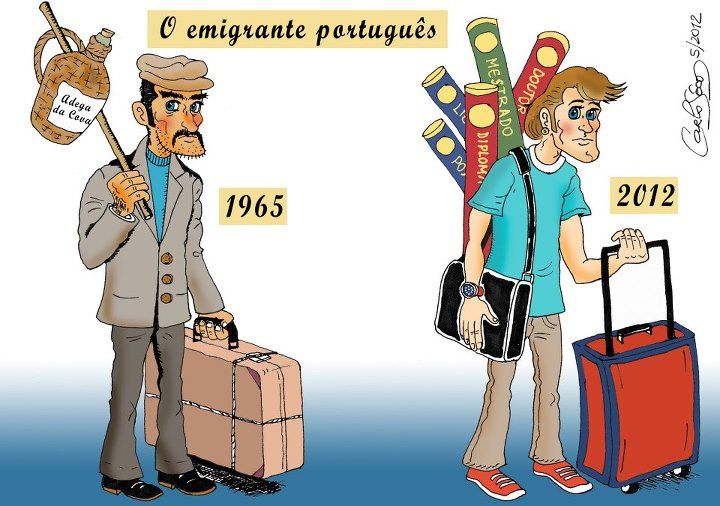
      http://a395.idata.over-blog.com/3/98/30/52/Photo-sup/Candidats-portugais-a-l-emigration.jpg

      ▻http://seenthis.net/messages/424309

      #immigrés_choisis #fuite_des_cerveaux #exode_des_cerveaux #fuite_du_capital_humain #brain_drain #Fuga_de_cérebros

      Dror@sinehebdo @sinehebdo
    • @sinehebdo
      Dror@sinehebdo @sinehebdo 16/12/2015

      Migrants, mi-hommes
      #DATAGUEULE 52, le 14 décembre 2015
      ►https://www.youtube.com/watch?v=KiGiupc3VwA

      ▻http://seenthis.net/messages/439959

      Dror@sinehebdo @sinehebdo
    • @sinehebdo
      Dror@sinehebdo @sinehebdo 10/02/2016

      Qui dit quoi ?
      CSP 75, janvier 2016
      ►https://csp75.wordpress.com/qui-dit-quoi

      Dror@sinehebdo @sinehebdo
    • @cdb_77
      CDB_77 @cdb_77 10/02/2016
      @sinehebdo

      merci @sinehebdo !

      https://csp75.files.wordpress.com/2016/02/quiditquoi_160208-08-wb.png?w=1160

      #infographie #catégorisation

      CDB_77 @cdb_77
    • @cdb_77
      CDB_77 @cdb_77 29/10/2016

      http://i.imgur.com/2CEsupX.jpg

      #schéma #dessin
      vu sur twitter 29.10.2016
      http://i.imgur.com/LkpJSjC.png

      CDB_77 @cdb_77
    • @sinehebdo
      Dror@sinehebdo @sinehebdo 2/12/2016

      https://seenthis.net/local/cache-vignettes/L300xH150/792Zcibjpg-bb82c-88de5.jpg

      ▻https://seenthis.net/messages/547712

      Dror@sinehebdo @sinehebdo
    • @cdb_77
      CDB_77 @cdb_77 8/12/2016

      Intéressant tweet de #MSF :

      http://i.imgur.com/UEhu8n9.png

      #mort #vivant

      CDB_77 @cdb_77
    • @sinehebdo
      Dror@sinehebdo @sinehebdo 22/12/2016

      Morts et disparus en mer – La Méditerranée, une mer devenue frontière
      La Cimade, le 4 novembre 2016
      ▻https://seenthis.net/messages/554197

      Depuis 2014, plus de 10 000 personnes en migration ont perdu la vie en Méditerranée.

      Dror@sinehebdo @sinehebdo
    • @cdb_77
      CDB_77 @cdb_77 23/12/2016

      Et ici une réflexion de fonds sur le #statut_de_réfugié (et donc que faire des #réfugiés_de_guerre et des #réfugiés_des_conflits qui ne sont pas inclus dans la convention de 1951 ?) :

      ►http://asile.ch/2016/12/22/hcr-principes-directeurs-relatifs-aux-situations-de-conflit-arme-de-violence

      CDB_77 @cdb_77
    • @sinehebdo
      Dror@sinehebdo @sinehebdo 23/12/2016

      What’s the difference between a migrant and an expat?
      The Conversation, December 20, 2016
      ▻https://seenthis.net/messages/554440

      Dror@sinehebdo @sinehebdo
    • @sinehebdo
      Dror@sinehebdo @sinehebdo 7/01/2017

      Nouveau terme (pour moi) : le « #transmigrant ». Si j’ai bien compris, c’est le migrant à l’intérieur d’un même pays :

      Migrations, réfugiés, exil (6/9) : Alain Tarrius, Les routes européennes des nouvelles migrations et les mobilités transnationales. Isabelle Thireau, Les migrations à l’ombre de la période maoïste.
      es Cours du Collège de France, France Culture, le 13 décembre 2016
      ►https://seenthis.net/messages/556723

      Dror@sinehebdo @sinehebdo
    • @vanderling
      Vanderling @vanderling 10/01/2017

      Avec les migrants
      9/01/2017 source : Denis Paillard

      Dans ce texte nous avons choisi d’utiliser le terme de ‘migrants’ comme terme générique, pour deux raisons : d’une part parce qu’il renvoie au droit universel de ‘migrer’, tel qu’il est défini dans les conventions internationales, d’autre part, parce qu’il met l’accent sur le fait qu’aujourd’hui ce droit est refusé à des centaines de milliers de personnes.

      ▻https://entreleslignesentrelesmots.wordpress.com/2017/01/09/avec-les-migrants

      Vanderling @vanderling
    • @sinehebdo
      Dror@sinehebdo @sinehebdo 1/02/2017

      Médias, asile et migrations | Table ronde avec des journalistes autour du traitement de l’information sur l’asile
      ▻https://seenthis.net/messages/565415

      TEDx Champs Elysées Salon | Le pouvoir des mots
      ▻https://seenthis.net/messages/565918

      Dror@sinehebdo @sinehebdo
    • @sinehebdo
      Dror@sinehebdo @sinehebdo 6/02/2017

      Why the #language we use to talk about #refugees matters so much
      Adam Taylor, Washington Post, le 30 juillet 2015
      ▻https://seenthis.net/messages/567276

      Dror@sinehebdo @sinehebdo
    • @sinehebdo
      Dror@sinehebdo @sinehebdo 26/02/2017

      Canada : des réfugiés plus que des migrants arrivant des Etats-Unis
      ►https://seenthis.net/messages/573166

      #Canada #USA #Etats-Unis

      Dror@sinehebdo @sinehebdo
    • @sinehebdo
      Dror@sinehebdo @sinehebdo 2/03/2017

      Mondialisations et migrations : dépasser le cadre de l’État pour penser la mobilité
      Maurice Midena, The Conversation, le 28 février 2017
      ▻https://seenthis.net/messages/574418

      Dror@sinehebdo @sinehebdo
    • @sinehebdo
      Dror@sinehebdo @sinehebdo 5/03/2017

      En italien aussi...

      Tribunale Milano: associare il termine “clandestini” ai richiedenti asilo è discriminatorio
      Carta di Roma, 23 febbraio 2017
      ▻https://seenthis.net/messages/575235

      #Italie

      Dror@sinehebdo @sinehebdo
    • @sinehebdo
      Dror@sinehebdo @sinehebdo 9/03/2017

      «  Crise migratoire  » : ce que cachent les mots
      Emmanuel Blanchard et Claire Rodier, GISTI, décembre 2016
      ►https://seenthis.net/messages/576466

      Dror@sinehebdo @sinehebdo
    • @sinehebdo
      Dror@sinehebdo @sinehebdo 1/04/2017

      #Life-seeker:

      Interrogating the Mediterranean ‘Migration Crisis’
      Polly Pallister-Wilkins, Mediterranean Politics, 21:311-315, le 15 février 2016
      ►http://www.tandfonline.com/doi/full/10.1080/13629395.2016.1145826

      « life-seekers »: I use the term ‘life-seeker’ to move beyond the dichotomy and politics of the distinctions between migrant and refugee.

      ►https://seenthis.net/messages/576466

      Dror@sinehebdo @sinehebdo
    • @sinehebdo
      Dror@sinehebdo @sinehebdo 5/04/2017

      Migrants : la Cimade de Dijon contre le FN de Béziers
      Marie Morlot, Le Bien Public, le 21 novembre 2016
      ▻https://seenthis.net/messages/585945

      Des photos de femmes, des hommes et même des enfants, tous pris de face et torse nu, leur peau recouverte de slogans chocs : « Délinquant, clandestin, terroriste, violeur, bouffeur d’alloc voleur »… À côté d’eux, leur vraie fiche d’identité, leur vraie histoire. « Je suis de Syrie, d’Alep ; je suis marié et père d’une petite fille de 6 ans, j’ai traversé le Liban, la Turquie, la Grèce et j’ai été arrêté en Hongrie avant d’être traité comme un animal […]. Je ne trouve pas le sommeil, j’ai tellement peur pour ma femme et ma fille… », peut-on lire sur l’une d’entre elles.

      #BeHumanNow #Cimade #Photos #Dijon #Alexis_Doré

      Dror@sinehebdo @sinehebdo
    • @sinehebdo
      Dror@sinehebdo @sinehebdo 5/04/2017

      Petit guide – Lutter contre les préjugés sur les migrants
      La Cimade, le 12 octobre 2016
      ►https://seenthis.net/messages/585948

      #Cimade #guide #préjugés

      Dror@sinehebdo @sinehebdo
    • @sinehebdo
      Dror@sinehebdo @sinehebdo 15/04/2017

      Émigrés, immigrés, réfugiés
      Le Monde Diplomatique, avril 2017
      ▻https://seenthis.net/messages/589518

      #statistiques #France

      Dror@sinehebdo @sinehebdo
    • @cdb_77
      CDB_77 @cdb_77 15/05/2017

      Déclaration de Mogherini :

      and I would like us to make a clear distinction between the refugees and the migrants, these are two different things

      ►https://eeas.europa.eu/headquarters/headquarters-homepage/26042/remarks-high-representativevice-president-federica-mogherini-joint-press

      CDB_77 @cdb_77
    • @sinehebdo
      Dror@sinehebdo @sinehebdo 20/06/2017

      La fabrique des indésirables
      Michel Agier, Le Monde Diplomatique, Mai 2017
      ▻https://seenthis.net/messages/608509

      #indésirables #déplacé_interne #réfugié #clandestin #maintenu #demandeur_d’asile #débouté #retenu #migrant_clandestin

      Dror@sinehebdo @sinehebdo
    • @cdb_77
      CDB_77 @cdb_77 29/06/2017

      Intéressante note vu sur le site de la BBC en commentaire à un article qu’ils ont publié le 29.06.2017 (▻http://www.bbc.com/news/world-europe-40437917)

      http://i.imgur.com/abhOnal.png

      CDB_77 @cdb_77
    • @cdb_77
      CDB_77 @cdb_77 29/06/2017

      Petite shameless auto-promo :

      Retrouver l’être humain dans les mots qui disent la migration

      Ils sont presque infinis, les mots pour qualifier les personnes en mobilité. Je propose, à travers ce catalogue commenté non exhaustif, d’en passer en revue quelques-uns parmi tous ceux que nos oreilles sont contraintes à entendre, tous les jours, inlassablement, à travers les médias, ou en se promenant dans l’espace public. Les mots qui qualifient les personnes qui se trouvent dans un pays où elles ne sont pas nées, nous envahissent et façonnent notre manière de concevoir le phénomène migratoire. Les mots ont donc aussi un impact, sur nos perceptions, nos représentations et, in fine, sur notre manière de concevoir le phénomène migratoire et sur les politiques qui le régule.

      ►https://archive-ouverte.unige.ch/unige:95175

      CDB_77 @cdb_77
    • @sinehebdo
      Dror@sinehebdo @sinehebdo 3/07/2017

      Super texte qui mériterait une entrée pour lui tout seul, non ?
      ▻https://seenthis.net/messages/612342

      Dror@sinehebdo @sinehebdo
    • @sinehebdo
      Dror@sinehebdo @sinehebdo 4/07/2017

      La situation en #Libye casse la #dichotomie migrant vs. réfugié :

      Mixed Migration Trends in Libya : Changing Dynamics and Protection Challenges
      UNHCR, 2017
      ►https://seenthis.net/messages/612396

      #mixed_migration

      Dror@sinehebdo @sinehebdo
    • @sinehebdo
      Dror@sinehebdo @sinehebdo 18/07/2017

      Réfugiés : une convention vaut mieux que deux tu l’auras
      François Gemenne, Revue Projet, le 13 juin 2017
      ►https://seenthis.net/messages/614724

      Migrants économiques contre réfugiés : que vaut la distinction du gouvernement ?
      Laurent Martinet, L’Expansion, le 12 juillet 2017
      ►https://seenthis.net/messages/614724

      Lampedusa porta del non arrivo
      Nigrizia, le 13 juillet 2017
      ▻https://seenthis.net/messages/614734

      Dror@sinehebdo @sinehebdo
    • @sinehebdo
      Dror@sinehebdo @sinehebdo 19/07/2017

      “There are no camps” in Libya, only detention centres. Need to protect refugees, migrants before they get there
      Vincent Cochetel (Haut Commissariat des Nations unies pour les réfugiés, Geneve), Twitter, le 18 juillet 2017
      ►https://seenthis.net/messages/615857

      Dror@sinehebdo @sinehebdo
    • @sinehebdo
      Dror@sinehebdo @sinehebdo 22/07/2017

      Are they illegal or illegalized?
      Nicholas Keung, The Star, le 17 août 2013
      ►https://seenthis.net/messages/166084

      #illégalisé #sans_statut #sans_autorisation #sans_permission #criminels #invisibles

      Dror@sinehebdo @sinehebdo
    • @sinehebdo
      Dror@sinehebdo @sinehebdo 25/07/2017

      Dans le « jeu » des permutations atroces, on a aussi : Mineurs Migrants ? Mineurs Migrants Non Accompagnés ? Mineurs Etrangers Non Accompagnés ? Migrants Mineurs Isolés ? Mineurs Isolés ? Mineurs Non Accompagnés ? avec par exemple cet article en espagnol :

      El colapso de los menores inmigrantes
      Jesús A. Cañas, El Pais, le 23 juillet 2017
      ▻https://seenthis.net/messages/617216

      #mineurs_non_accompagnés

      Dror@sinehebdo @sinehebdo
    • @sinehebdo
      Dror@sinehebdo @sinehebdo 1/08/2017

      Coupable
      Asile, le 31 juillet 2017
      ▻https://seenthis.net/messages/618879

      ►https://vimeo.com/227131499

      #Coupables

      Dror@sinehebdo @sinehebdo
    • @cdb_77
      CDB_77 @cdb_77 1/08/2017

      Je me demande, @sinhebdo, si tu as aussi un autre mot : « dubliné »...

      CDB_77 @cdb_77
    • @sinehebdo
      Dror@sinehebdo @sinehebdo 1/08/2017

      effectivement, je l’ai rajouté, #dubliné...

      Dror@sinehebdo @sinehebdo
    • @sinehebdo
      Dror@sinehebdo @sinehebdo 7/08/2017

      Colpevoli di viaggio
      Corallina Lopez Curzi, Antigone, mai 2017
      ▻https://seenthis.net/messages/620675

      #coupables_de_voyage

      Réfugiés et migrants pris au piège d’un commerce meurtrier au Niger
      Michelle Hoffman, UNHCR, le 4 août 2017
      ▻https://seenthis.net/messages/620219

      Définition. “Expat”, “immigré”, “étranger” : le poids des mots
      Courrier International, le 4 août 2017
      ▻https://seenthis.net/messages/620228

      Collomb veut « distinguer le droit d’asile des autres motifs de migration »
      Le Monde, le 6 août 2017
      ►https://seenthis.net/messages/620586

      http://resize2-lejdd.ladmedia.fr/rcrop/262,386/img/var/lejdd/imports/print/couvs/current_3682.jpg http://i.imgur.com/gHa0J39.jpg http://i.imgur.com/vooft2w.jpg http://i.imgur.com/sGfZLAJ.jpg

      Qu’est ce qu’un migrant ?
      La Cimade
      ►https://seenthis.net/messages/531563

      Dror@sinehebdo @sinehebdo
    • @sinehebdo
      Dror@sinehebdo @sinehebdo 10/08/2017

      Un article de merde qui ne mérite même pas une entrée pour lui tout seul :

      « Migrants », un terme à proscrire
      François Côté, Le Devoir (Montréal), le 10 août 2017
      ▻http://www.ledevoir.com/societe/actualites-en-societe/505329/migrants-un-terme-a-proscrire

      Dror@sinehebdo @sinehebdo
    • @sinehebdo
      Dror@sinehebdo @sinehebdo 11/08/2017

      Bosnia Sees Increase in ‘Desperate’ Illegal Migrants
      Haris Rovcanin, Balkan Insight, le 10 août 2017
      ▻https://seenthis.net/messages/621665

      Je rajoute donc le mot #désespéré...

      Dror@sinehebdo @sinehebdo
    • @cdb_77
      CDB_77 @cdb_77 15/09/2017

      #Candidat_à_l'exil

      Rome est accusé d’avoir traité avec des milices de passeurs pour endiguer le flux de candidats à l’exil au départ des côtes libyennes

      ►https://www.letemps.ch/monde/2017/09/14/entre-libye-litalie-un-accord-eaux-troubles-contre-migrants

      CDB_77 @cdb_77
    • @sinehebdo
      Dror@sinehebdo @sinehebdo 18/10/2017

      Bond du nombre de « bébés passeports » au Canada
      Alexandra Szacka, Radio Canada, le 16 octobre 2017
      ▻https://seenthis.net/messages/638008

      #bébé_passeport

      Dror@sinehebdo @sinehebdo
    • @sinehebdo
      Dror@sinehebdo @sinehebdo 23/10/2017

      The New Europeans
      Robert Kunzig, National Geographics, octobre 2016
      ▻https://seenthis.net/messages/639050

      #New_Europeans #Nouveaux_Européens

      Dror@sinehebdo @sinehebdo
    • @sinehebdo
      Dror@sinehebdo @sinehebdo 26/10/2017

      The reintegration of returning migrants
      Marta Latek, European Parliamentary Research Service Blog, le 19 octobre 2017
      ▻https://seenthis.net/messages/639445

      Returning migrants to The Gambia: the political, social and economic costs
      Franzisca Zanker, The Conversation, le 23 octobre 2017
      ▻https://seenthis.net/messages/639457

      Ne dites plus ni « mineurs isolés étrangers » ni « enfants »
      Gisti, Octobre 2017
      ▻https://seenthis.net/messages/639463

      https://i.imgur.com/FLEjtlr.jpg

      ▻https://seenthis.net/messages/639679

      #returning_migrants #migrants_de_retour
      #retours_volontaires
      #stranded_migrants #migrants_bloqués

      Dror@sinehebdo @sinehebdo
    • @sinehebdo
      Dror@sinehebdo @sinehebdo 5/12/2017

      L’Etat privatise une partie des expulsions de sans-papiers
      Tomas Statius, StreetPress, le 28 Novembre 2017
      ▻https://seenthis.net/messages/649333

      #INAD #Sans-Pap
      INAD = étrangers non-admis sur le territoire français et interpellés à leur descente de l’avion

      ►https://seenthis.net/messages/649379
      #Exodant

      What’s in A Name ? Exploring the Role of Law and Bureaucracy in The Everyday Construction of Holot, an ’Open Detention Facility’ for ’Infiltrators’ in Israel
      Maayan Ravid, Border Criminologies, le 28 Novembre 2017
      ►https://seenthis.net/messages/649886

      #Infiltrators #Infiltrés
      #Palestine #israel #israfrique #racisme #Holot

      Dror@sinehebdo @sinehebdo
    • @sinehebdo
      Dror@sinehebdo @sinehebdo 18/12/2017

      Persécutés en Libye - l’Europe est complice
      Amnesty International, le 11 décembre 2017
      ▻https://seenthis.net/messages/624917

      #persécutés

      Dror@sinehebdo @sinehebdo
    • @cdb_77
      CDB_77 @cdb_77 18/12/2017

      Je ne sais pas si tu as celui-ci dans ta liste, mot utilisé samedi 16.12.2017 par Edwy Plenel dans une table ronde organisée à Briançon à l’occasion des Etats généraux de la migration (organisation : Tous Migrants) : #demandeurs_de_refuge

      CDB_77 @cdb_77
    • @sinehebdo
      Dror@sinehebdo @sinehebdo 19/12/2017

      #rapatriés

      Itinéraires des réfugiés de la Première Guerre mondiale. Rencontre avec Claudie Lefrère-Chantre
      Les Cafés Géo, le 19 décembre 2017
      ▻https://seenthis.net/messages/653281

      Dror@sinehebdo @sinehebdo
    • @sinehebdo
      Dror@sinehebdo @sinehebdo 20/12/2017

      A piedi nudi nel ghiaccio: è sulle Alpi l’ultima rotta dei migranti
      Francesco Battistini, Corriere della Sera, le 18 décembre 2017
      ►https://seenthis.net/messages/642301

      #fuggiaschi" (= #fugitifs)

      Dror@sinehebdo @sinehebdo
    • @cdb_77
      CDB_77 @cdb_77 3/01/2018

      Et voilà un autre terme « #acute_refugee » (à traduire en français avec #réfugié_aigu ?) :

      From these diverse stories, a number of complexities associated with the refugee experience begin to appear. The circumstances that lead people to become refugees are extremely diverse. Some refugee movements are the product of what the scholar E.F. Kunz called ’great political changes or movements of armies’. Those who move in such circumstances he called ’acute’ refugees, and the vast majority of refugees in the contemporary world fall into that category, for it is only events on a grand scale that are likely to generate population movements on a grand scale.

      (p.6)

      Tiré du livre « What is a refugee ? » de William Maley, 2016
      –-> à noter « what » et non pas « whom ».
      Maley est un diplomate à la retraite, si ma mémoire est bonne

      CDB_77 @cdb_77
    • @cdb_77
      CDB_77 @cdb_77 3/01/2018

      « #Circulant » : « Ce terme correspond bien à l’appellation que se donnent beaucoup d’Afghans : #mosâfer, littéralement ’#voyageur'. » (Monsutti 2009 : 85)

      Tiré de cet article de Alessandro Monsutti : ▻http://www.cairn.info/revue-critique-internationale-2009-3-page-83.htm

      CDB_77 @cdb_77
    • @sinehebdo
      Dror@sinehebdo @sinehebdo 17/01/2018

      Merci. J’ai mis la liste à jour. J’en ai profité, puisqu’elle est de plus en plus longue, pour la mettre en ordre alphabétique (sauf les 2 premières et la dernière expression).

      Dror@sinehebdo @sinehebdo
    • @cdb_77
      CDB_77 @cdb_77 15/02/2018

      C’est probablement nouveau, ce mot...
      Je l’ai entendu ce soir (15.02.2018) lors d’une conférence au Patio (Uni Grenoble) prononcé par un migrant originaire d’Afrique de l’Ouest qui parlait de son parcours... arrivé à la traversée du désert, il parle du business des migrations et il dit « c’est pour cela qu’on nous appelle #diamants_noirs »

      CDB_77 @cdb_77
    • @sinehebdo
      Dror@sinehebdo @sinehebdo 15/02/2018

      Je rajoute...

      Dror@sinehebdo @sinehebdo
    • @sinehebdo
      Dror@sinehebdo @sinehebdo 2/03/2018

      #Turcs dans :

      L’Italie, seule dans la tempête migratoire
      Jérôme Gautheret, Le Monde, le 23 février 2018
      ►https://seenthis.net/messages/673523

      A la tête de ce qui, à l’origine, n’était guère plus qu’un dispensaire, Pietro Bartolo s’est trouvé aux premières loges quand tout a changé. " Ça a commencé dans les années 1990. Les migrants, des jeunes hommes venus d’Afrique du Nord, arrivaient directement sur la plage, par leurs propres moyens, avec des barques ou des canots pneumatiques. Sur l’île, on les appelait “les Turcs”, se souvient-il. Les habitants accueillent comme ils peuvent les arrivants, qui gagnent ensuite la Sicile puis, pour l’immense majorité, le continent.

      On revient un siècle en arrière, du temps où tous les Arabes étaient appelés Turcs parce qu’ils provenaient de l’empire ottoman...

      Dror@sinehebdo @sinehebdo
    • @sinehebdo
      Dror@sinehebdo @sinehebdo 6/03/2018

      On parlait de #Migrant_Refusal_Pool ici :

      ’Bounty hunters’ hired to track down illegal immigrants
      Martin Beckford, The Telegraph, le 18 septembre 2012
      ▻https://seenthis.net/messages/665058

      Et de #refugee_workers ici (on avait déjà les #Travailleurs_Migrants, on a maintenant aussi des #Travailleurs_Réfugiés) :

      For Refugee Compact to Talk Jobs, It Must Listen to Migration Compact
      Refugees Deeply, le 5 mars 2018
      ►https://seenthis.net/messages/520380

      Dror@sinehebdo @sinehebdo
    • @sinehebdo
      Dror@sinehebdo @sinehebdo 15/03/2018

      Quelques articles qui, sans définir de nouveaux mots, abordent indirectement cette question de vocabulaire :

      Monsieur le Président, vous avez instauré à Calais un protocole de la bavure
      Yann Moix, Libération, le 21 janvier 2018
      ▻https://seenthis.net/messages/662074

      Le Canada va tester l’identité numérique pour les voyageurs internationaux
      Deplacements Pros, le 26 janvier 2018
      ▻https://seenthis.net/messages/663333

      Réfugiés, Demandeurs d’asile, Migrants : quelles différences ?
      UNHCR, mars 2018
      ▻https://seenthis.net/messages/676501

      Dror@sinehebdo @sinehebdo
    • @sinehebdo
      Dror@sinehebdo @sinehebdo 26/03/2018

      Hypocrites ! (vocabulaire utilisé pour décrire les migrants...)
      Dror, #Psikopat, juin 2015

      https://1.bp.blogspot.com/-pVDaZ_6Jwt4/VfraAZYPoOI/AAAAAAAAM54/WRCGs-uM_0w/s1600/DrorPsikopat0615-1.jpg

      Vocabulaire (encore une chronique sur l’utilisation du vocabulaire pour décrire les migrants...)
      Dror, Psikopat, novembre 2015

      https://2.bp.blogspot.com/-KRtzgG21OX0/Vp-YZ1UbKyI/AAAAAAAANFk/Sf6kbfKAzBA/s1600/Psikopat1115-1.jpg

      Dror@sinehebdo @sinehebdo
    • @sinehebdo
      Dror@sinehebdo @sinehebdo 28/03/2018

      #touristes_clandestins
      vincent cochetel, twitter, le 26 mars 2018
      ▻https://seenthis.net/messages/680268

      Dror@sinehebdo @sinehebdo
    • @sinehebdo
      Dror@sinehebdo @sinehebdo 21/04/2018

      #fugitifs :

      Mesdames, Messieurs les députés : abolissez le délit de solidarité !
      Benoît Ducos, Le Nouveau Magazine Littéraire, le 18 avril 2018
      ►https://seenthis.net/messages/688734

      Dror@sinehebdo @sinehebdo
    • @sinehebdo
      Dror@sinehebdo @sinehebdo 26/04/2018

      #ESI #étranger_en_situation_irrégulière ici :
      ►https://seenthis.net/messages/673523

      Dror@sinehebdo @sinehebdo
    • @cdb_77
      CDB_77 @cdb_77 28/04/2018

      In recent years there has been a proliferation of categories through which non-European people on the move are labelled (Giudici 2013:62; Zetter 2007). Think about ‘unreturnable detainees’, ‘failed asylum seekers’, ‘unaccompanied minors’, or ‘trafficking victims’. In all these particular cases, yet also in the broader categories of ‘refugee’ or ‘illegal migrant’, the border gaze is twofold: it is performed by the state and its citizens but it is also unconsciously internalised by those subjected to that gaze (Khosravi 2010:76). The discursive realm of what we call ‘migration’ is much more ambiguous than the tangible, regulatory practices of border control, detention, and deportation. Labels do not only classify; they establish an order in the life of the other, producing the illusion that their essence is immediately accessible, visible and recognisable (Benasayag and Schmit 2005:75). Through language, the epistemic violence of the border is extended into the everyday life of migrants: as Khosravi remarks, they are not ‘seen’ as individuals but ‘read’ as types (2010:76).

      Tiré d’un chapitre de livre de Picozza: “Dubliners: Unthinking Displacement, Illegality and Refugeeness within Europe’s Geographies of Asylum”, in: De Genova (ed), "The Borders of “Europe”: Autonomy of Migration, Tactics of Bordering" (▻https://www.dukeupress.edu/the-borders-of-europe)

      CDB_77 @cdb_77
    • @sinehebdo
      Dror@sinehebdo @sinehebdo 23/05/2018

      #migrants_revenus :
      ▻https://seenthis.net/messages/696292

      Dror@sinehebdo @sinehebdo
    • @cdb_77
      CDB_77 @cdb_77 27/05/2018

      Nouveau terme, entendu aux Etats généraux de la migration, à Paris (26-27.05.2018) :
      #mijeurs = mineurs déclarés majeurs par les autorités

      CDB_77 @cdb_77
    • @sinehebdo
      Dror@sinehebdo @sinehebdo 30/05/2018

      mis à jour, merci !

      Dror@sinehebdo @sinehebdo
    • @sinehebdo
      Dror@sinehebdo @sinehebdo 14/08/2018

      « j’ai fait le vent du désert sans m’y être préparé. »
      –-> #faire_le_vent_du_désert
      ▻https://seenthis.net/messages/712567

      Et un autre article abordant cette question :

      Réfugiés, migrants : derrière les mots, des politiques de tri
      Laura Raim, Regards, le 6 août 2018
      ▻https://seenthis.net/messages/713135

      Dror@sinehebdo @sinehebdo
    • @sinehebdo
      Dror@sinehebdo @sinehebdo 9/09/2018

      #crimmigrés, #rapatriés_en_bilan
      ►https://seenthis.net/messages/720549

      Je ne comprends pas très bien le sens du second...

      Dror@sinehebdo @sinehebdo
    • @cdb_77
      CDB_77 @cdb_77 30/09/2018

      « Ne m’appelez pas migrant. Ni réfugié. Appelez-moi ’#chercheur_de_la_paix' »

      Entendu hier soir, l 29.09.2018, à La Bobine de Grenoble. Soirée en soutien de Réseau éducation sans frontières et SOS Méditerranée. Témoignage d’un mineur isolé qui habite à Clermont-Ferrand.

      #chercheur_de_paix

      CDB_77 @cdb_77
    • @sinehebdo
      Dror@sinehebdo @sinehebdo 1/10/2018

      Ajouté... ce sont effectivement des chercheurs de paix, et des #survivants de la guerre...

      Dror@sinehebdo @sinehebdo
    • @cdb_77
      CDB_77 @cdb_77 1/10/2018

      Nouveau terme (ou je me trompe ?) : « #rejoignant »

      Entendu à la journée d’études organisées par le laboratoire LARHRA :
      ▻http://larhra.ish-lyon.cnrs.fr/node/5235

      CDB_77 @cdb_77
    • @sinehebdo
      Dror@sinehebdo @sinehebdo 1/10/2018

      oui, ajouté, merci...

      Dror@sinehebdo @sinehebdo
    • @cdb_77
      CDB_77 @cdb_77 3/10/2018

      Il y est déjà, mais le revoilà : #aventuriers :
      François Gemenne : « Historiquement, les migrants étaient des aventuriers »

      Spécialiste de géopolitique, François Gemenne consacre ses recherches à la gouvernance des migrations et du changement climatique. Membre du GIEC (Groupe d’experts intergouvernemental sur l’évolution du climat), il enseigne les politiques d’environnement et les migrations internationales à Sciences Po et à l’Université libre de Bruxelles. Il appelle à se méfier des analyses émotives ou instrumentalisées sur la crise migratoire, replaçant le contexte actuel dans l’histoire des sociétés humaines et défendant l’ouverture des frontières.

      ▻https://www.kaizen-magazine.com/article/francois-gemenne-historiquement-les-migrants-etaient-des-aventurier

      –—

      « Leurs pas ont menés dans notre ville. Certains d’entre eux, parmi les premiers à passer par la montagne, ont décidé de s’arrêter là. Chacun avec son histoire. Tous ces jeunes – burkinabés, guinéens, ivoiriens, maliens et nigérians – ne se connaissent pas et pourtant, nous les regroupons dans une entité : les francophones. Ils refusent cette appellation. Idriss m’explique ‘car la France ne nous aime pas vraiment, nous fait attendre, refuse de nous protéger, alors que nous avons tout quitté ; là-bas, la vie n’était plus possible’. On cherche ensemble un nom pour ce groupe. Je propose à certains ‘les aventuriers’ parce que chez eux, à ceux qui quittent leur pays on dit qu’ils partent en aventure. Mais on m’explique que partir en aventure, c’est quand on le veut, pas lorsqu’on fuit. Pourtant, je ne trouve pas mieux que ce nom. Et leur parcours a tout d’une vraie aventure, avec ses dangers et ses incertitudes, sans l’aspect romanesque toutefois. »

      (Besson 2020 : 104-105)
      ▻https://www.glenat.com/hommes-et-montagnes/trouver-refuge-9782344042274

      CDB_77 @cdb_77
    • @sinehebdo
      Dror@sinehebdo @sinehebdo 5/10/2018

      #migrants_climatiques ? #migrants_éco-climatiques ? le terme est proposé ici :

      Changement climatique et migrations humaines au Sénégal : une approche en termes de vulnérabilité du système socio-écologique
      Alassane Diallo, CREG, le 4 octobre 2018
      ▻https://seenthis.net/messages/726965

      Dror@sinehebdo @sinehebdo
    • @sinehebdo
      Dror@sinehebdo @sinehebdo 9/10/2018

      #Migrants_Secondaires et #Migrérrants ajoutés de là :
      ▻https://seenthis.net/messages/727438

      Dror@sinehebdo @sinehebdo
    • @sinehebdo
      Dror@sinehebdo @sinehebdo 3/11/2018

      L’expatriation « à la française » au prisme des médias
      Eve Bantman-Masum, Mondes Sociaux, le 16 novembre 2015 ▻https://seenthis.net/messages/732955

      Dror@sinehebdo @sinehebdo
    • @sinehebdo
      Dror@sinehebdo @sinehebdo 15/12/2018

      https://seenthis.net/local/cache-vignettes/L600xH434/qPaAN9Pjpg-aa14a-ea091.jpg

      ►https://seenthis.net/messages/531563

      Dror@sinehebdo @sinehebdo
    • @sinehebdo
      Dror@sinehebdo @sinehebdo 15/12/2018

      Podcast : migrants ou réfugiés ? Crise ou phénomène durable ?
      Marie Veniard, Speranta Dumitru et Thomas Lacroix, The Conversation, le 13 novembre 2018
      ▻https://seenthis.net/messages/736742

      Livre | Penser les mots, dire la migration
      Asile.ch, le 21 novembre 2018
      ▻https://seenthis.net/messages/737401

      Dror@sinehebdo @sinehebdo
    • @sinehebdo
      Dror@sinehebdo @sinehebdo 20/02/2019

      Refugees, Migrants: What’s the difference?
      UNHCR, the UN Refugee Agency, Twitter, le 19 février 2019
      ►https://seenthis.net/messages/761519

      Dror@sinehebdo @sinehebdo
    • @sinehebdo
      Dror@sinehebdo @sinehebdo 21/02/2019

      Migrants et réfugiés : quand dire, c’est faire la politique migratoire
      Cécile Canut, Vacarme, le 12 juin 2016
      ►https://seenthis.net/messages/761519

      Dror@sinehebdo @sinehebdo
    • @sinehebdo
      Dror@sinehebdo @sinehebdo 7/03/2019

      Certains termes spécifiquement en anglais comme returnees ou returning migrants:

      Life is a fight that should be fought - Life in transit : Voices from returning migrants
      XChange, 2018
      ►https://seenthis.net/messages/765311

      #returnees et #returning_migrants

      Dror@sinehebdo @sinehebdo
    • @cdb_77
      CDB_77 @cdb_77 26/05/2019

      #Errants

      "Cette expression est utilisée par la presse des Alpes-Maritimes. Voir par exemple les articles du journaliste Henri Séméria dans le Petit Niçois : « errants à travers le monde », 24 et 28 juillet 1938."

      Source : ►https://journals.openedition.org/remi/5584#ftn31

      CDB_77 @cdb_77
    • @sinehebdo
      Dror@sinehebdo @sinehebdo 26/05/2019

      Mis à jour, merci !

      Dror@sinehebdo @sinehebdo
    • @sinehebdo
      Dror@sinehebdo @sinehebdo 13/06/2019

      #binationaux dans le cas de la migration nord-sud :

      Les Français, ces migrants dont on parle peu
      Giulia Fabbiano, Alexandra Poli, Liza Terrazzoni, The Conversation, le 28 mai 2019
      ▻https://seenthis.net/messages/783882

      Dror@sinehebdo @sinehebdo
    • @sinehebdo
      Dror@sinehebdo @sinehebdo 12/07/2019

      #Transitants

      Il modello di accoglienza dei migranti a Milano è in crisi?
      Annalisa Camilli, Internazionale, le 14 mai 2017
      ▻https://seenthis.net/messages/792354

      Dror@sinehebdo @sinehebdo
    • @sinehebdo
      Dror@sinehebdo @sinehebdo 15/07/2019

      Article immonde sur le sujet :

      Hugues MOUTOUH : « Le mot “migrants” traduit un parti pris idéologique que nous devons refuser »
      ICEO, le 3 octobre 2018
      ►https://seenthis.net/messages/792578

      Extraits :

      La seule vraie nouveauté est d’ordre sémantique

      accepter de parler de « migration » revient non seulement à faire le jeu de ceux qui militent depuis toujours pour l’abolition des frontières et la fin des nations

      Éloge des #frontières...

      Et qui, au passage, invente une nouvelle catégorie abjecte, que je ne rajouterai pas à la liste, les #demandeurs_d’asile_sincères

      Dror@sinehebdo @sinehebdo
    • @sinehebdo
      Dror@sinehebdo @sinehebdo 10/08/2019

      #Clandestins_non_identifiés, mais aussi l’usage des #guillemets est discuté ici :

      Nouveau sauvetage pour l’Ocean Viking, Richard Gere en soutien aux « réfugiés » de l’Open Arms
      Courrier International, le 10 août 2019
      ▻https://seenthis.net/messages/796650

      Dror@sinehebdo @sinehebdo
    • @sinehebdo
      Dror@sinehebdo @sinehebdo 22/08/2019

      Certaines situations spécifiques entraînent l’utilisation de nouveaux mots ou de mots anciens utilisés avec un nouveau sens encore plus spécifiques, comme #Habesha qui désignent au Soudan ceux qui ne parlent pas arabe, donc les Abyssins, les Éthiopiens et les Érythréens... donc les migrants...
      ▻https://seenthis.net/messages/797969

      Dror@sinehebdo @sinehebdo
    • @sinehebdo
      Dror@sinehebdo @sinehebdo 27/08/2019

      Sudan updates – Terrorists in the new Sovereign Council
      Walid Ahmed, Doorbraak, le 26 août 2019
      ▻https://seenthis.net/messages/798688

      pour l’expression « undocumented, illegalized refugees », et donc les oxymores :
      #undocumented_refugees
      #illegalized_refugees
      #réfugiés_irréguliers
      #réfugiés_sans_papiers
      #réfugiés_illégalisés

      Dror@sinehebdo @sinehebdo
    • @sinehebdo
      Dror@sinehebdo @sinehebdo 17/09/2019

      Après #Refugee_workers, maintenant c’est #Working_refugees ou #Réfugiés_travaillant :

      A Fribourg, un service en ligne fait le lien entre entreprises et réfugiés
      Fabrice Gaudiano, RTS, le 16 septembre 2019
      ►https://seenthis.net/messages/802173
      ►https://www.rts.ch/info/regions/fribourg/10711881-a-fribourg-un-service-en-ligne-fait-le-lien-entre-entreprises-et-refugi

      Dror@sinehebdo @sinehebdo
    • @sinehebdo
      Dror@sinehebdo @sinehebdo 13/10/2019

      A propos de #navetteur :
      ▻https://seenthis.net/messages/783743

      Puisqu’on a des Migrants climatiques et des Migrants environnementaux, pourquoi pas de des #Réfugiés_climatiques et des #Réfugiés_environnementaux, ou le contraire, voire en anglais des #climate-movers :

      Why the Migrant Caravan Story Is a Climate Change Story
      Todd Miller, Yes, le 27 novembre 2018
      ►https://seenthis.net/messages/739539

      “You can’t make a living here anymore.”
      Jeff Ernst, The California Sunday Magazine, le 10 mars 2019
      ►https://seenthis.net/messages/805208

      Let’s Talk About Climate Migrants, Not Climate Refugees
      Dina Ionesco, ONU, le 6 juin 2019
      ▻https://seenthis.net/messages/804483

      Dror@sinehebdo @sinehebdo
    • @sinehebdo
      Dror@sinehebdo @sinehebdo 13/11/2019

      La Cour suprême américaine prête à mettre fin aux rêves des Dreamers ?
      The New York Times, le 12 novembre 2019
      ▻https://seenthis.net/messages/810815

      #Dreamers

      Dror@sinehebdo @sinehebdo
    • @sinehebdo
      Dror@sinehebdo @sinehebdo 14/11/2019

      #chercheurs_de_refuge

      Communiqué
      Damien Carême, le 6 septembre 2018
      ▻https://seenthis.net/messages/811128

      Dror@sinehebdo @sinehebdo
    • @cdb_77
      CDB_77 @cdb_77 21/11/2019

      « #returnees » a déjà été signalé, dans la même veine... #deportees (v. sur ce panneau) :

      https://images.theconversation.com/files/301924/original/file-20191115-66932-1yj39n9.jpg?ixlib=rb-1.1.0&q=45&auto=format&w=926&fit=clip#.jpg

      ►https://theconversation.com/why-return-from-europe-is-causing-problems-for-the-gambia-124036

      CDB_77 @cdb_77
    • @sinehebdo
      Dror@sinehebdo @sinehebdo 21/11/2019

      Merci, je l’ai ajouté à la liste des termes en anglais...

      Dror@sinehebdo @sinehebdo
    • @sinehebdo
      Dror@sinehebdo @sinehebdo 28/11/2019

      “No existe traducción para la palabra ‘migrantes’ en la lengua de los pueblos originarios ; todos somos #caminantes (#marcheurs)”
      ▻https://seenthis.net/messages/813183

      Dror@sinehebdo @sinehebdo
    • @cdb_77
      CDB_77 @cdb_77 4/12/2019

      Un nouveau mot (même si on connaît le mot, mais avec l’ajout de l’adjectif « bloqué ») ?
      #marooned_migrant —> #migrant_bloqué

      #mots #terminologie #vocabulaire
      ▻https://seenthis.net/messages/778571#message814203

      CDB_77 @cdb_77
    • @sinehebdo
      Dror@sinehebdo @sinehebdo 2/01/2020

      Médias | Le choix des mots
      Asile.ch, le 2 décembre 2019
      ▻https://seenthis.net/messages/813931

      Migrants en Libye, les oubliés de l’exil
      Jérôme Tubiana, Orient XXI, le 26 décembre 2019
      ▻https://seenthis.net/messages/818436

      Les migrants érythréens sont particulièrement ciblés, car beaucoup de trafiquants libyens croient qu’ils peuvent compter sur l’aide d’une riche diaspora en Europe et en Amérique du Nord. « Nous sommes les plus pauvres, mais les Libyens pensent que nous sommes riches. Ils nous appellent #Dollars et #Euros », me raconte un autre migrant.

      Dror@sinehebdo @sinehebdo
    • @sinehebdo
      Dror@sinehebdo @sinehebdo 9/02/2020

      #criminels_illégaux, #illégaux_en_transit ici :

      Un tiers des rapatriements par Frontex provenait de la Belgique en 2019
      Le Vif, le 15 janvier 20
      ▻https://seenthis.net/messages/821752

      #retournés ici :

      Côte d’Ivoire : Kalifa, un des « maudits », ces migrants forcés de rentrer sans avoir atteint l’Europe
      Yassin Ciyow, Le Monde, le 1 février 2020
      ▻https://seenthis.net/messages/823815

      Dror@sinehebdo @sinehebdo
    • @sinehebdo
      Dror@sinehebdo @sinehebdo 10/02/2020

      La novlangue du retour forcé / retour volontaire : de plus en plus cyniquement inventifs, avec #migrants_rapatriés, #éjectés_volontaires, #déplacés_poétiques :
      ▻https://seenthis.net/messages/824917

      Dror@sinehebdo @sinehebdo
    • @sinehebdo
      Dror@sinehebdo @sinehebdo 24/02/2020

      Près de 600 migrants portés disparus en Libye, alerte l’OIM
      Bahar Makooi, Info Migrants, le 20 février 2020
      ▻https://seenthis.net/messages/827158

      #migrants_volatilisés

      Dror@sinehebdo @sinehebdo
    • @sinehebdo
      Dror@sinehebdo @sinehebdo 25/04/2020

      #vocation_à_quitter_le_territoire prononcé par Manuel Valls, ministre de l’intérieur, le 25 septembre 2013, comme raconté ici :
      ▻https://seenthis.net/messages/839465

      #travailleurs_itinérants pour qualifier les saisonniers italiens en Suisse ici :
      ▻https://seenthis.net/messages/842315

      #Exodant refait son apparition ici, mieux sourcé :
      ►https://seenthis.net/messages/844250

      Dror@sinehebdo @sinehebdo
    • @sinehebdo
      Dror@sinehebdo @sinehebdo 12/07/2020

      en italien : #capsunari #cueilleurs_de_fraises
      ▻https://seenthis.net/messages/849335

      en anglais : #aspiring_migrants #returnable_migrants #ICE_detainee
      ▻https://seenthis.net/messages/853616
      ►https://seenthis.net/messages/862826
      ▻https://seenthis.net/messages/866675

      #Libia : surnom donné aux nouveaux arrivants d’Erythrée par les Erythréens de la diaspora, installés depuis longtemps en Italie...
      ►https://seenthis.net/messages/866396

      #Refuweegee : réfugié bien intégré à Glasgow
      ►https://seenthis.net/messages/866781

      #Miri_Rubin, Cities of Strangers. Making Lives in Medieval Europe, Cambridge, Cambridge University Press, 2020.
      ▻https://seenthis.net/messages/856657

      Dror@sinehebdo @sinehebdo
    • @sinehebdo
      Dror@sinehebdo @sinehebdo 19/07/2020

      #égarés :
      ▻https://seenthis.net/messages/867982

      Dror@sinehebdo @sinehebdo
    • @sinehebdo
      Dror@sinehebdo @sinehebdo 19/08/2020

      #returnee_migrant :
      ▻https://seenthis.net/messages/872222

      Dror@sinehebdo @sinehebdo
    • @cdb_77
      CDB_77 @cdb_77 1/12/2020

      #Agame , the term Eritreans used for Tigrayan migrant labourers.

      ▻https://seenthis.net/messages/887986#message889032

      CDB_77 @cdb_77
    • @sinehebdo
      Dror@sinehebdo @sinehebdo 3/12/2020

      A trier, mais là je n’ai pas le courage :
      ►https://seenthis.net/messages/872651
      ▻https://seenthis.net/messages/875032
      ▻https://seenthis.net/messages/887273
      ▻https://seenthis.net/messages/887722
      ▻https://seenthis.net/messages/887175
      ▻https://seenthis.net/messages/888895

      Dror@sinehebdo @sinehebdo
    • @cdb_77
      CDB_77 @cdb_77 2/01/2021

      Sur la frontière gréco-turque, à l’épicentre des tensions
      – "Le traité (de Lausanne) a déraciné plus de 1,2 million de chrétiens orthodoxes, envoyés en Grèce. Au total, plus de 30 000 sont arrivés dans l’île. Ils ont alors été péjorativement baptisés les « #graines_de_Turcs »."
      – "Les femmes exilées de la grande ville d’İzmir étaient surnommées “ les #prostituées ”."
      ▻https://seenthis.net/messages/894083

      CDB_77 @cdb_77
    • @cdb_77
      CDB_77 @cdb_77 6/01/2021

      #Conservation_Refugees. The Hundred-Year Conflict between Global Conservation and Native Peoples

      https://seenthis.net/local/cache-vignettes/L321xH475/3Fcollid3Dbo6642-039b9.jpg

      ▻https://seenthis.net/messages/894667#message894668

      CDB_77 @cdb_77
    • @cdb_77
      CDB_77 @cdb_77 7/01/2021

      #De_facto_refugees
      ▻https://seenthis.net/messages/894879

      CDB_77 @cdb_77
    • @cdb_77
      CDB_77 @cdb_77 10/01/2021

      #foreign_refugees et #national_refugees
      ▻https://seenthis.net/messages/895427#message895428

      CDB_77 @cdb_77
    • @cdb_77
      CDB_77 @cdb_77 9/02/2021

      #expatrié_à_court_terme qui fait des #missions_internationales_bidirectionnelles...
      ▻https://seenthis.net/messages/900934

      CDB_77 @cdb_77
    • @cdb_77
      CDB_77 @cdb_77 16/02/2021

      les... #islamistes_étrangers (dixit #Marine_Le_Pen) :
      ▻https://seenthis.net/messages/901742#message902085

      CDB_77 @cdb_77
    • @cdb_77
      CDB_77 @cdb_77 8/04/2021

      Les « #Bumidomiens »
      un mot pour désigner des personnes qui ont « bénéficier » des programmes mis en place par le Bureau pour le développement des migrations dans les départements d’Outre-mer (►https://fr.wikipedia.org/wiki/Bureau_pour_le_d%C3%A9veloppement_des_migrations_dans_les_d%C3%A9parte).

      ►https://seenthis.net/messages/879877

      CDB_77 @cdb_77
    • @cdb_77
      CDB_77 @cdb_77 2/05/2021

      #Kafirs (unbelievers)

      Throughout Yazidi history we have always suffered religious discrimination. Arabs and Turks call us Kafirs (unbelievers)

      ▻https://seenthis.net/messages/913638

      CDB_77 @cdb_77
    • @cdb_77
      CDB_77 @cdb_77 6/07/2021

      Discussion autour du mot #harraga par #Amade_M'Charek :

      https://seenthis.net/local/cache-vignettes/L600xH326/MEE9MJVpng-44ea8-7d722.png https://seenthis.net/local/cache-vignettes/L600xH357/hJNsllTpng-77893-fe5a9.png

      https://seenthis.net/messages/921358

      CDB_77 @cdb_77
    • @cdb_77
      CDB_77 @cdb_77 13/08/2021

      #Diamant_noir

      En Libye, un Noir, c’est de l’argent. Ils nous appellent les « #diamants_noirs ».

      ▻https://seenthis.net/messages/925939

      Déjà recensé ici :
      ►https://seenthis.net/messages/414225#message669506

      CDB_77 @cdb_77
    • @cdb_77
      CDB_77 @cdb_77 16/08/2021

      #cinkali

      «i cinkali , gli italiani litigiosi che gridavano cinq!»

      ▻https://seenthis.net/messages/926225

      CDB_77 @cdb_77
    • @cdb_77
      CDB_77 @cdb_77 27/08/2021

      les #navigants (i #naviganti)

      «Andare, andare, simme tutt’eguale
      affacciati alle sponde dello stesso mare
      e nisciuno è pirata e nisciuno è emigrante
      simme tutte naviganti
      allez, allez il n’y a pas de barrière
      nous sommes tous enfants de la même mer
      il n’y a pas de pirate il n’y a pas d’émigrant
      nous sommes tous des navigants»

      ▻https://seenthis.net/messages/927434

      CDB_77 @cdb_77
    • @cdb_77
      CDB_77 @cdb_77 28/08/2021

      "#fuoriusciti" —> les « #fugitifs_politiques à l’époque du fascisme »

      ►https://seenthis.net/messages/926434
      Et plus précisément ici :
      ▻https://seenthis.net/messages/926434#message927586

      CDB_77 @cdb_77
    • @cdb_77
      CDB_77 @cdb_77 22/01/2022

      #visiteurs_inattendus...

      A Névache, la lumière reste allumée longtemps dans les chalets. Les nuits sans lune, elle guide le voyageur vers la maison des veilleurs qui, pour être sûrs de ne pas rater le bruit des coups sur la porte, ne dorment que d’un oeil. Nichée au pied du col de l’Echelle, dans les Hautes-Alpes, à 1 700 mètres d’altitude, cette bourgade de quelque 360 âmes est comme un phare pour le voyageur qui débarque de Bardonnèche, la petite ville italienne de l’autre côté du massif. Ceux que Bernard Leger, 82 ans, appelle « les visiteurs inattendus » .

      ▻https://seenthis.net/messages/688734#message688738
      #visiteur_inattendu

      CDB_77 @cdb_77
    • @cdb_77
      CDB_77 @cdb_77 14/03/2022

      Fenicotteri:

      Uno schizzo per orientarsi ed evitare che «i #fenicotteri », così li appellavano con macabra ironia, precipitassero transitando in direzione del dirupo una volta raggiunta la schiena rocciosa che fa da confine naturale tra le due regioni.

      ▻https://seenthis.net/messages/952897
      #flamants

      CDB_77 @cdb_77
    • @cdb_77
      CDB_77 @cdb_77 17/09/2022

      #Backway_boys

      Ousman baisse la tête, la leçon est rude à écouter. Il ne parle jamais de tout ce qu’il a vécu sur la route, précise son oncle, qui ne pose pas de questions. Mais les premiers mots de Mansour à son neveu revenu à la maison se voulaient des mots de réconfort. « Tu es un héros, Ousman. Seuls les héros peuvent accomplir le voyage que tu as accompli, si long et si difficile. » Le jeune homme, lui, a surtout honte de son échec, il voit les regards des gens dans le quartier, il entend les moqueries. « Ils nous appellent les “backway boys” », murmure-t-il. Alors il rêve de repartir, il fera des économies avec son petit boulot d’apprenti chauffeur trouvé grâce à son oncle et il retentera sa chance, « mais par la voie légale », en avion et avec un visa, espère-t-il.

      Source : Taina Tervonen, Le pays des disparus, 2019, p.251 :

      https://www.fayard.fr/sites/default/files/styles/couv_livre_340/public/images/livres/couv/9782213712390-001-T.jpeg?itok=KQsIsrS6#.jpg

      ►https://www.fayard.fr/documents-temoignages/au-pays-des-disparus-9782213712390

      CDB_77 @cdb_77
    • @cdb_77
      CDB_77 @cdb_77 10/12/2022

      #Clément_Viktorovitch :

      « La langue française dispose d’un mot pour désigner les femmes et les hommes qui fuient leur pays afin d’échapper à la guerre, l’oppression ou la misère. Ce ne sont pas des migrants. Ce sont des exilés. »

      ▻https://twitter.com/clemovitch/status/1592238970444066816

      CDB_77 @cdb_77
    • @cdb_77
      CDB_77 @cdb_77 22/08/2023

      #Abirsabir (à partir de la min 2’38) :

      «Parola in arabo che esprime l’idea di una persona che viaggia con l’intenzione di non residere in un luogo fisso ma di attraversare un altro paese transitando in un paese o diversi paesi in cui non ha nessun legame concreto. E per fare questo viaggio praticamente non ha nulla addosso, niente da portare, niente da usare per il suo percorso. Abisabir, il #passante, si caratterizza per essere una persona leggera, con poco carico, veloce, silenzioso, che cammina molto e dorme poco.»

      ▻https://seenthis.net/messages/1014119

      #passant

      CDB_77 @cdb_77
    • @cdb_77
      CDB_77 @cdb_77 10/03/2024

      #individus_non-admis (ou aussi #inads)
      #personnes_en_instance
      #zapiens (habitants des #ZAPI)

      Dans la BD Les prisonniers du passage :

      https://seenthis.net/local/cache-vignettes/L480xH679/arton1218pngf72e-89c53.png

      ▻https://seenthis.net/messages/917423

      CDB_77 @cdb_77
    • @cdb_77
      CDB_77 @cdb_77 20/07/2024

      « #réfugiés_potentiels », source : Entre deux mondes , de Olivier Norek :

      https://seenthis.net/local/cache-vignettes/L142xH228/Entre_deux_m80c9-06f50.png

      ▻https://seenthis.net/messages/1062860

      CDB_77 @cdb_77
    • @cdb_77
      CDB_77 @cdb_77 1/10/2024

      #Transitanti :

      Si lascia passare luglio e intanto la piazza antistante la stazione, quella piazza della Libertà ribattezzata Piazza del mondo dai volontari presenti quotidianamente, si riempie di attivisti e scout venuti da ogni parte d’Italia per incontrare i migranti, richiedenti o transitanti che fossero.

      ▻https://seenthis.net/messages/1074323

      CDB_77 @cdb_77
    • @cdb_77
      CDB_77 @cdb_77 15/10/2024

      #évacué

      Depuis septembre 2019, le Rwanda accueille dans le centre de Gashora, à l’est du pays, des demandeurs d’asile évacués par l’#ONU des prisons libyennes. Depuis le pays est-africain, ces exilés attendent ensuite que leur dossier d’asile soit traité par un pays occidental. Irshad, jeune Darfouri, fait partie de ces « #évacués », mais son attente à Gashora s’éternise.

      ▻https://seenthis.net/messages/1076870

      CDB_77 @cdb_77
    • @cdb_77
      CDB_77 @cdb_77 13/02/2025

      #Jungo (titre d’un film)

      “THIS JUNGO LIFE” is a collaboration between filmmaker David Fedele, and a group of young refugees and asylum seekers from Sudan and South Sudan, who are living and sleeping rough on the streets of Morocco.

      They call themselves “Jungo” - A name traditionally given to seasonal agricultural workers from Sudan, which is now also adopted by refugees, asylum seekers and migrants on the road.

      ▻https://thisjungolife.com/about

      CDB_77 @cdb_77
    Écrire un commentaire

Thèmes liés

  • #mots
  • #terminologie
  • #vocabulaire
  • #réfugiés
  • #asile
  • #migrations
  • #mineurs_non_accompagnés
  • #marooned_migrant
  • #cimade
  • #returning_migrants
  • #exodant
  • #fugitifs
  • #diamants_noirs
  • #returnees