• Demain matin
    ►https://www.youtube.com/watch?v=HABu_R7GLc8

    Informations tirées du site Les Glottes Rebelles (▻https://www.lesglottesrebelles.com/deman-matin) :

    Paroles et musique #Les_Mécanos, chanson issue de l’album « Usures » (▻https://lesmecanos.bandcamp.com/album/usures).

    L’origine de la #chanson :

    Le 16 juin 1869 à la #Ricamarie, près de #Saint-Étienne, 4 ans après la première loi autorisant le droit de grève, un groupe d’une quarantaine de #mineurs grévistes est conduit en prison. La #garde_républicaine tire sans sommation après que des proches des prisonniers ont tenté d’arrêter le convoi. Les soldats blessent gravement de nombreux civils et en tuent quatorze, dont un bébé. « Nous chantons l’histoire fictive d’un ouvrier armurier au lendemain du drame, en quête de sens face aux violences d’État et du Capital ».

    Traduction du refrain chanté en occitan :
    "Demain matin je me lèverai, je n’irai pas travailler
    Dans mon sommeil je rêverai un peu, à ce que je peux faire avec mes mains"

    Sur l’événement, une page wikipédia dédiée "#Fusillade_du_Brûlé" :

    La #fusillade du Brûlé (dénommée à l’époque #fusillade_du_puits_Caintin ou #fusillade_de_la_tranchée_du_Brûlé) eut lieu le 16 juin 1869 au lieu-dit « le Brûlé »[1] à #La_Ricamarie près de Saint-Étienne. À la suite de l’#arrestation d’un groupe de mineurs grévistes, l’armée tira sur la population de La Ricamarie et tua quatorze civils. L’événement connut un retentissement national et fait partie de l’#histoire moderne du #mouvement_ouvrier français.

    ▻https://fr.wikipedia.org/wiki/Fusillade_du_Br%C3%BBl%C3%A9

    –-

    Paroles :

    Ce matin dans notre atelier
    La mine est basse et l’œil brillant
    Là-haut au chemin du Brûlé
    Ils ont tué des innocents
    Ils ont tué des innocents

    Il faudrait reprendre le travail
    Comme si rien ne s’était passé
    Je crois n’en être plus capable
    Ils ont tué des ouvriers
    Ils ont tué des ouvriers

    Refrain :
    Deman matin me levarai pas
    Me’n anirai pas trabalhar
    Dins mon somelh reivarai un pauc
    A çò que mas mans podrián far

    Deman matin me levarai pas [O-o-pa]
    Me’n anirai pas trabalhar [O-opa]
    Dins mon somelh reivarai un pauc [O-o-pa]
    A çò que mas mans podrián far [—podrián far]
    A çò que mas mans podrián far [—podrián far]

    Nous sommes rentrés sans dire un mot
    Décidé que c’était fini
    Laissant outils, limes et rabots
    Je n’ fabriqu’rai plus de fusils
    Je n’ fabriqu’rai plus de fusils

    Mes mains cultiv’ront le jardin
    J’aurai même quelques animaux
    Mon bleu habill’ra un pantin
    Pour effrayer les étourneaux
    Pour effrayer les étourneaux

    Refrain :
    Deman matin me levarai pas
    Me’n anirai pas trabalhar
    Dins mon somelh reivarai un pauc
    A çò que mas mans podrián far
    A çò que mas mans podrián far

    S’il faut arrêter les machines
    Pour faire entendre notre voix
    Alors on bloquera l’usine
    Et on réclamera nos droits
    Et si une fumée noire et dense
    Inonde à nouveau la vallée
    Plus de patron, plus de cadence
    L’usine sera aux ouvriers
    L’usine sera aux ouvriers

    Refrain :
    Deman matin me levarai pas
    Me’n anirai pas trabalhar
    Dins mon somelh reivarai un pauc
    A çò que mas mans podrián far

    Deman matin me levarai pas [O-o-pa]
    Me’n anirai pas trabalhar [O-opa]
    Dins mon somelh reivarai un pauc [O-o-pa]
    A çò que mas mans podrián far [—podrián far]
    A çò que mas mans podrián far [—podrián far]

    O-o-pa [Paouw] O-opa [Paouw]
    O-o-pa Ils ont tué des innocents
    O-o-pa [Paouw] O-opa [Paouw]
    O-o-pa Ils ont tué des ouvriers
    O-o-pa [Paouw] O-opa [Paouw]
    O-o-pa Je n’fabriquerai plus de fusils
    O-o-pa [Paouw] O-opa [Paouw]
    O-o-pa L’usine sera aux ouvriers
    L’usine sera aux ouvriers

    ►https://www.youtube.com/watch?v=HABu_R7GLc8


    #musique #polyphonie #Saint_Etienne

  • The Canton–Hong Kong Strike Changed China’s History
    ▻https://jacobin.com/2026/09/china-general-strike-communists-kuomintang

    Voici un peu d’histoire du mouvement ouvrier à la sauce trotzkyste. Il est bon de nous rappeller que la victoire du peuple chinois contre l’impérialisme et les fascistes chinois est le fruit des luttes et défaites du parti communiste et des millions de paysans et ouvriers sous sa commande.

    Avec un peu d’optimisme on pourrait formuler la thèse que nous sommes en train d’entrer dans le siècle de la consolidation du succès du communisme en Chine et de la lutte pour la défaite de l’impérialisme occidental après deux siècles de déclin et d’humiliation puis de résistance et ’d’unification nationale.

    Aujourd’hui les Chinois ont obtenu le niveau de productivité nécessaire pour entamer la transformation socialiste de la société qui a échoué dans le passé à cause de l’agressson impérialiste et du développement trop peu avancé de la productivité du pays.

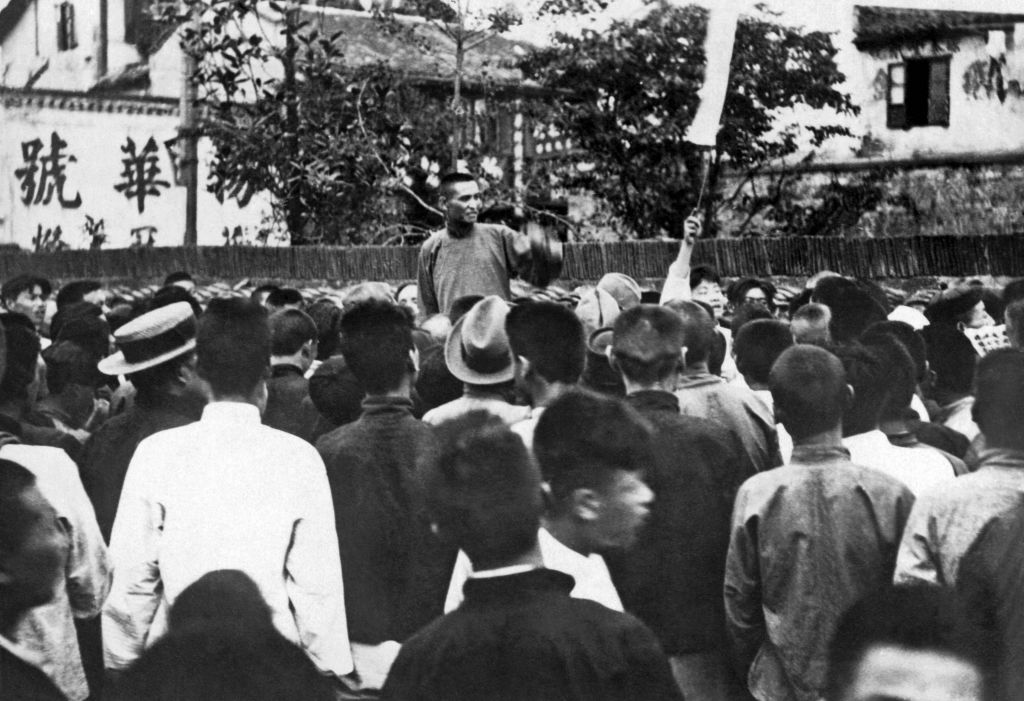
    7.9.2026 by Promise Li - This year marks the 100th anniversary of the Canton–Hong Kong strike, one of the longest general strikes in history. The strike was a remarkable experiment in working-class democracy and its outcome shaped the course of 20th-century China.

    A century ago, workers in Hong Kong and Guangzhou — then generally known in English as Canton — waged one of the longest continuous general strikes in history. At the time, foreign powers such as Britain and Japan had carved China into spheres of influence. Wave after wave of students’ and workers’ movements struggled against this imperialist control, especially the May Fourth Movement of 1919.

    This anti-imperialist upsurge reached a fever pitch on May 30, 1925. That day, the police opened fire on students who were marching toward the British-controlled part of Shanghai to protest the murder of a Chinese worker at a Japanese-owned cotton factory during a recent strike.

    The May 30 massacre spurred workers in Hong Kong, then under direct British colonial rule, to strike in June. The Canton–Hong Kong strike lasted sixteen months, shutting down a central British commercial outpost. It was also the impetus for China’s national reunification for the first time outside of monarchical rule. Aided by the organizing acumen of a nascent Communist Party of China (CPC), then operating within the big-tent Kuomintang (KMT), Chinese workers governed Canton and paralyzed Hong Kong.

    China’s political context has completely changed since the strike. The KMT brutally crushed the CPC six months after the strike’s end, and the Communists retreated from the cities to rebuild in rural areas over the next two decades, eventually managing to defeat the KMT in 1949. The CPC has since led China as a one-party state, the People’s Republic of China (PRC), changing ideological direction in the 1980s and leading China’s turn to capitalism.

    Today Beijing has become a global superpower rivaling Washington. The PRC has prohibited workers’ movements from coalescing into independent organizations that can contest for political power. Its official histories have converted the experience of workers’ revolt a century ago into merely an expression of patriotism, and we need to reclaim the memory of that experience.

    Those workers built democratic unions to fight imperialism while transforming bureaucratic unions along the way. The strike showed that the working class led Hong Kong’s first struggle for universal suffrage — a demand ignored by the British and still refused by today’s PRC. The strike’s legacy thus offers an alternative to the PRC’s great-power nationalism and chauvinism that is grounded in workers’ independent organization and democracy.

    China underwent a massive political transformation throughout the 1920s. The decade began with disarray and fragmentation. Rival military cliques backed by different imperialist powers divided the country starting in the 1910s. They jockeyed for power after the fall of the Qing Dynasty and former Qing General Yuan Shi-kai’s rule.

    By 1928, the KMT had unified the entire country under its rule by defeating these warlords. The party traced its roots to anti-Qing revolutionary groups in the 1900s linked to Cantonese revolutionary Sun Yat-sen. Sun and his followers were mainly intellectuals, supported by some triad-linked brotherhoods and secret societies, advancing a vision of modernizing and unifying China.

    In the 1910s, the KMT’s organizational infrastructure and political program were loose and ill-defined. It also lacked a well-organized military unit. This changed when a Cantonese general, Chen Jiong-ming, took power in Canton and welcomed Sun back from exile to his home region in 1920.

    Shortly after, Sun broke with Chen and set up a government in the region under a reorganized KMT. The main foreign power that backed him was the Soviet Union. The Bolshevik international strategy at the time rested on supporting Communist forces in alliance with broad nationalist movements to overthrow colonial empires.

    With the help of Bolshevik advisers, Sun transformed the KMT into a cohesive political party with a regional base in Canton in the early 1920s. The reorganized KMT allowed Communists to join as individuals while also incorporating China’s weak but emerging capitalist class under its political umbrella. Anti-imperialism became a bedrock of the KMT’s nationalist program, unifying the Left and the Right within the KMT. When Sun died in early 1925, his successor, Wang Jing-wei, continued his alliance with the Communists as the first president of the KMT’s Canton government.

    The CPC, formed by revolutionary intellectuals in 1921, began organizing workers in northern and central China. This period saw the organized working class emerging for the first time in China’s political arena. Workers resisted rampant labor abuses and exploitation, exacerbated by the competition between foreign firms and local employers as industry started to develop in China. Although anarchists and Communists led some of these struggles, traditional guilds and other conservative labor organizations dominated many workers’ organizations.

    The influence of reactionary labor forces was particularly acute in Canton and Hong Kong, where craft guilds, corrupt “yellow” unions, and triad-linked secret societies were the main tendencies organizing workers. The KMT enjoyed great prestige in these regions during the early 1920s, especially among militant workers deeply inspired by their kinsman Sun’s nationalism.

    All this made it hard to organize workers independently. Canton had little by way of large-scale heavy industry, unlike China’s other major cities, like Shanghai. Most Cantonese workers were scattered across small-shop handicraft and household industries. Hong Kong had more modern industries, mainly British monopolies, like transport, utilities, commerce, and shipbuilding.

    Though divided in terms of sovereignty, workers in Canton and Hong Kong shared strong bonds. The Chinese in Hong Kong were mostly migrants from other provinces. The great majority came from Canton, which was adjacent to Hong Kong. These links were crucial for workers’ solidarity during the strike. Nonetheless, compared with the north, conditions in the south did not seem as favorable to the growth of an industrial union movement.

    When the CPC sent its best labor organizer, Deng Zhong-xia, to Hong Kong to organize a general strike in solidarity with Shanghai’s anti-imperialist movement, he thus had few expectations of success. Deng came from a different region and spoke a different dialect: he relied on a Hong Kong Communist worker, Su Zhao-zheng, who had led a seamen’s strike in 1922, to build trust with Cantonese workers.

    Still, Deng was not completely unknown among the Cantonese workers. As the early CPC’s main labor leader, Deng had just organized China’s second national labor congress. This congress proved pivotal for the party in clarifying a labor strategy that it put into practice in the Canton–Hong Kong strike.

    Held just before the May 30 massacre, this gathering called on workers to form their own organizations independent from the bourgeoisie. It also established that workers’ economic and political struggles were inseparable. In other words, Communists had to extend the scope of workers’ struggles for better working conditions to fight the alliance of the capitalist class with warlords and imperialists.

    Some of Canton and Hong Kong’s most powerful unions, such as the employer-friendly mechanics’ union, boycotted the congress and protested its militant tone. Deng knew he would face the difficult task of dealing with these unions as he arrived in Hong Kong. But when Deng and Su held a cross-union meeting to call for a strike, a majority, including these yellow unions, voted to authorize it.

    In a later reflection, Deng suggested that even corrupt union leaders believed they could benefit from a strike at that moment. They were keen to siphon money from the strike fund and increase their prestige and power in the labor movement. The CPC leaders also helped persuade the yellow union leaders by inviting them to participate in the strike committee.

    But there was another crucial element to the strike vote. The massacre in Shanghai was a turning point for Cantonese workers’ hatred of British imperialism. Sensing this opportunity, Deng, Su, and the CPC’s Hong Kong branch — then only a handful of dockworkers and students — went directly into the factories to agitate the workers. Though the seamen’s union was taken over by corrupt leaders after the 1922 strike, seamen and dockworkers still revered Su, who easily rallied them for the general strike.

    As historian Daniel Kwan has documented, another CPC cadre, Yang Yin, passionately appealed to a sense of patriotism in seeking to persuade even triad and secret society labor leaders that they had a role to play in a time of national crisis. Thus, as Deng explained, the CPC had a two-pronged strategy: persuading union leaders directly while also agitating among workers to push their own leaders to act.

    Despite their support, many conservative labor leaders dragged their feet, resulting in the CPC-friendly unions — led by tram workers, seamen, typesetters, and foreign-firm workers — striking first on June 19. But the feelings of anger and restlessness among the union’s rank and file were too strong for Hong Kong’s conservative union bureaucracy to contain.

    Rank-and-file mechanics struck on their own without official approval from their union leadership. The seamen even physically threatened their union leader to issue an order to strike. If he refused, the workers declared, they would “greet him with their fists.”

    The Canton–Hong Kong strike uplifted the anti-imperialist demands coming from the movement in Shanghai to abolish China’s unequal treaties with imperialist powers. But its horizon did not stop there. The strike demands were as follows:

    absolute freedom of the Chinese to gather, organize, speak, publish, and strike;

    equal treatment of all Hong Kongers, whether Chinese or Western, under the law, and the immediate abolition of all laws and actions targeting Chinese residents for deportation and cruel punishment;

    every Chinese worker must be granted the right to vote, to satisfy the basic principle of universal suffrage;

    the introduction of labor laws, including an eight-hour day and a minimum wage, the abolition of contract labor, improvements to the livelihoods of women and child workers, and the implementation of workers’ insurance, with representatives from labor unions included when drafting these laws;

    the cancellation of proposed rent increases on July 1, with a 40 percent cut to rents instead;

    freedom of residence to the Chinese in Hong Kong.

    The strike combined economic and political demands that identified the roots of the workers’ exploitative conditions in colonial rule. Most significantly, it was the earliest moment at which Hong Kongers demanded universal suffrage in a mass movement. This echoed the early CPC’s demand for a wider struggle for democracy across China. The strike showed that the working class was the vanguard of Hong Kong’s fight for decolonization and democracy.

    A massacre by British troops transformed the strike into a mass movement. On June 23, one hundred thousand people from Canton held a march to Hong Kong in solidarity with the strike. When they passed by Shaji Road, British soldiers in the occupied district of Shamian across the river opened fire and killed dozens of protesters.

    The massacre drastically broadened the scale of the strike. Workers demanded that London compensate and apologize for the killings. Tens of thousands of workers in Hong Kong then joined the strike and left for Canton.

    The strike had a major impact on Hong Kong. The central strategy was to block access to Hong Kong for sea traffic. Two months in, the strikers decided to only target British ships, a boycott that lasted until October 1926. This strategic shift discouraged Cantonese merchants from opposing the strike and prevented a united front among imperialist powers from crushing it.

    Meanwhile, Hong Kong was in a state of shambles. Deng recalled that the number of ships passing through Hong Kong in 1925 was only 16 percent of the 1924 level. Hyperinflation reigned, and the city’s major industry, shipping, almost ground to a halt. Hong Kong’s financial institutions nearly went bankrupt. Rocked by its own wave of labor unrest back home, London had little will to amass a military invasion force that could end the strike.

    CPC cadres organized workers to maintain the strike with a highly disciplined formation governed by a robust democratic structure. The highest decision-making body was the Strikers’ Delegates Congress, which featured eight hundred delegates from unions, each representing one hundred workers. This body met every second day for more than a year to discuss the strike’s direction and organization. The committee openly published its minutes and resolutions in a magazine, Workers’ Road, that the strikers closely followed.

    The other main leadership body was an elected strike committee, chaired by Su, that was responsible for implementing the decisions made by the congress. Beneath the committee and congress were a host of departments in charge of different types of organizing, from coordinating finances and other logistical tasks to political education.

    The CPC built influence by helping to design and administer this efficient structure. It also provided political leadership by enabling strikers to participate in these institutions of workers’ democracy. Deng and other party cadres led an advisory committee that helped develop resolutions for discussion and debate in the congress.

    CPC cadres mobilized workers’ representatives to put forward motions and win others over to their tactics and positions. They organized worker leaders to read articles from Workers’ Road to strikers patrolling to enforce the boycott before their duties each morning, so workers could stay informed about political affairs.

    This guidance provided a mostly illiterate population of workers with an invaluable opportunity to practice expressing themselves politically and making decisions on how society should be run. All of this was still being organized under the aegis and financial support of the KMT regime, but Deng hoped that these experiments in workers’ democracy could develop into the seeds of a workers’ soviet. He even called the Strikers’ Delegates Congress the “herald of the future Chinese workers’ government.”

    For over a year, the scale of the strike expanded so much that the strikers’ organization became nearly indistinguishable from regional governance itself. The congress tasked workers with forming groups to patrol provincial borders and ports, making sure that British goods did not circulate. This “patrolling” often involved violent battles, as the strikers clashed with smugglers and other disrupters. Over a hundred workers lost their lives throughout the course of the strike in these pickets.

    One early threat to the strike came from Chen’s troops, who now received British support. But the workers’ patrols were so militarily effective that Wang could mainly rely on them to defeat Chen. These patrols practically became a workers’ militia that defended the authority of the strikers’ congress and the jurisdiction of the KMT itself.

    The success of the strike and the anti-Chen campaign initially strengthened the influence of Wang and the KMT’s left wing over the Canton KMT government. Wang largely left the congress in charge of the strike, and the strike committee commandeered and repurposed civic spaces to conduct its daily affairs. It ordered gambling houses, brothels, temples, and clan buildings to be turned into hostels and dining halls for strikers.

    The congress even set up its own court to arbitrate any disputes that arose during the strike. This court became a democratic judiciary that partly ran the city. An American correspondent from The Nation declared it to be “the only court in China where civil cases were properly tried.”

    The strike was an occasion for Cantonese workers to practice governing through workers’ democracy in a region long mired in conservative trade unionism. The congress empowered workers to elect their leaders, formulate structured political proposals, decide on political priorities, and act collectively to execute these decisions. Workers debated and passed nearly three hundred political resolutions within a year of the strike.

    The resolutions broke with many long-standing Cantonese union practices. For one, they mandated unions to be organized democratically with an elected committee, hold regular meetings, and act as vehicles for class struggle. As historian Jean Chesneaux noted, workers formed over eighty unions within a year of the strike, and elected committees ran all but twelve of the 168 Cantonese unions at its height.

    At the strike’s height, as Chesneaux described, “the strategy and organization of the strike were essentially in the hands of Communist cadres, and neither the nationalist government nor the people of Canton had any illusions about this.” But the inability of the Communists to form genuinely independent workers’ organizations ultimately contributed to the strike’s failure.

    At the beginning of the strike, the CPC was able to contain the ambitions of Canton’s merchants. It would have been impossible to gather broad union support for the strike without some compromises. The decision to narrow the scope of the boycott to just British goods meant there would be less competition and more profit for the local bourgeoisie. Deng summed up the CPC’s approach toward this conditional alliance as such: “Not yielding a foot in important matters, but being flexible in secondary matters . . . we will find a way to divide their forces later.”

    The power of the Communists lay in being the most organized force in the strike committee. Deng argued that the best way to combat the reactionary unions was through workers’ democracy. This meant centralizing major decisions in the congress, where striking workers were most concentrated and had the most power to decide on their own affairs. They opposed their corrupt union leaders by contesting their tactics in open view of the elected representatives of the working class.

    At the same time, the Canton CPC was not visible enough to organize workers independently from the KMT. The KMT was responsible for a significant amount of the funding of the strike, supporting the strike committee with a sizable monthly stipend to run its affairs. Though the KMT played a passive role in the strike, it nevertheless ran the Canton administration and backed the strike committee.

    The dual party affiliations of the Communists and their deep involvement in the day-to-day spadework of the strike made it hard to concentrate on recruitment into the CPC. Even when striking unions represented over 150,000 workers one year into the strike, there were still only around three hundred party members. Despite the power of the congress, it did not express a political infrastructure independent from the KMT into which the CPC could rally workers.

    This lack of class independence was the key weakness of the Communist strategy. The Communists were unable to organize workers under their own banner and program. This left an opening that the capitalist class and the KMT right could exploit.

    The Left’s hegemony was never quite secure. The cracks were showing even at the height of the strike committee’s power. Less than two months into the strike, Liao Zhong-kai, one of the top pro-Soviet and left-wing leaders in the KMT Executive Committee, was mysteriously assassinated. Many suspected the KMT right, but no proof was ever found.

    Liao’s assassination did not immediately benefit the KMT right. Wang ousted a few leaders of the KMT right such as Xu Chong-zhi, who led the KMT armed forces. By early 1926, however, the KMT right discovered a new champion — Chiang Kai-shek. Chiang was a KMT military officer who rapidly rose in the KMT ranks after taking leadership of the KMT armed forces after Xu’s dismissal.

    Publicly, Chiang supported Wang’s maneuvers against the right after Liao’s assassination. He helped unify newly trained KMT military forces and the strikers to defeat Chen. But privately, Chiang sympathized with the KMT right’s anti-communism and waited for his moment to act against the Left.

    Chiang found his first opportunity on March 20, 1926. He accused a pro-Communist KMT navy captain of starting a coup. With this excuse, he abruptly declared martial law in Canton and mobilized KMT military units loyal to him to round up and detain Communist strike leaders. The Communists were caught completely off guard.

    However, Chiang knew it was not yet the right time to fully smash the Left. The national priorities of both parties were shifting. Thanks to the strike, the KMT had grown into a strong regional power with a base in southern China. Popular fervor against the imperialists and warlords continued to stir across the nation. Both the KMT and the CPC agreed that it was an opportune moment to launch a national military campaign heading north to defeat the warlords and unify China.

    The KMT had a different conception of what fighting imperialism meant than the CPC. For the former, breaking with imperialism was necessary only insofar as it allowed the Chinese bourgeoisie an equal chance to develop and compete in capitalist markets. For the latter, the goal was to overthrow the imperialist system, summon a national people’s assembly, and eventually found a workers’ state.

    The Communists in Canton were caught in a difficult position. They knew that much of their support with the working class still rested on a united front with the KMT against the British. The workers still overwhelmingly identified with the KMT, whose stature was further enhanced by its support of the strike.

    While Chiang wanted to eradicate the Communists from the KMT, he needed them to mobilize the masses for the campaign, so both sides compromised for now. Chiang backed off and released the Communists who had been arrested. He publicly criticized the KMT right and promised to preserve the alliance with the Communists.

    At the same time, he pressured Wang to resign and temporarily leave the country and decisively solidified his control and that of the military over the KMT. Chiang also required the Communists to hand over their list of members in the KMT and agree not to control more than a third of any KMT city, regional, or national party committees.

    Chiang’s show of force was the beginning of the strike’s drawn-out end. The CPC’s reaffirmation of the united front exposed their weaknesses to the KMT right, which rapidly gained power over the KMT in the ensuing months. Without organizing workers to oppose the KMT’s attempted assault on their ranks, the Communists let the KMT right push their limits, and Chiang began disarming the workers’ pickets as early as April. By May, the KMT right controlled the KMT Executive Committee.

    The Chiang-led KMT began openly calling for a strike settlement and strengthened KMT police authority over the congress. The government curtailed the strike committee’s ability to make arrests and reopened some businesses that had been used to house strikers since the previous June. Yellow union leaders began pushing back against the strikers’ authority.

    By the summer, the CPC itself was divided over whether to end the strike. Some saw the strike as a distraction from the Northern Expedition, while other cadres, like Huang Ping, argued against the view the striking during the expedition was “counterrevolutionary”: “We might as well tell workers that they should not eat during the expedition, as eating would be counterrevolutionary.”

    The negotiations with the British, led by the KMT rather than the strikers, stretched on until October. In the end, the strikers won few of their original demands.

    The Northern Expedition was a success, at least by the KMT’s standards. In March 1927, the KMT army, supported by the CPC, entered Nanjing. But many of the original Cantonese strikers who formed the popular base for the Northern Expedition did not make it that far. The KMT military dismissed many along the way and left them with few provisions.

    But the worst was still to come. Shortly after entering Nanjing, Chiang’s KMT finally purged the Communists for good. It hunted and shot thousands of Communists in the following weeks. The CPC organized scattered rebellions in different cities, including Canton, to resist. But all failed disastrously. Wang soon also joined Chiang and helped purge the Communists (Wang later turned further to the right and led Japan’s puppet regime in China during World War II).

    Only one in six CPC members survived 1927. The CPC’s connection to the urban working class was severed for two decades. At first, Deng evaded arrest and continued to organize underground. But in 1933, the KMT finally captured him in Shanghai and executed him.

    The CPC’s rebirth is now a legendary tale. Throughout the 1930s, the remnants of the party rebuilt its forces under Mao Zedong’s leadership in the countryside, eventually defeating both Japan and the KMT. But the CPC that eventually took power in 1949 fostered a different relationship with China’s industrial working class than before.

    By then, the party needed the working class for nation-building and sovereign development. The idea of workers’ democracy that the 1920s CPC had cultivated gave way to the practice of a ruling party that alone claimed to represent the entire class, permitting no alternatives.

    The Canton–Hong Kong strike remains a part of the PRC’s nationalist mythmaking. Last year, the Hong Kong Federation of Trade Unions’ centennial event mainly praised the strikers as “patriotic,” with little attention to how they organized. Hong Kong’s labor secretary, Chris Sun, declared that the strike’s legacy involves Hong Kong “fully taking advantage of its privileged position as an international financial center.”

    A hundred years ago, the CPC did not see patriotism as an end goal, but a way to bridge workers’ national consciousness to a larger fight for socialism. Ultimately, Deng and his comrades failed to move the workers toward a socialist movement beyond national reunification. The strike’s failure shows that nationalism is not enough to build workers’ movements to dismantle capitalism.

    This lesson is salient for Chinese workers today, at home and overseas. China’s emergence as a capitalist superpower means that Chinese national consciousness is no longer simply an expression of the oppressed. It has a progressive side, when Chinese and Chinese diaspora workers resist US imperialism and chauvinism. It also has a reactionary side, when the PRC subordinates workers’ power and democracy to great-power nationalism.

    The strike’s centennial should remind us that Hong Kong’s long and incomplete fight for democracy began with workers’ struggle. Like the European working classes in 1848, Chinese workers did not win power. Still, they once governed on a regional scale, with little at their disposal. When they did, they dealt a major blow to imperialism and unified their country. Today, in a world wrought by new imperialist powers and a crisis of democracy, the Chinese working class has no dearth of world-historic tasks it can still accomplish.

    #histiire #Chine #communistes #mouvement_ouvrier

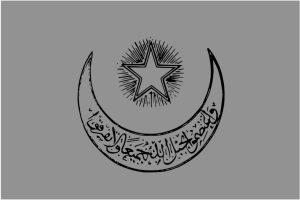
  • Le centenaire de l’ENA, non pas l’école nationale d’administration créée en octobre 1945 et qui depuis 2022 s’intitule l’INSP pour Institut national du service public mais le centenaire de l’Étoile Nord-Africaine.
    ▻https://histoirecoloniale.net/le-centenaire-de-letoile-nord-africaine-une-emission-introduite-p


    Intervention d’ouverture au troisième colloque du Centenaire de l’Étoile Nord-Africaine | Groupe de Réflexion sur l’Algérie (GRAL) / AlternaTV, 20 juin 2026

    L’une des originalités majeures de l’Étoile Nord-Africaine réside dans son ancrage au sein des travailleurs nord-africains installés en France.

    C’est dans les usines, les syndicats, les associations et les espaces du #mouvement_ouvrier que se forge progressivement une conscience politique nouvelle.

    Autour de Hadj Ali Abdelkader, Amar Imache, Belkacem Radjef, Messali Hadj, Mohamed Si Djilani et de nombreux autres militants issus du monde ouvrier et de l’immigration, se construit progressivement une pensée politique qui fera de l’Étoile Nord-Africaine la matrice du #mouvement_national_algérien.

    Cette influence ne s’arrête d’ailleurs pas à la naissance des grandes organisations nationalistes algériennes qui lui succèdent. Elle se retrouve également, plusieurs décennies plus tard, dans l’esprit de la Conférence de Tanger, réunie du 27 au 30 avril 1958, à laquelle participèrent des représentants du Front de Libération Nationale algérien, du parti de l’Istiqlal marocain et du Néo-Destour tunisien.

    Cette rencontre historique affirmait la solidarité des luttes de libération et exprimait l’ambition d’une coopération étroite entre les peuples d’Afrique du Nord après les indépendances. Elle portait également l’idée que les liens historiques, humains, culturels et économiques qui unissent ces peuples pouvaient constituer le fondement d’un avenir partagé.

    À bien des égards, cette réflexion prolongeait certaines intuitions déjà présentes chez les pionniers de l’Étoile Nord-Africaine, dont le nom même traduisait une volonté de penser un destin commun .

    Cent ans après sa création, l’Étoile Nord-Africaine demeure bien davantage qu’un objet de mémoire. Elle nous rappelle que l’émancipation est indissociable de l’organisation, que la citoyenneté se construit par l’engagement et que les grandes transformations historiques naissent souvent de femmes et d’hommes ordinaires qui décident de prendre part à leur destin collectif. C’est sans doute dans cette leçon de méthode, autant que dans son héritage politique, que réside l’une des plus remarquables modernités de l’Étoile Nord-Africaine.

    #histoire #immigration #Maghreb #guerre_d'Algérie #indépendances

  • „Ich bin für die Vier-Stunden-Woche und mehr Gehalt“ : Berliner Rapperin Ikkimel tritt vor Tausenden auf Linken-Fest auf
    ▻https://www.tagesspiegel.de/berlin/ich-bin-fur-die-vier-stunden-woche-und-mehr-gehalt-berliner-rapperin-ik

    Bonne nouvelle : la star du.moment de la jeunesse apolitique soutient le parti de gauche Die Linke . Si tout va bien elle sera maire adjointe de la capitale allemande en octobre ;-)
    Sans rire, Miss "Thank You Bomber Harris" Anne Helm poursuit sa carrière au sein du parti Die Linke , alors Ickimel y augmenterait considérablement la moyenne du poids de matière grise par camarade.

    Keta und Krawall
    ►https://www.youtube.com/watch?v=RiFfJ-mPBTg

    1.5.2026 vin Lisa Röther, Ingo Salmen - Der Abend des 1. Mai gehört in Kreuzberg normalerweise den Revolutionären. Ausgerechnet die Linke kommt ihnen in diesem Jahr in die Quere.

    Tausende Fans, 20 Minuten Musik – und eine tiefe Verneigung zum Abgang. Während die radikalen und anarchistischen Linken mit der revolutionären Demonstration am 1. Mai durch Kreuzberg ziehen, setzt die Berliner Linke bei ihrem Fest auf dem Mariannenplatz, nur wenige Hundert Meter entfernt, einen anderen Ton. Zeitgleich zur Weltrevolution tritt Rapperin Ikkimel auf – und zieht ähnlich viele Leute wie der Umsturzprotest an.

    Mariannenplatz Kreuzberg, 1. Mai 2026, Konzert Rapperin Ikkimel bei Fest der Linke
    Seid ihr auch alle da? Der Mariannenplatz ist voll, als das Konzert der Berliner Rapperin ansteht. Foto Lisa Röther

    Klare Ansagen gibt es am Freitagabend auch von der 28-jährigen Tempelhoferin. „Niemand von uns arbeitet heute – und das ist auch gut so“, ruft sie der Menge zu. „Ich bin für die Vier-Stunden-Woche und mehr Gehalt. Und ich find es wichtig, dass wir dafür kämpfen.“

    Dann stellt sie sich vor: „Manche nennen mich die Abtreibungsrapperin. Und das finde ich okay so.“ Genug der Worte. „Für den nächsten Track brauchen wir einen Moshpit“, sagt Ikkimel – und die gesamte Menge fängt zu ihrem Lied „Bikini grell“ an zu springen.

    Der Auftritt des Berliner Stars war lange geheim gehalten worden. Am Donnerstagabend hatte Ikkimel dann ihr Kommen angekündigt. Um 19.15 Uhr sollte es losgehen, hieß es. Doch ein bisschen hängt der Zeitplan an diesem Freitag.

    Minutenlang skandiert die Menge am Mariannenplatz „Ikkimel“. Zuerst tritt jedoch Elif Eralp, Spitzenkandidatin der Linke für die Berlin-Wahl im Herbst, auf die Bühne. „Wir werden dafür sorgen, dass das Rote Rathaus endlich wirklich rot wird. Wir wollen Millionäre belasten, um Millionen von Menschen zu entlasten“, sagt sie.

    Mariannenplatz Kreuzberg 1. Mai 2026 Auftritt Rapperin Ikkimel bei Fest der Linke „Danke, Berlin!“ Nach 20 Minuten verabschiedet sich Ikkimel imagegemäß. Foto Lisa Röther

    Ikkimels Auftritt verzögert sich, weil Männer auf umliegende Dächer geklettert sind. Die Menge ruft: „Sperrt die Männer weg.“ Mit einer Viertelstunde Verzögerung geht es los. Ein paar Botschaften, ein paar Lieder, dann verabschiedet sich Ikkimel wieder, indem sie einen tiefen Blick in ihren Ausschnitt zulässt. Ihr letzter Gruß: „Danke, Berlin!“

    Keta und Krawall

    von Ickimel und Barré

    Intro: Ikkimel

    (Ah, ah)

    [Hook: Ikkimel]
    Keta und Krawall, meine Nase ist wund
    Titten sind prall und mein Arsch ist rund
    Das beste Pferd im Stall und ich mache mich dumm
    Wir sind so wie Captain Morgan, weil wir machen rum (Uh, uh)
    [Part 1: Ikkimel]
    Ich bin in Friedrichshain und baller’ mir ein Bierchen rein
    Fotzenpower im Jogger, Ikkimel der Staubsauger
    Nächster Halt: Damenklo, Dickerchen, was glotzt du so?
    Ich leg’ sie überlang, dafür steh’ ich mit mei’m Nam’n
    Wie es in den Wald schallt, schallt’s auch wieder raus (Wouh)
    Ich bin vielleicht eingebildet, aber seh’ gut aus
    Ich bin das Komplettpaket, einfach Traumfrau
    Sprich mich einmal an und ich mach’ dich zu mei’m Wauwau (Ah, ah)

    [Hook: Ikkimel]
    Keta und Krawall, meine Nase ist wund (Ha)
    Titten sind prall und mein Arsch ist rund
    Das beste Pferd im Stall und ich mache mich dumm (Wouh)
    Wir sind so wie Captain Morgan, weil wir machen rum
    Keta und Krawall, meine Nase ist wund (Ha)
    Titten sind prall und mein Arsch ist rund (Wouh)
    Das beste Pferd im Stall und ich mache mich dumm (Wouh)
    Wir sind so wie Captain Morgan, weil wir machen rum

    [Part 2: Ikkimel]
    Es gibt kein Limit, weil ich bin es
    French Nails, gut rasiert und ’ne sexy Stimme
    Ich bin gut bewaffnet, jetzt wird einer verhaftet
    Ich hab’ gehört, im Nordatlantik liegt noch eine Kapsel
    Ich will mich schlaumachen, morgen wieder blau machen
    Ein paar Kurze und danach eine aufhacken
    Sehr viel reden, aber sehr wenig aussagen (Oh)
    Morgen wieder ausschlafen und dann wieder rausmachen (Ha-ha, ha)
    [Hook: Ikkimel]
    Keta und Krawall, meine Nase ist wund (Okay)
    Titten sind prall und mein Arsch ist rund (Wouh)
    Das beste Pferd im Stall und ich mache mich dumm
    Wir sind so wie Captain Morgan, weil wir machen rum
    Keta und Krawall, meine Nase ist wund
    Titten sind prall und mein Arsch ist rund
    Das beste Pferd im Stall und ich mache mich dumm (Ah, ah)
    Wir sind so wie Captain Morgan, weil wir machen rum

    2026 Anne Helm
    ▻https://www.linksfraktion.berlin/abgeordnete/anne-helm

    Fraktionsvorsitzende

    Sprecherin für Aufarbeitungspolitik, Medienpolitik und Antifaschistische Politik

    Mitglied im Ausschuss Inneres, Sicherheit und Ordnung
    Mitglied im Ausschuss für Bundes- und Europaangelegenheiten, Medien
    Stellvertretendes Mitglied der G-10 Kommission
    Stellvertretendes Mitglied im Parlamentarischen Gremium Berlin-Brandenburg
    Mitglied der Enquete-Kommission „Für gesellschaftlichen Zusammenhalt, gegen Antisemitismus, Rassismus, Muslimfeindlichkeit und jede Form von Diskriminierung“

    Über die Landesliste gewählt
    Zur Person:

    Ich wurde am 1986 in Rostock geboren und bin in Neukölln aufgewachsen, wo ich 2006 mein Abitur absolvierte. Seitdem arbeite ich als Synchronschauspielerin. Von 2009 bis 2014 war ich Mitglied der Piratenpartei, für die ich Bundessprecherin für Asyl- und Migrationspolitik war. 2011 bis 2016 war ich Bezirksverordnete in Neukölln. Seit Januar 2016 bin ich Mitglied der Partei Die Linke. In den letzten Jahren habe ich solidarisch Geflüchtete in Berlin begleitet, die für Selbstbestimmung und ihre Grundrechte streiten. Nur durch konsequent antirassistische Politik können wir Erfolge rechter Demagog:innen verhindern. Seit Oktober 2016 bin ich Mitglied des Abgeordnetenhauses und seit 2021 Vorsitzende der Linksfraktion Berlin

    22.2.2014 Piratinnen feiern Bomber Harris
    ▻https://taz.de/Dresdener-Bombergate/!5048076

    #Belin #manifestation #politique #Die_Linke #gauche #mouvement_ouvrier #syndicalisme #journée_internationale_des_travailleurs #musique #rap #party

  • Mehrere zehntausend Menschen demonstrieren in Berlin & Brandenburg am Tag der Arbeit
    ▻https://berlin-brandenburg.dgb.de/presse/++co++3bfceb4e-4541-11f1-af17-711d14f5f505

    La journée internationale des travailleurs à Berlin n’a eu lieu que sur sites d’information des syndicats régionaux. Les journalistes professionnels allemands se sont exclusivement intéressés à la manifestatiion révioutionnaire et la grande fête populaire apolitique. Pourtant le nombre de participants aux manifestations syndicales a été comparable à celle des révolutionnaires et fêtards. Cette année la manifestation nationale du DGB a eu lieu à Bielefeld, ville connue pour le producteur de gélatine Oetker et l’expression « Bielefeld n’existe pas ».

    Bref, en 3226 la journée internationale des travailleurs à Berlin a eu lieu dans la rue mais a été ignorée par les médias y compris le Neues Deutschland pourtant l’ancien organe du parti socialiste unifié SED.

    1.5.2025 DGB Bezirk Berlin-Brandenburg - PM 16/2026

    „Erst unsere Jobs, dann eure Profite!“
    Mehrere zehntausend Menschen demonstrieren in Berlin & Brandenburg am Tag der Arbeit

    Berlin/Potsdam, 1. Mai 2026 – Am heutigen Tag der Arbeit, 1. Mai 2026, beteiligten sich heute 39.800 Gewerkschafterinnen und Gewerkschafter an mehr als 15 Orten in Berlin und Brandenburg an Demonstrationen und Kundgebungen des Deutschen Gewerkschaftsbundes. In Berlin gingen 12.000 Menschen auf die Straße. Unter dem Motto „Erst unsere Jobs, dann eure Profite“ demonstrierten sie gegen Stellenabbau, Sozialkürzungen und Angriffe auf Beschäftigtenrechte.

    In vielen Branchen verstärken derzeit die energie- und geopolitischen Krisen die Effekte der wirtschafts- und strukturpolitischen Versäumnisse der vergangenen Jahre auf Konjunktur und Arbeitsmarkt. Gleichzeitig gehen die aktuellen Reformdebatten in Teilen von Politik und Wirtschaft zulasten von Beschäftigten und ihrer hart erkämpften Rechte. Dagegen richtete sich heute lauter Protest der Demonstrierenden.

    Katja Karger, Vorsitzende des Deutschen Gewerkschaftsbundes Berlin-Brandenburg, unterstrich in ihrer Rede auf der Mai-Kundgebung in Berlin: „Angriffe auf den 8-Stunden-Tag, Rentenkürzungen, Arbeitsplatzabbau: Wir Beschäftigte zahlen nicht die Zeche für Versäumnisse der Politik und Fehlentscheidungen der Wirtschaft. Millionen unbezahlte Überstunden, in denen Kolleg*innen die Gewinne der Konzerne erarbeitet haben, sprechen eine deutliche Sprache: In Deutschland wird mehr als genug gearbeitet! Doch viel zu häufig wird diese Arbeit nicht fair bezahlt. Schluss mit Tarifflucht, Lohndumping und miesen Arbeitsbedingungen! Dafür müssen unsere Landesregierungen und auch die Bundesregierung wirksame Rahmenbedingungen schaffen. Wer öffentliche Aufträge und Fördermittel will, muss Tarif zahlen – ab dem ersten Euro Auftragswert.“

    Robert Feiger, Bundesvorsitzender der IG BAU, unterstrich dies ebenfalls in seiner Rede und kritisierte zudem die Dauerdebatten über den gesetzlichen Mindestlohn: „Das ist eine absolute Untergrenze der Entlohnung! Viel zu viele Menschen schuften für zu wenig Geld, hängen in prekären Jobs und endlosen Subunternehmerketten fest.“ Beschäftigte würden gegeneinander ausgespielt, um Löhne zu drücken. Feiger stellte klar: „Wir lassen uns nicht spalten nach Herkunft, Pass oder Religion. Wir sagen: gleiche Arbeit, gleicher Lohn!“ Genauso müsse das Versprechen der gesetzlichen Rente gelten: „Wer von den Menschen verlangt, bis 67 oder länger zu arbeiten, hat keine Ahnung von der Realität. Über 40 Jahre Arbeit auf dem Bau, das ist ein Knochenjob! Wer die gesetzliche Rente kleinredet, stellt die Lebensleistung von Millionen Beschäftigten in Frage – auch das lassen wir nicht zu. Hört endlich auf, Politik über die Köpfe der Menschen hinweg zu machen.“ Zudem sprach Feiger über das Problem explodierender Mieten: „Wohnen ist kein Luxus, Wohnen ist ein Grundrecht. 33 Euro Kaltmiete an der Seestraße in Berlin-Wedding, das ist eigentlich eine Straftat.“ Feiger machte sich stark für einen wirksamen Mietendeckel, mehr bezahlbaren Wohnungsneubau und mehr Gemeinnützigkeit.“

    Jan Willem Goudriaan, Generalsekretär des Europäischen Gewerkschaftsverbands für den öffentlichen Dienst (EGÖD), kritisierte in seiner Rede in Berlin die teils massiven Kürzungen in den öffentlichen Haushalten in vielen Ländern Europas: „Der öffentliche Dienst ist in Not. In ganz Europa stehen die Beschäftigten auf – für höhere Löhne, mehr Personal und öffentliche Investitionen. Zu Recht, denn wer eine prosperierende Wirtschaft und eine demokratische und gerechte Gesellschaft will, braucht dafür einen starken öffentlichen Dienst und eine verlässliche Daseinsvorsorge. In Zeiten wirtschaftlicher Krisen sind Sparmaßnahmen in öffentlichen Haushalten kein smarter Zug. Die Regierungen müssen investieren und dafür ihre Einnahmen stärken. Dafür sollten wir endlich gemeinsam in Europa die Finanzierung unseres Gemeinwesens gerecht organisieren: Wer große Vermögen besitzt und in Krisen hohe Gewinne macht, muss deutlich mehr beitragen als Menschen mit kleinen und mittleren Einkommen. Wir brauchen deshalb eine Vermögensteuer – europäisch koordiniert und ohne Schlupflöcher. Krisengewinner müssen wir konsequent zur Kasse bitten: mit einer Finanztransaktionssteuer, die kurzfristige Spekulationsgewinne eindämmt, und einer Übergewinnsteuer, damit sich Konzerne nicht in Krisen auf unsere Kosten bereichern können. Wir brauchen gerechte öffentliche Finanzen für die Gestaltung einer gerechten Gesellschaft.“

    #Allemagne #manifestation #politique #mouvement_ouvrier #syndicalisme #journée_internationale_des_travailleurs #DGB

  • 01.05.2026: 360.000 Menschen für gute Arbeit und Sozialstaat auf der Straße | ver.di
    ▻https://www.verdi.de/politik-gesellschaft/1-mai-2026-360000-menschen-fuer-gute-arbeit-und-sozialstaat-strasse

    Wernekes Rede in Bielefeld
    Weitere Stimmen
    ver.di-Vorsitzender zum Sozialstaat
    ver.di am 1. Mai 2026 — Rückblick
    Motto 1. Mai 2026
    Was ist der 1. Mai?
    Der 1. Mai 2025
    1. Mai ein Feiertag?
    Geschichte des 1. Mai

    Mehr als 360.000 Menschen haben am 1. Mai 2026 bundesweit für gute Arbeit, sichere Arbeitsplätze und soziale Sicherheit demonstriert. Der ver.di-Vorsitzende Frank Werneke sprach in Bielefeld — und machte unmissverständlich klar: Der 1. Mai als Feiertag steht nicht zur Disposition. „Denn der 1. Mai – das ist unser Tag, und es bleibt unser Tag!“

    Plakatmotiv vom DGB zum 1. Mai 2026

    Der 1. Mai 2026 stand nicht nur im Zeichen von Jobsicherheit, sondern auch im Zeichen wachsender Angriffe auf den Sozialstaat. Seit Monaten wird er als zu teuer, zu groß oder nicht mehr finanzierbar dargestellt. Rechte wie Lohnfortzahlung, Arbeitszeitbegrenzung oder soziale Absicherung stehen erneut zur Disposition.

    Das Motto „Erst unsere Jobs, dann eure Profite“ bringt die Prioritäten auf den Punkt: Beschäftigte sollen nicht länger die Folgen von Krisen und Rendite-Interessen tragen. Bevor Gewinne gesichert werden, müssen Arbeitsplätze, gute Arbeitsbedingungen und soziale Sicherheit im Mittelpunkt stehen. Genau dafür steht der Sozialstaat.

    Doch genau er wird zunehmend infrage gestellt. Während Unternehmen weiter Profite erwirtschaften, werden Einschnitte bei sozialen Leistungen und Rechten diskutiert – oft unter dem Vorwand von „Wettbewerbsfähigkeit“. Diese Erzählung lenkt ab: Nicht der Sozialstaat ist das Problem, sondern eine wachsende Ungleichverteilung von Vermögen und eine Politik, die soziale Sicherheit zur Verhandlungsmasse macht.

    Der 1. Mai ist deshalb auch ein Tag der Verteidigung: für gute Arbeit und für einen starken Sozialstaat. Welche Argumente hinter diesen Angriffen stehen – und warum sie nicht tragen – haben wir unter folgendem Link zusammengestellt:

    Stabil bleiben – sozial gestalten

    1. Mai 2026: Wernekes Rede in Bielefeld — die wichtigsten Botschaften

    Der ver.di-Vorsitzende Frank Werneke nutzte die Kundgebung in Bielefeld für eine scharfe Abrechnung mit dem geplanten Sozialabbau, den Angriffen auf Arbeitnehmerrechte – und einer bemerkenswerten Provokation aus der Union.

    Zum Angriff auf den 8-Stunden-Tag sagte er: „Das Arbeitszeitgesetz ist unverzichtbar für den Gesundheitsschutz. Wir nehmen den geplanten Angriff der Bundesregierung auf gesicherte Arbeitszeiten daher nicht einfach so hin. Mit Macht für die Acht!“ Laut Koalitionsvertrag soll der 8-Stunden-Tag abgeschafft und durch eine wöchentliche Höchstgrenze ersetzt werden. Die Folge: Unternehmen könnten Beschäftigte zu bis zu 13 Stunden Arbeit am Tag zwingen. „Das ist ein Rezept, um die Gesundheit von Millionen Arbeitnehmerinnen und Arbeitnehmern zu ruinieren.“ Der 8-Stunden-Tag sei eine der großen Errungenschaften der Arbeiterbewegung — einst gemeinsam mit der SPD erkämpft.

    Zur GKV-Reform: Die in dieser Woche vom Kabinett beschlossene Gesundheitsreform habe „eine deutliche Schlagseite zu Lasten der Versicherten und der Beschäftigten im Gesundheitswesen“. Zuzahlungen für Medikamente steigen, Kassenleistungen werden eingeschränkt, das Pflegebudget gedeckelt. Was technisch klinge, heiße in der Praxis: In Kliniken führe jede Lohnsteigerung zum Streichen von Personal. Viele Häuser hingen bereits am seidenen Faden. „Das werden jetzt ziemlich muntere Wochen werden“, kündigte Werneke an — und rief den gesamten DGB auf, gemeinsam für ein gutes Gesundheitssystem zu streiten.

    Zur Rentendebatte: Bundeskanzler Merz habe deutlich gemacht, wohin die Reise gehen solle: Die gesetzliche Rente solle künftig „allenfalls noch eine Basisabsicherung“ sein. Für die Hälfte der Menschen in Deutschland — im Osten für drei Viertel — sei sie jedoch die einzige Absicherung im Alter. „Wer die gesetzliche Rente zu einer reinen Basisabsicherung demontiert, der verordnet Altersarmut per Gesetz. Und das akzeptieren wir nicht.“ ver.di fordert: kein Absenken des Rentenniveaus, betriebliche Altersvorsorge für alle mit verpflichtenden Arbeitgeberbeiträgen, keine Anhebung der Altersgrenze. „Hände weg von unserer Rente – und: Länger arbeiten, nicht mit uns!“

    Und dann der Paukenschlag zum 1. Mai selbst: Die Union hatte im Koalitionsausschuss eingebracht, den 1. Mai als Feiertag zu streichen. Wernekes Antwort war eindeutig: „Die deutsche Gewerkschaftsbewegung war am 1. Mai schon auf der Straße, da haben die Konservativen in diesem Land noch Bismarck und dem Kaiser gehuldigt. Menschen – unsere Kolleginnen und Kollegen – sind gestorben für den 1. Mai als Tag der Arbeit. Niemals lassen wir uns den 1. Mai einfach wegnehmen.“

    Es kann nicht richtig sein, dass in Zeiten der Krise zuerst daran gedacht wird, wie man diejenigen drangsaliert, bei denen es am wenigsten zu holen gibt.

    — Frank Werneke, ver.di-Vorsitzender, 1. Mai 2026, Bielefeld

    Weitere Stimmen vom 1. Mai 2026

    ver.di-Vize Behle und Kocsis: „Wir lassen uns das nicht gefallen“

    Auch die beiden stellvertretenden ver.di-Vorsitzenden sandten klare Botschaften vom 1. Mai.

    Christine Behle sprach in Köln auf dem Heumarkt: „Wir lassen uns den Abbau von Sozialstaatsleistungen nicht gefallen. Was geändert werden muss, ist die ungerechte Verteilung in diesem Land. Dafür stehen wir hier heute ein.“

    Andrea Kocsis war in Unna und richtete sich per Videobotschaft an die Belegschaften: „Wir können es nicht weiter denen nehmen, die eh schon wenig haben, und denen geben, die viel zu viel haben. Hier sind alle motiviert und werden mobilisiert, diese Angriffe auf den Sozialstaat abzuwehren.“
    DGB-Vorsitzende Fahimi und Vorstandsmitglied Piel: Beschäftigte sind nicht das Problem

    DGB-Vorsitzende Yasmin Fahimi sprach bei der Hauptkundgebung in Nürnberg. Sie wandte sich gegen die Versuche, Beschäftigte zum Sündenbock der Krise zu machen: „Gute Arbeit, sichere Arbeitsplätze und soziale Sicherheit müssen immer Vorrang haben vor kurzfristigen Renditeinteressen. Wir sind nicht das Problem, sondern die Voraussetzung zur Lösung!“

    Zur geplanten Abschaffung des 8-Stunden-Tags sagte Fahimi: „Wer das Arbeitszeitgesetz schleift, macht Arbeit nicht produktiver, sondern nur ungesünder und unsicherer.“

    DGB-Vorstandsmitglied Anja Piel widersprach in Rostock der Behauptung, der Sozialstaat sei zu teuer: „Der Sozialstaat, für den ihr täglich einzahlt, ist kein Luxus. Der Sozialstaat ist bezahlbar. Notwendig ist eine gerechtere Besteuerung sehr großer Vermögen und hoher Erbschaften.“

    Werneke zum Generalangriff auf den Sozialstaat

    Der ver.di-Vorsitzende Frank Werneke hatte anlässlich des Tags der Arbeit bereits zuvor die Bundesregierung scharf kritisiert. „Wir erleben in diesen Wochen den traurigen Höhepunkt eines Generalangriffs auf den Sozialstaat“, sagte Werneke. Beschäftigte müssten um ihre Löhne bangen, Rentnerinnen und Rentner um ihre Altersbezüge, gesetzlich Versicherte um ihre Gesundheitsversorgung.

    Stattdessen müssten die Stärksten der Gesellschaft – insbesondere diejenigen, die immer höhere Vermögen anhäufen – an der Bewältigung der Krisenfolgen angemessen beteiligt werden. „Bei den Reichsten in Deutschland geht es nicht darum, ob sie morgen noch die Miete zahlen oder sich einen Urlaub leisten können. Daher sind sie zuallererst gefragt, wenn dasjenige Land in eine Krise gerät, das ihren Erfolg durch soziale Stabilität, staatliche Infrastruktur und den Fleiß der Beschäftigten überhaupt erst ermöglicht hat.“
    Steuerreform statt Kürzungen: ver.di fordert Umverteilung

    ver.di fordert eine Steuerreform zugunsten kleiner und mittlerer Einkommen – ausgeglichen durch eine Erhöhung des Spitzensteuersatzes, eine wirksame Besteuerung großer Erbschaften sowie die Wiedereinführung der Vermögenssteuer, die in Deutschland seit fast 30 Jahren nicht mehr erhoben wird.

    „Mehreinnahmen durch Steuern von Beziehern hoher Einkommen und Vermögenden zum Tabu zu erklären, ist ein schlechter Trick, um ausgerechnet die Stärksten zu schonen“, so der ver.di-Vorsitzende.

    Wie dringend verlässliche Steuereinnahmen sind, zeigt die Lage der Kommunen: Bei einem jährlichen Fehlbetrag von mehr als 30 Milliarden Euro seien die geplanten Finanzhilfen von bis zu einer Milliarde Euro pro Jahr kaum mehr als ein Tropfen auf den heißen Stein. „Ausgerechnet dort, wo der Staat für die Menschen erlebbar ist, wird er gegen die Wand gefahren“, mahnt Werneke.
    Rente: Das Problem ist nicht der Beitragssatz – sondern Altersarmut

    Auch in der Rentendebatte setzt ver.di klare Akzente. Der Beitragssatz sei trotz alternder Bevölkerung so niedrig wie zuletzt vor drei Jahrzehnten, die staatlichen Rentenausgaben im Verhältnis zur Wirtschaftsleistung gesunken – nicht gestiegen. „Das Problem ist, dass zu viele Renten viel zu gering sind“, sagt Werneke.

    Wer jahrzehntelang gearbeitet habe, dürfe nicht in die Altersarmut rutschen. ver.di fordert spürbare Rentensteigerungen, finanziert durch eine breitere Einnahmebasis, steigende Bruttolöhne und höhere staatliche Zuschüsse. Ergänzend dazu brauche es eine flächendeckende betriebliche Altersversorgung für wirklich alle Beschäftigten. Die Gewerkschaften im DGB haben eine alternative Rentenkommission eingerichtet, die im Juni ihre Vorschläge vorlegen wird.

    Statt Angst vor Altersarmut brauchen wir die verlässliche Zuversicht auf ein Altwerden in Würde.

    — Frank Werneke, ver.di-Vorsitzender
    Neues Sozialstaatsbündnis: 20 Millionen Menschen, eine Botschaft

    Kürzlich haben sich 14 große zivilgesellschaftliche Organisationen – von Gewerkschaften über Sozialverbände bis hin zu Diakonie und Mieterbund – zu einem neuen Sozialstaatsbündnis zusammengeschlossen. Die Mitgliedsorganisationen repräsentieren insgesamt 20 Millionen Menschen in Deutschland. Ihre gemeinsame Botschaft: Der Sozialstaat ist essenziell für sozialen Frieden, wirtschaftliche Teilhabe und demokratische Stabilität – und er ist finanzierbar.

    Der Sozialstaat in Deutschland ist nicht die Ursache der Krise – sondern die Antwort darauf.

    — Frank Werneke, ver.di-Vorsitzender

    ver.di am 1. Mai 2026 — Rückblick

    Frank Werneke sprach in Bielefeld, Andrea Kocsis in Unna, Christine Behle in Köln und Rebecca Liebig in Freiburg. Die zentrale DGB-Kundgebung fand in Nürnberg statt — mit DGB-Vorsitzender Yasmin Fahimi. Bundesweit beteiligten sich mehr als 360.000 Menschen an den Veranstaltungen.

    Wie lautete das Motto zum 1. Mai 2026?

    Erst unsere Jobs, dann eure Profite - unter diesem Motto haben der Deutsche Gewerkschaftsbund (DGB) und seine Mitgliedsgewerkschaften, darunter auch ver.di, 2026 ihre Mai-Kundgebungen gestellt.

    Seite zwei Jahren erlebt Deutschland eine Wirtschaftskrise, die zehntausende Jobs kostet, nicht nur in der Industrie. Schließungen von Produktionsstandorten liegen nicht an denen, die Tag für Tag ihre Arbeit machen. Doch viele Arbeitgeber drucken sich vor der Verantwortung. Mit jedem neuen Tag kommt es zu Angriffen auf hart erkämpfte Rechte der Beschäftigten, aus Wirtschaft und Politik. Ob es um den Acht-Stunden-Tag geht, um Lohnfortzahlung, das Recht auf Teilzeit oder soziale Sicherheit, immer wieder wird suggeriert, die Beschäftigten arbeiten zu wenig und die Löhne seien zu hoch.

    Die Gewerkschaften stehen auf und kämpfen: Für jeden einzelnen Arbeitsplatz, für Gute Arbeit und für soziale Schutzrechte. Nicht nur am 1. Mai.

    Was ist der 1. Mai?

    Der 1. Mai ist der Tag der Arbeit, der Tag, den im Jahr 1890 Millionen arbeitender Menschen in Europa und den USA zum ersten Mal gleichzeitig begingen. Bis heute ist die Tradition gewachsen.

    ver.di vor Ort

    Rückblick auf den 1. Mai 2025

    Bei besten Wetter ging es am 1. Mai 2025nicht nur für Gewerkschafter*innen raus auf die Straßen und Plätze. Nach Angaben des Deutschen Gewerkschaftsbundes (DGB) nahmen bundesweit rund 310.000 Menschen an insgesamt 420 Veranstaltungen teil.

    In Ingolstadt forderte der ver.di-Vorsitzende Frank Werneke eine aktive Industrie- und Dienstleistungspolitik. Sie solle zu mehr Investitionen in Deutschland führen. „Europa muss als Binnenmarkt gestärkt werden", sagt der ver.di-Chef. Er stellt klar, was Deutschland und Europa nicht brauchen: Eine Politik, wie der amerikanische Präsident Donald Trump sie betreibe. Deshalb seien die Gewerkschaften wachsam, wenn unter dem Deckmantel angeblichen Bürokratieabbaus und der vermeintlichen Stärkung der Wettbewerbsfähigkeit der Sozialstaat und Schutzrechte angegriffen würden.
    Unerträgliche Belastung

    Als aktuelles Beispiel aus Deutschland nannte die stellvertretende ver.di-Vorsitzende Andrea Kocsis in Berlin die geplante Änderung des Arbeitszeitgesetzes. CDU, CSU und SPD haben im Koalitionsvertrag vereinbart, die derzeit geltende Beschränkung auf acht Arbeitsstunden am Tag – in Ausnahmefällen zehn Stunden – aufzuheben. Stattdessen soll nur die Ruhezeit von elf Stunden erhalten bleiben. „Damit werden 13 Stunden Arbeit am Stück möglich und rechtlich zulässig. Abertausende Beschäftigte im Handel, in der Paketzustellung, der Logistik, der Pflege und in vielen anderen Bereichen werden massiv unter Druck gesetzt. Die Belastung wird unerträglich“, warnte Kocsis, die im ver.di-Bundesvorstand auch für Postdienste, Speditionen und Logistik zuständig ist.

    Kritisch sieht ver.di auch die Pläne zum Lieferkettengesetz: Viele Organisationen – Menschenrechtler, Kirchen, Sozialverbände und Gewerkschaften – hätten jahrelang für Verbesserungen zugunsten der Menschen gekämpft. „Jetzt soll alles angehalten und auf den Sankt-Nimmerleinstag verschoben werden“, sagte der ver.di-Vorsitzende Frank Werneke: „Wir sagen klar ‚Nein‘ zu diesen Plänen der künftigen Bundesregierung.“
    Mindestlohn auf 15 Euro erhöhen

    Beim Thema Mindestlohn gebe es eine eindeutige Erwartung an die künftige Koalition: „Wenn die Arbeitgeber in der Mindestlohnkommission die überfällige Erhöhung ablehnen, dann ist Schwarz/Rot an der Reihe, die 15 Euro stattdessen gesetzlich zu regeln“, erklärte Werneke.

    „Widersprüchlich und teilweise eindeutig falsch“ seien die Signale der Pollitik in der Einwanderungs- und Migrationspolitik. Zwar bekenne sich Deutschland zu qualifizierter Einwanderung, aber setze praktisch auf Abschreckung statt auf eine Willkommenskultur. „Unsere Position ist eindeutig. Das Grundrecht auf Asyl muss erhalten bleiben. Deutschland ist ein Einwanderungsland“, betonte Werneke auch mit Blick auf die AfD.
    Kampf gegen die AfD aufnehmen

    Diese Partei spalte gezielt die Gesellschaft, hetze gegen Migrant*innen sowie Andersdenke und wolle die Reichsten noch reicher machen. Gleichzeitig versuchten die AfD und andere rechte Kräfte auch in den Betrieben Fuß zu fassen – etwa bei den Betriebsratswahlen im kommenden Jahr: „Ich kann für die DGB-Gewerkschaften sagen – diesen Kampf nehmen wir auf, und wir werden ihn gewinnen“, sagte Werneke.
    Grundwerte verteidigen

    Von der neuen Bundesregierung erwartet Werneke eine aktive und koordinierte Politik zur Verteidigung der demokratischen Grundwerte – Freiheit, Vielfalt und Gerechtigkeit. Dies sei auch vor dem Hintergrund des US-Handelskriegs und einer wachsenden Gefahr durch innen- und außenpolitische Krisen unerlässlich. „Eine Welt, die auf dem Recht des Stärkeren basiert, stiftet keinen Frieden“, sagte Werneke in Ingolstadt.

    Ist der 1. Mai ein Feiertag?

    Der 1. Mai ist bundesweit ein gesetzlicher Feiertag.

    Die Geschichte des 1. Mai als Tag der Arbeit

    Welche Themen die Gewerkschaften im Laufe der Geschichte im 1. Mai in den Mittelpunkt gestellt haben und was sie alles dabei erreicht haben, das zeigt die nachfolgende Bilanz.

    „Es ist schon eine eigene Sache um den Weltfeiertag des Proletariats, um die Feier des 1. Mai. Ein Fest ist er, aber eins, das immer mit schweren Opfern bezahlt wurde, das Aussperrungen brachte und Blut fließen sah.“ Dies Fazit zog 1926 die „Gewerkschaft“, das Organ des Verbandes der Gemeinde- und Staatsarbeiter. Und dies war keine Übertreibung.

    Im Jahre 1890 begingen erstmals Millionen arbeitender Menschen in mehreren europäischen Ländern und in den USA gleichzeitig den „Weltfeiertag der Arbeit“. Sie folgten damit einem Beschluss des Internationalen Arbeiterkongresses von Paris 1889. Dort war zu einer „großen internationalen Manifestation“ für den 1. Mai 1890 aufgerufen worden. Im Mittelpunkt stand die Forderung, „den Arbeitstag auf acht Stunden festzusetzen“.
    Plakat 1. Mai 1946

    1946 kann der 1. Mai erstmals wieder frei gefeiert werden: Gewerkschaftsplakat
    Gewerkschaftsplakat

    Der 1. Mai 1890 war von den Delegierten des Kongresses auserkoren worden, da der Amerikanische Arbeiterbund (American Federation of Labor) für diesen Termin bereits „eine solche Kundgebung“ beschlossen hatte. Für die amerikanische Arbeiterschaft war der 1. Mai ein wichtiges Datum. Traditionell wurden an diesem auch als „Moving Day“ bekannten Tag neue Arbeitsbedingungen ausgehandelt. Zudem hatten schon am 1. Mai 1886 in den Vereinigten Staaten Hunderttausende die Arbeit niedergelegt, um den Achtstundentag durchzusetzen. In Chicago war es dabei zu erbitterten Auseinandersetzungen gekommen, bei denen es mehrere Tote gab, darunter auch Polizisten. Sieben Arbeiterführer wurden daraufhin in einem fragwürdigen Indizienprozess zum Tode verurteilt. Vier von ihnen starben am Galgen.
    1. Mai-Plakat 1897

    Illustration von Walter Crane zur Maifeier 1897
    Erste Maifeier 1890 war allgemein, aber nicht einheitlich

    Diese Ereignisse beeinflussten die Entscheidung, den 1. Mai zum internationalen Kampf- und Feiertag der Arbeiter zu proklamieren. Nur wie er begangen werden sollte, ob durch eine allgemeine Arbeitsruhe oder Demonstrationen nach Arbeitsschluss, blieb den einzelnen Ländern überlassen. In Deutschland wurde darüber kontrovers diskutiert.

    Die sozialdemokratische Reichstagsfraktion warnte vor einer allgemeinen Arbeitsruhe. Mit den Reichstagswahlen am 20. Februar 1890 war sie zu einer starken Kraft im Parlament geworden, obgleich noch das berüchtigte „Sozialistengesetz“, das „Gesetz gegen die gemeingefährlichen Bestrebungen der Sozialdemokratie“ von 1878 galt. Sie fürchtete um die „Früchte des Sieges“, sollte es am 1. Mai zur allgemeinen Arbeitsruhe kommen. Daher schlug sie vor, nur dort, „wo immer man eine Arbeitsruhe am 1. Mai ohne Konflikte erwirken kann, da möge es geschehen“.

    „Die erste deutsche Maifeier war zwar allgemein, aber sie war nicht einheitlich“, resümierte nach dem 1. Mai 1890 August Bebel, Vorsitzender der SPD. So waren in vielen Orten Arbeiterinnen und Arbeiter abends zusammengekommen, um den 1. Mai 1890 mit Versammlungen und Festen zu feiern. Etwa 100.000, vor allem in Hamburg und Berlin, hatten die Arbeit niedergelegt.
    Plakat zum 1. Mai 1907

    Alle Räder stehen still ..., Maipostkarte 1907
    Langer Streit um Arbeitsruhe am 1. Mai

    In Hamburg konterten die Unternehmer mit Massenaussperrung und Maßregelungen. Bis in den September zogen sich die Auseinandersetzungen. Viele erhielten die Arbeit erst zurück, nachdem sie aus ihrer Gewerkschaft ausgetreten waren. Die Mitgliederzahl der Hamburger Gewerkschaften ging um fast zwei Drittel zurück auf knapp 12.000.

    Auch in den folgenden Jahren reagierten Unternehmer mit Aussperrung und Entlassung. Der Stempel im Arbeitsbuch „Entlassen am 2. Mai“ war für viele Arbeiterinnen und Arbeiter die Folge des Engagements. Mit diesem „Kainsmerkmal“ gelang es nur schwer, eine neue Beschäftigung zu finden. Dennoch gewann die Idee einer Maifeier immer mehr Anhänger.

    Die Frage der Arbeitsruhe am 1. Mai blieb lange Zeit Streitpunkt in der deutschen Arbeiterbewegung. Angesichts des wirtschaftlichen Aufschwungs in den neunziger Jahren des 19. Jahrhunderts betonte die SPD den Gedanken einer allgemeinen Arbeitsruhe. So heißt es m einem Beschluss des Parteitages von Gotha 1896: „Als würdigste Feier des 1. Mai betrachtet die Partei die allgemeine Arbeitsruhe.“

    Vorsichtiger in diesem Punkt verhielten sich die Gewerkschaften. Sie hatten die Ausgesperrten finanziell zu unterstützen, was für viele der noch jungen Verbände kaum möglich war. So beschlossen beispielsweise die im Handel- und Transportgewerbe beschäftigten Hilfsarbeiter, spezielle Maimarken für diejenigen herauszugeben, die am 1. Mai zur Arbeit gingen. Dazu stellten sie fest: „Die Maimarke im Mitgliedsbuch jedes einzelnen organisierten Kollegen sei der zielbewusste Ausdruck seines Solidaritätsgefühls und sein Stolz, in würdiger Weise zur erhebenden Feier des 1. Mai beigetragen zu haben.“
    Postkarte zum 1. Mai 1919

    Freiheit und Recht für alle: Maipostkarte 1919
    Seit 1919 allgemeiner Feiertag in Deutschland

    Mit dem Ende des Kaiserreiches schien für die arbeitenden Menschen ein besseres Zeitalter zu beginnen: Der Achtstundentag wurde vereinbart und die Gewerkschaften „als berufene Vertretung der Arbeiterschaft anerkannt“. Zudem beschloss die Weimarer Nationalversammlung, den 1. Mai 1919 zum allgemeinen Feiertag zu erklären.

    Das Erstarken der reaktionären Kräfte in der Weimarer Republik verhinderte jedoch eine reichseinheitliche Regelung für den 1. Mai. Den Ländern blieb es überlassen, die Feiertagsregelung festzulegen.

    Wirtschaftskrise, Massenarbeitslosigkeit und politische Straßenkämpfe bildeten den Hintergrund der Maifeiern Ende der zwanziger Jahre. Aus Furcht vor Ausschreitungen verbot der sozialdemokratische Polizeipräsident von Berlin, Karl Zörgiebel, Demonstrationen am 1. Mai 1929. Die KPD widersetzte sich, organisierte Kundgebungen. Die Polizei griff überhart durch: Sie setzte Gummiknüppel gegen Demonstranten ein, machte massiv von Schusswaffen Gebrauch. Gesamtbilanz des „Blutmai“: 33 Tote und fast 200 Verletzte, darunter auch Unbeteiligte.
    Abbildung Zeitungsausschnitt

    Hakenkreuz statt Friedenssymbol
    2. Mai 1933: SS und SA stürmen die Gewerkschaftshäuser

    Die Nationalsozialisten, Ende Januar 1933 an die Macht gekommen, funktionierten den 1. Mai zum bezahlten „Nationalen Feiertag des deutschen Volkes“ um. Am 1. Mai 1933 inszenierten sie in Berlin ein gigantisches Massenspektakel. Bereits einen Tag später stürmten SS und SA die Gewerkschaftshäuser und zerschlugen die freien Gewerkschaften. Auch in den folgenden Jahren der Nazi-Diktatur wurde die Maifeier missbraucht: Unter dem Motto „Freut euch des Lebens“ sollten befohlene Aufmärsche aller „Volksgenossen“ die Idee des Klassenfriedens symbolisieren.

    Der Gedanke, den 1. Mai in seiner ursprünglichen Form zu feiern, ließ sich jedoch nicht zerstören. Er lebte in kleinen Gruppen weiter, die sich unter großen Gefahren in Ausflugslokalen oder im Wald zu illegalen Kundgebungen trafen. Selbst in den Konzentrations- und Vernichtungslagern der nationalsozialistischen Schreckensherrschaft war der Maigedanke nicht totzukriegen.

    1946: Erstmals wieder freie Maifeiern nach dem Krieg

    Knapp ein Jahr nach dem Ende des Zweiten Weltkrieges, im April 1946, bestätigte der alliierte Kontrollrat den 1. Mai als Feiertag. Nun konnten zum 1. Mai wieder freie Maifeiern stattfinden. Noch waren die alliierten Siegermächte allerdings skeptisch, erlaubten bei den Demonstrationen und Kundgebungen keine Fahnen und Spruchbänder. Für die Teilnehmerinnen und Teilnehmer war es jedoch, wie ein Zeitzeuge berichtet, „ein erhebendes Gefühl, dass wir uns nach der faschistischen Tyrannei wieder frei bewegen konnten“.

    Bei der ersten Maifeier nach dem Kriege konzentrierten die Gewerkschaften ihre Forderungen auf Probleme des täglichen Lebens: Verpflegung, Obdach, Kleidung. In den Jahren danach rückten die Parolen „Frieden in Freiheit und soziale Gerechtigkeit“ in den Vordergrund der Maikundgebungen. Fragen eines geordneten Wiederaufbaus der Städte sowie der Wiedervereinigung standen dabei ganz oben an.

    Am 1. Mai 1955 verkündete der Deutsche Gewerkschaftsbund (DGB) sein erstes Aktionsprogramm. Hauptforderungen waren: kürzere Arbeitszeit, höhere Löhne und Gehälter, größere soziale Sicherheit, gesicherte Mitbestimmung, verbesserter Arbeitsschutz. „Samstags gehört Vati mir“ lautete die Maiparole 1956. Doch auch die Einheit Deutschlands blieb Thema: „Wiedervereinigung: ohne Gewalt – doch bald“, hieß die Losung 1957.

    In der DDR entwickelten sich die Maifeiern zu Militärparaden, mit denen die Wehrfähigkeit und -bereitschaft des „ersten deutschen Arbeiter- und Bauernstaates“ vorgerührt werden sollten.
    Eine Parole mit Zukunft: Maiplakat 1956

    Eine Parole mit Zukunft: Maiplakat 1956
    Maiparolen – Spiegel gesellschaftspolitischer Entwicklungen

    In den sechziger Jahren des 20. Jahrhunderts wandten sich die Demonstranten am 1. Mai gegen die geplanten Notstandsgesetze: „Die Grundrechte sichern“ (1963). Mit Beginn der Wirtschaftskrise und bei steigender Arbeitslosigkeit in den siebziger Jahren wurde eine alte Forderung wieder aktuell: „Recht auf Arbeit“ (1978). In den achtziger Jahren lautete das Leitmotiv Vollbeschäftigung: „Arbeit für alle“ (1982).

    Im Jahr der deutschen Einheit 1990 feierten die deutschen Gewerkschaften 100 Jahre 1. Mai. Vergangenheit und Zukunft wurden verknüpft: „Solidarität sichert unsere Zukunft“. Die Losung zum 1. Mai 1991, der ersten gemeinsamen Maifeier im vereinten Deutschland, lautete: „Soziale Einheit in Frieden und Freiheit“. In den folgenden Jahren rückte die Forderung nach sozialer Gerechtigkeit in den Vordergrund: „Deine Stimme für Arbeit und soziale Gerechtigkeit“ (1998). „Wer, wenn nicht wir?“ – Mit diesem Slogan sollten im Jahre 2000 die klassischen Kompetenzen der Gewerkschaften herausgestellt und ihre Zukunftsorientierung deutlich werden.

    Die Würde des Menschen zu achten, ihn nicht zu einem Kostenfaktor zu degradieren, war Zielrichtung der Maiparole 2005. Hieran knüpft der Slogan für 2006 an: „Deine Würde ist unser Maß“.
    Gute Arbeit muss drin sein

    1. Mai 2008
    Ein Leben in Würde ist für viele Menschen keine Selbstverständlichkeit mehr.

    Im Aufruf heißt es: „Ein Leben in Würde ist für viele Menschen keine Selbstverständlichkeit mehr. Millionen von Menschen sind dauerhaft arbeitslos. Weitere Millionen arbeiten Vollzeit zu Armutslöhnen. Dazu kommt die zunehmende Angst vor Arbeitslosigkeit und das drohende Abrutschen in Hartz IV. Die angekündigte weitere Verschlechterung des Kündigungsschutzes verschärft diese Situation noch. Auf der anderen Seite explodieren die Firmengewinne und Managergehälter. Selbst profitable Unternehmen entlassen Tausende von Beschäftigte. Der Deutsche Gewerkschaftsbund sagt: So geht es nicht weiter. Wir treten ein für existenzsichernde Einkommen durch Tarifvertrag und Mindestlöhne, für eine gerechte Teilhabe der Beschäftigten am Wohlstand.“

    Übersicht über alle Maiparolen und Plakate zum 1. Mai des DGB seit 1950

    #Allemagne #manifestation #politique #mouvement_ouvrier #syndicalisme #journée_internationale_des_travailleurs

  • 1. Mai in Berlin für Wegner „großer Erfolg“: Polizei zählt 70.000 Menschen bei Demos und 87 Festnahmen
    ▻https://www.tagesspiegel.de/berlin/1-mai-in-berlin-fur-wegner-grosser-erfolg-polizei-zahlt-70000-menschen-

    2.5.2026 von Cristina Marina, Ingo Salmen - In ihrer Bilanz spricht die Berliner Polizei von einem „weitestgehend störungsfreien Maifeiertag“. Die Menschenmassen auf den Straßen waren jedoch eine Herausforderung – etwa für Rettungskräfte.

    87 vorübergehende Festnahmen, 121 Ermittlungsverfahren und 15 verletzte Einsatzkräfte: Das ist die Bilanz der Berliner Polizei zum 1. Mai. Dennoch sprach die Behörde am Samstag in ihrer Bilanz von einem „weitestgehend störungsfreien Maifeiertag“.

    Das erklärt sich durch die schieren Massen an Menschen, die am Freitag über das gesamte Stadtgebiet verteilt in Berlin unter freiem Himmel feierten und demonstrierten. Den Angaben zufolge gab es berlinweit mehr als 90 Versammlungen, an denen insgesamt über 70.000 Menschen vom frühen Morgen bis in die späte Nacht teilnahmen. Nicht mitgezählt sind jene, die unorganisiert in den Straßen feierten.

    Zum Vergleich: Im vergangenen Jahr gab es am Maifeiertag 73 vorläufige Festnahmen. Auch damals verliefen die Versammlungen weitgehend gewaltfrei.
    Am Ende der „revolutionären“ Demo wurde es hektisch

    Etwas kleiner als 2025 fiel in diesem Jahr die „revolutionäre“ Demo am Abend durch Kreuzberg und Neukölln aus. Zu Spitzenzeiten nahmen daran einer Schätzung der Polizei zufolge bis zu 11.000 Menschen teil. Während die Demonstranten vom Oranienplatz zum Südstern durch Kreuzberg zogen, wurden verschiedene Formen von Pyrotechnik sowie Nebeltöpfe und Leuchtfackeln gezündet.

    Am Rio-Reiser-Platz flankierte die Polizei den besonders radikalen Kern, den sogenannten schwarzen Block. Dabei wurden Einsatzkräfte unter anderem mit Flaschen beworfen.

    Während die Polizei den Aufzug ansonsten als „störungsarm“ bezeichnete, wurde es nach Ende der Demonstration am Südstern hektisch. Eine Einsatzkraft der Polizei wurde bei einer Attacke an der Schulter verletzt und in ein Krankenhaus gebracht. Insgesamt gab es bei der Demonstration 18 Festnahmen und 28 Ermittlungsverfahren, darunter wegen des Verwendens von Kennzeichen verfassungswidriger und terroristischer Organisationen, des tätlichen Angriffs auf Vollzugsbeamte und Landfriedensbruchs.

    Wegner: „Der 1. Mai in Berlin war friedlich“

    Der Regierende Bürgermeister Kai Wegner (CDU) zog eine positive Bilanz des Tages. „Der 1. Mai in Berlin war friedlich“, postete Wegner auf der Plattform X. „Das ist auch ein großer Erfolg der besonnenen und konsequenten Planung und Vorbereitung unserer Berliner Polizei und Feuerwehr. Ich danke allen Einsatzkräften, die im Dienst waren!“

    Ich bin damit einverstanden, dass mir der externe Inhalt angezeigt wird. Damit können personenbezogene Daten an Drittplattformen übermittelt werden. Mehr Informationen dazu erhalten Sie in den Datenschutz-Einstellungen. Diese finden Sie ganz unten auf unserer Seite im Footer, sodass Sie Ihre Einstellungen jederzeit verwalten oder widerrufen können.

    Von einem „weitgehend friedlichen“ 1. Mai sprach Innensenatorin Iris Spranger (SPD). „Berlin hat gezeigt, dass Versammlungsfreiheit und Sicherheit gleichermaßen gewährleistet werden können“, betonte die Senatorin. Zehntausende Berlinerinnen, Berliner und Gäste der Stadt hätten den 1. Mai friedlich und verantwortungsvoll gefeiert. „Gleichzeitig gilt aber: Wer Gewalt ausübt oder Einsatzkräfte angreift, überschreitet klare Grenzen. Straftaten werden konsequent verfolgt und rechtsstaatlich geahndet.“

    Sprangers Dank galt den 5300 eingesetzten Polizistinnen, von denen etwa 2000 aus anderen Bundesländern und von der Bundespolizei kamen.

    01.05.2026 Zufrieden mit dem Verlauf des Tages: Berlins Regierender Bürgermeister Kai Wegner (CDU) sowie (hinten von links) Innensenatorin Iris Spranger (SPD), Polizeipräsidentin Barbara Slowik Meisel und Feuerwehrchef Karsten Homrighausen am 1. Mai bei einer Pressekonferenz in der Feuerwache Kreuzberg. © dpa/Sebastian Gollnow

    Polizeipräsidentin Barbara Slowik Meisel zeigte sich ebenfalls zufrieden. „Unsere über Jahrzehnte immer weiter fortentwickelte und ausdifferenzierte Strategie der Deeskalation hat sich erneut bewährt“, ließ sie sich in der Mitteilung ihrer Behörde zitieren. „Zurückhaltung, wenn es uns nicht braucht, enge Begleitung, wenn Straftaten drohen, konsequentes Eingreifen, wenn Straftaten begangen werden.“

    Die Gewerkschaft der Polizei (GdP) zog hingegen ein gemischtes Fazit. Zwar sei der Tag über weite Strecken gewaltfrei verlaufen, am Ende hätten jedoch Demonstranten aus dem linksautonomen Spektrum Polizisten mit Gegenständen beworfen. Deshalb könne man „weiterhin nicht von einem friedlichen Tag sprechen“, teilte die GdP mit. Insgesamt gehe die Entwicklung weiter in die richtige Richtung, die Polizei habe „jegliches Gewaltpotenzial in den Griff bekommen“.

    Feuerwehr: Von Menschenmassen versperrte Wege erschwerten Arbeit

    Die Berliner Feuerwehr registrierte in diesem Jahr keine Angriffe auf Einsatzkräfte. Allerdings wurde ein Rettungswagen auf dem Weg in ein Krankenhaus beschmiert, wie die Feuerwehr mitteilte.

    Ich bin damit einverstanden, dass mir der externe Inhalt angezeigt wird. Damit können personenbezogene Daten an Drittplattformen übermittelt werden. Mehr Informationen dazu erhalten Sie in den Datenschutz-Einstellungen. Diese finden Sie ganz unten auf unserer Seite im Footer, sodass Sie Ihre Einstellungen jederzeit verwalten oder widerrufen können.

    Von Freitagfrüh bis Samstagmorgen rückten die Kräfte den Angaben zufolge insgesamt zu 2050 Einsätzen in den Bereichen Rettungsdienst, technische Hilfeleistung und Brandbekämpfung aus. Besonders belastet war der Rettungsdienst: 1657 Einsätze mussten die Teams bewältigen. Das waren etwa 250 bis 300 mehr als üblich, sagte ein Sprecher dem Tagesspiegel.

    Vor allem wegen Zehntausender feiernder Menschen und viel Alkohol waren die Sanitäter am 1. Mai im Dauereinsatz. Die Menschen brauchten Hilfe, weil sie zu viel getrunken hatten – oder aufgrund von Drogenkonsum. Aber auch Dehydrierung, die Enge sowie Verletzungen im Gedränge, etwa weil Menschen stürzten und sich an Glasscherben schnitten, spielten eine Rolle, wie der Feuerwehrsprecher erläuterte. Generell komme es in der Menschenmenge regelmäßig zu Fällen von Kreislaufproblemen, manche Menschen fühlten sich außerdem schnell bedrängt.

    Am Abend häuften sich in Kreuzberg die Einsätze. Die großen Menschenmengen auf der Straße und dadurch versperrte Zufahrtswege erschwerten die Hilfeleistung. „Zum einen mussten wir mit unseren großen Fahrzeugen durchkommen“, erklärte der Sprecher, „und zum anderen die Menschen, die uns gerufen hatten, erst mal finden.“

    Um die Lage besser zu bewältigen, verlegten die Rettungskräfte die Einsatzmittel auf eine nahegelegene Feuerwache. Zudem richteten Feuerwehr und Polizei am Görlitzer Park zwei Verletztensammelstellen ein, um die medizinische Hilfe zu bündeln. Gegen zwei Uhr in der Nacht entspannte sich die Lage deutlich.

    02.05.2026, Berlin: Mitarbeiter der Berliner Stadtreinigung (BSR) sammeln im Görlitzer Park in den frühen Morgenstunden am Tag nach dem 01. Mai Altglas ein. Foto: Carsten Koall/dpa

    Unterdessen war die Berliner Stadtreinigung seit dem frühen Samstagmorgen im Einsatz, um die großen Mengen Müll zu beseitigen. Mit Sonderschichten und viel Personal wurden die von Scherben und Glassplittern bedeckten Straßen zwischen Oranienplatz und Schlesischem Tor abgefahren. Bereits in den Vorjahren hatte die Stadtreinigung BSR in Sonderschichten nach dem 1. Mai mehr als hundert Kubikmeter Müll eingesammelt.

    Große Müllhaufen gab es in diesem Jahr vor allem auch im Görlitzer Park, aber ebenso im Mauerpark, im Treptower Park und im Volkspark Friedrichshain. Die BSR will später die Menge an Müll konkreter benennen. In früheren Jahren wurden mehr als 100 Kubikmeter eingesammelt.

    02.05.2026, Berlin: Eine Kehrmaschine der Berliner Stadtreinigung (BSR) kippt vor dem Görlitzer Park in den frühen Morgenstunden am Tag nach dem 01. Mai die Wege überwiegend Glasflaschen ab. Foto: Carsten Koall/dpa
    .
    02.05.2026, Berlin: Mitarbeiter sammeln überwiegen Glasflaschen-Müll in den frühen Morgenstunden am Tag nach dem 1. Mai. Foto: Carsten Koall/dpa

    Per Greifarm werden die Flaschen verladen. © dpa/Carsten Koall

    Ein offizielles Straßenfest gibt es am 1. Mai in Kreuzberg schon seit Jahren nicht mehr. Die Anwohner hatten zu sehr unter Lärm, Müll und sonstigen Hinterlassenschaften der feiernden jungen Menschen gelitten. Allerdings ziehen trotzdem Zehntausende jedes Jahr an dem Feiertag ab mittags in den Stadtteil. Viele kommen mit den S-Bahnen und Zügen aus den Randbezirken und aus Brandenburg, sodass der Andrang größer ist denn je.

    Zahllose Spätis und Kneipen verkaufen Getränke meist in Glasflaschen. Früher hatte sich das von den Grünen geführte Bezirksamt noch bemüht, Glasflaschen zu verbieten und den Getränkeausschank nur in Bechern zu genehmigen – davon ist aber schon länger nicht mehr die Rede. Als Folge sind am späten Abend ganze Straßenzüge voll mit den Resten der Flaschen.

    Voll war es auch diesmal: Wegen der Massen an Menschen war der Görlitzer Park am Abend des 1. Mai vorübergehend geschlossen worden. Der Park wurde zwar nicht geräumt, aber die Menschen durften nicht mehr hineingehen. Ein Verlassen des Parks war jederzeit möglich. Mit der Maßnahme wolle man Platz für Rettungskräfte machen, wenn diese benötigt würden.

    Wegen der Menschenmassen in Kreuzberg waren auch die umliegenden Straßen für Autos gesperrt. Mehrere U-Bahnhöfe wurden geschlossen, die Züge hielten dort nicht mehr. Voller Menschen war auch der Mariannenplatz, als dort am Abend die Berliner Rapperin Ikkimel beim 1.-Mai-Fest der Linken auftrat. (mit dpa)

    #Berlin #manifestation #politique #mouvement_ouvrier #journée_internationale_des_travailleurs

  • 1. Mai in Berlin-Kreuzberg – revolutionär und hedonistisch
    ▻https://www.nd-aktuell.de/artikel/1199419.maifeiern-und-maikaempfe-mai-in-berlin-kreuzberg-n-revolutionaer-


    »Nein zum Krieg« - Revolutionäre 1. Mai Demonstration in Berlin-Kreuzberg Foto: dpa/Sebastian Gollnow

    2.5.2026 von David Rojas Kienzle - 30 000 demonstrieren am 1. Mai in Berlin gegen Militarisierung und Sozialkürzungen. Gleichzeitig wird gefeiert. Die Partys kommen der Demonstration in die Quere.

    Am 1. Mai prallen 2026 zwei Kreuzbergs aufeinander. Da ist zum einen das rebellische Kreuzberg. Nachdem die »Revolutionäre 1. Mai Demonstration« in den zwei Jahren zuvor durch Neukölln gezogen war, startet sie dieses Jahr am Oranienplatz in Berlin-Kreuzberg. Schon bevor die Demonstration startet, kommen mehrere Tausend Menschen zur Auftaktkundgebung mit Konzert. »Die Zeiten scheinen hoffnungslos«, sagt ein Redner angesichts von zunehmender Militarisierung und gleichzeitigen Sozialkürzungen von der Bühne. »Wir sehen aber auch, wie krass gerade der Widerstand wächst.«

    Im Laufe des Abends werden sich schätzungsweise 30 000 Menschen an der Demonstration beteiligen. Thematischer Schwerpunkt sind dieses Jahr Militarisierung und Aufrüstung. Nach den Konzerten halten Redner*innen der acht organisierten Demonstrationsblöcke noch auf dem Oranienplatz ihre Auftaktreden. Wiederkehrendes Thema ist die Fabrik des Rüstungskonzerns Rheinmetall in Wedding. »Wer verteidigt eigentlich die 160 000 Kinder, die in Berlin in Armut aufwachsen?«, fragt eine Rednerin. »Bestimmt nicht ihre Artilleriemunition.«

    Gegen 19.15 Uhr läuft die Demonstration nach langem Warten los. Im antimilitaristischen Block, der die Demo anführt, rufen die Demonstrant*innen mit roten Halstüchern »Klasse gegen Klasse, Krieg dem Krieg, Kampf dem Kapital bis der Frieden siegt«. Dabei müssen sie sich ihren Weg durch das andere Kreuzberg bahnen. Auf der Oranienstraße werden überall Getränke ausgeschenkt. Vor einem Restaurant jubelt eine Traube an Menschen einem DJ zu, der Techno spielt. Als die Demo näher kommt, wird die Musik abgestellt. Die Leute, die vorher dem DJ-Pult und ihren Getränken zugewandt waren, jubeln jetzt der Demo zu. Der Frontblock unter einem Banner, auf dem »Nein zum Krieg« steht, ruft: »Heute ist kein Feiertag, heute ist Kampftag.« Es riecht nach Erbrochenem.

    Dieses andere, hedonistische Kreuzberg ist schon lange am Feiern. Schon nachmittags sind überall im Kiez kleinere Techno-Partys. Es geht nicht um Krieg und Frieden, sondern um Aperol Spritz und Bier. Die größte Party findet aber wohl im Görlitzer Park statt. »Rave against the Zaun« haben dort um 12 Uhr zu einem Protest-Konzert eingeladen. Auch verschiedene Redner*innen, von der Berliner Linke-Vorsitzenden Kerstin Wolter bis hin zum International Women Space, einer Gruppe geflüchteter Frauen, waren angekündigt. Im und um den Park werden aus Kühlboxen »Eiskalte Getränke« angepriesen. Der Görlitzer Park ist so voll, dass die Polizei schon um 16 Uhr den Eingang an der Skalitzer Straße sperrt. »Bitte verteilt euch auf die anderen Zugänge«, gibt eine Polizistin immer wieder per Lautsprecher durch und wünscht »einen schönen 1. Mai«. Als der Frontblock der Demonstration gegen 20 Uhr den Park erreicht, ist er längst wegen Überfüllung geschlossen.

    Im Vorfeld der Demonstration war die größte Sorge der Polizei der umstrittene Zaun um den Park. Dieser wurde gebaut, um die Grünfläche über Nacht abschließen zu können. Seit er fertiggestellt wurde, wird er immer wieder sabotiert. Auf einem Plakat, das zur Demonstration mobilisierte, war ein Bolzenschneider abgebildet. Die polizeiliche Lösung für diese drohende Gefahr: Zwei temporäre Zäune, um den dauerhaften Görli-Zaun entlang der Demonstrationsroute zu schützen – eine Reihe hüfthoher Absperrgitter und davor zur Wiener Straße hin ein mit Planen verhängter Bauzaun.

    Für lange Zeit kommt ein großer Teil der Demonstration aber nicht einmal so weit. Während die Spitze der Demonstration schon zwei Kilometer gelaufen ist, sind die hinteren Blöcke noch nicht einmal vom Oranienplatz losgelaufen. Zum einen ist die Demonstration riesig. Zum anderen blockieren in der Oranienstraße Feiernde den Weg. RAPK, eine Berliner Rap-Crew, hat auf sozialen Medien ein Spontankonzert angekündigt. In direkter Nähe, am Mariannenplatz, hat die Linkspartei die Rapperin Ikkimel für ihr Straßenfest gewinnen können. Auf der Oranienstraße ist kein Durchkommen. Erst gegen 22 Uhr können die letzten beiden Blöcke, der Antifa- und der antiautoritäre Block, die Engstelle passieren.

    Die Stimmung ist aber trotzdem gut. Im Frontblock werden unentwegt Parolen gerufen und zwei Kilometer weiter hinten, im unfreiwillig gestoppten Antifa-Block, sorgt dazu Pyrotechnik für Stimmung. »Hoch die internationale Solidarität«, ruft die zu großen Teilen vermummte Menge. Die Spaltung der Demonstration ist aber nicht von Dauer. Nach langem Warten können gegen 22.30 Uhr die von der Feiermeute blockierten Blöcke aufschließen und es geht weiter.

    Die Polizei, sonst der dominierende Akteur am 1. Mai in Berlin, hält sich erstaunlich zurück. Im vorderen Teil der Demonstration ist sie nur in Form von Kontaktbeamten mit gelben Westen zu sehen. Nur kurz, nachdem ein rechter Streamer eine Bierdusche bekommt und daraufhin eine Person umtritt, greift ein Dutzend Beamt*innen ein. Innerhalb weniger Minuten sind sie aber wieder verschwunden.

    Anders sieht es im hinteren Teil der Demonstration aus. Den Teil der Demonstration, in dem vor allem Palästina-Fahnen zu sehen sind, begleitet die Polizei im Spalier wie auch den Antifa- und den antiautoritären Block. Am Ende der Demonstration, am Südstern, kommt es dann doch noch zu Rangeleien und einigen Festnahmen. Die Polizei teilt am Samstag mit, dass im Kontext der Demonstration insgesamt 18 Personen festgenommen worden seien. Darüber hinaus seien 28 Ermittlungsverfahren eingeleitet worden.

    »Kreuzberg hat den Hedonismus wohl genauso in der DNA wie Rebellion« Micha Jochim, Sprecher antimilitaristischer Block

    Das Demonstrationsbündnis wertet den Revolutionären 1. Mai 2026 in einer Pressemitteilung nach der Demonstration als »vollen Erfolg«. »Es ist uns
    gelungen einen Rahmen zu schaffen, in dem die Wut und der Zorn von über
    30 000 Menschen Ausdruck finden konnte«, so Bündnissprecherin Rosa Hikmet. Man habe ein »unübersehbares Zeichen« gesetzt, dass es noch Widerstand gegen die herrschende Politik gebe. »Die Kreuzberger Straßen waren am zeitigen Abend so voll mit Feiernden und Demonstrierenden, dass die Ordner*innen stellenweise Probleme hatten, die Demo zusammenzuhalten.« Der Sprecher des antimilitaristischen Blocks, Micha Jochim, sagt zu »nd«: »Kreuzberg hat den Hedonismus wohl genauso in der DNA wie Rebellion.«

    #Berlin #manifestation #politique #mouvement_ouvrier #journée_internationale_des_travailleurs

  • Fondazione Archivio Audiovisivo del Movimento Operaio e Democratico #aamod

    L’Archivio audiovisivo del movimento operaio e democratico (AAMOD) nasce nel 1979 come associazione, con la denominazione di Archivio storico audiovisivo del movimento operaio (ASAMO), ed eredita il patrimonio filmico del Partito Comunista Italiano e della Unitelefilm - società di produzione cinematografica legata al Pci. Primo Presidente dell’archivio sarà, per alcuni anni, Cesare Zavattini.

    Nel 1983 il patrimonio dell’rchivio è dichiarato dalla Soprintendenza archivistica per il Lazio di notevole interesse storico. E’ il primo archivio audiovisivo italiano che, grazie alla consistenza e importanza del suo patrimonio, riceve questa notifica. Nel 1985 l’archivio è riconosciuto Fondazione culturale, per la necessità di tutelare al meglio il suo patrimonio. L’archivio assume quindi l’attuale denominazione: Fondazione Archivio Audiovisivo del movimento operaio e democratico (AAMOD). Attualmente il suo patrimonio si può suddividere nelle seguenti aree: Filmoteca/Videoteca, Audioteca/Nastroteca, Fototeca, Archivi cartacei, Biblioteca.

    ▻https://aamod.it
    #archive #mouvement_ouvrier #mouvement_démocratique #Italie #archive #audiovisuel #film #vidéo #photographies #travail #droits #guerre #femmes #syndicalisme #histoire

  • La femme que Marx n’a jamais voulu rencontrer : #Flora_Tristán, l’autodidacte qui aurait pu changer l’histoire du socialisme

    Autodidacte et militante infatigable, Flora Tristán a observé la réalité sociale avec un regard de scientifique pour proposer un modèle alternatif de société et de travail.

    Pour Flora Tristán (Paris, 1803-Bordeaux, 1844), la #transformation_de_la_société devait être intégrale, et la communication avec les masses laborieuses était aussi importante que la diffusion littéraire de son modèle. C’est pourquoi elle ne se contenta pas d’écrire pour ceux qui pouvaient payer un livre et le lire, mais chercha à sensibiliser directement les classes travailleuses.

    Sa proposition novatrice impliquait un lien indissociable entre la #question_ouvrière et la #question_féminine : il n’y aurait pas de libération prolétarienne sans #libération_des_femmes. L’#émancipation était donc la condition nécessaire de la #justice_universelle. Flora Tristán anticipa ainsi des débats qui, bien des années plus tard, occuperaient une place centrale dans les discours féministes.

    Bien qu’elle soit née dans un milieu aristocratique, l’écrivaine, penseuse socialiste et féministe franco-péruvienne, considérée comme l’une des pionnières du #féminisme moderne et une précurseure du #mouvement_ouvrier_international, ne reçut pas l’éducation d’institutrices.

    À l’âge de quatre ans, le malheur frappa sa famille avec la mort de son père, Mariano Tristán y Moscoso, qui n’avait pas régularisé juridiquement son mariage avec sa mère, Thérèse Laisnay. Or, le droit français ne reconnaissait pas comme légitime un mariage uniquement religieux. La jeune veuve, enceinte d’un autre enfant et privée de patrimoine, partit donc vivre à la campagne avec Flora pendant plusieurs années, et la petite famille connut un vrai déclassement.

    Une vie de proscrite

    De retour à Paris, alors adolescente et ouvrière, Flora Tristán épousa en 1821 son jeune patron, André Chazal. Quatre ans plus tard, après de nombreuses dissensions conjugales et enceinte de son troisième enfant, elle s’enfuit du domicile conjugal en abandonnant son mari. Le divorce n’existait pas. La séparation des Chazal n’était pas légale. Pendant plusieurs années, Flora vécut comme une proscrite en France et en Angleterre. En 1833, elle traversa l’océan pour réclamer son héritage au Pérou auprès des Tristán. La famille l’accueillit plutôt favorablement et son oncle lui attribua certaines rentes, mais sans lui reconnaître de droit à l’héritage.

    Elle revint en Europe deux ans plus tard, ajoutant à son expérience personnelle un important travail de terrain. Elle avait développé une #méthodologie pionnière pour décrire et dénoncer les injustices de race, de classe et de genre : voyager, dialoguer, recueillir des données à l’aide du modèle de l’#enquête, et élaborer des analyses et des propositions.

    Ainsi, Flora Tristán, autodidacte, fit de la véritable #science_sociale à partir de l’#observation de la réalité, développant des travaux innovants qui fusionnaient réflexion théorique et expérience pratique.

    Dans des ouvrages tels que Pérégrinations d’une paria (1838) ou Promenades dans Londres (1840), elle dénonça la misère et le manque d’instruction des classes laborieuses, la pauvreté infantile, la prostitution et la discrimination dont étaient victimes les #femmes. Elle pointa les #inégalités_structurelles de la #société_capitaliste comme la racine de ces problèmes.

    Face à cette situation, elle proposa son modèle d’#organisation_sociale, dont l’élément central était un #prolétariat consolidé à travers l’#Union_ouvrière. Ce prolétariat devait être formé et bénéficier de #protection_sociale. Il ne s’agissait pas seulement de se constituer en force productive, mais aussi de transformer l’histoire.

    Militante d’un socialisme en devenir

    À partir de 1835, elle remporta un franc succès littéraire et s’attira l’estime des cercles intellectuels. C’est au sein de l’Union Ouvrière qu’elle choisit de s’engager comme militante d’un socialisme naissant, affirmant un style qui lui était propre et se faisant la porte-parole passionnée de ses idées, de ses modèles et de ses théories.

    Elle entama ainsi son tour de France, un exercice harassant de communication de masse. Ce mode de vie était inhabituel pour une femme de son époque. Mais Flora Tristán mit son talent intellectuel au service d’une mission rédemptrice en laquelle elle croyait profondément.

    Sa vision se caractérisait également par le rejet de la #violence_révolutionnaire comme unique voie de salut. Elle reconnaissait l’antagonisme entre #travail et #capital, mais ses stratégies réformatrices sociales reposaient sur la #fraternité. Son but était d’atteindre la #justice et l’#amour universel.

    Sa vocation de femme messie lui donna la force de diriger et d’échanger avec des milliers d’ouvriers et d’ouvrières lors de ses tournées à travers la France. Sa santé était fragile, avec un possible problème tumoral, et tous ces voyages la laissèrent exsangue. Des efforts incessants qui, combinés à un probable typhus, précipitèrent sa mort en 1844, quatre ans avant la publication du Manifeste du Parti communiste.

    Après sa mort, sa voix ne fut pas intégrée au socialisme de #Karl_Marx et #Friedrich_Engels, que ce dernier qualifiait de scientifique et qui plaçait la lutte des classes presque exclusivement au centre de sa réflexion. Engels qualifiait les approches antérieures d’« utopiques ».

    Et pourtant, il suffit de parcourir les biographies de Robert Owen, Charles Fourier, des saint-simoniens et de Tristán elle-même pour constater que le terme « #utopie » ne rend pas justice à la portée de leurs pensées et de leurs actions.

    À la fin de 1843 à Paris, le philosophe allemand Arnold Rüge conseilla au jeune Marx de rencontrer Flora Tristán, mais celui-ci ne le fit pas. Engels, quant à lui, mentionna avoir connaissance de son œuvre, mais sans se départir d’une certaine indifférence.

    Toujours en arrière-plan

    Tristán est restée en arrière-plan de l’histoire officielle du socialisme, alors qu’elle avait anticipé de nombreux débats qui allaient plus tard prendre de l’importance. Plus d’un siècle plus tard, la mise en valeur – importante et nécessaire – de la dimension féministe de son discours a éclipsé tous les autres aspects.

    Aujourd’hui, il est indispensable de reconnaître pleinement Flora Tristán, cette petite aristocrate déclassée qui n’eut pas de gouvernantes mais finit par apprendre auprès d’Owen et de Fourier.

    Il faut également la reconnaître comme une socialiste du romantisme, une #pionnière des #sciences_sociales, une communicante d’un talent extraordinaire et la créatrice d’un modèle alternatif de société, de production et de travail : l’Union Ouvrière.

    On peut se demander ce qui se serait passé si elle avait vécu plus longtemps. Elle n’aurait vraisemblablement jamais accepté que son modèle de socialisme soit qualifié d’« utopique ». Si elle avait atteint 1864, elle aurait très probablement participé à la Première Internationale et, malgré sa condition de femme, sa présence impressionnante aurait sans doute influencé d’une manière ou d’une autre le cours du socialisme.

    ►https://theconversation.com/la-femme-que-marx-na-jamais-voulu-rencontrer-flora-tristan-lautodid

    #socialisme #femmes #capitalisme #classes_sociales #SHS #précurseurs #révolution #violence

  • Der 17. Juni und die vergessene Unterdrückung von Streiks und Volksaufständen im Westen Deutschlands
    ►https://www.nachdenkseiten.de/?p=116807

    La grève politique a été interdite en RFA (et l’Allemagne d’aujourd’hui) per un ancien juge nazi et écrasée par les armées des vainquers occidentaux de la deuxième guerre mondiale.

    17.6.2024 von: Florian Warweg - Bund und Länder erinnern auch in diesem Jahr mit Kranzniederlegungen, Konferenzen und Ausstellungen an den „Arbeiteraufstand des 17. Juni 1953“ und dessen Niederschlagung durch sowjetische Truppen. Doch auch in der westlichen Besatzungszone schickten Briten und US-Amerikaner Panzer bei Protesten und Streiks. Nur fand dies bis heute kaum Eingang in die Geschichtsbücher und ist somit aus der bundesdeutschen Erinnerungskultur gelöscht. Von Florian Warweg.

    1952 erklärte der Präsident des Bundesarbeitsgerichts, Hans Carl Nipperdey, welcher zuvor bereits Karriere als Arbeitsrechtler im „Dritten Reich“ gemacht hatte und Mitautor des „Arbeitsordnungsgesetzes“ von 1934 war, alle Formen des politischen Streiks in der Bundesrepublik für illegal. Das entsprach dem Gedankengut, das Nipperdey bereits während seiner Zeit als Nazi-Jurist vertreten hatte, als er von der Pflicht des „Gefolgsmannes gegenüber dem Gefolgschaftsführer“ sprach.

    Dieses bis heute in der EU einzigartige Verbot hat seinen Ursprung unter anderem in dem einzigen Generalstreik, der im Herbst 1948 die „Westzone“ erschütterte. Die damalige Protestwelle wurde von den Alliierten ähnlich beantwortet wie der 17. Juni 1953 – mit einem Unterschied: Im Gegensatz zu den Ereignissen von 1953 in der sowjetischen Zone griff die US-amerikanische Besatzungsmacht sofort ein.

    Panzer, Maschinengewehre und Bajonette gegen protestierende Arbeiter in Stuttgart

    Ein frühes Zentrum der Proteste, die zum Generalstreik führten, war die Stuttgarter Industrieregion. Dort war es am 28. Oktober 1948 nach Streiks und Protesten für Preisregulierung, Lohnerhöhung und politische Mitbestimmung zu schweren Unruhen gekommen, die die US-Besatzungstruppen niederschlugen. Laut einem damaligen Bericht der New York Times kamen dabei zwölf schussbereite Panzer und eine mit Maschinengewehren und Tränengas ausgerüstete Kompanie der US-Streitkräfte zum Einsatz. Auf beiden Seiten gab es Verletzte.

    Die Losungen bei den Protesten in Stuttgart lauteten unter anderem „Wir wollen leben, nicht vegetieren!“ und „Fort mit Professor Erhard!“. Die Demonstranten trugen zudem einen Galgen, an dem ein Schild befestigt war mit der kaum verhohlenen Drohung: „Weg mit dem Preiswucher – oder …!“ Der Stuttgarter Gewerkschaftsvorsitzende Hans Stetter hielt die einzige Rede auf der Protestveranstaltung und erklärte:

    „Was wir verlangen, ist eine planmäßig gelenkte Wirtschaft mit staatlich kontrollierten Preisen. Wir fragen, wo bleibt der demokratische Gedanke, wenn die amerikanische Besatzungsmacht die Außerkraftsetzung der Bestimmungen über das Mitbestimmungsrecht in wirtschaftlichen Fragen anordnet.“

    Der Militärgouverneur der US-amerikanischen Besatzungszone, General Lucius Clay, verhängte in Reaktion auf die Vorfälle umgehend eine Ausgangssperre und sprach von einer „kommunistischen Verschwörung.“ Presseberichte der damaligen Zeit sprechen von 50.000 bis 90.000 Teilnehmern an den Protesten.

    In der CDU-Zeitung Neue Zeit vom 29. Oktober 1948 heißt es dazu:

    „Den amerikanischen Militärpolizisten gelang es mit aufgepflanztem Seitengewehr und Tränengas, die Stuttgarter Einkaufsmeile bis 17 Uhr zu räumen. Dabei kam es wiederholt zu tätlichen Angriffen. Militärgouverneur Clay hatte sich, als er anordnete, mit Panzern gegen die Demonstranten in Stuttgart vorzugehen, zu einem außerordentlichen, bis dahin für Westdeutschland beispiellosen Vorgehen entschlossen.“

    Die Räumung des ebenfalls von Arbeitern besetzten Bahnhofsvorplatzes in Stuttgart traf auf noch mehr Widerstand. Dabei sollen vereinzelt auch US-Soldaten aus der Menge heraus niedergestochen worden sein. Hier setzten die US-Amerikaner neben Panzern und Tränengas zusätzlich noch eine Kavallerieeinheit ein.

    Die Stuttgarter Nachrichten berichten am 30. Oktober 1948 von einer „unbefristeten Ausgangssperre“:

    „General Clay ließ für Stuttgart eine zeitlich unbefristete Ausgangssperre von 21 Uhr bis 4 Uhr morgens verhängen. Die war ernst gemeint. Drei Tage nach den „Vorfällen“ hatten sich 38 Personen vor dem Schnellgericht der amerikanischen Militärregierung zu verantworten.“

    Im Falle des 17. Juni hatten die sowjetischen Truppen, im Gegensatz zu den US-Besatzern, zunächst eine Woche die Entwicklungen und Unruhen abgewartet, bevor die Panzer zum Einsatz kamen. Dann allerdings mit zahlreichen Todesopfern, die es in dieser Form nach aktuellem Wissenstand bei der Niederschlagung in der Westzone nicht gab.

    Hintergrund der Proteste und des Generalstreiks in der Westzone

    Im Zuge der Wirtschafts- und Währungsreform vom 20. Juni 1948 unter Leitung von Ludwig Ehrhard (damals Leiter des Wirtschafts- und Verwaltungsrats der Westzone) kam es zu massiven Preiserhöhungen von bis 200 Prozent, bei Lebensmitteln wie Eiern erreichte die Steigerungsrate sogar 2.000 Prozent. Diese führte in Folge zu einer stark gesunkenen Lohnquote. So kam es nach verschiedenen Gewerkschaftsaufrufen im Jahr 1948 fortlaufend zu mehreren großen Demonstrationen in vielen Städten der sogenannten Bizone Deutschlands (britisches und US-amerikanisches Besatzungsgebiet). Endgültige Planungen für einen Generalstreik begannen am 26. Oktober 1948. Als Starttermin einigte man sich auf den 12. November 1948.

    Dies führte in Folge zu einem beachtlichen Treppenwitz der deutschen Nachkriegsgeschichte. Es waren die Protestierenden und Gewerkschaften im Westen, die nun vehement im Zuge des Generalstreiks Verstaatlichung und Demokratisierung der Betriebe sowie Etablierung einer Planwirtschaft forderten:

    Die Forderungen umfassten unter anderem folgende Punkte:

    Planung und Lenkung im gewerblich-industriellen Sektor, insbesondere für Rohstoffe, Energie und Kredite sowie für den Außenhandel und den Großverkehr.
    Überführung der Grundstoffindustrie und Kreditinstitute in Gemeineigentum.
    Demokratisierung der Wirtschaft und gleichberechtigte Mitwirkung der Gewerkschaften in allen Organen der wirtschaftlichen Selbstverwaltung.

    Über neun Millionen Teilnehmer am Generalstreik

    Insgesamt nahmen an dem Generalstreik über 9,2 Millionen Arbeitnehmer aus Industrie, Handwerk, Handel und Verkehrswesen teil. Dies entsprach 79 Prozent der damals 11,7 Millionen Beschäftigten in der US-amerikanischen und britischen Besatzungszone.

    Und während man 1953 in der DDR von „westlichen und faschistischen Agenten“ sprach, verkündete das US-Oberkommando in Frankfurt am Main, ähnlich wie bei den Vorfällen im Oktober in Stuttgart, hinter der Protestwelle ständen „kommunistische Elemente“.

    In der französischen Besatzungszone wurde nicht gestreikt. Doch dies geschah nicht etwa, weil sich die dortigen Gewerkschaften und Arbeiter dagegen ausgesprochen hätten, sondern weil der französische Militärgouverneur unter Androhung drakonischer Strafen jede Form von Streik verboten hatte.

    Weitere niedergeschlagene Proteste in der Westzone

    Der Generalstreik von 1948 hatte zudem einige Vorläufer, über die in der westdeutschen Geschichtsschreibung ebenso wenig zu lesen ist.

    Ein Jahr zuvor war ein großer Bergarbeiterstreik in der Bizone mit der zentralen Forderung nach Enteignung der „Kohlebarone“ beendet worden, indem man den Streikenden mitten im Hungerjahr 1947 die Lebensmittelrationen um die Hälfte kürzte.

    In Hessen waren auf dem Höhepunkt der sogenannten Hungerkrise im Frühjahr 1947 Streiks und Proteste von der US-amerikanischen Militärregierung unter Androhung der Todesstrafe unterdrückt und verboten worden. Ähnlich die Situation in Niedersachsen, dort setzten die britischen Besatzer umgehend gepanzerte Fahrzeuge gegen die Protestierenden ein.

    Nicht zu vergessen ist der damalige Zeitgeist in der „Westzone“, bei dem selbst das Ahlener Programm der CDU, und das schon nach US-Intervention abgeschwächt, mit den Worten begann:

    „Das kapitalistische Wirtschaftssystem ist den staatlichen und sozialen Lebensinteressen des deutschen Volkes nicht gerecht geworden.“

    US-Besatzungsdekret gegen demokratische Wahlentscheidungen

    Die engen Grenzen der demokratischen Mitbestimmung auch im Westsektor zeigt beispielhaft der Fall der hessischen Verfassung auf. 1946 wollten die hessischen Abgeordneten die Verstaatlichung aller Schlüsselindustrien in ihre Verfassung schreiben, doch war dies nicht im Interesse Washingtons.

    Nach anfänglichen Überlegungen, dieses Vorhaben generell zu verbieten, ging man zu einer subtileren Taktik über. Der fragliche Paragraf 41 wurde auf Druck der USA aus der Verfassung herausgelöst und getrennt zur Abstimmung vorgelegt, in der Absicht, dass dieser dann die nötige Mehrheit verfehlt. Jedoch stimmten 70 Prozent für diesen „Verstaatlichungs-Paragrafen”.

    Daraufhin wurde die von den Wählern mit großer Mehrheit beschlossene Verstaatlichung für den Montansektor, nun weniger subtil, per Besatzerdekret verboten.

    Dieser massive Eingriff der US-Amerikaner in eine demokratische Grundsatzentscheidung findet sich genauso wenig in deutschen Schul- und Geschichtsbüchern wieder wie der zuvor genannte Generalstreik und die Niederschlagung der Arbeiterproteste in Stuttgart. Stattdessen verbleibt man bei einer schwarz-weißen Geschichtsschreibung, in der es Repression von Protesten und massive politische Einflussnahme durch die Besatzungsmacht nur im Osten Deutschlands gegeben haben soll.

    #Allemagne #capitalisme #militaire #occupation #guerre_froide #mouvement_ouvrier #grève #histoire #syndicalisme

  • Schmarotzer aller Länder !
    ▻https://www.akweb.de/politik/buergergeld-wird-umbenannt-die-spaltung-der-armen-bleibt-hartz-iv-schmarotzer-

    Eine »Wohltätigkeitsspeisung« durch die evangelische Kirchengemeinde 1931 in Berlin. Foto : Bundesarchiv, Bild 183-T0706-501, CC BY-SA 3.0

    Les changements de l’appelation de l’aide sociales ne changent rien à la reproche que les pauvres sont responsables de leur sort à cause de leur fainéantise et incompétence. La discrimination persiste, les bon bourgeois ont besoin de prétextes pour justifier les injustices qui leur vont très bien.

    21.19.2025 von Christian Frings - Das Bürgergeld wird umbenannt, die Idee von »selbstverschuldeter« und »unverdienter« Armut bleibt

    Von Christian Frings
    Eine »Wohltätigkeitsspeisung« durch die evangelische Kirchengemeinde 1931 in Berlin. Foto: Bundesarchiv, Bild 183-T0706-501, CC BY-SA 3.0

    Mit großem Getöse haben CDU und SPD Anfang Oktober die »Abschaffung« des Bürgergeldes verkündet. Regierungsvertreter*innen nannten die beschlossene Reform der Leistungen nach dem Zweiten Sozialgesetzbuch (SGB II) einen Schlag gegen »mafiösen« Bürgergeld-Betrug. Im Vordergrund der Maßnahme steht eindeutig die Übernahme des von der AfD repräsentierten Rassismus, der sich am Bürgergeld austoben kann, weil mittlerweile fast die Hälfte der 5,5 Millionen Bezieher*innen aus dem Ausland stammen – davon etwa 800.000 aus der Ukraine.

    Das populistische Reden von einer »Abschaffung« ist indes genauso ein Etikettenschwindel, wie es die Umbenennung von »Hartz IV« in »Bürgergeld« 2023 war. Niemand will ernsthaft das SGB II abschaffen. Zur Aufrechterhaltung des sozialen Friedens an einem der weltweit führenden Produktionsstandorte des globalen Kapitals verspricht der bürgerliche Staat den in diesem Land ausgebeuteten Menschen in seiner Verfassung, dass er niemanden verhungern lassen wird. Der seit dem Ende des 19. Jahrhunderts in Industrieländern eingeführte Sozialstaat war ein konterrevolutionäres Projekt. Er war und ist eine Reaktion auf die Gefahr revolutionärer Klassenkämpfe, die zwangsläufig mit der kapitalistischen Produktionsweise verbunden ist – aber er ist keine »Errungenschaft der Arbeiter*innenbewegung«, als die er in linken Kreisen oft idealisiert wird. Denn seine konkrete Ausgestaltung diente von Anfang an der Aufspaltung des Proletariats in verschiedene Kategorien, die gegeneinander ausgespielt werden können.

    Die wichtigste dieser Spaltungslinien war – neben nationalistischen, rassistischen und sexistischen Spaltungen – die zwischen »selbstverschuldeter« und »unverdienter« Armut, rechtlich zementiert in der Unterscheidung zwischen Leistung nach Bedarf und Leistungsansprüchen aus einer Sozialversicherung. Erstere sind mit der moralischen Abwertung als Almosenempfänger*in und »Schmarotzer*in« verbunden, letztere wie die Rente gelten als eine respektable »Treue- und Durchhalteprämie« für lebenslange Lohnschufterei. Beide dienen also der Absicherung des Arbeitszwangs, nur dass erstere mit einem höheren Maß an gezielter Schikane und Repression verbunden sind. Diese werden nun wieder verschärft, nachdem sich die SPD mit der Umbenennung in »Bürgergeld« und einigen Entschärfungen von unangenehmen Erinnerungen hatte freimachen wollen – von den von Wohlfahrtsverbänden geforderten Verbesserungen, insbesondere bei der Höhe der Leistungen, war das schon 2023 weit entfernt.

    Radikale Kämpfe gegen die Schikanen des Sozialstaats – die uns aktuell auch beim Streit um die Krankschreibung, Leistungen der Pflegeversicherung oder eine vor Altersarmut schützende Rente betreffen – werden sich nur entwickeln können, wenn wir nicht mehr von den vom Sozialstaat erst geschaffenen Kategorien der proletarischen Armut an Produktionsmitteln ausgehen, sondern das gesamte System des Arbeitszwangs infrage stellen.

    Christian Frings ist Aktivist, Autor und Übersetzer (u.a. von David Harvey).

    #Allemagne #mouvement_ouvrier #pauvreté #Bürgergeld #Hartz_IV#allocations_sociales #état_de_providence

  • « On n’est pas nos parents »,
    sur les grèves de #PSA #Aulnay

    C’est l’histoire de deux grèves à l’usine automobile de PSA-Aulnay-sous-Bois, en région parisienne. Deux #grèves mises en miroir, celle de 1982 qui est la première de l’usine et aussi la première grande grève des #OS (ouvriers spécialisés) #immigrés qui travaillent à la chaîne de montage ; et celle de 2013 qui est la dernière grève de l’usine puisque celle-ci ferme et supprime 3 000 emplois directs et plusieurs autres milliers « indirects » chez les sous-traitants. Pour les habitant-es du département de #Seine-Saint-Denis (93), c’est la disparition du premier employeur privé dans un territoire déjà marqué par la précarité. Mais loin d’être misérabiliste, ce #documentaire parle de lutte et de dignité ouvrière. Le réalisateur Matteo Severi et les co-autrices Madeleine Guediguian et Sarah Cousin ont été parties prenantes de cette lutte, les ouvriers leur ont ouvert les portes de l’usine et de leur #histoire qu’ils se sont chargés de nous transmettre par ce film. Voici une interview de Matteo et Madeleine, merci à eux d’avoir répondu à nos questions.

    ►https://oclibertaire.lautre.net/spip.php?article4450

    ▻https://vimeo.com/1048632804

    #mouvement_ouvrier
    #industrie_automobile
    #immigration

    Seen lié :

    ▻https://seenthis.net/messages/1108423

    @colporteur

  • DIE BIBLIOTHEK DES DEUTSCHEN GEWERKSCHAFTSBUNDES
    ▻https://library.fes.de/libalt/dgb_bibliothek.html

    Die Bibliothek des Deutschen Gewerkschaftsbundes zeichnet sich durch eine Vielzahl seltenster Stücke und Unikate aus.

    Protokolle, Geschäftsberichte, gedruckte Tarifverträge, Agitationsbroschüren und Mitgliederzeitschriften der Gewerkschaften fanden vor 1933 nur selten den Weg in staatliche Bibliotheken. Sie zählen heute zu den gesuchten Kostbarkeiten, die hier gefunden werden können.

    Schwerpunkt der historischen Sammlung sind die Veröffentlichungen der Gewerkschaften aller weltanschaulicher und politischer Richtungen (sozialdemokratische, christliche, liberale, kommunistische und anarchistische Verbände). Hinzu kommen Publikationen von internationalen Berufssekretariaten und verschiedener Berufsgruppen (Arbeiter, Angestellte und Beamte). Ergänzt ist der Bestand mit Arbeitgeberliteratur und konservativen Publikationen.

    Für die Zeit nach 1945 umfaßt der Bestand nahezu vollständig die deutschsprachigen Veröffentlichungen über die deutsche Gewerkschaftsbewegung. Besonders wertvoll war der Zufluß „grauer Literatur“ aller Gliederungen des DGB und seiner Einzelgewerkschaften. Diese Literatur außerhalb des Verlagsbuchhandels repräsentiert das gedruckte Gedächtnis der arbeitenden Menschen in unserem Land.

    Die Grundlage der DGB-Bibliothek bildeten die geraubten Bestände aus zahlreichen Gewerkschaftsbibliotheken nach den Besetzungen der Gewerkschaftshäuser am 2. Mai 1933 durch die nationalsozialistischen Machthaber. Die Bestände wurden von der Deutschen Arbeitsfront (DAF) in Berlin eingelagert und notdürftig verwaltet. Nach der bedingungslosen Kapitulation „teilten“ sich 1945 die beiden größten Besatzungsmächte die alten Gewerkschaftsbestände. Die amerikanische Besatzungsmacht transportierte „ihre“ Bücher zunächst in die Vereinigten Staaten, wo sie von deutschen Emigranten betreut wurden.

    1949 gaben die amerikanischen Behörden die Bestände auf Bitte des neugegründeten Deutschen Gewerkschaftsbundes zurück. Die Bibliothek fand ihren Platz am Sitz des Gewerkschaftsdachverbandes in Düsseldorf. Durch Kauf, Tausch und Spenden von Einzelpersonen konnte der Bestand ebenso erheblich vergrößert werden wie durch die Auflösung von Bibliotheken der Einzelgewerkschaften.

    Die Bestände werden seit 1994 durch die Friedrich-Ebert-Stiftung gepflegt und systematisch ergänzt. Ihre Benutzung erfolgt über die Infrastruktur der Bibliothek der Friedrich-Ebert-Stiftung.

    Im Februar 1995 übergab der Geschäftsführende Bundesvorstand des DGB die Bibliothek in die Obhut der Friedrich-Ebert-Stiftung. Die Übergabe erfolgte im Rahmen der vertraglichen Vereinbarungen der Übernahme des DGB-Archivs. Die Bibliothek bleibt Eigentum der Gewerkschaften.

    Von 120,000 Bänden sind ca. 70.000 Bände durch konventionelle Kataloge erschlossen. Die EDV-gerechte Erfassung der Kataloge ist weitgehend abgeschlossen

    (Sobald die Konversion des Zettelkataloges in maschinenlesbare Daten beendet ist, wird der gesamte Katalog der Bibliothek des Deutschen Gewerkschaftsbundes als Teil des Bibliothekkatalogs der Bibliothek der Friedrich-Ebert-Stiftung ebenfalls über Internet zugänglich sein).

    April 1999

    #Allemagne #Berlin #Hiroshimastraße #syndicalisme #DGB #publication #histoire #mouvement_ouvrier #archives #bibliothèque

  • The South Is Unorganized, Not Backward
    ▻https://jacobin.com/2025/01/the-south-unorganized-backwardness-labor

    28.1.2024 by Cody R. Melcher, Joseph van der Naald - Organized labor and progressive politics do not fail in the South because of some ingrained cultural pathology. They fail because its interracial labor movement was, and continues to be, systematically suppressed.

    It is commonplace to regard the US South as a political backwater. Many liberals see Southerners as irredeemable red-state voters, mired in racist parochialism or bible-thumping backwardness. It is of course true that many states in the South are today, and have been for the last century, bastions of low wages and business-friendly economics, while its political class has championed reactionary and racist social policies. But what the liberal account almost always gets wrong are the origins of Southern backwardness.

    Southerners, we are told, are culturally distinct, and that culture is pathological. This has justified their abandonment by the Democratic Party and even, at times, the labor movement, both of which have often decided to dedicate their limited resources to what they view as more winnable fights in the North. If Southerners stand in the way of progress — despite that progress being in their own interests — their will must be circumvented on the journey to a more humane future.

    But such popular accounts of Southern backwardness ignore several important details. Organized labor and progressive politics do not fail in the South because of some ingrained cultural irrationality. Rather, the proliferation of reactionary politics is the by-product of a labor movement that was, and continues to be, systematically suppressed.
    The Cultural Thesis

    The idea that Southerners have a pathological culture, characterized by racism, fanatic religiosity, male chauvinism, and a general disdain of outsiders, is perhaps as old as the South itself. Northern capitalists — who sometimes made fortunes dealing in the slave trade, underwriting plantation mortgages, and supplying plantations with finished consumables — often characterized Southerners as suffering from a moral defect, a defect from which they were immune.

    This defect was most influentially diagnosed in W. J. Cash’s 1941 study The Mind of the South. According to Cash, class conflict and working-class consciousness in the South is systematically muted if not completely absent due to the poor Southern whites’ cultural commitments to individualism, violent racism, and religious fundamentalism — an uncaused germ infecting the mind of Southerners.

    Similar narratives remain common in contemporary literature on the South. Arlie Russell Hochschild’s Strangers in Their Own Land, which many educated liberals picked up to crack the cultural pathology of Donald Trump’s 2016 win, argues that poor white workers in Louisiana reject environmental protectionism not because heavily polluting chemical companies are essentially the only employers in various regions of the state — a claim many of the book’s interviewees continually insist is actually the reason they do not support environmentalism — but because of an “irrational” aversion to the cultural politics associated with environmentalism.

    In this account, the residents of Cancer Alley — the stretch of the Mississippi River from New Orleans to Baton Rouge — have nearly a 100 percent higher chance of developing cancer than the average American because the residents themselves are irrational, not the economic system that forces workers to choose between death from cancer and death from a lack of viable employment. Hochschild conveniently ignores the vibrant coalition of chemical workers, unions, and environmentalists that flourished in the 1980s as well as the connection between the decline in union density in the chemical plants and the decrease in environmental activism. Faced with the complexity of Southern political attitudes, observers retreat to cultural explanations.
    Taft-Hartley and the Origins of Southern Backwardness

    Liberal accounts of Southern backwardness ignore several important details. On the one hand, Southern politics are heterogeneous, ranging from the solidly conservative 14th congressional district in Georgia, home to conspiracy theorist and Trump sycophant Marjorie Taylor Greene, to Jackson, Mississippi, where the self-described socialist and revolutionary Chokwe Antar Lumumba is mayor. On the other hand, the South has been home to some of the most valiant movements for social and economic justice of the past century, from the 1934 strikes that paralyzed the textile industry to the myriad civil rights mobilizations from Alabama to Washington, DC, to the ongoing struggle to Stop Cop City in Atlanta.

    Though erased from the popular imagination, the South was once home to a robust progressive politics, embodied in persons like Alabama governor Big Jim Folsom and the controversial populist Louisiana governor Huey Long, whose Share Our Wealth campaign infamously challenged Franklin Delano Roosevelt from the left. Each of these figures was bolstered by a powerful labor movement whose legacy is nearly forgotten today. In 1945, one in four Alabaman nonagricultural workers was a union member, part of a labor movement bolstered by the state’s powerful interracial coal miners’ union. In Louisiana, New Orleans had, since 1860, been a bastion of interracial unionism thanks to the International Longshoremen’s Association.

    The declining fortunes of the South’s labor movement are traceable to the severe repression exacted upon unions in the wake of the 1947 Taft-Hartley Act and the concomitant failure to organize Southern industries during the Congress of Industrial Organizations’ Operation Dixie. Among the many odious developments Taft-Hartley facilitated, the act’s mandate of anti-communist affidavits purged Southern unions of their committed anti-racist organizers.

    These organizers struggled to build durable labor and civil rights coalitions that had the capacity to withstand Southern capitalists’ assaults. Without them, efforts to build interracial unionism foundered. What Southern labor leadership remained after the purges were more interested in organizing predominately white industries, and figures like Long and Folsom lost their popular base in the Southern interracial working class. These are the real origins of Southern backwardness.
    Class Consciousness Isn’t the Issue

    Despite the current political orientation of the South, Southern workers are no less favorably disposed to working-class politics than workers in any other region of the country. We tested this hypothesis in New Orleans in spring 2022 with the Workplace Justice Project at the Loyola University New Orleans College of Law. In our surveys, we found that New Orleanians generally self-identified as working class, and they regarded the workplace as the most important arena in which to struggle to improve the quality of their lives.

    While other studies find that Americans tend to identify as middle class when given the opportunity, New Orleans residents preferred the working-class identification. Respondents also tended to agree overwhelmingly that big corporations held too much power in American society, and that economic fairness was a substantial problem in the city of New Orleans. Moreover, New Orleanians see employers as the primary barrier to improving on these issues, characterize the employer-employee relationship as antagonistic, and generally filter their social problems through the prism of class relations.

    Our polling in New Orleans suggests that the weakness of labor in the South isn’t due to a lack of class consciousness; it is more likely due to the relative absence of labor unions and institutions. These results may come as a surprise to those who subscribe to the liberal cultural thesis, but the class consciousness exhibited by New Orleanians follows rather straightforwardly from the economic conditions of the South.

    While employment in manufacturing in the US South has increased substantially throughout the latter half of the twentieth century — jobs which, in the North, provided high wages and benefits — wages remained much lower in the South as a result of low union density. The South has in many ways given a “spatial fix” for heavy industry in the United States, providing labor for substantially lower pay — in essence, a domestic Global South. Indeed, since working conditions in the US South often substantively resemble those of the Global South, “outsourcing” has often meant migration to the South, not out of the country.

    Southern workers are disproportionately concentrated in the low-wage sector, particularly in cities like New Orleans. As a result, the region has high rates of impoverishment despite relatively low levels of unemployment. For instance, at least half the population of New Orleans is under either the federal poverty line or the Asset Limited, Income Constrained, Employed (ALICE) threshold (a more wide-ranging measure that establishes location-specific incomes to afford basic necessities), yet only 4.4 percent of the population is unemployed (lower than the state unemployment rates of Nevada, Illinois, Oregon, and Delaware and on par with New York). The poor of the South are often the working poor.
    The Labor Upsurge

    Despite Louisiana’s low union density, the class resentment evidenced in our surveys has found expression in several recent organizing campaigns in New Orleans, particularly in the city’s service industry. Workers at the city’s Superdome, Smoothie King Center, and Ernest N. Morial Convention Center unionized with UNITE HERE Local 23 in the past few years and recently ratified their first contract. The union also recently organized Sodexo workers employed in the Loyola University of New Orleans cafeteria. Last year, nurses at the New Orleans University Medical Center organized with National Nurses United, the first-time nurses have organized a private hospital in Louisiana’s history.

    The South, if these efforts are any indication, is up for the taking. According to UnionElections.org, the number National Labor Relations Board election petitions filed across the region more than doubled between 2021 to 2023. The United Auto Workers (UAW) is on the offensive, identifying organizing the South as essential to protecting autoworkers across the country. This has made the region the site of some of the most electrifying recent developments in labor, including the UAW’s victory at the Chattanooga Volkswagen plant earlier this year and their more recent victory at Spring Hill, Tennessee, electric vehicle battery manufacturer in September. We may not be in the midst of the sort of labor upsurge that swept the United States in the 1930s, but the growth of unionism over this period, and particularly its spread to the US South, is an exciting development.

    While many liberals will interpret November’s election results as confirmation that they can write-off large swaths of the country, including the South, the actual electoral picture is more complicated. Even in reliably red Louisiana, where Trump won by 22 percentage points, voters overwhelmingly passed a referendum requiring federal money to be diverted to renewable energy and coastal rehabilitation. The city of New Orleans approved two referendums at roughly 80 percent, one requiring the construction of affordable housing, the other adding a “workers bill of rights” to the city charter, guaranteeing workers a fair wage, benefits, and the right to unionize.

    From the increase in labor mobilization across the region to the appeal of policies that improve the lives of workers and the poor, these developments indicate that the South has suffered from a lack of labor organizing, not class consciousness. Southerners are no less amenable to class politics than working-class constituencies elsewhere in the country. Any movement on the Left seeking a class realignment ignores the South and Southern workers at their own peril.

    #USA #mouvement_ouvrier #répression

  • Une guerre civile - Elizabethtown, USA
    ▻https://www.arte.tv/fr/videos/116023-000-A/une-guerre-civile-elizabethtown-usa


    Deux heures dans le train phantôme de la politique provinciale aux États Unis. Une histoire à te faire dormir debout.

    C’est une observation sur le terrain à la base de l’analyse décrite ici : ▻https://seenthis.net/messages/1093379

    Le film raconte comnent une bande de fanatiques religieux de droite dépourvus de connaissances en sciences, histoire et politique prend le contrôle des institutions éducatives de la région.

    119 min, disponible jusqu’au 13/02/2025

    En Pennsylvanie, plus d’un an avant la victoire de Donald Trump, une immersion exceptionnelle dans la campagne d’un scrutin local décisif pour l’éducation publique, au plus près des militants de l’extrême droite et de leurs adversaires.

    À Elizabethtown, petite ville conservatrice et rurale de Pennsylvanie aux apparences paisibles, une bataille politique acharnée se profile. Son enjeu, pourtant très local, est de taille : à l’automne 2023, les électeurs vont être appelés à désigner cinq nouveaux membres sur les neuf, tous républicains, que compte le conseil scolaire, instance détenant le contrôle de l’éducation publique dans « E-Town » et ses environs. Après des mois de débats virulents sur les affectations budgétaires et les livres de la bibliothèque, cinq personnes en poste depuis longtemps ne présentent pas leur candidature. À l’extrême droite du parti, les fondamentalistes chrétiens, qui détiennent déjà quatre sièges, espèrent remporter la majorité, conformément au mot d’ordre lancé par Steve Bannon, l’ex-conseiller de Donald Trump, après la défaite de ce dernier dans les urnes, et l’échec de l’assaut contre le Capitole : reconquérir la Maison-Blanche en s’emparant par la base de tous les échelons du pouvoir. Face à eux, le Parti démocrate et ses alliés républicains dits « modérés » lancent eux aussi leur campagne. De part et d’autre, on s’efforce de mobiliser par le porte-à-porte, la communication intense sur les réseaux sociaux et les meetings, souvent organisés dans de petites églises autour de pasteurs engagés. Mais en parallèle, convaincues que leur cause est non seulement légitime, mais aussi sacrée, les petites mains de cette droite extrême qui se sent le vent en poupe se préparent à la défendre, si nécessaire, par tous les moyens…

    Veillée d’armes
    À juste distance, sans aucun commentaire, mais avec la volonté de comprendre et de raconter ce qui se joue aujourd’hui aux États-Unis, Auberi Edler (Le plus grand Lavomatic du monde – Berwyn, USA) s’est immergée au fil d’une année dans ce microcosme de campagne, au plus près de militants – et, surtout, de militantes, car les femmes semblent en première ligne dans le combat – persuadés, dans les deux camps, que la survie de leur monde et de leurs valeurs est en jeu. De fait, leur foi commune en la patrie, la liberté, la religion, nourrit des visions radicalement différentes. Mais alors que les fondamentalistes chrétiens haïssent la presse et les médias, la réalisatrice a pu convaincre certains de ses porte-parole locaux de se laisser filmer au quotidien. En suivant les rencontres privées et les débats publics – dont ceux, éloquents, de la commission scolaire au cœur du scrutin –, mais aussi un hallucinant meeting des ténors nationaux de l’extrême droite trumpiste, interdit aux journalistes et protégé par des militants équipés d’armes de guerre, son documentaire offre un aperçu aussi passionnant que terrible de l’"état de l’Union", ou plutôt de la désunion américaine.

    Réalisation Auberi Edler
    Pays France
    Année 2024

    #USA #politique #élections #syndicalisme #lutte_des_classes #mouvement_ouvrier #éducation #culture

  • Why Elites Love Identity Politics - An interview with Vivek Chibber
    ▻https://jacobin.com/2025/01/elite-identity-politics-professional-class

    Le déclin du parti démocrate aux États Unui est le résultat des défaites syndicales et de l’abandon conséquent des classes laborieuses par le parti. Dans un pays organisé en communautés religieusesn on ne gagne pas d’élection avec le seul soutien de quelques NGOs identitaires financé par les riches. Il n’y aura pas de progrès social sans mouvement ouvrier conscient de son rôle de représentant de sa classe.

    Interview by Melissa Naschek - The Democratic Party at every level spent years embracing identity politics that mostly served the interests of professionals, argues Catalyst editor Vivek Chibber. We need a return to class.

    “If we broke up the big banks tomorrow, would that end racism? Would that end sexism?” As the memories of Hillary Clinton shimmying and cackling during the 2016 presidential election fade, this quote from one of her campaign rallies has an unusual durability. Just as significant as her loss to Donald Trump, her victory over Bernie Sanders in the Democratic primary reshaped center-left politics for a decade and established identity politics as a standard tool in the Democratic Party belt.

    On the latest episode of the new Jacobin Radio podcast Confronting Capitalism, Vivek Chibber, professor of sociology at New York University and editor of Catalyst: A Journal of Theory and Strategy, examines the specter of identity politics that has haunted the Democrats during the last decade. Chibber explains how identity politics promotes strategies and policies that primarily address the interests of elites rather than the vast majority of working Americans.

    Identity politics has roots in 1960s fights against racism and sexism. But according to Chibber, the fracturing of the civil rights coalition, deindustrialization, and the collapse of organized labor shifted the agenda away from working-class issues toward a project of professional-class uplift. This transcript has been edited for length and clarity.

    Melissa Naschek

    As we’re still sort of in this postelection, what-the-hell-just-happened mode, one thing I’ve been thinking about a lot is the conversation that’s developing around identity politics.

    For basically a decade, not only was identity politics central to Democratic Party center-left politics, but you couldn’t even criticize it without being smeared as a racist, a sexist, whatever term would work to instantly discredit any criticism while shutting down any critical thought of what that criticism represented. And now that Trump has won again, suddenly everybody’s talking about what a problem identity politics is.

    Vivek Chibber

    Right. So in order to be able to understand or analyze identity politics, you’ve got to first define it. You want to define identity politics in as neutral a way as possible, so that you’re not seen to be building your criticisms of it into the definition. We want a definition that most people can recognize as being legitimate.

    Now, how do most people understand identity politics? Well, I would say there are a couple of things that people associate with it. The first is a focus on discrimination and disparities as being at the essence of race domination.

    Focusing on disparities means you look at any occupation, any phenomenon, like housing or medical care, and you ask, Do blacks and whites get equal outcomes? What about Latinos and whites? Similarly, with discrimination, you want to find out if people are getting equal access to goods and services.

    The second element is a focus on representation. Do we see black and brown faces and presences in social institutions at a level proportional to their population? These things together — representation, disparities, and discrimination — are probably what most people think of when they think of identity politics.

    So why would anybody criticize it? We criticize not because these things don’t matter but because they are most important to and for elite sections of minority populations.

    Take the issue, for example, of disparities. Fewer blacks own homes within the middle class than whites do within the middle class. Look at graduation rates. Fewer blacks and Latinos graduate than whites do. Look at corporate boardrooms. There are fewer black managers and women managers than there are white managers or male managers.

    Fair enough. Why should anybody have a problem with that line of inquiry? The issue is that, across a number of phenomena, it’s not the disparities in jobs or wages or housing that matter but the very availability of them.

    Take wages, for example. You might see at the lower ends of the job market, say at Walmart, that blacks get lower wages than whites do. That’s true. But if you solve that problem, will it take care of the quality of life and the life opportunities for black Americans or Latinos? If you move them from, say, $13 an hour to what whites are getting, which is, say, $15 an hour, will it solve the problem? Well, it makes it better, but it absolutely doesn’t solve the problem.

    Why, then, is there such a focus on these disparities if solving them doesn’t solve the problem? It’s that they loom largest for the elite sections of the population, because they’ve already achieved an appreciable standard of living. What they want to get is the full value of their class position. Whereas for the lower rungs, for the working class, they’re not trying to get the full value of their class position. Their problem is the class position itself. Solving the problem of disparities for people in the lower rungs of the job market doesn’t solve their basic dilemmas, because for them the problem is the job itself, the quality of the job itself, the availability of the jobs themselves.

    So if you agree, as most people do, that identity politics has to do with disparities and representation, then the problem with identity politics is not that it doesn’t touch the lives of minorities. It definitely helps them somewhat. But it’s hardly a solution. It most directly touches the lives of a tiny elite section of minorities. To move beyond that and deal with the quality of life and life chances of the vast majority of racial minorities, you have to go beyond disparities and look at the actual availability of social goods, not the current distribution of different races, taking that availability for granted.

    Once we’ve defined it in this way, it’s possible to analyze it in terms of where it comes from, why it’s so popular, etc. And that’s what we ought to be pursuing next.

    Melissa Naschek

    The Democratic Party has become almost synonymous with identity politics. How did the Democrats get to this point?

    Vivek Chibber

    Let me start by agreeing that Kamala Harris didn’t run on identity politics. So why is her loss being attributed to identity politics? Is it untrue?

    She didn’t run on identity. In fact, compared to Hillary Clinton, Harris steered clear as much as she could from identifying herself as a woman and as a person of color and —

    Melissa Naschek

    Right. Trump even tried to race-bait her.

    Vivek Chibber

    Yes, and she didn’t take the bait. So that observation is true, that she didn’t run on it.

    Nevertheless, it is also true that identity politics played a big role — although not a deciding role — in her defeat. The deciding role was economic issues. Largely, it didn’t really matter that she didn’t run on identitarian terms. She was going to lose anyway because of economic issues.

    But make no mistake: even though the association with identity didn’t cause her defeat, it was a big factor. And to ignore that would be a big mistake.

    So how did she and her party become so closely identified with identity politics, and what role did it play? First of all, even though she steered clear of it, the party has been propagating it in a very aggressive way over the past six or eight years. So dropping it at the eleventh hour didn’t fool anyone. And that’s why Trump’s ads were so effective in attacking her as somebody pushing identity politics down people’s throats — the Democrats had been doing it for eight years already.

    As with so many things in our political moment, it goes back to the initial Bernie Sanders campaign. The Democratic Party’s answer to Bernie Sanders’s propagation of economic justice and economic issues was to smear him as somebody who ignored the plight of what they love to call — their new term — “marginalized groups,” which is people of color, women, trans people, all matters dealing with sexuality. This was their counter to the Sanders campaign, and they’ve used it assiduously now for eight years.

    So, if in the last two months they decided to pull away from it, who do they think they’re fooling? Literally nobody. And that’s why the turn away from identity politics failed, because it just seemed so ham-handed and insincere. Nobody bought it.

    As for the deeper question about the roots of identity politics in the Democratic Party, I think it’s a historical legacy in two ways. The first is an obvious one. Coming out of the 1960s, when the so-called new social movements emerged, the Democrats were the party that upheld and supported those demands. Even when they were demands for the masses, not just for elites, this party supported them — unlike the Republicans, who were the party that resisted the feminist movement and the Civil Rights Movement. So that’s one historical legacy.

    The second legacy is slightly more subtle, which is that, coming out of the New Deal era, the most important electoral base of the Democrats was the working class, and this class was overwhelmingly located in urban centers, large cities, because that’s where the factories were. After the ’80s, the geographical location of that electoral base didn’t change, it was still cities, but the cities changed. Whereas cities used to be the place where blue-collar workers and unions were based, by the early 2000s, cities became reorganized around new sectors — finance, real estate, insurance, services, more high-end income groups.

    The Democrats were still relying on the cities for their votes, but because the cities’ demography had shifted, it had a profound effect on the electoral dynamics. Affluent groups became the base of the party, and race and gender became reconceptualized around the experiences and the demands of those affluent groups.

    So the Democrats were depending on a much more affluent voting base than they had in the past. At the same time, organized pressure from working-class minorities and women was declining because of the defeat of the union movement, and the main organizations taking their place in the Democratic Party were the nonprofits and business.

    Take the issue of race. In the high tide of liberalism, the black working class had a voice inside the Democratic Party through the Congress of Industrial Organizations (CIO) and the trade unions, and they brought anti-racism into the party through the prism of the needs of black workers. When the unions are dismantled and trade unionism in general goes into decline, who is voicing the concerns of blacks? It’s going to be the more affluent blacks and black political officials that have come up through the post–civil rights era.

    And those politicos, by the 2000s, are spread all across the country. There’s a huge rise in the number of black elected officials, mayors, congressmen, etc. And they now no longer have any reason to cater to working-class blacks because workers are politically disorganized. The political officials end up captured by the same corporate forces as the white politicians — but they get to have the corner on race talk.

    By the 2000s, race talk and gender talk has been transformed from catering to the needs of working women and working-class blacks and Latinos to the more affluent groups who are the electoral base of the Democratic Party in the cities. And even more so by the politicos who now have increased in number tremendously, aided by the NGOs that do a lot of the spadework and consultancy for the party. What’s missing is 70 to 80 percent of those “marginalized” groups who happen to be working people.

    So the Democrats are the party of race, the party of gender — but race and gender as conceptualized by their elite strata. That’s the historical trajectory. And that’s why, within the party, they leaned on this distorted legacy, because it was a form of race politics that fit with elite black interests.

    Melissa Naschek

    Can you explain further what the civil rights movement was fighting for and why this vision of racial justice didn’t survive the 1960s?

    Vivek Chibber

    This is a very good example of two different ways of approaching the question of race. The version that has been buried was in fact promoted by Martin Luther King Jr himself and his main lieutenants, especially A. Philip Randolph and Bayard Rustin. Both of them were crucial in pushing for an agenda in the civil rights movement that went beyond simple political rights to insist on what you might call economic rights for black Americans. And famously, the March on Washington was a “march for jobs and freedom,” not just for political equality.

    Randolph wasn’t an isolated figure in the trade union movement in his insistence on achieving racial justice through economic demands. The CIO had been pushing this since the 1930s and 40s, and it was very deep inside the Democratic Party by the ’60s.

    Why did it go so deep into the party? Not because elite blacks were pushing it, not because black electorate politicians were pushing it — there weren’t that many of those. It was because black workers were able to find a voice for themselves and some political influence through the trade union movement. The CIO probably did more than any other political organization for working-class black Americans.

    It wasn’t just Randolph and Rustin but also King. It’s important to remember King came out of the Christian socialist tradition himself. All of them insisted then that the anti-racist agenda has to also be an agenda of economic redistribution, of having jobs, of having housing, of having medical care. It must be this broad agenda.

    Now, two things happened here that were crucial. There isn’t a lot of scholarship on this, so we have to rely on anecdotes and what little analysis there is. But Bayard Rustin famously said that, after the Voting Rights Act was passed, the black middle class largely dropped out of the movement.

    Why did that happen? Probably because they had got what they wanted — they got the ceiling on political participation lifted. They had the promise of political equality. But if we turn to economic demands, they were much less interested. They already had decent economic resources. They were much less interested in fighting on that front. But these were the very issues that were really pressing for the vast majority of black Americans — housing, medical care, employment, decent education. And none of this could be achieved without economic redistribution.

    The problem that Rustin and King face after 1965 is not just that the black middle class drops out of the movement. The problem is that once you change the focus from political rights to economic redistribution or economic expansion, the degree of resistance from the ruling class also changes. Capitalists will be more likely to give you political rights because that doesn’t directly affect their economic power. But once you start making demands that actually require economic resources, the resistance is also going to be greater, which means your strategy has to change.

    So the problem is, first of all, that one chunk of your movement — the black middle class — has dropped out just when the resistance from the business community is going up. Your coalition has narrowed. Second of all, there’s no way a fight for redistribution will ever be won by the black working class alone. Even if you could organize all the black workers, the fact of the matter is that, in 1965, black Americans comprise around 12 percent of the population. It’s a very small minority of workers going up against the most powerful ruling class in the world. In order to have any chance of succeeding against this class, to the point where they’re willing to give you your economic goals, you also have to bring in the white working class. There’s no way around it.

    So even if all you’re worried about is the fate of black Americans, you have to turn it from a black movement to a poor people’s movement. Because if you don’t bring in the white workers, your race goals will not be met. That’s what King realized. Even if you’re just concerned about race justice, you now have to be a universalist. You have to be somebody who puts class politics as the instrument toward race justice.

    But they come to this realization at the worst possible moment. The unions are starting to go into decline, progressive forces are on the defensive, austerity is setting in. Eventually, the black elites take over. Up until the mid-1980s, the Congressional Black Caucus was still a somewhat social democratic force. But after the ’80s, black politicians largely become beholden to corporate interests themselves.

    By that point, the King-Rustin vision of race justice has been replaced by the black elite and the black middle-class version of race justice, which leaves black workers, and later Latino workers, out of the picture altogether. And you get what we today call identity politics.

    Melissa Naschek

    In the ’70s, the labor movement started to go into decline, and what began to replace it were nongovernmental organizations, sometimes called nonprofits. What role did the replacement of labor unions with NGOs play in the rise of identity politics and the elite capture of racial justice?

    Vivek Chibber

    It has played a role. There is a view, and it’s pretty popular in the press these days, which paints NGOs as the culprit, as if these are the entities that have pushed for this kind of narrow identitarian agenda. I would not put it quite that way. I would say they’re the foot soldiers, but the generals are and have always been the large donors. This will never change. As long as the American political system is run on money, the basic direction of both parties is going to be set by big money. And that’s the case right now as well.

    The way I would understand it is that even during the New Deal era, and even when unions had some power, the Democrats were always beholden to the corporate class. It’s just that, because labor had some real leverage, business had to take their interests into account. Even though the Democrats were a corporate-dominated party, they had to give some room to labor just out of a practical necessity — and their main patrons, the capitalist class, were willing to do so. That’s the moment at which a different conception of race justice, that it fundamentally has to do with the needs of working people, became the dominant one.

    After the 1980s, because the unions are in decline, the corporate dominance of the party is unchecked. Because it’s unchecked, the demands for working-class interests of any kind — black, white, women — are now pushed to the background. Consequently, you have the reconceptualization of race and gender along elite lines, an agenda set by elite women and elite minorities.

    This is where the NGOs come in. Once corporate donors have set those basic parameters, you have to articulate a program and electoral strategy consistent with that corporate vision of race justice and gender justice. Who do you turn to? You don’t turn to the unions. First of all, they’re disappearing and, anyway, you’re happy they’re not there. You don’t want them around.

    What you turn to is organizations that use the language of race and justice but whose articulation of it is consistent with the suburban voters and high-income voters you’re catering to. That’s the nonprofits. That’s what they’re all about.

    They’re also foot soldiers in a second sense. You don’t have unions anymore to do door knocking, to do your propaganda campaigns. The Republicans have the church. Who do the Democrats have? It used to be the unions who did the legwork for you. They’re gone. Now the nonprofits step in to some extent because they have the manpower to help you with the electoral work. ACORN [Association of Community Organizations for Reform Now] was a great example of this in the 1990s.

    These are the people, then, who you turn to for the day-to-day electoral work and articulation of your program. And they are filled with kids coming out of East Coast liberal arts colleges and the Ivies. They don’t want to go into the corporate sector because it’s evil. They want to do do-goody kind of work. The whole appeal of nonprofits to college graduates is they think they’re doing God’s work fighting for social justice. But crucially, the elite conceptualization of race and gender fits naturally with their own class instincts. They’re true believers. And there’s nothing better than having well-paid true believers doing your legwork for you because you don’t have to micromanage them.

    So there’s really no question of NGOs ever calling the shots. What they do is they take advantage of an opening and they push it. I don’t want to in any way ignore their role. It’s really important. Nonprofits have done untold damage to what’s called progressive politics. But they are simply walking through a door opened to them by the real holders of power, the corporate class.

    Melissa Naschek

    Now we’re at an interesting point where the Democrats have used this strategy to great success, at least in crushing the Left. But it’s having a huge negative impact on the perception of the party and its willingness to fight for the downtrodden. Given how discredited identity politics has been, at least in the way the Democratic Party has practiced it, what kind of relationship should the Left have to identity politics?

    Vivek Chibber

    The Left should very aggressively and actively fight against social domination of any kind, whether it’s along the lines of gender, race, or sexuality. But it has to do it in a way that expands beyond the interests of the wealthy and actually addresses the interests of working people, whether it’s working women or working-class minorities.

    The Left should take advantage of this opening to restore race and gender justice to what it was in its glory days in the 1960s, when it was actively a component of the working-class movement. This was when the Left actually moved the needle on racism and sexism in this country, when it actually affected the lives of millions upon millions of racial minorities and women.

    I think people like Bernie Sanders and union leaders like Sara Nelson and Shawn Fain — who’s been behind the incredible resurgence of the United Auto Workers — are already doing this work. They are saying that we need to address the incredible race and gender disparities in this country. But the way we do it is by building cheap housing that’s high quality, by making health care a right, by addressing the fact that poor schooling and poor jobs lock people of color into poverty for generations. And the way out is not by confining ourselves to increasing representation and combating discrimination, but rather by addressing the quality of the jobs and the availability of basic goods.

    To do that, we have to extricate the movements from the grips of the professional classes and the elites more generally. It’s been so long. There was a time when socialists used to look with contempt at the attempts of narrow elites to take over these movements. My dream is for the Left to regain the moral confidence and the social weight to do that again. The only way that will happen is if socialists become the voice of the Left rather than academics, politicos, nonprofit spokespeople, and media celebrities. And these socialists need to come from these communities of working people, women, and minorities, because they will have the confidence to tell those more bourgeois figures to step back. These newer leaders will come from those sectors of the population that they’re fighting for.

    We have to continue to promote working-class candidates in elections. We have to continue to try to build trade unions. We have to continue to make sure that they are the ones expressing the demands along these race and gender lines, so it doesn’t come from professors, from media celebrities, from politicians, because they will always steer it toward narrow elite ends.

    #USA #politique #élections #syndicalisme #lutte_des_classes #mouvement_ouvrier

  • Der schlimmste Feind
    ▻http://www.zeno.org/Literatur/M/Tucholsky,+Kurt/Werke/1926/Der+schlimmste+Feind?hl=der+schlimmste+feind

    Für Ernst Toller

    Der schlimmste Feind, den der Arbeiter hat,
    das sind nicht die Soldaten;
    es ist auch nicht der Rat der Stadt,
    nicht Bergherrn, nicht Prälaten.
    Sein schlimmster Feind steht schlau und klein
    in seinen eignen Reihn.

    Wer etwas diskutieren kann,
    wer einmal Marx gelesen,
    der hält sich schon für einen Mann
    und für ein höheres Wesen.
    Der ragt um einen Daumen klein
    aus seinen eignen Reihn.

    Der weiß nichts mehr von Klassenkampf
    und nichts von Revolutionen;
    der hat vor Streiken allen Dampf
    und Furcht vor blauen Bohnen.
    Der will nur in den Reichstag hinein
    aus seinen eignen Reihn.

    Klopft dem noch ein Regierungsrat
    auf die Schulter: »Na, mein Lieber . . . «,
    dann vergißt er das ganze Proletariat –
    das ist das schlimmste Kaliber.
    Kein Gutsbesitzer ist so gemein
    wie der aus den eignen Reihn.

    Paßt Obacht!

    Da steht euer Feind,
    der euch hundertmal verraten.
    Den Bonzen loben gern vereint
    Nationale und Demokraten.
    Freiheit? Erlösung? Gute Nacht.
    Ihr seid um die Frucht eures Leidens gebracht.
    Das macht: Ihr konntet euch nicht befrein
    von dem Feind aus den eignen Reihn.

    · Theobald Tiger
    Die Weltbühne, 28.12.1926, Nr. 52, S. 998, wieder in: Mona Lisa.

    #mouvement_ouvrier #fonctionnaires #parlamentarisme #lutte_des_classes #poésie #chanson #Allemagne #histoire #social-démocrates #communistes

  • Assoverlag
    ▻http://www.assoverlag.de/?page_id=156

    Viele werden den assoverlag noch als einen Verlag aus Oberhausen kennen, der die sozialen Bewegungen der siebziger und achtziger Jahre mit seinen Veröffentlichungen engagiert begleitet hat. Der Name steht für »Assoziation« und will so auf gemeinsames Engagement hinweisen.

    Anneliese Althoff und Annemarie Stern, die beiden Verlagsgründerinnen, konzentrierten sich in den 35 Jahren ihrer Tätigkeit auf gegenwartsbezogene Literatur aus dem Ruhrgebiet, regionale Stadtgeschichte, auf Sammlungen politischer Lieder, Bergarbeiterdichtung und politische Themen. Dabei entstanden Standardwerke wie das Hochlarmarker Lesebuch »Kohle war nicht alles« und Klassiker wie »Für eine andere Deutschstunde«, »Lieder aus dem Schlaraffenland« und »Hundert Jahre Bergarbeiterdichtung«.

    Heute ist das Ruhrgebiet eine Region mit einem veränderten Gesicht. Auch der assoverlag hat sich verändert. Seit Sommer 2005 ist er ein Familienunternehmen; für ihre Arbeit steht der Familie Gerlach ein Beirat mit Freunden des Verlags und ein professionelles Team für Lektorat, Vertrieb, Produktion und Pressearbeit zur Seite.

    Mit seinem ersten Programm stieg der neue assoverlag in die Sparten Belletristik und Sachbuch ein, außerdem wurde in Zusammenarbeit mit dem Ruhrlandmuseum in Essen ein Fotokalender »Blagen – Kinderjahre im Revier« produziert, der gleich großes Interesse fand. Zahlreiche Veröffentlichungen seit dem Herbst 2005 sind der Beleg für die thematischen Schwerpunkte Ruhrgebiet und Nordrhein-Westfalen – mit Literatur aus der und über die Region, mit historischpolitischen Sachbüchern, Dokumentationen, mit Kalendern.

    Inzwischen entwickelt der neue assoverlag im vierten Jahr sein literarisches Profil weiter.

    Wir freuen uns, renommierte AutorInnen wie Inge Meyer-Dietrich, Michael Klaus, Hans Dieter Baroth und Jürgen Lodemann (alle Literaturpreis Ruhr) im Programm zu haben, ebenso wie die von der Presse sehr positiv aufgenommenen »Neuentdeckungen« Ulrike Melzer, Bille Haag, Ursula Sternberg und Hartmut Kasper. Ob Krimi, Glosse, Kurzprosa, Romane oder literarische Avantgarde – Literatur aus der Region hat nun mit dem assoverlag erstmals einen eigenen Platz.

    Die literarische und künstlerische Qualität steht dabei immer im Vordergrund, denn unsere Leidenschaft ist es, Bücher zu machen – gute Bücher für ein hoffentlich lesehungriges Publikum. Allen Beteiligten ist ein aufklärerischer Ansatz wichtig; dazu gehört auch die Unabhängigkeit von Parteien, anderen politischen Organisationen und Medienunternehmen sowie von literarischen Strömungen.

    Diese »ASSOziation« will den Ruf des assoverlags als »kleinem, aber feinem Literaturverlag im Ruhrgebiet« erneuern, weiter ausbauen und festigen.

    Oberhausen, März 2009

    VERLAGSAUFLÖSUNG ZUM 31.12.2024
    ▻http://www.assoverlag.de/?p=2101

    Erstellt am 29.08.2024 von assoverlag in Neuigkeiten, Shop

    Wir schließen!

    Liebe Leserinnen und Leser,

    wir möchten Ihnen heute mitteilen, dass wir unseren Verlag zum 31.12.2024 auflösen werden. Diese Entscheidung ist uns nicht leicht gefallen, aber aus Altersgründen und ohne Nachfolger haben wir uns dazu entschlossen.

    Um uns von unseren Beständen zu trennen, veranstalten wir online einen großen Schlussverkauf! Einige unserer Produkte sind bereits stark reduziert, weitere werden in den nächsten Wochen folgen. Nutzen Sie die Gelegenheit, um sich mit Ihren Lieblingswerken einzudecken oder neue Schätze zu entdecken.

    Der Schlussverkauf läuft bis zum 31.12.2024. Besuchen Sie unseren Webshop oder schicken Sie uns eine E-Mail an info@assoverlag.de, um von den Angeboten zu profitieren.

    Wir danken Ihnen herzlich für Ihre Treue und Unterstützung in all den Jahren. Es war uns eine Freude, Teil Ihrer Leseerlebnisse zu sein.

    Ingrid und Ernst Gerlach

    Impressum
    ▻http://www.assoverlag.de/?page_id=52

    aktualisiert 15. Januar 2021

    assoverlag

    Ingrid Gerlach
    Solbadstraße 51A
    46049 Oberhausen
    E-Mail: info@assoverlag.de
    Tel +49 (0)208 – 6290032
    Fax +49 (0)208 – 6290033

    Ust-IdNr: DE249541266

    Assoverlag
    ▻https://de.m.wikipedia.org/wiki/Assoverlag

    Der Assoverlag ist ein Verlag mit Sitz in Oberhausen, Nordrhein-Westfalen, der sich auf zeitgenössische und gegenwartsbezogene Literatur aus dem Ruhrgebiet spezialisiert hat.

    Gegründet wurde der Assoverlag 1970 von Anneliese Althoff und Annemarie Stern. Stern legte als Lektorin des Verlages die Publikationsschwerpunkte fest, Althoff war für die betriebswirtschaftliche Seite und den Vertrieb zuständig. Die Bücher wurden oft selbst zu den Buchhandlungen gebracht oder über Büchertische bei politischen Aktionen verkauft. Sie produzierten etwa 95 Titel, zum Teil Dokumentar- und Erinnerungskultur und waren ein Verlag für Autoren mit sozial- und historisch-politischen Werken. Der Verlagsname leitet sich von der Assoziation revolutionärer bildender Künstler, kurz ASSO, ab, einem 1928 gegründeten Zusammenschluss kommunistischer Künstler.

    Im Jahre 2005 kaufte der ehemalige Mülheimer Oberstadtdirektor und Vorstandsvorsitzende der NRW.Bank, Ernst Gerlach, den angeschlagenen Verlag und restrukturierte das Programm; seine Frau Inge Gerlach übernahm die Leitung. Neben der sozialpolitischen Ruhrgebietsliteratur wurden nun auch belletristische Werke und Sachbücher verlegt, wie unter anderem David L. R. Litchfields Die Thyssen-Dynastie – Die Wahrheit hinter dem Mythos (2008).

    Der Nachlass von Annemarie Stern und Anneliese Althoff befindet sich im Fritz-Hüser-Institut für Literatur und Kultur der Arbeitswelt in Dortmund.
    ▻https://de.m.wikipedia.org/wiki/Fritz-H%C3%BCser-Institut_f%C3%BCr_Literatur_und_Kultur_der_Arbeitsw

    Zu den im Assoverlag veröffentlichenden Autoren zählen und zählten Hans Dieter Baroth, Hartmut Kasper, Michael Klaus, David R. L. Litchfield, Jürgen Lodemann und Inge Meyer-Dietrich.

    Offizielle Website
    ▻http://www.assoverlag.de

    Bücher aus dem Assoverlag im Katalog der Deutschen Nationalbibliothek
    ▻https://portal.dnb.de/opac.htm?query=vlg%3DAsso%2C+Oberhausen&method=simpleSearch

    ↑ Hanneliese Palm: Literatur mit sozialem Anspruch – Annemarie Stern, Anneliese Althoff und Agnes Hüfner in Historischer Verein für Dortmund: Schreiben über Arbeit - Heimat Dortmund - 50 Jahre Hüser-Institut, Dortmund 2023, Heft 1/2023, S. 50–51

    Normdaten (Körperschaft): GND: 1064733395 (lobid, OGND) | VIAF: 313274023
    ▻https://d-nb.info/gnd/1064733395
    ▻https://swb.bsz-bw.de/DB=2.104/SET=1/TTL=1/CMD?retrace=0&trm_old=&ACT=SRCHA&IKT=2999&SRT=RLV&TRM=1064733395
    ▻https://viaf.org/viaf/313274023

    #Allemagne #mouvement_ouvrier #mouvement_social #édition #culture

  • DDR en timbres postales - les anniversaires du mouvement ouvrier

    1955

    1957

    1958

    1960

    1963

    1965

    1966

    1967

    1968

    1970

    1971

    1977

    1987

    1990

    #DDR #timbres_postales #anniversaires #mouvement_ouvrier
    #philatélie #wikimedia

    ►https://commons.wikimedia.org/wiki/Main_Page

  • Political Instincts ?
    ▻https://newleftreview.org/sidecar/posts/political-instincts

    V.O. de ►https://seenthis.net/messages/1049118 L’échec des protestations de masse à l’ère de l’atomisation

    19.3.2024 by Anton Jäger - Two men flank each other in shabby paramilitary attire, their MAGA caps hovering above the swirling tide of flags and megaphones. ‘We can take that place!’, exclaims the first. ‘And then do what?’, his companion asks. ‘Heads on pikes!’ Three years later, these rocambolesque scenes from the Capitol riot on January 6th – now firmly encrusted on liberalism’s political unconscious – have become a revealing historical hieroglyph. Above all, they epitomize a culture in which politics has been decoupled from policy. The protest galvanized thousands of Americans to invade the headquarters of the world hegemon. Yet this action had no tangible institutional consequences. America’s Winter Palace was stormed, but the result was not a revolutionary coup or a dual power stand-off. Instead, most of the insurgents – infantrymen for the American lumpenbourgeoisie, from New York cosmetics salesmen to Floridian real estate agents – were swiftly arrested en route home, incriminated by their livestreams and social media posts. Today little remains of their Trumpian fronde, even as the mountain king prepares for his next crusade. A copycat putsch in Brazil also came to naught.

    The same disarticulation afflicts campaigns across the political spectrum, from the BLM protests in summer 2020, which saw nearly twenty million Americans rail against police violence and racial inequity, to France’s gilets jaunes and the current Palestinian solidarity movement. Compared to the long period of relative demobilization and apathy during the 1990s and 2000s, in which citizens protested, petitioned and voted less, the events that followed the 2008 financial crash signalled a clear shift in Western political culture. The Economist informed its readers in the early summer of 2020 that ‘political protests have become more widespread and more frequent’, and that ‘the rising trend in global unrest is likely to continue.’ Yet these eruptions had little effect on the spectacularly skewed class structure of Western societies; BLM has failed to defund the police or curb their brutality; and the regular marches against Western sponsorship of Israel’s punishment campaign have not stopped the unrestrained bloodshed in Gaza. As James Butler recently remarked in the London Review of Books, ‘Protest, what is it good for?’

    This is partly an effect of state repression. Yet we can further delineate the present situation by examining a different, downward rather than upward-sloping curve. Throughout the recent ‘decade of protest’, the secular decline in mass membership organizations, which began in the 1970s and was first anatomised by Peter Mair in the pages of this journal, only accelerated. Unions, political parties, and churches continued to bleed members, exacerbated by the rise of a new digital media circuit and tightening labour laws, and compounded by the ‘loneliness epidemic’ that metastasized out of the actual one of 2020. The result is a curiously K-shaped recovery: while the erosion of organized civic life proceeds apace, the Western public sphere is increasingly subject to spasmodic instances of agitation and controversy. Post-politics has ended, but what has taken its place is hardly recognizable from twentieth-century mass political templates.

    Contemporary political philosophy seems ill-equipped to explain the situation. As Chantal Mouffe points out, we still live in an age of ‘apolitical’ philosophy, where academics are reduced to pondering why certain people decide to become activists or join political organizations given the prohibitive costs of ideological commitment. By contrast, Aristotle once dared to suggest that humans displayed an inborn instinct for socialisation: a feature shared with other herd animals, such as bees or ants, which also exhibit strong cooperative traits. As exceptionally gregarious creatures, he contended, men also had a spontaneous urge to unite within a πολις, a term only meagrely translated by the Germanic compound ‘city state’ – the highest form of community. Anyone surviving outside such a community was ‘either a beast or a god’.

    The classical Aristotelian assumption of man as a zoön politikon was called into question by modern political philosophy, starting with Hobbes, Rousseau and Hume (the latter two idiosyncratic Hobbesians). It was fiercely contested in Leviathan, where man appears as an instinctively antisocial animal who must be coerced into association and commitment. Yet even Hobbes’s pessimistic anthropology hoped to re-establish political association on a higher plane. For him, man’s antisocial instincts opened a vista onto even sturdier collective structures. This was an implicit appeal to Europe’s republican nobility: they should no longer get involved in murderous civil wars and, out of self-interest, submit to a peace-abiding sovereign. Similarly for Rousseau, antisocial amour propre offered the prospect of a higher political association – this time in the democratic republic, where the lost freedom of the state of nature could be regained. For Kant, too, ‘unsociable sociability’ functioned as a dialectical harbinger of perpetual peace. In each case, the apolitical postulate implied a potentially political conclusion: a lack of strong sociability served to temper political passions, guaranteeing the stability of state and society.

    The nineteenth century saw a more pressing need to assure generalized political passivity. As Moses Finley has noted, to be a citizen in Aristotle’s Athens was de facto to be active, with little distinction between civil and political rights, and with rigid lines between slaves and non-slaves. In the 1830s and 40s, the suffrage movement made such demarcations impossible. Proletarians sought to transform themselves into active citizens, threatening the propertied order built up after 1789. To neutralize this prospect, it was necessary to construct a new cité censitaire, in which the masses would be shut out of decision-making while elites could continue to enact the so-called democratic will. The plebiscitary regime of Louis Bonaparte III, famously characterized as ‘potato sack politics’ in The Eighteenth Brumaire, offered an exemplar. This ‘creative anti-revolution’, as Hans Rosenberg called it, was an attempt to redeem general suffrage by placing it within authoritarian constraints that would enable capitalist modernization.

    Walter Bagehot – luminary of The Economist, central bank theorist and eulogist of the English Constitution – defended Bonaparte’s 1851 coup d’état as the only means to reconcile democratization with capital accumulation. ‘We have no slaves to keep down by special terrors and independent legislation’, he wrote. ‘But we have whole classes unable to comprehend the idea of a constitution, unable to feel the least attachment to impersonal laws.’ Bonapartism was a natural solution. ‘The issue was put to the French people . . . “Will you be governed by Louis Napoleon, or will you be governed by an assembly?” The French people said, “We will be governed by the one man we can imagine, and not by the many people we cannot imagine.”’

    Bagehot asserted that socialists and liberals who complained about Bonaparte’s authoritarianism were themselves guilty of betraying democracy. Commenting on the result of an 1870 plebiscite which ratified some of Bonaparte’s reforms, he argued that such critics ‘ought to learn . . . that if they are true democrats, they should not again attempt to disturb the existing order at least during the Emperor’s Life’. To them, he wrote, ‘democracy seems to consist as often as not in the free use of the people’s name against the vast majority of the people’. Here was the proper capitalist response to mass politics: the forcible atomization of the people – nullifying organized labour to secure capital’s interests, with semi-sovereign support from a demobilized society.

    Richard Tuck has described the further modulations of this tradition in the twentieth century, visible in the work of Vilfredo Pareto, Kenneth Arrow and Mancur Olson among others. For these figures, collective action and interest-pooling were demanding and unattractive; voting in elections was usually carried out with reluctance rather than conviction; trade unions were equally beneficial to members and non-members; and the terms of the social contract often had to be forcibly imposed. In the 1950s, Arrow recycled an insight originally proffered by the Marquis de Condorcet, stating that it was theoretically impossible for three voters to ensure perfect harmony between their preferences (if voter one preferred A over B and C, voter two B over C and A, and three C over A and B, the formation of a majority preference was impossible without dictatorial intervention). Arrow’s ‘impossibility theorem’ was seized upon as evidence that collective action itself was bursting with contradictions; Olson radicalized it to advance his claim that free riding was the rule rather than the exception in large organizations. The conclusion that man was not naturally inclined to politics thus came to dominate this field of sceptical post-war literature.

    Towards the end of the twentieth century, with the drastic decline in voter turnout, the plunge in strike days and the wider process of withdrawal from organized political life, human apoliticism seemed to mutate from an academic discourse into an empirical reality. Whereas Kant spoke of ‘ungesellige Geselligkeit’, one could now speak of ‘gesellige Ungeselligkeit’: a social unsociability which reinforces rather than sublates atomization.

    As the decade of protests made clear, however, Bagehot’s formula no longer holds. Passive support for the ruling order cannot be assured; citizens are willing to revolt in significant numbers. Yet fledgling social movements remain crippled by the neoliberal offensive against civil society. How best to conceptualize this new conjuncture? Here the concept of ‘hyperpolitics’ – a form of politicization without clear political consequences – may be useful. Post-politics was finished off by the 2010s. The public sphere has been repoliticized and re-enchanted, but on terms which are more individualistic and short-termist, evoking the fluidity and ephemerality of the online world. This is an abidingly ‘low’ form of politics – low-cost, low-entry, low-duration, and all too often, low-value. It is distinct both from the post-politics of the 1990s, in which public and private were radically separated, and from the traditional mass politics of the twentieth century. What we are left with is a grin without a cat: a politics without policy influence or institutional ties.

    If the hyperpolitical present appears to reflect the online world – with its curious mix of activism and atomization – it can also be compared to another amorphous entity: the market. As Hayek noted, the psychology of planning and mass politics were closely related: politicians would bide their time over decades; Soviet planners read human needs across five-years plans; Mao, keenly aware of the longue durée, hibernated in rural exile for more than twenty years; the Nazis measured their time in millennia. The horizon of the market, however, is much nearer: the oscillations of the business cycle offer instant rewards. Today, politicians wonder whether they can launch their campaigns in a matter of weeks, citizens turn out to demonstrate for a day, influencers petition or protest with a monosyllabic tweet.

    The result is a preponderance of ‘wars of movement’ over ‘wars of position’, with the primary forms of political engagement as fleeting as market transactions. This is more a matter of necessity than of choice: the legislative environment for durable institution-building remains hostile, and activists must contend with a vitiated social landscape and an unprecedentedly expansive Kulturindustrie. Beneath such structural constraints lie questions of strategy. While the internet has radically lowered the costs of political expression, it has also pulverized the terrain of radical politics, blurring the borders between party and society and spawning a chaos of online actors. As Eric Hobsbawm observed, collective bargaining ‘by riot’ remains preferable to post-political apathy. The jacquerie of European farmers in the last months clearly indicates the (right-wing) potential of such wars of movement. Yet without formalized membership models, contemporary protest politics is unlikely to return us to the ‘superpolitical’ 1930s. Instead, it may usher in postmodern renditions of ancien régime peasant uprisings: an oscillation between passivity and activity, yet one that rarely reduces the overall power differential within society. Hence the K-shaped recovery of the 2020s: a trajectory that would please neither Bagehot nor Marx.

    #politique #philosophie #libéralisme #société #organisations #mouvement_ouvrier #activisme #individualisme

  • L’échec des protestations de masse à l’ère de l’atomisation
    ▻https://lvsl.fr/lechec-des-protestations-de-masse-a-lere-de-latomisation

    L’époque est marquée par une résurgence des protestations, et une radicalisation de leur mode opératoire. Paradoxalement, elles ont une prise de moins en moins forte sur la réalité politique. Que l’on pense à l’invasion du Capitole aux États-Unis à l’issue de la défaite de Donald Trump, ou aux manifestations de masse qui secouent aujourd’hui l’Europe sur la question palestinienne, un gouffre se creuse entre les moyens déployés et l’impact sur le cours des choses. Pour le comprendre, il faut appréhender les décennies d’atomisation qui ont conduit à la situation actuelle, où la politique de masse semble condamnée à l’impuissance. Par Anton Jäger, traduction Alexandra Knez.
    Cet article a été originellement publié sur Sidecar, le blog de la New Left Review, sous le titre « Political Instincts ? ».

    Deux hommes en tenue paramilitaire de piètre qualité se tiennent l’un à côté de l’autre, leurs casquettes MAGA dépassant la marée tourbillonnante de drapeaux et de mégaphones. « On peut prendre ce truc », s’exclame le premier. « Et après, on fera quoi ? », demande son compagnon. « On mettra des têtes sur des piques ». Trois ans plus tard, ces scènes rocambolesques de l’émeute du Capitole du 6 janvier, désormais bien ancrées dans l’inconscient politique, apparaissent comme un miroir grossissant de l’époque. Elles illustrent surtout une culture dans laquelle l’action politique a été découplée de ses résultats concrets.

    Ce soulèvement a incité des milliers d’Américains à envahir le siège de l’hégémonie mondiale. Pourtant, cette action n’a pas eu de conséquences institutionnelles tangibles. Le palais d’hiver américain a été pris d’assaut, mais cela n’a pas débouché sur un coup d’État révolutionnaire ni sur un affrontement entre deux pouvoirs. Au lieu de cela, la plupart des insurgés – des fantassins de la lumpenbourgeoisie américaine, des vendeurs de cosmétiques new-yorkais aux agents immobiliers floridiens – ont rapidement été arrêtés sur le chemin du retour, incriminés par leurs livestreams et leurs publications sur les réseaux sociaux. Aujourd’hui, il ne reste plus grand-chose de cette fronde trumpienne, alors que l’ex-président se prépare à sa prochaine croisade. Un putsch similaire au Brésil n’a pas non plus abouti.

    • Le XIXè siècle a été marqué par un besoin plus pressant de garantir une passivité politique généralisée. Comme l’a fait remarquer Moses Finley, être citoyen dans l’Athènes d’Aristote c’était de facto être actif, avec peu de distinction entre les droits civiques et politiques, et des frontières rigides entre les esclaves et les non-esclaves. Dans les années 1830 et 1840, le mouvement pour le suffrage universel a rendu ces démarcations impossibles. Les prolétaires ambitionnaient de se transformer en citoyens actifs, menaçant ainsi l’ordre établi du règne de la propriété privée construit après 1789. Pour enrayer cette perspective, il fallait construire une nouvelle cité censitaire, dans laquelle les masses seraient exclues de la prise de décision, tandis que les élites pourraient continuer à mettre en œuvre la soi-disant volonté démocratique. Le régime plébiscitaire de Louis Bonaparte III, qualifié de « politique du sac de pommes de terre » dans Le 18 Brumaire de Marx, en est une manifestation. Cette « antirévolution créative », comme l’a appelée Hans Rosenberg, était une tentative de cadrer le suffrage universel en le plaçant dans des contraintes autoritaires qui permettraient la modernisation capitaliste.

      Walter Bagehot – sommité du magazine The Economist, théoricien de la Banque centrale et chantre de la Constitution anglaise – a défendu le coup d’État de Bonaparte en 1851 comme le seul moyen de concilier démocratisation et accumulation du capital. « Nous n’avons pas d’esclaves à contenir par des terreurs spéciales et une législation indépendante », écrivait-il. « Mais nous avons des classes entières incapables de comprendre l’idée d’une constitution, incapables de ressentir le moindre attachement à des lois impersonnelles. Le bonapartisme était une solution naturelle. La question a été posée au peuple français : « Voulez-vous être gouvernés par Louis Napoléon ? Serez-vous gouvernés par Louis Napoléon ou par une assemblée ? » Le peuple français répondit : « Nous serons gouvernés par le seul homme que nous pouvons imaginer, et non par le grand nombre de personnes que nous ne pouvons pas imaginer ».

      Bagehot affirmait que les socialistes et les libéraux qui se plaignaient de l’autoritarisme de Bonaparte étaient eux-mêmes coupables de trahir la démocratie. Commentant le résultat d’un plébiscite de 1870 qui a ratifié certaines des réformes de Bonaparte, il a affirmé que ces critiques « devraient apprendre […] que s’ils sont de vrais démocrates, ils ne devraient plus tenter de perturber l’ordre existant, au moins pendant la vie de l’empereur ». Pour eux, écrivait-il, « la démocratie semble consister le plus souvent à utiliser librement le nom du peuple contre la grande majorité du peuple ». Telle était la réponse capitaliste appropriée à la politique de masse : l’atomisation forcée du peuple – réprimant le syndicalisme pour garantir les intérêts du capital, avec le soutien passif d’une société démobilisée.

      Richard Tuck a décrit les nouvelles variantes de cette tradition au XXè siècle, dont témoignent les travaux de Vilfredo Pareto, Kenneth Arrow et Mancur Olson, entre autres. Pour ces personnalités, l’action collective et la mise en commun des intérêts étaient exigeantes et peu attrayantes ; le vote aux élections était généralement exercé avec réticence plutôt qu’avec conviction ; les syndicats profitaient autant aux membres qu’aux non-membres ; et les termes du contrat social devaient souvent être imposés par la force.

      Dans les années 1950, Arrow a recyclé une idée proposée à l’origine par le marquis de Condorcet, affirmant qu’il était théoriquement impossible pour trois électeurs d’assurer une harmonie parfaite entre leurs préférences (si l’électeur un préférait A à B et C, l’électeur deux B à C et A, et l’électeur trois C à A et B, la formation d’une préférence majoritaire était impossible sans une intervention dictatoriale). Le « théorème d’impossibilité » d’Arrow a été considéré comme une preuve que l’action collective elle-même était pleine de contradictions ; Olson l’a radicalisé pour promouvoir sa thèse selon laquelle le parasitisme était la règle plutôt que l’exception dans les grandes organisations. Ainsi la conclusion selon laquelle l’homme n’est pas naturellement enclin à la politique a fini par dominer ce domaine de la littérature sceptique de l’après-guerre.

      Vers la fin du vingtième siècle, avec la baisse drastique de la participation électorale, la forte baisse du nombre de jours de grève et le processus plus large de retrait de la vie politique organisée, l’apolitisme humain a semblé passer d’un discours académique à une réalité empirique. Alors que Kant parlait d’une « insociable sociabilité », on pourrait désormais parler d’une « insociabilité sociable » : une insociabilité qui renforce l’atomisation au lieu de la sublimer.

      Toutefois, comme l’a montré la décennie de contestations, la formule de Bagehot ne tient plus. Le soutien passif à l’ordre en place ne peut être assuré ; les citoyens sont prêts à se révolter en grand nombre. Pourtant, les mouvements sociaux naissants restent paralysés par l’offensive néolibérale contre la société civile. Comment conceptualiser au mieux cette nouvelle conjoncture ? Le concept d’ « hyperpolitique » – une forme de politisation sans conséquences politiques claires – peut s’avérer utile. La post-politique s’est achevée dans les années 2010. La sphère publique a été repolitisée et réenchantée, mais dans des termes plus individualistes et court-termistes, évoquant la fluidité et l’éphémérité du monde en ligne. Il s’agit d’une forme d’action politique toujours « modique » – peu coûteuse, accessible, de faible durée et, trop souvent, de faible valeur. Elle se distingue à la fois de la post-politique des années 1990, dans laquelle le public et le privé ont été radicalement séparés, et des politiques de masse traditionnelles du vingtième siècle. Ce qui nous reste, c’est un sourire sans chat (ndlr. Le chat de Cheshire d’Alice aux pays des merveilles) : une action politique sans influence sur les politiques gouvernementales ni liens institutionnels.

      Si le présent hyperpolitique semble refléter le monde en ligne – avec son curieux mélange d’activisme et d’atomisation – il peut également être comparé à une autre entité amorphe : le marché. Comme l’a noté Hayek, la psychologie de la planification et la politique de masse sont étroitement liées : les politiciens guettent leurs opportunités sur des décennies ; Les planificateurs soviétiques évaluaient les besoins humains au travers de plans quinquennaux ; Mao, très conscient de la longue durée, a hiberné en exil rural pendant plus de vingt ans ; les nazis mesuraient leur temps en millénaires. L’horizon du marché, lui, est beaucoup plus proche : les oscillations du cycle économique offrent des récompenses instantanées. Aujourd’hui, les hommes politiques se demandent s’ils peuvent lancer leur campagne en quelques semaines, les citoyens manifestent pour une journée, les influenceurs pétitionnent ou protestent avec un tweet monosyllabique.

      Il en résulte une prépondérance des « guerres de mouvement » sur les « guerres de position », les principales formes d’engagement politique étant aussi éphémères que les transactions commerciales. Il s’agit plus d’une question de nécessité que de choix : l’environnement législatif pour la mise en place d’institutions durables reste hostile, et les militants doivent faire face à un paysage social vicié et à une Kulturindustrie d’une ampleur sans précédent. Sous ces contraintes structurelles se cachent des questions de stratégie. Si l’internet a radicalement réduit les coûts de l’expression politique, il a également pulvérisé le terrain de la politique radicale, brouillant les frontières entre le parti et la société et engendrant un chaos d’acteurs en ligne. Comme le remarquait Eric Hobsbawm, la négociation collective « par l’émeute » reste préférable à l’apathie post-politique.

      La jacquerie des agriculteurs européens au cours des derniers mois indique clairement le potentiel (conservateur) de ces guerres de mouvement. Cependant, en l’absence de modèles d’adhésion formalisés, il est peu probable que la politique de protestation contemporaine nous ramène aux années « superpolitiques » de la décennie 1930. Au contraire, elle pourrait donner lieu à des reproductions postmodernes de soulèvements paysans de l’ancien régime : une oscillation entre la passivité et l’activité, mais qui réduit rarement le différentiel de pouvoir global au sein de la société. D’où la reprise en forme de K des années 2020 : une trajectoire qui n’aurait agréé ni à Bagehot, ni à Marx.

    • Texte original (EN) ▻https://seenthis.net/messages/1049204

      Très intéressant.

      Le sujet mérite qu’on s’intéresse à ses raisons et expressions matérielles précises. Le texte en qustion ne mentionne jamais les relations entre les classes économiques et nous prive ainsi d’une compréhention effective du problème.


      Là on nous décrit des phénomènes et indique quelques penseurs non-matérialistes historiques qui ont travaillé sur la philosophie politique. Bref c’est le point de vue des puissants . Il faudra développer les idées en attaquant la réalité.

      cf. ▻https://fr.m.wikipedia.org/wiki/Th%C3%A8ses_sur_Feuerbach

      Le titre français de l’article est intéressant parce qu’il n’a rien à faire avec le sens de l’article. « Political Instinct ? » est le titre du text anglais. On y apprend qu’il y a « atomisation » et baisse des journées de grève mais c’est tout. On le savait déjà. On peut aller plus loin en passant de la théorie à la pratique.

      Conséquence de la réflexion : il faut défendre les organisations ouvrières et travailler pour la constitution de structures acceuillantes, solidaires et solides qui seront adaptées à notre existence à l’ère de l’internet.

      #politique #philosophie #libéralisme #société #organisations #mouvement_ouvrier #activisme #individualisme

  • [Les Promesses de l’Aube] Faire mouvement(s) en économie sociale
    ▻https://www.radiopanik.org/emissions/les-promesses-de-l-aube/faire-mouvements-en-economie-sociale

    Ce mercredi matin nous aurons le plaisir de recevoir François Welter (CARHOP) et Pierre Georis (ancien secrétaire général du #moc) pour nous parler l’histoire de l’économie sociale et du mouvement coopératif en Belgique, et en particulier, sa place au sein du #mouvement_ouvrier Chrétien. Il sera également question des convergences entre les différentes formes d’économie sociale et des différents obstacles rencontrés.

    #mémoire #syndicats #carhop #action_sociale #histoire_sociale #économie_soicale #mémoire,syndicats,carhop,moc,mouvement_ouvrier,action_sociale,histoire_sociale,économie_soicale
    ▻https://www.radiopanik.org/media/sounds/les-promesses-de-l-aube/faire-mouvements-en-economie-sociale_17375__1.mp3

  • « L’archive, c’est le témoignage d’actes de paroles qui marquent l’arrachement à une condition », une conversation en deux parties avec #Jacques_Rancière
    ▻https://legrandcontinent.eu/fr/2024/02/09/jacques-ranciere-et-lhistoire-volume-1

    L’#archive, on en fait toujours quelque chose. Ce que font les #historiens la plupart du temps, c’est l’interpréter, c’est-à-dire la mettre dans une grille explicative. Ce peut être la grille Labrousse qui était encore très en vigueur à l’époque de La Nuit des prolétaires : on commence par l’économique et puis on traverse les différentes couches pour arriver au niveau idéologique. Ce peut être la grille « #histoire des mentalités », style Le Roy Ladurie ; Montaillou, c’était quand même à l’époque la grande référence pour l’usage de la parole « populaire ». On va penser un texte comme le produit d’une certaine terre, d’une certaine manière de vivre, de penser etc., une sorte de conjonction de géographie au sens large du terme et de psychologie. L’historien va se mettre un peu dans la peau du petit gars de Montaillou qui se débrouille pour concilier les subtilités théologiques de l’hérésie avec son mode de vie bon enfant. Ces deux grilles alors dominantes sont deux pratiques réductionnistes qui réinsèrent une parole, ou un mouvement déviant dans les cadres déjà existants. Moi, mon problème, c’est que j’avais affaire à un type d’archives qui montrait en gros le mouvement de gens pour sortir des cadres, pour sortir des grilles au sein desquelles ils étaient enfermés. Par conséquent, mon problème, c’était de faire le contraire : ne pas réduire, en ramenant à des catégories sociologiques déjà existantes, mais au contraire créer une forme d’amplification : dénuder l’événement de parole dans sa singularité, et ensuite l’amplifier par la paraphrase, c’est-à-dire que ce mouvement par lequel ces ouvriers essayaient de sortir de leur monde, pour aller vers le monde des poètes, des intellectuels, etc., je me suis efforcé d’en montrer la portée en l’isolant et en l’amplifiant.

    [...]

    Pour moi, je n’ai pas prétendu décrire en général le #mouvement_ouvrier, j’ai essayé de pointer le paradoxe d’où naît l’idée même de mouvement ouvrier. Bien sûr, ça ne va pas couvrir l’encyclopédie de toutes les formes de mouvements, de grèves, de révoltes, d’insurrections, d’organisations ouvrières depuis les années 1830 jusqu’aux années 2020. Ça n’a pas vocation à ça, ça a vocation à donner une orientation générale à la recherche et à la narration. On a affaire à une réalité hétérogène. La question, c’est de savoir si on respecte l’hétérogénéité, ou bien si on la réduit de différentes manières. Mon idée, c’est qu’il faut respecter l’hétérogénéité, et avoir en même temps certaines lignes directrices, certaines orientations qui ne sont pas des vérités tombées du ciel ! Il m’a semblé à un moment donné que je pouvais tirer de mon matériau un certain type d’orientation sur ce qu’avait pu vouloir dire la constitution d’une #identité_ouvrière. Mais c’est tout ! Ce qui est important, c’est d’essayer de montrer à chaque fois qu’il y a quelque chose de plus dans l’idée de mouvement ouvrier qu’une simple lutte des ouvriers contre leurs conditions, qu’il faut toujours inclure la dimension de création d’une autre forme de monde. Et deuxièmement, au sein de ces mouvements, il y a toujours la présence d’autre chose : la #République au XIXe siècle, le #communisme au XXe qui n’est pas une invention proprement ouvrière mais qui donne une force d’attraction au mouvement et dont celui-ci, en retour, invente une version ouvrière. Voilà ce que je pourrais dire. Non, bien sûr, ça ne couvre pas toutes les situations. De toute façon, si on veut couvrir toutes les situations, on ne dit rien que des généralités vides.

    « L’important, c’est l’effort pour briser l’ordre normal du temps », une conversation en deux parties avec Jacques Rancière
    ▻https://legrandcontinent.eu/fr/2024/02/11/jacques-ranciere-et-lhistoire-volume-2

  • To Crush Left-Wing Organizing, Canada Embraced Ukrainian Nazi Collaborators
    ▻https://jacobin.com/2023/12/canada-ukrainian-nationalists-socialists-history-anti-communism-nazi-collab

    Pourquoi la diaspora ukrainienne au Canada et une bonne partie de l’Ukraine de l’Ouest sont majoritairement fascistes. Et non, ce n’est pas de la propagande poutiniste. Nous sommes confrontés au résultat de la collaboration des vainquers anglophones de la deuxième guerre mondiale et de leurs employés allemands (Organisation Gehlen etc.) avec les nazis ukrainiens. C’est une histoire qui a commencé avant 1945 et continue à se développer aujourd’hui.

    C’est assez inquiétant car on a affaire à des structures nazies et leurs soutiens pragmatiques au sein des états. Cet article sur le Canada annonce l’augmentation du poids politique de l’extrême droite en Allemagne suite à la naturalisation d’un million de réfugiés ukrainiens.

    Ce n’est pas encore fait mais il n’y a aucune raison pour ne pas naturaliser cette « main d’oeuvre de qualité ». Du point de vue des ukrainiens d’Allemagne il n’y a pas beaucoup d ’arguments pour rentrer dans un pays en ruines alors qu’on peut construire son avenir en Allemagne.

    Chiffre officiel : 1.125.850 de réfugiés ukrainiens au mois de novembre 2023
    ▻https://de.statista.com/statistik/daten/studie/1294820/umfrage/kriegsfluechtlinge-aus-der-ukraine-in-deutschland
    Quelques informations plus détaillées
    ▻https://mediendienst-integration.de/migration/flucht-asyl/ukrainische-fluechtlinge.html

    Le texte de jacobin.com

    21.12.2023 by William Gillies - In September, Canada’s parliament ignited controversy when it celebrated Yaroslav Hunka, a ninety-eight-year-old World War II Nazi collaborator. The incident has brought renewed focus to the issue of war criminals who immigrated to the country after 1945. The primary source of outrage has rightly centered on how someone like Hunka, who voluntarily served in the 14th Waffen Grenadier Division of the SS (1st Galician), gained entry into Canada, and why the government never deported or prosecuted suspected war criminals. Even a desultory 1980s investigation into the matter of Nazi immigrants is still mostly sealed from the public, despite identifying dozens of suspected war criminals living freely in Canada — most of whom are now likely all dead.

    However, media coverage has largely failed to engage with the question of why Canada let people like Hunka immigrate, resulting in the current political controversy lacking essential historical context. There have been some exceptions, such as pieces in these pages that have pointed out that there is a troubling history that Canada must reckon with, and correctly suggested that this immigration of war criminals was tied to anti-communism. It is important to delve further into this history, as it reveals a deliberate effort by the Canadian state to dismantle political radicalism and tame labor militancy in the postwar period.

    Immigrants like Hunka were granted entry specifically because their collaborationist pasts made them useful in crushing left-wing organizing in Ukrainian Canadian communities. Collaborators assumed control of community organizations, some of which were transferred to them by the federal government, having seized them from socialist groups during the war. The process was often quite violent, with mob violence intimidating leftists, fascists serving as strikebreakers in mining towns, and a Ukrainian labor temple being attacked with a bomb during a concert. All of these actions were condoned by the Canadian state in the name of anti-communism.
    Ukrainian Labor Temples and “Hall Socialism”

    Contrary to the present existence of Ukrainian Nazi collaborator monuments in Canada, there was once a robust Ukrainian Canadian left. Organized around the Ukrainian Labour Farmer Temple Association (ULFTA), it played a pivotal role in various chapters of Canadian labor history, often adopting radical stances. The ULFTA operated hundreds of “labor temples” across the country that nurtured a political movement often called “hall socialism.” Labor temples hosted political rallies, contained lending libraries, published newspapers, supported Ukrainian immigrants, sponsored cultural activities, and provided a venue for collective socialization. In Winnipeg, Manitoba, the finest still-existing labor temple was completed in 1919, just in time to serve as the headquarters of the city’s general strike that same year.

    Between the world wars, the Canadian government feared Ukrainian Canadian radicalism and its connections to communist agitation. Ukrainians were enormously overrepresented in the Communist Party of Canada, which even had a Ukrainian language section. The ULFTA was formally affiliated with the party and helped organize Winnipeg’s large Ukrainian Canadian working class to elect communists like Bill Kardash from the 1930s to the 1950s. In contrast, Ukrainian nationalists in Canada were marginal. They expressed admiration for Hitler and denounced communist politicians as the triumph of the “Bolshevik-Jewish clique.” In 1934, they published a Ukrainian edition of The Protocols of the Elders of Zion.

    When Canada declared war on Germany in September 1939, the Communist Party opposed the war, following the Soviet political line after the signing of the Molotov-Ribbentrop Pact. Subsequently, the party and its many affiliated organizations were outlawed. On June 4, 1940, the ULFTA was banned, and the government seized all of the organization’s assets and interned many of its members. Over 180 halls were confiscated, and the Royal Canadian Mounted Police (RCMP) took control of all archives, meticulously reviewing them to augment their already extensive knowledge of the movement. A recent purge of members with nationalist sympathies caught the attention of the Mounties, prompting them to contact these individuals as informants.

    Following the banning of the ULFTA, the federal government took further action to force a unification of the Ukrainian nationalist groups in Canada in November 1940. Inviting the various groups’ leaders to a meeting, government officials presented a stack of police intelligence reports documenting their awareness of fascist political connections and recommendations that they be outlawed. The ultimatum was clear: unless these groups unified according to the government’s preferences, they would face prohibition. Responding to this pressure, the Ukrainian Canadian Committee (later Congress) (UCC) was promptly formed and remains in existence today. The UCC was expected to support the war effort and act as an intermediary between the government and the Ukrainian Canadian community. In return the government would lend support to the claim that the nationalists represented Ukrainian-Canadians.

    After the Soviet Union joined the Allies in 1941, the Canadian government was slow to reverse the ban on the now very pro-war Communist Party and its affiliates. Internees were released in the fall of 1942, and the ban on the ULFTA was lifted in October 1943. Property still in government possession was returned starting in 1944. In many cases the halls had been sold, often to rival Ukrainian groups, with their contents dispersed or discarded. Halls that were taken over by nationalists had their libraries stripped of any subversive material.

    In 1940, in Edmonton, a display of anti-communist fervor saw five hundred books publicly burned in the street. In Winnipeg, nationalists were given a print shop, and with RCMP help, they revised the editorial line of a socialist newspaper. However, readers responded by returning their copies wrapped around bricks, leading to bankruptcy through postal charges.

    This period had a devastating effect on the Ukrainian Canadian left, as the halls and their contents, crucial to the movement and carefully built up over decades, suffered significant losses. Government interference in Ukrainian Canadian politics tipped the scales in the nationalists’ favor, empowering the conservative UCC to dominate the community after 1945.
    Displaced War Criminals

    In 1945, the surrendered 14th SS Division was held at a POW camp in Rimini, Italy, while the Western Allies decided what to do with them. The Soviets wanted them repatriated to face consequences for collaboration, but the onset of the Cold War altered the political landscape. Former enemy collaborators, such as Ukrainians who had served in the 14th SS Division, were reconsidered as potential allies against Soviet communism.

    By June 1947, displaced persons registered as ethnic Ukrainian totaled 106,549. Initially, the Canadian government showed limited interest in admitting more Ukrainians, reflecting a long-standing bias against non-Western European immigrants. Furthermore, Canadian law prohibited the acceptance of former combatants who had voluntarily served in the German armed forces. However, much of the screening was conducted by British major Denis Hills, a self-described fascist who instructed collaborators on how to avoid investigation. The British exonerated the Galicia Division and transferred many of them to Britain to fill labor shortages in agriculture.

    The UCC lobbied the Canadian government to accept Ukrainian displaced persons and emphasized their anti-communist potential. Against the backdrop of a booming labor market in Canada, these Ukrainians were portrayed as disciplined workers opposed to any sort of union radicalism. They were positively characterized as capable of filling vacancies in mining and forestry, where they could break up left-wing Ukrainian Canadian organizations.

    Starting in 1947, this lobbying began to yield results, especially as the British government pressured Canada to accept them. In 1950, the immigration ban on Ukrainians who served in the SS was lifted, thanks to UCC advocacy that claimed they were simply soldiers who had fought against communism.

    Many Ukrainian Canadians and Jewish groups opposed the admission of Nazi collaborators. The Association of United Ukrainian Canadians (AUUC), created in 1946 as the successor to the ULFTA, lobbied against the move. While supporting the immigration of Ukrainian refugees to Canada, they argued for thorough screening of their wartime activities. They were largely ignored.

    By January 1952, official figures indicated that twenty-six thousand Ukrainian displaced persons had been accepted. However, later historical research suggests that official figures undercounted, and that the actual number could have been as high as fifty thousand, with half originating from western Ukraine, the heartland of the nationalist movement. Approximately 3 percent were veterans of the 14th SS Division, about 1,500 people, although some sources cite figures as high as two thousand. Additionally, there were other nationalists who collaborated in less formal ways than joining the SS, but were still active participants in the Holocaust.

    Canada’s admittance of Ukrainian collaborators after 1945 was not a failure to properly screen immigrants, but an intentional policy decision. Canada did not care what many of these people were accused of doing in eastern Europe. The primary consideration was their usefulness in domestic anti-communism.
    Expunging the Reds

    On October 8, 1950, a bomb went off during a concert at the Central Ukrainian Labor Temple on Bathurst Street in Toronto. Eleven people were injured, and the explosion leveled part of the building. Authorities offered a $1,500 reward for information, but no one was ever caught. The long-standing suspicion is that Ukrainian nationalists were responsible, as this attack aligned with a pattern of violence directed against the Ukrainian Canadian left during the 1950s. Ukrainian labor temples and the broader labor movement were central to the postwar struggle between Ukrainian fascist emigres and the Ukrainian Canadian Left.

    Soon after arriving in Canada in the late 1940s, Ukrainian nationalist immigrants organized to target labor temples and disrupt meetings. In December 1948 in Val-d’or, Quebec, a group of them attacked a temple hosting a speaker discussing the Soviet Union. Armed with sticks, stones, and bottles they invaded the event to attack the speaker but were repulsed and thrown out. Unable to kidnap the speaker, they split up into smaller groups to stake out the homes of suspected communists.

    In the immediate postwar years, it became clear that an independent Ukraine was unlikely. Consequently, attacking leftists in the Ukrainian Canadian community became a sort of consolation prize. The Canadian state was to some extent pleased with this change of focus by the nationalists, and tacitly approved of such attacks.

    Official anti-communist sentiment was coupled with the need for more workers in Canada’s booming postwar economy. Ukrainian displaced persons, as a condition for immigration, often entered into work contracts binding them to an employer, typically in resource extraction towns in the north of Ontario or Quebec. Mining company agents visited refugee camps in Europe, screening prospective employees for anti-communist beliefs, and then recruited them to relocate to Canada. They often arrived in places that had a preexisting Ukrainian Canadian left.

    Initially the AUUC tried to organize the new immigrants, but this was ineffective. In December 1947, several dozen Ukrainian displaced persons took a train to Timmins, Ontario, to start work in a gold mine. Stopping in North Bay, Ontario (where Hunka currently resides), they were greeted by communist organizers at the station who sought to explain the importance of unionization. In response, the organizers were severely beaten and thrown off the train — an event celebrated by the local press.

    As the work contracts for the first wave of nationalist emigres expired, they moved into urban areas, leading to an escalation in attacks on the AUUC. Simultaneously, a fresh wave of Ukrainian displaced persons were admitted into Canada in the early 1950s after the removal of the ban on the immigration of collaborators. In Winnipeg, Toronto, and Edmonton, nationalists would attend labor temple events with the intention of disrupting and attacking. This ranged from heckling to shut down a speaker to physical assaults on attendees and organizers, property vandalism, and even following attendees home.

    Police investigations into the attacks were largely lackluster, often attributing blame to the AUUC for somehow instigating them. In Dec 1949, a crowd of two hundred nationalists surrounded a labor temple event in Timmins, Ontario. They were denied entry, but refused to leave, shouting and banging on the door. When the police arrived, they concluded that nothing criminal had occurred, and then drove off. Emboldened, the nationalists broke inside and started beating men, women, and children, sending several people to hospital in serious condition. The local police returned but simply stood and watched. Eventually, one nationalist was charged with assault, but the prosecution and the defense colluded to acquit him.

    The October 1950 bombing of a Toronto labor temple brought broader public attention to the conflict within the Ukrainian Canadian community. The AUUC accused Galicia Division veterans of the attack and blamed the Canadian government for failing to screen them during immigration. The RCMP investigation into the bombing swiftly eliminated nationalists as suspects, even when lacking alibis and possessing obvious motive. Law enforcement also entertained nationalist claims that the bombing was a false-flag operation carried out by the communists to garner public sympathy.

    The investigation failed to pursue many significant leads, and by early 1951, the case was closed without ever identifying a potential suspect. Instead, the RCMP invested its effort into creating lists of anyone who wrote to the government about the bombing and conducted surveillance on victims of the attack. While it is likely that the bombing was perpetrated by Ukrainian nationalists, the intentionally poor investigation by the RCMP renders it impossible to establish with certainty.

    Following the bombing, overt violence against Ukrainian Canadian leftists declined by the mid-1950s. This decline was, in large part, due to its effectiveness in intimidating AUUC supporters from attending events and organizing. Additionally, the far-right nationalists had become increasingly integrated into mainstream Ukrainian Canadian organizations by this point, affording them the legal means to expunge the reds in the community. This alignment with the broader Red Scare, which squashed left radicalism in Canada, further contributed to the decline of the AUUC.

    In 1945 the AUUC welcomed 2,579 new members, but by 1969 that figure dwindled to eighty-four annually. The number of temples collapsed to forty-three by 1973. By the late 1960s, both the membership and leadership was aging, while young recruits were scarce.
    Enduring Historical Revisionism

    By the 1970s the nationalists had established domination over the Ukrainian Canadian experience. This framework excluded diverse points of view, such as labor radicalism, and replaced it with a monolithic identity built on a conservative nationalism. This era coincided with the fashioning of Canada’s official multiculturalism, in which both the federal and provincial governments aimed to celebrate diverse ethnic communities.

    Under the fig leaf of celebrating ethnic heritage, statues of Ukrainian Nazi collaborators, such as Roman Shukhevych in Edmonton, began to be erected at this time, often with government money. Having extensively researched postwar violence in the Ukrainian Canadian community, the historian Kassandra Luciuk argues that this was a deliberate project of the Canadian state, intended to marginalize leftists. It left no room for other ideas of “Ukrainianness” other than one tightly wound with anti-communist nationalism.

    The presence of Nazi monuments in Canada is symptomatic of this hegemony, visibly illustrating the historical revisionism the Ukrainian nationalists have successfully imposed. These monuments not only celebrate individuals and organizations that took part in war crimes during World War II, but also represent a triumph over left-wing opposition in the Ukrainian Canadian community. This historical revisionism has become so prevalent that even a mainstream politician, such as federal finance minister Chrystia Freeland, regularly extols her Ukrainian grandfather, who happened to run a Nazi collaborationist newspaper recruiting for the 14th SS Division — the same division that Hunka joined.

    This revisionism owes its existence to the Canadian state, which used the many tools at its disposal — from the immigration system to the police — to ensure an outcome that has persisted well after its anti-communist purpose faded. Ukrainian Canadian nationalists of course have been active in constructing this revisionism, but they flatter themselves if they believe they could have accomplished it alone.

    Understanding the political context of the Hunka affair requires delving into this chapter of Canadian history. It sheds light on how a small minority of far-right immigrants, with state backing, gained substantial influence in Ukrainian Canadian communities, and shaped Canadian policy toward Ukraine. Hunka’s celebration was not a result of historical ignorance, but rather stemmed from active historical revisionism that has sought to recast collaborators as heroes and render invisible Ukrainian Canadian socialist movements.

    #Canada #Ukraine #mouvement_ouvrier #fascisme #nazis