• Les lycéennes et lycéens sont-ils bien raisonnables de revendiquer l’abrogation de Parcoursup ? Professeur et physicien, Bruno Andreotti fait ici la démonstration que c’est non seulement possible mais absolument souhaitable.
    ▻https://youtu.be/vrxSFNvCRdY?si=IyzW90-MjSEAlzG8


    Une démonstration en trois temps :
    1. Les origines d’un dispositif de sélection qui vise à ne plus garantir à tous un accès à l’éducation supérieure et le passage du pouvoir par la connaissance à l’assignation par la compétence.
    2. L’application aux adolescents des techniques du nouveau management public
    3. Comment le macronisme a pillé les ressources de l’école publique pour gaver les nouvelles entreprises du scolaire privé avec les lois ORE et Pénicaud.
    #éducation #sélection #new_public_managment #parcoursup

    • ▻https://lundi.am/Faire-sauter-Parcoursup *

      abroger « Parcoursup » et son monde n’est pas seulement possible : c’est une urgence politique et sociale. Cela exige le rétablissement inconditionnel du baccalauréat comme examen national, anonyme et terminal, garantissant à tout titulaire le droit universel d’accéder à la formation supérieure publique de son choix, ainsi que la révision du Code de l’éducation pour annuler définitivement les dispositions de la loi ORE. Concrètement, cette rupture implique la création d’au moins 120 000 places dans l’Université et les filières adaptées aux bacheliers professionnels (BTS, IUT, etc), soutenue par un réinvestissement de plusieurs milliards d’euros dans les lycées et le supérieur public. L’argent existe : la dizaine de milliards d’euros captés par la finance éducative et le dévoiement de l’apprentissage doivent être immédiatement réaffectés à la rénovation des lycées, à l’extension des capacités d’accueil, à la création de postes statutaires, au financement digne de la vie étudiante. Cette bascule budgétaire du privé vers le public pourrait constituer une boussole tactique pour que les prochains « actes » du mouvement.

  • Er heißt Hitler Mussolini – und wird in Peru Bürgermeister
    ▻https://www.berliner-zeitung.de/article/er-heisst-hitler-mussolini-und-wird-in-peru-buergermeister-10478091

    Namen sind Schall und Rsuch.

    ▻https://www.youtube.com/watch?v=iFyRsLbrFfA


    DAF (Deutsch-amerikanische Freumdschaft) - Der Mussolini (1981)

    9.10.2026 von Boban Dukic - Peru Kommunalwahl 2026: Hitler Mussolini Simeón Flores von Ahora Nación gewinnt vorläufig die Bürgermeisterwahl in Queropalca, Huánuco.

    Seine Vornamen gehören zwei faschistischen Diktatoren, seine Partei steht links der Mitte. Im peruanischen Andendistrikt Queropalca hat Hitler Mussolini Simeón Flores die Kommunalwahl vom 4. Oktober gewonnen.

    Knapp geschlagen ist ausgerechnet der Kandidat der rechten Renovación Popular. Das Ergebnis ist noch vorläufig.
    13 Wähler hätten die Wahl gedreht

    Nach den Zahlen der Wahlbehörde ONPE, die Infobae aufgeschlüsselt hat, kam der 45-Jährige auf 229 Stimmen. Das sind 34,5 Prozent der gültigen Stimmen.

    Renovación Popular, die Partei des Rechtsauslegers Rafael López Aliaga, holte 204 Stimmen. Dritte wurde País para Todos mit 187 Stimmen, nur 42 hinter dem Sieger.

    Insgesamt gaben in Queropalca 707 Menschen ihre Stimme ab. Hätten 13 von ihnen anders entschieden, hieße der Bürgermeister heute anders.
    Noch ist er nicht im Amt

    Simeón Flores trat für Ahora Nación an. Laut seinen Angaben beim Nationalen Wahlrat JNE wurde er in Queropalca geboren, berichtet die Zeitung La República.

    Der Distrikt liegt in der Provinz Lauricocha im Departamento Huánuco, hoch in den Anden. Offiziell gewählt ist Simeón Flores erst, wenn ihn das zuständige Sonderwahlgericht proklamiert.
    Warum er so heißt, ist offen

    Zu seinem Namen hat sich Simeón Flores bisher nicht öffentlich geäußert. Die Zeitung Peru21 warnt davor, aus der Namensgleichheit auf seine politische Haltung zu schließen.

    Einen Hinweis, wie solche Namen entstehen, gibt ein früherer Fall aus Peru.
    Der Fall Yúngar: Hitler gegen Lenin

    2018 gewann Hitler Alba Sánchez die Bürgermeisterwahl im Andendistrikt Yúngar in der Region Áncash. Er hatte das Amt schon von 2011 bis 2014 inne.

    Vor der Wahl wollte ein Bürger namens Lenin Vladimir Rodríguez Valverde seine Kandidatur kippen lassen. Die Wahlbehörden wiesen den Einspruch ab.

    Dem Radiosender RPP erzählte Alba Sánchez, sein Vater habe den Namen wohl gewählt, weil er fremd klang. Die Geschichte dahinter habe er nicht gekannt. Sich selbst nannte der Kandidat „den guten Hitler“.

    Auch im Parlament saß ein Hitler: Der Chirurg Hitler Saavedra war von 2021 bis zu seinem Tod 2024 Kongressabgeordneter, wie Euronews erinnert.
    85 Prozent für Adolf Hitler in Namibia

    2020 sorgte Adolf Hitler Uunona weltweit für Schlagzeilen. Der SWAPO-Politiker holte im namibischen Wahlkreis Ompundja 85 Prozent der Stimmen.

    Der Bild-Zeitung sagte er damals, sein Name bedeute nicht, dass er nach Weltherrschaft strebe. In der früheren deutschen Kolonie sind deutsche Vornamen bis heute verbreitet.
    Amtsantritt im Januar

    Bestätigt das Wahlgericht das Ergebnis, tritt Simeón Flores sein Amt am 1. Januar 2027 an. Die Amtszeit der peruanischen Bürgermeister endet am 31. Dezember 2030.

    Der Mussolini
    ▻https://genius.com/Daf-der-mussolini-lyrics

    [Strophe 1]
    Geh’ in die Knie
    Und klatsch in die Hände
    Beweg deine Hüften
    Und tanz den Mussolini
    Tanz den Mussolini, ah
    Tanz den Mussolini

    [Strophe 2]
    Dreh dich nach rechts
    Und klatsch in die Hände
    Und mach den Adolf Hitler, ah
    Tanz den Adolf Hitler, ah
    Tanz den Adolf Hitler
    Tanz den Adolf Hitler
    [Strophe 3]
    Und jetzt den Mussolini
    Beweg deinen Hintern
    Beweg deinen Hintern
    Und klatsch in die Hände
    Tanz den Jesus Christus
    Tanz den Jesus Christus
    Tanz den Jesus Christus, ah

    [Strophe 4]
    Geh’ in die Knie
    Und dreh dich nach rechts
    Und dreh dich nach links
    Klatsch in die Hände
    Und tanz den Adolf Hitler
    Und tanz den Mussolini
    Und jetzt den Jesus Christus
    Und jetzt den Jesus Christus

    [Strophe 5]
    Klatsch in die Hände
    Und tanz den Kommunismus, ah
    Und jetzt den Mussolini, ah
    Und jetzt nach rechts
    Und jetzt nach links
    Und tanz den Adolf Hitler, ah
    Tanz den Adolf Hitler
    Und jetzt den Mussolini
    Und jetzt den Mussolini, ah
    Tanz den Jesus Christus
    Beweg deinen Hintern
    Und wackel mit den Hüften
    Klatsch in die Hände
    Und tanz den Jesus Christus
    Und tanz den Jesus Christus, ah
    Und jetzt den Mussolini
    Und jetzt den Adolf Hitler
    Gib mir deine Hand
    Gib mir deine Hand
    Und tanz den Mussolini, ah
    Tanz den Kommunismus
    Tanz den Kommunismus
    Und jetzt den Mussolini, ah
    Und jetzt den Adolf Hitler, ah, ah
    Und jetzt den Adolf Hitler, ah, ah
    Und jetzt den Jesus Christus
    Und jetzt den Mussolini
    Und jetzt den Kommunismus
    Und jetzt den Adolf Hitler
    Und jetzt den Mussolini
    Und jetzt den Mussolini
    Tu den Mussolini, ah
    Tanz mit mir den Hitler
    Tanz mit mir den Hitler
    Und geh’ in die Knie
    Beweg deine Hüften
    Klatsch in die Hände
    [Outro]
    Und tanz den Jesus Christus, ah
    Und tanz den Jesus Christus
    Und jetzt den Mussolini

    #NDW #new_wave #musique #fascisme #wtf #Pérou

  • Morris Katz und die Berliner Politik
    ▻https://overton-magazin.de/kolumnen/transatlantic-mediawatch/morris-katz-und-die-berliner-politik

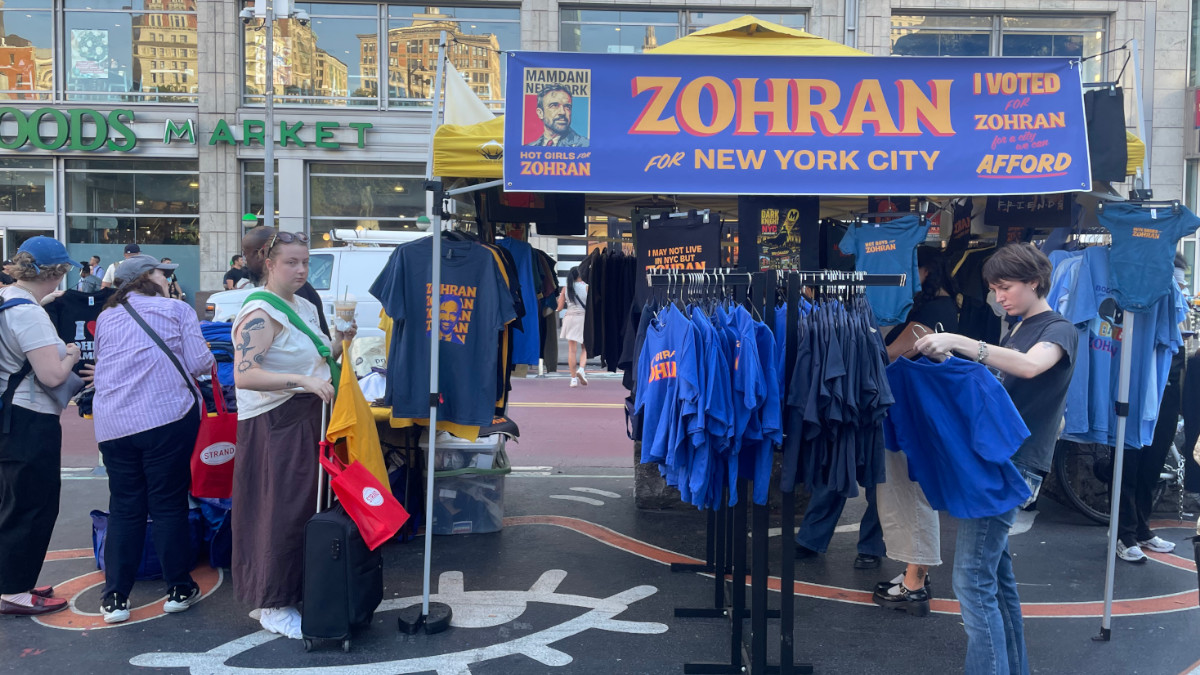
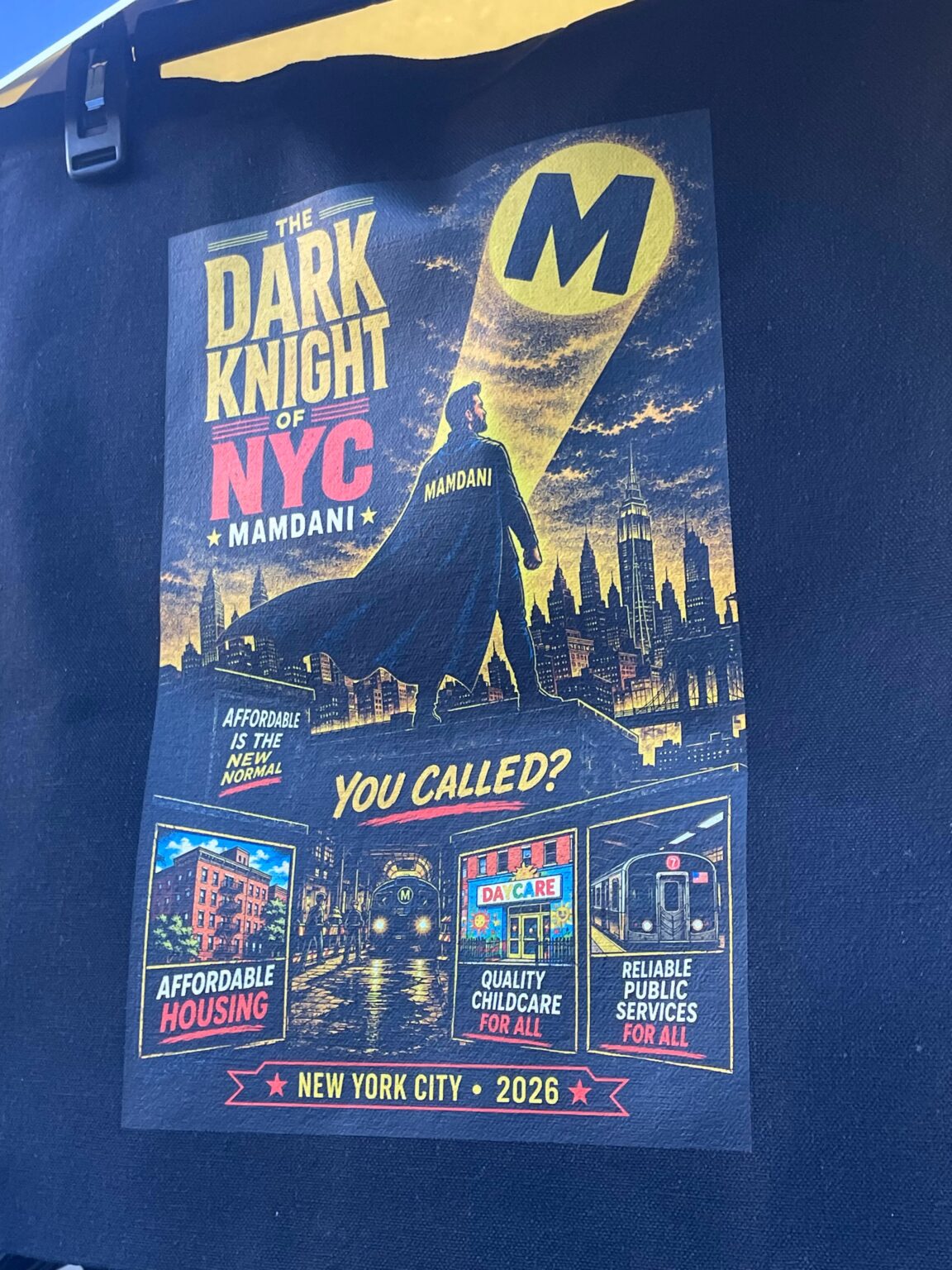
    Mahmadi-Devotionalien Bild von Eva C. Schweitzer

    Back to the future - quand Zelig de New York crée l’image d’une maire turque pour Berlin. C’est aussi hilarant que les comédies de Woody Allen et aussi loin du socialisme européen que John F. Kennedy.

    You are entering the american sector.

    2.10.2026 von Eva C. Schweitzer - Was haben der New Yorker Bürgermeister Zohran Mamdani und die Berliner Linken-Politikerin Elif Eralp gemeinsam? Den jungen Wahlkampfstrategen Morris Katz.

    Morris Katz wäre jemand, den Woody Allen in einem seiner Filme als den quintessenziellen New Yorker auftreten lassen würde – wenn er noch Filme über New York machen würde. Besetzen würde er ihn mit einem jüngeren Jesse Eisenberg. Katz, ein ehrgeiziger 26-Jähriger, der sich lange als 28-Jähriger ausgegeben hat, ist ein moderner David Axelrod, das war der Mann, der Barack Obama beriet.

    Katz – nicht verwandt mit Katz Delicatessen, dem Pastrami-Emporium an der Houston Street – ist das Wunderkind hinter dem Erfolg von Zohran Mamdani, dem sozialistischen muslimischen Bürgermeister von New York, der einen unwahrscheinlichen Triumph hingelegt hat, gegen den populären, aber chancenlosen Republikaner Curtis Sliva und dem unpopulären Andrew Cuomo, der glaubte, als Demokrat und Ableger der Clinton Machine den Wahlsieg gepachtet zu haben.

    Mamdani gehört dem linken Parteiflügel der Demokraten an, den Demokratischen Sozialisten, deren Urvater Bernie Sanders oft und gerne mit ihm auftritt. AOC, Alexandria Ocasio-Cortez, ist das neueste, polierteste Aushängeschild der Partei. Sie will US-Präsidentin werden, das sehe ich noch nicht. Aber wer weiß.

    Der Mann hinter Mamdani – und Eralp Bild von Eva C. Schweitzer

    Katz steht AOC und Sanders nahe, hat aber auch andere Demokraten unter seine Fittiche genommen, etwa John Fetterman aus Pennsylvania, der sich mit den Demokraten über die Israelfrage überworfen hat, die, findet er, Israel zu zögerlich und zu unenthusiastisch Bomben geliefert haben. Katz hat den Politiker als Protagonist der Arbeiterklasse aufgebaut, wie ein Casting Director. Fetterman hatte einen Schlaganfall, den inszenierte Katz als „verletzbaren Moment“.

    Er war auch Wahlkampfberater für Graham Platner in Maine. Dessen Kampagne ist dann leider implodiert, weil eine Ex-Freundin ihm übergriffiges Verhalten vorwarf; plus: er hatte ein Tattoo der Totenkopf-SS auf der Brust, von dem er sagte, er wisse nicht, was das bedeute, er habe sich das im Urlaub tätowieren lassen. In Kroatien.

    Das war Pech. Katz nächstes Projekt ist Abdul El-Sayed, ein Arzt, der Senator für Michigan werden möchte. El-Sayed ist, wie Mamdani, links, er tritt für revolutionäre Sachen wie „Krankenversicherung für alle“ ein. Und er ist Moslem. Katz hingegen, den die New York Times in jungen Jahren als einen „Woody Allen-guckenden, Philip Roth-lesenden, Bob Dylan-zuhörenden“ Möchtegern-Drehbuchautor beschreibt, ist Jude, wie Sanders. Oder Axelrod. Oder Woody Allen.

    Katz ist übrigens nicht nur Jude, er ist das personifizierte Klischee des askenasischen, Hollywood-affinen, belesenen, theatergehenden, politisch streitbaren New Yorkers, der Frauen mit Worten anbaggert würde wie: „Du, du bist wie New York: jüdisch, links, liberal, intellektuell, Central Park West, Brandeis University, die sozialistischen Sommercamps und der Vater mit den Ben-Shahn-Zeichnungen; rote Windeln …“

    Warum erzähle ich das? Weil Katz nicht nur Mamdani, sondern auch Elif Eralp gecoacht hat, die Spitzenkandidatin der Linken für das Berliner Rathaus, die kürzlich mit mehr als 25 Prozent den Sieg davongetragen hat, woraufhin der New Yorker bereits als Berliner Bürgermeisterin bezeichnete. Das ist sie noch nicht, aber er hat sie beraten, damit sie die Wahl gewinnt, und das offenbar erfolgreich.

    Katz für Merz?

    Beim Coachen geht es Katz darum, Politikern beizubringen, wie sie auf Leute zuzugehen, sie nach ihren Problemen und ihren Sorgen zu fragen haben. Auf möglichst viele Leute. Treppensteigen, Türenklingeln, für alle da sein, immer. Nicht, wie der alte Berliner Regierende, Tennisspielen gehen, wenn der Strom ausfällt.

    Katz brachte Mamdani dazu, dass er bei dem großen Schneesturm im Januar dieses Jahres mitten in der Nacht bei einem ultraorthodoxen Satmar-Rabbi in Williamsburg auftauchte und dessen Auto aus dem Schnee schaufelte – nicht nur anfing zu schaufeln, ganz freischaufelte. Der Rabbi war fassungslos, und begeistert.

    Es war auch Katz, der die drei Treffen zwischen Mamdani und dem US-Präsident Donald Trump orchestriert hat. Bei dem ersten Treffen brachte der Bürgermeister ein Geschenk mit; die (fake) Titelseite der New York Daily Mail, die Trump in den höchsten Tönen lobte. Das war Katz‘ Idee. Beim zweiten Treffen, in New York, rannte Katz höchstselbst kurz vorher los, um bei Brooks Brothers einen besseren Schlips zu kaufen. Mandami sollte nicht hinter Trump zurückfallen.

    Beim dritten Mal einigten sich die beiden Politiker auf ein neues Siedlungsprojekt in Sunnyside, Queens; 12.000 neue Wohnungen sollen errichtet werden – mit der finanziellen Hilfe der Bundesregierung. Trump sagte danach, Mamdani sei ein Kommunist, aber er könne ihn gut leiden. Aber Trump mag ja auch Kim Jong-Un und Xi Jinping. Hoffentlich coacht Katz auch Eralp, wie sie das hinbekommt. Ich selber warte einfach darauf, dass die Chinesen hier den Laden übernehmen und mit den Bauarbeiten anfangen.

    Man sollte meinen, sich um die selbstpersönlichen Sorgen der Wählerschaft zu kümmern ist ein einleuchtendes Wahlkampfkonzept, und erfolgversprechend, jedenfalls mehr, als sich mit Prominenten zu zeigen und Wahlkampfgeldern von Millionären einzutreiben. Das hat Cuomo getan, der immer noch glaubt, er sei der wahre Bürgermeister der Herzen. Merkwürdig, dass da noch nie einer draufgekommen ist. Vielleicht sollte Merz sich Katz mal kommen lassen.

    Wahlkampf in Berlin und New York

    Ähnlich wie Mamdani hat Eralp ein Moslem- und ein Kommunismusproblem, aber ganz das gleiche ist es nicht. Amerikanische Moslems sind in der Regel erfolgsorientierte Aufsteiger und keinesfalls soft on crime. Mamdanis Vater ist ein (linker) Universitätsprofessor an der Ivy-League-Universität Columbia, seine Mutter ist Mira Nair, eine preisgekrönte Filmemacherin („Salaam Bombay“). Ihr erster Mann war der Fotograf Mitch Epstein (nicht verwandt). New Yorker Oberklasse, also.

    Bild von Eva C. Schweitzer

    Auch Eralp kommt nicht aus der Arbeiterklasse; die studierte Juristin mit doppelter Staatsbürgerschaft – wie Mamdani, der in Uganda geboren wurde – ist die Tochter einer feministischen Publizistin und eines Arztes aus der Türkei, also eher gehobene Mittelklasse. Bestimmt nicht arm, aber privates Vermögen ist in der deutschen Politik ohnehin nicht so wichtig wie in Amerika. Noch nicht.

    Auch Katz ist nicht so richtig Mittelklasse. Er wuchs in Tribeca auf, in einer Zeit, als der Stadtteil schon vor Geld aus den Nähten platzte; sein Vater David Bar Katz ist Theaterautor und Fernsehproduzent (“American Gigolo.”). Seine Mutter Julie Merberg ist eine erfolgreiche Kinderbuchautorin; sein Pate ist der Autor Philip Seymour Hoffman. „Katz“, schreibt die Times, „gehört zur New Yorker Kulturelite, spricht aber fließend die anti-elitäre Sprache des progressiven Populismus.“

    Im Kern ging es im New Yorker Wahlkampf um das gleiche wie in Berlin: Die Mieten sind viel zu hoch. New York hat Mietpreisbindung, aber nur noch für etwa die Hälfte der Altbauten, der Teil des Bestands also, in denen die nicht so ganz erfolgreichen Drehbuchautoren, Schauspieler, Comedians oder Café-Bedienungen leben, die man aus Sitcoms oder Woody-Allen-Filmen kennt.

    Rund eine Million Wohnungen sind es, von vier Millionen insgesamt. Die Durchschnittsmiete bei Neuvermietungen in Manhattan liegt nun bei 6.655 Dollar (im preisgebundenen Altbau sind es, im Schnitt, nur 1.500 Dollar pro Wohnung). Das zahlt derjenige, der nicht „rent stabilized“ lebt, oder in einer städtisch finanzierten Sozialwohnung oder der von seinen Eltern kein Häuschen geerbt hat.

    De facto ist der preisgebundene New Yorker Altbau das letzte Refugium der alteingesessenen Weißen. Die Schwarzen und die Asiaten leben in Projects, Sozialwohnungssiedlungen, die Latinos in den Außenbezirken. Die Altbaubewohner Manhattans, das sind die Leute, die Mamdanis Basis bilden.

    Bisher hat er sie nicht enttäuscht. Er hat die Mieten im Altbau eingefroren; Heizkosten sind in der Miete enthalten und dürfen nicht erhöht werden, bloß weil Trump die Straße von Hormus dichtgemacht hat. Strom ist billig. Auch sonst kümmert sich Mandami um die darbende Mittelschicht; mal streicht er eine städtische Gebühr oder macht Kindergärten kostenlos, mal verschenkte er Opernkarten, und mal stellt er sich vor die Columbia University (virtuell) und verhindert Deportationen.
    Wie Woody Allens Zelig

    Das bringt uns zu der Frage: Israel versus Gaza und die muslimische Welt. Seit dem 7. Oktober 2023 tobt in New York ein paralleler Bürgerkrieg mit Protesten und Demos, inzwischen abgekühlt, aber nie vergessen. Als die Protestwelle noch lief, funktionierte das folgendermaßen: Vor dem belagerten Ort, sagen wir, die Columbia University, reihten sich auf der einen Seite die konservativen Juden mit Israel-Fahnen auf, viele davon Chabad, oder Lubavitcher, oder doch wenigstens Russen.

    Auf der anderen Seite die Satmar mit ihren schwarzen Hüten, der Palästinenserfahnen und den Protestschildern gegen Israel. Die Satmar glauben, dass Juden erst nach Israel kommen dürfen, wenn der Messiah da ist. Die Lubavitcher glauben, der sei bereits gekommen, in der Gestalt des berühmten Rebbe Menachem Mendel Schneerson (Trumps Schwiegersohn Jared Kushner ist ein Anhänger des Rebbes). Ein Bild des Rebbes klebt auf vielen Straßenschildern, damit wir nicht vergessen, wie er aussieht.

    Zu den Satmar gesellten sich linke säkulare Juden, undefinierbare Weiße und der ein oder andere Araber. Dazwischen die New Yorker Polizei in größeren Formationen, die beide Gruppen erfolgreich davon abhält, einander an die Kehle zu gehen.

    Katz letzte große Aufgabe war, das schlechte Image, das Mamdani bei konservativen Juden hat, wegzupolieren. Da konnte er schon mal üben, sobald Eralp noch mehr Flak bekommt. Der New Yorker Bürgermeister hat eine 6,4 Millionen Dollar teure „Kampagne gegen Antisemitismus“ ins Leben gerufen, für mehr Sicherheit für Synagogen, aber auch für Holocaust-Erziehung, und die zudem das Verständnis in New York für jüdische Kultur und Geschichte wecken soll. Er brachte zur Vorstellung so gut wie alle demokratischen Juden mit sich.

    Katz verknüpfte auch den Bürgermeister mit Rabbinern, jüdischen Meinungsführern und jüdischen Immobilienhändlern und begleitete Mamdani zu dem Haus von Steven Spielberg am Central Park West, um ihn dem Filmemacher vorzustellen. „Der Talmud lehrt uns, dass jeder, der eine Seele rettet, die ganze Welt rettet“, sagte Mamdani (auf TikTok), bevor er zu einem Frühstück zu Ruth Messinger aufbrach, der linken, jüdischen früheren Präsidentin von Manhattan. An Yom Kippur, dem höchsten jüdischen Feiertag. Offenbar entwickelt er nachgerade-Zelig-ähnliche Fähigkeiten.

    Und wenn es schief geht? „Dann habe ich eine Menge Material für Drehbücher“; sagte Katz zur New York Times. Ob sich diese linke Internationale eins zu eins auf die Bundeshauptstadt übertragen lässt; wahrscheinlich nicht. Aber ein Drehbuch springt garantiert dabei heraus. Vielleicht sogar eines von Woody Allen.

    Eva C. Schweitzer

    Eva C. Schweitzer pendelt zwischen Berlin und New York, wo sie eine Dissertation über den Times Square verfasst hat; sie arbeitet als Buchautorin und freie Journalistin über Medien, Entertainment und Politik. Ihr letztes Buch war „Links Blinken, rechts abbiegen“ beim Westend Verlag; derzeit schreibt sie ein Buch über die Tucholsky-Familie. Sie leitet auch den Verlag Berlinica Publishing, der Bücher aus Berlin nach New York bringt. Zuvor war sie Redakteurin beim Tagesspiegel in Berlin.

    #Berlin #New_York #politique #campagne_électorale #gouvernement_municipal

  • Quelques cochons du dimanche allemands

    Fee - Schweine im Weltraum, 25.11.1987, FBZ-Braunschweig
    ▻https://www.youtube.com/watch?v=_XaOHhbLybs


    Un peu de rébellion s.v.p.

    Grobschnitt - Schweine im Weltall
    ▻https://youtube.com/watch?v=Aw4Dl6arrCI


    De la « fan fiction » muppetesque

    Prima Klima - Schweine ins Weltall
    ▻https://youtube.com/watch?v=V5NLE-lMhLU


    Les Philip Glass de la « Neue deutsche Welle » (NDW) donnent quelques conseils de base pour survivre dans l’underground.

    Prima Klima - Schweine ins Weltall

    Atme bitte nicht zu tief,
    du könntest dran ersticken.
    Laufe bitte nicht zu schnell.
    Sie könnten dich erschießen.

    Dein Badewasser riecht so schlecht.
    Versuch es mal eine Brause.
    Wo ist der Platz, wo es sicher ist?
    Du und ich, wir wissen es nicht.

    Ein moderner Mensch,
    der kennt die Lösung aus dem Fernsehen.
    Eines Tages lebst du einen wunderschönen Traum.

    Erst muss das letzte Schwein im Weltall sein.
    Es muss das letzte Schwein im Weltall sein.
    Es muss das letzte Schwein im Weltall sein.
    Es muss das letzte Schwein im Weltall sein.

    Atme bitte nicht zu tief,
    du könntest dran ersticken.
    Laufe bitte nicht zu schnell.
    Sie könnten dich erschießen.

    Richtig.

    Dein Badewasser riecht so schlecht.
    Versuch es mal eine Brause.
    Wo ist der Platz, wo es sicher ist?
    Du und ich, wir wissen es nicht.

    Richtig.

    Ein moderner Mensch,
    der kennt die Lösung aus dem Fernsehen.
    Eines Tages lebst du einen wunderschönen Traum.

    Erst muss das letzte Schwein im Weltall sein.
    Es muss das letzte Schwein im Weltall sein.
    Es muss das letzte Schwein im Weltall sein.
    Es muss das letzte Schwein im Weltall sein.

    Erst muss das letzte Schwein im Weltall sein.
    Es muss das letzte Schwein im Weltall sein.
    Es muss das letzte Schwein im Weltall sein.
    Es muss das letzte Schwein im Weltall sein.

    Sehr komisch.

    Ein moderner Mensch,
    der kennt die Lösung aus dem Fernsehen.
    Eines Tages lebst du einen wunderschönen Traum.

    Erst muss das letzte Schwein im Weltall sein.
    Es muss das letzte Schwein im Weltall sein.
    Es muss das letzte Schwein im Weltall sein.
    Es muss das letzte Schwein im Weltall sein.

    etc.

    #musique #ndw #new_wave

  • NYC bans AI use for students until they reach high school
    ▻https://www.theverge.com/policy/988228/nyc-ai-restrictions-in-schools-chatbot-ban

    The policy also bans companion #chatbots across all grades.

    #New_York City mayor #Zohran_Mamdani has announced a new policy today that will ban younger schoolchildren from using AI in classrooms. The one-year moratorium, effective in the 2026-2027 school year, will impact about 600,000 public school students in 2-K through eighth grade and is being introduced alongside additional limits on digital devices and a small pilot program for AI education tools.

    The new rules being introduced by NYC’s Department of Education will bar teachers from using AI tools to grade assignments, and keep students from using the technology in the classroom until they enter high school, with chatbots designed specifically for companionship and mental support reportedly being banned in all grades. High school aged students will only be permitted to use #AI in specific instances, and they’ll be offered AI literacy classes twice a year to help students “think critically” before they come to “rely on it.”

    #Mamdani #NYC #IA

    • Mamdani Issues AI Moratorium in NYC Schools – Mother Jones
      ▻https://www.motherjones.com/politics/2026/09/mamdani-nyc-ai-ban-pause-moratorium-public-schools

      #Mamdani is dressed in a black suit, standing just behind a podium, and speaking into a microphone at a press conference. He is showing the back of his right hand to emphasize his talking point.

      Mayor Zohran Mamdani holds a press conference to announce a one-year moratorium on student AI usage in NYC public schools. NDZ/STAR MAX/IPx
      Get your news from a source that’s not owned and controlled by oligarchs. Sign up for the free Mother Jones Daily.

      New York City Mayor Zohran Mamdani announced a one-year moratorium on AI use for elementary and middle school students on Wednesday.

      The decision, which comes a week before New York City public schools begin the year, “includes all software that uses student-facing generative AI.” Elementary and middle school students—about 600,000 students in total—will receive screen-time restrictions that loosen over advancing grades, ranging from zero to 45 minutes per day. Companion chatbots will also be prohibited for all grade levels.

      The city is also introducing biannual AI critical thinking training for high schoolers that cover determining what is and is not AI, impacts on careers and future skills, and AI-related biases, among others, along with limited pilot programs for a few classes per high school that incorporate AI tools into students’ learning “under the direct supervision of a trained educator.”

      “Children need their teachers and human connection in order to learn and in order to grow. And they need to develop skills alongside their peers, build relationships with their teachers, and wrestle with tough problems on their own,” Mayor Mamdani said in a Wednesday press conference. “The tech industry wants us to believe that AI in early education is not only inevitable, but that it is necessary. We do not see it that way.”

      The new policies will not apply to cases such as assistive tools to help students with disabilities, those who are multilingual learners, and students in career programs like computer science.

  • « Le New Age c’est la religion de notre temps » - CQFD, mensuel de critique et d’expérimentation sociales
    ▻https://cqfd-journal.org/Le-New-Age-c-est-la-religion-de

    Au début du siècle dernier, Émile Durkheim écrivait : « Les anciens dieux vieillissent ou meurent, et d’autres ne sont pas nés. »_1 Au XXIe siècle, tout porte à croire que les nouveaux sont arrivés ! Ils viennent de partout : d’Inde, du Japon, d’Amazonie, du Gabon, du Tibet… Et se mêlent joyeusement dans un grand melting pot religieux : le #New_Age. Cette culture hippie que l’on croyait coincée dans le vortex psychédélique des années 1970 semble avoir quitté les communautés alternatives et les chemins initiatiques de l’Orient pour intégrer notre quotidien. Elle se retrouve désormais sur ce paquet de riz ou cette bouteille de jus de fruits que vous croisez dans les rayons des supermarchés et dont l’étiquette promet « de vous purifier de l’intérieur, presque de vous laver de vos souillures morales, d’entrer en contact avec la nature, si ce n’est même de sauver la planète ». C’est le constat dressé par le sociologue et philosophe des religions Raphaël Liogier dans _Souci de soi, conscience du monde (Armand Colin, 2012). Est-ce à dire que les nouveaux dieux ont balayé les anciens ? Le packaging est nouveau mais le produit reste le même, nous a répondu le philosophe. On l’a rencontré un jour de juin brûlant, aux abords de la plage des Catalans. Il nous a expliqué comment le New Age a imprégné l’ordre néolibéral, et comment il est devenu la #religiosité de notre temps. Entretien.

  • Meta says #US states are seeking $1.4 trillion in penalties in August youth safety trial
    ▻https://www.reuters.com/business/meta-says-us-states-are-seeking-14-trillion-penalties-august-youth-safety-t

    - Penalties were calculated based on state laws in #Colorado, #California, #Kentucky and #New_Jersey
    – #Meta says the number is not supported by evidence
    – The company faces thousands of claims over addictive features

    #oups

  • la messinscena – 05.07 2026
    ▻https://radioblackout.org/podcast/la-messinscena-05-07-2026

    Third Gear – Annie Anxiety, Soul Possession City Too Hot – Lee “Scratch” Perry, Punky Reggae Party Amazon #dub – General P.D.C , Beesmunt Soundsystem Every Dub Shall Scrub – Scientist, Scientific Dub Conquering Dub – Jah Shaka, Brimstone And Fire Terracotta Realness – Cloud Management, Invisible Salad Undone – Ghost Dubs, Damaged Tschik-mo – Liliput, Liliput […]

    #new_wave #no_wave
    ▻https://radioblackout.org/wp-content/uploads/2026/07/messinscena-0705.mp3

  • « Plus une goutte d’eau ne coulera » : l’Inde confirme « travailler activement » à priver en amont le Pakistan de l’eau de ses fleuves
    ▻https://www.boursorama.com/actualite-economique/actualites/plus-une-goutte-d-eau-ne-coulera-l-inde-confirme-travailler-activement-a

    #New_Delhi a confirmé mercredi 10 juin qu’elle cherchait à priver son voisin pakistanais de l’eau des fleuves qui prennent leur source en #Inde avant de couler au #Pakistan. Il y un an, les Indiens avaient dénoncé unilatéralement un traité de partage des eaux en représailles à un attentat attribué à #Islamabad.

    « C’est une évidence, plus une goutte d’eau ne coulera (au Pakistan) dans les années qui viennent » , a affirmé le ministre indien de l’Eau, CR Patil, dans un entretien accordé mardi à l’agence de presse ANI. « Nous y travaillons activement », sur « directive » du Premier ministre #Narendra_Modi, a ajouté CR Patil.

    #tout_va_bien

  • The Making of the Teenager
    ▻https://jacobin.com/2026/03/the-making-of-the-teenager

    On comprend mieux “Targets” après cet article
    ►https://en.wikipedia.org/wiki/Targets

    18.3.2026 by Lauren Fadiman - The teenager we know today came of age in the postwar era — but she owes her existence to the New Deal.

    In December 11, 1944, Nina Leen invented the teenage girl. While whispers of her had been circulating for more than a decade — in advertisements for three-cent “beauty care” books and $3 budget shoes — it was not until Leen’s Life magazine photo essay “Teen-Age Girls: They Live in a Wonderful World of Their Own” that this new creature assumed her prototypical form.

    The photos themselves were of a group of average fifteen-to-seventeen-year-old girls living in a St Louis, Missouri, suburb. But through Leen’s iconic work, each of them became the embodiment of a new American demographic, archetype, and cultural figure. At school, she could be identified by her Shetland sweater, wool skirt, bobby socks, and loafers, eyeglasses painted red with nail polish — and was that a boy’s ring on a chain around her neck? After hours, she donned men’s slacks or jeans and a shirt borrowed from her father or brother. Her weeks were routine affairs characterized by school and homework, babysitting gigs at 25 cents an hour, Friday night sleepovers, and Saturday night double dates that gave way to Sunday church service. Some even found time for high school sororities, replete with their own secret ceremonies. “There is a time in the life of every American girl when the most important thing in the world is to be one of a crowd of other girls and to act and speak and dress exactly as they do,” declared Leen between photographs of slumber parties and candlelit cult-like activity. “This is the teen age.”

    Six months later, Leen profiled a group of boys in Des Moines, Iowa, for a follow-up piece entitled “Teen-Age Boys: Faced With War, They Are Just the Same as They Have Always Been.” Despite the imminent threat that these young men might be drafted to fight on the Pacific Front, Leen captures them “behaving exactly as they have always behaved, devoting themselves to all the vastly important details connected with the complete enjoyment of playing, eating and sleeping.” One Richie Burns is depicted eating his way through an average day: orange juice, cereal, milk, eggs, toast, jam, sandwiches, pie, ice cream, soda, sandwiches again, soup, chops, potatoes, string beans, ice cream again, apples, and a candy bar to top it off. “When Richard finally got through and went to sleep at 10:30 he had consumed more than 3,000 calories,” Leen reports. “He slept dreamlessly until 7 o’clock next morning, when he woke up feeling hungry.”

    #USA #culture #jeunesse #new_deal histoire #teenagers #vide #néant #nausée

  • New Noise Hardcore


    ▻https://smartlink.ausha.co/new-noise-magazine-podcast/podcast-new-noise-hardcore-culte-1-bad-brains

    New Noise lance Hardcore Culte, une série d’épisodes hors-série dédiée aux groupes fondateurs du #hardcore_punk. Et pour commencer, difficile de trouver plus évident que les #Bad_Brains, formation mythique de Washington D.C. par qui tout (ou presque) est arrivé.

    Pour passer en revue la #discographie et le parcours chaotique des plus punks des #rastas, Élodie Denis et Bhaine de la rédaction de #New_Noise ont invité Rod Glacial, auteur du livre #Hardcore : 40 ans de Rage, de Black Flag à Turnstile , à débattre avec eux. Au programme : albums indispensables et indiscutables, disques à réhabiliter, controverses, légendes urbaines, back flips et PMA !

    #podcast #musique

  • “Surveillance City”

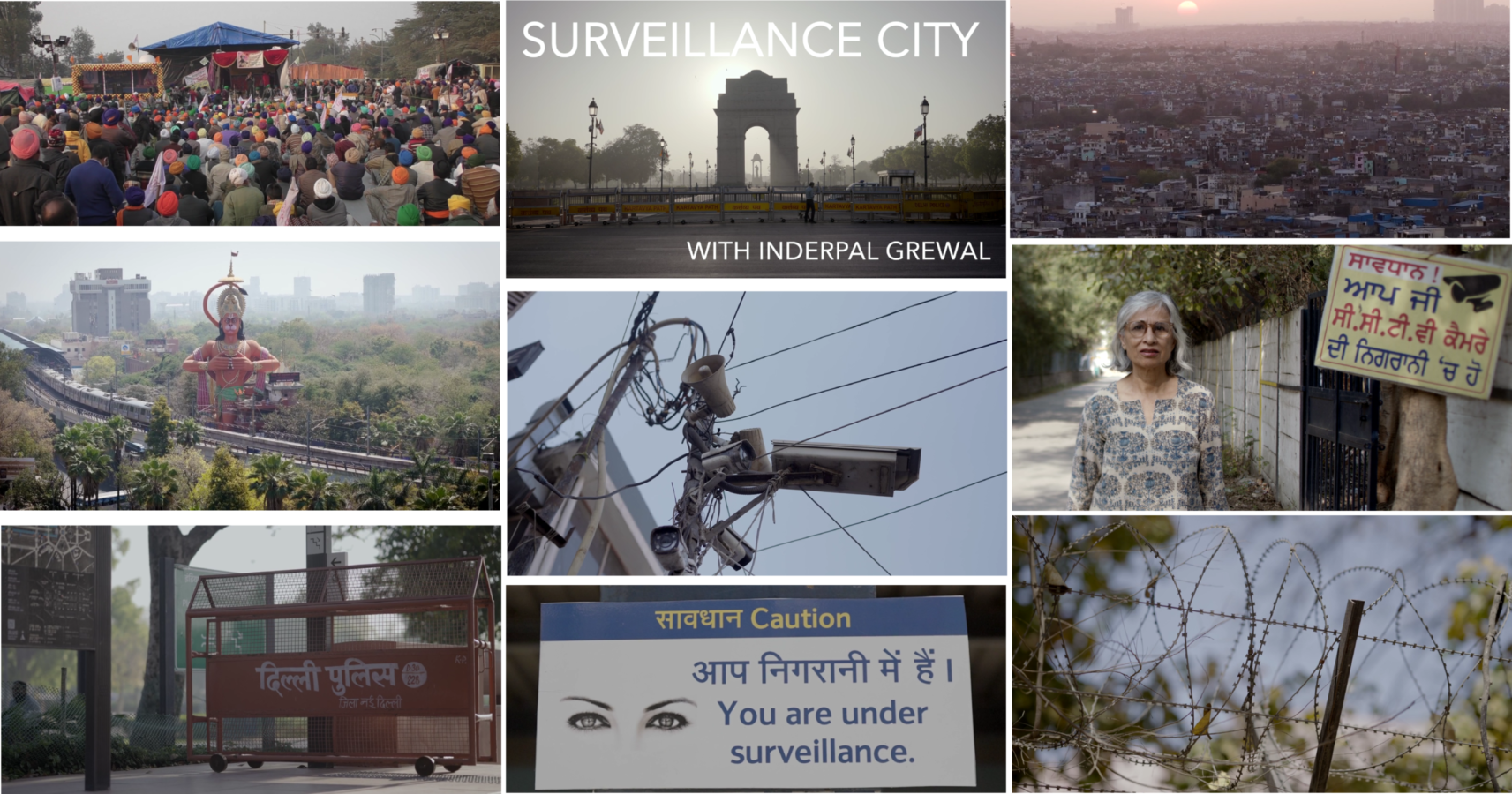
    Directed by Harjant Gill and Pearl Sandhu and featuring Professor Inderpal Grewal, Surveillance City takes viewers on a journey through contemporary #Delhi, narrating a city marked by the extreme inequality resultant of decades of neoliberalism, and highlighting the insidious work of an authoritarian state deploying surveillance and securitisation measures to govern diverse populations and temper unrest. It’s a powerful meditation on masculinism and militarism, populism and patriarchy, the aesthetics and affects of security, nationalism and religion, policing and the law, discourses of terror, fear of the other, the role of the media, but also dissent, protest, and the prospects of democracy in a postcolonial state.

    ▻https://vimeo.com/1149568432?fl=pl&fe=vl


    ▻https://antipodeonline.org/2026/05/13/surveillance-city

    #film #film_documentaire #surveillance #Inde #inégalités #autoritarisme #néolibéralisme #New_Delhi #géographie_urbaine #ville #nationalisme_hindou #nationalisme #minorités #pauvreté #gentrification #enclaves #caméras_de_vidéosurveillance #sécurité #sentiment_de_sécurité #patriarcat #sécuritisation #espace_domestique #masculinité #religion #esthétique #Narendra_Modi #normalisation #émotions #peur #insécurité #lois #lois_coloniales #armée #militaires #policing #réseaux_sociaux #terrorisme #terreur #hindous #homogénéité #géographie #géographie_sociale #classes_sociales #castes #démocratie #Etats_post-coloniaux #colonialisme #répression #droits

    ping @cede

    via @reka

  • Les cent premiers jours de #Zohran_Mamdani
    ▻https://lvsl.fr/les-cent-premiers-jours-de-zohran-mamdani

    Les premières victoires de Zohran Mamdani sont emblématiques de ce qu’une municipalité de gauche peut accomplir, même lorsqu’elle fait face à d’importants obstacles. Mais son programme risque de s’enliser s’il ne réussit pas à convaincre l’État de #New_York de taxer les grandes fortunes. Par Nick French, traduction par Flavien Delcloque-Le Banner, éditée par M. B. B.

    #Politique #Municipalité

  • Zohran Mamdani on Using Government to Fight for the Many
    ▻https://jacobin.com/2026/04/mamdani-new-york-100-days

    13.4.2026 by Zohran Mamdani - In a speech marking his first 100 days as New York City mayor, Zohran Mamdani describes his administration’s accomplishments so far and champions “pothole politics,” a 21st-century version of Milwaukee’s proud tradition of sewer socialism.

    It is a Sunday night in New York City. And while some prepare for the week ahead, for many, the workday has only just begun.

    Tonight, in the northern reaches of the Bronx, an MTA train operator is guiding a 2 train out of Wakefield. Before that train reaches its final stop in Flatbush, it will drop off New York City Health and Hospitals nurses at 135th Street, NYCHA (New York City Housing Authority) maintenance workers at 96th Street, CUNY staff at Franklin Avenue–Medgar Evers College. From the Power Control Center at 53rd Street, engineers will manage its path through a vast network of signals. And at every stop, at every hour of the night, the people of New York City will get off the subway and go to work.

    This city does not run by accident. New York City is the greatest city in the world because of the millions of people who labor tirelessly each and every day to make it so. What an immense honor it is to be your mayor. To not simply lead you, but to learn from you.

    One hundred two days ago, we stood together on the steps of city hall, bracing ourselves against the bitter cold. One hundred two days ago, we stood together at the dawn of a new era. The world watched, wondering if change could really come. Across the five boroughs, New Yorkers waited to see if a city hall powered by the people could truly govern for the people.

    There were cynics then, just as there are cynics now. Some said that once the hard work began, we would forget the movement of working people that rewrote what was possible in this city. Others warned that the Left could debate but could never deliver. Socialists might be able to win a campaign, they said, but we could never advance an agenda.

    Far more wanted to believe but didn’t know how. Because for too long, city hall had not just failed to meet expectations, it had lowered them. After years of broken promises, no one in this city could be blamed for doubting that government held either the ability or the ambition to upend the status quo.

    Yet as I said on that freezing January afternoon to more than eight and a half million New Yorkers, we will make no apology for what we believe. I was elected as a democratic socialist and I will govern as a democratic socialist.

    One Hundred Days In

    Tonight I want to talk about what we’ve done. Not to congratulate ourselves but as a reminder of what is possible. With what we’ve accomplished in fourteen weeks, imagine what we can do together in four years.

    We began with a promise, universal childcare, and by day eight, we delivered it. Thanks to the historic $1.2 billion partnership with Governor Kathy Hochul and the organizing of more than a hundred thousand New Yorkers during the campaign, we will not only make 3-K truly universal, we will deliver free child care for two-year-olds for the first time in New York City history. We will begin with 2,000 children this fall, 12,000 next year, and cover every single two-year-old by the end of four years. Tens of thousands of families will no longer have to choose between having a child and affording to live in our city. That is the change government can deliver.

    When young parents save more than $20,000 per year per child, that is the change government can deliver. When children get a better start, when parents can keep their jobs, when billions of dollars in workforce productivity return to our economy, that is the change government can deliver.
    Mamdani will deliver free childcare for two-year-olds for the first time in New York City history. (Jason Alpert-Wisnia / Hans Lucas / AFP via Getty Images)

    And we didn’t stop there. We’re taking on the biggest driver of the affordability crisis in our city: housing. We are going after the bad landlords who violate our laws and mistreat their tenants. Since January 1, we have won more than $34 million in settlements, judgments, and repairs for tenants, delivered improvements to 6,070 apartments so far and issued 195,829 violations.

    New York City will no longer tolerate exploitation as a business model. We have held Rental Ripoff Hearings across the five boroughs and heard from more than 1,600 New Yorkers. Because the same tenants who have been overlooked by our politics will now be at the heart of our policies.

    As we protect the tenants of today, we must also build for tomorrow. That is why we have cut red tape and accelerated the construction of thousands of new units of housing: homes that are not only affordable enough to rent, but many that will be affordable enough to buy as well.

    I know there are many New Yorkers who care about the work of the Rent Guidelines Board. I am one of them. Rents are too high across New York City, and government can do more to address that. I am proud of the six new members I appointed to that independent board, and I look forward to the decision they will come to in just a few short months.

    No longer will city government be afraid of its own shadow. If anyone should be afraid, it is those who take advantage of working people. Over these past 102 days, as we launched a sweeping worker and consumer protection agenda, we have made clear that solidarity is not just a slogan. It is a practice. When NYSNA (New York State Nurses Association) nurses went on strike, I was proud to join them on the picket line. And those nurses didn’t back down until they won the better wages and safe working conditions they deserved.

    We will stand with workers who have so often stood alone. We have returned more than $9.3 million to workers, consumers, and small businesses — nearly $100,000 every single day we’ve been in office. We’ve expanded protected time off for more than four million workers, reinstated nearly 10,000 wrongly deactivated delivery workers and issued nearly 60,000 compliance warnings across our city. And throughout it all, we have taken on the junk fees and subscription traps that afflict far too many New Yorkers. No longer can someone charge you a hidden fee for the hotel you book or make it impossible to cancel a gym membership.

    As we set the global standard for protecting consumers, we will also ensure that New York City remains the global center of business. We want to build the strongest economy that our five boroughs have ever seen. And we are on our way. New York City continues to lead office recovery nationwide. Venture capital investment in our city reached 11.1 billion in the first quarter of this year, the strongest quarter in five years. Labor force participation is at an all-time high.

    And yet we know that if we want our city to continue to grow, we must deliver the conditions for exactly that. Public safety is at the top of the list. Make no mistake, our approach to public safety is working. Since we took office, murders have hit record lows. There has not been a murder on Staten Island in more than 180 days. Crime in our city is down. The NYPD has taken more than one thousand guns off of our streets since January 1. Together with the crisis management system, we are on pace to deliver the lowest levels of shootings in our city’s recorded history.

    There is always more to be done. Our administration will approach public safety with a whole-of-government approach. That is why on day 78, we were proud to announce the creation of New York City’s first ever Office of Community Safety. It will devise new approaches to the gun violence and mental health crises that stretch across our city.

    This commitment to safety extends to making our city safer and smoother for the New Yorkers who navigate our streets. On the third day of our administration, we announced that we would install protected bike lanes along the entirety of McGuinness Boulevard, one of the most dangerous roads in New York City, protecting the thousands of New Yorkers who use it every single day. We took action to lower speed limits across thousands of school zones citywide. Four hundred thirty-eight children have been killed in traffic crashes in our city since 2000 — we will not accept this as normal. And as we prepare for the World Cup, we are delivering major street upgrades, including a redesign of 9th Avenue and expanded bike lanes and pedestrian spaces across Downtown Manhattan.

    Throughout every day of this work, we have contended with a historic budget deficit larger than even that of the Great Recession. Unlike those who came before us, we will budget with transparency and accountability. As we have responded to this crisis, I have thought often of the Margaret Thatcher quote, “The problem with socialism is that you eventually run out of other people’s money.” If anything, it seems that you eventually need a socialist to clean up the mess.

    On January 1, I told New Yorkers that city hall would hold a singular purpose: to make this city belong to more of its people than it did the day before. For 102 days, we have endeavored to do exactly that, delivering both public goods and public excellence. Buses will run faster on Fordham Road. Children play in a new recreation center in East Flatbush, honoring the legacy of Shirley Chisholm. Childcare centers are opening in Western Queens and Staten Island and the South Bronx.

    That is the change that government can deliver, and it is the change that democratic socialism can deliver.

    I know there are many who use “socialist” as a dirty word, something to be ashamed of. They can try all they want, but we will not be ashamed of using government to fight for the many, not simply the few. We will not be ashamed of adding more heat pumps to NYCHA buildings in the Rockaways or building more supportive housing in Harlem or standing steadfast alongside our trans neighbors. We will not be ashamed of investing in youth mental health clinics or working to close Rikers or fighting for immigrants targeted by ICE (Immigration and Customs Enforcement).

    To any New Yorker, whether you’re under attack from the federal government’s cruelty or suffocating under the affordability crisis, we will stand beside you. Because government is a series of choices. And socialism is the choice to fight for every New Yorker — to extend democracy from the ballot box to the rest of our lives.
    Sewer Socialism and Pothole Politics

    We are hardly the first socialists to embrace good governance. One hundred ten years ago, the city of Milwaukee elected a mayor named Daniel Webster Hoan. Hoan was considered young for the job, only thirty-five years old when he took office. Crazy, right?

    More important, Hoan made no apologies for being a socialist. Mayor Hoan knew then what we know now. The worth of an ideology can only be judged by its delivery. As Emil Seidel, the socialist mayor who came before Hoan once said, their “entire governing philosophy was simple. Go after it and get it.”

    Under Mayor Hoan, Milwaukee built the greatest public park system in the nation and weathered the Great Depression better than almost any other American city. Under Mayor Hoan, Milwaukee purged corruption and graft, built the first municipally sponsored public housing development in the nation, and transformed the city’s sewage disposal system. He believed, just as we do, that to deliver this great society, we should tax the rich.

    Today we know these leaders as the sewer socialists. But for years, Milwaukeeans knew them simply as leaders who delivered. It’s time we bring that to New York City.

    There is no problem too big, no task too small. Universal childcare was a problem deemed too big to take on. Standing up for workers against corporations was a problem too big to take on. Building more homes, lowering crime to historic levels, and defending tenants against bad landlords — these were problems too big to take on.

    But here’s the truth: nothing is too big for New York City to take on. And over the past fourteen weeks, we have proved that there is no task too small either. Because if government can’t do the small things, how could you ever trust it to do the big ones? How can we promise to transform our city if we can’t pave your street?

    That’s why, since January 1, New York City has filled more than 102,000 potholes, including 22,800 in just three days alone. From Pelham to Tompkinsville, Bay Ridge to Inwood, city workers have fixed roads at a rate not seen in more than a decade. They filled them as the sun came up. They filled them at midnight. They filled them at all hours of the day.

    That’s not all. By the end of this fiscal year, the Department of Transportation will repave 1,150 miles of our streets — enough to stretch from New York City to Miami.

    This is pothole politics, our 2026 answer to sewer socialism, where government is not too busy, not too self-important, not too mired in paperwork to fix the problems of this city, no matter their size.

    On day six, when we paved the bump at the base of the Williamsburg Bridge, that was pothole politics. On day sixty-five, when we rolled out our plan to take down thousands of feet of scaffolding that have darkened city streets for years, that was pothole politics. On day ninety, when we announced more than $100 million to replace and modernize more than 6,700 catch basins, that, too, was pothole politics. Honestly, that one might have been sewer socialism.

    And when our city was blanketed by winter storms, when mountains of snow piled up on our streets, we brought pothole politics to emergency response. Sanitation workers melted 783 million pounds of snow, spread one billion pounds of salt, and cleared 135,000 crosswalks, 34,000 bus stops, and 29,000 fire hydrants.

    We will lower costs, repave the road, shovel snow from the street, and return dignity to working people’s lives. And to the cynics, you know what? We’re going to fill your potholes too. Because when socialists make promises, we go after it and get it.
    Proving Government Worthy

    So, let us look forward to the next promises we will keep. This evening, I am proud to make three transformative announcements.

    First, we’re going to make it easier for New Yorkers to put food on the table. Since the pandemic, grocery prices have gone up, and they haven’t come back down. We feel it every single time we go to the store. Between 2013 and 2023, grocery prices increased in New York City by nearly 66 percent, significantly higher than the national average.

    During our campaign, we promised New Yorkers that we would create a network of five city-owned grocery stores, one in each borough. Today we make good on that promise. I am proud to announce that we will open every single one of these stores by the end of our first term. And the first one will open next year. Stores where prices are fair, where workers are treated with dignity, and where New Yorkers can actually afford to shop. At our stores, eggs will be cheaper, bread will be cheaper. Grocery shopping will no longer be an unsolvable equation.
    Mamdani using a spade to fill the Williamsburg Bridge bump. (Adam Gray / Bloomberg via Getty Images)

    One of those stores will be at La Marqueta in El Barrio, the same market that Fiorello La Guardia opened in 1936, so working people then could save money on fruits and vegetables. We will continue his legacy. We are building a brand-new store on city-owned land currently sitting empty in East Harlem, a neighborhood where nearly 40 percent of households received public assistance or SNAP in the past year.

    Now, some will insist that city-owned businesses do not work, that government cannot keep up with corporations. My answer to them is simple. I look forward to the competition. May the most affordable grocery store win.

    When I think of the change that government can deliver, I think, too, of the leadership of Mayor Bernie Sanders of Burlington, Vermont. Bernie’s eight years as mayor were defined by a tireless commitment to improving his city. He fixed a crumbling downtown. He delivered city services equally, not just to the wealthier areas. And he used a budget surplus to repair streets.

    The sewer socialists used government to build a better Milwaukee. Bernie Sanders used government to build a better Burlington. We will use government to build a better New York City.

    That, my friends, is pothole politics. And we will pursue it as we tackle one of the most persistent challenges that faces our city — one that affects every New Yorker, no matter where they live. The same word that many correctly use to describe my jump shot: trash.

    Trash bags clutter our streets and our sidewalks; rats and vermin never have to look far for their next meal. In the wealthiest city, in the wealthiest nation in the history of the world, no one should have to live surrounded by garbage.

    And for a brief moment, it seemed like we wouldn’t. In 2024, voters overwhelmingly supported moving forward with trash containerization. Empire Bins were rolled out in Harlem. They were promised in Brooklyn.

    And then, as so many New Yorkers have come to expect from government, the momentum stalled. No date was given by which it would be completed. No funds set aside to make it real. The promise was empty. The only thing that should be empty in New York City are our sidewalks of trash.

    So we are going to put a lid on it. Tonight I am proud to announce that we are launching an ambitious campaign of trash containerization across the five boroughs. We will containerize all trash at all residential properties. There will be at least one fully containerized community district in each burrow by the end of next year. We will begin aggressively rolling out new containers to store that trash and new trucks to pick it up, and we will accomplish full citywide containerization by the end of 2031.

    New Yorkers deserve a government that does not shy away from the daily challenges we face, one that tackles the issues before us. That commitment to delivering change is what guides the third and final announcement I am so proud to make tonight: we will speed up buses for more than one million New Yorkers across New York City.

    Already over these first 102 days, we have delivered for hundreds of thousands of bus riders. We kicked off street redesign projects on Madison Avenue in Manhattan, on Flatbush Avenue in Brooklyn, and we improved crosstown bus service in the Bronx — because, yes, even Yankees fans deserve better public transit.

    But in a city where every minute counts, where time is money, it is unacceptable that some buses run as slow as five miles an hour. That is why on the campaign I promised to make buses faster. And it’s why tonight I am so excited to share that we will cut down commutes by up to six minutes each way. Six minutes is a lot of time. It’s enough to spend a little longer at breakfast with your family, take a shower before work, or listen to the seminal classic “4 Minutes” by Madonna featuring Justin Timberlake and Timbaland one and a half times.

    Together with Governor Hochul, we will speed up buses by up to 20 percent along forty-five priority corridors. We will significantly increase the number of bus stops that are fully accessible. We will construct new, world-class rapid bus routes for a hundred thousand New Yorkers who live more than a half mile away from a subway or rail stop.

    When we talk about who rides the bus, we are talking about New Yorkers who have too often been overlooked in our politics: disproportionately working-class, black, brown, outer-borough riders. The very New Yorkers who have been told to make do riding the slowest buses in America. No longer.

    This will be led by a partnership between the Department of Transportation and the MTA, the first of its kind in a decade. Government will work together to work better for New Yorkers. We made a promise to New Yorkers to make buses fast and free. Tonight, we’re delivering the fast, and we’re excited to keep working with Albany to deliver the free.

    When I began speaking tonight, a 2 train had just set out on a three-borough journey from Wakefield 241st Street. It rattled through the Bronx, racing the setting sun. Beneath the steel tracks, street vendors sold birria and fuchka. Students did homework on their stoop, and taxi drivers picked up passengers.

    That train went underground beneath the Harlem River. Overhead, city workers piloted ferries and tugboats riding the waves. It sped below churches where the sound of neighbors singing in a single voice had echoed only a few hours prior.

    Now, as we stand together, it is arriving at 125th Street. The New Yorkers on that train are thinking not of the many worlds they just rode through or the miracle that is New York City. They are thinking about whether they will make rent by the first of the month, whether they’ll have enough to ever buy a home, whether they can raise a family in the city that they love. And they’re thinking about whether their train will arrive on time, whether government will provide the services it has promised.

    For too long, as New Yorkers have asked these questions, city hall has not raised its hand to help. The people of our city have been left to fend for themselves. We hold a mighty responsibility not just to govern with honesty and integrity, not just to deliver relentless improvement. We have the responsibility of proving that government is worthy of the people it serves.

    Our best days lie before us. New York, the work is there to be done together. Let’s go after it and get it.

    #USA #New_York #politique #services_municipaux

  • New York Is Closing In on Amazon’s Shady Delivery System
    ▻https://jacobin.com/2026/04/nyc-amazon-delivery-subcontracting-caban-bill

    Es geht um Kostenminimierung durch Ausbeutung und darum, sich allen Verpflichtungen als „Arbeitgeber“ zu entziehen. In Deutschland geht Amazon meist nicht so weit wie in den USA, dafür haben andere wie etwa Uber das System für deutsche Berhältnisse optimiert.

    Dieser Artikel beschreibt ein Beispiel dafür, wie gegen solche Praktiken vorgegangen werden kann - wenn der politische Wille da ist, kann das sogar in den USA klappen.

    5.4.2026 by Alex N. Press - Amazon has long exploited subcontracting to avoid taking responsibility for its delivery drivers. A bill introduced by socialist New York City Councilor Tiffany Cabán would force the e-commerce giant to directly employ its drivers.

    Amazon delivery drivers in New York wear the company’s uniforms, follow its routes, and are tracked by its software. Yet, legally, they don’t work for Amazon. The Delivery Protection Act (DPA), a bill introduced by socialist New York City Councilor Tiffany Cabán and with a committee hearing scheduled for April 9, would try to resolve that mismatch by requiring certain last-mile delivery facilities to be licensed by the city and, in practice, forcing companies like Amazon to take responsibility for the workforce they already direct. It is the next step in a series of city laws regulating the delivery economy — following minimum pay rules and workplace standards — that have improved conditions at the margins while leaving the structure of the system intact.

    That structure is not especially difficult to describe. Amazon runs a delivery network in which drivers’ working conditions and schedules are determined by the e-commerce giant, yet they are formally employed by small contractors known as Delivery Service Partners (DSPs). The company determines how the work is done; the subcontractor absorbs the liability when something goes wrong.

    The arrangement has the advantage, from Amazon’s perspective, of allowing it to present itself as both central and peripheral to the job, depending on the circumstance.

    “Professional drivers like me power New York’s economy, but every day we have to deal with dangerous working conditions and an employer that acts like we don’t even work for them,” said Luc Rene, a driver at DBK4, an Amazon facility in Queens. “The only way to stop Amazon’s abuse of us and the communities we serve is to pass the Delivery Protection Act.”

    “If there’s an issue, Amazon can always say those drivers don’t work for us,” Antonio Rosario, an International Brotherhood of Teamsters (IBT) organizer in the union’s Amazon division, explained. “But when their drivers do something good, all of a sudden they’re Amazon employees. You can’t pick and choose. You have to be responsible to your workforce.”

    The same dynamic shows up in the day-to-day economics of the job. DSP owners operate under contracts they do not set, with rates and expectations that can shift, while drivers work under conditions they do not control. The costs accumulate in damaged vans, insurance premiums, fines, injuries — the steady wear and tear of moving packages through the city — while the company directing the system remains insulated from them.

    The DPA is written to collapse that arrangement by fixing responsibility in place. “It would hold Amazon accountable to their workforce,” Rosario said. “When you have your hands so deep into the operation — you have your claws sunk into it — you cannot pretend these drivers don’t belong to you.” He describes the subcontracting layer bluntly: the DSP owner, in practice, “is no more than a low-level manager,” with Amazon dictating wages, routes, and conditions. The bill’s licensing requirement is central to that shift. If a company does not comply with the conditions attached to that license, it would not be allowed to continue making last-mile deliveries in the city. As part of the proposed licensing requirements, the bill also requires companies to give workers thirty-day dismissal notice before termination; protects them against retaliation from employers; and requires serious job and safety training by an outside organization.
    Who Employs the Drivers?

    The IBT’s organizing campaign has been working along the same fault line. The Teamsters have been building unions among DSP drivers by treating Amazon as the real employer behind the system — filing for union recognition, organizing strikes, and pressing joint-employer claims before the National Labor Relations Board (NLRB). In California, where some of those efforts have advanced furthest, labor board officials have already found that Amazon can qualify as a joint employer based on the degree of control it exercises over drivers’ work, even as the company continues to contest those findings.

    The same question — who actually employs the drivers — now runs through both the NLRB cases and the New York City legislation. The DPA would not resolve that dispute, but it would shift the terrain on which it is being fought.

    Amazon is treating the bill accordingly. The company is lobbying city hall while running a parallel campaign to shape how the work is understood. It has tried to produce a more favorable account from within its workforce. A recent promotion, offering $1,000 prizes to drivers who submit testimonials about why they like their jobs, frames the system as a matter of individual preference rather than one structured by quotas and surveillance. That messaging effort sits alongside a more direct push at elected officials.

    “They are definitely going to city council members,” Rosario said. “They are trying to manipulate the narrative.” Amazon representatives have been bringing council members through delivery facilities, he said, with conditions staged in advance: “They usually have the place all cleaned up. . . . They want them to see it at their best.” Workers are selected ahead of time to speak, and what is presented is a controlled version of the operation rather than the conditions drivers describe on the job.

    Cabán has described that effort as coordinated. In a video about the legislation, she said Amazon is deploying outside consultants, paid advertising, and a broader messaging campaign — a “full-court press” against the legislation. The scale of the response reflects what is at stake. The bill has majority support in the council for a second time.
    National Stakes

    For Amazon workers, the stakes extend beyond New York City. IBT leaders have framed the bill as a potential model for other jurisdictions, arguing that if it passes in New York, similar efforts will follow elsewhere.

    “We’re confident that New York is going to be the first city in the country to get this done,” said Thomas Gesualdi, president of Teamsters Joint Council 16. “We’re in a new era of politics in the five boroughs — one where workers and their advocates are in the driver’s seat — and this bill embodies that spirit.”

    “I’m committed to passing the Delivery Protection Act to protect New Yorkers from dangerous and exploitative last-mile delivery operations,” Cabán said. “With at least half a billion packages expected to be delivered to New Yorkers this year, it’s no surprise that big corporations are fighting tooth and nail to defeat this bill.”

    The DPA is framed by its backers as both a labor measure and a public-safety one, tying workplace conditions to the streets those conditions run through — traffic, curb use, emissions — and addressing a regulatory gap that has allowed last-mile facilities to expand with relatively little oversight. A recent New York City Comptroller’s Office report on last-mile delivery impacts links the growth of those facilities to increased traffic risks and workplace hazards and recommends clarifying responsibility for the system as it exists. The DPA follows that logic by fixing responsibility in place.

    The answer is not purely technical. The bill’s path runs through city hall, where Mayor Zohran Mamdani has positioned himself in favor of regulating the delivery industry and supporting delivery workers, winning significant wage settlements for workers and directing city agencies to pursue additional enforcement. At this stage, the DPA has not been a central priority of the administration, which is not unusual for a bill still moving through committee, but whether the mayor’s office decides to intervene more directly will matter as the vote approaches. The earlier round of delivery legislation showed that the council can move despite industry opposition; this bill goes further, into the structure of the employment relationship itself, and has drawn a response from Amazon to match.

    What the bill targets is a system built on a separation that is visible in the work itself. Drivers move through dense neighborhoods under pressure to meet quotas set by software they do not control, while responsibility for crashes, tickets, and injuries is pushed down onto the subcontractor — or the driver — rather than the company organizing the system. The work is already organized this way; the DPA simply assigns responsibility for it.

    #USA #Ausbeutumg #Arbeit #New_York #Regulierung #Arbeitsschutz #Sozialversicjerung #Durchgriffshaftung

  • China restricts fertiliser exports, further crimping war-tightened supply

    via ▻https://diaspora.psyco.fr/p/12346793

    ▻https://www.reuters.com/world/asia-pacific/china-restricts-fertiliser-exports-further-crimping-war-tightened-supply-20

    By Reuters March 19, 2026

    Summary

    – #China restricts fertiliser exports to protect #domestic_market
    – China is among the largest #fertiliser #exporters
    – China has history of controlling exports to keep #prices low for farmers

    March 19 (Reuters) - China is clamping down on fertiliser exports to protect its domestic market, a number of industry sources said, putting an additional strain on global markets that ​were already grappling with shortages caused by the U.S.- #Israeli war on #Iran. China is among the largest fertiliser exporters - shipping more than $13 ‌billion worth of it last year - and it has a history of controlling exports to keep prices low for farmers.

    Shipments through the war-blocked Strait of #Hormuz account for roughly one-third of the sea-borne supply. In mid-March, Beijing banned exports of nitrogen-potassium fertiliser blends and certain phosphate varieties, sources told Reuters.
    The ban, which has not been formally unveiled, was reported earlier this week ​by Bloomberg News.

    Added to existing bans and export quotas for urea, only a handful of fertilisers - notably ammonium sulphate - can be exported, five sources ​said. That would mean between half and three quarters of China’s exports last year are restricted, potentially up to 40 ⁠million metric tons, according to a Reuters estimate.

    “This pattern is consistent: China restricts supplies rather than coming to the rescue during global tightness,” said Matthew Biggin, ​a senior commodities analyst at BMI.
    “The export restrictions exist because of their tight domestic balance - they’re prioritising food security and insulating their domestic market from price ​shocks.”
    Beijing’s curbs, like its move last week to ban refined fuel exports, come as governments limit exports of products whose inputs have been threatened by disruption from the war, worsening shortages and higher prices around the world.
    International urea prices have risen by around 40% from pre-war levels. In China, urea futures are near a 10-month high.

    Chart shows China’s exports of fertilizers by the top ten countries

    DEPENDENT ON CHINA

    Fertilisers are essential for plant ​growth and crop yields. Higher prices could lead to reduced usage, or farmers could switch to crops that require less fertiliser.
    Last year, China sent #Brazil, #Indonesia ​and #Thailand roughly a fifth of their fertiliser imports and that figure stood at a third for #Malaysia and #New_Zealand, according to International Trade Centre data. For #India, ‌it was ⁠around 16%, according to its trade data.
    Between half and 80% of those exports are now restricted, according to a Reuters analysis of Chinese customs data.
    “Buyers were hoping China would step in and fill the supply gap, but this decision will only tighten supplies further,” a New Delhi-based fertiliser company official said, in reference to the recent restrictions.
    The company official declined to be named due to the sensitivity of the matter.
    India, which imported more than 40% of its urea, a nitrogen-based fertiliser, ​and DAP, a blend, from the ​#Middle_East last year, has requested China ⁠issue export quotas for urea.

    Chart shows China’s share in several country’s imports of major fertilizers

    WHEN WILL EXPORTS RESUME?

    The #Philippines on Wednesday said China had assured it that fertiliser exports would not be restricted.
    Asked about the comments a day later, China’s Ministry of Foreign Affairs spokesperson referred the question to other departments.
    China’s ​General Administration of Customs, National Development and Reform Commission and Ministry of Commerce did not immediately respond to requests ​for comment.

    At a ⁠fertiliser conference in Shanghai attended by Reuters on Wednesday, five salespeople said they did not expect the fertiliser bans to be lifted before August, after China’s peak June-to-August export period.
    Producers are watching for signals from the government after spring planting to see whether bans would be extended.
    In December, the state-linked fertilizer association urged major producers to suspend exports of phosphate ⁠fertilisers until August.
    “Most ​folks who follow this very, very closely are expecting them to continue to extend the ​export bans,” said Caitlin Welsh, a director at the Center for Strategic and International Studies.
    “China is so reluctant to do anything that would increase the price of grains, especially animal feed, domestically.”

  • Many more US states are planning or already have operating system age verification laws
    ▻https://www.gamingonlinux.com/2026/03/many-more-us-states-are-planning-or-already-have-operating-system-age

    We’ve already covered how #California has a new operating system age-checking law coming into force next year - but many more US states also have plans or have them already approved. And I also recently wrote about Ubuntu and Fedora developers commenting on it, with that article briefly pointing out there’s also a similar law planned for #Colorado - but the situation gets a lot worse the more you look into it.

    As highlighted by System76’s founder Carl Richell, New York are also planning their own version that will “require all manufacturers of #Internet-enabled devices, operating systems, or #application_stores to conduct commercially reasonable and technically feasible age assurance for users at the point of device activation” as the bill states.

    #age_verification #opensource #operating_system #age_checking #new_york

  • I Saw the Roots of Mandelson’s Rise and Fall
    ▻https://jacobin.com/2026/03/mandelson-epsstein-uk-labour-corbyn-starmer

    For almost 40 years, Peter Mandelson stood in the shadows of Labour governments, exerting influence over their policies through undemocratic means. By exchanging access for money and status, he represented the worst tendencies of British politics. (Niall Carson / PA Images via Getty Images)

    Il fait du bien de parfois tourner son regard vers l’outre-manche. On y rencontre les exécutants d’un pouvoir décomplexé, corrompu et brutal que seul des générations continues d’impérialistes font naître.

    1.3.2026 Steve Howell - “The people whose company I enjoy most are those from a strictly bourgeois background,” Peter Mandelson wrote to his childhood friend Steve Howell in 1973. It was, Howell observes, deeply ironic that these connections would ultimately bring him down.

    When Peter Mandelson was a teenager, he made no secret of his political ambitions. His grandfather, Herbert Morrison, had been deputy prime minister and school friends like me wondered if he would go one better. On one occasion, he showed me a copy of Niccolò Machiavelli’s The Prince and was clearly smitten with its tales of intrigue and treachery. Perhaps not surprisingly, therefore, Mandelson’s dramatic fall from grace has been triggered by the release of emails with Jeffrey Epstein that have more than a whiff of the Italian’s subterfuge about them.
    Rise and Fall

    For nearly forty years, little has happened in Britain’s Labour party without the seventy-two-year-old Lord (as he still is) pulling at least some of the strings. From early ally of Tony Blair to Britain’s ambassador to Washington, he has enjoyed enormous success and heavily influenced political discourse. But now he’s a pariah, disowned even by protégés and long-term allies, and facing three investigations: one into his role in Andrew Mountbatten-Windsor’s appointment as a trade envoy in 2001; a second into possible fraud while a member of the European Commission from 2004 to 2008; and a British police probe into misconduct in public office.

    Meanwhile, Mandelson’s lucrative consultancy business, Global Counsel, has collapsed leaving his 21 percent stake worthless after clients bailed in droves. He had stepped down as the consultancy’s chairman in May 2024 as part of a restructuring that saw Jim Messina, the former Barack Obama aide, join the board when his own firm, Messina Group, took a 20 percent stake in a deal valuing Global Counsel at around £30 million.

    In making his investment, Messina either did not know or did not care that media outlets in Britain had already revealed that Mandelson maintained an association with Epstein after his conviction for soliciting prostitution from a minor in 2008.

    Similarly, Keir Starmer, who has now admitted he knew of the longevity of Mandelson’s Epstein link, did not consider it to be an obstacle to appointing him to Britain’s top diplomatic role. Mandelson took up the post in February 2025 but was sacked by Starmer only seven months later, after the first batch of Epstein emails released by the US Department of Justice revealed more details of his ambassador’s post-conviction fraternization with Epstein.

    Aided by friends in the media, Mandelson attempted to rehabilitate himself in January. The BBC indulged him with a long interview in which he portrayed himself as an innocent fool for trusting Epstein. The Times even continued to treat him as a credible political commentator by publishing a piece in which he praised Donald Trump and argued that “in one night, the US had achieved more in Venezuela than the so-called rules-based order did in decades.”
    Drawn to Scandal

    The reprieve was, however, short-lived. The release three weeks ago of more Epstein files revealed that Mandelson had sent the pedophile market-sensitive information while Britain’s business secretary and had even suggested encouraging Jamie Dimon, the chief executive of JPMorgan Chase, to “mildly threaten” one of his own cabinet colleagues over plans for taxing bankers’ bonuses. Whatever the formal outcome of the three investigations, Mandelson is now so toxic that it is hard to imagine any way back into public life for him.

    Mandelson’s political career can be divided into three phases: consigliere to Tony Blair in the New Labour project from the 1980s to 1997; controversy-prone cabinet minister and European commissioner from 1997 to 2010; and arch-conspirator against the Left since 2010.

    The first phase began in 1985 when Mandelson was appointed Labour’s director of communications. It was a role that allowed him to give politicians aligned with his agenda media exposure, and he soon started promoting Blair, who had been elected to Parliament two years earlier. On becoming an MP himself in 1992, Mandelson backed Blair in a successful Labour leadership bid, opening the way for the two men to create what they called “New Labour.” Essentially a cosmetic exercise — the policy substance being a continuation of Margaret Thatcher’s neoliberalism — the role of Blair and Mandelson was to package it, literally, in red roses for the party faithful and voters already eager for a change of government.

    Labour’s election victory in 1997 opened a new phase in Mandelson’s career, with him immediately becoming a roving minister without a portfolio and then, a year later, being promoted to the cabinet as secretary of state for trade and industry. His elevation was, however, short-lived: in December 1998, he was forced to resign after it emerged that he had not declared an interest-free loan of £373,000 from a ministerial colleague to buy a house.

    Ten months later, Blair brought his ally back as Northern Ireland secretary only for him again to be forced to resign after just over a year amid allegations that he had used his position to help a wealthy Indian businessman apply for British citizenship. Blair gave Mandelson a third chance in 2004 but at the safe distance of Brussels where he became one of Britain’s European commissioners, a role he held until Blair’s successor Gordon Brown surprised Westminster by appointing him business secretary in October 2008.

    The third phase of Mandelson’s political career, after Labour’s election defeat in 2010, saw him orchestrating a battle against the Left, whose support had been replenished by millennials angered by the Iraq war and the imposition of austerity after the bank crash. Mandelson backed David Miliband to replace Brown as Labour leader, but he was beaten by his brother Ed, who was supported by the Left. When Labour lost again in 2015, Ed Miliband resigned, triggering a leadership ballot that an outright left candidate, Jeremy Corbyn, won comfortably.

    Mandelson despised Jeremy Corbyn and made no secret of it. With Blairites still in control of the party machine and dominant among its MPs, Mandelson and his allies made life extraordinarily difficult for the new leader. After voters backed Brexit in a referendum in 2016, Mandelson blamed Corbyn and encouraged a vote of no confidence in him by Labour MPs. Corbyn won the resulting second leadership election but there was no respite. In February 2017, Mandelson said: “I work every single day to bring forward the end of (Corbyn’s) tenure in office . . . Every day I try to do something to rescue the Labour Party from his leadership.”

    Toward the end of that month, I started working for Corbyn as deputy director of strategy and communications. When I emailed Mandelson to tell him this, he replied saying: “It pains me more than I can say that you should be making such a sacrifice but it’s your life.”

    It would prove to be anything but a sacrifice. When the prime minister, Theresa May, called a surprise general election that spring, it allowed Corbyn to escape the stifling confines of Westminster and do what he does best: go out across the country and rally support for his ideas. To the surprise of many, though not those of us working on the campaign, Labour won its biggest popular vote for twenty years and gained enough seats to deny the Tories a majority. As May clung to power by negotiating a deal with a group of Northern Ireland unionist MPs, Mandelson admitted that he had underestimated Corbyn and told the BBC: “An earthquake has happened in British politics and I did not foresee it.”

    With Corbyn’s position buoyed by relative electoral success, Mandelson changed tack and turned his attention to reversing Labour’s policy of accepting the result of the EU referendum. Shrewdly, he knew the issue could be Corbyn’s Achilles’ heel because it split his support base: while many Labour activists were strongly Remain, the electorate in the majority of parliamentary seats held by Labour had voted Leave. When Labour’s conference decided to support a second referendum in 2018, the party doomed itself to being punished in Leave areas in any subsequent election. And, sure enough, it was when the vote came in December 2019.

    The election defeat delivered Mandelson’s primary goal: Corbyn had to resign. But who would he support to replace him? When asked this early in 2020 on a Guardian podcast in which we both took part, Mandelson avoided giving a straight answer, and I sensed something Machiavellian afoot. At the time, Starmer was describing himself as Corbyn’s friend and offering continuity on policy. The endorsement of the archenemy of the Left would not have been helpful. However, when the list of donors to Starmer’s campaign was published after voting closed, nearly all of them were long-standing wealthy allies of Mandelson.

    It was therefore no surprise that a year into Starmer’s leadership, the Sunday Times reported that Starmer was “putting his faith” in Mandelson “to inject a dose of New Labour’s ‘winning mentality’” into his team. Soon afterward, Mandelson’s influence became obvious in shadow cabinet selections, the ditching or dilution of progressive policies, and the suspension of Corbyn, who was still an MP, from the parliamentary party.

    For Mandelson, the general election in 2024 was an opportunity to complete his nine-year mission to wipe Corbyn off the political map. With the former leader standing for reelection to Parliament as an independent, Mandelson told Times Radio that he would be going out personally to campaign for the official Labour candidate trying to unseat Corbyn. Once again, Corbyn surprised him by winning comfortably. Meanwhile, across the UK, though Labour had gained fewer votes than under Corbyn, divisions on the Right had handed the party a huge parliamentary majority.

    So, would Starmer reward Mandelson? Sure enough, the call came before the year was out. Being ambassador to Washington,and mixing with world leaders in the White House must have seemed a stratospheric note on which to end a career with so many ups and downs. But one fatal flaw would soon catch up with him. In a letter to me in 1973, Mandelson wrote: “I am a bourgeois at heart . . . the people whose company I enjoy most are those from a strictly bourgeois and intellectual background.” More than half a century later, it is an uncannily apt epitaph to his political career.

    #Riyaume_Uni #politique #labour #social-démocrates

  • La fine del “new start” avvicina il rischio nucleare
    ▻https://radioblackout.org/2026/02/la-fine-del-new-start-avvicina-il-rischio-nucleare

    E’scaduto il 5 febbraio il trattato per il contenimento degli armamenti strategici #new_start, ultimo accordo siglato tra Washington e Mosca sulla proliferazione di armi nucleari. Il trattato impone limiti vincolanti al numero di testate nucleari dispiegate dalle due superpotenze. Sul tavolo resta ancora la proposta russa di estendere il trattato di un ulteriore anno, […]

    #L'informazione_di_Blackout #bomba_atomica #guerra #proliferazione_nucleare
    ▻https://radioblackout.org/wp-content/uploads/2026/02/INFO-09022026-DALLAGLIO-NEW-START.mp3

  • Opinion | The End of Nuclear Arms Control - The New York Times
    ▻https://www.nytimes.com/2026/01/30/opinion/nuclear-treaty-deal-start.html

    The last nuclear arms control pact between the United States and Russia is set to end not with a bang, but with a whimper.

    The Trump administration has said barely anything about #New_START’s expiration next Thursday, a day that will mark the end of a half-century of collaboration between the world’s two largest nuclear powers. Nor have prominent lawmakers in Congress said much this year about its end, despite the looming potential for an unconstrained three-way arms race, with China’s participation.

    Ils en ont parlé à la télé, l’autre soir, c’est dire si c’est important :-) Ils ont expliqué que Poutine avait proposé de le prolonger d’une année. Et ils ont expliqué dans la foulée que c’était une marque de faiblesse de sa part, et que ce n’était évidemment pas pour se montrer sage et préoccupé par la fin du monde dans l’hiver nucléaire. Le reportage s’est terminé en nous disant que nous n’avions rien à craindre, car chez nous, on avait assez de bombes pour détruire la planète nous aussi (ce n’était pas exactement ça qui était raconté, mais l’état d’esprit était bien que nous on n’est pas faibles, pas comme Poutine qui tente de négocier un délai supplémentaire parce qu’il est en mauvaise position tout ça...).

  • Il risveglio del drago. #Cavallerizzo : un paese mondo, tra abbandono e ricostruzione

    Nella notte tra il 6 e il 7 marzo del 2005, dopo settimane di pioggia insistente, il terreno franoso – «il drago» – su cui poggia Cavallerizzo, un paese #arbëresh in provincia di Cosenza, si scuote: la popolazione fugge e si mette in salvo, ma il rientro nelle case, seppure solo in minima parte distrutte, non avverrà mai. Per vent’anni Vito Teti seguirà con attenzione e partecipazione le vicende di una comunità «spaesata» e sofferente, ma al tempo stesso tenace e speranzosa, che nelle pagine del volume prende la parola e si racconta. I protagonisti di questa storia dedicano tempo ed energie per resistere, per non disperdersi, per non smarrire la presenza, per cercare un nuovo «appaesamento», per restare in loco o trasferirsi e ricostruire in una zona vicina. Fanno incontri, riunioni, discutono per mesi, per anni, per provare a uscirne con meno danni possibili, anche a costo di compromessi con i propri desideri e le proprie volontà. «Che senso posso dare alla storia di una piccola comunità che frana e si dissolve, e che dà origine a dispersioni, esilî, dolori, fratture, dissidî, forme di resistenza?», si chiede Teti. In un mondo in cui la fine e la crisi climatica incombono, le vicende di 300 abitanti ci raccontano quelle di 8 miliardi di persone. A Cavallerizzo tutti sapevano che era necessario controllare e incanalare le acque che alimentavano la frana, ma l’incuria e le inadempienze delle istituzioni hanno «risvegliato il drago». Cavallerizzo non è solo il simbolo dell’instabilità di un’intera regione e di tutto un Paese, di una terra segnata dalla precarietà, dai continui abbandoni e dagli interventi emergenziali e mai risolutivi: Cavallerizzo, piccolo paese che muore, luogo periferico e marginale, è il mondo. Ci parla dell’Antropocene, dello spopolamento, della possibile fine di luoghi, ci insegna qualcosa su come affrontare il rischio, anche sul piano emotivo, cognitivo, pratico, della «morte» del nostro mondo. Quanto accade in un piccolo sconosciuto paese ha rilevanza per tutti noi.

    ▻https://www.donzelli.it/libro/9788855226493
    #livre #éboulement #Calabre #Italie #montagne #Vito_Teti #7_mars_2005 #abandon #reconstruction #new_town

    –-

    voir aussi :
    #Vito_Teti : Vingt ans d’observations anthropologiques à #Cavallerizzo, village (partiellement) détruit par un éboulement dans les montagnes calabraises
    ▻https://seenthis.net/messages/1176281

    • The March 7th 2005 Cavallerizzo (#Cerzeto) landslide in Calabria - Southern Italy

      In the early morning of March 7th 2005, after a period of prolonged rainfall (645 mm in 90 days, about 72% of mean annual precipitation) and snowfall, the hamlet of Cavallerizzo was severely damaged by a vast complex debris slide-earth flow. In total, thirty buildings were severely damaged or destroyed by the landslide, and the main road connecting Cavallerizzo with the villages of Cerzeto and Mongrassano was disrupted. About 310 inhabitants had to be evacuated to nearby villages. Several superimposed tectonic units, made of metamorphic rocks (Palaeozoic-Mesozoic) overlain by clastic terrains (Cenozoic-Neozoic), crop out in the vicinity of the study area. The main scarp of the slide developed at the eastern tectonic boundary of the Coastal Chain, marked by the “San Fili-Cerzeto-San Marco Argentano” recent (presumably active) N-S trending normal fault; its crown is mainly located within the cataclastic zone associated with such master fault. In the lower part of the landslide, two main earth-flows extended eastward along minor valleys, that merged down slope along the S. Nicola torrent. The sector affected by the landslide belongs to a wider large-scale slope movement, which extends westwards up to about 800 m a.s.l. The 2005 event is only the last paroxysmal episode of a long history of deformation recorded in the area of Cavallerizzo since the XVIII century. The area has been kept under control by the CNR-IRPI, by means of desultory field measurements (essentially, deep and superficial displacements, and piezometric levels) since 1999. Velocities, recorded at superficial benchmarks along opening cracks, pointed out “anomalous” conditions in the weeks preceding the collapse: pre-rupture velocities ranged from 0.8 to 5-6 cm/day. Despite its emergency character, the monitoring carried out helped to support civil-protection activities, and allowed all inhabitants to be saved.

      ▻https://iris.cnr.it/handle/20.500.14243/55624

    • Village relocation as solution of the landslide risk, is it always the right choice? The case study of Cavallerizzo ghost village (Calabria, southern Italy)

      This study analyses the geological reasons that supported the relocation of the Cavallerizzo village (Calabria, southern Italy) to a new area after the landslide event in 2005 to examine whether the institutional ordinance of displacing the entire village was the right choice. This study is based on new geological and geomorphological field investigations, on a new reading of the existing borehole data and new data collected by multi-temporal synthetic aperture radar interferometry. The results obtained reveal that only the areas bordering the Cavallerizzo village are affected by active landslides, whereas, in the historical centre, geomorphological evidence for an active landslide capable of involving the entire settlement is not found. Nowadays, 17 years after the 2005 landslide event, more than 85% of the Cavallerizzo village is completely intact, lacking evidence of instability or important damage to ancient buildings. Furthermore, in the historical urban area, very low ground displacements by InSAR investigation are observed, highlighting that the instability conditions of Cavallerizzo are less severe than those recognised in nearby villages. This evidence along with the strong negative economic and socio-cultural impacts that the village settlement had on the community involved led to the reconsideration of the adequacy of the relocation ordinance issued by the National Civil Protection. These findings can contribute to useful advice and best practices to state-run organisations and stakeholders for disaster management planning in urban sites, such as Cavallerizzo, subject to hydrogeological hazards.

      ▻https://www.sciencedirect.com/science/article/abs/pii/S2212420922004861

    • On the 7th of March 2005, Cavallerizzo, a southern Italian town, suffered a landslide. After that catastrophe the village was evacuated, since then Liliana Bianco and her son Raffaele are the only inhabitants. The film explores the consequences of a displaced community and the struggle to maintain their ancient Albanian traditions.
      Cavallerizzo
      ▻https://www.youtube.com/watch?v=TmgZmyWwJgQ


      –
      ▻https://www.youtube.com/watch?v=VJUetdoMbhY

      ▻https://themakkina.com/portfolio/cavallerizzo

  • Nous sommes allé·es voir ce "blockbuster" (acte III) au cinoche (place offerte par les enfants pour quelque menu service rendu). Nous nous sommes ennuyé·es. Et je ne pense pas que la version 3D aurait pu sauver l’affaire.

    Avatar : la réincarnation néo-colonialiste du « bon sauvage » et ses impasses écologiques
    ▻https://theconversation.com/avatar-la-reincarnation-neo-colonialiste-du-bon-sauvage-et-ses-impa

    Pandora n’est pas l’Amazonie. Pourtant, depuis plus de quinze ans, la saga Avatar entretient la confusion entre fiction et réalité, nourrissant le mythe séduisant mais problématique du « bon sauvage écologiste ».

    La sortie d’Avatar : de Feu et de Cendres le 17 décembre, donne l’occasion de revenir sur un parti pris représentationnel qui irrigue la saga : « le bon sauvage écologiste ».

    Le « bon sauvage » reste encore un important référent dans nos imaginaires occidentaux ainsi que nous le présentions dans notre récent ouvrage, L’héroïsation du bon sauvage de l’antiquité au XXIᵉ siècle : émergence de l’éco-spiritualisme. À ce titre, l’actualisation moderne de cette figure se fait autour d’une vision romantique et écologistante dominante dans notre société du spectacle. Cela représente un impensé problématique, puisque le mythe du bon sauvage lie les peuples autochtones à une norme impossible et une assignation identitaire archaïque.

    • Un peu indigent cet article. Beaucoup de répétitions, et assimilation rapide entre écologie profonde et obligatoirement mysticisme, éco-spiritualisme. Comme si ça ne pouvait pas être totalement rationnel de pas vouloir de solutionnisme scientifique, de pas vouloir l’économie de marché, et de pas vouloir du coup que des peuples qui avaient encore échappés à l’économie de marché soient happés à l’intérieur (quand bien même certains de ces membres en seraient tentés).

      Ce qui n’empêche pas Avatar d’être effectivement plus proche du côté wilderness artificielle (alors même que justement on sait que l’Amazonie n’est PAS la wilderness et est en fait le résultat de centaines/milliers d’années de travail humain… mais invisible pour l’œil occidental), et mystique/animiste. Mais l’article lui profite de ça pour un peu tout mélanger je trouve.

    • Je ne pense que ce soit aussi clivant. Je vois surtout que l’auteur pointe un regard critique par le biais du spectre #new_age Par contre, son propos risque de dépolitiser de manière caricaturale l’#écologie_politique.

      Le « bon sauvage écologiste » n’est pas une construction neutre. Il constitue un dispositif idéologique qui cristallise et légitime un discours vague de reconnexion à la nature. L’universitaire Kent H. Redford appelle à ne plus instrumentaliser cette figure, tout en valorisant les peuples premiers sans recyclage néo-colonialiste.

      Alors que l’animisme ou le mélange écologie-spiritualité devient une tendance en Occident, il convient de s’interroger sur la cohérence de cette appropriation culturelle. Selon l’anthropologue Wolfgang Kapfhammer : « La question simple est : est-il viable de penser aux cosmologies des cultures marginalisées pour réanimer la cosmologie hégémonique occidentale qui est tombée en crise ? Ou cela signifie-t-il à nouveau abuser de ces cultures indigènes comme un simple espace de projection pour compenser nos mécontentements culturels ? »

      La pensée rousseauiste imprègne encore profondément nos imaginaires. Selon le philosophe, l’homme nait bon par nature et c’est la société qui le corrompt. Ce dernier suppose l’existence d’un état naturel humain où tous les hommes seraient nés bons, purs et innocents, heureux avant de rentrer en contact avec la société et de se pervertir.

      À l’heure où règne la reconnexion à la nature et à soi, notamment dans certains milieux de l’écologie politique, les évolutions internes de cette mouvance tendent à revaloriser une « écologie profonde » et collapsologue, traditionnellement ouverte aux mysticismes. L’#éco-spiritualisme pourrait même devenir à terme majoritaire dans certains milieux de l’écologie politique.

      #mythes #wilderness

    • Quentin Béhel fait parler Serge Daney, critique chez « Les Cahiers du Cinéma » disparu en 1992 : le cinéma de Cameron trahit les promesse du cinématographe des Frères Lumières avec des images fabriquées qui imposent une vision du monde totalitaire.

      ▻https://lundi.am/Contre-Avatar-et-son-monde

      Il est bien entendu difficile de faire parler un critique disparu. Serge Daney nous a quitté il y a plus de trente ans, en 1992. A la fin de sa vie, il voyait mourir - comme lui, le « ciné-fils » - un art, le cinéma, fondé sur un acte impur et sublime, celui de montrer. Un siècle plus tôt, pour la première fois dans l’histoire de l’art, un unique dispositif, le cinématographe Lumière, promettait la captation du réel, puis sa projection aux spectateurs.

      La trilogie Avatar, et son dernier né (Avatar : De feu et de cendres) achève, à sa façon, cet art de la monstration. Daney eut en effet le temps d’écrire sur l’image créée par ordinateur, notamment à propos de Tron, en 1982 (à l’époque pour Libération). Depuis, comme il le craignait, l’image de synthèse n’a cessé de contaminer un cinéma fait de prises de vues réelles, pour aboutir au projet terminal de James Cameron, celui d’un film entièrement numérique.

  • The #Genocides The #New_York_Times Forgot
    ▻https://jewishcurrents.org/the-genocides-the-new-york-times-forgot

    Our results were clear: The historical events that the New York Times has most clearly remembered as genocides, as crimes that demand outrage and accountability, are those where American complicity was not part of the story. But in cases where the US facilitated mass violence, the Times is much more apt to omit the genocide label or avoid mentioning the situation entirely. Such is the case with East Pakistan, now Bangladesh. The US oversaw the transfer of weaponry to its ally West Pakistan, which in 1971 conducted a campaign of mass murder and rape against the largely Bengali inhabitants of East Pakistan. So too in Guatemala, where throughout the latter half of the 20th century, the US installed, armed, and trained a string of military dictatorships that prosecuted a brutal, decades-long counterinsurgency, including the mass rape and murder of the indigenous Maya in what is now known as a “silent holocaust.” Each of these wars claimed hundreds of thousands of lives, but in the pages of the Times they have quickly receded into obscurity.

    Ultimately, these omissions are part of an American “culture of impunity,” one that cannot be laid at the feet of any single media organization. But as the “paper of record” self-consciously publishing what is often referred to as the “first draft of history,” the Times nevertheless holds a particularly powerful position in representing—as well as influencing—the liberal mainstream. As such, it can be argued that the Times’ silences have helped sustain what genocide studies scholar Jeff Bachman calls the US’s “near-continuous stream of violence and atrocities” well into the present.

    After all, an American public steeped in the responsibility it bears for the atrocities of Timor, Bangladesh, and Guatemala, among others, would have been more likely to recognize how history was repeating itself in #Gaza. By failing to foster such an awareness, the Times has contributed to a collective amnesia that has stymied accountability, most recently for US participation in Israel’s genocide.

    Naming violence in The New York Times: US foreign policy and the politics of genocide recognition - Zachary Jablow, Tianhong Yin, 2025
    ▻https://journals.sagepub.com/doi/abs/10.1177/17506352251365425

    #états-unis

  • Zohran Mamdani ou l’art du (new) deal : quand la cité nous délivre du peuple - AOC media
    ▻https://aoc.media/analyse/2025/11/27/zohran-mamdani-ou-lart-du-new-deal-quand-la-cite-nous-delivre-du-peuple

    Par Nadia Marzouki, politiste, chargée de recherche au Centre de recherches internationales (CNRS-Sciences Po)

    Le 5 novembre 2025, Zohran Mamdani devient le premier musulman, le premier socialiste et le plus jeune maire de New York. Sa campagne aura été marquée à la fois par une habileté pragmatique dans sa capacité de persuasion et de créer des coalitions stratégiques, que par une relation de proximité avec les milliers de volontaires mobilisés.
    Rediffusion d’un article du 28 novembre 2025.

    « Ana minkoum wa alaykoum » (Je suis l’un des vôtres et je suis pour vous). Par ces mots, qu’il prononce en arabe lors de son discours de victoire le 4 novembre 2025, Zohran Mamdani, élu nouveau maire de New York, se pose en homme issu du peuple et ayant vocation à le servir.

    Cette expression reflète la relation de proximité qui a lié pendant toute la campagne ce membre de l’Assemblée de l’État de New York (représentant du 36ème district du Queens) aux milliers de volontaires qui se sont mobilisés pour défendre son programme. Cette relation fusionnelle de dette mutuelle et réciproque entre l’élu et le peuple évoque un lieu commun du discours populiste. La critique que Mamdani a adressée pendant toute sa campagne aux millionnaires et aux dynasties politiques qui accaparent les ressources s’inscrivait elle aussi dans les canons de cette même rhétorique.

    Au-delà de ces propos aux tonalités populistes, le nouvel élu s’est distingué pendant la campagne par son habileté pragmatique dans la construction d’alliances et de coalitions. Il doit une partie de sa victoire aux primaires de juin au pacte d’adoubement réciproque qu’il a contracté avec son ami et concurrent Brad Lander. Cette alliance avec un fonctionnaire expérimenté se définissant comme un sioniste libéral, encouragée et facilitée par des conseillers avisés proche de l’ancien président Barack Obama, a permis à Mamdani de rassurer son électorat sur deux points, son manque d’expérience dans des fonctions exécutives et sa relation aux communautés juives de New York.

    C’est du même pragmatisme que Zohran Mamdani a fait preuve lorsqu’il a présenté publiquement, lors d’un entretien sur la chaîne Fox News, des excuses à la police de New York qu’il avait critiquée avec virulence par le passé pour ses pratiques brutales et discriminatoires : « Je présente ici mes excuses car je me réjouis de travailler avec ces officiers de police. Et je sais que ces officiers, ces hommes et ces femmes qui servent le NYPD risquent leur vie chaque jour. »

    Il est allé jusqu’à promettre de garder en poste la commissaire de la police de New York, Jessica Tisch, connue pour ses réticences aux projets de réforme de la police et pour avoir collaboré avec les patrouilles de l’ICE, la police fédérale en charge de l’expulsion des immigrés en situation irrégulière. A peine deux semaines après la victoire, Jessica Tisch, a accepté de conserver son poste. Héritière milliardaire liée à la Corporation Loews, a commencé sa carrière au NYPD en 2008 comme analyste du renseignement au sein du département du contre-terrorisme. Depuis 2001, le NYPD mettait en œuvre un dispositif de surveillance très controversé visant les communautés musulmanes de New York.

    Mamdani, qui a participé à la création d’une section de Students for Justice in Palestine lorsqu’il était étudiant à Bowdoin College, avait soutenu les manifestations étudiantes pour le cessez-le-feu dans les universités de New York. La commissaire Tish avait défendu quant à elle la répression musclée des encampments et des manifestations par la police de la ville. En dépit de ce désaccord, conscient de l’impossibilité de gouverner la ville de New York avec les forces de police contre lui, Mamdani a fait un calcul lucide et pragmatique qui lui a valu par la suite le soutien de personnalités de l’establishment démocrate qui s’étaient d’abord montrées sceptiques par rapport à sa candidature, telle que la gouverneure Kathy Hochul ou Hakeem Jeffries.

    Sur le plan économique, l’équipe de Mamdani a également fait preuve de sens pratique en anticipant les défis posés par un projet de réformes sociales ambitieux. Elle a par exemple établi un dialogue avec le comité consultatif du comité d’action politique OneNYC, composé d’investisseurs et d’hommes d’affaires, qui se sont engagés à conseiller Mamdani en cas de victoire. Le comité OneNYC cherche, entre autres, à établir des partenariats public-privé pour aider le nouvel élu à mettre en œuvre son programme politique.

    Mamdani ne s’est pas seulement illustré par cette prudence politique, mais également par une capacité remarquable de persuasion. Il a travaillé d’arrache-pied pour emporter l’adhésion des représentants de l’ensemble des composantes – ethniques, religieuses, professionnelles, générationnelles – de la ville. Il a ainsi pu s’assurer le soutien de leaders de communautés importantes, telles que les communautés Latino, soutien qui était loin de lui être acquis au début de sa campagne. Le représentant d’origine dominicaine Adriano Espaillat, un leader influent auprès des immigrés latinos du Bronx et qui avait soutenu Eric Adams en 2021 s’est déclaré officiellement en faveur de Mamdani. Le candidat a aussi emporté le soutien du commissaire aux transports de la ville de New York Ydanis Rodriguez, lui aussi un ancien soutien d’Eric Adams. Enfin, preuve ultime de son habileté politique et de la fascination qu’il exerce, Mamdani semble avoir conquis le président Donald Trump lui-même, qu’il avait pourtant critiqué tout au long de sa campagne. Lors d’une conférence de presse étonnante qui a eu lieu à la Maison Blanche le 21 novembre, Donald Trump a déclaré vouloir soutenir celui qu’il qualifiait encore de « petit communiste » quelques mois plus tôt et a jugé sa victoire « extraordinaire ». Le président américain a insisté sur les points communs qui les rapprochent, tels que leu engagement respectif sur les questions liées au coût de la vie.

    L’équipe de transition qui est en train de se mettre en place en prévision de l’entrée en fonction du nouveau maire le 1er janvier s’inscrit dans la continuité de ce pragmatisme. Mamdani a immédiatement insisté sur les compétences et l’intégrité, au lieu d’appeler à faire table rase du passé. Les deux personnes choisies comme ses plus proches associés symbolisent cet attachement à la continuité et à l’expérience.

    Elle Bisgaard-Church, jeune femme de 34 ans diplômée de Columbia et membre du mouvement Democratic Socialists of America, est sa nouvelle directrice de cabinet. Elle a été sa directrice de campagne et a été sa directrice de cabinet pendant tout son mandat de représentant du Queens. Dean Fuleihan, nommé maire adjoint, est un fonctionnaire originaire du Liban de 74 ans qui a plus de quarante années d’expérience dans le service public et a occupé la même fonction de maire adjoint auprès du maire démocrate Bill de Blasio de 2018 à 2021. À ceux qui s’interrogent sur le choix de Fuleihan plutôt que de Brad Lander comme maire adjoint, certains ont avancé l’hypothèse que Mamdani préférait pousser la candidature de Brad Lander pour le poste de représentant lors des primaires contre le candidat sortant Daniel Goldman avec lequel Mamdani est en désaccord profond sur la question palestinienne.

    Autrement dit, loin de l’image d’un idéaliste intraitable et d’un populiste dogmatique qu’on a pu agiter, Zohran Mamdani apparaît comme un tacticien habile qui maîtrise l’art du deal, celui-là même que le président Donald Trump s’est targué d’incarner tout en menant plutôt une politique de la terre brûlée.

    Ce qui est en jeu pour l’équipe de transition, c’est la mise en place d’un art du new deal. Mamdani a été élu sur un programme résolument économique et social promettant des bus gratuits, un système de subvention de la garde d’enfants, des supermarchés subventionnés, une équipe de travailleurs sociaux pour réagir à la crise en matière de santé mentale auprès de la population sans domicile. Ce programme ambitieux, qui n’est pas sans rappeler le volontarisme du programme de réforme sociale que Roosevelt mit en place pour sortir de la Grande Dépression, se veut plus qu’un programme politique. L’enjeu est de faire et refaire société. C’est cet attachement au social et à la croyance en la possibilité de refonder la société sur des bases d’équité qui distingue le programme de Mamdani du populisme. Le social prévaut sur le peuple. Le 21 novembre, Zohran Mamdani a d’ailleurs insisté pour prendre une photo devant le portrait de Roosevelt à la Maison Blanche.

    La première personnalité politique que le nouvel élu a citée pendant son discours du 4 novembre est Eugene Debbs (1855-1926), un intellectuel et activiste qui a fondé le Industrial Workers of the World, candidat du Parti Socialiste d’Amérique aux élections présidentielles à cinq reprises. Le socialisme du mouvement qui s’est construit autour de Mamdani est œcuménique et interconfessionnel. Il puise de façon éclectique à la fois dans le référentiel de la pensée décoloniale islamique, dans la tradition du catholicisme social américain de Dorothy Day et de Michael Harrington, et dans la tradition juive internationaliste du Bund. Là où le populisme cherche à venger et sauver le peuple, le socialisme démocrate des volontaires ayant soutenu Mamdani aspire à transformer le social.

    À la place du pessimisme ressentimental du populisme, on a vu émerger la conviction joyeuse qu’il est possible de transformer la société par le travail et la redistribution équitable des ressources. C’est par cette phrase empreinte d’utopie que Mamdani a ouvert son discours le soir du 4 novembre : « Le soleil s’est peut-être couché sur la ville ce soir, mais comme le dit un jour Eugene Debbs “je peux voir l’aube d’une humanité meilleure” ».

    Alors que l’équipe de transition passe de l’opposition à la gouvernance, elle fait face à deux écueils principaux, l’excès de radicalité et l’excès de compromission. Assurément, le discours de victoire prononcé le soir du 4 novembre dénote avec la tonalité pragmatique, humble et concentrée que les volontaires avaient donné à toute leur mobilisation. Lors d’une opération de porte à porte à laquelle j’ai participé l’après-midi du 4 novembre dans le quartier de Crown Heights à Brooklyn, quelques heures avant l’annonce de la victoire et alors que Mamdani était donné gagnant par tous les sondages, j’ai été frappée par l’humilité des volontaires, convaincus que rien n’était joué tant que les résultats n’étaient pas annoncés. « Chaque vote compte, chaque porte compte, appelez tous vos amis pour qu’ils aillent voter ». Tel était le mot d’ordre général jusqu’à la fermeture des bureaux de vote.

    C’est un ton tout autre que Mamdani a adopté lorsqu’il a prononcé, quelques heures plus tard, un discours offensif sur un ton emphatique pour célébrer sa victoire. « Nous prouverons qu’il n’y a pas de problème trop vaste que le gouvernement ne puisse résoudre », affirme alors le vainqueur. Ce soir-là, Mamdani se pose non pas en élu local, mais en leader national en mettant directement au défi le président Trump. Cette tonalité triomphale et combative visait à galvaniser la base de volontaires qui s’étaient mobilisés pour Mamdani pendant des mois et à répondre aux nombreuses attaques et menaces qui avaient ciblé le candidat. En annonçant des objectifs si ambitieux à atteindre, le discours du 4 novembre n’en est pas moins apparu comme contraire à la thématique de l’affordability qui avait fait le succès de la campagne. Dans quelle mesure Mamdani ne s’est-il pas infligé par ce discours une feuille de route difficilement tenable, en contradiction avec son éthique même de l’affordability ?

    Le second défi auquel fait face l’équipe de transition est lié au risque opposé de perdre le soutien des coalitions grassroots en se laissant absorber par les combines politiciennes. Marshall Ganz, professeur à la Kennedy School de Harvard et ancien organizer avec le United Farm Workers de Cesar Chavez et avec le Student Nonviolent Coordinating Committee du mouvement des droits civiques, a formé des générations de jeunes américains aux méthodes de l’organizing grassroots et a joué un rôle important comme conseiller de la campagne de Mamdani. Il a mis en garde le nouvel élu contre le « piège Obama ». Celui-ci avait, après sa victoire de 2008, dilué l’énergie de sa coalition grassroots dans les compromis politiciens, perdant ainsi le soutien qui avait fait la force de sa campagne.

    Si les défis à affronter sont immenses et si l’on peut légitimement s’interroger sur la façon dont Mamdani pourra réaliser son programme, sa campagne n’en a pas moins déjà opéré une bifurcation décisive dans le contexte états-unien d’érosion démocratique. Depuis l’élection de Donald Trump et la campagne malheureuse de Kamala Harris, l’establishment démocrate continue de s’enliser dans une stratégie « extrême-centriste » (pour reprendre l’expression de l’historien Pierre Serna) motivée par la peur de s’aliéner la droite plutôt que par le désir de retrouver sa base sociale.

    C’est pour cette raison que les ténors du parti ont mis du temps avant d’annoncer leur soutien officiel à Mamdani (pourtant candidat de leur propre parti), jugé trop à gauche. Certains se sont même abstenus jusqu’à la fin de soutenir le candidat. Tel a été le cas du chef de la minorité au Sénat, le démocrate Chuck Schumer qui a refusé de soutenir le candidat, dans un geste très critiqué par la base du parti. Le chef de la minorité à la Chambre des Représentants, le démocrate Hakeem Jeffries, n’a apporté son soutien à Mamdani qu’à onze jours du scrutin. Schumer et Jeffries représentant tous deux l’État de New York au Sénat et à la Chambre, leur réticence à le soutenir n’en est apparu que plus remarquable.

    Contrastant avec cette approche, la campagne de Mamdani, en assumant pleinement son programme socialiste et la coalition multiple sur laquelle elle se fonde, a permis de poser les conditions d’une sortie de l’ère populiste. La campagne de Mamdani ne s’est pas contentée de critiquer le peuple MAGA, elle a fabriqué un antidote.

    Si on a beaucoup spéculé sur les intellectuels et activistes socialistes qui ont marqué la pensée du candidat, l’empreinte du penseur et sociologue W.E.B. Du Bois a curieusement été peu analysée. Or c’est bien l’idée duboisienne de la compensation symbolique que Mamdani reprend lorsqu’il dénonce les tentatives faites par les oligarchies politiques et financières de diviser les classes moyennes et les travailleurs sur des bases ethnique et religieuses. « Ils veulent que les gens se battent entre eux pour nous empêcher de nous concentrer sur le travail qu’il faut pour reconstruire un système abîmé depuis longtemps. »

    Déjà en 1935 Du Bois montrait comment la compensation psychologique que les travailleurs retiraient du système de suprématie blanche en cultivant un sentiment de supériorité raciale les empêchait de prendre conscience que leurs alliés naturels dans la lutte de classes étaient les travailleurs noirs ou non blancs des classes populaires. « Souvenons-nous que le groupe de travailleurs blanc, tandis qu’il recevait un bas salaire, était compensé en partie par une sorte de salaire public et psychologique. »

    Les milliers de volontaires qui ont sillonné les trottoirs de New York pendant plusieurs mois ont incarné ce que Du Bois appelait la culture des assemblées spontanées (crowd) qu’il opposait à la culture de la foule hostile (mob). Le philosophe Robert Gooding Williams, spécialiste de Du Bois, définit ainsi l’assemblée spontanée : « Ni dénuée de forme et anarchique, ni exigeant une obéissance inflexible à des codes de comportement bien définis, la culture de l’assemblée spontanée répond de façon dynamique à des voix étranges et aux possibilités non familières et inattendues qu’elles expriment.[3] »

    La culture de l’assemblée spontanée, pour Du Bois, est la culture de la démocratie parce qu’elle est fondamentalement la culture de l’incomplétude, de l’imperfection et de l’acceptation de l’altérité. C’est bien cet idéal que Mamdani exprimait lorsqu’il affirmait que l’Amérique est « belle, contradictoire et incomplète ». Par contraste, la culture de la foule hostile, que W.E.B. Du bois associe au nationalisme chrétien blanc, est orientée vers la clôture et l’ultra régulation du groupe.

    Les foules plus ou moins grandes qui se sont mobilisées pour faire du porte à porte, participer à des campagnes d’appel téléphonique (phonebanks), organiser et participer à des chasses au trésor géantes dans la ville, à des marches avec le candidat, ou venir l’écouter dans des églises et des mosquées, correspondent à cette foule bigarrée que décrit Du Bois. C’est à elle que Mamdani a rendu hommage le 4 novembre en remerciant les « propriétaires d’échoppes yéménis, les mamies mexicaines, les chauffeurs de taxi sénégalais et les infirmières ouzbèkes, les cuisiniers de Trinidad et les tantes éthiopiennes ». C’est cette pluralité que Mamdani honore lorsqu’il prononce des clips de campagne en arabe, en urdu et en espagnol. C’est cet éclectisme et cette hétérogénéité qui apparaît dans les références foisonnantes d’un candidat capable de citer aussi bien Eugene Debbs et Martin Luther King que la Bible et Nehru.

    Sa campagne a rassemblé sans chercher à homogénéiser. Les petites équipes de volontaires qui se dispersaient paisiblement dans les rues de New York contrastaient avec l’image des hordes de supporters MAGA qui avaient envahi le capitole. Les collectifs mamdaniens sont restés fragmentés et fragmentaires, y compris au moment de la victoire. Marquée par mon atavisme franco-tunisien, j’ai passé la soirée du 4 novembre à me demander où se trouvait l’avenue Bourguiba ou la place de la République où les volontaires viendraient exulter ensemble pour célébrer leur victoire. L’absence d’un tel moment et d’un tel lieu public de célébration collective reflète une caractéristique importante du mouvement.

    Celui-ci a prospéré en travaillant la métaphore du common ground (terrain d’entente) bien plus que la réalité matérielle d’un espace public partagé. Lucide sur l’immense diversité de ses électeurs et des cinq immenses arrondissements (boroughs) de la ville, Mamdani n’a pas cherché à rassembler en standardisant ou en unifiant. Sa campagne a produit un assemblage stratégique et joyeux, au sens que Jasbir Puar donne à ce terme de formation non unitaire, non identitaire, contingente en mettant l’accent sur ce que les collectifs peuvent faire plutôt que sur la façon dont il faut les représenter.

    Ce n’est pas la chose publique qui s’homogénéise autour d’un leadership centralisé. C’est le candidat lui-même qui crée le lien, sillonnant les quartiers et circulant d’un collectif à l’autre. Mamdani a démontré une capacité remarquable à se déplacer – au sens propre comme au figuré – pour se rendre là où il était attendu, comme dans les mosquées et auprès des chauffeurs de taxi, mais aussi là où ne l’attendait pas : dans une Soukka de Williamsburg pour rencontrer les rabbins hassidiques Satmar , aux rassemblements de pride Trans, ou encore à la rencontre d’hommes d’affaires et chefs d’entreprise.

    La foi a joué un rôle central dans la dynamique qui s’est créée autour de la candidature de Mamdani. On a beaucoup commenté la rupture que représente la stratégie mamdanienne d’afficher ouvertement sa foi. Dans un clip de campagne diffusé quelques semaines avant l’élection, Mamdani a prononcé un discours opposé à l’islamophobie. « Je ne changerai pas qui je suis, ma façon de manger, ni la foi que j’appelle fièrement la mienne. Je ne me chercherai plus dans l’ombre. Je me trouverai moi-même en pleine lumière. » Cette vidéo a beaucoup touché les Musulmans américains encore marqués par la surveillance policière et les discriminations dont ils ont été la cible depuis le 11 septembre.

    La victoire de Mamdani, si exceptionnelle puisse-t-elle paraître, s’inscrit en réalité dans une tendance plus vaste d’affirmation d’une nouvelle génération d’élus musulmans de gauche dans les législatures d’États, dans les tribunaux et dans les conseils municipaux. Le 4 novembre, plusieurs autres personnalités musulmanes américaines ont été élues. Ainsi de Ghazala Hashmi, élue vice-gouverneure de l’État de Virginie ; de Sam Rasoul, un démocrate de 44 ans, fils d’immigrés palestiniens, réélu à la chambre des délégués de Virginie, ou du palestinien-américain Al Abdelaziz, élu à l’Assemblée générale du New Jersey. Plus d’une vingtaine de candidats musulmans a été élue également dans les conseils municipaux d’États tels que le Michigan, le Minnesota, l’Ohio ou la Pennsylvanie et dans les conseils d’école des États de New York, du New Jersey et de l’Ohio. Ces victoires ont été remportées non seulement dans des bastions « bleus », traditionnellement démocrates, mais aussi dans des États très polarisés, dits « violets ».

    Si la victoire internationalement commentée de Zohran Mamdani a été souvent interprétée comme un phénomène inédit, elle s’inscrit plutôt dans la continuité de l’affirmation constante d’une nouvelle génération d’hommes et femmes politiques qui affichent ouvertement leur identité musulmane sans pour autant faire de leur foi la base d’un programme identitaire de défense des « minorités ». Le point commun entre tous les membres de cette nouvelle génération politique, est qu’ils et elles mettent en avant un programme de gauche, social, axé sur les questions de coût de la vie, d’accès à l’éducation, aux soins et de défense de l’environnement.

    La dimension spirituelle de la campagne de Mamdani est toutefois loin de se réduire à l’affichage de cette identité de Musulman de gauche. Au-delà de la foi du candidat, la mobilisation de campagne a mis en œuvre une véritable ritualité de laquelle a émergé une conception distincte de l’action politique. Les actions de démarchage (canvassing) ont joué un rôle essentiel dans la fabrique de cette ritualité. Ces opérations se déroulaient souvent selon le même schéma : l’accueil des volontaires, un tour de parole où chaque personne se présente en indiquant le pronom qu’il ou elle utilise, son background et ses motivations. Les volontaires étaient ensuite regroupés par paires et participaient à une brève séance de formation pendant laquelle on leur expliquait comment procéder pendant les trois heures de la mission. On leur indiquait comment utiliser l’application MiniVAN qui les guiderait dans leur itinéraire ; on prodiguait des consignes de sécurité et on rappelait quelques règles de bienséance.

    Ayant participé à plusieurs de ces opérations dans divers quartiers de Brooklyn et de Queens, je n’ai pu m’empêcher de penser à l’activisme missionnaire et prophétique des Témoins de Jéhovah ou aux paires de jeunes mormons qui vont comme nous le faisions frapper aux portes des maisons. Mes enfants que j’ai parfois traînés avec moi dans ces promenades n’ont pas manqué de m’interroger sur l’efficacité de l’opération jugée très ennuyeuse.

    Sur une cinquantaine de personnes que nous avions à solliciter, nous arrivions rarement à échanger avec plus de cinq personnes, et souvent uniquement par interphone. Pour le reste, nous avions affaire à des portes fermées, des avis de déménagement, de décès, à des étudiants étrangers ne pouvant pas voter, ou à des personnes circonspectes que nous entendions piétiner de l’autre côté de la porte en attendant notre départ. Certaines personnes nous ont aussi annoncé déclaré sur un ton ferme qu’elles avaient déjà fait leur choix pour les candidats concurrents. Alors que mes enfants ne manquaient pas une occasion de me rappeler que nous aurions mieux fait d’aller au parc, j’ai compris que l’essentiel de cette opération de canvassing ne réside pas dans le nombre de personnes converties. Ce qui importe, c’est la création d’une ritualité spécifique, qui génère des liens perçus comme sacrés tant entre les volontaires qu’entre ces derniers et les nouvelles recrues potentielles.

    On voit ici à l’œuvre une idée théorisée entre autres par Marshall Ganz selon lequel la gauche ne peut envisager le pouvoir de la même façon que la droite, en termes d’accumulation de ressources et d’affichage de masse. Le pouvoir pour les mobilisations grassroots suppose la construction de relations de confiance de long terme qui assurent la durabilité du mouvement et sa capacité à se développer au-delà de la conquête d’un objectif distinct. L’enjeu d’un collectif n’est pas simplement de gagner une élection ou de faire changer une loi ou une mesure politique, mais de créer les conditions pour se développer et se transformer. L’objectif n’est pas seulement de prendre le pouvoir mais de construire et cultiver ce pouvoir.

    Dans cette perspective, les ressources d’un mouvement social ne se pensent pas uniquement comme ressources matérielles et financières. Évoquant le boycott de la compagnie de bus de Montgomery en 1955, Marshall Ganz rappelle comment les membres de ce mouvement ont appris à utiliser leurs pieds comme ressources : « Turns out everybody had feet. » Au lieu de marcher pour se rendre à l’arrêt de bus, ils se sont mis à marcher pour éviter de prendre le bus. Ils ont ainsi inversé la relation de dépendance qui les liaient à la compagnie de bus, et ont pu faire apparaître le pouvoir qui était le leur par le seul fait de marcher.

    C’est un principe d’action similaire qui a été l’œuvre dans la campagne de Mamdani. Le fossé entre les ressources à disposition de Cuomo et les ressources du membre de l’Assemblée du Queens était colossal. Une semaine encore avant l’élection, un super PAC favorable à Cuomo a reçu 1,5 millions de Michael Bloomberg. Il y avait donc bien quelque chose de l’ordre de la foi et de la croyance dans la détermination dont ont fait preuve les volontaires en sillonnant à pied les rues de New York pour aller frapper à des portes souvent fermées. Au total, la campagne s’enorgueillit d’avoir frappé à pas moins de trois millions de portes.

    Une idée centrale de l’analyse stratégique proposée par Marshall Ganz est la distinction entre les ressources et la ressource (resources and resourcefulness). Si le camp MAGA dispose de ressources financières massives, les mouvements de gauche, eux, ont de la ressource. Dans la perspective mamdanienne inspirée de Marshall Ganz, un aspect clé de la ressource, c’est le temps. Payer, dans la ritualité mamdanienne, c’est d’abord payer de son temps. À mi-parcours de la campagne, Mamdani a ainsi appelé ses adeptes à cesser de faire des donations, et à venir plutôt faire du porte à porte. « Nous vous demandons encore une fois non pas vos dollars, mais votre temps. » À ceux qui lui demandaient comment se procurer une broche, un bonnet ou un pull avec le logo de campagne, assez rapidement devenus des symboles du cool new-yorkais pour la GenZ, il répondait qu’il n’était pas possible de les acheter en ligne comme une simple marchandise, mais qu’il fallait les mériter en payant de son temps.

    Dans un article publié trois semaines avant l’élection intitulé « Our time is now », Mamdani affirmait dans une perspective qui évoque la façon dont Marshall Ganz comprend le pouvoir : « Avec chaque pâté de maisons traversé, chaque pétition signée, vous avez refusé de normaliser une politique de la cruauté, de l’avidité, de l’exploitation. Vous avez affirmé votre pouvoir. » Là où le populisme cherche à faire nombre, le collectif mamdanien a fait jouer la montre. Le 3 novembre, le candidat, accompagné de ses soutiens les plus proches et d’une foule de supporters, a traversé à pied le pont de Brooklyn en portant une pancarte où était écrit le slogan « Our time is Now ». Là encore, on est frappé par l’imaginaire prophétique mobilisé par cette marche qui évoque entre autres la traversée du pont Edmund Pettus lors des marches de Selma à Montgomery en mars 1965.

    Alors que le populisme se construit sur la double temporalité d’une nostalgie du passé idéalisé et d’une promesse d’un futur rédempteur, la campagne de Mamdani donne toute sa force au présent. Le slogan « The Time is Now » évoque aussi le nom d’IfNotNow, un collectif de jeunes juifs de gauche créé en 2014 pour s’opposer à l’opération israélienne « Protective Edge » et pour promouvoir une identité juive américaine découplée de la politique d’occupation israélienne. Le nom de cette organisation, soutenue par Simone Zimmerman — activiste, documentariste et cofondatrice d’INN, ainsi qu’alliée proche de Mamdani — trouve son origine dans la devise de Hillel l’Ancien (-70-8) : « Si je ne suis pas pour moi, qui le sera ? Si je ne suis que pour moi, que suis-je ? Et si pas maintenant, quand ? »

    Le collectif qui s’est constitué autour de Mamdani a fait apparaître la temporalité comme une ressource clé de l’action et de la stratégie politique. La vision du changement incarnée par les foules fragmentées allant de porte à porte évoque davantage la ritualité des minorités prophétiques que les vastes rassemblements révolutionnaires. Le camp MAGA et les meneurs idéologiques du nationalisme religieux ont en fait bien saisi le danger que représente cette force du fragment. L’une des organisations les plus actives dans l’organisation de la campagne, notamment pour convaincre l’électorat juif de New York, est l’organisation juive de gauche Jews for Racial and Economic Justice (JFREJ), dont les volontaires ont fait du démarchage auprès de 10 000 personnes et passé environ 80 000 appels en faveur du candidat. JFREJ, qui milite de longue date pour la constitution de coalitions inter-ethniques et inter-religieuses, a dénoncé clairement les attaques islamophobes dont Zohran Mamdani a fait l’objet.

    Pour disqualifier JFREJ, une nouvelle organisation qui revendique représenter la « majorité juive » et fondée par un ancien membre du personnel de l’AIPAC a publié un mémo visant expressément JFREF en la disqualifiant comme une organisation minuscule et marginale (tiny and fringe). Or si JFREF était si insignifiante, pourquoi se donner la peine de la critiquer ainsi ? Il y a bien, dans ce minuscule, quelque chose de profondément déstabilisant pour le camp du nationalisme et du populisme religieux. Dans une lettre de réponse envoyée aux adhérents, Carlyn Cowen, co-directrice de JFREF déclarait d’ailleurs ceci : « Nos plus de 6 000 adhérents n’ont rien de minuscule. Vous savez ce qu’on dit : “d’abord on vous ignore, puis on rit de vous, puis on vous combat, et à la fin c’est vous qui gagnez”. Eh bien, s’ils se moquent de nous, c’est bien parce qu’on est si près de gagner. »

    L’action prophétique de ces foules minuscules est bien orientée vers un eschaton, mais un eschaton joyeux et modeste qui est de ce monde, ici et maintenant. « Prochain arrêt, city Hall », tels sont les mots prononcés par une voix off d’un clip de quelques secondes, publié de façon ironique quelques minutes après l’annonce des résultats le soir du 4 novembre, où l’on voit une rame de métro s’arrêter à la station City Hall, où se trouve la mairie de New York. « En ce moment de ténèbres politiques, New York sera la lumière. La ville vous appartient », a déclaré Zohran Mamdani dans son discours de victoire. Ce soir-là, la cité a eu raison du peuple.

    • Voilà d’excellentes observatioms qui aident à comprendre le personnage et le mouvement qui l’a parté au poste de maire :

      – D’abord il n’est pas socialiste car il ne travaille pas pour l’abolition de la propriété privée source de toutes les injustices.
      – Mamdani n’est même pas social-démorate car il a ni la conscience ni la tradition essentielles pour les membres du plus vieux parti politique « de gauche » allemand.
      – L’homme et ses positions ressemblent plutôt au travaillistes (Arbeitnehmerflügel) au sein du parti chrétien-démocrate (CDU) .
      – Ce qui compte vraiment c’est le mouvement populaire typiquement états-unien qu’il a aidé à créer.

      Il nous faudrait un mouvement de ce type pour nous défendre contre l’avancée de la droite dans les sociétés européennes. Elisons des maires du peuple !

      cf. ▻https://seenthis.net/messages/1151677

      #USA #New_York #politique #mouvement_populaire #démocratie