Apocalypse Now and Then • EQUATOR
▻https://www.equator.org/articles/arundhati-roy-artificial-intelligence
— Permalink
#artificialintelligence #technology #language #power #oligarchy #anthropology #trust #culture #cognition #authoritarianism
Apocalypse Now and Then • EQUATOR
▻https://www.equator.org/articles/arundhati-roy-artificial-intelligence
— Permalink
#artificialintelligence #technology #language #power #oligarchy #anthropology #trust #culture #cognition #authoritarianism

The Elimination Project. Israel’s Systematic Dismantling of Palestinian Collective Life in the West Bank
Since the current Israeli government took office at the end of 2022, and even more so since October 2023, Israel has dramatically escalated its assault on all aspects of Palestinian life in the West Bank. At any moment, Palestinians may be exposed to #violence by soldiers or armed settler militias, arrested and imprisoned, subjected to abuse and humiliation, and sometimes even killed.
The Elimination Project draws on more than 2,000 testimonies B’Tselem collected from Palestinians since October 2023 and over three decades of documenting the Israeli apartheid regime’s human rights abuses in the West Bank. The report looks at the current reality not as a collection of isolated incidents or specific harms, but as part of a comprehensive mechanism of elimination that works to dismantle the conditions for continued Palestinian existence in the West Bank, while deepening Jewish control and supremacy in an irreversible manner. An examination of the current reality in the West Bank reveals that the project of elimination is now being implemented more openly, directly and violently than before, and increasingly relies on cooperation between official state authorities and settler militias operating in the West Bank with state backing and support.
▻https://www.youtube.com/watch?v=mOsxHzBCll8
La logica di eliminazione di Israele che sta distruggendo le condizioni della vita palestinese
Il rapporto “The elimination project” della Ong #B’Tselem ricostruisce la progressiva distruzione della vita palestinese in Cisgiordania sin dalle origini del progetto sionista. Un sistema di violenze strutturali iniziato con la Nakba e che risulta perfettamente integrato nel sistema di colonialismo di insediamento israeliano. Che si è intensificato dopo il 7 ottobre 2023 attraverso cinque meccanismi strettamente interconnessi
“Da quasi tre anni Israele sta sistematicamente smantellando le condizioni per l’esistenza collettiva palestinese in Cisgiordania. Questo è ‛il progetto di eliminazione’”. Yuli Novak, direttrice esecutiva di B’Tselem, ha presentato così “The elimination project”, il rapporto pubblicato a metà settembre dall’organizzazione per i diritti umani israeliana. Il documento, basato su oltre duemila testimonianze e su decenni di documentazione, analizza quanto compiuto da Israele in Cisgiordania come parte di un sistema in cui pratiche diverse agiscono contemporaneamente e si rafforzano a vicenda.
“Si tratta di un piano strettamente legato alle scelte politiche dei governi che si sono succeduti negli ultimi decenni -spiega ad Altreconomia Yair Dvir, portavoce di B’Tselem-. Se però in passato i politici israeliani hanno sempre cercato di presentare l’occupazione come qualcosa di temporaneo, ora non si preoccupano nemmeno più di nascondere la logica alla base di questo disegno”. Dvir fa riferimento alla “logica di eliminazione” coniata dallo storico australiano Patrick Wolfe, che nel saggio “Settler colonialism and the elimination of the native” descrive il colonialismo di insediamento come un processo che, utilizzando strumenti diversi, -dall’uccisione all’espulsione, dall’espropriazione all’assimilazione- ha come obiettivo la dissoluzione delle comunità e la costruzione di una nuova società sul territorio sottratto.
B’Tselem individua la “logica di eliminazione” già negli albori del progetto sionista. “Per trovare le prime tracce del piano di eliminazione siamo tornati alle origini del movimento sionista e alla nascita dello Stato di Israele”, prosegue il portavoce della Ong. Il rapporto, infatti, colloca la prima evidente manifestazione di questo sistema nella Nakba, quando “tra il 1947 e il 1949 centinaia di migliaia di palestinesi furono espulsi o fuggirono, centinaia di comunità furono distrutte o spopolate e le loro terre rese disponibili all’insediamento israeliano”.
Nel 1967, con la Naksa e l’occupazione della Cisgiordania e della Striscia di Gaza, il controllo israeliano si estese ulteriormente a milioni di palestinesi attraverso nuove espropriazioni, la costruzione di insediamenti, restrizioni alla pianificazione territoriale e la frammentazione dello spazio. Come precisa Dvir, “nemmeno gli Accordi di Oslo, negli anni Novanta, interruppero questo processo, lasciando a Israele il controllo di aspetti fondamentali della vita palestinese, tra cui la sicurezza e la pianificazione urbanistica”. In questo quadro, la fase attuale rappresenta quindi un’accelerazione di un processo consolidato, intensificatosi ulteriormente dopo il 7 ottobre 2023.
La Ong riporta che in questi tre anni “sono aumentati i finanziamenti destinati agli insediamenti, comprese fattorie e avamposti, mentre si è fatto più stretto ed esplicito il coordinamento tra istituzioni statali, esercito, movimento e milizie dei coloni”. B’Tselem richiama a questo proposito il “Decisive plan”, elaborato nel 2017 da Bezalel Smotrich, attuale ministro delle Finanze del Governo Netanyahu. Il piano prospettava tre possibilità per i palestinesi: rinunciare alle proprie rivendicazioni politiche e vivere sotto la supremazia ebraica, lasciare il territorio o affrontare la repressione violenta in caso di resistenza. “Pur non essendo stato adottato formalmente nella sua interezza -si legge nel report-, alcuni suoi elementi sono oggi rintracciabili in politiche, stanziamenti, trasferimenti di competenze e pratiche attuate sul campo”.
 https://i0.wp.com/altreconomia.it/app/uploads/2026/09/GraficiBtsalem8.jpg
 https://i0.wp.com/altreconomia.it/app/uploads/2026/09/GraficiBtsalem7.jpg
È su questo sfondo che B’Tselem individua cinque meccanismi attraverso cui in Cisgiordania tale logica si traduce concretamente nella vita dei palestinesi. Il primo è costituito dalla violenza e dall’intimidazione. Il report rivela che tra il 7 ottobre 2023 e il 30 giugno 2026, in Cisgiordania, inclusa Gerusalemme Est, sono stati uccisi 1.087 palestinesi, tra cui 242 minori e 21 donne. Nello stesso periodo, inoltre, almeno 32 detenuti e prigionieri provenienti dalla Cisgiordania sono deceduti nelle carceri israeliane. E si tratta di una violenza che agisce impunemente. Come sottolinea l’organizzazione, “tra il 2005 e il 2025 il 93% delle indagini aperte per le violenze dei coloni contro palestinesi si è concluso senza incriminazioni e solo il 3% con una condanna”.
 https://i0.wp.com/altreconomia.it/app/uploads/2026/09/GraficiBtsalem2.jpg
 https://i0.wp.com/altreconomia.it/app/uploads/2026/09/GraficiBtsalem3.jpg
La pressione di Israele sulla popolazione palestinese, però, non passa soltanto dalla violenza diretta. Il rapporto mette in luce un secondo meccanismo nel controllo della mobilità. “Checkpoint, cancelli, blocchi stradali, permessi e barriere di separazione frammentano il territorio e rendono imprevedibili gli spostamenti delle persone”, riprende Dvir. Ricordando che “Dall’ottobre 2023 Israele ha introdotto oltre 200 nuovi checkpoint, per un totale di più di 920 ostacoli alla libertà di movimento dei palestinesi”.
Le conseguenze di questo sistema si misurano anche nella vita quotidiana di chi deve attraversare la Cisgiordania per lavorare, curarsi o raggiungere i servizi essenziali. È quello che racconta in una delle testimonianze raccolte dalla Ong Isma’il Odeh, residente a Deir ‘Ammar, e socio di un negozio di materiali edili a Bitunya, a Ovest di Ramallah. “Prima del 7 ottobre raggiungevo il lavoro in circa 20 minuti con un taxi collettivo, pagando 7 shekel -ha dichiarato-. Dopo la chiusura della strada diretta da parte dell’esercito, sono costretto a utilizzare un percorso alternativo e in condizioni normali -senza traffico né checkpoint– il tragitto richiede circa 40 minuti e costa 10 shekel”. Tra l’aumento del costo del carburante e la durata degli spostamenti, oggi Odeh riesce a recarsi al lavoro solo a giorni alterni.
Il terzo meccanismo riguarda invece l’economia. La restrizione degli spostamenti, infatti, finisce per avere conseguenze sul reddito delle famiglie palestinesi e, più in generale, sulle loro condizioni di vita. Come puntualizza Dvir, “nel tempo Israele ha costruito una forte dipendenza dell’economia palestinese dalle proprie decisioni, controllando valichi, risorse e sviluppo del territorio”. Per decenni la forza lavoro palestinese è stata impiegata nel mercato israeliano legando una parte dei redditi all’accesso ai permessi di lavoro oltre la Linea Verde.
Inoltre, dopo il 7 ottobre 2023, si legge nel report, la revoca della maggior parte di questi permessi “ha aggravato una situazione già fragile: il tasso di disoccupazione in Cisgiordania, pari al 13,1% nel 2022, nel 2025 ha superato il 31%”. A questo si aggiunge il trattenimento da parte di Israele delle entrate fiscali destinate all’Autorità palestinese, che -precisa il portavoce della Ong- “ammontano a oltre 14 miliardi di shekel (quattro miliardi di euro, ndr)”. Gli effetti di queste pratiche si riflettono direttamente sui servizi pubblici, che operano con risorse ridotte. “L’Autorità palestinese fatica a pagare gli stipendi, gli ospedali sono al collasso e le scuole hanno ridotto l’orario delle lezioni perché non ci sono fondi sufficienti”, afferma Dvir.
Il controllo, però, non condiziona solo la possibilità di spostarsi e di lavorare: Israele colpisce anche la capacità della società palestinese di organizzarsi ed esprimere forme di opposizione. Arresti, sorveglianza e sanzioni nei confronti di organizzazioni, attivisti, giornalisti e studenti comportano la progressiva distruzione del tessuto politico e sociale. È il quarto meccanismo evidenziato da B’Tselem, che a questo proposito ricorda come, tra il 1967 e il 2019, “Israele ha messo fuori legge oltre 400 organizzazioni politiche palestinesi”.
E alla repressione del dissenso si accompagna la riduzione dello spazio fisico in cui le comunità possono continuare a vivere. Il quinto meccanismo -“pulizia etnica e controllo territoriale”- passa attraverso restrizioni edilizie, demolizioni, la sottrazione di territorio e l’espansione degli avamposti e degli insediamenti dei coloni. “Dal 1967, Israele ha assunto il controllo di oltre due milioni di dunam, più di un terzo della Cisgiordania. A luglio 2026, inoltre, 1,07 milioni di dunam -pari al 18% del territorio- erano sotto il controllo delle milizie dei coloni”, precisa Dvir. E ancora, secondo i dati riportati dalla Ong, tra il 2023 e il 2025 sono stati istituiti 185 nuovi avamposti, mentre a giugno 2026 è stata documentata l’espulsione di 64 comunità palestinesi e l’espulsione parziale di altre 18.
 https://i0.wp.com/altreconomia.it/app/uploads/2026/09/GraficiBtsalem4.jpg
 https://i0.wp.com/altreconomia.it/app/uploads/2026/09/GraficiBtsalem13.jpg
La logica descritta da B’Tselem non si ferma ai confini della Cisgiordania. La sua forma più estrema è riscontrabile a Gaza, dove la distruzione della società palestinese ha assunto una dimensione genocidaria. “È importante capire che la logica di eliminazione è figlia di un’unica struttura, che comprende il sistema politico suprematista, l’esercito e, purtroppo, gran parte della società israeliana”. Per questo è necessaria una maggiore pressione su Tel Aviv da parte dei governi e della comunità internazionale. “Negli ultimi mesi ci sono state alcune sanzioni legate agli insediamenti e a pochi coloni e di recente alcuni Paesi hanno annunciato misure per interrompere il commercio con le colonie ma si tratta di provvedimenti molto parziali -conclude Dvir-. Israele, però, deve rendere conto di tutti i crimini commessi e questo è il momento in cui continuare ad aumentare la pressione”.
▻https://altreconomia.it/la-logica-di-eliminazione-di-israele-che-sta-distruggendo-le-condizioni
#chiffres #statistiques #visualisation #cartographie #infographie
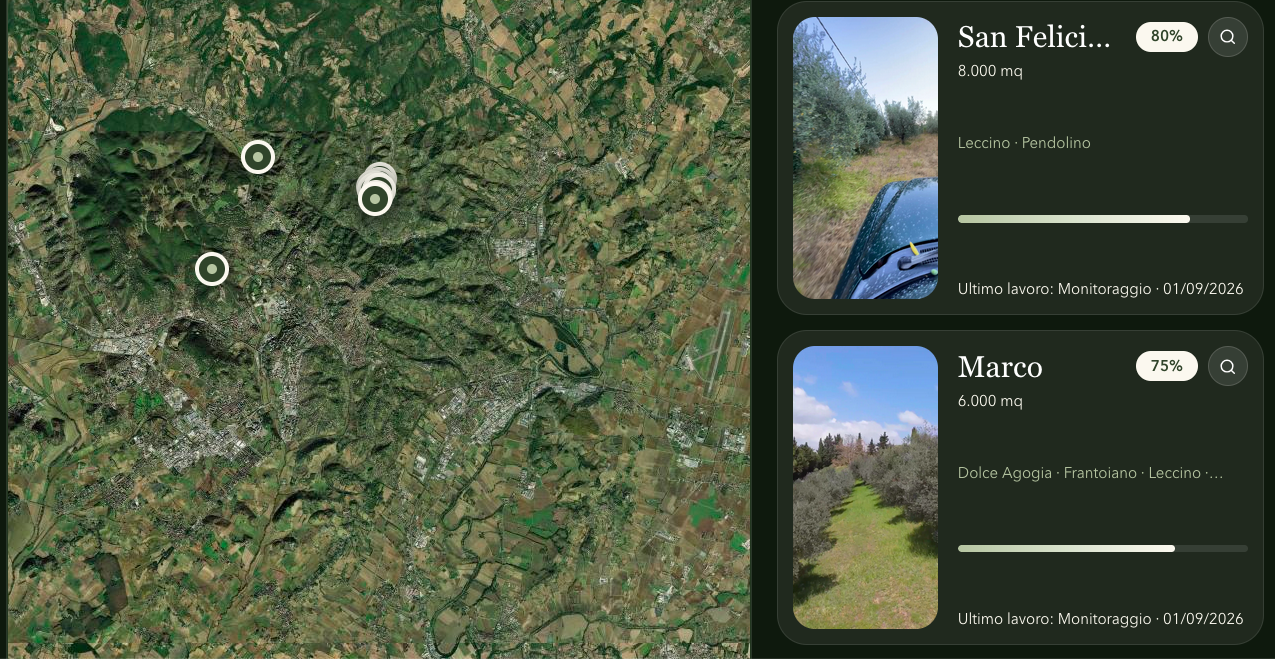
In Umbria il progetto #Resta dà nuova vita agli uliveti marginali abbandonati
#Massimiliano_Buratta ha lanciato nel 2026 un’iniziativa per recuperare appezzamenti nelle colline intorno a Perugia, riscoprendo le varietà tradizionali. Con un crowdfunding l’iniziativa ambisce a creare nuove opportunità di lavoro
“La terra ha bisogno di presenza”: lo ha scritto Massimiliano Buratta sul sito di Resta, il progetto che ha avviato nel corso del 2026 in Umbria con l’obiettivo di recuperare uliveti marginali e coinvolgere una comunità a sostegno della sua iniziativa.
“Da diversi anni mi occupo di olivicoltura, dalla potatura alla gestione della pianta a tutto tondo. L’idea di Resta -racconta ad Altreconomia– nasce da ciò che ho osservato in questi anni rispetto alla cura che va data agli ulivi. Quella di cui necessitano infatti è continua nel tempo: nel momento in cui vengono abbandonati, anche solo per qualche anno, la produzione di olio si riduce e diventa più oneroso tornare a ‘riformare’ e recuperare le piante”.
Buratta ha 32 anni e prima di dedicarsi agli ulivi è stato un programmatore nell’ambito dell’automazione industriale: il sito e la scelta di strutturare una campagna di crowdfunding godono di alcune competenze che vengono dal suo passato, prima di entrare in disoccupazione, prendere un casolare con degli amici, a Collemancio, vicino Bevagna (PG), e iniziare a lavorare in ambito agricolo, dedicandosi per quattro anni all’apprendistato.
Resta è una piattaforma che permette di seguire tutte le attività legate alla gestione dei dieci uliveti attualmente curati da Massimiliano Buratta, nove dei quali in affitto e uno di famiglia, per un totale di cinquemila metri quadrati. “La gran parte sono abbandonati e tutti sono marginali”, spiega.
In questo caso per “marginali” si intendono uliveti caratterizzati da sesti d’impianto ampi, terreni in pendenza e difficoltà di accesso: condizioni che determinano una bassa resa per ettaro, tipica di molta olivicoltura italiana, e che rendono difficile competere sui mercati nazionali e internazionali con quella spagnola, che ha puntato invece su poche varietà coltivate e sesti d’impianto molto stretti, a scapito della biodiversità e anche del paesaggio. Nei dieci uliveti, oltre a Frantoio, Leccino e Moraiolo -le tre cultivar più diffuse nel Centro Italia- si trovano anche Pendolino e Dolce Agogia, varietà autoctone dell’area delle Colline del Lago Trasimeno.
“La maggior parte degli uliveti sono a Montelaguardia, a circa 400 metri sul livello del mare” aggiunge. Montelaguardia è una frazione collinare di Perugia. Qui -dall’osservazione e dalla relazione- nasce Resta, il cui credo può essere riassunto in tre claim: “Olio tracciabile, territorio curato e impatto visibile”.
Quella del 2026 sarà la prima raccolta. Buratta spiega che dei quasi cinque ettari di oliveto che gestisce non tutti ad oggi sono produttivi: chi acquista la bottiglia special edition permette al progetto di crescere e a lui -che oggi fa altri due lavori- di dedicarsi a riformare tutti gli uliveti, alcuni dei quali hanno bisogno di interventi profondi per tornare a produrre. Tutti i passi in corso e quelli futuri sono descritti sul sito, grazie a codici “scritti a mano” che permetteranno -a partire da ogni bottiglia acquistata- di leggere il lavoro di recupero, le lavorazioni svolte in campagna, la geolocalizzazione e le foto delle piante.
Le pratiche agricole di Resta sono improntate al basso impatto e con l’utilizzo di trattamenti di origine naturale. Contro la mosca, ad esempio, si usa il caolino, che è calce, o le trappole attract and kill, con un feromone che è specifico per la mosca ma non è pericoloso per altri insetti utili.
In vista dell’autunno 2026 Buratta ha immaginato anche una bottiglia speciale, una supporter edition di 100 bottiglie, tutte numerate, ognuna delle quali è associata al supporto di 20 metri quadrati di paesaggio agricolo: “Ogni utente sulla piattaforma avrà accesso a una dashboard personale con tutte le informazioni”, racconta Buratta, che al momento porta avanti il progetto da solo, salvo coinvolgere altre persone per la raccolta.
“Tutto è iniziato con un post su Facebook in cui scrivevo che ero alla ricerca di uliveti abbandonati e marginali. Sono stato contattato da tante persone e ho dovuto fare una selezione. Non ho ancora l’assetto o la capacità economica e gestionale per un numero maggiore. Quest’anno posso stimare al massimo una produzione di 500 litri -racconta-. Nel tempo, però, vorrei riuscire a portare lavoro in un settore che, per quello che ho potuto osservare, vede molto caporalato e molta occupazione irregolare. Il mio obiettivo è conciliare il lavoro alla tutela dei nostri paesaggi e della cultura che c’è dietro all’olio extravergine d’oliva”.
Le olive raccolte non saranno mescolate: ogni appezzamento racconta una storia, dietro la quale ci sono una persona o una famiglia “che me ne ha affidato la cura e vorrei far emergere anche questi volti”. Il futuro dell’olivicoltura italiana dipende anche dalla capacità di comunicare la sua unicità, che è legata a nomi, cognomi e storie di un’agricoltura contadina che non va difesa nella trappola dell’identità ma accompagnata nel futuro.
▻https://altreconomia.it/in-umbria-il-progetto-resta-da-nuova-vita-agli-uliveti-marginali-abband
#oliveraie #abandon #récupération #Ombrie #Italie #Perugia #oliviers #huile_d'olive #Collemancio #Bevagna #agriculture #marginalité #Montelaguardia

#fourches jouera « #silence_dans_les_champs » à #landerneau ce jeudi 24 septembre avec « Splann ! »
▻https://splann.org/fourches-silence-dans-les-champs-landerneau
Le collectif Fourches jouera son adaptation rock de « Silence dans les champs », ce soir, à Landerneau. « Splann ! » animera un échange autour des conséquence du dérèglement climatique sur l’agriculture à l’issue du #concert. L’article Fourches jouera « Silence dans les champs » à Landerneau ce jeudi 24 septembre avec « Splann ! » est apparu en premier sur Splann ! | Premier média d’enquête indépendant en Bretagne.
#Industrie_agroalimentaire #agriculteurs #agriculture #agroindustrie #Arnaud_Kermarrec-Totorici #changement_climatique #climat #françois_joncour #Jean-François_Glinec #kristen_falc'hon #le_family #musique #nicolas_legendre #Olivier_Glinec #paysans #rock_noise
Comment les riches ravagent la planète. Et comment les en empêcher
En dix-sept ans, les riches n’ont rien appris, rien compris, rien changé. Ils se gavent. Les milliardaires ont multiplié leur fortune, la catastrophe écologique s’amplifie, la crise sociale est mondiale. Le lien entre ces phénomènes ? Les inégalités. On n’évitera pas le désastre climatique si l’on ne ramène pas les ultra-riches à la raison. C’est ce qu’explique ce livre détonnant, où une analyse implacable se combine à un dessin complice et surprenant. Inspirée de Comment les riches détruisent la planète, best-seller paru en 2007 et traduit en douze langues qui a largement contribué à montrer l’articulation intime entre crise écologique et crise sociale, cette bande dessinée s’imposait pour en actualiser les données et le constat. Elle raconte comment, en bientôt vingt ans, l’oligarchie a augmenté sa passion destructrice et endossé les nouveaux habits du capitalisme.
▻https://www.seuil.com/ouvrage/comment-les-riches-ravagent-la-planete-herve-kempf/9782021552508
#bande_dessinée #BD #bande-dessinée #livre #riches #richesse #écologie #capitalisme #changement_climatique #Svante_Arrhenius #biodiversité #inégalités #modernisation #1980s #choc_pétrolier #finance #dérégulation #néo-libéralisme #mondialisation #hyper-riches #rivalité_ostentatoire #potlach #ostentation #gaspillage #surconsommation #profit #techno-solutionnisme #oligarchie #médias #résistance #révoltes #répression #violences_policières #surveillance #tax_the_rich #taxer_les_riches

Olivier Ertzscheid : « Les plateformes comme Meta ne modifient leurs comportements que sous la contrainte » | Alternatives économiques
▻https://www.alternatives-economiques.fr/olivier-ertzscheid-les-plateformes-comme-meta-ne-modifient-
Allons-nous parvenir à une forme de responsabilisation des réseaux sociaux ? Olivier Ertzscheid, enseignant chercheur en sciences de l’information à l’Université de Nantes et notamment auteur de l’ouvrage Le monde selon Zuckerberg (Editions C & F, 2020), analyse la portée de cet accord.
Ce qui se passe aux Etats-Unis devrait, je l’espère, inspirer une mise en action de l’Europe sur ce sujet pour effectivement l’élargir à d’autres pays et d’autres plateformes.
En France, nous en sommes encore à nous poser la question de l’interdiction du téléphone portable à l’école. Outre le caractère difficilement opérant d’un tel bannissement, la réponse nous est donnée par le procès états-unien : ce sont les plateformes qui sont responsables des contenus qu’elles diffusent, de la toxicité de certains et du caractère addictif. Elles doivent adapter leurs services à l’âge des utilisateurs en les interrompant pendant certaines heures et en cassant les chaînes de viralité.
La question de l’élargissement à l’ensemble des utilisateurs peut être également posée. Si les plateformes généralisaient ces engagements pour tous, l’impact sur le modèle économique serait cette fois-ci considérable.
Vous expliquez que le modèle économique est l’une des principales causes des effets toxiques des grands réseaux sociaux, mais quelles sont les alternatives possibles ?
L’un des points avancés est l’interopérabilité des plateformes, c’est-à-dire que chacun puisse choisir le réseau social qu’il préfère selon sa logique éditoriale et qu’il puisse être compatible avec d’autres réseaux sociaux. L’autre alternative serait que des réseaux soient opérés par la puissance publique ou des acteurs non marchands, qui adopteraient un autre modèle économique.

Les IA vont-elles tuer les liens hypertextes, ces briques fondamentales du Web ?
▻https://www.lemonde.fr/pixels/article/2026/08/02/les-ia-vont-elles-tuer-les-liens-hypertextes-ces-briques-fondamentales-du-we
(...) pourquoi cliquer sur ces [liens] puisque tout peut être servi à votre porte ? Le 22 juillet, Google a déployé en France ses « aperçus IA » (« AI Overviews »). Quand elle est activée, la fonctionnalité relègue l’antique liste des « 10 premiers liens » au fond de la première page de résultats du moteur de recherche et la remplace par un résumé, écrit automatiquement par l’intelligence artificielle (#IA) Gemini.
Résultat : de nombreux éditeurs de sites Internet craignent pour l’avenir de leurs activités en ligne. En Allemagne, où l’option était déjà en place, la société de référencement Sistrix enregistrait une chute de 6,6 % du nombre de clics en provenance du Google. Mais plus encore qu’une problématique de modèle économique pour les sites Internet, la question est presque philosophique. Le #Web s’est bâti sur le concept même de #liens qui, par leur multiplication, forment ce qu’on appelle communément la « Toile ». Si ces liens ne sont plus parcourus, ont-ils encore une raison d’exister ?
[...]
« Les hyperliens et l’hypertexte [la technologie qui les sous-tend] ont été mis au défi par le tournant commercial du Web », complète Valérie Schafer, évoquant la transformation d’un « réseau de pages et documents » en un « réseau de services et plateformes, où sont incorporés de multiples outils, contenus et liens cliquables dont certains sont fournis par les plateformes, ou encore générés par des machines ».
En parallèle, d’autres mécanismes mettent à mal les principes initiaux de l’hypertexte. « Les réseaux sociaux, les applications mobiles, les environnements derrière un paywall… ont érodé la notion de liens ouverts, souvent pour des raisons uniquement commerciales »_, explique au Monde Alberto Di Meglio, responsable de la stratégie numérique du CERN. Les choix de développement de ces plateformes ont, souvent, consisté à faire rester le plus longtemps possible leurs utilisateurs dans leur environnement, et dévalorisé les liens externes permettant de s’en échapper.
Et cette tendance se poursuit : les utilisateurs qui conversent avec les agents conversationnels comme ChatGPT (OpenAI) ou qui se voient proposer les résumés par IA de Google n’ont en théorie plus de raison de cliquer sur des liens puisque les réponses à leurs interrogations leur sont fournies clés en main.

Pour une fois que les femmes ne disparaissent pas de l’histoire du web note l’apparition bienvenue de ces chercheuses :
– #Anne_Helmond, de l’université d’Utrecht (Pays-Bas) Historiographie de l’hyperlien » parue en 2018
– #Olia_Lialina, artiste russe parmi les pionnières de l’art en ligne
– #Valérie_Schafer, historienne des télécommunications, de l’informatique et des cultures numériques
–
Avec l’introduction des « aperçus IA », « le Web et les applications mobiles pourraient n’avoir été qu’une étape intermédiaire dans la transformation numérique »
▻https://www.lemonde.fr/idees/article/2026/08/04/avec-l-introduction-des-apercus-ia-le-web-et-les-applications-mobiles-pourra
Est-il imaginable que les #médias ferment leurs contenus aux fournisseurs d’IA, comme la plateforme Reddit semble désormais vouloir le faire aux Etats-Unis ? Peu d’acteurs disposent d’un tel pouvoir de négociation. Pour la plupart des médias, le dilemme est redoutable : accepter que leurs #contenus alimentent ces nouveaux systèmes au risque de perdre leur audience, ou s’en retirer au risque de devenir progressivement invisibles dans les interfaces qui structureront demain l’accès au #savoir. Et dans cette lutte, il n’est pas certain que Google gagne à ne pas rémunérer équitablement les producteurs d’information.
En effet, si les interfaces d’IA promettent de rendre l’information plus accessible que jamais, leur succès conduit à fragiliser ceux qui produisent cette information. Elles risquent de compromettre, à terme, la ressource dont elles se nourrissent. Une société qui ne finance plus la production des faits ne pourra pas longtemps bénéficier de la qualité de leurs synthèses.
Déplacement du pouvoir
Ce que l’introduction des AI Overviews traduit, c’est l’effacement du Web, qui avait lui-même remplacé une partie des médiations traditionnelles. Il devient une infrastructure invisible, tout comme les applications mobiles qui s’effacent également derrière des interfaces conversationnelles. Le Web et les applications mobiles pourraient n’avoir été qu’une étape intermédiaire dans la transformation #numérique.
Radio : Olivier Lefebvre, Lettre aux ingénieurs qui doutent, 2023
Artisans d’un devenir technologique qui façonne nos existences et structure nos sociétés, les ingénieurs sont aujourd’hui de plus en plus nombreux à ressentir de la dissonance cognitive. Quelque chose en eux sait que leur travail creuse le sillon de trajectoires insoutenables pour nos vies et pour la Terre. Pourquoi alors n’y a-t-il pas plus d’ingénieurs qui désertent ?
C’est la question qu’#Olivier_Lefebvre – lui-même ancien #ingénieur – se propose d’élucider, en se plaçant dans une perspective résolument politique. Il serait en effet plus que souhaitable, pour eux, mais aussi pour nous tous, qu’ils refusent de se résigner, qu’ils cessent de nuire au plus vite, et pour cela qu’ils s’évadent de leurs cages dorées.
Émission Racine de Moins Un n°104 diffusée sur Radio Zinzine.
▻https://sniadecky.wordpress.com/2026/07/20/rmu-104-lefebvre-ingenieurs
Avec le PDF qui va bien :
▻https://archive.org/download/rmu-104-lefebvre-ingenieurs/RMU_104_Lefebvre-Ingenieurs.pdf

Murmure : la dictée vocale boostée à l’IA, 100% locale et open source
▻https://www.it-connect.fr/murmure-dictee-vocale-ia-locale-open-source
– la documentation fr : ▻https://docs.murmure.app/fr
– à propos d’Ollama, LLM local proposé en complément : ▻https://www.it-connect.fr/ia-installer-ollama-deepseek-r1-et-open-webui-sur-windows-11-ou-windows-s

IL REPORTAGE. #Olly a #caserta: è ‘Tutta Vita’ alla Reggia
▻https://informareonline.com/il-reportage-olly-a-caserta-e-tutta-vita-alla-reggia
Olly ha scelto di concludere il “Gran Finale Tour” alla Reggia di Caserta, dopo le 3 date allo stadio Ferraris di Genova e all’Ippodromo delle Capannelle a Roma. Il concerto, tenutosi venerdì 3 luglio, ha visto oltre 30mila persone occupare piazza Carlo di Borbone; l’organizzazione ha previsto per la serata un piano di sicurezza sul […] L’articolo IL REPORTAGE. Olly a Caserta: è ‘Tutta Vita’ alla Reggia proviene da Informareonline, scritto da Marco Ciotti
#Napoli, l’iniziativa “Oltre il campo” presso il #Centro_Ester di #barra promossa da #unicef
▻https://informareonline.com/napoli-liniziativa-oltre-il-campo-presso-il-centro-ester-di-barra-p
Si è svolta il 22 giugno al Centro Ester di Barra una nuova, speciale, grande manifestazione. Ci sono giornate che non si limitano a scorrere, ma lasciano un’impronta indelebile nel cuore. La giornata del 22 giugno al Centro Ester di Barra è stata esattamente questo: un’autentica festa di integrazione, accoglienza e fratellanza che ha unito […] L’articolo Napoli, l’iniziativa “Oltre il campo” presso il Centro Ester di Barra promossa da UNICEF proviene da Informareonline, scritto da Redazione Informare
Souhaitons-nous de la #robustesse
▻https://www.radiofrance.fr/franceinter/podcasts/la-terre-au-carre/la-terre-au-carre-du-lundi-05-janvier-2026-5186264
— Permalink
#performance #efficience #efficacité #complexité #optimisation #biologie #aléatoire #sobriété #redondance #diversité #résilience #adaptation #adaptabilité #compétition #olivierhamant
#Teach_to_Reach: The questions #health_workers cannot solve alone (article 1 of 4)
▻https://redasadki.me/2026/05/30/teach-to-reach-the-questions-health-workers-cannot-solve-alone-article-1-o
Teach to Reach is the largest #peer_learning platform, network, and community by and for health and humanitarian workers — launched by #The_Geneva_Learning_Foundation (TGLF) in January 2021 out of an #immunization training programme during the COVID-19 pandemic, and now in its fifth year. As part of TGLF’s #Tenth_Anniversary, each month a […]
#frontline_health_workers #health_worker_voices #healthy_ageing #life_course_immunization #lived_experience #menopause #mental_health #older_adults #Scholars #Teach_to_Reach_Launch_Event

Vingt-six ans après, se libérer du Hezbollah - L’Orient-Le Jour
▻https://www.lorientlejour.com/article/1508015/vingt-six-ans-apres-se-liberer-du-hezbollah.html
Le plus terrifiant dans le discours de Naïm Kassem ne réside pas dans ses attaques contre l’État libanais ni dans ses menaces à peine déguisées de faire tomber le gouvernement si celui-ci persiste à défendre le principe du monopole des armes. Il réside dans l’aveu politique monumental qu’il contient malgré lui. Car au moment même où l’Iran négocie avec Washington, où les équilibres régionaux vacillent, où le récit de la « résistance » s’effondre sous le poids des destructions, des déplacements et des défaites, le Hezbollah révèle brutalement ce qu’a toujours été la fonction réelle de son arsenal : non pas protéger le Liban, mais empêcher l’émergence d’un État capable de lui échapper. Le vingt-sixième anniversaire de ce que le Hezbollah continue d’appeler « la fête de la Résistance et de la Libération » [paywall]
Ce que l’#OLJ appelle « la fête » est un jour officiellement férié au Liban.
25 mai : le Liban fête sa libération, après le retrait de l’armée israélienne — Les éditions Bibliomonde
▻https://www.bibliomonde.fr/lalmanach/25-mai-liban-jour-de-la-liberation-et-de-la-resistance-2000
Ce Jour de la libération (يوم التحرير) est aussi connu comme le Jour de la libération du sud ou encore comme le Jour de la libération et de la résistance (عيد المقاومة والتحرير). Cette journée commémore le retrait de l’armée israélienne du sud du Liban le 25 mai 2000 après 18 ans d’occupation.

Pourquoi Mahmoud Abbas tente d’imposer son fils Yasser au sein du Fatah
Par :Assiya HAMZA - France 24 - Publié le : 15/05/2026 - 07:26
▻https://www.france24.com/fr/moyen-orient/20260515-pourquoi-mahmoud-abbas-tente-imposer-fils-yasser-sein-fatah-autor
Le congrès général du Fatah, mouvement du président palestinien Mahmoud Abbas, vient de s’ouvrir pour trois jours à Ramallah, en Cisjordanie occupée. Il doit élire le comité central, organe exécutif du mouvement. Au pouvoir depuis plus de 20 ans, le raïs, dont la succession n’est pas encore à l’ordre du jour, entend propulser son fils, Yasser Abbas, au sein du Fatah et de l’Autorité palestinienne.
C’est une première en dix ans. Le Fatah, mouvement du président palestinien Mahmoud Abbas, doit élire un nouveau comité central, à l’occasion d’un congrès général de trois jours qui s’est ouvert jeudi 14 mai à Ramallah, en Cisjordanie occupée. Des sessions sont également organisées simultanément dans la bande de Gaza, au Caire et à Beyrouth.
Environ 2 580 membres devraient participer à la conférence, dont le but est de renouveler la direction du Fatah, qui reste présidé par Mahmoud Abbas : seront élus 18 membres du comité central (l’organe exécutif du parti) et 80 du Conseil révolutionnaire (le parlement du parti), explique l’agence de presse palestinienne Wafa. (...)

Réponse au titre : parce que c’est un autocrate véreux !

Le Fatah « La révolution palestinienne et les Juifs ».
▻https://orientxxi.info/la-revolution-palestinienne-et-les-juifs-un-livre-pour-l-histoire-et-pou
Premier livre de l’édition OrientXXI & Libertalia (2021)
présentation : Alain Gresh
#ASI, #Oliviero: “Partiti a gamba tesa nel direttivo. Stop ai curricula, ora vale l’amicizia politica”
▻https://informareonline.com/asi-oliviero-partiti-a-gamba-tesa-nel-direttivo-stop-ai-curricula-o
“All’Asi è cambiato solo il primo violino, ma il direttore e l’orchestra sono sempre gli stessi. Anzi, rispetto al “deserto” delle ammissioni che c’era prima, ora è chiaro a tutti che i due partiti fra i più influenti nel centrosinistra hanno avuto un peso decisivo nella scelta del presidente dell’Asi di #caserta e del nuovo […] L’articolo Asi, Oliviero: “Partiti a gamba tesa nel direttivo. Stop ai curricula, ora vale l’amicizia politica” proviene da Informareonline, scritto da Redazione Informare
Informare incontra #pino_maddaloni, #oro_olimpico del #Judo
▻https://informareonline.com/informare-incontra-pino-maddaloni-oro-olimpico-del-judo
Oggi, 4 aprile, ci ha fatto visita nella nostra redazione di Castel Volturno l’atleta Pino Maddaloni, oro olimpico nel Judo alle #olimpiadi di Sidney nel 2000. Il judoka napoletano, nato e cresciuto a Scampia, è stato accolto dai nostri collaboratori per un’intervista sulla sua storia, tra la difficile crescita nella periferia partenopea e le soddisfazioni […] L’articolo Informare incontra Pino Maddaloni, oro olimpico del Judo proviene da Informareonline, scritto da Luca Capone
The EU donated equipment to the BiH Border Police to combat migrant smuggling, here’s what it includes
The European Union, Germany, Italy and the Netherlands delivered specialized equipment to the Border Police of Bosnia and Herzegovina with the aim of strengthening the operational readiness of officers and improving border management capacity.
The handover included a package of equipment with specialized magnifiers for viewing documents, heartbeat detectors for finding people in hidden compartments of trucks and other vehicles, in situations that often involve inhumane conditions and life-threatening risks, and a patrol boat for responding to river incidents, including search and rescue operations.
This handover is part of a wider package of assistance for capacity building that combines specialized equipment and training, with a total investment of around 200,000 euros, under the EU4FAST project.
“Efficient border management today requires modern technology, skilled personnel and strong institutions, and this support is designed to support all three aspects. This handover is an example of the practical and concrete support that the European Union, together with its member states, acting as ‘Team Europe’, provides in Bosnia and Herzegovina in facing the challenges of migrant smuggling, human trafficking and border management as a whole. Strengthening the capacity of the Border Police also directly helps Bosnia and Herzegovina in harmonizing with EU standards, especially within the framework of the chapter 23 and 24 of the EU accession process,” said Ambassador Luigi Soreca, Head of the EU Delegation and EU Special Representative in Bosnia and Herzegovina.
He added that the EU remains committed to supporting Bosnia and Herzegovina on its European path, through reforms that strengthen security, the rule of law and regional cooperation.
He also pointed out that it is important for Bosnia and Herzegovina to update its plans for unforeseen situations and be prepared in case of an increased influx of irregular migrants.
Director of the BiH Border Police, Mirko Kuprešaković, emphasized the importance of the donated boat for the work of officers in the field.
“Modern equipment enables a faster, more efficient and safer reaction of our officers to all the challenges they continuously face in their daily work. This support comes at the right moment, when security challenges are more and more complex, and the need for modernization and strengthening of institutions’ capacities is more and more pronounced. I want to express my sincere gratitude to the European Union, the embassies of the Slovak Republic of Germany, Italy, France and the Netherlands, as well as to all the partners who participated in the implementation of the EU4FAST project,” said Kuprešaković.
He particularly emphasized Frontex’s significant support to the BiH Border Police, which contributes to strengthening operational capacities and work efficiency.
German Ambassador to BiH Alfred Grannas said that Germany is proud to contribute to this joint effort, combining national expertise with European resources to achieve concrete and sustainable results within the Team Europe approach.
“The engagement of GIZ and the German Federal Police particularly reflects Germany’s commitment to sharing practical experience and operational knowledge with partner countries from the Western Balkans region, especially Bosnia and Herzegovina. Last week we had a good example of what this means in practice: experts from the German Federal Police conducted specialized training for Border Police officers in BiH. The main focus was on document review and the use of heart rate detectors, directly linking the equipment to operational skills. Next week, the second training will be repeated for group of interns and I am delighted that we have established this practical and successful collaboration”, said Grannas.
Oliver Janser, project manager of EU4FAST, said that today’s handover is not just a delivery of equipment.
“It reflects a sustainable partnership built over years of cooperation, trust and shared responsibility. What we are witnessing today is the result of continuous joint efforts to strengthen capacity and respond to changing challenges at the border. Our cooperation is strategic and forward-looking. We build on what works, learn from experience and invest where it makes a real difference. Each contribution is designed to strengthen previous efforts, ensuring continuity, coherence and measurable results,” said Janser.
Support is provided within the framework of the EU4FAST project, a regional initiative that supports the fight against human trafficking and migrant smuggling across the Western Balkans worth more than 50 million euros.
The project is financed by the European Union, the Federal Ministry for Economic Cooperation and Development (BMZ) of Germany, the Ministry of the Interior of Italy and the Ministry of Foreign Affairs of the Netherlands. It is implemented by a consortium of implementation partners, led by GIZ, he writes Klix.
▻https://bosniatoday.ba/the-eu-donated-equipment-to-the-bih-border-police-to-combat-migrant-smug
#externalisation #migrations #réfugiés #frontières #contrôles_frontaliers #Bosnie-Herzégovine #EU #Allemagne #Italie #Pays-Bas #équipement #militarisation_des_frontières #EU4FAST #border_management #technologie #Team_Europe #France #Slovaquie #Frontex #GIZ #développement #GTZ #Balkans #route_des_Balkans #Oliver_Janser

There’s a New Dark Money–Backed Democratic Machine
▻https://jacobin.com/2026/04/democratic-campaigns-finance-dark-money
Le système des élection aux États Unis est corrompu au point de n’avoir plus rien de démocratique.
27.4.2026 by Luke Goldstein, Katya Schwenk - A new influence network of PACs, rich donors, and consultants is taking advantage of increasingly threadbare campaign finance law to pour millions into Democratic campaigns, aiming to elect leaders committed to returning the party to the “moderate” middle.
The scandal was minimal, a blip in a Democratic primary race in New York’s Hudson Valley. But the incident was an early sign of a powerful new political machine playing an unprecedented role in Democratic primaries.
The problem emerged in February. Jackie Rosa, a political communications strategist, had been fielding press questions for Cait Conley, a combat veteran vying for New York’s seventeenth congressional district, as though she were a campaign spokesperson. But when controversy erupted after Rosa circulated a memo bashing Conley’s opponent as a “far left political operative,” the strategist claimed she’d mounted the attack on behalf of an outside group, not the campaign.
However, Rosa’s email sign-off listed an affiliation with a different political group — and her email address was tied to yet another organization, a shadowy Delaware consultancy.
Four separate entities, all tied to a single strategist, seemingly collaborated on messaging against a candidate, even though campaign finance law theoretically limits close coordination between campaigns and outside spending vehicles. What exactly was going on?
All of the organizations, it turns out, belonged to a new dark money–backed enterprise of unparalleled scale and complexity. The influence network brands itself as boosting Democrats’ electoral prospects ahead of the 2026 midterm elections. But the project’s true ambitions go much further.
Born from the ashes of the party’s 2024 defeat, this new operation has taken inspiration from Democrats’ free-market neoliberal turn after stinging defeats in the 1980s and 1990s and infused it with the deregulatory zeal of the abundance movement. Funded by Silicon Valley billionaires with skin in the game, the network is exploiting the country’s increasingly threadbare campaign finance laws to elect a new generation of leaders on board with bringing the party back to the “moderate” middle.
The machine operates as two big-name new organizations, Majority Democrats and the Bench, both tied to a single venture capitalist–turned–secretive Democratic adviser. Under this umbrella, the influence network is dispersing millions through a sophisticated nesting doll of political action campaigns (PACs), nonprofits, consultancies, and LLCs, while sharing the same big-money donors, political consultants, and often the same policy proposals.
The convoluted arrangements are sowing confusion on the campaign trail about the roles various campaign operatives play and who pays them.
The ambiguity may be the point. Political influence networks backed by super PACs — which have no limits on the money they can collect from billionaire donors — have become widespread. But the many-tentacled network of Majority Democrats, the Bench, and their affiliates appears to be intervening in campaigns’ day-to-day operations to an unprecedented degree.
Experts say these legal workarounds could undermine campaign finance rules governing coordination between political campaigns and outside groups, designed to limit elected officials’ financial obligations to wealthy special interests.
“These groups are major players behind the scenes,” one Democratic campaign strategist, granted anonymity in order to speak candidly, told the Lever. “I’ve never seen a setup like this where the political action committees are openly coordinating with campaigns to the extent that they are.”
In response to the Lever, Majority Democrats and the Bench disputed this characterization.
“These practices are fully compliant with the law and not uncommon,” said a Majority Democrats spokesperson. “We understand the urgency of this moment demands challenging the broken status quo and elevating the next generation of leaders who can build a sustainable majority.”
A spokesperson for the Bench told the Lever that it “has a strict firewall policy [between campaign and super PAC activity] that adheres to federal regulations.”
There’s no denying these groups’ financial might. New filings reviewed by the Lever show that Majority Democrats and the Bench have together raised $8 million so far this year, most of which came from tycoons like hedge fund manager Stephen Mandel and Nvidia board member Tench Coxe, as CBS News reported this month. Other major donors to the network include venture capitalist Bill Helman, Netflix cofounder Reed Hastings, and cryptocurrency CEO Michael Novogratz.
Those donations build on seed funding from the likes of LinkedIn cofounder Reid Hoffman, who spent millions supporting Democratic presidential candidate Kamala Harris while urging her to go easy on antitrust and Big Tech.
A substantial amount of the funds is going to pay high-profile political operatives working to elect the influence network’s chosen candidates in pivotal elections, often to the detriment of more progressive challengers.
This setup became a point of controversy in the Texas Senate primary last month and is currently playing a role in Michigan, where the Bench-endorsed Democratic Senate candidate Mallory McMorrow is facing off against progressive challenger Abdul El-Sayed, a physician endorsed by Sen. Bernie Sanders (I-VT).
Democrats may very well embrace these groups’ purported focus on electability and their heavy spending to claw back control of the House and Senate in 2026. But others worry that this new configuration may give wealthy donors an even greater voice in elections extending all the way down to campaign personnel, a corrupting influence that may not necessarily benefit the Democratic Party’s long-term electoral prospects — or democracy itself.
“It seems like a new frontier,” Michael Beckel, the money in politics reform director at advocacy group Issue One, said of Majority Democrats’ network. “When you continue to blur the lines of the existing anti-coordination rules, and when you continue to erode those anti-corruption safeguards in the process, that’s giving wealthy donors more access and influence in dictating the terms of the campaign.”
Majority Democrats and the Bench, along with their various offshoots, are the brainchild of Seth London, a venture capitalist and adviser to major Democratic donors.
In the weeks after the Democrats’ disastrous performance in the 2024 elections, which bestowed the GOP with a trifecta of power under President Donald Trump, London released a blueprint, to much media fanfare, for rebuilding the party. At the time, Democratic circles were debating whether the Harris campaign floundered because the party had become too left-wing — or too beholden to corporate power.
Vice President Kamala Harris speaking in Allentown, Pennsylvania. (Michael M. Santiago / Getty Images)
London’s memo firmly aligned with the former viewpoint, calling on the party to moderate on a host of issues and usher in a new generation of “commonsense Democrats.” While light on policy prescriptions, the memo aligned its priorities with the “abundance agenda,” a liberal project focused on reducing housing costs and building out clean energy mostly through “supply-side” private sector solutions.
But abstract ideas of “abundance” and “moderation” would only be impactful if those who agreed with London could wield power in Democratic primary races and shape the ideological character of the party’s foot soldiers. To do so, London’s memo proposed an organizational infrastructure — “a party within the party” — modeled on the Democratic Leadership Coalition, a powerful organ for the corporate neoliberal wing of the Democratic Party in the 1990s, financed by Wall Street.
As London’s road map dictated, several new PACs would serve as the central nervous system for this project, to be headed up by high-powered political consultants, including Lis Smith, an alum of Pete Buttigieg’s 2020 presidential campaign, and Steve Israel, a former New York congressman-turned-lobbyist.
Months later, as the primary season ramped up, Democratic operatives began to notice a new group of political enterprises amassing outsize influence. The organizations moved together as a pack to back candidates, shared consultants, and appeared to direct the messaging of political campaigns to a remarkable degree.
They all bore London’s imprint.
In July 2025, a new group with ambitions to “remake the image” of the Democratic Party staged its launch: Majority Democrats. London was “involved” in the project, per the New York Times, though his precise role remained elusive.
In an inaugural post on Majority Democrats’ Substack, London argued that Democrats’ main problem was their “fear of backlash from interest groups, donors, and online activists; fear of being labeled racist, transphobic, or a sellout.” Majority Democrats, he announced, would “replace fear with confidence” in order to “revive a party that can compete everywhere.”
Majority Democrats’ executive director, Rohan Patel, a former Tesla executive and Obama White House official, was more explicit in a subsequent post. He noted that “a party that can win everywhere” required “recruiting candidates who can credibly compete in tough general elections,” and “rejecting the notion that they need to adopt unpopular, left-wing positions in the primary.”
At launch, Majority Democrats touted a roster of around thirty lawmakers. Those include Sen. Ruben Gallego (D-AZ) and Sen. Elissa Slotkin (D-MI), both first-term Senators elected in 2024 and already rumored to be presidential contenders in 2028. All are relatively young, consistent with Majority Democrats’ criticism that the party establishment is too old.
For the most part, the politicians and candidates endorsed by Majority Democrats align ideologically with the establishment wing of the party, although some have adopted more unorthodox platforms. (At least one of their candidates, Bob Brooks, a House contender in Pennsylvania, has been endorsed by Bernie Sanders.)
By the end of last year, Majority Democrats had amassed a multimillion-dollar fundraising war chest and had embedded itself in a number of Democratic primary races for both House and Senate seats.
Then, in January, another organization staged a splashy launch: the Bench, advertising a supposed mission of “changing the Democratic Party from the inside.” The Bench promised to “help strong candidates launch with the tools they need to succeed — from communications and digital strategy to fundraising and staffing — so they can focus on what matters most: talking with voters and winning tough races.”
The Bench has endorsed a broad slate of candidates, including McMorrow in Michigan, James Talarico in Texas, Josh Turek in Iowa, Angie Craig in Minnesota, and Conley in New York.
Although they are separate entities on paper, with slightly different organizational structures, Majority Democrats and the Bench share a deeply interlinked fundraising apparatus and ground game.
In March, for example, Majority Democrats announced a nationwide “Built to Last Tour,” featuring several Bench-endorsed candidates.
While those operations hit the campaign trail, the Searchlight Institute, a new center-left DC think tank founded in part with London’s financial assistance, has served as the policy brain trust for both groups’ positions on various issues, seemingly shaping the platforms of their endorsed campaigns.
For instance, in March, McMorrow’s campaign in Michigan released its platform on data centers — a plan that mirrored a Searchlight Institute white paper recommending “data center developers pay their way,” a tech-friendly alternative to the moratoriums on data center development that some lawmakers are advancing.
Majority Democrats and the Bench also share a joint fundraising arm, the Majority Fund, which pools fundraising hauls with minimal contribution limits, allowing different players in the network to benefit from the same large donations. Mandel, a billionaire hedge fund manager whose portfolio is now significantly invested in the data center build-out, and his wife, Sue, are the network’s largest financial backers, having collectively donated $9.3 million to entities tied to Majority Democrats and the Bench since their inception.
Other donors have also provided hefty support. Mark Heising, a billionaire tech mogul, has contributed $2.1 million; Tench and Simone Coxe, a megadonor couple with ties to AI chipmaker Nvidia, have given nearly $300,000. And James Murdoch, one of the heirs to the Murdoch media empire, has with his wife, Kathryn, given over $300,000.
Several of those donors, including Simone, sit on the Searchlight Institute’s board.
These megadonors have provided the operation with significant financial firepower to intervene in Democratic primaries. For example, Majority Democrats’ joint fundraising arm is the largest outside contributor to Craig’s Minnesota Senate campaign, transferring $100,000 to her operation in September and another $32,000 last month.
Mapping out the connective tissue of these operations quickly becomes a difficult endeavor. The Bench operates a super PAC, a traditional PAC, a joint fundraising committee, and a 527 nonprofit — a hodgepodge of entities that can engage in political spending with varying restrictions. All of them raise and spend money, at times in coordination with Majority Democrats, which has its own small galaxy of political committees.
All of these entities tie back to London, including through a shadowy Delaware consultancy: Precinct LLC, which per state business filings obtained by the Lever, was incorporated in January 2025 with London’s signature.
The entity — which has no website or hardly any other online footprint — appears to operate as a kind of central hub for the network. The firm’s managing director is Ami Copeland, a senior advisor to Majority Democrats.
The Bench’s PAC, which has no full-time staff of its own on payroll, has paid Precinct over $750,000 for general consulting costs, amounting to almost two-thirds of the PAC’s total operating expenditures for 2025. Precinct also collects regular payments from campaigns. In total, it has received over $1 million from campaigns and PACs associated with Majority Democrats.
“Bench candidates work with a variety of teams, including Precinct, among many others,” said a Bench spokesperson in response to the Lever’s questions. “Precinct’s work for campaigns is not subsidized by the Bench.”
Rosa, the Conley consultant, has used an email address associated with Precinct — as have other consultants in the Majority Democrats network, including Smith and communications strategist Andrew Mamo. One of those operatives, Stef Feldman, also works as a senior fellow at Searchlight.
A spokesperson for Majority Democrats, who was using a Precinct email address, initially declined to answer questions about Precinct. However, when the Lever contacted other Precinct affiliates, Rodericka Applewhaite, the rapid response director at Majority Democrats, subsequently answered several questions on Precinct’s behalf.
Asked about Precinct’s relationship with the Bench and Majority Democrats, Applewhaite said, “Precinct works with a variety of clients including campaigns, non-profits, and other mission-aligned organizations.”
Majority Democrats and the Bench share other top-brass consultants, most prominently Smith, the Buttigieg campaign alum, who sits at the head of the operation, working as a senior adviser for both the Bench and Majority Democrats and advising several campaigns supported by those groups.
A Majority Democrats spokesperson said that while the Bench and Majority Democrats are “aligned,” they are separate organizations.
Majority Democrats and its affiliates, including the Bench, rely on a series of campaign finance law loopholes and rollbacks originating from the Citizens United Supreme Court case, which made it easier for moneyed interests to dominate campaign races.
The high court’s 2010 decision tore apart long-standing campaign finance restrictions and greenlit unlimited election spending through outside spending vehicles known as super PACs. While PACs must disclose their donors, Citizens United left the door open for so-called dark money to be funneled to PACs through opaque nonprofits, so the original donors couldn’t be traced.
Such dark money, which is now more prominent in Democratic campaigns than in Republican ones, has fueled Majority Democrats’ fundraising machine. One arm of the operation, a nonprofit called the Bench 527, has received nearly $2.5 million over the past three years from one of the largest Democratic dark money groups, Our American Future. The group’s donors are unknown, even though it spends tens of millions on elections.
One of the few restrictions spared by Citizens United bars super PACs from coordinating with campaigns on advertising and media buys. But political operatives and donors have spent the last decade and a half chipping away at that restriction.
The result is a new frontier in American politics where campaigns effectively outsource ever more of their work to big-money super PACs, which aren’t subject to the same campaign finance restrictions, operating at donors’ beck and call.
“The [Federal Election Commission]’s approach to coordination has been very problematic,” said Shanna Ports, senior legal counsel on campaign finance at the Campaign Legal Center, a legal advocacy group working on campaign finance and ethics. The agency’s weak enforcement, Ports said, has “created an atmosphere where voters don’t have much faith that campaigns and super PACs are actually functioning as separate entities.”
In the 2024 cycle, American Israeli Public Affairs Committee (AIPAC), the primary arm of the Israel lobby and other big election spenders stretched these campaign finance loopholes to new limits to work more closely with campaigns — including taking over their door-knocking operations, typically work that campaigns alone would conduct.
That included billionaire Elon Musk, whose America PAC ran on-the-ground canvassing operations in key battleground states for the Trump campaign. The Federal Election Commission (FEC) opened the door for this activity by issuing a March 2024 opinion that allowed outside groups to canvass on behalf of campaigns.
Elon Musk on stage during a campaign rally for Donald Trump in New York City. (Michael M. Santiago / Getty Images)
The barriers between candidates and outside groups are also eroding thanks to joint fundraising committees, which allow multiple campaigns to band together to solicit donations collectively. Through a joint fundraising vehicle, a major donor can cut a single large check for multiple candidates, evading typical campaign contribution limits.
In August 2024, the FEC released an opinion that expanded the power of joint fundraising committees by allowing super PACs and campaign committees to jointly fundraise together.
Now, Majority Democrats’ network is pioneering a supercharged version of this model.
Its joint fundraising committee, Majority Fund, currently funnels donations to thirty-one candidates’ direct campaign committees as well as hybrid super PACs Majority Democrats and the Bench are using to support those campaigns, which have no limitations on how much they can collect from billionaire donors. (Hybrid PACs are super PACs with a separate arm that can give directly to campaigns.)
The new arrangement is now being deployed in Democratic primary elections to benefit candidates approved by Majority Democrats’ operation.
The Michigan Senate race, which is expected to see razor-thin margins in the general election, has become ground zero for the Majority Democrats network’s efforts to shape the Democratic primaries.
In that primary, the new political machine has thrown its weight behind McMorrow, a millennial state lawmaker who quickly rose to leadership in the state Senate and delivered a viral speech in 2022 bashing Republican demagoguery on LGBTQ issues.
She’s facing off against El-Sayed, a progressive who has campaigned with popular streamer Hasan Piker, and Rep. Haley Stevens (D-MI), who is favored by Democratic leadership and widely considered to be the pick of Senate Minority Leader Chuck Schumer (D-NY).
McMorrow is endorsed by the Bench, and her campaign committee is part of the Bench’s joint fundraising committee, although she has yet to receive any cash from the committee. Heising, the private equity billionaire and key donor in the network, has also donated to McMorrow’s campaign. (McMorrow’s website proclaims that she doesn’t take “any corporate PAC money.” Her campaign did not respond to the Lever’s request for comment.)
But Majority Democrats’ donors aren’t just contributing money to McMorrow’s campaign; the network also appears to be staffing her war room.
At least three consultants paid by the McMorrow campaign are also working for super PACs and other entities connected to Majority Democrats and the Bench.
Last year, McMorrow paid $78,000 in consulting fees to Smith, the senior adviser to both the Bench and Majority Democrats, and $60,000 to Mamo, the Majority Democrats communications adviser who’s also a spokesperson for the Bench.
In one case, a salaried staffer on the McMorrow campaign payroll was at the same time paid by Majority Democrats’ hybrid PAC through his DC consultancy, an unusual arrangement.
Majority Democrats declined to comment on the overlapping consultants in McMorrow’s campaign, saying that the candidate was not a Majority Democrats member but rather supported by the Bench.
“All required disclosures have been made,” a spokesperson for the Bench said of the arrangements.
The prevalence of high-paid consultants in Democratic politics playing both sides is not unprecedented.
“That’s how consultants and political operatives really make their money — by getting hired by lots of different groups,” said Sarah Bryner, the director of Public Agenda, a political accountability organization. “It’s also how these groups become more powerful.”
But the practice can quickly enter a legal gray area, given that campaign consultants have access to privileged information about the campaign that can’t always legally be shared with outside spending outfits.
“Whenever you see a person showing up with both a campaign and a super PAC or hybrid PAC, it raises questions, and I think it warrants a hard look,” Ports said. In particular, she noted, “a campaign staffer is not allowed to work for a super PAC” if that super PAC is spending money on the same race.
“That would violate coordination rules,” Ports said.
But there are widely used loopholes that can allow arrangements like the ones Majority Democrats and the Bench have now adopted on a much larger scale. Under some circumstances, consultants can work for both campaigns and outside PACs as long as they maintain a strict “firewall” between their various projects.
A Majority Democrats spokesperson told the Lever that the Bench maintains a firewall for any paid media work, but Majority Democrats’ PAC does not need to, as it “does not do independent expenditures.”
Hybrid PACs can provide campaign services to candidates, but the cost of that work has to be limited to the same financial caps as monetary contributions and registered with the FEC as “in-kind contributions.”
Although the Bench at its launch touted that it would provide staff, fundraising, and digital services to campaigns, no candidate’s campaign has disclosed in-kind contributions from the Bench or from Majority Democrats.
The Bench noted that while the organization “advises Bench candidates on strategy, press, and messaging,” it “does not incur expenses that support any specific candidate” beyond its firewalled independent expenditures.
It’s not just the McMorrow campaign that’s receiving heavy-handed support from the Majority Democrats network. At least four other campaigns — including Rep. Ritchie Torres and Conley in New York — are paying consultants who are also working with the outside operation.
“Unless the individual claims to have multiple personality disorder, I don’t see how you can work on both sides [to this extent],” said Larry Cohen, the former president of the Communications Workers of America and Democratic National Committee member who has spent decades working on campaign finance reforms. “In any functioning democracy, that’s a mockery and an outrage.”
The arrangement sparked controversy in the Texas Senate primary race, where Talarico, a state lawmaker, defeated Rep. Jasmine Crockett (D-TX) last month.
At a campaign event in February, Crockett bashed her opponent for his affiliation with Smith, the senior adviser to both Majority Democrats and the Bench, because of her past work on behalf of disgraced former Gov. Andrew Cuomo (D-NY). Crockett claimed that Talarico had been “running away” from his ties to Smith. In news reports, Smith was described as a strategist for Talarico; she said on a podcast that she had “done some work” for the campaign, but then later claimed she was not involved in the race.
In a comment to the Lever, Smith clarified that she “gave [Talarico] advice pre-launch, but wasn’t involved during the campaign.”
However, Majority Democrats and the Bench backed Talarico and contributed to his campaign through various spending arms — and Talarico’s campaign paid Precinct, the Delaware consultancy affiliated with the Bench and Majority Democrats. Smith advises both groups and has a Precinct email address.
According to campaign finance experts, Precinct’s mysterious operations raise further questions. Consultancies like Precinct aren’t subject to the same disclosure rules as PACs. So it’s not always clear precisely what services the firm is providing to campaigns like Talarico’s and McMorrow’s and what it is spending its money on.
For instance, in the Hudson Valley primary race, the controversial opposition memo, originally produced by the Conley campaign, appears to have been potentially shared with the Bench via Precinct and then distributed to the press on the PAC’s behalf.
“This would be another situation where I think you’d need more facts to know what exactly is going on,” Ports said.
“From a public policy perspective, it’s not ideal that it’s this murky,” Ports added. “Voters should be able to look at an arrangement and just know that everything is aboveboard and have confidence that campaigns are working separately from super PACs.”
Conley’s campaign did not respond to the Lever’s request for comment.
The power players running Majority Democrats’ “party within the party” seem to recognize voters’ concerns about outside groups and special interests playing an ever-larger role in US elections.
At its launch, Majority Democrats promised it would not accept “corporate PAC money,” a claim repeated by several of the candidates it’s supporting.
But the pledge is a sleight of hand. The term “corporate PAC money” conveniently excludes billionaire donors and billionaire-funded super PACs that are pouring money into the network.
Yet voters are catching on. In Texas, Minnesota, and New York, the billionaire and dark money support being funneled to Majority Democrats’ candidates has become a flash point. In Michigan, McMorrow’s opponent, El-Sayed, has seized on the issue.
He’s now opening his speeches with a tagline: “Money out of politics, money in your pocket.”

#Olivier_Schmitt, #expert #militaire : « Il existe un vrai risque de #conflit avec la #Russie dans les cinq prochaines années »
▻https://www.lemonde.fr/international/article/2026/04/24/olivier-schmitt-expert-militaire-il-existe-un-vrai-risque-de-conflit-avec-la
Avec ce retour de la conflictualité de haute intensité, les pays occidentaux doivent-ils se préparer à remettre en cause le principe de zéro mort ?
Techniquement, le zéro mort n’a jamais été un principe militaire, c’était plutôt une ambition de certains responsables politiques. Il existe un vrai risque de conflit avec la Russie dans les cinq prochaines années. Un tel conflit serait sanglant pour deux raisons : d’abord, les Russes ont une armée entraînée et en guerre depuis quatre ans ; ensuite, leur doctrine prévoit que l’ouverture d’un conflit implique nécessairement le ciblage des populations civiles occidentales, par sabotage ou par frappes de missiles à longue portée, pour exercer une forte pression politique sur les dirigeants. Malheureusement, en cas de conflit avec la Russie, il y aura des pertes civiles et, comme on l’a vu en #Ukraine, le respect du droit international humanitaire n’est pas une priorité pour les Russes.
[Vidéo] « Splann ! » dresse le bilan breton des municipales sur « #mediapart » avec l’autrice #Juliette_Rousseau et l’universitaire #Olivier_Tonneau
▻https://splann.org/video-splann-fait-le-bilan-des-municipales-sur-mediapart-avec-lautrice-julie
Partenaire de l’émission de Mediapart, Splann ! a pu présenter ses enquêtes, dresser le bilan des municipales en #Bretagne et engager la discussion autour des imaginaires indispensables pour éviter le pire en 2027. L’article [Vidéo] « Splann ! » dresse le bilan breton des municipales sur « Mediapart » avec l’autrice Juliette Rousseau et l’universitaire Olivier Tonneau est apparu en premier sur Splann ! | ONG d’enquêtes journalistiques en Bretagne.
#La_vie_de_« Splann !_ » #élections_municipales #gauche #présidentielle

Milano e Torino sempre più vicine….@0
▻https://radioblackout.org/podcast/milano-e-torino-sempre-piu-vicine
In Italia la crisi abitativa è strutturale: mancano case popolari, gli sfratti restano elevati e il governo come risposta ha introdotto nel Decreto Sicurezza un nuovo reato di occupazione arbitraria oltre che procedure di sgombero più veloci. In questo contesto abbiamo preso come esempio la Milano post Olimpiadi e Torino che è in procinto di […]
#gentrification #metix_flow #olimpiadi_invenali_2026 #piano_regolatore
▻https://radioblackout.org/wp-content/uploads/2026/04/intervista-compagno-offtopic.mp3

Limogeage d’Olivier Nora par Bolloré : les fruits et les fleurs de la #concentration_éditoriale
▻https://lvsl.fr/limogeage-dolivier-nora-par-vincent-bollore-les-fruits-et-les-fleurs-de-la-conc
Le 15 avril, #olivier_nora, PDG des éditions #grasset, propriété de Vincent Bolloré, a été limogé. Cette décision a provoqué la prise de conscience d’une centaine d’auteurs : leurs idées et leurs œuvres sont, depuis trois ans, la propriété de Vincent Bolloré. Et donc au service de son idéologie. Un pas de plus doit être fait : cette situation est une conséquence prévisible de la concentration qui, en France, fait d’une poignée de patrons les maîtres de l’édition française. Par Thierry Discepolo, directeur des éditions Agone.
#Culture #Bolloré #édition_française #qui_possède_quoi #vincent_bolloré
L’#OLJ : .Gloire au Tout Puissant Tsahal
Pourquoi l’armée israélienne s’est retirée des villages de Deir Seriane et Qantara, après les avoir rasés - L’Orient-Le Jour
▻https://www.lorientlejour.com/article/1503640/pourquoi-larmee-israelienne-sest-retiree-des-villages-de-deir-seriane
Israël souhaiterait consolider les contours de sa « zone tampon » plutôt que de laisser ses troupes dans des zones trop exposées aux attaques du Hezbollah.

L’IA ne réforme pas les institutions démocratiques, elle les détruit
▻https://danslesalgorithmes.net/stream/lia-ne-reforme-pas-les-institutions-democratiques-elle-les-detru
L’#IA n’est pas qu’un #outil, elle est un outil pour détruire les institutions #démocratiques, argumentent les deux professeurs de droit Woodrow Hartzog et Jessica Silbey dans une riche démonstration. Comme le synthétise le journaliste Gerald Holubowicz pour Synth Media, le déploiement de l’IA #atrophie l’#expertise des institutions. « Quand l’IA se trompe, les institutions paient le coût de la correction et quand elle « réussit », elles s’appauvrissent en expertise ». Elle favorise le « #court-circuit décisionnel » en automatisant des choix fondamentalement moraux, aplatit les hiérarchies institutionnelles et rend invisibles les règles qui donnent leur sens aux institutions. « Elle est par ailleurs incapable de prendre des risques intellectuels ni de faire montre d’une forme de désobéissance créatrice. » Enfin, elle favorise l’isolement. Et en érodant les liens interpersonnels, elle fait disparaître la friction, qui est la condition même de l’adaptabilité institutionnelle. Pour Hartzog et Silbey, la destruction des institutions a déjà commencé, notamment avec le Doge et le développement de systèmes d’IA et #algorithmiques dans les administrations américaines. Des déploiements, « sans cadre légal clair, où l’expertise humaine a été marginalisée et les rôles institutionnels de résistance, supprimés ».« Ce que Hartzog et Silbey laissent entrevoir en creux, c’est le scénario d’une #oligarchie technologique progressivement substituée à la #représentation_démocratique ».