• est devenue tellement étrangère à toute envie, à tout souhait, à tout désir, à tout rêve, à toute ambition, à tout projet, à toute convoitise, à tout sentiment, à toute libido, bref, à toute forme d’hybris ou de concupiscence, qu’elle peine aujourd’hui à concevoir que non seulement ce ne fut pas toujours le cas mais qu’en plus ce fut bel et bien l’envahissante présence de toutes ces tares qui lui a si longtemps pourri la vie.

    Finalement c’est maintenant que quasi-grabataire elle gît vingt-trois heures sur vingt-quatre sur son lit de mort qu’elle se sent la plus proche de ce qu’elle nommait pompeusement « Liberté » — celle-ci se situe donc à l’exact opposé de l’endroit où elle l’avait si longtemps cherchée.

    #Radotages.
    #ConfessionsExtimes.
    #MamieNicoleCoachEnDéveloppementPersonnel.

  • Programmes de Radio Libertaire du 12 au 18 octobre 2026 - PARTAGE NOIR
    ▻https://www.partage-noir.fr/programmes-de-radio-libertaire-du-12-au-18-octobre-2026

    Demandez le programme de #RadioLibertaire 89.4 MHz Paris - #podcasts #RSS #Stream ---> ▻https://urlr.me/7UMAGe

    LUNDI 12 OCTOBRE 2026

    02:00 bsf (bande sans fin)
    04:00 bsf
    06:00 bsf
    08:00 bsf
    10:00 bsf
    11:00 LUNDI MATIN : infos et réflexions libertaires version lutte des classes
    13:00 C’EST LÀ QUE ÇA SE PASSE : l’agenda de la semaine
    14:30 ONDES DE CHOC : magazine culturel, poésie, chanson et littérature
    16:00 TROUS NOIRS : Nedjib Sidi Moussa : « Le spectre du colonialisme »
    18:00 SCIENCES EN LIBERTÉ (rediffusion) : La science et les sous, la fonction sociale de la recherche.
    19:30 L’AUTRE VOIX DE L’AMÉRIQUE : comprendre et résister à la nouvelle dictature venue des USA
    21:00 EN PANNE DE SENS : Le présentisme : ni mémoire, ni espoirs
    22:30 INDÉZINE : la revue underground
    24:30 bsf

    MARDI 13 OCTOBRE 2026

    02:30 bsf
    04:30 bsf
    06:30 bsf
    08:30 bsf
    10:30 UN CLASSIQUE, S’IL VOUS PLAÎT  ! : découvrir, retrouver, aimer la musique classique
    12:00 bsf
    12:30 REMUE-MÉNINGES FÉMINISTE : Voix et combats : la chanson féministe francophone
    14:30 bsf
    15:00 C’EST DANS LA RUE QU’ÇA S’PASSE : En direct des manifs lycéennes
    17:00 EN VEUX-TU  ? EN V’LÀ  ! : musiques indépendantes et DIY
    18:00 PAS DE QUARTIERS : émission du groupe Louise Michel (Paris 18e)
    19:30 PANAME’S NOT DEAD : émission turbulente et mal peignée
    20:30 CNT ÉDUC’ 93 : émission de la CNT éducation de Seine Saint Denis
    22:30 bsf
    24:30 bsf

    MERCREDI 14 OCTOBRE 2026

    02:30 bsf
    04:30 bsf
    06:30 bsf
    08:30 bsf
    09:30 L’ENTONNOIR : critique de la psychiatrie et de son monde
    10:30 UN RAYON DE SOLEIL : les nouvelles du sud au fil de l’eau
    12:30 bsf
    14:30 bsf
    16:00 LE FERRÉ CLUB : Léo Ferré
    17:00 AU FIL DES PAGES... : le goût de lire, la passion du livre
    18:30 FEMMES LIBRES : George Sand / Les 40 ans de l’émission Femmes libres
    20:30 ORAGE MÉCANIQUE : comment la musique épouse l’image
    22:30 bsf
    24:30 bsf

    JEUDI 15 OCTOBRE 2026

    02:30 bsf
    04:30 bsf
    06:30 bsf
    08:30 bsf
    11:00 bsf
    12:00 FAITES-NOUS DES CHANSONS : actualité du spectacle et de la chanson
    14:00 RADIO CARTABLE : la radio des enfants des écoles d’Ivry
    15:00 BIBLIOMANIE : Jean‐Pierre Montal : « La peau neuve »
    16:30 bsf
    18:00 SI VIS PACEM : émission antimilitariste de l’Union pacifiste de France
    19:30 JAZZLIB’ : Diego Imbert
    22:00 EPSILONIA : musiques expérimentales et expérimentations sonores
    24:00 bsf

    VENDREDI 16 OCTOBRE 2026

    02:00 bsf
    04:00 bsf
    06:00 bsf
    08:00 bsf
    10:00 bsf
    12:00 bsf
    14:30 LES OREILLES LIBRES : Antoine Ferris
    16:30 bsf
    17:30 RADIO ESPÉRANTO : émission de l’association Sat Amikaro
    19:00 L’ANTENNE DU SOCIAL : autour des acteurs du social
    21:00 LES AMIS D’ORWELL : émission contre les techniques de surveillance et les systèmes de contrôle des individus
    22:30 bsf
    24:30 bsf

    SAMEDI 17 OCTOBRE 2026

    02:30 bsf
    04:30 bsf
    06:30 bsf
    08:00 RÉVEIL HIP-HOP : hip-hop au saut du lit ou dans le lit
    10:00 bsf
    11:30 CHRONIQUES SYNDICALES : luttes et actualités sociales
    13:30 CHRONIQUES REBELLES : débats, dossiers et rencontres
    15:30 DEUX SOUS DE SCÈNE : magazine de créatures radiophoniques
    17:00 BULLES DE RÊVES : cinéma d’animation
    19:00 bsf
    21:00 bsf
    23:00 bsf

    DIMANCHE 18 OCTOBRE 2026

    01:00 bsf
    03:00 bsf
    05:00 bsf
    07:00 bsf
    09:00 bsf
    11:00 bsf
    12:00 FOLK À LIER : l’émission des musiques traditionnelles, folk, du monde et autres genres apparentés
    14:00 bsf
    15:30 LE MÉLANGE : l’émission de toutes les musiques
    18:30 Y A DE LA FUMÉE DANS LE POSTE : émission de l’ancien Collectif d’information et de recherche cannabique Paris
    20:30 bsf
    22:00 bsf
    24:00 bsf

  • Deutschlandfunk, Deutschlandfunk Kultur und Nova Streamingdienste
    ▻https://www.deutschlandradio.de/streamingdienste-100.html

    Unsere Streaming-Adressen im Einzelnen
    Deutschlandfunk, Deutschlandfunk Kultur und Deutschlandfunk Nova bieten ihre Programme in mehreren Live-Streams zum Mithören. Für Sendungen mit hohen Musikanteilen und Hörspiele raten wir zu unseren Stereo-Streams mit höheren Bitraten im MP3- oder AAC-Format. Für den mobilen Empfang empfehlen sich niedrigere Datenraten vornehmlich im Opus Format.

    Opus

    Die Opus Audiokompression ist die Weiterentwicklung des Vorbis-Formats. Opus ermöglicht bei besonders niedrigen Datenraten Streams in akzeptabler bis guter Qualität. Das lizenzfreie und offen dokumentierte Datenformat kann nativ auf neueren Android Geräten (ab Android 5) und den meisten Browsern problemlos abgespielt werden. Safari und der Internet Explorer sind aktuell nicht in der Lage, Opus Dateien zu verstehen. Passende Abspielsoftware gibt es für alle verbreiteten Betriebssysteme wie Windows, macOS, und GNU/Linux.

    - Deutschlandfunk

    MP3
    128 kbit/s:
    ▻https://st01.sslstream.dlf.de/dlf/01/128/mp3/stream.mp3?aggregator=web

    AAC
    192 kbit/s:
    ▻https://st01.sslstream.dlf.de/dlf/01/high/aac/stream.aac?aggregator=web

    96 kbit/s:
    ▻https://st01.sslstream.dlf.de/dlf/01/mid/aac/stream.aac?aggregator=web

    48 kbit/s:
    ▻https://st01.sslstream.dlf.de/dlf/01/low/aac/stream.aac?aggregator=web

    Opus
    64 kbit/s:
    ▻https://st01.sslstream.dlf.de/dlf/01/high/opus/stream.opus?aggregator=web

    24 kbit/s:
    ▻https://st01.sslstream.dlf.de/dlf/01/low/opus/stream.opus?aggregator=web

    - Deutschlandfunk Kultur

    MP3
    128 kbit/s:
    ▻https://st02.sslstream.dlf.de/dlf/02/128/mp3/stream.mp3?aggregator=web

    AAC
    192 kbit/s:
    ▻https://st02.sslstream.dlf.de/dlf/02/high/aac/stream.aac?aggregator=web

    96 kbit/s:
    ▻https://st02.sslstream.dlf.de/dlf/02/mid/aac/stream.aac?aggregator=web

    48 kbit/s:
    ▻https://st02.sslstream.dlf.de/dlf/02/low/aac/stream.aac?aggregator=web

    Opus
    64 kbit/s:
    ▻https://st02.sslstream.dlf.de/dlf/02/high/opus/stream.opus?aggregator=web

    24 kbit/s:
    ▻https://st02.sslstream.dlf.de/dlf/02/low/opus/stream.opus?aggregator=web

    - Deutschlandfunk Nova

    MP3
    128 kbit/s:
    ▻https://st03.sslstream.dlf.de/dlf/03/128/mp3/stream.mp3?aggregator=web

    AAC
    192 kbit/s:
    ▻https://st03.sslstream.dlf.de/dlf/03/high/aac/stream.aac?aggregator=web

    96 kbit/s:
    ▻https://st03.sslstream.dlf.de/dlf/03/mid/aac/stream.aac?aggregator=web

    48 kbit/s:
    ▻https://st03.sslstream.dlf.de/dlf/03/low/aac/stream.aac?aggregator=web

    Opus
    64 kbit/s:
    ▻https://st03.sslstream.dlf.de/dlf/03/high/opus/stream.opus?aggregator=web

    24 kbit/s:
    ▻https://st03.sslstream.dlf.de/dlf/03/low/opus/stream.opus?aggregator=web

    - Dokumente und Debatten

    MP3
    128 kbit/s:
    ▻https://st04.sslstream.dlf.de/dlf/04/128/mp3/stream.mp3?aggregator=web

    AAC
    192 kbit/s:
    ▻https://st04.sslstream.dlf.de/dlf/04/high/aac/stream.aac?aggregator=web

    96 kbit/s:
    ▻https://st04.sslstream.dlf.de/dlf/04/mid/aac/stream.aac?aggregator=web

    48 kbit/s:
    ▻https://st04.sslstream.dlf.de/dlf/04/low/aac/stream.aac?aggregator=web
    Deutschlandradio © 2026

    #radio

  • Est-il vrai qu’autrefois les migrations n’étaient pas aussi nombreuses ?
    ▻https://www.youtube.com/watch?v=R39EikLlXR4

    La migration apparaît aujourd’hui comme un phénomène sans précédent. Pourtant, un regard sur l’histoire le montre : l’Homme s’est toujours déplacé, et ce dans une plus grande mesure que nous ne le pensons souvent. Depuis Homo sapiens et Néandertal aux légionnaires romains, des vagues d’émigration vers l’Amérique du Nord et de la Partition des Indes au programme Bracero aux États-Unis, un voyage au cœur de l’un des débats de société les plus controversés du moment.

    #mythe #migrations #réfugiés #préjugés #migration_de_masse #histoire #frontières #homo_sapiens #archéologie #mouvement #mobilité #homo_migrans #nomadisme #sédentarité #émigration_européenne #Etats-nations #symboles #identité #frontières_nationales #altérité #migration_forcée #Huguenots #déportation #expulsion #traite_des_esclaves #Inde #sous-continent_indien #Radcliffe #Cyril_Radcliffe #religion #Pakistan #mémoire #silence #Allemagne #travailleurs_immigrés #Etats-Unis #braceros #racisme #wetbacks #3% #eurocentrisme #ressources_pédagogiques #vidéo #film

    –-
    #Ligne_Radcliffe

    La ligne Radcliffe est la ligne de partition entre les dominions de l’Inde (ou « Union indienne ») et du Pakistan (ce dernier incorporant alors l’actuel Bangladesh, qui formait alors une province pakistanaise sous le nom de Bengale oriental) qui deviendra, à l’indépendance de ces deux pays le 15 août 1947, leur frontière commune.

    Son tracé, qui inclut donc les actuelles frontières indo-pakistanaise et indo-bangladaise (créant de nombreuses enclaves indo-bangladaises), a été déterminé par une commission frontalière présidée par Sir Cyril Radcliffe (assisté de deux hindous et de deux musulmans) et dont la tâche était de décider d’une répartition équitable des habitants et territoires entre les deux futurs États.

    ▻https://fr.wikipedia.org/wiki/Ligne_Radcliffe

    –—

    #Programme_Bracero
    Le programme Bracero représente une série de lois du

    travail aux États-Unis entre 1942 et 1964 octroyant un nombre limité de permis de travail temporaires à des ouvriers mexicains car la Seconde Guerre mondiale entraînait un besoin en bras supplémentaires (dans l’agriculture mais aussi le ferroviaire).

    Le terme bracero est dérivé de l’espagnol « brazo » signifiant « bras », pour désigner celui qui vit de sa force de travail. Depuis, il désigne des travailleurs originaires du #Mexique ayant migré en Californie pour y travailler dans les champs ou les usines, souvent en situation de semi-clandestinité[1]. Le terme est proche de « wetback » (« dos mouillé »), qui caractérise les migrants traversant la frontière par le Rio Grande.

    Par extension, ce terme peut faire référence à un coupeur de canne haïtien travaillant dans un batey de République dominicaine.

    ▻https://fr.wikipedia.org/wiki/Programme_Bracero

    ping @karine4 @reka

  • Lecture d’un extrait du livre « Une prière pour John Coltrane » de Jérome Schmidt, publié aux éditions Noir sur blanc, collection Notabilia, en 2026.

    ▻https://liminaire.fr/creation/radio-marelle/article/une-priere-pour-john-coltrane-de-jerome-schmidt

    John Coltrane entame sa première et unique tournée de concerts au Japon, en juillet 1966, quelques mois avant sa mort. Dans ce pays encore hanté par le traumatisme de la guerre, sa musique libre et spirituelle rencontre immédiatement l’adhésion du public. On peut l’écouter notamment dans les jazzkissa, ces cafés jazz emblématiques du Japon, tenus par des collectionneurs, gardiens du temple souvent octogénaires, lieux encore fréquentés cependant par une nouvelle génération. Jérôme Schmidt livre une enquête exploratoire de ces lieux, entre Hokkaido et Okinawa, en passant par Nagasaki, pour sonder la mémoire collective d’un peuple, son rapport au jazz, à cette musique intemporelle, à travers la figure de Coltrane.

    (...)

    #Radio_Marelle, #Écriture, #Livre, #Lecture, #En_lisant_en_écrivant, #Podcast, #Littérature, #Musique, #Jazz, #Japon, #Café, #Parole, #Récit (...)

    ▻https://liminaire.fr/IMG/mp4/en_lisant_une_prie_re_pour_john_coltrane_jerome_schmidt.mp4

    ▻https://www.leseditionsnoirsurblanc.fr/catalogue/une-priere-pour-john-coltrane

  • Lecture d’un extrait de « Rien à voir » de Gaëlle Obiégly, publié aux éditions Vertcicales, en 2026.

    ▻https://liminaire.fr/creation/radio-marelle/article/rien-a-voir-de-gaelle-obiegly

    Cette fiction est librement inspirée du travail de Boris Achour, l’artiste y apparaît sous l’anagramme d’Ari Bosochur. La narratrice est invitée à participer à sa prochaine rétrospective. Ce récit, d’une grande liberté de ton, explore les liens entre l’art, le langage et la mémoire. Il progresse au rythme d’incessantes digressions qui font dialoguer le quotidien, les livres, les musées et les rencontres. La parole devient le principal moyen de transmettre les œuvres et d’interroger leur place dans nos vies, ce que signifie voir, raconter et partager une expérience esthétique, tout en donnant une place essentielle à celles et ceux qui gravitent autour de l’art sans en occuper le devant de la scène.

    (...)

    #Radio_Marelle, #Écriture, #Livre, #Lecture, #En_lisant_en_écrivant, #Podcast, #Littérature, #Art, #Exposition, #Parole, #Récit (...)

    ▻https://liminaire.fr/IMG/mp4/en_lisant_rien_a_voir_gae_lle_obie_gly.mp4

    ▻http://www.editions-verticales.com/fiche_ouvrage.php?rubrique=3&id=517

  • Les fantômes de l’#hystérie - Histoire d’une parole confisquée

    LSD part à la recherche des persistances de l’hystérie. Une #histoire longue et violente qui commence à l’Antiquité et continue de nourrir la #misogynie et de hanter la #médecine, la #psychiatrie, la #psychanalyse, la #politique, la #justice et nos #représentations. Réalisaiton : Annabelle Brouard

    En 2022, un #procès très médiatisé divise le monde en deux catégories : celles et ceux qui croient #Amber_Heard, cette jeune actrice hollywoodienne, trainée en justice pour #diffamation, alors qu’elle accuse son ex-mari #Johnny_Depp, de #violences_conjugales et celles et ceux qui croient à l’innocence du mari. Des gros plans sur le visage de l’actrice circulent partout dans le monde : son visage tordu de #colère, ses lèvres qui tremblent, ses mains crispées. Cette femme qui toujours pleure trop ou rit trop, tantôt trop froide ou trop affectée. Sa #parole y est exposée et explosée. Et puis le couperet tombe : « Hystérique » pour l’avocate de Johnny Depp. « Histrionique et #borderline » pour l’experte en psychologie appelée au #procès. La justice comme l’#opinion_publique se montrent du même avis.

    Mais hystériques aussi : #Alice_Coffin, #Danièle_Obono, #Nathalie_Kosciusko_Morizet, #Aurélie_Filipetti, #Mathilde_Panot, #Marlène_Schiappa, #Ségolène_Royal, #Sandrine_Rousseau, #Rachida_Dati, #Edith_Cresson, et avant elles des générations de #femmes politiques, des tricoteuses de la Révolution Française aux pétroleuses de la #Commune, des #suffragettes aux membres du #MLF.

    Il n’y a ni doute ni débat sur le caractère misogyne de ce terme qui fait, parfois même sourire en ramenant, comme un automatisme, la parole de l’autre à son #utérus (dont c’est l’étymologie). Mais pourquoi alors son usage continue de disqualifier aussi efficacement si l’hystérie n’est qu’une fiction ? Pourquoi continue-t-il d’hanter nos représentations, nos #imaginaires et nos #jugements ?

    L’hystérie est une longue histoire de vapeurs et d’écrans de fumée mais aussi une affaire de #langage. Elle est un mystère qui traverse les âges, qui se fraie un chemin depuis l’Antiquité pour se maintenir aujourd’hui encore dans les cours de médecine, dans les #expertises_judiciaires, dans les #diagnostics (confondus avec l’#endométriose, la #fibromyalgie ou l’#épilepsie), dans les grilles psychanalytiques, dans les couloirs des hôpitaux psychiatriques… malgré sa disparition du DSM (le manuel diagnostique et statistique des troubles mentaux) en 1968.

    Cette série propose de prendre très au sérieux l’histoire de l’hystérie et pour ça, de regarder son spectre large, quand le terme apparait et s’évanouit, s’attarder sur ce que sa présence comme son absence disent de la place des femmes dans la société, de l’avancée ou du recul de leurs droits. D’aller chercher ses fantômes : ses ombres et ses permanences et faire entendre ses disparues et ses victimes d’aujourd’hui.

    ▻https://www.radiofrance.fr/franceculture/podcasts/serie-les-fantomes-de-l-hysterie-histoire-d-une-parole-confisquee
    #podcast #son #radio

  • λ1
    ▻https://radioblackout.org/podcast/%ce%bb1

    ▸ #radio Študent. Ljubljana, Slovenia. [2026-09-14 16:01–16:02] ♪ Omasta — In Your Face ▸ Rez Radio. Pala, California, USA [2026-07-22 22:04–22:09] ▸ #cashmere_radio. Berlin, Germany. [2026-08-16 21:17–21:28] ♪ Skit #radio_alhara ▸ Radio AlHara. Bethlehem, Palestine. [2026-09-08 17:16–17:17] ♪ Ihsan Al Munzer — Jamileh ▸ #Gurgaon_Ki_Awaaz. Gurugram, Haryana, India. [2026-09-20 17:00] ♪ […]

    #radio_student #radio_west
    ▻https://radioblackout.org/wp-content/uploads/2026/09/e_sporadico_1.mp3

  • Avion, radiologie, crustacés... À quel point êtes-vous exposé à la radioactivité ?
    ▻https://reporterre.net/Avion-radiologie-crustaces-A-quel-point-etes-vous-expose-a-la-radioactiv

    « Cette dose provient principalement de l’exposition au #radon, pour à peu près 55 %, indique Éric Blanchardon, chargé d’évaluation de la maîtrise des risques radiologiques et nucléaires à l’ASNR. Nous estimons en moyenne une dose par habitant de 3,9 mSv/an, avec une gamme de variations entre 1,4 et 9,4 mSv/an. »

    Ce gaz radioactif sans odeur ni couleur, issu de la désintégration de radionucléides présents dans les sols, est très présent dans certains territoires — la Bretagne, le Massif central, la Corse, les Vosges, certaines vallées alpines et pyrénéennes — où les sols sont riches en uranium et en granite. Sa maison préférée ? La vieille bâtisse construite en pierres locales, avec une cave au sol en terre battue et mal ventilée, où il peut s’accumuler jusqu’à des concentrations dangereuses.

    L’enjeu sanitaire est de taille : le radon est la deuxième cause de cancer du poumon après le tabagisme. D’où la recommandation de bien aérer son logement, particulièrement l’hiver, dans les zones à potentiel radon élevé. Ce n’est cependant pas toujours suffisant.

  • Radio : Julien Mattern, Le mythe de la singularité et la mécanisation du monde, 2024

    Julien Mattern , sociologue à l’Université de Pau et des Pays de l’Adour, partage ses réflexions sur des questions posées par la notion de « #singularité technologique » et par sa large diffusion médiatique ces dernières années. C’est l’idée selon laquelle que le perfectionnement l’#intelligence_artificielle nous mènera à une « super-intelligence » autonome (voire dotée de conscience) qui dépasserait de loin l’intelligence humaine. Mise en perspective critique un discours de nature idéologique et mythologique, en essayant à la fois de comprendre ce qu’il révèle de notre société et ce qu’il dissimule.

    Avec la retranscription complète de la conférence et des réponses aux trois questions.

    ▻https://sniadecky.wordpress.com/2026/09/21/rmu-mattern-singularite

    Avec le PDF qui va bien :

    ▻https://archive.org/download/rmu-106-mattern-singularite/RMU_106_Mattern-Singularite.pdf

    #Racine_de_Moins_Un #Julien_Mattern #critique_techno

  • Keep IT free! Assemblea di aggiornamento su A/I ed helpdesk venerdì 11 settembre @ blackout house
    ▻https://radioblackout.org/2026/09/keep-it-free-assemblea-di-aggiornamento-su-a-i-ed-helpdesk-venerdi-11

    Il collettivo Autistici/Inventati chiude dopo 25 anni di attività, dopo esser stato inserito, il 26 agosto, tra le organizzazioni terroristiche mondiali dal governo USA. L’accusa è quella di fornire infrastrutture digitali a movimenti e militanti, in USA come in Europa e nel resto del mondo. Ricapitoliamo cosa è successo con alcuni redattori di RBO e […]

    #altavisibilita #L'informazione_di_Blackout #autodifesa_digitale #eventi #radioblackout
    ▻https://radioblackout.org/wp-content/uploads/2026/09/A.mp3

  • Lecture d’un extrait du roman « Dans les grandes lignes » de Philippe Vasset, publié aux éditions Flammarion, en 2026.

    ▻https://liminaire.fr/creation/radio-marelle/article/dans-les-grandes-lignes-de-philippe-vasset

    Après Un livre blanc sur les zones laissées vierges de toutes indications, qui émaillent la carte de la région parisienne, et Une vie en l’air où il s’empare du rail de l’aérotrain de l’ingénieur Bertin, projet abandonné au cœur de la Beauce, Philippe Vasset clôt sa trilogie de littérature géographique. Dans ce livre, l’auteur chemine à pied, à travers l’Île-de-France, pour suivre, sans carte, les lignes à haute tension, « en usant des pylônes pour seuls guides ». Ce périple électrifié crée un réel sentiment de dissociation lié aux brusques déconnexions qu’il provoque dans le paysage traversé. On passe ainsi « d’un jardin public à une bande d’arrêt d’urgence, d’une base militaire à un circuit de course automobile, d’un parking de supermarché à un cimetière. »

    (...)

    #Radio_Marelle, #Écriture, #Livre, #Lecture, #En_lisant_en_écrivant, #Podcast, #Littérature, #Géographie, #Carte, #Espace, #Marche, #Périple (...)

    ▻https://liminaire.fr/IMG/mp4/en_lisant_dans_les_grandes_lignes_philippe_vasset.mp4

    ▻https://editions.flammarion.com/dans-les-grandes-lignes/9782080165978

  • Programmes de Radio Libertaire du 7 au 13 septembre 2026 - Demandez le programme de #RadioLibertaire 89.4 MHz Paris - #podcasts #RSS #Stream ---> ▻https://urlr.me/SKWBxh
    ▻https://www.partage-noir.fr/programmes-de-radio-libertaire-du-7-au-13-septembre-2026

    LUNDI 7 SEPTEMBRE 2026

    02:00 bsf (bande sans fin)
    04:00 bsf
    06:00 bsf
    08:00 bsf
    10:00 bsf
    11:00 LUNDI MATIN : infos et réflexions libertaires version lutte des classes
    13:00 C’EST LÀ QUE ÇA SE PASSE : l’agenda de la semaine
    14:30 ONDES DE CHOC : magazine culturel, poésie, chanson et littérature
    16:00 TROUS NOIRS : trous noirs
    18:00 LES MANGEUX D’TERRE : écologie sociale
    19:30 bsf
    21:00 LES MUSES S’AMUSENT : La vie sexuelle des papes
    22:30 bsf
    24:30 bsf
    MARDI 8 SEPTEMBRE 2026

    02:30 bsf
    04:30 bsf
    06:30 bsf
    08:30 bsf
    10:30 bsf
    12:30 REMUE-MÉNINGES FÉMINISTE : féminisme qui bouillonne
    14:30 bsf
    15:00 EH BIEN DÉPÊCHEZ-VOUS DE RESTER JEUNE  ! : paquebot-radio sociétal et culturel
    17:00 EN VEUX-TU  ? EN V’LÀ  ! : musiques indépendantes et DIY
    18:00 IDÉAUX ET DÉBATS : Jérome Leroy / Alexandrine Descotes
    19:30 bsf
    20:30 CNT ÉDUC’ 93 : émission de la CNT éducation de Seine Saint Denis
    22:30 WRECK THIS MESS : musiques hypnotiques et ambiances erratiques
    24:30 bsf
    MERCREDI 9 SEPTEMBRE 2026

    02:30 bsf
    04:30 bsf
    06:30 bsf
    08:30 bsf
    09:30 L’ENTONNOIR : critique de la psychiatrie et de son monde
    10:30 UN RAYON DE SOLEIL : les nouvelles du sud au fil de l’eau
    12:30 bsf
    14:30 bsf
    16:00 LE FERRÉ CLUB : Léo Ferré
    17:00 AU FIL DES PAGES... : le goût de lire, la passion du livre
    18:30 FEMMES LIBRES : femmes qui luttent, femmes qui témoignent
    20:30 ORAGE MÉCANIQUE : comment la musique épouse l’image
    22:30 bsf
    24:30 bsf
    JEUDI 10 SEPTEMBRE 2026

    02:30 bsf
    04:30 bsf
    06:30 bsf
    08:30 bsf
    10:30 bsf
    12:00 FAITES-NOUS DES CHANSONS : actualité du spectacle et de la chanson
    14:00 RADIO CARTABLE : la radio des enfants des écoles d’Ivry
    15:00 BIBLIOMANIE : Pierre Mikaïloff
    16:30 bsf
    18:00 SI VIS PACEM : émission antimilitariste de l’Union pacifiste de France
    19:30 JEUDI NOIR : philo, littérature, politique, DIY, anarchisme, musique, histoire
    20:30 GABRIEL, MAURICE, CLAUDE ET LES AUTRES : les compositeurs français (mais pas que) à l’orée du 20e siècle jusqu’entre les deux guerres
    22:00 EPSILONIA : musiques expérimentales et expérimentations sonores
    24:00 EPSILONIA (mix)
    VENDREDI 11 SEPTEMBRE 2026

    02:00 bsf
    04:00 bsf
    06:00 bsf
    08:00 bsf
    10:00 bsf
    11:30 MÉDIAS ET ANTIFASCISME : contre l’extrême‐droitisation des médias
    13:00 bsf
    14:30 LES OREILLES LIBRES : Le Festival Frasq
    16:30 LA RAGE DEDANS : émission du groupe Louise Michel
    17:30 RADIO ESPÉRANTO : émission de l’association Sat Amikaro
    19:00 AU-DELÀ DU RL : Rentrée des classes
    21:00 bsf
    23:00 bsf
    SAMEDI 12 SEPTEMBRE 2026

    01:00 bsf
    03:00 bsf
    05:00 bsf
    07:00 bsf
    08:00 RÉVEIL HIP-HOP : hip-hop au saut du lit ou dans le lit
    10:00 bsf
    11:30 CHRONIQUES SYNDICALES : luttes et actualités sociales
    13:30 CHRONIQUES REBELLES : débats, dossiers et rencontres
    15:30 DEUX SOUS DE SCÈNE : magazine de créatures radiophoniques
    17:00 BULLES NOIRES : BD et polar
    19:00 TRIBUNA LATINO-AMERICANA : actualité de l’Amérique latine
    21:00 TORMENTOR : musiques alternatives
    23:00 TORMENTOR
    DIMANCHE 13 SEPTEMBRE 2026

    01:00 TORMENTOR (Radio Show)
    03:00 TORMENTOR (Radio Show)
    05:00 TORMENTOR (Radio Show)
    06:00 bsf
    08:00 bsf
    10:00 bsf
    12:00 FOLK À LIER : Émission n°2036
    14:00 TEMPÊTE SUR LES PLANCHES : actualité du théâtre et de la danse
    15:30 WILD SIDE : le meilleur de la scène musicale moderne par Athena Oliveira
    17:00 bsf
    19:00 bsf
    20:30 DÉTRUIRE L’ENNUI : anarchopunk et DIY
    22:00 SEPPUKU : programme autour des musiques étranges et aventureuses (electronica, techno minimale, ambient, post-rock, hip hop abstrait, etc.)
    24:00 bsf

  • Lecture d’un extrait du roman « La vie brute » de Joy Sorman, publié aux éditions Flammarion, en 2026.

    ▻https://liminaire.fr/creation/radio-marelle/article/la-vie-brute-de-joy-sorman

    Irène Gérard naît avec un handicap, une déficience mentale, modérée. Jusqu’à son entrée, en 2007, aux ateliers de la S, centre d’art brut et contemporain qui rassemble en Belgique des artistes porteurs de déficience mentale, « cette anomalie, cette dérogation à la norme psychique vont en effet être un handicap, une malédiction, avant de dévenir le moyen d’une révélation. » Joy Sorman évoque sa rencontre avec cette artiste qui « a inventé un style, à rebours des pratiques figuratives communes, pour représenter autrement les visages. » Pendant un an, elle tente de percer le mystère de cette femme dont l’art, à la fois brut et poétique, fascine et intrigue. Un livre qui interroge la marginalité, la création artistique, et la quête de sens à travers la rencontre avec l’autre.

    (...)
    #Radio_Marelle, #Écriture, #Livre, #Lecture, #En_lisant_en_écrivant, #Podcast, #Littérature, #Portrait, #Artbrut, #Art, #Peinture, #Handicap, #Visage (...)

    ▻https://liminaire.fr/IMG/mp4/la_vie_brute_joy_sorman.mp4

    ▻https://editions.flammarion.com/index.php/Actualites/La-vie-brute-Joy-Sorman

  • Je cherchais des références pour une #chanson, dont j’ai écouté une version contemporaine et « hybride » par un chanteur-artiste dans un concert à #Riace, en #Calabre, organisé par l’association #Radicare...

    Le concert de #Fabrizio_Piepoli s’intitule #Trabtella (une #fusion entre #tarantelle et #trap) :

    Tarabtella è un sound che fonde i beat elettronici contemporanei, il groove della tarantella pugliese, e una vocalità evocativa e melismatica, che vuole indurre al tarab, lo stato di commozione estatica associato tradizionalmente al canto arabo.

    E’ il sound di una nuova scrittura d’autore, un inno all’incontro tra Oriente e Occidente, fra tradizione e contemporaneità, ribadito da una scrittura dei testi che si muove tra il suono “percussivo” del dialetto barese, l’italiano e il potere evocativo della lingua araba.

    Tarabtella è un concerto che affianca a brani originali alcuni brani di tradizione – tra Sud Italia e Medioriente – rivisitati in chiave contemporanea, elettronica, ambient, urbana.
    Tarabtella esplora il senso delle radici, dell’appartenenza, della libertà, seguendo una visione umana e sonora di fusione tra culture, inclusività, convivenza orizzontale.


    ▻https://www.fabriziopiepolimusic.com/?page_id=275

    Je cherchais notamment des informations sur une #chanson qu’il a chantée à la fin et qu’il avait présentée ainsi :

    « #chants d’#amour chantés par des femmes à des hommes sous les #prisons, c’était en réalité un #code_secret, sous le couvert de chansons d’amour il y avait des messages politiques. Ces chansons sont nées sous le mandat anglais et puis la tradition a continué pour résister contre les Israéliens »

    Je cherchais aussi la référence aux #montagnes, car j’avais noté un lien avec la #montagne :
    « À vous qui allumaient le feu, à vous qui arrivez des montagnes j’espère que vous soyez en sécurité là-dedans » (là-dedans = en prison).

    En commentaire, ce que j’ai trouvé, mais si quelqu’un·e a plus d’informations, elles sont bienvenues (surtout en lien avec la question des montagnes, car j’avais pensé peut-être écrire un petit texte pour une rubrique du Journal of Alpine Research | Revue de géographie alpine : ▻https://journals.openedition.org/rga.

    #tarantella

    • Women - Led Resistance Movements in #Palestine

      The melody is like a gentle breeze or lullaby that instantly evokes goosebumps. The lyrics are phonemically Arabic, yet strangely indiscernible. The song is a #tarweedeh, an encoded art form developed by Palestinian women while under British colonialism (1923-1948) to deliver encrypted messages of resistance.

      During the Great Palestinian Revolt of 1936-1939, the British imprisoned an overwhelming number of Palestinian men just for speaking up against their rule. The incarcerations severed communication between revolutionaries and their village-dwelling families, leaving behind many women whose brothers, fathers, husbands, and sons were wrongfully imprisoned. In response, Palestinian women developed and deployed tarweed to secretly transmit instructions for their loved ones’ liberation.

      The encryption in tarweed involves inverting the last letters of words, repeatedly inserting the letter L (“lam” in Arabic), or using poetry, symbol, and analogy with embedded meanings. This process transformed the original message into a gibberish that neither the occupiers nor their translators could comprehend. Women walked along the outside walls of the prisons, delivering messages in serenades that wafted through the barred prison windows. To the occupiers, the sight of Palestinian women strolling and singing folk songs was innocuous, yet it proved instrumental to the prisoner’s escape.

      Tarweed survived the Nakba (“catastrophe”), the 1948 ethnic cleansing of Palestine when at least 700,000 indigenous Palestinians were violently expelled from their homes and homeland by Zionist terrorist militias and Israeli military forces to establish the state of Israel. Today, these folk songs continue—along with traditional food, clothing, storytelling, poetry, and folk dance—as markers of Palestinian identity and preservers of a scattered folk heritage ever-threatened by a system of apartheid and genocide. Palestinians within the occupied territories and in the shatat (“diaspora”) continue to pass on these traditions in the ongoing fight against their erasure.

      Tarweed embodies an aspect of Palestinian history too often belied by Western mainstream narratives: the vital role of women in the struggle. While these narratives depict Palestinian women as voiceless entities in an “inherently patriarchal” society, in reality women-led resistance movements have been an essential part of the more than century-long fight against colonization and oppression in Palestine. The artfulness of tarweed further highlights women’s resourcefulness and ingenuity in this ongoing resistance.

      Although there are multitudinous examples of Palestinian women’s resistance, Fatima Bernawi and Shadia Abu Ghazala are two women who made critical contributions to the struggle for Palestinian liberation. Bernawi, who was born in 1939 and survived the Nakba with her Palestinian mother, reunited with her Nigerian father, who had fought in the 1936 revolt, shortly thereafter. She became an active participant and leader in the struggle for freedom. She is the first woman prisoner listed in the records of the Palestinian women prisoners’ movement. Shadia Abu Gazala was one of the early members of the Popular Front for the Liberation of Palestine, founded in 1967. She led women’s military units and was deeply dedicated to the education of the people, though she died in late 1968. A school named after her in the Gaza strip was the site of an Israeli massacre in December of 2023.

      Women’s Leadership in the First Intifada

      Palestinian women were a cornerstone of the First Intifada (“uprising”) that erupted in December of 1987. After decades of Israeli military occupation and settlement expansion, an Israeli truck collided with a civilian car in Gaza; killing four Palestinians in Gaza proved to be the last straw. Palestinians in Gaza and the West Bank mobilized as a united front, catching Israel off guard. Israel responded with a swift and brutal crackdown. Countless Palestinian men were arrested and imprisoned, deported, or killed. Palestinian women quickly stepped in to fill the void and formed the backbone of the uprising.

      Women from urban cities and traditional villages mobilized as part of the First Intifada, uniting across generations, political factions, and class lines. They organized at the grassroots level, rallying hundreds of thousands of Palestinians in a series of coordinated efforts against the Israeli occupation. Every major Palestinian faction formed a women’s committee disguised as a homemaking group because it was illegal to be a member of any political party or student union. Publicly, they called for knitting, cooking, and sewing meetups, but they were secretly planning the intifada.

      During the First Intifada Palestinian women initiated mass political strikes and spearheaded the first mass boycott against Israel. In defiance of Israel’s restrictive laws, they found innovative ways to provide home-grown alternatives to Israeli goods, setting up backyard gardens and farming cooperatives where women learned to grow their own food. When Israel shut down Palestinian schools and universities to prevent students from mobilizing politically, Palestinian women organized teach-ins in basements and abandoned buildings. They taught themselves medicine and set up teams to provide emergency care to protesters injured by Israeli violence. The civil strikes and coordinated boycotts across Palestine caused such a hit to the economy that Shimon Peres, who was the Foreign Minister at the time, warned the economy was “in danger.”

      Not surprisingly, the Israeli government doubled-down with intimidation and aggression, imposing daily curfews, ordering mass arrests, and giving Israeli soldiers the infamous orders to ‘break the bones’ of Palestinians. They cut phone-lines in Palestinian towns and villages and placed huge swaths of organizers under house arrest. Palestinian women, and the resistance as a whole, found ways around every barrier that Israel put in their way. When Israel outlawed the Palestinian flag, women formed knitting circles and made their own flags to fly at demonstrations. When Palestinian women leaders were placed under house arrest, they baked bread and placed communiques in each loaf, which they distributed across villages, towns, and refugee camps undetected by Israeli forces.

      Women’s efforts throughout the First Intifada captured global attention, forcing Israel’s staunchest ally, the United States, to withhold its financial support in response to Israel’s unwillingness to negotiate. For the first time since 1948, Palestinians brought Israel to its knees and women were front and center in the movement.

      The nonviolent groundswell of resistance we know as the First Intifada was cut off at the knees in 1991 by the secretive signing, at the White House, of the Oslo Accords, an agreement that has worsened the lives of Palestinians to this day. Beyond significantly increasing the number of illegal settlements, the Accords created a corrupt political class known today as the ‘Palestinian Authority’ that actively collaborates with the Israeli occupation to crush resistance.

      Sumud as a Political Practice

      To truly understand Palestinian women’s tireless fight for thawabit (their “inviolable rights”), it helps to invoke the cultural value of sumud, or steadfastness. Sumud emerged in full force following the June 1967 war, or Naksa (“setback” or “defeat”), when Israel annexed and occupied the West Bank, East Jerusalem, and Gaza, more than tripling its size. Since then, sumud has persisted as an ideological theme and political strategy for surviving Israel’s colonization, military occupation, and hegemony.

      All of the active and organized resistance efforts enacted by Palestinians over the years are built upon the foundation of sumud. It is resistance at the psychological level, akin to revolutionary optimism inasmuch as it offers an antidote to nihilism at the hands of an oppressive government and ignites faith in the power of the people to usher in the society they deserve. Sumud has sustained Palestinians in the face of the severe policies and tactics that Israel has relentlessly employed in an effort to “break” them.

      From massacres, expulsion, dispossession, and genocidal wars, to the surveillance and control tactics of occupation—checkpoints, barriers, curfews, closed military zones, settlements, “settler-only” roads, watchtowers, gates, nightly raids, and mass arrests; from denying Palestinians access to water, healthcare, and education; to burning olive trees and bulldozing homes, Israel’s goal has been to make the daily lives of Palestinians unbearable, and ultimately, to force them to leave their homes in search of a better life elsewhere. Sumud declares to the occupier: You may break our bones, but you cannot break our spirit!

      Sumud encompasses a range of everyday acts by which Palestinians fight for their right to exist in their homeland, stay rooted in their culture, and maintain some semblance of normal life under conditions that are anything but normal.

      The spirit of sumud is on stark display in the enduring commitment of women in the Palestinian territories to creating and nurturing life, even as they are forced to live like prisoners under deplorable conditions. For a society that has faced the threat of extinction for over 75 years, the choice to have and care for children is deeply entwined with survival and solidarity. Performing domestic roles and caring for children in the Palestinian territories, which have been occupied piece by piece since 1948, requires unthinkable levels of willpower, determination, and fortitude. As one journalist Meryem Ilayda Atlas put it, the woman who bathes her two children in the rubble of a building in Gaza is serving a public role.

      Unfortunately, this women’s struggle has been weaponized by Israel and maligned by narrow, decontextualized notions of “first world” bourgeois feminism that are the handmaid of capitalism. For example, in an article titled “Why are so many of the victims in Gaza Children?” the Economist attributed the high death toll of children in Gaza since October 7th to the high fertility rate. The article went on to link high fertility rates to poverty and low levels of education (while Gaza does have a high poverty rate, it also has a high rate of literacy among women) while never mentioning the actions of Israel or the Israeli Occupying Forces. This narrative turns a blind eye to the Gazan women doctors caring for babies who could not survive on life support after the hospital’s electricity was cut off, or the Gazan women journalists calmly broadcasting to the world in English amid terrorized shrieks, or the Gazan women trying their best to go on in the ruins because they have no other choice.

      In the village of Nabi Saleh in the central occupied West Bank, red-tiled roofs of illegal Israeli settlement houses dot the adjacent hilltop. The vast majority of the land in this Area C village is under Israeli military control. Between 2009 and 2016, the villagers organized demonstrations against Israeli settler expropriation of village land and water that were met with fierce and sometimes deadly repression by the Israeli Army.

      “Zania” a young Palestinian mother from Nabi Saleh recounts the time she had to throw her two-year-old daughter out a second-floor window and into the safety of a neighbor’s arms when the Israeli army fired a tear gas canister into her home. For Zania and other Palestinian women, sumud is embodied in the determination to maintain a physical presence on the land—knowing that if they leave, they may never be able to return by their jailers, the Israelis—and the ability to adapt to adverse and ever-worsening conditions:

      “The important thing is to stay in our house, in front of the Israeli soldiers and the occupation,” Zania says. “If we stay in our house it says ‘we are not afraid of your guns.’ We stay in our house, we live a normal life, and ah, this is our fortitude under occupation, this is the important thing.”

      At its core, sumud is existence as resistance. More than a mindset, it is a duty to fulfill the commitment to liberation. It is not blind hope that change will one day come, but an active awareness that only through struggle and solidarity can Palestinian lives be transformed. And Palestinian women have been its torch-bearers. As the intense U.S.-backed Israeli brutality wages on in Gaza, killing tens of thousands of people and displacing millions from their homes, sumud and tarweed remind us that the Palestinian resistance has a long history. Palestinians have resisted imperialist genocide in countless and creative ways and will continue to do so.

      ▻https://breakingthechainsmag.org/women-led-resistance-movements-in-palestine
      #résistance #femmes

    • Reviving Palestinian Tarweedeh in Modern Music

      Preserving Heritage through Tarweedeh in Palestinian Resistance Songs

      Imagine hearing “perlalalafct” and trying to determine its meaning. You might guess “Pearls,” “Pre-effect,” “Blanket,” or “Perfect.” This illustrates the confusion caused by mispronunciation. If you’re learning English and struggle with “perfect,” hearing “perlalalafct” makes understanding impossible. This is similar to the Palestinian Tarweedeh, or “Mwalalala,” where Palestinian women in the late 19th century inserted “lalalala” into Arabic words to confuse British colonizers, despite their knowledge of Arabic.

      Palestinian Tarweedeh, or “Mwalalala,” was developed by Palestinian women in the late nineteenth century. It involves pronouncing Arabic in the Palestinian dialect and inserting “lalalala” in the middle of words, making it harder for British colonizers to comprehend conversations, despite their potential knowledge of Arabic.

      Today, Tarweedeh persists in Palestinian culture, particularly in traditional songs performed at weddings and gatherings, often by female artists. Influenced by the current situation of Israeli settlements and ongoing conflicts, many Arab artists have revived Tarweedeh in their music as a symbol of resistance against occupation. This resurgence has gained popularity, making Tarweedeh a notable trend once again.

      One recent example is Dana Salah’s song “Ya Talie’en,” which combines Arabic poetry with two traditional Palestinian Tarweedeh songs—one originally by Reem Albanna and a traditional song from the late nineteenth century named “Shamali,” meaning “the north.” This blend of languages and musical styles distinguishes Dana’s song, making it both trendy and culturally significant, enhanced by a richly symbolic music video.

      Dana Salah, a Jordanian-Palestinian youth artist born and raised in Amman, continued her education at Duke University and began producing her music in New York City. She embodies hope and solidarity through her music, bringing attention to the enduring cultural heritage of Tarweedeh.X$
      Palestinian Tarweedeh in Modern Resistance Music: A Cultural Revival

      The integration of Tarweedeh into modern resistance music represents both a cultural resurgence and a potent form of political expression. As demonstrated in Asalah Nasri’s latest video clip for “The Natives,” this ancient Palestinian musical style serves as a powerful medium for conveying messages of resistance, pride, and solidarity. This revival has gained popularity because it has touched on some emotional points that were rarely touched before.

      The use of traditional music forms like Tarweedeh in resistance art also attracts international attention, educating global audiences about Palestinian culture and struggles, thereby fostering empathy and support worldwide. Artists like Dana Salah bridge local traditions with global platforms, amplifying the Palestinian voice on the world stage.

      The role of Palestinian Tarweedeh in modern resistance music underscores the enduring power of cultural heritage. By blending ancient art forms with contemporary issues, artists create a layered narrative that resonates deeply with local and global audiences alike. This cultural revival honors the past while empowering present and future generations in their ongoing pursuit of justice and peace.
      “Ya Talaeen”: A Poetic Journey of Nostalgia and Hope

      The song “Ya Talaeen” by Dana Salah blends touching Arabic verses with a heartfelt English chorus, telling a story full of hope, strength, and longing. It came out during a time of regional turmoil and political unrest, capturing the desire of a community for freedom and to go back to their homeland. and draws upon vivid poetic imagery deeply entrenched in Middle Eastern culture. References to mountains, fire, and gazelles evoke themes of strength and passion, resonating with historical narratives of endurance and struggle. These symbolic motifs not only affirm a cultural identity but also foster a sense of unity among listeners through shared heritage.
      Themes of Longing and Resistance

      The lyrics of the song poignantly articulate a profound longing for liberation and justice. Lines such as “From the river to the sea, my people tasted freedom” vividly paint a collective desire to overcome oppression and reclaim sovereignty. The refrain “Hold on, just a little longer, we’re going home” underscores a message of resilience and optimism amidst adversity, striking a chord with those who empathize with struggles for self-determination and dignity.

      During a period marked by heightened political tensions and social movements advocating for human rights, “Ya Talaeen” serves as both a reflection of current realities and a call for change. It embodies the aspirations of a community determined to carve out a better future, urging listeners to envision and actively pursue progress. The song’s release against the backdrop of global movements for justice amplifies its relevance and impact.

      Musically, “Ya Talaeen” seamlessly blends traditional Arabic elements with contemporary influences, creating a melodic tapestry that enhances its lyrical poignancy. The interplay of Arabic verses with an English chorus not only broadens its accessibility but also bridges cultural divides, allowing the song to resonate globally while preserving authenticity. This musical fusion amplifies its emotional resonance, reinforcing themes of unity and solidarity across borders. and that also reflected on the artist herself as an Arab American.
      Cultural Revival through Tarweedeh and its significance

      The incorporation of the Palestinian Tarweedeh style into “Ya Talaeen” signifies a profound cultural revival within modern resistance music. Its adaptation in contemporary music by artists like Dana Salah not only preserves Palestinian heritage but also connects today’s war with a legacy of resilience against oppression. Tarweedeh’s adaptation of “Ya Talaeen” serves multiple purposes, including the coding communication of Tarweedeh and the emotional resonance through The traditional melodies and rhythms of Tarweedeh evoke nostalgia and strengthen emotional bonds within the community, fostering solidarity and unity among listeners. including the symbolic imagery Dana Salah’s accompanying visuals in the song’s video further amplify its message, featuring poignant scenes such as olive trees, Al-Aqsa mosque, and children with rocks against the armor of occupiers, reinforcing its historical and cultural significance. and historical references that resonate with the enduring struggle for justice.
      Contemporary Relevance and Global Impact

      In current resistance movements, music serves as a powerful medium for raising awareness and mobilizing support. The incorporation of Tarweedeh into “Ya Talaeen” educates global audiences about Palestinian culture and its ongoing struggles, fostering international empathy and support. Artists like Dana Salah bridge local traditions with global platforms, amplifying Palestinian voices on the world stage.
      Tarweedeh as a Tool of Resistance

      “Ya Talaeen” outperforms its role as a song; it represents a history of hope, resilience, and cultural pride. Through its lyrics, mixing melodies, and the integration of Tarweedeh, the song encapsulates the aspirations and struggles of a people striving for freedom and justice. Dana Salah’s artistic expression through “Ya Talaeen” not only honors Palestinian heritage but also empowers present and future generations in their quest for justice and peace. It stands as a testament to music’s transformative power to inspire change and unite communities in pursuit of a shared future.

      The integration of Tarweedeh into modern resistance music not only preserves Palestinian cultural heritage but also serves as a potent form of political expression. Artists like Dana Salah and Asalah Nasri continue to bridge local traditions with global platforms, amplifying the Palestinian voice and garnering international support for the Palestinian cause.

      This cultural revival through Tarweedeh underscores the enduring power of heritage in the ongoing struggle for justice and peace in Palestine.

      ▻https://www.youtube.com/watch?v=cmHm8zju41E&t=1s

      ▻https://www.arabamerica.com/reviving-palestinian-tarweedeh-in-modern-music

      –-> References to mountains, fire, and gazelles evoke themes of strength and passion, resonating with historical narratives of endurance and struggle. These symbolic motifs not only affirm a cultural identity but also foster a sense of unity among listeners through shared heritage.

      #montagne #feu #gazelles

  • #Rock_in_Opposition

    Rock in Opposition è un programma di Contatto Radio – Popolare Network condotto da Alessandro Volpi e curato da Federico Bogazzi. Racconta i tanti legami che uniscono la musica alla storia politica italiana ed internazionale, partendo dall’idea che proprio il linguaggio musicale è stato centrale nel definire molte delle vicende della discussione, e ancor più della narrazione pubblica degli ultimi cinquant’anni. Quest’estate lo potete ascoltare anche su Radio Popolare in una selezione di cinque puntate. Tutti gli altri episodi li trovate a questa pagina

    ▻https://www.radiopopolare.it/trasmissioni/rock-in-opposition

    #podcast #radio #musique #résistance #politique #musique_et_politique #Radio_Popolare

  • Il Verziere di Leonardo di sabato 06/12/2025

    Fermentare all’orientale legumi e cereali italiani nella #Tuscia. Dalla cultura giapponese dell’uso del fungo #koji, l’elaborazione di condimenti come #shoyu e salse tipo #miso con ceci e farro monococco. Abbiamo intervistato #Carlo_Nesler, alto atesino trapiantato da alcuni lustri nella campagna della Provincia di Viterbo, a #Canino. Qui ha fondato l’azienda agricola #Nesler_Cibo_Vivo e l’omonimo centro studi, dove tiene corsi di fermentazione, frequentati anche da rinomati cuochi, oltre che da futuri artigiani e appassionati di autoproduzioni alimentari. Rimaniamo ai microrganismi che elaborano i cibi, come per i formaggi, con il nuovo presidio Slow Food dei Caprini d’Aspromonte a latte crudo. Tra questi anche la Musulupa, formaggio pasquale che raffigura una donna, simbolo di fertilità, e che ha radici nella cultura pastorale greco bizantina. E rimaniamo alla fertilità con il professor Stefano Bocchi, dell’Università degli Studi di Milano, per le Parole dell’Agroecologia, riferita a quella del suolo, indispensabile per la vita e la produzione di cibo. Nella rubrica l’Abc dei Domini Collettivi della professoressa Marta Villa dell’Università di Trento trattiamo gli Usi Civici, il precedente modo di gestione per la collettività e le generazioni future dei beni agrosilvopastorali, superato dalla legge di attuazione costituzionale 168 del 2017. Ci spostiamo con Franca Roiatti in dieci città intermedie di America Latina, Africa Australe e Indonesia e le loro politiche urbane del cibo nel progetto Urban Futures. Futuri Urbani coinvolge i giovani per i sistemi alimentari cittadini inclusivi e resilienti ai cambiamenti climatici. Il Belvedere sui Giardini Storici e sugli Alberi dell’agronomo Daniele Zanzi ci racconta il parco della Reggia di Capodimonte di Napoli, un bene storico culturale paesaggistico incantevole dal quale c’è una vista bellissima del Golfo, non ancora troppo frequentato dai turisti. Per le Storie Agroalimentari Paolo Ambrosoni recensisce La Battaglia dei Semi di Giannandrea Mencini. A cura di Fabio Fimiani.

    ▻https://www.radiopopolare.it/puntata/popolare-ilverzieredileonardo/ilverzieredileonardo_06_12_2025_12_30
    #radio #audio #podcast #fermentation #alimentation #Nesler

  • Lecture d’un extrait du roman « Le mur » de Christian Guay-Poliquin, publié aux éditions La Peuplade, en 2026.

    ▻https://liminaire.fr/creation/radio-marelle/article/le-mur-de-christian-guay-poliquin

    Dans une ville coupée en deux par un mur frontalier, Héléna se déplace à vélo avec sa remorque à outils pour gagner sa vie, en effectuant des réparations chez les habitants. Un jour, elle découvre par accident un groupe de clandestins qui tentent de franchir la frontière en creusant un tunnel souterrain. Cela fait remonter en elle des souvenirs de son passé. Elle se joint à eux pour tenter de retrouver le monde qu’elle a quitté. « La ville de l’autre côté du mur lui apparaît comme un monde enfoui que l’on exhume. » Christian Guay-Poliquin compose un roman dans lequel s’entrelacent les différents thèmes de la catastrophe écologique, du contrôle des frontières et des liens familiaux à l’épreuve de la distance. Entre récit d’anticipation, roman d’aventure souterrain et méditation sur l’exil, il explore ce qui pousse les êtres à poursuivre un horizon, même lorsque celui-ci semble s’éloigner à mesure qu’ils avancent.

    (...)
    #Radio_Marelle, #Écriture, #Livre, #Lecture, #En_lisant_en_écrivant, #Podcast, #Littérature, #Exil, #Société, #Travail, #Écologie, #Famille (...)

    ▻https://liminaire.fr/IMG/mp4/en_lisant_le_mur_christian_guay-poliquin.mp4

    ▻https://lapeuplade.com/archives/livres/le-mur

  • „Hier spricht Berlin !“ : Die faszinierende Geschichte des Sender Freies Berlin
    ▻https://www.berliner-zeitung.de/article/hier-spricht-berlin-die-faszinierende-geschichte-des-sender-freies-

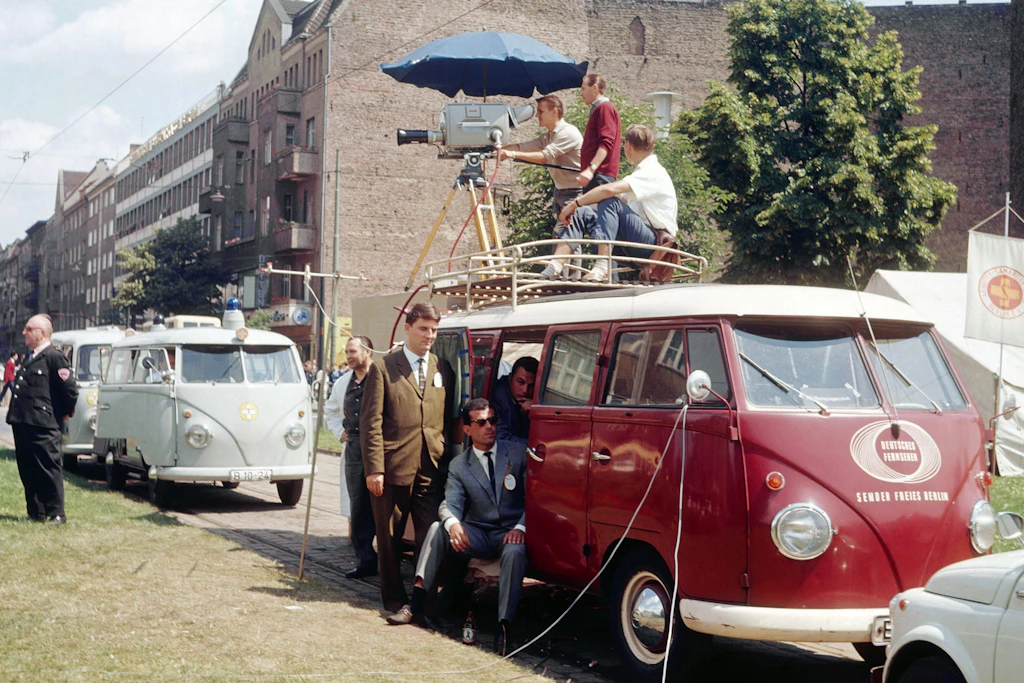
    Übertragungswagen des SFB beim Besuch des US-Präsidenten John F. Kennedy in Berlin, 1963 © United Archives/Kindermann/Imago

    La bataille idéologique de Berlin ne cessa le 8 mai 1945. Après la guerre les États-Unis reprirent le flambeau anticommuniste du pouviir précédent avec leur radio RIAS puis à partir de l’été 1953 la SFB fut une sorte de radio-télévision autogérée par les anticommunistes berlinois sous surveillance de l’occupant états-unien puis britannique.

    Article incomplet mais imtéressant

    ▻https://de.wikipedia.org/wiki/Sender_Freies_Berlin

    30.7.2026 von Petra Fischer - Warum der SFB gegründet wurde, welche Rolle er im Kalten Krieg spielte und wie er zum „Gedächtnis“ einer geteilten Stadt wurde.

    Dies ist ein Open-Source-Beitrag. Die Berliner Zeitung und die Ostdeutsche Allgemeine geben allen Interessierten die Möglichkeit, Texte mit inhaltlicher Relevanz und professionellen Qualitätsstandards anzubieten.

    Im Januar 1949 wurden in der Presse verstärkt Forderungen laut, dass Berlin einen eigenen deutschen Sender bekommen sollte. Der Rias als amerikanischer Sender spiegelte nicht im vollen Umfang die Interessen und Belange der Berliner Bevölkerung wider. Im britischen Sektor konnte als einziger deutscher Sender der Berliner Rundfunk empfangen werden. Dies nahm der Tagesspiegel am 26. Januar 1949 zum Anlass, einen deutschen Sender zu fordern, um der Beeinflussung durch den „kommunistischen“ Sender“ Paroli bieten zu können.

    Am 27. Juni 1949 stellte die CDU in der Stadtverordnetenversammlung den Antrag auf Inbetriebnahme eines eigenen Berliner Rundfunksenders. Obschon die Initiative von der CDU ausging, konnte auch die regierende SPD nicht umhin, die Forderung nach einem eigenen Sender für Berlin zu unterstützen.

    Am 22. Dezember 1949 erließen die Alliierten ein prophylaktisches Veto gegen einen neuen Berliner Sender. Nun versuchte der beauftragte Rundfunkreferent, Herbert Antoine, den NWDR davon zu überzeugen, ein gutes Wort bei der britischen Militärregierung für das Vorhaben einzulegen.

    Olympia 1936: Wie das NS-Regime die Spiele für seine Zwecke ausnutzte
    Olympia 1936: Wie das NS-Regime die Spiele für seine Zwecke ausnutzte
    Mit Stacheldrahtzaun und Hinweisschild

    Zu dieser Zeit war das Haus des Rundfunks in der Masurenallee, aus dessen Bunker Joseph Goebbels in den letzten Kriegsjahren Ansprachen hielt, von den Sowjets okkupiert. Die in diesem Sektor ansässigen britischen Alliierten hatten einen Stacheldrahtzaun um das Haus gezogen, um den „Ostsender“ in Westlage zu isolieren. Ein Banner mit dem Hinweis „Dies ist kein West-Berliner Sender“ wurde am Zaun aufgehängt.

    Am 20. Juli 1953 gaben die Alliierten grünes Licht für die Einbringung des Rundfunkratsgesetzes in das Berliner Abgeordnetenhaus. Sieht man dies im politischen Zusammenhang, liegt die Vermutung nahe, dass der Aufstand vom 17. Juni 1953 einen maßgeblichen Einfluss darauf hatte, dass die Alliierten dem Sender Freies Berlin nun doch keine Steine mehr in den Weg legen wollten.

    Während des Juni-Aufstands in Ost-Berlin und den übrigen Bezirken der Sowjetischen Verwaltungszone hatte der Rias die Funktion, den Aufstand anzuheizen und zu befördern. Als der Stein aber buchstäblich ins Rollen gekommen war, wurde der Sender von den Amerikanern angehalten, zurückzurudern und mäßigend auf die Aufständischen einzuwirken. Die gerade erst ausbalancierte Viermächte-Konstellation sollte zu diesem Zeitpunkt nicht ins Wanken gebracht werden.
    Freiheitsglocke läutete den ersten Programmtag ein

    Nach zähen Verhandlungen und einem langwierigen Verfahren hatte Berlin mit Datum vom 12. November 1953 einen eigenen Sender. Die Freiheitsglocke läutete den ersten Programmtag des SFB ein. Am 1. Juni 1954, um 4.55 Uhr, meldete sich Intendant Alfred Braun mit seiner Eröffnungsansprache aus dem Funkhaus am Heidelberger Platz.

    Die Presselandschaft in Berlin bestand zu diesem Zeitpunkt im Wesentlichen aus dem Tagesspiegel, dem Abend, dem Spandauer Volksblatt und der Springer-Presse, vertreten durch die Berliner Morgenpost, die Welt, die Bild und die B.Z. Wichtig war vor allem eins, und darin war sich die Presse einig: einen deutschen Sender zu fordern, der ein Gegengewicht zum kommunistischen „Berliner Sender“ bilden konnte.

    Zum ersten Mal wurde eine Anstalt des öffentlichen Rechts mit einem erklärten politischen Ziel gegründet. Dieses lautete, die Stellung Berlins gegen die östliche Propaganda zu stärken, der Stimme Berlins innerhalb der westlichen Welt, insbesondere in Hinblick auf seine Rolle als künftige deutsche Hauptstadt, stärkeres Gewicht zu verleihen. Dies bedeutete, dass man nicht gewillt war, sich mit der Teilung Deutschlands und dem Viermächte-Status Berlins abzufinden. Welche Rolle spielte nun der neu gegründete Berliner Sender im Kalten Krieg?

    Durch die Namensgebung hatte der Sender Freies Berlin ja deutlich gemacht, welchen politischen Kurs er einzuschlagen gedachte. Der Rias hatte es vorgeführt mit dem Slogan: „Eine freie Stimme der freien Welt.“ Beim Sender Freies Berlin war der Name ebenfalls Programm. Er erhob den Anspruch, für ganz Berlin zu senden – in ideologischer Abgrenzung zur sogenannten Sowjetischen Besatzungszone und dem Berliner Rundfunk.

    SFB-Funkhaus in Berlin

    SFB-Funkhaus in Berlin

    © Steinach/Imago
    Der Mauerbau – Berichterstattung im Rundfunk

    Von Anfang an wurde durch Status und Programm betont, dass die westlichen Alliierten als Befreier und als Garanten für Freiheit und Demokratie gesehen wurden. Es musste also in Sendungen, Beiträgen und Diskussionen der Status West-Berlins als zur Bundesrepublik Deutschland gehörig herausgestellt werden, um der Diktion der DDR, die von der „selbstständigen politischen Einheit West-Berlins“ sprach, zu begegnen.

    Die erste Sendereihe, die das SFB-Fernsehen produzierte und die ab 1956 in der ARD ausgestrahlt wurde, hieß „Mitteldeutsches Tagebuch“ und entsprach exakt dem Sendungsauftrag, „Mittler zwischen den getrennten Teilen Deutschlands“ zu sein. Mit Bildern aus den ehemaligen Ostgebieten sollte regelmäßig auf den Verlust hingewiesen und die Erinnerung an die nun in der DDR bzw. Polen liegenden Städte und Landschaften wachgehalten werden.

    Der 13. August 1961 war ein entscheidendes Datum in der Geschichte Berlins, folglich eine Herausforderung für den Sender Freies Berlin. Schon Tage zuvor waren vermehrte Aktivitäten im östlichen Teil der Stadt registriert worden, aber Walter Ulbricht erklärte noch am 15. Juli in einer Pressekonferenz: „Niemand hat die Absicht, eine Mauer zu errichten“. In den frühen Morgenstunden des 13. August indes begannen Volkspolizisten und Bauarbeiter an verschiedenen Punkten der Stadt, Grenzwälle in Form von Stacheldraht und eine Mauer zu errichten. Damit wurde den Hoffnungen auf eine Revision des Potsdamer Abkommens eine Absage erteilt – eine Stadt und mit ihr der Sender Freies Berlin waren im Ausnahmezustand. Der erste Live-Bericht des SFB kam als Rundfunkreportage vom Brandenburger Tor. Zur selben Zeit wurde der Potsdamer Platz abgeriegelt. Journalisten konnten sich an diesem Tag noch relativ frei – nur durch Ausweiskontrollen aufgehalten – im Ostteil der Stadt bewegen.

    Das Krisenmanagement des Berliner Senats und der Bundesregierung lief auf Beschwichtigung hinaus; man wollte um jeden Preis einen „17. Juni 1953“ verhindern. Adenauer kehrte verspätet und auch nur widerwillig aus seinem Italien-Urlaub zurück. Der Regierende Bürgermeister Willy Brandt sah sich in der unkomfortablen Lage, vollends angewiesen zu sein auf den Handlungswillen der Bundesregierung und der Alliierten. Letztere waren entweder völlig überrascht worden vom Vorgehen der Sowjetzone oder sie hatten ihr stillschweigendes Einverständnis erklärt, um jeden Eklat zu vermeiden. Es war zu diesem Zeitpunkt offensichtlich, dass die Wirtschaft und das politische System in der Sowjetzone ohne diesen Schritt nicht überlebensfähig gewesen wären.

    Übertragungswagen des SFB von innen, Berlin 1962

    Übertragungswagen des SFB von innen, Berlin 1962

    © United Archives/Kindermann/Imago
    Vom „Frontstadtsender“ zum „Rotfunk“

    Der Journalist Matthias Walden, lange Jahre Chefkommentator des SFB, wechselte 1980 als Mitherausgeber zu Springers Zeitung Welt. Was war im SFB passiert, dass ein sogenannter Kalter Krieger einen Sender verließ, welcher von seinem Auftrag her dem Kalten Krieg verpflichtet war? Eine Schlüsselfunktion für den Wandel des SFB hatte die Studentenbewegung inne, die eng verbunden war mit der besonderen Situation West-Berlins nach dem Mauerbau.

    Eine zentrale Forderung der Studentenbewegung lautete: „Enteignet Springer!“ Die Studenten waren, mit der geballten Macht der verzerrenden Darstellung konfrontiert, zu der Überzeugung gelangt, dass die Macht über die öffentliche Meinung der Schlüssel zur Revolution sei.

    Die symbolischen Aktionen vor dem Springer-Haus, die Anti-Springer-Kampagne, waren der Beginn der Gegenöffentlichkeit der Studentenbewegung, die anfing, sich und ihre Aktionen zu inszenieren, um über die Präsenz in den Medien ihren politischen Forderungen Gehör zu verschaffen.

    Die „Abendschau“ reagierte, wie man es von einem bürgerlichen Medium erwartet: sie berichtete, denn eine nachrichtliche Sendung lebt von Sensationen und Neuigkeiten, aber sie berichtete einseitig. Die Studenten wurden – wiederum im Konzert mit der Springer-Presse – als Kommunisten und Rowdys bezeichnet.

    Anlässlich der Demonstrationen gegen den Schah-Besuch 1967 hieß es: „Zu tumultartigen Zwischenfällen kam es an der Deutschen Oper in der Bismarckstraße, als der Schah mit seinem Gefolge das Haus betreten hatte. Nachdem ein Polizist und ein Bild-Reporter von den Demonstranten durch Steinwürfe verletzt worden waren, traf die Polizei drakonische Maßnahmen gegen die Ruhestörer. Dabei kam es mehrfach zu Gewalttätigkeiten, da einige Polizisten in ihrer begreiflichen Erregung eine Härte anwandten, die über das erforderliche Maß hinausging.“ Der Tod Benno Ohnesorgs war der „Abendschau“ am folgenden Tage nur eine kurze Meldung wert.
    Ein langsamer Paradigmenwechsel

    Wegen des sich wandelnden politischen Klimas in der Bundesrepublik – ab 1969 durch die Entspannungspolitik Willy Brandts, in Berlin 1978 durch die Hausbesetzerbewegung und die Gründung der Alternativen Liste – vollzog auch der Sender Freies Berlin einen langsamen Paradigmenwechsel.

    Was sich indes auf der anderen Seite der Mauer tat, war – soweit durch Korrespondenten abgedeckt – Gegenstand der Berichterstattung. Der Friedens- und Bürgerrechtsbewegung in der DDR wurde große Beachtung geschenkt. Höhepunkt für den West-Berliner Sender war am 12. Juni 1987 die Rede Ronald Reagans am Brandenburger Tor. Allerdings schaltete man zu spät auf den Ton, sodass der entscheidende Satz „Mr. Gorbatschow, tear down this wall“ nicht live über den Sender ging.

    Man kann den SFB getrost als „Gedächtnis“ der Stadt bezeichnen, als Chronisten der Geschichte Berlins seit 1954. Der SFB hat über Ereignisse berichtet, die öffentlich wahrgenommen wurden; umgekehrt hat er durch seine Berichte die öffentliche Wahrnehmung beeinflusst.

    Petra Fischer studierte Politikwissenschaften am Otto-Suhr-Institut in Berlin und promovierte zum Thema „Wandel öffentlich-rechtlicher Institutionen im Kontext historisch-politischer Ereignisse am Beispiel des Senders Freies Berlin“. Beim Sender Freies Berlin und dem Rundfunk Berlin-Brandenburg war sie als Festangestellte mit verschiedenen Projekten des Fernsehprogramms betraut. Seit 2022 ist sie als Autorin und freie Journalistin tätig.

    #Berlin #histoure #médias #guerre_froide #anticommunisme #radio #télévision

  • ▻https://laparoleerrante.org/lecoute-et-lecho-tous-les-episodes

    L’ÉCOUTE ET L’ÉCHO est une émission du Studio son de La Parole errante [lieu collectif à Montreuil dans le 93]. Un rendez-vous hebdomadaire, pour s’inscrire dans une continuité de récits et renforcer des liens.

    Depuis décembre dernier, chaque dimanche, à midi, nous diffusons en direct, via π-node, l’émission de #radio « L’écoute et l’écho ». Ensuite les émissions sont écoutables dans notre site ou dans des applications de #podcast non payantes, au nom « Parole Errante ».

    En août, nous arrêtons cette régularité hebdomadaire, et nous espérons vous retrouver en nombre pour la reprise des émissions, en octobre prochain.

    Entre temps, voici un rappel de cette traversée collective.

    À partager, si vous le voulez bien.

    Bel été !

    L’écoute et l’écho