• The Gatekeepers (שומרי הסף, Shomrei HaSaf)
    https://www.youtube.com/watch?v=4gx-pP9IOZM

    On ne les a pas écouté, ces anciens directeurs de Shin Beth, puis la société et les majorités politques ont poussé Israël dans l’impasse actuelle où une paix durable avec ses voisins est devenue impossible.

    The Gatekeepers, 2012, Pays de production : France, Israël, Belgique, Allemagne

    Introduction et références
    https://fr.wikipedia.org/wiki/The_Gatekeepers

    Le titre du premier chapître donne la raison pricipale pour l’échec du projet d’Israel :

    No Strategy—Just Tactics

    Avec cette approche on peut gagner des battailles mais on perdra la guerre.

    THE GATEKEEPERS (2012) (Hebrew with English Subtitles)—This documentary, by Dror Moneh, covers about forty-years of Israel’s conflict with the Palestinians, from six heads of Shin Bet (Shabak) (the Israeli military security-wing). It is indispensable for students of International Studies and of Conflict Resolution. How, many ask, could this conflict become multi-generational—and is always on the verge of exploding? What would be the answer, do you ?

    For those of us living outside the Middle East, even if we’re Jewish, and attempting to understand it more deeply—this documentary allows us to see first-hand HOW it has come to this. There are human reasons on both sides—but here, we have one-side—yet many of the leaders show a deep understanding, too, of the Palestinian-side. The force of inertia, of cause-and-effect, has really taken over to the point where it seems nothing can break the cycle. We enter an echo-chamber of trauma, where only more trauma seems possible.

    The film maker, Dror Moreh, was inspired to make this film after watching a documentary by the Jewish-American film maker, Errol Morris, the Fog of War (2006), that covered the Vietnam War and the Cuban Missile Crisis. Dror Moreh really performed miracles to interview all six of the living heads of Shin Bet. They wanted to help the world to understand why—and they wanted to give their own version of events that the world has been witnessing since the 1967 War. Not all the Gatekeepers, the Department Heads, are equally compelling. A few have deep humanitarian impulses, yet what people come away with is this: There is no Morality in a Time of War.

    Dror interviewed all six of the surviving heads (in 2012): Ami Ayalon, Avraham Shalom, Yaakov Peri, Carmi Gillon, and Avi Dichter. Yuval Diskin, also interviewed, was still serving as head at the time. Dror told an international magazine, the “Economist,” that the current Prime Minister, Benjamin Netanyahu “poses a great threat to the existence of the state of Israel.” He wanted the younger Israelis to understand their government from the perspective of the highest levels—to see the conflict, perhaps, in a new light.

    Dror Moreh followed Errol Morris’ format of breaking down the interviews to cover various themes:

    No Strategy—Just Tactics
    Forget About Morality
    One Man’s Terrorist is Another Man’s Freedom Fighter
    Our Own Flesh and Blood
    Victory is to See You Suffer
    Collateral Damage
    The Old Man at the End of the Corridor

    In the United States (I grew up in Florida), we have seen a similar mind-set many times, but the most famous was also covered by Errol Morris in his interviews with Robert McNamara, Secretary of Defense under Kennedy and Johnson—THE CUBAN MISSILE CRISIS. The mindset of the military—the Joint-Chiefs were led by Curtis LeMay, was shoot first and ask questions later. It is reasonable to assume that had almost anyone else been president, there would have been a nuclear war. The military wanted to destroy the Soviet Union before it was on a parody with its nuclear arsenal. It was a miracle that the US government avoided this—but only because of the Kennedy brothers, McNamara, Tommy Thompson (1904-1972), who had served as ambassador to the Soviet Union, and a few others—even Nikita Khrushchev. Yet, there was conflict resolution here, to a point, at least an absence of conflict, if not peace.

    This conflict between the USA and Cuba is also multi-generational, which began with the Cuban Revolution of 1959.

    Can war led to peace? None of those interviewed thinks this is possible. This was most stunning for me. Not one believes the conflict is good for the future of Israel. Many inside Israel have claimed that Dror did not cover the manifold attempts at peace, even exchanging land for peace, which hasn’t worked, at least thus far. Dror, of course, is a liberal and so his views of the conflict and the way to resolve it are clear.

    Some of the topics: The use of torture and targeted assassination and policies during the Intifada. One head, Carmi Gillon, had warned that Jewish extremists would try to kill Prime Minister Rabin, which they did in 1995.

    Many Israeli officials reacted strongly against the film, especially when Avraham Shalom compares “Israel to Nazi Germany.” This stung, since Shalom was once among the most hard-line.

    I hope this film gives us all a greater understanding of the conflict—and to see the true intentions for peace—a horrible inertia, though, has taken over and no one knows how to change the trajectory. Why is conflict easier than peace?

    #Palestine #Israël #guerre #génocide #services_secrets #Shin_Beth #Shabak #שב

  • En Israël, le chef du renseignement intérieur met en cause #Benyamin_Nétanyahou
    https://www.lemonde.fr/international/article/2025/04/24/en-israel-les-craintes-d-une-derive-autocratique-de-benyamin-netanyahou_6599

    La première lettre fait onze pages. Un document rare, une #accusation grave, publique, portée par Ronen Bar, le chef des services de renseignement intérieur, le Shin Bet, à l’encontre du premier ministre, Benyamin Nétanyahou. La deuxième lettre, 31 pages, écrite par le même Ronen Bar, est confidentielle en raison des informations classifiées qu’elle contient, en appui de la première. Les deux documents sont étudiés par les juges de la Cour suprême israélienne depuis lundi 21 avril, pour déterminer si le chef du gouvernement a respecté les règles en décidant de limoger le patron du service de renseignement intérieur.

    L’affaire que doit trancher la plus haute juridiction judiciaire d’#Israël va bien au-delà du destin individuel du chef du Shin Bet, congédié par M. Nétanyahou au motif d’un « manque de confiance », une décision suspendue provisoirement par la Cour suprême le 8 avril.

    La bataille oppose deux camps au sein de la société, deux visions de la démocratie et de ses garde-fous, et ravive le conflit ouvert début 2023, lorsque le premier ministre israélien avait engagé une réforme de la justice destinée à restreindre les pouvoirs et l’indépendance des magistrats. Le projet avait provoqué des manifestations massives pendant plusieurs mois, un mouvement de protestation interrompu par le choc de l’attaque terroriste du 7-Octobre, puis le début de la guerre à Gaza.

    Atteinte à la séparation des pouvoirs
    Les mots du patron du #Shin_Bet ont provoqué une forte émotion. Et beaucoup d’inquiétudes. Parce que le service demeure une institution respectée malgré le fiasco du 7 octobre 2023 et l’attaque terroriste du Hamas, qui a causé la mort de plus de 1 200 personnes et l’enlèvement de 251 otages. Parce que le chef du service de renseignement raconte, sous serment, des atteintes inédites à l’Etat de droit depuis deux ans. Et qu’il dévoile la façon dont le premier ministre se comporte vis-à-vis des gatekeepers, ces figures de la police ou de la justice censées agir comme des gardiens de l’Etat.

    « Il est de mon devoir, écrit solennellement le patron du Shin Bet, de veiller à ce que les pouvoirs et les outils de l’agence soient utilisés exclusivement aux fins prévues » et « de veiller à tracer une ligne claire entre la confiance attendue au sein d’une démocratie et le type de loyauté qui caractérisent d’autres régimes ».

    L’acte d’accusation de Ronen Bar se résume en trois révélations-clés. Primo, le chef du gouvernement, allié à l’extrême droite dans la coalition la plus radicale de l’histoire d’Israël, lui a demandé de signer un texte censé justifier une impossibilité à comparaître pour des raisons de sécurité lors de son procès pour corruption – une manœuvre pour échapper à la justice. Secondo, le premier ministre lui a demandé que les moyens du Shin Bet soient utilisés afin d’enquêter sur des opposants au gouvernement, notamment ceux qui contestent son projet de réforme de la justice – une requête hors de tout cadre légal. Tertio, M. Nétanyahou a exigé que Ronen Bar s’engage à obéir au premier ministre et non à la Cour suprême dans l’hypothèse d’une crise constitutionnelle – une atteinte manifeste à la séparation des pouvoirs.

    L’enquête sur le « Qatargate »
    Ronen Bar affirme qu’il a refusé. Il laisse entendre, comme une partie de la presse, que la décision de le congédier découle d’une tout autre motivation que le « manque de confiance » avancé par le gouvernement. Car le Shin Bet enquête sur le « Qatargate », une affaire révélée en mars et qui met en cause des proches conseillers du premier ministre suspectés d’avoir touché illégalement de l’argent du Qatar.

    La crainte, exprimée publiquement par la procureure générale, Gali Baharav-Miara – elle aussi sous le coup d’une mesure d’éviction décidée par le gouvernement pour des motifs similaires – est celle d’un conflit d’intérêts majeur : en faisant partir Ronen Bar, Benyamin Nétanyahou pourrait ainsi tenter d’enterrer une enquête gênante. D’autant que des médias ont révélé que le premier ministre avait été informé, dès 2019, que l’argent versé par le Qatar pour Gaza était détourné au profit du Hamas et qu’il a choisi de laisser faire.

    Benyamin Nétanyahou a démenti les accusations en haussant le niveau des invectives, déjà assez courantes dans la vie politique israélienne, contre le patron du Shin Bet. Ses ministres et ses relais dans les médias ont accusé Ronen Bar de « coup d’Etat », au motif qu’il refuserait d’obéir au gouvernement. Certains ont même repris la rumeur selon laquelle le service de sécurité aurait « coordonné les attaques » du 7-Octobre, les forces du service de renseignement auraient été utilisées pour sauver leurs seuls personnels et la menace aurait été dissimulée aux plus hautes autorités – ce que Ronen Bar s’est senti obligé de démentir dans sa lettre.

    Un « chemin glissant vers l’autocratie »
    La Cour suprême se retrouve sous pression pour décider. Les opposants à Benyamin Nétanyahou voient dans cet épisode un signe supplémentaire d’une dérive du chef du gouvernement et de sa coalition. « Israël est confronté à une crise majeure, à la fois une crise constitutionnelle et identitaire », affirme ainsi Ami Ayalon, ancien contre-amiral et patron du Shin Bet de 1996 à 2000, devenu ensuite député travailliste, un des nombreux anciens responsables de la sécurité qui ne cessent de dénoncer les agissements du premier ministre. « Avec les menaces contre le Shin Bet et la procureure générale, le risque est celui de la politisation des derniers contre-pouvoirs au sein de l’Etat », analyse Meir Assouline, avocat engagé dans la défense des libertés publiques.

    « Tous les faits décrits par M. Bar – chacun d’entre eux – décrivent une réalité très sombre, ainsi que la gravité de la violation de l’Etat de droit et des principes fondamentaux de gouvernance », souligne l’avocat Gilead Sher, ancien négociateur. Cet ex-chef du bureau du premier ministre Ehoud Barak (1999-2001) parle d’un « chemin glissant vers l’autocratie ou la dictature » : « Les anciens responsables de l’appareil de sécurité, tels que le Mossad, la police et le Shin Bet, qui ont été initialement nommés par Nétanyahou, sans exception, ont tous averti que le gouvernement menait Israël vers un avenir désastreux. »

    L’union nationale des premiers temps, dans l’immédiat de l’après-7-Octobre, a cédé devant les dissensions sur la stratégie à suivre pour contrer le Hamas, sur les objectifs de la guerre et le destin des otages – mais pas sur le sort des Palestiniens, dont plus de 51 000 sont morts à Gaza. La crise politique vient confirmer et amplifier les fractures.

    Lire aussi | Article réservé à nos abonnés En Israël, Benyamin Nétanyahou mis en cause dans une fuite de documents classifiés

    « Nous sommes au point culminant d’un processus commencé en janvier 2023 avec la réforme de la justice », souligne le professeur de droit Adam Shinar. « L’idée qu’il y a des ennemis, qu’il existe une distinction entre “eux” et “nous”, était, de fait, réservée aux Arabes. Le niveau de polarisation, de haine, est tel que cette division existe désormais aussi parmi nous », relève l’universitaire. « Des institutions qui étaient perçues comme neutres et consensuelles sont aujourd’hui politisées », s’inquiète encore Adam Shinar.

    « Danger pour la sécurité d’Israël »
    La séquence témoigne de la dégradation du climat politique. Au point que des personnalités comme l’ancien président de la Cour suprême Aharon Barak ont exprimé leur crainte d’une « guerre civile ». L’ancien ministre Benny Gantz, membre du cabinet de guerre jusqu’en 2024, a évoqué des actes « antidémocratiques » de la part de M. Nétanyahou et a appelé à des élections anticipées. Le chef de l’opposition, Yaïr Lapid, de son côté, a qualifié le premier ministre de « danger pour la sécurité d’Israël ».

    « Nous sommes divisés, et nous ne sommes même plus d’accord sur ce qui est bien ou mal, sur ce qui est autorisé ou interdit », s’émeut l’ancien militaire Ami Ayalon. « Si j’avais à prioriser nos ennemis, je dirais que nous sommes devenus notre plus grande menace, plus que tous les autres, qu’il s’agisse du Hamas, du Hezbollah ou de l’Iran », assure-t-il. Il ajoute : « Je ne peux pas exclure le scénario où nous devrions faire face à des violences au sein de la société israélienne. » L’homme sait de quoi il parle : il avait été nommé patron du Shin Bet après l’assassinat de Yitzhak Rabin par un extrémiste juif fin 1995.

    Mercredi 23 avril, jour de commémoration de la Shoah, devant le mémorial de Yad Vashem, le président, Isaac Herzog, dont la fonction est symbolique, a lancé un appel solennel en s’adressant à la société israélienne : « Assez des divisions ! Assez de la haine ! »

    #Luc_Bronner (Jérusalem, envoyé spécial)

  • The Gatekeepers
    https://www.youtube.com/watch?v=TpqLC2pcBjk

    présentation d’Arte, en 2014
    https://seenthis.net/messages/295426

    Chacun à leur tour, ils racontent, intensément, quelque trente ans de lutte antiterroriste en Israël et de gestion désastreuse de la question palestinienne. Un flot d’aveux précis, circonstanciés, d’une remarquable liberté et d’une sidérante acuité. Six anciens chefs du #Shin_Beth, l’équivalent israélien du FBI, expliquent comment, depuis la Guerre des six jours en 1967, dont la victoire vaut à l’État hébreu d’occuper #Gaza et la #Cisjordanie et de faire face à un million de #Palestiniens, les responsables politiques n’ont jamais vraiment cherché à construire la paix. Une succession d’erreurs qu’inaugurent les mots d’arabe approximatif avec lequel de jeunes réservistes s’adressent aux populations des nouveaux territoires occupés, leur annonçant qu’ils viennent les « castrer », au lieu de les « recenser ».

    Peuple oublié

    Bavures, tortures, méthodes iniques de renseignements et de recrutement d’indicateurs amplifiant la haine de l’occupé… Ils disent surtout l’absence glaçante de vision stratégique ; la résistance et l’hostilité des Palestiniens oubliés explosant avec la première Intifada ; le laxisme face à l’extrémisme juif qui anéantira, avec l’assassinat de Yitzhak Rabin, la seule réelle lueur de paix. « On a gagné toutes les batailles, mais on a perdu la guerre », lâche Ami Ayalon, à la tête du service de 1996 à 2000, quand Avraham Shalom, le plus ancien d’entre eux, compare l’armée d’occupation à celle de l’Allemagne pendant la Seconde Guerre mondiale. « Quand vous quittez le Shin Beth, vous devenez gauchiste… », conclut avec ironie Yaakov Péri (1988-1994).

    #Israël

  • Coronavirus en Israël : des milliers de personnes mises en quarantaine sans raison sur la base des données de leur GSM
    https://www.rtbf.be/info/societe/detail_coronavirus-en-israel-des-milliers-de-personnes-mises-en-quarantaine-san

    Des milliers d’Israéliens ont été placés en quarantaine sans raison apparente, sur la base des données de leur GSM, a admis le ministère de la Santé israélien. Près de 12.000 personnes ont reçu un SMS de la part du Shin Bet, le service de renseignement intérieur israélien, les invitant à se mettre en quarantaine, a déclaré mardi un porte-parole du ministère de l’Intérieur devant une commission parlementaire.

    Le gouvernement israélien utilise son agence de sécurité intérieure pour le traçage des citoyens afin de lutter contre l’augmentation du nombre de cas de Covid-19. Appliqué par le Shin Bet au début de la crise sanitaire, ce programme de surveillance controversé a été bloqué temporairement par la Cour suprême de l’État hébreu fin avril, avant d’être relancé fin juin.

    Selon le journal Times of Israel, des dizaines de milliers d’Israéliens ont reçu, au cours de la première semaine de la reprise du programme, un SMS leur conseillant de se placer en quarantaine en raison d’une potentielle infection à la Covid-19.

    Cent cinquante employés d’une ligne d’écoute ont été chargés de répondre aux questions concernant les SMS. Ils ont reçu plus de 26.000 appels entre le lancement de la ligne et dimanche dernier. Dans 83% des cas, les appels concernaient des protestations contre l’imposition de la quarantaine par voie d’un SMS. Environ 12.000 personnes ont été notifiées qu’elles ne devaient plus rester en quarantaine.

    Ce type de surveillance électronique a jusqu’à présent été utilisé pour lutter contre le terrorisme. L’intention était, au cours de la crise sanitaire, d’utiliser les données de localisation des GSM des personnes infectées pour établir avec qui ces dernières avaient récemment été en contact. Les personnes potentiellement contaminées étaient alors alertées par SMS et priées de se placer en quarantaine.

    #erreur_intentionnelle ? #algorithme foireux ? #vie_privée #surveillance #données #bigdata #privacy #données_personnelles #santé #GSM #géolocalisation #covid-19 #coronavirus #quarantaine #shin_bet

    • La police flamande de Hasselt (NVA) retrouve ses anciennes habitudes, fouiller les greniers afin de rechercher les fêtards, en attendant mieux.

      Coronavirus à Hasselt : il planque les clients de son café dans son grenier à l’arrivée de la police
      https://www.rtbf.be/info/insolites/detail_coronavirus-a-hasselt-il-planque-les-clients-de-son-cafe-dans-son-grenie

      Le patron d’un café de Hasselt espérait berner la police lorsque celle-ci s’est présentée aux petites heures à la porte de son établissement. Il venait de couper la musique et de faire passer au grenier 13 fêtards qui espéraient encore danser et chanter quelques heures de plus. Mais les forces de l’ordre ont fini par découvrir la planque.


      Le bourgmestre de Hasselt, Steven Vandepu. - © JORIS VLIEGEN - BELGA

      La police est intervenue vers 02h00 dans la nuit de lundi à mardi après avoir reçu un appel faisant état de nuisances sonores. L’établissement ne respectait en outre pas le couvre-feu imposé à 01h00 du matin en raison du coronavirus.

      Chaque fêtard et le gérant ont reçu un procès-verbal pour ne pas avoir respecté les mesures corona. Le patron a également écopé d’un PV pour avoir autorisé sa clientèle à fumer à l’intérieur du bar. . . . . .

      Pourtant, ce sont les dirigeants belges qui, par leur épouvantable gestion de l’épidémie de #coronavirus ont tué, les vieillards, principalement. Certain.e.s de faim et de soif, témoignages #MSF

      #police #flandres #Belgique #Traditions #violences_policières #surveillance #répression #violence #maintien_de_l'ordre #coronavirus #covid-19 #entrainement #rafles #rafle

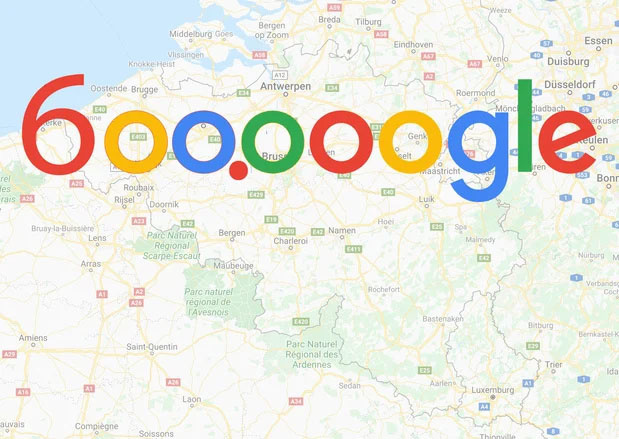
    • La Belgique inflige une amende de 600.000 euros à Google pour atteinte à la réputation
      https://datanews.levif.be/ict/actualite/la-belgique-inflige-une-amende-de-600-000-euros-a-google-pour-atteinte-a-la-reputation/article-news-1310641.html?cookie_check=1594786091

      Google Belgium devra s’acquitter d’une amende de 600.000 euros. L’Autorité de protection des données (APD) belge a sanctionné l’entreprise, parce qu’elle a refusé de supprimer des résultats de recherche dommageables.

      L’APD inflige cette amende suite à une plainte déposée par un homme qui voulait voir supprimer quelques résultats du moteur de recherche. Depuis quelques années, les Européens ont le ’droit d’être oubliés’, ce qui leur permet de demander de supprimer certains résultats de recherche. Mais dans un premier temps, Google décide elle-même si une telle demande se justifie.

      L’homme en question n’est pas nommément mentionné, mais il s’agit, selon l’APD, de quelqu’un qui exerce une fonction dans la vie publique. Les résultats qu’il voulait voir enlever, portent sur ses possibles liens avec un parti politique, ce qu’il réfute, et sur une plainte pour brimade à son égard, qui avait été déclarée infondée il y a des années déjà.

      Google n’a pas accepté de supprimer ces deux résultats. La Chambre des litiges de l’APD a donné raison à Google pour la première partie, parce que l’homme joue un rôle dans la vie publique et que ces résultats ont donc un intérêt général.

      Mais pour ce qui est de la plainte pour brimade, l’APD se montre très critique vis-à-vis de Google. Par son refus, l’entreprise s’est montrée négligente, parce qu’elle disposait des preuves que les faits en question étaient ’non pertinents et désuets’. Il s’agit en effet d’une plainte datant de plus de dix ans et portant sur des faits qui n’ont jamais été démontrés.

      Formulaire de demande incorrect
      L’amende de 600.000 euros n’est pas infligée pour ce seul refus. L’APD estime en effet que le formulaire de demande de suppression de résultats n’est pas suffisamment transparent. L’APD invite dès lors Google à adapter ce formulaire à l’Espace Economique Européen.

      Google Belgium botte en touche
      Ce qui est étonnant, c’est que Google Belgium a, dans son argumentation, considéré comme infondée la plainte déposée auprès de l’Autorité de protection des données du fait que le responsable du traitement n’est pas Google Belgium, mais Google LLC, la société mère aux Etats-Unis.

      Ce raisonnement n’a pas été suivi par la Chambre des litiges de l’APD. Pour elle, les deux organisations sont liées de manière indissociable, ce qui fait que c’est la filiale locale belge de Google qui est responsable.

      Il s’agit d’un singulier précédent dans la mesure où les grandes firmes technologiques se réfèrent dans ce genre de situations assez souvent à leur siège central européen ou américain, ce qui fait qu’un jugement prend souvent pas mal de temps et se complexifie. La Chambre des litiges suit cependant Google dans le fait que son siège européen établi en Irlande n’est pas responsable de la suppression des résultats de recherche.

      La plus forte amende à ce jour
      Pour l’Autorité de protection des données belge, il s’agit de la plus forte amende jamais infligée à ce jour. Le précédent record était de 50.000 euros. Pour Google aussi, il est probablement question d’un record dans notre pays. En 2011, l’entreprise avait encore proposé un arrangement d’un montant de 150.000 euros, parce qu’elle avait intercepté https://datanews.knack.be/ict/nieuws/belgische-boete-voor-google/article-normal-280643.html?cookie_check=1594786373 par mégarde avec ses voitures Street View des communications privées.

      Google en appel
      Google annonce qu’elle va en appel de l’amende qui lui est infligée. Celle-ci a été introduite auprès du tribunal des marchés, une composante de la Cour d’Appel de Bruxelles.

      « Depuis 2014, nous avons travaillé dur pour implémenter le droit à l’oubli en Europe et pour trouver un équilibre sensé, basé sur des principes, entre le droit des citoyens à l’accès à l’information et le respect de leur vie privée. Nous estimons que cette affaire ne répond pas aux critères de la Cour européenne de Justice de supprimer des résultats de recherche du contenu journalistique publié. Nous pensons qu’il y va de l’intérêt général que l’article en question puisse encore être recherché. L’Autorité de protection des données n’est pas du même avis. Nous allons donc demander à la Cour de décider », affirme Google dans une réaction à . . . . . .

      Data News.

      #vie_privée #google #internet #données_personnelles #bigdata #données #privacy

  • Monitoring being pitched to fight Covid-19 was tested on refugees

    The pandemic has given a boost to controversial data-driven initiatives to track population movements

    In Italy, social media monitoring companies have been scouring Instagram to see who’s breaking the nationwide lockdown. In Israel, the government has made plans to “sift through geolocation data” collected by the Shin Bet intelligence agency and text people who have been in contact with an infected person. And in the UK, the government has asked mobile operators to share phone users’ aggregate location data to “help to predict broadly how the virus might move”.

    These efforts are just the most visible tip of a rapidly evolving industry combining the exploitation of data from the internet and mobile phones and the increasing number of sensors embedded on Earth and in space. Data scientists are intrigued by the new possibilities for behavioural prediction that such data offers. But they are also coming to terms with the complexity of actually using these data sets, and the ethical and practical problems that lurk within them.

    In the wake of the refugee crisis of 2015, tech companies and research consortiums pushed to develop projects using new data sources to predict movements of migrants into Europe. These ranged from broad efforts to extract intelligence from public social media profiles by hand, to more complex automated manipulation of big data sets through image recognition and machine learning. Two recent efforts have just been shut down, however, and others are yet to produce operational results.

    While IT companies and some areas of the humanitarian sector have applauded new possibilities, critics cite human rights concerns, or point to limitations in what such technological solutions can actually achieve.

    In September last year Frontex, the European border security agency, published a tender for “social media analysis services concerning irregular migration trends and forecasts”. The agency was offering the winning bidder up to €400,000 for “improved risk analysis regarding future irregular migratory movements” and support of Frontex’s anti-immigration operations.

    Frontex “wants to embrace” opportunities arising from the rapid growth of social media platforms, a contracting document outlined. The border agency believes that social media interactions drastically change the way people plan their routes, and thus examining would-be migrants’ online behaviour could help it get ahead of the curve, since these interactions typically occur “well before persons reach the external borders of the EU”.

    Frontex asked bidders to develop lists of key words that could be mined from platforms like Twitter, Facebook, Instagram and YouTube. The winning company would produce a monthly report containing “predictive intelligence ... of irregular flows”.

    Early this year, however, Frontex cancelled the opportunity. It followed swiftly on from another shutdown; Frontex’s sister agency, the European Asylum Support Office (EASO), had fallen foul of the European data protection watchdog, the EDPS, for searching social media content from would-be migrants.

    The EASO had been using the data to flag “shifts in asylum and migration routes, smuggling offers and the discourse among social media community users on key issues – flights, human trafficking and asylum systems/processes”. The search covered a broad range of languages, including Arabic, Pashto, Dari, Urdu, Tigrinya, Amharic, Edo, Pidgin English, Russian, Kurmanji Kurdish, Hausa and French.

    Although the EASO’s mission, as its name suggests, is centred around support for the asylum system, its reports were widely circulated, including to organisations that attempt to limit illegal immigration – Europol, Interpol, member states and Frontex itself.

    In shutting down the EASO’s social media monitoring project, the watchdog cited numerous concerns about process, the impact on fundamental rights and the lack of a legal basis for the work.

    “This processing operation concerns a vast number of social media users,” the EDPS pointed out. Because EASO’s reports are read by border security forces, there was a significant risk that data shared by asylum seekers to help others travel safely to Europe could instead be unfairly used against them without their knowledge.

    Social media monitoring “poses high risks to individuals’ rights and freedoms,” the regulator concluded in an assessment it delivered last November. “It involves the use of personal data in a way that goes beyond their initial purpose, their initial context of publication and in ways that individuals could not reasonably anticipate. This may have a chilling effect on people’s ability and willingness to express themselves and form relationships freely.”

    EASO told the Bureau that the ban had “negative consequences” on “the ability of EU member states to adapt the preparedness, and increase the effectiveness, of their asylum systems” and also noted a “potential harmful impact on the safety of migrants and asylum seekers”.

    Frontex said that its social media analysis tender was cancelled after new European border regulations came into force, but added that it was considering modifying the tender in response to these rules.
    Coronavirus

    Drug shortages put worst-hit Covid-19 patients at risk
    European doctors running low on drugs needed to treat Covid-19 patients
    Big Tobacco criticised for ’coronavirus publicity stunt’ after donating ventilators

    The two shutdowns represented a stumbling block for efforts to track population movements via new technologies and sources of data. But the public health crisis precipitated by the Covid-19 virus has brought such efforts abruptly to wider attention. In doing so it has cast a spotlight on a complex knot of issues. What information is personal, and legally protected? How does that protection work? What do concepts like anonymisation, privacy and consent mean in an age of big data?
    The shape of things to come

    International humanitarian organisations have long been interested in whether they can use nontraditional data sources to help plan disaster responses. As they often operate in inaccessible regions with little available or accurate official data about population sizes and movements, they can benefit from using new big data sources to estimate how many people are moving where. In particular, as well as using social media, recent efforts have sought to combine insights from mobile phones – a vital possession for a refugee or disaster survivor – with images generated by “Earth observation” satellites.

    “Mobiles, satellites and social media are the holy trinity of movement prediction,” said Linnet Taylor, professor at the Tilburg Institute for Law, Technology and Society in the Netherlands, who has been studying the privacy implications of such new data sources. “It’s the shape of things to come.”

    As the devastating impact of the Syrian civil war worsened in 2015, Europe saw itself in crisis. Refugee movements dominated the headlines and while some countries, notably Germany, opened up to more arrivals than usual, others shut down. European agencies and tech companies started to team up with a new offering: a migration hotspot predictor.

    https://assets2.thebureauinvestigates.com/uploads/_fullWidthLarge/ESA-big-data-for-migration-study-2-Screen-Shot-2020-0

    Controversially, they were importing a concept drawn from distant catastrophe zones into decision-making on what should happen within the borders of the EU.

    “Here’s the heart of the matter,” said Nathaniel Raymond, a lecturer at the Yale Jackson Institute for Global Affairs who focuses on the security implications of information communication technologies for vulnerable populations. “In ungoverned frontier cases [European data protection law] doesn’t apply. Use of these technologies might be ethically safer there, and in any case it’s the only thing that is available. When you enter governed space, data volume and ease of manipulation go up. Putting this technology to work in the EU is a total inversion.”
    “Mobiles, satellites and social media are the holy trinity of movement prediction”

    Justin Ginnetti, head of data and analysis at the Internal Displacement Monitoring Centre in Switzerland, made a similar point. His organisation monitors movements to help humanitarian groups provide food, shelter and aid to those forced from their homes, but he casts a skeptical eye on governments using the same technology in the context of migration.

    “Many governments – within the EU and elsewhere – are very interested in these technologies, for reasons that are not the same as ours,” he told the Bureau. He called such technologies “a nuclear fly swatter,” adding: “The key question is: What problem are you really trying to solve with it? For many governments, it’s not preparing to ‘better respond to inflow of people’ – it’s raising red flags, to identify those en route and prevent them from arriving.”
    Eye in the sky

    A key player in marketing this concept was the European Space Agency (ESA) – an organisation based in Paris, with a major spaceport in French Guiana. The ESA’s pitch was to combine its space assets with other people’s data. “Could you be leveraging space technology and data for the benefit of life on Earth?” a recent presentation from the organisation on “disruptive smart technologies” asked. “We’ll work together to make your idea commercially viable.”

    By 2016, technologists at the ESA had spotted an opportunity. “Europe is being confronted with the most significant influxes of migrants and refugees in its history,” a presentation for their Advanced Research in Telecommunications Systems Programme stated. “One burning issue is the lack of timely information on migration trends, flows and rates. Big data applications have been recognised as a potentially powerful tool.” It decided to assess how it could harness such data.

    The ESA reached out to various European agencies, including EASO and Frontex, to offer a stake in what it called “big data applications to boost preparedness and response to migration”. The space agency would fund initial feasibility stages, but wanted any operational work to be jointly funded.

    https://assets2.thebureauinvestigates.com/uploads/_storyImageSmall/ESA-big-data-for-migration-study-Screen-Shot-2020-04-

    One such feasibility study was carried out by GMV, a privately owned tech group covering banking, defence, health, telecommunications and satellites. GMV announced in a press release in August 2017 that the study would “assess the added value of big data solutions in the migration sector, namely the reduction of safety risks for migrants, the enhancement of border controls, as well as prevention and response to security issues related with unexpected migration movements”. It would do this by integrating “multiple space assets” with other sources including mobile phones and social media.

    When contacted by the Bureau, a spokeswoman from GMV said that, contrary to the press release, “nothing in the feasibility study related to the enhancement of border controls”.

    In the same year, the technology multinational CGI teamed up with the Dutch Statistics Office to explore similar questions. They started by looking at data around asylum flows from Syria and at how satellite images and social media could indicate changes in migration patterns in Niger, a key route into Europe. Following this experiment, they approached EASO in October 2017. CGI’s presentation of the work noted that at the time EASO was looking for a social media analysis tool that could monitor Facebook groups, predict arrivals of migrants at EU borders, and determine the number of “hotspots” and migrant shelters. CGI pitched a combined project, co-funded by the ESA, to start in 2019 and expand to serve more organisations in 2020.
    The proposal was to identify “hotspot activities”, using phone data to group individuals “according to where they spend the night”

    The idea was called Migration Radar 2.0. The ESA wrote that “analysing social media data allows for better understanding of the behaviour and sentiments of crowds at a particular geographic location and a specific moment in time, which can be indicators of possible migration movements in the immediate future”. Combined with continuous monitoring from space, the result would be an “early warning system” that offered potential future movements and routes, “as well as information about the composition of people in terms of origin, age, gender”.

    Internal notes released by EASO to the Bureau show the sheer range of companies trying to get a slice of the action. The agency had considered offers of services not only from the ESA, GMV, the Dutch Statistics Office and CGI, but also from BIP, a consulting firm, the aerospace group Thales Alenia, the geoinformation specialist EGEOS and Vodafone.

    Some of the pitches were better received than others. An EASO analyst who took notes on the various proposals remarked that “most oversell a bit”. They went on: “Some claimed they could trace GSM [ie mobile networks] but then clarified they could do it for Venezuelans only, and maybe one or two countries in Africa.” Financial implications were not always clearly provided. On the other hand, the official noted, the ESA and its consortium would pay 80% of costs and “we can get collaboration on something we plan to do anyway”.

    The features on offer included automatic alerts, a social media timeline, sentiment analysis, “animated bubbles with asylum applications from countries of origin over time”, the detection and monitoring of smuggling sites, hotspot maps, change detection and border monitoring.

    The document notes a group of services available from Vodafone, for example, in the context of a proposed project to monitor asylum centres in Italy. The proposal was to identify “hotspot activities”, using phone data to group individuals either by nationality or “according to where they spend the night”, and also to test if their movements into the country from abroad could be back-tracked. A tentative estimate for the cost of a pilot project, spread over four municipalities, came to €250,000 – of which an unspecified amount was for “regulatory (privacy) issues”.

    Stumbling blocks

    Elsewhere, efforts to harness social media data for similar purposes were proving problematic. A September 2017 UN study tried to establish whether analysing social media posts, specifically on Twitter, “could provide insights into ... altered routes, or the conversations PoC [“persons of concern”] are having with service providers, including smugglers”. The hypothesis was that this could “better inform the orientation of resource allocations, and advocacy efforts” - but the study was unable to conclude either way, after failing to identify enough relevant data on Twitter.

    The ESA pressed ahead, with four feasibility studies concluding in 2018 and 2019. The Migration Radar project produced a dashboard that showcased the use of satellite imagery for automatically detecting changes in temporary settlement, as well as tools to analyse sentiment on social media. The prototype received positive reviews, its backers wrote, encouraging them to keep developing the product.

    CGI was effusive about the predictive power of its technology, which could automatically detect “groups of people, traces of trucks at unexpected places, tent camps, waste heaps and boats” while offering insight into “the sentiments of migrants at certain moments” and “information that is shared about routes and motives for taking certain routes”. Armed with this data, the company argued that it could create a service which could predict the possible outcomes of migration movements before they happened.

    The ESA’s other “big data applications” study had identified a demand among EU agencies and other potential customers for predictive analyses to ensure “preparedness” and alert systems for migration events. A package of services was proposed, using data drawn from social media and satellites.

    Both projects were slated to evolve into a second, operational phase. But this seems to have never become reality. CGI told the Bureau that “since the completion of the [Migration Radar] project, we have not carried out any extra activities in this domain”.

    The ESA told the Bureau that its studies had “confirmed the usefulness” of combining space technology and big data for monitoring migration movements. The agency added that its corporate partners were working on follow-on projects despite “internal delays”.

    EASO itself told the Bureau that it “took a decision not to get involved” in the various proposals it had received.

    Specialists found a “striking absence” of agreed upon core principles when using the new technologies

    But even as these efforts slowed, others have been pursuing similar goals. The European Commission’s Knowledge Centre on Migration and Demography has proposed a “Big Data for Migration Alliance” to address data access, security and ethics concerns. A new partnership between the ESA and GMV – “Bigmig" – aims to support “migration management and prevention” through a combination of satellite observation and machine-learning techniques (the company emphasised to the Bureau that its focus was humanitarian). And a consortium of universities and private sector partners – GMV among them – has just launched a €3 million EU-funded project, named Hummingbird, to improve predictions of migration patterns, including through analysing phone call records, satellite imagery and social media.

    At a conference in Berlin in October 2019, dozens of specialists from academia, government and the humanitarian sector debated the use of these new technologies for “forecasting human mobility in contexts of crises”. Their conclusions raised numerous red flags. They found a “striking absence” of agreed upon core principles. It was hard to balance the potential good with ethical concerns, because the most useful data tended to be more specific, leading to greater risks of misuse and even, in the worst case scenario, weaponisation of the data. Partnerships with corporations introduced transparency complications. Communication of predictive findings to decision makers, and particularly the “miscommunication of the scope and limitations associated with such findings”, was identified as a particular problem.

    The full consequences of relying on artificial intelligence and “employing large scale, automated, and combined analysis of datasets of different sources” to predict movements in a crisis could not be foreseen, the workshop report concluded. “Humanitarian and political actors who base their decisions on such analytics must therefore carefully reflect on the potential risks.”

    A fresh crisis

    Until recently, discussion of such risks remained mostly confined to scientific papers and NGO workshops. The Covid-19 pandemic has brought it crashing into the mainstream.

    Some see critical advantages to using call data records to trace movements and map the spread of the virus. “Using our mobile technology, we have the potential to build models that help to predict broadly how the virus might move,” an O2 spokesperson said in March. But others believe that it is too late for this to be useful. The UK’s chief scientific officer, Patrick Vallance, told a press conference in March that using this type of data “would have been a good idea in January”.

    Like the 2015 refugee crisis, the global emergency offers an opportunity for industry to get ahead of the curve with innovative uses of big data. At a summit in Downing Street on 11 March, Dominic Cummings asked tech firms “what [they] could bring to the table” to help the fight against Covid-19.

    Human rights advocates worry about the longer term effects of such efforts, however. “Right now, we’re seeing states around the world roll out powerful new surveillance measures and strike up hasty partnerships with tech companies,” Anna Bacciarelli, a technology researcher at Amnesty International, told the Bureau. “While states must act to protect people in this pandemic, it is vital that we ensure that invasive surveillance measures do not become normalised and permanent, beyond their emergency status.”

    More creative methods of surveillance and prediction are not necessarily answering the right question, others warn.

    “The single largest determinant of Covid-19 mortality is healthcare system capacity,” said Sean McDonald, a senior fellow at the Centre for International Governance Innovation, who studied the use of phone data in the west African Ebola outbreak of 2014-5. “But governments are focusing on the pandemic as a problem of people management rather than a problem of building response capacity. More broadly, there is nowhere near enough proof that the science or math underlying the technologies being deployed meaningfully contribute to controlling the virus at all.”

    Legally, this type of data processing raises complicated questions. While European data protection law - the GDPR - generally prohibits processing of “special categories of personal data”, including ethnicity, beliefs, sexual orientation, biometrics and health, it allows such processing in a number of instances (among them public health emergencies). In the case of refugee movement prediction, there are signs that the law is cracking at the seams.
    “There is nowhere near enough proof that the science or math underlying the technologies being deployed meaningfully contribute to controlling the virus at all.”

    Under GDPR, researchers are supposed to make “impact assessments” of how their data processing can affect fundamental rights. If they find potential for concern they should consult their national information commissioner. There is no simple way to know whether such assessments have been produced, however, or whether they were thoroughly carried out.

    Researchers engaged with crunching mobile phone data point to anonymisation and aggregation as effective tools for ensuring privacy is maintained. But the solution is not straightforward, either technically or legally.

    “If telcos are using individual call records or location data to provide intel on the whereabouts, movements or activities of migrants and refugees, they still need a legal basis to use that data for that purpose in the first place – even if the final intelligence report itself does not contain any personal data,” said Ben Hayes, director of AWO, a data rights law firm and consultancy. “The more likely it is that the people concerned may be identified or affected, the more serious this matter becomes.”

    More broadly, experts worry that, faced with the potential of big data technology to illuminate movements of groups of people, the law’s provisions on privacy begin to seem outdated.

    “We’re paying more attention now to privacy under its traditional definition,” Nathaniel Raymond said. “But privacy is not the same as group legibility.” Simply put, while issues around the sensitivity of personal data can be obvious, the combinations of seemingly unrelated data that offer insights about what small groups of people are doing can be hard to foresee, and hard to mitigate. Raymond argues that the concept of privacy as enshrined in the newly minted data protection law is anachronistic. As he puts it, “GDPR is already dead, stuffed and mounted. We’re increasing vulnerability under the colour of law.”

    https://www.thebureauinvestigates.com/stories/2020-04-28/monitoring-being-pitched-to-fight-covid-19-was-first-tested-o
    #cobaye #surveillance #réfugiés #covid-19 #coronavirus #test #smartphone #téléphones_portables #Frontex #frontières #contrôles_frontaliers #Shin_Bet #internet #big_data #droits_humains #réseaux_sociaux #intelligence_prédictive #European_Asylum_Support_Office (#EASO) #EDPS #protection_des_données #humanitaire #images_satellites #technologie #European_Space_Agency (#ESA) #GMV #CGI #Niger #Facebook #Migration_Radar_2.0 #early_warning_system #BIP #Thales_Alenia #EGEOS #complexe_militaro-industriel #Vodafone #GSM #Italie #twitter #détection #routes_migratoires #systèmes_d'alerte #satellites #Knowledge_Centre_on_Migration_and_Demography #Big_Data for_Migration_Alliance #Bigmig #machine-learning #Hummingbird #weaponisation_of_the_data #IA #intelligence_artificielle #données_personnelles

    ping @etraces @isskein @karine4 @reka

    signalé ici par @sinehebdo :
    https://seenthis.net/messages/849167

  • Par l’interrogatoire serré d’un militant de gauche, le Shin Bet viole une décision de la Haute Cour
    Amira Hass, Haaretz, le 25 juillet 2018
    http://aurdip.fr/par-l-interrogatoire-serre-d-un.html

    Geva a aussi déclaré qu’il n’était pas un interrogateur, mais plutôt la personne responsable pour les affaires concernant la gauche radicale et la « dalag ». C’est seulement plus tard que Kronberg a compris que ce terme était une abréviation pour « délégitimation ».

    Avant la rencontre, qui a duré environ une demi-heure, les affaires de Kronberg avaient été fouillées et il a lui-même subi une fouille au corps. On lui a dit que c’était destiné à s’assurer qu’il n’avait pas d’appareil d’enregistrement.

    Selon l’Association pour les droits civils en Israël, convoquer des militants pour des entretiens d’avertissement « est une pratique inacceptable qui ne devrait pas exister et qui n’a aucune place dans un pays démocratique. Nous entendons avec une grande inquiétude que l’agent du Shin Bet s’est défini comme ‘responsable à propos de la délégitimation’. Il est interdit au Shin Bet de fonctionner comme une police de la pensée et de saper la liberté d’expression ».

    #Palestine #BDS #Daniel_Kronberg #Taayush #Shin_Bet #criminalisation_des_militants #liberté_d'expression #censure #police_de_la_pensée

  • #torture : #Israël enquête pour la première fois sur un membre du #Shin_bet
    https://www.mediapart.fr/journal/international/040218/torture-israel-enquete-pour-la-premiere-fois-sur-un-membre-du-shin-bet

    Après des décennies d’impunité et le classement d’un millier de plaintes, une enquête vient d’être ouverte en Israël contre un interrogateur du service de sécurité intérieure. Avocats et associations craignent toutefois qu’il ne s’agisse que d’une « exception qui confirme la règle ».

    #International

  • L’usine à trolls et à fake news dont tu ne dois pas t’inquiéter : Meet the spies injecting Israeli propaganda into your news feed
    https://electronicintifada.net/blogs/asa-winstanley/meet-spies-injecting-israeli-propaganda-your-news-feed

    “I want to create a community of fighters,” Vaknin-Gil said soon after her appointment to the strategic affairs ministry.

    She said she planned to “flood the internet” with Israeli propaganda that would be publicly distanced from the government.

  • Le nouveau chef de la police israélienne vient d’un univers obscur - http://www.middleeasteye.net/fr/reportages/le-nouveau-chef-de-la-police-isra-lienne-vient-d-un-univers-obscur-16

    Aîda Touma-Suleiman, députée palestinienne de la Knesset appartenant à la Liste unifiée, a déclaré : « Nous nous sommes vivement opposés à Sau mais, au moins, il a commis ses crimes au grand jour. Les crimes d’Alsheikh contre les Palestiniens sont probablement encore plus graves que ceux de Sau, mais ils sont tellement secrets que nous ne pouvons pas savoir de quoi il s’agit. »

    Connu sous la seule initiale « R »

    Âgé de 52 ans, Alsheikh intègre la police après avoir opéré pendant plusieurs dizaines d’années dans deux univers obscurs : c’est un ancien officier supérieur de la police secrète d’Israël, connue sous le nom de #Shin_Bet, et un colon religieux qui a vécu dans certaines des plus extrêmes et violentes #colonies de #Cisjordanie.

    #Israël

  • The Gatekeepers | ARTE
    http://www.arte.tv/guide/fr/042575-000/the-gatekeepers?autoplay=1

    Chacun à leur tour, ils racontent, intensément, quelque trente ans de lutte antiterroriste en Israël et de gestion désastreuse de la question palestinienne. Un flot d’aveux précis, circonstanciés, d’une remarquable liberté et d’une sidérante acuité. Six anciens chefs du #Shin_Beth, l’équivalent israélien du FBI, expliquent comment, depuis la Guerre des six jours en 1967, dont la victoire vaut à l’État hébreu d’occuper Gaza et la Cisjordanie et de faire face à un million de Palestiniens, les responsables politiques n’ont jamais vraiment cherché à construire la paix. Une succession d’erreurs qu’inaugurent les mots d’arabe approximatif avec lequel de jeunes réservistes s’adressent aux populations des nouveaux territoires occupés, leur annonçant qu’ils viennent les « castrer », au lieu de les « recenser ».

    Peuple oublié

    Bavures, tortures, méthodes iniques de renseignements et de recrutement d’indicateurs amplifiant la haine de l’occupé… Ils disent surtout l’absence glaçante de vision stratégique ; la résistance et l’hostilité des Palestiniens oubliés explosant avec la première Intifada ; le laxisme face à l’extrémisme juif qui anéantira, avec l’assassinat de Yitzhak Rabin, la seule réelle lueur de paix. « On a gagné toutes les batailles, mais on a perdu la guerre », lâche Ami Ayalon, à la tête du service de 1996 à 2000, quand Avraham Shalom, le plus ancien d’entre eux, compare l’armée d’occupation à celle de l’Allemagne pendant la Seconde Guerre mondiale. « Quand vous quittez le Shin Beth, vous devenez gauchiste… », conclut avec ironie Yaakov Péri (1988-1994).

    #Israël