• Quand même Raoul Vaneigem (96) et Noël Godin (80) sont morts la même année bordel.

    Moins 1 – Belge !
    ▻https://lundi.am/Moins-1-Belge

    Lorsque adolescents nous avons découvert, presque par hasard, le Traité de savoir-vivre à l’usage des jeunes générations, la conflagration fut immédiate. C’était comme si chaque ligne venait consacrer, étayer et approfondir tout ce que nous pouvions éprouver intensément mais confusément. Mais ce livre était aussi une sorte de clef qui permettait d’appréhender l’histoire par une porte dérobée, de découvrir que le présent, aussi pénible et stupide soit il, était souterrainement miné de possibles, d’échecs et de dépassements. Bref, le traité fait partie de ces très rares livres qui ont produit un effet décisif sur plusieurs générations. Lorsque nous avons appris la mort de Raoul Vaneigem le 28 juillet dernier, nous nous sommes immédiatement dit qu’il fallait lui rendre hommage dans lundimatin. Et puis l’été caniculaire a fait son oeuvre... Finalement, l’un de ses amis nous a écrit pour nous proposer de publier cet hommage bien plus vibrant que celui que nous aurions pu écrire nous-même. Nous l’en remercions.

    Hommage à Noël Godin
    ►https://lundi.am/Hommage-a-Noel-Godin

    Puissance subversive du gamin farceur renvoyant à leur néant les vedettes médiatiques, irrésistible enthousiasme pour la vie et ses débordements, érudition cinéphilique impressionnante et savoir encyclopédique sur la subversion (son Anthologie de la subversion carabinée est une merveille), inventivité du langage, adorable ami... Noël Godin « est parti en douceur sur la pointe des pieds dimanche 23 août 2026 », selon sa compagne, que nous embrassons de tout notre cœur.

    #situationniste #anarchisme #RIP #Raoul_Vaneigem #Noël_Godin #Belgique

  • #Signataires · #JeSuisLéa
    ▻https://jesuislea.fr/signataires

    Signataires de la tribune #JeSuisLéa
    #Tribune publiée dans Libération le 22 octobre 2026 : « La #précarité du #lycée à l’#université : que fait le Parlement ? » · liste au 20 octobre 2026 (340 réponses au formulaire) · 338 signataires, dont 118 #précaires sous leur nom et 99 signant anonymement · 157 soutiens depuis la parution (au 5 novembre)
    Carina Bury, docteure en droit, chargée d’#enseignement vacataire, cofondatrice de #JeSuisLéa, pour le #collectif

    #soutien
    #petition
    #recherche
    #précaire

  • Jüdischer Antizionismus ?
    ▻https://overton-magazin.de/hintergrund/politik/juedischer-antizionismus

    Quelle : Dieses Bild wurde mittels ChatGPT entwickelt .

    Est-ce que le sionisme est un fascisme ? Certainement pas mais il contient des éléments qui rappellent l’idéologie nationalsocialiste. On les découvre forcément quand on écoute les sionistrs au pouvoir en Israël. Deux livres l"expliquent en détail.

    2.11.2026 von Abraham Melzer - Antizionismus ist nicht Antisemitismus.

    Kaum ein Jahrzent vor Herzls berühmt-berüchtigtstes Buch Der Judenstaat erschien in Odessa ein Buch eines jüdischen Arztes, Dr. Leon Pinsker, mit dem Titel Autoemanzipation. Es war wohl das erste zionistische Buch, wenn man von der Pessach-Hagada absieht, in der als letzter Satz steht: Nächstes Jahr in Jerusalem. Diesen Satz haben die Juden jahrhundertelang jährlich am Ende des Pessachfestes gelesen und gesprochen.

    Trotzdem wird als erstes zionistisches Buch schlechthin Herzels Judenstaat anerkannt. Seitdem sind unzählige zionistische Bücher erschienen und Bücher über den Zionismus von Juden und Nichtjuden. 2009 erschien in drei Bänden die Trilogie des britischen, nicht-jüdischen Autors Alan Hart unter dem Titel Zionismus: Der wirkliche Feind der Juden.

    Die orthodoxen Juden waren von Anfang an gegen den Zionismus, der für sie tatsächlich ein Feind des Judentums war. Sie bekämpften ihn bis aufs Blut und erst nach der Gründung des Staates Israel arrangierten sich Teile des orthodoxen Judentums mit dem Zionismus und den Staat Israel, während andere bis heute den Staat Israel nicht anerkennen.
    Endet der Zionismus in einer Tragödie?
    Am Montag im Handel! Und bei den Buchkomplizen! Melzers Buch sollten Sie gelesen haben.

    Antizionistische Bücher sind weniger bekannt und erst recht nicht von Juden. Jahrzehnte nach der Gründung des Staates Israel war der Zionismus wie eine Heilige Kuh, besonders in Deutschland, die man nicht anfassen und auch nicht beleidigen darf. Kritik am Zionismus galt viele Jahre und Jahrzehnte als Antisemitismus. Und keiner wollte nach dem Holocaust ein Antisemit sein, schon gar nicht die Juden.

    Das hat sich seit einem viertel Jahrhundert geändert. Jüdische Historiker und besonders israelische fingen an den Zionismus und besonders den Staat Israel wegen seiner antipalästinensischen und vor allem kolonialistischen und rassistisch und völkerrechtswidrigen Politik zu kritisieren. Die jungen, wilden Historiker Israels wie Ilan Pappe, Avi Shlaim und Simcha Flappan u.a. machten auf die kriegsverbrecherischen Taten der israelischen Armee aufmerksam und distanzierten sich vom Zionismus. Manche, wie Avi Shlaim bekannten sich auch offen als Anti-Zionisten.

    Heute wissen wir, dank dem Buch Anti Zionismus von Pulitzer-Preisträger Benjamin Moser, dass es viel mehr gab, die anfangs im Verborgenen und später mehr und mehr in der Öffentlichkeit sich als Antizionisten bekannten. Sein kürzlich erschienenes Buch im Propyläen Verlag ist lesenswert und ein Zeugnis dafür, dass Anti-Zionismus kein Antisemitismus ist. Seit es die Idee des Zionismus gibt, wird auch vor ihr gewarnt, vor allem von jüdischen Denkerinnen und Denkern wie etwa Hannah Arendt, Avi Shlaim, Felicia Langer und anderen. Bei diesen jüdischen Kritikern des Zionismus kann man zumindest davon ausgehen, dass ihre Motive nicht antisemitisch sind.

    Sie und viele andere sahen die Problematik des Zionismus und seine Gefahr für die Palästinenser, die Ureinwohner Palästinas, und für die Juden selbst. Der jüdisch-israelische Religionsphilosoph Jeshajahu Leibowitz warnte leidenschaftlich, laut und eindringlich davor, dass der Zionismus, den er auch Judeo-Nazismus nannte, in eine Tragödie enden würde. Er wurde in Israel gehasst und nicht ernst genommen. Heute sehen wir, dass er Recht hatte. Israel ist nicht nur ein siedlerkolonialistischer Staat, der seine nichtjüdische Bevölkerung demütigt, quält, unterdrückt und zuweilen vertreibt, sondern auch ein „unsafe space“ für seine jüdischen Mitbürger geworden. Kritik an Israel wird oft mit Antisemitismus verwechselt, besonders von Zionisten, die damit diejenigen zum Schweigen bringen wollen, die ihre Stimme gegen den israelischen Faschismus erheben.

    Die Welt steht Kopf, wenn Nachkommen der Nazis sich erlauben jüdische Opfer der Nazis zu kritisieren. Aber Kritik an solchen jüdischen Opfern, die heute Kriegsverbrechen ausüben und völkerrechtswidrige Verbrechen begehen ist nötig und jedem mit gesundem Menschenverstand erlaubt.
    Hatte der Zionismus nie das Ziel, Frieden mit den Nachbarn zu erreichen?

    Es war der Traum der ersten Zionisten eine neue Heimat für die Juden zu finden. Die Heimat, die sie gefunden haben, war aber, wie es ein zionistischer Pionier schrieb, vergeben. Es lebte dort seit Jahrhunderten, wenn nicht sogar Jahrtausenden, ein anderes Volk, das früher einmal vielleicht israelitisch war, aber seit mindestens anderthalb Jahrtausenden moslemisch. Trotzdem entstand eine zionistische Bewegung, die den Traum hatte, einen „normalen Staat mit jüdischen Polizisten und jüdischen Verbrechern“ zu gründen. Daraus ist aber ein rassistischer Staat entstanden, der sich nicht damit begnügte mit der einheimischen Bevölkerung friedlich zu leben, sondern das gesamte Land allein für sich wollte und darauf abzielte die einheimische Bevölkerung zu vertreiben oder gar zu vernichten.

    In 12 Kapiteln stellt uns Benjamin Moser zwölf Portraits von Jüdinnen und Juden vor, die gegen ein solches Model kämpften und den Zionismus ablehnten und verdammten. Sie wurden nicht müde zu behaupten, dass Israel und der Zionismus nicht in ihren Namen handeln. Es sind Jüdinnen und Juden aus Polen, Vereinigtes Königreich, Niederlande, Ägypten, USA, Frankreich, Irak, Deutschland, Südafrika und Israel. Die meisten von ihnen sind einem Publikum, dass sich wenig mit dem Nahost-Konflikt beschäftigt, unbekannt und selbst Leute wie ich, der sich seit Jahrzehnten mit diesem Konflikt beschäftigt, waren Namen wie Aaron Samuel Tamaras, Ahmad Sadiq, Hyman Judah Schachtel, Maxim Rodinson, Helena Salem oder Ronnie Kasrils nicht bekannt und auch die anderen Namen wie Nan Goldin, Felicia Langer, Hannah Arendt, Avi Shlaim, Jacob Israel de Haan oder Edwin Montagu sind den meisten unbekannt und wenn ich sie kenne, dann nur deshalb, weil ich mich sehr intensiv mit dem Konflikt und der Geschichte beschäftige.

    Dennoch darf nicht vergessen werden, dass in jeder Phase der Geschichte des Zionismus Juden ihre Existenz und ihr Leben riskiert hatten, um darauf zu bestehen, dass der Zionismus nicht in ihrem Namen sprach und spricht. Es gab nicht wenige sehr scharfe und kompromisslose Kritiker des Zionismus, aber Benjamin Mosers Buch ist einzigartig und eindringlicher, unversöhnlicher und klarer als die meisten, die ich bis heute gelesen habe. Er weist klar und deutlich, dass selbst wenn die Zionisten „gewinnen“ sollten, ein solcher Sieg den Juden in Israel weder Frieden noch Sicherheit bringen würde. Er überzeugt seine Leser, dass jede „Kreatur“ die Pflicht habe sich der Unterdrückung zu widerstehen und dass die Palästinenser keine Kreaturen sind, sondern Menschen wie du und ich. Er überzeugt die Leser, dass der Zionismus niemals das Ziel hatte, Frieden mit den Nachbarn zu erreichen, dass es ein Irrtum war es zu glauben und Diplomatie immer verachtet hat und sie immer eingesetzt hat, um noch mehr Land zu gewinnen. Er überzeugt seine Leser, dass keine einheimische Bevölkerung irgendwo auf der Welt freiwillig eine fremde Mehrheit akzeptiert hätte und dass der Widerstand gegen den Zionismus vorhersehbar und natürlich ist. Jedes Volk würde gegen Kolonisation kämpfen, solange es noch die geringste Hoffnung hat, sich davon zu befreien.

    Moser beschäftigt sich auch mit der Frage des „Existenzrecht“ Israels und zitiert Avi Shlaim, wenn er zum Ergebnis kommt, dass dies eine juristische Sichtweise sei, aber keine moralische.
    Israel hat die Palästinenser reingelegt

    Moser bricht mit vielen Mythen und Märchen, die um die Gründung des Staates Israel entstanden sind und heute noch geglaubt werden. Ganz Besonders klar macht Moser, dass sich immer mehr Menschen und immer mehr Juden sich vom, wie er es nennt, „Würgegriff des Zionismus“ lösen und sich mit den Palästinensern verbinden. Auch ich kannte all die Jahre keinen einzigen jüdischen Anti-Zionisten. Diejenigen, die es wagten Israel zu kritisieren zögerten lange es zuzugeben und versteckten sich lange Zeit hinter der harmlosen Behauptung, dass sie keine Zionisten seien. Erst in den letzten Jahren wagen mehr und mehr Juden und Nicht-Juden zu bekennen, dass sie Anti-Zionisten sind. Als Juden wurden wir Jahre und Jahrzehnte lang erzogen zu glauben, dass das Judentum eine Kultur des Mitgefühls, des Mitleids, der Nächstenliebe und der Ehrlichkeit ist. Umso mehr ist die Enttäuschung für alle, die so fühlen, dass es nicht so ist. Was wir in den Letzten zwei, drei Jahren erlebt haben ist furchtbar und desillusionierend und selbst wenn es keinen Zweifel darangibt, dass das Massaker am 7. Oktober 2023 ein „Massaker“ war, so gibt es keine Entschuldigung für das, was die Israelis danach gemacht haben, nämlich einen Genozid. Da sind nicht nur Menschen, Frauen und Kinder ermordet worden, sondern auch Tiere im Zoo. Ich kann es kaum glauben.

    Da darf man sich nicht mehr wundern, dass Zionismus ein Schimpfwort geworden ist. Israel ist am 7. Oktober gedemütigt worden und es war jedem, der Israel kannte klar, dass Israel blutige Rache für diese Demütigung nehmen würde, zumal die israelischen Regierungsvertreter lautstark ihre Entschlossenheit verkündeten Völkermord zu begehen. Bei uns in Deutschland und im Westen ganz allgemein war es nicht erwünscht, dies zur Kenntnis zu nehmen. Und wenn es einige wenige doch zur Kenntnis genommen haben, dann wurde sie als Antisemiten diffamiert. Itamar Ben-Gvir, Israels Polizeiminister sagte der internationalen Presse, dass die Palästinenser in Gaza nicht wert sind zu leben und sein Kollege, der rechtsradikale Minister Smotrich meinte, dass alle Palästinenser, Männer, Frauen und Kinder den Tod verdient haben, da sie alle Terroristen sind.

    Ich beschäftige mich schon seit mehr als einem halben Jahrhundert mit dem Nahost-Konflikt. Begonnen hat es, als ich 1973 die Sammlung von Jean Paul Sartre zum Israelisch-Arabischen Konflikt in Deutschland verlegt habe. Seitdem hat mich das Thema nicht verlassen und ich habe es auch nicht verlassen. Ich kann mich erinnern, wie ich mich gefreut habe als ich von der Oslo-Vereinbarung zwischen der PLO und der israelischen Regierung gehört habe. Ich rief meine Freundin Felicia Langer an und hoffe mich mit ihr zusammen freuen zu können. Aber sie ermahnte mich gleich nicht naiv zu sein. „Israel hat die Palästinenser reingelegt, über den Tisch gezogen!“ sagte sie. Und sie hatte Recht. Sie erinnerte mich daran, dass es schon immer die Meinung der sozialistischen Zionisten war (der rechten Zionisten sowieso), dass „der einzige Dialog zwischen Israel und der PLO auf dem Schlachtfeld sei.“ Und Golda Meir, Israels Ministerpräsidentin, sagte: „Es gibt die Palästinenser gar nicht.“ Ich habe mich gefreut, dass Benjamin Moser sie in seinem Buch gewürdigt hat.

    Mosers Buch ist nicht nur gut, es ist sehr gut und ungemein wichtig. Es hilft den Konflikt zu verstehen. Moser spricht aus, was endlich ausgesprochen werden muss. Politikern und Journalisten sei es unbedingt ans Herz gelegt, gerade weil es viele Tabus bricht. Ich hoffe, dass dieses wichtige Buch nicht totgeschwiegen wird oder samt seinem Autor schlimm geschmäht werden wird. Es ist alles andere als ein Buch für Antisemiten, auch wenn dessen Inhalt womöglich Beifall von falscher Seite erhalten könnte. Wer dieses so wichtige Buch liest und den Inhalt etwas sacken lässt, wird es mit Gewinn tun. Unverbesserliche und verblendete Zionisten werden es freilich mit Schaum vor dem Mund lesen und danach als antisemitisch abstempeln.

    Lesen Sie unbedingt auch Abraham Melzers Buch Der Zionismus begann mit einer Lüge, das am kommenden Montag erscheint.

    Abraham Melzer

    Abraham Melzer ist in Israel aufgewachsen und lebt seit 1958 in Deutschland. Bis 2012 führte er den Joseph-Melzer-Verlag, den sein Vater gegründet hatte. Er verlegte zahlreiche Bücher sowie eine Zeitschrift zum Nahost-Konflikt. Abraham Melzer ist Mitglied in der „Jüdischen Stimme für gerechten Frieden in Nahost“.

    #Israël #sionisme

  • La judéité comme vigilance
    ▻https://laviedesidees.fr/Albert-Memmi-Un-Juif-intranquille

    Toute sa vie, Albert Memmi n’a cessé de scruter les tensions qui le traversaient pour penser la judéité et le #judaïsme, la colonisation et la décolonisation, les situations minoritaire et majoritaire, ou encore un #sionisme propalestinien.

    #Histoire

  • Midterms : dans le Michigan, la course avec Abdul El-Sayed connaît un retournement de situation spectaculaire ▻https://www.huffingtonpost.fr/international/article/dans-le-michigan-la-desunion-entre-abdul-el-sayed-et-son-ex-rivale-ha

    Son ex-rivale à la primaire démocrate pour le Sénat Haley Stevens, avec qui les relations étaient tendues, vient d’annoncer son ralliement au candidat républicain Mike Rogers.

    Parce que il n’a pas apporté son soutien à l’état terroriste génocidaire sioniste

    « J’en ai vu en politique américaine, mais ça... Plus grand retournement d’intrigue de la décennie. Au Michigan, la perdante de la primaire démocrate, Stevens, après des jours de conflit avec El-Sayed, devait rentrer au bercail ce dimanche. Mais elle s’affiche avec le républicain Rogers », a tweeté, très surpris, le spécialiste de la politique américaine Corentin Sellin.

    Quelques minutes plus tard, Haley Stevens annonçait officiellement son ralliement au républicain. Son fiancé, Jason Turkish, avait déjà fait savoir qu’il voterait pour le Mike Rogers.

    • Featuring:
      –Lera Boroditsky: Professor of cognitive science, University of California
      –Safwan Masri: Author, “They Told Us We Were Arab” (forthcoming)
      –Helen Pluckrose: Author; political and cultural commentator
      –David Shariatmadari: Journalist and author

      Moderated by presenter, filmmaker and producer Nadir Nahdi

      0:00 Intro
      01:15 Does language shape our reality?
      07:39 Language, power and political narratives
      16:00 Can language shape history and identity?
      20:53 Miscommunication and conflict
      24:15 How words change the way we see the world
      34:00 Political language, inclusion and free speech
      40:00 Relationships and communication
      43:28 Do we think in languages?
      49:18 Arabic and the meaning of words
      53:44 Language, culture and perception
      1:02:00 Is colonialism embedded in language?
      1:08:10 National identity and the politics of labels
      1:11:54 What happens when a language disappears?
      1:16:03 The future of local dialects
      1:19:53 Can we decolonize languages?
      1:23:00 Are different languages necessary?
      1:28:20 One word that changed how we see the world

    • C’est surtout H. P. qui apporte une certaine profondeur à la discussion, car elle sait associer ses connaissances en théorie du langage à la « pragmatique des discours publics contemporains », qui conduit à une fracture entre les groupes sociaux et contribue à la division croissante dans nos sociétés.

  • Muzna Shihabi : ▻https://x.com/MuznaShihabi/status/2115815335345451457

    On m’avait déconseillé de poursuivre un proche de Netanyahu. Trop puissant, trop risqué. J’ai survécu aux F-16 à Ramallah alors
    @GWGoldnadel et ses plateaux TV n’allaient sûrement pas m’effrayer. Condamné pour m’avoir diffamée, il abandonne son appel. @CNEWS @PascalPraud @deval_eliot vite une cellule psychologique pour votre ami ! Merci à mon avocat Laurent Pasquet Marinacce.

    #sionisme #menteur_depuis_1948 (au moins)

  • Davide Ambrogio - #Mater_Nullius (live alle #Grotte_della_Gurfa)

    “Mater Nullius”, tradotto dal latino “Madre di nessuno”, è un’opera che esplora la disconnessione dell’uomo contemporaneo dalla natura e il bisogno di una rinascita umana e spirituale. Attraverso una narrazione che fonde musica e ricerca, l’artista calabrese racconta in 14 brani – scritti quasi tutti in dialetto - una storia di trasformazione interiore, simboleggiata da un dialogo tra la razionalità dell’uomo moderno e il suo lato inconscio, primitivo, archetipico e selvaggio. 14 brani come le 14 fermate della #Via_Crucis, metafora del viaggio intrapreso dal protagonista.

    ▻https://www.youtube.com/watch?v=TymrFD_9D6w

    Concert enregistré ici :
    Grotte della Gurfa (#Sicile)

    Le grotte della Gurfa sono un esempio di architettura rupestre. Si trovano in Sicilia, nei pressi del comune di Alia (provincia di Palermo) e si raggiungono imboccando una breve deviazione al chilometro 182 della S.S. n. 121 «Catanese»; con la necropoli costituiscono la Riserva sub urbana grotte della Gurfa.


    ▻https://it.wikipedia.org/wiki/Grotte_della_Gurfa

    #Davide_Ambrogio #concert #musique #Italie_du_Sud #renaissance #musique_traditionnelle #musique_populaire #Italie

  • We added a manual dark mode toggle to the site (cos you asked)
    ▻https://www.omgubuntu.co.uk/2026/10/site-design-changes-2026-part-one

    You may have noticed OMG! Ubuntu looking a little cleaner lately. Earlier this month, Sam and I finally rolled out a refreshed site backend, along with some changes to the bits you look at when you come here. Boring stuff to read about, I know. But a few of the changes were done because readers asked for them, so I wanted to quickly mention them. Firstly, the mobile homepage is now more info-dense. Recent posts appear in a compact list, so you can see more of the latest articles at a glance rather than needing to scroll (and scroll, and […] You’re reading We added a manual dark mode toggle to the site (cos you asked), a blog post from OMG! Ubuntu. Do not reproduce elsewhere without permission.

    #Editorial #site_stuff

  • Pérou : la justice classe l’affaire des 300 000 femmes autochtones stérilisées de force sous Alberto Fujimori
    ▻https://www.rfi.fr/fr/am%C3%A9riques/20261029-p%C3%A9rou-la-justice-classe-l-affaire-des-300000-femmes-autochtones-st

    Pérou : la justice classe l’affaire des 300 000 femmes autochtones stérilisées de force sous Alberto Fujimori

    La justice péruvienne a classé, mardi 27 octobre, l’affaire portant sur la stérilisation forcée de milliers de femmes autochtones sous la présidence d’Alberto Fujimori, père de l’actuelle présidente Keiko Fujimori. Dans les années 1990, près de 300 000 personnes, en grande majorité des femmes issues des régions les plus pauvres des Andes et de l’Amazonie, ont été victimes de ces pratiques. Cette décision, qui s’appuie sur une loi adoptée en 2024, constitue un nouveau coup dur pour les victimes, qui réclament justice depuis des années.

  • Iran Says It Will Take Action Against Sinokor Ships in Hormuz
    ▻https://gcaptain.com/iran-says-it-will-take-action-against-sinokor-ships-in-hormuz

    Ça y est, #Sinokor a fini par énerver l’Iran…

    Oct 27, 2026 (Bloomberg) –Iran’s Persian Gulf Strait Authority said it would take “legal action” against tankers belonging to Sinokor, the world’s biggest oil tanker owner that has carried millions of barrels out of the Strait of Hormuz in recent weeks. 

    “The vessels belonging to Sinokor Shipping Company have committed the highest number of crossing violations over the past 3 months, and so far, appropriate enforcement actions have been taken against at least 7 of them,” the PGSA said in a social media post, without specifying what those actions were. 

    Iran established the PGSA earlier this year as a point of contact for transits through Hormuz. It has since published a list of vessels that it says have violated its rules for crossing the waterway. 

    Meanwhile Sinokor is the world’s largest owner of supertankers and has emerged as a vital cog in keeping the world’s oil moving, by pouncing on the lucrative trade of getting barrels out of Hormuz. The company’s ships accounted for nearly 40% of all the crude oil that flowed out from the Strait of Hormuz last month, more than the next three biggest players combined, according to data from intelligence firms and maritime databases.

    Since the Iran war began, there’s been a tussle for control of the world’s most important energy chokepoint. While it was largely shut in the immediate aftermath of the conflict, there’s been a persistent increase in the amount of oil transiting Hormuz since, and most trackers now see total shipments from the Middle East around pre-war levels. 

    “All cargo owners, stakeholders, and insurance service providers are hereby warned that as of November 1, legal action will be taken against all vessels of this company,” the PGSA said in its post. 

    Sinokor didn’t immediately respond to a request for comment.

  • Moshe Feiglin : nous sommes la mesure des valeurs ▻https://x.com/tparsi/status/2115427550780375129

    Canadian journalist asks Moshe Feiglin, a former Likud Member of Knesset, if he is concerned about Israel’s plummeting global standing.

    Feiglin’s response is chilling, as it reveals the fundamental supremacist view he and many in Israel hold.

    He says that the real moral supreme court is in Israel, ie with the people of Israel.

    The Bible says, he explains, that those who bless Israel will be blessed, and those who curse Israel will be cursed. As a result, it’s we - Israelis - who get to judge you, rather than you judging us.

    And then he adds?

    “Are you with the children of God or not?”

    #sionisme #suprémacisme

  • Oil Tanker Tycoon’s WhatsApp Messages Drive Big Market Moves
    ▻https://gcaptain.com/oil-tanker-tycoons-whatsapp-messages-drive-big-market-moves

    suite du feuilleton du fret pétrolier…
    Quand un opérateur dominant – #Sinokor, sud-coréen, de constitution très récente (cf. les différentes occurence ici du mot-dièse) – agite (manipule ?) les marchés par ses messages sur les réseaux sociaux…

    By Alex Longley, Archie Hunter and Weilun Soon (Bloomberg) — The messages from the world’s biggest supertanker owner often begin with pleasantries: “Dear Ladies and Gentlemen.”

    Within minutes, the WhatsApps are the talk of the oil-tanker industry, a multibillion-dollar corner of the energy market that’s been plunged into chaos by the Iran war this year, and where word of mouth is the main way information spreads. The details vary, but the messages to shipbrokers from Sinokor Group, the South Korean company controlled by tycoon Ga-Hyun Chung, mostly boil down to the same thing — one of its vessels has just been hired at a new sky-high rate to ferry oil out of the Persian Gulf.

    Some messages detail a new contract, listing the ship, counterparty and eyewatering price. Others just refer loosely to negotiations underway. The format fluctuates from terse strings of numbers and names to full sentences and florid signoffs: “Very respectfully. Thank you very much and best regards,” concludes one message sent to brokers in August, and seen by Bloomberg. Usually, in the days that follow, the global benchmark price set by London’s Baltic Exchange takes another leap higher. 

    What would simply be fodder for gossip in most industries, brokers say that Sinokor’s WhatsApp messages have for months played an outsized role in setting the cost of transporting oil around the world. Rates for very-large crude carriers — the biggest kind of oil tanker — have soared more than 1,600% this year amid disruptions caused by the war, creating an unprecedented boom for the industry, but throwing a spotlight on the arcane system used to price the world’s shipping contracts, and the centuries-old institution that manages it. 

    The world of oil tanker rates is coming under fresh scrutiny this week, as hearings begin in a London lawsuit brought against the Baltic Exchange by trader Mercuria Energy Group, which argues that the benchmark rate is no longer fit for purpose because of the disruptions caused by the Iran war. Mercuria has complained to the UK’s Financial Conduct Authority about the benchmark, according to its legal filings, and at least one other market participant has also contacted the regulator, according to a person with knowledge of the complaint, who asked not to be identified because it is not public.

    The Mercuria case doesn’t refer to Sinokor or its role in the market. Mercuria argues that a near-cessation of normal commercial shipments through the Strait of Hormuz since the war began meant that there was no basis on which to calculate the oil tanker market’s most important reference price, known as #TD3C, which measures the cost of shipping oil from inside the Persian Gulf to China. 

    But the war is also shining a light on wider questions about how the benchmark is determined, especially as Sinokor’s dominance of the market has expanded. Every day, a select number of shipbrokers submit assessments of the market to the Baltic Exchange, which uses them to publish a price for the TD3C index.

    While Middle Eastern state producers are having growing success in moving their oil out of the gulf, the trade is still largely covert by nature, reducing the flow of verifiable data. 

    The result, shipowners, traders and brokers say, is that Sinokor’s swaggering Whatsapps are often a key source of information available for assessing the Persian Gulf tanker market, and therefore for setting the global cost of shipping oil. 

    Sinokor has “a huge influence on the market dynamics and the fundamentals of what’s happening on the VLCC market,” said Joel Grau, chief executive officer at shipping insurer Zostera Marine and a professor at the National Maritime College of Ireland. 

    To be sure, the tanker market is being supported by a genuine supply squeeze, with more vessels tied up on longer and unusual routes or waiting to collect oil outside the gulf, and as Iran escalates missile and drone strikes on ships.

    But nearly two decades after uproar over the Libor rate of borrowing, the scrutiny of the Baltic Exchange’s main tanker rate is once again raising questions over the reliability of a financial benchmark that prices billions of dollars in derivatives and is set not by trades but by the assessments of market participants.

    “I will of course still carry out my duties, but have we (the Baltic) taken any legal advice on the questionable market situation,” Christopher Loveday, an assessor for TD3C at the Baltic Exchange, asked a colleague in mid-March, according to a Mercuria legal filing. He expressed concern that the Baltic could face “issues” with market participants “like the Libor situation a decade or so ago,” according to the filing. (There’s no suggestion in Mercuria’s legal filings that the wrongdoing that led to the Libor scandal is at play at the Baltic Exchange, nor has any regulator or other party suggested as such.)

    The importance of TD3C itself is already being eroded. Open interest on the underlying derivatives contracts has declined, and industry insiders say they’re increasingly focused on a new Baltic index called TD34 that prices the cost of shipping oil from just outside of the Strait of Hormuz to Asia. 

    This story is based on interviews with over a dozen people involved in oil tanker markets, most of whom asked not to be identified discussing private interactions and business dealings.

    Sinokor didn’t respond to requests for comment. The Baltic Exchange and Mercuria declined to comment. The FCA said it can’t comment on engagement with individual firms and that it has been monitoring the impact of the Iran war since the conflict began.

    In its defense, the Baltic Exchange, which is owned by Singapore Exchange Ltd., has said that its decision to keep publishing TD3C wasn’t taken lightly. Mercuria is asking the court to retroactively suspend the index. However, the Baltic’s lawyers said that doing so would mean dissolving more than eight months of pricing and that “such a claim is without precedent in this jurisdiction or, to the Baltic’s knowledge, in any other.”

    March Message
    It was barely two weeks into the Iran war, on March 12, when brokers received a notification from Sinokor that it had hired out a ship to sail from the United Arab Emirates port of Zirku to Asia at a rate of at least 700 Worldscale points — far above the Baltic’s assessment for that day of 348.89. The Worldscale system is a standardized way of comparing tanker freight rates across different routes.

    At the time, prices had already been soaring for months after Sinokor, until then a relatively smaller player, suddenly embarked on a massive supertanker buying spree with backing from container shipping giant MSC Mediterreanean Shipping Co.

    The aggressive move gave Chung — the deeply private scion of a Korean shipping family — a level of influence in the tanker market that insiders say is unprecedented, and meant that Sinokor was positioned to reap huge profits when the war started.

    By the time of Sinokor’s March WhatsApp, the Baltic Exchange was facing turmoil of its own, as shipbrokers grappled with how to calculate the cost of shipping from a Saudi Arabian port that was effectively inaccessible due to the war. Some began using a still-functioning Saudi port on the Red Sea for their TD3C assessments, but the exchange intervened and insisted that the benchmark price must continue to reflect loadings from inside the Persian Gulf.

    By March 16, the Baltic’s rate jumped to almost 600 Worldscale points, equivalent to $602,000 a day, as traders struggled to assess a trade that appeared to have stalled, and with barely any visibility of deals being done other than Sinokor’s notice. 

    Prices continued to swing wildly in the coming weeks, and in late April Mercuria filed a lawsuit alleging that it had suffered losses in the hundreds of millions of dollars as a result of distortions in the benchmark, though its lawyers said in May that it was not looking to “extract money from an exchange.” The company since removed the figure from its claim.

    Mercuria argues that the index should be suspended immediately, and that since the Iran war began the route no longer serves its intended function. For its part, the Baltic’s argues that would be an unprecedented move and that if that request were granted there would be “chaotic market-wide consequences,” including for the multibillion-dollar derivatives market linked to TD3C. 

    For decades, the Baltic Exchange’s Middle East to Asia benchmark has stood at the heart of the oil tanker market, used as a reference point in long-term contracts for supertanker deals — including for vessels sailing elsewhere in the world — and underpinning a large derivatives market. The original TD3 route measured the cost of traveling to Japan, but was replaced about a decade ago with TD3C, to reflect China’s growing dominance as an oil importer.

    The rate is published just after 4 p.m. London time every day, based on the average of assessments provided by nine brokers. The individual brokers submit their estimates shortly before the price is issued, although the Baltic Exchange can occasionally ask for justification for the figures, one of the people said.

    Mercuria’s lawsuit alleged that TD3C was being distorted, and its lawyers argued that the handful of ships transiting Hormuz in the early months of the war should not qualify as fixtures for setting the benchmark rate.

    Shuttle System
    By the summer, however, the flow of oil out of the Persian Gulf was becoming a steady stream, as producers and traders settled into a new “dark shuttle” system — using dedicated tankers making return journeys under cover of night before offloading oil onto ships waiting empty just outside the gulf.

    Bloomberg reported in early July that Sinokor had emerged as a major owner of supertankers moving crude through the strait of Hormuz. But the level of information about ships and cargoes operating in the region for the most part remained extremely limited. 

    It was around that time that the Sinokor messages — referred to among industry insiders as “blasts” — began to accelerate. Sinokor owner Chung already had a reputation in shipping circles for creating sprawling WhatsApp groups with representatives from individual brokerage firms or counterparties, usually including large numbers of Sinokor employees as well. 

    In late July, when TD3C had begun to retreat following the interim peace deal between the US and Iran that notionally lowered the risk of attack in Hormuz, Sinokor “blasted” out that it had hired out a ship at 465 Worldscale points, about 60 points higher than where the market was assessed that day. The difference is the equivalent to just over $60,000 a day in earnings. 

    Sinokor sent out at least five missives in August, each announcing progressively higher rates. By Aug. 21, the company told the market that it hired a ship out at 1,350 Worldscale points, almost three times the level of just under a month earlier. 

    In the months to come, the market went parabolic, surging from around 400 points in late July, to almost 1,320 points in October. Supertankers in the Persian Gulf — and any deals still tied to TD3C— were now earning more than $1.4 million a day.

    The potential payoff for Sinokor and its partner MSC is huge. Sinokor is listed as the manager of 83 supertankers on the Equasis maritime database, many of which are operating in or around the Middle East. Most industry figures see the company controlling more vessels than that in reality when charter deals are added in too. 

    Using a gauge of average supertanker earnings across the world, a fleet of 83 ships would have pulled in on average of about $143 million a month last year. That jumped to $509 million by July this year, $1.4 billion in September, and $2.1 billion in October, based on the average for the month so far. In reality, it depends where the vessels are sailing, and those figures don’t account for costs and days where ships aren’t hired. (Some of the company’s ships have been hit in Hormuz recently, potentially reducing the number of days its tankers can earn money while they undergo repairs.) By comparison, Sinokor’s revenue for the whole of 2025, which also includes a container shipping arm, was $5.5 billion, according to accounts published in South Korea.

    While the financial rewards for companies like Sinokor willing to take the risk of crossing Hormuz are significant, the journeys also ultimately provided a vital lifeline to global energy markets. Worst case-scenario forecasts of $200 a barrel crude oil prices never materialized, partly as a result of the ships that continued to cross Hormuz. Sinokor itself carried an estimated 37% of the oil that passed through the Strait of Hormuz last month, Bloomberg reported last week.

    Opaque Market
    For many in the industry, the crucial question is how literally to take the Sinokor messages, which have become less frequent since the summer.

    Several people involved in tanker markets said Sinokor’s WhatsApps can leave room for interpretation around parts of the rate being publicized, like who pays for insurance, or the ship’s destination.

    And the already opaque shipping market has become even harder to track as a result of the Iran war, as most ships in the Middle East have stopped broadcasting satellite signals that make their movements easy to follow.

    Tracking and satellite images show that while some of the bookings the company broadcast went exactly as advertised, others are less clear. At least one ship that Sinokor said would sail from the Middle East to Asia in early August hasn’t left the Indian Ocean and Persian Gulf since then. 

    To be sure, charterers and shipowners will sometimes privately agree to change the route they’re due to sail, while bookings can also fall through.

    The Baltic Exchange’s policies say that panelists should use discretion over the relative value they attribute to data they gather and — in cases where there is little or no activity on a route for a period of time — must apply their “expert judgement of the wider market” to provide an assessment. 

    Of 130 published days between early March and early September, the Baltic Exchange said in its defense that there were 12 instances where one broker didn’t provide the Baltic with an assessment for the route, citing difficulties in assessing the market. Last month, a different broker said that it would no longer input data for the route on an indefinite, but temporary basis, the exchange added in its defense for the court case. 

    “There is an element of trust when you are determining the price of shipping oil,” said Halvor Ellefsen, a London-based director at Fearnleys Shipbrokers UK Ltd. “With such a dominant player making bullish uncorroborated proclamations, although lacking underlying contractual details, it has never been more difficult to figure out where in reality TD3C sits. TD34 has by and large taken over from TD3C as a reliable benchmark.”

  • La judéité comme vigilance
    ▻https://laviedesidees.fr/La-judeite-comme-vigilance

    Toute sa vie, Albert Memmi n’a cessé de scruter les tensions qui le traversaient pour penser la judéité et le #judaïsme, la colonisation et la décolonisation, les situations minoritaire et majoritaire, ou encore un #sionisme propalestinien.

    #Histoire

  • Rachel Maddow’s conspicuous refusal to cover Israelgate ▻https://therealnews.com/rachel-maddows-conspicuous-refusal-to-cover-israelgate

    #hasbara #corruption #trump #états-unis #sionisme

    What’s noteworthy is less that Maddow has covered Trump’s connections with Russia, and the associated seemingly weekly breathless developments. It’s that, over the past two years in particular, she has very conspicuously avoided a major story about another country influencing domestic politics in service of Trump and a pernicious reactionary agenda: that of Israel’s influence over the president, and its broader attempts to influence politics in the US. A report in Zeteo last week details how Israel is directly funding ads in swing states that not only advertise Israel’s alleged security benefits to the US, but show images of Trump’s 250 year celebration, the White House, and Trump’s ambassador to Israel, painting them in a heroic light. In other words: the state of Israel is running what could very well be construed as GOTV commercials for the Republican Party during an election season.

    This is, of course, just the tip of the iceberg. A Quincy Institute report in June calculated $1 billion in influence operations since 2023 directly backed by the state of Israel targeting the American public via lobbyists, TV ads, media campaigns, AI output-altering fake websites, propaganda delegations, building “business ties” with Silicon Valley, and a host of other, more opaque efforts. Israel’s attempt to influence US politics has exploded in recent years, and this is just what is disclosed:

  • Gli intermediari del fotovoltaico: investimenti da mezzo miliardo intestati a un ex allevatore
    ▻https://irpimedia.irpi.eu/sicilia-peridot-parchi-solari

    In #Sicilia, una multinazionale vuole costruire quattro parchi solari nella valle del Belice. A volerli sono anche i proprietari dei terreni. Chi ha fatto incontrare le due parti è un uomo senza particolare esperienza nel settore L’articolo Gli intermediari del fotovoltaico: investimenti da mezzo miliardo intestati a un ex allevatore proviene da IrpiMedia.

    #Ambiente_e_Clima #Energia

  • Giovani come nemico interno: verso il “terrorismo di piazza”? – #heritage_foundation e rivoluzione reazionaria – Caso Marfin@0
    ▻https://radioblackout.org/podcast/giovani-come-nemico-interno-verso-il-terrorismo-di-piazza-heritage-fo

    Estratti dalla puntata del 26 ottobre 2026 di #bello_come_una_prigione_che_brucia GIOVANI COME NUOVO NEMICO INTERNO: VERSO IL “TERRORISMO DI PIAZZA”? La produzione normativa emergenziale successiva alle piazze del 17 e 18 ottobre 2026 si inserisce in un affastellarsi di Pacchetti Sicurezza e leggi costruite attorno a eventi di cronaca o “feticci […]

    #biometria #grecia #movimento_17_ottobre #prigionieri #repressione #riconoscimento_facciale #sionismo #sionismo_cristiano #sorveglianza #Trump #Youssef_Siher
    ▻https://radioblackout.org/wp-content/uploads/2026/10/BCUPCB_silvia-tassotti_dl-sicurezza-minori-terror.mp3

  • Calabria : le “vacche sacre” della ’Ndrangheta

    In Calabria, delle mandrie di bovini terrorizzano interi paesi. Sono conosciute come le «vacche sacre» della ’Ndrangheta e sono considerate intoccabili, perché ancora oggi simboleggiano il potere della mafia. Il pericolo è reale e lo Stato reagisce con lentezza. Solo in pochi coraggiosi si mobilitano per proteggere la loro terra.

    ▻https://www.arte.tv/it/videos/120880-011-A/re-sguardi-sulla-societa
    #vaches #ndrangheta #mafia #vacche_sacre #vaches_sacrées #Calabre #Italie #symbole #film #reportage #documentaire #film_documentaire #vaches_errantes #Aspromonte #montagne #silence #agriculture #Cittanova #Fortunato_La_Rosa #symbole #Samo #homicide #Bruno_Bonfà #intimidation #destruction #Taurianova #accidents #Peppe_Morabito #Domenico_Antico #responsabilité #Molochio #Zomaro #bovins #Canolo #abandon #dépeuplement

  • [Entretien] « Dans les projets agricoles et industriels, les odeurs restent le parent pauvre de la surveillance environnementale »

    #Adrien_Bouzonville est consultant « #environnement et #qualité_de_l’air ». Vingt ans d’expérience, notamment en Australie et en Nouvelle-Zélande. Et un constat : « La France est un pays qui prend peu en compte l’avis des #riverains dans les projets d’#aménagement et d’exploitation. » C’est pour renforcer cette « nécessaire concertation » qu’il vient de lancer la plateforme citoyenne Odour.Live. Entretien.

    Comme nous l’évoquions en mars 2025, la Commission nationale du débat public a bien failli faire les frais de la loi de simplification, alors portée par Michel Barnier. Nous sommes en septembre 2026 et vous constatez que sur ces enjeux de démocratie environnementale, il y a encore beaucoup à faire…

    Adrien Bouzonville : Il suffit de se rendre dans une mairie pour constater qu’il est extrêmement compliqué, pour tout citoyen qui le souhaite, de se saisir d’outils comme les #consultations ou les #enquêtes_publiques. Pour être honnête, je n’y avais jamais vraiment prêté attention. C’est à mon retour d’Australie et de Nouvelle-Zélande que ça m’a frappé : là-bas, les gens n’hésitent pas à saisir les autorités dès qu’ils constatent des #nuisances qu’ils considèrent comme anormales ou venant perturber leur quotidien. Et, en général, les réactions sont assez rapides.

    Ce qui n’est pas le cas, en France ?

    Ici, les mentalités sont différentes. Saisir une autorité comme le préfet est extrêmement compliqué. Déposer une main-courante en gendarmerie peut au mieux être vu comme une perte de temps, au pire comme un acte de délation. Mener ce genre d’actions n’est pas vu comme quelque chose d’acceptable, alors que subir des nuisances est toléré.

    Au delà des mentalités et de pratiques différentes, d’un pays à un autre, comment objectiver la perception des #odeurs ?

    Cela tient en cinq lettres : #FIDOL. Des critères utilisés pour évaluer l’#impact des émissions d’odeurs dans un environnement. Il y a d’abord le critère de « #fréquence » qui permet d’évaluer le nombre d’événements considérés comme gênants. Il y a ensuite « l’#intensité » des odeurs perçues et leur « #durée » d’#exposition. Il y a aussi ce qu’on appelle « l’#offensiveness » et qu’on pourrait traduire par le caractère « offensant » de ces odeurs. Enfin, il y a le critère dit de « #localisation » de ces #nuisances.

    Alors que l’on parle « #démocratie_environnementale » et des moyens citoyens de s’en saisir, pourquoi avoir répondu sur les émissions d’odeurs dans l’environnement ?

    Parce que dans les projets agricoles et industriels, les odeurs restent le parent pauvre de la #surveillance_environnementale. Par définition, la #nuisance_olfactive est quelque chose de très subjectif. Il y a cet aspect personnel qui rend compliqué la réaction face à une odeur. Fait-elle partie du domaine de l’acceptable, comme avec les #épandages qui rythment la vie du monde rural ? Fait-elle partie de cette zone grise, où l’on se dit que c’est gênant mais encore supportable ? Ou doit-elle être considérée comme une nuisance « offensante » ?

    C’est parce qu’individuellement, on ne sait pas toujours où se situer, que la qualité de l’environnement olfactif n’est pas ou peu pris en compte collectivement. La mobilisation des habitants et les signalements qu’ils adressent aux collectivités sont évidemment essentiels pour rendre ces nuisances visibles. Mais ces écrits restent souvent dispersés, difficiles à exploiter dans la durée et encore trop facilement considérés comme de simples « ressentis ».

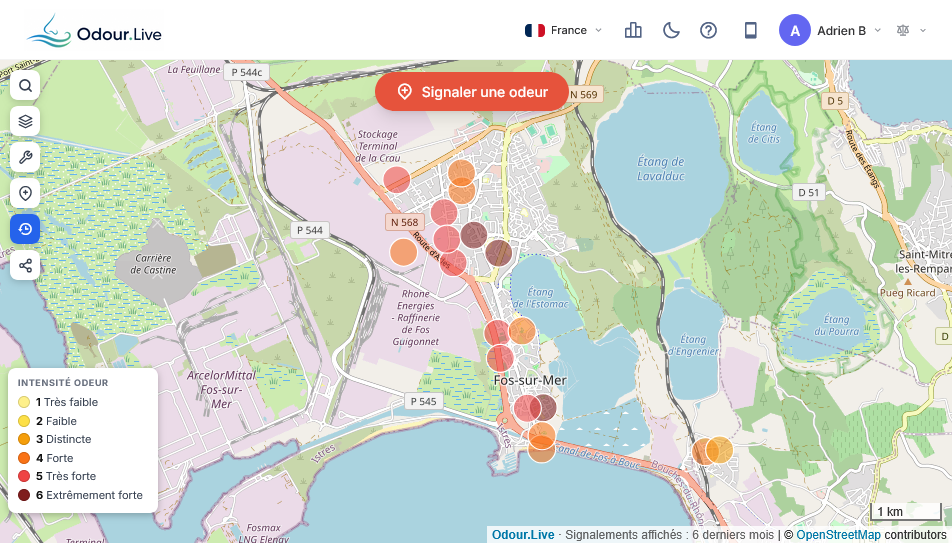
    C’est précisément pour répondre à cette difficulté que nous avons développé, en juin dernier, #Odour.Live, une #plateforme_citoyenne permettant à chacun de signaler simplement une odeur, de manière gratuite et anonyme s’il le souhaite, et de contribuer ainsi à la constitution d’un historique objectif des #épisodes_odorants se manifestant près de chez soi.

    En vous écoutant, on pense immédiatement à « l’#enfer_olfactif » qu’ont vécu, cet été, les riverains de l’usine d’équarrissage de Plouvara (22) qui ont été plus de 140 à se saisir de cet outil, en moins de quinze jours…

    À l’heure où l’on se parle [cet entretien a été réalisé le 11 septembre, NDLR], on en est à 301 signalements enregistrés sur Odour.Live. Une fois entrés dans la base de données, ces signalements sont horodatés et géoréférencés. Ce qui permet notamment de documenter nos cinq critères FIDOL.

    L’intérêt de cette démarche est de passer progressivement du témoignage individuel à une observation collective et structurée de l’environnement olfactif. Une observation objective, très utile dans les échanges avec l’exploitant, la collectivité ou encore les services de l’État.

    A contrario, votre plateforme pourrait être détournée par des collectifs qui auraient intérêt à faire capoter tels ou tels projets ?

    Le risque que vous pointez est réel, quoi que peu probable. Si cela devait arriver, je dis toujours aux comités de riverains ou aux associations qui me sollicitent que procéder à de faux signalements se retournerait fatalement contre eux. Sans oublier le coût réputationnel de ce genre de combats, comme celui mené par les habitants de Saint-Donan et de Plouvara.

    Des combats qui peuvent rapidement être médiatisés, avec toutes les conséquences que cela peut entraîner pour l’une ou l’autre des parties concernées.

    D’autres vous diront que « trop de concertation tue la transition énergétique ». Que répondre à ça ?

    Que cette transition est nécessaire, mais pas à n’importe quel prix. Et surtout pas au détriment des impacts locaux que peuvent provoquer certaines de ces installations.

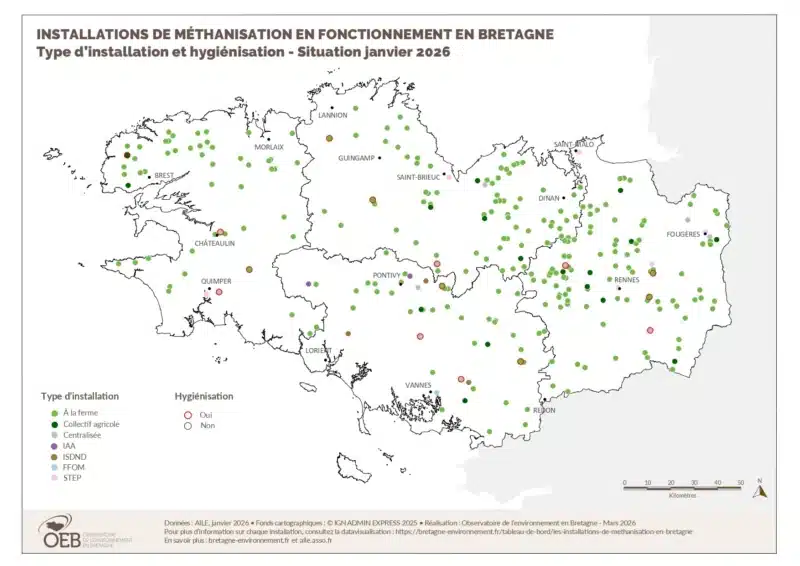
    En Bretagne, vient immédiatement en tête l’exemple des #méthaniseurs. Au nom de la diversification énergétique, l’État presse GRDF d’augmenter sa production de « gaz vert ». Résultat, ce fournisseur d’énergie fait le tour des chambres d’agriculture qui poussent, à leur tour, leurs adhérents à se mettre à la méthanisation. Pour quelles conséquences ?

    Pour commencer, disons qu’un projet de #méthanisation peut être correctement conçu et exploité, mais qu’il peut également générer des nuisances olfactives lorsque ce dernier est mal maîtrisé. Cela peut avoir lieu lors de certaines opérations, en cas de dysfonctionnement, ou simplement du fait de certaines activités associées comme la réception des intrants, le stockage des digestat, l’épandage, etc.

    Vous l’avez dit, la pression pour développer la production de biogaz est aujourd’hui très forte. Reléguant parfois au second plan la question des odeurs. La présentant comme une nuisance subjective qu’il faudrait simplement « accepter » au nom de la transition énergétique.

    Vous l’avez dit aussi, cette pression est particulièrement importante sur le territoire breton, avec ses nombreux élevages et ces projets de méthanisation

    Encore une fois, produire une énergie renouvelable ne dispense pas de garantir un environnement de vie sain aux riverains.
    C’est tout l’enjeu d’Odour.Live : rendre la parole aux citoyens, en leur donnant les moyens de documenter leur environnement olfactif. Cela, sans avoir à engager immédiatement plusieurs milliers d’euros dans des procédures ou des études spécialisées.

    Un moyen collectif et gratuit qui permet également de conserver une #trace de ces différents épisodes de nuisances olfactives sur les territoires…

    Exactement. Nous pensons également que cet outil peut encourager les riverains à mieux s’organiser collectivement : un comité de riverains peut ainsi consolider les observations de chacun, identifier des épisodes récurrents, documenter les situations problématiques et disposer d’éléments beaucoup plus robustes dans ses échanges avec l’exploitant, l’industriel, la collectivité ou les services de l’État.

    L’objectif final est simple : permettre aux citoyens de faire reconnaître leur droit à un environnement olfactif approprié, tout en donnant aux autorités des données utiles pour comprendre d’où viennent les nuisances et comment y remédier.

    ►https://splann.org/interview-adrien-bouzonville-odour-live
    #cartographie #cartographie_participative

    signalé ici aussi : ▻https://seenthis.net/messages/1192358

  • Longtermism Is How Tech Billionaires Justify Their Destructive Ambitions | Political Research Associates
    ▻https://politicalresearch.org/2026/10/22/longtermism-how-tech-billionaires-justify-their-destructive-ambit

    If Andreessen’s ideas sound hostile to democracy and designed to further enhance the power of tech billionaires, it’s because they are. The accelerationist mindset he was promoting asserts that technological progress must be the most important pursuit, regardless of the social dislocation and inequality that might be created in the process. It will all pay off in the long term, and that should justify suffering in the short term. Technocracy has long had support within the engineering‑minded circles of the tech industry; some, like Peter Thiel, have even openly opposed democracy. “I no longer think that freedom and democracy are compatible,” he wrote in 2009, going on to argue against women’s suffrage.[Footnote 5]

    For years, Thiel worked to popularize the ideas of Curtis Yarvin within his circles. Yarvin’s political program—if it can even be called that—is referred to as the Dark Enlightenment, and asserts that white people are genetically superior to other races and that the United States should be led by a monarchical regime headed up by a “national CEO” who would run the country like a startup.[Footnote 6] One of the dictator’s first moves would be to RAGE, an acronym for Retire All Government Employees. It’s an agenda that sounds not dissimilar to what Elon Musk attempted to do with the Department of Government Efficiency in the opening months of Trump’s second term.

    To truly understand the extent of the deranged authoritarianism that has taken hold in parts of the tech industry’s elite, one can look at another Yarvin disciple, Balaji Srinivasan. He made his initial fortune from a genetics testing company, before joining Andreessen’s venture capital firm as a partner in 2013. Around the time Andreessen released his manifesto, Srinivasan was openly calling for a form of “tech Zionism” to be implemented in San Francisco, where the city would be governed by “Grays”—citizens loyal to the tech industry.[Footnote 7]

    #Capitalisme_numérique #Idéologie #Silicon_Valley #Libertarianism