• Film Review: James Gunn’s Superman cements Israel’s villain status in the American imagination
    https://mondoweiss.net/2025/07/film-review-james-gunns-superman-cements-israels-villain-status-in-the-a

    Still from James Gunn’s “Superman” showing Metropolis falafel vendor, Malik Ali, helping Superman during his fight with the villain, the “Hammer of Boravia.”

    Superman vs. Israel - made in Hollywood? J’hallucine ?

    18.7.2025 by Mitchell Plitnick - James Gunn’s new Superman movie, which draws an analogy between Israel and the villainous country of Boravia, demonstrates how Israel’s idealized image in American culture has been shattered by the widespread acknowledgment of Palestinian oppression.

    Editor’s Note: This article contains very mild spoilers.

    “Truth, justice, and the American way.”

    Those words are the long-time tagline of the DC comics character, Superman. They are not as prominent today as they have been in the past, but for those us, like me, who were great fans of DC comics in the 1970s and 1980s, they still defined Superman.

    They were also one of several reasons why, although my youthful passion for comic books leaned much more toward DC than its rival Marvel in those days, I didn’t care much for Superman. I liked the idealism he was supposed to represent, but his simplistic presentation and, more than anything, his deference to authority was a message my young and rebellious self was profoundly uncomfortable with.

    So how is it that in 2025, James Gunn’s new movie, Superman, has delighted me and many others by striking the biggest cultural blow to date against the United States’ mindless support of Israel, even as it commits war crimes and guns down innocent Palestinians on a daily basis?

    The dynamics of this movie are fascinating to watch, but the responses are much more important.
    ‘Boravia’ is Israel, and is the bad guy

    Since Superman premiered, there has been a lot of chatter about it. The film broadly tells the story of Superman intervening against Boravia—which, both in the movie and in the comic book lore it is drawn from is presented as an Eastern European country—conquering its neighbor Jarhanpur—clearly depicted as an economically and physically ravaged country populated by people of color, many of whom are visibly Muslim. The scenario is inescapably evocative of Palestine.

    “Superman has gone woke” is one extremely popular attack on the film. That one is rooted in Superman’s clear message supporting the rights of immigrants, but it also goes hand-in-hand with the complaint that the character has been warped by the “liberal media” to condemn Israel.

    Even leaving aside the notion that Superman, as a character, ever represented anything other than kindness and caring for all, even if in a highly pro-American way, the arguments are silly. Anyone who is familiar with the character would recognize Superman’s simple argument when he is criticized for stopping the surrogate for Israel in this film, Boravia, from slaughtering innocent and helpless civilians: “People were going to die!”

    Superman’s strength as a character is his idealism, which often spills over into extreme naivete, and his determination to treat all life as precious and equal. That’s what the crowd whining that “Superman has gone woke” just can’t grasp.

    Since Israel, Palestine, or any other country—save the United States, of course—is not mentioned in Superman, the metaphor of Boravia can be interpreted, or denied, at the viewer’s whim. But to do so, one has to ignore the unambiguous evidence in the film.

    James Gunn, who wrote and directed Superman, insists that Boravia and its neighboring country Jarhanpur, are not direct references to Israel and Palestine, but his explanation is very telling.

    “When I wrote this the Middle Eastern conflict wasn’t happening. So I tried to do little things to move it away from that, but it doesn’t have anything to do with the Middle East… [the movie depicts an] invasion by a much more powerful country run by a despot into a country that’s problematic in terms of its political history, but has totally no defense against the other country,” which he said “really is fictional.”

    Just from the statement that “the Middle Eastern conflict wasn’t happening,” we can tell that Gunn is not deeply learned in Israel and Palestine, although what he probably meant was that October 7 had not yet happened (he started writing the film in late 2022) and neither had the overt genocide in Gaza. As such, it may be fair to take him at his word that he was referencing a broader idea.

    But it’s an inescapable reality that the powerful country vs a helpless people describes Israel and the Palestinians, especially in Gaza.

    Sure, in addition to Israel and Palestine there are a few parallels with Russia and Ukraine. But that allegory doesn’t really fit since Boravia was said to be a close U.S. ally. Plus Ukraine, while certainly not the military power Russia is, is clearly far from helpless in the face of Russian aggression.

    The deep relationship between the Boravian dictator (who speaks with a thick Russian or Eastern European accent and looks like a caricature mix of Benjamin Netanyahu and David Ben-Gurion) and the American corporate sector resembles Netanyahu, even while his alienation from the American political sector might evoke Putin a bit more.

    But the Israel-Palestine metaphor is clearly there. It may have been one among several examples of the political dynamic in Gunn’s head, but what emerges on film is unmistakably influenced by Israel, even if not solely so.

    Gunn likely did not want to be too on the nose with his allegory, although he pretty clearly failed at that effort. More importantly, this movie is the foundation for what he and his backers at Warner Bros./Discovery hope will be a multi-billion-dollar franchise to rival that of the Marvel Cinematic Universe. He wants the political debate to enhance the film and its legacy, not to overwhelm it, so some degree of space to be evasive about politics is prudent.

    More important than the writer’s intentions, though, is that the political conflict depicted was so quickly seen for what it is.
    Profound culture shift

    In the past, even the very recent past, it would have been unfathomable for an American summer blockbuster film to show Israel, even a metaphorical Israel, as an invading, corrupt country whose neighbors were in such terror they had to pray for a superhero to save them, or all hope would be lost.

    A writer would have come to the studio with a script like that, even one where the allusion to Israel was obscured to a much greater degree, and it would have been tossed out. There might be fear of backlash, or it simply might be that this concept would be seen as too challenging for Americans who still hold on to the mythical image of Israel as either the poor victim of the ravenous Arab and Muslim hordes or the plucky little state that rose to become a military power and key American ally. But that didn’t happen here.

    A movie painting Israel in a villainous light reflects a generational shift in how Israel is viewed. Warner Bros. clearly didn’t see it as a risk.

    The fact that Gunn wrote this movie is notable enough. But Warner/Discovery spent $225 million to make it and anticipates another $125 million in advertising. That’s a significant investment. Moreover, they have two more high-budget films in the works, eight more in development, as well as two more television series in production and five more in pre-production.

    If Superman failed at the box office or caused a backlash that might lead to boycotts of DC media, it would be a disaster. But there hasn’t been a hint of trepidation or pressure on Gunn to soften this message. Warner Bros./Discovery CEO David Zaslav is known for his frugality, his willingness to scrap projects just for tax breaks, and for a relatively conservative approach. He obviously didn’t see this as much of a risk.

    A movie painting Israel in a villainous light reflects the change in generations as well. After all, the older audience, the folks still denying the real nature of Israel, is not the target of this film. Nor am I, as a man in his late 50s. It’s younger people, and they see Israel differently.
    No going back to an idealized Israel

    More than just reflecting that shift, a movie like Superman entrenches it culturally in a way that all the political activism, analysis, protests, and even exposure of the truth can’t. It normalizes the view of Israel as an aggressor state. That’s why it provokes denial from the likes of far-right Israel backer pundit Ben Shapiro and hysteria from other pro-Israel zealots who don’t deny the reality of the movie.

    Consider the words of the far-right, racist Israeli rapper known as Hatzel (The Shadow):

    “Instead of presenting a character who defends the weak and fights for justice, they turned it into a disgusting political caricature, where Israel (under a different name) is portrayed as a fascist state, a warmonger, and a close ally of the U.S., which supplies advanced weaponry to fight ‘poor and miserable farmers (the good Palestinians) with pitchforks and stones.’ And Superman? He comes to save them from bloodthirsty Israel. This is literally a film of incitement against us… And I will tell you here, clearly: The liberal Jews in America are the main contributors to anti-Semitism in the U.S…There is no greater enemy to an Israeli than the progressive American Jew.”

    The bile and hate of this racist activist are typical of the responses from the pro-Israel and Israeli far-right. But as much as they might rant, they can’t avoid the fact that the world now sees what Israel does every day, and that a more realistic understanding of Israel is becoming not just a debating point or a political issue but a part of the cultural zeitgeist.

    It’s not just about Israel. Superman goes to great lengths to present the hero as an independent actor, following only his own ethical code. The other superheroes in the film are sponsored by a huge corporation. They eventually come around and help Superman, but it takes a while.

    Superman doesn’t only challenge the long-held, false image of innocent Israel, it also challenges Americans’ fecklessness, the ease with which its government is manipulated, and its blind, greedy, self-serving arrogance.

    This might have been what pleased me most. The second blockbuster movie about Superman, back in 1980, ended with Superman flying through space carrying an American flag. But the U.S. comes off very badly in this movie.

    Superman is betrayed by the U.S. and handed over to his nemesis, Lex Luthor, who imprisons him. He is told he has no rights since he is an alien (i.e., immigrant). The U.S. also continues to back Boravia throughout the movie, and Superman is criticized for interfering in the murderous Boravian operation without American authorization. As more of the nefarious plot is uncovered, the U.S. government stands by doing nothing and never taking responsibility for its actions. Only the superheroes are working to save the day.

    Superman doesn’t only challenge the long-held, false image of innocent Israel, it also challenges Americans’ fecklessness, the ease with which its government is manipulated, and its blind, greedy, self-serving arrogance. Of course, it treads lightly on this point; again, there is only so much Gunn wanted to dive into political issues. It is, after all, a light-hearted fantasy movie that is expected to launch a series that will bring in a ton of money.

    But Superman proves there is no going back to the idealization of Israel that was kick-started back in 1960 when Paul Newman romanticized Israel’s creation in the film Exodus, and boomed after the 1967 war. The delusion about Israel’s colonialist birth and apartheid life has been shattered by the exposure of its genocidal present. And a movie like Superman ingrains that shattered image into our culture. This, like Superman himself, might just provide a bit of hope in these dark times.

    SUPERMAN
    Directed by James Gunn
    129 minutes, DC Studios, 2025

    Mitchell Plitnick

    Mitchell Plitnick is the president of ReThinking Foreign Policy. He is the co-author of Except for Palestine: The Limits of Progressive Politics and maintains the Cutting Through newsletter on Substack at mitchellplitnick.substack.com/.

    #cinéma #Hlllywoid #USA #Israel #Superman #Palestine

  • #Ku_Klux_Klan - Une #histoire américaine. Naissance d’un empire invisible (1/2)

    L’histoire méconnue du plus ancien groupe terroriste et raciste des États-Unis.

    Le Ku Klux Klan, société secrète née en 1865, a traversé les décennies et a toujours su renaître de ses cendres. Son histoire a défrayé la chronique. 150 ans de haine, de racisme et d’horreur. 150 ans d’exclusion, de violence et de fureur.

    Pour retracer en détail les quatre vies successives du Ku Klux Klan, David Korn-Brzoza a rassemblé un impressionnant fonds d’archives, alimenté en partie par celles du mouvement lui-même, et rencontré une dizaine d’interlocuteurs : un membre repenti de l’organisation, des vétérans de la lutte pour les droits civiques, le juge pugnace qui, quatorze ans après l’attentat de Birmingham, a poursuivi et condamné ses auteurs, ainsi que différents chercheurs et analystes. En montrant ainsi combien le mouvement et ses crimes incarnent une histoire et des valeurs collectives, il jette une lumière crue sur cette part d’ombre que l’Amérique blanche peine encore à reconnaître.

    https://boutique.arte.tv/detail/ku-klux-klan-une-histoire-americaine

    #film #documentaire #film_documentaire
    #USA #Etats-Unis #KKK #plantation #esclavage #afro-américains #citoyenneté #Pulaski #société_secrète #violence #White_League #meurtres #lynchages #coups_de_fouet #terrorisme #intimidation #soumission #Nathan_Bedford_Forrest #politicide #assassinats #droits_civiques #Ku-Klux_Bill #loi_martiale #ségrégation #domination_raciale #milices_armées #ordre_social #The_birth_of_a_nation (#Griffith) #William_Joseph_Simmons #Woodrow_Wilson #business #Hiram_Wesley_Evans #Harry_Truman #Truman #Immigration_bill (1924) #The_Fiery_Cross #The_Search_Light #mouvement_social #David_Stephenson #Madge_Oberholtzer #Edward_Young_Clark #Bund #racisme #Stone_Mountain #Samuel_Green #suprématie_blanche #cérémonie_de_naturalisation #superman #Stetson_Kennedy #organisation_subversive #Afro-descendants

  • [c&f] Les DREAMERs aux États-Unis, Superman et la culture participative

    [lettre d’information de C&F éditions du 6 septembre 2017]

    Bonjour,

    Il est rare que je vous envoie deux messages la même semaine. Mais l’actualité vient de nouveau de percuter nos projets éditoriaux.

    Donald Trump vient de rejeter le droit des enfants de migrants nés ou arrivés très jeunes aux États-Unis à y vivre et y rester, alors que ce pays est pourtant le seul qu’ils ou elles aient connu. On parle d’eux comme étant les DREAMERs, jeu de mot entre le projet de loi les protégeant débattu dans les années 2000 (le DREAM Act : Loi pour le développement, le soutien et l’éducation des mineurs étrangers, initialement proposée en 2001) et le fait de les considérer comme "les enfants du rêve" : devenir américains.

    Or ces DREAMERs, par le style de leur mobilisation et par leurs usages de l’internet et de la culture populaire sont siouvent débattus et présentés dans le prochain livre de C&F éditions à paraître fin septembre.

    Ce livre est une conversation entre trois grand chercheurs spécialistes des médias et des usages de l’internet : Henry Jenkins, Mizuko Ito et danah boyd. Son titre : « Culture participative : Une conversation sur la jeunesse, l’éducation et l’action dans un monde connecté »

    Plus de nouvelles à venir bientôt, mais pour l’instant un extrait du livre qui parle de ces DREAMERs, de l’immigration et de la culture populaire des États-Unis.

    Attention : ce teaser ne doit pas dédouaner notre propre pays de sa politique dramatique envers les migrants en général et les mineurs en particulier. Il nous montre au contraire la fluidité mondiale des idées nocives... en espérant que la mobilisation (et les succès jusqu’à la remise en cause intervenue hier) des jeunes migrants des États-Unis donnent des idées et des perspectives aux jeunes migrants d’Europe.

    Bonne lecture,

    Hervé Le Crosnier

    –--------------------------------------
    Extraits de deux interventions d’Henry Jenkins dans le livre à paraître
    « Culture participative : Une conversation sur la jeunesse, l’éducation et l’action dans un monde connecté » C&F éditions
    –--------------------------------------

    Nous observons certaines similarités au niveau des vecteurs de motivation et de mobilisation. Les jeunes les plus politisés ont souvent un côté artistique prononcé. Ils apprennent à produire et à partager des médias. Et même les groupes qui semblent incarner des politiques identitaires relativement traditionnelles – les activistes pro-DREAM, les musulmans américains – utilisent des points de référence issus de la culture populaire pour décrire leur identité et leurs objectifs politiques. L’activisme des fans ne constitue pas forcément un nouveau modèle pour les changements sociétaux, mais l’appropriation et le remix du contenu médiatique sont devenus des tactiques largement répandues chez les différents mouvements politiques de jeunes.

    En observant ces espaces, nous voyons surgir un nouveau type de rhétorique, destiné à stimuler l’imaginaire civique des participants, qui sied parfaitement à cette génération d’activistes. La jeunesse s’est souvent sentie exclue par le langage des « conseillers politiques » ou des « décideurs technocratiques » employé dans les organisations plus traditionnelles. Ces experts s’imaginent que leurs partisans sont déjà très investis dans le processus politique et qu’ils connaissent les rouages du système. Ils fondent la politique sur des connaissances spécialisées, ce qui la coupe des réalités de la vie quotidienne.

    Les nouveaux styles de politique participative empruntent à ce que les jeunes connaissent déjà en tant que fans, consommateurs et membres des réseaux sociaux. Ils s’appuient sur ce capital culturel populaire comme point de départ de l’action politique. Nous espérons que ce nouveau modèle pourra aider les exclus de la politique à trouver leur chemin vers une participation pleine et entière. [...]

    Je suis très intéressé par le rôle que joue le mythe du super-héros chez les DREAMers.

    Durant l’été 2011, Superman a renoncé à sa citoyenneté américaine en déclarant qu’il ne se battrait plus seulement pour le « mode de vie américain », mais aussi pour la justice mondiale. Bien que cet événement se déroule dans l’univers alternatif d’une bande dessinée publiée par DC et qu’il n’affecte pas la continuité de la saga Superman, les animateurs de radio et les leaders politiques conservateurs se sont indignés et ont hurlé à l’antipatriotisme.

    Les activistes pro-DREAM ont alors rétorqué : « Quand Superman est-il jamais devenu citoyen américain ? ». S’il y a eu un jour un « étranger en situation irrégulière », c’est bien Kal-El de Krypton, que ses parents envoient sur un autre monde en quête d’une vie meilleure, qui traverse la frontière au milieu de la nuit, qui atterrit près de Smallville et qui finit adopté par une famille d’Américains d’origine européenne. Il masque sa véritable identité et passe le restant de ses jours à se cacher. Il est néanmoins suffisamment généreux pour se mettre au service du peuple d’Amérique, alors qu’il n’est jamais vraiment en mesure de s’affirmer Américain.

    Ce recadrage constitue donc un moyen parfaitement efficace pour déconstruire et réécrire le mythe de Superman. Il vient bouleverser la perception de la vie de l’immigré et permet aux gens d’associer le combat pour les droits des immigrants à un récit dans lequel beaucoup d’entre nous sont déjà investis. Il relie également notre lutte actuelle en faveur des jeunes sans-papiers à une histoire plus globale de l’immigration en Amérique. L’histoire de Superman fut créée par deux étudiants d’Europe de l’Est issus de la première génération et vivant à Cleveland, dans l’Ohio. Superman était dès le départ un récit classique d’immigration, et les DREAMers rappellent cette analogie sur soixante-dix années d’histoire culturelle.

    #C&Féditions #Henry_Jenkins #Culture_participative #Superman #DREAMERs

  • https://youtu.be/6m87WvCALMQ

    #fétichisme de l’#inflation.
    https://en.wikipedia.org/wiki/Body_inflation

    Body inflation is the practice of inflating or pretending to inflate a part of one’s body, often for sexual gratification. It is commonly done by inserting balloons underneath clothes or a skin-tight suit and then inflating them. Some people have specially made inflatable suits, commonly made from latex rubber, to make themselves bigger all over. One of the best-known examples is Mr Blowup,[1] who appears in the Deviant Desires book.[2] He wears air-inflated double-skinned latex suits, and has made a number of TV appearances in the UK, including Eurotrash.[3] Sometimes the body is actually inflated also, such as by enema or drinking large amounts of liquid.

  • Super-Slips vs Bat-Masques
    Vérité et Justice vs Terreur et Sécurité

    Par Bruno Thomé

    http://jefklak.org/?p=2857

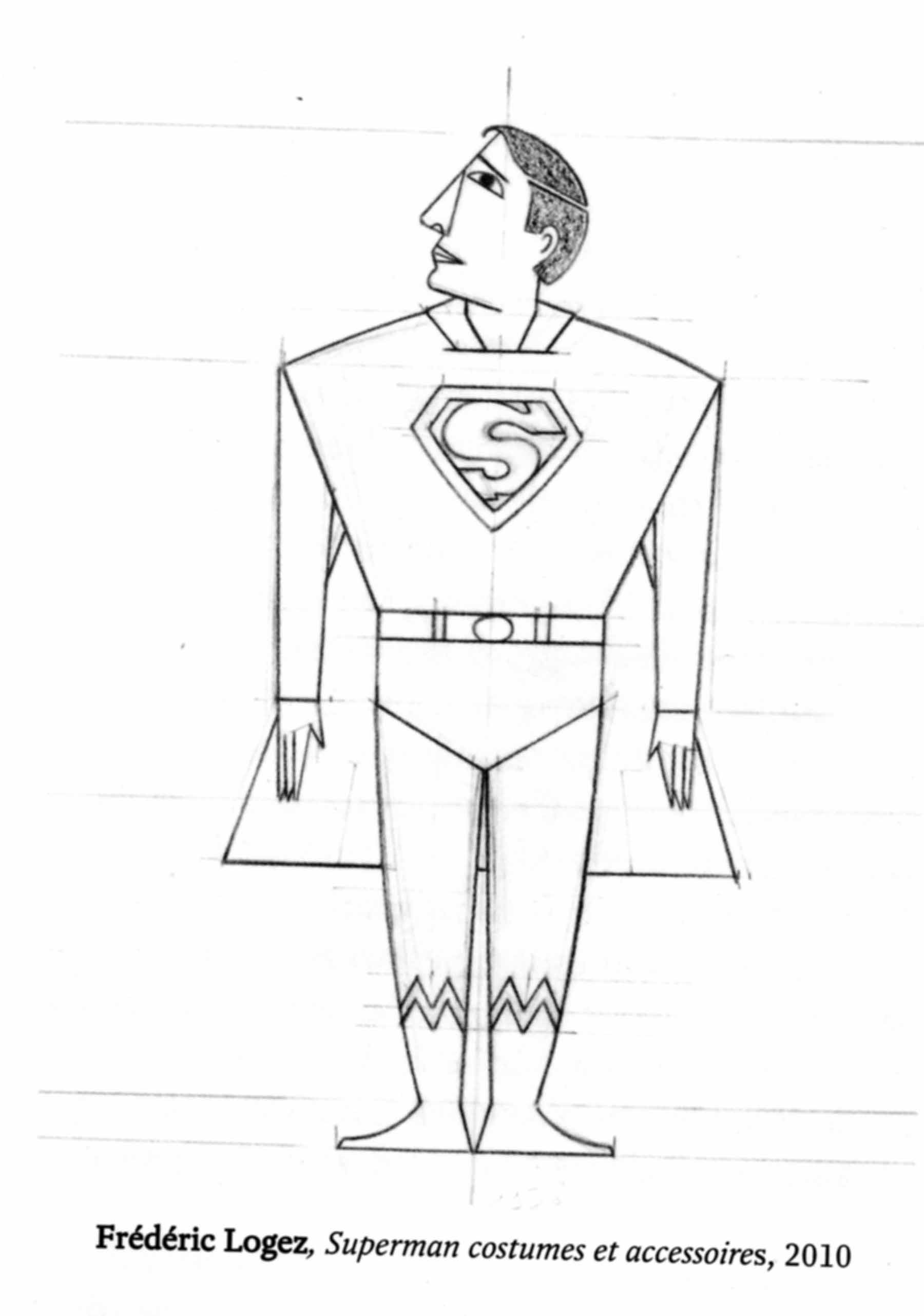
    Considéré comme le premier véritable super-héros, Superman apparaît en avril 1938, avec sa cape, ses bottes et son slip rouges, son « S » frappé sur un écu de poitrine jaune, et son justaucorps bleu, en couverture du mensuel Action Comics nº1 – édité par le futur DC comics. Face à un succès immédiat, le même éditeur publie un an après un autre personnage en cape et costume, mais sombre et masqué : The Bat-Man, qui fait la une du no 27 de Detective Comics . Si de nombreux autres super-héros apparaissent dans la foulée, Superman et Batman s’imposent comme les plus populaires et les plus emblématiques. Contrairement à la plupart de leurs congénères costumés, la publication mensuelle de leurs aventures ne connaîtra quasiment pas de pause. Ils ont créé et maintenu une véritable industrie, tout en alimentant régulièrement de nombreux autres médias de masse : feuilletons radiophoniques, cartoons, romans, serials, séries TV, jeux vidéos ou superproductions hollywoodiennes. Depuis plus de 75 ans, et alors que Batman V Superman : L’aube de la justice est sorti au cinéma ce mercredi 23 mars, c’est aussi deux visions de l’idéal américain de justice, des mesures antiterroristes ou des dispositifs de maintien de l’ordre qui se confrontent dans les sagas de ces super-héros.

  • #INDONÉSIE • Des punks au secours de la baie de Benoa | Courrier international
    http://www.courrierinternational.com/article/2014/12/31/des-punks-au-secours-de-la-baie-de-benoa

    De l’esplanade, ils marchent vers la chambre des représentants du peuple en chantant « Vive Bali, à bas les #poldérisations ! » Parmi eux se trouve I Gede Ari Astina, alias Jerinx, le batteur du groupe #punk balinais Superman is Dead. Arrivé devant le palais du gouverneur, il invite les manifestants à poursuivre le combat contre l’aménagement de la baie de Benoa, qui va détruire l’#environnement et la culture balinaise.

    « Sous couvert de sauver le #littoral de l’érosion, ce remblaiement n’est rien d’autre qu’un vaste projet de #spéculation_immobilière. Ce sont des magouilles politiques pour obtenir ces terres à bas prix, alors qu’à Bali la #terre coûte cher. Tellement cher que les Balinais eux-mêmes ne peuvent plus l’acheter », clame Jerinx.

    #tourisme

    • #SUPERMAN_IS_DEAD - Sunset Di Tanah Anarki
      https://www.youtube.com/watch?v=U8Oc2zZ82eM

      Andaiku malaikat, kupotong sayapku dan rasakan perih di dunia bersamamu
      Perang kan berakhir, cinta kan abadi, di tanah anarki romansa terjadi

      Desing peluru tak bertuan, hari-hari yang tak benderang
      Setiap detik nyawa ini kupertahankan untukmu
      Alasanku ada di sini, dan parasmu yang kurindukan
      Di neraka kan kumenangkan, hariku bersamamu

      Dalam gelisahku menunggu, berita tentang gerilyamu
      Semerbak rindu kuasai udara panas ini
      Sepucuk surat telah tiba, dan senja pun ikut berdebar
      Kalimat indah dan kisahmu tentang perang dan cinta

      Kubasuh luka dengan air mata
      Oh hatimu beku, serta jiwamu yang lelah
      Tak henti lawan dunia dengan mimpi besar untuk cinta
      Dan jalanmu tuk pulang, di ujung waktu kan ada cahaya
      Itulah aku, raihlah mimpimu

      Pas sur de comprendre toutes les paroles, mais l’idée générale y est...

      Merci !

  • Comics and US politics: The case of Captain #America and #Superman
    http://english.al-akhbar.com/content/comics-and-us-politics-case-captain-america-and-superman

    Popular comic book superhero, Superman. (Photo: AFP) Popular comic book superhero, Superman. (Photo: AFP)

    The global media industry likes to drag politics into everything, and comics are no exception, given their multigenerational audience. Below, we shed light on two particular comic book characters, on account of their huge fame and their political and ideological discourses.

    Abdul Rahman Jasem

    read more

    #Culture_&_Society #Adolf_Hitler #American_comics #Articles #Captain_America #Nazis #Richard_Nixon

  • #Superman threatens to renounce US citizenship | Books | guardian.co.uk
    http://www.guardian.co.uk/books/2011/apr/29/superman-threatens-renounce-us-citizenship

    After the Islamic regime brands his non-violent protest as an act of war taken on behalf of the US president, the DC comic hero says he will renounce his citizenship before the United Nations.

    “I’m tired of having my actions construed as instruments of US policy,” he says.

    Although Superman never actually renounces his citizenship in the story, conservative commentators reacted with disgust.

    In a blogpost at The Weekly Standard, senior writer Jonathan Last questioned Superman’s beliefs, now that he seems to have rejected the United States. “Does he believe in British interventionism or Swiss neutrality?” Last wrote. “You see where I’m going with this: If Superman doesn’t believe in America, then he doesn’t believe in anything.”

    #comic #bande_dessinée