Seenthis
•
 
Identifiants personnels
  • [mot de passe oublié ?]

  • http://www.nejm.org
  • /na101
  • /home
  • /literatum
  • /publisher
  • /mms
  • /journals

/content

  • ►/nejm
    • ►/2017
      • ►/nejm_2017.376.issue-22
        • ►/nejmc1700150
          • ►/20170531
            • ►/images
              • ►/medium
                • ►/nejmc1700150_f1.gif
    • ►/0
      • ►/nejm.ahead-of-print
        • ►/nejmoa1615664
          • ►/20170317
            • ►/images
              • ►/large
                • ►/nejmoa1615664_t2.jpeg
    • ►/2016
      • ►/nejm_2016.375.issue-25
        • ►/nejmoa1606701
          • ►/20161216
            • ►/images
              • ►/large
                • ►/nejmoa1606701_f3.jpeg
                • ►/nejmoa1606701_f4.jpeg
      • ►/nejm_2016.374.issue-25
        • ►/nejmc1514294
          • ►/20160617
            • ►/images
              • ►/medium
                • ►/nejmc1514294_f1.gif
    • ►/2005
      • ►/nejm_2005.352.issue-11
        • ►/nejmsr043743
          • ►/production
            • ►/images
              • ►/medium
                • ►/nejmsr043743_f1.gif
    • ►/2008
      • ►/nejm_2008.358.issue-15
        • ►/nejmoa0706589
          • ►/production
            • ►/images
              • ►/large
                • ►/nejmoa0706589_f1.jpeg
  • @fil
    Fil @fil 1/06/2017
    4
    @cocoadaemon
    @lyco
    @unagi
    @sinehebdo
    4

    A 1980 Letter on the Risk of Opioid Addiction — NEJM
    ▻http://www.nejm.org/doi/full/10.1056/NEJMc1700150

    http://www.nejm.org/na101/home/literatum/publisher/mms/journals/content/nejm/2017/nejm_2017.376.issue-22/nejmc1700150/20170531/images/medium/nejmc1700150_f1.gif

    We identified 608 citations of the index publication and noted a sizable increase after the introduction of OxyContin (a long-acting formulation of oxycodone) in 1995 (Figure 1FIGURE 1
    Number and Type of Citations of the 1980 Letter, According to Year.). Of the articles that included a reference to the 1980 letter, the authors of 439 (72.2%) cited it as evidence that addiction was rare in patients treated with opioids. Of the 608 articles, the authors of 491 articles (80.8%) did not note that the patients who were described in the letter were hospitalized at the time they received the prescription, whereas some authors grossly misrepresented the conclusions of the letter

    On a donc les noms de 608 auteurs (et plus) qui ont participé par la #désinformation médicale à la prolifération des #opiacés qui aboutit à la #crise_sanitaire actuelle.

    #recherche #bibliométrie #médecine #drogues #États-Unis #pharma

    • #OxyContin
    Fil @fil
    • @cocoadaemon
      alban @cocoadaemon 1/06/2017

      In conclusion, we found that a five-sentence letter published in the Journal in 1980 was heavily and uncritically cited as evidence that addiction was rare with long-term opioid therapy. We believe that this citation pattern contributed to the North American opioid crisis by helping to shape a narrative that allayed prescribers’ concerns about the risk of addiction associated with long-term opioid therapy. In 2007, the manufacturer of OxyContin and three senior executives pleaded guilty to federal criminal charges that they misled regulators, doctors, and patients about the risk of addiction associated with the drug.5 Our findings highlight the potential consequences of inaccurate citation and underscore the need for diligence when citing previously published studies.

      alban @cocoadaemon
    • @sinehebdo
      Dror@sinehebdo @sinehebdo 1/06/2017

      voir aussi #Fentanyl la drogue qui a tué #Prince et plein d’anonymes...

      Dror@sinehebdo @sinehebdo
    Écrire un commentaire
  • @kassem
    Kassem @kassem CC BY-NC-SA 21/03/2017

    Evolocumab and Clinical Outcomes in Patients with Cardiovascular Disease
    ▻http://www.nejm.org/doi/full/10.1056/NEJMoa1615664#t=article

    Pratiquement toujours en prévention secondaire et presque toujours associé à une #statine,

    ▻http://www.nejm.org/na101/home/literatum/publisher/mms/journals/content/nejm/0/nejm.ahead-of-print/nejmoa1615664/20170317/images/large/nejmoa1615664_t2.jpeg

    Il ressort que la réduction du risque cardio-vasculaire est loin d’être à la hauteur de la réduction du taux de LDL et ... du prix de ce médicament (14.000 USD/an)

    Kassem @kassem CC BY-NC-SA
    • @kassem
      Kassem @kassem CC BY-NC-SA 21/03/2017

      An End to Heart Disease? Not Quite
      ▻https://www.nytimes.com/2017/03/20/health/ldl-cholesterol-heart-disease-drugs-pcsk9-inhibitors.html

      On Friday, investigators reported the results of a highly anticipated trial of a PCSK9 inhibitor called evolocumab (brand name Repatha). This medication reduced LDL levels to an almost unfathomable 30 mg/dl from about 90 mg/dl on average, which is typically considered low.

      Over about two years of study, the researchers found that the new drug, when added to statin therapy, further reduced the risk of heart attack or stroke by about 15 percent. For about every 70 people treated with the drug, one person benefited in this way. This is not far off the size of the benefit that statins provide.

      So the drug works, which is good news for patients. And no safety concerns emerged. But the applause from heart experts has been muted, because expectations were so much higher. Their hope had been that drastically low LDL cholesterol levels would make it difficult — or even impossible — to have a heart attack.

      Kassem @kassem CC BY-NC-SA
    Écrire un commentaire
  • @fil
    Fil @fil 30/08/2016
    3
    @reka
    @severo
    @simplicissimus
    3
    @severo

    Mapping internal connectivity through human migration in malaria endemic countries : Scientific Data
    ►http://www.nature.com/articles/sdata201666

    Estimating internal migration flows between administrative units
    Following Garcia et al. a gravity model-based approach was used to estimate the total number of people migrating from one administrative unit to any other administrative unit, between 2005 and 2010, within each malaria endemic country located in Africa, Asia, Latin America and the Caribbean

    http://www.nature.com/article-assets/npg/sdata/2016/sdata201666/images_hires/w926/sdata201666-f6.jpg http://www.nature.com/article-assets/npg/sdata/2016/sdata201666/images_hires/w926/sdata201666-f4.jpg http://www.nature.com/article-assets/npg/sdata/2016/sdata201666/images_hires/w926/sdata201666-f5.jpg

    #migrations_internes #santé #paludisme #afrique #amérique_du_sud #inde etc. #cartographie #mobilité #complexité_visuelle #recherche #visualisation
    @severo
    pour la population voir aussi du même auteur Alessandro Sorichetta ▻http://www.nature.com/articles/sdata201545

    Datasets : ▻http://www.worldpop.org.uk/data/data_sources

    Fil @fil
    • @severo
      severo @severo PUBLIC DOMAIN 30/08/2016
      @louca

      @louca toi qui cherchait des manières de représenter les flux de migrations, ça peut t’intéresser. Cela dit, sur la carte d’Amérique du Sud, c’est peu lisible je trouve. En gros toutes les capitales départementales/provinciales sont reliées par des traits rouges. Ça voudrait dire qu’il y a beaucoup de trafic entre toutes les villes, j’en doute cela dit, parce que ce sont des villes de tailles très différentes.

      severo @severo PUBLIC DOMAIN
    • @fil
      Fil @fil 30/08/2016

      oui moi aussi — la représentation me paraît améliorable, mais le modèle sous-jacent est intéressant, en tout cas c’est la première fois que je le vois

      Fil @fil
    • @simplicissimus
      Simplicissimus @simplicissimus 30/08/2016

      Effectivement, le graphe relie tous les centroïdes des unités administratives immédiatement inférieures aux pays (et non pas leurs capitales).

      Mais bien que les flux soient bien identifiés entre origine et destination, le graphe qui les représente n’est pas orienté. C’est un peu déroutant…

      Simplicissimus @simplicissimus
    • @liotier
      liotier @liotier CC BY-SA 31/08/2016

      La quasi étanchéité des frontières nationales me paraît suspecte... L’absence de flux entre le sud du Mali, le sud-ouest du Burkina et le nord de la Côte d’Ivoire est juste délirante.

      Bon, je vois que la méthode s’intitule « Estimating internal migration flows between administrative unit » et a lieu « within each malaria endemic country » ... C’est une approche qui me paraît totalement invalide - je me demande même commente elle a pu être retenue.

      liotier @liotier CC BY-SA
    • @fil
      Fil @fil 31/08/2016

      je crois que c’est une pièce du puzzle

      Fil @fil
    • @fil
      Fil @fil 13/01/2017

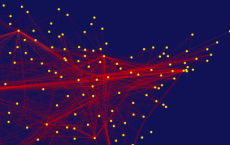
      une piste pour améliorer ce type de graphiques : l’algorithme #FDEB
      ▻https://github.com/upphiminn/d3.ForceBundle
      ►http://bl.ocks.org/Fil/e7c39340eba09b7315759e960ce3a3f9

      Example of d3-ForceEdgeBundling on US airline routes graph. - Example of d3-ForceEdgeBundling on US airline routes graph. - .block

      Fil @fil
    • @fil
      Fil @fil 13/01/2017

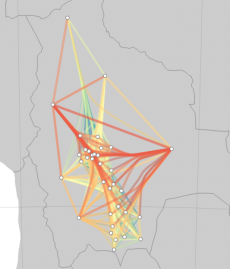
      par exemple, pour la Bolivie :
      ►http://bl.ocks.org/Fil/338173f684c195696b440993713d287a

      bolivia internal migrations - bolivia internal migrations. GitHub Gist: instantly share code, notes, and snippets.

      https://gist.githubusercontent.com/Fil/338173f684c195696b440993713d287a/raw/68a4125f0ff8e24d8cbd5facd044db558c26ec0d/thumbnail.png

      Fil @fil
    • @severo
      severo @severo PUBLIC DOMAIN 13/01/2017
      @fil @louca

      Excellent !

      à comparer avec l’exemple suivant (sans le « bundling »)

      ▻http://bl.ocks.org/Fil/2255f5e79b2fc88efacc6df0ea108142

      bolivia internal migrations - bolivia internal migrations. GitHub Gist: instantly share code, notes, and snippets.

      Je me demandais comment étaient estimées les valeurs des flux entre les villes. C’est ... compliqué :

      ▻http://www.nature.com/articles/sdata201666#methods

      @fil : tu as reproduit les calculs, en te basant sur les données suivantes ?

      ▻http://www.nature.com/articles/sdata201666#data-records

      Pour le « bundling », c’est beaucoup plus clair, mais ça fait apparaître des lignes courbes, qui ressemblent à des routes, ce qui peut induire en erreur.

      Autre truc qui m’a paru bizarre : on dirait que les points ne sont pas les villes principales, mais les centroïdes des départements (où il n’y a personne en général).

      En fait je dirais même qu’il y a trop de points ou pas assez (35 points) : il existe 9 départements et 112 provinces, et aucune autre division administrative entre les deux.

      Le fichier de données ne dit pas grand chose :

      ▻http://bl.ocks.org/Fil/raw/338173f684c195696b440993713d287a/ce64e58f8abc767da7d0201c7c98663add099399/BOL_5yrs_InternalMigFlows_2010.csv

      ISO,NODEJ,NODEI,LONFR,LATFR,LONTO,LATTO,PrdMIG
      BOL,101,103,-64.75520521,-18.96055212,-65.32139438,-18.84782587,480.9150057

      Pas d’information de ce que sont ces points (NODEJ, NODEI).

      cc @louca

      severo @severo PUBLIC DOMAIN
    • @fil
      Fil @fil 13/01/2017

      Non je n’ai pas reproduit les calculs ;-)

      J’ai récupéré le fichier de résultats, et me suis contenté dans un premier temps de reproduire le graphique. Je n’aimais pas bien le résultat, mais je ne savais pas trop comment l’améliorer. Et quand je suis tombé sur #FDEB j’y ai repensé.

      Fil @fil
    • @severo
      severo @severo PUBLIC DOMAIN 13/01/2017

      Bonne idée, le résultat est beaucoup plus agréable et compréhensible.

      severo @severo PUBLIC DOMAIN
    • @fil
      Fil @fil 17/01/2017

      Mapping Plasmodium falciparum Mortality in Africa between 1990 and 2015 — NEJM
      ▻http://www.nejm.org/doi/full/10.1056/NEJMoa1606701
      ▻http://www.nejm.org/na101/home/literatum/publisher/mms/journals/content/nejm/2016/nejm_2016.375.issue-25/nejmoa1606701/20161216/images/large/nejmoa1606701_f4.jpeg

      (où l’on voit que les #frontières restent des barrières en matière de santé)

      Fil @fil
    • @simplicissimus
      Simplicissimus @simplicissimus 17/01/2017

      Les frontières administratives sont certainement des délimitations entre des niveaux différents de soins et de couverture médicale mais aussi entre les différents protocoles de collecte de l’information. De ce point de vue l’élément clé de tout l’article c’est évidemment la #cause_de_décès, or celle-ci est connue de façon essentiellement déclarative : l’#autopsie_verbale (cf. ce document de l’OMS de 2009, Normes d’autopsie verbale, établissement et attribution de la cause de décès ▻http://apps.who.int/iris/bitstream/10665/44056/1/9789442547214_fre.pdf )

      Par ailleurs, je ne comprends pas bien comment se fait le passage des nombres bruts de décès aux taux de mortalité. Il ne semble pas dépendre de la connaissance de la population au niveau des mailles géographiques mais résulter du modèle (passage par la part des décès dûs à la malaria dans le total des décès).
      ▻http://www.nejm.org/na101/home/literatum/publisher/mms/journals/content/nejm/2016/nejm_2016.375.issue-25/nejmoa1606701/20161216/images/large/nejmoa1606701_f3.jpeg

      Simplicissimus @simplicissimus
    Écrire un commentaire
  • @simplicissimus
    Simplicissimus @simplicissimus 24/06/2016

    Smartphone use in the dark linked to temporary blindness in 2 cases
    ▻http://mashable.com/2016/06/23/temporary-blindness-tied-to-smartphones/#wUKUpGc1Ckqw

    In Thursday’s New England Journal of Medicine, doctors detailed the cases of the two women, ages 22 and 40, who experienced “transient smartphone blindness” for months.

    The women complained of recurring episodes of temporary vision loss for up to 15 minutes. They were subjected to variety of medical exams, MRI scans and heart tests. Yet doctors couldn’t find anything wrong with them to explain the problem.

    But minutes after walking into an eye specialist’s office, the mystery was solved.

    “I simply asked them, ’What exactly were you doing when this happened?’” recalled Dr. Gordon Plant of Moorfield’s Eye Hospital in London.

    He explained that both women typically looked at their smartphones with only one eye while resting on their side in bed in the dark — their other eye was covered by the pillow.
    […]
    He said the temporary blindness was ultimately harmless, and easily avoidable, if people stuck to looking at their smartphones with both eyes.

    • #smartphone
    Simplicissimus @simplicissimus
    • @simplicissimus
      Simplicissimus @simplicissimus 24/06/2016

      Il s’agit d’un courrier au journal

      Transient Smartphone “Blindness”
      ▻http://www.nejm.org/doi/full/10.1056/NEJMc1514294

      http://www.nejm.org/na101/home/literatum/publisher/mms/journals/content/nejm/2016/nejm_2016.374.issue-25/nejmc1514294/20160617/images/medium/nejmc1514294_f1.gif

      Simplicissimus @simplicissimus
    • @nicolasm
      Nicolas🌱 @nicolasm CC BY-SA 24/06/2016

      C’est effrayant qu’elles subissent une batterie de test sans que personne ne songe à chercher ce qu’elles faisaient à ce moment là.

      Nicolas🌱 @nicolasm CC BY-SA
    Écrire un commentaire
  • @kassem
    Kassem @kassem CC BY-NC-SA 2/02/2015
    3
    @odilon
    @02myseenthis01
    @biggrizzly
    3

    How a national food policy could save millions of American lives - The Washington Post
    ▻http://www.washingtonpost.com/opinions/how-a-national-food-policy-could-save-millions-of-american-lives/2014/11/07/89c55e16-637f-11e4-836c-83bc4f26eb67_story.html

    http://www.washingtonpost.com/rf/image_2048w/2010-2019/WashingtonPost/2014/05/24/Editorial-Opinion/Images/Food_and_Farm_Seed_Farming-02f58-ATDR.jpg

    The food system and the diet it’s created have caused incalculable damage to the health of our people and our land, water and air. If a foreign power were to do such harm, we’d regard it as a threat to national security, if not an act of war, and the government would formulate a comprehensive plan and marshal resources to combat it. (The administration even named an Ebola czar to respond to a disease that threatens few Americans.) So when hundreds of thousands of annual deaths are preventable — as the deaths from the chronic diseases linked to the modern American way of eating surely are — preventing those needless deaths is a national priority.

    (...)

    Only those with a vested interest in the status quo would argue against creating public policies with these goals. Now weigh them against the reality that our current policies and public investments have given us:

    Because of unhealthy diets, 100 years of progress in improving public health and extending lifespan has been reversed. Today’s children are expected to live shorter lives than their parents. In large part, this is because a third of these children will develop Type 2 diabetes, formerly rare in children and a preventable disease that reduces life expectancy by several years. At the same time, our fossil-fuel-dependent food and agriculture system is responsible for more greenhouse gas emissions than any other sector of the economy but energy. And the exploitative labor practices of the farming and fast-food industries are responsible for much of the rise in income inequality in America.

    We find ourselves in this situation because government policy in these areas is made piecemeal. Diet-related chronic disease, food safety, marketing to children, labor conditions, wages for farm and food-chain workers, immigration, water and air quality, greenhouse gas emissions, and support for farmers: These issues are all connected to the food system. Yet they are overseen by eight federal agencies. Amid this incoherence, special interests thrive and the public good suffers.

    (...)

    The contradictions of our government’s policies around food become clear as soon as you compare the federal recommendations for the American diet, known as MyPlate, with the administration’s agricultural policies. While MyPlate recommends a diet of 50 percent vegetables and fruits, the administration devotes less than 1 percent of farm subsidies to support the research, production and marketing of those foods. More than 60 percent of that funding subsidizes the production of corn and other grains — food that is mostly fed to animals, converted to fuel for cars or processed into precisely the sort of junk the first lady is urging us to avoid.

    How could one government be advancing two such diametrically opposed goals? By failing to recognize that an agricultural policy is not the same as a food policy — and that the former does not necessarily contribute to public health.

    Our food system is largely a product of agricultural policies that made sense when the most important public health problem concerning food was the lack of it and when the United States saw “feeding the world” as its mission. These policies succeeded in boosting the productivity of American farmers, yet today they are obsolete and counterproductive, providing billions in public support to an industry that churns out a surfeit of unhealthy calories — while at the same time undermining the ability of the world’s farmers to make a living from their land.

    These farm policies have nourished an agricultural-industrial complex before which the president and the first lady seem powerless. The administration’s early efforts to use antitrust laws to protect farmers and consumers from agribusiness oligopolies were quietly dropped. Promises to regulate the use of antibiotics in animal agriculture — widely acknowledged as a threat to public health — resulted in toothless voluntary guidelines from the Food and Drug Administration.

    When it came to regulating #methane, one of the most potent greenhouse gases, the Environmental Protection Agency proposed stringent rules for the energy industry — and another voluntary program for agriculture, the single biggest emitter of the gas. And in February the president signed yet another business-as-usual farm bill, which continues to encourage the dumping of cheap but unhealthy calories in the supermarket.

    These policies and the diet they sponsor threaten to undermine President Obama’s Affordable Care Act. The government now finds itself in the absurd position of financing both sides in the war on Type 2 diabetes, a disease that, along with its associated effects, now costs $245 billion, or 23 percent of the national deficit in 2012, to treat each year. The government subsidizes soda with one hand, while the other writes checks to pay for insulin pumps. This is not policy; this is insanity.

    The good news is that solutions are within reach — precisely because the problems are largely a result of government policies. We know that the government has the power to reshape the food system because it has already done so at least once — when President Richard Nixon rejiggered farm policy to boost production of corn and soy to drive down food prices.

    Of course, reforming the food system will ultimately depend on a Congress that has for decades been beholden to #agribusiness, one of the most powerful lobbies on Capitol Hill. As long as food-related issues are treated as discrete rather than systemic problems, congressional committees in thrall to special interests will be able to block change.

    (...)

    Brazil has had a national food policy since 2004. In the city of Belo Horizonte that policy — coupled with an investment of 2 percent of the local budget in food-access and farmer-support programs — has reduced poverty by 25 percent and child mortality by 60 percent, and provided access to credit for 2 million farmers, all within a decade.

    #alimentation #lobbies #lobbying #corruption #santé #obésité #diabète_sucré #Etats-Unis

    • #The Washington Post
    • #food
    • #food policy
    • #food system
    • #greenhouse gas emissions
    • #chronic diseases
    • #diabetes
    • #disease
    • #Ebola
    • #czar
    • #marshal
    • #The Washington Post
    Kassem @kassem CC BY-NC-SA
    • @kassem
      Kassem @kassem CC BY-NC-SA 2/02/2015

      A Potential Decline in Life Expectancy in the United States in the 21st Century — NEJM
      ▻http://www.nejm.org/doi/full/10.1056/NEJMsr043743#t=abstract

      http://www.nejm.org/na101/home/literatum/publisher/mms/journals/content/nejm/2005/nejm_2005.352.issue-11/nejmsr043743/production/images/medium/nejmsr043743_f1.gif

      Kassem @kassem CC BY-NC-SA
    • @nicolasm
      Nicolas🌱 @nicolasm CC BY-SA 3/02/2015

      On est vraiment dans le « peak everything »

      Nicolas🌱 @nicolasm CC BY-SA
    Écrire un commentaire
  • @fil
    Fil @fil 14/12/2014
    3
    @allergie
    @reka
    @geneghys
    3

    les mecs sont dopés à mort mais ils sont pas vaccinés contre les oreillons… va comprendre
    ▻http://www.theglobeandmail.com/sports/hockey/penguins-crosby-becomes-latest-nhl-player-to-have-the-mumps/article22077221

    http://static.theglobeandmail.ca/7d9/incoming/article22077745.ece/ALTERNATES/w620/crosby.jpg

    Penguins’ Crosby becomes latest NHL player to have the mumps - The Globe and Mail
    #vaccins #sport

    • #Belgique
    Fil @fil
    • @touti
      vide @touti 14/12/2014

       ??? Ils sont parfaitement vaccinés contre les oreillons.

      Crosby received a booster shot against the virus before travelling to Russia for the Winter Olympics in February and initial tests done a couple of weeks ago indicated Crosby was not in any danger.

      “It came as a bit of a surprise,” team doctor Dharmesh Vyas said. “Every indication was that he was well protected against the disease.”

      C’est juste la preuve que le vaccin ne protège pas toujours. Pour certains contradicteurs, il serait parfois même à l’origine de la maladie en entrainant également une déficience du système immunitaire.

      vide @touti
    • @fil
      Fil @fil 14/12/2014

      ah, hockey :-)

      Fil @fil
    • @simplicissimus
      Simplicissimus @simplicissimus 15/12/2014

      Oreillons — Wikipédia
      ▻http://fr.wikipedia.org/wiki/Oreillons

      La vaccination a presque complètement supprimé les formes de l’enfance et a paradoxalement augmenté le nombre de cas chez l’adulte jeune, souvent ayant reçu une vaccination incomplète, mais parfois correctement vaccinés.

      La note de ce paragraphe renvoie vers un article de 2008
      Recent Resurgence of Mumps in the United States
      ▻http://www.nejm.org/doi/full/10.1056/NEJMoa0706589

      ▻http://www.nejm.org/na101/home/literatum/publisher/mms/journals/content/nejm/2008/nejm_2008.358.issue-15/nejmoa0706589/production/images/large/nejmoa0706589_f1.jpeg

      Simplicissimus @simplicissimus
    • @touti
      vide @touti 15/12/2014

      Le vaccin contre la polio est aussi à l’origine de nouveaux cas comme de la propagation de la maladie via une contamination féco-orale. Le poliovirus se distingue entre un sauvage et un vaccinal.
      Je laisse wiv-isp.be expliquer ce processus particulier de propagation.

      Institut Scientifique de Santé Publique (Belgique)
      Poliomyélite – version Décembre 2013
      ▻https://www.wiv-isp.be/matra/Fiches/Polio.pdf

      Au sujet de la poliomyélite vaccinale

      Les risques associés au Vaccin Polio Oral OPV comprennent la poliomyélite paralytique post-vaccinale (PPPV), les flambées épidémiques causées par des poliovirus circulants dérivés de la souche vaccinale, et le portage à long terme de virus dérivés de la souche vaccinale par les immunodéprimés.
      Lors de la vaccination OPV (vivant atténué), la souche non virulente se réplique dans l’intestin le temps que l’organisme développe des anticorps. Dans les zones d’assainissement inadéquat, la souche vaccinale peut se disséminer dans la population (ce qui permet une vaccination passive de cette population) et qui s’éteint spontanément.
      En de rares cas, si la couverture vaccinale est très faible, la souche peut survivre sur une plus longue période et peut muter (si elle circule au moins 12 mois). Ces modifications génétiques peuvent aboutir à des souches virulentes pouvant provoquer une paralysie. La résolution de ces épidémies passe par une vaccination à large échelle de la population pour obtenir une couverture vaccinale empêchant la propagation du virus.
      Après administration du vaccin atténué oral, une réversion du virus vaccinal ou un terrain immunodéprimé peut être à l’origine de la survenue exceptionnelle de paralysies chez le sujet vacciné (dans les trente jours suivant la vaccination) ou dans son entourage non vacciné (dans les soixante jours). En France, ce risque a été estimé à environ un cas sur 7,8 millions de doses distribuées chez le vacciné et un cas sur 5,5 millions de doses distribuées chez les contacts (surtout poliovirus de sérotype 3). Rappelons que le vaccin oral n’est plus disponible en Belgique, mais qu’il est utilisé par l’OMS dans les campagnes d’éradication de la poliomyélite.
      Le nombre annuel de cas de PPPV est actuellement estimé à 250-500 par an, estimation basée sur le chiffre de 2 à 4 cas de PPPV par million de naissances attendues par an.

      vide @touti
    Écrire un commentaire