The US aircraft carrier that left West Asia operations following a fire faces broader technical and operational issues, Bloomberg reported on Tuesday.
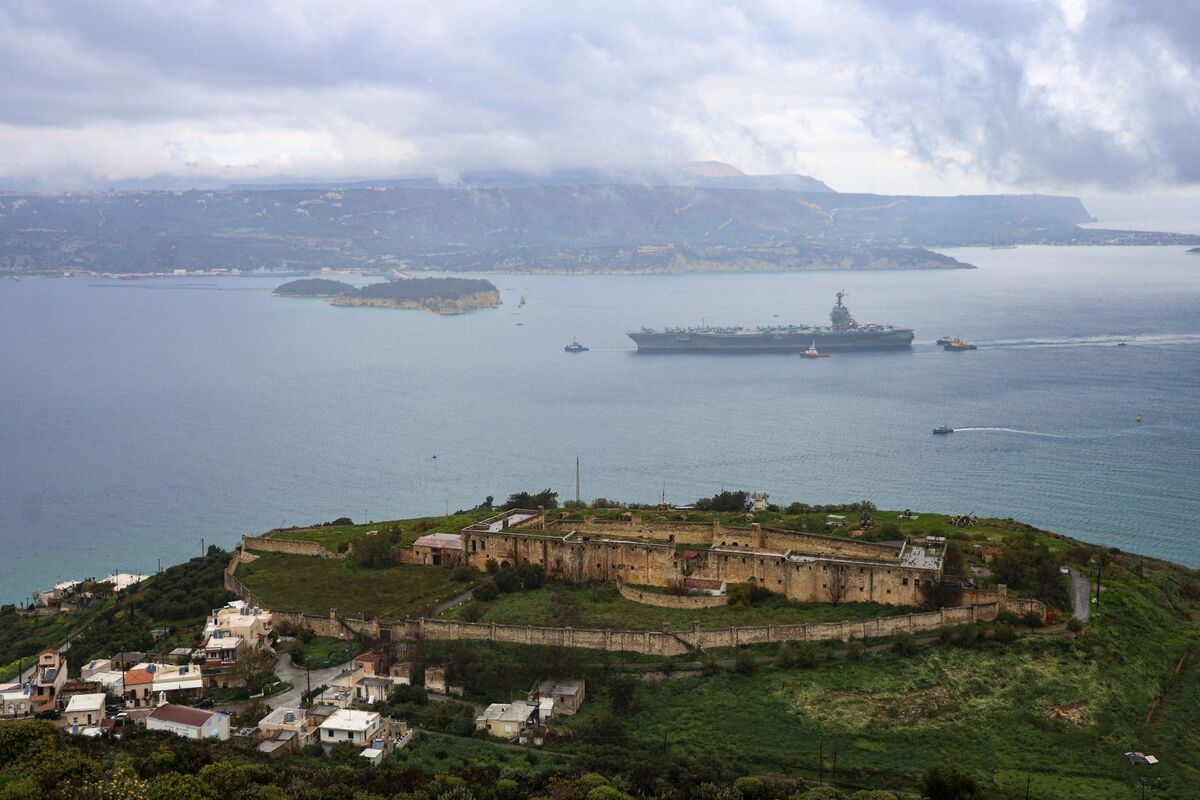
The USS Gerald R. Ford, the world’s largest aircraft carrier, arrived at Crete’s Naval Support Activity Souda Bay in Greece on Monday for maintenance and repairs following operations in the Red Sea, the US Navy said.
The vessel’s departure from West Asia came after a fire broke out earlier this month in its main laundry area, prompting a large damage control response aboard the ship. US officials claimed the blaze was not combat-related and was contained, but reports indicated that more than 600 sailors were displaced from their sleeping quarters as a result of the incident.
Pentagon concerned over operational readiness
Bloomberg reported that concerns surrounding the aircraft carrier range from minor issues to potentially serious flaws, based on a new assessment from the Pentagon testing office. Many of these issues emerged after the ship began combat testing in October 2022.
The report highlighted a lack of sufficient current test data to properly assess the carrier’s “operational suitability", including the reliability of key systems such as its jet launch and recovery system, radar, ability to sustain operations under enemy fire, and elevators used to transport weapons and munitions from the hold to the flight deck.
A recent Pentagon testing assessment further found that, nearly a decade after the ship’s delivery, there is still insufficient data to determine its “operational effectiveness” under realistic combat conditions.
Deployment context and forced withdrawal
The USS Gerald R. Ford has been deployed for an extended period, having originally set sail in June 2025 and remaining at sea for roughly nine months, longer than the typical seven-month deployment.
Its operations have spanned multiple regions, including the Caribbean, to support US efforts to kidnap Venezuelan President Nicolás Maduro, and then redirected again to West Asia as support to the US as it prepared to launch its aggression on Iran.
What the report failed to mention was that on March 13, Iran’s Khatam al-Anbiya Central Headquarters said that the fire that occurred on the carrier was deliberately started by its crew.
According to a statement, the vessel, reportedly redeployed from the Mediterranean Sea to the Indian Ocean and Gulf of Oman to reinforce US forces, sustained a fire allegedly started deliberately by several US soldiers due to fear among the carrier’s crew.
Tensions in the region have escalated since the US and “Israel” launched a joint offensive on Iran on February 28. Iranian authorities said that more than 1,300 people have been martyred since the start of the war, including senior officials such as Leader Sayyed Ali Khamenei and top security official Ali Larijani.
Tehran has responded with drone and missile strikes targeting “Israel”, as well as US military bases in Gulf countries. These strikes have resulted in casualties and infrastructure damage, successfully disrupting global markets and aviation.
Growing doubts are emerging within US forces over the war, with troops raising concerns about unclear objectives, rising casualties, and the danger of a ground invasion. Reports indicate increasing frustration and stress among troops, with some questioning their role and considering leaving the military.
IRGC to US 82nd: You will face fate of USS Gerald Ford
In a related context, Iran’s Islamic Revolution Guard Corps (IRGC) earlier issued a direct warning to the US 82nd Airborne Division, cautioning that it could face the same fate as US aircraft carriers previously forced to withdraw under Iranian pressure.
Commenting on reports of an imminent US troop deployment to West Asia, the IRGC addressed American forces, stating: “Do you remember Gerald Ford and Abraham Lincoln?”
The statement referenced the withdrawal of US naval assets from the region following Iranian strikes and threats, signaling Tehran’s readiness to confront any new deployment.
The IRGC emphasized that the 82nd Airborne Division, one of the US Army’s most prominent rapid-response units, is being closely monitored as part of the evolving strategy.