


How ‘stopping the boats’ kills: A digital counter-forensic investigation of the human cost of the UK’s externalised border in the Channel
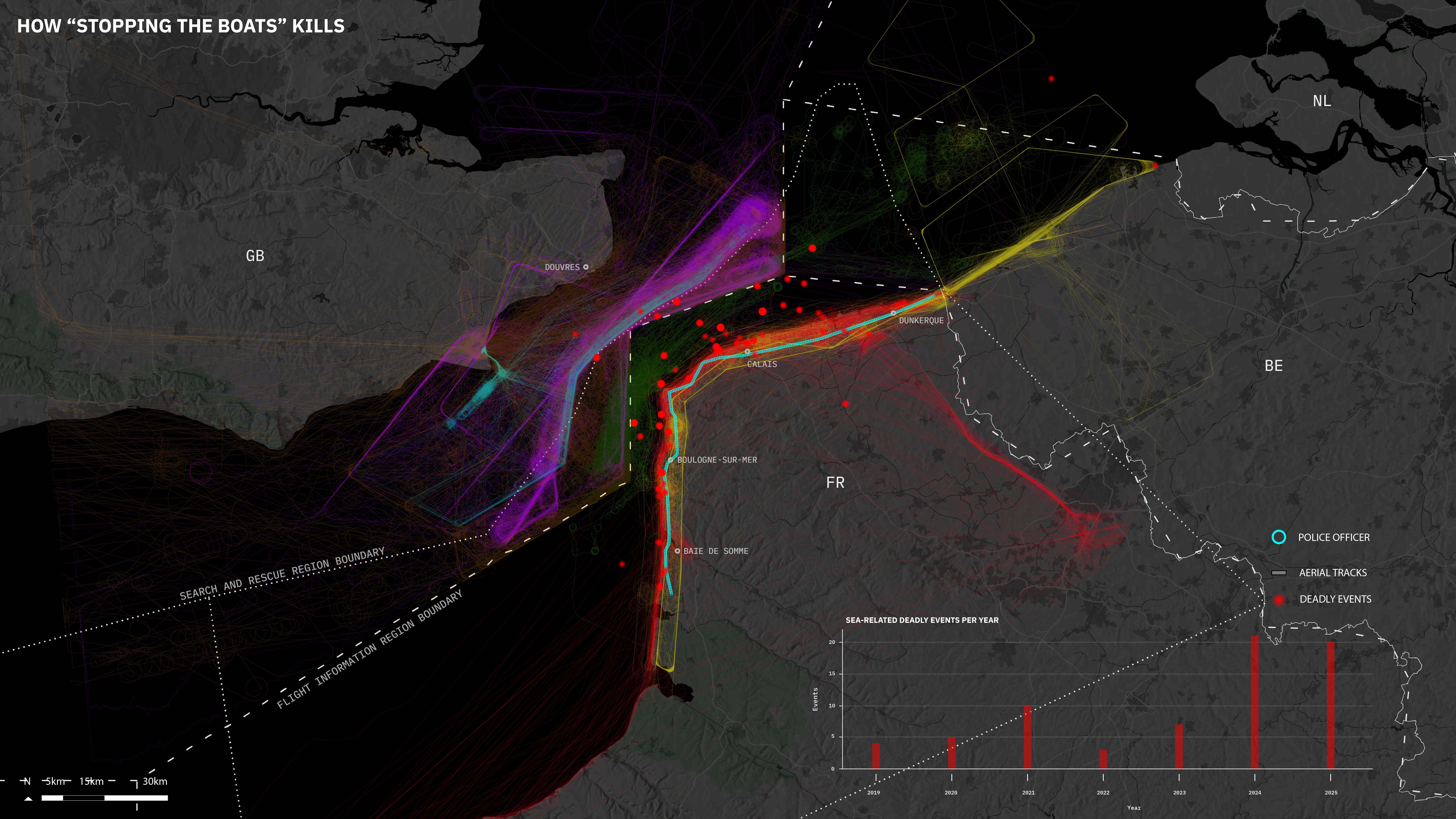
The report demonstrates how these border policing practices, which authorities claim ‘save lives’ by preventing crossing attempts, have amplified the risks facing people compelled to make illegalised journeys to reach the UK. It also shows that British and French officials knew, or ought to have known, the deadly consequences of their policies.
Decades of increased security and policing at the UK’s externalised border have not ended illegalised journeys and, despite being a political priority since 2019, small boat journeys have not stopped. As this report shows, greater enforcement has not only failed to achieve its stated objective, but led to more deaths in the Channel. Whether this reality can be recognised by policy-makers and prompt a fundamental reassessment of UK border externalisation remains an open question. For now, as the next phase of bilateral cooperation for 2026-29 is set to begin, the UK government appears determined to continue using large payments to leverage the French to adopt ever riskier tactics to police its border, regardless of the human costs.
The entangled effects of three border policing practices behind these mechanisms are examined in detail in the report:
1. ‘Upstream’ anti-smuggling measures and supply-chain disruption: International cooperation has reduced the availability of dinghies and other materials needed for small boat journeys, leading facilitators to source larger and lower quality inflatables which are increasingly overcrowded. Anti-smuggling measures have also reduced the opportunities for under-resourced groups to organise their own journeys—strengthening the hold of professionalised smugglers on the market—and fuelled competition for places onboard.
2. Expanded aerial surveillance: Although framed primarily in terms of supporting search and rescue operations, analysis of flight tracks and state documentation showed most aerial surveillance of the Channel is focused on coordinating police patrols on the ground, and gathering data and intelligence for prosecutions. By enabling faster detection and police intervention, surveillance has contributed to overcrowding and the advent of new dangerous tactics for small boat departures.
3. Increased police activity on the French coast: The ever larger numbers of police on the French coast, funded by the UK, has altered the geography of small boat departures, and driven the adoption of the ‘taxi boats’ which present greater risks for travellers who must board dinghies already afloat. Police’s violent tactics, especially the use of riot control weapons such as tear-gas, stun grenades, and rubber bullets, have also directly endangered travellers and led to panics, crushes, and people drowning in shallow waters.
▻https://www.borderforensics.org/investigations/channel
#Manche #UK #Angleterre #France #migrations #réfugiés #décès #mourir_aux_frontières #Border_Forensics #stop_the_boat