Seenthis
•
 
Identifiants personnels
  • [mot de passe oublié ?]

  • http://nautil.us
  • /issue

/37

  • ►/currents
    • ►/the-ocean-gets-big-data
    • ►/how-big-can-life-get
    • ►/fish-school-us-on-wind-power-rp
    • ►/can-topology-prevent-another-financial-crash
    • ►/ingenious-nathaniel-comfort
    • ►/when-good-waves-go-rogue-rp
    • ►/the-lessons-of-a-ghost-planet
    • ►/the-fly-in-the-primordial-soup
    • ►/the-perfect-wave-is-coming
    • ►/zombies-must-be-dualists
    • ►/is-this-new-swim-stroke-the-fastest-yet-rp
    • ►/why-is-biomedical-research-so-conservative
    • ►/paving-over-the-fossil-record
    • ►/when-pigs-fly-rp
    • ►/selfishness-is-learned
    • ►/what-wild-animals-do-in-the-dark-of-the-night
    • ►/in-which-i-try-to-become-a-swift
    • ►/the-ecologist-who-threw-starfish-rp
    • ►/bacteria-are-masters-of-tai-chi
    • ►/the-surprising-importance-of-stratospheric-life
    • ►/the-strange-blissfulness-of-storms
0 | 20
  • @nautilus
    nautilus [RSS] @nautilus 30/06/2016

    The Ocean Gets Big Data - Issue 37: Currents
    ▻http://nautil.us/issue/37/currents/the-ocean-gets-big-data
    http://static.nautil.us/9706_daf642455364613e2120c636b5a1f9c7.png

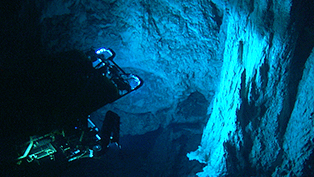
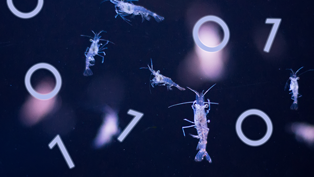
    I think that for some people,” says Peter Girguis, a deep-sea microbial physiologist at Harvard University, “the ocean seems passé—that the days of Jacques Cousteau are behind us.” He begs to differ. Even though space exploration, he says, “seems like the ultimate adventure, every time we do a deep sea dive and discover something new and exciting, there’s this huge flurry of activity and interest on social media.” But the buzz soon fizzles out, perhaps because of ineffective media campaigns, he says. But “we’re also not doing a good job of explaining how important and frankly exciting ocean exploration is.” That might change with the launch, this month, of the Ocean Observatories Initiative, an unprecedented network of oceanographic instruments in seven sites around the world. Each site features (...)
    nautilus [RSS] @nautilus
    Écrire un commentaire
  • @nautilus
    nautilus [RSS] @nautilus 30/06/2016

    How Big Can Life Get? - Issue 37: Currents
    ▻http://nautil.us/issue/37/currents/how-big-can-life-get

    http://static.nautil.us/9683_eddc3427c5d77843c2253f1e799fe933.png

    See a larger version!John Hendrix is an illustrator and author of the book Drawing is Magic: Discovering Yourself in a Sketchbook.Read More…

    nautilus [RSS] @nautilus
    Écrire un commentaire
  • @nautilus
    nautilus [RSS] @nautilus 30/06/2016
    1
    @simplicissimus
    1

    Fish School Us on Wind Power - Issue 37: Currents
    ▻http://nautil.us/issue/37/currents/fish-school-us-on-wind-power-rp

    http://static.nautil.us/3830_fcde14913c766cf307c75059e0e89af5.png

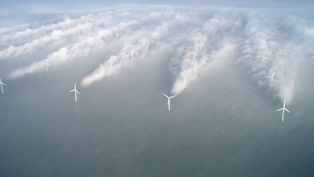
    As they drove on featureless dirt roads on the first Tuesday of 2010, John Dabiri, professor of aeronautics and bioengineering at the California Institute of Technology, and his then-student Robert Whittlesey, were inspecting a remote area of land that they hoped to purchase to test new concepts in wind power. They named their site FLOWE for Field Laboratory for Optimized Wind Energy. Situated between gentle knolls covered in sere vegetation, the four-acre parcel in Antelope Valley, California, was once destined to become a mall, but those plans fell through. The land was cheap. And, more importantly, it was windy. Estimated at 250 trillion Watts, the amount of wind on Earth has the potential to provide more than 20 times our current global energy consumption. Yet, only four (...)

    nautilus [RSS] @nautilus
    Écrire un commentaire
  • @nautilus
    nautilus [RSS] @nautilus 30/06/2016
    1
    @fil
    1

    Can Topology Prevent Another Financial Crash? - Issue 37: Currents
    ▻http://nautil.us/issue/37/currents/can-topology-prevent-another-financial-crash

    http://static.nautil.us/9695_764f9642ebf04622c53ebc366a68c0a7.png

    Could Kevin Bacon have saved us from the 2008 financial crisis? Probably not. But the network science behind six degrees of Kevin Bacon just well may have. According to the famous saying, every movie actor is separated from Kevin Bacon by six degrees of separation or less, going from co-star to co-star (actually most are separated from Bacon by only three degrees). Actors form a “small-world” network, meaning it takes a surprisingly small number of connections to get from any one member to any other. Natural and man-made small-world networks of all kinds are extremely common: The electric power grid of the western United States, the neural network of the nematode worm C. elegans, the Internet, protein and gene networks in biology, citations in scientific papers, and most social networks (...)

    nautilus [RSS] @nautilus
    • @fil
      Fil @fil 25/11/2018

      #TDA #finance

      Fil @fil
    Écrire un commentaire
  • @nautilus
    nautilus [RSS] @nautilus 30/06/2016

    Ingenious: Nathaniel Comfort - Issue 37: Currents
    ▻http://nautil.us/issue/37/currents/ingenious-nathaniel-comfort

    http://static.nautil.us/9672_66705064b387572428517e38ae23e019.png

    Nathaniel Comfort has spent 10 years of his life studying music, 10 years studying science, and the last 20 years studying history. “What I try to do, really, is integrate all of those things,” he tells me. “I try to write about science musically if I can.” He did just that in his 2001 biography of the geneticist and Nobel Laureate Barbara McClintock, which tackled the science and gender politics of the iconic researcher head on (“This book dismantles the McClintock myth in seven steps …”). He’s since published and edited books on intelligent design and genomic medicine, and is working on a project on the origins of life. Today a professor at the Institute of the History of Medicine at the Johns Hopkins University in Baltimore, Comfort has devoted himself to what he sees as the science (...)

    nautilus [RSS] @nautilus
    Écrire un commentaire
  • @nautilus
    nautilus [RSS] @nautilus 23/06/2016

    When Good Waves Go Rogue - Issue 37: Currents
    ▻http://nautil.us/issue/37/currents/when-good-waves-go-rogue-rp

    http://static.nautil.us/3826_a292f1c5874b2be8395ffd75f313937f.png

    Early in the morning on Sept. 11, 1995, the cruise liner the Queen Elizabeth 2, on its way from Southampton to New York, was being lashed by the tail end of Hurricane Luis, somewhere off the coast of Newfoundland. As if sensing its imminent demise, Luis had galvanized one last time, twitching to life and whipping the North Atlantic into a torrent of 130 mph winds and 40-foot waves. None of this caused undue concern for the ship’s captain, Ronald Warwick, a 30-year sailing veteran well acquainted with rough seas. Luis was hardly unexpected; since leaving England, the ship had steadily tracked the storm’s path. “This was fair game for us,” the retired Commodore recalls, from his home in Somerset, England. “We are a transatlantic liner.” At dinner, Warwick had advised the ship’s passengers that (...)

    nautilus [RSS] @nautilus
    Écrire un commentaire
  • @nautilus
    nautilus [RSS] @nautilus 23/06/2016

    The Lessons of a Ghost Planet - Issue 37: Currents
    ▻http://nautil.us/issue/37/currents/the-lessons-of-a-ghost-planet

    http://static.nautil.us/9645_be16d5d77fc088f250f94227280ec528.png

    Sometime between November 11 and 18, 1915, Albert Einstein began a brief calculation. In 14 numbered steps he analyzed the orbit of Mercury to explain a minor anomaly that had defied astronomers for more than 50 years. Sorting out a tiny detail of celestial mechanics doesn’t seem terribly exciting—and yet Einstein reported to friends that when he saw the last numbers appear, confirming that his theory matched observation, he felt his heart literally shudder in his chest. The reason: Correctly analyzing the orbit of Mercury was the first confirmation of his account of gravity, the General Theory of Relativity. This is just as Richard Feynman would later say science works. It is, he would say, “a special method of finding things out.” But what makes it special? The way its answers get (...)

    nautilus [RSS] @nautilus
    Écrire un commentaire
  • @nautilus
    nautilus [RSS] @nautilus 23/06/2016

    The Fly in the Primordial Soup - Issue 37: Currents
    ▻http://nautil.us/issue/37/currents/the-fly-in-the-primordial-soup

    http://static.nautil.us/9651_c213877427b46fa96cff6c39e837ccee.png

    I arrived on the second day of creation. Laurie Barge had invited me to spend the day in her lab, modeling the origin of life. She is a research scientist at NASA’s Jet Propulsion Laboratory in Pasadena and, with her lab chief, the pioneering geologist Michael J. Russell, a member of the National Astrobiology Institute. My task was to make a miniature hydrothermal vent under conditions that simulated the primeval ocean, 4 billion years ago. Such vents are at the heart of a scientific creation story so counterintuitive it could hardly be true, yet so logical that in broad strokes it almost must be. On the first day, Barge and her students had created the oceans. They started with distilled water and bubbled nitrogen through it to displace oxygen gas, which had not been present on the (...)

    nautilus [RSS] @nautilus
    Écrire un commentaire
  • @nautilus
    nautilus [RSS] @nautilus 23/06/2016

    The Perfect Wave Is Coming - Issue 37: Currents
    ▻http://nautil.us/issue/37/currents/the-perfect-wave-is-coming

    http://static.nautil.us/9635_b742027da6f65c2b92a85d76e41464e4.png

    Long ago I lived in Santa Cruz, California. Almost every morning I would throw on a wet suit, grab my surfboard out of the garage, and head to the rocky cliffs just a few blocks from my house. I would descend a well-worn path to the ocean below, paddle out to the break, and spend hours surrounded by kelp beds and barking sea lions, catching waves, feeling exhilarated, and floating on my board, a world away from the troubles on land. Those days are gone. I have a family now and have lived for years in the generally wave-less realms of New York City. But a few months ago I suddenly felt that old hunger again. I wanted to race out to the garage and grab a board. It was all because of a wave I saw on the Internet. And not just any wave. Head high, it came in fast, peeling left, its lip (...)

    nautilus [RSS] @nautilus
    Écrire un commentaire
  • @nautilus
    nautilus [RSS] @nautilus 16/06/2016

    Zombies Must Be Dualists - Issue 37: Currents
    ▻http://nautil.us/issue/37/currents/zombies-must-be-dualists

    http://static.nautil.us/9581_123650dd0560587918b3d771cf0c0171.png

    David Chalmers, who coined the phrase “Hard Problem of consciousness,” is arguably the leading modern advocate for the possibility that physical reality needs to be augmented by some kind of additional ingredient in order to explain consciousness—in particular, to account for the kinds of inner mental experience pinpointed by the Hard Problem. One of his favorite tools has been yet another thought experiment: the philosophical zombie. Unlike undead zombies, which seek out brains and generate movie franchises, philosophical zombies look and behave exactly like ordinary human beings. Indeed, they are perfectly physically identical to non‐zombie people. The difference is that they are lacking in any inner mental experience. We can ask, and be puzzled about, what it is like to be a bat, or (...)

    nautilus [RSS] @nautilus
    Écrire un commentaire
  • @nautilus
    nautilus [RSS] @nautilus 16/06/2016

    Is This New Swim Stroke the Fastest Yet? - Issue 37: Currents
    ▻http://nautil.us/issue/37/currents/is-this-new-swim-stroke-the-fastest-yet-rp

    http://static.nautil.us/6478_6a1a681b16826ba2e48fedb229db3b65.jpg

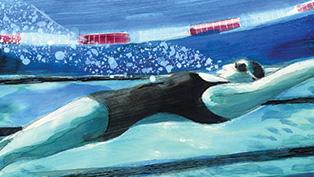
    I tug my black swim cap over my hair, strap on my pink goggles, and keep a focused calm, like Michael Phelps before a race. It’s lap swim on a Monday afternoon at my local YMCA, and I’m going to attempt the fish kick. Most fish move through the water with a horizontal wiggle. The fish kick challenges you to copy this movement: You completely submerge yourself underwater, position yourself on your side, keep your arms tight above your head in a streamline, and propel yourself forward with symmetrical undulations. After decades of swimming, some of it at the competitive level, I think I might have a shot. Pushing off the wall, and after what I can only describe as a struggle, the water resists my forward motion and I float to the surface, not unlike a dead fish. Humans are land animals, (...)

    nautilus [RSS] @nautilus
    Écrire un commentaire
  • @nautilus
    nautilus [RSS] @nautilus 16/06/2016

    Why Is Biomedical Research So Conservative? - Issue 37: Currents
    ▻http://nautil.us/issue/37/currents/why-is-biomedical-research-so-conservative

    http://static.nautil.us/9527_52569c045dc348f12dfc4c85000ad832.jpg

    How do scientists decide what research to do? One would like to think that they take a suitably scientific approach to this question by thinking about important problems that need to be solved, and asking which of these problems could be solved given the time and money available. But are research projects actually proposed and funded in this way, or are there other forces at work? Particle physicists and astronomers realized decades ago that they needed to take a coordinated approach to planning so that they had accelerators and telescopes to work on. This “big science” approach involved agreeing on the long-term scientific goals in a given field and then getting the relevant funding agencies in different countries on board. This approach has been remarkably successful, as demonstrated (...)

    nautilus [RSS] @nautilus
    Écrire un commentaire
  • @nautilus
    nautilus [RSS] @nautilus 16/06/2016

    Paving Over the Fossil Record - Issue 37: Currents
    ▻http://nautil.us/issue/37/currents/paving-over-the-fossil-record

    http://static.nautil.us/9524_84a529a92de322be42dd3365afd54f91.jpg

    Every winter for the past decade, paleontologist Kenneth D. Rose returns to Vastan, one of the open-pit lignite (“brown coal”) mines in a corner of western India. On this dizzyingly bright March morning, as miners in hardhats and boots tirelessly scoop out tarry chunks of lignite with rumbling earthmovers, Rose and his team sift through a thin layer of sediment with ice picks and brushes. Their goal: piecing together fragments of the most archaic forms of mammals to walk the earth, and unraveling the story of modern mammalian evolution. The fragments they’re seeking date back to the early Eocene epoch, about 54.5 million years ago. Around then, the earth was 12 degrees Celsius hotter, and gripped by the most intense global warming event the world had known. India was a tropical island (...)

    • #India
    nautilus [RSS] @nautilus
    Écrire un commentaire
  • @nautilus
    nautilus [RSS] @nautilus 9/06/2016

    When Pigs Fly - Issue 37: Currents
    ▻http://nautil.us/issue/37/currents/when-pigs-fly-rp

    http://static.nautil.us/657_b4288d9c0ec0a1841b3b3728321e7088.png

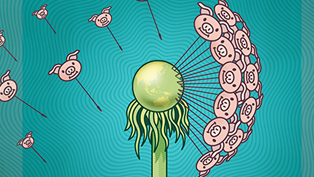
    Sometime in 2004, a pig was trucked with a herd of others to Sheung Shui Slaughterhouse, Hong Kong’s largest abattoir. It could have been shipped from any number of farms in China. The pig was penned in cramped conditions and later shoved onto a conveyor line. When it reached the end of the line it was electrocuted with a jolt to the head. A worker slit its throat. Before its carcass was hoisted up on a chain, scalded, and cleaned, scientists swabbed the pig’s mouth as part of a flu-monitoring program, run by Hong Kong University. The pig carried a seemingly harmless strain of influenza. The strain was genetically sequenced, baptized Sw/HK/915/04, entered into a database, and forgotten. Five years later a flu epidemic, which originated in pigs, raced around the globe through air travel, (...)

    nautilus [RSS] @nautilus
    Écrire un commentaire
  • @nautilus
    nautilus [RSS] @nautilus 9/06/2016

    Selfishness Is Learned - Issue 37: Currents
    ▻http://nautil.us/issue/37/currents/selfishness-is-learned

    http://static.nautil.us/9507_690e6de4e3e2c0916b6160d9959d156b.png

    Many people cheat on taxes—no mystery there. But many people don’t, even if they wouldn’t be caught—now, that’s weird. Or is it? Psychologists are deeply perplexed by human moral behavior, because it often doesn’t seem to make any logical sense. You might think that we should just be grateful for it. But if we could understand these seemingly irrational acts, perhaps we could encourage more of them. It’s not as though people haven’t been trying to fathom our moral instincts; it is one of the oldest concerns of philosophy and theology. But what distinguishes the project today is the sheer variety of academic disciplines it brings together: not just moral philosophy and psychology, but also biology, economics, mathematics, and computer science. They do not merely contemplate the rationale for (...)

    nautilus [RSS] @nautilus
    Écrire un commentaire
  • @nautilus
    nautilus [RSS] @nautilus 9/06/2016
    1
    @lyco
    1

    What Wild Animals Do in the Dark of the Night - Issue 37: Currents
    ▻http://nautil.us/issue/37/currents/what-wild-animals-do-in-the-dark-of-the-night

    http://static.nautil.us/9504_b1c5390a0134fb5edeb8bef14441045b.jpg

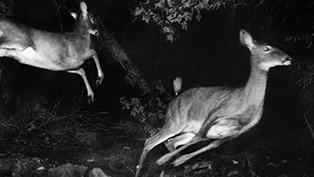
    George Shiras the third (1859-1942) was captivated by the waters of Lake Superior at night, when sounds, shapes, and movements seemed more mysterious, more dramatic. Under cover of darkness, he sought out animals that lived along the shore of the lake. Shiras would place a lamp at the bow of a canoe and wait quietly in the shadows at the rear of the boat, until two eyes could be seen reflecting the boat’s light back out of the darkness. The “blue, translucent eyeballs” were the signal to quietly slide forward into range, take aim, and shoot his quarry. This was how Shiras took the first photos to show the nightlives of wild animals, over a century ago.[NB:slide] In these early days of photography, Shiras was forced to haul clunky cameras using large-format sheet film on his canoe; the (...)

    • #George Shiras
    nautilus [RSS] @nautilus
    Écrire un commentaire
  • @nautilus
    nautilus [RSS] @nautilus 9/06/2016

    In Which I Try to Become a Swift - Issue 37: Currents
    ▻http://nautil.us/issue/37/currents/in-which-i-try-to-become-a-swift

    http://static.nautil.us/9440_dd95829de39fe21f384685c07a1628d8.png

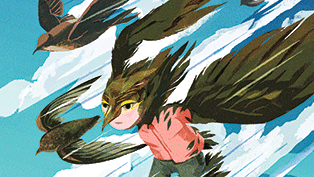
    There are two classes of words commonly applied to swifts: words about ethereality, and violent words. They are not contradictory. The violence makes the ethereal accessible. Swifts lay open the sky so that we can go there. They slash the veil. If the swifts didn’t come, we’d be stuck with what we’ve got. They were very late this year. Panic rose. I’d get up very early, thinking that I’d heard a scream, and rush to the window. There was nothing there but pigeons as ponderous as I am: pigeons who sleep in trees and waddle in the dirt. And then, as I was lying on my back, they were suddenly there. “Why are you crying, Daddy?” said Rachel, who was watching my face instead of the sky. “Because it’s all right,” I said. “Because the world still works.” “Okay,” she said. They’re always suddenly there (...)

    nautilus [RSS] @nautilus
    Écrire un commentaire
  • @nautilus
    nautilus [RSS] @nautilus 2/06/2016

    The Ecologist Who Threw Starfish - Issue 37: Currents
    ▻http://nautil.us/issue/37/currents/the-ecologist-who-threw-starfish-rp

    http://static.nautil.us/8591_cd6b73b67c77edeaff94e24b961119dd.png

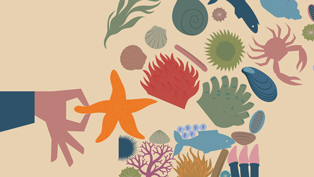
    Even in 1963, one had to go pretty far to find places in the United States that were not disturbed by people. After a good deal of searching, Robert Paine, a newly appointed assistant professor of zoology at the University of Washington in Seattle, found a great prospect at the far northwestern corner of the lower 48 states. On a field trip with students to the Pacific Coast, Paine wound up at Mukkaw Bay, at the tip of the Olympic Peninsula. The curved bay’s sand and gravel beach faced west into the open ocean, and was dotted with large outcrops. Among the rocks, Paine discovered a thriving community. The tide pools were full of colorful creatures—green anemones, purple sea urchins, pink seaweed, bright red Pacific blood starfish, as well as sponges, limpets, and chitons. Along the rock (...)

    nautilus [RSS] @nautilus
    Écrire un commentaire
  • @nautilus
    nautilus [RSS] @nautilus 2/06/2016

    Bacteria Are Masters of Tai Chi - Issue 37: Currents
    ▻http://nautil.us/issue/37/currents/bacteria-are-masters-of-tai-chi

    http://static.nautil.us/9412_e62111f5d7b0c67958f9acbdc0288154.jpg

    When I began studying how animals swim, I didn’t feel much like a physicist. I’d just finished my bachelor’s in physics during which time I’d been taught that physicists work on one of a handful of buzzwords: quantum mechanics, cosmology, gauge theory, and so on. To see if graduate school was right for me, I shadowed a friendly research group at the University of California, San Diego—but they didn’t study any of these buzzwords. They used high-powered mathematics to understand things like the locomotion of snails, worms, and microorganisms. I was grateful for the opportunity, and I thought the problems they studied were beautiful and interesting—just not fundamental physics. As I became more involved in the group, this distinction grew into an identity crisis. Theoretical physicists are (...)

    nautilus [RSS] @nautilus
    Écrire un commentaire
  • @nautilus
    nautilus [RSS] @nautilus 2/06/2016

    The Surprising Importance of Stratospheric Life - Issue 37: Currents
    ▻http://nautil.us/issue/37/currents/the-surprising-importance-of-stratospheric-life

    http://static.nautil.us/9420_2118b9f689c4e8d78d34218688a7a1cf.png

    Rippling like a jellyfish, a helium balloon big enough to envelop the Empire State Building lofted over the New Mexico desert. Its passengers, suspended below in a boxy white gondola, were hardy specimens: millions of cells of a remarkably resilient bacterium known as Bacillus pumilus SAFR-032. NASA scientists had first collected the strain more than a decade ago in the Mars Odyssey assembly facility, where the bacteria had survived sterilization. Before sending the pill-shaped cells into the sky last October, researchers starved them until they morphed into endospores, an armored dormant state. Higher and higher the wee wayfarers rose: to 17,000 feet, the maximum altitude at which trees grow; to 24,000 feet, the upper limit of the highest-flying migratory bird, the bar-headed goose; (...)

    nautilus [RSS] @nautilus
    Écrire un commentaire
0 | 20