• David Ellison’s Hollywood Takeover: First Paramount. Is Warner Bros Next?
    https://variety.com/2025/film/features/david-ellison-hollywood-takeover-paramount-warner-bros-1236569136

    Paramount’s leadership has not shied away from making its views on the war in #Gaza public. In September, it became the first major studio to denounce a celebrity-driven open letter signed by A-listers like Emma Stone and Javier Bardem that called for a boycott of Israeli film institutions implicated in “#genocide and #apartheid” against Palestinians. (Warner Bros. followed, but cited legal reasons for its decision.) And sources say Paramount maintains a list of talent it will not work with because they are deemed to be “overtly antisemitic” as well as “xenophobic” and “homophobic.” Whether the boycott signatories are on that list is unclear. [Update, Nov. 7: Other sources intimately familiar with Paramount said that while an itemized list does not exist, the management team shares a set of values and has no desire to work with anyone who expresses hate in public and damaging ways].

  • USA : #ice, #paragon, #antifa#docenti_per_gaza – MICROSOFT E IDF – #polaroid E #apartheid@0
    https://radioblackout.org/podcast/usa-ice-paragon-antifa-docenti-per-gaza-microsoft-e-idf-polaroid-e-ap

    Le nuove tappe della traiettoria autoritaria intrapresa dagli USA, le tecnologie in campo, Antifa come gruppo terroristico, l’epurazione del nemico; il sionismo nelle scuole italiane con Docenti per Gaza; Microsoft molla Unit 8200; uno sguardo alla lotta dentro Polaroid contro l’apartheid...

    #bello_come_una_prigione_che_brucia #colonialismo #federico_aldrovandi #guerra #intelligenza_artificiale #israelificazione #repressione #sorveglianza #spyware #Stati_Uniti
    https://radioblackout.org/wp-content/uploads/2025/09/BCUPCB_USA-Antifa-Fbi-Hegseth.mp3

  • Israël ferme des écoles de l’Unrwa à Jérusalem, l’Autorité palestinienne dénonce « une violation du droit à l’éducation »
    RFI | Publié le : 08/05/2025 - 14:54
    https://www.rfi.fr/fr/moyen-orient/20250508-isra%C3%ABl-ferme-des-%C3%A9coles-de-l-unrwa-%C3%A0-j%C3%A9rusalem-l-au

    À Jérusalem, la police israélienne a fermé, ce jeudi 8 mai au matin, les écoles de l’Unrwa. Cette fermeture intervient trois mois après l’entrée en vigueur de l’interdiction, par Israël, des activités de cette agence des Nations unies pour les réfugiés palestiniens, et après un ordre émis le 8 avril par le ministère israélien de l’Éducation. (...)

    #Occupation #Apartheid

  • Al Mezan Center for Human Rights - Al Mezan Condemns Israeli Court’s Ruling Upholding 6-Month Detention of Dr. Abu Safiya Under Unlawful Combatants Law
    25 March 2025
    https://mezan.org/public/en/post/46667
    https://mezan.org/public/assets/uploads/media-uploader/large/hsam-abo-sfy11739543819.jpg

    Gaza, 25 March 2025 — Earlier today, the Be’er Sheva District Court, an Israeli civilian court, reviewed and upheld the detention order issued on 12 February 2025 by the Commander of the Southern Command of the Israeli army against Dr. Hussam Abu Safiya, the director of Kamal Adwan Hospital, extending his arbitrary detention for another six months. Under the Unlawful Combatants Law, such detention orders must be reviewed by an Israeli civilian court within 45 days of issuance and subsequently every six months. This apartheid law is used by Israeli authorities to incarcerate Palestinian residents of Gaza, including Dr. Abu Safiya, without charge or fair trial, circumventing basic protections under international law.

    During the hearing, the Southern District Prosecutor submitted a secret file to the court, alleging that Dr. Abu Safiya poses a threat to the security of the State of Israel. In response, Al Mezan’s legal team, representing Dr. Abu Safiya, asserted his innocence and emphasized that he was solely performing medical and administrative duties at Kamal Adwan Hospital. The defense also requested access to the classified investigation materials; however, the prosecution declined, and the court upheld the refusal.

    Dr. Abu Safiya was abducted by Israeli forces on 27 December 2024 at Kamal Adwan Hospital in northern Gaza, along with several other hospital staff and civilians. He was denied access to his lawyer for 47 days following his arrest.

    #Apartheid

    • Al Mezan condamne la décision d’un tribunal israélien confirmant la détention de six mois du Dr Abu Safiya en vertu de la loi sur les combattants illégaux
      https://ismfrance.org/index.php/2025/03/26/al-mezan-condamne-la-decision-dun-tribunal-israelien-confirmant-la-detent

      Al Mezan, 25 mars 2025. — Plus tôt dans la journée, le tribunal civil israélien du district de Beer Sheva a examiné et confirmé l’ordre de détention émis le 12 février 2025 par le commandant du commandement sud de l’armée israélienne contre le Dr Hussam Abu Safiya, directeur de l’hôpital Kamal Adwan, prolongeant sa détention arbitraire de six mois supplémentaires.

      En vertu de la loi sur les combattants illégaux, ces ordres de détention doivent être réexaminés par un tribunal civil israélien dans les 45 jours suivant leur délivrance, puis tous les six mois. Cette loi d’apartheid est utilisée par les autorités israéliennes pour incarcérer des résidents palestiniens de Gaza, dont le Dr Abu Safiya, sans inculpation ni procès équitable, contournant ainsi les protections fondamentales du droit international.

      Lors de l’audience, le procureur du district sud a soumis un dossier secret au tribunal, alléguant que le Dr Abu Safiya représente une menace pour la sécurité de l’État d’Israël. En réponse, l’équipe juridique d’Al Mezan, représentant le Dr Abu Safiya, a clamé son innocence et souligné qu’il exerçait uniquement des fonctions médicales et administratives à l’hôpital Kamal Adwan. La défense a également demandé l’accès aux documents d’enquête classifiés ; cependant, l’accusation a refusé, et le tribunal a confirmé ce refus.(...)

  • Palestine. Décentrer le regard occidental
    Orient XXI > Leyane Ajaka Dib Awada > 14 février 2025
    https://orientxxi.info/lu-vu-entendu/palestine-decentrer-le-regard-occidental,8001

    Dans leur ouvrage Comprendre la Palestine , Une enquête graphique, l’illustratrice Alizée De Pin et le politiste et spécialiste de la Palestine Xavier Guignard reviennent sur un siècle d’histoire palestinienne, racontée à hauteur de la population de ce territoire

  • L’apocalypse de Donald Trump selon Peter Thiel | Le Grand Continent, via Jean-Marc Adolphe, https://www.leshumanites-media.com
    https://legrandcontinent.eu/fr/2025/01/10/lapocalypse-de-donald-trump-selon-peter-thiel

    Dans un texte aux tonalités eschatologiques qui vient de paraître dans le Financial Times, #Peter_Thiel, l’une des personnes les plus puissantes de l’Amérique de Trump au cœur de l’accélération réactionnaire, annonce la venue d’un temps nouveau : « des questions sombres émergeront dans les dernières semaines crépusculaires de notre interrègne ».

    Nous le commentons ligne à ligne.

    Il disait voici déjà plus de vingt ans : « Je ne crois plus que la liberté et la démocratie soient compatibles ». Au moins, c’est clair…, Jean_Marc Adolphe.

    #É-U #libertariens #Palentir #fascisme #eschatologie #idéologue

    • Cette inauguration de la deuxième présidence Trump n’a rien à voir avec la précédente. Texte de Quentin Rodiguez (reçu par mel)

      Oubliez Trump. C’est un fou dangereux bien sûr. Et depuis 2016, immense différence, il a transformé le Parti républicain en mouvement authentiquement fasciste – les principaux historiens américains du fascisme le disent désormais (notamment Timothy Snyder et Robert Paxton, pour les plus célèbres).

      Mais avec cette nouvelle présidence Trump, nous assistons surtout à un pacte entre ce nouveau mouvement fasciste et la majeure partie de la #classe_capitaliste des #milliardaires propriétaires de l’#économie_numérique. Je ne veux pas tout ramener aux années 30, Trump n’est pas Hitler, on ne sort pas d’une guerre mondiale, etc. soyons clairs. Mais il y a un phénomène précis des années 30 qui se reproduit presque à l’identique aujourd’hui, c’est ce ralliement stratégique de la grande bourgeoisie industrielle allemande qui, face au risque de prise de pouvoir de la gauche socialiste et communiste qui menaçait sérieusement ses intérêts, choisit de parier sur le parti nazi, en le finançant massivement, et en mettant les #médias qu’elle contrôle au service de leur propagande électorale.

      Tant que la grande bourgeoisie peut garantir ses intérêts en s’accomodant d’un système démocratique, ça ne pose pas de problème. Mais si ce même système démocratique menace réellement leur position dominante, alors invariablement, ils sacrifient la démocratie sur l’autel du capitalisme. C’est ce que le principal penseur libertarien adulé de la nouvelle bourgeoise de l’économie numérique, Friedrich Hayek, expliquait posément en 1981, commentant son soutien au régime fasciste d’Augusto Pinochet : "Personnellement je préfère un dictateur libéral plutôt qu’un gouvernement démocratique manquant de libéralisme."

      Nous venons d’assister trait pour trait au même mouvement d’allégeance envers le mouvement trumpiste que les industriels allemands des années 30. Sur la photo du premier rang des invités d’honneur de la cérémonie, on voit ici #Elon_Musk, bien sûr, le véritable numéro 2 de l’administration Trump, qu’on ne présente plus, et à sa gauche #Jeff_Bezos, le PDG d’Amazon, et #Mark_Zuckerberg, le patron de Facebook. Les trois personnes les plus riches des États-Unis. Mais ils sont loin d’être les seuls : un mouvement profond s’est enclenché. On peut citer aussi #David_Sacks, autre capitaliste milliardaire de la Silicon Valley, qui vient d’être nommé par Trump en charge d’une politique de développement des cryptoactifs (#Bitcoin et cie), et à la tête du conseil du président pour la science et la technologie.

      L’administration Biden, sans être d’obédience socialiste, a voulu renouer avec une vieille tradition américaine "keynésienne-progressiste", disparue du paysage politique depuis Reagan, consistant à taxer fortement les plus riches, à soumettre les entreprises de taille critique pour l’économie à un contrôle étatique fort, et à démanteler les plus gros groupes monopolistiques considérés comme une menace pour la démocratie. Biden a donc rompu avec la politique de copinage avec la finance et la "Silicon Valley" cultivée par les Démocrates depuis Bill Clinton. Il a validé des accords internationaux sur une imposition mondiale minimale des multinationales, il a soumis les géants d’internet à un contrôle réel de son administration, a encouragé la syndicalisation dans ces entreprises (notamment chez Amazon et Tesla), et a engagé des procédures judiciaires très importantes contre ces entreprises, en exhumant les #lois_anti-trust du début du XXe siècle qui autorisent la justice américaine à démanteler des grandes entreprises lorsqu’elles sont devenues monopolistiques, en les vendant à la découpe. C’est notamment le sort qui était officiellement recherché contre #Google, avec une poursuite engagée par les procureurs de 50 États, ce qui faisait trembler toute la Silicon Valley.

      Je ne suis pas en train de dire que Biden était anticapitaliste, pas le moins du monde, mais enfin il a considéré que le poids et l’autonomie d’action acquises par les géants de l’économie numérique étaient arrivées à un stade critique pour la démocratie américaine, et s’est ouvertement attaqué à leur domination, distandant les liens antérieurs entre ladite "Silicon Valley" et le Parti démocrate. En social-libéral conséquent, il pensait certainement qu’un équilibre devait (et pouvait) être maintenu dans le système capitaliste pour qu’il continue à avancer de pair avec un système démocratique. C’est ce point précis qui explique la rupture de cette classe capitaliste avec les leaders démocrates (au sens premier du terme), pour prêter allégeance collectivement à un leader fasciste. Plutôt un dictateur libéral qu’un démocrate voulant brider le libéralisme économique, pour paraphraser Hayek.

      Là où Trump a été habile politiquement, c’est qu’au cours de la campagne, il n’a pas tendu les bras à ces milliardaires. Il aurait pu dire "Qu’est-ce que ces Démocrates sont ingrats avec vous, moi je serai reconnaissant si vous me soutenez !" Pas le moins du monde. Il a continué à s’en servir comme épouvantail politique pour ses électeurs, en les pointant du doigt comme des agents au service du parti démocrate et du "virus woke", insistant sur le libéralisme culturel qui unissait ces capitalistes californiens au Parti démocrate jusqu’à la présidence Biden. Durant toute l’année 2024, les Jeff Bezos, les Mark Zuckerberg et consorts, se sont retrouvés conspués de toutes parts – pour des raisons différentes. Pris entre le marteau et l’enclume, ils ont été mis sous une pression inédite. C’est pourquoi le retournement est si spectaculaire : quand les deux camps veulent ton scalp, tu as intérêt à t’aligner franchement avec l’un des deux camps, et de préférence celui qui pourra l’emporter, car rester pris entre les deux feux est ce qu’il y a de pire. On l’a vu dans la théâtralisation guignolesque de Zuckerberg, jurant la main sur le cœur qu’il était devenu un conservateur sincère, un vrai bonhomme macho anti-diversité, anti-inclusion, contrairement au portrait que la campagne Trump faisait de lui. C’était en fait contre son gré, forcé par le méchant Biden, qu’il défendait les valeurs opposées il y a encore 3 mois 🤡 Le zèle des transfuges, qui doivent donner des gages à leur nouvelle famille de la solidité de leur fidélité, à défaut de pouvoir convaincre sur la sincérité de leurs convictions. De façon moins pathétique, mais plus significative, Jeff Bezos avait signalé son ralliement en novembre, en censurant la publication d’un éditorial du Washington Post (le quotidien centriste n° 1 du pays), dont il est propriétaire, qui devait appeler à voter contre Trump. Un autre milliardaire de la "tech" californienne, Patrick Soon-Shiong, a fait de même au Los Angeles Times. Le LA Times est le "plus à gauche" des grands quotidiens du pays. Lorsque Soon-Shiong rachète le journal en 2018, il est encore connu pour être un soutien du Parti démocrate, et un donateur important de la campagne d’Hillary Clinton contre Trump. En novembre dernier, en censurant l’éditorial contre Trump, il licencie par la même occasion l’ensemble du comité de rédaction, et annonce que le journal fera désormais "plus de place" aux "opinions conservatrices".

      Derrière l’arrivée au pouvoir d’un mouvement fasciste, se cache en fait un deal consistant à mettre l’État américain dans les mains d’une oligarchie capitaliste, qui a fait le deuil d’une position conciliante avec la démocratie. C’est ce que disait déjà en 2009 l’un de ces nouveaux oligarques, encore un milliardaire de la Silicon Valley, Peter Thiel. Comme Musk et la plupart de ces gens, il se disait depuis longtemps "libertarien". Aux États-Unis, cette étiquette politique permet à une partie des élites économiques de défendre le libéralisme économique tout en se prétendant "neutres" politiquement, "ni droite ni gauche". Comme le RN... ou LREM 🤷 Être libertarien aux US, c’est surtout être "pro-business", et proclamer qu’on se fout des questions de valeurs, qu’elles soient démocratiques, progressistes, religieuses, conservatrices... en soutenant un coup un Démocrate, un coup un Républicain. Dans un article intitulé "L’éducation d’un libertarien", Peter Thiel fait alors une véritable confession : comme la plupart de ses congénères libertariens, il a longtemps prétendu être fermement pro-démocratie, mais c’est fini. Et il se fixe désormais pour tâche de convaincre ses coreligionnaires qu’il faut désormais lutter contre la démocratie, activement.
      Je cite : « I still call myself “libertarian.”
      But I must confess that over the last two decades, I have changed radically on the question of how to achieve these goals. Most importantly, I no longer believe that freedom and democracy are compatible. By tracing out the development of my thinking, I hope to frame some of the challenges faced by all classical liberals today. »

      https://www.cato-unbound.org/.../education-libertarian
      (Je me désigne toujours comme un "libertarien". Mais je dois avouer avoir radicalement changé d’avis au cours des deux dernières décennies sur la façon d’atteindre cet objectif. Pour l’essentiel, je ne crois plus que la liberté et la démocratie soient compatibles. En retraçant l’évolution de mes idées à ce sujet, j’espère fournir un cadre aux défis que rencontrent tous les libéraux classiques aujourd’hui.)

      S’ensuit une lamentation sur la racine du mal : le suffrage universel. Lorsqu’il fut accordé aux femmes, et aux "bénéficiaires des aides sociales" (c’est-à-dire les Noirs), ça a été le début de la fin pour les États-Unis, selon Thiel.
      Peter Thiel a joué le rôle de poisson pilote pour cette classe de milliardaires. C’est le premier à faire son "coming-out" antidémocrate, et le premier à soutenir Trump dès 2016. Musk fut le suivant, rallié par Thiel au cours du mandat de Biden. Derrière la figure publique de Musk, c’est Thiel, beaucoup plus secret et beaucoup plus #idéologue, qui a en réalité le plus de réseaux dans le camp Trump. C’est lui qui a placé #J.D._Vance comme vice-président auprès de Trump. Vance est, littéralement, un employé de Thiel. Thiel le recrute en 2016 pour diriger son fonds d’investissement personnel Mithril Capital. C’est encore lui qui le lance en politique en finançant sa première campagne électorale en 2021. C’est enfin lui qui le présente à Donald Trump, et qui convainc le candidat, avec l’aide de Musk, de le prendre comme vice-président, alors que son profil n’était électoralement pas très intéressant.

      Le deal est signé, Musk se lance à corps perdu dans la campagne pour Trump à l’instant où Vance est choisi.

      Thiel, Musk, et Sacks constituent la fraction la plus idéologisée et la plus réactionnaire de cette classe de milliardaires, dont l’essentiel suit le mouvement par pur intérêt tactique. Ils ne sont donc pas représentatifs de tout leur groupe social, mais leur activisme, désormais au cœur du pouvoir, mérite qu’on s’y attarde.

      Les trois compères font partie de ce que les médias US ont baptisé la "mafia Paypal", car ils ont noué des liens proches au lancement de #Paypal, et continuent à se rendre des services depuis, avec une stratégie d’infiltration de l’État américain (via #SpaceX pour Musk, via la société de renseignement Palantir pour Thiel). Il est intéressant de noter qu’ils ont tous trois grandi au sein de la #bourgeoisie_blanche raciste de l’#Afrique_du_Sud de l’#apartheid. (Un article très bien fait le point à ce sujet : https://www.humanite.fr/en-debat/donald-trump/elon-musk-peter-thiel-david-sacks-et-roelof-botha-les-autres-sud-africains-). Musk et Sacks sont nés en Afrique du Sud, Thiel est Allemand, mais a grandi là-bas car son père travaillait pour la principale mine d’uranium du pays. Le père de Musk était quant à lui déjà millionnaire, propriétaire d’une mine de diamants ; durant l’apartheid, donc autant dire qu’il était esclavagiste de profession. Tous trois ont donc baigné dans l’environnement intellectuel du Parti national afrikaner, fondé notamment par des sympathisants nazis déclarés (Hetzog), qui professaient l’inégalité des races, la pureté génétique, et le droit par onction divine à la domination des autres races.

    • Elon Musk : Peter Thiel, David Sacks et Roelof Botha, les autres sud-africains de l’équipe Trump, Jacqueline Dérens, ancienne militante contre l’apartheid, autrice.
      https://www.humanite.fr/en-debat/donald-trump/elon-musk-peter-thiel-david-sacks-et-roelof-botha-les-autres-sud-africains-

      Tous trois ont uni leurs talents pour lancer la plateforme de paiement Paypal, qui au début n’employait ni femmes, ni Noirs, reflet de leur aversion commune pour le multiculturalisme.

    • La société post-apartheid de Anton Kannemeyer & Conrad Botes, nés respectivement en 67 et 69, deux têtes pensantes de la BD underground sud-africaine, ont créé la revue de bande dessinée « Bitterkomix », alors que l’apartheid était encore en vigueur. Critique acerbe du conservatisme et du racisme.
      https://www.du9.org/entretien/anton-kannemeyer


      https://www.cornelius-boutique.com/product/le-pays-de-judas
      #bandes_dessinées

    • Quand même, on découvre maintenant l’influence de Peter Thiel qui a pourtant toujours conceptualisé à partir de Ayn Rand la philosophie fasciste des GAFAMS ?

      Maintenant qu’on est jusqu’au cou dans leur fosse à purin, que tous les médias ont trouvé formidable d’utiliser FB et consorts depuis presque 20 ans, il faudrait penser à cesser de gazouiller comme des veaux sur X et FB ?

      Ne reste qu’à rire jaune.

      Aucun d’eux ne s’est jamais caché de ses ambitions.

  • BALLAST • Le Sumud des Palestiniens ne rompt pas
    https://www.revue-ballast.fr/le-sumud-des-palestiniens-ne-rompt-pas

    Le mot sumud désigne la per­sé­vé­rance des Palestinien·nes à vivre sur leur terre et à résis­ter à la colo­ni­sa­tion. Si un ces­sez-le-feu « en plu­sieurs phases » vient d’être conclu entre Israël et le Hamas, les habi­tants de Gaza conti­nuent de lut­ter au quo­ti­dien pour leur sur­vie. Loin des trac­ta­tions poli­tiques, une réa­li­té demeure constante : se battre pour faire exis­ter des vies, que ces der­nières soient encore sous les bombes, mais aus­si quand elles ne le sont pas. Nour Al-Tari, avo­cate pales­ti­nienne, réfu­giée au sud de la bande de Gaza, nous raconte ce com­bat pour la digni­té.

    #Palestine #Gaza #génocide #apartheid_israélien

  • Fifty Years Ago, Angola Looked Forward to a False Dawn
    https://jacobin.com/2025/01/angola-portugal-alvor-agreement

    15.1.2025 by Klas Lundström - January 15 marks 50 years since the Alvor Agreement promised Angola’s independence from Portugal. Yet the new state was doomed to be a Cold War battleground, with Washington planners seeking to avenge their defeat in Vietnam.

    Vitor Alves stops his four-wheeler along the road that leads to Cuito Cuanavale. The town in Angola’s southeastern corner has often been dubbed “Africa’s Stalingrad” due to its longtime besiegement (October 1987–June 1988) during the civil war that gripped the country throughout the final quarter of the last century. He points to abandoned and dilapidated tanks, adorned with graffiti and looted of technical gadgets, decorative items, and removable scrap metals.

    “Be careful, there’re still landmines here,” Alves warns. Despite a massive nationwide cleanup effort, over a thousand minefields across Angola must still be cleared.

    Alves was the son of Portuguese settlers who escaped dire poverty in their homeland under António Salazar’s fascist Estado Novo dictatorship. Born in a newly independent African nation that had suffered five hundred years of colonialism, he recalls a violent youth.

    “Angola’s birth was more a Big Bang than a blank page,” he says while studying the dusty and desolate landscape that was center stage during the civil war. “The Alvor Agreement,” he sighs. “What a shit piece of work!”

    The ten-page document, signed on January 15, 1975, by Portugal and Angola’s three liberation movements, promised the start of a bright future. Army captains disillusioned by the failures of Portugal’s brutal warfare in the African colonies — Mozambique, Portuguese Guinea, and Angola — had overthrown the dictatorship in Lisbon during the Carnation Revolution in late April 1974, thus ending four decades of fascist rule and five centuries of colonialism.

    Even as Europe’s last colonial empire was being hastily dismantled, the US Army bombed with impunity in Vietnam and Cambodia amid an oil crisis that had erupted in the wake of the 1973 Arab-Israeli War. Western powers dug deep to secure accessible resource wells and Chevron-Gulf began extracting oil in the Angolan enclave Cabinda in 1972, along the mouth of the Congo River.

    Lisbon’s new revolutionary leadership, the Armed Forces Movement (MFA), was keen to fulfill its promise of “not even one more soldier in the colonies,” and it wasted no time in pledging these lands full independence. In Angola, however, three liberation movements had waged war against Portuguese forces since the early 1960s. The Marxist-inspired Popular Movement for the Liberation of Angolan (MPLA), led by Agostinho Neto, was supported by Cuba and blessed by the Soviet Union; the United States and Zaire backed Holden Roberto’s Bakongo tribal National Liberation Front of Angola (FNLA); meanwhile, South Africa’s apartheid regime, Communist China, and the United States all supported Jonas Savimbi’s black nationalist National Union for the Total Independence of Angola (UNITA).

    UN secretary-general Kurt Waldheim traveled to Portugal in August 1974 to launch constructive negotiations between the parties but failed. Yet Kenya’s president, Jomo Kenyatta, succeeded and had Neto, Roberto, and Savimbi gathered for productive talks in Mombasa from January 3 to 5, 1975.

    The Mombasa gathering led to sincere talks in Alvor, southern Portugal, starting on January 10 under the guidance of Vice Admiral Rosa Coutinho, known as the “Red Admiral” for his Communist sympathies. Despite varying ideological backgrounds, political aims, and deep-rooted mutual suspicions, an agreement was reached and signed on January 15.

    Under the deal, MPLA, FNLA, UNITA, and the Portuguese government would cooperate during a ten-month period leading up to Angola’s unconditional independence on November 11, 1975. A transitional government was formed including all parties, and a united national army, consisting of soldiers from all three movements, would replace the Portuguese after their gradual withdrawal from October 1975 to February 1976. General elections were to set up Angola’s first democratically elected parliament.

    On paper — historian Douglas Wheeler noted — the Alvor Agreement seemed like “a masterful piece of diplomacy and compromise” that cleared the path to a well-planned and stable future for the Angolan people. Unfortunately, it was a poor reflection of reality. The agreement depended on the premise that the MPLA, FNLA, and UNITA would cooperate peacefully and strive for a common goal.

    “The agreement offered a better chance than anyone had dared hope that Angola might complete the transition from colony to country without a civil war and major outside intervention,” Wayne Smith, then a Cuba expert at the US State Department, wrote in a 1976 essay.

    Wheeler, however, also noted a looming power struggle that, “if the structure set up by the Alvor Agreement disintegrates,” ran the risk of resulting in a conflict that might “spread and affect a wider area of Central Africa.”

    Angola’s transitional government assumed power on January 31, 1975, “in an atmosphere of deep mistrust,” writes US foreign policy expert Piero Gleijeses. Admiral Coutinho had been held captive by the FNLA in the early 1960s, during the outbreak of Angola’s colonial war, and was deemed pro-MPLA by the FNLA and UNITA. Coutinho allowed the MPLA to control the transitional government’s broadcaster, Rádio Luanda.
    War

    Angola was destined, however, not to be liberated but rather to be an obedient provider of resources, cheap labor, and geopolitical influence. In Washington, Henry Kissinger, President Gerald Ford’s secretary of state and national security adviser, haunted by the lost war in Vietnam, lobbied for increased American involvement in Angola’s internal affairs.

    “A display of resolve in Angola would exorcize the ghost of Vietnam, and the installation of a client regime in Luanda would provide a cheap boost to American prestige and his own reputation,” writes Piero Gleijeses.

    Thus, on January 22, 1975, a week after the agreement was signed, the US National Security Council’s “40 Committee” — which oversaw clandestine CIA operations — transferred $3.5 million in today’s worth to the FNLA. Shortly after, Roberto launched a large-scale attack on MPLA strongholds in Luanda and northern Angola, encouraged by the Zairean dictator Mobutu Sese Seko and the US government. FNLA killed unarmed MPLA recruits, one among numerous other atrocities, and wrecked the Rádio Luanda station.

    Then and there, writes John Stockwell, CIA agent and chief of the Angola Task Force in 1975, “the fate of Angola was sealed in blood.”

    A shellshocked MPLA turned to the Soviet Union, which had cut off support in 1973, for help. Faced with a situation where Washington and Beijing had formed an unholy alliance in funding the FNLA, Moscow reopened its political, economic, and military ties to the MPLA, while Cuba deployed its first military advisers to Luanda.

    “At one time or another almost two dozen countries, East and West, felt the urge to intervene in the conflict,” writes historian William Blum.

    In March 1975, the transitional government broke down after the Zairian army joined the FNLA in its push for control over Luanda and became a de facto invading force. At the same time, Daniel Chipenda, an ousted MPLA leader-turned-FNLA-commander, traveled to South African–occupied Namibia to persuade the apartheid regime to assist the attempt to occupy Luanda before Independence Day, on November 11.

    All actors made sure war was the only outcome for an independent Angola. MPLA recruited anti-Mobutu cadres, exiled allies of Patrice Lumumba within Zaire’s own military police, and secured large-scale Soviet arms shipments. FNLA strengthened its ties to Zaire, received $30 million in covert support from the 40 Committee, and had Roberto begging for war funding from Iran, Kuwait, and Abu Dhabi. There were, however, African nations that pleaded with Neto and Roberto to work things out before the conflict reached disastrous proportions. Once again they met in Kenya, this time in Nakuru, in mid-June 1975, along with Savimbi, to broker a revised agreement that renounced any use of force.

    But once again, the written words changed little on the ground. Fighting between the MPLA and FNLA soon spread from northern Angola to grip the entire country, and from then on the United States funded Savimbi and UNITA at full tilt to make sure MPLA was defeated before November.

    The Organization of African Unity (the predecessor to the African Union) pleaded with Portugal to act, but Lisbon instead annulled the Alvor Agreement in late August 1975. “Lisbon has neither the means nor the will to play cop,” Le Monde reported. Portugal’s new leadership just wanted to “get out,” as noted in a US National Security Council meeting. Lisbon’s lack of control and interest facilitated the South African Army’s border crossing into Angola on October 9. It teamed up with UNITA and FNLA and advanced toward Luanda, only to be halted by a swift intervention by Cuban forces. Thus, on November 11, 1975, it was MPLA leader Agostinho Neto who became Angola’s first president as he proclaimed the former colony’s independence.

    South Africa’s invasion of Angola was the product of intense American lobbying. Domestically, with the 1976 presidential election looming, Ford could not openly admit Washington’s approval of the South African intervention, instead dismissing it as Pretoria’s own initiative. P. W. Botha, then South Africa’s defense minister and later its president, countered that there was an “understanding” and an “approval and knowledge of the Americans.” He bewailed, “We were ruthlessly left in the lurch.”

    On the geopolitical scene, actors sniped at one another from all directions; for the Angolan people, there was nowhere to hide. War had come.

    Had the Alvor Agreement failed without sabotage by external forces? The United States proved its blatant imperialistic ambitions by replacing napalm bombing in Vietnam with proxy warfare in Angola. Furthermore, Portugal’s domestic uncertainty in the wake of the Carnation Revolution, which led to the rapid demise of an entire empire, left the door ajar for external actors to stake their claims in Angola.

    The Clark Amendment to the 1976 Arms Export Control Act prohibited any form of US funding to UNITA and FNLA. The CIA, however, continued to aid UNITA illegally, which replaced the FNLA as Angola’s primary anti-Communist movement, by delivering arms to South Africa, which in turn ferried the military aid into Angola. In the 1980s, the Reagan Doctrine sprang into action and hailed Savimbi’s child soldiers and mercenaries as “freedom fighters.” When Ronald Reagan invited Savimbi to the White House in 1986, the president stated that UNITA secured “a victory that electrifies the world and brings great sympathy and assistance from other nations to those struggling for freedom.”

    Human Rights Watch holds that Washington funded UNITA with “$250 million between 1986 and 1991” in addition to defending Savimbi politically as a legitimate actor. Cuban and Soviet forces aided the MPLA government against UNITA and its Zairian and South African counterparts up until the early 1990s, when South Africa’s apartheid regime collapsed along with the Soviet Union.

    A peace agreement and general elections in 1992 looked set to end Angola’s carnage, but Savimbi lost the presidential vote to MPLA’s José Eduardo dos Santos, cried foul play, and returned to the battlefield. Another decade of war followed, with lucrative deals for illegal arms, mercenaries, war crimes, and blood diamonds until Savimbi was killed in 2002.

    “In a beautiful slip of irony, rumor has it that the CIA, and possibly Mossad, played a significant part in pinning him down,” writes journalist Lara Pawson.
    False Dawn

    This year marks fifty years of Angolan independence, and as many years since the disastrous Alvor Agreement spelled a false dawn of hope and stability. Twenty-odd years since the end of the civil war, minefields remain uncleared and the responsibility for human rights atrocities and war crimes has yet to be claimed for actors on all sides of the conflict.

    At the heart of Cuito Cuanavale, a monument has been erected to commemorate the civil war. It’s the first time Vitor Alves, raised on truths, lies, and legends about the last military battle between East and West during the Cold War, has visited Africa’s Stalingrad. Here Cuban forces and Soviet advisers aided the MPLA-led army (FAPLA) against the US-funded UNITA and its South African troops.

    It’s a form of closure. It’s a long journey from Alvor, southern Portugal, where the agreement set out to prevent any bloodshed in the wake of the fall of the Portuguese Empire and the looming independence of Angola.

    “The Alvor Agreement was dead at birth,” sighs Alves, admiring the war monument. In hindsight — given the various liberation movements’ differing aims and political visions, the outside forces jumping at the chance to exploit Angola’s natural riches, and Portugal’s lack of willingness to take responsibility for its historic atrocities and put things right — he’s not sure how things could have turned out much differently, let alone less bloodily than it did. “The wounds of colonialism were still bleeding when Angola became independent, so imagining a peaceful country to pop up in an atmosphere of trauma, despair, and war was very naive. But sure, also beautiful in a way.”

    He adds, “Let the Alvor Agreement be an example for future generations on how not to solve complex conflicts.”

    #Angola #Poetugal #histoire #colinialisme #guerre_froide #Cuba #apartheid

  • Andrea Di Michele. Il segno coloniale

    Dopo decenni di rimozione collettiva, l’epoca delle colonie italiana viene oggi riletta in chiave critica. Di Michele, professore di Storia contemporanea a Bolzano, delinea le fasi di un passato ancora presente nelle piazze e nelle vie.

    Monumenti, mausolei, bassorilievi, intitolazioni di vie: le tracce del colonialismo italiano sono presenti ancora oggi in molte città. Negli ultimi anni il dibattito culturale e politico si è interrogato su come intervenire su queste opere. Lo storico Andrea Di Michele vede nelle iniziative di ricontestualizzazione la possibilità di leggere criticamente l’epoca coloniale italiana e di fornire alla cittadinanza gli strumenti per conoscere e approfondire questo periodo che costituisce una delle pagine più buie della storia del nostro Paese.

    Professor Di Michele, in quale cornice temporale si ascrive l’epoca coloniale italiana?
    ADM Si tende erroneamente a fare coincidere il colonialismo italiano con il fascismo, mentre il suo inizio si colloca immediatamente dopo l’unificazione del Paese e più precisamente nel 1869 con l’acquisto della baia di Assab, in Eritrea, da parte di una compagnia di navigazione privata. Nei primi anni Ottanta dell’Ottocento questo avamposto venne poi acquistato dallo Stato italiano e nel 1885 l’occupazione di Massaua segnò l’inizio dell’esperienza coloniale statale italiana.

    Come si sviluppò questo primo periodo coloniale?
    ADM In questa fase l’Italia fece i conti con i suoi limiti, subendo molte sconfitte. Nel 1887, a Dogali, cercò di espandere senza successo la propria posizione, arrivando a contare cinquecento morti tra le proprie fila. Ancora più pesante fu la sconfitta di Adua, in Etiopia, nel 1896: i morti italiani furono migliaia, il Governo Crispi cadde e la politica coloniale si arrestò temporaneamente per riprendere nel 1911 con la guerra di Libia.

    L’avvento del fascisco cambiò le cose?
    ADM Benito Mussolini ampliò le conquiste dell’Italia liberale e lo fece con una violenza inaudita nei confronti della popolazione civile. Ad esempio per invadere definitivamente la Cirenaica, all’inizio degli anni Trenta, più di un terzo della popolazione di questo territorio -circa 100mila persone- venne deportata e rinchiusa in veri e propri campi di concentramento con una tasso di mortalità spaventosa. Nel 1937, il fallito attentato a Rodolfo Graziani, a quel tempo viceré di Etiopia, scatenò una vera e propria caccia all’uomo che provocò migliaia di morti. Non va poi dimenticata la legislazione che portò alla “zonizzazione”, ovvero a un sistema di apartheid con aree separate per bianchi e neri.

    Il 1869 è stato l’anno in cui gli storici collocano l’inizio del colo-nialismo italiano che coincide con l’acquisto della baia di Assab, in Eritrea, da parte di una compagnia di navigazione privata

    La caduta del fascismo sancì una rottura con l’epoca coloniale?
    ADM No. Dopo il 1945 l’Italia cercò di mantenere il controllo dei territori che deteneva prima del fascismo. Vi fu anche una netta continuità nell’amministrazione pubblica: fino al 1953 ha operato il ministero dell’Africa italiana, in cui lavorava chi aveva le “competenze” giuste, ovvero chi aveva lavorato nel Paese fino a poco prima.

    Quando si è iniziato a guardare al passato coloniale italiano con uno sguardo critico?
    ADM L’immagine di un colonialismo italiano sostanzialmente un po’ “all’acqua di rose” ha resistito a lungo. Solo a partire dagli anni Ottanta una nuova generazione di studiosi si è interrogata sul ruolo dei fenomeni profondamente razzisti che avevano caratterizzato la storia d’Italia. Si sono ricostruite quindi le gravi responsabilità italiane nelle colonie, ad esempio per quanto riguarda l’uso dei gas, per molti anni negato. Poi dagli archivi militari sono emersi i documenti ufficiali, in molti casi tenuti prima volutamente nascosti, e con loro la verità storica.

    Secondo lei perché questo processo è stato così lento e osteggiato?
    ADM La politica della memoria è un tema molto caldo che rimanda spesso a dinamiche a livello nazionale e locale. Va inoltre sottolineato il ruolo giocato dalla presenza di forze politiche che non hanno mai rinnegato il passato fascista e coloniale. In questo senso è interessante monitorare cosa avviene nelle singole Regioni e nei Comuni, dove ancora oggi una determinata maggioranza politica e un certo clima consentono di intitolare monumenti e vie a personaggi che ebbero un ruolo drammatico in quel periodo storico.

    Ci può fare un esempio?
    ADM A Filettino, in provincia di Roma, nel 2012 è stato dedicato un mausoleo a Rodolfo Graziani. L’amministrazione comunale di destra si è giustificata dicendo di voler ricordare il proprio concittadino che fece “anche cose buone”.

    Che cosa fare con l’eredità architettonica e odonomastica del colonialismo?
    ADM Credo che la strada da percorrere non sia l’eliminazione di queste opere, ma la loro ricontestualizzazione. Ci sono, ad esempio, diversi progetti di mappatura dell’odonomastica, che coniugano ricerca e attivismo. Penso al caso di Bologna, dove “Resistenze in Cirenaica” (resistenzeincirenaica.com) ha operato una ridenominazione -non ufficiale ma parallela- delle vie, intitolandole a partigiani e ad altri personaggi politici e non della città. Un esempio forse unico è poi quello di Bolzano, con la risignificazione del Monumento alla Vittoria e del bassorilievo con il duce a cavallo.

    Di che cosa si tratta?
    ADM Il primo è un monumentale complesso marmoreo costruito tra il 1926 e il 1928, che celebrava la vittoria italiana sull’Austria-Ungheria nella Prima guerra mondiale. La seconda opera andò a decorare la “Casa Littoria”, sede del Partito nazionale fascista ed è costituita da 57 pannelli di larghezza variabile, alti 2,75 metri, posti su due file sovrapposte, per uno sviluppo lineare di 36 metri e una superficie di 198 metri quadrati.

    Quale intervento è stato fatto su queste due opere?
    ADM Nel 2011, un accordo tra Stato, Provincia e Comune di Bolzano ha previsto di accompagnare il restauro del Monumento con un intervento di contestualizzazione storica. Si è deciso di aprire al suo interno uno spazio museale su Bolzano, l’Alto Adige e i totalitarismi che ne hanno segnato la storia e di apporre all’esterno un segno visibile, che si è tradotto in un anello a led con un testo luminoso rotante recante la scritta “Un Monumento, una città, due dittature. Un percorso espositivo” intorno a una delle colonne dei fasci littori. Opposto è stato invece quanto fatto sul bassorilievo.

    “La strada da percorrere non è l’eliminazione delle opere, ma la loro ricontestualizzazione. Ci sono diversi progetti di mappatura dell’odonomastica, che coniugano ricerca e attivism0″

    Ovvero?
    ADM In questo caso l’equilibrio tra opera visiva e approfondimento storico è stato ribaltato. Si è scelto di privilegiare il linguaggio visivo ed emozionale, apponendo davanti al bassorilievo una frase di Hannah Arendt in tre lingue, italiano, tedesco e ladino: “Nessuno ha il diritto di obbedire”. Contestualmente nella piazza di fronte all’opera è stato realizzato un intervento di approfondimento storico con dei pannelli esplicativi.

    Che cosa ha reso possibile questo tipo di operazione a Bolzano?
    ADM La ricontestualizzazione di queste opere è avvenuta perché erano monumenti che continuavano a rappresentare un elemento di divisione e tensione tra i gruppi di lingua italiana e tedesca. Quello che per decenni ha rappresentato un problema quindi si è trasformato in una possibilità di apprendimento e approfondimento e, al contempo, il tema del monumentalismo fascista ha perso la sua carica divisoria.

    Questo intervento locale ha sortito qualche effetto a livello nazionale?
    ADM La stampa ha acceso i riflettori sul “caso-Bolzano” che però a oggi resta un esempio unico. Forse non è nemmeno necessario fare un lavoro del genere dappertutto, ma almeno nei luoghi dove un monumento ha un impatto a causa delle sue dimensioni sì. Penso all’Obelisco di Mussolini a Roma, dove un intervento sarebbe auspicabile. Se ne potrebbero immaginare differenti da quelli di Bolzano, magari legati a installazioni artistiche o utilizzando le nuove tecnologie.

    A quali progetti sta lavorando attualmente?
    ADM Da qualche settimana ho iniziato “Curating fascism”, un progetto in collaborazione con la facoltà di Design. Ho scritto un testo immaginando una passeggiata sulle tracce del colonialismo a Bolzano a partire dal retro del Monumento alla Vittoria, quindi la Colonna romana, le iscrizioni dei palazzi di Piazza Vittoria, le vie intitolate a personaggi e luoghi di quell’epoca come Reginaldo Giuliani e la battaglia dell’Amba Alagi. L’idea è di realizzare una pubblicazione in cui testo e immagini si combinino così da offrire alla cittadinanza e a chi visita la città una guida per conoscere i suoi monumenti, la loro storia e il loro significato.

    https://altreconomia.it/andrea-di-michele-il-segno-coloniale

    #toponymie #toponymie_coloniale #Italie #passé_colonial #présent_colonial #colonialisme_italien #Italie_coloniale #traces #recontextualisation #Erythrée #histoire_coloniale #Libye #fascisme #camps_de_concentration #Rodolfo_Graziani #Ethiopie #apartheid #zonizzazione #responsabilité #mémoire #politique_de_la_mémoire #Filettino #héritage #Bologne #Resistenze_in_Cirenaica #Bolzano #Monumento_alla_vittoria #Casa_Littoria #monuments #Reginaldo_Giuliani

    –—

    Ajouté à la métaliste sur le colonialisme italien :
    https://seenthis.net/messages/871953

  • Entretien avec #BDS_France : pourquoi boycotter les produits israéliens ?
    https://radioparleur.net/2024/12/04/boycott-gaza-palestine

    Dans cet épisode du Fil des luttes, nous accueillons Imen, animatrice de la campagne BDS France (Boycott, Désinvestissement, Sanctions). Ensemble, nous discutons du rôle des actions BDS pour dénoncer et combattre la complicité internationale avec le génocide en cours à Gaza. À quoi sert le boycott dans la lutte pour la justice en Palestine ? Alors que les bombardements […] L’article Entretien avec BDS France : pourquoi boycotter les produits israéliens ? est apparu en premier sur #Radio_Parleur.

    #Au_fil_des_luttes #Carousel_1 #Toujours_en_lutte #anti_colonialisme #anti-imperialisme #apartheid_israélien #au_fil_des_luttes #boycott_Israël #génocide_à_Gaza #lutte_pour_la_Palestine #mobilisation_citoyenne #solidarité_Palestine

  • Daniel Cohn-Bendit et Raphaël Glucksmann : « Comment ne pas voir que la riposte israélienne viole les lois de la guerre et piétine le droit international ? »
    https://www.lemonde.fr/idees/article/2024/11/26/daniel-cohn-bendit-et-raphael-glucksmann-comment-ne-pas-voir-que-la-riposte-

    Comment ne pas voir pourtant que la riposte israélienne viole les lois de la guerre et piétine le droit international ? Comment ne pas voir que Benyamin Nétanyahou a fait de la continuation sans limite ni fin de cette guerre l’horizon de sa survie politique ? Comment ne pas voir l’empilement des cadavres à Gaza et l’annihilation méthodique de toute possibilité d’un Etat palestinien avec la colonisation en Cisjordanie ?

    Des criminels

    Comment ne pas voir que, après avoir soutenu en sous-main le Hamas pendant des années – en facilitant son financement par le Qatar et en favorisant sa mainmise sur Gaza par hostilité à l’égard de l’Autorité palestinienne et par rejet de toute solution à deux Etats –, Benyamin Nétanyahou épouse aujourd’hui les vues des pires extrémistes de son gouvernement, qui rêvent d’un Israël allant de la mer au fleuve ? Comment ne pas voir que ces extrémistes sont des colons fanatiques qui sont en train de coloniser l’Etat israélien de l’intérieur et sapent les fondements mêmes de la démocratie israélienne ?

    • Les tribunes payantes… 🙄

      Nous ne pouvons supporter l’insupportable. La destruction totale de Gaza, c’est insupportable. Les bombardements quotidiens du Liban, c’est insupportable. L’extension permanente de la colonisation en Cisjordanie, c’est insupportable. Les plans à demi cachés, à demi publics, d’expulsion en masse des Palestiniens, c’est insupportable. Voilà ce que vient rappeler le mandat d’arrêt de la Cour pénale internationale émis le 21 novembre contre Benyamin Nétanyahou et son ex-ministre de la défense Yoav Gallant ; ce mandat qui n’a rien « d’antisémite » , contrairement à ce que prétend le premier ministre israélien, et qu’Israël aurait pu éviter en lançant une enquête sérieuse sur les crimes commis à Gaza.

      Nous avons pleuré avec les Israéliens le 7 octobre 2023, le plus abominable pogrom depuis la Shoah. Nous avons toujours pensé et dit que le Hamas était une organisation terroriste et qu’Israël avait le droit de se défendre, de le combattre et d’éliminer ses chefs. Nous sommes profondément attachés à l’existence d’Israël et nous voyons bien à quel point le Hamas, le Hezbollah et la théocratie iranienne qui les pilotent visent sa destruction.

      Comment ne pas voir pourtant que la riposte israélienne viole les lois de la guerre et piétine le droit international ? Comment ne pas voir que Benyamin Nétanyahou a fait de la continuation sans limite ni fin de cette guerre l’horizon de sa survie politique ? Comment ne pas voir l’empilement des cadavres à Gaza et l’annihilation méthodique de toute possibilité d’un Etat palestinien avec la colonisation en Cisjordanie ?

      Des criminels

      Comment ne pas voir que, après avoir soutenu en sous-main le Hamas pendant des années – en facilitant son financement par le Qatar et en favorisant sa mainmise sur Gaza par hostilité à l’égard de l’Autorité palestinienne et par rejet de toute solution à deux Etats –, Benyamin Nétanyahou épouse aujourd’hui les vues des pires extrémistes de son gouvernement, qui rêvent d’un Israël allant de la mer au fleuve ? Comment ne pas voir que ces extrémistes sont des colons fanatiques qui sont en train de coloniser l’Etat israélien de l’intérieur et sapent les fondements mêmes de la démocratie israélienne ?

      Le traumatisme du 7-Octobre est profond en Israël. Très profond. Beaucoup de gens en Europe – et au sein d’une partie de la gauche française – ont refusé de prendre la mesure de ce traumatisme, rejetant toute empathie véritable pour les victimes israéliennes, les civils assassinés, les femmes violées, les otages enlevés et toujours détenus… Cette indifférence teintée d’antisémitisme était et demeure répugnante.

      Mais l’indifférence aux victimes palestiniennes ou libanaises qui s’amoncellent chaque jour est-elle moins condamnable ? Ne voyons-nous pas que Nétanyahou, Smotrich [ministre des finances israélien], Ben Gvir [ministre de la sécurité nationale d’Israël] et leurs acolytes sont des criminels ? Ne voyons-nous pas ce qu’ils font et vers où ils vont ? Ou bien le voyons-nous et refusons-nous de l’admettre et de le dire ? Voulons-nous donc être complices de leurs crimes au nom des crimes commis par les terroristes du Hamas ? Allons-nous fermer les yeux devant les souffrances des Palestiniens et des Libanais parce que d’autres ont refusé d’ouvrir les leurs sur les souffrances israéliennes ?

      Seul cap digne et viable

      Non. Alors nous devons répéter inlassablement qu’il faut un cessez-le-feu et la libération des otages. Mais répéter cela ne suffira pas. Tout comme ne suffiront plus les rappels constants de notre attachement à la solution à deux Etats, la seule possible. Il faut des actes forts qui montrent que nos mots ne sont pas que des mots : la France doit reconnaître l’Etat palestinien.

      A moins de deux mois de l’arrivée de Donald Trump à la Maison Blanche, alors que Benyamin Nétanyahou et ses amis de l’extrême droite israélienne vont être encouragés à aller toujours plus loin par le soutien sans faille de la nouvelle administration américaine, il est urgent de sortir de notre léthargie.

      Le seul cap digne et viable, c’est l’émergence d’un Etat palestinien conjointement au démantèlement du Hamas, sous l’égide d’une Autorité palestinienne réformée, reconnaissant pleinement l’existence de l’Etat d’Israël jusque dans ses manuels scolaires et bénéficiant d’un soutien international massif. Voilà la seule perspective qui permettrait un chemin vers la paix, l’espoir d’une vie libre pour les Palestiniens et d’une vie sûre pour les Israéliens.

    • Ça reste tout de même pas terrible. Noter que d’un côté on reconnaît des crimes de guerre et des crimes contre l’humanité, ainsi que la colonisation permanente, mais dans le dernier paragraphe, on se sent obligé de terminer (littéralement le dernier paragraphe) avec ce poncif grotesque de la propagande israélienne :

      une Autorité palestinienne réformée, reconnaissant pleinement l’existence de l’Etat d’Israël jusque dans ses manuels scolaires

      Et évidemment on ne termine pas sur « l’espoir d’une vie libre et sûre pour les Palestiniens et les Israéliens », mais sur l’invocation rituelle du droit à la sécurité pour les Israéliens, exprimée comme un besoin spécifique :

      l’espoir d’une vie libre pour les Palestiniens et d’une vie sûre pour les Israéliens

      Alors faut reconnaître que le premier paragraphe est très positif par rapport aux mollesses passées, mais on reste dans un discours qui se sent obligé de reprendre les poncifs du genre (je n’insiste pas sur le passage sur le Hezbollah et l’Iran, évidemment fumeux, et évidemment on a l’impression que la bascule israélienne démarre le 7 octobre).

    • Je comprends pas depuis le tout début les argumentations à base de « Netanyahou fini par suivre les pires extrêmistes de son gouvernement » etc, alors que le mec est plus qu’un droitard depuis le début et né et élevé dans une famille fasciste. Comme si « à force de » il avait fini par devenir d’extrême droite et qu’on s’en rendait compte que maintenant…

    • Les mecs qui commencent par te dire que « c’est insupportable », alors qu’ils l’ont supporté pendant plus d’un an désormais (non sans avoir pendant tout ce temps, traîné dans la boue tout un parti politique et ses adhérent·es), c’est quel niveau de foutage de gueule ? Ils sont vraiment à gerber.

    • @monolecte Oui, bien d’accord.
      @kassem Oui, bien vu le « damage control ».

      C’est typiquement le genre qui permet, tout en concédant l’évidence et l’inévitable, de continuer à marteler les limites du discours autorisé (7 Octobre comme pogrom, absence du mot « génocide », focalisation sur l’extrême-droite israélienne, légitimité de l’« Autorité palestinienne » et illégitimité de toute résistance armée, et continuer à fantasmer sur la « menace existentielle » contre l’existence d’Israël à la fois de la part des groupes armés, mais même des manuels scolaires distribués par l’UNWRA…).

      Donc tout ce qui irait plus loin que ce genre de considérations (comprendre : LFI) doit être disqualifié.

    • Juste le signe que le vent tourne et tant mieux.

      Pas lu non plus le terme #apartheid

      ça c’est à vomir :

      Allons-nous fermer les yeux devant les souffrances des Palestiniens et des Libanais parce que d’autres ont refusé d’ouvrir les leurs sur les souffrances israéliennes ?

      leur conseiller de lire : Nurit Peled-Elhanan https://seenthis.net/messages/1080541

      reconnaissant pleinement l’existence de l’Etat d’Israël jusque dans ses manuels scolaires

    • Ils parlent de pogrom pour le 7 octobre, quelle honte !

      Depuis 70 ans, ils n’ont rien dit sur le viol du Droit international, des résolutions de l’ONU, sur la torture, la répression des Palestiniens, même des enfants, sur les massacres récurrents de la population de Gaza bien avant le 7 octobre ...

      Les sionistes en général ont conforté l’impunité d’Israël depuis 70 ans. Très très longue impunité qui amène au probable génocide des Palestiniens aujourd’hui. Les sionistes doivent faire leur examen de conscience.

      Le seul point positif, comme dit ci-dessus, c’est que ces politicards sans scrupule ont senti le vent tourner ...

  • Craig Mokhiber sur X :
    https://x.com/CraigMokhiber/status/1851644475048616154

    The Prime Minister, the President, the Cabinet, the Knesset, the Supreme Court, the military, the media, the clergy, the diplomatic corps, and a majority of the Israeli public have been enthusiastic participants in colonization, #apartheid, #extermination, & #genocide. In this context, there can be no “day after” without the disarmament, demilitarization, de-zionization, and dismantling of the entire regime and its replacement with an entirely new dispensation based on return & compensation for all Palestinians, transitional justice, decolonization, human rights, equality, and the rule of law for all.

    #sionisme #zs

  • Omer Bartov, historien : « Israël va-t-il enfin comprendre que son pouvoir a des limites ? »
    https://www.lemonde.fr/idees/article/2024/10/07/omer-bartov-historien-israel-va-t-il-enfin-comprendre-que-son-pouvoir-a-des-

    Le premier ministre israélien, Benyamin Nétanyahou, martèle qu’il poursuivra la guerre à Gaza tant qu’Israël n’aura pas remporté de « victoire totale ». Il se refuse cependant, obstinément, à exposer les objectifs politiques de ce conflit. Faut-il en déduire qu’Israël fait la guerre sans stratégie claire ? Si cette guerre n’est pas la continuation de la politique par d’autres moyens, s’agit-il d’une guerre pour la guerre, d’une guerre absolue, d’une guerre d’anéantissement ? Ou bien Nétanyahou dissimule-t-il ses objectifs politiques pour ne pas torpiller l’argument selon lequel sa guerre est une guerre de défense légitime ?

    Selon maints observateurs, si Nétanyahou s’oppose à un accord sur un cessez-le-feu et à l’échange des otages contre des prisonniers palestiniens, c’est parce qu’il redoute que les ministres d’extrême droite Bezalel Smotrich et Itamar Ben Gvir, hérauts de l’occupation militaire et de la colonisation de la bande de Gaza, ne renversent son gouvernement. Une chute du gouvernement pourrait signifier la création d’une commission d’enquête sur la tragédie du 7-Octobre et la reprise du procès de Nétanyahou pour corruption. Avec pour conséquence que sa carrière politique pourrait prendre fin plus tôt que prévu et qu’il pourrait lui-même se retrouver derrière les barreaux. D’où sa volonté inébranlable de poursuivre la guerre à Gaza et l’offensive au Liban, à tout le moins jusqu’aux élections américaines du 5 novembre – dans l’espoir que Donald Trump soit réélu et qu’il tire pour lui les marrons du feu –, voire jusqu’aux prochaines élections israéliennes, programmées en octobre 2026.

    Ces enjeux immédiats ne doivent pas masquer le fait que Nétanyahou poursuit une stratégie à long terme, la même que celle menée depuis le début de sa longue carrière politique. Une stratégie qui, malgré quelques différences cruciales, a beaucoup en commun avec les politiques sionistes d’avant la création de l’Etat hébreu. Et qui est à l’origine de la crise actuelle. Ce n’est donc qu’en la remplaçant par un nouveau modèle politique que l’on peut espérer en finir avec cette « guerre de cent ans » qui oppose Israël aux Palestiniens et à leurs alliés.

    Dogmatisme idéologique et fanatisme religieux

    Au cœur de la vision du monde de Nétanyahou se trouve ainsi la conviction que la totalité d’Eretz Israel, la « terre d’Israël », qui couvre au moins les territoires compris entre le fleuve Jourdain et la mer Méditerranée, appartient aux juifs ; que la mission de l’Etat est de concrétiser leur droit historique et moral sur cette terre par un processus de #colonisation continue, en tirant parti de toutes les occasions politiques et militaires qui se présentent ; que la population palestinienne vivant sur ce territoire doit se plier à l’hégémonie israélo-juive ou, lorsque c’est possible, sous la pression ou la contrainte, partir.

    Alors que le #sionisme signifiait, à ses débuts, différentes choses pour différentes personnes et que, lors du mandat britannique en Palestine [1923-1948], une minorité de sionistes se montraient favorables à la coexistence des Palestiniens et des juifs, l’intensification de la résistance palestinienne à la colonisation juive, qui s’est accompagnée d’éruptions périodiques de violences intercommunautaires, a marginalisé les voix les plus conciliantes. Pendant la guerre israélo-arabe de 1948, l’expulsion de la majorité des Palestiniens de ce qui est devenu l’Etat d’Israël, puis la décision d’interdire leur retour, tout cela sous le commandement du premier ministre socialiste David Ben Gourion, ont été applaudies par une grande partie, si ce n’est la vaste majorité des juifs israéliens : le rêve d’établir un Etat majoritairement juif se réalisait enfin.

    Vingt ans plus tard, en 1967, la stupéfiante victoire d’Israël lors de la guerre des Six-Jours a été vécue par la plupart des Israéliens comme la réalisation d’un autre rêve encore : établir une domination juive sur les terres « historiques » de l’Israël biblique, qui incluent Jérusalem réunifiée, Naplouse et Hébron. Fondé peu après, le Mouvement pour le #Grand_Israël a recruté de nombreux membres des élites intellectuelles et académiques auparavant ancrées à gauche. Malgré des déclarations diverses et variées sur « l’échange de terres contre la paix », Israël dans son ensemble s’est vite habitué à régner sur la totalité du territoire, tout en « gérant » l’occupation de ses habitants palestiniens. Et le projet de colonisation de la Cisjordanie a pris de l’ampleur, avant même que la droite n’accède pour la première fois au pouvoir, en 1977.

    Les responsables travaillistes israéliens ont toujours été conscients des ressources économiques, militaires et politiques limitées du pays. Bien avant la création d’un Etat, ils s’employaient à prendre possession des terres progressivement, avec pragmatisme – « acre par acre », disait un slogan. Mais ces dernières décennies, et en particulier depuis Nétanyahou, un nouveau cocktail de dogmatisme idéologique et de fanatisme religieux est apparu. La population israélienne s’est droitisée, notamment en réaction à la vague d’attentats-suicides de la seconde Intifada [2000-2005] ; l’influence de factions de plus en plus messianiques au sein du mouvement de colonisation s’est également accrue ; et le segment laïque et progressiste de la société a perdu du terrain, en butte à des critiques de plus en plus acerbes.

    Régime colonial

    Un demi-siècle d’occupation menée derrière des murs et des clôtures, à travers des routes de contournement et des postes de contrôle, a accoutumé la population juive à ignorer l’oppression d’une population ne vivant qu’à quelques kilomètres d’elle. Cette normalisation de l’occupation s’est accompagnée de la diabolisation de la résistance, de la lente plongée de l’oppresseur et de l’opprimé dans la barbarie, et de l’exacerbation de la corruption morale résultant inévitablement d’un régime colonial.

    Le massacre du 7 octobre 2023 perpétré par le Hamas en Israël a fait voler en éclats le modèle d’un #apartheid « géré » en Cisjordanie, qui ne dit pas son nom, et d’une annexion rampante. Non seulement les #Palestiniens sont de nouveau apparus comme des ennemis redoutables, mais ils sont aussi parvenus à convaincre certaines parties de la région de leur venir en aide. La vision du monde de Nétanyahou n’a pas changé d’un iota et, au sein de sa coalition nationaliste religieuse, le fanatisme de ses partenaires n’a fait qu’aller croissant. Pour Nétanyahou, outre mettre en péril sa survie personnelle, la fin de la guerre exposerait au grand jour la vacuité de la tactique à laquelle il s’adonne depuis des dizaines d’années : assurer la faiblesse de l’Autorité palestinienne et la survie du Hamas, car cette faiblesse et cette survie constituent son plus solide argument contre la négociation d’un accord.

    Quand la guerre sera finie, il faudra élaborer une politique de réconciliation entre Israéliens et Palestiniens. Or, les extrémistes de l’actuel gouvernement considèrent le 7-Octobre non pas comme une catastrophe, mais comme l’occasion d’accomplir enfin leur objectif d’#annexion et de #nettoyage_ethnique, qu’importent le sang versé et la dégradation de l’image de l’Etat hébreu sur la scène internationale, car Dieu est avec eux.

    Est-il possible de stopper cette course à l’abîme ? Israël va-t-il enfin comprendre que son pouvoir a des limites ? Je ne pense pas qu’un changement puisse venir de l’intérieur. En revanche, une intervention internationale soigneusement planifiée a, à l’heure actuelle, de meilleures chances d’aboutir à un changement de paradigme qu’à tout autre moment depuis la fin de la guerre du Kippour [du 6 au 24 octobre 1973], voire plus. Chaque jour, Israël perd un peu de sa force militaire, économique, sociale et politique. Les Palestiniens, trahis par leurs dirigeants, sont victimes d’une politique de destruction systématique à Gaza, mais aussi en Cisjordanie. L’expansion actuelle de la guerre au Liban, où les forces d’invasion de Tsahal [l’armée israélienne] risquent de s’enliser comme cela s’est produit dans le passé, et la menace croissante d’une guerre totale avec l’Iran rendent une intervention internationale encore plus urgente.

    Le moment est venu pour les leaders du monde d’agir, pour leurs propres intérêts, pour éviter l’explosion de troubles nationaux et une situation de chaos international. En ces jours, si des puissances comme la France, l’Allemagne, l’Espagne et le Royaume-Uni menaient des actions sous la houlette des Etats-Unis, celles-ci pourraient rapidement transformer les opinions publiques de la région, en proie à un sentiment d’impuissance et au désespoir.

    Le coût de l’inaction

    Les étapes nécessaires pour y parvenir ont déjà été clairement exposées, mais elles n’ont jamais été mises en œuvre avec la détermination requise. Dans un premier temps, il faut un cessez-le-feu immédiat à Gaza, suivi de l’échange des otages contre des prisonniers et du départ de Tsahal de la bande de Gaza, sous la menace d’un embargo sur les armes. En l’absence des livraisons continues d’armes en provenance des Etats-Unis et d’Europe, en effet, Israël ne peut se battre pendant plus de quelques semaines. Tout cela doit mettre un terme aux affrontements avec le Liban et apaiser les tensions avec l’Iran.

    Dans un deuxième temps, une force internationale principalement arabe prendra le pouvoir dans la bande de Gaza et les dirigeants du Hamas s’exileront. Troisièmement, la pouvoir sera progressivement transféré à l’Autorité palestinienne, qui devra être pilotée par de nouveaux dirigeants.

    Dernière étape, cruciale pour l’ensemble du processus : Israël et l’Autorité palestinienne entameront des négociations, sous l’égide de la communauté internationale et des principaux Etats arabes, afin d’élaborer des plans de partage des territoires, dans l’idéal dans le cadre d’une confédération de deux Etats souverains.

    Si cette dernière phase ne manquera pas d’être longue et ardue, elle a des chances de bénéficier du soutien croissant des juifs israéliens et des Palestiniens, et d’affaiblir les extrémistes. Reste que rien de tout cela ne pourra se faire sans une pression politique ferme et constante. Il y aura un prix à payer en politique intérieure, mais, pour les dirigeants qui prendront ce risque, les bénéfices politiques à long terme seront plus importants. Le coût de l’inaction serait d’ailleurs bien plus élevé. Israël pourrait devenir un véritable Etat d’apartheid, et donc un handicap permanent pour ses soutiens occidentaux et la cause de violences continues dans la région.

    Pour ceux qui se soucient véritablement de l’avenir d’#Israël et ne supportent plus de rester les bras croisés pendant que les Palestiniens se font massacrer, l’heure est venue de faire pression sur les gouvernements pour qu’ils agissent, au nom des droits humains et de l’ordre international.

    Traduit de l’anglais par Valentine Morizot
    Omer Bartov est un historien israélien, spécialiste de la seconde guerre mondiale et de la Shoah. Professeur à l’université Brown (Rhode Island), il est l’auteur, entre autres, de L’Armée d’Hitler. La Wehrmacht, les nazis et la guerre (Hachette, 1999) et Anatomie d’un génocide. Vie et mort dans une ville nommée Buczacz (Plein Jour, 2021).

  • How Israel’s Legal System Sustains Apartheid in Palestine
    https://jacobin.com/2024/09/israel-apartheid-occupation-palestine-icj

    Israeli soldiers monitor West Bank Palestinian residents with conditional permits who were crossing into a checkpoint to enter Jerusalem to pray at the Al-Aqsa Mosque for Ramadan, in Qalandia in the occupied West Bank, on Friday, March 29, 2024. (Marcus Yam / Los Angeles Times)

    A la justice de classe courante dans tous les états capitalistes l’état d’Israël ajoute une couche de législation raciste arabophobe. C’est un des faits avérés qui justifient dans leur ensemble de qualifier le pays d’état d’apartheid

    La cour de justice internationale recommande des mesures de boycott contre le génocide commis par l’état juif qu’elle considère comme un fait avéré.

    L’Allemagne et les États Unis ne reconnaissent pas les décisions de la cour de justice internationale et ne considèrent pas les pratiques de l’état juif comme de l’apartheid ou du colonialisme . En Allemagne on risque d’être poursuivi en justice pour antisemitisme quand on suit les recommendations de la cour et appelle au boycott en revendiquant la libération de la Palestine du régime injuste.

    19.9.2024 An interview with Munir Nuseibah by Elias Feroz -Palestinian human rights lawyer Munir Nuseibah explains what this summer’s International Court of Justice ruling against Israel over its occupation of Palestine means for the future of Palestinians.

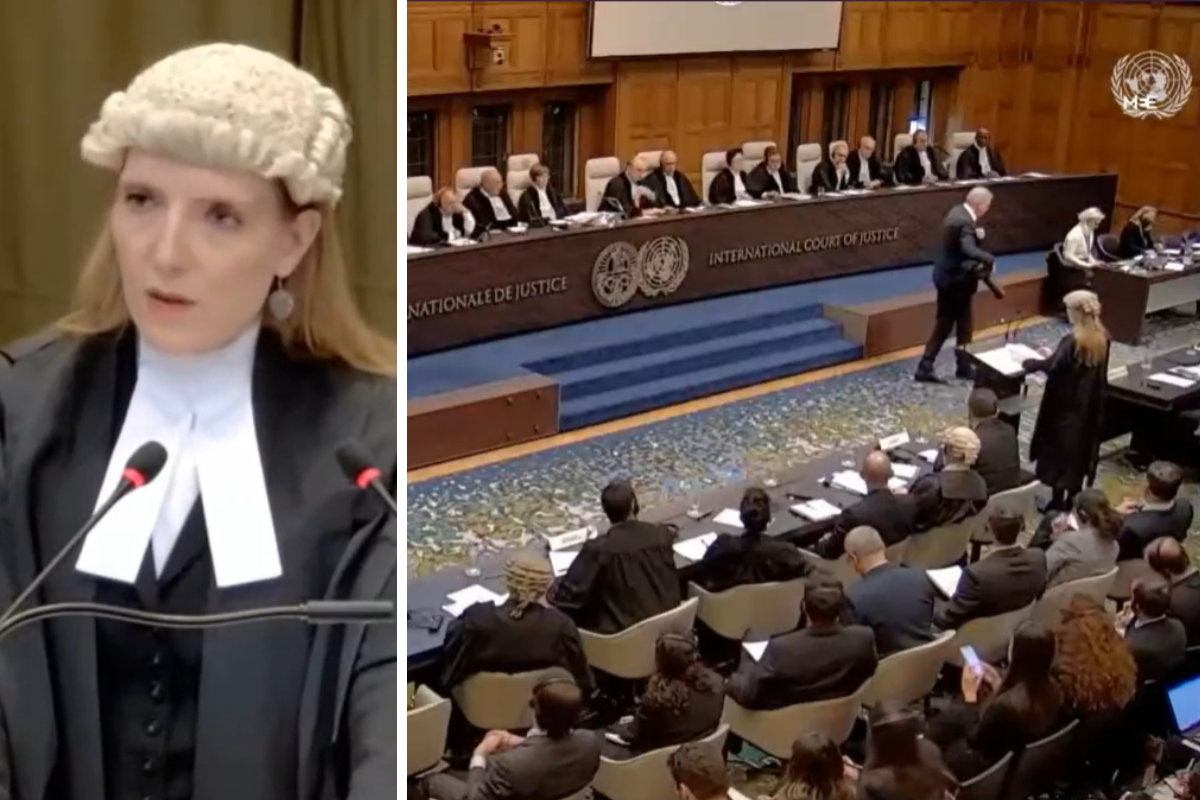
    On July 19, the International Court of Justice (ICJ) issued a nonbinding advisory opinion stating that Israel’s occupation of the Gaza Strip, West Bank, and East Jerusalem is illegal, and calling for it to end “as rapidly as possible.” After concluding that the situation facing Palestinians “constitutes systemic discrimination based on, inter alia, race, religion or ethnic origin,” the court ordered Israel to cease all settlement building activity, and instructed member states “not to render aid or assistance in maintaining the situation created by the continued presence of the State of Israel in the Occupied Palestinian Territory” — a phrase many have interpreted as meaning an arms embargo.

    The ruling, which stems from a December 2022 request by the United Nations General Assembly for an advisory opinion on the legal consequences of Israel’s ongoing occupation, was quickly rejected by the Israeli foreign ministry as “fundamentally wrong” and “blatantly one-sided.” Yet it confirms what Palestinian activists and their allies have argued for decades and could make it harder for Israel’s allies like Germany and the United States to continue to feign ignorance about the human rights situation in Palestine. To better understand what the ICJ ruling could mean for Palestinians, Jacobin spoke with the Palestinian human rights lawyer Munir Nuseibah of Al-Quds University in Jerusalem.

    Elias Feroz

    The ICJ ruling states that Israel is obligated to immediately halt all new settlement activities and repeal any legislation or measures that create or maintain the unlawful situation, including those that discriminate against the Palestinian people in the occupied Palestinian territories, as well as any actions intended to alter the demographic composition of any part of the territory. Additionally, Israel must provide full reparations for the damage caused to all affected natural or legal persons.

    Nevertheless, the ruling remains a nonbinding “advisory opinion.” How significant is it nonetheless?

    Munir Nuseibah

    The ruling is very significant for several reasons. First, it confirms something that was already obvious but has been denied by several parties, including Israel and other powerful countries: the occupation as such is illegal and must end as soon as possible, regardless of negotiations. This is important because, since the Oslo peace process began, Palestinians have been pressured to believe that any end of the occupation or any gains in their freedom must come through negotiations with Israel.

    This belief has influenced not only Israeli policy — which has not been serious about negotiations — but also international policy. For example, the legality of Israel’s annexation of East Jerusalem was treated as an open question pending final status negotiations. The ICJ advisory opinion has shifted this dynamic, making it clear to the international community that it has an obligation not only to refrain from recognizing the illegal consequences of the Israeli occupation but also to actively work to end it.

    The second point concerns apartheid. Although the International Court of Justice was not directly asked about apartheid but rather about racial discrimination, its examination led to a finding that Israel is indeed violating its duty to avoid racial segregation and apartheid. The advisory opinion concluded that Israel practices racial segregation and apartheid, at least in the occupied Palestinian territories.

    In the past four years, numerous reports from Palestinian, Israeli, and international organizations have claimed that Israel is practicing apartheid. However, many countries have been reluctant to officially acknowledge this reality. In my work in international advocacy, I have frequently encountered this reluctance among diplomats, with some suggesting to wait for a statement from the International Court of Justice. Now that the highest international court has confirmed the existence of apartheid, we have a persuasive argument for states to reconsider their relationships with Israel based on this finding.

    Elias Feroz

    This is not the first time that Israel’s conduct has been the subject of international legal deliberation. Can you explain, generally speaking, what the legal status of Israel’s occupation is? How do Israeli courts justify it, for example, and what have other international bodies determined?

    Munir Nuseibah

    There is a significant divergence between the perspectives of international bodies and the Israeli legal system. The Israeli legal framework does not recognize the occupation itself as illegal. Similarly, the Israeli legal system does not consider the annexation of territories such as Jerusalem to be unlawful.

    Instead, Israeli courts treat Jerusalem as an integral part of Israel and apply Israeli law within the city. Additionally, Israeli courts have permitted the establishment of settlements and have recognized Israeli settlers in the West Bank as part of the local population. Consequently, the Israeli legal system plays a crucial role in sustaining the apartheid regime, and it cannot be disentangled from the latter.

    The Israeli legal system occasionally references international law, but often in a selective manner that aligns with Israeli interests and objectives. Therefore, it is not an effective venue for challenging the apartheid regime. Palestinians frequently resort to Israeli courts to seek redress, such as delaying or halting home demolitions, relocating barriers to access their lands, or obtaining permits for entry into Jerusalem. While this is the only available legal recourse within historical Palestine, it serves primarily to navigate within the constraints of the existing regime rather than to challenge its foundational aspects.

    In contrast, the international justice system operates under different standards, as demonstrated by the International Court of Justice’s advisory opinion. The occupation was deemed illegal due to Israeli policies of annexation, expansion, forced displacement, and settlement construction. The appropriate remedy for this situation is the cessation of occupation and the dismantling of the apartheid regime. Achieving this outcome necessitates substantial international pressure. Although current geopolitical dynamics, influenced by US and European policies, may delay this process — echoing past support for colonial regimes like apartheid South Africa — there remains potential for change in the future. Enforcement can only begin with the Global South initiating the process, after which other regions can join in.

    Elias Feroz

    Speaking more broadly, how significant is international law or the concept of human rights for the situation in Israel/Palestine? After all, the occupation has gone on for nearly sixty years at this point, despite the UN General Assembly condemning it multiple times along with the vast majority of the world’s states.

    Munir Nuseibah

    Herein lies the challenge: the International Court of Justice has rendered its findings and applied the law to the facts, but of course it does not have an army or police to enforce its decisions. Nonetheless, this advisory opinion carries significant weight, particularly regarding the obligations it imposes on states. The primary way for states to act upon this opinion is through policy enforcement, including the imposition of sanctions.

    The critical question now is whether the General Assembly, which requested the court’s opinion, will take action to implement sanctions or if we will witness a continuation of the inertia observed over the past decades. While the General Assembly has long supported Palestinian rights, including the right to self-determination, this support has not always translated into concrete action. The Security Council, influenced by countries such as the United States, Britain, and France, is likely to continue its refusal to impose sanctions on Israel.

    Therefore, it falls to the General Assembly to pursue actions beyond the Security Council’s purview. This includes advocating for sanctions and monitoring state behaviors to ensure compliance — whether they are imposing sanctions, providing weapons, or engaging in trade that supports the apartheid regime.

    This approach is not unprecedented. During the apartheid era in South Africa, a special committee known as the Apartheid Committee was established to report on apartheid policies and observe which countries were implementing sanctions. Initially, support for ending apartheid came predominantly from the Global South, but over time, the Global North, including Europe and the United States, was compelled to halt its support. By the late 1980s and early ’90s, this shift in policy contributed to the regime’s downfall and dismantling.

    Elias Feroz

    In 2004, the ICJ also issued an advisory opinion, which ruled that the construction of the separation wall, which has been erected in Jerusalem and other parts of the Palestinian territories, is illegal. Yet the wall still exists, and there don’t seem to have been any consequences. Do you expect any political consequences from the current rule, or do these decisions from the ICJ only have a symbolic meaning?

    Munir Nuseibah

    The impact of the advisory opinion ultimately hinges on how the international community responds. This opinion, reflecting binding international law, is significant in its finding that the Israeli occupation is illegal and that an apartheid regime exists. It provides a crucial basis for enforcing sanctions rather than merely condemning the occupation and related actions.

    If the international community continues its pattern of only issuing condemnations without concrete action, the advisory opinion will become meaningless. However, if the international community adopts a more proactive stance and imposes sanctions on Israel, the opinion will prove to be highly valuable.

    The upcoming decisions by the UN General Assembly will be a critical test. In September, world leaders will deliver their speeches, leading to discussions and likely resolutions, with adoption expected in December. The next few months will reveal whether there will be substantive action or merely empty rhetoric.

    Elias Feroz

    Until now, the German government has refrained from using the term “apartheid” when referring to Israel’s policies toward the Palestinians. As a human rights lawyer, do you think it is important that we use the term to describe the situation as such? And do you think the court’s ruling could have an impact on both German and international policy?

    Munir Nuseibah

    I believe it is appropriate to describe the situation as apartheid. The term provides a crucial framework for understanding and addressing the Israeli presence in the occupied Palestinian territories.

    Unfortunately, Germany’s record has been disappointing, having supported apartheid, settlement expansion, and colonization in Palestine over the decades. This includes its support for the ongoing violence in Gaza. The situation suggests a troubling pattern, and it is uncertain whether significant changes in German policy will occur soon.

    The ongoing case between Nicaragua and Germany could potentially influence the International Court of Justice to intervene. However, substantial internal reform in Germany is necessary. While I may not have the expertise to prescribe specific changes, it is evident that Germany faces significant challenges.

    Germany’s approach to freedom of speech has been problematic. For instance, during the recent violence in Gaza, Palestinians such as Dr Ghassan Abu-Sittah, who wished to speak in Germany, were prevented from entering. Discussions about Palestinian human rights are often mischaracterized as antisemitism, reflecting a concerning misunderstanding in Germany about the difference between antisemitism and advocacy for Palestinian rights. This situation raises serious questions about the state of democracy, freedom of speech, and the broader principles of equality and justice in Germany.

    Elias Feroz

    Unlike the recent advisory opinion issued by the ICJ in July, a ruling by the International Court of Justice in South Africa’s case against Israel would be binding should the ICJ conclude that the situation in Gaza constitutes genocide. What specific consequences would this have, particularly for countries like Germany and the United States, which continue to provide military support to Israel?

    Munir Nuseibah

    The International Court of Justice has already indicated that it is plausible Israel is committing genocide. To put it more simply, based on the evidence presented and the counterevidence provided by Israel, it appears that genocide is indeed occurring. This is what “plausible” means in this context — it suggests that genocide is highly probable, not just a risk or a possibility. This is why the court decided to issue provisional measures.

    The provisional measures were based on the compelling evidence that genocide is likely taking place. Consequently, there is an urgent need to cease all arms supplies to Israel immediately.

    In the Nicaragua versus Germany case, the court did not issue provisional measures because Nicaragua was unable to establish a direct link between Germany’s support for Israel and Israel’s actions. This gap in evidence prevented action in that instance. However, if Nicaragua continues with the case, Germany could ultimately be found in violation of international law.

    Elias Feroz

    But the International Criminal Court has not yet issued its final judgment in the case between South Africa and Israel.

    Munir Nuseibah

    Based on the evidence and analysis I have reviewed, it seems very unlikely that the court will conclude that the situation in Gaza does not amount to genocide.

    Elias Feroz

    As the destruction of Gaza by Israeli forces continues, the world’s attention is largely and understandably on human rights abuses committed by Israel. But what about Hamas’s track record? What kind of treatment do civilians in Gaza face at the hands of Hamas?

    Munir Nuseibah

    Hamas has been responsible for a number of human rights violations against Palestinians during its rule of the Gaza Strip, including acts of torture and other crimes. This was years before the ongoing war.

    Currently, however, it is difficult to assess how Hamas is treating the civilian population in Gaza. I believe they are facing immense difficulties ruling amid all the chaos and destruction they are surrounded by.

    Elias Feroz

    Reports of widespread human rights abuses in Israeli detention centers like Sde Teiman have received renewed attention in recent weeks. Is this kind of treatment of Palestinian prisoners on the rise?

    Munir Nuseibah

    I myself am not a practicing lawyer, but I work with a lot of them, and they have told me terrible things. The crimes occurring in Israeli prisons are, in fact, beyond description, and they are on the rise. This applies to prisoners held in both the Gaza Strip and the West Bank, including Jerusalem.

    Elias Feroz

    To what extent can Palestinians expect fair treatment from Israeli judges? In the German debate, Israel is often presented as being less than perfect, but at least a functioning democracy with a legal system that prosecutes soldiers who mistreat Palestinians.

    Munir Nuseibah

    No, that’s not a correct assumption. The Israeli court system does not prosecute war crimes or crimes against humanity. If it did, Israel would not have developed such a deeply entrenched apartheid regime, nor would it have been able to continuously build settlements and displace Palestinians from 1948 to the present. This narrative is designed to project an image of a functioning judicial system that upholds justice, but in reality, while the court system operates, it fails to deliver true justice for Palestinians.

    Elias Feroz

    What about Palestinians who live within the 1948 borders and have Israeli citizenship?

    Munir Nuseibah

    Palestinians with Israeli citizenship certainly have more rights compared to Palestinians in the territories Israel has occupied since 1967. However, they are not equal to Israeli Jews. Israel defines its citizens not only as individuals who carry its citizenship but also according to their ethnic background. Each Israeli person has an ethnicity in addition to citizenship, such as Arab, Jewish, Armenian, and so on. Israeli law and the regime discriminate against Palestinian citizens of Israel [who are regarded as “Arab Israelis”] in many ways.

    Elias Feroz

    Whenever this terrible war ends, the search for justice for victims on both sides will begin. Can Israeli or Palestinian courts be trusted as neutral arbiters? Or would some kind of international tribunal be more appropriate?

    Munir Nuseibah

    Israeli courts cannot be relied upon for impartial justice. As I explained, they are unfortunately an integral part of the apartheid regime, supporting and reinforcing its policies. Given this, Palestinian courts lack the authority to prosecute Israelis due to the constraints imposed by the occupation and the power dynamics at play. Consequently, only international tribunals and courts are in a position to address these issues effectively.

    #Palestine #Israël #Allemagne #USA #apartheid #justice #droit

  • Inside the brutal siege of #Jenin "L’armée israélienne affirme comb...
    https://diasp.eu/p/17114574

    Inside the brutal siege of #Jenin

    “L’armée israélienne affirme combattre les Brigades de Jénine et d’autres groupes de résistance dans le camp de réfugiés, mais l’opération a dévasté de vastes pans d’infrastructures civiles, une forme évidente de punition collective.”

    The Israeli army is destroying civilian infrastructure, blocking medical access, and conducting mass arrests in its largest #WestBank operation in years.

    By Mariam #Barghouti September 4, 2024

    https://www.972mag.com/jenin-operation-summer-camps #Palestine #Israel #Gaza

  • The Criminalisation of Freedom of Movement

    The criminalisation of freedom of movement is key to the formation of racial apartheid in Europe and globally.

    This podcast is based on the online community course on Resisting the Criminalisation of Facilitation (Spring 2023). Syllabus.

    The idea to do this course and this podcast emerged at a workshop held in Palermo in fall 2023, in conversation with associations and activists involved in the struggles for freedom of movement, including the Captain Support Network. There, a consensus emerged on the need to create spaces of mutual learning and materials to counter the discourses of ‘smuggling’ and ‘trafficking’ that mobilise public support for criminalisation, incarceration, pushbacks, and other forms of border violence.

    In this podcast, we look at how the concept of ‘facilitation’ allows us to reflect on the continuum of criminalisation, without fabricating differentiations between the migrant activist, the boat driver, the sea rescuer, or the lorry driver.

    Placing the focus on the practices that are criminalised, rather than on the actors themselves, brings to light that most forms of facilitation are a necessary product of the international nation-state system, border violence, and the criminalisation of migration.

    From this perspective, we can build a decolonial, abolitionist analysis: the abolition of borders requires the decriminalisation of any form of facilitation of migration.

    Freedom of Movement! Free Them All!

    https://feministresearch.org/podcasts
    #podcast #audio
    #migrations #liberté_de_circulation #apartheid_racial #criminalisation_de_la_migration #facilitation #passeurs #abolitionnisme

    ping @karine4 @_kg_ @isskein @reka

  • Les deux classiques de Bro. Valentino réédités par Analog Africa
    https://pan-african-music.com/bro-valentino-analog-africa

    À la fin des tumultueuses années 70, on pouvait encore sentir les échos de la révolution Black Power de Trinidad, notamment à travers les deux plus gros succès de Valentino : « Stay up Zimbabwe » sorti en 1979 et « Ah Wo (Brand New Revolution) » sorti en 1980 (repris par Guts en 2013).

    https://analogafrica.bandcamp.com/album/stay-up-zimbabwe-limited-dance-edition-nr-6

    #musique #politique #musique_et_politique #black_power #Afrique_du_Sud #apartheid

  • Leurs noms jugés racistes, des plantes vont être rebaptisées

    Plus de 200 plantes aux noms renvoyant à des insultes racistes ou des personnages esclavagistes vont être rebaptisées. La décision a été prise lors du Congrès international des botanistes à Madrid.

    Une décision importante dans le milieu botanique. Les professionnels du secteur du monde entier, qui se réunissent jusqu’au 27 juillet à Madrid pour le 20e Congrès international des botanistes, ont voté pour renommer des plantes à connotation raciste.

    Comme le rapporte le journal britannique du Times, 63 % des 556 experts en botaniques présents se sont dits favorables à ce changement. Ainsi, plus de 200 plantes, #algues et #champignons seront rebaptisés jusqu’en 2026.

    Sont notamment remis en cause des noms d’espèce contenant le mot latin « #caffra » (#caffre en français), rapporte le Times. Ce terme était utilisé pendant l’#apartheid en #Afrique_du_Sud pour désigner péjorativement les personnes noires. Selon le Journal of South African Studies (https://www.tandfonline.com/doi/abs/10.1080/03057070.2018.1403212), il est rattaché à des notions de racisme et de justification de la #supériorité_blanche.

    Une #commission pour valider le processus

    Les espèces composées sur nom « caffra » verront leurs dérivés être remplacés par « affra » afin de rappeler leur origine africaine. #Erythrina_Caffra devrait ainsi être rebaptisée Erythrina Affra, Protea Caffra en Protea Affra, et Dovyalis Caffra en Dovyalis Affra, selon les propositions de Gideon Smith et d’Estrela Figueiredo de l’Université Nelson-Mandela (Afrique du Sud).

    « Nous nous réjouissons de l’éradication d’une injure raciste dans les noms scientifiques des plantes, des algues et des champignons. Nous nous félicitons de la majorité de plus de 60 % que la communauté botanique mondiale a exprimée en faveur de notre proposition », a réagi Gideon Smith auprès du journal britannique.

    Une commission va être également créée pour s’assurer du bon déroulé du changement de nom, sur la proposition du taxonomiste végétal à l’université nationale d’Australie à Canberra, Kevin Thiele, qui salue une avancée dans la reconnaissance du problème. Pour autant, certains biologistes expriment des inquiétudes quant à ce changement de #nomenclature. « Cela pourrait entraîner beaucoup de confusion et de problèmes pour les utilisateurs dans de nombreux domaines autres que la botanique », estime Alina Freire-Fierro, botaniste à l’université technique de Cotopaxi, en Équateur.

    D’autres noms sont dans le viseur des botanistes, comme ceux associés à des personnages esclavagistes ou opposés à l’abolition de l’esclavage. L’#Hibbertia vient par exemple de #George_Hibbert, un membre du lobby pro-esclavagiste de Grande-Bretagne.

    https://www.lepoint.fr/environnement/leurs-noms-juges-racistes-des-plantes-vont-etre-rebaptisees-23-07-2024-25662
    #plantes #noms #racisme #nomination #botanique #esclavagisme

    ping @cede @reka

    • What’s in a Word? Historicising the Term ‘Caffre’ in European Discourses about Southern Africa between 1500 and 1800

      In the 19th and 20th centuries, southern Africa’s white colonists used the word ‘Caffre’ to characterise the region’s black majority as an inferior race of African origins. While this historical context explains why the term ‘Caffre’ is considered hate speech in post-apartheid South Africa, the word’s history dates back to the beginning of Europe’s engagement with the region in c. 1500. Based on primary sources in multiple languages, this article explores this deeper history and shows that Europeans imbued the word ‘Caffre’ with racialising ideas from the start. The Portuguese first racialised the term by linking it explicitly to black skin colour in the 16th century. In the 17th century, Cape Colony officials reinforced its racialisation by creating a ‘Hottentot–Caffre’ race dichotomy, a racial divide of long-term significance in southern African history. By the end of the 18th century, most European naturalists argued that ‘Caffre’ identified a people racially distinct from ‘Hottentots’ and ‘true Negroes’, an idea that shaped missionary approaches to Bible translation in the region until the mid 19th century. Moreover, naturalists rationalised these alleged racial differences by placing the origins of the ‘Caffres’ outside the African continent, thereby effectively defining them as a superior race of non-African provenance. The word’s deeper history, therefore, exposes a major transformation in meaning over the course of the 19th century: whereas the word ‘Caffre’ represented a superior race of non-African origin in 1800, it described an inferior race of African origin in 1900. Because the radical change in meaning parallels the process of black political and economic disempowerment in southern Africa, the article suggests that the term became directly implicated in and transformed by this process and, for this reason, should be viewed as a valuable historical record of the establishment of white supremacist rule in the region.

      https://www.tandfonline.com/doi/abs/10.1080/03057070.2018.1403212

  • Les crimes contre les afghanes poussent à reconnaître « l’apartheid de genre »

    Richard Bennett, le rapporteur spécial de l’Onu sur l’Afghanistan, a déclaré mardi 18 juin devant le Conseil des droits de l’homme réuni à Genève que le « système institutionnalisé d’oppression fondé sur le genre » des talibans serait constitutif d’un « crime contre l’humanité ». En Iran aussi, la répression contre les femmes est systémique. Depuis septembre 2022, des manifestantes sont tuées, emprisonnées, violées et torturées. En réponse, les Nations unies, des ONG et des juristes plaident de plus en plus pour que « l’apartheid de genre » soit reconnu comme un crime contre l’humanité.

    https://www.justiceinfo.net/fr/133399-crimes-afghanes-poussent-reconnaitre-apartheid-de-genre.html?mc_
    https://entreleslignesentrelesmots.wordpress.com/2024/04/10/la-fidh-rejoint-le-mouvement-global-pour-la-reconnaissance-de-lapartheid-de-genre-comme-crime-de-droit-international/#comment-61300

    #international #afghanistan #apartheid

  • Le piège de la frontiere de Nador-Melilla
    Résumé

    https://vimeo.com/954056937/358dd8498d

    Le #24_juin_2022, près de deux-mille personnes migrantes ont tenté de traverser la barrière-frontalière séparant la ville de #Nador – au nord-est du Maroc – de Melilla – enclave sous contrôle espagnol. La #répression violente qui leur a été infligée par les forces de l’ordre marocaines et espagnoles a transformé le poste-frontière de #Barrio_Chino en #piège mortel, et a abouti à un véritable #charnier. Les autorités marocaines ont reconnu 23 décès, mais l’Association Marocaine des Droits Humains à Nador (AMDH) a dénombré au moins 27 personnes tuées lors de cette journée, et plus de 70 personnes demeurent disparues jusqu’à aujourd’hui. Que s’est-il passé le 24 juin 2022 ? Comment et par qui le poste-frontière de Barrio Chino a-t-il été transformé en piège mortel ?

    Pour répondre à ces questions, Border Forensics a enquêté pendant plus d’un an avec Irídia-Centre pour la Défense des Droits Humains, l’Association Marocaine des Droits Humains et d’autres acteurs de la société civile des deux côtés de la frontière. Par ailleurs, nous avons bénéficié des conseils complémentaires du Centre Européen pour les Droits Constitutionnels et Humains (ECCHR). En articulant notre analyse du massacre à travers différentes échelles spatiales et temporelles, nous avons tenté de comprendre non seulement l’enchaînement des évènements et les pratiques des acteurs présents sur place le 24 juin 2022, mais également les conditions structurelles qui ont rendu ce massacre possible, ainsi que la conjoncture politique qui a influé sur l’intensité extrême de la violence. Nous analysons également la violence qui a continué après le 24 juin à travers l’absence d’identification des morts et des disparus, l’impunité pour le massacre et l’acharnement judiciaire contre les personnes migrantes elles-mêmes.

    Bien que des zones d’ombre subsistent, les faits que nous avons reconstitués en croisant de nombreux éléments de preuve sont accablants, tant pour les autorités marocaines et espagnoles que pour l’Union européenne (UE) qui les soutient politiquement et financièrement. Les autorités des deux côtés de la frontière doivent faire toute la lumière sur ce massacre, et enfin répondre aux demandes de vérité et de justice des victimes et de leurs familles.


    https://www.borderforensics.org/fr/enquetes/nadormelilla
    #Melilla #Espagne #Maroc #frontières #massacre #mourir_aux_frontières #morts_aux_frontières #border_forensics #architecture_forensique #violence #violences_policières #contre-enquête #apartheid_frontalier #barrières_frontalières #murs #domination_raciale #impunité #préméditation #militarisation_des_frontières #identification #externalisation

  • NETANYAHU : PORTRAIT D’UN #CRIMINEL DE GUERRE (PARTIE 1 & 2) - YouTube
    https://www.youtube.com/watch?v=B4rnWE0C3ns

    À lui seul et depuis plus de 15 ans, Benjamin Netanyahu incarne l’extrême droitisation d’une société israélienne de plus en plus sclérosée. À travers un portrait inédit dont on diffuse ici la deuxième partie en plus de la première sortie quelques semaines plus tôt, Blast vous propose de découvrir qui est l’homme qui règne sur l’État hébreu. De son enfance aux #États-Unis, élevé par un père admirateur de #Mussolini, à l’offensive destructrice lancée sur #Gaza en passant par les accords d’Oslo, les idées de Netanyahu sont petit à petit devenues majoritaires dans le pays. #Mensonges historiques, #apartheid, crimes de guerre et accusations de #génocide à l’encontre des Palestiniens.

  • How Israel twists antisemitism claims to project its own crimes onto Palestinians
    https://www.972mag.com/ihra-antisemitism-israel-inversion-projection

    Crucially, the #IHRA definition manifests the inversion and projection mechanism by which Israel and its supporters deny Israel’s crimes and attribute them to the Palestinians. One of the definition’s examples states, for instance, that “Denying the Jewish people their right to self-determination” is antisemitic. Yet Israel’s official policy of settlement, occupation, and annexation for the last several decades has denied the Palestinian people their own right to self-determination.

    This policy has been intensified under Benjamin Netanyahu, who, in January 2024, publicly vowed to resist any attempt to establish a Palestinian state. The governing coalition’s fundamental guiding principles further declare, echoing the 2018 Jewish Nation-State Law, that “The Jewish people have an exclusive and inalienable right over all areas of the Land of Israel.” As Israel actively thwarts Palestinian self-determination, the IHRA definition inverts and projects this onto the Palestinians themselves, calling it antisemitism.

    According to the IHRA definition, “Drawing comparisons of contemporary Israeli policy to that of the #Nazis” is another example of antisemitism. Here, too, the pattern of #inversion and #projection is evident, as Israel and its supporters continuously link Arabs and especially Palestinians to the Nazis.

    […]

    Thus, what Israel and its supporters accuse Palestinians of inciting, Israeli officials and public figures are explicitly and openly declaring, and the Israeli army is prosecuting. And while Palestinians and their supporters chant for liberation “from the river to the sea,” Israel is enforcing Jewish supremacy “from the river to the sea” in the form of occupation, annexation, and apartheid. 

    We therefore suggest interpreting this inversion and projection not only as a classic case of hypocritical double standards against the Palestinians, but also — as is often the case with processes of projection — a defense mechanism of denial. Israel and its supporters cannot confront the state’s oppressive #apartheid structure, its delegitimization of the Palestinians, or its genocidal rhetoric and crimes, so they twist these allegations and thrust them onto the Palestinians.

    The so-called “fight against antisemitism” that Israel and its supporters are waging, grounded in the IHRA definition of antisemitism, should therefore be seen as yet another means used by a powerful state to deny its criminal acts and mass atrocities. The U.S. government must reject it outright.

    #antisémitisme #déni #génocide