Seenthis
•
 
Identifiants personnels
  • [mot de passe oublié ?]

 
  • #c
  • #ca
  • #cam
  • #camp
  • #camps
RSS: #camps_de_travail

#camps_de_travail

  • #camps_de_travailleurs_sans_papiers
  • @cdb_77
    CDB_77 @cdb_77 6/09/2026

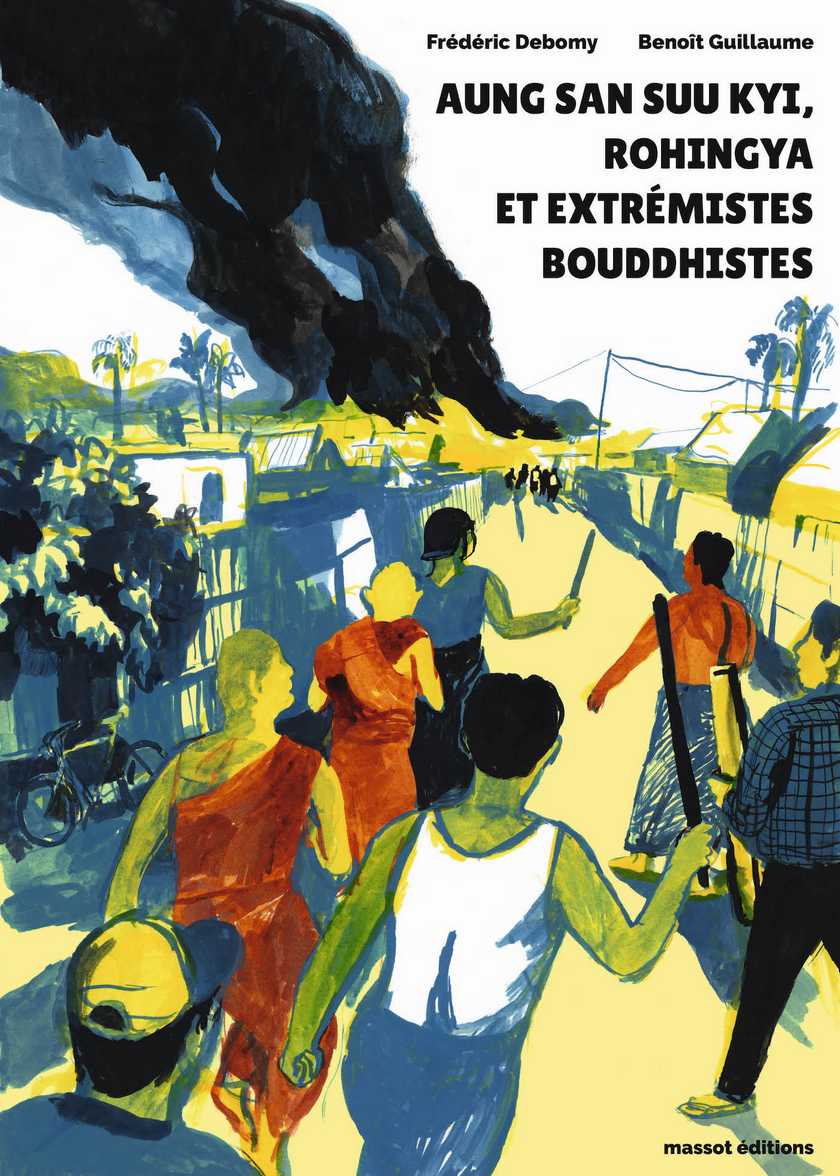
    #Aung_San_Suu_Kyi, #Rohingya et extrémistes bouddhistes

    https://www.massot.com/cdn/shop/files/COUVERTURE_5_p1solo.jpg

    Le phénomène de l’#extrémisme_bouddhiste en Birmanie, incarné par le #bonze_Wirathu, a surpris tous ceux qui n’envisagent le bouddhisme que comme une #religion de paix ou une simple spiritualité.

    Pour l’expliquer, Frédéric Debomy et Benoît Guillaume se sont rendus en Birmanie, dévoilant au fil des déplacements et des rencontres les ressorts d’une société brisée par des décennies de #dictature_militaire et obsédée par les questions d’#identité.

    On y découvre que l’#intolérance des #moines extrémistes est largement partagée par la société et que les musulmans, cibles privilégiées, n’en font pas seuls les frais : les chrétiens ne sont pas toujours épargnés et les femmes largement discriminées.

    Dans ce contexte, la plus célèbre des opposantes à la dictature, parvenue partiellement au pouvoir, déçoit, ce qui semble s’expliquer à la fois par un contexte miné et son évolution personnelle.

    Le lecteur découvrira ainsi dans les pas des auteurs combien il reste à parcourir pour que ce pays connaisse véritablement la démocratie.

    ▻https://www.massot.com/products/aung-san-suu-kyi-rohingya-et-extremistes-bouddhistes

    #BD #bande_dessinée #bande-dessinée #livre #generation_Wave #droits_humains #Birmanie #minorités_religieuses #haine_raciale #Wirathu #chasse_aux_musulmans #racisme #camps_de_réfugiés #Ma_Ba_Tha #discriminations #nationalisme #armée #mouvement_969 #Arakan #démocratie #camps_de_travail #USDF #préjugés #islam #bouddhisme #Ligue_nationale_pour_la_démocratie (#LND) #islamophobie #cronies #christianisme #Tatmadaw #Gouvernement_birman_en_exil (#NCGUB)

    CDB_77 @cdb_77
    Écrire un commentaire
  • @cdb_77
    CDB_77 @cdb_77 5/05/2024
    2
    @simplicissimus
    @olaf
    2

    Campi di lavoro e lavoro nei campi

    https://www.editore.ch/images/stories/virtuemart/product/Internamento%20COP.jpg

    Dall’agosto 1940 e fino alla fine del 1945 vennero internati, in numerosi campi sparsi sull’insieme del territorio ticinese, mediamente circa un migliaio di soldati stranieri, i quali rappresentarono una categoria specifica dell’insieme dei profughi accolti durante la Seconda guerra mondiale. Si trattò in gran parte di soldati polacchi, ma nei campi allestiti in Ticino risiedettero per periodi di tempo variabili pure francesi, italiani, tedeschi, austriaci, sovietici, indiani e vietnamiti, nonché un contingente di combattenti provenienti dal continente africano. Chi erano questi uomini? A quale regime furono sottoposti e perché? Dove sorsero i campi in cui furono confinati? Come trascorrevano le loro giornate? Quali furono i rapporti con la popolazione locale? Quale memoria della loro presenza si è sedimentata in Ticino? Attingendo a fonti archivistiche sinora poco sfruttate, il volume analizza e approfondisce il tema dell’internamento militare sul piano regionale, facendolo costantemente dialogare in senso verticale con quello nazionale. La pluralità degli approcci adottati e dei punti di vista considerati ha consentito di fare emergere alcune specificità ticinesi e, in altri casi, di fare luce su aspetti finora poco studiati dell’internamento militare nel suo insieme. Colmando una lacuna storiografica e fornendo un quadro esaustivo delle coordinate geografiche e temporali dell’internamento militare, il libro si presta a fungere da strumento imprescindibile per chiunque voglia affrontare la tematica della presenza di internati militari in Ticino ed eventualmente approfondirla sul piano locale.

    https://www.editore.ch/images/stories/virtuemart/product/Internamento%20COP.jpg

    #livre
    #camps_de_travail #Tessin #Suisse #histoire #réfugiés_ukrainiens #réfugiés_polonais #Pologne #deuxième_guerre_mondiale #seconde_guerre_mondiale #WWII #mémoire

    CDB_77 @cdb_77
    • @cdb_77
      CDB_77 @cdb_77 5/05/2024

      Polish Army in Insubrica region: the case study of Polish internees in Losone

      https://insubricahistorica.ch/wp-content/uploads/2019/03/Polnische-Internierten-in-der-Schweiz.gif

      During the German campaign in the West, in June 1940, 2nd Polish Infantry Division under command of Bronisław Prugar-Ketling (1891-1948) was sent to the French region of Belfort to support 8th French army. After being cut off from supply, approximately 12,000 to 13,000 Polish soldiers of this Infantry Division, crossed the Swiss border on 19-20 June 1940, south of Ajoie, avoiding thus the German capture.

      The soldiers were interned in Switzerland according to the Hague Convention. After a failed attempt to concentrate all Pole servicemen in only one camp in Büren an der Aare, Polish soldiers were dispersed throughout Switzerland. From 1941, barrack camps were set up in all Switzerland, where these Poles soldiers were interned until December 1945. In the Insubrica region, many Polish soldiers were gathered and managed in Losone, nearby Locarno and Ascona.

      These interned Poles soldiers made mainly group-wise work assignments for the Swiss national defence works, related to the national infrastructure like constructions of roads and bridges, drainage of swamps as well as general works in the agriculture. A total of 450 kilometers in paths, bridges and canals were built alone in Ticino by these servicemen. At present, monuments and commemorative plaques commemorate the involuntary stay of these Polish soldiers people throughout the Ticino region. After the war, around 500 Poles were able to settle down in Switzerland, obtaining the Swiss citizenship.

      In addition to building and paving roads between Arcegno and Golino in the Canton Ticino, the Polish army soldiers, interned in the Losone camp during 1941-1945, worked hard to reclaim approximately 100 hectares of the land in the municipality of Losone between “Saleggi” and “Gerre”. This hard work reshaped radically the landscape of the region in the mid of the 1940s.

      https://insubricahistorica.ch/wp-content/uploads/2019/11/Polish-internees-situation-in-Losone-1944-1945-Insubrica-Historica-1024x561.jpg

      Thanks to the intervention of Polish soldiers, a large amount of uncultivated agricultural areas in Ticino could be developed and, later, transformed in tourist and industrial zones.

      A hard work of Polish prisoners allowed a creation of a very important agricultural zone in Losone that persisted for many years until a construction of the famous 18 holes Golf place (shown in the centre of the map that can be seen above).

      Further in the North, in the 1980’s, an important industrial settlement called “Zandone” was created (on the left side of the above shown map). The Polish work allowed to erect a large camping in Melezza and the “Scuderia delle cavalli delle Gerre” in the area of Zandone. Between Arcegno and Golino, Polish soldiers managed to pave a road, that is named today “strada dei polacchi” (in English: Polish road).

      Polish soldiers were interned also in other parts of Switzerland and left unmistakable traces of their hard work. There are several so-called Polenweg‘s, which are roads that were built by Polish soldiers during the Second World War in Switzerland.

      ▻https://insubricahistorica.ch/blog/2018/04/16/polish-army-in-insubrica-region-case-of-losone
      #Losone

      –-

      Gli internati polacchi nel Locarnese e Valle Maggia

      Avevamo già scritto nell’aprile 2018 su Insubrica Historica un breve contributo sugli internati polacchi nella regione Insubrica. Durante dei lavori di ricerca per un imminente pubblicazione di Insubrica Historica sul Locarnese, abbiamo ritrovato ulteriori dettagli, che valgono la pena di essere condivisi.

      La presenza degli internati polacchi in Ticino e soprattutto nel Locarnese è legata soprattutto alla caserma di Losone posta nella località Piana di Arbigo, la quale ospitò ben oltre la fine del conflitto un ingente numero di soldati polacchi, circa un migliaio. Da questa caserma vennero impiegati per diversi lavori di bonifica. La loro presenza viene ricordata nel Locarnese per la Strada dei Polacchi da Arcegno a Golino, o ancora ad Orselina per la cappella della Madonna di “Ostra Brama”.

      Vi erano però diversi altri campi di lavoro distribuiti nella regione, i quali ospitavano anche loro soldati polacchi. In particolare grazie ad un recente articolo di Fabio Cheda Gli internati polacchi a Maggia, vi sono alcuni dettagli di questi campi nella Valle Maggia.

      I campi erano distribuiti nella maniera seguente: ai Ronchini di Aurigeno (15-30 militi), a Bignasco (10-15 militi), a Cevio (40-50 militi), a Linescio (30-35 militi), presso l’edificio “Cortao di Bonitt” a Maggia (30-35 militi), al Piano di Peccia (fino a 15 militi) e a San Carlo (100-200 militi). Nella sola Valle Maggia vi era circa il 15% (n=200) del totale dei soldati polacchi internati in Svizzera (n=12’000) durante la guerra. La maggior parte di loro erano entrati in Svizzera nella regione del Giura Francese, duranta la disfatta dell’esercito francese nell’estate del 1940.

      https://insubricahistorica.ch/wp-content/uploads/2021/08/Polacchi-Maggia-Insubrica-Historica.png

      L’ubicazione di alcuni di questi campi e località di lavoro come a Lodano, lascia dedurre che l’impiego di questi soldati non era confinato al solo settore agricolo ma soprattutto anche nel disboscamento delle superfici forestali della Valle.

      «Questi baldi giovanotti facevano girare spesso la testa alle ragazze e alle mogli locali, tenendo in considerazione che gran parte degli uomini del paese erano impegnati nel servizio militare. È appurato che i Polacchi abbiano lasciato il segno: una donna si presentò un giorno ai capi responsabili mostrando il ventre gonfio…» (Fabio Cheda, A tu per tu, Dicembre 2020)

      Sempre secondo Fabio Cheda, il rapporto dei soldati polacchi con la popolazione era esemplare. Molto positivo, soprattutto con le signorine della Valle, tanto che vennero celebrati anche dei matrimoni.

      https://insubricahistorica.ch/wp-content/uploads/2021/08/Polacchi-Libera-Stampa-07101943-Insubrica-Historica.png

      Non tutti i soldati polacchi ebbero la pazienza di restare fino alla fine del conflitto, oppure di ritornare in Pologna. Ve ne sono alcuni che riuscirono anche a fuggire da questi campi di lavoro prima e dopo il conflitto, i quali pur essendo controllati da soldati dell’esercito Elvetico, non sottostavano a rigida disciplina, come invece si ebbe in altri campi soprattutto della Svizzera tedesca.

      https://insubricahistorica.ch/wp-content/uploads/2021/08/Polacchi-scappati-Insubrica-Historica-1024x306.png

      ▻https://insubricahistorica.ch/blog/2021/09/30/gli-internati-polacchi-nel-locarnese-e-valle-maggia
      #internement #internés

      CDB_77 @cdb_77
    • @cdb_77
      CDB_77 @cdb_77 5/05/2024

      Internati polacchi in Svizzera tra guerra, lavoro e sentimento

      https://www.editore.ch/images/stories/virtuemart/product/Internati_polacc_4d45eee968c75.png

      Un’analisi storica sulla presenza degli internati militari polacchi in Svizzera durante la Seconda Guerra Mondiale vuole essere un momento prezioso per una riflessione su noi stessi e sulla nostra terra elvetica: terra di transito in cui i nostri orizzonti hanno potuto incontrarsi, per pochi anni, con un popolo straordinario, che nel dolore, nella perdita e nella sofferenza del conflitto ha saputo dare, oltre che il suo sudore del lavoro - fondamentale per il nostro Paese - durante l’internamento, un esempio unico di dignità, di comunanza e di fratellanza.
      Al di là della politica e delle vicissitudini belliche, gli uomini hanno saputo ritrovarsi, anche soltanto per un istante.

      ▻https://www.editore.ch/shopvm/varia/internati-polacchi-in-svizzera-tra-guerra-lavoro-e-sentimento-detail.html

      CDB_77 @cdb_77
    Écrire un commentaire
  • @cdb_77
    CDB_77 @cdb_77 23/12/2022
    @isskein @cede @reka

    Undesirables. A Holocaust Journey to North Africa

    https://www.sup.org/img/covers/med_large/pid_35024.jpg

    In this gripping graphic novel, a Jewish journalist encounters an extension of the horrors of the Holocaust in North Africa.

    In the lead-up to World War II, the rising tide of fascism and antisemitism in Europe foreshadowed Hitler’s genocidal campaign against Jews. But the horrors of the Holocaust were not limited to the concentration camps of Europe: antisemitic terror spread through Vichy French imperial channels to France’s colonies in North Africa, where in the forced labor camps of Algeria and Morocco, Jews and other “undesirables” faced brutal conditions and struggled to survive in an unforgiving landscape quite unlike Europe. In this richly historical graphic novel, historian Aomar Boum and illustrator Nadjib Berber take us inside this lesser-known side of the traumas wrought by the Holocaust by following one man’s journey as a Holocaust refugee.

    Hans Frank is a Jewish journalist covering politics in Berlin, who grows increasingly uneasy as he witnesses the Nazi Party consolidate power and decides to flee Germany. Through connections with a transnational network of activists organizing against fascism and anti-Semitism, Hans ultimately lands in French Algeria, where days after his arrival, the Vichy regime designates all foreign Jews as “undesirables” and calls for their internment. On his way to Morocco, he is detained by Vichy authorities and interned first at Le Vernet, then later transported to different camps in the deserts of Morocco and Algeria. With memories of his former life as a political journalist receding like a dream, Hans spends the next year and a half in forced labor camps, hearing the stories of others whose lives have been upended by violence and war.

    Through bold, historically inflected illustrations that convey the tension of the coming war and the grimness of the Vichy camps, Aomar Boum and Nadjib Berber capture the experiences of thousands of refugees through the fictional Hans, chronicling how the traumas of the Holocaust extended far beyond the borders of Europe.

    ▻https://www.sup.org/books/title/?id=35024

    #BD #holocauste #Afrique_du_Nord #histoire #bande-dessinée #livre #WWII #deuxième_guerre_mondiale #France #colonialisme_français #colonialisme #France #Vichy #colonisation #antisémitisme #Algérie #Maroc #camps_de_travail #travail_forcé #Algérie_française #Juifs #indésirables #internement #Le_Vernet #désert

    ping @isskein @cede @reka

    CDB_77 @cdb_77
    Écrire un commentaire
  • @cdb_77
    CDB_77 @cdb_77 12/02/2022
    2
    @colporteur
    @02myseenthis01
    2
    @postcolonial @isskein @karine4 @cede

    L’#Algérie sous #Vichy

    http://d1023456-2104.hosting.hegerys.com/projet/multimedia/film/56994.jpg

    De l’été 1940 à l’été 1943, l’#Algérie_française se donne avec enthousiasme à la révolution nationale voulue par #Pétain. Ce dont de nombreux Européens d’Algérie rêvent depuis longtemps s’accomplit : rétablissement de l’#ordre_colonial, mise au pas des populations et abrogation du #décret_Crémieux qui, en 1870, avait fait des Juifs d’Algérie des citoyens français.

    ▻http://www.film-documentaire.fr/4DACTION/w_fiche_film/64265_0

    #WWII #seconde_guerre_mondiale #histoire #Juifs #antisémitisme #Maréchal_Pétain #collaborationnisme #impérialisme #France #Georges_Hardy #général_Weygand #Maxime_Weygand #Juifs_d'Algérie #déchéance_de_nationalité #licenciement #citoyenneté #exclusion_scolaire #Juifs_indigènes #catégorisation #Italiens_d'Algérie #indigènes #extrême_droite #Edouard_Drumont #Drumont #émeutes_antijuives #musulmans #Gabriel_Lambert #Messali_Hajj #assimilation #Ferhat_Abbas #égalité_par_le_bas #propagande #pauvreté #discriminations #typhus #Georges_Claude #confiscation_des_biens #aryanisation_économique #service_des_questions_juives #terres #camps #internement #camps_de_travail #camps_d'éloignement #indésirables #torture #Bedeau #chasse_aux_Juifs #service_d'ordre_de_la_légion (#SOL) #étoile_jaune #fascisme #oppression #résistance #José_Aboulker #Opération_Torch #général_Juin #Alphonse_Juin #François_Darlan #général_Giraud #unités_de_travail #Henri_Giraud #rafles #Fernand_Bonnier_de_la_Chappelle #Marcel_Peyrouton #débarquement #Etats-Unis #USA #spoliation #Jean_Monnet #Sidney_Chouraqui #armée_d'Afrique #camp_de_Bedeau #de_Gaulle #déshumanisation

    ping @postcolonial @isskein @karine4 @cede

    CDB_77 @cdb_77
    Écrire un commentaire
  • @etraces
    e-traces @etraces via RSS ART LIBRE 6/01/2021
    5
    @mad_meg
    @touti
    @7h36
    @colporteur
    @kaparia
    5

    Enquête vidéo : ce que les réseaux sociaux chinois révèlent des camps d’internement et du travail forcé des Ouïgours
    ▻https://www.lemonde.fr/international/video/2021/01/06/enquete-video-ce-que-les-reseaux-sociaux-chinois-revelent-des-camps-d-intern

    Malgré la censure et les dénégations de Pékin, l’analyse des réseaux sociaux chinois par « Le Monde » expose la politique de répression menée contre les musulmans ouïgours, au Xinjiang. Près de 400 camps d’internement, plus d’un million de détenus et des centaines de milliers de travailleurs forcés… Depuis 2018, l’ampleur de la persécution des Ouïgours en Chine émerge progressivement. Mais selon le gouvernement chinois, ces camps d’internement seraient des « centres de formation professionnelle » et les (...)

    #Nike #Amazon #domination #religion #Islam #prison #SocialNetwork #surveillance #travail (...)

    ##Zara

    https://img.lemde.fr/2020/12/29/0/0/1920/960/1440/720/60/0/a5c0f2e_70971273-appel.jpg

    e-traces @etraces via RSS ART LIBRE
    • @colporteur
      colporteur @colporteur CC BY-NC-SA 6/01/2021

      ▻https://seenthis.net/messages/893645
      #Ouïgours #camps #camps_de_travail #industrie_textile

      colporteur @colporteur CC BY-NC-SA
    Écrire un commentaire
  • @odilon
    odilon @odilon CC BY-NC-ND 3/12/2018
    2
    @simplicissimus
    @sodaa
    2

    Tracking China’s Muslim Gulag
    ▻https://www.reuters.com/investigates/special-report/muslims-camps-china

    https://www.reuters.com/investigates/special-report/assets/muslims-camps-china/mastheads/Xinjiang_share_card.png?v=344820281118

    China is accused of incarcerating hundreds of thousands of Muslims in detention camps that are rising from the desert sands in Xinjiang. A forensic analysis of satellite images of 39 of these facilities shows they are expanding at a rapid rate.

    #chine #camps_de_travail #musulman #Ouïghours #détention

    • #China
    odilon @odilon CC BY-NC-ND
    • @simplicissimus
      Simplicissimus @simplicissimus 3/12/2018
      @odilon

      Très belle illustration visuelle !

      La légende des différentes étapes :

      Here are the footprints of all 39 camps. Prior to April 2017, these facilities had a total of 539 buildings covering 379,000 square meters.

      By August this year, the number of buildings at these facilities had more than doubled to 1,129. The area they covered had almost tripled to more than 1 million square meters - roughly the size of 140 soccer fields.

      And the expansion continues. A further 67 buildings, covering an area of 210,000 square meters, are now under construction in these compounds, according to the most recent satellite imagery that was analyzed.

      Infographie vraiment remarquable.

      #merci @odilon

      Simplicissimus @simplicissimus
    • @cdb_77
      CDB_77 @cdb_77 14/01/2019

      Opinion: The Strange Silence Over China’s Muslim Crackdown

      https://media.npr.org/assets/img/2019/01/11/ap_19009007882082-df4c1526808b9e3686371b908ec30f43d71ca6f9-s800-c85.jpg

      President Trump says trade talks between the United States and China have been, “going very well.” The United States put $250 billion worth of tariffs on Chinese goods last year, to counter what it considers unfair trade practices and theft of U.S. technology.

      But there are no indications the United States, the United Nations, or any government is prepared to use any economic or diplomatic leverage to oppose China locking up between 800,000 and 2 million Uighurs, Kazakhs and other Chinese Muslims into internment camps in the western Xinjiang region.

      The camps are in remote locations — closed to the world — and ringed with barbed wire. But they have been photographed by satellite. The Chinese government calls them “re-education centers,” a phrase that carries a sinister history from the murderous purges of Mao Zedong’s Cultural Revolution.

      The people in the camps are forced to denounce their faith and pledge loyalty to the Communist Party. According to multiple reports, a number of people in the camps have also been tortured.

      As Sophie Richardson, China director at Human Rights Watch, told The Independent, “If any other government in the world was locking up a million Muslims I think we can reasonably expect to have seen demands for a debate at the U.N. Security Council or an international investigation. That’s generally unlikely to happen with China.”

      There were calls in the U.S. Congress last fall for the Trump administration to consider sanctions against China for what Secretary of State Mike Pompeo denounced as “awful abuses.”

      But China is America’s largest creditor: it holds more than a trillion dollars in U.S. Treasury securities. Look down at whatever you’re wearing, carrying, riding in or working on right now. American businesses get rich relying on Chinese workers who earn low wages to produce our clothing, mobile phones, building materials, and dazzling new tech devices.

      The Trump administration imposed tariffs on China over unfair trade practices. But it has offered no more than a few rhetorical flourishes over human rights crimes. Neither did the Obama administration, or the European Union.

      And Muslim countries — including Saudi Arabia and Iran — have been similarly, conspicuously, silent. China invests heavily, and strategically in their nations too.

      Sometimes, the price of human rights just cannot compete.

      ▻https://www.npr.org/2019/01/12/684687441/opinion-the-strange-silence-over-chinas-muslim-crackdown
      #disparitions

      CDB_77 @cdb_77
    Écrire un commentaire
  • @gastlag
    Gastlag @gastlag CC BY-SA 13/02/2016
    15
    @touti
    @supergeante
    @7h36
    @colporteur
    @reka
    @sombre
    @zec_plus
    @baroug
    @lyco
    @rezo
    @goom
    @solitudemaisdishuits
    @fil
    @ze_dach
    @alimielle
    15

    « Pratiquement tous les produits chinois bon marché proviennent d’un camp de travail »

    ▻http://info.arte.tv/fr/pratiquement-tous-les-produits-chinois-bon-marche-proviennent-dun-camp-de-

    Hartmut Idzko, journaliste et correspondant pour l’Asie de la première chaîne allemande publique ARD pendant de nombreuses années, nous parle de son film, du travail forcé en Chine érigé en système et du poids des camps de travail dans l’économie du pays.

    En quoi les camps chinois se distinguent-ils des camps de travail en Union soviétique ou en Allemagne à l’époque nazie ?

    La grande différence, c’est l’administration des camps, qui est tributaire de la force de travail des détenus, ce qui n’était pas le cas dans les goulags ou les camps de concentration. Le personnel des camps ne perçoit pas un salaire versé par l’Etat, il vit de ce que les prisonniers produisent. Ce qui explique qu’il n’y ait pas d’extermination ciblée dans les camps chinois comme sous les nazis. Les gardiens ont intérêt à ce que les détenus restent en vie pour pouvoir les exploiter. Les camps relèvent de l’administration régionale. Il serait donc illusoire de vouloir mettre fin à ce système à partir de Pékin.

    • #ARD
    Gastlag @gastlag CC BY-SA
    • @cdb_77
      CDB_77 @cdb_77 13/02/2016

      #Chine #exploitation #travail #camps_de_travail

      CDB_77 @cdb_77
    • @touti
      vide @touti 14/02/2016

      Aujourd’hui, il existe près d’un millier de camps, un dans presque chaque ville chinoise. Actuellement, on estime que quatre millions de personnes y sont internées. Souvent, ce sont des opposants au régime et non des prisonniers de droit commun. Le gouvernement chinois peut enfermer des gens pendant quatre ans sans jugement. Tout récemment, plus de 180 défenseurs des droits civiques ont été internés. De telles arrestations sont à l’ordre du jour en Chine. Chez nous, au mieux, on évoque cela dans un entrefilet dans le journal...

      #Laogai #internement #journalisme #trafic_d'organes

      Le film :
      ▻http://info.arte.tv/fr/laogai-le-goulag-chinois
      ▻https://www.youtube.com/watch?v=NZwHZCfdBNQ

      vide @touti
    • @touti
      vide @touti 14/02/2016

      Carte des Laogais en Chine
      ▻http://www.laogai.org/page/what-laogai-system

      http://oi64.tinypic.com/14kk07m.jpg

      ▻http://www.laogai.org

      #Harry_Wu

      Although the Chinese government classifies the number of inmates in its prison and administrative detention facilities as a state secret, the Laogai Research Foundation estimates that the Laogai System is currently comprised of over one thousand detention facilities in which millions of individuals are imprisoned. Since its inception, we estimate that over fifty million people have been incarcerated in the Laogai System.

      vide @touti
    Écrire un commentaire
  • @cdb_77
    CDB_77 @cdb_77 1/05/2015

    #Sympa celui-là!

    Hungary PM: bring back death penalty and build work camps for immigrants

    Rightwing nationalist #Viktor_Orbán threatens to defy EU law and launches anti-immigration manifesto calling for internment camps for illegal immigrants

    http://i.guim.co.uk/static/w-620/h--/q-95/sys-images/Guardian/Pix/pictures/2015/4/29/1430310744922/50b3eecf-2487-45ae-8936-6e95a2b63231-620x372.jpeg

    ▻http://www.theguardian.com/world/2015/apr/29/hungary-pm-death-penalty-work-camps-for-immigrants-viktor-orban
    #xénophobie #racisme #migration #asile #réfugiés #peine_de_mort #camps_de_travail #camps_de_concentration

    • #European Union
    • #Viktor Orban
    • #Prime Minister
    CDB_77 @cdb_77
    Écrire un commentaire
  • @pguilli
    pguilli @pguilli 6/08/2012
    1
    @sammyfisherjr
    1

    Le camp de la honte… | Le Blog du bureau de France 2 à Londres
    ►http://blog.france2.fr/bureau-londres/2012/07/19/le-camp-de-la-honte

    La presse britannique a révélé l’existence d’un camp de travailleurs dont les conditions d’hébergements sont loin des promesses faites par les organisateurs.
    Celui-ci n’est pas situé très loin des installations olympiques. Ce sont essentiellement des étrangers venus travailler comme agents de nettoyage qui y vivent :

    #politique_des_jo #immigration #camps_de_travailleurs_sans_papiers

    pguilli @pguilli
    Écrire un commentaire

Thèmes liés

  • #internement
  • #livre
  • #wwii
  • #histoire
  • #religion
  • #bd
  • #bande-dessinée
  • #racisme
  • #discriminations
  • #seconde_guerre_mondiale
  • #deuxième_guerre_mondiale
  • #indésirables
  • #juifs
  • #algérie_française
  • #algérie
  • #antisémitisme
  • #vichy
  • #france
  • #camps
  • #travail
  • organization: european union
  • #politique_des_jo
  • #immigration
  • #camps_de_travailleurs_sans_papiers
  • city: france 2