company:wiki

  • US prosecutors to ’help themselves’ to Julian Assange’s possessions | Media
    https://www.theguardian.com/media/2019/may/19/us-prosecutors-julian-assange-wikileaks-ecuadorian-embassy

    Material from WikiLeaks founder’s time in Ecuadorian embassy is said to include two manuscripts

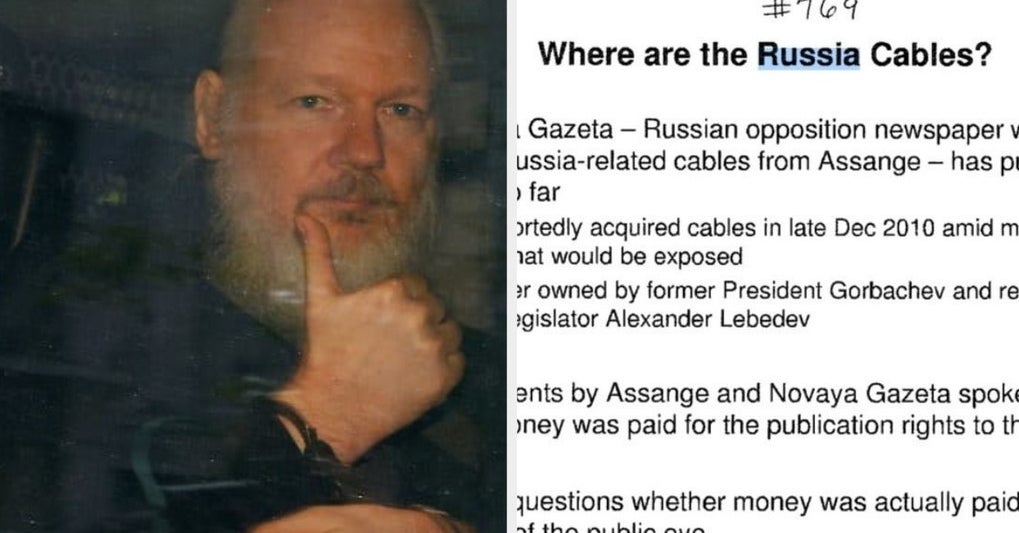
    Julian Assange’s belongings from his time living in the Ecuadorian embassy in London will be handed over to US prosecutors on Monday, according to WikiLeaks.

    Ecuadorian officials are travelling to London to allow US prosecutors to “help themselves” to items including legal papers, medical records and electronic equipment, it was claimed.

    WikiLeaks said UN officials and Assange’s lawyers were being stopped from being present. Lawyers said it was an illegal seizure of property, which has been requested by the US authorities. The material is said to include two of Assange’s manuscripts.

    Kristinn Hrafnsson, the editor-in-chief of WikiLeaks, said: “On Monday, Ecuador will perform a puppet show at the embassy of Ecuador in London for their masters in Washington, just in time to expand their extradition case before the UK deadline on 14 June. The Trump administration is inducing its allies to behave like it’s the wild west.”

    Baltasar Garzón, the international legal coordinator for the defence of Assange and WikiLeaks, said: “It is extremely worrying that Ecuador has proceeded with the search and seizure of property, documents, information and other material belonging to the defence of Julian Assange, which Ecuador arbitrarily confiscated, so that these can be handed over to the the agent of political persecution against him, the United States.

    “It is an unprecedented attack on the rights of the defence, freedom of expression and access to information exposing massive human rights abuses and corruption. We call on international protection institutions to intervene to put a stop to this persecution.”

  • ‘I’m Really Opening Myself Up’ : Chelsea Manning Signs Book Deal - The New York Times
    https://www.nytimes.com/2019/05/13/books/booksupdate/chelsea-manning-book-deal.html

    By Charlie Savage

    May 13, 2019

    WASHINGTON — Ever since she was publicly identified as the source who had disclosed a huge trove of military and diplomatic documents to WikiLeaks in 2011, Chelsea Manning, the former Army intelligence analyst, has been a polarizing cultural figure — called a traitor by prosecutors, but celebrated as an icon by transparency and antiwar activists. Her life story, and her role in one of the most extraordinary leaks in American history, has been told in news articles, an Off Broadway play and even an opera. But while she spoke at her court-martial and has participated in interviews, Manning herself has not told her own story, until now. Manning is writing a memoir, which Farrar, Straus and Giroux will publish in the winter of 2020, the publisher announced Monday.

    Manning was convicted in 2013 and sentenced to 35 years in prison, the longest sentence ever handed down in an American leak case. After her conviction, Manning announced that she was a transgender woman and changed her name to “Chelsea,” although the military housed her in a Fort Leavenworth prison for male inmates. She had a difficult time there, attempting suicide twice in 2016, before President Barack Obama commuted most of the remainder of her sentence shortly before he left office in January 2017. In the meantime, WikiLeaks published Democratic emails stolen by Russian hackers during the 2016 presidential campaign, transforming its image from what it had been back when Manning decided to send archives of secret files to it.

    Manning reappeared in the news this year, refusing to testify before a grand jury as federal prosecutors continue to build a case against Julian Assange, the WikiLeaks founder. Assange, currently in custody in Britain, is fighting extradition to the United States for a charge that he conspired with Manning to try to crack an encoded password that would have permitted her to log onto a classified computer network under a different person’s account rather than her own, which would have helped her mask her tracks better. She was jailed for two months for contempt over her refusal to answer questions about her interactions with Assange, then freed because the grand jury expired. But she has already been served with a new subpoena prosecutors obtained from a new grand jury and is expected to be jailed again soon.

    Below are edited excerpts from a conversation between Manning and Charlie Savage, a New York Times reporter who has written about her court-martial and her time in military prison.

    Tell me about your book.

    It’s basically my life story up until I got the commutation, from my birth to my time in school and going to the army and going to prison and the court-martial process. It’s a personal narrative of what was going on in my life surrounding that time and what led to the leaks, what led to prison, and how this whole ordeal has really shaped me and changed me. I view this book as a coming-of-age story. For instance, how my colleagues in the intelligence field really were the driving force behind my questioning of assumptions that I had come into the military with — how jaded they were, some of them having done two three four deployments previously. And then also there is a lot of stuff about how prisons are awful, and how prisoners survive and get through being in confinement.

    Do you have a title yet?

    There is no title yet. I am trying very hard to have some control over that, but none has been decided yet. Noreen Malone from New York magazine worked on it with me. She did a lot of the groundwork in terms of the research, and I did the storytelling, so it was a collaborative effort. I’m still going through and editing where she has taken independent sources to help refine my story, fact-check, verify things and provide a third-person perspective in shaping things.

    Is it written in first-person or third-person?

    It is written in first-person, but there are parts of the book that reference material that are independent of me. I’m still under obligation under the court rules and the Classified Information Procedures Act of 1980 to not disclose closed court-martial testimony or verify evidence that was put in the record. Things like that. So I can’t talk about that stuff and I’m not going to, and so I’m trying to keep this and maintain this as more of a personal story. There are parts of it that might reference reports or whatnot but I’m just going to say, “the media reported this, but I’m not confirming or denying it.”

    Are you going to submit the manuscript to the government for a classified information review?

    We’re trying our best to avoid the review process. There is a lot of stuff that is not going to be in the book that people would expect to be in there, but rules are rules and we can’t get around it. It’s more about personal experiences I had rather than anything specific. I’m not trying to relitigate the case, just tell my personal story.

    So if it ends with you getting out of military prison, you’re not going to address your current situation with the grand jury investigating WikiLeaks?
    Editors’ Picks
    From ‘Smallville’ to a Sex Cult: The Fall of the Actress Allison Mack
    How Volunteer Sleuths Identified a Hiker and Her Killer After 36 Years
    ‘Although I Tried to Look Away, I Saw Him Gesture Toward Me’

    No, we’re not planning on including that in this current stage. If there is a book that gets into the more juicy details about that stuff, then we’ll probably get around to that after going through a review process, several years down the road from now, whenever the dust settles. But I think this is more about trying to contextualize my story from my perspective rather than get into the weeds of what is in the record of trial, what is in the documents, what the investigation focused on, because we’re just not able to get into that area.

    It sounds like you are a lot freer to talk about your gender identity than the WikiLeaks issue.

    Yeah. This is less a book about the case and more a book about trials, tribunals, struggles, difficulties, and overcoming them and surviving. If people are expecting to learn a lot more about the court-martial and a lot more about the case, then they probably shouldn’t be interested in this book. But if they want to know more about what it’s like to be me and survive, then there are reams of information in here. It’s much more autobiographical than it is a narrative thriller or crime story or anything like that. I have always pitched this to being very similar to “Wild” by Cheryl Strayed. I’m really opening myself up to some really intimate things in this book, some really very personal moments and much more intimate points of my life that I’ve never disclosed before. You’re probably going to learn more about my love life than about the disclosures.
    Sign up for the Watching Newsletter

    Get recommendations on the best TV shows and films to stream and watch, delivered to your inbox.

  • Comment #Big_Pharma pénalise-t-il le traitement de l’épidémie des opiacés ? - Actualité Houssenia Writing
    https://actualite.housseniawriting.com/sante/2017/08/09/comment-big-pharma-penalise-t-il-le-traitement-de-lepidemie-des-opiaces/23013

    Traduction d’un article de The Conversation par Robin Feldman, professeure de propriété intellectuelle à l’université de Californie.

    Les grandes entreprises pharmacologiques (Big Pharma) utilisent de nombreuses tactiques pour retarder l’arrivée des #génériques et on peut prendre l’exemple des traitements contre l’épidémie des #opiacés.

    • En 2015, 80 % de la croissance des bénéfices des 20 plus grandes entreprises technologiques provenaient de l’augmentation des prix. Et les médicaments aux États-Unis sont largement plus chers que dans d’autres pays. Par exemple, le Syprine, un médicament contre l’insuffisante hépatique, coute moins de 400 dollars pour un an de traitement dans de nombreux pays. Aux États-Unis, ce médicament coute 300 000 dollars. Sovaldi, le médicament contre l’hépatite C de Gilead, coute environ 1 000 dollars à l’étranger. Aux États-Unis, il coute 84 000 dollars.

      Il faudra un motif d’inculpation pour trainer les gens qui décident cela devant la justice. Un truc du genre crime contre l’humanité.

    • Un des aspects intéressants des câbles diplomatiques américains, publiés par Wikileaks, c’était justement qu’une des activités principales des ambassades ricaines dans monde consiste à défendre les intérêts des grands groupes pharmaceutiques américaines.

      Par exemple (quasiment au hasard), ce câble de 2005 à ce sujet au Brésil :
      https://wikileaks.org/plusd/cables/05BRASILIA1567_a.html

      1. (C) Summary. Ambassador Hugueney of Brazil’s Foreign Ministry (Itamaraty) told Ambassador June 6 that U.S. pharmaceutical companies should improve their offers on pricing and/or voluntary licenses for AIDS treatment drugs so as to avoid compulsory licensing by the Ministry of Health (MoH). Hugueney believed movement in the Chamber of Deputies of legislation that would deny patentability to AIDS drugs was likely intended to provide greater leverage to the Ministry of Health in its negotiations with the pharmaceutical companies. The bill’s broad political backing, he observed, makes a presidential veto unlikely should the legislation pass. On the WTO Doha Round of trade negotiations, Hugueney said Brazil will submit a “substantially improved” revised services offer the week of June 6. Hugueney expects to take up the post of Brazil’s Ambassador to the WTO by late August or early September. Hugueney confirmed Brazil’s plan to attend the June 21 to 22 US-EU International Conference on Iraq. End Summary.

      2. (SBU) On June 6, Ambassador met with Clodoaldo Hugueney, Itamaraty’s Under Secretary for Economic and Technological Affairs, to discuss a number of trade issues, principally, pending legislation that would render drugs to prevent and treat AIDS un-patentable, and the continuing threat of compulsory licensing facing the U.S. pharmaceutical companies Gilead Sciences, Abbott Laboratories, and Merck, Sharp & Dohme for their AIDS treatment drugs (ref A). Hugueney was accompanied by his assistant, Miguel Franco, and Otavio Brandelli, Chief of the Ministry’s IPR Division. Ecouns, Commoff, and Econoff accompanied Ambassador.

      AIDS Drugs - Compulsory License Threat and Patent Legislation

      3. (C) Hugueney, who had just returned from Doha negotiations in Geneva, said Itamaraty is following MoH negotiations with the pharmaceutical companies closely and described them as boiling down to issues of pricing or voluntary license/royalty payments. He noted the intense pressure the GoB is under from civil society, particularly NGOs, to issue compulsory licenses. Hugueney agreed the best outcome would be to avoid compulsory licenses, but opined that to do so would require improved offers on price or voluntary licensing from the companies. (Upon relaying this message to the companies, the Merck representative here told us his company was in the process of preparing a more detailed offer, although he did not say that it would be more forthcoming on prices. As for Gilead and Abbott, they have taken Hugueney’s suggestion “under advisement.”) Hugueney further advised the companies to maintain a dialog with the MoH to forestall precipitous, politically motivated action by that Ministry, and encouraged them to explain/present their proposals to a wide array of GoB interlocutors.

  • Voight-Kampff test | Off-world: The Blade Runner Wiki | FANDOM powered by Wikia
    https://bladerunner.fandom.com/wiki/Voight-Kampff_test

    The Voight-Kampff test was a test used as of 2019 by the LAPD’s Blade Runners to assist in the testing of an individual to see whether they were a replicant or not. It measured bodily functions such as respiration, heart rate, blushing and eye movement in response to emotionally provocative questions. It typically took twenty to thirty cross-referenced questions to distinguish a Nexus-6 replicant.

    #film #cinéma #sciences_fiction #singularité

  • Here Are The US Government Damage Reports Made In The #WikiLeaks Aftermath Obtained Through Freedom Of Information Laws
    https://www.buzzfeednews.com/article/jasonleopold/here-are-the-never-before-seen-us-government-damage-reports

    The Department of Defense authorized several damage assessment reports after WikiLeaks released its massive cache of classified documents, and BuzzFeed News can reveal some of their contents for the first time.

    The heavily redacted reports cover a roughly three-year time span. BuzzFeed News obtained more than 300 pages in response to a Freedom of Information Act lawsuit.

    [...]

    Several damage assessment reports say that the records released by WikiLeaks contained details about previously undisclosed civilian casualties in Iraq and Afghanistan, which “could be used by the press or our adversaries to negatively impact support for current operations in the region .”

    Regarding the hundreds of thousands of Iraq-related military documents and State Department cables, the report assessed “with high confidence that disclosure of the Iraq data set will have no direct personal impact on current and former U.S. leadership in Iraq .”

    One heavily redacted damage assessment report determined that a different set of documents published the same year, relating to the US war in Afghanistan, would not result in “significant impact” to US operations .

    It did, however, have the potential to cause “serious damage” to “intelligence sources, informants and the Afghan population,” and US and NATO intelligence collection efforts. The most significant impact of the leaks, the report concluded, would likely be on the lives of “cooperative Afghans, Iraqis, and other foreign interlocutors.”

    #etats-unis #propagande #punition

    • lien propre:

      Glen Greenwald, Micah Lee - 20190412

      https://theintercept.com/2019/04/11/the-u-s-governments-indictment-of-julian-assange-poses-grave-threats-t

      In April, 2017, Pompeo, while still CIA chief, delivered a deranged speech proclaiming that “we have to recognize that we can no longer allow Assange and his colleagues the latitude to use free speech values against us.” He punctuated his speech with this threat: “To give them the space to crush us with misappropriated secrets is a perversion of what our great Constitution stands for. It ends now.”

      From the start, the Trump DOJ has made no secret of its desire to criminalize journalism generally. Early in the Trump administration, Sessions explicitly discussed the possibility of prosecuting journalists for publishing classified information. Trump and his key aides were open about how eager they were to build on, and escalate, the Obama administration’s progress in enabling journalism in the U.S. to be criminalized.

      Today’s arrest of Assange is clearly the culmination of a two-year effort by the U.S. government to coerce Ecuador — under its new and submissive president, Lenín Moreno — to withdraw the asylum protection it extended to Assange in 2012. Rescinding Assange’s asylum would enable the U.K. to arrest Assange on minor bail-jumping charges pending in London and, far more significantly, to rely on an extradition request from the U.S. government to send him to a country to which he has no connection (the U.S.) to stand trial relating to leaked documents.

      Indeed, the Trump administration’s motive here is clear. With Ecuador withdrawing its asylum protection and subserviently allowing the U.K. to enter its own embassy to arrest Assange, Assange faced no charges other than a minor bail-jumping charge in the U.K. (Sweden closed its sexual assault investigation not because they concluded Assange was innocent, but because they spent years unsuccessfully trying to extradite him). By indicting Assange and demanding his extradition, it ensures that Assange — once he serves his time in a London jail for bail-jumping — will be kept in a British prison for the full year or longer that it takes for the U.S. extradition request, which Assange will certainly contest, to wind its way through the British courts.

      The indictment tries to cast itself as charging Assange not with journalistic activities but with criminal hacking. But it is a thinly disguised pretext for prosecuting Assange for publishing the U.S. government’s secret documents while pretending to make it about something else.

      Whatever else is true about the indictment, substantial parts of the document explicitly characterize as criminal exactly the actions that journalists routinely engage in with their sources and thus, constitutes a dangerous attempt to criminalize investigative journalism.

      The indictment, for instance, places great emphasis on Assange’s alleged encouragement that Manning — after she already turned over hundreds of thousands of classified documents — try to get more documents for WikiLeaks to publish. The indictment claims that “discussions also reflect Assange actively encouraging Manning to provide more information. During an exchange, Manning told Assange that ‘after this upload, that’s all I really have got left.’ To which Assange replied, ‘curious eyes never run dry in my experience.’”

      But encouraging sources to obtain more information is something journalists do routinely. Indeed, it would be a breach of one’s journalistic duties not to ask vital sources with access to classified information if they could provide even more information so as to allow more complete reporting. If a source comes to a journalist with information, it is entirely common and expected that the journalist would reply: Can you also get me X, Y, and Z to complete the story or to make it better? As Edward Snowden said this morning, “Bob Woodward stated publicly he would have advised me to remain in place and act as a mole.”

      Investigative journalism in many, if not most, cases, entails a constant back and forth between journalist and source in which the journalist tries to induce the source to provide more classified information, even if doing so is illegal. To include such “encouragement” as part of a criminal indictment — as the Trump DOJ did today — is to criminalize the crux of investigative journalism itself, even if the indictment includes other activities you believe fall outside the scope of journalism.

      As Northwestern journalism professor Dan Kennedy explained in The Guardian in 2010 when denouncing as a press freedom threat the Obama DOJ’s attempts to indict Assange based on the theory that he did more than passively receive and publish documents — i.e., that he actively “colluded” with Manning:


      The problem is that there is no meaningful distinction to be made. How did the Guardian, equally, not “collude” with WikiLeaks in obtaining the cables? How did the New York Times not “collude” with the Guardian when the Guardian gave the Times a copy following Assange’s decision to cut the Times out of the latest document dump?

      For that matter, I don’t see how any news organisation can be said not to have colluded with a source when it receives leaked documents. Didn’t the Times collude with Daniel Ellsberg when it received the Pentagon Papers from him? Yes, there are differences. Ellsberg had finished making copies long before he began working with the Times, whereas Assange may have goaded Manning. But does that really matter?

      Most of the reports about the Assange indictment today have falsely suggested that the Trump DOJ discovered some sort of new evidence that proved Assange tried to help Manning hack through a password in order to use a different username to download documents. Aside from the fact that those attempts failed, none of this is new: As the last five paragraphs of this 2011 Politico story demonstrate, that Assange talked to Manning about ways to use a different username so as to avoid detection was part of Manning’s trial and was long known to the Obama DOJ when they decided not to prosecute.

      There are only two new events that explain today’s indictment of Assange: 1) The Trump administration from the start included authoritarian extremists such as Sessions and Pompeo who do not care in the slightest about press freedom and were determined to criminalize journalism against the U.S., and 2) With Ecuador about to withdraw its asylum protection, the U.S. government needed an excuse to prevent Assange from walking free.

      A technical analysis of the indictment’s claims similarly proves the charge against Assange to be a serious threat to First Amendment press liberties, primarily because it seeks to criminalize what is actually a journalist’s core duty: helping one’s source avoid detection. The indictment deceitfully seeks to cast Assange’s efforts to help Manning maintain her anonymity as some sort of sinister hacking attack.

      The Defense Department computer that Manning used to download the documents which she then furnished to WikiLeaks was likely running the Windows operating system. It had multiple user accounts on it, including an account to which Manning had legitimate access. Each account is protected by a password, and Windows computers store a file that contains a list of usernames and password “hashes,” or scrambled versions of the passwords. Only accounts designated as “administrator,” a designation Manning’s account lacked, have permission to access this file.

      The indictment suggests that Manning, in order to access this password file, powered off her computer and then powered it back on, this time booting to a CD running the Linux operating system. From within Linux, she allegedly accessed this file full of password hashes. The indictment alleges that Assange agreed to try to crack one of these password hashes, which, if successful, would recover the original password. With the original password, Manning would be able to log directly into that other user’s account, which — as the indictment puts it — “would have made it more difficult for investigators to identify Manning as the source of disclosures of classified information.”

      Assange appears to have been unsuccessful in cracking the password. The indictment alleges that “Assange indicated that he had been trying to crack the password by stating that he had ‘no luck so far.’”

      Thus, even if one accepts all of the indictment’s claims as true, Assange was not trying to hack into new document files to which Manning had no access, but rather trying to help Manning avoid detection as a source. For that reason, the precedent that this case would set would be a devastating blow to investigative journalists and press freedom everywhere.

      Journalists have an ethical obligation to take steps to protect their sources from retaliation, which sometimes includes granting them anonymity and employing technical measures to help ensure that their identity is not discovered. When journalists take source protection seriously, they strip metadata and redact information from documents before publishing them if that information could have been used to identify their source; they host cloud-based systems such as SecureDrop, now employed by dozens of major newsrooms around the world, that make it easier and safer for whistleblowers, who may be under surveillance, to send messages and classified documents to journalists without their employers knowing; and they use secure communication tools like Signal and set them to automatically delete messages.

      But today’s indictment of Assange seeks to criminalize exactly these types of source-protection efforts, as it states that “it was part of the conspiracy that Assange and Manning used a special folder on a cloud drop box of WikiLeaks to transmit classified records containing information related to the national defense of the United States.”

      The indictment, in numerous other passages, plainly conflates standard newsroom best practices with a criminal conspiracy. It states, for instance, that “it was part of the conspiracy that Assange and Manning used the ‘Jabber’ online chat service to collaborate on the acquisition and dissemination of the classified records, and to enter into the agreement to crack the password […].” There is no question that using Jabber, or any other encrypted messaging system, to communicate with sources and acquire documents with the intent to publish them, is a completely lawful and standard part of modern investigative journalism. Newsrooms across the world now use similar technologies to communicate securely with their sources and to help their sources avoid detection by the government.

      The indictment similarly alleges that “it was part of the conspiracy that Assange and Manning took measures to conceal Manning as the source of the disclosure of classified records to WikiLeaks, including by removing usernames from the disclosed information and deleting chat logs between Assange and Manning.”

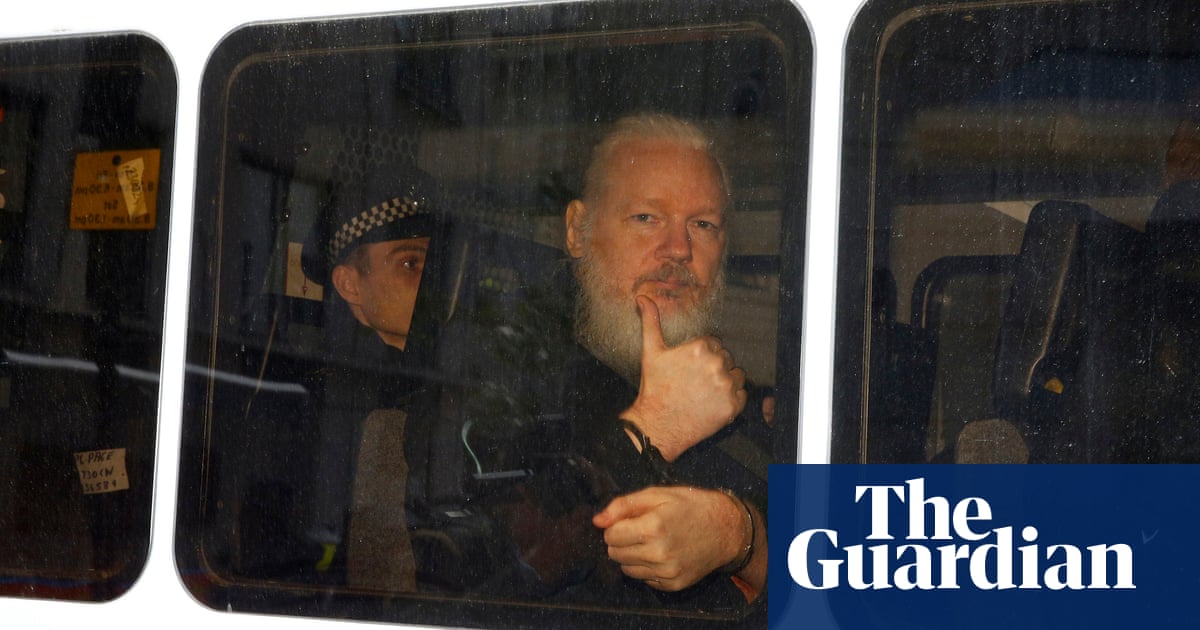
  • Double standards in Assange’s arrest (http://www.globaltimes.cn/con...
    https://diasp.eu/p/8869968

    Double standards in Assange’s arrest

    #China #politics #international ......

    “The US accusations of violating #press #freedom and cracking down on #dissenters are always against #non-Western countries. If #WikiLeaks targeted countries like #China, #Russia and #Iran, the US and its major #allies will cheer in chorus and label #Assange a #hero who opposes #autocracy”.

    [...]

  • Wikipedia Isn’t Officially a Social Network. But the Harassment Can Get Ugly. - The New York Times
    https://www.nytimes.com/2019/04/08/us/wikipedia-harassment-wikimedia-foundation.html

    Unlike social networks such as Facebook and Twitter, Wikipedia relies largely on unpaid volunteers to handle reports of harassment.

    In response to complaints about pervasive harassment, the Wikimedia Foundation, the San Francisco-based nonprofit that operates Wikipedia and supports its community of volunteers, has promised new strategies to curb abuse. In recent months, the foundation has rolled out a more sophisticated blocking tool that it hopes can better control the harassment plaguing some users.

    Sydney Poore, a community health strategist with the foundation, said that when the free encyclopedia was established in 2001, it initially attracted lots of editors who were “tech-oriented” men. That led to a culture that was not always accepting of outside opinions, said Ms. Poore, who has edited Wikipedia for 13 years.

    “We’re making strong efforts to reverse that,” she said, “but it doesn’t happen overnight.”

    A few informed clicks on any Wikipedia article can reveal the lengthy discussions that shape a published narrative. According to interviews with Wikipedians around the world, those digital back rooms are where harassment often begins. A spirited debate over a detail in an article can spiral into one user spewing personal attacks against another.

    “If you out yourself as a feminist or L.G.B.T., you will tend to be more targeted,” said Natacha Rault, a Wikipedia editor who lives in Geneva and founded a project that aims to reduce the gender gap on the website.

    On French-language Wikipedia, where Ms. Rault does much of her editing, discussions about gender can often lead to vitriol. Ms. Rault said there were six months of heated debate about whether to label the article on Britain’s leader, Theresa May, with the feminine version of “prime minister” (première ministre), rather than the masculine one (premier ministre).

    Wikipedians also began to discuss the “content gender gap,” which includes an imbalance in the gender distribution of biographies on the site. The latest analysis, released this month, said about 18 percent of 1.6 million biographies on the English-language Wikipedia were of women. That is up from about 15 percent in 2014, partially because of activists trying to move the needle.

    “The idea is to provide volunteer administrators with a more targeted, more nuanced ability to respond to conflicts,” Ms. Lo said.

    Partial blocks are active on five Wikipedias, including those in Italian and Arabic, and foundation staff members expect it to be introduced to English-language Wikipedia this year. The foundation is also in the early stages of a private reporting system where users could report harassment, Ms. Lo said.

    But there are limits to how effective institutional change can be in curbing harassment on Wikipedia. In the case of Mx. Gethen, their harasser kept posting from different IP addresses, making it difficult for a blocking tool to be effective.

    Although the abuser no longer haunts their internet presence, Mx. Gethen said the sometimes hostile culture on Wikipedia had reduced their editing on the site.

    “I’m not getting paid for this,” they said. “Why should I volunteer my time to be abused?”

    #Wikipédia

  • Everipedia Culture Roundup #12: Smooth Groves and Big Moves
    https://hackernoon.com/everipedia-culture-roundup-12-smooth-groves-and-big-moves-c2cb048d0bc6?s

    Some sweet #dance moves by Big Bird and friendsThose who dance professionally can attest that when your moves are on point, it feels like you are one with the universe. It is one of many variations of being in the flow state where nothing else matters but being in the present moment, and all of your attention and focus is on the next step. The young stunna Seth Vangeldren embodies this, which is evident in his memorizing videos of him dancing. Digital artisans from across the internet have channeled their energy to create memes on behalf of the Yang Gang in a grassroots effort to support Andrew Yang’s Presidential Campaign. Erika Herzog is an information specialist whose attempts to highlight issues in Wikipedia led to her ousting from the Wikimedia Foundation. Operating out of Hong (...)

    #blockchain #technology #africa #everipedia-partnership

  • Kazaguruma demo 2019: Anti-Atom FUKUSHIMA
    http://kazagurumademo.de

    Sa 9. März 2019 ab 12:00 Uhr
    Treffpunkt : Brandenburger Tor (Pariser Platz) Berlin

    Yamada Sensei - kazaguruma
    https://www.youtube.com/watch?v=2Nq13WIHAvg

    "Kazaguruma"You can feel Japan with just a piece of paper!
    http://onlynativejapan.com/2013/07/10/kazagurumayou-can-feel-japan-with-just-a-piece-of-paper/3284

    Kazaguruma | Shadow Warrior Wiki | FANDOM powered by Wikia
    https://shadowwarrior.fandom.com/wiki/Kazaguruma

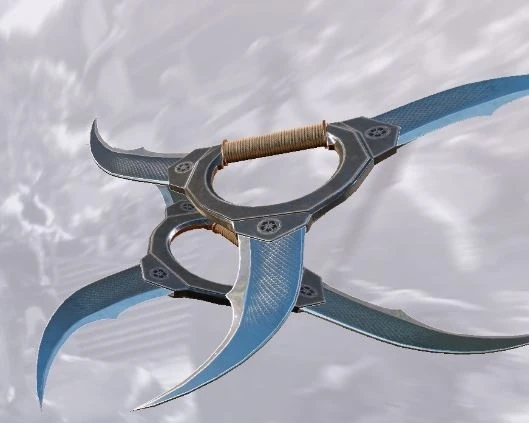
    “This modern take on a triple-edged Haladie dagger is based on ancient Hindu and Syrian designs, but with extra Silicon Carbide.”
    —In-game description.
    Kazaguruma
    Type: Melee Weapon
    DPS: 97.0
    Damage: 35.3
    Rate: 2.5
    Specifics
    Slots: 3
    Bonus: +5.0% of critical chance
    Misc. Information
    Featured in: Shadow Warrior 2

    Kazaguruma is a melee weapon appearing in Shadow Warrior 2.

    1. What is Kazaguruma?


    Kazaguruma is an another name of windmill. It is a toy that play with whirling in the breeze.
    There are various theories about the origin of windmill. According to a literature written in Edo era(17th century), it is said that the origin of windmill is Gion in Kyoto(a city of geisha) in Heian era(8th-12th century). There is another theory that states that windmill is an original toy of China, and is introduced into Japan in Heian era.
    In either case, windmill is a popular toy in Japan from 8th century to the present.

    #Fukushima

  • Will #everipedia Bring Respectability Back to the World of Online Encyclopedias?
    https://hackernoon.com/everipedia-brings-respectability-back-to-the-world-of-digital-encycloped

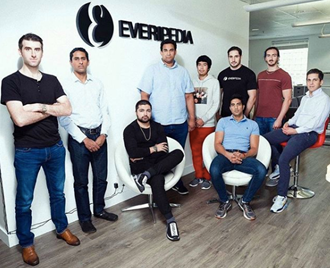
    Everipedia, an extended fork of #wikipedia, is a blockchain-based #encyclopedia that returns integrity and democratization to its subjects on the internet.Photo Credit: EveripediaBritannica, Encarta, and Wikipedia — the three main digital encyclopedias of our time, have — in combination — provided us with an abundance of information and knowledge.Having been around for over 244 years, Britannica contained over 100,000 articles along with Merriam-Webster’s U.S. Dictionary and Thesaurus, but cost a fortune. It set the stage for competitors like Encarta (now discontinued) and Wikipedia to take the stage. Wikipedia has certainly become the most dominant alternative to the Britannica.Here we are: in the 21st century, sitting in front of a plethora number of black mirrors, screens, and electronic (...)

    #brock-pierce #tokenization

  • Legal aid fund launched for #WikiLeaks founder #Assange
    https://news.yahoo.com/legal-aid-fund-launched-wikileaks-founder-assange-174059866.html

    London (AFP) - A British charity helping #whistleblowers around the world on Thursday launched a legal aid fund for WikiLeaks founder Julian Assange, warning his expulsion from Ecuador’s embassy in London “may be imminent”.

    The Courage Foundation said Assange’s position in the embassy, where he has been living since seeking refuge there in 2012, was “under increasingly serious threat”.

  • Here’s why this media scholar changed her mind and now thinks there’s a ’very strong’ case Russia won the 2016 election for Trump | Alternet
    https://www.alternet.org/news-amp-politics/heres-why-media-scholar-changed-her-mind-and-now-thinks-theres-very-strong

    I originally thought that the idea that the Russians could have used social media to create a substantial impact on the election was absurd. I started to change my mind when I saw the first release of Russian social media and troll campaign ads and messaging during the U.S. Senate hearings in October and November of last year. These ads were a coherent plan and understanding of the presidential election which was consistent with Donald Trump’s political needs.

    If acted on systematically, these ads would have produced a communication effect that on the margins could have affected enough votes to change the outcome of the election in his favor. If the Russians didn’t have a coherent theory of what it took for Donald Trump to win — or what it would take to make it more likely that Hillary Clinton would lose — then all their machinations would not have mattered. But the Russians knew who to mobilize.

    The Russians were trying to mobilize evangelicals and white conservative Catholics. The Russians also knew that they needed to mobilize veterans and military households. The Russians knew they had to demobilize Bernie Sanders supporters and liberals, especially young people. The Russians were also attempting to shift the voters they could not demobilize over to Jill Stein.

    You add that together with demobilizing African-American voters with messaging that Hillary Clinton is bad for the black community, and then Clinton’s whole messaging strategy is at risk. If Hillary Clinton can’t mobilize the black vote at levels near Barack Obama’s, although not the same level, then she is in trouble.

    I then started to examine where the Russians and their trolls spent their time and attention. They were spending more of it on trying to demobilize African-American voters by emphasizing things that group may not like about Hillary Clinton. When a person casts a vote they are not thinking about every detail or issue relative to a candidate. Voters make decisions based on what is most important in that moment of time, what is on the top of their mind.

    So if you remind voters who are African-American that at the end of Bill Clinton’s presidency there was a very high level of increased incarceration of African-Americans on drug charges then an African-American voter may say, “Maybe I should think about Hillary Clinton differently.”

    If you remember her “superpredator” comment and take it to be about black people in general and not about gangs specifically, then you as an African-American voter may be less likely to support her.

    By featuring these types of messages, the Russians were increasing the likelihood that while you may not be likely to cast a vote for Donald Trump, you are more likely to stay home and not vote for Hillary Clinton.

    I then started to wonder whether maybe there was enough troll activity that was addressed to the right constituencies to have impacted the margins of the vote. The question then becomes, did the Russians and their trolls target the right voters in the right places? We still don’t know that.

    The social media platforms know the answer, but they have not released the information. The trolls alone could have swung the electorate. But in my judgment the WikiLeaks hacks against the DNC is a much stronger case. There we see a clear effect on the news media agenda. We know from decades of communication scholarship that if you change the media agenda you then change the criteria that people vote on. The shift in the media agenda from October forward was decisively against Hillary Clinton. And the questions in the presidential debates which were based on information stolen by WikiLeaks and the Russians disadvantaged Clinton and, looking at the polling data, predicted the vote.

    President Trump is better at commanding the agenda than he is at any other single thing that he as a communicator does. The press has been an accomplice in the process of ceding agenda control to him by virtue of his tweeting — and having the press respond immediately, as if every tweet is presumed to be newsworthy. Donald Trump has the capacity to get whatever he wants the public to focus on by directing the cable news agenda. We really should ask: Aren’t there other things we ought to be paying more attention to? How often are we being distracted from something that Trump does not want us to pay attention to? Being distracted by his effective use of tweets to set an alternative agenda.

    Fox News is de facto Trump’s state-sponsored media. How does this impact American political culture?

    We are increasingly going into ideological enclaves to get our news. To the extent that people find the news compatible with what they already believe, that means they are not being exposed to alternative interpretations of reality and alternative points of view. What is unprecedented about the relationship between Fox News and the president of the United States is the extent to which what is said and shown on Fox News appears to influence what is said and featured by the president of the United States. The traditional model of agenda-setting is that the president sets the agenda and the news media follows. This reversal with Donald Trump and Fox News is something new.

    #Politique #Médias_sociaux #USA #Trump

  • Jimmy Wales of #wikipedia
    https://hackernoon.com/jimmy-wales-of-wikipedia-2335c43f1204?source=rss----3a8144eabfe3---4

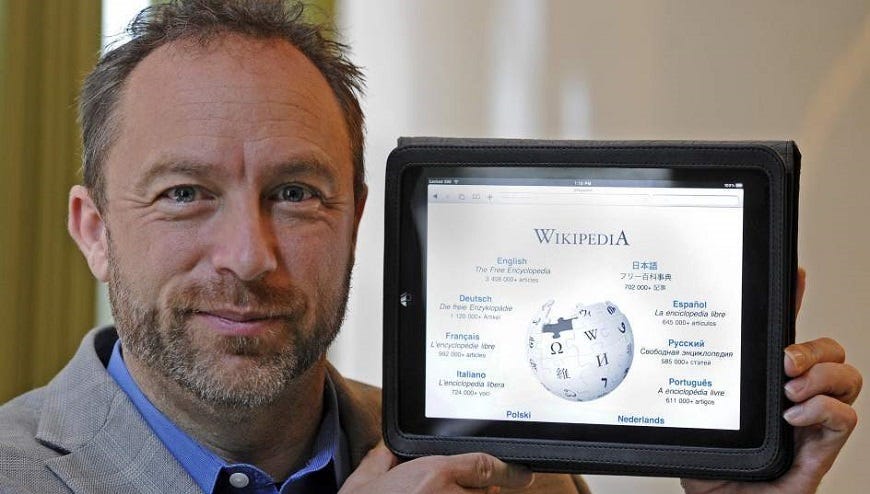
    Jimmy Wales, founder of Wikipedia, tells us why his initial attempt at creating an online encyclopedia failed and what he learned from that venture which allowed Wikipedia to succeed. Along the way, he also shares with us his approach to building a successful business in today’s digital world.This #interview was originally written by Justin Runyon from ProwritingserviceLessons Learned from NupediaWales’ first attempt at building a free online encyclopedia started with the creation of Nupedia in March 2000. Inspired by the growth of the free software movement and the new models of collaboration that were sprouting online, Wales set about working on a project he felt would be greatly beneficial to the world — something others would be passionate about and would be willing to give up their time (...)

    #jimmy-wales #founder-stories

  • A relire

    Wikileaks: Egyptian media and journalists go to Saudi for financing | MadaMasr
    https://madamasr.com/en/2015/07/05/feature/politics/wikileaks-egyptian-media-and-journalists-go-to-saudi-for-financing

    Since the Wikileaks website began posting leaked documents from the Saudi Arabian government, the issue of the Kingdom financing Egyptian media channels, journalists and researchers has garnered major attention. 

    While the first group of documents released on the website on June 19 contained details regarding funding requests by pro-regime journalist Mostafa Bakry and religious preacher Amr Khalid, unpublished documents received by Mada Masr, upon an agreement with Wikileaks, has shed light on new names and details.

    Requests for funding from the Saudi government varied, and in some cases was in exchange for writing articles, the fees for which were collected from the embassy.

    One of the documents, titled “Bill of the representative of Dar al-Helal Institution,” is a memo raised by the head of the media affairs department at the Saudi Foreign Ministry to the deputy minister of culture and media in the Kingdom, requesting the disbursement of a check of US$68,000 to the state-owned Egyptian Dar al-Helal in February 2012 “for publishing a series of weekly articles throughout the pilgrimage season 1432 H on the achievements of Saudi Arabia in renovating and expanding the two holy mosques and other recent projects.”

    During the period referred to in the cables, writer Abdel Qader Shohaieb was head of the board of Al-Helal institution, while Hamdi Rizk, a staunch supporter of Abdel Fattah al-Sisi’s government, was editor-in-chief of Al-Mosawar, one of its publications. Al-Helal is considered one of the oldest media publishing houses in Egypt and the region.

    Other publications were not as successful in collecting funds in exchange for publishing articles favoring the Kingdom, especially when the request for funding came after publishing without prior coordination.

  • Lenín Moreno, président de la République de l’Équateur, admet ouvertement que si Assange n’a plus accès à l’internet, c’est pour lui interdire de diffuser ses opinions sur les sujets politiques états-uniens et le séparatisme en Catalogne.

    G. Bretaña, Ecuador contemplan posible solución para Assange
    https://apnews.com/49b8df077c0246a893741397c5f4981e

    Moreno destacó también que Assange sigue sin internet. Ecuador le quitó al fundador de Wikileaks el acceso a ésta cuando Assange expuso su opinión sobre políticas estadounidenses y sobre el conflicto separatista catalán en España.

    “Entiendo que (Assange) no tiene ese tipo de servicios precisamente para evitar que lo vuelva a hacer”, señaló Moreno. “Pero si es que el señor Assange hace el compromiso de no participar en este tipo de opiniones acerca de la política de países hermanos, como ha sido con la política estadounidese o de España, entonces en ese momento no tendríamos ningún problema en que él pueda seguir utilizando estos mecanismos”.

    Comme le fait remarquer la campagne #FreeAssange, la version en anglais de cette dépêche de l’AP ne fait absolument pas mention de cette affirmation scandaleuse :
    https://www.nytimes.com/aponline/2018/09/26/us/ap-lt-ecuador-uk-assange.html

  • Julian Assange a renoncé à l’asile accordé par l’Equateur afp/pym - 25 Septembre 2018 - RTS
    https://www.rts.ch/info/monde/9868901-julian-assange-a-renonce-a-l-asile-accorde-par-l-equateur.html

    Le fondateur du site internet WikiLeaks, Julian Assange, réfugié à l’ambassade d’Equateur à Londres depuis 2012, a renoncé à l’asile accordé par Quito, selon une lettre signée de sa main.
    Dans ce courrier, daté du 4 décembre 2017, Julian Assange renonce à l’asile accordé dans le cadre d’une stratégie du gouvernement, qui n’a pas abouti et qui visait à le nommer ensuite diplomate équatorien en Grande-Bretagne, puis en Russie.

    Le créateur de WikiLeaks a renoncé à l’asile quelques jours avant que Quito lui octroie la nationalité équatorienne le 12 décembre, puis tente de le nommer diplomate afin qu’il puisse continuer à vivre dans l’ambassade de Londres, voire aller en mission à Moscou.

    Crainte d’une extradition
    Julian Assange s’est réfugié dans la représentation diplomatique équatorienne il y a six ans pour, initialement, éviter d’être extradé en Suède où il était accusé de viol, procédure qui a été classée.

    Aujourd’hui, il craint de sortir de l’ambassade et d’être arrêté, puis extradé vers les Etats-Unis pour avoir diffuser via WikiLeaks des milliers de documents confidentiels de la diplomatie américaine.

  • The future is here today : you can’t play Bach on Facebook because Sony says they own his compositions
    https://boingboing.net/2018/09/05/mozart-bach-sorta-mach.html

    James Rhodes, a pianist, performed a Bach composition for his Facebook account, but it didn’t go up — Facebook’s copyright filtering system pulled it down and accused him of copyright infringement because Sony Music Global had claimed that they owned 47 seconds’ worth of his personal performance of a song whose composer has been dead for 300 years. This is a glimpse of the near future. In one week, the European Parliament will vote on a proposal to force all online services to implement (...)

    #Sony #Facebook #algorithme #ContentID #Robocopyright #censure #filtrage

    • his personal performance

      On doit bien pouvoir dire que c’est bien son interprétation à lui, sur son instrument à lui, qui a été reconnue comme un plagiat d’un enregistrement de Sony.

      Et là, c’est une des références du texte : le chercheur publie des enregistrements antérieurs dans le domaine public, reconnus simplement par la signature musicale...

      Les contrôleurs vont faire valoir que c’est un risque à courir afin de défendre les bases de notre civilisation... et que l’intelligence artificielle va s’améliorer... et qu’il y a une procédure d’appel.

      Can Beethoven send takedown requests ? A first-hand account of one German professor’s experience with overly broad upload filters – Wikimedia Foundation
      https://wikimediafoundation.org/2018/08/27/can-beethoven-send-takedown-requests-a-first-hand-account-of-on

      I decided to open a different YouTube account “Labeltest” to share additional excerpts of copyright-free music. I quickly received ContentID notifications for copyright-free music by Bartok, Schubert, Puccini and Wagner. Again and again, YouTube told me that I was violating the copyright of these long-dead composers, despite all of my uploads existing in the public domain. I appealed each of these decisions, explaining that 1) the composers of these works had been dead for more than 70 years, 2) the recordings were first published before 1963, and 3) these takedown request did not provide justification in their property rights under the German Copyright Act.

      I only received more notices, this time about a recording of Beethoven’s Symphony No.5, which was accompanied by the message: “Copyrighted content was found in your video. The claimant allows its content to be used in your YouTube video. However, advertisements may be displayed.” Once again, this was a mistaken notification. The recording was one by the Berlin Philharmonic under the direction of Lorin Maazel, which was released in 1961 and is therefore in the public domain. Seeking help, I emailed YouTube, but their reply, “[…] thank you for contacting Google Inc. Please note that due to the large number of enquiries, e-mails received at this e-mail address support-de@google.com cannot be read and acknowledged” was less than reassuring.

  • Je crois qu’il se passe quelque chose d’important par ici :
    https://twitter.com/jack/status/1026984242893357056
    Pas seulement parce que le patron de twitter explique pourquoi #twitter ne va pas clôturer le compte de #Alex_Jones ni de #Infowars, contrairement à la plupart des autres réseaux sociaux, mais parce qu’il réaffirme le besoin de confronter les opinions et surtout de contrer les fausses informations de manière visible, chose que peut se permettre un twitter où les commentaires sont beaucoup plus lus qu’ailleurs...

    If we succumb and simply react to outside pressure, rather than straightforward principles we enforce (and evolve) impartially regardless of political viewpoints, we become a service that’s constructed by our personal views that can swing in any direction. That’s not us.
    Accounts like Jones’ can often sensationalize issues and spread unsubstantiated rumors, so it’s critical journalists document, validate, and refute such information directly so people can form their own opinions. This is what serves the public conversation best.

    Je suis tombée là dessus grâce à un tweet de #Olivier_Tesquet qui fait un article super complet pour telerama sur la descente aux enfers des #GAFAM de Alex Jones :

    La “Big Tech” à l’épreuve du roi des conspirationnistes

    En privant Alex Jones, conspirationniste en chef de l’extrême-droite américaine, de ses comptes Facebook, Spotify ou Youtube, les géants de l’Internet prennent le risque d’ouvrir un débat sur la privatisation de la liberté d’expression.

    https://www.telerama.fr/medias/la-big-tech-a-lepreuve-du-roi-des-conspirationnistes,n5756062.php

    #liberte_d_expression #conspirationnisme #complotisme #extreme_droite ...

  • #Wikipedia4Refugees

    Hanno tradotto voci di Wikipedia nella loro lingua d’origine. Protagonisti sono stati richiedenti asilo/rifugiati accolti in Trentino attivati grazie a un progetto partito “dal basso” e intitolato “Wikipedia4Refugees”. Alcuni fra i partecipanti alla prima esperienza (hanno ricevuto gli attestati nel dicembre 2017) parteciperanno il 14 aprile 2018 all’evento “#Wikilab” nell’ambito di Trento Smart City Week 2018, dando seguito all’ampliamento dell’enciclopedia libera:

    https://www.youtube.com/watch?time_continue=14&v=cm9ycB2e2Zg


    #wikipedia #réfugiés #langue_maternelle #traductions #Digital_literacy #langues

    Wikipedia : #Wikipedia_4_Refugees

    Wikipedia 4 Refugees è un progetto che vuole coinvolgere un piccolo gruppo di richiedenti asilo/rifugiati accolti in Trentino nel processo di traduzione di voci Wikipedia dall’italiano alle lingue dei partecipanti. Sono previste 10 lezioni tenute da volontari e con il supporto di alcuni mediatori linguistici. Il progetto è iniziato il 16 ottobre a Trento.


    https://it.wikipedia.org/wiki/Wikipedia:Wikipedia_4_Refugees

    • Wikipedia 4 Refugees – a digital experimental project for asylum seekers

      At the end of the summer in 2017, in Trento, a city in Northern Italy, a group of teachers, digital right activists and members of the local Wikipedia community came together to organize a course dedicated to teaching to recently arrived asylum seekers how to contribute to Wikipedia in their own languages. The initiative, called Wikipedia4Refugees, was born after a two years long experience in teaching digital literacy classes to groups of migrants, in which the teachers noticed the enthusiasm the students – mostly from western Africa and southern Asia and with no or little formal education – showed when they learned they could read the encyclopaedia not only in Italian, French of English, but also in their own native languages.

      Thanks to a small grant from the Wikimedia Foundation – an organization that supports grassroots initiatives in and around the community of Wikipedia contributors – and the logistic support of the local university, the course started in October 2017. The students were first shown the functioning of Wikipedia and of its system of open contributions, in which everybody, after creating an account, can modify an existing article or add one anew, provided that it respects the rules that the community gave itself. Then, they were guided in the process of selecting one article from the Italian version of the online encyclopaedia. Articles could be about refugees rights, the organization of Italian civic society, or local cultural heritage. After making sure these articles had no counterpart in the Wikipedia edition of the students’ native languages (Fula, Bambarà, Pashto, and Urdu), the translation work began. After a few weeks, the students were ready to publish their articles.

      The project was highly experimental, as it combined innovative teaching methods (based on the active participation of the students and on the use of activities offline to convey principles related to the online), an alternative use of the Internet (based on active, high-quality participation) and contamination between very different cultures for what concerns the way information is created, received, and interpreted (using Wikipedia as a reliable media source and working to improve it.) The objective was primarily to make the students aware of their power as creators of information and involve them in a collaborative effort of knowledge-building – one in which everyone has the same voice and there is no distinction between being a migrant or a local, speaking Italian or an African language. An added challenge was the degree of technical knowledge required to be able to contribute to Wikipedia: the students knew how to use a computer, but had to learn the special language in which Wikipedia pages are built.

      One of the most interesting moments of the course was to compare the different ways authority plays a role in the creation of information. During an in-class discussion on the way consensus is reached regarding what can and cannot live on Wikipedia – especially in case of controversial articles –, many students were surprised to learn that there is no central authority deciding on these matters, but that decisions are reached through the continuous interaction among the members of the community. After an expert Wikipedia user was struggling to describe the process to the class, one of the students stood up and asked, sincerely baffled: “All this is all good and right, but in the end: who has the Truth”? We, the teachers, had no answer. But it reminded us that it is the questions we keep on asking ourselves, beyond any cultural, political or territorial barrier that make us all fundamentally human.

      https://www.getclosetoopera.eu/wikipedia-4-refugees-a-digital-experimental-project-for-asylum-seeke

  • Breaking Software Integrity with NTFS Streams
    https://hackernoon.com/breaking-software-integrity-with-ntfs-streams-fe4a1b13d2da?source=rss---

    Break Hashing Integrity with NTFS StreamsF*ck software integrityFor security purposes, many applications use hashing to ensure software integrity. On Windows based NTFS file systems, there is a weakness. Files can be hidden within or behind files. Under certain circumstances, these hidden files can be hashed and remain hidden. Intrigued yet? As luck would have it, WikiLeaks leaked out part of an old CIA operations manual during a mega disclosure in 2016/17. One leaky technique caught my eye, hiding data in NTFS data streams. The full instructions were lacking; however, since some of us have secretly have enjoyed using this technique for many years, it was time to spread the joy. #microsoft kindly posted a blog on it back in 2013 from a developer perspective. Not an evil (puts hoodie on) (...)

    #ntfs-streams #hashing-integrity #women-in-tech #cybersecurity

  • Loneliness Is a Warning Sign to Be Social - Facts So Romantic
    http://nautil.us/blog/-loneliness-is-a-warning-sign-to-be-social

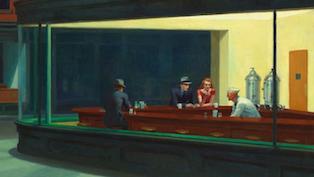
    Loneliness spurs the brain into a hyper-vigilant state, unable to relax. The lonely brain doesn’t passively take the world in, but actively interprets it as an unfriendly place.“Nighthawks” (1942) by Edward Hopper / WikicommonsIn 2002, a group of adults aged 50 and over answered a series of questions about their physical and mental health. A subset of the questions went as follows. How often do you feel … 1) A lack of companionship 2) Left out 3) Isolated from others The adults rated their answers on a scale of 0-3 with “hardly ever or never” to “often.” Three points or more qualified that person as “lonely.” Six years passed. In 2008, the researchers followed up with the participants. They discovered lonely individuals were at greater risk to be depressed and less mobile than their (...)

  • Lactalis : le prisme de la salmonelle
    https://reflets.info/articles/lactalis-le-prisme-de-la-salmonelle

    Ou comment les suicides des agriculteurs passent à la trappe Le récent scandale de contamination des laits pour nourrissons par une salmonelle a fait oublier le taux de suicides particulièrement élevé dans cette tranche de la population. Logo de Lactalis - Lactalis La contamination par une salmonelle de lots de lait pour enfants en bas âge a remis un coup de projecteur peu aimable sur le groupe Lactalis. Ce géant de l’agroalimentaire est, selon Wikipedia, le premier groupe mondial de transformation fromagère et le deuxième groupe agroalimentaire du monde derrière Danone. L’indignation générale générée par le fait que le problème touche des nourrissons s’appuyait déjà sur le fait que le groupe, bien qu’engrangeant des milliards (...)

  • WikiLeaks deleted a tweet linking to the full ’Fire & Fury’ text - Business Insider
    http://uk.businessinsider.com/wikileaks-deleted-tweet-fire-and-fury-text-trump-russia-2018-1?r
    Des fois que vous auriez manqué de télécharger le livre voici une source pour en trouver une copie.

    The radical pro-transparency group WikiLeaks posted, and then quickly deleted, a tweet linking to the full text of “Fire & Fury: Inside the Trump White House” on Sunday.

    Later on Sunday, WikiLeaks reposted the link to what it said was the “full text” of the book.

    “Fire & Fury,” by author Michael Wolff, paints President Donald Trump and his administration in an unflattering light and features several explosive quotes from the former White House chief strategist, Steve Bannon.

    Among other things, Bannon called Trump’s daughter Ivanka “dumb as a brick,” and he also said Donald Trump Jr.’s meeting with a Russian lawyer in June 2016 was “treasonous” and “unpatriotic.”

    After Trump and his allies went on a scorched-earth offensive against Bannon, Wolff, and the book, Bannon issued a lengthy apology on Sunday, walking back many of his comments and reaffirming his “unwavering” support for Trump.

    https://metager.de/meta/meta.ger3?focus=web&encoding=utf8&lang=all&eingabe=%22Fire_and_Fury_-_Michae

    #USA #politique #Trump

  • 10 Things You Should Know About Julian Assange | Alternet
    https://www.alternet.org/10-things-you-should-know-about-julian-assange

    Julian Assange, founder of Wikileaks, is more loved, and more hated, than ever. And just who is doing the loving and the hating is more complicated than ever.

    In his rise from libertarian hacker to global publisher, Assange pioneered a new kind of power, the power to disrupt the secrecy of the national security state. With the help of Chelsea Manning, the silver-haired Australian published the “Collateral Murder” video, which showed the world the reality of the war in Iraq, and the State Department cables, which showed the realities of American diplomacy. So a lot of people admired him.

    Last week’s disclosure that Assange collaborated with Donald Trump Jr. during the 2016 presidential campaign has generated another blizzard of headlines—and a lot of confusion—about the world-famous transparency advocate.

    Here’s what you need to know about Assange.

    #Julian_Assange #Wikileaks #Trump #Libertarianisme