Seenthis
•
 
Identifiants personnels
  • [mot de passe oublié ?]

 
  • #k
RSS: #kubernetes

#kubernetes

  • #kubernetes-engine
  • #kubernetes-and-celery
  • #kubernetes-api-gateway
  • #kubernetes-deployment
0 | 25
  • @hownot2code
    How not 2 code @hownot2code CC BY 23/09/2020

    Running #Kubernetes on #VMware: Challenges and Solutions
    ▻https://hownot2code.com/2020/09/23/running-kubernetes-on-vmware-challenges-and-solutions

    In August, 2019, VMware vSphere announced they are going Kubernetes-native. This means that integrated VMware and Kubernetes becomes a reality for all vSphere users. Despite all the benefits this integration promises, running Kubernetes on VMware is not exempt from challenges. This article presents an overview of running Kubernetes on VMware and the challenges it presents. … Continue reading Running Kubernetes on VMware: Challenges and Solutions

    #Tips_and_tricks #programming
    ►https://1.gravatar.com/avatar/a7fa0bb4ebff5650d2c83cb2596ad2aa?s=96&d=identicon&r=G
    ▻https://lh4.googleusercontent.com/s_ACS_qlAjU5QMLFo_1lTA301lT7Q3EW9HDnpFcRmM_TyjIsUAdcrWc24pln8
    ▻https://lh4.googleusercontent.com/0Gkj33tTW8Kku3Sqqo91VLBZRjxHQIrvY6QbmtKERn5i8EgfM1DTmpbf8Wxsw

    How not 2 code @hownot2code CC BY
    Écrire un commentaire
  • @hackernoon
    Hacker Noon @hackernoon CC BY-SA 23/04/2019

    Delays in app delivery to #kubernetes
    ▻https://hackernoon.com/delays-in-app-delivery-to-kubernetes-5d0511094f38?source=rss----3a8144ea

    https://cdn-images-1.medium.com/max/1000/1*vG0NCnyQXVdQpBVxOLLv4w.png

    Delays in App Delivery to KubernetesDelivering enterprise applications to KubernetesEnterprises around the world are waking up to the #containers and Kubernetes trend. There are numerous benefits of delivering an application as container packages to Kubernetes but at the same time, the process of app containerization and the subsequent app deployment to Kubernetes can hit many roadblocks. Since the idea of using Kubernetes and containers for app delivery is fairly recent, the transition from traditional delivery systems to these modern delivery systems is a bumpy ride.Major roadblocks while achieving continuous deliveryTo modernize, breaking down large applications into smaller microservices is just a start. The main challenge is in continuously delivering these microservices as (...)

    #continuous-delivery #devops #docker

    Hacker Noon @hackernoon CC BY-SA
    Écrire un commentaire
  • @hackernoon
    Hacker Noon @hackernoon CC BY-SA 28/02/2019

    A Tale of Two (Docker Multi-Stage Build) Layers
    ▻https://hackernoon.com/a-tale-of-two-docker-multi-stage-build-layers-85348a409c84?source=rss---

    https://cdn-images-1.medium.com/max/689/1*Amzj6V3ptbx5vs7RVsyfNw@2x.png

    Production Ready Dockerfiles for Node.js using SSR or NginxLicensed from Adobe Stock PhotosIn the last article of this series, we finished adding unit tests to our project to reach 100% code coverage. With tests in place, the next piece is getting our project ready for deployment.The last thing we need in place to get our application ready for #production deployment is a Dockerfile.The Dockerfile is also a great place to run our unit tests, which is why I’ve decided to write the tests first.We have a few goals with our build:It should be secureIt should be as slim as possibleIt should not build if quality standards are not metWith the goals in mind, let’s get started.Docker is essentially an isolated environment for your code to run in. Just like you would provision a server, you provision a (...)

    #nginx #docker #kubernetes #nodejs

    Hacker Noon @hackernoon CC BY-SA
    Écrire un commentaire
  • @hackernoon
    Hacker Noon @hackernoon CC BY-SA 23/02/2019

    #helm from the trenches
    ▻https://hackernoon.com/helm-from-the-trenches-17f87859ee47?source=rss----3a8144eabfe3---4

    https://cdn-images-1.medium.com/max/500/1*9mJCHusRXGq9PViqeajcZw.png

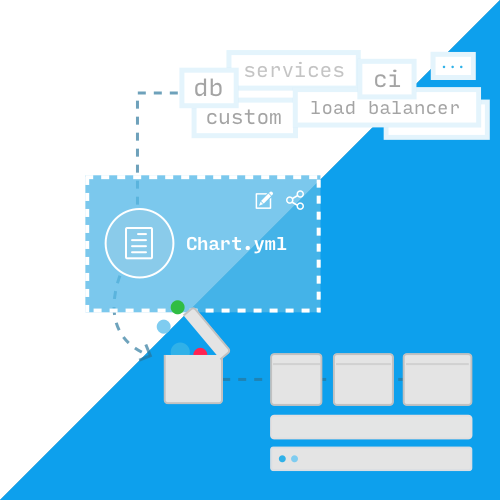
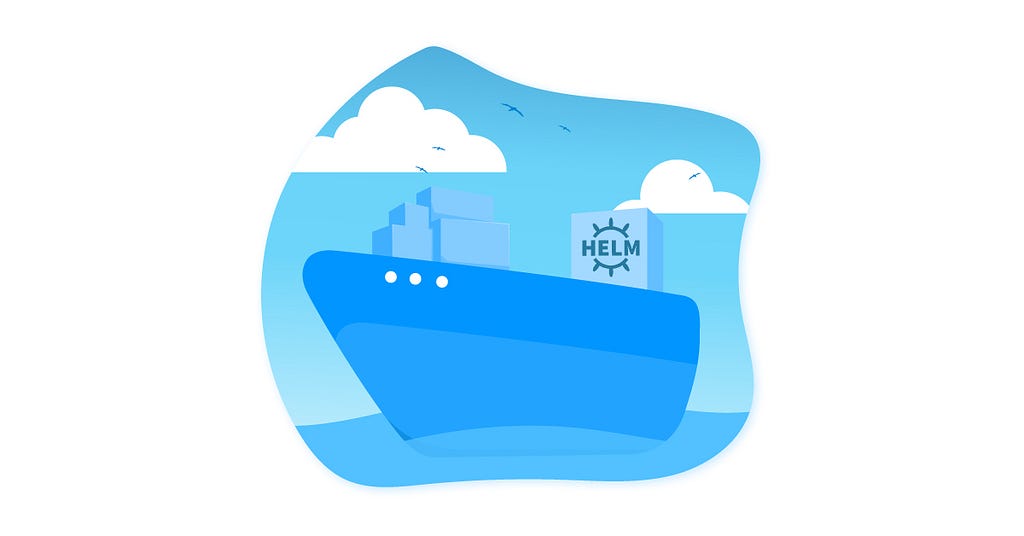
    If you are working with #kubernetes then you should use Helm to be able to easily change the YAML resources for your applications. Helm is like a package manager for deploying applications on a cluster, it gives you a list of already created apps (charts) ready to install and you can also start creating your own and publish them in your own chart museum. Like on an operating system, life without a package manager would be much harder.Helm charts for an easier Kubernetes installation (image source: ▻https://helm.sh)I am using Helm day by day, and these are the things I found out while creating new charts or modifying existing ones. If I knew all these before starting with helm than things would have been smoother and I would of wasted less time searching error messages and solutions to (...)

    #cloud-native #devops #cloud

    Hacker Noon @hackernoon CC BY-SA
    Écrire un commentaire
  • @hackernoon
    Hacker Noon @hackernoon CC BY-SA 19/02/2019

    Enterprise™ AF Solution for Text Classification (using BERT)
    ▻https://hackernoon.com/enterprise-af-solution-for-text-classification-using-bert-9fe2b7234c46?s

    https://cdn-images-1.medium.com/max/1024/1*Cxn-wVSC6KWzyrFtaZCSLw.png

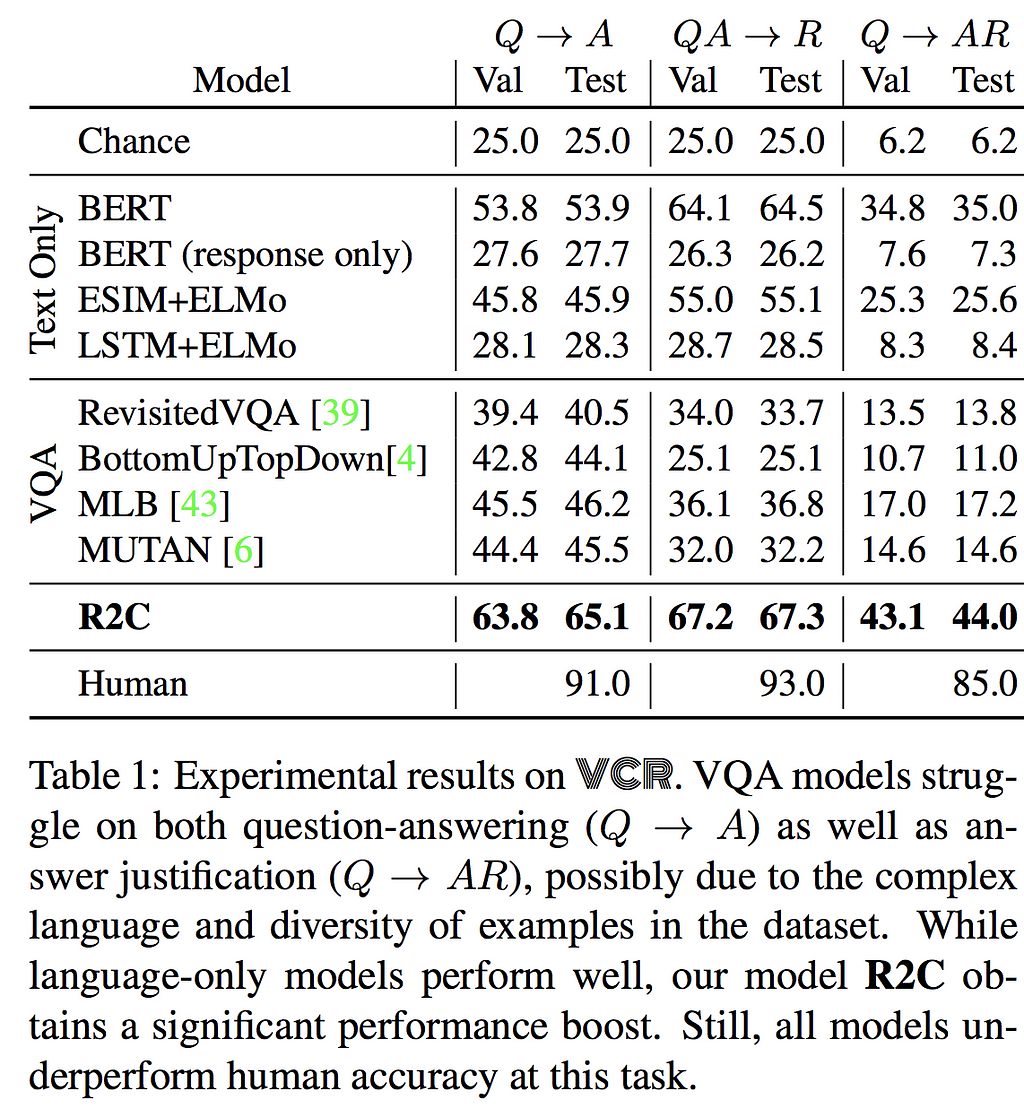
    What is BERT? How does one use BERT to solve problems? Google Colab, #tensorflow, #kubernetes on Google CloudOverviewThis for people who want to create a REST service using a model built with BERT, the best NLP base model available. I spent a lot of time figuring out how to put a solution together so I figured I would write up how to deploy a solution and share!Why should you read this?Today we have machine learning engineers, software engineers, and data scientists. The trend in deep learning is that models are getting so powerful that there is little need to know about the details of the specific algorithm and can be immediately applied to custom use cases. This trend will turn the job of machine learning engineers into a skill that software engineers have. There will still be data (...)

    #machine-learning #artificial-intelligence #enterprise-af

    Hacker Noon @hackernoon CC BY-SA
    Écrire un commentaire
  • @hackernoon
    Hacker Noon @hackernoon CC BY-SA 19/02/2019

    Service Mesh: Moving from bare-bones Envoy to #istio
    ▻https://hackernoon.com/service-mesh-moving-from-bare-bones-envoy-to-istio-e0fef88fc1e3?source=r

    https://cdn-images-1.medium.com/max/812/1*Xzz6jltbnrH_DGr4fbMd6Q.jpeg

    Migrating from bare-bones Envoy to IstioThis post is part of the “Service Mesh” series. If you haven’t read the previous posts, I would urge you to do so, it will help understand this article better. Here are the previous articlesService Mesh with Envoy 101Microservices monitoring with Envoy Service Mesh, Prometheus & GrafanaDistributed Tracing with Envoy Service Mesh & JaegerIn the previous articles we looked at installing Envoy as a side car proxy to our services and saw how the Service Mesh setup helped in managing traffic between the services and to collect and visualise tons of telemetry data about the traffic.There were a few annoying things in the setup thoughInstalling the Envoy side car manuallyRouting traffic to the side car proxy manuallyManaging the configurations for all the (...)

    #microservices #service-mesh #envoy-proxy #kubernetes

    Hacker Noon @hackernoon CC BY-SA
    Écrire un commentaire
  • @hackernoon
    Hacker Noon @hackernoon CC BY-SA 14/02/2019

    How to develop Go #grpc #microservices and deploy in Kubernates
    ▻https://hackernoon.com/how-to-develop-go-grpc-microservices-and-deploy-in-kubernates-5eace0425b

    https://cdn-images-1.medium.com/max/768/1*fHzWwCWXtgqQ1kImkAH6_g.png

    How to develop Go gRPC microservices and deploy in KubernetesA few month back, I started my journey learning gRPC. This article is to demonstrate how we can use gRPC to develop microservices using Go and deploy them in #kubernetes cluster. We will develop two microservice. One microservice will be responsible for calculating summation of two integer and other will serve a public REST API.PrerequisitesThere are many many way to run kubernetes cluster in local machine. I am going to use Minikube for this article. We also need to install kubectl, Docker and #protobuf Compiler.To start Minikube you have to run following command with root privileges$ minikube start [—vm-driver=<driver>]Define communication protocolAs an underlying transport protocol we will use gRPC. For that we need (...)

    #golang

    Hacker Noon @hackernoon CC BY-SA
    Écrire un commentaire
  • @hackernoon
    Hacker Noon @hackernoon CC BY-SA 5/02/2019

    Deploy React Application using #docker and Google Cloud Platform
    ▻https://hackernoon.com/deploy-react-application-using-docker-and-google-cloud-platform-4bc03f9e

    https://cdn-images-1.medium.com/max/1024/1*ooFBMFLQ8E3t_vcXgPBnoA.png

    Deploy React Application with Docker and Google Cloud PlatformDocker | #reactjs | GCPIn this article, you will learn how to deploy applications on GCP. We will deploy a create-react-app.Link to the Repo — ▻https://github.com/Harshmakadia/react-dockerBefore we get started with the actual steps of deploying the React App using GCP and Docker. First, let’s understand what docker actual is?Docker is a tool which is designed to make the creating, deploying and running of applications easier with the help of containers. Containers are something which allows the developer to bundle the application with all the necessary ingredients like different libraries, dependencies and ship is as only a single package.We will go step by step1. Creating React ApplicationCreate react app is a lot easier using the (...)

    #nginx #kubernetes-engine #google-cloud-platform

    • #Docker
    Hacker Noon @hackernoon CC BY-SA
    Écrire un commentaire
  • @hackernoon
    Hacker Noon @hackernoon CC BY-SA 17/01/2019

    Configuring Multiple Multiple Node Pools
    ▻https://hackernoon.com/configuring-multiple-multiple-node-pools-b2509641ac82?source=rss----3a81

    Configuring Multiple Node Pools in AWSCustomise your EC2 to your deployment needsPicture the scene. You’ve got a few small, simple microservices. They all run beautifully on 200mb of ram and scale instantly. Engineering bliss. But wait… in this blue sky, a scar in the scenery, lies an omen. A storm cloud in the shape of a monolith. You need to get this beast running in your #kubernetes #cluster but it’s dramatically larger than your other applications. In the words of the internet, “wut do?”Your cluster is gonna need some guns of steel.Is your Microservice EC2 Instance Type enough?Your Microservices can be packed into small boxes, but your monolith needs some juice. There simply isn’t enough horsepower in a single instance to run your application as a pod. The purists are going to tell you “Well (...)

    #node-pools #node-pools-in-aws #multiple-node-pools

    Hacker Noon @hackernoon CC BY-SA
    Écrire un commentaire
  • @hackernoon
    Hacker Noon @hackernoon CC BY-SA 10/01/2019

    Why You Should NOT Switch to #microservices
    ▻https://hackernoon.com/why-you-should-not-switch-to-microservices-6f0bcd98ab68?source=rss----3a

    https://cdn-images-1.medium.com/max/1024/1*Wt43IuKJ5a8bgi0LR-CHGA.jpeg

    Should your product be built as a monolith or consist of microservices from the start? When is the right time to adopt microservices? Why would you need to fall back?Microservices is the term that boomed lately and many businesses are considering moving to this software architecture. There are multiple opinions expressed on the benefits and necessity of moving from a monolith app to microservices or serverless computing. Using microservices can bring efficiency to workflows in finances, retail, consulting, banking, marketing, data analytics, and other industries.This Statista graph shows that microservices or serverless computing were already actively used in 11% of production deployments as of 2017, and 18% more of respondents named the adoption of this tech their top priority for (...)

    #devops #switch-to-microservices #kubernetes #docker

    Hacker Noon @hackernoon CC BY-SA
    Écrire un commentaire
  • @hackernoon
    Hacker Noon @hackernoon CC BY-SA 3/01/2019

    Local #kubernetes setup with #minikube on Mac OS X
    ▻https://hackernoon.com/local-kubernetes-setup-with-minikube-on-mac-os-x-eeeb1cbdc0b?source=rss-

    https://cdn-images-1.medium.com/max/1024/1*RPlkI7b6Ek85uyaQ3qPS8w.jpeg

    Kubernetes, container registry, #helm…Minikube is ideal tool to setup kubernetes (k8s from now on) locally to test and experiment with your deployments.In this guide I will try to help you get it up and running on your local machine, drop some tips on where and how particular stuff should be done and also make it helm capable (I assume when you use #k8s that at some point you will want to learn about and use Helm, etcd, istio etc).This is your local k8s environment scaffolding guide.Minikube installationMinikube works with virtual machine, and for this it can use various options depending on your preference and operating system. My preference in this case is Oracle’s VirtualBox.You can use brew to install everything:$ brew cask install virtualbox minikubeIn this case you could get some (...)

    #docker

    Hacker Noon @hackernoon CC BY-SA
    Écrire un commentaire
  • @hackernoon
    Hacker Noon @hackernoon CC BY-SA 2/01/2019

    Using #s3 As a #helm Repository
    ▻https://hackernoon.com/using-s3-as-a-helm-repository-a76b504d494e?source=rss----3a8144eabfe3---

    https://cdn-images-1.medium.com/max/800/0*j5qOv3O6AE-xnUGD.png

    Simplify your #kubernetes deploymentsIf you know what the title means, you’re likely looking to get right into the meat of this tutorial. I’ll keep the introduction brief.What is Helm?Helm is a tool for templating and applying Kubernetes resources into a Kubernetes cluster. It advertises itself as the “npm of k8s”, which is a description I have found thoroughly unhelpful. Instead, read this article — it explains it beautifully.Why do you want your own Helm Repository?From this point onwards, I’m going to assume you’re familiar with what a “helm chart” is. If you’re not, read the linked article.You’ve got some options when you want to deploy your applications into Helm. You either have a helm chart per application or a helm chart for a group of applications. For example, you either have your (...)

    #kubernetes-deployment #aws

    Hacker Noon @hackernoon CC BY-SA
    Écrire un commentaire
  • @hackernoon
    Hacker Noon @hackernoon CC BY-SA 18/12/2018

    An Approach To Automating Application Resiliency #testing With #kubernetes
    ▻https://hackernoon.com/an-approach-to-automating-application-resiliency-testing-with-kubernetes

    https://cdn-images-1.medium.com/max/1024/1*L5JHfko0QSTD8_XOq_qvLQ.jpeg

    Table of contentIf you’ve never failed, you’ve never livedReliability and ResiliencySo let it break… but plan for it!Why Kubernetes?Organize the resistance with ToxiProxyResiProxy: a Kubernetes companionHappy vs Alternate pathKeep calm and under control with KarateConclusionIf you’ve never failed, you’ve never livedWithout too much pessimism applied to micro-services, this common saying is also sensible: failures are an intrinsic characteristic of any distributed system. Hundreds of independent entities trying to communicate and collaborate to achieve a greater good… at least one of them is sure to fail.Trying to avoid all of these failures is wishful thinking and can sometimes lead to an extra complexity that can directly impact an architecture, its cost, and in particular limit its capacity to (...)

    #go #docker #microservices

    Hacker Noon @hackernoon CC BY-SA
    Écrire un commentaire
  • @hackernoon
    Hacker Noon @hackernoon CC BY-SA 29/11/2018

    Getting started — Quebic FaaS Framework
    ▻https://hackernoon.com/getting-started-quebic-faas-framework-c05ca0e13e08?source=rss----3a8144e

    https://cdn-images-1.medium.com/max/1024/1*BeLHnwphXA4zwx11stBn2w.png

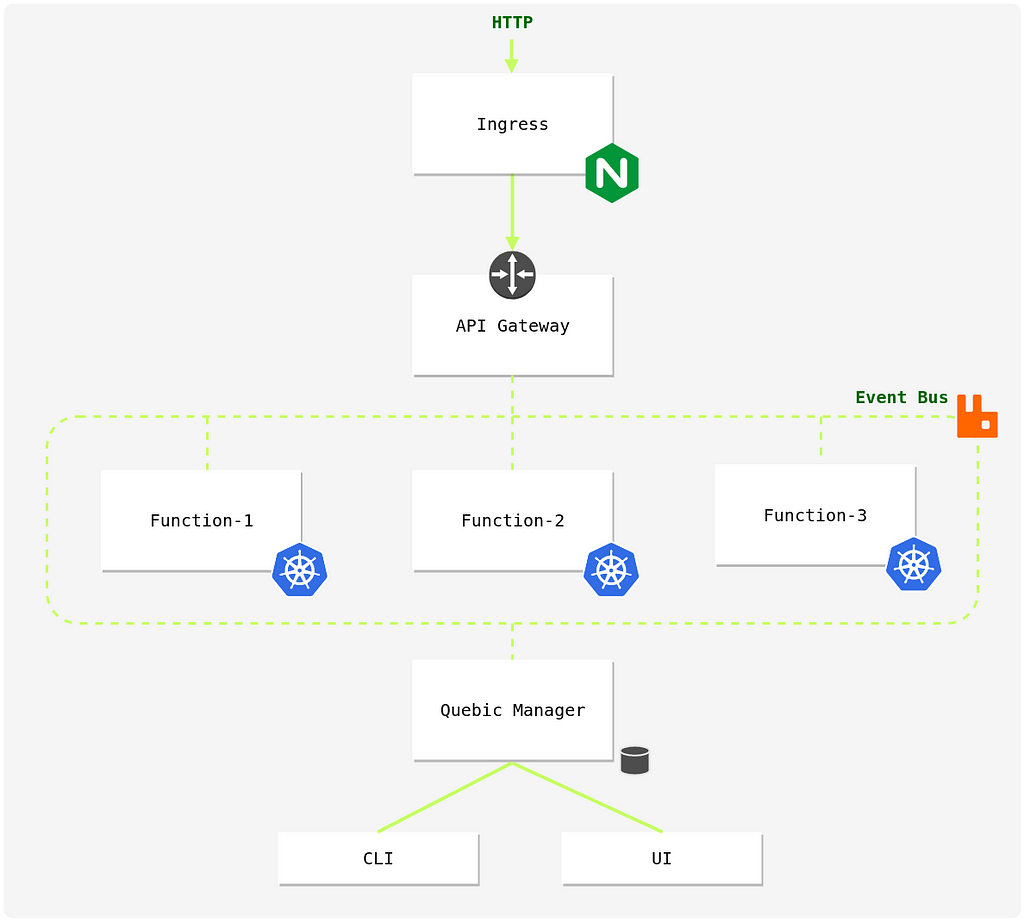
    Hi Today I am going to introduce Quebic - FaaS Framework. Quebic provides way to write server-less functions to run on #kubernetes. It supports for Java, Python, #nodejs runtimes.The key difference between Quebic and existing FaaS frameworks is, With Quebic you can develop highly available back-ends to serve real-time and also supports to execute on-demand tasks. Most of the existing FaaS frameworks are most suitable only for executing on-demand tasks.Main TopicsPrerequisitesHigh Level Overview of QuebicSetup QuebicAPI GatewayFunctions1. PrerequisitesBefore start Qubic you need to setup Kubernetes cluster. There are several ways. Here you can find more details.You can easily setup Minikube on your local machine that will gives single node Kubernetes cluster.Or you can use hosted solution (...)

    #quebic-faas-framework #cloud-native #serverless

    Hacker Noon @hackernoon CC BY-SA
    Écrire un commentaire
  • @hackernoon
    Hacker Noon @hackernoon CC BY-SA 26/11/2018

    #debugging Node Services in #kubernetes With #linkerd 2.0
    ▻https://hackernoon.com/debugging-node-services-in-kubernetes-with-linkerd-2-0-f878382fb380?sour

    https://cdn-images-1.medium.com/max/233/1*GpDj-2zfMxDNLO67KeziAQ.png

    Node is one of the most popular languages for microservices. With the rise of Kubernetes, increasingly, Node developers are being asked to deploy their services to a Kubernetes cluster. But what’s required to safely deploy and run Node services on Kubernetes? In this post, we focus on one specific, but vital, component: how do I understand what’s happening with my Node service on Kubernetes, and how do I debug it when things go wrong?At this point, you may be thinking, can’t I just use the Kubernetes dashboard? Unfortunately, while Kubernetes can automatically keep your service up in the event of node failure or a software crash, it doesn’t actually know whether your service is behaving correctly. In fact, a service may be returning 500’s or taking too long to respond and the Kubernetes (...)

    #nodejs #debugging-node-services

    Hacker Noon @hackernoon CC BY-SA
    Écrire un commentaire
  • @hackernoon
    Hacker Noon @hackernoon CC BY-SA 7/11/2018

    #cloud Migration Checklist: what to do and why to do it
    ▻https://hackernoon.com/cloud-migration-checklist-what-to-do-and-why-to-do-it-3c4de423fae?source

    https://cdn-images-1.medium.com/max/1024/1*y53VOF--sEZob3kN6m8wGg.jpeg

    Every company has to perform a cloud migration at some point of their scaling up. We provide a cloud migration checklist to help you make the right choices and avoid mistakes.We have already covered the most common mistakes made during cloud transition and mentioned the right approaches to dealing with the challenges that arise. Today we describe the best-case scenario of cloud migration and explore the steps needed to make everything work fine:IT infrastructure auditIdentifying the existing issues and designing the solutions for themDesigning a migration planDesigning the optimal cloud infrastructureCompleting a pilot project in parallel with the legacy processes to test the systemImproving the infrastructure based on the pilot project feedback and outcomesMoving the system components to (...)

    #devops #cloud-computing #kubernetes #cloud-migration

    Hacker Noon @hackernoon CC BY-SA
    Écrire un commentaire
  • @hackernoon
    Hacker Noon @hackernoon CC BY-SA 25/07/2018
    1
    @monolecte
    1

    K8 Istio little Deep Dive
    ▻https://hackernoon.com/k8-istio-deep-dive-c0773a204e82?source=rss----3a8144eabfe3---4

    https://cdn-images-1.medium.com/max/979/1*OiYNhTf7RW-24-JweVouyQ.png

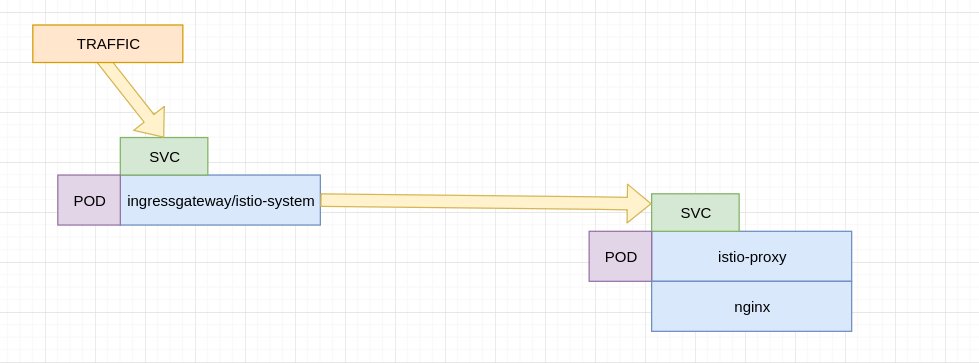
    I’ve been playing a little bit with Istio mostly egress , but today i wanted to write about ingresses .Basically Istio ingresses are a number of proxies (envoy) that kind of talk to each other to deal with access , throttling and app routing in general.What is really interesting about the istio approach is the sidecar injection, imagine that you’re running a container execs nginx (port80 )SWhat istio does is “inject” a sidecar container , that runs on the same pod , that means , sharing the kernel network namespace with privileged mode and NET_ADMIN capabilities.That way , they guarantee full tracing of services for example or mutual tls for example.In very simple terms it looks like this:Istio workflowThis is much different than having a traditional nginx ingress , the nginx ingress speaks to a (...)

    #linux #security #devops #kubernetes #docker

    Hacker Noon @hackernoon CC BY-SA
    Écrire un commentaire
  • @hackernoon
    Hacker Noon @hackernoon CC BY-SA 25/07/2018

    #google releases 10 new and updated enterprise focused security tools and services
    ▻https://hackernoon.com/google-releases-10-new-and-updated-enterprise-focused-security-tools-and

    https://cdn-images-1.medium.com/max/620/1*ZgL8rZ0mzRsLyOApUqTqhQ.png

    In March, Google announced ​more than 20 security enhancements​, deciding that apparently, that number wasn’t enough today they are announcing:Context-aware access capabilities, available now for select customers in beta for VPC Service Controls, and coming soon to beta for Cloud IAM, Cloud IAP and Cloud IdentityTitan Security Key, available now to Cloud customers, and coming soon to the Google StoreShielded VMs, available now in betaBinary Authorization, coming soon to betaContainer Registry Vulnerability Scanning, coming soon to betaCloud Armor geo-based access control, available now in betaCloud HSM, coming soon to betaAccess Transparency, soon to be generally availableG Suite security center investigation tool, available now via Early Adopter ProgramG Suite data regions, now generally (...)

    #google-cloud-platform #amazon #cloud-computing #kubernetes

    • #Google
    Hacker Noon @hackernoon CC BY-SA
    Écrire un commentaire
  • @hackernoon
    Hacker Noon @hackernoon CC BY-SA 23/07/2018

    Scaling Microservices with Message Queues, Spring Boot and #kubernetes
    ▻https://hackernoon.com/scaling-microservices-with-message-queues-spring-boot-and-kubernetes-9ba

    https://cdn-images-1.medium.com/max/1024/0*EYkQh1w1msyxqcl6.png

    When you design and build applications at scale, you deal with two significant challenges: scalability and robustness.You should design your service so that even if it is subject to intermittent heavy loads, it continues to operate reliably.Take the Apple Store as an example.Every year millions of Apple customers preregister to buy a new iPhone.That’s millions of people all buying an item at the same time.If you were to picture the Apple store’s traffic as requests per second over time, this is what the graph could look like:Now imagine you’re tasked with the challenge of building such application.You’re building a store where users can buy their favourite items.You build a microservice to render the web pages and serving the static assets.You also build a backend REST API to process the (...)

    #java #spring-boot #message-queue #scaling-microservices

    • #Apple
    Hacker Noon @hackernoon CC BY-SA
    Écrire un commentaire
  • @hackernoon
    Hacker Noon @hackernoon CC BY-SA 15/07/2018

    The Microservice Weekly #139
    ▻https://hackernoon.com/the-microservice-weekly-139-d39e91538ab8?source=rss----3a8144eabfe3---4

    Highly Available #microservices with Health Checks and Circuit BreakersIn this article, you’ll read how algorithms for load balancing help to deliver highly available services. Then, you can read an example of how Kong makes it easier to deliver high availability with built-in health checks and circuit breakers.2 Days of Microservices Training in EdinburghDuring the course of these two days, we will cover a high-level architectural overview of what is needed to design, develop and maintain an application built with microservices.Microservices with #kubernetes, Docker, Helm (Part 1) — Generic configuration and API GatewayRead how to set up a Microservices architecture from scratch using Kubernetes, Helm, and Docker. You’ll learn how to automate the deployment process using a CI/CD tool.Monolith (...)

    #nodejs #javascript

    Hacker Noon @hackernoon CC BY-SA
    Écrire un commentaire
  • @hackernoon
    Hacker Noon @hackernoon CC BY-SA 25/06/2018

    Scaling Effectively: when #kubernetes met Celery
    ▻https://hackernoon.com/https-medium-com-talperetz24-scaling-effectively-when-kubernetes-met-cel

    https://cdn-images-1.medium.com/max/1024/1*r6VX5egi8sI1XKSPY9a5-g.png

    This is a story about software architecture, about a personal itch, and about scalability. And like any good tech story, it begins with a shaky architecture.At Panorays, we help large enterprises to measure the security posture of their suppliers. But I’m not going to get into the whole 3rd party security management extravaganza with you. we came to talk about our architecture and process.In the beginning, there was bash. and scripts to manage VMs. a lot of scripts.There was a VM instance for each company we assessed.Every VM executed sequential batch jobs that imitate the whole reconnaissance phase of the hacker’s lifecycle.Company level parallelism is achieved by firing up more VMs.We built an internal orchestration system via Cron & Bash (imagine how fun was that…).Problems:The (...)

    #startup-lessons #kubernetes-and-celery #docker #python

    Hacker Noon @hackernoon CC BY-SA
    Écrire un commentaire
  • @hackernoon
    Hacker Noon @hackernoon CC BY-SA 14/06/2018

    What is #helm and why you should love it?
    ▻https://hackernoon.com/what-is-helm-and-why-you-should-love-it-74bf3d0aafc?source=rss----3a8144

    https://cdn-images-1.medium.com/max/1024/1*6p1-xdR5rNV7uDAh1gN43w.jpeg

    Helm is the first application package manager running atop #kubernetes. It allows describing the application structure through convenient helm-charts and managing it with simple commands.Why is Helm important? Because it’s a huge shift in the way the server-side applications are defined, stored and managed. Adoption of Helm might well be the key to mass adoption of #microservices, as using this package manager simplifies their management greatly.Why are microservices so important? They have quite a few uses:When there are several microservices instead of a monolithic application, each microservice can be managed, updated and scaled individuallyIssues with one microservice do not affect the functionality of other components of the applicationNew application can be easily composed of (...)

    #docker #devops

    Hacker Noon @hackernoon CC BY-SA
    Écrire un commentaire
  • @hackernoon
    Hacker Noon @hackernoon CC BY-SA 10/05/2018

    Here’s what #devops isn’t
    ▻https://hackernoon.com/heres-what-devops-isn-t-f37e40af05ea?source=rss----3a8144eabfe3---4

    This article focuses on clarifying certain misconceptions that revolve around DevOps. However, considering the fact that there might be readers in the audience not aware of what DevOps actually translates to- as a definition, I’m going to shamelessly copy WikiPedia’s definition of the term “DevOps” and try to dance around it in a really intellectual way. The definition reads as follows:DevOps (a clipped compound of “development” and “operations”) is a software engineering culture and practice that aims at unifying software #development (Dev) and software operation (Ops). The main characteristic of the DevOps movement is to strongly advocate automation and monitoring at all steps of software construction, from integration, testing, releasing to deployment and infrastructure management. DevOps (...)

    #kubernetes #web-development #docker

    Hacker Noon @hackernoon CC BY-SA
    Écrire un commentaire
  • @hackernoon
    Hacker Noon @hackernoon CC BY-SA 3/05/2018

    1 min* to run a service in #kubernetes — #kapp tool
    ▻https://hackernoon.com/1-min-to-run-a-service-in-kubernetes-kapp-tool-907fcec9f01a?source=rss--

    https://cdn-images-1.medium.com/max/1024/1*KgpBG3aCIPEL61kAHQckrg.jpeg

    Photo by Nick Fewings (▻https://unsplash.com/@jannerboy62)In my previous post titled From Makefile to Go semantic versioning service on Kubernetes I talked about creating a simple service in Go that runs on Kubernetes and simply returns you the next semantic version. For example: you send something like this minor/0.1.0 to the service, and the service would respond with 0.1.1 .In the conclusion of that article I mentioned that most of my time was spent figuring out the Kubernetes deployment files (Helm), Makefile and I wasn’t actually spending a lot of time on the code.Since I have done some React #development I remember a tool called create-react-app that helps you create a basic React app that you can build and run in the browser in seconds. I thought it would be useful if there was (...)

    #docker #kapp-tool

    Hacker Noon @hackernoon CC BY-SA
    Écrire un commentaire
  • @hackernoon
    Hacker Noon @hackernoon CC BY-SA 21/04/2018

    From Makefile to Go semantic versioning service on #kubernetes
    ▻https://hackernoon.com/from-makefile-to-go-semantic-versioning-service-on-kubernetes-3fae678db8

    https://cdn-images-1.medium.com/max/1024/1*EXzYpzDRDw1jX7M7m6D0vQ.jpeg

    Photo by Alexander Andrews (▻https://unsplash.com/@alex_andrews)About a week ago I was trying to figure out if there’s a good started Makefile I could use for Go projects.body[data-twttr-rendered="true"] background-color: transparent;.twitter-tweet margin: auto !important;anyone knows any good starter Makefile for Go CLIs? #golang #go — @pjausovecfunction notifyResize(height) height = height ? height : document.documentElement.offsetHeight; var resized = false; if (window.donkey && donkey.resize) donkey.resize(height); resized = true;if (parent && parent._resizeIframe) var obj = iframe: window.frameElement, height: height; parent._resizeIframe(obj); resized = true;if (window.location && window.location.hash === “#amp=1” && window.parent && window.parent.postMessage) (...)

    #docker #services #golang

    Hacker Noon @hackernoon CC BY-SA
    Écrire un commentaire
0 | 25

Thèmes liés

  • #docker
  • #devops
  • #microservices
  • #nodejs
  • #helm
  • technology: api
  • #google-cloud-platform
  • #kubernetes
  • #nginx
  • #cloud-native
  • #cloud
  • position: package manager
  • technology: operating system
  • #golang
  • company: docker
  • industryterm: software architecture
  • #go
  • #cloud-computing
  • operatingsystem: vms
  • company: google
  • #java
  • technology: java
  • #development