• Fusion power darling Commonwealth Fusion Systems raises another $1B
    https://techcrunch.com/2026/07/30/fusion-power-darling-commonwealth-fusion-systems-raises-another-1b

    #Commonwealth_Fusion_Systems (#CFS) has long been the best-funded #fusion power #startup. Now, it’s extending its lead.

    CFS announced Thursday that it raised $1 billion in a new round that included “significant institutional investors, such as pension funds, sovereign wealth funds, and infrastructure and industrial corporate partners,” the company said. When asked by TechCrunch, the company declined to name the specific investors. To date, CFS has raised $4 billion.

    The funding arrives as the company’s spending ramps up. CFS is currently building #Sparc, its #demonstration reactor, and finalizing the design of #Arc, its first #commercial power plant.

    (...)

    This is CFS’s largest round since raising $1.8 billion in 2021. The startup’s previous fundraise, announced in August, added $863 million to its coffers and included #Nvidia, #Google, Khosla Ventures, and Breakthrough Energy Ventures among its investors.

    CFS is pursuing a form of fusion known as magnetic confinement, in which powerful magnetic fields confine plasma inside the reactor, keeping the plasma dense and hot enough to spark fusion reactions. When atomic nuclei from the fusion fuel fuse, the reaction releases enormous amounts of energy. CFS plans to harvest the heat thrown off by the reaction to power a steam turbine.

  • #restry, la #startup casertana che ha conquistato #teenventures a Milano
    https://informareonline.com/restry-la-startup-casertana-che-ha-conquistato-teenventures-a-milan

    Caserta si conferma terra di talenti, innovazioni e idee capaci di competere sui palcoscenici nazionali. A confermarlo sono i giovanissimi casertani Giuseppe Di Sorbo e Francesco Di Stefano che, insieme a Flavio Bernoni, hanno conquistato il primo posto alla prima edizione di TeenVentures, la competizione nazionale dedicata alle startup fondate da under 20 e svoltasi […] L’articolo Restry, la startup casertana che ha conquistato TeenVentures a Milano proviene da Informareonline, scritto da Claudia Maria Campana

    #Approfondimenti #Attualità #Magazine_Luglio_2026

  • Bosses Are Becoming Obsessed With #AI, Using It to Make Every #Decision, Barraging Their Employees With Nonsensical #ChatGPT #Directives, and Even Asking It Who to Fire
    https://futurism.com/artificial-intelligence/bosses-obsessed-with-ai

    A lawyer was working at a #legal_tech #startup when her boss’s fascination with AI began to veer from enthusiastic to downright obsessive.

    First he started using #OpenAI’s #ChatGPT to generate his Slack messages and emails. Then he mandated AI use for all employees.

    “He called a company-wide meeting to announce that from then on, we had to discuss with the AI prior to all meetings or before communicating with him,” she told Futurism, “because if we didn’t develop and discuss our ideas with the AI first, it was a sign that we didn’t care about our jobs.”

    Soon her boss started “making structural company decisions based solely on his conversations with ChatGPT,” the attorney recalled — including asking the bot who to hire and fire.

  • Every #fusion #startup that has raised over $100M
    https://techcrunch.com/2026/06/19/every-fusion-startup-that-has-raised-over-100m

    Fusion startups have raised $7.1 billion to date, with the majority of it going to a handful of companies.

    Over the last several years, fusion power has gone from the butt of jokes — always a decade away! — to an increasingly tangible and tantalizing technology that has drawn investors off the sidelines.

    The technology may be challenging to master and expensive to build today, but fusion promises to harness the #nuclear reaction that powers the sun to generate nearly limitless energy here on Earth. If startups are able to complete commercially viable fusion #power_plants, then they have the potential to upend trillion-dollar markets.

    The bullish wave buoying the fusion #industry has been driven by three advances: more powerful computer chips, more sophisticated AI, and powerful high-temperature #superconducting #magnets. Together, they have helped deliver more sophisticated reactor designs, better simulations, and more complex control schemes.

    It doesn’t hurt that, at the end of 2022, a U.S. Department of Energy lab announced that it had produced a controlled fusion reaction that produced more power than the lasers had imparted to the fuel pellet. The experiment had crossed what’s known as scientific breakeven, and while it’s still a long ways from commercial breakeven, where the reaction produces more than the entire facility consumes, it was a long-awaited step that proved the underlying science was sound.

    Founders have built on that momentum in recent years, pushing the private fusion industry forward at a rapid pace.

  • La 1ère cause de mortalité au travail n’est celle que vous pensez !
    https://culture-rh.com/1ere-cause-de-mortalite-au-travail

    La mortalité au travail n’est pas un sujet anodin. Mais quand on parle d’accident du travail, on pense souvent à des chutes ou à des blessures dues à des machines. Et pourtant, la 1ère cause de mortalité au travail est bien plus “ordinaire”.

    La mortalité au travail et son lien avec la route

    Quand on évoque la mortalité au travail, l’image d’un chantier vient souvent à l’esprit. La réalité est pourtant bien différente, comme le démontre la dernière étude de MMA : 11e édition de son baromètre Ifop consacré au risque routier professionnel.

    En 2024, 424 personnes ont perdu la vie dans un accident lié à un déplacement professionnel ou domicile-travail. Parmi elles, 314 sont décédées lors d’un trajet domicile-travail et 110 lors d’un déplacement professionnel.

    Les accidents routiers professionnels représentent donc la 1ère cause de mortalité au travail en France.

    Plus frappant encore, 43 % des personnes décédées sur les routes en France métropolitaine en 2024 l’ont été dans un accident impliquant au moins un usager en déplacement lié au travail.

    Malgré ces chiffres, seuls 21 % des dirigeants sont conscients du fait que le risque routier constitue aujourd’hui la première cause d’accidents mortels au travail. Ce résultat progresse de 3 points par rapport à 2025, mais reste inférieur de 4 points au niveau observé en 2016.

    Pour les RH, ce constat est essentiel. Les salariés utilisant un véhicule, même occasionnellement, sont exposés à un risque majeur. Cette réalité concerne aussi bien les commerciaux que les techniciens, les livreurs ou les collaborateurs effectuant simplement leurs trajets quotidiens.

    • @sombre C’est la jactance « corporate » habituelle visant à mettre sous le tapis le rapport de subordination du salariat. Vu la source c’est pas étonnant (c’est même la lingua franca du milieu). À ranger dans la même panoplie qui fait que dans certaines boites que j’ai fréquenté on classe tout le monde « cadre », au motif que « un cadre ne compte pas ses heures », mouahahah, la gueule qu’ils font quand tu leur expliques qu’un cadre déclare ses heures supplémentaires comme tout salarié (vécu il y a 30 ans, et je doute que les pratiques aient changé).

  • Bubble Trouble
    https://prospect.org/power/2025-03-25-bubble-trouble-ai-threat

    Comment arrêter le progrès de l’IA chinoise open source et sécuriser la survie du modèle d’affaires capitalistes derrière les technologies AI états-uniennes ? Je ne vois qu’une solution pour le capital US, c’est une guerre contre la Chine que les États Unis ne sont pas prės de gagner.

    #merci @aurelieng pour https://seenthis.net/messages/1105860

    Bryan McMahon - The week of Donald Trump’s inauguration, Sam Altman, the CEO of OpenAI, stood tall next to the president as he made a dramatic announcement: the launch of Project Stargate, a $500 billion supercluster in the rolling plains of Texas that would run OpenAI’s massive artificial-intelligence models. Befitting its name, Stargate would dwarf most megaprojects in human history. Even the $100 billion that Altman promised would be deployed “immediately” would be much more expensive than the Manhattan Project ($30 billion in current dollars) and the COVID vaccine’s Operation Warp Speed ($18 billion), rivaling the multiyear construction of the Interstate Highway System ($114 billion). OpenAI would have all the computing infrastructure it needed to complete its ultimate goal of building humanity’s last invention: artificial general intelligence (AGI).

    Art for this story was created with Midjourney 6.1, an AI image generator.

    But the reaction to Stargate was muted as Silicon Valley had turned its attention west. A new generative AI model called DeepSeek R1, released by the Chinese hedge fund High-Flyer, sent a threatening tremor through the balance sheets and investment portfolios of the tech industry. DeepSeek’s latest version, allegedly trained for just $6 million (though this has been contested), matched the performance of OpenAI’s flagship reasoning model o1 at 95 percent lower cost. R1 even learned o1 reasoning techniques, OpenAI’s much-hyped “secret sauce” to allow it to maintain a wide technical lead over other models. Best of all, R1 is open-source down to the model weights, so anyone can download and modify the details of the model themselves for free.

    It’s an existential threat to OpenAI’s business model, which depends on using its technical lead to sell the most expensive subscriptions in the industry. It also threatens to pop a speculative bubble around generative AI inflated by the Silicon Valley hype machine, with hundreds of billions at stake.

    Venture capital (VC) funds, drunk on a decade of “growth at all costs,” have poured about $200 billion into generative AI. Making matters worse, the stock market’s bull run is deeply dependent on the growth of the Big Tech companies fueling the AI bubble. In 2023, 71 percent of the total gains in the S&P 500 were attributable to the “Magnificent Seven”—Apple, Nvidia, Tesla, Alphabet, Meta, Amazon, and Microsoft—all of which are among the biggest spenders on AI. Just four—Microsoft, Alphabet, Amazon, and Meta—combined for $246 billion of capital expenditure in 2024 to support the AI build-out. Goldman Sachs expects Big Tech to spend over $1 trillion on chips and data centers to power AI over the next five years. Yet OpenAI, the current market leader, expects to lose $5 billion this year, and its annual losses to swell to $11 billion by 2026. If the AI bubble bursts, it not only threatens to wipe out VC firms in the Valley but also blow a gaping hole in the public markets and cause an economy-wide meltdown.
    OpenAI’s Ever-Increasing Costs

    The basic problem facing Silicon Valley today is, ironically, one of growth. There are no more digital frontiers to conquer. The young, pioneering upstarts—Facebook, Google, Amazon—that struck out toward the digital wilderness are now the monopolists, constraining growth with onerous rentier fees they can charge because of their market-making size. The software industry’s spectacular returns from the launch of the internet in the ’90s to the end of the 2010s would never come back, but venture capitalists still chased the chance to invest in the next Facebook or Google. This has led to what AI critic Ed Zitron calls the “rot economy,” in which VCs overhype a series of digital technologies—the blockchain, then cryptocurrencies, then NFTs, and then the metaverse—promising the limitless growth of the early internet companies. According to Zitron, each of these innovations failed to either transform existing industries or become sustainable industries themselves, because the business case at the heart of these technologies was rotten, pushed forward by wasteful, bloated venture investments still selling an endless digital frontier of growth that no longer existed. Enter AGI, the proposed creation of an AI with an intelligence that dwarfs any single person’s and possibly the collective intelligence of humanity. Once AGI is built, we can easily solve many of the toughest challenges facing humanity: climate change, cancer, new net-zero energy sources.

    And no company has pushed the coming of AGI more than OpenAI, which has ridden the hype to incredible heights since its release of generative chatbot ChatGPT. Last year, OpenAI completed a blockbuster funding round, raising $6.6 billion at a valuation of $157 billion, making it the third most valuable startup in the world at the time after SpaceX and ByteDance, TikTok’s parent company. OpenAI, which released ChatGPT in November 2022, now sees 250 million weekly active users and about 11 million paying subscribers for its AI tools. The startup’s monthly revenue hit $300 million in August, up more than 1,700 percent since the start of 2023, and it expects to clear $3.7 billion for the year. By all accounts, this is another world-changing startup on a meteoric rise. Yet take a deeper look at OpenAI’s financial situation and expected future growth, and cracks begin to show.

    To start, OpenAI is burning money at an impressive but unsustainable pace. The latest funding round is its third in the last two years, atypical for a startup, that also included a $4 billion revolving line of credit—a loan on tap, essentially—on top of the $6.6 billion of equity, revealing an insatiable need for investor cash to survive. Despite $3.7 billion in sales this year, OpenAI expects to lose $5 billion due to the stratospheric costs of building and running generative AI models, which includes $4 billion in cloud computing to run their AI models, $3 billion in computing to train the next generation of models, and $1.5 billion for its staff. According to its own numbers, OpenAI loses $2 for every $1 it makes, a red flag for the sustainability of any business. Worse, these costs are expected to increase as ChatGPT gains users and OpenAI seeks to upgrade its foundation model from GPT-4 to GPT-5 sometime in the next six months.

    Financial documents reviewed by The Information confirm this trajectory as the startup predicts its annual losses will hit $14 billion by 2026. Further, OpenAI sees $100 billion in annual revenue—a number that would rival Nestlé and Target’s returns—as the point at which it will finally break even. For comparison, Google’s parent company, Alphabet, only cleared $100 billion in sales in 2021, 23 years after its founding, yet boasted a portfolio of money-making products, including Google Search, the Android operating system, Gmail, and cloud computing.

    OpenAI is deeply dependent on hypothetical breakthroughs from future models that unlock more capabilities to boost its subscription price and grow its user base. Its GPT-5 class models and beyond must pull godlike capacities for AI out of the algorithmic ether to create a user base of hundreds of millions of paid subscribers. Yet, with the release of the open-source DeepSeek R1 model earlier this month, OpenAI has no moat for its increasingly expensive products. The R1 matched its performance across math, chemistry, and coding tasks, independently learned OpenAI’s reasoning techniques, and can be downloaded, modified, and deployed for free. Why would people continue to pay $20, let alone the $200 tier OpenAI reserves for its latest, greatest models, rather than use something that can deliver the same performance at a 95 percent lower price?

    Venture capital funds, drunk on a decade of “growth at all costs,” have poured about $200 billion into generative AI.

    Silicon Valley Is All In on AI

    Wall Street asked itself the same question after the release of DeepSeek R1 and panicked, wiping more than 15 percent ($600 billion) off Nvidia’s stock price, the largest single-day loss for a company ever. And that’s not the only bad sign Altman received about OpenAI’s future. OpenAI is in talks again to raise more money (less than a year after raising $10 billion) at a proposed $340 billion valuation. In most cases, a startup doubling its valuation would be great news. But for OpenAI, the money may make things worse. It signals a desperate need for cash and puts more pressure on a company that today loses $2 for every dollar it makes. As Zitron pointed out, at $340 billion, few companies have the liquidity to acquire OpenAI, and public investors expect strong returns and profitability to justify an IPO anywhere near that price. Plus, the latest round of funding is being led by Masayoshi Son, a billionaire investor known more for losing money than making it. Given Son’s Vision Fund’s disastrous investing record, Zitron said, it’s as bearish a signal as you could find. Hanging over all this for OpenAI is the fact that Microsoft’s investments in the company, which run north of $10 billion, are not standard equity investments but “profit participation units” that will convert to debt in a year and a half.

    It’s not just OpenAI that’s burning through billions. Silicon Valley has hyped AI as the next internet or iPhone, and has invested like it cannot afford to miss out on the next big tech revolution. In 2021, with the last gasp of zero-interest-rate loans paired with trillions in COVID relief spending, venture capitalists poured a record $78.5 billion into the AI space. And, despite a broader slowdown in venture activity, the second quarter of 2024 set the record for quarterly venture investing in AI at $23.3 billion. In fact, 33 percent of VC portfolios are committed to AI, another worrying sign of concentration.

    Even so, Big Tech companies are the biggest spenders on AI. While VCs dropped approximately $200 billion into AI between 2021 and 2024, Big Tech is on pace to surpass that amount this year alone. According to Goldman Sachs research, cloud computing giants are expected to plow over $1 trillion over the next five years into graphics processing units (GPUs) and to build data centers to power generative AI. AI is an expensive technology like few before it.

    All those racks of GPUs and supercluster data centers need power, and the power industry is also embarking on a once-in-a-generation investment spree to keep up. The scale of expected data centers to power generative AI is difficult to wrap your head around. Oracle recently announced plans to build a gigawatt-scale data center just for AI, powered by a trio of nuclear reactors, while OpenAI pitched the White House on the necessity of five-gigawatt data centers, which would be enough power for about three million homes consumed by a single AI data center. A recent report from McKinsey expects the electricity going to fuel AI data centers will triple from 3 to 4 percent of the country’s electricity to 11 to 12 percent by 2030. The power industry typically grows 2 to 3 percent a year, far too little to meet the predicted jump in demand. McKinsey estimates that power utilities would have to spend $500 billion on top of their planned capital expenditure to keep up with AI needs. If true, this presents a serious bottleneck for not just OpenAI but the expected growth of the AI industry.
    Where’s the Money, Lebowski?

    Between VCs, Big Tech, and power utilities, the bill for generative AI comes out to close to $2 trillion in spending over the next five years alone. Adding all this up, some are starting to question the economic fundamentals of generative AI. Jim Covello, head of global equity research at Goldman Sachs, doubts the technology can recoup what’s been invested as, unlike the internet, it fails to solve complex business problems at a lower cost than what’s available today. Plus, he argues, the most expensive inputs for generative AI, GPUs and energy, are unlikely to decline meaningfully for the tech industry over time, given how far demand outstrips supply for both. While AI-fueled coding could definitely boost productivity, it’s hard to see how it could become a multitrillion-dollar industry.

    Surveys confirm that for many workers, AI tools like ChatGPT reduce their productivity by increasing the volume of content and steps needed to complete a given task, and by frequently introducing errors that have to be checked and corrected. A study by Uplevel Data Labs tracked 800 software engineers using Copilot on GitHub and found no measurable increase in coding productivity, despite this exact use case being the one pointed to the most by AI companies. And even productivity gains may come at a cost: Microsoft researchers concluded that workers became more productive using generative AI tools but their critical thinking skills declined, presumably because they were offloading the thinking to AI. Looking past the hype, the business case for generative AI two years after the stunning success of ChatGPT appears weaker by the day.

    Even worse, as AI expert Gary Marcus pointed out, DeepSeek’s R1 model spells serious trouble for OpenAI and the cloud giants. The only way OpenAI could hope to recoup the billions it was spending on GPUs to train bigger and bigger models was to maintain a large enough technical lead over other AI companies to justify charging up to $200 for paid subscriptions to its models. That lead just vaporized and was given to the entire industry for free. In response, Altman has already twice cut the prices of his subscriptions in an effort to stay competitive. But without millions of paid subscriptions, it’s difficult to see the pathway to profitability for a company that loses $2 for every $1 it brings in and expects costs to continue to grow approximately tenfold in five years. OpenAI has set $100 billion as its break-even point, which would require it to increase its revenue by a factor of 25 in just five years, an incredible feat of scale that its current business model does not justify.

    OpenAI is, however, the perfect kind of growth-at-all-costs story investors need to think still exists—capable of not only achieving Meta- or Amazon-like growth again, but becoming an indispensable part of growth and innovation in every industry in the future, too. No industry could escape, and software would close its jaws around the world, finally, as Marc Andreessen predicted in 2011.

    For his part, Gary Marcus has taken to calling OpenAI the WeWork of AI—WeWork, of course, is the poster boy for wasteful, nearly fraudulent, growth-at-all-costs investing that led to a spectacular downfall. Marcus is so confident current approaches cannot take us to the promised land of AGI that he bet Anthropic CEO Dario Amodei $100,000 that AGI would not be achieved by the end of 2027. Without AGI, the valuations of leading AI startups like OpenAI ($340 billion) and Anthropic ($61.5 billion) stop making sense. If GPUs are no longer the most capital-efficient or effective way to build better AI models, then the expected AI computing “supercycle” that the hundreds of billions in capital expenditure is premised on never arrives. Instead, the underlying asset bubble of a multitrillion-dollar bet on GPUs as the necessary component to an internet-like era of growth vanishes into thin air.

    For many workers, AI tools reduce their productivity by increasing the volume of steps needed to complete a given task.

    Just How Big Will the Blast Be?

    OpenAI’s incredible burn rate, the trillions in capital expenditure by cloud giants and utilities to build out the infrastructure necessary to support AI, the supply bottlenecks ahead from the power and semiconductor industries, and the questionable economic gains from these tools all point to a generative AI bubble. Should the bubble burst, startups and venture funds alike face possible extinction, and a big enough drop from the Magnificent Seven could spark skittish markets to panic, leading to wider economic contagion, given how dependent on the growth of the top technology companies the public markets have become.

    In 2024, the Magnificent Seven were responsible for the lion’s share of the growth of the S&P 500, with the returns of the other 493 companies flat. When Nvidia hit its peak valuation of $3 trillion over the summer, just five of the seven—Microsoft, Apple, Nvidia, Alphabet, and Amazon—accounted for 29 percent of the total index’s value, surpassing the concentration of the five top technology companies just before the dot-com crash. Nvidia has been on an incredible bull run over the last five years, its shares gaining a dizzying 4,300 percent, reminiscent of how network equipment maker Cisco grew about 4,500 percent in the five years leading up to its peak just before the dot-com crash in 2000.

    Nvidia and the other Magnificent Seven members are in a codependent relationship when it comes to AI hype. They are Nvidia’s biggest customers, feeding the bull run by pushing demand for GPUs beyond even what chipmaker TSMC can supply. At the moment, Nvidia can pass those prices on to their customers, the only clusters big enough for AI computing. But should demand for AI fall, all seven will tumble with it.

    For the tech industry, DeepSeek is a threat to its incredible bull run because it proved three things. First, frontier AI models could be trained much more cheaply and efficiently than the current Silicon Valley approach of building massive models requiring hundreds of thousands of GPUs to train. From a capital perspective, the U.S. strategy is wasteful, relying on at least ten times the investment to make similar model progress. Second, DeepSeek showed you could train a state-of-the-art model without the latest GPUs, calling into question the current demand for the latest GPUs that is so hot customers have been facing delays of six months to a year to get their hands on them. Finally, the high valuations of leading AI startups depend on a technical lead in their models to charge prices anywhere near what they need to recoup their computing costs, but that technical lead, enabled by a combination of closed-source models, billions in capital expenditure, and export controls blocking Chinese companies like DeepSeek from accessing the latest GPUs, is gone. Should demand for GPUs fall or even not hit the exponential increases the billions invested are betting on, the bubble will pop.

    Given the stock market’s dependence on tech companies for growth, the trigger may not come from the AI industry itself, but any pullback in spending will crater the current trajectory of the AI industry. Many potential triggers abound: a crypto crash; President Trump’s trade wars with Canada, Mexico, and China; the stated goal to cut more than $1 trillion of government spending by Elon Musk’s Department of Government Efficiency; or a Chinese invasion of Taiwan, where nearly 70 percent of the world’s advanced computer chips are manufactured. You can tell Wall Street is worried about a bubble, because Nvidia is hit the hardest by any bearish AI news, and even when the market panic has nothing to do with the tech industry, like when the Japan currency trade happened last summer, the Magnificent Seven suffer punishing losses.

    The AI bubble wobbles more precariously by the day. Some bubbles, like that of the dot-com crash, end up being positive in the long run, despite the short-term economic pain of it bursting. But some, like the 2008 housing bubble, leave permanent scars on the economy and can knock an entire industry off its growth trajectory for years. To date, the U.S. housing industry has not recovered to pre-2008 growth trend lines, a major contributor to the housing crisis gripping the U.S. That is the fire that the tech industry is playing with today.

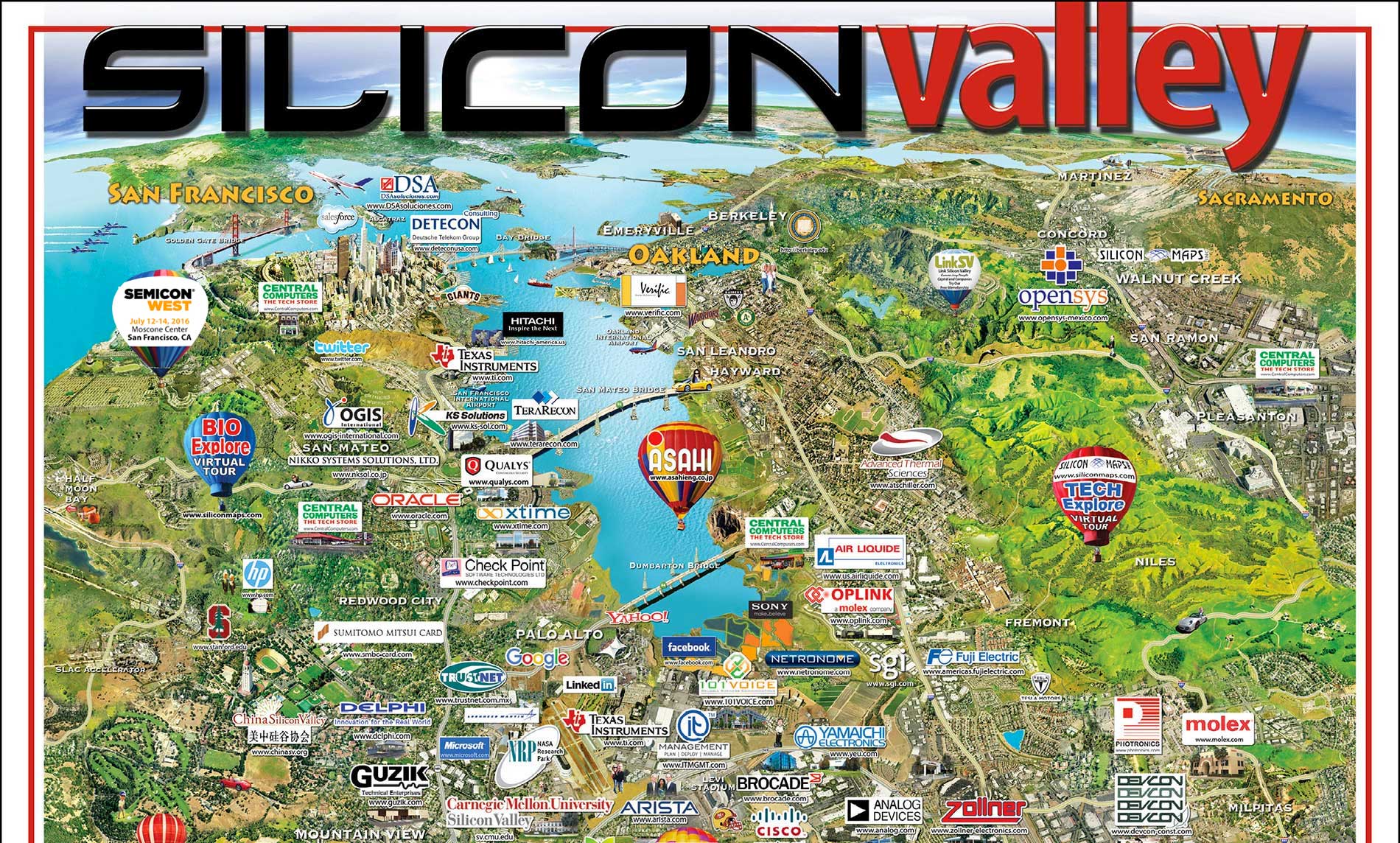
    This is not the Silicon Valley of lore. Venture investors, for all their tech manifestos celebrating “little tech” and entrepreneurship, have come to resemble more traditional financial firms, raising money from pension funds, hedge funds, and sovereign wealth funds. Silicon Valley has gone corporate and managerial; even private equity invests in the Valley today. The fusion of venture capital and Wall Street threatens to bring the unbridled speculation of unregulated finance and the breathless tech industry hype together in a single, massive bubble. Inimical to the old ethos of the Valley and emblematic of a bloated, rotten investing strategy, in Silicon Valley now the money chases founders rather than founders chasing money. Maybe, after the fallout of the AI bubble is felt and the sun sets on Silicon Valley for a bit, the tech world can do a hard reset and return to its more innovative days again.

    #Chine #USA #compétition #intelligence_artificielle #startup_economy

  • Ignition is a Modern #startup Applications Utility for Linux
    https://www.omgubuntu.co.uk/2025/01/ignition-startup-applications-app-linux-gtk

    I won’t lie: it’s easy to add or remove startup apps, commands, and scripts in Ubuntu. Just open the Startup Applications tool, click ‘Add’, and away you go. But while Ubuntu’s utility is adequate, it’s not as user-friendly as similar tools available elsewhere. Sure, Startup Applications is equipped with the critical customisation fields a user will need to curate a set of software/services to start at login — SSH agent, VPN app, password manager, backup script, resolution tweaks, and so on — but it’s rather rote. Take the way you add an app to start at login: Ubuntu’s Startup Applications […] You’re reading Ignition is a Modern Startup Applications Utility for Linux, a blog post from OMG! Ubuntu. Do not reproduce elsewhere without (...)

    #News #Apps_on_Flathub #libadwaita #System_Tools

  • Miles, Tier und Co.: Das dreckige Geschäft mit Car- und Roller-Sharing in Berlin
    https://www.berliner-zeitung.de/mensch-metropole/miles-tier-und-co-das-dreckige-geschaeft-mit-car-und-roller-sharing


    Akkordarbeit und voller Körpereinsatz: Im Reinigungszentrum von Miles in Berlin werden Autos rund um die Uhr geputzt. Emmanuele Contini

    28.5.2024 von Sophie-Marie Schulz - Überall in Berlin stehen die kleinen Flitzer: immer einsatzbereit, immer sauber. Aber wer reinigt sie, wer lädt die Akkus auf? Ein Streifzug durch die Nacht.

    In Berlin teilt sich die Leute nicht nur Wohnungen oder Partner, auch Autos und E-Roller werden gemeinschaftlich genutzt. Ganz selbstverständlich sind in Berlin an jeder Straßenecke verschiedenste Fahrzeuge verschiedenster Größen und Formen zu finden, mietbar für ein paar Minuten oder auch für Stunden. Bei solchen auf Zeit erworbenen Fortbewegungsmittel werden bestimmte Dinge immer erwartet: Die Autos sollen blitzsauber sein und am E-Scooter sollen die Batterie bis zum Anschlag aufgeladen sein.

    Doch nur die wenigsten machen sich Gedanken darüber, wer wohl die unsichtbaren Helfer im Geschäft mit dem Car- und Roller-Sharing sind, wann und wie sie arbeiten. Zwei Mitarbeiter der beiden in Berlin gegründeten Unternehmen Tier- und Miles-Mobility haben von ihren Erfahrungen erzählt. Während das eine Unternehmen durch gute Arbeitsbedingungen überzeugt, kämpft Tier scheinbar nicht ohne Grund ums Überleben.

    E-Scooter oder Mietwagen?

    Wenn man abends oder nachts durch die Straßen von Berlin läuft, dann werden die unsichtbaren Mitarbeiter von Tier plötzlich sichtbar. Dann sieht man einen Sprinter voller E-Roller-Batterien. Junge Männer schleppen die sperrigen Roller in ein Fahrzeug und fahren davon.

    Der Wirbel um die neuartigen Fortbewegungsmittel war groß und der Druck unter den Mitbewerbern ebenfalls. Tier, Lime & Co. überboten sich mit Spottpreisen. Aber wie kann ein Unternehmen profitabel bleiben, wenn es dauerhaft Fahrten für 0,1 Cent anbietet? Dann bleibt oftmals nur eine Option: Die Mitarbeiter müssen indirekt dafür zahlen.

    Einerseits stieg die Zahl der Unfälle, auch die Kritik an den E-Rollern wurde immer lauter und dutzende Kleinfahrzeuge wurden aus der Spree gezogen, andererseits fingen Mitarbeiter an, über die dortigen Arbeitsbedingungen zu reden. Bis dahin hatte sich kaum jemand gefragt, wie und wann die Akkus der Rolle aufgeladen werden. Die Antwort ist simpel – abends, vor allem nachts. Schnell machte vor Jahren der Begriff des „Juicers“ die Runde.

    Es ist die Rede vom schnellen Geld: Die nächtlichen freischaffenden Ladehelfer tauschen die Akkus und können pro geladenem Roller bis zu 5 Euro verdienen. Doch schnell heißt es auch wieder, dass diese Rechnung so nicht stimmt. Fahrtkosten, Strom, Mehrwertsteuer und die Autoversicherung müssen vom Juicer selbst gezahlt werden, sodass in der Regel weniger als 2,50 Euro übrigbleiben. Aber stimmt das wirklich?

    Wer mit wachem Blick durch Berlin läuft, der hat die Chance, eine Antwort auf diese Fragen zu bekommen. Wir hatten Glück. Als wir Martin Steiner* in Mitte über den Weg laufen, ist es kurz nach 20 Uhr. Der Kofferraum seines Autos steht offen, denn Steiner muss sich beeilen. Als wir ihn ansprechen und fragen, ob er ein Juicer ist, schüttelt er mit dem Kopf: „Mit denen haben wir nichts zu tun.“

    Steiner arbeiten nicht für die Firma Lime, sondern für den aktuellen Marktführer Tier. Das 2018 von Lawrence Leuschner und zwei Freunden gegründete Berliner Unternehmen arbeitet mit anderen Begriffen. Derzeit ist das Unternehmen nach eigenen Angaben in mehr als 260 Städten und 22 Ländern in Europa und dem Mittleren Osten aktiv.


    Die elektronischen Roller werden nicht nur auf Fußwegen abgestellt, sondern landen auch in Flüssen und Seen. Marcus Brandt/dpa

    Wenn Steiner über seine Kollegen redet, dann spricht er von den sogenannten Tierpflegern, die kleinere oder größere Arbeiten an den Rollern vornehmen. Mal wird nur der Akku getauscht, mal wird nur eine Schraube oder andere Dinge ersetzt oder repariert. Er kennt sich gut aus. Drei Jahre war er direkt bei Tier angestellt, mittlerweile arbeitet er für ein Sub-Unternehmen, das im Auftrag von Tier die Akkus auswechselt.

    „Das Geschäft mit den E-Rollern ist ein dreckiges Geschäft“, sagt Steiner und blickt auf seine verschmutzten Hände. Damit ist aber nicht nur der Austausch der Akkus gemeint, denn diese Arbeit ist schnell getan.
    Ständig werden neue Investoren gesucht

    „Es hat sich in den letzten Jahren vieles verändert. Zum Glück müssen wir nur noch den Akku tauschen und nicht mehr den ganzen Roller einladen“, sagt er. Eine App leitet die Tierpfleger zu einem ladebedürftigen Roller, dort entfernen sie die Batterie und setzen eine neue ein. „Nach wenigen Sekunden ist alles vorbei“, sagt er.

    Dreckig sei das Geschäft aber bis heute, denn Steiner hat den Arbeitgeber nicht ohne Grund gewechselt. Früher, als er noch bei Tier direkt angestellt war, arbeitete er zehn Stunden am Stück. Entweder war er auf der Straße unterwegs oder im Lager. Doch nach und nach hat der Druck zugenommen, erzählt der Tierpfleger. „Das Unternehmen musste profitabel bleiben, hat unglaublich viele Mitarbeiter gekündigt und war ständig auf der Suche nach neuen Investoren“, sagt er.

    Tatsächlich wurde Tier zu Bestzeiten mit 1,7 Milliarden Euro Marktwert bewertet. Nach dem rasanten Aufstieg folgte eine Krise auf die andere, sodass das Unternehmen Ende vergangenen Jahres mehr als 400 Stellen streichen musste und mit dem Wettbewerber Dott fusionierte. Aktuell wird das Unternehmen nur noch mit 150 Millionen Euro bewertet. Ein enormer Verlust.

    „Man versucht, immer effizient zu arbeiten, aber die Chefetage hat einfach irgendwann den Überblick verloren“, sagt Steiner. Irgendwann fängt das Unternehmen an, Sub-Unternehmen zu beauftragen. In Verträgen wird genau festgelegt, wie viele Akkus pro Monat oder Jahr von dem Drittanbieter aufgeladen werden müssen. Tier ist an diesem Punkt raus. Das beauftragte Unternehmen muss sich um die Mitarbeiter kümmern, Autos mieten, Versicherungen und Steuern bezahlen. Ein guter Deal?
    „Das kann und wird von den falschen Leuten sehr schnell ausgenutzt“

    „Ich verdiene mittlerweile deutlich besser“, erzählt der ehemalige Tier-Mitarbeiter. Seine Arbeitsstunden haben sich reduziert, sein Gehalt aber nicht. Er sagt aber auch, dass nicht alle Sub-Unternehmen so gut bezahlen und faire Arbeitsbedingungen gewährleisten, wie sein Arbeitgeber. „Tier gibt die Verantwortung komplett ab, indem ein anderer den Auftrag erhält. Das kann und wird von den falschen Leuten sehr schnell ausgenutzt“, sagt er. Wer kein Deutsch spricht und sich nicht gut auskennt, der wird die vorgefundenen Arbeitsbedingungen für normal halten. Steiner sieht sich aktuell nach Alternativen und einem neuen Job um. Der Carsharing-Markt wäre eine Option, erzählt er.

    Das eigene Fahrzeug durch ein gemietetes zu ersetzen, ist keine neue Idee. Weltmarktführer Hertz gibt es in den USA seit 1918, Deutschlands Marktführer Sixt wurde sogar schon 1912 gegründet. Doch viele finden solche Anbieter zu teuer, die Anmietung nimmt auch viel Zeit in Anspruch: Die Buchung erfolgt über eine Website, der Schlüssel muss persönlich abgeholt und auf gleichem Wege zurückgegeben werden. Wieso so kompliziert, wenn es auch einfach geht?


    Tagsüber in der Uni und abends im Cleaning-Hub: Anna arbeitet seit über einem Jahr für Miles und studiert BWL. Emmanuele Contini

    Die Gründer des Unternehmens Miles, Alexander Eitner und Florian Haus, haben genau diese Lücke geschlossen. Sie setzten voll und ganz auf das sogenannte Freefloating-Modell: Sie verzichten auf feste Stationen, die Nutzer können die Autos ganz einfach über eine App mieten. Heute ist das Unternehmen Marktführer in Deutschland, hat mehr als 900.000 aktive Kunden und ist aktuell in elf deutschen und drei belgischen Städten vertreten.

    Aber auch hier steckt eine ganze Menge Logistik dahinter, die schnell übersehen wird. In diesem Fall sogar noch deutlich größer und umfangreicher als bei einem E-Roller. Bei dem kann lediglich die Batterie getauscht werden und es gibt keinen Innenraum. Da fällt bei einem Auto deutlich mehr Arbeit an. Im Reinigungszentrum von Miles in Neukölln arbeitet Werkstudentin Anna seit mehr als einem Jahr.
    Eine vollständige Innenreinigung dauert knapp 15 Minuten

    Von außen sieht das Gelände aus wie eine gewöhnliche Autowerkstatt. Aber sofort fällt auf, dass ausschließlich Fahrzeuge mit der Aufschrift Miles dicht nebeneinander stehen. Eine Gruppe von jungen Leuten steht am Eingang zum Cleaning-Bereich. Die letzte Zigarette wird geraucht, es ist 15 Uhr – Schichtwechsel. Anna ist gerade angekommen und macht sie für die Spätschicht bereit. Sie kommt aus Russland, studiert BWL und verdient sich bei Miles etwas dazu.

    „Wir sind hier alle eine große Familie“, sagt sie und läuft in den Innenbereich der Reinigungsabteilung. Auch hier steht ein Auto am anderen. „Hier werden die Autos hereingefahren und geparkt“, erklärt Anna. Anschließend schnappt sie sich ihren Staubsauger, einen Putzlappen und Reinigungsmaterial. Nur knapp 15 Minuten braucht sie für ein Auto. „Gerade haben wir wieder sehr viele Autos mit Tierhaaren, dann kann die Reinigung auch mal länger dauern“, sagt sie.


    Staubsauger, Putztuch und Allzweckreiniger: Nur knapp 15 Minuten braucht Anna für ein Fahrzeug. Emmanuele Contini

    Eigentlich ist die Mitnahme von Tieren nicht gestattet. Da aber die Übergabe des Mietautos nicht persönlich erfolgt und die Nutzer das Fahrzeug einfach irgendwo in Berlin parken können, wird daran kein Gedanke verschwendet. „Ich habe ja zum Glück keine Tierhaarallergie“, sagt Anna und lacht. Routiniert greift sie nach einem Reinigungsgerät für Fußmatten und zeigt, wie man diese am besten und schnellsten wieder sauber bekommt.

    „Und wenn ich hier mit allem fertig bin, dann wird das Auto in die Waschanlage gefahren“, sagt sie und zeigt in die nächste Halle, die direkt gegenüber ist. Auch dort wird rund um die Uhr gearbeitet. Denn im Gegensatz zum E-Roller-Business, das überwiegend in der Nacht stattfindet, arbeiten die Miles-Mitarbeiter in drei Schichten. Den ganzen Tag werden Autos abgeholt, gereinigt, getankt und wieder zurückgebracht.

    Der Arbeitsaufwand ist deutlich höher und es ist eine ausgefeilte Logistik nötig. Im Gegensatz zu Tier arbeitet Miles aber nicht mit Sub-Unternehmen zusammen und hat sich von Anfang an vollständig auf das Carsharing-Modell fokussiert. Das soll auch so bleiben, erzählt Nora Goette, Leiterin der Öffentlichkeitsarbeit und Kommunikation von Miles in Berlin.

    Ähnlich wie der E-Roller-Markt ist auch das Geschäft mit Mietfahrzeugen hart umkämpft. Die Kundschaft klagt über Preissteigerungen. Trotzdem wollen die Unternehmen profitabel bleiben und sicherstellen, dass der Service nicht an Niveau verliert, ungünstig wäre auch wenn steigende Benzin- und Produktpreise auf Kosten der Mietarbeiter gehen.
    Arbeit, die nicht auf den ersten Blick zu sehen ist

    Denn neben Anna und ihrem Reinigungsteam sind da noch die Mitarbeiter im Call-Center, die Fahrer und viele mehr. Sie alle arbeiten im Verborgenen, müssen aber von den 0,87 Cent pro Kilometer bezahlt werden. Das vergessen viele ganz schnell, wenn sie in eines der Autos springen und es wenig später auch schon wieder verlassen.

    Anna und Martin macht es nichts aus, dass ihre Arbeit nicht auf den ersten Blick zu sehen ist. Beide machen ihren Job gern. „Trotzdem wäre es manchmal schön, wenn die Autos nicht ganz so schmutzig abgestellt werden“, sagt Anna. Mittlerweile ist es 16 Uhr. Anna wird noch bis kurz vor Mitternacht viele Autos saugen und die Seitenspiegel vom Staub der Blütenpollen befreien.

    *Name geändert.

    #Berlin #gigworking #Arbeit #Plattformökonomie #Startup #Mietwagen #Verkehr

  • The Messenger Was Built To Fail, And Did | Defector
    https://defector.com/the-messenger-was-built-to-fail-and-did

    The Messenger brought a bunch of good journalists together into a long-shot endeavor, let only a tiny handful of them do good work, buried that good work under an endless torrent of SEO garbage, and finally, when it did the only thing it was ever capable of doing and exploded, the company threw everyone out onto the street with nothing at all to show for their work. What an incredible waste.

    #startup #journalisme #fail

  • Mon mensonge préféré
    https://www.climatefoundation.org


    Parole de capitaliste !
    Voici la traduction de la devise de la fondation d’Elon Musk nommée Climate Foundation.

    Nous avons trouvé que pour des bricoles nous pouvons attirer l’attention du grand public et des investisseurs naïfs en proposant des solutions bidons pour le problème que constitue notre classe. Nous allons tous gagner des thunes à max et arrêter la prolifération de l’espèce des pauvres afin de sauver le monde.
    Investissez avec nous ou périssez avec les autres sous-hommes !

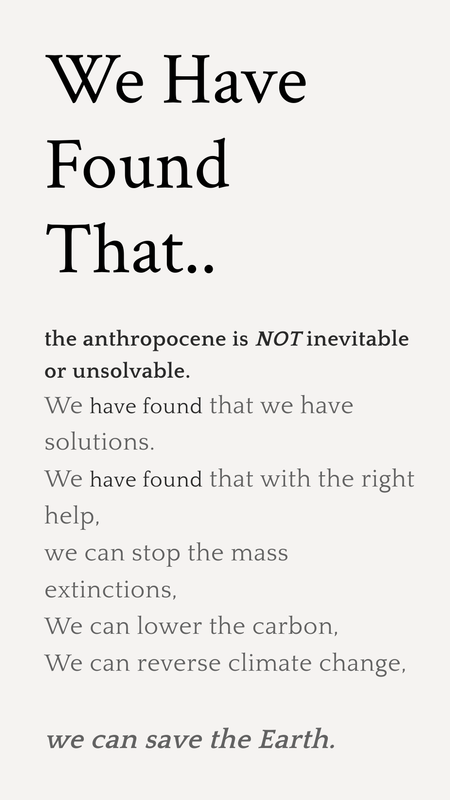
    We Have Found That..
    the anthropocene is NOT inevitable or unsolvable.
    We have found that we have solutions.
    We have found that with the right help,
    we can stop the mass extinctions,
    We can lower the carbon,
    We can reverse climate change,
    ​​
    we can save the Earth.

    La bonne parole s’interprète en fonction de son auteur et de l’oeuvre de celui-ci. La devise de la Climate Foundation est un exemple quasi idéal de novlang où toute signification est inversée et modelée suivant les besoins des maîtres du monde.

    Je ne connais pas le montant de l’investissement de Musk dans cette fondation, mais il est évident que c’est encore un de ces projets dont la mégalomanie bat tout sauf le projet de combattre les nazis sur la lune. Le personnage, l’approche et la bonne parole sentent l’esprit d’Ayn Rand et son fascisme libéral appelé objectivisme .

    Ça ne vole pas haut mais nous avons déjà prouvé qu’il est possible possible d’entraîner des millions dans l’aventure éliminatoire de la conquête de l’Est avec des idées farfelus à la con.

    Les chef de mes grand parents ont essayé de sauver la race aryenne. Elon Musk et ses copains objectivistes essaient de sauver leur classe de super-bourgeois et quelques spécimens surdoués et serviables du reste de l’humanité.

    Pour eux nous, les êtres humains ordinaires de la terre, nous sommes les slaves et les juifs à sacrifier afin de créer les champs élisées post-apocalytiques pour l"élite objective.

    Acceptons le défi. La guerre est déclarée. Elle sera sans merci.

    –-----
    Untermensch
    https://fr.m.wikipedia.org/wiki/Untermensch

    Ayn Rand Institute
    https://en.m.wikipedia.org/wiki/Ayn_Rand_Institute

    #permaculture_marine, #upwelling
    https://seenthis.net/messages/1027360

    #objectivisme #néolibéralisme #charité #climat #écologie #vie_marine #captalisme #startup #Anthropocène #Capitalocène

  • Algenfarmen gegen den Klimawandel : „Wir können die Erde retten“ – Wirklich ?
    https://www.freitag.de/autoren/svenja-beller-bnd/marine-permakultur-algenfarmen-sollen-erde-vor-klimawandel-retten
    https://www.freitag.de/autoren/svenja-beller-bnd/marine-permakultur-algenfarmen-sollen-erde-vor-klimawandel-retten/@@images/90e714b4-1cd6-4419-9457-549b52913d29.jpeg
    Sauver le monde en se remplissant les poches d’argent - l’exploitation agricole des mers est le pays de cocagne des investisseurs verts. Les conséquences imprévisibles ... on verra bien.

    16.11.2023 von Svenja Beller
    ...
    Kurz bevor wir uns verabschieden erzählt Tubal dann aber fast beiläufig, dass die Climate Foundation in der Region auch mehrere Artificial-Upwelling-Projekte plant. Sie wolle sie nah an der Küste entlang von Riffen installieren, erzählt er. Auf erneutes Nachhaken räumen das dann auch Donohue und von Herzen ein. Artificial Upwelling lässt sich zu „Künstlicher Auftrieb“ übersetzen, von Herzen findet aber schon die Bezeichnung falsch: „Es ist nichts Künstliches daran, einen natürlichen Prozess auf regionaler Ebene wiederherzustellen.“ Das würden sie tun, indem sie mit hunderte Meter langen Rohren Wasser an die Oberfläche pumpen. Nur könnten sie damit mehr Schaden anrichten als helfen.

    Es sei falsch, die Komplexität natürlicher Auftriebsereignisse mit künstlichen gleichzusetzen, mahnt die Heinrich-Böll-Stiftung in einer Analyse. Tut man das, können die Folgen verheerend sein. „Der Ozean ist stark geschichtet und das ist gut so, weil er in der Tiefe unheimlich viel CO₂ speichert“, erklärt mir Andreas Oschlies, Leiter der Forschungseinheit Biogeochemische Modellierung des GEOMAR Helmholtz-Zentrums für Ozeanforschung Kiel, auch er hat im Videocall einen Meereshintergrund, nur ohne Algen. „Dieses CO₂ wollen wir eigentlich gar nicht nach oben bringen. Wenn wir in die Klimamodelle Artificial Upwelling reinbringen, zeigt sich aber, dass zusammen mit den Nährstoffen ganz viel CO₂ hochgepumpt wird.“

    Dieses gelangt dann an der Oberfläche zurück in die Atmosphäre und könnte den Gewinn an neu gespeichertem CO₂ zunichte machen. „Und alle Nährstoffe, die diese Algen aufnehmen, fehlen woanders“, fährt Oschlies fort. „Also hat man dann irgendwo einen Algenfarmer, der verdient prächtig Geld, aber nebenan oder vielleicht einen halben Kontinent weiter weg, fangen die Fischer plötzlich weniger, weil da wegen weniger Nährstoffen weniger Algen wachsen und dadurch weniger Fische da sind.“

    Bei allen Vorteilen könnte die Climate Foundation mit dem umstrittenen Artificial Upwelling mehr Schaden anrichten, als sie hilft.

    Die Liste der Probleme ist noch länger: Das Tiefenwasser kühle zwar sogar die Atmosphäre, verdränge gleichzeitig aber auch das warme Oberflächenwasser nach unten, das dort lebenden Pflanzen und Tieren schaden könne. Der Eingriff kann die Blüte unerwünschter giftiger Algen begünstigen, zu Sauerstoffarmut im Wasser führen und Meeresströmungen verändern, was wiederum Wettermuster beeinflussen kann. Und ein positiver Effekt kann den Algenwäldern auch zum Verhängnis werden: Weil sich Meerestiere in ihnen wohlfühlen, vermehren sie sich in ihrer Umgebung, das haben mehrere Studien bestätigt. Einige dieser Tiere bilden Kalziumkarbonatschalen, ein Prozess, bei dem CO₂ freigesetzt wird. „Das kann zehn bis dreißig Prozent der CO₂-Aufnahme der Algen wieder zunichte machen“, sagt Oschlies. Als Mitglied einer internationalen Expertengruppe, die die Vereinten Nationen berät, kam er zu dem Schluss: „Diese Methode hat [...] nur ein sehr begrenztes Potential zur Kohlenstoffbindung und das Risiko erheblicher Nebenwirkungen.“

    https://www.climatefoundation.org

    Permaculture marine
    https://fr.m.wikipedia.org/wiki/Permaculture_marine

    #Philippines #climat #écologie #vie_marine #permaculture_marine #captalisme #startup #Anthropocène #Capitalocène

  • Nous gaspillons des milliards dans une révolution robotique qui n’arrivera pas Matthew Lynn - The Daily Telegraph

    Les espoirs placés dans la révolution robotique de la décennie 2020 se sont heurtés à des défis majeurs. Des échecs retentissants dans le domaine des robots cuisiniers et des taxis autonomes ont mis en évidence les limites techniques, les coûts élevés et les exigences de perfectionnement auxquels font face les innovations robotiques. Malgré les investissements massifs, la transition vers une automatisation généralisée semble encore lointaine et complexe.

    Les années 2020 étaient censées être la décennie où la révolution robotique décollait réellement. Nous serions tous en train de rouler dans des taxis contrôlés par ordinateur, de prendre des boissons auprès de robots barmans et de rentrer chez nous dans des maisons nettoyées par des serviteurs androïdes efficaces. Mais cela n’est pas encore arrivé et c’est pas pour demain.


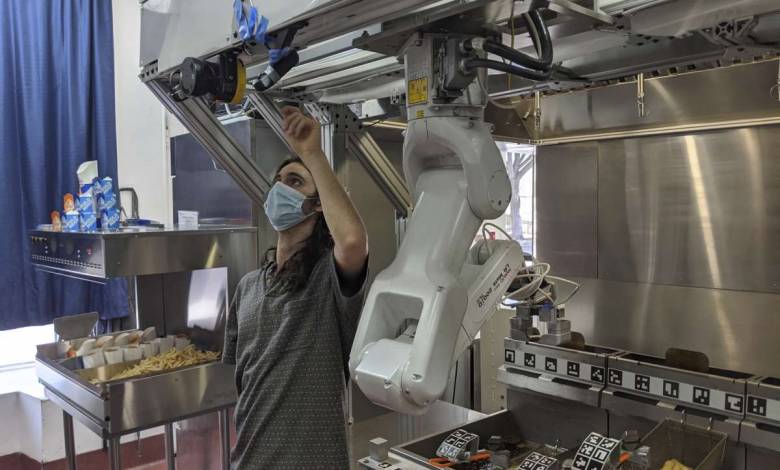
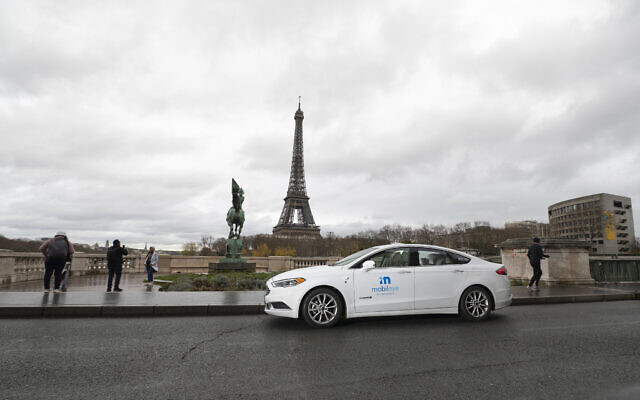
    Au lieu de cela, à San Francisco, les voitures sans conducteur se détraquent ; tandis qu’en Grande-Bretagne, une start-up financée par des millions de dollars pour fabriquer des robots chefs a connu un échec spectaculaire. En réalité, la révolution des robots s’effondre – et des milliards sont sur le point d’être gaspillés dans le processus.

    Ce fut une semaine qui donne à réfléchir pour les évangélistes de l’industrie robotique. Vous pensez peut-être que San Francisco avait suffisamment de problèmes avec les vagabonds et la criminalité de rue, mais elle a désormais ajouté les taxis sans conducteur excentriques à sa liste de défis.

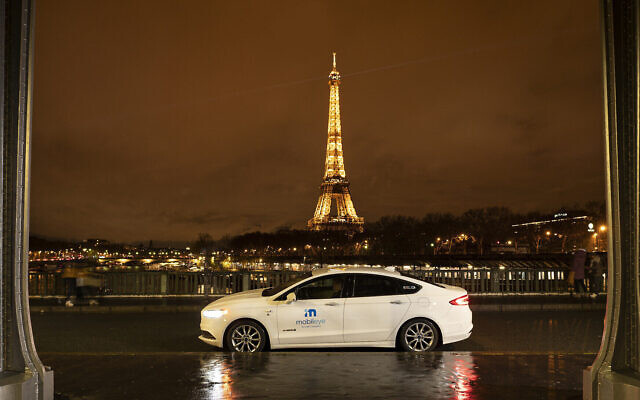
    Quelques jours après que l’unité Cruise de General Motors ait obtenu l’autorisation d’exploiter une flotte de taxis entièrement contrôlés par ordinateur, le chaos a éclaté dans les rues, obligeant à réduire de moitié le nombre de ces véhicules. L’un d’eux a heurté un camion de pompiers, tandis qu’un camion entièrement vide a été impliqué dans une collision avec un autre véhicule.


    Ce démarrage tumultueux n’est certainement pas ce que l’entreprise espérait, et il ne semble pas non plus susceptible d’inciter d’autres villes à permettre à Cruise, ou à des concurrents comme Waymo de Google, de déployer leurs véhicules sur leurs routes en toute liberté.

    De ce côté-ci de l’Atlantique, la startup spécialisée dans les robots cuisiniers, Karakuri, qui avait reçu d’importants financements, notamment de la part d’Ocado et du gouvernement, connaît actuellement des difficultés majeures. Les 4 millions de livres sterling investis par Ocado pour acquérir une participation de 20 % ont pratiquement été perdus, tout comme la majeure partie des autres investissements. En fin de compte, les actifs restants de l’entreprise ont été vendus pour seulement 350 000 livres sterling.

    Ses machines sophistiquées conçues pour préparer des sushis parmi une gamme de plats, remplaçant les chefs traditionnels, ont eu du mal à trouver une place rentable sur le marché. De même, Creator, une entreprise américaine qui construisait un restaurant de hamburgers entièrement géré par des robots, a fermé ses portes en mars.

    Pendant ce temps, il y a peu d’indications que les robots sont en train de conquérir le monde. Très peu d’entre nous possèdent encore des robots aspirateurs, et bien qu’il existe de nombreuses tondeuses à gazon automatisées sur le marché, la plupart d’entre nous préfèrent toujours la méthode traditionnelle de tonte manuelle dans le jardin.

    Mis à part quelques essais, la plupart de nos colis Amazon sont toujours livrés par des êtres humains, et nous continuons à acheter des produits auprès de vendeurs réels plutôt que d’opter pour des solutions électroniques. L’automatisation a eu un certain impact sur notre vie quotidienne. Les caisses en libre-service sont désormais courantes pour effectuer des achats rapides, et les chatbots sont là pour répondre à des questions simples lorsque nous souscrivons une nouvelle assurance.

    Cependant, il est frappant de constater à quel point la robotique a eu jusqu’à présent peu d’impact et combien de startups autrefois prometteuses ont été laissées de côté.

    Et ce, malgré d’énormes investissements. En 2021, l’industrie du capital-risque a injecté 17 milliards de dollars (13 milliards de livres sterling) dans le secteur, et presque autant l’année dernière, et ce n’est que l’argent destiné aux start-ups. Les grandes entreprises ont investi encore plus. Et il devrait y avoir une forte demande.

    Nous sommes tous conscients des pénuries de main-d’œuvre souvent paralysantes au Royaume-Uni, mais elles sont tout aussi graves en Allemagne, aux États-Unis et dans de nombreuses autres économies développées.

    Dans des secteurs comme l’hôtellerie et la logistique, les entreprises se plaignent constamment du manque de personnel. On pourrait penser qu’elles seraient enthousiastes à l’idée de faire appel à des robots pour effectuer le travail à leur place, mais malgré tous les investissements consentis, il n’y a pas grand-chose à montrer pour le moment. En réalité, trois défis majeurs se dressent devant elles.

    Tout d’abord, la technologie n’est généralement pas suffisamment performante. Il est relativement facile de créer une présentation convaincante pour attirer des investissements de sociétés de capital-risque et de concevoir un prototype capable d’accomplir quelques tâches simples en laboratoire. Cependant, transformer ce prototype en un produit fini pouvant être fabriqué en série est une tout autre histoire. Jusqu’à présent, il y a peu de preuves montrant que de nombreuses startups de robotique ont réussi à passer de la phase de développement à une intégration réussie dans le monde réel.

    Deuxièmement, le coût est souvent trop élevé. Pour ne prendre qu’un exemple, il existe déjà un certain nombre de robots barmen parmi lesquels choisir, et peut-être que certains d’entre eux préparent même un Martini assez décent. Mais une recherche rapide sur le Web révèle qu’ils coûtent généralement entre 116 000 et 151 000 euros pièce. C’est beaucoup.

    Il en va souvent de même pour les robots chefs, les serveuses ou le personnel d’enregistrement. Le simple fait est que les robots sont généralement conçus pour remplacer les compétences de bas niveau, qui, de toute évidence, se situent à l’extrémité la moins chère du marché du travail. Il est difficile de justifier de payer 116 000 euros pour un robot barman alors que vous pouvez en embaucher un vrai pour 29 000 euros par an.

    Bien sûr, avec des volumes plus importants et des séries de production plus longues, le coût de nombreux robots pourrait commencer à baisser, mais les prix devront baisser considérablement avant qu’ils ne deviennent réellement une proposition commercialement viable. Les entreprises ne remplaceront pas les gens par des machines tant qu’elles ne seront pas payées pour le faire.

    Enfin, les tâches pour lesquelles les robots pourraient être utilisés nécessitent des niveaux de perfection qu’ils ne peuvent pas encore atteindre. Personne ne veut d’un taxi sans chauffeur.

    robots #robot #travail #robotique #algorithme #robotisatio #automatisation #intelligence_artificielle #technologie #économie #capitalisme #santé #en_vedette #ia #numérique #société #startups

    Source : https://www.telegraph.co.uk/business/2023/08/27/robotics-revolution-falling-flat-metal-face
    Traduction : https://lemediaen442.fr/nous-gaspillons-des-milliards-dans-une-revolution-robotique-qui-narrive

  • #Voiture volante et #avion électrique, prochainement dans nos cieux.
    https://tinyurl.com/264km2xk
    Les #startups montrent leurs #produits moins polluants pour le #transport.
    lundi 3 juillet 2023, par Jaco
    Plusieurs acteurs majeurs ont commencé, ou bien vont bientôt lancer la production, ce qui est initial, avec des plans d’itinéraires aériens, afin de faire évoluer la fabrication d’objets volants reconnaissables selon leurs labels, au cours des deux prochaines années. Aux USA, les taxis aériens électriques pourraient entamer leurs missions de transport des passagers dès 2025, en attendant la certification de la Federal Aviation Administration. En même temps, d’autres fabricants/concepteurs sont prêts en Europe et en Asie.

  • De la merdification des choses
    https://ploum.net/2023-06-15-merdification.html

    Le principe de la merdification est simple  : maintenant que les utilisateurs sont captifs, que les concurrents ont quasiment disparu, que les business indépendants ont été acculés à la faillite ou rachetés, on peut exploiter l’utilisateur jusqu’au trognon.

    Certains groupes d’investisseurs se sont spécialisés dans ces techniques. Cory Doctorow les regroupe sous le terme «  Private Equity  » (PE). Leur job  ? À partir d’un business existant, extraire un maximum d’argent en un minimum de temps, disons entre deux et cinq ans.

    Comment  ?

    Premièrement, en augmentant les tarifs et en supprimant les programmes gratuits. Les utilisateurs sont habitués, migrer vers un autre service est difficile, la plupart vont payer. Surtout si cette hausse est progressive. L’objectif n’est pas d’avoir de nouveaux utilisateurs, mais bien de faire cracher ceux qui sont déjà là. On va donc leur pourrir la vie au maximum : tarifs volontairement complexes et changeant, rebranding absurdes pour justifier de nouveaux tarifs, blocage de certaines fonctionnalités, problèmes techniques empêchant la migration vers un autre service, etc.

    En second lieu, on va bien entendu stopper tout investissement dans l’infrastructure ou le produit. Un maximum d’employés vont être licenciés pour ne garder que l’équipage minimal, si possible sous-payé. Le support devient injoignable ou complètement incompétent, la qualité du produit se dégrade tout à fait.

    Bref, c’est la merdification.