organization:university of maryland

  • Dust off that Spider-Man Halloween costume, usable spider glue may be on the way!
    https://massivesci.com/notes/genomic-sequencing-means-spider-glue-for-people-may-be-possible-spider-m

    We might be one step closer to a real-life Spider-Man (or woman)! Researchers at University of Maryland, Baltimore County, have successfully sequenced two genes...

  • Map shows the millions of acres of Brazilian Amazon rain forest lost last year
    https://www.nationalgeographic.com/environment/2019/04/three-million-acres-brazil-rainforest-lost

    Because of human activities the world continued to lose forests in 2018, according to data compiled by research group Global Forest Watch and analysts at the University of Maryland.

    Clear cutting—removing large patches of forest indiscriminately—caused the highest loss of forest cover overall. Much of that was to make room for ranching, but other commercial activities like mining and soy production were also involved. Forest loss was down overall from the previous year by nearly 50 percent, largely due to massive wildfires in 2016 and 2017. But without wildfires, forest loss was up by roughly 13 percent. That has implications for climate change as well as other environmental concerns, the researchers note.

    #forêt #déforestation #Brésil #Amérique_du_Sud

  • Devastating Laos dam collapse leads to deforestation of protected forests
    https://news.mongabay.com/2018/12/devastating-laos-dam-collapse-leads-to-deforestation-of-protected-for

    The collapse of a dam in southern Laos released five billion cubic meters of water, killing dozens, devastating communities, and forcing thousands to flee.
    The collapse also flooded areas of protected forest. In early September, the Global Land Analysis and Discovery Lab at the University of Maryland began detecting tree cover loss along a 22-mile length of the river. By December 7, more than 7,500 deforestation alerts had been recorded.
    An investigation by Mongabay revealed collateral damage is also taking place as residents harvest wood from both downed trees and living forests in an effort to make ends meet.
    One of the companies involved with the dam reportedly blamed heavy rain and flooding for the collapse, but many have questioned their liability and believe the companies should be providing compensation.

    #Laos #barrage

  • Americans Are Increasingly Critical of Israel – Foreign Policy
    https://foreignpolicy.com/2018/12/11/americans-are-increasingly-critical-of-israel

    The firing of Professor Marc Lamont Hill as a CNN contributor after his speech at a United Nations event commemorating the International Day of Solidarity with the Palestinian People has generated considerable debate about free speech that goes beyond the case itself—what is legitimate criticism of Israel, and what constitutes anti-Semitism. A recent University of Maryland public-opinion poll indicates that many aspects of Hill’s views are widely shared among the American public—and that these views are not reflective of anti-Semitic attitudes, or even of hostility toward Israel as such. On these issues, there is a gap between the mainstream media and U.S. politicians on the one hand, and the American public on the other.

    While many issues were raised about Hill, the part of his speech that received the most criticism was his call for a “free Palestine from the river to the sea,” which was seen by some as calling for the end of Israel. Hill himself clarified almost immediately that “my reference to ‘river to the sea’ was not a call to destroy anything or anyone. It was a call for justice, both in Israel and in the West Bank/Gaza.” In an op-ed he penned later, he acknowledged that the language he chose may have contributed to the misperception that he was advocating violence against Jewish people—and apologized for that.

    Trending Articles

    It’s Macron’s Destiny to Be Hated
    The French president can make all the concessions he wants, but he can’t make the public like him.
     
    Powered By
    But, perceptions aside, are Professor Hill’s views exceptional?

    The first issue to consider is advocacy for a one-state solution, from the Jordan River to the Mediterranean Sea, with equal citizenship for all, which would in effect threaten Israel’s status as a Jewish-majority state, as Arabs might soon outnumber Jews on that territory. In fact, this solution has considerable support among the American public, as revealed in a University of Maryland Critical Issues Poll, fielded by Nielson Scarborough, which was conducted in September and October among a nationally representative sample of 2,352 Americans, with a 2 percent margin of error. When asked what outcome they want U.S. President Donald Trump’s administration to seek in mediating the Israeli-Palestinian conflict, Americans are split between one state with equal citizenship and two states coexisting side by side: 35 percent say they want a one-state solution outright, while 36 percent advocate a two-state solution, 11 percent support maintaining the occupation, and 8 percent back annexation without equal citizenship. Among those between 18 and 34 years old, support for one state climbs to 42 percent.

    Furthermore, most of those who advocate a two-state solution tend to choose one state with equal citizenship if the two-state solution were no longer possible; the last time the survey asked this question, in November 2017, 55 percent of two-state solution backers said they would switch to one state in such circumstances. Bolstering this result is Americans’ views on the Jewishness and democracy of Israel: If the two-state solution were no longer possible, 64 percent of Americans would choose the democracy of Israel, even if it meant that Israel would cease to be a politically Jewish state, over the Jewishness of Israel, if the latter meant that Palestinians would not be fully equal.

    When one considers that many Israelis and Palestinians, as well as many Middle East experts, already believe that a two-state solution is no longer possible, especially given the large expansion of Israeli settlements in the West Bank, it’s not hard to see why more people would be drawn to a one-state solution—or see the advocacy for two states as legitimizing the unjust status quo through the promise of something unattainable.

    Second, while most Americans have probably never heard of the Boycott, Divestment, Sanctions (BDS) movement that Hill backs, our poll shows that a large number of Americans support imposing sanctions or more serious measures if Israeli settlements in the West Bank continue to expand: 40 percent of Americans support such measures, including a majority of Democrats (56 percent). This comes as senators, including Democrats, are proposing, despite continued ACLU opposition, to delegitimize and criminalize voluntary boycotts of Israel or settlements through the Israel Anti-Boycott Act, while not differentiating between Israeli settlements in the West Bank from those in Israel proper.

    Third, there is a growing sense that the Israeli government has “too much influence” on U.S. politics and policies: 38 percent of all Americans (including 55 percent of Democrats, and 44 percent of those under 35 years old), say the Israeli government has too much influence on the U.S. government, compared with 9 percent who say it has “too little influence” and 48 percent who say it has “about the right level of influence.” While the number of Jewish participants in the sample (115) is too small to generalize with confidence, it is notable that their views fall along the same lines of the national trend: 37 percent say Israel has too much influence, 54 percent say it has the right level, and 7 percent say it has too little influence.

    These results indicate neither a rise in anti-Semitism nor even a rise in hostility toward Israel as such. As analysis of previous polls has shown, many who espouse these opinions base them on a principled worldview that emphasizes human rights and international law.

    Keep in mind that, in a polarized America with deep political antagonism, it’s hardly surprising that Americans would have sharply divided views on Israelis and Palestinians. What many read as a rising anti-Israeli sentiment among Democrats is mischaracterized; it reflects anger toward Israeli policies—and increasingly, with the values projected by the current Israeli government.

    On the question of whether Americans want the Trump administration to lean toward Israel, toward the Palestinians, or toward neither side, there is a vast difference between Republicans and Democrats in the new poll: While a majority of Republicans want Washington to lean toward Israel outright (57 percent), a substantial majority of Democrats (82 percent) want it to lean toward neither side, with 8 percent wanting it to lean toward the Palestinians and 7 percent toward Israel. Still, it’s inaccurate to label the Democrats’ even-handedness as “anti-Israel.”

  • Scholar Warns We Could Be Headed for a ’Violent Conflict’ Between Republicans and Democrats | Alternet
    https://www.alternet.org/scholar-warns-we-could-be-headed-violent-conflict-between-republicans-and-

    How did America become so divided? Why has political polarization become so extreme? In what ways have political parties become like sports teams where winning is all that matters and the common good is unimportant? Can American democracy to survive Donald Trump amid the rise of a conservative movement that views Democrats and liberals as an “un-American” enemy?

    In an effort to answer these questions I recently spoke with Lilliana Mason. She is a assistant professor of government and politics at the University of Maryland, College Park, and the author of the new book “Uncivil Agreement: How Politics Became Our Identity.”

    He really pointed to a group of people who were feeling vulnerable and condescended to and made fun of and said, “You guys are losers, right? We’re all losers, we are losing all the time.” Then he said, “But I’m going to make you winners, I’m going to make us win again.” So it was this almost perfect message delivered to a group of people who were ready to hear a message like that, and were committed to defeating the Democrats because the other party is so socially “other” from them. Ultimately, Donald Trump tapped into a dynamic that has been developing over the last few decades in America.

    But there are now such strong partisans that will do almost anything just for their political team to win. As I said earlier, this is partly because when our party “wins,” our racial group and our religious group and our other cultural and social identities “win” too. The victory of our political party is taking up more and more of what I describe as “self-esteem real estate.” Every part of us is involved now in the outcome of the election. So when our party loses, it hurts a lot more than it did before, because we used to have other meaningful identities.

    In the United States, historically, there were conservative Democrats and liberal Republicans. You don’t have them anymore. This means the loss feels much worse and the victory feels much better. So we end up approaching our elections in a way that’s very much like a sports game where we don’t actually care what the team does after they win. That’s the whole thing that you wanted and you’re happy and excited and you cheer. But you don’t follow the team around and ask them what they’re going to do next in order to make your life better. Having Trump be like a performer enhances that sports-like competition, and it really reduces the attention that people pay to what government is actually doing.

    In American society and politics at large, where we have much powerful identities, people are willing to give up a lot in order to get a win. The stronger the identity, the more they’re willing to give up. So when we see people who are essentially willing to give away democracy for their partisan win, there is perhaps no better example of the power of identity. This is extremely dangerous for democracy because it creates this rift between partisans where no one wants to cooperate or compromise, ever. We’re not only seeing democratic norms erode but we’re also losing the ability to functionally govern. The greater good is no longer of interest to many Americans. The only thing that we care about is whether or not we get the victory and after that nothing really matters.

    But if you look at partisan feelings towards the groups that make up the other side — for example, this would be whites, Christians, evangelicals, police and men for Republicans. For Democrats this would include gays and lesbians, blacks, Hispanics and activists, among a long list of people.

    What we found is that Democrats don’t dislike the groups that make up the Republican Party as much as Republicans dislike the groups that make up the Democratic Party. This helps to explain why there is so much anger from Republicans, because every group associated with the Democratic Party is a groups they do not like. Because of the nature of the respective parties, Democrats practice tolerance a lot more than Republicans are forced to practice it.

    #Politique_USA #Politique_identitaire

  • Maps tease apart complex relationship between agriculture and deforestation in DRC
    https://news.mongabay.com/2018/02/maps-tease-apart-complex-relationship-between-agriculture-and-defores

    A team from the University of Maryland’s GLAD laboratory has analyzed satellite images of the Democratic Republic of Congo to identify different elements of the “rural complex” — where many of the DRC’s subsistence farmers live.
    Their new maps and visualizations allow scientists and land-use planners to pinpoint areas where the cycle of shifting cultivation is contained, and where it is causing new deforestation.
    The team and many experts believe that enhanced understanding of the rural complex could help establish baselines that further inform multi-pronged approaches to forest conservation and development, such as REDD+.

    #RDC #forêt #déforestation #agriculture #cartographie

  • In China, a Three-Digit Score Could Dictate Your Place in Society | WIRED
    https://www.wired.com/story/age-of-social-credit

    In 2013, Ant Financial executives retreated to the mountains outside Hangzhou to discuss creating a slew of new products; one of them was Zhima Credit. The executives realized that they could use the data-collecting powers of Alipay to calculate a credit score based on an individual’s activities. “It was a very natural process,” says You Xi, a Chinese business reporter who detailed this pivotal meeting in a recent book, Ant Financial. “If you have payment data, you can assess the credit of a person.” And so the tech company began the process of creating a score that would be “credit for everything in your life,” as You explains it.

    Ant Financial wasn’t the only entity keen on using data to measure people’s worth. Coincidentally or not, in 2014 the Chinese government announced it was developing what it called a system of “social credit.” In 2014, the State Council, China’s governing cabinet, publicly called for the establishment of a nationwide tracking system to rate the reputations of individuals, businesses, and even government officials. The aim is for every Chinese citizen to be trailed by a file compiling data from public and private sources by 2020, and for those files to be searchable by fingerprints and other biometric characteristics. The State Council calls it a “credit system that covers the whole society.”

    For the Chinese Communist Party, social credit is an attempt at a softer, more invisible authoritarianism. The goal is to nudge people toward behaviors ranging from energy conservation to obedience to the Party. Samantha Hoffman, a consultant with the International Institute for Strategic Studies in London who is researching social credit, says that the government wants to preempt instability that might threaten the Party. “That’s why social credit ideally requires both coercive aspects and nicer aspects, like providing social services and solving real problems. It’s all under the same Orwellian umbrella.”

    The State Council has signaled that under the national social credit system people will be penalized for the crime of spreading online rumors, among other offenses, and that those deemed “seriously untrustworthy” can expect to receive substandard services. Ant Financial appears to be aiming for a society divided along moral lines as well. As Lucy Peng, the company’s chief executive, was quoted as saying in Ant Financial, Zhima Credit “will ensure that the bad people in society don’t have a place to go, while good people can move freely and without obstruction.”

    As Liu amassed a favorable transaction and payment history on Alipay, his score naturally improved. But it could go down if he neglected to pay a traffic fine, for example. And the privileges that come with a high score might someday be revoked for behaviors that have nothing to do with consumer etiquette. In June 2015, as 9.4 million Chinese teenagers took the grueling national college entrance examination, Hu Tao, the Zhima Credit general manager, told reporters that Ant Financial hoped to obtain a list of students who cheated, so that the fraud could become a blight on their Zhima Credit records. “There should be consequences for dishonest behavior,” she avowed. The good were moving without obstruction. A threat hung over the rest.

    The algorithm behind my Zhima Credit score is a corporate secret. Ant Financial officially lists five broad categories of information that feed into the score, but the company provides only the barest of details about how these ingredients are cooked together. Like any conventional credit scoring system, Zhima Credit monitors my spending history and whether I have repaid my loans. But elsewhere the algorithm veers into voodoo, or worse. A category called Connections considers the credit of my contacts in Alipay’s social network. Characteristics takes into consideration what kind of car I drive, where I work, and where I went to school. A category called Behavior, meanwhile, scrutinizes the nuances of my consumer life, zeroing in on actions that purportedly correlate with good credit. Shortly after Zhima Credit’s launch, the company’s technology director, Li Yingyun, told the Chinese magazine Caixin that spending behavior like buying diapers, say, could boost one’s score, while playing videogames for hours on end could lower it. Online speculation held that donating to charity, presumably through Alipay’s built-in donation service, was good. But I’m not sure whether the $3 I gave for feeding brown bear cubs qualifies me as a philanthropist or a cheapskate.

    Then, in 2010, Suining became one of the first areas in China to pilot a social credit system. Officials there began assessing residents on a range of criteria, including education level, online behavior, and how well they followed traffic laws. Each of Suining’s 1.1 million citizens older than 14 started out with 1,000 points, and points were added or deducted based on behavior. Taking care of elderly family members earned you 50 points. Helping the poor merited 10 points. Helping the poor in a way that was reported by the media: 15. A drunk driving conviction meant the loss of 50 points, as did bribing an official. After the points were tallied up, citizens were assigned grades of A, B, C, or D. Grade A citizens would be given priority for school admissions and employment, while D citizens would be denied licenses, permits, and access to some social services.

    Although Liu hadn’t signed up for Zhima Credit, the blacklist caught up with him in other ways. He became, effectively, a second-class citizen. He was banned from most forms of travel; he could only book the lowest classes of seat on the slowest trains. He could not buy certain consumer goods or stay at luxury hotels, and he was ineligible for large bank loans. Worse still, the blacklist was public. Liu had already spent a year in jail once before on charges of “fabricating and spreading rumors” after reporting on the shady dealings of a vice-mayor of Chong­qing. The memory of imprisonment left him stoic about this new, more invisible punishment. At least he was still with his wife and daughter.

    Still, Liu took to his blog to stir up sympathy and convince the judge to take him off the list. As of October he was still on it. “There is almost no oversight of the court executors” who maintain the blacklist, he told me. “There are many mistakes in implementation that go uncorrected.” If Liu had a Zhima Credit score, his troubles would have been compounded by other worries. The way Zhima Credit is designed, being blacklisted sends you on a rapid downward spiral. First your score drops. Then your friends hear you are on the blacklist and, fearful that their scores might be affected, quietly drop you as a contact. The algorithm notices, and your score plummets further.

    Now I had two tracking systems scoring me, on opposite sides of the globe. But these were only the scores that I knew about. Most Americans have dozens of scores, many of them drawn from behavioral and demographic metrics similar to those used by Zhima Credit, and most of them held by companies that give us no chance to opt out. Others we enter into voluntarily. The US government can’t legally compel me to participate in some massive data-driven social experiment, but I give up my data to private companies every day. I trust these corporations enough to participate in their vast scoring experiments. I post my thoughts and feelings on Facebook and leave long trails of purchases on Amazon and eBay. I rate others in Airbnb and Uber and care a little too much about how others rate me. There is not yet a great American super app, and the scores compiled by data brokers are mainly used to better target ads, not to exert social control. But through a process called identity resolution, data aggregators can use the clues I leave behind to merge my data from various sources.

    Do you take antidepressants? Frequently return clothes to retailers? Write your name in all caps when filling out online forms? Data brokers collect all of this information and more. As in China, you may even be penalized for who your friends are. In 2012, Facebook patented a method of credit assessment that could consider the credit scores of people in your network. The patent describes a tool that arrives at an average credit score for your friends and rejects a loan application if that average is below a certain minimum. The company has since revised its platform policies to prohibit outside lenders from using Facebook data to determine credit eligibility. The company could still decide to get into the credit business itself, though. (“We often seek patents for technology we never implement, and patents should not be taken as an indication of future plans,” a Facebook spokesperson said in response to questions about the credit patent.) “You could imagine a future where people are watching to see if their friends’ credit is dropping and then dropping their friends if that affects them,” says Frank Pasquale, a big-data expert at University of Maryland Carey School of Law. “That’s terrifying.”

    #Surveillance #Evaluation #Monnaie_numérique #Chine #Social_credits

  • What Will Really Happen if the FCC Abandons Net Neutrality ?
    http://knowledge.wharton.upenn.edu/article/net-neutrality-debate

    Article intéressant parce qu’il donne la parole aux opposants à la neutralité. Mais à trop vouloir jouer au centre, on finit par prendre le point de vue des dominants.

    Supporters often link net neutrality to free speech and unfettered, equal access to the internet. They also want stricter rules to curb the conduct of ISPs. “Removal of the net neutrality rules could entirely take down the internet as a free and open source of information,” said Jennifer Golbeck, a professor at the University of Maryland, on the Knowledge@Wharton show on SiriusXM channel 111. “It’s going to be more corporate control over the content we see … potentially not just favoring things that benefit [ISPs] financially but favoring them politically.”

    But critics say that too much regulation dampens innovation and investments in the internet, which has thrived for decades without formal net neutrality rules. For example, net neutrality would tamp down on innovations such as T-Mobile’s “Binge On” service, which lets customers stream video from Netflix, YouTube, Hulu and other sites without counting it against their data buckets, said Christopher Yoo, professor of law, communication and computer and information science at the University of Pennsylvania, on the radio show. Moreover, the order brings back the FTC as the antitrust enforcer of ISP behavior, protecting consumer interests and banning deceptive business practices. (Listen to a podcast of the radio show featuring Yoo and Golbeck using the player above.)

    As providers of information services, ISPs were much more lightly regulated than telecommunications services — such as the old Ma Bell. However, the FCC did adopt policies to preserve free internet access and usage and curb abuses. In 2004, FCC Chairman Michael Powell under President George W. Bush set out four principles of internet freedom: the freedom to access lawful content, use applications, attach personal devices to the network and obtain service plan information.

    In 2010, under Obama’s first FCC chairman, Julius Genachowski, the agency’s Open Internet Order adopted anti-blocking and anti-discrimination rules after finding out that Comcast throttled BitTorrent, a bandwidth-intensive, peer-to-peer site where users shared files of TV shows, movies or other content. Faulhaber says Comcast made the mistake of “targeting a particular upstream company. That you can’t do. If you want to control traffic, you have to do it in a much less discriminatory way.”

    But the 2010 order, which also required ISPs to disclose their network management practices, performance and commercial terms, was vacated by a federal court in 2014 after Verizon sued the FCC. The court said the FCC did not have the authority to act because ISPs are not regulated like common telephone carriers.

    This ruling led to the 2015 order by Wheeler that reclassified ISPs like landline phone companies, giving the agency the power to regulate many things, including prices set by broadband providers, although this was set aside. The order also specified the no-blocking and no-discrimination of traffic, and banned paid prioritization, which would give faster internet lanes to companies that pay for it. And it crafted internet conduct standards that ISPs must follow. Last year, an appellate court upheld this order.

    The current proposal by Pai rolls back Wheeler’s order, and more. It classifies ISPs back under information services. It allows paid prioritization. It also punts the policing of any ISP blocking and discriminatory behavior to the FTC to be investigated on a case-by-case basis. It dismantles Wheeler’s internet conduct standards because they are “vague and expansive.” But the proposed order does adopt transparency rules, requiring ISPs to disclose information about their practices to the FCC and the public.

    For ISPs, the issue is not so much net neutrality as it is about Title II. “All of the major ISPs like Comcast and AT&T are on the record saying that they support the idea of net neutrality, but they just oppose the legal classification of broadband as a regulated telecommunications service,” Werbach says. “I wouldn’t expect to see any dramatic changes in the companies’ practices near term. They’re going to wait and see how this all plays out, and they’re also not going to do something that will provoke significant backlash and pressure for more regulation.”

    During her radio show appearance, Golbeck noted that the danger of fast lanes is that smaller websites that cannot afford to pay the ISP could be left behind. Research shows that “even delays of less than a second in serving up content [will make people] bail from your site and go someplace else.” Conversely, she said, if ISPs speed up access to popular sites like Amazon and Netflix because they pay, “it inhibits the ability for other new startup sites to compete.”

    #Neutralité_internet

  • Record Loss Of Global Tree Cover In 2016, Driven By Forest Fires | CleanTechnica
    https://cleantechnica.com/2017/10/31/record-loss-global-tree-cover-2016-driven-forest-fires

    The record loss of global tree cover in 2016 — totaling around 297,000 square kilometers (114,672 square miles) and representing a rise of 51% on 2015 — was driven partly by increasingly common wildfires driven by rising temperatures and drought, according to the Global Forest Watch (GFW) which utilized data provided by the University of Maryland.

    #feu_de_forêt #forêt #incendie

  • Estonia’s trees: Valued resource or squandered second chance?
    https://news.mongabay.com/2017/10/estonias-trees-valued-resource-or-squandered-second-chance

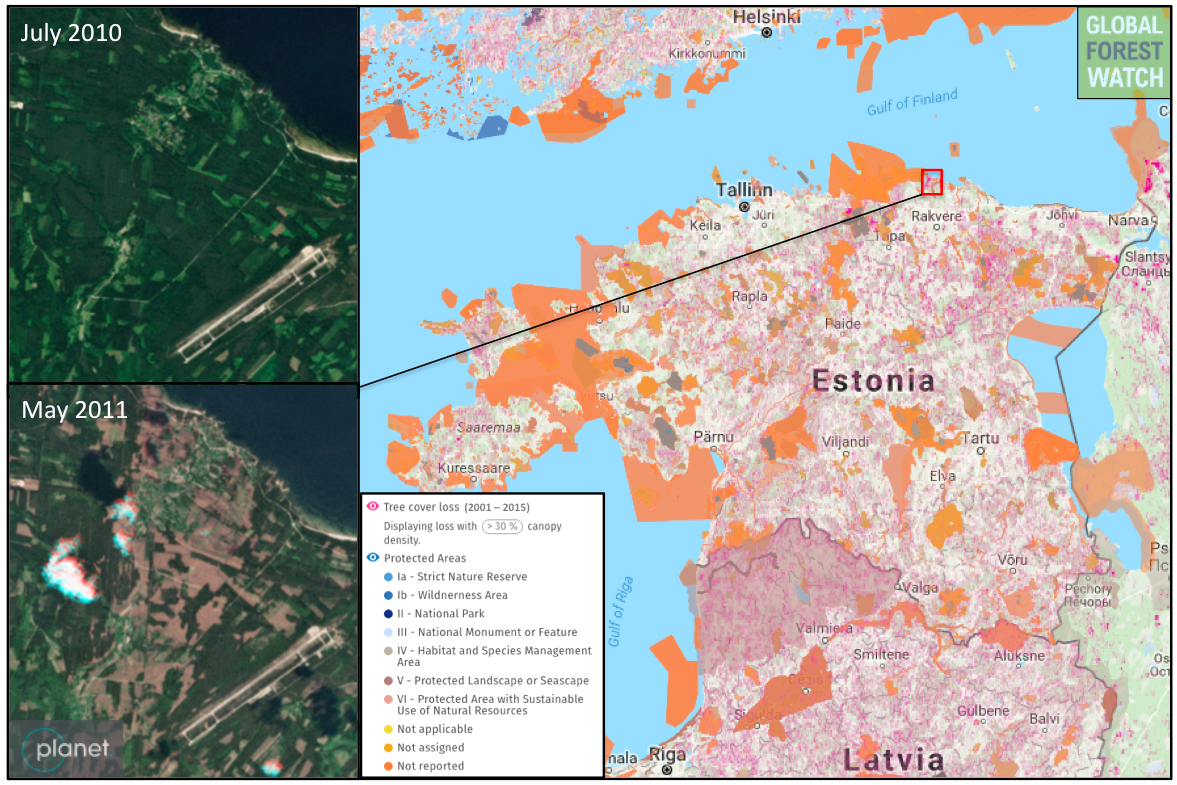
    When the last of the Russian troops pulled out of Estonia in 1994, for many their departure was bittersweet. While most Estonians were eager to join the Western world and reestablish cultural ties with Finland and other Nordic countries, the country’s transition from communism to capitalism was hindered by poverty, cultural barriers, and dilapidated infrastructure. Today, however, Estonia appears to be coming into its own. The country has joined the EU, ranks 30th in the world on the Human Development Index, and has one of the fastest-growing economies in Europe.

    Estonia now has the autonomy to decide how it is going to allocate its resources, and how it wants to shape its identity on the international stage. Central to this decision is one notable parting gift left by the country’s Soviet occupiers: trees.

    Trees are “one of the few positive things inherited from the age of Soviet domination,” said Linda-Mari Väli, founder of Helping Estonia’s Forests, a conservation-oriented citizens’ initiative. While Estonia is historically a tree-dense country, by the early 20th century much of its forestland had been converted to farms. Under Soviet rule, however, private landownership, and private farms, were abandoned for large collectives. By the time Estonia gained independence, the forest had reclaimed much of its former territory.

    The country now has over 50 percent tree cover, according to satellite data from the University of Maryland analyzed through Global Forest Watch. Of its forests, assessments by the UN’s Food and Agriculture Organization (FAO) pegs 90 percent as “naturally regenerated” and 3 percent old-growth. It is the fourth most forested country in Europe, and ranks eighth on the 2016 Environmental Performance Index.

    #Estonie #occupation #forêt #propriété_privée #collectivisme

  • Five ThirtyHeight
    Gun Deaths In America

    https://fivethirtyeight.com/features/gun-deaths

    https://static1.squarespace.com/static/53407e27e4b0f0bdc6e38fb9/58d846d02994ca9ba7380543/58d846d159cc68feaa5325d5/1490568916171/Screen+Shot+2016-09-18+at+11.15.01+PM.png?format=1500w

    “Methodology

    The data in this interactive graphic comes primarily from the Centers for Disease Control and Prevention’s Multiple Cause of Death database, which is derived from death certificates from all 50 states and the District of Columbia and is widely considered the most comprehensive estimate of firearm deaths. In keeping with the CDC’s practice, deaths of non-U.S. residents that take place in the U.S. (about 50 per year) are excluded. All figures are averages from the years 2012 to 2014, except for police shootings of civilians, which are from 2014.

    The “homicides” category includes deaths by both assault and legal intervention (primarily shootings by police officers). “Young men” are those ages 15 to 34; “women” are ages 15 and older. Because the CDC’s estimates of police shootings are unreliable, we used estimates from non-governmental sources. Our figure is for 2014, the first year for which such estimates are generally available. (For more on the data we used, see Carl Bialik’s story on police shootings.)

    For shootings of police officers, we used the FBI’s count of law enforcement officers “feloniously killed” by firearms in the line of duty. This figure excludes accidental shootings. The FBI counts all killings of federal, state and local law enforcement officers who meet certain criteria, including that they were sworn officers who ordinarily carried a badge and a gun.

    For mass shootings, we used Mother Jones’s database of public mass shootings. For 2012 and earlier, Mother Jones includes only incidents in which at least four people (excluding the shooter) were killed; beginning in 2013, Mother Jones lowered the threshold to three fatalities. In order to use a consistent definition, we excluded the one incident in 2013-14 in which exactly three people were killed.

    For terrorism gun deaths, we used the University of Maryland’s Global Terrorism Database. Our count of fatalities excludes perpetrators killed during their attacks. There was one incident, the 2012 attack on a Sikh temple in Oak Creek, Wisconsin, that qualified as both an act of terrorism and a mass shooting. Seven law-enforcement officers were killed in incidents that the terrorism database classifies as acts of terrorism.

    Population totals (used to calculate death rates per 100,000 people) are based on 2012-14 American Community Survey microdata from the University of Minnesota’s IPUMS project. As a result, death rates will not perfectly match official figures from the CDC, which are based on a different set of numbers from the Census Bureau. Racial and ethnic categories are mutually exclusive: All people who were designated as Hispanic in the CDC data are coded as “Hispanic” in ours; all other racial categories are non-Hispanic. “Native American” includes American Indians and Alaska Natives.

    Data and code for this project are available on our GitHub page.”

  • Scientists discover what’s killing the bees and it’s worse than you thought — Quartz
    https://qz.com/107970/scientists-discover-whats-killing-the-bees-and-its-worse-than-you-thought
    https://qzprod.files.wordpress.com/2013/07/beeinsectide.jpg?quality=80&strip=all&w=1600

    Suspects have included pesticides, disease-bearing parasites and poor nutrition. But in a first-of-its-kind study published today in the journal PLOS ONE, scientists at the University of Maryland and the US Department of Agriculture have identified a witch’s brew of pesticides and fungicides contaminating pollen that bees collect to feed their hives. The findings break new ground on why large numbers of bees are dying

    #abeilles #agriculture #pesticides #fongicides

  • Algorithms should be regulated for safety like cars, banks, and drugs, says computer scientist Ben Shneiderman — Quartz
    https://qz.com/998131/algorithms-should-be-regulated-for-safety-like-cars-banks-and-drugs-says-compute
    https://qzprod.files.wordpress.com/2017/06/low-stakes-facial-recognition.jpg?quality=80&strip=all&w=160

    When these programs are wrong—like when Facebook mistakes you for your sibling or even your mom—it’s hardly a problem. In other situations, though, we give artificial intelligence much more responsibility, with larger consequences when it inevitably backfires.

    Ben Shneiderman, a computer scientist from the University of Maryland, thinks the risks are big enough that it’s time to for the government to get involved. In a lecture on May 30 to the Alan Turing Institute in London, he called for a “National Algorithm Safety Board,” similar to the US’s National Transportation Safety Board for vehicles, which would provide both ongoing and retroactive oversight for high-stakes algorithms.

    “When you go to systems which are richer in complexity, you have to adopt a new philosophy of design,” Shneiderman argued in his talk. His proposed National Algorithm Safety Board, which he also suggested in an article in 2016, would provide an independent third party to review and disclose just how these programs work. It would also investigate algorithmic failures and inform the public about them—much like bank regulators report on bank failures, transportation watchdogs look into major accidents, and drug licensing bodies look out for drug interactions or toxic side-effects. Since “algorithms are increasingly vital to national economies, defense, and healthcare systems,” Shneiderman wrote, “some independent oversight will be helpful.”

    On est proche de la proposition de ETC Group pour un Office of assesment of technology. Il ya quelque chose à creuser pour redonner un sens collectif à la fuite en avant technologique (oiu plutôt l’hubris technologique).

    #algorithmes #politique_numérique #intelligence_artificielle

  • New Deforestation Hot Spots in the World’s Largest Tropical Forests | World Resources Institute
    http://www.wri.org/blog/2017/02/new-deforestation-hotspots-worlds-largest-tropical-forests

    Where is deforestation worsening around the world? It’s a difficult question to answer, as many forest assessments are often years or even a decade out of date by the time they’re published. But we’re getting there, thanks to better data and advanced computing power.

    A new study by Global Forest Watch, Blue Raster, Esri and University of Maryland released today outlines a method for mapping changes in deforestation hot spots through time. Combining 14 years of annual forest loss data with Esri’s emerging hot spot analysis and big data processing techniques, we can analyze where new deforestation hotspots are emerging and see the effect that countries’ forest policies are having.

    Here’s a look at what the study shows for three countries of the world with the largest areas of tropical rainforest:

    #déforestation #forêt #Brésil #RDC #Indonésie #cartographie

  • Library of Congress | The Palestine Poster Project Archives

    http://palestineposterproject.org/special-collection/library-of-congress

    Déja sur les collines... J’avais raté ce site, sur lequel il y a des pépites.

    The Palestine Poster Project Archives
    The Liberation Graphics Collection of Palestine Posters - Nominated to UNESCO’s Memory of the World Program 2016-2017
    About the Palestine Poster Project Archives

    This website has been created to mark headway on my masters’ thesis project at Georgetown University. It is a work-in-progress.

    I first began collecting Palestine posters when I was a Peace Corps volunteer in Morocco in the mid-1970s. By 1980 I had acquired about 300 Palestine posters. A small grant awarded with the support of the late Dr. Edward Said allowed me to organize them into an educational slideshow to further the “third goal” of the Peace Corps: to promote a better understanding of other peoples on the part of Americans. Over the ensuing years, while running my design company, Liberation Graphics, the number of internationally published Palestine posters I acquired steadily grew. Today the Archives numbers some 5,000 Palestine posters from myriad sources making it what many library science specialists say is the largest such archives in the world.

    The Palestine poster genre dates back to around 1900 and, incredibly, more Palestine posters are designed, printed and distributed today than ever before. Unlike most of the political art genres of the twentieth century such as those of revolutionary Cuba and the former Soviet Union, which have either died off, been abandoned, or become mere artifacts, the Palestine poster genre continues to evolve. Moreover, the emergence of the Internet has exponentially expanded the genre’s network of creative contributors and amplified the public conversation about contemporary Palestine.

    My research has two major components: (1) the development of a curriculum using the Palestine poster as a key resource for teaching the formative history of the Palestinian-Zionist conflict in American high schools. This aspect of my work is viewable in my New Curriculum and; (2) the creation of a web-based archives that displays the broadest possible range of Palestine posters in a searchable format with each poster translated and interpreted.

    This library and teaching resource allows educators, students, scholars, and other parties interested in using the New Curriculum to incorporate Palestine posters into classroom learning activities. Titles included are from the Liberation Graphics collection, the Library of Congress, the Central Zionist Archives in Jerusalem, the International Institute of Social History in Amsterdam, Yale University, the University of Chicago and a host of other sources. To facilitate my research I have broken the genre of the Palestine poster into four sources, or wellsprings.

    These wellsprings are:

    1) Arab and Muslim artists and agencies

    2) International artists and agencies

    3) Palestinian nationalist artists and agencies

    4) Zionist and Israeli artists and agencies

    For the purpose of this research project, I have arbitrarily defined a “Palestine” poster as:

    1) Any poster with the word “Palestine” in it, in any language, from any source or time period;

    2) Any poster created or published by any artist or agency claiming Palestinian nationality or Palestinian participation;

    3) Any poster published in the geographical territory of historic Palestine, at any point in history, including contemporary Israel;

    4) Any poster published by any source which relates directly to the social, cultural, political, military or economic history of Palestine; and/or

    5) Any poster related to Zionism or anti-Zionism in any language, from any source, published after August 31, 1897.

    The majority of posters in this archives are printed on paper. However, an increasing number of new Palestine posters are “born digitally” and then printed and distributed locally, oftentimes in very small quantities. This localization represents a sea change in the way political poster art is produced and disseminated. Traditionally, political posters were printed in a single location and then distributed worldwide. The global reach of the internet combined with the rising costs of mass production is shifting production away from large centralized printing operations to a system controlled more by small end-users in myriad locations.

    Electronic, digitally created images included in this archives meet these requirements: they are capable of being downloaded and printed out at a size at least as large as 18” X 24” and they deal substantially with the subject of Palestine. Computer generated images will be identified as such. I am uploading posters in what may appear to be a haphazard order; actually the order is a reflection of the way(s) in which many of the posters were originally collected, stored, and digitized on CDs over the past fifteen years.

    As time and funds permit, I will be uploading the entire archives.

    I want to specifically thank the following people without whose assistance I would not have been able to even begin this research: Dr. Lena Jayyusi, for both her thorough critique of the New Curriculum as well as her steadfast moral support over many years; Dr. Rochelle Davis, my academic advisor at Georgetown who gave me the freedom to explore the questions of most interest to me and who encouraged me to look at the genre from visual anthropology and ethnographic perspectives; Catherine Baker, who has provided creative, editorial and moral support of incalculable value to me and to whom I am forever indebted; Dr. Eric Zakim, the director of the Joseph and Alma Gildenhorn Institute for Israel Studies at the University of Maryland at College Park whose translations of the Hebrew text in the Zionist/Israel poster wellspring and whose breadth of knowledge of Zionist history and iconography proved indispensable; Dr. Elana Shohamy of Tel Aviv University for opening up to me the worlds of Jewish language history, Israeli language policy and perhaps most importantly, the principles of language rights, and; Richard Reinhard whose early and complete review of the New Curriculum helped keep me on schedule and in focus.

    Special thanks are also due Jenna Beveridge, the Academic Program Coordinator at Georgetown’s Center for Contemporary Arab Studies, without whose guidance through the halls of academia I would have been hopelessly lost. There are, in addition, legions of people who over the years have encouraged me to persevere in this work. I will make it a point to thank them at regular intervals in the progress of this project.

    Dan Walsh Silver Spring, MD April 2009

  • NASA releases images of dramatic deforestation in Cambodia
    https://news.mongabay.com/2017/01/nasa-releases-images-of-dramatic-cambodia-deforestation

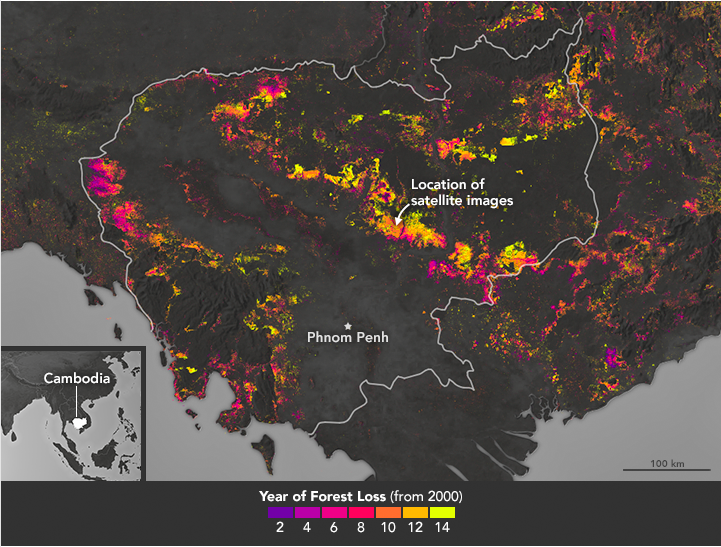
    Cambodia has one of the world’s highest rates of deforestation, losing a Connecticut-size area of tree cover in just 14 years. This week, NASA released before-and-after satellite images of plantation expansion in central Cambodia that provide a dramatic example of the Southeast Asian country’s fast-paced land cover changes.

    Ringed by Thailand, Laos, and Vietnam, Cambodia was once covered in lush rainforests. In them lived now-Endangered animals like Indochinese tigers (Panthera tigris corbetti), wild cattle called banteng (Bos javanicus), and two species of colorful monkeys called doucs, as well as many other kinds of plants and animals.

    However, forest conversion for agriculture and other purposes has reduced wildlife habitat significantly, and tigers are now regarded as functionally extinct in Cambodia. According to the UN’s Food and Agriculture Organization (FAO), just 3 percent of Cambodia’s forests were primary as of 2015. And data from the University of Maryland (UMD) visualized on the forest monitoring platform Global Forest Watch shows tree cover loss skyrocketed over the past decade, from around 28,500 hectares lost in 2001 to nearly 238,000 hectares lost in 2010. In total, the data indicate Cambodia lost around 1.59 million hectares from 2001 through 2014 – an area a little larger than the U.S. state of Connecticut, including 38 percent of its intact forest landscapes. Only one intact forest landscape (IFL) remains in the country; IFLs are areas of original land cover that are large and undisturbed enough to retain all their native biodiversity.

    #Cambodge #déforestation #forêt #cartographie

  • Government Accuses NASA of Incitement Over Deforestation Data

    The Environment Ministry has accused the U.S.’s space agency and local media outlets of “incitement” for publishing and misreporting year-old deforestation data that show years of rapid forest loss.

    In 2015, the University of Maryland used U.S. satellite data to reveal that between 2001 and 2014 the annual forest loss rate in Cambodia accelerated by 14.4 percent, leading to one of the highest deforestation rates in the world since the turn of the century.


    https://www.cambodiadaily.com/morenews/govt-accuses-nasa-of-incitement-over-deforestation-data-123471
    #déforestation #Cambodge #forêt #cartographie #visualisation #dispute
    cc @albertocampiphoto
    via @odilon que je remercie

  • New Research Shows Failings of GMO Insect Resistance, Corn Crop in Jeopardy | The Huffington Post
    http://www.huffingtonpost.com/carey-gillam/new-research-shows-failin_b_14003604.html

    New research adds to evidence that the effectiveness of popular genetically engineered traits used to protect corn and cotton from insects is failing, putting U.S. corn production potential in jeopardy, and spurring a need for increased insecticide use.

    The study, authored by a trio of independent researchers, documents resistance in a major crop pest called corn earworm, and adds to warnings that the popular GMO insect-resistant technology known as Bt, after the soil-dwelling bacteria Bacillus thuringiensis, has lost its luster. It is noteworthy as the first long-term, in-field assessment of transgenic Bt corn’s effectiveness against one of the most damaging pests of sweet corn, field corn, cotton and many other high-value crops. Before publishing their findings, which cover 20 years of observations, the researchers presented them to the Environmental Protection Agency (EPA) as well as to the corporations that developed and market the traits, said Galen Dively, a University of Maryland entomologist and lead researcher on the study.

    #OGM #brown_tech

  • Nuclear Facilities Attack Database (NuFAD)
    About START | START.umd.edu

    Je poste ici pour archivage.

    http://www.start.umd.edu/nuclear-facilities-attack-database-nufad
    http://www.start.umd.edu/about/about-start

    The National Consortium for the Study of Terrorism and Responses to Terrorism—better known as START—is a university-based research and education center comprised of an international network of scholars committed to the scientific study of the causes and human consequences of terrorism in the United States and around the world.

    A Department of Homeland Security Center of Excellence headquartered at the University of Maryland, START supports the research efforts of leading social scientists at more than 50 academic and research institutions, each of whom is conducting original investigations into fundamental questions about terrorism, including:

    What is the nature of terrorism in the world today? How has terrorist activity evolved over time? How does terrorism vary across geographies? And what do these trends indicate about likely future terrorism?
    Under what conditions does an individual or a group turn to terrorism to pursue its goals? What is the nature of the radicalization process?
    How does terrorism end? What are the processes of deradicalization and disengagement from terrorism for groups and individuals?
    What actions can governments take to counter the threat of terrorism?
    What impact does terrorism and the threat of terrorism have on communities, and how can societies enhance their resilience to minimize the potential impacts of future attacks?

    #nucléaire #database #base_de_données #statistiques

  • $80 Million Hack Shows the Dangers of Programmable Money
    https://www.technologyreview.com/s/601724/80-million-hack-shows-the-dangers-of-programmable-money

    A huge digital heist is a reminder that when your code has direct control of millions of dollars of assets, it had better be free of errors.

    [...]

    All software comes with bugs. And money is sometimes stolen via digital means from conventional financial institutions, for example in the recent attacks on the SWIFT system used for cross-border transfers.

    But when software is empowered to directly control funds, as Ethereum was designed to allow, security becomes more critical.

    Unfortunately, the designers of Ethereum and the DAO don’t appear to have drawn much on standard techniques that programmers and computer scientists have developed to contain the risk of security flaws. The DAO’s code wasn’t accompanied with documentation explaining the design of its various pieces, for example. That could have helped someone spot and fix the flaw used in the DAO heist sooner, perhaps before it was released.

    [...]

    There were many warnings that Ethereum’s design had security problems before today’s hack. The flaw used against the DAO was flagged earlier this month by Peter Vessenes, a Bitcoin entrepreneur who had previously cautioned that software built on Ethereum would be “candy for hackers.”

    In a 2014 paper, researchers at University of Maryland who had asked students to build things with Ethereum concluded that “several subtle details about Ethereum’s implementation make smart contract programming prone to error.”

    And in May, Sirer and two people active in the cryptocurrency community, including a researcher with the Ethereum project, called for the DAO to be effectively frozen until security flaws in its voting mechanisms were fixed.

    [...]

    A real fix for Ethereum’s problems will take a long time, and perhaps a complete redesign of much of its technology.

    Cinglant article de la MIT Technology Review.

    #Bug_(informatique) #Decentralized_autonomous_organization #Ethereum #Faille_informatique #Piratage_informatique #The_DAO_(organization)

    • To the DAO and the Ethereum community,

      I have carefully examined the code of The DAO and decided to participate after finding the feature where splitting is rewarded with additional ether. I have made use of this feature and have rightfully claimed 3,641,694 ether, and would like to thank the DAO for this reward. It is my understanding that the DAO code contains this feature to promote decentralization and encourage the creation of “child DAOs”.

      I am disappointed by those who are characterizing the use of this intentional feature as “theft”. I am making use of this explicitly coded feature as per the smart contract terms and my law firm has advised me that my action is fully compliant with United States criminal and tort law. (...)

      A soft or hard fork would amount to seizure of my legitimate and rightful ether, claimed legally through the terms of a smart contract. Such fork would permanently and irrevocably ruin all confidence in not only Ethereum but also the in the field of smart contracts and blockchain technology. (...)

      I hope this event becomes an valuable learning experience for the Ethereum community and wish you all the best of luck.

      Yours truly,
      “The Attacker”

      http://pastebin.com/CcGUBgDG

  • Phytoplankton rapidly disappearing from the Indian #Ocean | Science News
    https://www.sciencenews.org/article/phytoplankton-rapidly-disappearing-indian-ocean

    The loss of these #microbes, which form the foundation of the ocean food web, may undermine the region’s ecosystem, warns study coauthor Raghu Murtugudde, an oceanographer at the University of Maryland in College Park.

    #phytoplancton #chaîne_alimentaire #climat #écosystème

  • Map: The fall of the Soviet Union made the world more wooded - The Washington Post
    https://www.washingtonpost.com/news/worldviews/wp/2015/08/07/map-the-fall-of-the-soviet-union-made-the-world-more-wooded


    L’économie de marché a sauvé la #forêt du communisme, sauf en Lettonie @reka :)

    The end of the Soviet Union had far-reaching effects all over the world. Even today, researchers continue to discover new ways by which the fall of communism shaped not only global society and politics – but even European forests, as it turns out.

    “I personally was quite surprised with our results on forest dynamics,” Peter Potapov, a professor at the University of Maryland, admitted.

    Potapov has carefully analyzed forest cover changes in eastern Europe and western Russia over the last 27 years. His results are striking: The transition from communism to a liberal market economy has left clear traces that can be seen on satellite images. In most eastern European countries, forests have expanded overall.

    Potapov’s research shows how the end of the Soviet Union literally made the world more green – but at a substantial human cost.

    #URSS #ex_urss

  • Satellite data suggests forest loss is accelerating
    http://www.reuters.com/article/2015/03/02/us-forest-satellites-idUSKBN0LY1M720150302

    The FAO assessment has been based in large part on self reporting from tropical forest countries, Kim said. In contrast, Kim and his University of Maryland colleagues analyzed 5,444 Landsat images from 1990, 2000, 2005 and 2010 to assess how much forest was lost or gained 34 countries, which account for about 80 percent of tropical forest land in the world.

    During the 1990 to 2000 time period, the annual net forest loss across all the countries was 4 million hectares (about 15,000 square miles or 40,000 square kilometers) per year, according to the study.

    From 2000 to 2010, the net forest loss increased 62 percent to 6.5 million hectares (about 25,000 square miles or 65,000 square kilometers) per year – an area of forest clearing the size of Sri Lanka each year.

    #forets #deforestation et petite controverse avec la #FAO : #satellites vs. mesures de terrain

  • Rainforest loss increased in the 2000s, concludes new analysis
    http://news.mongabay.com/2015/0225-tropical-forest-loss.html


    Les données de la FAO contestées

    Loss of tropical forests accelerated roughly 60 percent during the 2000s, argues a paper published in the journal Geophysical Research Letters. The findings contradict previous research suggesting that deforestation slowed since the 1990s.

    The study is based on a map of 1990 forest cover developed last year by Do-Hyung Kim and colleagues from the University of Maryland. The map, which includes 34 countries that contain 80 percent of the world’s tropical forests, enabled the researchers to establish a consistent baseline for tracking forest cover change across regions and countries over time.

    The study concludes that average annual gross forest loss in the tropics rose 58 percent in the 2000s relative to the 1990s rate. Overall 78.2 million hectares of forests were lost during the decade, up from 49.3 million.

    #déforestation #data #visualisation

  • These maps show where the Earth’s forests are vanishing

    http://www.washingtonpost.com/blogs/wonkblog/wp/2013/11/14/these-maps-show-where-the-earths-forests-are-vanishing

    That comes from a new study published Thursday in the journal Science — the first effort to quantify in detail how forests are changing and disappearing over the past decade. The research team, led by the University of Maryland, used Landsat satellite images and Google’s Earth Engine to assemble detailed new maps.

    A few notable points:

    –- The Earth lost 2.3 million square kilometers of forest between 2000 and 2012 and added 0.8 square kilometers. That’s a net loss of an area roughly as large as Western Europe.