Nidal

“You know what I did? I left troops to take the oil. I took the oil. The only troops I have are taking the oil, they’re protecting the oil. I took over the oil.”

  • La photo de la semaine
    02/11/2019 Le blogue de Richard Hétu
    https://richardhetu.com/2019/11/02/la-photo-de-la-semaine-3

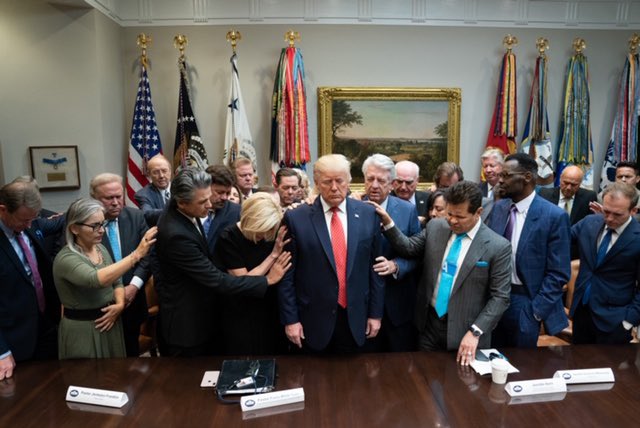
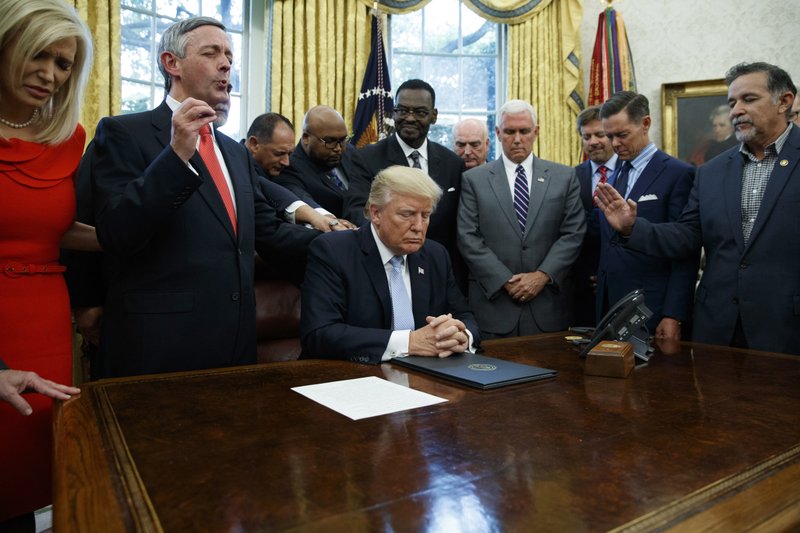
    Paula White-Cain, conseillère spirituelle de Donald Trump, a publié sur son compte Twitter jeudi cette photo qui est vite devenue virale. On y voit Donald Trump, les yeux fermés, entouré de personnalités religieuses, dont plusieurs pasteurs évangéliques, priant pour lui. Certaines des personnes présentes posent une main sur le président pour qu’il puisse recevoir l’Esprit saint.

    #gorafi_encore_plagié

    • Pourtant, quel que soit le personnage à Washington, c’était la même chose.
      A l’Elysée, ce doit pas être mieux, dans les grandes villes aussi.

      Idem pour les conseils d’administration des grosses boites.

    • https://elpais.com/internacional/2019/11/03/actualidad/1572806433_452486.html

      El día que el presidente prestó juramento de su cargo, en enero de 2017, lo hizo sobre dos Biblias: una propia y otra usada por Abraham Lincoln en 1861. A su lado estaba el ultraconservador Mike Pence, que asumió como vicepresidente. Ese día, Paula White se convirtió en la primera religiosa que oficiaba la oración durante la ceremonia. Después de su aparición pública junto a los políticos, su apoyo en las redes bajó considerablemente. “Veía cómo mis seguidores en Twitter bajaban en 10.000, 20.000, 30.000...”, reconoció a The Washington Times. Ahora tiene 700.000 en esta red social y tres millones en Facebook.

      En junio, en Orlando (Florida), la asesora espiritual cambió el tono utilizado en la inauguración del mandato del presidente para pasar a uno más alarmista en un mitin del republicano. “Que cada red demoniaca que se haya alineado contra el llamamiento del presidente Trump, sea derribada en nombre de Jesús”, exclamó ante la multitud. “Declaro que el presidente Trump superará todas las estrategias del infierno y todas las estrategias del enemigo”, agregó entonces. Algunos cristianos consideran sus ideas heréticas y no faltan quienes la tildan de populista e incluso de figura divisiva en esa fe.

      White, como Trump, no siempre fue religiosa. En su libro de memorias Something Greater, publicado el pasado octubre, narra la “visita divina” que Jesús le hizo en 1986, cuando estaba con su hija recién nacida. En la visión, ella aparecía predicando en todos los continentes. La imagen fue un impulso para dedicarse por completo a la religión. Desde entonces, ha levantado un imperio, con programas de televisión, radio, libros, giras por el país y, desde 2014, como pastora principal en una iglesia evangélica en Florida.

      Eso, hasta que Jesús volvió a hablarle. En mayo, durante el sermón dominical, afirmó que el Señor le había dicho que no se podía “perder este momento” para hacer cosas más grandes. Así que abandonó su puesto de pastora en la New Destiny Christian Center en Apopka para abrir una Universidad y levantar 3.000 nuevas iglesias. Pero los ambiciosos planes de White se vieron interrumpidos por uno de sus seguidores: Trump. El presidente estadounidense, que intenta asegurarse que los evangélicos permanezcan en sus filas, la llamó para encargarse de que lo consiga desde la Casa Blanca. White todavía no ha hecho ni un comentario al respecto. Sus redes están enfocadas ahora mismo en promocionar su nuevo libro antes que al propio Trump.

  • NSO, l’espionnage tous azimuts
    https://www.liberation.fr/planete/2019/10/31/nso-l-espionnage-tous-azimuts_1760866

    Selon Reuters, le logiciel Pegasus développé par la sulfureuse entreprise israélienne, dénoncé pour avoir servi à surveiller des militants des droits de l’homme et des opposants politiques, a aussi été utilisé pour cibler « de hauts responsables gouvernementaux » dans une vingtaine de pays. La recension publique des états de service de l’entreprise israélienne NSO Group, « pépite » de la « start-up nation » du Proche-Orient en matière de logiciels espions, continue de s’enrichir. Ce jeudi, Reuters affirme en (...)

    #NSO #WhatsApp #Pegasus #smartphone #spyware #activisme #journalisme #écoutes #hacking #surveillance #AmnestyInternational (...)

    ##CitizenLab

  • Au fait, l’option que Hariri décide simplement d’aller profiter d’une retraite dorée en Arabie saoudite, sur le modèle d’autres grands dirigeants arabes, c’est pas une option. Saad n’a apparemment plus beaucoup d’argent sur place et surtout, s’il n’est plus Premier ministre du Liban, il est probable que son cher ami MBS se fasse un plaisir de le faire découper à la scie à os avant de le dissoudre dans l’acide.

  • Le moment WTF du jour: Lebanon’s Hariri vows to hold those who ‘stole from him’ to account
    https://www.middleeastmonitor.com/20191101-lebanons-hariri-vows-to-hold-those-who-stole-from-him-to

    Outgoing Lebanese Prime Minister Saad Hariri has vowed to hold those who betrayed him, stole from him and benefitted from him to account.

    Taking to Twitter, Hariri said they are “known, listed, and each will be held accountable, God willing.”

    Ah ah, c’est pas con, ça: c’est pas le clan Hariri qui a corrompu les gens, c’est les gens qui lui ont «volé» l’argent!

  • #Georges_Corm. La mainmise du #FMI et de la #Banque_mondiale se rapproche
    http://magazine.com.lb/index.php/fr/component/k2/item/19346-georges-corm-la-mainmise-du-fmi-et-de-la-banque-mondiale-se-rappr

    La sortie de crise qui se rapproche c’est la mainmise du FMI et de la Banque mondiale et encore plus de politique d’#austérité, ce qui réduit d’autant plus les recettes de l’Etat. Les conférences de Paris I, Paris II, Paris III, Paris IV ont contribué à engager l’économie libanaise dans la mauvaise voie

    Les manifestants réclament la démission du gouvernement et la constitution d’un gouvernement de #technocrates susceptibles de sauver l’économie. Qu’en pensez-vous ?
    Un gouvernement technocrate est un mythe, pas une solution. Derrière les technocrates, il y a toujours un #politique.

    #Liban

    • Comment évaluez-vous le plan de sauvetage de Saad Hariri, sa sortie de crise ?

      On continue dans les mêmes errements et dans les mêmes politiques économiques absolument absurdes, avec cette future source de gaspillage et d’endettement qui s’appelle CEDRE et qui ne va qu’aggraver la mainmise de certains pays occidentaux qui prétendent nous aider sur le plan économique. Ça suffit de faire des investissements, il faut d’abord améliorer les investissements existants, et non pas chercher à gaspiller de l’argent dans des projets où les entrepreneurs de travaux publics s’en mettront plein les poches. CEDRE, ce ne sont que des emprunts.

      CEDRE n’est que l’un des points du plan. Ne pensez-vous pas que 0,63% de déficit et un budget sans taxes ni impôts sont de bonnes mesures ?

      Je peux vous faire un budget dans lequel j’ai du surplus budgétaire alors qu’en réalité je sais très bien que je vais faire du déficit. On peut toujours réduire le déficit artificiellement dans le projet de budget. Nous avons un ministre des Finances très fantaisiste qui est dictateur dans son ministère. C’est un très grave problème d’affermer le ministère des Finances à un des principaux partis connus pour ses gaspillages et sa mauvaise gestion.

      Que pensez-vous du volet privatisations du plan ?

      C’est appauvrir l’Etat complètement, alors que la seconde source de revenus de l’Etat provient des télécoms. Si on veut encore plus affaiblir l’Etat, on les privatise.

      Vous ne croyez pas à ce plan donc ?

      Ce n’est même pas un plan. Un plan doit être réfléchi, avec une bonne connaissance de l’économie, de ce qu’il faut réformer à l’intérieur de l’économie. C’est la domination du néo-libéralisme avec des gens qui ont plein de prétextes pour s’en mettre plein les poches. On a un gouvernement autiste qui n’a rien changé à sa politique économique, comme un train aveugle.

    • En revanche, pas un mot sur l’apparent dépassement du confessionnalisme par ces immenses manifestations qui ont eu lieu partout et par toutes les confessions, ce qui est tout de même un élément inédit, pour que le peuple libanais puisse enfin peser (en tant qu’ensemble de citoyens, et non de sujets confessionnels) sur les orientations politiques.

  • Maya Mikdashi, co-fondatrice de Jadaliyya, vient de poster un long thread à propos de la constitution libanaise :
    https://twitter.com/mayamikdashi/status/1189596199071952896

    The constitution was adopted in 1926 under the French colonial control (mandate). It was critical to creating bureaucratic legal, & ideological foundations of the Republic of Lebanon in its current borders (grande liban), separate to and independent from what became Syria.

    Lebanon did not become independent from french colonialism until 1943. The 1926 Constitution set up a parliamentary system of governance with strong executive powers concentrated in the office of the President. The constitution is a classically liberal document, in that it sacralizes individual civil and political rights (religion, expression etc) & a capitalist free market economy.. This means that the freedom of residence, for example, refers to the right to live anywhere in the country, which should not be confused with the right TO a residence.

    There has always been a structural contradiction between the constitution and various laws—most glaring is nationality law— that discriminate against women.

    Article 7 of the constitution is clear. "All Lebanese shall be equal before the law. They shall equally enjoy civil and political rights and shall equally be bound by public obligations and duties without any distinction ``. [note, again, economic rights are absent]

    The Constitution gives organized religions personal rights to “their own” school systems & family laws. The Troika system, where exec. power is split betw Presidency, Pres. of Parliament & tPrime Minister along sectarian lines is NOT IN THE CONSTITUTION

    The National Pact (NP), which was written on a napkin and never officially recorded (i swear this is the story), created a power sharing agreement between Muslims and Christians within the executive branch, and it was dominated by Sunnis and Maronites.

    The NP installed the power sharing system of gov we live under today, although it is nowhere in law. The unwritten nature of the NP has created crisis over the years between the troika system & the constitution (for ex when Amin Gemeyel appointed Michel Aoun to be Prime Minister.

    The National Pact was the Sunni and Mulism elite “buy in” to a state Independent from Syria. Thus, although it is not law, it a historical condition of the Lebanese state and country. The constitution was revised after the civil war (1975-1990) to include the Taif Accord, the peace agreement that ended the war. Under Taif executive power was further reshuffled between the President, the Prime Minister, and the President of Parliament. This has resulted in periodic paralysis and stagnation.

    Even if the executive offices are no longer distributed along sectarian lines, it will still be a structural problem. The Taif Accord also added seats to Parliament and recalibrated according to equal Christian Muslim representation (previously unequal in favor of Christians)

    The constitution has always treated political sectarianism as a temporary solution & in fact calls for and sets measures for a national & unified, non-sectarian liberal democracy. But remember we are talking about liberal IDEOLOGY here.

    The Taif Accord, and the Constitution before it, has never been fully implemented. There is a structural contradiction between the Constitution and the National Pact.

    Upon the election of a non-sectarian government, the constitution calls for another chamber of religious leaders to be elected with very limited power on what are called “national issues” critical that every government post-Taif has violated the constitution bc it has not legislated & enacted a national and non-sectarian electoral law. This is a crucial point for protestors. The government, not the people in the streets, are in violation of #Lebanese Constitution

    The Lebanese Constitution, like all constitutions, is a flawed document. It offers a way out of the current impasse and gives important discursive and ideological power to the #lebanonprotest. But it must be reformed and rethought, including but not limited to: equal rights, a national civil marriage law & curricula, economic rights & rights for non-citizens. This is the perfect time to imagine what we WANT out of our Constitution, not only what it demands. We can think a new social contract. “Imagining otherwise” is a political act.

    I wrote more about the #Taif Accord and its political, economic, and constitutional effects in @jadaliyya recently.
    https://bit.ly/36qYQ80

    *Clarification. I meant national personal status law. Difference is that civil marriage law leaves inheritance & other parts of religious personal status law intact. A national personal status law, however, implies complete revocation of religious personal status #LebanonProtests

  • تسمية الحريري غير مضمونة... و« التكنوقراط » مرفوضة | أميركا تدخل على خط التأليف : حجب مساعدات عن الجيش
    https://al-akhbar.com/Politics/278700/تسمية-الحريري-غير-مضمونة-و-التكنوقراط-مرفوضة-أميركا-تدخل-على-خط-التأليف-ح

    في خطوة غير مسبوقة، قررت إدارة الرئيس الأميركي دونالد ترامب حجب مساعدات عسكرية عن الجيش اللبناني بقيمة 105 ملايين دولار. ونقلت وكالة «رويترز» عن مسؤولَين أميركيين رفضا الكشف عن اسميهما أن وزارة الخارجية أبلغت الكونغرس أن مكتب الميزانية في البيت الأبيض ومجلس الأمن القومي اتخذا ذلك القرار، من دون الإشارة إلى سببه.

    i24NEWS - Les USA réduisent leur aide militaire au Liban
    https://www.i24news.tv/fr/actu/international/1572587646-les-usa-reduisent-leur-aide-militaire-au-liban

    Le Département d’Etat américain aurait décidé de supprimer 105 millions de dollars d’aide militaire au Liban, après qu’Israël a demandé aux donateurs internationaux de réévaluer leur contribution dans le contexte de turbulences politiques à Beyrouth, selon Reuters. 

    Des responsables israéliens ont indiqué mercredi avoir demandé aux partenaires de l’Etat hébreu au sein de la communauté internationale de conditionner toute aide au Liban à des actions visant à se débarrasser des armes de pointe présentes sur son territoire, alors que le pays traverse une crise politique majeure.

  • Liban : le président Aoun s’engage à édifier un État civil non confessionnel
    http://www.rfi.fr/moyen-orient/20191031-liban-president-aoun-etat-civil-non-confessionnel-corruption-manifestat

    Michel Aoun a endossé la plupart des revendications des manifestants qui battent le pavé depuis maintenant deux semaines.

    Sur un ton solennel, il a pris trois engagements : l’édification d’un État civil et moderne, débarrassé du fléau du confessionnalisme ; le développement d’une économie productive ; et l’intensification de la lutte contre la corruption qui mine, dit-il, la politique, l’administration, les milieux de la finance et une partie de la société.

    Pour atteindre ce but, le président Aoun a demandé aux manifestants de faire pression sur les députés pour qu’ils adoptent une série de lois portant sur la levée du secret bancaire et de l’immunité des responsables politiques et des hauts fonctionnaires, la récupération de l’argent public volé, et la création d’un tribunal spécial pour juger les crimes financiers liés au secteur public.

    • Le tweet (le second d’une petite série) de Jamil Mouawad ne se suffit pas à lui-même :

      – le premier tweet indique tout de même que :

      It’s true that the speech covers the demands of protestors (civil state etc)! but that’s it.

      ce qui n’est pas rien !

      – le troisième tweet indique qu’Aoun n’a pas réellement le pouvoir pratique de mettre en place cette politique, parce qu’il est lui-même discrédité (à mon avis moins que d’autres, mais tout de même : j’ai écrit sur Bassil ici), Hariri est démissionnaire (et n’a donc plus de pouvoir pour lancer des décisions politiques « nouvelles »), et Berri est impuissant sans gouvernement.

      C’est ici important, parce que ça oriente la lecture du tweet que tu reprends : le discours de Aoun est sans effet, parce qu’en pratique il ne peut pas le mettre en place directement, et non au motif qu’Aoun serait en train de mentir.

      – Et donc sa conclusion dans le tweet suivant : le discours d’Aoun est ainsi inapplicable, et il place donc la balle, une nouvelle fois, dans le camps du Hezbollah. Attendons le discours de Nasrallah. Et le jugement de la révolution.

      Du coup, la lecture me semble bien plus ambiguë que le rejet qu’on pourrait comprendre du seul second tweet. Généralement, la réaction au discours des hommes au pouvoir au Liban est simple : ils mentent, ils ne souhaitent surtout pas mettre en place ce qu’ils annoncent, ils cherchent seulement à gagner du temps.

      Ce n’est pas la lecture ici : il dit qu’Aoun n’est pas en situation de faire ce qu’il a dit, et que la balle est dans le camps de son très puissant allié Nasrallah (qui lui-même avait dit soutenir les revendications des manifestants) et de la rue, seuls désormais à pouvoir faire appliquer de telles annonces.

  • L’article de Roger Cohen pour le NY Times est évidemment grotesque. Mais la partie la plus ridicule est sans conteste l’interview de Riad Salamé (pas un mot sur la dette, hein, pas un mot sur les menaces de sanctions américaines, pourtant reprises à son compte dans son évocation de sa lutte contre le « financement du terrorisme », qui désigne, en néocon-speak, la Résistance libanaise, etc.) :

    Opinion | Lebanon Battles to Be Born at Last
    https://www.nytimes.com/2019/10/25/opinion/lebanon-protests.html

    “Today, everybody can say whatever via social media,” Salameh, who came to this job from Merrill Lynch, told me. “I have read various so-called biographies of myself, and am discovering I did not know who I was before.” He smiled a wan smile. “My contribution over the years has been to try to hold Lebanon stable.”

    It’s not easy, he said, when you have a tiny dollarized economy, where 73.5 percent of deposits are in foreign currency, budget deficits are high, and protecting the currency is a daily battle.

    “I don’t know if the government is very corrupt,” he continued, “but I can say I worked very hard to put in place a special investigation commission to combat money laundering and terrorist financing, and I never compromised on this. Those who suffered from my decisions are now trying to drag me down with accusations of corruption.”

    The Central Bank, he insisted, had no control over the private bank accounts of government members. “The Central Bank does not handle private accounts. I do not have this privilege. The banks should know their clients and report to us if they see something suspicious.”

    As for the supposedly lavish wedding in France, the focus of much ire, Salameh said it took place overseas because his son, a Christian, wed a Muslim and it was easier to have a civil marriage in France. “It was just a normal dinner,” he said.

    • Si tu lis ça, évidemment, l’idée que Saad Hariri et Riad Salamé soient capables de résoudre quoi que ce soit est sans doute la meilleure blague libanaise que je connaisse.

  • Un soldat israélien condamné pour la mort d’un adolescent palestinien à #Gaza - #Moyen-Orient - RFI
    http://www.rfi.fr/moyen-orient/20191030-soldat-israelien-condamne-mort-adolescent-palestinien-gaza-othman-helle

    Un titre aussi obscène que ce qui suit immédiatement après...

    C’est une condamnation inédite. Celle d’un soldat israélien qui a tiré et mortellement touché un adolescent palestinien à Gaza en juillet 2018 lors de la « Marche du retour ». La peine a été prononcée cette semaine par une cour militaire israélienne.

    ... aussi obscène que le verdict...

    En vertu d’un accord de plaider coupable, il a été condamné à un mois de prison - une peine qui sera commuée en travaux au profit de l’armée - une période de probation et une rétrogradation au rang de simple soldat.

    ...et aussi obscène que le chef d’accusation ;

    .... l’organisation israélienne de défense des droits de l’homme #B’Tselem [...] relève que dans le cas de ce soldat, le chef d’accusation retenu était celui de la désobéissance et non celui, plus grave, de la mort d’un adolescent.

    #enfants #assassinats #Palestine #RFI #sionisme #obscène #obscénité #vitrine_de_la_jungle

  • De manière (pas du tout) subtile, les médias français nous expliquent depuis une semaine que les Libanais réclament la fin du système confessionnel, voire même une république laïque, et dès aujourd’hui, les mêmes t’expliquent que, pour remplacer Saad Hariri, il va falloir trouver un Premier ministre sunnite…

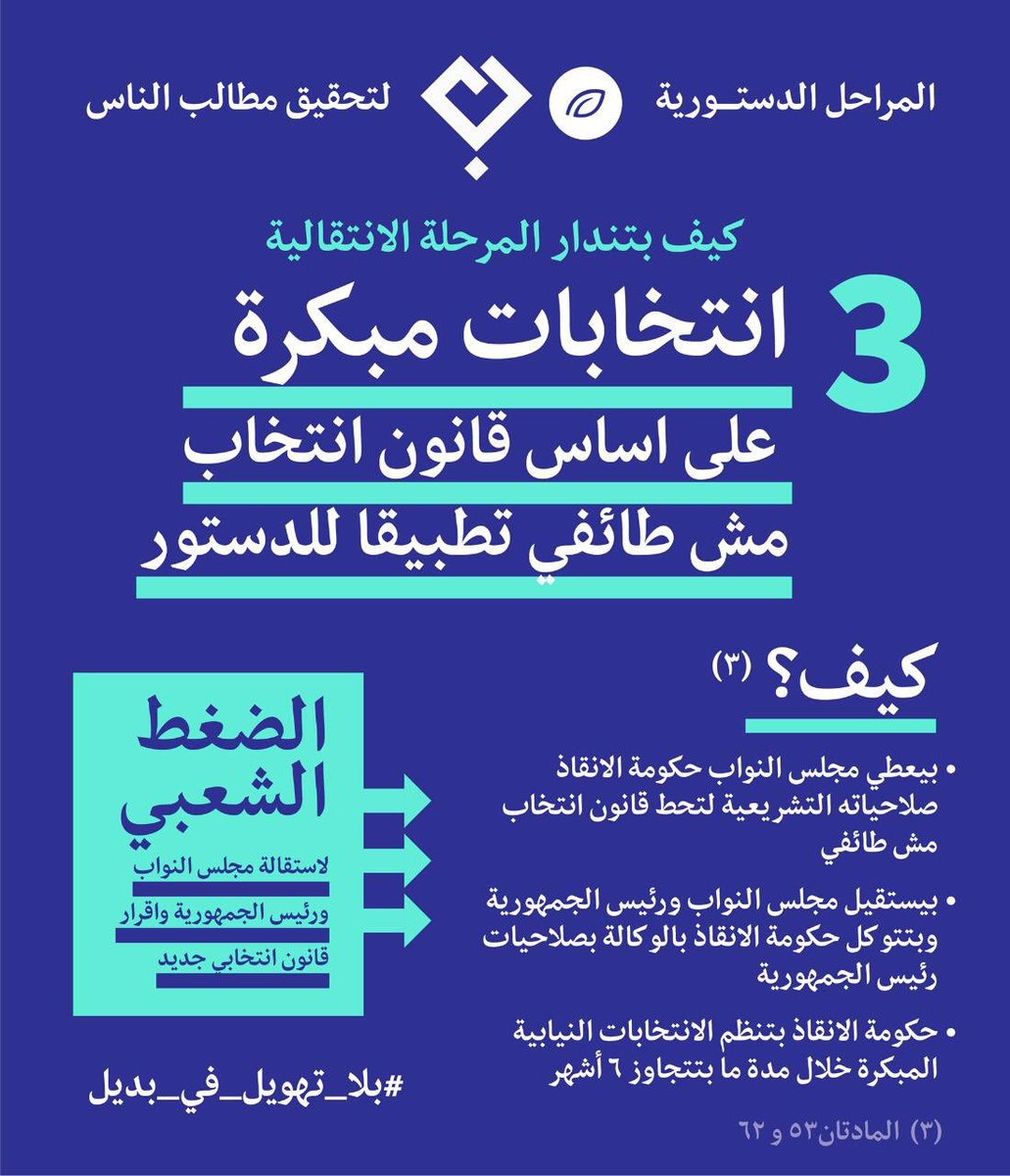
  • La feuille de route constitutionnelle pour installer un nouveau gouvernement indépendant et civil. Document qui circule sur twitter, publié par Beirut madinati


    Démission du gouvernement : trois moyens : démission du Premier ministre ; démission d’un tiers du gouvernement ; vote de défiance à l’assemblée

    Nomination d’un gouvernement de crise

    Elections générales non confessionnelles (en revenant à la lettre de constitution et non à la loi électorale).

  • Liban : l’urgence financière et comment y faire face
    What is to be done - An-Nahar English
    https://en.annahar.com/article/1057680-what-is-to-be-done
    https://s.annahar.digital/storage/attachments/1058/100015_937508_large.jpeg

    What about the depositors who earned all this phantom interest? You can call it a haircut, or an exit tax, or a deferred tax, or whatever you want, but that has to be part of the process of cleansing this Ponzi Scheme they’ve been running.

    A guy with $10 million 10 years ago, at 12% interest, has $31 million today. A haircut of 50% puts him at $16 million. It wouldn’t be an enjoyable experience, but not the end of the world either, to help save his country. It would be equivalent to earning 5% annually (which is the market rate in the real world) instead of 12%, and with no loss of any of his initial investment. For those of you who might have a problem with this plan, wake the f### up. The haircut is happening anyway because a chunk of your money’s already gone. The only thing we’re doing is recognizing the loss and determining how far down to go, meaning at what level of account balance to stop the hit? $1 million? $500,000? $100,000? $10,000? Do you really want the little guy with $10,000 who earned 4% to subsidize the guy with $20 million who earned 25%? When banks open eventually, probably around November 4, they’ll have a very bad day, as crowds scramble to pull their money. Is it viable to prevent the little guy from withdrawing his measly savings, while the big guy calls the branch manager or regional manager and applies a wasta to give him an exemption to transfer his money to Luxembourg? With 2 million people in the streets ready to eat you alive, do you really want to go there?

  • ’This charge is 100% false’: Grayzone editor Max Blumenthal arrested months after reporting on Venezuelan opposition violence | The Grayzone
    https://thegrayzone.com/2019/10/28/this-charge-is-one-hundred-percent-false-grayzone-editor-max-blumenthal

    Blumenthal was informed that he was accused of simple assault by a Venezuelan opposition member. He declared the charge completely baseless.

    “This charge is a 100 percent false, fabricated, bogus, untrue, and malicious lie,” Blumenthal declared. “It is clearly part of a campaign of political persecution designed to silence me and the The Grayzone for our factual journalism exposing the deceptions, corruption and violence of the far-right Venezuelan opposition.”

    The arrest warrant was five months old. According to an individual familiar with the case, the warrant for Blumenthal’s arrest was initially rejected. Strangely, this false charge was revived months later without the defendant’s knowledge.

    “If the government had at least told me I had a warrant I could have voluntarily surrendered and appeared at my own arraignment. I have nothing to fear because I’m completely innocent of this bogus charge,” Blumenthal stated. “Instead, the federal government essentially enlisted the DC police to SWAT me, ensuring that I would be subjected to an early morning raid and then languish in prison for days without even the ability to call an attorney.”

  • Charbel Nahas au Sayyed Hassan Nasrallah : Soyons clairs …
    https://libnanews.com/charbel-nahas-au-sayyed-hassan-nasrallah-soyons-clairs

    Le discours du Sayyed Nasrallah prend comme point de départ une lecture avançant que l’évènement majeur est la descente du peuple dans la rue ; et par conséquent, il cherche à examiner comment gérer cet évènement avec ses points forts et ses points de faiblesse, et de ce fait, par ce qu’il présente comme défis et opportunités ; il aboutit aux mêmes conclusions en tant qu’issues de sortie à cette situation, les mêmes promues par le président Michel Aoun et le président du Conseil des ministres Saad Hariri, bien que soutenu par une meilleure crédibilité de la part du peuple, résultant du cumul des exploits opérés par son parti, à savoir la résistance, la libération, la dissuasion face à l’ennemi israélien.

    Notre mouvement « Citoyens et Citoyennes dans un Etat » est en désaccord avec les principes et la prise de position du Sayyed Nasrallah par rapport aux circonstances actuelles que nous vivons aujourd’hui au Liban, et par conséquent, il est naturel que nos conclusions diffèrent.

    Le peuple est descendu dans la rue à cause de la crise financière qu’il a commencé à subir, que ce soit à cause des crédits dus aux banques, aux jougs énormes pesant sur la vie des gens en raison du tandem Livre/Dollar et l’existence de deux taux de change sur le marché, aux restrictions sur les retraits et les transferts, et enfin aux faillites des petites et des grandes entreprises, etc.

    Ceci est une donnée politique, loin d’être d’ordre technique ou économique séparé de la politique, parce que la politique est la gestion des affaires du peuple en tant que société et non en tant qu’individus, dans toutes ces facettes ; ce qui était remarquable dans le discours du Sayyed Nasrallah, c’était de faire en sorte d’assurer que la dimension politique soit sujette à suspicion.

    Si ce qu’il veut dire par #politique c’est la relation entre les partis du pouvoir sectaire avec ce qu’elle comprend comme alliances, oppositions, et rationnements, au sein du système politique qui a gouverné le Liban depuis trente ans, eh bien ce n’est pas cela la politique ; c’est un système de répartitions de bénéfices et d’inquiétudes imposant des revenus extérieurs continus. Or ce système a expiré non pas grâce à ceux qui s’y opposent, ni à la descente du peuple dans la rue, mais en raison d’une cause objective qui est le tarissement de ses sources d’approvisionnement. C’est la raison de la crise actuelle dans ses deux volets, financier et revendicateur.

    #Liban

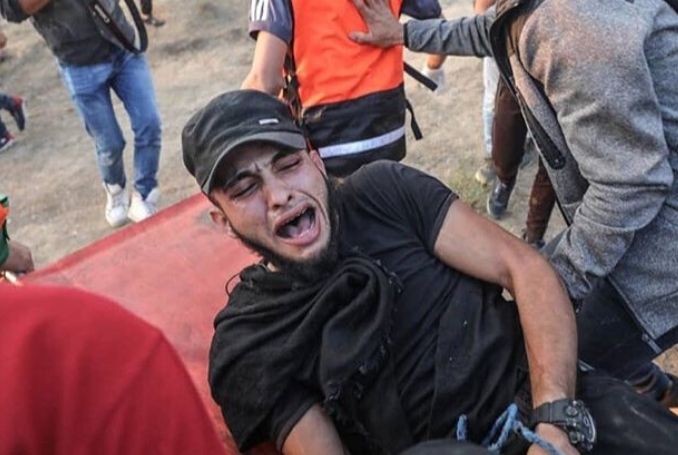
  • Ce vendredi, les soldats israéliens ont blessé 77 Palestiniens pendant la Marche du retour.

    Israeli Forces Injure 77 Palestinians in Gaza - Palestine Chronicle
    https://www.palestinechronicle.com/israeli-forces-injure-77-palestinians-in-gaza

    The Palestinian Health Ministry announced that 77 Palestinians were injured on Friday evening as a result of the Israeli army assault on the weekly marches in the eastern Gaza Strip, reports Anadolu Agency.

    The ministry said in a statement that 31 of the wounded were hit by live bullets.

    #silence_radio

  • Liban : un soulèvement au parfum de « révolution »
    https://www.madaniya.info/2019/10/28/liban-un-soulevement-au-parfum-de-revolution

    L’explosion populaire qui a secoué le Liban en Octobre 2019 a révélé tout à la fois le degré de corruption et d’incompétence de ses élites dirigeantes, en même temps que la précarité de sa population du fait d’une gestion de son économie par une oligarchie d’état ; la vulnérabilité politique d’un pays soumis à une tutelle de fait des pays Occidentaux ; enfin, dernier et non le moindre des facteurs, l’effet pernicieux de son système constitutionnel, régit par un pacte non écrit institutionnalisant le confessionalisme, c’est-à-dire la répartition des charges publiques au plus haut niveau de l’état sur une base religieuse.

    La réponse des libanais à la feuille de route de sortie de crise proposée par Saad Hariri, le chef du gouvernement, un factotum des desiderata occidentales et pétro monarchiques, a été sans équivoque. Une foule d’une ampleur jamais vue a déferlé vers le siège de la Banque du Liban, le symbole de l’oligarchie bancaire libanaise. Une première qui pourrait constituer un tournant décisif dans le mouvement citoyen et l’avenir politique du pays.

    C’est aussi une réponse aux tentatives visant à détourner la colère populaire d’un mouvement spontané qui a pris de court la caste politique.

    Les tentatives visant à attiser les dissensions interconfessionnelles, –notamment le rôle pernicieux de Samir Geagea, l’ancien chef milicien des Forces Libanaises, ancien allié émérite d’Israël désormais servant docile de l’Arabie saoudite–, de s’attribuer les mérites du soulèvement ou de dresser la société civile contre son armée, ont été jusque-là vaines

    Vaines et piètres tentatives, face à une jeunesse qui n’accepte aucune entourloupe politique, réitérant avec force son exigence première : Le départ de ces compradors politico-financiers.

    Devant le temple de la corruption, le siège de la Banque du Liban, les manifestants sont allés droit au but en brandissant les banderoles houspillant Riad Salamé, le gouverneur de la banque en ces termes : « Riad, le voleur ». A bas le règne de la Banque centrale libanaise et le Liban renaîtra ».

    Ancien gestionnaire du portefeuille du milliardaire Rafic Hariri au sein du groupe « Merryl Lynch », Riad Salamé est le protecteur de l’oligarchie bancaire libanaise. Inamovible gouverneur de la Banque du Liban depuis près de trente ans du fait d’un véto américain quant à son éviction, Riad Salamé nourrit le vœu secret d’accéder à la présidence de la République libanaise. Pour ce faire, il a cherché à donner des gages à l’administration xénophobe et populiste de Donald Trump en se missionnant comme un exécutant zélé des sanctions américaines, illégales au regard du droit international, contre le Hezbollah et ses sympathisants.

    Cette marche vers la banque du Liban a fait trembler l’oligarchie qui a toujours joué sur la corde des conflits confessionnels et la protection des anciennes puissances coloniales pour pérenniser son pouvoir. Une situation qui rapproche de jour en jour les libanais du gouffre de la faillite.

  • Plusieurs observateurs ou observatrices, dans les rangs des spécialistes du Hezbollah, notent qu’à la suite du discours de Nasrallah vendredi et du retrait (semble t il spectaculaire) d’un grand nombre de manifestants, les mobilisations auraient été moins transversales ce week-end et auraient perdu (un peu de) leur capacité à agréger des segments différents en termes de classe sociale (moins de participation des classes populaires) et évidemment en termes communautaires (moins de chiites).
    Cette affirmation peut sembler au premier abord discutable au vu du succès de la chaine humaine qui a justement réuni des participants de toutes les régions libanaises sur la côté, avec même des incursions dans l’intérieur puisqu’apparemment, un brin de la chaine allait jusqu’à Nabatiyé. Voilà ce qu’on lit dans l’Orient Le Jour :

    La chaîne était cependant interrompue en plusieurs points du littoral, notamment au sud de Beyrouth et entre Saïda et Tyr, zones sous influence du Hezbollah. Une percée notable a toutefois été marquée à Nabatiyé, fief du parti chiite, et Kfar Remmane, où les manifestants ont pris part au mouvement, malgré les pressions exercées par le parti chiite.

    https://www.lorientlejour.com/article/1192872/jour-xi-les-libanais-forment-une-chaine-humaine-de-tripoli-a-tyr-en-p

    Voici quelques-uns de ces commentaires auxquels je fais allusion. Les deux threads sont plutôt des commentaires sur les intentions du Hezbollah vis-à-vis des autres forces politiques et de ce point de vue peuvent apparaître un peu old-style par rapport aux nouvelles formes du débat qui émergent dans ces mobilisation. Mais ces commentaires sont parsemés de remarques sur les divisions qui commenceraient à apparaître dans le mouvement. Je surligne les passages qui vont dans ce sens.
    D’abord un thread de Amal Saad, à ma connaissance auteure de livres reconnus sur le Hezbollah :
    https://twitter.com/amalsaad_lb/status/1188102914620964869

    1. Thread: Nasrallah’s speech reveals that Hizbullah’s statism isn’t just dictated by its need to preserve its alliances, but by a more general fear of chaos. By securitizing the state and its institutions, as well as roads, Hizbullah has cast itself as a bulwark of the system
    2. By securitizing the state, Hizbullah is preserving the delicate web of alliances & balances that have protected its Resistance. As unjust as it is, the current system is seen as crucial part of the political and strategic framework required for its own operational functioning
    3. As a state-like actor, it’s choices are governed by raison d’etat. Faced between a kleptocracy that it’s familiar with, and a nebulous, leaderless movement which right wing Christian forces and other kleptocrats have joined forces with, it unhesitantly chose the former
    4. Nasrallah’s call on Hizbullah supporters to leave the protests resonated with a community for whom the specter of a repeat of March 14 and the Syrian experience looms large. Hizbullah supporters were already feeling alienated by the anti-Nasrallah chants at some protests
    5. Having “saved” the state, Hizbullah is in a stronger position vis-a-vis its partners in govt to enact these half hearted reforms and to push for more radical ones. It’s strategy will be one of controlled change from within, with the threat of mobilizing its own protests

    Un autre thread de Ali Kourani (@Ali_Kourani) recoupe celui-ci sur plusieurs points (il est bcp plus long, je fais des sélections) :
    https://twitter.com/Ali_Kourani/status/1188494671863005184

    Day 11 of the protests: In light of recent developments and a sea of fiery takes, a not-so-loud analysis of Hezbollah’s evolving position to the protests: Thread.
    [...] If there was one clear thing in Nasrallah’s speech, it was that the protests have taken two dramatically different courses: a national and rightful movement carrying honest grievances and demands, -
    –and a coalition of marginalized establishment parties co-opting the protests and trying to orchestrate a coup against Hezbollah and its allies (mainly LF, Kataeb, partially PSP, Rifi etc.)
    Why did Nasrallah ask his supporters to pull out from the streets? The threat of militia takeovers of certain areas across the country isn’t taken lightly by Hezbollah. There is enough recorded proof to believe LF already has multiple checkpoints on several highways ID’ing people Several scuffles between thin-skinned Hezbollah supporters and protestors insulting Nasrallah are also a concern for the party. Not only do they embarrass it, they add to the impending threat of chaos Hezbollah does not wish to see.
    A complete withdrawal is not a preference for the party anymore, but a tactical necessity. While Hezbollah is “saving” the state, it surely isn’t ensconcing the previous order governing the state. One thing is certain: what was before the 17th of October won’t be the same after. Establishment parties are already seeing internal cracks (FPM, Future) and alliances will be restructured to acclimatize to new pressures from their constituencies. For Hezbollah in particular, the very nature of its alliances with both the FPM and AMAL will see a crucial makeover. While FPM is known to do well in elections, it proved time and again its capacity to mobilize a solid support base is very limited. Without Hezbollah’s backing, FPM loses chances of any other presidential tenure to Marada (another Hezb ally) and subsequently much of the grip on its street. AMAL has never been less popular in the South. Without Hezbollah’s backing, AMAL loses an overwhelming majority of its voters and enters an identity crisis that threatens the very existence of the movement: what exactly is AMAL without Hezbollah? A resistance movement? (No.) A popular movement for the disenfranchised? (No.) In turn, Hezbollah expects that by saving its main allies it will be able to extract more concessions from them that allow it to push for more radical reforms and pass a set of much-needed laws in Parliament. Everyone is a loser today: Establishment parties have never been on shakier ground. Hezbollah lost a golden opportunity to ostracize AMAL completely.
    The protestors have lost a major impetus to their movement after Hezbollah pulled out, essentially leaving them with the lesser-of-two-evils option instead of meaningful structural change. The protestors did little to assure Hezbollah’s support base this uprising does not target their first line of security. Even the staunchly pro-resistance colors in the protests (LCP, CIAS, PM, PNO, SSNP etc.) stood idly as Nasrallah was berated and Hezbollah called terrorist.
    When we talk about Hezbollah’s support base, we are not merely referring to individuals. Hezbollah’s ‘resistance community’ is arguably the largest, most organized, unified and structured social movement in the country’s history that produces its own intelligentsia, social service networks, ideology, music, myths, propaganda and regional army. As Amal Saad argues, Hezbollah managed to sustain an image of itself as “a rationality, a way of thinking and existence (episteme)” to its supporters. This community has suffered 18 years of occupation, a 33-day bombardment campaign, 11 VBIED and suicide bomber attacks in the last 6 years alone, and corroborated conspiring with the US by actors in government today. To put any grassroots movement at odds with the above, in any context, and if I am to put this nicely, is political suicide. Hezbollah’s head of executive council had to reiterate this morning that the party does not believe all protestors are receiving foreign funding, so it’s unclear why so many of them took the accusation personally and jumped on the defensive. When Nasrallah talks about a resulting ‘vacuum’ that could accelerate a financial collapse in case the government resigns, he is not talking about the caretaker government that will still be operative, but about the cul-de-sac all sides will reach if protestors will not negotiate.
    It’s clear the second half of the protests was commandeered by the middle class, and the state isn’t exactly fearful of those. Whatever the outcome (cabinet reshuffle or new government), what’s certain is that this was but one throe in a protracted childbirth that won’t stop here. The next challenge is the state’s ability to avert the fiscal crisis and keep the leviathan of workers&farmers (less than ~$10k/year class) at bay. Sectarianism cannot be unlearned in two weeks either. Now is the time for reasonable incremental change, not rosy idealistic dreams.

    J’ai rassemblé ces commentaires qui me paraissent intéressants mais qui peuvent être tout à fait contestés. Je viens d’arriver à Beyrouth qui pour quelques affaires fortement perturbées par les événements et du coup j’espère avoir du temps pour observer les choses par moi même.

    • Pour une critique de ce type de point de vue :
      voir la réaction de Nizar Saghieh : https://twitter.com/nsaghieh/status/1188692011123036161

      يستمر حزب الله في الحديث عن بيئته. اعزاؤنا في حزب الله تغيرت الأمور اليوم وأصبح لبنان بيئة موحدة لكل أبناءه. لسنا في حال حرب ولا في اي مشروع تقسيمي نحن في مرحلة تكوين المجتمع الذي قسمته الحرب. ما تسمونه جمهوركم هو جزء منا ونحن معه كلنا في وطن واحد من دون تمييز. اقتضى التطمين.

      soit via google trad : Le Hezbollah continue de parler de son environnement. Chers amis du Hezbollah, les choses ont changé aujourd’hui et le Liban est devenu un environnement unifié pour tous ses habitants. Nous ne sommes pas en état de guerre ni dans aucun projet de division. Ce que vous appelez votre public fait partie de nous et nous sommes avec lui tous dans une même patrie sans discrimination. Nécessité de rassurer.

  • Les banques sont toujours fermées au Liban. « En attendant le retour à la stabilité », ce qui n’est pas clair : est-ce qu’elles craignent un « bank run » si elles restaient ouvertes ?

    En tout cas, cela commence à poser de sérieux problèmes, en particulier pour le versement des salaires dans le secteur privé.

    يحصل الآن في السوق
    https://al-akhbar.com/Politics/278411

    تواصل المصارف إغلاق أبوابها في المدى المنظور طالما أن «الاستقرار» غير متوافر. هناك مجموعة تداعيات تترتّب على هذا القرار أبرزها ما يتعلق برواتب الموظفين والأجراء في القطاعين العام والخاص. انتهى النقاش في الشق المتعلق بالقطاع العام مع تلقي موظفي القطاع العام رسائل نصيّة من المصارف تبلغهم فيها بأن رواتبهم صارت جاهزة للسحب. تبيّن أنه رغم إقفال المصارف، كان سهلاً معالجة هذا الأمر، لأن عملية نقل داتا الرواتب من الدولة إلى المصارف تتم بشكل مركزي بين وزارة المال ومصرف لبنان، ثم يتم توزيعها على المصارف المعنية تبعاً لتوطين راتب كل موظف وحساباته. أما الآلية في شركات القطاع الخاص فهي مختلفة. فهذه الشركات بعشرات الآلاف وكلّ منها يعتمد مصرفاً أو اثنين لتسديد الرواتب، وهي تتقاضى شيكات مصرفية مقابل غالبية عمليات البيع التي تقوم بها، وتدفع أيضاً لغيرها بالشيكات المصرفية، وبالتالي فإن تسديد الرواتب يتطلب أن يكون لديها المال الكافي في حساباتها، لكن في حال كان لديها المال الكافي مودعاً في مصرف ليس مصرف التوطين الخاص بموظفيها، فإن الأمر يتطلب أن تقوم بعملية تحويل غير متوافرة بسبب إقفال المقاصّة في مصرف لبنان. وقد يرفض المصرف إقراض الشركات التي ليس لديها مال كافٍ في الحساب لتسديد الرواتب، رغم أن لديها شيكات تفوق قيمة الرواتب. وفي حال تمكنت الشركات من الاتصال بالمصرف والاستحصال على موافقته لفتح مكاتبه الداخلية لتنسيق بعض هذه العمليات لضرورة تسديد الرواتب، فإن عدداً كبيراً من الموظفين يفضّلون أن يقبضوا رواتبهم من على كونتوار المصارف وليس بواسطة آلات الصرّافة عبر البطاقات المصرفية، والسبب أن المصارف زادت في الآونة الأخيرة عمولات البطاقات المصرفية على الزبائن ما دفع صغار الموظفين إلى الاستغناء عنها.

    كما قد تكون هناك مشاكل تتعلق بانتهاء صلاحيات البطاقات المصرفية، وقد يستعمل أصحاب العمل مسألة التظاهر كذريعة للتوقف عن الدفع لفترة معينة بحجّة أن المصارف مقفلة، أو أن مؤسساتهم لم تتمكن من البيع للحصول على المال النقدي الكافي... ثمة مليون عامل في القطاع الخاص، وعشرات المشاكل من هذا النوع التي لا يبدو أن عملية إدارة السيولة النقدية عبر آلات الصرّافة التي يقوم بها مصرف لبنان مع المصارف، كافية لتغطية الحدّ الأدنى من العمليات المالية وأهمها تسديد رواتب الموظفين والأجراء.

    Puis l’article indique que, selon certaines sources, des gros déposants seraient en train de transférer leurs fonds à l’étranger.

    Enfin, lors d’une réunion des responsables économiques, si la fermeture dépassait les 10 jours consécutifs, ce qui n’est pas arrivé même pendant la guerre civile, on entrerait dans une configuration extrêmement risquée d’effondrement de l’activité.

    في الاجتماع الأخير للهيئات الاقتصادية، أبدى عدد كبير من الأعضاء خشية من الدخول في نفق آخره «مجهول» مشيرين إلى أن المؤشر الأساس على هذا الأمر هو إقفال المصارف لعشرة أيام متتالية «والحبل على الجرار»، وهذا الأمر «لم يحصل حتى في أحلك ظروف أيام الحرب الأهلية ولا في الأزمات التي شهدها لبنان خلال السنوات الماضية». ويعبّر هؤلاء عن قلقهم من أن تحصل «انهيارات بالجملة وليس بالمفرق» انطلاقاً من أن وجود سعرين لصرف العملة وصل الفارق بينهما قبل إقفال المصارف إلى 7 في المئة، انعكس سلباً على الأسواق منذ ما قبل انطلاق التحركات الاحتجاجية.

  • Intervention télévisée de Hassan Nasrallah aujourd’hui. David A. Daoud en a fait un compte-rendu en direct sur Twitter: Hezbollah Secretary General Hassan Nasrallah to give a speech today, 4:00 PM Lebanon time, assessing the protests.
    https://twitter.com/davidadaoud/status/1187712489997422592

    Nasrallah: Our country is passing through a very sensitive time, and we must therefore speak responsibly and calmly.

    I will begin w/short summary of Hezbollah;’s position on the protests that I stated last Saturday; I will go into analysis of positives that occurred so far, and the solutions, and classification of what’s going on, then dangers, then my final position

    Last Saturday, I spoke very highly of the protests, saying they were genuine, and we support most of its aims. I also said Hezbollah can’t join these protests, because we’d be visible, and it would politicize protests.

    I also called for non-politicizing the protests.

    I also said because protesters are anonymous, they can stay in the squares for a while, and leave after only fulfilling a few of their demands. If Hezbollah goes down, we can’t leave until getting all we’re demanding.

    Some have tried to present this as Hezbollah attacking the protesters. This isn’t accurate. If we were to go into the squares, it would be on the side of the protesters against the governmental authorities.

    First, the positives and the accomplishments. All that is happening today must be for the benefit of all lebanon and all Lebanese people. The protests, especially in 1st days, have accomplished positives.

    Unfortunately, these positives have not been explained to the protesters, even by some claiming to be leading the protesters. I want to focus on these positives - the accomplishments of the protesters.

    A) Forced Lebanese gov’t to adopt budget free of additional taxes, fees and a 0.6% deficit. Unprecedented. Protests forced this upon the gov’t - this is a major accomplishment.

    B) Under public pressure, @saadhariri issued his reform paper - an unprecedented and important paper. It is a very advanced first step. Unfortunately, so-called protest leaders, some media, and “objective analysts” - some of whom I respect - downplayed this.

    I don’t ever recall a Lebanese gov’t accomplishment something this important in so little time, w/specific timetables. Why downplay this? It’s an accomplishment of the protesters.

    Downplaying accomplishments is improper. @saadhariri’s reform paper isn’t empty promises. There are timetables, and bills are being formulated to be sent to parliament w/in timetables - most importantly Law to Return Stolen Money.

    As Hezbollah, this reform paper is for implementation and not mere ink on paper, and we won’t allow these promised reforms not to be implemented - whether or not protesters remain in the street.

    C) Protesters pushed officials to begin implementing their promises, including Stolen Funds Law, Tax Collection Law, etc.

    D) Putting current and future officials on notice, that they will be held accountable. After electoral law - relatively best so far - returned same old parties, they thought they could do whatever they want. Protesters made them realize otherwise.

    E) It reinvigorated Lebanese people’s self-confidence. Decades-long corruption convinced them they had no hope to accomplish change. This protest showed they can make change, and return to the streets again

    F) It showed the people they can come out and say what they want. Put the curses aside - some of this is spontaneous, but others are being directed by parties.

    The positive is that it gave the people to come out and express their pain and complaints in their own words and language.

    We need to see the poor, unemployed, college students, etc. and see what they said, and define that as the goals of the protests - which are social and economic issues. These are the issues that must be addressed and fixed.

    G) Protests boosted any political party genuinely interested in combatting corruption to push forward and accomplish its goals. This includes Hezbollah.

    Those who have been promising to combat corruption now have their opportunity, so please go ahead and do it.

    As I mentioned, Hariri’s promised economic reforms were a first step. There will be future bills as well, including some we’re proposing.

    Yesterday, @General_Aoun opened the door to the protesters, and told them please come to me. He never said he rejected any of their demands. He said, “come speak to me, and we’ll discuss our mutual fears.” But they cut up his speech and ruined it.

    If they don’t want to have dialogue w/@General_Aoun , where are we heading then?

    2) We must all seek solutions. Any solution must be based on not falling into governmental vacuum, because it is very dangerous.

    Vacuum, in light of current economic situation - protesters are complaining about and which concern the poor - and domestic and regional political tensions --- vacuum will lead to chaos and collapse.

    If they keep up like this, how are they going to pay salaries? Even the heroic Army will come to a time where they can’t pay their salaries or buy food if we go to vacuum.

    It could lead to a bad security situation, and some might even be planning a civil war as they have in other countries

    So, any solution must be based on dialogue w/@General_Aoun. we don’t back a vacuum, because it would lead a chaos.

    Last Saturday, when I addressed the demand for the downfall of the gov’t, I said this means going to vacuum - so we reject this

    Why don’t protesters send us an electoral law, and we’ll conduct early elections accordingly. The problem is that the protesters can’t even agree on that - some want single district law, some want downfall of sectarianism and others don’t, some want Orthodox Law

    Hezbollah wants to protect Lebanon internally as we have externally. We’re willing to accept the price of being cursed and accused of protecting the ruling class - which we’re not doing.

    Despite this, we’re still willing to give our sweat and tears to defend this country - against dangers some see, and some others don’t

    Those who said Hezbollah can’t now oppose vacuum when we took country to vacuum for 2 yrs until Aoun was elected being unfair. This isn’t true - We delayed presidential election, but there was no vacuum, but a functioning gov’t in place that kept country in order

    We now ask each area of protests to elect spokespeople, decide on common positions, and go meet w/@General_Aoun. I’m not saying stop protesting either while this dialogue is going on. keep up the public pressure.

    No one should impose their own political agenda on the protesters. The protesters themselves should oppose this.

    Regarding blocking roads - I’m not opposing this in principle. it’s a legitimate form of civil disobedience. We’ve done this in the past and could do it again. I’m not disagreeing w/principle, but the timing.

    You’ve heard the complaints of the people - saying the day they don’t work they can’t feed their kids. It’s now been 9 days. I’m not talking about the protesters, however large they may be, but the people who still want to work.

    there are people also setting up “checkpoints,” attacking people w/ sticks trying to drive through, humiliating others, asking for ID cards - what does this remind you of?

    There are also people setting up “blackmail checkpoints” - charging people who need to cross through to go to a hospital, etc.

    Look, if the poor want the roads to remain blocked, then let them remain blocked. But you, protesters, who are speaking in the name of these people, please take the initiative and open the roads.

    By all means, continue and even grow your protests, but just keep the roads open.

    It’s also a lie that there is anyone trying to lead Army to clash w/protesters. Army isn’t required to go break up the protesters - they’re required to go and protect them.

    In 2005, during political protests - not social protests like now - an army commander asked Hezbollah if Army should go in and break up protesters and even use live fire. I opposed that entirely. We know what it’s like to have our demonstrators killed, in 1993, 2004

    Lebanese security forces shouldn’t fire upon anyone. So accusation that Hezbollah inciting Army to attack protesters is untrue. Of course, they should intervene if there’s any vandalism, but that’s their duty to figure out how to do so.

    protests began spontaneously, non-politically, and focused on social issues. Now, it is largely no longer so. It’s daily activities, slogans, etc. is no longer a spontaneous political protest. And the youths going out to protest should know this.

    Now the protests are being led by known political parties, and I don’t want to name any names. There is now top-down direction and there is even funding. Don’t try to deny there is funding. We protested in the streets, and we needed funding.

    To organize media, parties, get food, etc. you need money. Are you getting the money from the poor? Unlikely. So who is funding these things.

    Just be honest with the people who from “X Country” or “X Embassy” or “X Rich Person” is funding - so we know if they have best interest of people at heart. This opens a lot of questions.

    We in Hezbollah don’t deny where we get our funding. So do the same.

    The demands are no longer what they used to be. People are calling for the downfall of the regime. But Lebanon doesn’t have a “regime” like some other countries.

    If they mean the “sectarian regime,” then great, we in Hezbollah are the first to support the abolishment of Lebanon’s sectarian system.

    Downfall of the government. People really want vacuum?

    There are some asking UN to subject Lebanon to Chapter 7. Is this what the protesters want?

    Some have even begun attacking the Resistance as terrorism, and questioning its disarmament. This isn’t what the people want.

    Therefore, there are some who are riding the wave to accomplish political goals.

    Will staying in the street endlessly accomplish goals? Probably. Probably not. Hezbollah did it for a very long time, and w/o dialogue got nothing. So protest needs something extra - and that’s dialogue.

    Some come out w/populist speech and say “we’re all the leaders of the protests.” scoff this is good during revolutionary days, but it doesn’t accomplish goals. Protesters need to elect representatives to dialogue on their behalf.

    There are already de facto leaders of the protests, and protesters should know whom it is they’re following.

    As people decide to reject one proposal or another by officials, someone is directing this. This isn’t just analysis - we know this for a fact.

    A segment of these leaders is indeed honest and patriotic. I don’t know their percentage. Another segment is party-affiliated, connected to the ruling authority for yrs, w/their own objectives, foreign inlfluence, etc.

    Another segment formed recently in the last parliamentary elections that, despite a lot of effort and money, failed to accomplish much.

    There are those leading the protests that are definitely connected to foreign embassies and intelligence agencies

    Some of the leaders of the protest are also corrupt, and accuse Hezbollah of corruption.

    Some are even seeking political revenge and settling political scores.

    I have names of all these people. I’m not trying to sow doubt. I’m simply addressing the protesters, that they know who is speaking in the name of their pain

    What are the guarantees that these “leaders” won’t exploit these protests for their own political goals or for foreign interests?

    People don’t want to replace the corrupt with the genuinely corrupt. They want a better alternative, whom they will follow until the end of time.

    I’m speaking as a brother to the protesters, and let them say what they wish in response.

    So you “protest leaders” reveal yourselves - if you are a political party, say so. You’re calling on MPs and Ministers be financially transparent, so you do the same, and tell people where your money comes from.

    That’s how to bring about a better alternative on which people can hang their hopes.

    3) I now want to direct myself to Hezbollah’s supporters and allies, and this is the most sensitive point.

    I’m the first who came out and said this was a spontaneous uprising, not connected to foreign gov’t or embassies.

    Hezbollah leaders called me concerned, I told them not to worry. of course, there’s always a concern that certain elements might try to exploit the protests, but I said not to be concerned, not to be conspiratorial.

    I reject the conspiratorial viewpoint. But in the last few days, our information - not analysis - indicates this is no longer a popular protest, but that some are trying to enter the country into a regional struggle.

    Just go look at Gulf Media, social media, etc. Will you end up believing that this is spontaneous? It is no longer so.

    This was done in other countries. It’s a possibility. In my opinion, it’s more than a possibility.

    Don’t listen to the foreign embassies. Today, the @usembassybeirut says they don’t want the gov’t to fall. But it doesn’t matter what they say, but what they and the CIA do.

    Look at the Israelis. Today they are bringing Lebanese in Israel to the border to express solidarity with the protesters in Lebanon. What does this mean? We in the Resistance are entitled to be cautious

    There’s a concern some are trying to lead us to civil war. Look at what’s happening in Iraq.

    Hezbollah is the strongest party in Lebanon. And I’m not threatening anyone. But we’re not worried about Hezbollah, we’re worried about Lebanon and where it is going.

    Lebanon is now an existential threat to Israel. Lebanon which it used to invade w/ a musical band.

    There were internal discussions among Lebanese parties that hung their hopes on U.S. war on Iran that would destroy the Resistance Axis. But this isn’t happening, and U.S. is packing up from the region. So, some now trying to bet on something else.

    So leadership of the protest needs to assure the Resistance that we are not being targeted. Not because of the Resistance itself, but because the Resistance defends and protects Lebanon.

    There are those who are now accusing us of not being in the camp of Hussein. If you bring us an honorable alternative leadership, we in Hezbollah will in line behind you.

    In any case, protest or don’t protest, that’s your business. We never asked anyone to do so or not. Some say Hezbollah is behind this movement, some say it is against it.

    Yes, on Saturday, I asked Hezbollah’s supporters not to enter the protests, because it would have had an effect on the protests.

    But some of Hezbollah’s supporters and allies are among the protesters.

    There’s now some confusion as to what I want of Hezbollah’s supporters. Now, in light of everything, I want to speak directly: I want Hezbollah’s supporters to leave these protest squares.

    In some protest squares, where Hezbollah was attacked as terrorist and some asked for it to be disarmed, and other protest squares remained silent, some of our supporters went out to offer a different perspective and defend Hezbollah.

    But I ask our supporters to leave the protesters entirely, so no one can accuse us of anything. Leave the protests to those who believe in them - and we respect their beliefs.

    It’s not in Hezbollah’s interest to be in the protest squares, but to sit back and wait and watch. If there’s any positive that comes out of it, we’ll support it.

    Nasrallah ends speech, asking God’s help to accomplish what’s best for Lebanon

  • Répression hier à Nabatieh : la police municipale, accompagnée de militants d’Amal et du Hezbollah, armés de bâtons, ont agressé les manifestants, sans réussir à les chasser. L’armée s’est interposée. Le maire (la municipalité – relevant du Hezbollah – a justifié l’attaque par le besoin « de rétablir l’activité économique »).

    استقواء على متظاهري الجنوب
    https://al-akhbar.com/Politics/278289

    بعيد الثانية بعد الظهر، انفجر الوضع الحذر في النبطية. مجموعة مؤلفة من عناصر شرطة البلدية ومناصرين لحزب الله وحركة أمل اقتحموا تجمع المتظاهرين، متسلحين بالعصي، واعتدوا بالضرب عليهم وفكوا منبر الخطابات ومكبرات الصوت. وأسفر الاعتداء عن جرح العشرات، من بينهم عشر إصابات نُقلت إلى مستشفى النجدة الشعبية، فيما خرج ثمانية من المصابين بعد تلقيهم العلاج. لكن ما حصل لم ينجح في مغادرة المتظاهرين الذين لملموا حراكهم وأعلامهم اللبنانية وهتافاتهم واستأنفوا تجمعهم في المكان نفسه. عصراً، تنادى العشرات من مناصري الحزب وأمل، من بينهم نساء وفتيان، اصطفوا قبالة تجمع المتظاهرين وهتفوا للرئيس نبيه بري والسيد حسن نصرالله. ومنعاً لتكرار الاعتداء، انتشر الجيش والقوى الأمنية وشكلوا حاجزاً بشرياً وبالقواطع الحديدية. لكن المواجهة لم تنجح أيضاً في دفع المتظاهرين للانسحاب. ضباط الجيش والقوى الأمنية ومسؤولون في حزب الله تولوا التفاوض مع المتظاهرين لـ«الوصول إلى مخرج». المخرج الأولي تمثل بالموافقة على فتح مسلك من مسلكي الشارع الرئيس قبالة السراي، أمام حركة السيارات.

    اعتداء الظهر سبقته اتصالات مع المتظاهرين، من البلدية المحسوبة على الحزب وجمعية تجار النبطية المحسوبة على أمل، تطلب فتح الشارع أمام السيارات تمهيداً لاستعادة النشاط الاقتصادي. وفي بيان لها أصدرته بعد الاعتداء، قالت البلدية إن «شرطتها فتحت الطريق وأزالت العوائق بعد أن ارتفعت الأصوات في المدينة من الأهالي وأصحاب المحال تطالب بإعادة فتح السوق». بدوره أصدر «إمام النبطية» الشيخ عبد الحسين صادق بياناً استنكر فيه ما حصل في «مدينة الإمام الحسين بأن تنجر إلى حل الإشكال بالكباش والمواجهة». وإذ أكد على أن حق التعبير مقدّس، دعا لأن «يتم بشكل حضاري، فلا يمس بالقامات الوطنية والكرامات ويحافظ على مصادر الاسترزاق».